Savoring the Spirit of Innovation: A Winemakers Voyage with Mosaic Cellars
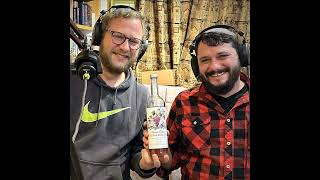
Eliyahu Margolis and Tzvi Zucker, co-owners of Mosaic Cellars in Israel, make small-batch kosher wines using uncommon grapes and experimental methods. Their 2023 Sangiovese rosé is oak-chip fermented with strawberry-cotton-candy notes; they produce roughly 120 bottles of rosé and 150 reds, selling out fast mostly through word-of-mouth.
Chapters
Welcome to The Kosher Teruah.
I'm Simon Jacob, your host for this episode from Jerusalem. Before we get started, I ask that wherever you are, please take a moment and pray for the safety of our soldiers and the safe return of all of our hostages. The following is a conversation with two very bright young wine entrepreneurs, Eliyahu Margolis and his partner Tzvi Zucker, the owners and winemakers for Mosaic Cellars. They're both originally from the United States and now live with their wives and children in the northern Israeli community of Dolev, where their winery is located. They are both exceedingly driven by the desire to produce wine, but even more so to create premium wines for the sophisticated wine consumer. Please listen in and join me in learning from their interesting journey towards fulfillment of their ultimate wine dream. Okay, welcome to the Kosher Terroir. I'd like to welcome Eliyahu and Zvi from Mosaic Winery. Um, love to have you. It's a pleasure to have you on the podcast.
Well, thank you for having us.
Okay, really a pleasure. Um, we're gonna talk a little bit and we're gonna taste some of your wines.
Yeah.
And, um, and go from there.
Absolutely.
All right, so tell me, you know, where did this dream start? Where did you, uh, start with your interest in, um, in wines?
Well, I mean, our interest from wine probably start individually But it started mostly on a road trip down to Eilat, where I ended up burning half my hand off in a fire while we were trying to camp out in the desert. But on that road trip, we kind of— this idea was birthed to make wine. We wanted to bring a different and unique approach to wine. And that kind of brings us to how Mosaic was born. Mosaic Cellars is an idea to make wine for the connoisseur. It's wine that is unique both in flavor profile and in the methodology by which the wine is made, trying to make something that isn't the same wine that you see always on the shelf. You go into any winery, as Zvi would put it—
when you go into a wine store each shelf is more in common than it has differences. So French Cabernet is a French Cabernet, an American oak Chardonnay is an American oak Chardonnay. Wine is commoditized. There, there are legal definitions in many, and if you grow wine in a certain area in Italy, it must be made in a certain way with certain materials.
Chianti is only made a certain way.
It's 100%.
So, so what winds up happening though is for, for people who are looking to um, push the limits of their palate. People are looking for that, like, different experience, whether it's to understand how wine is made, or even if it's just to, hey, if you do this, this happens. Um, you don't find that in on the shelf. Um, and we were, uh, I've been doing this since I was 21, where, um, any chance I had, I'd go to as many wineries as I could and ask as many questions as I could. And there was something really cool about I don't know, having somebody who has a vision ahead of time as to what an outcome would be and going through a process and creating it. And that— and so what we wanted to do is the anti-commodity in a way, to do something, an independent variable that a connoisseur can taste. And you may not have to like it, but you will definitely appreciate it because here's something that enriches your understanding of how wine is made or what the effects of, of, uh, you know, a certain change in a certain part of the process would be.
Interesting. So how did you, how did you feel like you wanted to implement that?
So we started looking at different things. The first and most obvious way is the varietal of the grape, the zan. You can go into zanim, the varietals that don't particularly exist in the Israeli market. You have the same Cabernet Sauvignon and Syrah and Merlot.
The Noble Six.
The Noble Six. And then, you know, throw in Carignan here in Israel. And it's starting— we're starting to see more and more different varietals. There's a big explosion in the market. But even still, there's still, I would say, the commoditized versions, right? Malbec's coming up and Petit Verdot and Pinot Noir and, you know, Petit Syrah a little bit. Cabernet Franc is, you know, found in unique locations.
And well, it's, it's worth telling the story. You may as well.
What about the Cabernet Franc?
We—
the Schmitte wine that we brought is a Cabernet Franc, and there's so little of it in the country that there's a Shiloh Cabernet Franc. And we just realized, like, we realized that had to be the same vineyard, and it was. And it was because there really is not that many vineyards that are growing it.
There are, there are a few.
There are a few.
There are a few. No, actually, you know, most of them are going into blends though. Cabernet Franc is the parent of Cabernet and Merlot. Yeah, so it's kind of, uh, it's, it's unusual.
A mix of Cabernet Franc and Sauvignon Blanc gives you Cabernet Sauvignon. Um, so taking, taking those different varietals, unique varietals— there's ones that don't exist in the country, there are ones that are unique to Greece, or the ones that are unique to Hungaria or to, you know, other parts of Europe that don't exist here. There also is a unique and upcoming market in the, uh, we'll call them ancient or, and, uh, wine, natural wines of Israel. So Rick Anati is putting out wine like that. Gvaot is obviously putting out wine like that. They're going back and collecting the DNA samples of the seeds from the Beta Mikdash, and comparing that to the zanim that are growing in the Arab kfarim in Israel. Bituni is one of them, Jandali, Merawi are all examples of that. So there's that, there's the avenue of the varietal, and then there's also the methodology in that. So different wineries do different things. If you look at, um, uh, Beit El Winery, they raisin their wines, right? So drawing on certain aspects of the practice of making wine. Natural fermentation, um, unfiltered wines, first press, you know, uh, free run, all these kinds of things that are, you know, wineries do it, they do it as a unique run. And the idea of our wine is all of that, is to, is to experiment and push the envelope of winemaking but still produce it at a high level.
Very cool, very cool. So what do you want to try first? So we're going to taste what?
We'll start with the rosé, and then I'll pop the red open so that it can start breathing. Yeah, you could see that, um, we in our higher-end wines— yeah, we wax the cork tops. Yeah, yeah. And then we imprint. See if you want to explain.
Sure, this is actually a seal from Sassanian Iran. Time and place of the Gemara. It's a tzvi, which is why it appealed to me. But it's a nice aesthetic touch. Very cool. While Eliyahu is opening that, this is our rosé from 2023. The vines are old vines. They're 25 years old. They grow in Givat Ada, which is near Zichron Yaakov, Binyamina area. Because they are old vines, uh, there's— they're kind of, they're kind of pushing their last. Uh, specific gravity that they were providing was pretty low. Um, the wine here is only 10.5% alcohol, which is about like the minimum that it'll, it'll— it won't spoil, and, you know, without fortification or sugar, uh, or the like. Um, what we did, that's I guess a little different with the rosé is two things. One, that it was fermented over oak. So we wanted to give it a bit more tannins than it would have otherwise. And the other is we used red wine yeast. And part of that is for color. The color is pretty rich for— I mean, the skins were in contact with this for 15, 20 minutes. OK. And part of that is also for the flavor profile to bring out as much of the red grape of the grapes that we used. It's a Sangiovese, as I mentioned, it's a red grape. And so hopefully, we'll find out if it comes through on the flavor as you experience it. But the idea was to make a bit of a red-white almost as a rosé, where you can still taste the dominant flavors of the Sangiovese grape, which in this instance should probably be like a strawberry cotton candy style. a flavor or note, but also with like a sense of body behind it.
I'm certainly getting in the nose the strawberry cotton candy, which is really interesting.
And what's interesting is it can be drank like this, which is a little bit cooler than room temperature right now, because it's a bit colder. Uh, it's winter. Um, but you crisp that up in the freezer for a half hour, 20 minutes before drinking it, and it's this completely more citrusy flavor profile, which is really, really, really unique for— and with this color is just a joy to drink on a hot day on a Shabbat afternoon. So this is unfiltered and it's free run. So again, trying to choose— take this red grape and manipulate it in a little bit more of a unique way. There's not a lot of rosés on the market that are this robust in almost a red wine characteristic to the structure of the wine while retaining this kind of clarity and fruitiness and lightness to it as well.
When you said oak, you mean in a barrel or with oak chips?
No, so this is done with oak chips because it was—
soak.
—Yeah, it was fermented with the oak chips. So the oak chips have been there from the very, very, very beginning.
So it does have— because when you ferment in oak, one of the things that's interesting that I never knew, but if you ferment in oak, in oak barrels, you don't get the oak from the barrels. What you get is the micro-oxidization, but you don't necessarily— you don't get the vanillin that comes in the oak barrels. Um, that's why I was wondering how— wait a minute, you fermented it in oak? What oak did you do? So we did wood chips.
Yeah. Okay. Um, and so we also put out, um, a blend this year. Uh, we did a young version and one that's currently aging. Um, so the young version was aged with oak wood chips for 2 months, and that, you know, miraculously sold out within the first day. And we called it Young, Wild, and Free because it was young, as I said, 2 months aged, wild because it was wild fermentation. We took the grapes, a blend of grapes from Merlot grapes from Shuva down south, which is under fire. I've spoken to the grower down there, Rachamim, and you know, he's already gung-ho for the next next season. And what's unique about that Merlot that he grows is he planted it in 2014 under the last war, under the rockets. And now this was picked right after, right before, you know, a couple weeks before, uh, before the war started here. So we're, we're really hoping to again go after his Merlot, which came out with this beautiful creamy consistency and flavor profile to it. Um, and it's, it's 25% Merlot and 75% Syrah. And the Syrah comes also from Givat Ada. Um, and so there it's young, wild, and free. Free being also free run, right? Um, so it's really light, young. It's already developed some body, but it's young, light, fruity. Uh, great kind of, you know, light red wine to drink on, uh, compares well with, you know, light fishes and chickens, but also can be, you know, paired well with, uh, with the meat. And then we're doing that same blend, but we're aging it over oak, and that will be 12, probably 12 months aged.
When you're saying it aged over oak, again, it's wood chips? It's wood chips. Okay. Yeah. You're not barreling stuff yet?
We will be in this upcoming season. We will be starting into barrel as we get into higher quantities. Okay. Our goal is 1,000 bottles in 2024. Yep. And upwards and onwards from there, um, you know, slowly growing but methodically and strategically in terms of size so that we can continue growing our operation.
Um, and you're making it in Dolev right now?
Yeah, we're making it out in Dolev. Very cool. You know, we've, you know, set up a little bit of space in, in, in one of our backyards and turned that into kind of a wine operation. Very cool. Yeah.
It's actually really nice. It's very crisp. Yeah. And the Sangiovese has a unique taste for a, whatcha call it, for a rosé. Yeah. And you know, they make them.
Dry Sangioveses are a thing in Italy. Yeah. I've never seen a kosher one yet. Not from Italy. Okay.
I have.
There's some— there's a rosé?
Not a rosé. Oh, yeah. Um, there, I have a close friend who's bringing in a lot of, uh, kosher wines from Italy now, and it's really spectacular. His name is Ralph Medeb, Dr. Medeb, and, um, he brings in some of the highest quality kosher wines in the world, and they're coming out of Italy, and it's pretty amazing. Fantastic. So yeah, he's really an awesome person. So this is delicious. This is really delicious. Yeah, thank you.
We're very proud of the rosé. I think it, you know, came out really— I think even way better than we expected it, to be honest. Like, we thought we— when, when we put it together and we, we started fermenting and we were tasting, and as we were, you know, making it, we were excited about it because it was turning out very well. But I think it came out significantly better than— now that it's especially out of bottle shock, um, came out much, much better than we could have even imagined.
It's, it's tart. It's got, um, you know, you mentioned strawberries, but it's almost got apples as well. Yeah.
Um, you know, almost like Granny Smith. Yeah, Granny Smith. Crispiness. Yeah, right.
It's got a real crispiness.
I think the strawberry, you know, bubblegum comes out right on the nose, right at the tip. But as you get through that flavor profile, it builds. Yeah, it has a really decent body and a good finish that lets you enjoy that wine in your mouth for a couple minutes after each sip, that you're not, you know, you're going back for more, but it takes some time. And so the second bottle that we brought, we were talking about, is the Cabernet Franc. Okay. The Cabernet Franc is a Kedushat Shvit, it's a Shmita wine.
One second, I just want to tell you about this. One of the things that's interesting about this is it's really incredibly well structured. It's got, you know, it really goes across your whole palate and it does have a nice long finish to it, which is not usual, and it's really pleasurable, so very cool.
Yeah, thank you very much. Okay. I, I, I'm— we're proud of it. And I, I agree exactly with what you said. Um, the Cabernet Franc that we brought, like I said, is, is Kedushat Shvi. It's, um, it's a— it's Shmita wine. Yeah. Um, comes out from the Esh Kodesh Shilo area, the vineyards that are out of there. Um, it was aged over oak wood chips, and this is— we'll call it a proof of concept for the winery.
There were about 25 of these made. Yeah, that's it.
That's it.
You have to actually really speak into the mic. No, no, not like— Yes, okay. A bit closer.
Yeah. We only made about 25 of these in the end. We got very lucky that towards the end of the Shemitah season, once whatever was going to be Otsar Besdin was cut, whatever was left over was— somebody, you know, the Be'ala Kerem sent out a kokoreh, It's shmita, whoever wants it, come and get it. Yeah. Uh, so we drove down there and we hadn't really planned to do anything in 2022. When we started planning, it was always a 2023 in mind. Um, and I got a phone call from a friend who lived in Esh Kodesh and he said, you're not going to believe this, but there are grapes. I said, what do you mean there are grapes? He says, you come down to the vineyard, whatever's— whatever you can take, basically, that's yours. It's yours. So I, I called Eliyahu and I was like, uh, 'What are you doing for the next, you know, 6 hours?' And he's like, uh, whatever he was planning on doing. I said, 'Nope, we're picking— going to a vineyard and going to pick grapes.' Uh, and basically, yeah, through sunset, um, we, we harvested whatever we could, uh, and then did everything by hand. Um, it was, uh, you, you mentioned earlier, you have a, you know, uh, Ellie from, uh from Castel, just learning by, by doing. This was our trial by fire. We had a ton of fun, we made a ton of mistakes. When we get into this, there, there's some cool things to see, but one of them is how much oxygen wound up in the wine at the beginning and then how it settled out by the end. We opened the same, the same wine two different times about four months apart for for the same person. And the first time he drank it and he said, wow, this is the worst, this is terrible, what is this? It turned. And then 4 months later he drank it again and said, this is incredible, it's very complex, there are layers to this, it's very— what is this? Well, same wine. Yeah.
Just a little year. Patience.
Sublanoute. So that was really the biggest lesson that we learned out of all of that. But it's our bikurim. In a way. It's our first fruits. We don't— obviously, they're from Shmita. They're not for sale. We open them for cool people.
And here we are. Thank you. Thank you. Wow. Wow. I like being a cool person. But we've got actually new glasses if you want to use those. Or if you're— no, if you finish that, you know, I'm going to finish this and then you can just use this glass.
Yeah, there's no need to dirty it up. We want rosé first.
Okay, you want to wash it out with the rosé anyway, so that's good. That's perfect.
Okay, so it's, it's uniquely rich in, in color. It's really— the skins on the Cabernet Franc that we ended up having were very deep, very thick, very thick, very deep in color. And so this has already, you know, sat in a bottle for almost a full year, not even, not quite a full year. Legs.
Yeah, a lot of viscosity.
It's got these deep, deep notes like gravel and dark cherries and, you know, mulberry almost. It's got a nice balance, got nice acidity. I think I would say acidity plus. And a decent body and a nice finish. I think it's complex. I think as the wine opens, it gets even more and more complex, really, really builds on its flavor. And I mean, personally, I'm a big fan of tannin and This is a— we'll call it a tannin bomb.
I can tell you, I can tell.
Yeah, there's never a problem that Leo won't solve by saying add more wood.
No, um, actually it's, it's, it's really interesting. I would love to see how this progresses. Yeah, you know, over, over some time this is gonna, um, mellow out.
Yeah. And it already has, you know.
Well, 4 months ago.
So like Tzuyu was saying, this, this wine actually, in, in no desire of ours from the beginning, but got oxygenated through, through the, the production process. How'd you do that?
You started off with a container that was too big. Yeah, gotcha. And, and did not yet understand that a certain amount of kilograms of grapes doesn't always equal the same number in liters of wine, despite all the people saying that it does. Yeah, uh, so we wound up with considerably less, uh, than we thought we would. Um, and, uh, just in the spirit of, all right, well, keep going, you're not going to stop now, right? Um, yep.
And it ended up being something absolutely beautiful, but it absolutely changed the way the wine progressed, the flavor profile that was developed, and also the fermentation. Fermentation had a lot more oxygen than would normally be in a fermentation tank, and I think it's created a unique wine. And lesson learned that there's—
well, be the last one like this, we hope.
Maybe. But, but the— there is that pushing the, the boundaries.
That's where it came from. Yeah, but it doesn't look— it doesn't look like it's oxidized. It's not brown on the edges or anything. No, no, it's not oxidized from that perspective. No, it doesn't taste oxidized.
It tastes, uh, oxygenated might be a better word than oxidized because a lot of oxygen went through it, but it didn't stay in there, right? Um, but the part of how the, the fruit notes are that open, even though this wine is that young, yeah, uh, is because of— well, I'm off the, I'm off the mic again.
Yeah, no, go ahead.
Um, part of why the fruit notes are that open is because this, um, normally we add oxygen to wine, we open it, we let it breathe for, however, you know, an hour Right. But it did that, right, much earlier on in its process than, than most wines will do. Um, what, what I find interesting is no matter who we opened this for, uh, people with sophisticated palates or people who don't drink kiddish wine, yeah, you know, uh, everybody would take a sip and say, wow, this is very complex, there's like a lot going on in here. Um, which was very interesting for us to see that that was a universal. Some people left it at that, and some people started, you know, I'm getting a little bit of this, and I'm feeling a little bit of that, and that the dryness is a little, you know, well, at the time when it was still young, this is very, very dry, it's overpowering, and now this is kind of mellowed into the wine as necessary. But it was something which was that everybody, you know, kind of came back with, which was, uh, there's a lot going on here. Um, which for, for many connoisseurs was like, this is kind of like Ilya was saying, this is our proof of concept where somebody can, can look at something and say, that's different. Not in a good way, not in a bad way, just as a, that is what it is.
I'll tell you what my, like my preferred bottle of wine. I go to the wine store. I really want a nice bottle of wine for Friday night. If I were to choose a red bottle of wine, I want that bottle of wine that I take a sip and then I'm 5 minutes later, I'm still thinking and I'm still chewing on that bottle on that sip. Simple wine. That complexity, like, at the pinnacle of red winemaking for me is, is that complexity. You sit and you have to think about the wine, that you didn't just drink it to, to get, you know, drunk or just as a drink. I think there are wines that are perfect that are young, wild, and free, is perfect for that. The rosé, great. It's complex, you can drink it, but you can drink it lightly and, and keep drinking and go back to it. A red wine that you sit at a dinner table with, you know, good meat and, and you think about that wine. Every sip matters. You're still thinking about it 5 minutes after you've taken that one sip, and, oh, I have to go back, and I really want— and go through the structure of that wine. That's what the connoisseur does, and that's what I, that's what I want to see out of a red wine. So, uh, always pushing in terms of that red wine into, into that direction.
Very interesting. Very, very interesting.
And also though, because of the way we made it, um, in the first one, there's still this, you know, herbaceous quality to it, to it a little bit that you get from a wine that didn't age too long, did not get too much oak flavor on it. This sat— what was it, 5, 6, 6 months?
6 months over oak, over oak chips. We also left in a lot of stems. Yeah, for the fermentation. That's right.
So there's a very herbaceous quality to the wine that also is not as prevalent in a lot of wines.
But it's also not overpoweringly green. It's not, um, sometimes wines like that can be, uh, really not desirable.
Um, they taste more like stem than grape.
Yeah, yeah, yep, yep. No, it's very cool. So that's lovely. Yeah. So what are you looking forward to?
Yeah, our future is, is bright. We, we were actually sitting down the other week talking about our plans for 2024 season, where we already know that there is going to be a single varietal.
Um, but wait, let's talk about 2023 because you made those. Yeah. So those are coming down the pike.
Some of them are out. So what do you have? Yeah, so the rosé, half of it is sold. Okay. It went the first day, half. Right. We've got about, we made about 120, 130 bottles. 100 of them is what we're selling. The rest is archive or what we're keeping for our own drinking. And 50 have already sold. Okay. We made 40 Young, Wild and Free bottles. These are the young blend of, Syrah and Merlot. That sold out. That sold out the first day.
Um, and then there's about another 150 bottles worth of the red that's still aging. Yeah. Um, and that'll be ready probably around Rosh Hashanah, Yom Kippur time. Yeah. Uh, late, late 2023, 24. Sorry, yes, late 24. Late 24. Very cool. Um, and then—
and that's a combination of what again?
That's also— that's the same blend as the young—
so that one actually, uh, on the label is a little Pesuk, uh, which is a bit of a pun towards where it's from. Uh, Eliyahu mentioned, uh, 25% of it is Merlot from a, uh, moshev called Shuva, um, and 75% of it is Syrah from Givat Ada. And once the cuvée was mixed, and I saw that it kind of reminded me of the pasuk, Shuva Yisrael Ad Hashem, which is always written as Ada, because it's a hey and a— And so kind of as a tefillah, and kind of as a little unifying theme for what the bottle wound up being, that's the top of the label over there. So it'll be bottled under the name Cuvée Sauvage. Sauvage for the wild fermentation, uh, and cuvée because that's actually what it is. It was, it was, uh, blended before, uh, before aging. Um, and then coming down the pike for 2024, we plan to try our hands at an orange wine using some Muscadella and Zandroni coming from also Givatada, same vineyards. Uh, we're returning to the Syrah. It was, uh, it has wonderful acidity. It can age for a long time. It's It thrives there. We're coming back to that, and we're also adding Petite Verdot to the mix. We're still planning out exactly how that'll break down, if they'll both be single varietals, if we'll blend it, if we'll do all three, some of one, some of the other. But those are the ingredients that we're excited to play with. Yeah, very cool. We also did—
this is a little-known secret that I think maybe 4 people in, in the world know. We did take Merlot from Shuva, and we are aging it individually. We made 10 liters of it, very small, small, small batch, just to see what a single varietal of that Merlot is. Because when we tried what came out— what's unique about the Syrah that we got from Givat Ad and the Merlot we got from Shuva are both naturally fermented, and both naturally fermented in almost an unapologetically surprising way. We went in, we crushed the grapes and had the fullest intention. I bought all the, all the yeast that we need to make this wine with, you know, the yeast that we wanted. And by the time that we went in to put in the yeast, it had already started.
It was bubbling like a witch's cauldron. Exactly.
And at that point, as winemakers, you have to also respond to, you know, what the natural grape is giving you. And in this case, it was clearly shouting at us that we should ferment it naturally, and it did, and it fermented beautifully. Not a single drop of yeast was added, not to the Syrah, not to the Merlot. And the result of that with the Merlot is this really unique creaminess that just rides the full palate as you drink that Merlot. We tried it actually today, gave it a lick to see how it's progressing, and it is just something wonderful.
Very cool, very cool.
And so the plan for the future is to continue pushing that, continue pushing the envelope, um, in both methodology and varietals and doing something unique Orange wine, we wanted to age it, the Moscato L'Alessandrone. There's other works that we want to do unique to white wines in the pipeline using some unique aging vessels as well.
One other pipe dream we'll get to in the white wine sphere is to do a Rezina, which is a bit of a historical interest of mine. Up until a few hundred years ago, maybe 100 max, one of the ways that wine was preserved was with pine tar coating the inside of the clay vessels that it was sitting in. And I've wondered for a really long time what that must have tasted like. I grew up in, well, I grew up in Brooklyn. And I never—
So you were exposed to a lot of pine trees.
It's mostly maple and birch. Yeah, I was gonna say. I had to look it up when I got here because I had no idea what the types of trees were as a proper New Yorker. They were just trees, like 5 of them. But, uh, I never, I never saw— I didn't know what red cedar really was until I started. I mean, I read a British travel writer, and, and apparently red cedar is very popular in the United Kingdom. Uh, and I said, what's red cedar? I never even heard of that before. Um, and once I worked out what it was and where it came from and what the history of it was, it's It's something I've wanted to do for a long time.
Well, the north here is also riddled with Aleppo pines and other kinds of pines, and it's just a simple task of tapping it, and then you have it naturally.
In New Jersey, it was a plague because the pine trees would drip on your car. Yeah, and then it would freeze. No, and it would crystallize. It would crystallize on your car. And it's quite impossible to get off. Yeah. Okay, it's not an easy task without taking off the paint. Yeah. So it's—
It's the first glue.
Yeah, it's— Pine sap is the first glue. Right. So, yeah, there's good to it and not so good to it either. The other thing is you don't want to burn non-dried pine. That's right. The— it's very flammable. Yeah, but it's also awful smelling.
Acrid. Yeah, it's an acrid smell. It's the reason why when you like smoke meat, you don't use pine, right? You use a hardwood like an oak or an ironwood or a cherry.
That's also something that's also in our, in our, uh, our list of eventual experiments to experiment with is different kinds of woods. Oak was picked because it does a really good job with adding vanilla and to wines, but there are all sorts of other interesting compounds. Hardwoods, yeah. But that's— no, but I mean, I'm sure there are people around the world that are doing it, but it's not something which is common.
It's— they're doing it here. Yeah, you know, I'm telling you, you should— two things you should do. I mean, I, I don't want to be presumptuous and assume that you're not. Um, there are— there's a wealth of, uh, really great winemakers here. They you should talk to if you're going to start playing with orange wines, I would definitely call Yakov Oria. He's very, you know, very responsive. He's very busy with his winery down south in Pinto Winery and also with his own production with Oria stuff. But he, he is, um, he's a You know, he's one of the first people in Israel seriously to take orange wines seriously. And he's gone through a lot and he has a lot of notes. He keeps meticulous notes of what he's done and how he's done it and what's going on. And he's an incredibly creative winemaker. Sit on his laurels. The last wine he made, the last wines he's been making have been single vineyard, single varietal. Oh wow. 12 different, 12 or 13 different fermentations, okay? Yeah. And then blending each of those fermentations together. It's the full control.
You know who does that also?
Yotir Winery does that as well. Not anywhere near this level. I know Yatir as well, but Yaakov is like wild mad scientist. But it's, I'll be honest, his whites that he's produced that way have been unbelievable. They're like fine, they're like fine white burgundies. Coming out of Israel, and it's like crazy to see, crazy to see.
Yeah, winemaking, you can compare it to so many different things. I think of it almost in a, in a symphony kind of way, or in a cooking kind of way as a chef, right? You're putting in these tiny little things that if it wasn't there, you know that it's missing. If there's too much of it, it ruins the whole plate, right? Or ruins the whole symphony piece.
It's like when they go, and a pinch of salt, like as if a pinch is gonna— but it does, it does, it makes a difference.
You reach a crossroads in winemaking every point, and the winemaker then has all these various decisions that create future decisions, right, and future choices that need to be made. And those choices are infinite. Um, like you said, you can ferment two different wines. We've had this conversation just on a logistics standpoint.
We always call it solving a puzzle with moving pieces.
Yeah, that's exactly— and one of my favorite things to do is solve puzzles that are moving. So, and I do that on a daily basis in my job. But, um, basically you have to say what it is. My job, yeah, I, I design, uh, mass transit, uh, stations, public train, train stations, um, metros and things like that. Very cool. As an architect. Um, but with wine, if you, if you're, you're fermenting beforehand, right? We were talking about this just from a logistical standpoint, because you need the vessels, right? You need the, the, the barrels or whatever to, to, to produce the wine. Should we ferment together and then you have a blend from the get-go, and then you're kind of solving a problem of having multiple vessels to ferment in, um, or multiple tanks to ferment in? Or do you ferment them separately and then you have full control into how they blend afterwards. And that, that's unique, but that again is a decision that the winemaker gets to at the very beginning.
That's one of the reasons, by the way, that many of the wineries use barrels. Yeah, because, um, when you have these big fermenters, you're very limited as to what you can, uh, yeah, what you can feed back into it. And you need enough volume, the volume, exactly. and a lot of them now have stacked fermenters, so they've got multiple fermenters in one big steel vat. But it's hard because there's this constant war of, "Hey, I don't want to leave it open to oxygen. I want to leave it in the place." And that defines more where it's going to end up than anything else, because sometimes you just don't have a something to put it into that's the right size. Yeah. So you, you came up to that early. Yeah, very early.
We cut our teeth well and quick.
Yeah. But most winemakers have that, have that, uh, issue. Yeah. And that's why they have, um, they use barrels.
So what we did a lot of in, in 2023 is also experimental with another aspect. So we We spoke about methodology, we spoke about varietals, but one thing that I think gets hidden in winemaking, and it's— I think it's something hidden and, and stays with the winemaker, is yeast. So yeast can control significantly how a wine ferments, not only how it ferments, but the flavor profile that is extracted out of the grapes. And yeast has a lot of influence on the flavor of the wine.
Very much so, yes. But I'll tell you one of the other things you haven't run into yet, and I'm not acting like a smart guy because I have not— I've made very little wine in my life, but I've experienced winemaking enough to know this. Your, your, your facility is kind of outside right now, half and half. Okay, so you're into natural yeast from the grapes and what have you. Once you have a facility, there's no way you can ever have natural yeast from grapes anymore because the yeast goes into that winery and it's everywhere. So once you use commercial yeast, you can think that you're not, but the truth is you still are. You're still using commercial yeast. So what winemakers try to do is use the yeast that they want and overpower whatever is left in the winery that they've had before. and it's not because they, they don't like trying to do it naturally, it's just an impossibility once you get to a certain size.
So what we were doing, and because maybe we're blessed with still being very, very small, right, is we did both natural and, uh, and desired yeast fermentations. The rosé that we spoke about is a unique— we took a red wine yeast for that. We also made a wine, um, that we're entirely keeping to ourselves, which is—
well, it's the mirror image of the rosé. Yeah, the rosé is a— it was made from red grapes. The grapes were taken out of the, you know, weren't fermented in the, in the, in the must, but we had the grapes, so I put them in a different barrel and I threw actually white wine yeast into it, an exact mirror image, and said, well, we'll see what happens, right?
And it turned out a red wine.
And what happens is it looks It's pale. It's not quite a red wine. You can see that some of it's missing. Blush. But, well, I mean, it's red. It's red. But it's not a dark— it's not the same kind of rich, you know, red color as the Cabernet Franc here, or as a Sangiovese may sometimes be. And what is fascinating is if you drink it with your eyes closed, you'll swear it's white. The yeast made that much of a And again, that was something which held true whether somebody was a novice, a connoisseur, uh, just, it just, uh, um, even though like you, you, your eyes are kind of just lying to you at that point.
It's funny, I was at one of the wineries and I tasted this wine and I said, wow, this has got some real body to it. How did you get it with this varietal? They said, huh? You taste that, don't you? And I said, yeah, but I have no clue how you got it with this varietal. And they said, actually, we threw it on the lees of some Grenache that we had sitting. And I said, oh, that's crazy.
I'm convinced that in the Baye Trichône, this was one of the, let's call it, technological advances that powered the economy here. Uh, there are a lot of, uh, mishalim that, that Navi'im give where they call the aristocrats the shmarim on which everything else sits. And the way that they describe it, you get the concept that they saved them year over year, that it wasn't something where, like, there was, uh, yeast making was just as much of the technology as wine making was. Um, which was fascinating just to see as, like, learning Tanakh. And it was a little bit of have what motivated us to start like messing around with it as a, as a thing. But it's, it's not— it wasn't something I had given really any thought of until I started making wine. You never see— I mean, I've never seen on a label where somebody will say this was made with this yeast, um, or, or any other strain of—
let me tell you, the winemakers know exactly what I'm sure. Exactly.
But that's what I'm saying, it's hidden.
But the connoisseur who's drinking it, it doesn't know.
No, I— well, in some instances, I— we made some wine with Vitkin, a friend of mine, Avi Davidovitz, and myself and Asaf Paz, and they used very specific yeasts. Yeah, because we tasted it and this is what— and Asaf said, this is what we need to use. Um, and yeah, it's also funny because a number of the winemakers that I've met and interviewed and spoken come from bread and pastry. And I said, wait a second, were you like— did you like get into yeast and then you decided you're going to go into wine? And they all go, uh, no, maybe, maybe, you know, they all kind of love yeast. And I, I guess, you know, you go into beer making as well that way, but, um, that's more of a direct route. But, uh, wine is a real challenge. It's a lot of fun and It's really interesting. But yeah, they— that it's not lost on most winemakers how important yeast is.
Well, that's, that's, that's like I was saying, it's, it's a hidden aspect to winemaking that I would say the general public don't get to experience. And so as we're discovering into our own winemaking journey, um, the, the different varieties of yeast, but also the influence of yeast on both the flavor and the fermentation process, and then the end result, right? So you mentioned, you mentioned Jatir.
Yeah. One of the things that came to mind when you were speaking before was that, um, Jatir has a bunch of vats now. Yeah. That are out of different woods that are not oak. And concrete. Well, concrete, concrete's another whole story. Yeah. So that's another whole story. You can talk to a bunch of people about that. I would strongly recommend that if you ever wanted to go into the concrete winemaking business, speak to, uh, speak to, um, Abichai Luria. Yeah. Um, but that said, um, the— they use different woods because they have, uh, different qualities that they didn't want oak and— but they wanted a softer influence. And each of the woods imparts a different micro-oxidization into the, into the wine, as well as a different, you know, parts of different flavor. So it's, it's, it's different, and there are a lot of options.
A lot of options. Yeah, I mean, I think that's part of it. That's part of the winemaking process, is all those options.
And then that's part of what kind of how we named ourselves, or at least what we were trying to do, is because there are all these different little pieces that if you zoom out really paint a different picture. Well, it occurred to me— a bottle of wine— well, it occurred to me that, and there's an art form that does exactly that, um, but it stuck for the pun that mosaic also means of— as referring to Moses. Yeah, like, true, it's a big part of, uh, tradition, innovation, and where we come from, and what we're trying to do. But all those little moving pieces, and all those little things that wind up making massive differences down the line in terms of what happens, and what people taste. And you can take the same grapes and wind up with two— maybe a classically trained connoisseur will be able to say they came from the same vineyard. Um, that's what makes it fun. That's what makes it, uh, that's what makes that— that's— I feel like that's why connoisseurs love it. They're, they're minute differences to understand and then appreciate.
I asked you earlier, well, I introduced you earlier mistakenly as Mosaic Winery, but it isn't. It's actually Mosaic Cellars. Yeah, Cellars. Yeah. So that's, you know, it's, it's hard to find you guys because if you put in the word Mosaic Amichai Luria has got you beat.
Of course, of course, hands down. Of course, his highest, uh, I know.
So it's hard to even find you guys looking for it, though you do have a LinkedIn page. Yeah. And I'll, and I'll include, you know, the links to get to you guys.
Well, we're expanding our footprint. We're really, um, green in terms of the, uh, the social media presence, and that's something we're building up. Um, our focus has been the wine, the wine, the wine for now. And, and we're, we're getting the, the winery to a point where it's, um, at a certain volume and certain capacity, uh, funding itself, right? The amount you can make it back will fund the next season and so on and so forth. And so we're, we're almost at that point in terms of the winery where it can, you know, fund itself. And as we keep growing, it can also fund a certain amount of growth stable, um, and that will then also allow us to also expand our own, uh, presence, our online footprint, our online footprint, as all— as well as the distribution of the wine within stores, restaurants, and, and beyond, and beyond. Yeah.
So right now you're distributing directly word of mouth for the most part? That's right. Absolutely. Okay, so we need to find some ways to get people to to connect so that even though you have a small amount of wine, it shouldn't be any effort to get rid of all of it very, very rapidly. So we'll see. We'll try to make some connections. Greatly appreciated. Yeah. I was going to ask you as well, where are you both originally from? Because part of the, honestly, Part of my listenership are people who are in chul, outside of Israel, who dream about making Aliyah. Okay? That's number 1. Number 2 is the people who listen to my podcast are all dreaming about wine. So if they can get to Israel and also do something with wine, man, that's a home run. That's the dream, isn't it? So how did you guys actually get there? How did you, you know, where did you? Come from and how did you get to this?
Uh, I grew up in what I like to call monochrome Flatbush. Everything was black and white. Um, I moved here when I was 25 years old. Uh, at the time I was married, I had two young children. This— I had wanted to— I had been planning this for years. Um, I like to say that when I first moved and then I went back to visit, everybody came over to me and asked me if I was sane. 5 years later they said, wow, it's amazing, you're like already there and set up. But you know, because like, you know, I, I think at some point we might all have to— and then, you know, another few years after that they're like, yeah, we had a lot of foresight to go when you did, all in the span of, you know, not much time at all. Uh, I, I first came to the kosher wine scene, um, staffing Kedem's big yearly bash that they hold in, in New York.
Yeah. Uh, so who did you know from there?
Uh, well, where I was in yeshiva at the time, uh, there was somebody with connections to, uh, Royal Wine Corp. And they're like, ah, Shomer Shabbos people, you know, they're looking for wine pours, basically. Yes. Um, and I found myself at a table with the regional salesman for the area that I lived in. And when I realized, uh, what the real game was, uh, for what was going on, I was like, if you can move around the floor, you could do pretty well here, right? And he said, "Yeah." And I was like, "All right, I got the table. Don't worry about it. Have fun." He was really, really appreciative. And so he came back to me a couple months later and he said they're trying something new where they want to put people into the stores to try to do tastings to educate the public. The kosher wine supply was growing a lot faster than the kosher wine demand was for a little while. And this was their way of stoking the demand side, I guess.
This is like the Thursday night challenge. Yeah, exactly.
But like in, in the stores, in the back of the store, in the front of the store, right?
And so I, I, I actually had a really, in hindsight, envious, uh, experience where I got to learn a few thousand people's palates, understood what they like, what they don't. And they'd walk in and go, what am I drinking this week? And I just point. I'm like, what, what are you eating? Like, what's, what's on the menu? And then I point and I nail it, you know, 8, 9 times out of 10. And, uh, It was great. It was a lot of fun to, like, realize the consumer side of wine without realizing at the time is what I was doing. Very cool. When I moved here, I didn't really have much to do with the wine industry at all, but from the same time, like, back then, I have— there's a Google Calendar invite with my old chavrusa from yeshiva on his 65th birthday where it says, retire open winery with Tzvi. So it was always like, for me anyway, it was always the end goal to get into this. Um, and this is literally a dream come true.
Wow. So you also, you're also working? Yes.
What do you do as well? Uh, I'm working at a tech company, digital marketing. Very cool.
Thank you.
So you got to get into digital marketing for you guys. Uh, I know you've been doing it.
He's the expert. I know. I can design the facility.
I can't do that. He can't bust your chops. I have to bust your chops. It's okay.
Chops are for busting. Yeah, I grew up in suburban Connecticut.
My parents are Soviet refugees. Where? Where's suburban Connecticut? West Hartford, Connecticut.
Sure. West Hartford, sure. I had a sister and brother were there living in the shul, the Orthodox shul there. Yeah. The last name is Malek. Steve, Steve Malek and Sally Malek. Sally's my sister. Oh, so it's a small world.
Small world, really small world.
So yeah, I used to know the rabbi from there. Yeah, Rabbi Cohn was there. Yeah, I know, I know. Wow. Yeah.
So yeah, um, so grew up there, uh, born in— born in also in Brooklyn, but my parents are refugees from the former Soviet Union, came in the late '80s. Where? Whereabouts? Moscow. Moscow. Moscow. Uh, my mother's Sayer family is very Lubavitch from, you know, Belarus. Yeah, yeah, very, very, very strong yichus to the first Lubavitcher Rebbe. Um, and, um, my parents came to America. They knew whether they were Jewish because it was written in their passports, Jew. Um, but my mom knew a little bit more. Her family was— her mother was religious up until adulthood. But she, my mom, did not grow up religious. My dad, the first time he ever saw a shul, a synagogue, was on their first date on Rosh Hashanah when he went to the, when they went to the main synagogue, the Great Synagogue in Moscow. So in America, they slowly started finding religion. They first came to Israel. I grew up in suburban Connecticut with, I would say, a privileged life growing up, swimming, hiking, forests, nature, uh, tennis lessons, art lessons. I'm a classically trained artist, and that's how I got to architecture, which is what I do now.
Um, where, where did you go for school?
To school? I went to the University of Maryland down in College Park.
Right, I saw that. Yeah, my sister was also in University of Maryland. Yeah, Sally.
It's an amazing, amazing school. Yeah. And, um, then I made Alia in 2015 by myself. Um, My family followed suit fairly soon after. I got married. I have 4 wonderful daughters, triplets, 3 girls that are 5 and another youngin' that's 3. And for me, wine kind of started— I came to yeshiva here for a year, gap year, and I was up in the Hesder Yeshiva in Chispin. And so I volunteered at the Golan Winery in Katzrin, and they needed Shomer Shabbat people to help sort the wine, uh, crush it, do some work within the wine that had to actually handle the grapes and, and the, and the tirosh and the juice. And so, um, I fell in love with the process then. My dad's a— he's a chemist, he has a PhD in chemistry. So always the chemistry and the biology aspect of, of winemaking was always interesting to me. Um, and kind of both my father and I dove into the winemaking and, and wine drinking— we'll call it, um, culture here in Israel— as it both expanded almost similarly to the way craft breweries expanded in the United States over the last 30 years. And with this huge explosion of really high, high quality wine, we grew to be in our own right to become connoisseurs. And so making wine now has just been an extension of that, of, of producing something that we ourselves would want to go to the shelf and buy. Very cool. And so, I mean, that's like— so you said it's just living the dream a little bit.
A lot. Yeah, it is. So that, that's amazing. Really awesome.
So we both live in Dolevno. We both, uh, our families are there, our houses are there, and, uh You actually met there? We met in Dolev, yeah. When Tzvi came to look at the yeshuv, that was the day we met.
It's a very, very, very close-knit, tight-knit place. People who are coming to think of living there are generally introduced to a whole bunch of families along the way for the hopes of the decision. But it's also nice. Less than 300 families. The Margolises were one of the families that were introduced to us at the beginning. Um, helped us fill it out.
Are they mostly Anglos or are they everything?
Uh, it's about, I would say about 15% English speaking, of which about half to two-thirds are, are olim, and the rest are, let's say, second or third generation.
There's also like secret Anglos, you know, people that you would— you— they speak Hebrew to you, you speak Hebrew to them, and then somebody says, oh yeah, they're from Queens, and you're just like, they're from Queens? And then you all of a sudden start talking to them in English, and you're like, well, where were you as I was breaking my teeth?
I've known you 6 months.
Thanks for letting me know. Exactly. But no, 15-20% is about English speakers that, you know, and it's beautiful. It's a beautiful community. It's up in the mountains.
West Benjamin is a very, very nice, magical place.
And there are vineyards there. Very unique to West Benjamin. There's not a lot of vineyards in that area. But in Dolev, there's khamim. And it's a really, really beautiful area. And so we happen to be, you know, lucky to also make, make the wine in our, in our backyard, quite literally. And right now, look, we're looking to expand facilities-wise as well. We need bigger spaces, storage space obviously, and production space. And that's all part of, you know, building a winery and growing, and, you know, the growing pains of, of trying to produce and build something.
Everybody talks about sustainability, but there's more than one meaning to that.
Yeah, sustainability is like, how do I have money for next year? Yeah, next month, right? I know. Yeah, it is kind of funny. Yeah.
Um, but yeah, listen, uh, Olim— I, I talked to Olim a lot of the time, especially architects that want to come to Israel. But, uh, Olim, they come to Israel, and if, if they have a dream and and they have the ability to chase that dream, both financially and with the know-how and mentality. I think Tzvi and I are a good example of if you work it out, if you try, if you study. I mean, I don't think at any point we were ever surprised in the winemaking process by a result in the sense that something would happen, we were like, oh, we know exactly why that happened. Because we did our research, we did our, you know, our own education.
If you will it, it is no dream. Yeah. But for real. Thanks, Sergio. No, well, but it's true.
Yes, it is. It's true.
I don't know if this says more about my, like, I guess how I think of myself, but if I can do this, I'm pretty sure nearly anyone can.
You think so little of yourself.
It just, it takes, look, it takes a certain amount of dedication. It takes a certain amount of pluck. You got to be able to accept whatever comes out of it, especially if you're going to start with small quantities.
You were talking about exactly that.
If you have the chutzpah to try, then—
Eli from, um, from, uh, Castile. Yeah, you have to have the chutzpah. You have to have, um, the chutzpah to go out there to, to like talk to these winemakers, to talk to the growers, right? To talk to the people that are out in the vineyards that know their grapes, they know how How much water is going to be there at the end of August and beginning of September? If they have the slope, what kind of impacts the slope, the soil, the terroir have on those grapes? And talking to them and learning from them as well. We learn so much by just going out to these places. Céline and I will just drive up to a vineyard, talk to a person, the grower, the farmer, or talk to the winemaker. And a lot of that— how many trips have we made to different wineries? More than we can count. More than we can count, just learning and just trying to absorb as much from everything. And I think if you ever stop learning, then I think you're already on the path to starting to fail.
100%. What I've found is that the winemakers who have become successful are always— they have very open minds. Even Eli Benzacain, I mean, he has an incredibly open mind, um, as far as, you know, learning new things and experiencing things and asking questions. He doesn't have any problems asking.
And there has to be flexibility in the winemaking process, right? You have to be flexible and you have to react and also be able to accept what the wine gives you. —right?—and if you are dead set on making one thing and one thing only and it doesn't go that way—
You have to have— you also have to be humble a little bit. I mean, one of the things with Yakovoria, which is really cute, is he has a wine called Yafaka Livana, and pretty as the moon is the translation, but it's really pretty as a white, and it's pink. And it wasn't supposed to be pink. It was supposed to be a white. And, uh, and he, you know, he had no problem saying, hey, look, you know, this is what happened.
I was talking to, um, I forget his last name, Jacob from La Froye Blanche.
Okay, I don't know him. I don't know him. I know exactly, I know exactly.
Wonderful, wonderful, wonderful winery. First of all, I could not recommend them any more than I can. They make really exceptional, high-quality wines. And they were just telling me this was— I think it was last, uh, last year, maybe 2 years ago— they— their, their white wine, one of their white wines, the grapes didn't come. It just didn't produce properly. So they had to, you know, they had their blend that they needed to put out to get it to, to put it out there, and they had to improvise at the last second. And it came out better than the blend that they've been putting out for the last couple years. And, you know, that kind of, you know, humbling experience of you need to be that flexible, you need to be able to react to it, and you still can make a beautiful product, but you need to be able to, you know, be able to absorb that and be flexible to what the wine's, you know, showing you.
You know, one of the things— one of the people who's a young winemaker, um, Sam Baum. Do you know him? No. Okay, so Sam Baum actually manages a vineyard for a very, very large winemaker. And, uh, and they put him in resp— they, they haven't enough faith in him. He's responsible for one of their main vineyards, and, um, and he's making red wines. Baum Family Winery. Uh, you should look it up because he's also very small, trying to make incredibly quality wines But the approach from him is from the vineyard, and, uh, and he's— he, he really has been focused on vineyards and focused on how to manage a vineyard and how to groom a vineyard and what to do. And it's, it's really cool because, uh, there's so many ways to come into, uh, wine that, uh, it's, it's, it's really fun to see it all.
I think that's also part of it is, is, is the marriage between the winemaker and the vineyard and the farmer. Yeah, right. So the winery and the vineyard are so interlaced, and so finding that pairing, right, if you're not growing your own grapes like we are— we're buying our grapes, you know, another dream one day, one day is to be able to plant our own vineyards. But until that time comes, like many other producers in Israel, we buy our grapes. Um, and what we found is is finding the right partner in, in the vineyard. Yeah, that looks and wants to have that same kind of, um, pairing of quality, that same ideology in terms of what they're doing. So a lot of the, the vineyards that we're talking to are also looking at, you know, natural ways of extracting greater depths of flavor. One of the vineyards we're talking to is, is culling their clusters this upcoming year to really reduce the quantity so that you can really concentrate the, the flavor in the, in the clusters that we're gonna have.
I've seen that work and not work, so I'm just telling you, it's like, it's interesting.
It's fascinating to see it from a vineyard that's not making the wines because he's taking a risk. Yeah, 100%. He's slashing what he can sell.
A lot of them say that to winemakers. Yeah. And then they just sell them. You didn't see this. Yeah, yeah, yeah. No, but it's Yeah, there's some dishonest people, but typically most of them are very, very honest. One of the other people I would speak to is Tomer Pinini at Tom Winery up near Itamar. That's an incredible vineyard and an incredible winery. I helped plant some of that and helped pick some of it and made a wine up there called Robeinu Tom. Nice. That's amazing. Crazy names. Oh, those are great.
So the other one, best enjoyed after nightfall. But yes, yes. Another winemaker that we've been seriously talking to also, I can't recommend them enough, is the winery Skoria up north, if you've ever tried them.
I have tried them and I've seen it, and I was surprised at how good the wine was from there, but I've never spoken to the winemaker.
Ofer is the winemaker, and I can put you in contact with him. One of the most absolutely humble, down-to-earth people.
Salt of the— like, the, the, the types of people that make you proud just to be in this, you know. But that's—
it's the same thing with Tomer. He— it's like looking at a halutz from 19— yes, that's exactly— guy looks exactly like an image from a poster. That's right.
So it's like crazy. So Scoria, uh, They, they produce really, really high quality, um, wine. Really high quality wine. Um, I would say very French, heavily French influence. Um, and been talking a lot to Ofer from Skoria, um, in, in terms of production and trying to learn from him as well. Uh, there's, there's, there's a wealth of knowledge in this country and everybody's willing to share.
Yeah, yeah, yeah. Which is one of the coolest things that's out there. You'd be surprised, some of the biggest winemakers are open to talk and what have you. Um, so it's fun, it's really fun to see that. Uh, it's— I keep saying fun, it's a lot of hard work. Yeah, I know it's a lot of hard work, but when hard work is fun, that's— that's— that's living life. Yeah, yeah. So anything else you'd like to talk about or mention?
No, I mean, this was a wonderful— thank you so much for having us. Amazing.
It's a real pleasure to have you on.
Now I'll need to get all the numbers for all the names that we mentioned so we can go follow.
I have no problem doing that. I have no problem. Absolutely no problem.
And we'll, uh, we'll leave this wine with you. Thank you.
Obviously I want to taste it. I really want to give it a little bit of time.
Yeah, the red wine will— yeah, and put the rosé in the fridge a little bit.
I'm going to They're going to. They're going to. Thank you. That's really awesome. Thank you.
Wow.
This is Simon Jacob again, your host of today's episode of The Kosher Teruah. I have a personal request. No matter where you are, or where you live, please take a moment to pray for our soldiers' safety and the safe and rapid return of our hostages. And whenever possible, buy and share Israeli wine. I hope you have enjoyed this episode of The Kosher Terroir. It was exciting and informative for me as well. Please subscribe via your podcast provider to be informed of our new episodes as they are released. If you're new to The Kosher Terroir, please check out our many past episodes. The Kosher Terroir is also available on the Nachum Segal Network at 6:30 PM New York time Thursday evening, and on the world-famous NSN app.










