Shiloh's Legend Series & Chasing Israel's First 100-Point Wine
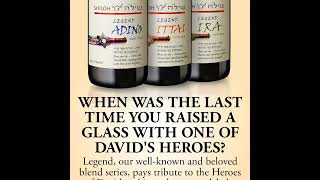
Amihai Luria of Shiloh winery discusses his decade-long pursuit of Israel's first 100-point kosher wine, alongside tastings of the new Legend Series blends named after biblical figures. The winery kept the Ira wine non-mevushal to preserve its peppery spice, and Luria has spent years experimenting with barrel samples and traveling to Napa to chase perfection.
Chapters
Welcome to The Kosher Teruah.
I'm Simon Jacob, your host for this episode from Jerusalem. Before we get started, I ask that wherever you are, please take a moment and pray for the safety of our soldiers and the safe return of all of our hostages.
Welcome back to The Kosher Terroir. Today, we're starting with a trilogy of wines emerging from the cellars of Shiloh Wineries. Their new Legend Series named Itai, Adino, and Ira. And they're not just special releases, they're a declaration of intent. In our discussions with Amihai Luria, Shiloh's visionary winemaker, He isn't just crafting expressive, age-worthy wines these days. He's actually aiming for something even more audacious: Israel's first 100-point wine. But what does it really take to create a perfect wine? Is it the grapes, the place, the hand of the winemaker, or the palate of the critics? To help us explore that very question, I'm joined by two of the kosher wine world's most trusted and influential voices: Gabriel Geller, the Director of Public Relations and Wine Education Manager at Royal Wine, and Jay Buchsbaum, Vice President of Marketing and Director of Consumer Education for Royal. Together, we'll all taste through the new Legend Series, discussing each of their specific nuances and market focus, and debate what makes a wine world-class, and ask, can Israel make a wine that belongs in the same breath as Bordeaux's first growths or Napa's cult classics? Whether you're a collector, a casual sipper, or a believer in the power of possibility, this episode is for you. If you're driving in your car, please focus on the road ahead. If you're sitting at home, pour yourself a glass of wonderful kosher wine, sit back, and listen to this episode of The Kosher Terroir, as today we are not just tasting wines, we're chasing legends.
First of all, welcome to The Kosher Terroir. Amichai, tell us about the vision behind the new legend series, Itai, Adino, and Ira. And what inspired the creation?
So I think that making great wine is important, but also you need a good label. And I wasn't ever 100%, um, happy with the previous labels that we had for the Legend Series and for the theme. And, uh, since, uh, the 2021 vintage of the Legend was sold very, very quickly and was sold out. And then on the Shmita year of 2022, we didn't make any Legend at all. So for a long time, this was out of the market. So we said it's an opportunity to make a new label and a new theme for the Legend series. And because on the 2021 vintage, We made a new blend and we didn't even label it when we bottled it because we didn't know what the new theme would be and what we're doing. And then we came up with the idea to use the heroes of David HaMelech. King David had, or it's listed in Divrei HaYamim and in Shmuel, etc., the heroes that surrounded him. And a lot of the— there are also agadot and midrashim about some of these heroes. So we said, you know, it might be a great opportunity to use the theme of the heroes of David HaMelech for the Legends series. I also very much like the idea of Safra vesaifa. That means that you also learn, but also when you have to, you also use your strength. And, uh, Chazal speak a lot about, uh, our great heroes over the centuries that were great leaders. They weren't only leaders in Torah, but they were also leaders in the battlefield when necessary. And that's the idea. This is what we decided to do.
How do the wines reflect Shiloh's evolution as a winery and your personal growth as a winemaker?
Well, We try to do things a little bit different, like the Legend Adino, which used to be called the Legend Fiddler, is a unique blend. And when we started doing it, I think there was nobody else in the world that actually blended Petit Syrah, Petit Verdot, and Shiraz. And it turned out to be a major big hit. And showing that we can do something that's different. And, uh, we were looking for something very big, powerful, uh, very fruity wine, and, uh, something that you don't even have to put your nose in the glass, the aromas come to you. And, uh, that's how it started. And then, uh, it evolved, and we did another Legend. It used to be called Legend Honi, and now it's called Légendes d'Itai of Cabernet Sauvignon, Cabernet Franc, and Malbec. And if we're talking about how things progress, then we wanted to do a unique wine and something different than most of the wines that we make in the winery. And we made a blend that started as a The Grenache Syrah and Barbera. And then right before bottling, we decided to add some Carignan. And it turned out to be very— so good that we actually put it back in barrels for another couple of months before bottling. And I think we came up with something very different, showing that a wine doesn't have to be heavy and big and powerful. To be interesting. A wine can be a lighter wine, but very complex and very interesting. And that's how the legend, uh, Ira came to life.
I'd like to ask just one more question before we do the tasting. Was there a conscious effort to craft each of these wines for different audiences or different occasions?
So this gradually happened over the years. It started as only one wine, uh, Petit Syrah, Petit Verdot, and Shiraz together was basically aiming for those that are looking for something very big, fruity, powerful, uh, wine. And then we wanted to look for something a little bit more, uh, elegant and more complex. And a couple of years later We came up with a blend of, uh, of the wine of the Cabernet Sauvignon, Cabernet Franc, and Malbec. Especially because the Cabernet Franc has been getting better and better in our vineyards, and we thought a blend that had the Cabernet Franc in it was— would be a very complex and interesting wine. And then it evolved to trying to do something really different. and showing that a wine can be light but very interesting and complex. I think it— the— me, I've been tasting and trying to make a Pinot Noir, and I think that's where I got to that trying to make something that's yet much lighter but very interesting. So that's what pushed me towards making this kind of blend. By the way, we just bottled our first Pinot Noir.
Mazal tov. And I tasted it already, so it was, uh, so I'm look— I'm very much looking forward to what the bottle is like. So thank you for letting me taste it. Let's pull in the experts. Gabriel, Jay, um, can you taste the wines? Can we, can we go through them? I guess we should taste them in order. Itay first, then Adino, and then—
I think Amichai should decide what the order should be.
What's the order, Amichai?
Well, I think because the lightest is the Ira, then maybe we should— and because it's the newest wine, so maybe we can start from there.
Good.
By the way, there's also different vintages. Like, the Ira is the 2021, and the Adino and Itay are 2023. Yeah, by the way. So maybe starting with the ira might be the best.
But, you know, I mean, I see this almost everywhere these days, the inclusion of sirah and blends from Israel, from Israel. And I think it's because of the richness of it. So even though you're telling me that if, if we're going to get into heavier than this, then I'm, I'm curious as to The fact that you have this Syrah in here, uh, doesn't that give it heft? Doesn't that give that, you know, spiciness? Doesn't that give this big flavors? I don't know. I'm going to taste it now.
So I think the Syrah that I used for this, um, for this wine, this specific vineyard that we used in this wine, is, um, I would say a spicier, lighter Syrah, much more— there's no black— Syrah will a lot of times have black fruit in it, and here it's, I'd say, spice and red fruit. And I think you can even— this Syrah, you can even, if you look for it or if you have the bottle open for a couple of hours, you'll actually get even notes of black pepper. And that's why I use this specific Syrah for this wine. Actually, the Syrah that's in the Iadino is a completely different vineyard and much more black fruit and riper fruit than this, than the Syrah in this wine. I think it's fascinating.
Go ahead.
Yeah.
I think it's fascinating that, and this is a good lesson for all of us. that you have precisely the same grape. By the way, you see this in Italy a lot. You see this in other areas where precisely the same grape, Sangiovese or Barbera or whatever, can be totally different depending on how it's made and certainly depending on where it comes from. So this is a great example of that. I find this wine to be extremely complex. Got lots— you know, you can actually identify different flavor profiles as you drink it. And you're right, I think it's medium-bodied. I think it's got some tannins on the gums, but it's not, it's not, oh, you know, it's not a blockbuster.
Yeah, it's a wine that can, that can and should be enjoyed now, even though it should go for quite a number of years. I mean, we know Amichai, we know the Shilo wines, they have a track record of aging nicely for a pretty extended amount of time, especially compared to most Israeli wines. And I agree, it's medium-bodied, very approachable, red fruit, spice, herbs as well. Get some nice acidity, imagine from the Barbera, Grenache as well. Red fruit, Definitely more dominant. There's some black fruit too, but I would say that the red fruit is more—
The red fruit is more pronounced.
It's really nice.
You know, when somebody asks me, you know, sometimes people ask me, okay, what do you pair with this wine? You're a foodie, you like to eat. What do you pair with the Yara wine? I said the perfect pairing for the Yara wine is my wife. That means it's not what you're eating with it, it's who you're drinking with it, right? I mean, this is a wine that you pair with a good friend, it's a wine that you pair with your spouse, it doesn't need food. So sometimes the perfect pairing is who you drink it with and not what you drink it with, right?
Very nice. And also I see that it's, uh, the only, uh, wine out of the 3 wines not be mevushal. Is that a strategic decision?
The thing is this, that although I just, by the way, we just did some, my son put together some blind tests for the past couple of years testing mevushal, non-mevushal of older wines and of wines that were actually about to bottle, wines that we just bottled, etc. And he makes it really challenging. So he'll put 3 glasses in front of me. I don't know if 2 are Mevushal and 1 isn't, or the other way around, if I can tell them apart, which one I think is better. And I can say that still sometimes I'll pick even the Mevushal wine is better, and sometimes I can't tell the difference. But there's something in this wine that I didn't want to take any chances that the mevushal process would change it. And that's the special spice that you get in this wine, especially if you leave it open for a couple of days. We were planning to do this Zoom, uh, this recording 2 days ago. I opened the wine then. We already finished half of the bottles here, but I left them open, and I'm tasting the wines that opened 2 days ago. Okay, and I can still Uh, the— when once I opened it, you get a little bit— you have to look for the, for the spice and for the black pepper, for some of it, especially the black pepper and the spice. But after opening for 2 days, it's really there.
It's really pronounced. I did the same thing, and I'm, and I'm, and I'm getting that. When you said black pepper, I went, wow, yes, 100%.
Yeah, you got a nice long finish.
Okay. But, and nice long finish, even though it's not a heavy wine, it still has a long finish and the flavors stay in your mouth. And that's why I say you don't need any food with this. It's, it's, uh, almost like a Shalosh Yudis wine, you know what I mean? The wine that helps you leave Shabbos gradually.
I might even suggest that this be slightly chilled. When I say slightly chilled, I don't mean refrigerated, I mean cool like you would perhaps with a Beaujolais, you know, 100%, like cellar temperature, like 60 degrees, right?
16, like 14 to 16 Celsius. I agree 100%. You know, I have a friend that tasted this, that got a couple of cases of this after tasting the wine, and then he calls me up a couple of weeks ago, motzei Shabbat, and he says You know, you said to me it's a good wine for a siddur shlishit. Since I started drinking this wine in siddur shlishit, I exit Shabbos like Rabenu Tam. Gives it another, that extra.
Yeah, that 61 degrees is 16 Celsius.
Yes. Yeah. Okay. I agree. Okay.
Which is the next one?
And then, you know, I also, I've done this before. From my own cellar, which is, you know, somewhere in the high 50s, about 60. And, um, and I've done this before. It's, it's on reds. You take it out, the first sip is really cool, and then as it warms up, it gets even— I mean, it just, it's just got this great evolution if it's, if it's meant to be that way. It really does.
You enjoy the change in the wine too.
Exactly.
That way, that's why I do it a lot. Yeah.
And also, as it warms up, the aromas and the flavors start to really come out of it as well in a very nice way, usually.
Especially the aromatics.
Yeah, the aromatics. That's what I'm looking for. Okay, what's next?
The next wine is, uh, Legend Itai Cabernet Sauvignon, Cabernet Franc, and Malbec. Um, like you say, that Merlot grows just a little bit different. In the Shiloh region. I think Cabernet Franc, you can say the same. And the Cabernet Franc is less green but gives it a lot of power to it and makes it a very big complex wine. It's called Legend Itai, if we're talking about the theme of the heroes of Davidamele. So Itai was from Benei Binyamin, and they were known to be not just scholars but also very warriors, right? The Binyamin tribe. But it wasn't just war. You know the Rashet Evot of Itai? Itay is Eretz Israel, Torah d'Israel. That means if you want to win Eretz Israel, it's not just by being a warrior, it's also by using Torah d'Israel. So that's the Rashi Tevot of Itay.
I have to say that the Cabernet is pretty obvious on the nose, especially the Cabernet Franc with the green pepper. Definitely distinctive.
You know, the green comes more from the Cabernet Sauvignon than the Cabernet Franc. That means I know where it came from. Okay, the Cabernet Sauvignon in here is greener than the Cabernet Franc. I think the Cabernet Franc here gives a lot to the mid-palette, and I think the mid-palette here is really impressive. And, you know, I've been— I've, in the past couple of years, I always look for the wine to be round with no rough edges. That means I look for also wines like that. Sometimes you want a wine that's really powerful, you want it to cut right through the steak and whatever, but sometimes you're looking for something to for it to be round, a big mid-palate, a lot of flavor. And I think this is a perfect example to, to, like, some people say to me, listen, it's like the Mosaic, but maybe dial it down just a little bit.
You know, it's like, uh, I was gonna say, I find almost a bit of creaminess to it.
Yeah.
You know, that, that speaks to your roundness that you speak of. I really find a bit of creaminess to this, a bit of, um, not in-your-face opulence, if you will. You know, not in your face being the adjective modifying opulence in this case. So exactly what I mean, kind of along the lines of what you just said about, you know, uh, a lower volume Mosaic, if you will. You know, a lower volume Mosaic. I'm telling you, it's got, it's got a richness to it. It's got lots of fruit. Without being like knocking you over the head with a 2x4 in fruit.
Without that, you know, yeah, it has like the quality of a really, really good chocolate. You know, every now and then you get a really, really good chocolate, that, that kind of flavor to it.
I, I liked it yesterday— and not yesterday, 2 days ago when I tasted it. But I really like it now. I, um, honestly, being open for a couple of days, uh, it's, it's really developed. So something to look forward to.
Many, many years ago, I used to go to, uh, Eli Ben-Zaken from Castel, and I'd, uh, get a couple of cases from him personally. And I remember for a couple of times my wife and I would go there and she would take us through the wine that he is selling, but he take us through it. This was opened up yesterday, this was 2 days ago, 5 days ago, 6 days ago, and would do like a flight of the same wine that we just bought, but a couple of days in the back. And so I learned this from him I don't know, like maybe 20 years ago, something like that. And since then I do it a lot. And I open up, we open up most of our Shabbos wines Thursday night already. And we usually try to open up enough to last us also for Sunday. So you enjoy the wine in a different way when you enjoy it gradually like that.
The development.
It's worth trying. I always recommend it. Uh, Adino. Adino is a big, fruity, powerful wine, perfect for pairing for steak, for lamb, for, for the good stuff. You know, it has the, it has the acidity, it has the fruit, and it, uh, it's a perfect pairing and it's a perfect food wine.
What, what I find like so obvious immediately is the color. Color is, you know, you know, I have this thing where you— I teach people if you look down into the center of your glass, one of the ways you look at color is to see if you can see your fingers from from the top, you know, look straight down and see if you could see your fingers. If you can see your fingers, depending on how much of a, you know, how much visual you get, is depending on how intense you can describe the color. This is like black in the center, almost.
Yeah, very dark purple.
And yeah, and I think, I think even before— and then I did it to the nose, and I go through that process, sight, smell, and then of course flavors. But the nose follows through with, you know, this big opulent aromatics. Um, really, if you look at the legs, even it's got— I mean, what is the alcohol on this?
I do know it's 14.5.
14.5.
Yeah, 14.5.
But all— we just tasted 3 wines, and I think the alcohol is very well integrated into these wines.
Wow.
You know what I call this? I call this a lip smacker.
That's what I said, you need the right kind of food for this.
No, but it's so deliciously fruity. It's so you in that respect. I mean, I believe that one of the reasons why, uh, Amichai, your wines score— Shilo scores the way they do is because of this flavor, this flavor profiles that people so much enjoy, that I don't know of another winery that does it as consistently as you do.
Really?
Well, it's so friendly, it's so tasty, and it's so lip-smacking on and on and on throughout pretty much all of your wines. So I think that's what gets you those you know, people, critics, consumers, etc., they pick it up and they go, boy, I really like this wine. And then they give it the scores that they give it, you know.
Yeah, I think this is a lot of heart.
Yeah, the most Shilo of the 3 wines, the most, you know, representative as a whole. Uh, I wanted to say before that the Itai It's, you know, people say, oh, you know, Shilo wines are so bold and fruit forward, etc., which is not untrue, but they're not all the same. And the Itai is definitely standing there as more restrained, more old world, I would say, in style. And the Adino is more of that Shilo style that people talk about. But it has it again, it's also distinctive.
I think the challenge in making wine consistent is very important. That means if people buy wine, they want the next year to be just as good, more of the same, you know, you like what's familiar. But it's also First of all, for me, it's a challenge to also make different wines, also for different audience. You know, other people like other wines, so let's make some things that are a little bit different. And like the Barbera that we make every year, that's very unique. Like the Legend d'Ira, that's different and unique. So looking for things that are a little bit different, I think makes It keeps, first of all, it keeps it more interesting for me as a winemaker to also do things that are a little bit different for the other audiences and other, for other occasions. Okay. And the challenge is always there to try and do also something different, not more of the same. So I think this really represents 3 completely different wines in the same series. So everybody can find something that he likes. You know, I always recommend, like I said, I recommend to people open up your wines for Shabbat. Open them up Thursday night and see how they are on Thursday, Friday, and Shabbos, Motzei Shabbos, Sunday, and then you see how the wines evolve. But also sometimes it's very interesting to put in front of you 2 or 3 glasses of wine and drink while you're eating, especially a long meal like on Shabbos, instead of having only one kind of wine or one glass and changing different wines, have in front of you 2 or 3 different wines and bounce back and forth while you're eating between the different wines. And that way you can— you'll— everything is much better. The food is much better, the wine is much better, and the experience is much more fun that way.
You know, Amichai, you talked to us about the label design and the branding. What story are you trying to tell visually with the label?
We're waiting for Mashiach ben David, or we're working on Mashiach ben David. And I think showing and talking about David Amalek Times, what we're going through, I mean, not just now during the war, but in general, talking about David HaMelech, I think, is important, and talking what David HaMelech stands for, where he came from, and where we're going, and understanding that David HaMelech had heroes that were very big in Torah and kevunah. Ira was a kohen and a scholar. Everybody learned and fought. The Gemara talks about Adino. Why was this hero called Adino? Adino is as in delicate, you know, soft, So the Gemara says, why was he called Adino HaEtzni? That was his name. So the Gemara says that in the, the Midrash says that when he was in the Beit Midrash, when he was learning, he was flexible and delicate, Adino. But when he had to go fight, then he was HaEtzni, he was very strong like tough wood. And I think that it's important that we understand that maybe this is what we're supposed to be. We're supposed to be safra v'saifa, right? We're supposed to be very strong learning and understanding where we came from, but also understand that our strength comes from our history and from the Torah. The strength doesn't come just from strength alone. Right? Itay is Eretz Yisrael, Torah Yisrael, Baruch Atah Adonai. It means you're not just Torah Yisrael, you're also Eretz Yisrael, and you're also a hero, and you know how to hold your sword. And we're all praying that the day will come that we'll use the swords not for war but for plowing, right? I know the pasuk of the pasuk says, "V'chitetuchar votam le'itim, v'chanitotehem le'mazmerot." It means really using the, the, the Isha'ayahu HaNavi actually tells us that we're going to use those tools that we use for war, we will use them for agriculture in Eretz Israel, le'mazmerot, mazmerot is that what they used in the vines, in the vineyards. It's really understanding that—
Yeah, if I may, I remember as a kid demonstrating in front of the UN at Dag Hammarskjöld Plaza, and there's a saying, it's from the Tehillim.
To—
you'll beat your swords into plowshares, right?
What challenges did you face when producing the Legend series, and was there a moment you thought it might not come together?
Um, well, because it slowly creeped up on me, so I was— I always knew it was working and it would be okay. I didn't have any doubt. Uh, the only thing that didn't really happen as we expected is when we bought we bottled the Legend Ira was right before the war started, 2021, right before, and we didn't get a chance because of the war, we didn't get a chance to brand and relabel and everything, so it took a couple of years for us to finally introduce it into the market, so it didn't really happen as we planned. I think that the past 2 years have been very Very challenging, to say the least. And, uh, but like Gabe said, you know, I don't have to worry because our wines age well. So if it takes a couple years till we finally label it and bottle it, you know, patience is something that you learn when you work, when you make wine, and when you work in agriculture. And you need a lot of patience and you need a lot of faith. It was worth waiting for.
Amichai, I want to move on a little bit onto the concept that you are trying to create the first 100-point wine from Israel. All right?
So I think, I can imagine that a lot of people are working on that. A lot of people are trying to do that, but—
I don't think with the energy that you are doing it.
Well, you're right. I've been putting in a lot of energy into trying to do this in the past 10 years. I don't know if Jay remembers, but he was at the winery when I had him taste a few barrel tastings of things that I was trying to get there and still didn't get there. And I remember asking Jay, and Jay said to me, First, you have to understand, especially that you're more New World than Old World, that it has to be a food bomb off the charts. It's not just complexity, it's also has to also be there. You have to have something that can carry that fruit for a long time. And then I remember speaking to Gabe and, uh, about, uh, wines like this, and you recommended— I don't remember, don't know if you remember, Gabe, must have been like 10 10 years ago maybe, and said to me, Amichai, it's about time you go to Napa and go taste those wines that are getting 100 points. And I actually did that about 8 years ago, I think it was, maybe 9 years ago, something like that. I actually took a tour. I went to Napa and I had somebody take me into the back door. That means I didn't go into the visitor center. I went in back. And met the winemakers that make these wines that are 100 points and actually tasted a lot of them. And I have to admit that I came back to Israel more confused than when I went there. And it's been a long journey and I've been doing a lot, a lot of hard work. In the vineyards, a lot of hard work in the winery. In almost every year I've been scratching the results, you know, tasting, letting it age, different options, different things, and then saying almost, not there, but almost there. We even have a code at the winery that certain bottle, certain barrels that we feel that we're getting close. So we started calling it '98, not 100, '98, because we're working on it. It's a work in progress. And the first—
you showed me that barrel.
Yeah, I showed you the barrels that say on it '98, right? We still have those. We're still working on it, right? But in the 2019 vintage was the first time that I said, I think I nailed it. And we did a lot, a lot of hard effort of blending and really separating the men from the boys, uh, since we also invested in a lot of really high-quality barrels for these wines, very, very unique and expensive barrels for it. Once we felt that we had the right wine, and from the 2019 vintage, we bottled about 4,000 bottles. And then again, 2020, that in my opinion was one of the most, one of the best years for us in Israel. And we bottled again close to 4,000 bottles of a wine like this. Unfortunately, '21, '22, we tried, but we felt that we didn't get there. So it was already blended into other wines. And we hope for 2023 and maybe 2024 that we'll be able to try it again. In the meantime, we bottled it and we didn't label it. And we've been tasting it, tasted it with Mati Herzog, both Matis, California and New York. Not a long time ago, and hopefully next time you come around, uh, you'll be able to taste it with us. Simon, I think you tasted one of the flights that we did, right?
Yes.
Uh, I think we're very close, very close.
Gabriel, I want to ask you a question.
Yeah.
When you hear a 100-point wine, what does it signify to you personally? Both as a critic and a wine lover?
It's a great, it's a great question. So a couple of weeks ago, Jay and I were at the James Suckling Great Wines Award event in New York, which is one of the most prestigious wine tastings in the world. And And all the wines there from all over the world. There was one winery from Israel for the very first time, Odem Mountain. Odem Mountain. And there are many of the greatest Italian, Spanish, French, Napa wineries, very great names. And there are over 250 wines there. That's, uh, it's kind of overwhelming because you're like, Wow, those are like some of the very best wines in the world from some of the most prestigious wineries, but you cannot taste them all, you know, it's impossible. There's no time to get through even, you know, part of it. So you have to strategize. And I go to such tastings pretty frequently. And I was thinking to myself, I was looking at the list of the wines, and it said next to each wine what was the James Suckling rating. And I was like, you know, it's funny, at any of those tastings, I never thought of prioritizing the wines that I should taste based on the rating. And I was like, I see there is a number of 100-point wines that let's go taste those, you know, see what it's all about. And I tasted 4 or 5 different wines from different regions and countries with 100-point ratings from James Suckling. And I must say that in my personal opinion, none of these 100-point wines were better than some of the best wines that I've tasted at the event. So I was like, they're very good wines, sure. Why did he rate them 100 points? I don't know. I cannot honestly say that in my personal experience and opinion, I find these wines to be better, to be worthy of a higher rating than those others. So I think that it's a very personal thing. And, you know, 100 points means perfection. I do not think that such a thing, you know, is possible. Exactly. It's like, you know, they have— you know, it's like people, you know, there's no such thing as perfect. Doesn't exist. And, um, and I think that we have to remember also that it's not just about personal taste, it's also about tasting in a moment. Who you're tasting with, where are you tasting, what happened during the day, you know, when you tasted the wine, you know, what's your mood, what's the weather outside, how long the bars have been open. There are so many different factors. And the exact same wine that, you know, one wine critic might rate 95 points today, if he tasted that same wine tomorrow or next week, the rating could be different. It would likely be, uh, different, uh, and, um, so I, I, I think that that's a specific, you know, I think that the difference between a 98 point— that's why I like that, uh, that's why we said that, that's why we call it 98, you know. Yeah, there's no— it's not significant, it's not significant. But, uh, when you go to 95 or 97 92 or 94, 98 or 100, it's pretty much the same thing. So it's more about the personal taste of whoever tasted the wine and whatever other external factors came into play. But yeah, you can assume that someone who rates a wine 100 points is in a good mood, no matter which wine it is.
That's why we're calling it 98 in the meantime, you know, in terms what we call the 98, because we want to get as close to perfect as possible. You know, I tasted the Yessod wines from Herzog a couple of times, and I don't remember which of them, but one of them that I tasted, I said to myself, wow, this is as close to perfect as can be. You understand? There was something about There's nothing missing. You know, maybe I'm not describing— you know, sometimes I think of wine, uh, differently, but I'm— in my head, it's a thing. It's like as close to perfect that can be, and everything that I want in a wine is there. Nothing's missing. So that's what I'm looking for. Maybe I'm not— this is the way I'm describing that that 100 points or as close to possible. It means that everything I want in a wine is there.
Everything.
Nothing's missing. Can it be better?
Maybe.
Like you said, nobody's perfect. There's always another layer, but it has to be as close to perfect as can be. And that's what we're working on.
Jay, I have a question for you, as well as this question that Everybody's answering, but I have, from your perspective, specifically from a marketing or industry perspective, how powerful is the 100-point designation in shaping perception and sales?
Gone, baby, gone.
And do you think— Gone, baby, gone.
I'll never forget as a much younger man, I represented non-kosher, some non-kosher wines talking about I know, 35, 40 years ago. And I started, of course, at 12. That's why, obviously, the New York Times wrote up one of the wines that I represented. It was called Lytton Springs Infandel, and it was made from 70-year-old vines and et cetera, et cetera. And literally the next day, within a day, it was all sold out. Now, it wasn't thousands of cases, but yeah, it's gone, baby, gone. I will say There is, you know, when done right, I think the Wine Spectator does it right and some others do it right. I was, for 3 years in a row, maybe 4, I don't remember, I was asked to be a taster at the Terra Vino. And in those days it was, it was managed by OIV, the Organization of Oenoteca and Vinoteca, which is an international organization that every single wine growing region in the world belongs to, except one, the US. The US is not signed on to OIV, but they actually have a 100-point score on a sheet that gives every component. So for example, aroma is, let's say, 16 points. So that has to be perfect. And even within aroma, there's like—
they still do it like that, by the way.
There's 3 different breakdowns, you know. So when So when Amichai talks about nothing missing, what he— what, at least to me, it's saying is that every single component and every single subcomponent— will that give you the pleasure? I'm not sure. But that you get just from drinking the wine with your loved one, like your wife, as Amichai pointed out earlier. I don't know. But I will tell you that the color has to be perfect. And, you know, and, and the aroma has to be perfect on 3 different levels: initial, you know, tertiary, blah, blah, blah. And each one, if you can score them at the highest points for each one, you end up with a 100-point score. I think that's the— I, I think it's very real, you know, it's very technical, and it's not, oh my gosh, this is so wonderful, although that's part of it. It really is. I mean, if done right, I think it, it is, it can be meaningful, not just from a marketing point of view, like you just asked me, but also from a real point of view.
So the question leads to the next thing. Do you think that a 100-point kosher wine would break into the more mainstream retail spaces?
Oh, there's no doubt about it. As a matter of fact, it already happened once. I don't know if you remember this, many, many years ago, um, our good friend, um, uh, from, uh, Gan Eden Wines, yeah, had the best Cabernet in California. The best Cabernet. I think it was '90— could have been '96, I'm not sure, but it was literally the best, and it was in the Wine Spectator as the best wine, best Cabernet ever. And yeah, he crossed over. He completely sold out immediately. I think what's more important than whether it can cross over or not is specifically when it comes to getting a 100-point wine for Israel, it'll tell you, it'll tell the consumer that Israel has arrived, which is everything that the IWPA is trying to do. More importantly than I hate to say this, Amichai, more importantly than you benefiting alone personally, it will literally, you know, bring attention to the whole Israeli, you know, thing of making good wines. You know, you don't see— I've never, and I don't think we'll ever see a 100-point wine from Bulgaria, even though they make some great wines, or from, or from, uh, Cypress or from Hungary or from— I don't think so, but I haven't seen it. I don't recall ever seeing it. But if— and I think we can do it from Israel. And if we do it from Israel, it's going to make— it's going to transform perception of Israel more, more importantly, not only to the general consumer, but to the buyers and retailers and restaurants. Wow. Israel. You know what? I better look at, you know, some wine by the glass from Israel. They're making, if they make, make 100-point wine, they can make a good wine by the glass wine, which is $20 or $30 or whatever, you know? So that, that's where I think from a market, you asked me about marketing. Yeah. That's where I think the, the impact of marketing will be greater than anywhere else.
Gabriel, question. Have you ever tasted a wine that you felt should have gotten 100 points but didn't?
No.
Okay.
No, because again, to, to go back to what I was saying before, I, I don't think you can get to 100 points. So, uh, so did I have a— have I tasted wines, uh, that got a low rating, low-ish rating, that I thought should have gotten a much higher rating? Of course, many times.
But is there a wine Is there wine you ever tasted that left you speechless? That left you like, wow.
Yeah, a few. A few. Obviously the Ponte Cana 2003.
There you go.
You know where you've got, you've got at least 3 lovers on here of Ponte Cana 2003.
No, but I think the Clos Vougeot, that older Clos Vougeot. Clovujo, remember that one? Yeah, it was pretty amazing. And I know I'm going to get, I'm going to get petch for this, but I think there was a Katsurin '96 that just blew me away. '96 Katsurin.
To give a concrete example on this topic, and it's upsetting because it's not just about can it get that rating or not, it's more about Unfortunately, there is politics involved in some cases, and I'm not going to name the publication that is responsible for that. But 9 years ago now, almost 9 years ago, Jay and I had a lunch together with a critic from a very prestigious publication, together with Ghislaine Flamme from Flamme Winery, of course. And the wines were great. They're fantastic. And, uh, the guy from the publication was like raving about them. And then a few weeks or a few months later, he— they published the ratings for, uh, for those wines, and they were very disappointing, to say the least. Like 87, 88, 89. Uh, like the way he was raving about it, you're like Wow, I really love this, gonna give it 93 or 94 or something like that, maybe more. Uh, 87, 88, and we're like, what the heck? And, um, and it's a publication that consistently, you know, first of all, they don't publish very often. Uh, it's changed for the better, but historically they're not publishing a lot of ratings for Israeli wines. But when they were, the ratings, you know, You had here and there 90 points or 91, and it didn't go much higher than that. And a few years ago, I was in a meeting with someone who's really in the know, an insider, and that person told me that that publication has— it's a policy by them where they decided that Israel as a wine region has not yet crossed the threshold where, where they could get a rating higher than 93. So even if you make the best possible wine, a wine that, you know, would be deserving from them 100 points or 98, whatever you want to call it, they would not give more than 93 because they decided as a policy that they won't give a higher rating than 93 to wine from that region. And until they change that policy, until they change their mind and think like, oh well, by now Israel has gotten better, they've reached the next level, now we can, you know, raise that bar and give higher ratings. That's very upsetting obviously because, you know, I think it's not fair to the wineries of course, And I also don't think it's fair to the readers and to the consumers. So that exists. That exists. I think that in the case of James Suckling, for instance, I don't think that's the case at all. I think that proved quite a few times that they don't have any such preconceptions and that they're being fair with their ratings. But it's not the case everywhere. And I think that it's important to keep that in mind and to know that. Because, you know, like, not that Amichai would think this way, but if a winemaker, you know, saw his wine getting, you know, 92 points or 90 points when he thinks that, you know, it should be a lot more higher than that, and you don't feel bad about yourself because you're not the problem here. The politics and stuff like that are the unfortunately often part of the picture. And hopefully we'll break those barriers too.
Just one last question to the three of you, actually. I have one more question after that to Amichai, but to the three of you, is there a varietal issue with what would be rated at 100 points? Like, can you get a Pinot that would be rated at 100, or does it have to be a Cab? Does it have to be bold and robust, or does it, does it not make a difference?
Listen, Clos Vougeot is a Pinot.
Okay.
And it was big and rich and flavorful, not as opulent and in your face, but yeah, Clos Vougeot can easily get, you know, some great white, red Burgundies can easily be of that richer, flavorful category without being, you know, not in your face.
You're right, 100%.
And yes, they can get hundreds, I think, yeah. Also, there's Barbarescos and Barolos and certainly Bordeaux, which are blends that easily could and have gotten 100 points. Yes, there is a trend amongst some of the American public, not some, most American publications to give big 100-pointers to California cabs, Harlands, etc. Um, I will, by the way, I just want to comment, you know, wines that blew you away. You asked earlier, I just want to comment on this. I mentioned some of the big boys, but I got pretty close to that, and I don't know if anybody agrees with me on this, but everybody knows how I feel about this, on a lot of the Alexander Valleys 94. Well, you and I, um, Simon. Yeah, 94 and 2004 and etc., etc., that have been just wow, like crazy. And they're not that expensive, $40, $50 retail. So it doesn't always have to be in something like, uh, you know, a Cloveau or even a Pont des Canets. Could be in something, uh, less expensive too.
A '94, I think it was the '94 Alex or Chalk Hill? Chalk Hill, the '94 Chalk Hill. Just, I mean, it stays. There's a few wines like Ponte Caneo '03, but that one as well also stays in my mind. And there's also Katsrin '07 that was also crazy for me at least. So. A bunch of them. And plus, 2007 that I opened, of Amichai's, uh, Petitzira a few years ago, that also just totally blew me away. So, okay.
The 2006, uh, and 2010 actually mosaic.
Yeah.
Was very, very special. And also, but that's a different story. You know, before, before Rabbi Chai made Shiloh wine, he also made wines at home. And I had some of his 2002, you know, homemade wines and they were incredible. Really? Yeah, really.
You still got any left, Rabbi Chai?
Very few bottles.
Next time I come, you gonna pop one for me?
Next time we got to get a bunch of us together and go. And do that.
We will make it happen. Time to come visit.
Amichai, speaking of visit, I just want to bounce off of you. You just opened your visitor center. What is there for people to see? Is it worth them coming out to Shiloh? That is a loaded question because I have been there, and I have been there at an event, and it was amazing. But please, I want to at least give you the opportunity to talk about it.
So the visitor center, the idea was when Meir Shomer started the winery, he said, listen, we're going to invest whatever we can to make the best wines we can, but comfort and a facility and a visitor center, that will wait till after we make great wines. And unfortunately, you know, it took many more years than we expected, but finally for the 2023 vintage. Right before the war, we moved into the new facility. We built this state-of-the-art winery to make the best wines we can. You have to see it to— even great winemakers and winery owners see the place that we built when it comes to efficiency and to make the best wines we can. We made it happen. And also, Baruch Hashem, we built a new visitor center. The idea is that the visitor center to give you amazing ambiance to enjoy wine, overlooking the vineyards, or right on top of the vineyards. And also from the visitor center, you can actually walk on in a special catwalk on top inside the barrel room and inside the big room of all the tanks and vats where we ferment. So you basically can feel, smell, and hear everything that's happening in the winery and in the barrel room and also enjoy wine in an amazing atmosphere. Unfortunately, we opened up in the worst time possible in the history of Israel. We moved in in August for the 2023 vintage, and before we were supposed to open up the visitor center for Hanukkah in November, but obviously on Simchat Torah, on October 7th, everything changed. So it took us some time until we opened the visitor center, and even now everything is very toned down. The team at the winery, when the war started, we were left 2 people to do the work of 15, everybody in the army. Even now, I have a lot of my staff are still in the army. One guy just came back today, and so we're hoping he's going to stay.
I just want to tell you, though, Amichai, you are being very modest, because a few weeks ago, Ralph Medeb, Dr. Medeb, had his son's bar mitzvah in the winery, in the visitor center, and it was absolutely great. And he also—
That is something amazing about that guy. I have to interrupt you. I am sorry, I apologize.
No, go ahead.
He insisted that we invite soldiers to his son's bar mitzvah. It was awesome. I think his guests were like 30, 40 people the whole event, right?
Yeah, because they couldn't get in. They couldn't get in on the flight.
He said, could you invite a unit from nearby that can come? So we approached the one unit that was stationed nearby for about 40 people that And then at the last minute, they said they couldn't come. So we approached another unit nearby and most of them couldn't. And then there was one unit that said, yeah, we're about to exit. So they had like an overlap and said, okay, they can come. And then at the last minute, both units came. The other unit said, okay, you know, I can come at the last minute. So they said, okay, you know, whoever, mishababa ruchava. So he like invited everybody. So there were like twice as much soldiers than his guests. And it made the simcha was like over the top, off the charts.
It was, it was off the charts.
Like there were more people, there were twice as many people in uniform than with their guns on them and everything, you know, than guests. And I think the simcha was like Unbelievable.
It was amazing. I wanted to say thank you very much to each of you. I know you guys are still working. Some of us are, it is already almost 8 o'clock at night, so we are about to, well, we are still working, but we are about to kick off from the normal stuff. But thank you, thank you very much for all of you being on the Kosher Teruah. Toda, Toda Rabbah.
Thank you very much.
Thank you for having us.
L'chaim.
L'chaim tovim, Shalom.
It was a pleasure.
You're welcome. Bye-bye.
Bye.
This is Simon Jacob again, your host of today's episode of The Kosher Teruah.
I have a personal request. No matter where you are or where you live, Please take a moment to pray for our soldiers' safety and the safe and rapid return of our hostages. Please subscribe via your podcast provider to be informed of our new episodes as they are released.
If you are new to The Kosher Terroir, please check out our many past episodes.










