Singing to the Yeast: A Visit with Penina Kustanowitz
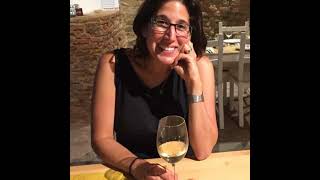
Penina Kustanowitz, an Israeli winemaker at Pinta Winery, talks through her path from wine enthusiast to formal training at UC Davis and her current wines like the Chardonnay "Upstream" and Carignan blend "Go With the Flow." She covers yeast inoculation, temperature control, stuck fermentations, and yes, singing to yeast. Blending is a painter's craft, she says, and Israel's heat waves and desert vineyards shape everything.
Chapters
Welcome to The Kosher Teruah.
I'm Simon Jacob, your host for this episode from Jerusalem. Before we begin, I invite you wherever you are to take a quiet moment and pray for the safety of our soldiers and the safe return of all our hostages. Today's episode takes us on a meaningful journey, both geographically and personally. I had the pleasure of traveling with Pnina and Jack Kastanowitz from Jerusalem to the Pinta Winery nestled in the Negev city of Yerucham. Our visit wasn't just about tasting wines, it was about discovering a story still being written in every barrel and bottle. Penina Kastanowitz is one of Israel's rising stars in the world of wine. From a passionate enthusiast to assistant winemaker at Pinta Winery, her path is filled with curiosity, courage, and creativity. During our drive and at the winery, we spoke about her early inspirations, the challenges of her first vintages, and how she helped shape the identity of a young winery while forging her own unique winemaking voice. This episode is more than an interview. It's an invitation to witness the making of a winemaker. Whether you're a seasoned wine lover or just curious about the stories behind the bottle, you're in for an inspiring and flavorful ride. So if you're behind the wheel, keep your eyes on the road ahead. And if you're relaxing at home, pour yourself a wonderful glass of kosher wine, settle in for this heartfelt conversation with Pnina Kestanowitz.
Pnina, you're in a kind of enviable position. A lot of people who listen to the podcast want desperately to make wine and especially make wine in Israel, which is really kind of crazy. How did you get started on this path?
Um, I've always loved wine. And, uh, when we moved to Israel and there were so many kosher wineries, uh, Jack and I started visiting and going to wine festivals and getting to know people in the industry. Um, we joined the RCC club and met a lot of people who loved wine. We met you through the RCC Club.
Yeah.
And every once in a while there'd be a winemaker who would advertise that he was looking for help in the harvest. Just show up 3 in the morning in some vineyard on a hilltop or in a valley and help with the harvest. And I think that's, that maybe was the first time we did a harvest together. We, we, we went out to, I think it was Tome. It was Tome. We went out to Tome.
Yeah.
And as the sun came up, uh, Jacques Livoria was there and we'd met at different tastings and events before. And I said to him, you know, I'd really love to help you with a harvest at some point. And he said, yeah, that would be great. And then I think we both forgot about that. And I moved on to sommelier training. So I was working with the WSET system and I was I was just about to finish my Level 2 when you called me, Simon, and said, I was just talking to Yaakov and he's very stressed. He has too much work at his own winery and too much work at the Psagot winery. He was the head winemaker there at the time and he needs help. Give him a call. So I gave him a call and he said, would you like to come work at Psagot and be my assistant winemaker? And I said, well, you know, I'm sommelier training. I don't know anything about making wine. And he said, oh, it's easy. I'll teach you. So he did. And I spent the '19 season as his— learning the basics of running a lab and inoculating yeast and helping out at Stem Moshe, his winery, for a while. And then we both left Psagot and focused all of our efforts on his label. And that's when the Pinto family got involved. And when the winery moved to Yerucham, I went during harvest, so I've had 2 harvests now in Yerucham. And that is, I guess, a very long version of how I got started in wine.
No, it's not so long. So tell me what else you've been doing with that, because I know you've now been taking courses in, in UC Davis.
Yes, I just graduated. I just finished my winemaker certification at UC Davis.
Yep.
And I'm about to bottle my third year of wine under my own label, Penina's Wines. Wow. And actually, we are recording this podcast in the car on the way down to Yerucham, where we will be tasting the three wines that I currently have in barrels. I've got a California-style Chardonnay, which is a wine that I try to make every year. We've got a Syrah blend with Carignan from Sichuan, which in '23 I was able to vinify 100%, uh, 100%, uh, Carignan. This year needed some help from some Syrah. And then I was very lucky to get my hands on some Petit Verdot, which I am also making 100% varietal. That we will also be tasting today.
What's, what are the names of the wines that you've got?
So the Chardonnay.
Yeah.
The Chardonnay is called Upstream. Cool. It's called, I originally named all of them in Hebrew and then had to kind of translate them to English, but Neged HaZerem. There's this huge popularity of California-style Chardonnay in the '70s. And then a massive backlash against it. And so right now it's not very trendy to make California Chardonnay.
That's like a malolactic.
It's, it's 100. It's— we, we vinify it in the barrel. We let it undergo complete malolactic fermentation.
It's a buttery style.
Buttery. It's soft. It does retain some acid. And because the The grapes themselves come from a very, very special vineyard in the Upper Galilee. It also retains some fruit. It also has higher acid than most California-style Chardonnays. And I think that's what makes it a really, really interesting wine is that it really has all of these qualities of a California Chardonnay, but also fruit and acid. It's just, it's just a very, very interesting wine. That I decided to make because I love California-style Chardonnay. And when I was consulting with Yaakov what kind of wine to make, he said, make what you want to drink, make what you like. And I said, you know, great advice. I love California-style Chardonnay and it's very much nega dezerem. It's against what's popular, but I'm going to make what I like. So that's what I made.
There are a lot of people who like buttery Chardonnays still. So I, I think you're going to find a lot of people interested in it. But we'll see. We'll see though. I actually own a bottle, not a bottle, a few bottles, but I'm, uh, but I haven't tasted them yet. So I'm really looking forward to tasting them. No, I tasted your, I tasted your, uh, wine from before last year, the '22 Chardonnay. The '22 Chardonnay.
'23 is very different.
Yes, that's what I'm looking forward to.
Anticipating that the '24 will also be different. The '24 is the first time that I shifted from Austrian new oak to French new oak. So I'm going to play with how that affects the wine and see, see what we do moving forward.
Very cool.
And then the Carignan is Go With the Flow.
Okay.
Which I decided whatever the grapes give me, I'm going to listen to the grapes. I'm not going to force a style. I'm not going to go into making this red wine with a preconceived notion, and I'm going to just let the grapes be what they want to be. So that is Go With the Flow. And then coming out soon is my special wine, very first red. Yeah, the 22 Carignan, which I, I've had to rename Tempest, right? Because this wine gave me so much trouble. I had to blend it with some other grapes before I even put it in a barrel. Then I had to blend it with another set of grapes after it came out of the barrel. And then once I bottled it, It went crazy. Like, it just became a very muscular, strong, overpowering, overwhelming wine. And now that we are in '25, uh, I think it's actually finally ready. So that will come out soon. And the other wine that I'm making this year, and I haven't named it yet, is the 100% Petit Verdot. Wow. And the working title for this one is just very literal, Baby Green. That's what it means.
Yeah.
Um, but I've also been known to rename my wine a few times during the winemaking process, cuz I just, I really want it to be its own reflection of its own self.
I know with regard to The Tempest, my daughter Sarit speaks very highly of it. She's tasted it.
Yeah.
And she loved it.
She's one of the few people, uh, that's— I've given bottles to over the years so she can track its development. Yeah.
So she's excited about that.
I'm excited about the release, but the Petit Verdot is, is great.
I can't wait to taste that. So that should be fun. I'm looking, I'm really looking forward to the tastings.
I'm very excited.
Tell me a little bit about what the experience has been learning to be a winemaker. Um, with regard to, you know, the actual hands-on. Have you ever been exposed to things like a fermentation that's stuck?
Oh yeah, all the time, unfortunately.
So how— that's like the dreaded, you know, the absolute terrible dread. Is it that bad?
So, God, there's a lot of different ways I can answer this question. A stuck fermentation is really, really bad and it's really hard to Unstick. Overcome.
Okay.
What we do in winemaking is we try to intervene before it gets stuck. So every single day, sometimes twice a day when there's the ability to do so, we will take a specific gravity reading, which tells us more or less how quickly the sugar is converting to alcohol. And there's a rate of conversion that we are expecting. We expect different rates when we are holding wines at different temperatures. Temperatures. And what we try to find, what we try to intercept before it gets stuck, is when it gets sluggish. So when a wine doesn't convert its sugar to alcohol at the rate that we are expecting it to, there are a number of things that we can do to troubleshoot.
It's too slow? It's doing it too slowly?
If it's too slow, the conversion is too slow early in the process. We know that there's a problem. And most of the time we can intervene by making sure that the wine is at a better temperature for fermentation. If it's going too fast, we'll lower the temperature because we don't want it to go too quickly. If it, if it converts its sugar to alcohol too quickly, you lose a lot of aromatics and other qualities that we want to retain. So really what we try and do is intervene before it gets stuck.
So how can you do that?
So temperature is one way. We tech— we can, we can, uh, raise the temperature. We can raise the temperature. Uh, fermentation will be very slow at a lower temperature, and sometimes we want that. Uh, sometimes we will, if, if a wine is at its— at the end of the fermentation process and there's really not a lot of sugar, left to convert, but we really don't want that little bit left. We can take an active fermentation, one where the yeast is going very quickly, and we can add a little bit of that into the sluggish fermentation. And that sometimes is enough to boost it over the edge. Uh, sometimes we'll reinoculate if we are, if there's enough sugar and it's, it's going too slow and we're not convinced. That, that fermentation will be successful, we will reinoculate with yeast.
Yeah.
And, uh, then we just monitor things very carefully, but really we monitor things on a very regular daily basis so that we can intervene before it becomes a problem.
Is it, when you say reinoculate, is that to give it a, a yeast that's stronger, a yeast that's different that will You know, that's not as passive, that's more powerful.
Oftentimes.
Okay.
There are a couple of strains of yeast that we use to help sluggish fermentations. Uh, there are two main types. We use them in two different scenarios. Um, and oftentimes that will be enough.
Okay.
It's very important when you are inoculating the yeast in the first place, you're using temperature, you're using the correct temperature, you're timing it correctly. You're not shocking the yeast. You're not overwhelming the yeast. You're letting it acclimate to the juice in a prescribed fashion. We can also check for things that might inhibit our fermentation. We have tools in the lab that can check for certain problematic things in the wine, uh, that we can address if need be. Oftentimes I find it's really just a question of patience and temperature. So My favorite thing to do at the winery is to inoculate yeast. There's a, a lot of debate over letting the wild yeast that comes in on the grapes handle the fermentation. There's lots of reasons to choose that. There's lots of reasons not to choose that. Uh, wild yeast is amazing and wonderful, but it is unpredictable and It's a hard thing to work with if you are making wine on a commercial scale. It's risky. Okay. A lot of winemakers will choose to use specific strains of yeast. We know how it behaves. We know what qualities it will impart or boost. But my favorite thing in the world is to get to that state of inoculation where We add the juice into the yeast that's already been mixed with water of a certain temperature, and it just comes together in this beautiful, bubbly, live—
What color?
I don't know. Well, it depends on what color the juice is. So if you're using, if you're inoculating a rosé, it's pink. If you're inoculating red wine, it's this beautiful maroon color. If you're inoculating a white wine, it's this lovely shade of yellow. And my favorite thing about it is how alive it is and how it responds to my voice. So I check on the yeast while it's working, while it's getting to a certain point in its fermentation process, and I sing to it. And that is probably the happiest I get in the winery is when I'm walking around and I am singing to my yeast and I'm watching the bubbles respond to my voice.
How do they respond? That's amazing. That's cool.
I will sometimes walk over to, to a vat where I'm inoculating the yeast and it's not bubbling up or moving as quickly as I'd like it to. And I will start to sing to it and it will literally respond to my voice. You'll see it bubbling up. I have video recordings of this happening, and I really feel like I'm teaching little children, raising little babies, bringing them into the world. So to speak. And it's just my happiest thing when I'm going from vat to vat and singing to them and watching them respond to me. I just love it. It makes me really, really happy. And I really do think that an atmosphere of joy helps the wine ferment properly. There's a lot of research done on plants and talking to plants and singing to plants. And I don't think that yeast is too different. I think that they respond to human touch, human voice, and the atmosphere in a given winery. I think that a happy atmosphere produces happy wine.
Is it very specific, the measurement of the yeast that you use?
So yeah, there, there are very specific calculations that we use to come up with the right amount of yeast to add based on the volume, but also based on the rate at which we want it to ferment. Like I said earlier, if it ferments too quickly, you lose a lot of the fruit, the aromatics, a lot of those special qualities. You need time also. And if you dose it too much, then you have— you will lose that, but you will also have the remnants of the yeast because remember the yeast is there to do a job. The yeast is there. To take the sugar and convert it to alcohol. And if you are left with excess yeast with nothing to do in your wine, and it's already converted the sugar to alcohol, it can create, uh, microbial issues later on. You'll need to sterile filter it out. You don't want leftover yeast hanging out in your barrel with nothing to do. Okay. And you need to put enough in there to overcome the natural yeast, which we said could be wonderful, but also unpredictable.
Right.
One of the, one of the experiments that I have been pushing for at the winery is to let the wild yeast work for a little while before we go in with, with the lab inoculated yeast. Uh, just see what it does. It's an experiment. So we will do that with small vats because otherwise it's too expensive of a failure. If the mistake, if the experiment goes wrong, then we've ruined a lot of wine. This way we do it in small batches and we learn from year to year. So it's really, it's just to learn what yeast is coming in from a particular vineyard. Uh, what does it impart? To the must, uh, how strong is it? Like, will it give us a strong fermentation till the finish, or will it behave sluggishly and leave us mid-fermentation with too much sugar that is yet to convert? We're learning. We're learning all the time.
Okay. So while you've been in a winery and while you've been making wine, What are your favorite varietals? What are your favorite wines that you've tasted through your travels and through what you've been doing?
That's a really difficult question.
Okay.
Because every time I'm exposed to something new and interesting, that becomes my favorite new wine.
Yeah, I get it. Me too. Um, I guess I'm asking, what have you been exposed to recently? Or no.
Goodness. Well, yeah. One of the most interesting things that Yaakov does at his winery is to take a single varietal, could be Chardonnay, could be Viognier, and he vinifies them differently. So I think in the last Chardonnay, which used to be called Playground and now is called Multiple Expressions, ME. We vinified 13 different ways, which means some in oak, some in stainless steel, some in carbonic maceration, um, early harvest, late harvest, harvest from a shade, harvest from more sun exposure. Different types of yeast, and then Jacob will blend them into a single wine, which is his multiple expressions. And it's fascinating what you can learn from a single vineyard. And by the way, my Chardonnay comes from that same vineyard also. He's done the same with Viognier, which is a fascinating varietal. I love Viognier. And I think that Chenin Blanc would really be the next natural white grape to try that with. I would love to make Chenin Blanc, but it is in very short supply in Israel. It's very hard to get your hands on some really high quality Chenin Blanc. Uh, but anytime I get a chance to taste that, I will.
I'm, I'm seeing some super interesting reds coming out now with some varietals like Tanat.
Yep.
And that are just crazy blends.
Well, Tavor has been doing Tanat for a long time.
Yeah.
And I think it's, it's amazing. And they do the Tanat blends, which I love. I think, I think more than a favorite varietal, I think one of the things that I've learned the most about and that has really piqued my interest has been blending. Why you blend, how you blend, how much you blend. That's been one of the most incredible things that Yaakov has taught me. Again, it's not something you can learn at UC Davis or online. Like, you really just have to experience it over and over again. And it's like painting a picture. You can, you can take a very technical course on how to paint a picture, but you have to sit there with the paints. And throw something at a canvas and see what it looks like. And if it doesn't work, you try again. And it's really creating art in a glass when you have a blend, because you're really trying to accomplish a specific end goal with your wine. You want to have a certain approachability to your wine. You want to have certain characteristics, and sometimes a single grape and a single vinification is not going to get you there. And you have to reach for other colors, you have to reach for other varietals, and then you kind of play with, well, how much of this do I want to add? Does that give me what's missing in, in, in my base grape? And you don't want to overdo it. And then you have to kind of anticipate what's going to happen in the bottle over time, or what's going to happen in my barrel when I age it for a year or two. And that's one of the things we're going to be doing today. We're going to check in on the barrels. See if they've had enough oak, see if they need to be blended with anything before we bottle them. Right. And we do this several times while, while it's aging. Now, some people blend before it goes into the barrel. Some people blend after. Sometimes you have to do it twice, but it's this ever-evolving, changing, Substance, your wine, it's never static. It's always going to change. And, uh, you don't want to intervene too much. You don't want to throw too much paint on the canvas. You're going to end up with some big angry blotches. You want to just get the right harmony, the right balance of what it is you're trying to create.
Did you ever do— were you with us when we did the SOB for the first time?
I was not. No.
Okay. So that was my first blending experience. And when we, we'd asked Yakov to create SOB, and when he agreed, he actually came to my house and we had all the people, including, um, Richard Davidoff from England and all the, all kind of the stakeholders, Andy Andy was the person who really started us down this path of— he was really the instigator for SOB, to be honest. And, um, and Avi Davidovitz, obviously. And, and what happened was, uh, he came with all the varietals and we sat around the table and we tasted each varietal. And much to my surprise, each varietal tasted great. Absolutely great. So I said, you know what, what are we doing blending? We don't need to blend. Let's just, let's just put these out on separate bottles. And, uh, and Yaakov said, yeah, okay, we could. Well, let's see. So we combined two and it was very simple. It was very straightforward blending. Everything was like 50/50, you know, I think the biggest difference was maybe, uh, 60, 60/40, but it was, everything was basically 50/50 blends. So he took two of the varietals and he put 'em together and we tasted it and Wow. I was like, I was shocked. It was really good. And it was actually a lot better than each of these single varietals were. And then we blended a third in and then a fourth in and a fifth in. And, and, and so forth and so forth. When we got to the end of this experience, it was like you were tasting complexity. You were tasting accessibility. It was crazy. I'd never experienced anything like that by tasting wine before. It, it's so much different when you're doing comparisons, when you're, that's the real work in a wine, in a winery, when you're actually blending things.
Blending is one of my favorite parts of making wine. Yeah.
I think that that is absolutely the best. I, I would be too scared to actually do it for other people. Um, but actually when we were doing Tohu and Vohu, uh, I remember that I was there for that.
Yeah.
And, and, and we were tasting these things and I said, um, Whoa. So, you know, Yaakov would say, well, do you think that that's okay? And I go, yeah, almost. There's something missing. He goes, yeah, I think so too. He only let me speak first. I was like, I was going, okay, you know, like, so, um, then we'd add something and there was one instance where we added literally less than 1% of, of another varietal into the, into the wine. And it was very specific because we were using graduated cylinders and what have you, but I couldn't believe that it made that big a difference. But it did. It made a huge difference.
It's, it's fascinating. I think the first time I ever reached out to a winemaker to ask a question about wine was Louis Pascoe.
Yeah.
I had just, uh, tried his, uh, Pascoe Project 2. And, um, I was reading the back of the label. Louis, please forgive me if I've got the wrong project. But I think it was something like 3% Carignan. And I thought to myself, what can 3% of anything— Carignan or of anything— do to a blend? And I remember I contacted him online and he answered me and he was just only too happy to answer all of my questions. And I find it's really one of the very special things about winemakers in Israel is how accessible they all are. You asked me how I got into this in the first place. Really, it's at the credit of all the winemakers in Israel who responded to random texts from me, random invitations to come host tastings at my house, random requests for me to come and taste at their wineries. Um, Kobi Arviv and, um, Uh, he's another— Anihailuria and, um, sweatjack. Yes, definitely. And a soft paws, soft paws as well. Eli Shiran, uh, from, um, Goshitsion Winery.
Shrugga.
Shrugga. Sorry. Yeah. Shrugga actually is a fun little story. My friend Jamie, who, who really I should have mentioned earlier. Is the one to really, really get me interested in wine. Jamie had made wine with a friend in Montreal years ago. Jamie and I met in college at Bar Ilan, and we had just come back to Israel, and he calls me and he says, there's this guy in Efrat with a dunam of grapes, and he's not making wine this year, and he's just giving it away. Do you want to go get some grapes and make some wine? And I said, yeah, sure, let's do that. So off we go, and we pick the grapes, and Jamie looks at me and says, We need sulfites in order to disinfect the containers that we're going to use. So we drove off to Gush Etzion Winery and we go to the back door and we knock and we say, we're going to make some wine. Can we have some sulfites? And my God, he gave us a bag of sulfites and we used it to disinfect the plastic and we made the most incredible wine. The next year we did not make incredible wine, and unfortunately that all went down the sewer. But we got very lucky that first year, and that really lit the fire in me to explore this some more.
Yeah.
And reach out to winemakers and just overwhelmed by how generous they are with their information, their time, their knowledge. And, uh, in particularly Yaakov, his willingness to teach. I call him my wine rabbi. He, like you said, the way he waits for you to speak first and he asks you leading questions. Yaakov's always teaching and he's always letting you get there in your own pace. And around the time that you blended the Tohu V'Bohu, my youngest son Dov had a bar mitzvah and it was COVID. It was not going to be a traditional bar mitzvah and he was really bumming about that. And he had made wine with Jamie at age 4 and he kind of grew up with it. And so in honor of his bar mitzvah, he spent a day with Yaakov at Ste Moshe, and they did a white blend and a red blend. And he patiently taught my 13-year-old how to taste wine, how to blend wine. And he produced some really, really amazing blends that we gave out at the bar mitzvah and to people who couldn't be at the bar mitzvah. Um, and the red I think was called Ad Halom, and that was a Carignan and a Pinot Noir blend. And Jack, do you remember the white blend? We called it Livnat HaSnepir, and I am not remembering the varietals, but it was delicious.
It's so special to see the pieces come together. It's just another whole, uh, experience.
It's fascinating. Making wine is, is really just one of the most fascinating things I've ever been so lucky to get to do.
It's also so variable. Like there's so many variables that feed into it. People think that you make wine, you take the grapes, you crush them, you ferment them, you throw them in the, in a barrel. After a couple of years, you take the wine out of the barrel, put them in bottles, and that's it. You're done. It's so, so incredibly different than that. There's so much more and so many variables that you can— that, that interact to get a consistent wine from one year to the next is like almost— it's almost magical.
It is absolutely magical. There's, there's, there's a limit to what you can impose on a grape. At the end of the day, your, your grape comes to you as it is. It almost tells you what it wants to be. If that meets your commercial goals, then you're very, very lucky. If not, you gotta work really hard, uh, to, like you said, maintain consistency from year to year.
It's it's crazy. I don't know how, I don't know how winemakers actually do it, to be honest. I don't know how. It's also one of the things that made me really nuts about Moscato. Moscato d'Asti that everybody jokes about and laughs about, the blue bottles. They are, you know, people say it's just sugar water. You know, they just put grape juice in sugar water and that's, and they, they ferment it and they make wine and that's, that's it. It's true wine.
Absolutely.
And they get this consistent taste of Moscato every year. And the quantities that they're making are— I've never seen a winery make more wine than when I visited Asti and saw the, saw the, the vats. The vats look like nuclear missile silos. They're up to the ceiling. They're these gigantic vats. And you walk into this room and there's just lines of them. And it, I'm telling you, it looks just like missile silos. It's crazy. And they're all filled and how they get a consistent wine coming out of that is totally beyond me. It's just amazing.
As I was listing the winemakers who have been generous and shared their time with me, Yep. And I, as I was listing everybody, I was like, my God, I'm gonna forget somebody. I'm gonna forget somebody. I'm gonna insult somebody. Yisroel Flan has sat with me several times and really talked to me a lot about the history of winemaking and his time at Carmel. And I would be remiss if I didn't mention him.
He's such a special person.
Yeah, he's a—
he is like a senior statesman.
And Eli Ben-Zaken.
Yeah.
And, um, and Aeron Peak.
Yeah.
I would be remiss if I did not mention, what are they, the Quartet now?
Yeah, the Quartet. What was your most difficult experience in making wine?
So here's the thing about, here's the thing about grapes. Uh, like I said, they, they tell you what they need. And unfortunately here in Israel, we've had some heat waves that are becoming more common than not. And what that means for the grapes and their harvest time and how quickly we need to press them or crush them or get them safely into barrels and inoculate them. The pace at which it sometimes arrives at the winery, either because they've ripened too quickly, or we're really worried about sunburn or heat stroke, and we want to get them off the vines before too much heat damage occurs. I'd say the hardest thing is the pace at which the grapes sometimes come into the winery and need immediate attention. You don't wanna let them sit and get hot. You don't want them to start fermenting on their own, cuz the skin sometimes break and that happens. You want to receive the grapes, get them to the temperature that's optimal for how you wanna crush them. And you want to process them. And by process, I mean crush them, take their pH, um, check their sugar levels, do all the testing and all of the, I'd say, care and feeding of the must in a timely fashion. And sometimes you are just surrounded by crates and crates and crates. Of grapes that just arrive faster than you can attend to. It's like in Fantasia, The Sorcerer's Apprentice, where the water keeps coming and coming and coming, and you look up and there's another truck coming to deliver your grapes, and you're like, okay, I've run out of space to put the grapes now. What do I do? I've run out of vats. I've run out of space. I've got a backlog in the lab for taking all of their initial lab readings. And I'd say that's probably the hardest thing is the pace at which the grapes sometimes come in. And you can never anticipate it. You can never anticipate it. So it's not like you're going to wake up one day and say, okay, today's going to be absolutely insane. And so here's how we're going to schedule the day. A lot of times you get the grapes when the pickers are available, when the truck drivers are available to bring it. Um, a lot of things that are just out of your control and you have to pivot as best you can when those grapes come in and they need your attention.
Cool. Especially you're, you're in, you're down in the desert. So especially the heat probably impacts you guys more, even though you're getting grapes from all over. But you do also have vineyards that are down in the desert.
We do. We do. We have probably one of the longest, I guess I'd say, harvest seasons in Israel because the grapes from the desert ripen first. And the grapes up north ripen last. And we also do dessert wines and late harvests. So we start, uh, making our wine pretty early in the season and we go late into the fall because we are making wine from grapes that come from all over the country, lots of different climates and microclimates. Um, and that keeps us on our toes.
Right. Wow. Are there any special things to do with late harvest stuff? Late harvest grapes?
Absolutely. So first of all, late harvest grapes are generally used for dessert wine. The longer you leave the grape on the vine, the more sugar accumulation you have. Um, they're used for sweet wine, but also the longer you leave it, the more, the more pronounced certain aspects are. So you'll get more, uh, fruit flavors. You'll get more tropical fruit flavors than let's say an early harvest, which will give you more, uh, let's say in a white wine will give you more like apples, citrus, uh, those types of things. And if you leave it In a warmer climate, you leave it on the vine longer, you'll get more peach. Even later, and you'll get more of the tropical fruits. So you do get different characteristics from the same grape if you give it longer hang time. But really, people use dessert wines. We will take a late harvest, and if we want to have those extra flavors in a particular blend, those characteristics, we'll blend them in. So, uh, everything really has a very unique purpose.
How do you, when you're making a dessert wine, that's got a lot of, um, a lot of sugar or a late harvest, um, wine, that's got a lot of sugar in it. How do you just not let it become all alcohol? How do you stop the yeast?
So, uh, back to your earlier question, sometimes the sugar will just overwhelm the alcohol conversion. It'll stop on its own.
Okay.
And you will get a sweet wine. Um, and there are ways that we can stop the total conversion of all of the sugar into alcohol, uh, so that you are left with the sweetness. Uh, one of the ways is to play with temperature. You bring it down to a temperature at which it is not optimum for the sugar to continue to ferment into alcohol. And sometimes we use SO2 as a way to stop the fermentation process.
I'm really kind of focusing on the small boutique wineries because there's just so much, um, diversity of what's going on in these things. It's really crazy.
Yeah. When you have a, when you have a small, when you have a small production, well, it's kind of a double-edged sword. On the one hand, you can really allow yourself to take risks and to experiment, but if something goes wrong, you lose your, you lose your shirt, you lose your entire, uh, your entire batch.
I don't know how people make money in these small wineries.
I don't know how they, it's really impossible. I know.
I don't know how they do it.
From what I see, from what I can see, and I'm not a business expert, but I have been doing this for 6 years now. Uh, really the way you make money is on scale.
Right.
One of the things that I've been lucky enough to do is make on such a small scale, um, that I can set my prices based on what I think the wine is worth and not necessarily How much profit I need to make.
Right. And you can drink your own wine.
I drink most of my own wine. It's a really bad business plan.
Hey, if you make what you like and you like what you're drinking, it's great. Why not?
It really works out.
I know.
I will, I will share a funny story.
Please.
Uh, that happens. Every single year, every harvest, whether we've been in Psagot or Ste Moshe or Yerucham, there's a point where fermentation is very, very vigorous. And as I said, we take samples every morning and we check the specific gravity to see how quickly they are fermenting. And in those big stainless steel vats, there are these little spigots, there are these little pipes that you open and it's a little tiny faucet and you get your sample out. There are certain stages of fermentation where the, the strength of that fermentation is so powerful that you'll get an explosion of, uh, of the juice, of the must in your face, no matter how careful you're being. Or let's say you've got some skins that are obscuring the exit of that and you need to clear the pipe, you need to clear the spigot. And then as soon as you do that, then you get nailed in the face with a really, really strong and sticky stream of must. And I have a collection of photographs of me at various stages of being soaked, of being soaked by very picturesque and colorful wines. Every single color has had its chance. And one of these days, I think I'll make a collage of these photographs of me just being completely soaked by wine splatter. My very first time that that happened At Psagot, I was very new. I wasn't given a uniform. I just came in whatever comfortable clothes, and usually those were khakis. So one day I get completely splattered with red wine and Yaakov looks at me and says, "I should have mentioned earlier, this is why we in the winemaking industry, we wear dark colors. We wear dark-colored clothes." So from then on, I tried to only wear dark-colored clothes. A fun way to make the ride go quicker.
Yeah. Thank you.
Thank you.
Thank you for being on the Kosher Terroir.
Thanks for having me.
I didn't even have to come yet. Well, we started in Jerusalem, but it's, uh, it's kind of fun. And now we're entering into the, uh, Pinto Winery. So that's kind of a cool end to, uh, an episode.
Very cool. Thank you so much.
This is Simon Jacob again, your host of today's episode of the Kosher Teruah. I have a personal request. No matter where you are or where you live, please take a moment to pray for our soldiers' safety and the safe and rapid return of our hostages. Please subscribe via your podcast provider to be informed of our new episodes as they are released. If you are new to The Kosher Teruah, please check out our many past episodes.










