Summer Wine Heresies
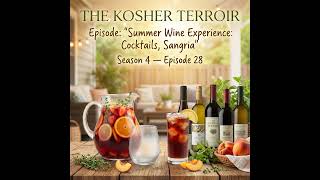
Solomon Simon Jacob argues that bright, acidic, affordable wines are meant for mixing, not reverence. He tastes four wines as cocktail bases, then builds five summer drinks: an Honest Spritz, White Peach & Thyme Sangria, Calamotxo, Frozen Rosé, and a Wine Highball, mapping each to holidays from Memorial Day through Labor Day.
Chapters
Welcome to the Kosher Teruah. I'm Solomon Simon Jacob, your host for this episode from Jerusalem. Before we get started, no matter where you are, please take a moment to pray for the safe return home of all our soldiers. If you're driving in your car, please focus on the road ahead. If you're relaxing at home, please open a delicious bottle of kosher wine and pour a glass. Sit back and relax. There's a bottle of wine somewhere on this earth that a winemaker bled over. Two years of his life, he watched the weather like a worried parent. He pulled berries off the vine and chewed the seeds to taste the tannins. He lost sleep over one rainstorm in September. And tonight on this program, I am going to pour cola into a glass of wine. Stay with me, because by the end of this episode, you're not only going to forgive me You're going to do it yourself on your own porch, and you're going to be delighted. This is the Kosher Terroir. I'm Solomon Simon Jacob, and today we are taking wine out of the sanctuary and into the backyard. Cocktails, sangria, frozen rosé in a glass that's sweating in the sun. We're going to taste the wines that were born for this. Build a few drinks that'll make you look like a genius, match them to every long weekend in your summer calendar. And along the way, I'm going to commit to a series of small, delicious heresies. We'll keep count. Pour something cold and let's begin. So let me deal with the snob in the room first, and the snob in the room might be you. That's fine. It was me too, for about 15 years. There's a feeling, if you love wine, that mixing it with anything is a kind of vandalism, that the winemaker's whole job is to capture a place and a season in a bottle, and your whole job is to receive that quietly, ideally with the right glass and a respectful silence. And cutting it with soda and orange slices. That's spitting in the sanctuary. I want to dismantle that because it rests on one mistake: the assumption that all wine is the same kind of thing. It isn't. Here's the rule that resolves the whole argument, and I want you to write it on your heart. You never mix your library bottles. You mix the wine that was made to be mixed. Those are two different products that happen to share a name. The age-worthy, structured, contemplative bottle, the one with something to say, you leave that one alone. You give it your attention. But the bright, young, cheerful bottle that was made to be drunk this summer and not a summer later. That wine wants to go in a pitcher. Using it for sangria isn't a desecration, it's an honest, correct use of the thing. And this is not some modern degeneracy, by the way. Sangria and its cousins go back centuries. Wine cut with water, with fruit, with spice, long before refrigeration, all around the Mediterranean. An entire wine culture, the Veneto in northern Italy, basically runs on the spritz at 6 o'clock in the evening. These are not corruptions of wine culture, they are wine culture. The snobbery is a recent invention. Heresy count: that's heresy number 1, and it wasn't even a heresy. Mixing humble wine is just correct. We're warming up. Okay, so if some wine is built for this, what is the build? What am I as a winemaker or a consumer actually looking for when I pick up a bottle to mix? Let me give you the checklist, because once you have it, you'll never buy the wrong bottle for a party again. First and most importantly, acidity. High acid. This is the whole game. The moment you add sugar— and fruit is sugar and soda is sugar, and a sweet liqueur is sugar, you need acid to push back, or the drink goes flat and flabby and cloying in your mouth. Acidity is the spine. A wine that tastes a little too tart on its own, a little austere, a little lean, is very often the perfect base. Keep that in your pocket. It's counterintuitive and it's gold. Second, fruit forward and easy on the oak. You want a wine that leads with bright fruit, not that leads with barrel, because you're about to add citrus and herbs and maybe a spirit, and the last thing you want is a heavy vanilla and toast oak in the wrestling match with a lime. Save the oaky brooding reds for a steak in January. Third, modest alcohol. You're either adding more booze in a cocktail or you're melting ice into it over an afternoon. Either way, start moderate. A 14.5% monster is not your friend in the sun. Fourth, and this is just for the reds, soft tannins. You want supple and juicy, not grippy and structured. Here's why: tannins turn bitter when they get cold and when they sit over ice. That grippy young red that's all puckery on the edges. It'll taste like aspirin in a sangria. The juicy, low-tannin red that you could practically drink chilled— that one's perfect. And fifth, the easy one: price. This is a $12 to $18 a bottle job. This is not a night for a $60 bottle. Part of the joy here is that the wine is humble. Spending more doesn't make a better sangria. Frequently it makes a worse one, because the thing you pay extra for— the oak and the structure and the age worthiness— are exactly the things you don't want in the picture. Okay, now this is the kosher terroir. So let me put a fine point on what this means for our table, and then we'll go taste. Two things. One, it has generally never been easier to do this kosher and do it well. The wave of fresh, high-acid kosher rosés and crisp, unoaked whites in the last decade Israeli, French, Italian is exactly precisely the kind of wine this whole episode is built on. The category grew up right in our hands. Item 2, a practical one: mevushal wines. For the uninitiated, mevushal is wine that's been flash heated gently pasteurized so that it keeps its kosher status even when it's handed or poured out by anyone at the table. So at a serious tasting, that's a trade-off people argue about. But in a summer party where 15 different hands are reaching into the same pitcher, where your cousin is topping up his own glass Voucheol is honestly a feature. It's stable, it's forgiving, it pours and it travels and it doesn't fuss. For what we're doing today, it's a gift. So here's where we're headed. First, I'm going to pour 4 wines and taste them with you, but not the way you've been taught. We're going to judge them as bases. Not, is this a lovely wine to sip? But what could I build out of this? It's a completely different lens, and once you've got it, you can't unsee it. Every wine, every drink, every ratio— it's all in the show notes. So don't scramble for a pen, just pour. And come taste with me. All right, I have 4 wines in front of me, 4 glasses, and before I pour the first one, I need to retrain your palate for the next 15 minutes because we are going to taste these wrong on purpose. Here's what I mean. When you and I normally taste a wine We're asking, is this complete? Is it balanced? Is it elegant? Does it have something to say all on its own? That's the sanctuary question. Today we're asking a different one. Today the question is, what could I build out of you? We're not auditioning soloists. We're auditioning the foundation of a house, and a great foundation on its own is kind of boring to look at. That's the point. So let me tell you why I trust acid so much, and then we'll pour. Years ago, at one of the first harvests I attended of a mentor— a mentor with old hands 40 vintages. The kind of man who tasted grapes off the vine and could tell you the pick date within 3 days. Everybody in my past seemed obsessed with sugar. I took a refractometer in hand and I was measuring sugar, chasing ripeness, chasing that big lush fruit. And he watched me do this. He took a berry and handed it to me and said, 'Stop tasting for the sweet, taste for the spine.' And he had me chew the grape to find the tartness, that little zing on the sides of your tongue. And he said, 'That's the part that survives. Sugar fades.' Fruit fades, but acid is the skeleton everything else hangs on. A wine with no acid is a body with no bones. It slumps. I never forgot it, and it turns out it's the single most important sentence in the world of summer drinks too, because everything we do today, every spoon of sugar, Every orange wheel, every splash of soda is weight we're hanging on the wine. And if there's no skeleton, the whole thing slumps. So when I tell you to buy for acid, it's a famous old winemaker talking through me. Let's pour wine one, the rosé. The most valuable player in summer. This is a pale one. Look at the color, that whisper of pink, almost onion skin. Provence built its entire global reputation on this exact shade, and there's a reason. Pale, dry mineral rosé. Now I'm going to nose it. Strawberries, white peaches, a little citrus pith, maybe a wet stone thing underneath. And on the palate, there it is. That's the zing. That's the spine my mentor was talking about. It's almost too tart to be cozy on its own, which means this is the perfect base And that little excess of acid is exactly why this is your MVP. You can spritz it, you can build white peach sangria on it, you can freeze it into a frosé later in the show. If you buy one bottle off this episode, buy a bright, dry rosé. And the great news for our table The kosher rosé category is absolutely exploded in the last 10 years. Israel, Southern France, Italy— pale, dry, high acid, modestly priced. The shelf is full of exactly what we need now. That was not true 15 years ago though. Okay, back to the heresy count check. Still zero true heresies. We're, we're just tasting. The crimes truly start in part 3. Be patient. Okay, wine 2. A crisp, unoaked white. Sauvignon Blanc, or an Israeli white blend, or a zippy Italian. Let's nose it first. This one seems louder. Grapefruit, cut grass, green herbs, a little jalapeño and lime if it's a real Sauvignon Blanc. No oak anywhere. Nobody put this in a barrel, and good. Taste is clean, lean, racy. Finish is clean and a little bitter on the edge in a way that makes you want another sip. The verdict: this is the backbone of a white sangria. It's got the acid, and crucially, it's got this green herbal register that loves cucumbers, loves basil, and loves thyme, loves stone fruit. Where the rosé is all soft red fruit, this one is crisp and gardeny. Keep both in your repertoire. They build different drinks. Quick story about this one. In Veneto, Northern Italy, home of the spritz, many years ago— and the thing that floored me wasn't a famous restaurant, it was the random little bars at 6 PM packed with every single person standing with the same orange drink, not sipping a fine wine in reverent silence, talking loudly with their hands with a cheap fizzy wine in a cocktail. And it reframed wine for me entirely. To them, this wasn't lowering the wine. This was The wine doing its actual job, gathering people at the end of a workday. That bar did more for my philosophy than any cellar tour. We'll build that exact drink soon. Wine 3: a young, juicy red, low tannins. This is the one people get wrong. Here's where buyers stumble. So listen close. When most people hear red wine for sangria, they reach for something big and structured because it feels generous. Wrong instinct. Knows this. I want bright red fruit— cherry, raspberry, a little spice— not a wall of oak and black fruit and tannin. And on the palate, the test is the finish. Does it grip your gums and dry your mouth out? If it does, put it back. We want juicy. We want the kind of red you could— and here's the heresy number 2 coming— chill in the fridge for about 15 minutes and drink cold. So we— our heresy count is now at 2. Chilling red wine. You're all wrong. There's a whole category of light reds in France and Italy served cold on purpose. 15 minutes in the fridge. Try it this week and write to me. Why does a juicy, low-tannin red matter so much for sangria? Because of the cold and the ice. Tannin, that grippy drying compound, turns bitter and harsh when it's cold and when it sits over melting ice for an hour. So the big structured reds that are lovely warm in the winter become genuinely unpleasant in the cold pitcher. The cheerful, juicy red, the one with no hard edges, that one gets better cold. So the verdict This is your classic red sangria base, and it's the wine going into the cola drink that I promised you in the beginning. Yes, we're really doing that. Wine 4: the sparkler. Kosher Prosecco style, or the traditional méthode bubbly. Listen to that. The nose of green apples, a little brioche. If it's a fancier kind, citrus. Taste is crisp, frothy, refreshing. Now this one comes with the single most important technique note in the whole episode, so let me say it slowly: you never put bubbles in the pitcher. Never. If you stir sparkling wine into a batch of sangria, the night before, by the time you serve it tomorrow, it's flat, sad sugar water. The bubbles are delicate. They're the first thing to die. So sparkling wine is not a base, it's the finish. It's the splash you add to each individual glass at the very last second, so every single pour gets that lift. And that fizz and life. Build your base ahead, crown it with bubbles at the last minute. That's one rule that separates a host who knows from one who doesn't know what he's doing. So look what we've got: a soft red fruit rosé, a green herbal white, a juicy low-tannin red, and a sparkler that stays out of the picture until the last moment. Four totally different builds. But did you catch the thread running through all four? Acidity. Every single one I praised for the same reason— that zing, that spine, that tartness that's almost too much on its own. That's not a coincidence. That's the whole secret of the episode Hiding in Plain Sight. If you remember nothing else from this tasting, remember the counterintuitive rule: the wine that's a little too tart to love on its own is usually the one that's about to make something magnificent. By the the lean one, buy the zippy one, buy the one your snob friends call too acidic. Then bring it to me in the next chapter, because now, now we start building and the heresies get real. Okay, glasses are clean, the wines are open, and I've been promising you crimes since the first 30 seconds of the show. It's time to pay up. But before I pour a single thing, I want to give you the one idea that makes all this make sense. Because if you listen up, you'll never need a recipe again. Here it is: a cocktail is just blending by another name. That's it. When a winemaker's in the cellar deciding how much of this barrel to add to that tank, they're blending 4 things: acid, sugar, alcohol, and aroma. When you're standing at your counter building a drink, you're balancing the exact same 4 things. Same instinct, different glass. So you already know how to do this. You've been tasting your whole life. Let's build. Build 1: The Honest Spritz. We start where the Veneto starts, the spritz. And I'm going to give you the classic, and then I'm going to give you the winemaker's version. The classic is a rhythm you can remember drunk, which is actually the point. 3-2-1. 3 parts sparkling wine, 2 parts bitter aperitif, and 1 part soda. Big glass, lots of ice, fat slice of orange. Listen to it. It sounds just like summer. Now, why does this work? Mechanically? Two reasons. They're both winemaking reasons. One, the bitterness. In heat, your palate gets tired and sweet things start to get unpleasantly excessive fast. The term used is cloying. Bitterness scrubs the palate clean and makes you thirsty for the next sip. It's the same reason an Italian reaches for something bitter before dinner. 2. The bubbles. Carbonation physically lifts aromatic compounds up out of the glass and into your nose. Bubbles aren't decorative, they're a delivery system. They make the whole drink smell louder. Now here's my vision for this audience: the standard aperitif can bury the wine. Sometimes you taste everything but the wine. So I cut the bitter component back and I add fresh citrus and a longer pour of a really characterful sparkling base. So the wine leads, the bitterness just frames it. Same skeleton, but now you can actually taste the terroir we care so much about. That's the honest spritz. It's honest because the wine's still in charge. So from a heresy count, none here. A spritz is the most respectable thing you'll do all summer. So hold on. Build 2: White Peach and Thyme Sangria. This is the one that teaches you the most. So I want to slow down. We're building on the crisp herbal white from the tasting. Into the pitcher, ripe white peaches in wedges, a few sprigs of fresh thyme, a little sugar, a squeeze of lemon, and the wine. And then the most important instruction in the entire recipe: You put it in the fridge and you walk away overnight. Here's why, and this is real chemistry. When fruit sits in wine, a slow exchange happens. It's called maceration, the same word we use in the cellar when grape skins sit on juice. The sugar and the acids and the aromatic oils and the peach slowly migrate into the wine, and the wine migrates into the fruit. Given a few hours, they stop being wine with fruit floating in it and become one integrated thing, a single drink that tastes composed of the assembled components. If you make sangria and serve it to 20 minutes later, you've got juice with a garnish. If you make it the night before, you've got sangria. Time is the ingredient you can't buy and can't rush. And why thyme? Why an herb? Because it adds aromatic lift and complexity without adding sweetness. That's a pro move. Everybody reaches for more sugar and more fruit when a drink tastes flat, and they make it heavier. Herbs give you intrigue and perfume with zero extra weight. Thyme, basil, rosemary, a few crushed mint leaves— these are your secret weapons. Restraint, not more stuff. So the rule this build teaches is build the base the night before. Add the bubbles and the ice only when you pour. Make-ahead is not laziness, it's the actual technique. The host who relaxes at their own party is the host who did the work last night. Okay, we're up to build 3, and they call it calamotxo. Where the open is paid back in full. Here it is: pour the juicy young red and pour an equal measure of cold cola right on top. Ice, a wedge of lemon, and stir. That, my friends, is the sound of Heresy Number 3, and it's delicious. Heresy count 3: cola in wine. The snob in the room has left the building. Good riddance, more for us. Let me defend this because it is genuinely technically defensible, and that's the fun of it. This drink is called calamotxo, and it is not some sad student desperation move. It's a beloved Basque institution. The story goes it was born at a festival in the Basque Country in the 1970s. A crew running a drink stand discovered their bulk red wine had turned, gone a bit off, and rather than dump it, they cut it with cola to rescue it, gave it this jokey name and it became a phenomenon. Today it's poured at festivals all across Spain. It has a heritage. But here is the winemaker's defense, the real one. Think about what cola actually is. It's acid, it's sugar, and it's a spice and vanilla aromatic profile. Cola is basically vanilla, citrus, and warm baking spice. Now think about what we add to expensive red wine to make it richer and rounder: oak barrels, which give us vanilla, baking spice, and a softening of the edges. Do you see it? Cola does to a thin, cheap, young red almost exactly what an oak barrel does to a serious one. It adds the vanilla, it adds the spice, it rounds the sharp edges, it fills in the hollow middle, it completes a wine that was never going to be complete on its own. It's not vandalism, it's a 5-second barrel aging program in a glass. Taste it before you judge it. Every single time, the skeptics go silent. Build 4: Frozen Rosé, or as they call it, Frozé. Now we get fancy and we get a little nerdy because this one is pure technique. You'd think frozen rosé is obvious—wine, ice, blender, done. It's not, and if you do it that way, you'll make pink water. 2 things you need to understand. First, don't add ice. Freeze the wine itself. Ice in a blender just dilutes. It melts and waters down everything you've worked for. So instead, you pour the rosé into a tray and freeze it into a slush ahead of time, so when you blend You're blending concentrated wine, not wine plus water. More flavor, not less. But here's the chemistry: pure wine won't freeze into nice scoopable slush because the alcohol lowers the freezing point, and you get a rock-hard useless block or a sloppy mess. So you stir in a spoonful of sugar first. Sugar lowers the freezing point further and changes the texture. So instead of a brick, you get that perfect soft scoopable sorbet consistency. That's not a garnish trick. That's Food Science doing you a favor. So we're now up to heresy count 4. We have now frozen wine solid on purpose. Somewhere, a sommelier just felt a chill and doesn't know why. And one more thing, because it explains the whole flavor design: cold mutes aroma. That's why frozen food needs more seasoning than hot food. So when you freeze rosé, all that delicate strawberry perfume goes quiet. The fix? You over-aromatize on purpose. You blend in extra fresh strawberries and a good squeeze of lemon, more than seems reasonable, precisely because the cold is going to swallow half of it. You build it loud so that it lands right. That's the kind of thinking that separates the real frosé from Pink Slush. It's theater, it's gorgeous in the glass, and it's a showstopper at any summer party. Build 5: a highball for a long afternoon. And let me leave you one more quieter one, because not every drink should knock you over. And this is where the smart money is heading. A tall glass, lots of ice, a measure of crisp white or rosé, top with soda water, a long, long ribbon of citrus peel— lemon or grapefruit— squeezed or expressed over the top so the oils spray across the surface. That's it. It's barely a recipe. It's wine lengthened. Here comes heresy count 5: ice directly in wine on purpose. We've made peace with it by now. Why does this one matter? Because it's low and slow. Half the alcohol, twice the refreshment, and you can have 2 or 3 across an afternoon. And still be standing, still be charming, still know everyone's name at 5 o'clock. The whole world right now is moving towards lighter, lower alcohol, more sessionable drinking. The 'I want to enjoy this all day, not survive it' crowd, and the wine highball is the most elegant answer to it there is. Don't underestimate the quiet drink. Sometimes it's the most sophisticated thing on the table. So look at what we built: a spritz that lets the wine lead, a make-ahead sangria that taught us patience and maceration, a glass of glorious cola heresy that's secretly oak aging, a frozen showpiece that's secretly food science. And a quiet highball for the long game. 5 drinks, and every one of them came back to those same 4 levers: acid, sugar, alcohol, aroma. The same 4 I pulled in the cellar. You honestly already knew how to do this. Next, we hang these on the calendar, because the right drink at the wrong moment is just a missed opportunity. Let's talk about your summer. So now we have 5 drinks in our pocket. But here's the thing I believe deeply, and it's true of wine at a dinner table, or it's true of a spritz on the lawn: the right drink at the wrong moment is just a missed opportunity. A frozen rosé is is magic at 2 in the afternoon in July, that same frozen rosé handed to someone on a cool evening in September just makes them cold and a little confused. Matching the drinks to the moment is its own small art, and it's the difference between a host who has good drinks and a host who reads the room. So let's walk the summer calendar together, front to back, and I'll hand you the right glass for each moment and the one-line reason why. Yom Ha'atzmaut in Israel and Memorial Day in the US. We start at the gate. Memorial Day weekend, the unofficial first day of summer. The day the porch furniture comes back out and everybody mentally clocks out of winter. The move here is restraint. This is not the moment for your showstopper. This is the moment to set a tone, and the tone is, we're casual now, the season has turned. So you pour an honest spritz. It's bright, It's low stakes. It's celebratory without being a production. It says summer's here without you having to announce it. Think of it as the opening note of a long piece of music. You don't open with a crescendo. You open with something that makes everyone lean back in their chair. Save your fireworks They're literally coming later. The Fourth of July in the US. Because here come the fireworks. The Fourth, the biggest, most crowded, most chaotic backyard event of the American summer. A lot of people, a lot of heat, a lot of hours. And the headline here isn't a recipe. The headline is one word: Batching. Let me tell you the difference between a good host and a frazzled one, because I've been both. The frazzled host is the one stuck behind the cooler of the entire party, building drinks one at a time, missing the whole event while the line forms and the burgers burn. The good host did the work last night and is out on the lawn with a drink in their hand Batching is how you become the second person. So for the fourth, you make a double batch of red sangria the night before. That juicy, low-tannin red, the fruit, the maceration time we talked about, all of it done and resting in the fridge before a single guest arrives. It scales beautifully. It actually improves sitting overnight. And it frees you completely. And let me give you the one piece of math that makes you look like a professional. One standard bottle of wine is about 5 glasses, but once you add fruit and ice and a splash of something on top, call it closer to 6 or 7 servings per bottle in sangria. So for a party of 15 will have 2 or 3 each. You're looking at 6 or 7 bottles of base wine. Do the math once the night before and you never run out. You never panic buy warm wine from a gas station at 4 PM again. And if you want a patriotic visual, a red sangria, a white sangria, and a rosé lined up gives you red, white and pink on the table without a drop of food coloring. Let the wine do the decorating. And then the other end comes the bittersweet one— Labor Day, Rosh Chodesh Elul in Israel. The send-off. The evenings have a little edge to them now, the lights going gold earlier, and everybody feels the season closing. Whether they say it or not. This is the frosé curtain call, the last truly hot afternoon drink of the year. So send the summer off in style with a showpiece. But— and here's where reading the room matters— as the sun goes down and it actually cools off, this is the moment to pivot. Retire the frozen drink and bring out the slightly richer sangria. Start nudging towards stone fruit, plums, late peaches, even a few blackberries, and a base with a touch more body. You're building a bridge. You're walking your guests gently from summer to fall in a glass. That's a beautiful thing to be able to do, and almost nobody thinks to do it. Now, the calendar isn't the only big three. Most of summer is the small stuff, the random Tuesdays, the spontaneous gatherings. So let me go fast, rapid fire, one drink and one reason each, so you're never caught flat-footed. A weeknight cookout, no notice, people just show up. Kalamucho. Red and cola. Zero fuss, no overnight prep, no special shopping, and it turns 'I have nothing to serve' into the most fun drink of the week. The beach day or the park picnic. Pre-batch a white or rosé sangria. Into a thermos or a sealed jug. And crucially, no bubbles, because there is nothing to go flat and nothing to explode in your bag. The make-ahead drink that travels. Pour it cold out of the thermos and you're a hero on a blanket. A garden party, a bridal shower, something pretty. Frose and a delicate white peach sangria. These are the photogenic drinks. They look like the event feels. The drink is part of the decor. Or maybe a long afternoon of watching a game. The wine highball— low alcohol, sessionable, refreshing. You can go the full 9 innings or the whole match and still be good company at the end of it. One drink, one reason. That's the whole skill. You're just asking, what does this moment need? And answering honestly. And that brings me to the single most useful thing I can give you in this entire episode, because I don't actually want you to memorize 5 recipes. Recipes fall out of your head by the time You're in the store. I want you to memorize one formula, and from it you can reverse engineer every drink we've made and 100 we haven't. And here it is, say it with me: a base wine, a little something sweet, a lot of something sour, some fresh fruit, and something bubbly on top. Built ahead and finished in the glass. That's it. That's the whole episode in one breath. Base wine, a little sweet, a lot of sour, fresh fruit, bubbles on top, made ahead and finished at the last minute. Internalize that and you're free. You'll never be a slave to a recipe card again. Got a bottle of white or some peaches? You already know what to do. Got a juicy red and a lemon? You know the formula is the thing. The recipes are just formulas wearing different outfits. And notice it's the same balancing act from the cellar one more time. A little sweet, a lot of sour. The wine is your base, aromatics on top. Acid, sugar, alcohol, aroma. It's been the same four levers this entire episode, whether it's blending a vintage or filling a pitcher on Tuesday. That's not a coincidence. That's the secret the whole show has been circling. So we've tasted the wines, we've built the drinks, we've hung them on the calendar. All that's left to do is send you off with the philosophy that ties the whole heretical, joyful afternoon together. Let me take you back to where we started. I told you about a winemaker who bled over a bottle. Two years of his life chewing seeds on the vine, losing sleep over a September rainstorm, pouring everything he had into capturing one place, one season in glass. And then I told you that tonight I was going to pour cola into a glass of wine. And we did. We called it the Calamotxo. And I'd bet a few of you actually got up and made one halfway through the show. Here's the thing I most want you to walk away with, and it's the thing that bottle of wine and that glass of cola have been arguing about the whole episode. They were never actually enemies. That was a trick. The whole time you thought the lesson was loosen up, stop being a snob. That's part of it, but the deeper truth is bigger and kinder than that. Wine is a living, generous thing, and like everything truly generous, it has a gift for every occasion. Not just one. It has a bottle that asks for your silence and your full attention on a cold night in February, and it has a bottle that wants to be cut with peaches and poured for 15 loud people on a hot afternoon in July. The reverent one and the joyful one, and the person who really understands wine isn't the one who only knows the sanctuary. It's the one who knows which moment they're in and meets it with the right glass. Reverence and joy were never opposites. They are two halves of actually loving the thing. The old mentor, the one who taught me to taste for the spine, he was the most serious wineman I ever knew. 40 vintages. Nothing got past him. And he was also the first one to throw fruit in a pitcher on a hot day and hand it to a stranger. Because he wasn't pretentious about wine, he was devoted to it. There's a difference, and the difference is the whole point of this episode. So that's the philosophy. Now let me make sure you actually leave with something you can use, because I don't want this to be just a nice feeling episode. 3 takeaways, just 3. If you forget everything else, keep these. 1. Buy for acidity and spend modestly. The lean, zippy, almost too tart bottle is the one that makes magic in the pitcher. This is a $12 to $24 job. Save the splurge for the night it deserves your silence. 2. Build ahead, finish in the glass. Make your base the night before so that the fruit and the wine can become one thing. That's the maceration, doing the real work. And then add the bubbles and the ice only at the very last second per glass, so every pour is alive. The relaxed host is the one who did the work last night. And 3, the formula beats the recipe. Don't memorize the drinks, memorize the shape of them. The base wine, a little sweet, a lot of sour, Fresh fruit, something bubbly on top, made ahead and finished in the last minute. That one sentence and you are free to invent forever. That's it. Acidity, build ahead, the formula. Three things. You're ready to throw the best summer party on your block. Oh, so let's settle the books. Across this episode, we committed, by my count, 5 official heresies. We chilled a red wine. We poured cola into a glass. We froze rosé solid on purpose. We dropped ice straight into wine. And we lengthened a serious grape with plain soda water. 5 crimes against the sanctuary. And here's my closing argument: not one of them was actually a crime. Every single heresy turned out, when you look closely, to be correct, backed by chemistry, by history, by 100 years of people in Spain and Italy and the Basque Country who figured this out long before any of us got snooty about it. The only real heresy in wine is taking it so seriously that you forget to enjoy it. That's the one sin we don't commit on this show. So do something for me. Make your house sangria, your version, your fruit, your wine, and write me and tell me what you did. Send me your family's recipe, your weird genius additions. The herb your grandmother swore by. The best ones I'll read out on a future episode. This show is a conversation, and I want to hear what you built. This has been the Kosher Terroir, and thank you for spending this hour with me. Next time, we head back into the cellar for something a little more reverent, but no less joyful. And until then, Here's the whole philosophy in two lines: Drink the good stuff thoughtfully. Drink the honest stuff joyfully. And I'll see you out on the porch. This is Solomon Simon Jacob again, your host of today's episode of The Kosher Teruah. Please subscribe via your podcast provider to be informed of our new episodes as they are released. If you are new to The Kosher Terroir, please check out our many past episodes.










