The Evolving Landscape of Kosher Wines with Honest Grapes' Nathan Hill
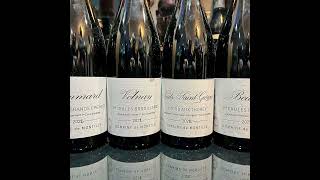
Nathan Hill, a physicist turned wine entrepreneur, founded Honest Grapes in 2014 and recently launched kosher wines from Bordeaux and Burgundy vineyards. Working with Rabbi Akiva Padwa and mashgiachs, the wines have scored in the high 90s. Hill believes happy grapes make happy wine.
Chapters
Welcome to The Kosher Teruah.
I'm Simon Jacob, your host for this episode from Jerusalem. Before we get started, I ask that wherever you are, please take a moment and pray for the safety of our soldiers and the safe return of all of our hostages. Only on very rare occasions do I feel left out as I miss a special wine event. Such an occasion occurred last January 22nd in the home of Richard and Hannah Davidoff, my good friends from the UK. Nathan Hill, co-founder and chairman of Honest Grapes, hosted a tasting of a flight of their kosher releases from Burgundy and Bordeaux. Side by side with barrel and tank samples from their latest vintages in process. These incredible kosher releases from historic châteaux with pedigrees such as Pomard and Volnay and Puligny-Montrachet are among the peak kosher French wines ever produced. I had to know more about this. I had to look into what was going on in the kosher UK wine world and who was this Nathan Hill and his company Honest Grapes. The following is my conversation with Nathan, an incredibly interesting personality with such a multifaceted background that truly surprised me with his breadth and especially his depth of wine knowledge. If you are commuting in your car, please focus on the road and enjoy. If you are home, please choose a delicious kosher wine, sit back, and listen in on this detailed educational wine conversation.
So, first of all, welcome to the Kosher Terroir. I was told about some of the interesting things that you do, and I found some of them on the internet. And I wanted to talk to you about it.
Thank you. Thanks for reaching out.
Pleasure. So, but first of all, you're, you're based in the UK?
That's right. I'm based in London.
How did you get started in this? I mean, where did the dream start? How did you end up in this, uh, cushy, easy, um, wine job, which I know it isn't. I'm, I'm only kidding, obviously. It's, it's, it's crazy. I know it's a crazy world.
Yes, I have a very different background for a wine person. Okay. I'm firstly, I'm Jewish, I'm not from, but I'm Jewish. I spent, I grew up in North London as a nice guy from Muswell Hill. I went to Carmel College for 7 years, which was the only Jewish boarding school in Europe, I think at the time. Um, and then I went to Oxford University and became a physicist. And I've spent most of my life in technology, um, and I, I became a managing director of part of Oxford Instruments, which makes scientific and analytical equipment. I work in space technology, I invest in satellites, um, so rocket science is my day job, um, and I, I divide my life nowadays between space technology, my wine business, and other investments and stuff I get involved with. So I have a very different background, literally. I'm a geek, I can spend most of the day looking at a little piece of laser physics that's going to go on some satellite mission, or the James Webb Space Telescope, I've got technologies and all sorts of things like that. But I lived, how I got into wine was, um, I lived in Germany working as a salesman back in the 1980s, West Germany, um, selling scientific equipment. Um, it just happened that I lived in a town called Wiesbaden, which was right near the Rhine and Main rivers, and it just happened I'd landed up in one of the best places in the world for the production of Riesling and Spätburgunder, Pinot Noir. Wines. And I was bored and lonely as a 20-year-old, I was trying to practice my German, I used to go down to the river and meet winemakers and drink wine, go to wine festivals. And that's how I got into German wine at first. When I moved back to the UK, I started to learn about Bordeaux and then Burgundy, and I did my Wine and Spirits Education Trust, my WSET exams, as an amateur, started to build a collection of Burgundy German wines, um, did all my exams. And then in 2014, um, when I was already sort of being an angel investor, investing in deep technology, quantum technology, and aerospace and space and stuff like that, I just had this realization that the, the way that the merchants were selling me wine was really snooty and elitist and old-fashioned, and I wanted to do something internet-based. And I had this idea about setting up a wine club, and the wine club would be like the very best old-fashioned London merchants, the guy with the apron who would welcome you, give you a taste of some wine, and then sell you some nice wines for to take home. And I had experience of shopping from those places, but when I wanted to buy wine seriously, I was looked down on, you know, you're not spending enough with us, you can't get this wine unless you buy that wine, and the people all 20, 30 years older than me, and just it was an environment I didn't want to be in. So I got together with the guy who I learned about Italian wine from, his name's Tom Harrow, and Tom I came about through an article in the London Evening Standard, which is like the free metro newspaper that's on the subway in London. And when I moved back to London in 2008, something like that, I saw this article with this fancy guy with city suits who was talking all about Italian wine. And I thought, oh, I want to learn about Italian wine. So I booked— he was doing a set of tastings in central London, doing different Italian wines with Italian food. And I booked a series of these tastings with them, took my friends along, and then wound the clock forward from 2008 to 2014 when I had the idea of the wine club. Tom was the natural go-to guy to talk with about it. We had the idea in March '14 and we set up Honest Grapes on the 1st of September '14. So we're just coming, you know, we're well into our 10th year now as a business.
So it's called Honest Grapes.
That's Honest Grapes, yes. So Honest Grapes is a wine club, we now have several thousand members. We're different from the old-fashioned merchants in that you join our club, you get privileged access to wines as they come out, we've got a nice range of wines online, we do loads of events, well over 100, sometimes even 200 events in a year, and we just try and make it fun for people. So it's very much about the thrill of wine, the experience on the farm, and we're not predominantly a kosher wine business at all. So the kosher project came along because we were already doing what we call club projects. We were buying barrels of Burgundy at the Hospices de Nuit and the Hospices de Beaune, We leased production of just under 1 hectare of Saint-Émilion Grand Cru to make a wine called Pontet-Labrie, which we've made for I think 6 vintages. And we've done this in South Africa, in the US, finding special club wines that might be a charity auction, might just be a special label, they're wines we'd offer to our club members. And we tie that together with having tours and events and tastings and stuff like that. And partly through my own Jewish heritage, partly because we had some, um, Baal Teshuvah, uh, club members who wanted to offload their non-kosher wine— I didn't want to call it non-kosher wine, but that's not kosher wine— and to buy kosher wine from us. They were asking us where could they buy wine of similar quality that they didn't seem to be able to buy for themselves in the UK. And so this, the kosher project, started with me taking the special projects, the club wines we were making in Bordeaux that we'd started in 2015, only a year after we started the business, and doing a kosher production run from 2017, '18, and '19 as a 3-year kosher production run. So I worked with Rabbi Akiva Padwa, the Deputy Rosh Beth Din at Kosher London Beth Din here in London. We found Mashgiach Shomers to do the work in Bordeaux. And the big challenge, the huge thing for us, was to find projects where it would be brilliant wine that was up to our standards and where we persuade the winemaker that it was worth the fuss and worth the nuisance, as it were, of making kosher wine, but it had to be winemaker-led. So the phrase we used for them was 'grape wine that happens to be kosher,' rather than kosher wine.
Right.
And so a lot of the time that I spent setting it up was in selecting the winemakers to work with, finding the right shomeres, and then working with KLBD to get the right partnership where we'd have something that felt comfortable, because it's a big nuisance. These are well-known winemakers, they can easily sell their wine, so for them to do a kosher project, they needed the trust from Honest Grapes, from Tom and myself, they needed the right Shommez to work with, and they needed to feel that it was going to be a wine that customers would enjoy. And so 2017, '18, '19 was our first years of Bordeaux production. And then in 2020, those were with Jonathan Maltus, who's a famous British winemaker in Saint-Émilion, right bank of Bordeaux. In 2020, I managed to persuade a brilliant domain, Domaine de Monty, Étienne de Monty in Burgundy, who we've been working with as a business since we started, um, to start doing a kosher production run. So now we're making kosher wine in Bordeaux and Burgundy. Wow.
So what, what attracted me and what started me down the path of looking at Honest Grapes was the Burgundy tasting that you did with a group of people in, um, in, in London. Yeah, it was in Hendon, right? Right. And I looked jealously on because I couldn't get to Hendon, and they're all a bunch of buddies through what they call the RCC, which is the Rosh Chodesh Clubs.
Yes, exactly.
There must be some incredible stories that you've encountered through this project, issues that you've run into. I mean, maybe you don't want to speak about them, but I'm just wondering. Actually, Kudos, kudos to Jesse Horowitz for the RCC. I'm sorry.
Yeah, my first exposure to the Roche Kodesh Club, um, we, we started to produce the Bordeaux wine for some of our existing club members and then quickly realized we'd had too much wine, so I needed to find some more people who'd be interested in it because I'd committed, I'd underwritten 3 years of production. Um, and, um, so we started to advertise it And actually it was quite, you know, we found the London Roche Codège Club people, and people from all over the place sort of got interested. But fortunately some of the guys from the London Roche Codège Club invited me to come along and present our wines. I live in Hampstead, which is northwest London, they're in Hendon, again just a couple of miles north of me. So I went and presented the wines, and this would have been I can't remember now, maybe 2019, something like that. And they were a friendly bunch, they're very welcoming. What's most important of course is they actually bought some wine. There's no making it without anybody buying it and drinking it. And because we're selling the wine mostly as a crowdfund, so we're selling it well at the time of harvest, or at least en primeur, so people need to have the confidence both in terms of our financial viability, that we'd actually deliver it, and in terms of customers, that we'd look after it and make sure it was brilliant wine. And so the people were very welcoming, fortunately they placed some orders, I underwrote the projects, and it's sort of grown from there. In fact, we called the meeting a few weeks ago, I think it must have been 2 or 3 weeks ago now, we called it the Not the Rosh Chodesh Club because it wasn't Rosh Chodesh Sivan, it was 2 weeks after. How that actually originated was, it's now early February 2024, of course we're in the Burgundy en primeur season, the sales of the new season of Burgundy, in fact Burgundy '22, and Étienne de Monti kindly sent his son Louis but also 2 samples of each of the kosher Burgundies over to London for our big en primeur tasting at 67 Pall Mall, to the Wine Club in the center of London. Long story, it was actually held 100 yards down the road from there, that's another story. And Louis turned up with these bottles and I said, I'm not going to have all my kosher customers here, I'm going to save one of them, one of each sample, And what happened between the Tuesday and the following Monday was I got samples flown over from Bordeaux, well couriered over from Bordeaux, from our production there, that were actually waiting to be picked up but weren't in transport yet. Kindly one of our club members who'd already got his 2021s delivered, they had just arrived, so he got his cases out of the storage so that we would have the '21s to compare with. So I actually had 18 different kosher wines from our, only from our two producers, as a unique tasting. And we had David Racker flying in from San Francisco.
It looked, it looked absolutely awesome.
We had customers, we had a couple of people I think from Israel flew in for the evening. Yeah. And we had sort of 30-something people Literally we got that within 5 days, from the Tuesday, 6 days, from the Tuesday to next Monday. We had a whale of a time, the Rosh Chodesh Club guys very kindly hosted us and arranged some, their chef brought canapés and stuff like that, and so we were able to taste all the wines. Completely unique tasting. It was marvelous for me because for me it's a labor of love, you know, it's the kosher wine project is a a passion for me to do it right and to get a wonderful kosher wine that people don't seem to be able to find elsewhere.
You can see, you can see that if you produce a product, there is certainly a passionate group of guys. And I can tell you that that passion spreads even more so globally. We've got an incredible group here in Israel. Um, the London group is, uh, renowned as being, um, you know, just really special people. And in the US, all across the United States, there's— there are groups that are just spectacular. So, um, and they're very, very motivated, very, very driven wine, uh, wine drinkers and wine tasters. So it's, it's—
yeah, and these are definitely, you know, they're definitely high-end wines. They're not for everybody. But in a tasting by professional critics who neither know nor care about kashrus or what that, you know, what that means in terms of our way of life and our customs, all of those wines will get in the mid to high 90s scores from professional critics, and they do. People like Alan Meadows have reviewed, you know, the 2020 kosher production from De Monte, and the kosher production of our Ponte Lappi has been reviewed by James Suckling and others many times. So I'm proud of them as wines.
That's— which is, which is fantastic, absolutely fantastic. Have things come about differently than you expected at the beginning? Were there any big surprises as you were going through this?
Yeah, probably two sets of surprises. On the production side, the, you know, winemakers, I'll probably get in trouble for saying this, okay, but winemakers are like prima donna ballerinas.
I don't think you get in trouble for saying it because everybody knows that.
Sometimes fitting their heads through a normal-sized door, and their ego through through a normal-sized warehouse door. And actually that's unfair, but winemakers are naturally, the ones we work with, are naturally fastidious. They've bought on to the concept that we go to them with of producing a wine that's of their quality. You know, if you look at Jonathan Maltus in Bordeaux, he's won 100 points twice for his Le Domaine. Wow. And 99 points once, as a British guy with a Scottish winemaker, Neil White, in Bordeaux. You know, he's poking a few eyes as it were in the Bordeaux scene. But we have made kosher Ladoëne 2020. We've made a single vineyard, Garagiste, Château Pontet-Labrié, as kosher production for several years. And these are fantastic wines, and the production of them The winemakers are fastidious, there's a level of adaptation of the recipe they follow to make one that works in terms of the showmaring and the demands of making sure that the number of visits of the showmares is manageable in terms of the number of visits they have to make and the cost of it. Getting the wine right and getting it to be of the same quality as the not kosher production, there's been a lot of detail which I've been into, you know, sitting meetings about how hoses are steamed and how barrels are twirled around to avoid having hermetically sealed and taped to avoid them having to be opened by the regular cellar hands. So on the production side, as a wine merchant I don't normally get involved in the production, But actually being involved in it as a physicist, not an organic chemist, it's been tremendous education for me. And dealing with the needs and personalities of the winemakers, the sommeliers, KLBD, to make sure everybody is happy. My theory is that happy grapes makes happy wine, and so you have to have happy people with the happy grapes making happy wine. The other surprise has been on the customer side, I think it's a fact, you know, that the— I'm in the, you know, the UK Jewish community, it's not a large community, and the number of people who want to buy kosher wine is smaller than that, and the number of people who want to buy high-end kosher wine is smaller than that. So actually dealing with the need to have enough production to be interesting to winemakers naturally led me need to internationalize the distribution of the wine. And to be honest, that was fairly fast. We sold the projects as crowdfunding, so people need to have the vision and belief in us to commit at a very early stage. Now we do that with partners in other countries as well. That means it's easier for us to go and justify the production to the winemaker, because again, it's a real nuisance then they would— they wouldn't do it unless they were guaranteed that the production would all sell. Um, but no, it's great, it's great fun, I love it.
So you actually reach out to other countries with this now, with Honest Grapes?
Yes, that's it. So we've made partnerships, we've made partnerships in different countries. Um, up to very recently, that wasn't necessary because we, um, we just did enough You know, we made small production ones, but essentially because we're doing this, we really are doing high-end wines where most of them are made in like 3 barrels, which is maybe 900 bottles.
Right.
That's good quantity. So to spread the showmering cost, it's more efficient to be making a few more barrels than that. And so we've worked with people in different countries in order to distribute it.
So how do you do that? Do you do that in the United States? Do you have distribution through the US?
Yes, so we've worked with Ralph Madep of M&M Wines in New York. Sure. Who's worked with us on both of the projects in Bordeaux and Burgundy, and that's also enabled us to bring some of his fantastic Italian wines into the UK to go on our website, our price list. So he's been doing that. I think, you know, that will evolve over time. Also, it's a vintage by vintage thing. In 2021, the frost and climatic conditions in Bordeaux meant that our production of Pontet-Labrie just couldn't happen. There wasn't enough, there weren't enough grapes. So we actually diverted the production into other directions. And so it's been, these are single vineyard wines, so you can't just manufacture more.
Right. No, no. Yeah, they're high-end and they're very, very specific.
Um, exactly.
I didn't realize— I should have realized because I know Ralph has been— Dr. Medeb has been bringing some incredible wines, uh, into, into the U.S. And I didn't— in my own mind, I hadn't put that together, but that, that makes a lot of sense.
Um, simple numbers. There's a larger Frum community in New York Luis in the whole of the UK, by a long way.
Right. No, it's important. Finding that distribution is just— is an important thing to do. So very good. What sort of plans do you have for the future? Anything that you can discuss about new projects or new plans that you're trying to implement?
At this very moment, to be honest, it's about doing what we're doing really well. I think that sounds like I'm not ambitious, but the overall Honest Grapes Club has grown a lot over the years. We've gone from being nothing, we've now got several thousand members, we've got 30-odd people in the team. I bought another business a year and a bit ago, so the overall, the overall wine business and wine club has done reasonably well. In terms of our kosher production, we do these club projects, and where I see opportunities to do more kosher production, I'll do it. But at the moment, actually, yeah, probably to be self-effective, it maybe sounds unambitious, but I think making a great range of Maltas wines and a great range of Dumonté wines I haven't tasted better kosher Burgundy, and I haven't tasted better Right Bank Bordeaux kosher myself. And obviously I'm interested in that, in that I'm the guy who put the project together, but I sincerely believe they're great wines and people are seeing them for that. So I think at the moment doing that well is most important.
So you know, you mentioned at the very beginning of the conversation that you're beginnings were actually in Germany with Rieslings, which have now really come of— good kosher Rieslings have really come out. And I only drink kosher wine, so I can't tell you, and I can't really compare against non-kosher Rieslings. But there are some fantastic kosher Rieslings that have come out. Any thoughts of going down that path? Into other countries?
All I have to say, Simon, is get a group of friends to sponsor a barrel or two, and I'll find the winemaker to do it. I've got lots of contacts in Germany. I, you know, I lived there for several years, and I love German wine. So yeah, I mean, you know, we do these things on a crowdfunded club basis. So if people come to me and say, Nathan, I'd really love to have a Great Mosel, a great kosher Mosel Riesling that costs about this many, you know, euros, pounds, dollars, shekels, whatever, then I'll do it, absolutely.
Very cool.
The thing that's great about my business partner Tom Harrow, obviously he's not on this call, but Tom is absolutely brilliant at spotting great winemakers. My job is to find the right sort of balance where the winemaker will want to do the kosher project from a winemaking and a project financial perspective.
Have you ever had a project that didn't go the way you wanted it to? And why?
All the time. All the time. You know, you know, when you, when you play, whether you're playing baseball in the US or cricket in the UK. Okay.
Right.
If you claimed you had a perfect batting average, you'd probably be a liar. So we've had lots of things go wrong. Yeah, we've had lots of problems. But, you know, my job in that sense is as a project manager to try and rescue things when they go wrong, to make people happy, and in the end to get great wine out of it. But yes, there's loads of times when things are going wrong. Wine is very complex. What? Wine is very complex. You're bestowed the quality, the acidity, the sucrosity, the character of the grapes that God gives you in that particular vintage, in that particular terroir. You then have to have great winemakers and cellar hands who are going to turn that wine into a fantastic kosher production, and then you've got to have everything right in order to sell it. And for people to enjoy it at the end.
Yeah, there's, there's, there's a number of ifs, isn't it?
Yeah, and the, you know, from the time I, I'm spending a lot of time explaining to, um, the, um, the people in the wineries, uh, to my sales team who are mostly not Jewish, um, uh, just explaining to everybody that from the time that grape hits the the sorting table, to the time the label goes on at the end, those grapes and that wine need to be mothered and mollycoddled and treated like your special child, that's going to end up eventually giving somebody a great Friday night supper. But for the time being has to be looked after with loving care. It might be helpful to say a little bit about the selection of the vineyards.
Please, yes, I would love it.
So a key to kosher wine production on this boutique scale, we're not trying to fill big tanks, we're doing it barrel by barrel. And a barrel is about 300 liters, or a barrique in France would be about 225 liters. So about 300 bottles or so from a barrel. And the way we've gone about it is to take the winemaking process both in Bordeaux and in Burgundy and to make small batch, single cuvée wines that where in most, not in every case, but in most cases the entire cuvée will be made as kosher production, or at least identifiable blocks. In Bordeaux, the tradition is generally to take larger areas and blend to get the right style. But our key wines, which would be the single vineyard wines, Les Asturies in '22, Via Château Mazarin in '21, Le Dôme in 2020, and Pontet Labrie in '17, '18, '19, and '20. These are essentially single vineyard wines. So you have to choose your harvest dates, your picking dates very carefully, to get the Merlot and the Cabernet Franc to be at the right level of ripeness. You choose one picking date or two picking dates so that you're minimizing the amount of exposure the wine has to not be altogether, as it were. And then you've got to get the fermentation process one where you would co-ferment the Merlot and Cabernet Franc intelligently in a way that will end up with exactly the right taste at the end of it. Which is slightly different production process from the not kosher production process, because you're trying to manage it with the mashgiachs in an intelligent way for the amount of wine you're producing. In Burgundy, the history is very much of terroir, of small plot vineyards, and in 5 of the 8, I think it's 5 of the 8 wines that are produced for us by Dumonté, the entire cuvée is now kosher. So these are wines where you might have 5 barrels, 8 barrels, 3 barrels of kosher wine and that's it. The exceptions would be the Bourgogne Blanc, the Bourgogne Rouge, and the Nuits Saint-Georges Haut-Tauvy, which is a larger vineyard where they make a particular part of that to take that off to make the kosher production. So it's not just a process of taking some some of the harvest at the time and say, oh, I'm going to make that kosher. It starts from the planning of which vineyards you're going to work with in order to get the right wine. So it really is quite interesting, it sort of goes down to that level. The point is that even in Bordeaux, we're getting a Burgundian wine, it's a single vineyard wine, very unusual, and pioneered by Jonathan Malters in the mid-'90s when he started out with the Domaine in '96. It is.
That's incredibly interesting because one of the methods that they used to take was to just take a piece of a vineyard and only make kosher wine out of that piece of the vineyard. And then there were all sorts of complications as to, well, when do you harvest that part of the vineyard? Do you harvest it after the non-kosher? Do you harvest it during the non-kosher? Typically, it was left to the end. Initially, sometimes it was harvested first. So, there was a whole issue of trying to compare them and whether or not they could keep the same standards between the kosher and the non-kosher. So, taking a whole vineyard, a single vineyard, gearing it towards just a kosher cuvée is like— it makes a lot of sense because then you're focused.
Yes, exactly. And what was really interesting in the tasting we did at the Notz L'Rosh Kodesh club a couple of weeks ago was you get wild vintage variation, of course, because with— if you're taking the fruit of one vineyard, the vines have got a year older, there's been differences in climate and weather in that year, but you take what God has given you and you turn that into wine. And there's nowhere to hide, you can't throw something else in, you can't blend it, that these are low-intervention wines without loads of additives and stuff like that. So the vintage variation is absolutely wild between the vintages. I was just saying it's a pleasure, and actually one thing I've been blessed with in these projects is a run of really good vintages. So out of all the vintages I've been doing these projects, has been since 2015, tell me a bad year since 2015.
Right.
Where a good winemaker we couldn't make a good wine. Our Bordeaux in 2017 and 2021, which would be the weakest of those 7 years, have been absolutely wonderful. In fact, when I meet new clients, I open a bottle of 2017 because they go, ah no, it can't be that good. It's wonderful.
Awesome, really fantastic. I was going to ask you whether there were any, because of that, Any vintages that were just, the bottles were just so surprising?
God, that's a really interesting question, and it's going to be different for each wine.
Obviously, yeah.
For Pontet Labrie, which is the 0.98 hectares in Saint-Émilion, I've been doing the not kosher since '15 and the kosher since 2017. Of those vintages, 2017 you would have thought would be the weakest, but actually it's produced a wine that's more restrained in alcohol, about a degree lower, about 13.5, not 14.5, which to me actually is more pleasant. I'm an old-fashioned, old-style drinker in that sense.
Right, me too.
Rather than sort of bigger, heavier wine. It was quite, it was a little bit reedy when it was younger, but it's now opened out and filled out and mid-palate beautifully. The 2018 was probably the biggest, fleshiest, most robust year, much more coffee granules and ganache, you know, sort of dark chocolate and coffee, as well as that sort of cassis fruit. The Cabernet Franc is really, these are really old vines in Ponte Labri dating from the late '40s, '47 to '57 I think. With the plantings distinctively of that hectare. And then 2019 produced probably the most elegant and classic of the solar years, where it's sort of got brilliant length all the way through, like a velvet, like a plush velvet curtain with gold braid, and you just know that wine's going to last, you know, forever and ever. The 2020, very exciting because we made Les Dômes in that has got the richness of it, is really quite enveloping, and although a solar year, it's produced plush but very generous fruit. 21's a bit too young to see. I know there have been reviews of Kosher 21s saying, "Ah, all very disappointing." Actually, I'm pretty pleased, and I do cross-test them against not Kosher ones, I'm pretty pleased. I think the production methods that we're using, there's a lot of whole bunch use, good fermentation temperature, I think it's done well. Probably the biggest surprise out of the Bordeaux production would be the white, Lénardian Blanc, which is Sauvignon Blanc, Semillon, and a bit of Muscadelle. In the richer years it it can be a little bit on the tropical side, and the leaner years more somewhat more like a Ménetou Salon, a bit more steely. And the '21 and the '22, the entire production was kosher, about 10 barrels or so, I think 11 one year, 10 the other year. I think it got, can't remember now, some very high scores by the critics. People like Suckling was giving, don't quote me on the score, sorry.
Yeah, no, no.
Whatever, is getting really good reviews for Bordeaux white. And when we had a bottle of 22 the other day, it was absolutely fantastic. Burgundy, we've done 2020, 21, and 22, three very, very different years. 2020 was a solar year, on the reds was very extractive, sorry, it was not extractive, they look extractive, they're very dark, even if they're not extractive. The amount of whole bunch used by De Monte was higher in that year. And then '21 was a real mess of a year in terms of production. About 80% of the Premier Cru white grapes were lost through this very hard frost from April 4th to April 7th. But the whites we got were of extremely high quality, racy acidity, lean and focused. The surprise wine, everybody talks about the Puligny-Montrachet of course because it's amazing, but if you want the absolute spitze, the top of the tree, go for the much more humble Montély. The Montély Premier Cru Diorès, it's absolutely scrumptious, and the acidity in that's just gorgeous. And then The most recent year that we've just introduced, the 2022 En Crémant, the reds have got this crunchy, what the French call croquante, sort of red fruit, rose petals, gorgeous smells. And because we've got a Pomard Premier Cru, a Volnay Premier Cru, a Beaune Premier Cru, and a Nuits Saint-Georges Premier Cru, as well as the Bourgogne Rouge, each terroir is so delineated. You just know that that's a Nuits Saint-Georges, you know that's a Comard, you know that's a Volnay, you know it's a Beaune. The Bourgogne Rouge this year, 2022, tastes like a Premier Cru, doesn't taste like a village, like a regional wine. It's got the power and concentration, very, very elegant year '22. And then again, we've been blessed with 3 very good white years. 2020 for ampleness, generosity. 2021, tiny production, really messed up all the schedules of what we had available for ourselves and for the US. 2022, the volumes are better, they're not huge, but the volumes are better. And it's a funny year, you know, because it's a low acidity year for Burgundy, but you don't really get the low acidity on the taste. You get as much you don't get high racy acidity like '21, but you get a good acidity on taste, even though technically, as a scientist, the acidity is only partially there. But actually, it tastes really great.
The science, your science background really has paid off.
I'm a geek, I'm a nerd, I'm a nerd, I like it.
No, it's, it's, it's kind of funny because you're a geek a nerd on so many different levels, uh, optically with the, with the, um, with the satellites, but also, uh, in, in this is, you know, you said you don't have a chemistry background, but you obviously have something going there.
Um, oh, I, I, I get interested in, you know, the geology of wine, right? The sociology of wine, the the organic chemistry. I think above everything actually on a personal level, the fact that I grew up in a not from Anglo-Jewish environment in North London, went to a Jewish school for 7 years, was from myself for about 3 of those years, and now I'm no longer, I take it very, very seriously the responsibility of getting a wine that our petcha on that is very important to me. That it's a wine that's, it's like a perfect consultancy project, a great wine that happens to be kosher, and that people can drink with trust knowing it's been made as a beautiful wine. And you know, these wines will be going on for, you know, 15, 20, 25 years. In many years' time, just like the satellites, the James Webb Space Telescope, was launched in, uh, a year and a bit ago, was it? A year and a bit ago.
Yeah, maybe.
I, I was, I was involved with the base technologies with it for 15 years before. So were my wines. My wines will be drunk in 15 years, and even if they don't remember me, they'll remember the taste of the wine and that somebody, somebody put the effort in to harvest those grapes, you know, conceive the project, harvest the grapes, happy, happy, and turn those happy grapes into to a happy wine.
Very cool, very cool.
Pour for me every day.
Yeah, but I'm sure, I'm sure it's pouring for you every day, but I'm sure there's, there's nightmares that precede that as well sometimes.
They're the, they're the customers.
Everything else is fine.
No, no, I'm joking. It's, it's, it's a You know, it's a funny industry. It's very different from my technology industry. That's my main day job. But doing this wine gives me a lot of pleasure.
Wine tasting is subjective. As much as people trying to make it, try to make it absolutely, you know, by the numbers, it's still subjective. And that's always difficult when you're trying to meet all the different subjective tastes. Of different people. So, my hat's off to you. And I'm extremely jealous that I wasn't there at that tasting. And I really look forward in the future to getting together personally with you.
Well, anytime you're in London, anytime I'm in Yerushalayim.
Well, whenever you're in Yerushalayim, please, absolutely. I'm smack in the middle of it. I'm— I look out of my windows at the walls of the Old City, so I'm really in the middle of Jerusalem. Um, one last, uh, a couple last questions. How does— how do people get in touch with you? How do they get to, uh, to, you know, try your wines or try the club?
Yeah, yeah. So I'm quite easy. Um, as everybody nowadays, we're on, we're on the internet. So Google Honest Grapes or honestgrapes.co.uk. I'm the easiest person in the world to find, look for Nathan Hill. I'm nathan.hill@honestgrapes.co.uk. Find me and I'll love to tell you all about my wines and do my best to make them available. And to your question about subjectivity, you're perfectly right. You can't, no wine can make everybody happy. The way I've gone about it is by choosing and persuading, to be honest, two wonderful winemaking teams to work with us. And we, Tom Harrow, my business partner, and I, I say we have a house style. There's certain types of wines that we like. We have the courage of our convictions to say this is the style of wine that represents us and represents our club. And if you don't like it, there are plenty of other places to buy wine.
But you know, in the end, it is a subjective I'm, I'm really, I'm really especially looking forward to tasting the Burgundies because they're just— you, you seem to have picked exactly, um, the vineyards that, you know, a person, if a person wanted to track across a group of, uh, wonderful Burgundies, that is, um, those are just spectacular.
They're all—
yeah, yeah. And it's, it's It's wonderful that Étienne de Montille has agreed to work with us on the project. He's had the foresight and courage, he can easily sell his wines, you know, 20 times over. But he's had the courage to say, yeah, this sounds like a nuisance project, but I'll do it. And that comes through the friendships of working with him on the Nox Kosher production over many years now. Art Club is in its 10th vintage of Burgundy, and we've been buying from him every year. He's seen, he's seen our business grow, and he's, um, you know, absolutely delighted that he's had the foresight and courage, and his winemakers as well, because they've, they've got all the aggro and the hard work to do to actually turn the, uh, to actually make kosher project happen.
The percentage of difference between the kosher and non-kosher, it's about 20% kosher or 10% kosher? Compared to your non-kosher production?
For my business?
Yes. Yeah.
Oh, the kosher, the kosher wine is maybe 5%.
5%.
So, okay, but it's, it's important. It's important to me, and it fits for our club members and the sort of style of the things we do.
No, you seem incredibly passionate about it, so that's really, really, uh, that's what makes it work. That's what really makes it work.
And I'm even more passionate when I see somebody open a bottle and enjoy it.
Well, so they were all singing your praises in London from that not an RCC side. They said, why don't you reach out to Nathan and speak to him? So I said, absolutely, let's do it, because, because I, I really, um, honestly miss being there. So, and I'm glad David Raka got there and some of the others from America and also from even some people from Israel got across.
So I was so chuffed and that we, you know, my team and the winemakers pulled together and got the samples to us. And that, you know, over it was, you know, 30-something people managed to get together on a cold Monday evening in January to actually come and taste the wines. Pretty unique to be able to taste two vintages of Burgundy, they're literally fresh, you know, one of them still in barrel and tank, the other one just arrived. It literally arrived the week before the import, and so to actually get all of those together and taste them was absolutely wonderful.
Amazing. It's amazing what you pulled off, really, really special. Bravo.
Thank you.
Bravo.
One thing I would say, so harking back to my own roots is I went to this wonderful school called Carmel College, and Rabbi Jeremy Rosen was my headmaster, and our school motto was "Behold a fair coat of a Hebrew." And I think everybody's got different ways of expressing themselves in life and in business, and for me, this project is something that's very close to my heart and something I've enjoyed doing. And I hope your listeners enjoy drinking the wine in the end, because ultimately, that's what it's all about.
As I said, I love your passion. And it sounds like it's coming from an absolutely incredible place. And I really look forward to hosting you here in Israel the next time you come. And please bring your family.
That's very kind of you. Thank you.
Anytime, anytime. But I am going to wish you shalom u'bracha from Jerusalem. And it's a pleasure. Thank you. Thank you very much.
This is Simon Jacob again, your host of today's episode of The Kosher Teruah. I have a personal request. No matter where you are or where you live, please take a moment to pray for our soldiers' safety and the safe and rapid return of our hostages. I hope you have enjoyed this episode of The Kosher Teruah. It was exciting and informative for me as well. Please subscribe via your podcast provider to be informed of our new episodes as they are released. If you are new to The Kosher Teruah, Please check out our many past episodes.










