The Golan Heights: Family Baum Winery's New Chapter
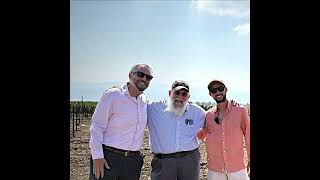
Sam and Rivka Baum opened a winery in Golan Heights and cap sales at three bottles per customer to manage demand. Their first release sold out so fast they had to refund excess orders. They're positioning kosher wine for high-end restaurants globally, though Israeli venues require it to be mevushal.
Chapters
Welcome to The Kosher Teruah.
I'm Simon Jacob, your host for this episode from Jerusalem. Before we begin, I invite you, wherever you are, to take a quiet moment and pray for the safety of our soldiers and the safe return of all our hostages. There's something magical about beginnings, about planting roots in new soil, feeling the wind whip across an open landscape, and imagining the wines that will one day be born there. On this episode of The Kosher Terroir, we head north, way north, to Sha'al, in the Golan Heights, where the Family Baum Winery has begun an exciting new chapter. Sam and Rivka Baum have left their mark on Israel's wine scene before, but now they've set their sights on a fresh frontier. We start our visit in their newly planned vineyard, rows of young Shiraz and Grenache vines prepared against a backdrop of sweeping Golan skies. The wind is fierce, but so is their vision. From there, we head just down the road to their new winery, where dreams are already taking shape in the barrel. We taste early samples of their 2024 vintage wines that mark the very first fruits of this new adventure— a Shiraz-Grenache blend. And in a delightful twist, Rivka, has made sure her own personal wish found a place in the vineyard— a Pinot Gris— so there will always be a crisp, refreshing white wine to relax to. It's a story of passion, partnership, and starting anew in one of Israel's most promising wine-growing regions. If you're driving your car, please focus on the road ahead. If you're relaxing at home, please select a wonderful bottle of kosher wine, sit back, relax, and join me as we stand among young vines and breathe in the promise of what's to come at the Family Baum Winery in Sha'ol.
Okay, so welcome.
Thank you.
Thank you so much for coming.
Thank you for inviting me and here for the kosher terroir and myself personally to just see this. It's amazing. To be here.
I said to Sam, I think the first podcast you did was just about the brand, really.
Right.
We didn't have anything else.
You didn't have anything. No, you, you couldn't even tell me which vineyard you were taking care of. You didn't want to tell me.
So yeah, that's right.
We've left now, so we can talk about it.
Yes, yes, yes, yes. Okay, so we'll be here for 5-10 minutes, talk about the area, just what we're doing, what the plan is, and then we'll go up to the winery. So welcome to Shall. We personally moved here in August. I personally moved here in August, October October, November, because we moved in the middle of when I was in Gaza. And so Rivka came basically by herself in August, but Sha'al has been here since '81. They started in Quneitra around '78, in Quneitra, something like that. And they were there near an army base for about 2, 3 years, then they moved up to this area, Sha'al, which is the first step of Tzfon Hagola. So once you've started here, going up is Har Odem, Majdal al-Shams, Hermon, but this is the first step up, so around 750 meters around it, above sea level. And Shawl actually stands for Shav Amlad Matoh. It's actually a variation which I didn't know, but it's what we actually believe in, stand for, so it worked well. How did I get here to Shawl? I worked for Castel for 5 years, and Castel used to buy grapes from the Golan, and the grapes that they bought from the Golan were from here, from Shawl. And so we bought shawli, Once they ferment all the grapes from each separate plot, we then taste all the wines. And every year, year on year, the grapes from the Châle scored the highest. So we decided that if there will come a time and we want to plant a vineyard, this was the grand vine. So this is the grand vine here and a bit further up. So this is the place to be. And then as I started to study the land more and more and more and more, this specific area, this pocket of microclimate, I realized that this really is what I believe to be the best area in the whole of the Levant for a few reasons. I'll just go over them very, very briefly. A, the ground is very, very deep. There's a lot of earth. It's almost actually regarded as clay because there's 50% of kharsit, which is the brown earth. So that makes it clay, which means it has good water retention. However, it has also a high percentage of basalt rock, which makes it able to be very well drained.
So Everywhere where we are now was once volcano.
Yeah, exactly.
Which is the basalt magma. It's all basalt.
So the water can drain off and there's also water retention in the earth which keeps the vines alive. Secondly, the height, the difference between the nights and the days. Thirdly, the pH of the soil is lower than anywhere else in Israel. Here the pH of the soil is around 6.8, 6.7, which makes all the minerals in the soil much more available to the plant. Once you go up to 7, 7.2, 7.3, which is what you have in the rest of Israel, then the minerals are actually held in the soil and not released to the plants. And the people, the people here are fantastic and they make this great agriculture and they're very helpful and that makes it much easier to actually grow anything. They're full of good advice and good pointers and what to do and how to do. And that's the earth, the te'war, which is adama, akrim, and ada. 3 people, the 3 things. This vineyard specifically is being planted according to our blend. So we decided that the blend we're going to grow, the varieties, is Syrah and Carignan. That's the blend, and that's what we've already—
80/20.
80/20.
Okay.
And that's what we've already started making now in 2024.
80% Syrah, 20% Carignan. That's right. Carignan.
Carignan.
Yeah, that's right. And 2024 was the first vintage that we did that blend. We took Syrah from here and Carignan we took from Mizgelet Batya, because no one grows in the north of the Golan Carignan. They say that maybe in the Doma Golan, in the south of the Golan, there's someone who grows, but I haven't managed to put my hands on him, so I don't know who it is. But we will be for sure the first people to grow it here in the north of the Golan, which in my eyes is fascinating and the right place to grow. Just anecdote, Carignan its most highest difficulty is the pH level because it's often growing in very, very warm places. It runs away once it ripens. But because here specifically the nights are always cold, in fact this morning was like winter, it was like 20 degrees, 19 degrees here till 11 o'clock. So we'll hopefully hold on to its pH level. And the wind, the wind happens every day from 1 o'clock, it's like this till the evening. Every day.
You guys are surrounded by terroir. All of this stuff that can bring in complexity and flavors from all the different crops that are around you.
So we've got the—
and the opposite, which is one of the reasons why the fence around you, we're going to be planting it with the canot, with the rootstock, right? Um, so that if any, any sort of fungi or anything comes at us, we'll see it first outside the vineyard on the, on the fence, on the vines, before it gets to our actual vines that we need to have.
Canary in the, in the coal mine.
Exactly, exactly, exactly, exactly.
So we're surrounded here by Cherries.
So you're the first person to explain to me why people do that. And it makes a whole lot of sense.
3 reasons. A, it's very pretty.
Yeah.
B, there's more than 3 reasons. B, it can really stop a fire because a green fence can really slow down a fire and make it stop from getting to your field.
So if you look there, that's why he's done that.
He's done that because he's organic. And so whoever sprays there, he doesn't want it to go into his field. But those are like firebombs, those trees. Are really bad for fires. So here the pre-fence, see the rootstock wakes up 2 weeks earlier or 3 weeks earlier than the variety.
Right.
So when we get to the spring and it starts leaving the dormant period, we'll see it first in the rootstock. So I know I have to make sure I finish all the pruning. It'll give me a great, great indication. And any, like Rivka said, anything that sort of flows into the field— herbicides, pesticides, fungicides— we'll see it first around the fence. Which is great. And how are we planting? So the Carignan, we've decided to do a goblet.
That's why it's single.
That's why there's a—
How are you going to run cables to support this?
Right.
Because some of it even curves.
Right, so all the rows, all the rows are actually this way.
Yeah, I see.
Over the whole vineyard.
Okay.
But because everything— I was very pedantic that everything should be positioned exactly. You can't actually tell which way the rows always go.
Right, right.
However, each row is north to south. The Chaumont's there and the Kinneret's there.
So you're doing goblet?
Yeah, this one's going to be goblet. Every vine is going to have a pole, each vine for a pole, every meter and a half, and 3 meters between the rows. And the other side, there's a valley in the middle which goes down to Nachal Parash, which is just over the valley, over the shlucha. And that's actually good because it will grab anything that sits in the vineyard down to the nachal and take it down to the Yardenit.
Okay.
That's where the seerah is going to be done?
And the seerah is going to be on the other side. In the middle, there's nothing. There's 6 meters between all the different plots.
There's a big pathway. The way I see it is very much like a big Italian-style long table down there, like to do events. So it's going to be down in the middle.
That's the dream.
That's the plan.
So I have a friend, I have a friend, Nadav.
Okay.
Uh, Jesselson, who has Anava.
Okay.
Oh yeah.
And he— we had, we actually had a dinner in the first, first harvest, they had a dinner in the middle of the vineyard with a big table and set, and it was— there's nothing better. There's just—
I just heard your podcast that you just did with another— I did both.
Yeah, but the first one, I didn't even do a podcast about the dinner in the middle of the vineyard, but that was like over the top. It was amazing.
Wow. Wow.
Absolutely amazing.
Strong little lights. Wow.
And they served crazy food, and it was just absolutely gorgeous. So amazing.
Yeah. I mean, you'll have it here.
7 years.
And the other side is going to be almost like in Veymachal, open V, but really open like Givati Shayaou, his shitta. Completely open, and then the grapes will hang, a lot of shade, but a much shorter knof, a much shorter— how do you say it? Like the leaves, the whole overhang, much shorter. So like 1 meter 20, 1 meter. And at the bottom, Rivka said there's no way we're not making a white wine.
This is our point of contention of working together in business. Every so often it happens. So this is my, uh, my Pinot Gris that's being—
okay, I was wondering what you're going to ask for, so that's good.
Yeah, I want something fresh, acidic, young cut, because the Syrah is very— well, you'll see.
There's— I'm not telling you to be risky or anything— there's— what's the varietal that's coming from?
Uh, Sertica. Asertico. They planted it in a few places.
Yes.
Dalton planted it and he did in Shmulik from Château Roulant.
Agour is also planting Asertico.
It makes sense to plant it here. They have a lot of problems right now with the vine.
Yeah.
Most of them didn't wake up from the winter. Yeah, there's huge problems with Asertico specifically.
So good.
No, yeah, yeah, yeah. You got, yeah.
Pinot Gris is great.
We're taking quite a lot.
One whiskey at a time.
Yeah, exactly, one risk at a time.
Only one.
I was thinking about 4 or 5.
Yeah, yeah, we're on number 5 risks at the same time, but that's okay. So yeah, okay, we believe in them.
Yes, yes.
All of this will be planted this summer.
This has been planted in 2 weeks. Yeah, that's the plan.
So I've got the pipes to run water, the whole irrigation system he's done on his own.
Yeah, most of it's done by, by me. So I saw you with the, with the, uh, with the pipes and the everything.
Wow. We very much see our ethos is to be a farm-to-table, but winery. So really only our grapes, only grown by Sam, bottled, labeled, given, drunk.
From A to Z. No winery service and no taking. This gives 8,000 bottles, that's all we have. It gives 11,000 bottles, that's all I have. That's it.
I see it almost a bit like raising a child. Like, there's— you want maximal, maximum manipulation when when they need to get their feet off the ground and really putting your input to get what you want. And then after that, once they're ready and the wine's going to be made, then minimal interference. Like, hopefully you've done what you were supposed to do with them enough that it's going to—
Wow. That's the way.
So what's that way?
This? Okay, the Hermon. I promise you, it's the first time I've never seen the Hermon. I'm not joking.
I'm not criticizing.
Everyone in the Golan says on a clear day you can see the Hermon, but you actually can't.
This is 357 degrees. This way. So the north is just slightly to the right where that huge tree is. Yeah, that's true north.
Yep.
And true south is that tree on the ridge there, the lone one, the lone tree. So that is, if you carry on straight apart from the minefields, you'll hit the Kinneret. And if you carry on straight, you'll hit Majdol Shams and the Hermon. And then opposite us is Emek HaChula, and on the other side is all of HaRegali.
So you can see from here the Hermon when it's clear?
Yeah, yeah.
I know everything.
Every day.
Yeah.
Every, every day.
I'm asking you a different question.
Yes.
I'm looking at this vineyard that you planted, that you will plant.
Yes, please go on.
And it'll be beautiful. And then I can see there's an open space from that vineyard to the next hilltop or what have you.
Over all around here. That's all shetachmir. There's 200 cows.
Pasture land, right?
Yeah, pasture land. Thank you. There's 200 cows that belong to who we rent our house from, our flat from, our apartment from. He has 200 cows and they roam all the way around.
But I'm just saying, as you're ready for the next varietals, Is that potential?
You wish. Everything around here is taken. And Sam, there's another 20 nachalot, like estates, which you get 1.2 dunam to build and 50 agriculture. Yeah, for now they've given out 80 and there's supposedly another 20. And it's known around here that Sam Baum is here to stay until he gets one.
All right, good, good. So how much—
what do you have here?
Okay, so the entire field's 14.
14 dunam.
Yeah, 14 altogether. And then I lost from the fencing another 3 dunam.
Yeah.
And then I decided I wanted to split all the fields, so I lost another dunam, dunam and a half. So planted, actually planted will be 10 dunam. 9 dunam red and 1 dunam Pinot Gris.
That's right.
I just want to know what the future holds. That's the reason why I asked the question.
Okay, good. The future holds hopefully very, very high quality wine. Farm to table.
That I have no question about. I just wanted to know what varietals participate once this is up and running.
So it's actually a very good question because it would make sense. There is a very, very clear plan.
Okay.
Also was once upon a time a point of contention which we've covered, we overcome. Sam wants to make one flagship wine. Family Bound Winery make one Syrah-Carignan blend. It's the only wine we have. We sell it on futures. Thank God up until now it's been sold out every year. And that's it, which is why I fought for my white, because there's no way I'm bringing people here for just white. It will be fantastic, but there needs to be something else.
I know they've been around for almost thousands, I don't know how many hundreds of years, but Petrus or Opus One. I'm not saying I'm there yet, but in 30, 40 years down the line, The vineyard will be there. Hopefully the winemaking will be there. And there's no reason that there can't be a wine like that from the Levant.
That was Eli Benzacain's dream at the very beginning as well.
Yeah.
To have grand vin. All the rest of the stuff is just noise. I don't want to focus on that. I just want to focus on the grand vin.
But Eli Benzacain has maybe made it possible for us to do it because the 30 years of the high-end wine industry in Israel has enabled maybe, maybe, hopefully, someone to come along and now say, okay, we're going to make one wine. This is the wine of the region. If you want these flavors, this is where you get it.
Beautiful. Yeah.
So we'll see. Okay.
Love it.
2023 was our, really our Judean Hills finale, where we were doing a Bordeaux blend, whatever we could get our hands on.
Right.
And you'll see 2024, what you're going to drink now is the first, I really think the first year we had, we made wine with intention of what we actually wanted it to be.
From the maceration process.
You took it from here?
Yeah, yeah.
80% of the Syrah is from here, and the Carignan is from Mizgir el-Batiya. Okay. From Ira Levine, a great guy.
Yeah, let's go drink some wine.
Yes, awesome. Yeah, awesome, awesome, awesome.
If you come back in 2-3 weeks, you'll see a lot of white boxes and many, many green vines inside.
So you're trying to get it done before Tu B'Av?
Yeah, before Tisha B'Av. Okay, before Tisha B'Av, the Friday before Tisha B'Av. Okay, so someone said to me, someone said to me, can I plant in the 9 days? So I said, I think that, you know, if the Beit Hamikdash is coming, then they're going to need wine. So we better start planting, we better get ready. That's true. I mean, that's what the fast is about.
No, the real trick is to get it absolutely in before Tu B'Av.
But Tu B'Av is advance warning there.
Tu B'Av has to be done. Because you need a month in the year to be able to count the year.
Yeah.
That's right.
Okay.
And now it's the season of nectarines and peaches. That's what's being picked. Nectaries, peaches, and—
Okay, so, so now we're—
now we're in the winery, in the cellar.
In the cellar.
This is the cellar. This is— will be only the barrel room.
Okay.
And what we've done when we came here, so we looked for a place to actually make the wine, and someone had a machsan. That's a sort of equipment for a restaurant, right? And we emptied out the equipment. We started to make the— we made all of the wine in here. All the vats were in here, fermented all the wine, and then we got to the barrel stage and—
I got it, I got it.
Okay, you got it?
Just give me a little water.
We got to the barrel stage and we decided we took all the vats out and put them outside. We put the barrels inside and then we said, okay, but next year, because the wine rests for 2 years, matures for 2 years. So next year what we're going to do, because the room has to be at 18 degrees and the fermentation has to be— depends how we'll do it— about 22 degrees, 20 degrees if it goes through so on and so forth.
You need to control it.
So we need to control it. So what we decided to do is turn this place only into the cellar room. There'll only ever be barrels in here. And outside, we took an empty piece of land, we put concrete over the entire area. It was stones like outside, like pebbles. Yeah, concreted the entire area, bought 5 tailor-made vats in from China, and that just came on Wednesday or Thursday. It was just empty. No, we haven't been outside yet. I don't really want to— we can go outside with Kev, but it's whenever you're ready. Okay. But there's 5 tailor-made vats. I realized for my winemaking last year, because we did, we brought in around 3.5 to 4 tons with different sizes of vats. So we had a 1,000-liter, 700-liter, 600-liter, just the equipment that I had. And we realized that the 1,000-liter was the same height as the 700, but much wider. And the wine from the 1,000-liter vat was far superior. So all of our vats are much, much wider. They're about a meter and a half wide and shallower than any other vats that I've seen. Each vat is 1,800 liters. So we designed them like we wanted. They just arrived, and that's all outside. One needs to be set up with the chilling system, so on and so forth. And then in here is just the barrel room and our lounge, visitor center. It's specifically tailored to the idea that there isn't just an open visitor center, but if people want to come, then the visit is tailor-made to whatever they want. Time of day, what they want to have, what they want to drink, or so on and so forth. Because that's also the idea of the winery itself, that everything's very personal, very, you know, business to consumer. And so we want also the experience here to be the same idea. And because there's no other wine to serve, So all the wine that you're drinking now is from the barrels. What we started to do the last 3 weeks is take out wine from a barrel 3 to 4 hours before the visit, and now we'll take out in the glasses directly from the barrel, and you'll taste the difference of wine that it's coming out straight away and the flavors, and then what comes out a couple hours before. What we're talking about drinking is the 2024? 2024. It's been in the barrels since November, says the 20th of November, 2023. 24.
So who put it in?
Did you put it in?
Rivka made 23. If you want to get the 23 ball to Waleed.
Simon has it.
Oh yeah, you have it. That's true, that's true.
So 23, this is one of those good problems. It's a good problem to have, but I basically really oversold this vintage, and for our archive we only have 3 left.
Wow.
I wanted between 7 to 10, that didn't happen for good reasoning, but whatever. This year will be— oh, oh, the jump is from 600 to 2,000.
So there's no more available.
Unless she oversells it.
No, no, no, I, I, uh, we can't do that again. We need something, some, some, uh, memory of you.
Some way to market.
Yeah, literally.
Some way to market. This is our 4th vintage, so we did—
Yeah, yeah, first is '21.
2021 started because I was moved from the winemaking process in Castell to the wine, wine growing process. And I wanted to do both sides, but Castel basically said once we had planted 400 dunam, then I needed to be full-time. So it started because we took our wedding savings, whatever it was, 30,000 shekel, bought a micro winery, and that's how it began. The first harvest was about 600 liters or 600 kilos, and we built— whilst we were bringing in the grapes, we were building the keter shed around. Wow. Yeah, it was quite ridiculous. And that we joined, we brought out 200 bottles. It was actually thanks to Avi Moskowitz. Yeah, because he said just get the wine out there. I said it's not the right variety, it's not the right quality. Yeah, he said just get it out.
It's a really special person.
He said just get it out. So start building the brand.
He says, Sam, stop being such an artist. You have drinkable wine, whatever. So that was when we started, because I used to— I opened like a secret Instagram because Sam hated all of that. And then the day— I think it started when we were bottling 2021. I said, okay, Sam, we're live. And like, I wanted it to have already been built up, so I like built it up on private and then we opened it. And really that's how we sold vintages 21, 22, and 23 was entirely via Instagram. And this year when we grew up a bit, so we opened a website and that's when we started to introduce pre-orders was with this vintage.
Thank you.
Here's a lid.
You need to lift up on that one first. I'll do it, I'll do it.
What is this?
Wash your hands. Oh, there's more food.
God forbid.
Actually, everything on the table is from Shal, from the eucalyptus. Our friend Dor grows the eucalyptus.
Wow.
The fruit is from Meshach Malon. The cheese and the fruit leather is all handmade from a couple who live in Kibbutz Altal. All locally sourced.
Yeah. And hopefully we'll be able to be here till the 10,000 bottle mark. That's the plan. Wow.
You know, you should be able to do it.
Yeah, happily so.
You're buying the grapes. Yeah.
Because you're not involved right now in harvesting, so you can do your planting.
Exactly. 2000— vintage 2028 will be our first vintage made from our own grapes. If it's only going to come out in 2030.
I will have to farm the vineyard until then. There'll be 3 years of managing it, building it, looking after it, and then in 2030—
That's your love. That's what you wanted to do, man.
That's the beauty.
Yeah.
Where do you press?
All outside.
Where?
Outside, around the corner. There's gates, the iron gates. Behind the iron gates is all the equipment.
Yeah.
But we—
And the grapes you get from home?
This here, the Syrah is from Shtech, from Gabi Sharabi, and the Carignan is from Ira Levin in Mzkeret Batya.
Mzkeret Batya?
My father was born there.
Oh really?
Yeah.
Long time ago. So this was harvested at around 13%, 13.5% alcohol.
Sam called me from Gaza. He was supposed to come out 2 days later. He's like, listen, we have to harvest in 4 days. I'm like, okay, well, when are you coming out? He's like, I think tomorrow, maybe in 2 days. And we literally had to organize the entire thing. He came out and a day later we— Yeah, the timing is never good. Never ever works in our favor, ever.
But it has to happen. That's the great thing about the harvest. You can't stop it. So there's no planning around it. You plan, you know, You plan around it, like around you. So yeah. And this sort of happened because on Pesach time, we offered some of the investors, that's how we all managed to make this happen. Because we decided that we didn't want to buy grapes forever and be caught in this sort of, you know.
It's very wise.
It's different.
It's very wise.
Vintage '23 is the last one we did alone, solely alone.
And then '24 we turned one investor.
And the planting.
Control the whole system. And so we brought in the money, gave away some of the business, but we invited them on Pesach and they said, yeah, sure, we'll come. Then Rivka said, you know, we have to fix the bathroom. There's a toilet behind you. So I said, okay, fine. And then I decided to fix all the, the whole room. So we did the lav, we did the walls, and we did the table and the chairs and so on and so forth.
And then we had a whole family of about 25.
Yeah, I saw the pictures. That was great.
It was amazing. The kids planted the trees that you can see outside in the barrels.
Those barrels are the first barrels we used. The first ones we used to make wine, they're ours. Everything is very much generational. We had to have 4 generations and what we'll drink soon is the ouzo. These glasses were made by my grandfather in England, dancing glass, and it was his company and everything's hopefully a legacy which— so we'll drink some wine.
Yes. So this is the '24.
This is the '24.
This is '24 right out of the barrel.
Right out of the barrel. Came out 30 seconds ago.
Yeah, just now. Mm, yeah.
I believe you have the true funk of silla. We plan to, you know, I think we thought sort of learn our lesson through drinking a bit more wine and also making more wine is that this will be bottled in January, February and come out in July. So it will sit here in the bottle for around 6 months, around 2 months of time. We're still wondering when it will come out, but the flavors continue to develop in the bottle and people want to open it, even though I say to people, which the wine that just came out, wait till Rosh Hashanah, it's better, so and so forth. They can't. They cannot.
Because they've already waited so long.
No, you're right.
You're right. 100%.
They even text me saying, listen, I know you want me to wait, but I can't. So I opened it.
People are always telling me, you know, like, well, did you open it? No, I didn't open it yet. You know, like, I want to give it a chance here.
So yeah, this is a very different style. I mean, I'm getting here a lot of sort of red. There's Chi Chi. Mommy's coming. A lot of red fruits. And on the other side, much deeper flavors. Very, very little oak, if any oak, because all the barrels are reused. The first time we use them in the winery where they've already gone through 3 harvests at Casta, all of the barrels. So nothing's new.
You can tell from there from Casta, right?
Yeah, exactly. So you can see, exactly, you can see the emblem here. I tried to— It's not even the emblem.
It's not even the emblem. It's the staining. It's no, it's the red. It's not. It's the What's it called?
The ring. The ring.
The rings.
Two rings that are around the rim of the barrel.
Yes.
Yes.
I have not seen it. I've seen it in France.
Yeah, it really protects the barrel.
But I've never seen it in Israel except in Kestel.
Really protects the barrels. Right.
And here now, you know.
Yeah, no, if it starts to get eaten away by anything, you know that you've got a problem that you've got to solve before the barrels go.
So.
And then I think, you know, I think I feel a lot of much deeper tones. If it's tobacco, if it's leather, if it's manure, if it's deep, deep tones, bit like blue cheese. And as it opens up, which is fun now to— in a bit to taste.
So tell me a second. Yes, because you said that this year is the last that's not your own vineyard.
No, no, no, because they've got to grow it for 3 more years. Yeah. 3 more years.
3 more years.
No, I know. So you're going to be buying grapes for at least 3 more years?
Yes.
But the same one, the same—
same place. Yeah, it's not experimenting. You're okay.
And the vineyard's on the way, which is, you know, anyways I have to wait 3 years, so at least—
No, I was hoping you weren't going to say to me, no, we've decided we're not making wine until that's ready. And I'm saying, no, no, don't do that.
No, even if it means that I'm, you know, I haven't said this before, but even if it means that once we harvest our own grapes and the complexity of the wine lessens, then the price, beh et em, you know, in, in accordance. Because something that exists in Europe doesn't exist here, but the quality of the wine is mirrored in the price of the bottle. I'm not sure the Israeli market or the Jewish market is able to accept that, but I think as a small enough supplier of wine where the interactions, you know, at a high frequency between us and the clients, and you can actually explain the idea of what a vineyard being young, and even though sometimes a young vineyard can, you know, can surprise the first, the 4th year, the 5th year. So we'll ride the wave. But yes, 2028 we'll be harvesting, 2030 the wine will come out.
We initially said we'll bring out our first vintage when he's Bar Mitzvah, so we're doing well. Yeah, because we're already 4 down.
So I was just thinking today that The north isn't— it's not holidayed enough by people coming. I didn't know myself. I fell in love with the Negev first of all. I was in Arad for 3 years when I was in the army in Nahal. So I was training there for a long time, but I fell in love with Nahal Toa by Arad.
Nahal Toa?
No, by Arad. Tel Arad. Ah, Tel Arad. Yeah. Nahal Toa, let's go. So— Yeah, that's right. Not far from Haram As-Sa. Not far. Not far. So, and then Rivka said, no, not sending me to the Bedouin. We'll go somewhere else. And I will say that the only advice— sorry, I'll get to the wine— the only advice I ever got from Eli Ben-Zakev was when I told him that I want to go and plant a vineyard down south. And he said, he didn't speak to me, just said, no, up north. But so, and as I've come here and seen the quality of the soil and done the soil test, and it's really a different level. It's a different level.
If your goal is to make the absolutely best wine you can make in Israel, yes, the only place you can make it is here.
Yes.
Or the Judean Hills. And the Judean Hills is only if you catch the right vineyard.
Micro, right. Right.
The micro, the right microclimate. Otherwise you have to be here.
Yeah.
No other choice.
I agree. There's a vine, there's a woman here called Meta. She is an agronomist or a vintner for Golan Winery.
Yeah.
They put in the big windmills. She said they picked up a vine with a 12-meter root. When they put down the turbine, the windmills, they picked up a vine, the vine's root went down 12 meters. Yeah, because there's nothing really stopping it. There's no— like you have in the Judean Hills, there's no mother rock, stone. Yeah, here you have the ability to really drop all the way down into the minerals. And I'll show you here once I've poured the wine. Rocks, random rocks I've picked up, not that I looked for them, that I picked up from the vineyard, which are just full of minerals, calcium. I don't know what else it is, but— so these are just rocks from the vineyard. Wow, there's a green mirror. Yeah, just minerals are being picked up inside the rock. That's just from the field, nothing, you know, no sort of excavation, just that's what's happening because the— yeah, that's the basalt, that's right, which actually isn't magma rock. Bazilet rock is called basalt rock, that's the name. Also in English. It's not magma, it's a different type of rock. I research— I tried to research as much as I could, and that's what I found. There's a place near here that actually, if you put a compass down, your north is off because of this, because of the magnetic field around the rocks. Sorry.
Is this the same like this?
So this is from a different barrel. It's also actually very interesting. Just 2 weeks ago, we tried all the barrels. We wanted to do a date night. We do it every week, but we had a lot of work to do, so we came here to the winery, and I said, let's try all the barrels. So it was a fantastic date night, and we tried all of them, and they're all different. All of them are different. All of them are different. Some are softer, some are harsher, some are, you know, more approachable, some have to still open up, some are more fruity. Because we're going to blend all of it together in a vat, 1,800 liters, and then it will come out.
How many bottles will come out of them?
Oh, I think we'll hit around 1,900 bottles. It's difficult to say because Something that I actually learned from a podcast with— well, it gave me the confidence, sorry, from a podcast here with La Folle de Blanche.
Yeah, so he's a wonderful winemaker.
So he said in the podcast that he's happy to leave the wine on the lees the whole way throughout. Now, where I was brought up in Castel, after 4 months it's taken off the lees and then brought back down to the barrels. And I felt that I don't need to because I only put in very, very fine leaves into the barrels when we barrelled. And it gave me the confidence to go with it. So it hasn't come off its leaves since November, and I don't plan to take it off its leaves. And that reduces the amount of wine you get? I won't lose less wine, but the intensity and the complexity will be higher. As long as there's no sort of reduction in the wine, then we can keep it, which so far we're good. So, so this one was aired. This one's been out for a while.
More intense, definitely more intense flavors.
Oh, we can—
you can tell more flavor, more fruit.
I'm getting— it's coming out of the shell.
Yeah, definitely comes out of the shell. It's not often that people get to taste from the barrel because it's— you're in the middle of the process, right? And so either people don't appreciate it and then, you know, ask if we have any other wine. Doesn't usually happen, but, you know, they sort of— they sort of look at— no, they want to know if there's anything ready because I say you're tasting something in the process. Now, what often happens is they'll put it to their nose at the beginning, they'll sort of look around a bit uncomfortable, and then whilst they sit here and the wine opens up They come out and they end up almost always, you know, ordering. So it just takes time. It takes time. And for people who are wine lovers, it's actually for me, having people who come and like wine, it's fascinating. It's fascinating because you get to see it throughout the entire process. But yeah, as it opens up, people also open up. No, not yet.
Go ahead, try.
But yeah, I think it's got a— I think it's going in the right direction. I like it a lot. I like it a lot.
Me too.
I think it's one of the first wines I really personally— you like it more. Prufkas the nose, I'm just the hands. I think it's the first wine which I really stand behind. Seriously, from all the vintages that I've done, it's the first one which I said, this is, you know, I've come to say something. I've come to say something different.
This is your first blend, right? This is your—
This is our first Syrah Carignan. The others were Cabernet and Cabernet Petit, but this is the first time I'm saying, okay, I'm bringing something to the table which I'm happy with. I'm bringing a different dish. I'm bringing a different angle. And not from some sort of, you know, I don't think anyway, some weird funk angle of some weird process. I believe the variety is coming out. The variety at 13% alcohol sitting on its knees. Not too much interference, you know, a long maceration process. It was on its skins for almost 2 months and fully malolactic, fully to the last gram. So, you know, I often describe it as, it may not be so tsanoh, but sort of a black silk dress. It's sort of relatively at start simple, but also very complex, falls Perfectly. There's a deepness to it, but it's not in your face. It's very elegant, sophisticated.
It's all about.
But as someone once said to me, the most important factor is the yummy factor.
Yeah.
And if it's not yummy, then no one cares what you have to say.
Well, then you have to talk a lot more.
Yeah, 100%. You feel the body coming out. Yeah, much more than when it comes out straight of the barrel.
Today it took time. Normally out of the barrel I like it.
Yeah, today it's always different, it's always changing, always.
Also, each barrel somehow goes through its own little thing.
I just like their own exact legendary date night that we had to Oh yeah.
They're not really the same because the barrels are used, pre-used. So something's been in there before it.
For sure.
Even if you wash them out.
For sure.
They've all got origins that came out of different situations. And you think that it doesn't do anything, but also the lots, the parts of the vineyards that you've taken the grapes from, are so different. You know, you think, I've got it from the same vineyard. What's the big deal? They're all the same grapes. No, that's not how it works.
No.
So it's amazing that you get a— it's amazing that you can make a blend that's even remarkably, you know, reasonably consistent from year to year.
Yes. Yes.
I think the fact that you have from the Golan and from Mizgir el Batya, maybe that's what gives it its complexity.
Yeah. I think also we— something else we were discussing about this year coming up, the 25th harvest, is Sam wants to try this year with all natural yeast, wild yeast. And we never add nitrogen ever. Like, thank God we've never had that issue. Like, the fermentation, we leave it on its own yeast and it does its own thing. But yeah, I think maybe if we go with doing wild yeast, I would maybe add just for the fear of it not getting stuck. Sam's like, no, I don't think so. Just go for it.
But then the— because the variety will talk even more, the area will talk even more, you know.
It— yeah, it— by starting out with your own new fermentation tanks. It's— you can do that.
Yeah.
The trick is once you've done it, like if you had the fermentation tanks in this room and you've used XYZ yeast, then it's anyway everywhere. It's everywhere.
Yeah.
So what happens is usually people end up using commercial yeast or, you know, manufactured yeast specifically, and you use it in enough quantity to overpower whatever else is there so that you have some control over what you're doing. So you'll see.
I mean, yeah.
Coming.
To do it is great. It's just, it's a lot more work.
Yeah, it's more work. I don't think it's kind of work.
I know, I can see.
And then because we're a winery that only makes one wine, can you hear? So there's obviously an amount of wine that isn't at the standard if it's the heavier lees, so on and so forth. So we took that, we made an ouzo, which is what's here on the table.
Cool.
Yeah.
And that ouzo was made with David. David Zwiebel?
Zwiebel.
Zwiebel. From the Golani Distillery.
Someone's cultured enough to say a French name and it's not us.
No, I don't know.
So this is—
I'm probably wrong, but that's what I always call it.
So this is from our wine, our base, Syrah, and he—
all local botanicals.
Yeah, we asked him for it to be an ouzo and not an arak, because that's what we like. So 50% is quite high, but we put— just going to taste more. Okay, we asked him to do this— sorry, we asked him to do the blend, so he put it together.
Really good.
And he took the botanicals, which were coriander, etrog, lavender, za'atar, anise, and fennel.
Wow.
And the marzipan is the sirah coming through. It's super intense.
Yeah.
No, but it's really—
It's very interesting. Yeah.
I love it. And he says, did you say the marzipan? He thinks it's from the sirah. Yeah.
But still the anise is the big—
Yeah.
Yeah. Anis, fennel, etrog, coriander, and za'atar. Yeah, lots of flavors.
Very strong, but it smells amazing.
Yeah, and it's also sort of a palate cleanser between, you know, between different wines, or, you know, for a minute break.
Yeah, it smells so aromatic.
I'm like—
yeah, I think also we wanted, in the same way that we want the wine to show show off the terroir of the Levant and what it has to offer. So anything that was— as soon as he said we'll do it with all local botanicals, we were like, okay, fine. In the beginning we thought maybe we'll get involved, and we didn't have no idea what we're doing.
He was like, that's what was interesting with Agour, with Elad, who you know, and Ayal. Yeah, they make a vermouth that they collect all of these botanicals from all over the Judean Hills. And it's almost like tasting the terroir.
Yeah.
Yes. That's what the terroir is made from, so. Yeah. And they do lecker. They literally go out into the fields and they taste and they try.
These raspberries are crazy.
Very good, right?
Go ahead.
Thanks. We actually haven't— we have the label, we haven't taken it to production yet, but the label of the Ouzo It's called The Dreamers, and it's for the four of our grandfathers and like what they did. And it's like an ode to them. A lot of them dreamt about it or was artistic and whatever, and they never actually made it here. And that's why we serve it in these, which were Grandpa Laurie, who was a chemist. When he got to the end of his— when he got bored in life, he went— they went to Croatia on holiday, if I'm not mistaken, and they decided to start making what's called dancing glass. And it was like stained glass that was usable. So it's all in his— I'll get a picture of the label. It's very cool.
Yeah, for dreamers. Because they dreamt about coming and we actually realized.
It honestly came, we were having Shabbat lunch and Sam started benching and we got to like, "Hacholmim," and we were like, "Hacholmim, that's the user. That's what it is." Where are you from?
So one side of mine is from England. Few generations, and before that Poland. My mom's side is German. Yeah, Braunschweig and Leipzig. Rivka, England also.
Yeah, my grandpa was Swiss, so escaped somewhere to Switzerland and then came to London. And my dad's side is Russian, Lithuanian.
Yakuz.
Portnoy means, uh, toffer.
All Dreamers were in England actually.
Yes.
Both the two of us lived in England. My Saba was one of the head, uh, magindavedadom.
Donators? Volunteers?
Not donators. He, like, bought— yeah, he bought the— he got all the funding from England.
Like friends of?
Yeah, exactly.
Friends of.
Exactly, exactly. Wow. Let me find it.
So I have a question for you.
Yes, of course.
Judean hills to the Golan Heights is a pretty substantial change. How are you guys handling it? And how's your young man over here handling it?
Our young man is a legend, really. He's been through a whirlwind since he's been born, really.
I love it.
The first 2 years he doesn't really remember, but the last year was cool.
Yeah, exactly.
By the second 2 years, when he was 3 or 4, I mean, there were some really, you know, beautiful, deep, deep cutting comments when I was in the army. He went to bed, went to sleep, Simchat Torah, woke up, I didn't come back for 3 months. Something like that.
He like went for a nap.
And then over the next 2 years I was away. So there were things like, you know, asking random Chayilim, you know, is he their dad? My mascot. Wow. Yeah. Yeah. But he's as strong as they come. A lion. Lion boy. I was in— I'm in Khatibat Essef, which is Halal. And I'm in the pluggah. I'm in the company. Yeah, they're tanks and they have each— the brigade of tanks has one company of foot soldiers. So yeah. Yeah.
Where were you stationed?
We were in Gaza. Yeah.
Just like the rest of us.
Yeah.
I mean, not me.
Yeah, yeah, yeah, yeah. Just like most of us. So, but since we've come here, we've settled down and I, and then we went about a month ago to do the deliveries around Israel and I realized what sort of mituk, you know, what sort of just almost like another country. You come up from the, I said it's very sort of obnoxious thing to say, it's not coming from obnoxious place at all. But I said it's not fair that we live in a place so quiet and so calm and the rest of the country is "batelouf." So you're the one who cursed Syria? Yeah, I guess it was me.
I think also the past 2 years it's been very much like Sam's been in and out of life, like for pockets of time each time, and then we never know when the next time is. And now more or less we know-ish when the next time is. But our actual, our entire life, we changed everything. And the only thing that hasn't changed, let's say, in my life is Sam and loving. Like, that's it. Like, I was a nurse in internal medicine. I actually learnt with your sister. Your sister. I learnt with Dina.
Wow.
Yeah. And I was working in Penimi. And for me, it was too much adrenaline and life and death at home and with him. And I was only doing night shifts so he wouldn't feel that, like, we're not both there. It was insane. And we went through some stuff ourselves. We had personal losses, miscarriages, like during the whole in Gaza, out of Gaza. It was an insane time of life. And then after the first round, we went to Sri Lanka for 3 weeks, all 3 of us. And it was very much like a family, a rehabilitating. We just needed— we couldn't even start to process anything whilst we were here. Exactly. Exactly.
You went where?
Sri Lanka.
Sri Lanka.
Yeah, yeah.
You couldn't have picked somebody at least closer? Someone closer? Sri Lanka?
We didn't want anyone to be able to call us and say, maybe you should come home.
You're right.
Nobody's going to call you.
I mean, they could, but there's no way to get back.
The phone doesn't go there.
Right, right.
Yeah.
And also when we didn't realize it didn't have any significance then, but we did the harvest on October 5th and then obviously October 7th happened. And I know how to get to the end of fermentation. I know how to check when a wine is dry. But after that, I've got no idea. Like, I sit with the camera, I like make things look nice, I don't, you know. And then I basically had to decide, okay, either I can somehow make this wine happen and make it, or we'll just leave it and we'll come back to it. And in my head, I was like, I don't know who or what Sam's gonna lose when he goes in. And I didn't want this for him to come out and everything we'd like built to also have just collapsed. So with the help of his friends, Yeah, Ishai and David in Castell, they are incredible. They are, they're two Haredi boys and they said to me like, this is our milouim. They literally came, they, uh, they cleaned the barrels, they steamed the barrels, they brought the barrels back for me, they ran all my lab tests. Incredible. And without them, like, I wouldn't have been able to fix it. Once I, I put in how many grams I put in, I really overdid The SO2.
Yeah, which can make it turn from wine into impossible.
Right.
Yeah.
I was so stressed. I was like, do I call Sam whilst he's in Gaza and tell him? Or is that like, do not do that? Or do I need to do that? Or I literally called them like panicking. Anyway, they were like, no, it's fine. Over time you would anyway add that amount. You wait. Anyway, thank God it was fine.
Yeah, you just don't want to drink it soon.
Yeah, no, it's dry at the beginning. It's dry ultimately, lactate anyway.
I anyway need like now but I'm in school for it. I understand that, like, all I was doing was killing it very sharp and abruptly, whatever was going on. In terms of, like, using it as, like, an antioxidant and antimicrobial, which at the time I had— I was just putting in white powder. I didn't know the difference from anything. But then we managed to bring that wine here, and that for me was when I realized I just fell in love with it. And I didn't— I left nursing fully. Me and Sam had a whole conversation. I said to him, listen, like, this is your thing, so I don't want to like be that woman that's like piggybacking your dreams. Like, either we can do it like properly partners, or like you do it and then I come more than happy to, you know, just, just do the Instagram kind of thing. And that was when we went in it full time. And Sam—
just Instagram slash from the whole business—
Sam was supposed to study and he missed the whole first semester because it started in October. And we randomly were talking about it. I don't even know why, because in our heads we'd kind of given up on it because he started a new job and didn't make sense for him to do it.
And then I said, you do it.
He said, you're the one who studies out of the two of us. Like, I don't sit in front of a book. You do. Like, you can. So that's it. I'm in year 3 now. I'm a viticulture and enology in Tel Khay.
Where?
Tel Khay, Iran. Yeah, Iran-Israeli, this course. I was supposed to be for 12 days in Champagne for a course about Champagne, Alsace and Champagne. It's going to be the first time I ever left Lavi. I psyched myself up. I'm gonna do it. I can. Maki Ali. I've been on my own with it. Then Ukrainians started, they canceled the whole trip. That was the end of that.
Exactly.
So I psyched myself up. Yeah, exactly. So they said maybe we'll do it before the next harvest, but it'll probably be next year in the end.
And for me, you've got time before you hit champagne because it's so, so different and it's such a complex thing.
And making it, yeah, I just wanted to drink it for 3 days. That was—
that's okay.
That was where I was going.
Yeah, no, Drinking it is wonderful, but it's the process. If I made any other wine, if I made any other wine, you'd make champagne.
Yeah. Yeah. But it's so not financial.
It's not practical in any way, mean, shape, or form. And I always asked, you know, I even asked Léonard Benzacain, I said, I don't understand, guys. You know, you're making champagne. This is crazy. It's so much more work.
So much more.
And it's so much effort. And the timing has to be right and all the rest of this stuff. And somebody finally said to me, you know, though, you can take the wine, the before you, before you turn it into champagne, you can have it. Well, once you have it sitting in Champagne, you don't have to bottle it. You can leave it on the lees forever. Yeah. And yeah, but that's amazing. I mean, that's like putting in the effort and then letting it just sit there and percolate for years and years and years and years. Champagne is so complex. Yeah.
Champagne is so complex. That people don't understand why it should be 400 shekel or 500 shekel. It's way more complex than any veg you're going to drink. Way more complex. It's double fermentation. The bubbles are in the bottle. It needs us.
You have to freeze the ends of them upside down so that you get the yeast back out. So you get the yeast back out and then pop it off.
I listen to the podcast.
It's nuts. It's an insane process.
I'm a habit listener whether you like it or not.
I actually drink, they have a fantastic one. I know he's always mentioned in your podcast because he's a legend. Aviatar.
Anytime me and Sam have had something to celebrate— we moved to Sha'ar Lar'on, we got a package, the first package to reach my house in the Golan. I burst out crying. Aviatar sent us a bottle of champagne. He's like, you guys have to celebrate. And then recently again, when we— basically whenever I drink champagne, it's sponsored by Aviatar because he decides when we should drink champagne.
It's really special.
You only need to know Sam and Daniel, you get We drink from Alsace.
Family-run winery stays out of politics.
Family-run winery stays out of politics for sure.
We're apolitical, we just like wine.
Which champagne did you say?
Alsace.
Alsace?
Which one? There's a kosher champagne from Alsace in the traditional method. It's about 110 shofar.
Fantastic.
Sofalev. Sofalev.
Which one? Do you remember the name?
No. It's in Yarden.
The Yarden one?
No, no, no, from Alsace.
Oh.
I don't know what it's called.
Koenig.
Koenig.
K-O-E-N-I-G. Koenig.
Fantastic. Yeah, fantastic.
It's from outside. It's right, it's German, right? Um, yeah, no, but yes, that's amazing. But actually, some of the best champagne-style— because you can't call them champagne— sparkling wines that's made is is the wine from Golan Heights.
Oh, that's why. The Blanc de Blancs.
You know that Mayarden got sued because they wrote champagne, a champagne, a champagne, a champagne, a champagne, and champagne.
Yeah, I believe.
Seriously, the only thing in another language and they still found a way to sue.
Yeah, the only people who can't—
gotta make money somehow.
The only people that they can't sue is Herzog. Because Herzog when they came out with a law about only you have to have it from the region of Champagne in France, they had been making champagne in New York before that.
Oh, really?
Yes. So because it predated it, they couldn't, they couldn't stop them from using that name. And so they still make Kosher New York champagne.
That's very cool. We never knew until recently. Someone was here, someone from New York, and they told us that halls that are catered in New York, you can only have, or America in the Five Towns, you can only have Mevushal wine.
Caterers only use Mevushal.
I did not know that.
Caterers, restaurants.
In the US, that's the rule.
Everything.
Anything under the rabbinic supervision.
So that puts Israeli wines like in a—
No, there's a lot of Israeli wines that are Mevushal.
Really?
A lot now.
But a line specifically for—
Exactly. Specifically to do— specifically to get into the restaurants in America. They're not even thinking about the caterers, but the restaurants. But the truth is that there's— this is not— you're not looking at this.
You're not generating a volume that you need to worry about.
But it's not only that, you're not looking— this is not the price level that you want to be selling in places You've got enough customers that are just going to eat this up.
I really see it as milestone wine. I want people to take it to their milestones, like specifically, like it's actually— wait, is it Sunday? Yeah. Oh no. We have, we have people from all that you can see over here. This is all exported. There's Hong Kong, Australia, UK, and USA.
They're all coming here?
No, this is all— whatever's not bubble wrapped, We're keeping 4 of them till they next come to Israel. Whatever's bubble wrapped is going to EMS. It's being shipped. And there's 2 people, one she told me she's giving birth in mid-August and she wants it for the Brit. Someone's getting married mid-August, they want it under their chuppah. That is exactly where I want our wine to go.
So it's the reason we limited the sales.
Yeah.
You can only buy up to 3 bottles this year.
I know. I know. Because I bought 9 bottles.
He can only buy 3, but that doesn't say anything about me, right?
No, 100%.
You can use emails.
100%.
However, it just— it means, because we— I said this last week, it was about Tiffany, but it's the ability for someone— I fell in love with Shiraz through Shiraz Kayumi. Yep. That's how I fell in love with Shiraz, the 2013 or 2016 bottle.
Kayumi Vineyards.
Yeah, Kayumi Vineyards, which are gone. Which are— exactly. I drive past them the whole time. The whole time I drive past them. You still have the science is coming out and the ability that someone can go and buy a bottle.
Try a different barrel.
Even if it's 100, you know, if the price of wine is 160 shekels, people can allow themselves. I personally, a bottle over 160 shekels, I maybe buy twice a year, maybe. But still, there are wines I'm able to buy because the sales are limited. And I want people, you know, who want to celebrate a special occasion, who want, you know, be able to buy a single bottle, are able to. And not just for it to be— so next year when 25, when we harvest, so yes, there'll be 3, 1, 3, 6, 9, 12, but still, it's not going to be—
see, I thought I'd done it.
Makes my job a lot easier because if it wasn't limited sales, I would have sold out already 24. Yeah, we sold out 50% in the first 12 hours, but because it was limited, I had to refund so many people, so many bottles. It's not really a fair game. I'm the head of marketing, but according to Sam's rules, so it's a bit of a botched game.
Hi.
Hi.
I don't know.
I— You should price it, like, first.
My wife only buys things based on social media, so that's, you know, that's—
You're right.
Yeah.
So I— So I didn't do it in the order that you're supposed to do it in, so I ordered 9 bottles. And I thought, oh, I got 9 bottles.
That's a good movie.
It let me.
And then— I get a call, my phone starts ringing, it's like, "Sam." And he goes, "I'm very, very sorry, but you're only allowed 3." I said, "But I bought 9." Charge it. Too bad. You're like—
I'm going to make a count just for my own pride and ego of all the bottles I've refunded just so I can tell Sam how quickly I would have sold out if I was allowed. I understand it though, we're growing the client base. It makes sense. It's just not so fun for me. This is barrel number 1, 2, 3, 4.
Barrel 4.
Okay.
Yeah, going for it. You can be the pourer.
Yeah, okay. Barrel 4. Barrel 4.
I'm keeping track. You can't buy Barrel 4, you can only blend, but you can taste Barrel 4 now.
Yeah. And I wouldn't mind for the wine to, you know, I say I wouldn't mind, but as a restaurant, Eleven Madison Square, which is the top Michelin restaurant in New York. And for them to have—
Which one?
Eleven Madison Square. They won the best restaurant in the world, I think, 2 years running, and they went completely vegan and kept all 3 stars. It's very different. Oh, this one is different.
So it's not kosher? No. No.
Fascinating thing.
As long as you don't have to worry about kosher.
You know, I think that's not fair. Because if I only eat in a kosher restaurant, that means I don't have access to it unless I come here.
Kettas can be sold. And I often take bottles of wine to a restaurant.
That's the truth.
That's the truth.
We do from time to time.
Yeah, I mean, there is etiquette, which you have to make sure it's not on the list and you have to pay the bottle opening. But then you can drink a wine that you really enjoy. And you have to, you know, there is etiquette to it, but it's allowed. Restaurants, you know, they plan for that.
You're allowed to take wine into a restaurant in New York, a kosher restaurant, but only—
I passed the bar haKsha.
No, it's not a haKsha. It's a mevushal.
Really? Even if you bring it?
Even if you bring it.
Go for a restaurant in Israel. There's plenty of really good restaurants in Israel. And they're not going to sit there and say it's not mevushal.
He's aiming for Michelin-starred restaurants in New York that are just not kosher. That also works. Both won't work.
You know where you could go to? There's a kosher restaurant, Michelin star, only one, in Barcelona.
Barcelona? Oh really?
Yeah.
What's it called?
It's a lot closer. It's just kosher Michelin star restaurant. It only opens up kosher one night a week.
Why? And the rest of the time it's not kosher?
Yeah, I guess.
Fascinating.
It is. It's really fascinating.
The Golan still isn't yet an Arab. That's a new project.
Not yet. They're working on it.
Yeah. They have problems because it's after '67. That's why I understood. That's also why I understood because of—
I'll fix that soon enough.
Yeah. Nahon Loth. Yadav HaShamron also is the same idea. So Judean Hills—
That might take a little longer.
Yeah. But it was meant to include technically as a region. But it didn't. Because they were advised not to do it.
Interesting.
Yeah, no, they said that the legals would be so complicated and people would just be so upset.
That might take a little longer, but hopefully this happens soon.
But in terms of terroir in the region, it's the same region.
Yeah.
It's the same region.
And the Negev is extremely interesting.
Oh yeah.
It's got some incredibly complex, creative wines. But if you're trying to make If you're trying to have a go at the best wine in Israel— or the world— or in the world, you don't— that's already tying at least one of your hands behind your back.
Yes, for sure.
So that's—
of course, say two hands.
Yeah, you want— do you want to go for it with everything you can?
Barrel 4, very nice. Yeah, yeah.
All right, thank you, thank you, thank you for all the time.
As the sun dipped over the Golan Heights and the wind still sang through the young vines, it was impossible not to feel the momentum building here at the Baum Family Winery. Sam and Rivka aren't just planting grapes, they're planting the future. One row of Shiraz, Grenache, and yes, Pinot Gris at a time. Tasting their first Golan-born vintage straight from the barrel was a reminder of what makes wine so captivating. It's a living story shaped by the land, the weather, and the people who pour their hearts into it. And here in Shawl That story is just beginning. I can't wait to return in the years ahead to walk these same rows when the vines have matured and to see how this bold new chapter unfolds. Until then, here's to vision, resilience, and the thrill of starting something extraordinary. This is Simon Jacob again, your host of today's episode of The Kosher Terroir. I have a personal request. No matter where you are or where you live, please take a moment to pray for our soldiers' safety and the safe and rapid return of our hostages. Please subscribe via your podcast provider to be informed of our new episodes as they are released. If you are new to The Kosher Teruah, please check out our many past episodes.










