The Harvest - Controlled Chaos
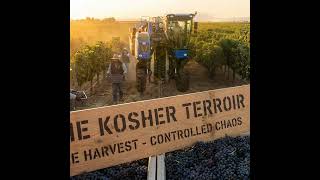
Simon Jacob walks through the Israeli grape harvest: reading ripeness through Brix and pH tests, racing against wild boars and starlings, and coordinating crews in a six-hour window. Once crushed, only Jewish workers can touch the wine, requiring a mashgiach on site. Night harvesting preserves aromatics while machine picking gentles the fruit.
Chapters
Welcome to the Kosher Teruah. I'm Simon Jacob, your host for this episode from Jerusalem. Before we get started, no matter where you are, please take a moment to pray for the safe return home of all our soldiers, If you're driving in your car, please focus on the road ahead. If you're relaxing at home, please open a delicious bottle of kosher wine and pour a glass, sit back and relax. Welcome back to The Kosher Terroir. For the last few episodes, we have been living in the world of theory. We've been architects. We've been patient. We've walked the hillsides in the rain, analyzed the soil composition, debated the merits of limestone versus clay, and we waited. We watched the vines sleep through the winter, looking like dead sticks in the mud, and then burst into violent green life in the spring. Up until This moment, our job has been about nurturing. We were farmers. We watched the weather apps on our phones like stockbrokers watching the ticker tape. We prayed for rain when the soil was dry, and then we prayed for rain to stop when the mildew pressure got too high. We were observers. We were guardians. But then it happens. It's late August. The heat in Israel is heavy, pressing down on your shoulders. It's the Jewish month of Elul, the month of introspection. The air feels different. It smells like dust and dried grass. You're sitting in your office, or maybe you're in the cab of your truck, and the phone rings. It's the agronomist. He's standing in Block 4, the Cabernet block you've been worrying about since April. He doesn't say hello. He doesn't ask how you are. He says 4 words that change your life for the next 6 weeks: "The seeds are brown." In that split second, everything changes. You stop being a farmer. You stop being an observer. You become a general, and you're going to war. For the next 40 days, you will not sleep more than 4 hours a night. Your hands will be permanently stained deep Lady Macbeth purple. Your boots will be so sticky with sugar that they will make a peeling sound every time you take a step on the concrete. You will live on black coffee, hummus, and pure adrenaline, because the harvest isn't just picking fruit. It's a high-stakes logistical nightmare where a year's worth of financial investment, millions of dollars, thousands of hours of labor, the sweat of your crew comes down to a window of time that might be as short as 6 hours. Miss that window— if you pick 24 hours too late during a heat wave, you haven't made wine. You've made maybe port, and you've also possibly made jam. Pick 24 hours too early because you panicked, and you've made green, bitter, vegetal juice. That no amount of expensive French oak can ever fix. And for kosher winemakers, there is an elephant in the room, a massive logistical hurdle that non-kosher winemakers in Bordeaux, Napa, and Tuscany don't have to deal with: the high holidays—Rosh Hashanah, Yom Kippur, and Sukkot. By some divine cosmic joke, These holidays almost always land exactly when the Cabernet Sauvignon reaches peak ripeness. Imagine trying to coordinate a D-Day military invasion, but you are forced to shut down the entire army for 3 days a week, every week, for a month. You cannot pick, you cannot drive trucks, you You cannot run pumps. That is the chaos we are stepping into today. The architecture phase is over. The blueprints are rolled up. The harvest has begun. Let's rewind the clock just a little bit, about 4 weeks before the phone call. The moment the gun is loaded happens in midsummer. We call it verizon. If you walk into a vineyard in July, the grapes look hard like green peas. They are rock hard. If you bite one, it's so sour your jaw will lock up. This is nature's defense mechanism. The vine is saying, don't eat me yet, my seeds aren't ready. It's camouflage. But then a biological switch flips. The vine stops growing shoots. It stops making new leaves. It decides, okay, survival mode is over, reproductive mode begins. It starts pumping all its energy, all its sugar created by photosynthesis, directly into the berries. The skins change color. You walk down the row of Cabernet and you see a single purple berry in a sea of green. The next day, half the cluster is purple. 3 days later, the whole vineyard has turned from emerald green to deep dark violet. The berries are swollen. They swell up with water and sugar. This is when the countdown starts. We are entering the danger zone. Why is it dangerous? Because for the last 6 months, you were the only one who cared about these grapes. Now the whole world wants them. The pests— sugar is energy, and the wild energy is gold. Wild boars, huge 200-pound animals, will smash through metal fences to get to sweet grapes. They don't just eat, they destroy. They trample the vines. Jackals. You wouldn't think jackals eat grapes, but they love sugar. And worse, they get thirsty. I've heard stories of growers finding their drip irrigation lines chewed to pieces because the jackals smelled the water inside the plastic and bit through it. Now You have a flood in row 1 and dehydrated vines in the next row. But the worst enemy, the most sophisticated enemy, are the birds, specifically starlings. Starlings are not like us. They don't eat whole grapes. They are picky eaters. They are connoisseurs. A flock descends, a bird lands on a perfect cluster of Merlot, It pecks one berry. It tastes it. Hmm, not sweet enough. It moves on to the next berry. Peck. Nope, not quite. It moves on to the next bunch. That bird might destroy 20 clusters in 5 minutes without eating a single grape, but the damage is done. That peck breaks the skin, juice leaks out, and then The yellow jackets come, the fruit flies come, and on their tiny feet they carry vinegary bacteria. One picked berry can turn into a ball of volatile acidity that smells like nail polish remover. If that rot spreads to the cluster and that cluster goes into your tank, it can ruin 10,000 liters of wine. So you say, Simon, just spray them, protect the grapes. There is a catch. This is a nightmare scenario. In spring, if you saw fungus, you sprayed sulfur. If you saw a bug, you dealt with it. But now we have strict pre-harvest intervals. Legally and ethically, you cannot spray anything on the grapes within weeks of the harvest. We don't want that residue in our wine. So it's like you're flying a plane and the engine stalls and you realize you have no parachute. You are truly defenseless. If a heat wave hits, you watch your grapes shrivel into raisins. If a humid fog rolls in and gray rot, botrytis, starts to fuzzy up your clusters, You can't spray it away. You have to stand there and watch it happen, or you send a crew in to drop the rotten fruit on the ground by hand, which costs a fortune. I've seen winemakers walk into a vineyard in late August, smell that distinctive moldy rot, and just weep because there is nothing you can do but harvest right now. Throw away 30% of the crop and try to save the rest. So how do they know when to pull the trigger? If picking too early is a disaster and picking too late is a tragedy, how do we find the bullseye? Every morning, starting at 4:30 to 5 AM, before the sun comes up, the winemaker or the agronomist Drives to the vineyard. This is a ritual. It's almost religious. You grab a gallon-sized Ziploc bag and you walk down the row. Now you have to be honest. Human nature is to look for a big, beautiful, perfect purple cluster. You have to fight that instinct. You have to pick the ugly ones too. You have to pick the ones deep in the shade and the ones burning in the sun, because all of them are going into the tank. You pick 100 berries, you squeeze them, your hands get sticky, and you drive back to the winery lab, smash them into juice, and run the numbers. We are looking for the big three in our data: brix, or sugar—this measures the potential alcohol We usually want 23 to 25 Brix. Less than that, the wine is thin and watery. More than that, you're making rocket fuel—16% alcohol. The second is pH, the measure of chemical stability. We want it low, around 3.5 or 3.6 for reds. This protects the wine from spoilage. And finally, Total acidity, TA. This is the zing. This is the tartness on your tongue. But here's the problem: as grapes ripen, sugar goes up and acid goes down. We are looking for the exact moment those two lines are crossed on the graph, the sweet spot. But numbers do lie sometimes. This is the hardest lesson for a young winemaker to learn. You can have grapes at 24 brix, perfect sugar on the paper, but it tastes like green bell peppers. We call this psychological unripeness. It happens all the time in hot climates like Israel or California. The sun spikes the sugar, but the flavors haven't developed yet. The tannins are still green and harsh. If you harvest based on that spreadsheet, you make a wine that's 15% alcohol but tastes like a vegetable garden. It's disjointed and it's actually pretty gross. So you have to eat the grape, and this is a skill it takes years to master. You don't just pop it in your mouth like a snack, you dissect it like a surgeon. Step 1: You put the berry in your mouth and squeeze it against the roof of your mouth. Does the pulp hold on to the seeds? Is it gummy? That's unripe. It should release. The pulp should slide off the seeds cleanly. And then you chew the skin, spit out the juice, and just chew the skin. Is it leathery? Is it bitter? Does it dry your mouth out instantly? Or is it soft? Is it velvety? We want dusty tannins like fine cocoa powder, not harsh green tea tannins. And finally, you spit the seeds into your hand. Look at them. Are they green? Green seeds are full of bitter oils. If you crush a green seed during fermentation, your wine will taste bitter forever. We wait for them to turn brown. We wait for them to taste nutty, like toasted almond. That is called lignification. When the lab report says 24 Brix, and the seeds taste like almonds, and the skins are soft, that is the moment. You stand in the vineyard. The sun is setting. You call the harvesting crew manager. It's time. We pick the Merlot tonight. You've made the call. The adrenaline hits, but now the nightmare begins. Winemaking is 10% art, 10% farming, and 80% logistics. Imagine this: you have 20 tons of Merlot coming in tonight that requires a 2,000-liter stainless steel tank, and you look at your tank map. Tank 1 is full, Tank 2 is full, Tank 3 is empty but the cooling jacket is broken, Tank 4 is full of Syrah that should have finished fermenting 3 days ago but the yeast is being lazy, it's stuck. You can't put fresh grapes in a full tank. So now you see winemakers running around the cellar with clipboards, frantically doing math. Okay, if we press the Syrah tank for right now, even though it's a bit sweet, we can move it to barrels. Then we have to steam clean the tank. It takes 4 hours to clean. Can we be ready by 4 AM? When the trucks arrive. This is a game of Tetris played with thousands of liters of sticky, expensive liquid. One wrong move and you have a truck full of grapes sitting in the sun with nowhere to go. The crew— you need 30 pickers, but wait, it's the holiday season, half your crew is unavailable, or the mechanical harvester broke down at the vineyard down the road. And they are waiting for a part from Italy, or the truck driver is stuck at a checkpoint in the West Bank and won't make it for another 3 hours, or you've lost half your staff to millouim. Every minute the grape sits in the vine past the pick time, the acid is dropping. And here's the unique stress of the kosher terroir: I cannot overstate this. Let's say Rosh Hashanah, the Jewish New Year, falls on a Thursday and Friday. That means you have Thursday, holiday, no work. Friday, holiday, no work. Saturday, Shabbat, no work. That is 3 consecutive days where the winery is a ghost town. You cannot pick, you cannot run pumps, You cannot touch the fermentations. If the grapes hit peak ripeness on Thursday morning, tough luck. By Sunday, they might be raisins. So you have to predict the future. You have to take a gamble. Do you harvest on Wednesday knowing it's a bit early, or do you wait until Sunday praying the heat wave doesn't hit? I have seen winemakers age 5 years in the month of September. Just trying to navigate the Jewish calendar. It is a puzzle with no perfect solution. Okay, so now it's 2 AM. The world is asleep, but the vineyard is alive. Why do we harvest at night? It's not just to be romantic. It's pure chemistry. In Israel, Daytime temperatures can hit 35°C, even 40°C, 104°F. If you pick hot grapes, two disastrous things happen. Oxidation— heat acts as a catalyst. It speeds up the chemical reactions. If you cut a hot apple, it turns brown instantly. The same happens to grape juice. You lose those fresh fruity aromas before they even get to the bottle. Also, microbes love heat. If the grapes are sitting in a truck at 35 degrees, the wild yeast on the skins wakes up and starts fermenting the juice in the bin. By the time it gets to the winery, you have a fizzy, spoilage-prone juice. So we pick at night when the grapes are cool, maybe 15 degrees C. The fruit is crisp. The chemistry is stable. It saves energy too. We don't have to blast the cooling systems to chill the juice down. Imagine a crew of 40 people. They're wearing headlamps. The silence of the vineyard is broken only by the rhythmic snip, snip, snip of shears and the thud of clusters hitting plastic buckets. This is the traditional way. It is gentle, It allows for field sorting. A worker can see a rotten bunch and leave it on the vine. But it is slow. Crews can pick maybe 5 to 10 tons a night. If a heat wave is coming tomorrow and you have to pick 50 tons, you're in trouble. You obviously can't get the fruit off the vines fast enough. But then there's machine harvesting. This is a monster. A modern harvester looks like a tractor on stilts. It's huge. It drives over the row of vines that pass underneath its belly. Inside the belly, there are fiberglass rods. They beat the vines, shake them back and forth thousands of times a minute. The vibration is so specific that it snaps the berries off at the stem, leaving the leaves and canes intact. The grapes rain down onto a conveyor belt. The advantage: speed. A machine can pick 100 tons a night. It doesn't get tired. It doesn't need a cigarette break. It doesn't care if it's a holiday tomorrow. In a modern kosher industry where timing around Shabbat is critical, these machines can be lifesavers. Some people say machine harvesting is inferior. 20 years ago, yes, it beat the vines to death. Today the machines are gentle giants. They pick cleaner fruit than humans sometimes. So it's Sunday morning. You survived the holiday. You rushed back to the winery. The tanks are fine, thank God. But now the backlog hits because no one has harvested for 3 days. Everyone is harvesting now. The trucks start arriving. One truck, two trucks, five trucks. There is a line of semi-trailers down the road, idling, waiting to unload. This is the bottleneck. Your receiving hopper can only take 10 tons an hour. You have 100 tons sitting in the driveway. The sun is coming up. The top layer of grapes in the trucks is starting to get hot. And if they get hot, the wild yeast on the skins wakes up. They start fermenting in the truck. This can produce ethyl acetate, the smell of glue. You have to make a hard decision. This is triage. Every truck drives onto the scale. We weigh it, then the lab tech runs out. They climb up the side of the truck with a long metal probe They jam it deep into the grapes to get a sample from the core. They run back to the lab. Truck A, Cabernet, temperature 18 degrees, pH 3.6, perfect. Truck B, Sauvignon Blanc, temperature 24 degrees, pH is rising, it's melting. You make the call, move Truck B to the front of the line. We need to process the whites before they oxidize. Truck A can wait for an hour. The drivers are yelling at you. They want to dump and go back for another load, and you have to be the traffic cop too. Okay, once we accept the grapes, we have to get them out of that heat. We have two weapons: a cold room. In high-end wineries, we unload the grapes into small bins and drive them with forklifts into a massive refrigerator. We let them sit there for 24 hours until they are 5°C. Cold grapes are firm. They don't mush. They keep their aromatics. There's also flash chilling. For big loads, we pump the must, the crushed juice and skins, through a tube-in-tube heat exchanger. It's like a radiator. Cold glycol on the outside, hot grapes on the inside. In seconds, the temperature drops from 30 degrees to 15 degrees C. You can physically feel the pipe shaking as the slurry slams through it. So the sun is coming up, the mist is lifting, the trucks are arriving at the winery, backing up to the receiving ramp. This is the crush pad. This is the loudest, messiest, stickiest place on earth. The air smells thick with yeast and sweet sugar. It attracts bees by the thousands. The truck tips its bin, tons of grapes slide into the stainless steel hopper, and from this moment on, everything must be strictly kosher. This is a critical point. According to Jewish law, once the grapes are crushed and juice appears, the wine is considered yayin. From this second forward, only Jews can touch the wine or the equipment. That means, as a winemaker, if I am not Jewish or my assistant isn't, we have to stand with our hands behind our backs. We have to direct the mashgiach Turn on the destemmer. Now, speed it up. Stop the pump. It's a dance of communication. If the mashgiach steps away for a coffee, the entire operation halts. The grapes move along a vibrating table. We are looking for MOG—materials other than grapes. Leaves or sticks are pulled. In high-end wineries, we use optical sorters. These are incredible. Imagine a high-speed camera that photographs every single berry as it flies through the air. The computer analyzes the image in a microsecond. Too green, too shriveled, too pale— if the berry doesn't meet the standards, a tiny jet of compressed air shoots it out of line like a sniper. It's like a video game. Only the perfect berries survive. The grapes then go into a spinning drum with holes. Stems stay inside, the grapes fly out. Now we have a choice. Do we crush them? If we crush them now, we release juice immediately. The yeast can start working fast. If we leave them as whole berries, the fermentation starts inside the grape. It's called intracellular fermentation. This creates bright, fruity, vibrant flavors. And finally, a massive pump sucks the red slurry—the must, skins, seeds, and juice—through a thick hose. It snakes across the floor and blasts the juice into the top of a stainless steel tank. You watch the tank fill. You check the temperature. And you seal the door. The pump turns off. The trucks drive away down the gravel road. You walk outside. The sun is high in the sky now. You look at the vineyard. Yesterday it was heavy with fruit. It was purple and chaotic. Today it's just green leaves. It looks empty. It looks light. The vines have done their job. They can finally rest. They begin the slow process of shutting down, storing carbohydrates in their roots, and going dormant for the winter. The architecture is finished, but inside the winery, the noise is just beginning. You walk back into the tank room. It's cool in there. You hear the glycol cooling jackets clicking on and off. And if you walk up to a tank that was filled 2 days ago, and put your ear against the cold stainless steel, you can hear it—a fizzing sound, like millions of tiny bees buzzing inside, or like rain falling on a tin roof. That's the sound of carbon dioxide being released. That's the sound of yeast eating sugar and turning it into alcohol and heat. That's the sound of alchemy. The harvest is over. The war of logistics is over. But the war of biology has just begun. Now we have to guide this wild, bubbling, dangerously hot liquid. We have to extract the color from the skins without getting the bitter seeds. We have to keep the yeast happy so that they don't produce off flavors. We have to turn the sticky grape juice into wine. But that, that is a story I touched on a few episodes ago in the 12 decisions. But since then, a few winemaker friends have told me that I made it sound too easy. They reminded me that each of those 12 decisions is actually composed of 1,000 others. It isn't just a checklist, it's a fractal. Wine is infinite. It is a place of unbelievable creativity where a single micro adjustment changes everything. I'm Simon Jacob and this is the Kosher Terroir. Now go wash the sticky grape juice off your fingers, pour yourself a glass of last year's vintage, appreciating the million choices that it took to get there, and pray for a peaceful harvest. This is Simon Jacob again, your host of today's episode of The Kosher Teruah. Please subscribe via your podcast provider to be informed of our new episodes as they are released. If you are new to the Kosher Terroir, please check out our many past episodes.










