The Invisible Ingredient: Michel Rolland
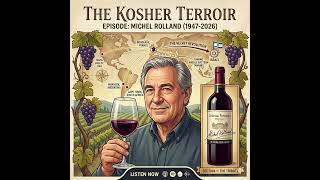
Michel Rolland's science-driven winemaking techniques—harvesting for ripeness, sorting berries, micro-oxygenation—transformed kosher wine from harsh and green to fruit-forward and immediately drinkable. His methods aligned with Robert Parker's taste preferences and reshaped the Israeli wine industry, though traditionalists accused him of erasing terroir. Even today's natural winemakers rely on the safety net Rolland created.
Chapters
Welcome to the Kosher Teruah. I'm Simon Jacob, your host for this episode from Jerusalem. Before we get started, no matter where you are, please take a moment to pray for the safe return home of all our soldiers, If you're driving in your car, please focus on the road ahead. If you're relaxing at home, please open a delicious bottle of kosher wine and pour a glass, sit back and relax. A giant has fallen. Just a few weeks ago, the global wine community went silent for a moment. Word began to spread from the right bank of Bordeaux across the ocean to the valleys of Napa, and eventually to the high-altitude vineyards of the Upper Galilee. Michel Rolland, the man they called the Flying Winemaker, had passed away. He was 78 years old. Now, if you're a longtime listener of the Kosher Terroir, you might be pausing You might be wondering, why are we dedicating an entire episode today to a non-Jewish French oenologist? The answer is simple and it is profound, because if you have enjoyed a premium bottle of kosher wine in the last 20 years, if you have ever marveled at a wine's deep opaque purple hue, its velvety mouth-coating texture, or its explosive dark fruit, you have tasted the ghost of Michel Rolland. You cannot tell the story of modern wine, and you certainly cannot tell the story of the Israeli wine revolution without speaking his name. Last week in our episode To breathe or not to breathe. We talked about aeration. We talked about what happens when you, the consumer, introduces oxygen to a finished bottle of wine at your Friday night table. We talked about swirling glasses and even kitchen blenders. But today we're going deeper. We are stepping out of your dining room and into the cellar. Because long before you ever pop that cork, the winemaker has already been having a secret conversation with oxygen. Today we're going to explore the invisible ingredient that Michel Rolland championed, a technique that literally changed how the world drinks. I'm holding a bottle in my hand right now that feels a little heavier today. It's a kosher run of Château Fontenay. For those of you who don't know, Fontenay is a beautiful, meticulously farmed estate in the Fronsac region of Bordeaux. But what makes this specific bottle a collector's item isn't the liquid inside. It's the label printed right there across the front of the glass. Is a reproduction of Michel Rolland's actual signature. Fontenay was his home. It was his personal laboratory. Over his 50-year career, Rolland consulted for hundreds of the most famous and expensive wineries on Earth. He was constantly on airplanes, flying from continent to continent to advise winemakers. But Fontanie was where he practiced what he preached for his own family without compromise. Seeing that signature today feels like looking at the handwriting of a revolutionary. And tasting the kosher run of this wine, which is legendary for being incredibly lush, rich, and perfectly balanced, is the purest look into his winemaking soul. To understand why this man was a revolutionary, you have to understand what the wine world looked like before he took flight. If you rewind the clock back to the 1970s and early '80s, the wine world was an entirely different landscape. Today, we take the modern style of red wine for granted. We assume that a $100 bottle of Cabernet Sauvignon is supposed to taste like liquid velvet. We assume it will be delicious the moment we buy it. But back then, high-end wines, especially from the Old World, were often incredibly acidic. They were frequently described as green or vegetal, meaning they tasted a bit like bell peppers or green beans. And the tannins, they were brutal. If you opened a top-tier Bordeaux, upon release it was notoriously unapproachable. It would strip every ounce of moisture from your mouth. You had to buy a case, lock it in a dark basement for 15 or 20 years, and just pray that the harsh, bitter compounds would eventually soften enough to make the wine drinkable. Winemakers largely accepted this as the reality of farming. If it was a cold, rainy year, you made thin, green, harsh wine, and you blame the weather, you blame the vintage. Michel Rolland did not accept that. He believed that greatness didn't just have to be geographical or a meteorological accident. He believed it was a science. He believed that with the right interventions in the vineyard and the right manipulation of oxygen in the cellar, you could tame the beast. You could force the wine to be plush, hedonistic, and immediately accessible, no matter what the weather did. Over the next few minutes, we're going to unpack exactly how he did it. We're going to explore his major teachings, from the concept of physiological ripeness to the controversial science of micro-oxidation. We will examine the massive, sometimes vicious backlash against his methods, exploring why critics accused him of destroying the very concept of terroir. And finally, we'll look at how the booming kosher wine industry in Israel and California adopted his exact playbook to tame the fierce tannins created by the hot Middle East sun, forever changing what we pour into our kiddush cups. So find the biggest boldest, most fruit-forward red wine in your collection. Pull the cork, pour a generous splash, and raise a glass. It's time to meet the man who taught the world's wine to breathe. So how did Michel Roulland tame the beast? How did he take the harsh, aggressive, green-tasting wines of the 1970s and transform them into the plush, hedonistic masterpieces we crave today. It didn't happen by accident, and it didn't happen overnight. It happened because Roulan bequeathed a very specific, uncompromising set of teaching to the winemaking world. Some were massive paradigm shifts in philosophy. Others were minor mechanical tweaks, but when combined, they form the ultimate recipe for modern luxury wines. Let's start in the vineyard with what is arguably his greatest major teaching: physiological ripeness. Before Roulan, the decision of when to harvest the grapes was mostly based on sugar. Winemakers would go into the vineyard, test the sugar levels, what we call the brix, and if the sugar was high enough to ferment into a good amount of alcohol, they'd pick the grapes. But Roland realized something crucial: just because a grape has enough sugar doesn't mean the structure of the grape is actually ripe. Think about the seed inside the grape. If you bite into a grape in August, those seeds are bright green. If you chew them, they taste bitter, astringent, and harsh. If you crush those green seeds into your wine, your wine is going to taste green and harsh. Roulan taught his winemakers to ignore the sugar readings for a moment and look at the phenolics. He told them to wait until the skins were thick and the seeds inside the grapes had turned dark nutty brown. This was incredibly risky. Waiting for physiological ripeness meant leaving the grapes on the vine for an extra week or two. In places like Bordeaux, an extra 2 weeks in the fall means you're playing Russian roulette with the rain. If a storm rolls in, your entire crop could rot on the vine. But Roland insisted. He demanded that winemakers wait for those seeds to turn brown. And the reward? The bitter vegetal bell pepper flavors completely vanished, replaced by incredibly ripe dark fruit and naturally softer tannins. Once those perfectly ripe grapes were picked, Roland introduced a minor but absolutely critical mechanical teaching: the sorting table. It sounds obvious to us today, but 50 years ago, harvesting was a chaotic, messy process. Harvesters would throw clusters into bins, and everything went into the crusher. Unripe grapes, raisins, leaves, stems, and yes, even bugs. Roland popularized the rigorous berry-by-berry sorting table. He forced wineries to invest in massive conveyor belts where teams of people would stand shoulder to shoulder picking out every single imperfect berry, every stray leaf, and every piece of stem before it ever touched the tank. The result was a level of purity and concentration in the juice that the world had rarely seen. But Roland's influence didn't stop at the vineyard. Let's move on into the cellar. Here is where we find his second major teaching. And the namesake of this episode, microoxidation. As we discussed in our last episode, if you take a massive, highly tannic wine and expose it to oxygen, those tannins bind together and soften. In 1990, a French winemaker named Patrick Ducanot invented a machine that could pump microscopic, highly calibrated bubbles of pure oxygen directly into stainless steel fermentation tanks. Michel Roullanne saw this invention and immediately understood its power. Instead of making a harsh wine, bottling it, and forcing the consumer to wait 20 years for it to breathe through the cork, Roullanne used microoxidation as a scalpel. He prescribed it to his clients all over the world. By bubbling microdoses of oxygen through the wine while it was still in the tank, he was polymerizing, or softening, the tannins months or years before the wine was even bottled. He was essentially fast-forwarding the aging process, building that signature velvety texture from the inside out. And finally, to lock in that texture, He brought us one more minor teaching: malolactic fermentation in the barrel. Without getting too deep into the chemistry, almost all red wines go through a secondary fermentation where harsh, tart malic acid, the kind of acid in a green apple, is converted into softer lactic acid, the kind of acid in milk. Historically, this was done in massive stainless steel tanks. Roland told his winemakers to move the wine into expensive toasted oak barrels before this process finished. By having this secondary fermentation happen directly inside the wood, the flavors of the oak, the vanilla, the mocha, the baking spice integrated seamlessly with the fruit, creating a creamy, luxurious finish. Physiological ripeness, the sorting table, microoxidation, malolactic fermentation in the barrel— none of these things were accidents. They were a highly calculated, meticulously executed playbook, and the ultimate goal of this playbook was simple: to create a wine that was plush, hedonistic, and practically begged to be drunk. But as Roland's teachings spread like wildfire across the globe, they triggered a massive unintended consequence. They completely shattered the traditional timetable of wine collecting. And that brings us to the great shift. To understand the true impact of Michel Rolland's teachings, we have to look at the traditional timeline of wine consumption. Let's go back to that traditional model for a moment. If you were a serious wine collector in the 1970s or '80s, you operated on a generational timeline. You didn't buy a top-tier Bordeaux from the Left Bank to drink that weekend. You bought a case, you put it in a temperature-controlled cellar, and you waited and waited. If you were impatient and opened a bottle of, say, a high-end 1982 Cabernet at a year or two or three, it was considered a crime, not just against the wine but against your own palate. The wine would be so tight, so aggressively tannic, that it would feel like chewing on a raw cigar box. It physically hurt to drink. The entire system of fine wines was built on the virtue of this extreme patience. And then Michel Rolland's methods took over. By combining physiological ripeness in the vineyard with micro oxidation in the cellar, Roulan fundamentally short-circuited the aging process. Because the winemakers were waiting for the seeds to turn brown, the tannins were naturally softer from the moment the grapes were crushed. And because they were pumping micro doses of oxygen into the tanks, those tannins were polymerizing chaining together and becoming heavy and plush months before the wine was even bottled. The result was the birth of what we now call the cult wine. This exploded the Napa Valley in the 1990s and heavily influenced the booming Israeli wine scene shortly after. We started seeing these massive, concentrated, incredibly dark Cabernet Sauvignons and Syrahs hitting the market. But there was a catch— a chemical reality of leaving grapes on the vine longer. As grapes ripen, their sugar levels rise. When yeast ferments that sugar, it turns into alcohol. So these new super ripe wines weren't clocking in at the traditional 12.5% or 13% alcohol of the old days. They were massive—14.5%, 15%, sometimes even 15.5% alcohol. Historically, a wine with a 15% alcohol would taste hot. It would burn the back of your throat like cheap vodka. But Roulan's genius was in the integration. Because the fruit was so incredibly concentrated, and because the malolactic fermentation happened inside expensive oak barrels, The wine had enough stuffing, enough dense, sweet fruit flavors, creamy vanilla texture to completely mask the high alcohol. It was a revelation. Suddenly you didn't need a 20-year cellar to enjoy a world-class $100 bottle of wine. You could walk into a wine shop on a Thursday, buy a flagship bottle Open it at your Shabbat table on Friday night, and it was spectacular right out of the gate. It was liquid cashmere. It was explosive dark blackberry, mocha, and crushed velvet. Rulan had democratized luxury. He made it accessible to the immediate gratification of the modern consumer. He proved that a young wine didn't have to be a painful experience. But in the wine world, every action has an equal and opposite reaction. And as those incredibly plush, 15% alcohol, immediately drinkable wines flooded the market, the traditionalists began to panic. If Michel Rolland's methods forced the wine to be soft plush, and perfectly delicious on the day of its release, does that mean the wine will fall apart in the cellar? This question sparked one of the most vicious debates in modern wine history. To understand why the traditionalists were in full-blown panic, we have to look at the actual chemistry of how a wine ages. Why do some wines turn to vinegar in 3 years? While a great Bordeaux from 1982 can still be vibrant and alive 40 years later? It comes down to two natural preservatives: acidity and tannins. Think of tannins as the skeleton of the wine. They provide the structural framework, but more importantly, tannins act as powerful antioxidants. They are the shield that protects the delicate fruit flavors from being destroyed by oxygen over the decades. Acidity acts in a similar way. It keeps the wine fresh, prevents bacterial spoilage, and gives the wine its nervous energy. Now let's look at Michel Rolland's playbook. First, he told winemakers to leave the grapes on the vine longer to achieve physiological ripeness. As the grapes sit in the hot sun and get riper, their sugar goes up but their acidity naturally plummets. So right out of the gate, Roulan's wines had lower acid than the traditional Old World standard. Second, he championed microoxidation. He pumped oxygen into the tanks to intentionally polymerize or soften the tannins before bottling. The traditionalists looked at this and practically tore out their hair. They said, you are lowering the acidity and you are artificially wearing down the tannic skeleton before the wine even goes into the glass. You are using up the wine's defensive shields. In 10 years The fruit will collapse, the structure will turn to mush, and the wine will be dead. They accused Roulin of making soda pop. They claimed he was creating a standardized, manufactured product that tasted great to the uninformed masses on day one, but completely lacked the soul and the stamina to endure. For collectors who bought wines to lay down for their children's weddings, This was a terrifying prospect. And as for the kosher wine collector, this debate is incredibly relevant. Today, if you buy a massive flagship Israeli Cabernet, a wine that was made using these exact modern Rulan-inspired techniques, you are spending a lot of money. You want to know, will this wine last until my son's bar mitzvah or my daughter's chuppah? 15 years from now. For years, this was just a theoretical debate. The critics yelled, and Roland modestly ignored them, pointing to the fact that his wines were selling out at record prices. But then enough time passed. We finally hit the 20-year mark, and the wines he consulted on in the 1990s and 2000s We could finally pop the corks, pour the glasses, and see who was right. Did the modern micro-oxygenated wines fall apart? The answer is a resounding and fascinating no. In fact, many of them are absolutely glorious. When critics and masters of wine started doing retrospectives tasting Roland's early Pomerols, his Napa Cabernets, and the estates he influenced, they found something shocking. The wines hadn't died, they had just aged differently. Historically, the aging curve of a great red wine looks like a steep mountain. It started out bad and undrinkable, slowly climbed up the mountain for 15 years until it reached its peak, stayed at the peak for a brief window, and then rapidly tumbled down the other side into decline. Roulan's method changed the geometry of the aging curve. He turned the mountain into a massive plateau because the wines were physiologically ripe and the tannins were perfectly integrated from the start, the wines tasted fantastic at year 1. But because the sheer concentration of the fruit was so incredibly high— remember those ruthless sorting tables that removed every drop of diluted or underripe juice— the wine had more than enough stuffing to survive the decades. At year 5, it was great. At year 15, it was still great. It didn't dramatically change or undergo a miraculous resurrection in the cellar because it didn't need to. It just steadily, gracefully maintained its plush, hedonistic beauty. It actually forced the wine world to ask a deeply philosophical question: does a wine have to be painful in its youth to be considered profound in its old age? Does a wine have to suffer for 20 years in a dark cellar to earn our respect? Michel Roullanne proved that the answer was no. You could have your cake and eat it too. You could open a flagship wine on Friday and have a spectacular experience, or you could lose the same bottle in the back of your cellar for 15 years and it would still greet you like an old friend. But this incredible gift to the consumer came at a very steep price for the people actually making the wine. By proving that greatness could be achieved through science and precision, Michelle Roulin accidentally created a terrifying new reality for winemakers everywhere. For centuries, winemakers cringed at hearing raindrops in September. I want you to imagine being a winemaker in Bordeaux or Burgundy 50 years ago. You've spent the entire year pruning, spraying, and praying over your vines. It's early autumn. The grapes are almost ready. You are days away from harvest, and then the skies open up. It rains for a week straight. The vines soak up all that water, pumping it straight into the grapes. The berries swell up like balloons, diluting all the sugar and flavor. Rot starts to spread throughout the clusters. In the old days, when this happened, the winemaker just shrugged their shoulders. They picked the diluted grapes, made thin green watery wine, and slapped the label on it. When the consumer bought it and complained that it didn't taste as good as last year's bottle, the winemaker had the ultimate bulletproof excuse: it's the vintage. It's an agricultural product. We are at the mercy of God and the weather. Michel Rouland's teachings took that excuse and threw it in the garbage. Rouland was a man of science. He believed that while you couldn't control the weather, you could absolutely control how you reacted to it in the cellar. He bequeathed a toolkit to the modern winemaker that functioned like an incredibly high-tech safety net. If it rained and your grapes were diluted, you didn't just accept it. You brought in optical sorting machines, literal lasers that scan every single grape on the conveyor belt and use tiny puffs of air to shoot the watery or rotten ones into the waste bin. If the sun didn't shine enough and the tannins were harsh and green, you didn't just bottle it and tell the customers to wait 20 years. You hooked up a micro oxidation machine and gently bubbled pure oxygen into the tank to chemically force those tannins to soften. If the wine lacked concentration, you might even use a controversial machine which called in reverse osmosis to literally spin the excess rainwater out of the juice on a molecular level. Roullanne gave winemakers the tools to save a disastrous vintage. He gave them the power to make a highly rated, delicious 90-point wine even when the weather was completely against them. But here's the dark side of that gift. He gave them the tools but he also gave them the burden of responsibility. Once the consumer and the wine critics realized that winemakers could use technology to fix a bad year, they began to expect it. The grace period for the vintage variation vanished. Think about kosher wines in the market today. If you're paying $80 or $100 or $150 for a flagship bottle from the Upper Galilee or the Judean Hills, you expect a masterpiece. You don't care if there was a brutal heat wave that August, or if there were labor shortages due to the war. You are paying for a premium product, and you expect that lush, velvety, Roulin-esque perfection every time you pop the cork. The psychological toll the shift took on the people actually making the wine was staggering. They were no longer just farmers making an agricultural product. They were expected to be lab technicians, chemists, and master blenders. In the 1970s, a winemaker's job mostly ended when the grapes were crushed. By the 2000s, Because of Rouland's influence, crushing the grapes was just the beginning of a month-long, high-stress, mathematically precise manipulation of the liquid. The pressure to intervene, to tweak, to micro-oxygenate, and to filter was immense. Rouland had raised the global standard of wine to an incredibly high floor. There was no longer an excuse for a flawed, gritty or green wine. But as winemakers all over the world grabbed these tools and started using the exact same playbook, by removing the flaws of nature, were they also removing the soul of the soil? To understand how Michel Rolland's techniques conquered the globe, you have to understand the powerful forces in the wine industry during the 1990s and 2000s. The 100-point scale. Specifically, you have to understand the palate of one man, an American wine critic named Robert Parker. Robert Parker created a newsletter called The Wine Advocate. He tasted thousands of wines and rated them on a scale up to 100, and very quickly the industry realized something terrifying. Parker's palate was law. If he gave a wine an 85, that winery might go bankrupt. But if he gave a wine a 98 or a 99, or the mythical 100 points, the price of that bottle would triple overnight. Wineries would sell out of their entire inventory in hours. A 100-point score was literally what winning the lottery. And what kind of wine did Robert Parker love? He loved big, bold, opulent, fruit-forward, low-acid, highly concentrated, velvety red wines. Does that recipe sound familiar? Michel Rolland was making exactly the style of wine that Robert Parker was rewarding with perfect scores. They were the ultimate symbiosis. Roland was the kingmaker in the cellar, and Parker was the kingmaker in the market. Winery owners all over the world, from Napa Valley to Argentina to Tuscany, saw this happening. They looked at their own traditional acidic rustic wines, and then they looked at the millions of dollars Parker was handing out to Rolland's clients. So what did they do? They picked up the phone and they hired the flying winemaker. This era became known as the Parkerization of wine. Rolland's client list exploded to over 400 wineries. His techniques— late harvesting, severe sorting, malolactic and new oak barrels, and micro oxidation were no longer just cool scientific interventions. They became the mandatory recipe for financial success. But as this recipe spread, a massive bitter backlash began to brew, and it all culminated in the year 2004 with the release of a documentary film called Mondovino, directed by Jonathan Nositer. Mondovino took a brutal look at the globalization of the wine industry. And in this film, Michel Roulan was cast as the ultimate villain. The documentary juxtaposed small, struggling, multigenerational farmers working the rocky soil by hand against the towering corporate influence of Roulan. In one incredibly famous and highly controversial scene, The camera films Roulan in the back of his chauffeur-driven Mercedes. He is smoking a cigar, laughing, and casually talking on his cell phone, barking orders to a client thousands of miles away to "micro-oxygenate their tanks." The film asks a devastatingly philosophical question: If you use the exact same interventions everywhere, Does terroir even exist anymore? Terroir, the very namesake of our podcast, is the belief that a wine should taste like a specific patch of earth where it was grown. A Bordeaux should taste like the damp gravel of France. A Napa Cabernet should taste like the California sun. But the critics argued, if you take a grape in Argentina, a grape in Napa, and a grape in Bordeaux, and you leave them all on the vine until the fruit is basically jam, and then you ferment them with the same commercial yeast, and then you pump oxygen into the tanks with the same Micro-Ox machines, and then you age them in exactly the same heavily toasted new French oak barrels. Are you tasting the soil? Are you just tasting Michel Roullan? The traditionalists screamed that Roullan was homogenizing the global wine market. They claimed that he was erasing the beauty, quirky, flawed identities of individual vineyards and replacing them with a standardized, focus-grouped international soda pop. Designed purely to secure a high score and a high price tag. Roulan, for his part, fiercely defended himself. He argued that terroir only matters if the wine is actually drinkable. He said, there is no romance in a green, bitter, flawed wine just because it's traditional. It was a war for the soul of the industry. But while the French and Americans were fighting over the philosophy of these techniques, another region was watching very closely. A region that had brutal hot summers, massive aggressive tannins, and an industry that was desperately trying to modernize and gain global respect. The techniques Michel Roulland popularized were about to cross the Mediterranean. They were about to arrive in Israel, and they were going to change kosher wine forever. To understand why Michel Roulan's methods became the absolute Bible for the modern kosher wine industry, you have to look up at the sky. In Bordeaux, winemakers spend half their year praying for the sun to come out. But in Israel, in places like the Judean Hills, the Carmel Mountains, and the Upper Galilee, the sun is relentless. During the Israeli wine boom in the late 1990s and early 2000s, winemakers were realizing the massive potential of their terroir, but they also faced the massive challenge. With all of the intense Mediterranean heat, the grapes were ripening incredibly fast. The sugar levels were skyrocketing which meant that the alcohol levels were high, and the skins of those Cabernet and Syrah grapes were getting thick, baking in the sun, producing massive, aggressive, brutally harsh tannins. If you made wine in Israel using the old traditional European methods, the wine could be coarse, it could be jagged. The Israeli winemakers looked at this problem, and then they looked at what Michel Roulan was doing globally. Roulan had literally written the manual of how to tame hot climate, high tannins, high alcohol wines. He proved that with ruthless sorting tables, malolactic fermentation in new oak, and the magic of micro oxidation, you could take a beast of a wine and turn it into velvet. The Israeli wine industry didn't just adopt Roulan's playbook, they memorized it. This modern, plush, fruit-forward style became the definitive blueprint for high-end Israeli red wines. But Roulan's connection to the kosher wine world wasn't just philosophical, it was direct. Roulan actually left his footprints in the soil of Israel. Consulting to many of the Israeli top-end wineries. He was brought in as an active consultant to Amphora Winery, located in the beautiful western slopes of the Carmel region on the Makoura farm. This wasn't a vanity project where he just sent an email once a year. Roland actually traveled to Israel. He walked the vineyards. He instituted his famous strict protocols: aggressive pruning to lower the yields and concentrate the flavors, merciless sorting at the winery, and the highly specific barrel aging regime. The premium wines produced under his guidance, often marketed under the Makura label, were monumental. They proved to the world that Israeli terroir, when guided by the highest level of international science, could stand toe-to-toe with Napa or Bordeaux. Amphora, well known for its non-kosher wines, now produces 4 separate varietals that are kosher and are true to Michel Roulland's technique. But his influence on your Shabbat table goes far beyond Israel. Let's fly back to France. Over the last two decades, the premium kosher wine market has been completely transformed by companies like Royal Wine, who send their elite winemaking teams, led by men like Pierre or Menachem Izralevitch, into the most prestigious classified châteaus in Bordeaux to produce kosher cuvées. But remember, when a kosher team goes into a secular château to make kosher wines, they aren't planting their own grapes. They're working with the château's terroir, the château's vineyard management, and the château's overall blending philosophy. And who was designing the philosophy for those châteaus? Michel Roullanne. Roullanne consulted for some of the most legendary estates that produce kosher runs today. Estates like Château Malartic, Château Lascombes, and Château Liéoville. When you buy a kosher bottle from one of these elite estates, you are tasting a magnificent collaboration. You are tasting the strict, uncompromising kosher supervision and production of the Royal Wine team, built on the lush perfectly ripened, micro-oxygenated agricultural blueprint drawn up by Michel Roulan. He helped shape the baseline quality and the style of the very grapes the kosher teams were working with. And that brings us full circle, back to the bottle sitting on the table in front of me— Château Fontenay. Of all the hundreds of wineries he consulted for, Fontenay was his personal estate. It was his home. It was where he didn't have to argue with stubborn owners or compromise with corporate boards. He just made the wine exactly the way he believed the wine should be made. The fact that we as kosher consumers have access to a kosher run from Fontenay is an incredible privilege. It is the purest, unfiltered expression of the man's palate. When you drink the kosher Château Fontenay, you aren't just drinking the client's interpretation of his advice. You are drinking his signature, literally and figuratively. We are living in the golden age of kosher wine. We have access to a level of quality, consistency, and luxury that our grandparents couldn't even have imagined. And whether the traditionalists like it or not, we owe a massive debt of gratitude to the flying winemaker for raising the bar. As we look back at the 50-year career of Michel Rouland, it's easy to get caught up in the drama. It's easy to watch a documentary like Mondovino and cast him as a corporate villain who traveled the globe erasing the romantic, rustic soul of wine and replacing it with a focus-grouped, micro-oxygenated formula. But I think that perspective completely misses the point. Michel Roullanne wasn't an enemy of the terroir. He was an enemy of faults. He was a man who fundamentally believed the tradition should never be used as an excuse for serving someone a bitter, green, diluted, or painful glass of wine. He believed that the soil, the terroir, could only express itself if the fruit was perfectly ripe and the tannins were seamlessly integrated. Did this mean he created a global style? Yes, absolutely. Did some winemakers abuse his tools? Leaning too heavily on new oak and oxygen to mask mediocre farming? Without a doubt. But consider the baseline. Think about the sheer quality of the wines you drink today compared to 30 years ago. We live in an era where you can buy a $25 kosher Cabernet from the Galilee, pop the cork on Tuesday night, and it will be clean, Expressive, balanced, and delicious. You don't have to worry about overwhelming green pepper flavors or tannins that strip your palate. Michel Roland democratized luxury. He proved that greatness wasn't just a geographical lottery. It was a science that could be learned, mastered, and shared. So where does the wine world and and specifically the kosher wine world, go from here. Right now, we are actually watching the pendulum swing back. Over the last few years, there have been massive movements towards low-intervention or natural winemaking. A new generation of winemakers is pulling back on the new oak. They are dialing back the micro-oxidation. They are picking their grapes just a little bit earlier to preserve that natural nervous acidity. But here's the incredible irony. They are only able to do that safely because what Michel Roulland taught them. Roulland elevated the global understanding of cellar hygiene, lab analysis, and phenolic ripeness. He built the scientific safety net The new generation of Israeli, California, and French kosher winemakers are taking the brilliant tools Roulan bequeathed to the industry, but they are learning to use them with a lighter touch. The future of kosher wine isn't about choosing between the rustic past and the hyper-manipulated Roulandesque present. The future is synthesis. It's about using the sorting table to ensure purity, but maybe dialing back the micro-ox to let the vintage speak. It's about achieving physiological ripeness, but managing the canopy so that the alcohol doesn't hit 15.5%. The training wheels are coming off. We have mastered the science of making flawless wine. Now the greatest kosher winemakers are using that science to let the earth speak louder than the cellar. This Shabbat, I wanna challenge you. Go into your collection or go to your local wine shop and look for a flagship modern premium red, a massive Napa Cab, a flagship Israeli blend, or perhaps a beautiful kosher Bordeaux from a prestigious estate. Look for that deep purple color. Look for that plush, velvety texture. When you pour it, don't just drink it. Hold it in your mouth for a second. Think about the sorting tables. Think about the invisible bubbles of oxygen that were pumped into the tank months before it was bottled. Think about the science, the intention, and the sheer human will it took to tame that liquid and make it beautiful for you. And if you happen to be lucky enough to have a bottle of Château Fontenay in your cellar with that signature printed right there on the glass, there has never been a better time to pull the cork. To Michel Roullon, the flying winemaker, a man who looked at a harsh, bitter world and decided to make it soft. May his memory be a blessing to every glass we pour. I hope this episode makes the wine at your next Shabbat table taste a whole lot better. And to the rest of you listening, I want to hear from you too. The Kosher Terroir is an ongoing conversation. If there is a topic, a specific winery, or a wild wine myth you want me to unpack, reach out and let me know. If you enjoyed today's episode, please do me a favor. Just like a great bottle of wine, this podcast is meant to be shared. Send this episode to the person who usually hosts you for Friday night dinner. Text it to your wine-loving friends. And please take 30 seconds to hit that subscribe button and leave us a 5-star review on Apple Podcasts, Spotify, wherever you're listening. It is the absolute best way to help new listeners discover the show and to grow our incredible community. Join us again next week, and until then, pour yourself something beautiful and remember, wine is a living thing. Sometimes it just needs a little room to breathe. L'chaim, everyone. Have a wonderful week. This is Simon Jacob again, your host of today's episode of The Kosher Teruah. Please subscribe via your podcast provider to be informed of our new episodes as they are released. If you are new to the Kosher Terroir, please check out our many past episodes.










