The Renaissance of Jewish Winemaking Traditions by the Cohen Family in Spain
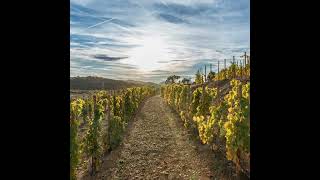
In this episode of The Kosher Terroir, host Simon Jacob interviews Moses Cohen (owner) and David Cohen (export manager) of Elvy Wines, the first fully kosher winery in Spain since the 1492 expulsion. The conversation covers the family's Sephardic roots, the multigenerational team (including Anna, the CEO, and Leah, a recent oenology graduate), and the strategic decision to operate six wineries across six Spanish appellations (Priorat, Montsant, Rioja, Alella, Cava, La Mancha). They explain the importance of DO/DOC regulations, single‑vineyard sourcing, and how each region’s terroir influences grape varieties and wine styles. Sustainability is a core value: organic farming, biodynamic moon‑pruning, pheromone‑based pest control, and a long‑term conversion to regenerative agriculture. Marketing and distribution are discussed, with roughly 90 % of production exported to 20+ countries, split between kosher and non‑kosher markets, and a focus on the U.S., Israel, and Europe. The family’s branding (the historic boat logo) and the new visitor center in Priorat are highlighted as ways to share their heritage, offer tastings, and promote tourism. Future plans include new vineyards, additional wines, and possible expansion into new Spanish regions while maintaining the kosher, family‑driven ethos.
Chapters
Welcome to The Kosher Teruah.
I'm Simon Jacob, your host for this episode from Jerusalem. Before we get started, I ask that wherever you are, please take a moment and pray for the safety of our soldiers and the safe return of all of our hostages. The following episode of The Kosher Terroir is a conversation with a family team at Elvy Wines, the first and only solely kosher winery in Spain since the Jewish expulsion in 1492. The father and son team of Moses, the winery's owner, and David Cohen, the export manager, joined me for a discussion from their newly built visitor center in Priorat, Spain. The two of them, along with Moses's wife Anna, the winery CEO, and Leah, David's sister who has just graduated with a master's degree in oenology, have created an incredible multigenerational team dedicated to build out the winery as well as rebuilding a Jewish presence in this once illustrious Jewish community. We explore their winemaking activities in 6 distinct terroirs, along with the DOC regulations that they must follow to meet the distinct regional criteria for wine aging and labeling. This, as well as their desire to make the winery environmentally sustainable and biodynamic in the actual manufacturing process provides for an incredibly informative discussion.
If you're commuting in your car, please focus on the road and enjoy.
If you're home, please choose a delicious kosher wine and sit back and listen in on this personal wine conversation with this truly amazing family.
So, first of all, I'd like to welcome you both to the Kosher Terroir. You can hear me okay? It's a pleasure. It's a pleasure.
Thank you for inviting us. We are very proud.
Welcome, Moses and David. We're looking out over the newly planted vineyard in Peurat. Tell me a little bit about yourselves. You know, welcome.
Thank you very much.
So, David, okay, well, thank you for having us.
Pleasure.
So what we are is we're a family and we produce wine in Spain. And well, all of our production happens to be kosher and we happen to be the first, uh, and so far only, uh, kosher winery in Spain since at least, uh, 1492, the expulsion.
Wow.
And actually, we're part of, uh, we're one of three, now one of four in Europe. There's two in Italy, and just there's a new winery in France that just turned 100% kosher. So there's not many in Europe, 100% kosher wineries. Uh, in our case, we are a family, uh, company my dad, myself, second generation, and we have my mom, my sister, of course, are very involved too. Uh, how this started a little bit is, uh, well, my dad was born in Morocco, in Casablanca, so we're also Sephardic origin. So for us, it's like closing a circle, like being back here now. And it's— well, then I went to study in Technion in Israel, study at Massach Gleyt, then came to Spain to do his PhD, met my mom. Well, the rest very good excuse to stay. He worked, he worked in research for many years, and also not only on research, especially specializing on biosensors and stress and water stress in plants, then later on focusing on vines, going on to consult on some of the biggest, uh, wineries in Spain, in the field side of it, on how to maximize yield, minimize water consumption. And after a while, 20, 20-something years ago, they said both mom and dad, they said, why don't we start making our own kosher, uh, our own kosher wine? As of today, we are in 6 different regions in Spain. Out of those 6, we own 2 wineries, Enfield, um, and La Saltadora, where it's a Somonsan Priorat. And the other 4 were partnership with local families, um, where we make, uh, our productions. From the beginning. The thing that's important there is that we're in the same place for 15 years, we build relationships with those families that they know their region and they're experts in their craft and in their field, because we know very well Montsant and Priorat and of course we know well Spain, but we partner with a family in Rioja, in La Mancha, in Alella, in Cava, and there we make the other production and we work closely with them. This, as of today now, we're in the new location, La Saltadora. We just finished the building right before the last harvest. So exciting news and new things coming. Always keep improving. Very cool.
Right, and excellent introduction. Thank you. And I will talk now on the second generation. So when we started the dream, really, Klos Masoura was the first wine, the first name We thought on, okay, close, clos in French, because we are in the middle really of the vineyard. This is the really meaning of clos or close. And mesorah, so masoret, transmission. I think that God hear us and said, okay, well, you will transmit, you will transmit, take your time. And now we have the second generation that we never thought on really the meaning of the word. Mesora, or close Mesora. And we are here, so thanks God the second generation is here, very strong. Um, so David is a general manager of marketing and sales worldwide, so he's always jumping on a plane and you, you can see him always all around in 20, 25 countries. Uh, and, uh, we're also blessed by, uh, so, uh, my daughter, our daughter Leah She's graduated in university, enologist, from last year, and now she's finishing in June her master's in another university. And of course, always also integrated in our team. So every— each of us have a specific place, but we are in Elvy Wines. And we are a chain. We are a chain that every part of the chain is so important and, uh, from the other one. So the, the final result, which is the wine we make— we have like 17, 18 wines in the 6 different regions— are part of a team, of a group. Uh, everyone is important in there. And, uh, so here we are.
Wow. You know, I heard as I listened to Moses discuss, David, you're traveling worldwide. I could see in his eyes, thankfully, that he doesn't have to do that anymore.
Yeah, I'm going to let you in on a little secret.
He still travels.
He still travels, but also the one that actually retired my dad from traveling was mom. Both sides. On, on two sides. Well, of course, uh, she is the, she is the, the CEO of the company, of Elvi Wines, actually.
That's right.
My dad also has other businesses, and he's of course involved in wine because it's his hobby and his passion. Uh, but Mom's the, the general manager, but also, as in every Jewish home, Mom's the general manager of home, right? So she decided at some point that was the, the next, uh, the next step.
Very cool. Very cool.
So I'm traveling, I'm traveling, I mix, I make the mix between the wine and other businesses. And of course David is doing a so good and so wonderful job that we are very proud that continue please and make it grow.
Very good. Can you enlighten or, you know, speak to there's a concept that isn't the same. It is in Europe, but not in America, and certainly not in Israel. The concept of the DO. Explain it a little bit. What is it? How does it impact you?
So in general, just to start, we need to, as you said, it's important to think that we are in what's known in the wine world as Old World, which would be Europe. Of course, in Europe in general, we definitely love our laws and to regulate everything.
It's crazy.
That's for sure on every single aspect. On wine too. So how DO started mostly is a group of, uh, a group of agriculture, group of growers, group of wineries. There's also DOs and things that are not wine. Of course, wine is the most maybe known, but, um, then they put together and to enhance and to empower and to, uh, brand to the world as a region and why our region is different than another.
Terroir. You said kosher terroir.
Yes, so terroir wine, so known, known as DO in, uh, in, in Spain, Denominación de Origen, known as Appellation in France, uh, and I, I don't speak Italian, so, but it's also in, in many different regions, uh, it's known this way. And of course each one has their own specific specificities of how it should be done and how it should be made, but there's actually, uh, what's important here is that on every single region, they— in our case, for example, let's talk Priorat and Montsant. We have 2 wineries and 2 fields. They're 5 minutes away one from the other, and we have 2 fields, 2 buildings, and we cannot move the wine from one region to another until it's bottled and made. Only then. We cannot do it— we cannot just have 2 fields and make it inside the same winery. And that's many specificities. For example, and there's other regions, for example, Rioja, that they allow you only some specific varietals. Also, each one has their own specificities on their own ways of when you age something. But most importantly is each region wants to emphasize and to bring together and involve their— why their region is the most important.
Look, Simon, I will give you a crazy example, but But maybe make that— can explain it a little bit. When we talk on Priorat and Montsant, we are talking maybe on the smallest wine area of prestige. It's considered the top 5, some people say top 3 in the world. But we are talking on 2,000 hectares Montsant, 2,000 hectares Priorat. That's it. So in that small area, let's say, of Priorat, 2,000 hectares, we have a DOC. We can talk later. We have DO and DOC. We only have 2 DOC, but for in New York, there is a restaurant when you see his wine list, of course, he have DOC Priorat, but he have wines from the Priorat from the villages. From name of each village, it's starting to include a division inside. And that shows the importance of the area, of the area, how this started, the soil and the climate.
Also how this started is Spain is the biggest bulk wine producer in the world, for example. This means that there's other places such— well, Italian and French are better marketers than us in Spain, that's for sure. Yeah, so there's a lot of wine being produced in Spain, bottled in Italy and in France, and sold there. It's a different— but this wine doesn't mean it's, it's illegal, but you cannot link it to a specific DO. It's called wine or table wine, or many— but if you want to link it to a DO, if you want to call it Chianti, you want to call it Bordeaux, you want to call it Priorat, you want to call it Rioja, any region The important thing is to link it to that region so you know where the grapes come from, where the terroir comes from, and how it's also aged in a different fashion in that sense. Very cool.
You know, it's like when somebody tells you, uh, I love Cabernet, uh, give me your, uh, a cab, for example. Yeah, uh, you know, a cab in California, in Australia, in Israel, in Spain, different locations in Spain, it shows completely different. So, uh, to link the grape, uh, to the specific, uh, soil, to a specific climate, to a specific microclimate, will make the wine totally different.
If you ask us personally, there's also to extend— some rules are very good to enhance the region, and there's As everything is over-regulation lately, I think, me, I don't know about you, on some things there is extra to subat.
Machmir, machmir.
It's too machmir.
It's part of preventing a little bit, but also in Israel now it's starting to happen, not as DO itself, but there's some places that are starting to empower and talk about their region. Because why we are this valley or this mountain is more— why it's our terroir is different. It's not as regulated, but it's definitely— it makes a difference. And Israel's a country that has had a history of wine for thousands of years, but it was cut in the middle, and the transmission from one generation to other, now it's not from that many years. They're trying to now see all the different regions and trying varietals in each region. And by trial and error, after many, many years, of course you will see what's, uh, what region not only makes a better wine, but what vine lasts longer, which is appropriate, what's appropriate to each region.
At the end, at the end, it's true. Look, we are in the Priorat here. You see the mountain. The same grape, let's say Carignan, Carignana, in the north side or in the south side makes totally two different wines, totally different. So the location, the, the how you want to make the wine, so it's linked a lot to the type of soil and type of microclimate.
Okay, so let me actually, maybe the, maybe another really good way to do this is to do it by the regions that you the actual wines that you make and to discuss what are the— what's the requirements in those spaces, in those places, and also what's special about each of them. Because I'd really love to, um, I'd love people to get an understanding. You have now— you've got a wide variety of wines that you produce, and you're producing them in different places. And is it just to make more wine, or is each of those wines different for a reason?
So you see here where I have— it's on, but our logo is a boat. Yes, it's a lot of people think this boat is a caravela, which was a boat that was originally used by Columbus to discover America. This is actually the predecessor of that boat because if Columbus discovered America in 1492, but us as Jews, we were expelled. In the same year, 1492. This boat is a— it's the predecessor of that one, which is shorter and a little bit wider, definitely slower, but it could carry more weight. Yeah. And that boat is called Coca del Mediterráneo. What happened is all the different— all the Jews, Jewish communities from Spain gathered in, in ports all around the Mediterranean. Spain has a big coast of the Mediterranean. Yeah. And they started like— the boats started taking off from Girona, then Barcelona, Tarragona, and started going south throughout Spain. And from there, we went to all the different places in Mediterranean. In our case, our family went to Morocco. Other people went to Tunisia or to Turkey or Algeria, Cyprus, many, many other different places in Europe. So us, a little bit what we want to do is the, the boat is a little bit like traveling around the different regions of Spain and discovering the terroir. So in, and as we said, in these 6 regions that we are, we talked about Monsanto and Priorat. These two are of course very close to our heart because, uh, not only they're the closest to where we live— it's in Barcelona, which is an hour and a half from here— but also, uh, our vacation home has always been in Clas Masora. Our biggest and most fond memories of me as a kid, my first fights with my little sister, were when we were harvesting. And of course, with whatever we discarded— not the good one, but we threw at each other.
The— like snow.
The grapes, exactly, it was snow. But it's part of our history. So, and then we expanded naturally to this other region of Priorat, which both of them make very good wines in different regions. Maybe Priorat has a bigger marketing name outside the— in the world, but definitely both are great, great wines with Clamasora and IL 26. And between these two, the difference will be Priorat is more in the mountain, like on slopes, and Monção will be more a little bit in the valley. Of course, Priorat has more specificity of this rocks called licoreia.
Okay.
Which you can see a little bit here. Yeah.
In Hebrew, I think it's called sifcha, slate, slate soil.
Yeah.
Yeah. And then on Colmosaura, we have, of course, in our case, the specificity of Colmosaura that we have this beautiful 100-year-old vine, Carignan, that helps to make the Clausmasora. But of course, the specificity is in each region. And out of the other 4, well, Rioja is probably the most well-known name for wine in Spain. If we talk wine in France, we would talk— first thing that would come to mind will be Bordeaux, probably. Well, in Spain, first name that comes to mind is Rioja. Not necessarily the best, of course. If you have someone from Rioja, they will say it's the best. And if you have someone from Priorat, they would say it's the best. Absolutely. We don't want to get trouble here, but it's definitely the most well-known for sure. Uh, and, and of course we make great wines there. We have a young wine, then Crianzas, Reservas, Grand Reservas.
We have a complete line. And 2 DOC, by the way, among the 80, 82 DO, only 2 are DOC: Priorat and Rioja.
C means qualified. C or Q means qualified.
Exactly.
Okay.
Denominación de Origen Calificada, or exactly, depending on which language. We're talking. So that means even more laws, even more control, because their name, uh, it's bigger, and they want to make sure that the— what comes out of there is the best of the best to preserve, uh, that name.
Yeah.
So in Rioja, we mostly work with Tempranillo, which is the biggest, uh, well, it's the most planted varietal in Spain overall, but Tempranillo, especially in Rioja, has a specificity They're actually in Riojo, you can only use 5 red grapes: Tempranillo, Graciano, Garnacha, Mazuelo.
Mazuelo. And, uh, the 5.
And, uh, we use the Graciano. And one more that I'm forgetting, maybe. I don't know.
It's 90% is Tempranillo.
Okay.
And then there's, of course, then we have the region of Aleya, which is right by the sea. Of course, maybe it's not as known, but it's, uh, the grapes there have the influence of the sea, so it has a lot of, uh, salinity, this minerality that comes. And so what do you have? Cava.
What do you make there? What do you make in Alheia?
In Alheia, we make our wine previously known as Invita White, but now it's known as Herenza.
Herenza Blanco.
Blanco, or Herenza White.
The, the, the specificity in the Herenza Blanco is the combination, as David said, mountain and sea. We are in a sandy soil minerality surrounded by a forest looking on the sea. So we have that itadut, so evaporation from the sea who come inside. You feel some saltiness in the taste even. And the specificity is the grape. We go for local grape.
And the soil too?
The soil is totally mineral, but always more than 50% is a white grape called Panza Blanca.
Okay.
Is in Catalan. Panza Blanca, it's delicious combined with Sauvignon Blanc. So Herenza White or Herenza Blanco is a type of white that you can enjoy in the same year or age it some good years.
Then of course we have the region of Cava, which would be, to make it simple, the Spanish Champagne, the Spanish Prosecco, whatever each one has. Exactly. In our case, we make the Cava, uh, method champenoise, so, uh, exactly like second fermentation in the bottle, like a Champagne, but with local varietals. In our case, we use Macabeo and Xarello. And, and last then we have, but not least of course, we have the region of La Mancha, which is known as the biggest vineyard in the world. Yeah, in one piece, meaning in one piece. It's, uh, it's, uh, an elevation, an elevation, exactly, 700 meters above sea level. But everything, when you go there, you see the flats even though you're at elevation. Everything is— you only see a sea of vines. And it's so the biggest vineyard in Spain, of course, not ours, I mean the region.
Imagine on half million hectares, 5 million dunam in one piece.
It's crazy. And, and there we make our Vinhozinho wines, our entry-level wines, which are great wines for every day. And we make our famous sangria there also. On terroir, as you know, there's many, many factors that we just, we just talked about one or two of each, but each one has soil, altitude, closeness to the sea, climate. This, if it rains or if it doesn't rain, the delta, if the delta of temperature how hot it gets in the day and at night. There's so many factors that of course we could, we could be here talking for hours, but another, another good— just a couple of examples.
I think another good example or specificity inside the DOC Rioja, the different— the brand is called Herenza with Z-A, okay? Means heritage in herencia in Spanish, but in Ladino it's Herenza.
In Ladino, which is the Sephardic Yiddish.
Sephardic, yeah, exactly. So Herenza. For the different wines, the different wines are made in single vineyards. So each wine is focused on a specific vineyard to make this wine, and etc., etc., etc. So even if we are inside the DOC, which are, which is very strict in the rules, in our case we don't make a wine and after that we select according to the aging or whatever, it will be Crianza, it will be Reserva. No. Each wine have a single vineyard to make the wine. So we are even more restrictive in our case to make specific wine because we are always looking for two things: terroir and local grapes. This is one of the most important issue.
Wow.
How does sustainability fall into that with you? I know you're focused on sustainability as well. How does that— is it different in different regions? How does that, how does that impact you? And I divide the question. And by the way, I didn't know anything about, I didn't realize, I think I certainly assumed that the Herenza line were just different grades of grapes from the same place. And some of it was Reserva because it was a restriction to keep it in order to use the name Reserva. And yeah, but I didn't realize that each of those is entirely different vineyards with entirely different results. So that's— sure, that's very, very interesting to me.
Of course, when we're making those wines from the beginning, it's not the same maturity point, quality of grapes, or way to— where you want to grow the vine. On thinking on a wine that once you want to be released in 6 months or a year, or one you want to be released in 4 years, which the Reserva, by the time we make the winemaking process the aging and everything, in our case it takes like 4 years until it goes out. So of course there's, like you said, these laws of aging that we need to comply with for sure, but there's also the factor of the single vineyard that my dad was saying.
Yeah, yeah.
And in terms of the sustainability, uh, it's of course, it's interesting to work as sustainability for us because, um, we work definitely with it and We live with it. We live with it. It's part of what— even before— now it's become a little bit trendy, right? But, uh, even before me as a kid growing up knowing what it was, it's things that we always did, uh, did as a, as a family. So of course, in each different region, we need to adapt to each different, uh, specificities. But what we can talk easier and closest, uh, is, uh, where we are now. In Priorat and Monsanto. Yeah, sustainability, it adds a lot of, um, has a big name and it talks— you can talk about so many things within sustainability. Who's saying that this land is ours? Because a piece of paper says it? Because it's registered somewhere that this piece of land is ours? Yeah, we know very well as Sephardic Jews, uh, uh, people were— had land— well, even before the expulsion, Jews were not allowed to have lands for many years before that.
2,000 years.
But at some point Jews were allowed to have land, and someday they weren't. Uh, so this land now it's ours, but many, many years after we will not be here, this will continue. So it's our duty to respect it and to, of course, enhance it, work it, and extract the best of it the best way we can. And, and, and work the land with us personally. It We are organic. We don't use pesticides.
Then not only that, you showed me actually, Moses showed me on the vines on the other side before the production. But you, the redness that was on the bottom of the vines that are 5 years old. And that was, tell me it again. I mean, at least for the viewers.
Yeah.
So we have some videos also in our social media explaining about all these little things. We like to Uh, there's a lot of people that do a great, great, great job on talking about the wines, and we try to, in our side, which we know land, and 80% or 85% of what's a good wine is making, having good grapes and working the land. So we like, we like to make some videos in our social media also talking about these things. But as we are organic and we don't use pesticides, we have these pheromones that we use always. We always use preventive treatments. We're never aggressive. We never try to stop or kill something. It's always preventing something happening and always working in advance. Uh, we only use copper and sulfur in the vine. Then we use these pheromones that you—
that we call it, uh, um, confusion sexual. So, uh, sexual confusion. It's, it's, uh, it's impregnant. Let's say that little red, uh, uh, piece of, of, of plastic, of plastic at the end. It's impregnant with a pheromone that makes a confusion to the male in order to go to another place.
So when the bugs are supposed to come and a potential plague could come, it makes them— oh, they get confused and they go somewhere else. But that's always preventive.
Preventive, yeah.
Because if you come and you kill a bug, you're inevitably— or you have something you want to kill the vegetation around, of course you need to work. You want to enhance the plant to grow when you need to. That's a lot of manual work also. But if you come and use pesticides and you kill that, you're also killing the land. You're killing the worms.
It's a cycle.
That's below. You're killing—
it's a cycle.
You're killing the ants. And all that oxygenates and gives nitrogen and many other nutrients to the land that actually are beneficial. We didn't create the circle of life. It was created by the one above, and definitely it was perfectly created.
So, so we need to respect it.
We try to respect the most that we can. But not only we're talking about ecology, we're talking also about giving a second life. To, to, uh, to regenerate agriculture.
Yeah, this is very important, the regenerative agriculture. Exactly. Yeah, it's, it's rehence at the end. Okay. Instead of, of being aggressive, we need to enhance what we have. But at the end, let's talk on a company that need to make money, need to be successful. At the end, the result is fantastic. Is much better than being aggressive. But it takes time. When you want to make a conversion to an, let's say, regular vineyard to the organic biodynamic ecosystem, it will take you a minimum of 10, 12 years to make the conversion. So it's a long time. We need to be patient. But wine is passion. You cannot do it from one year to another year.
And now there's the— it's very trendy, this whole, uh, uh, I said with the work with the moon. Oh yeah, uh, biodynamic.
Exactly.
Well, for us, for us as Jews, it's no secret to be very in close, taking care of where is the moon exactly, the whole thing. Now it's, it's very trendy, this whole new thing.
We do that.
There's more to it in biodynamic than only that, but that's things we've always done in some sense. For example, when do you want to, uh, you need to pay very close attention to the moon on knowing when you want to trim, because we know the moon has direct attraction on liquids.
Exactly.
Tides, uh, waves. Um, so if you trim at the incorrect moment, it has direct attraction on liquids, which will be the sap, the sap flow, and the vine will lose more sap than if you do it in the, in another time where you would actually, because it doesn't have as much attraction and the vine will suffer less and will lose less sap.
So as a direct example, we prune, we cut in the wintertime at zero moon when you don't see the moon because the attraction on the liquid are the minimum as it was, as it has to be in a full moon. So depending on what you want to do on the vineyard, Or on the winery, for example, the movement of the barrels of the wine, we follow the attraction of the moon, the circle of the moon, at the end, Jewish calendar.
So you see, sustainability is a lot of everything. And please be— just stop us at any time when we talk too much. No, no, we're passionate.
I get it. I hear you. I hear you. You know, it's interesting because We just, we had Tu B'Shvat not so long ago. And one of the whole discussions is like, wait a minute, Tu B'Shvat happens in the middle of the winter. What's going on? You know, like, yes, the almond trees are blooming, but what about everything else? There's nothing blooming. Why don't we have Tu B'Shvat, you know, much later, closer to the summer? And the whole issue comes out is that there, Tu B'Shvat is a celebration of the trees, but it's a celebration of the sap starting to rise and come up into the saplings or into the trees in order to promote the growth. So that's the whole issue with Tu B'Shvat. It's long before we really see anything. It's when it's— when it first starts flowing. So yeah, it's a very Jewish concept. This is all a very, very Jewish concept.
We are making a crazy mix between science and our roots.
Right.
And you see that maybe the science is based on our roots, but the truth is that every time you go deeper in this and you discover that what has been written many, many years ago always discover the nature has truth to it.
Yeah.
You're now in 6 regions, you said? Yeah, 6 regions.
Yeah.
So is there a plan to expand into any place else, or you, you're going to get the 6 regions right first, or—
We're always, we're always dreamers, and we always like to— we've just— maybe in the last 2 months we've discussed about 4 or 5 new regions. But of course, there's so many great places. We first of all want to focus on Spain. Because this is what we are and this is what we, at least we think we can bring into the wine world, into the kosher wine world also. So we never say never, but for sure we have some very exciting new projects with this new winery in Priorat coming now and getting, being ready with the new. We have half of this new land already in production and the other half will be production in 1 or 2 years. We planted a new vineyard a month ago.
Yeah, in Monsanto.
In Monsanto. So it's a production of Chlomasora. So we have new wines coming. We had the Chlomasora and EL 26 a little bit in the loneliness there. So we have new things to complete both brands, Chlomasora, and they're making more and exciting things there. And we definitely have some very exciting projects in general. In the short term, we definitely want to focus on this, but why not? Why not expand to new regions? We might—
we—
it might be a thing in the future.
As a premise, we can say that we have like 3, 4 new wines that will come through very soon, uh, in Montsant, in Priorat. Uh, some of them we call them, uh, second generation. It's not the name, of course, but The, let's say, the introduction of the second generation of Léa and David, of course, also help us a lot to think on new issues. We are coming with very exciting wines in Clos Messora. We are enlarging the family of Clos Messora and of Monceau and IL 26 Priorat. Also the family is growing.
In any case, what for sure we would do is if we ever expand into new regions, it's always something that would add to what we have already. Yeah, so we would add some maybe new interesting white or a new interesting— something definitely that complements and that adds to, to what we have right now. Because where we are, we're definitely very happy, not only with our winery of course, We work in partnership with local families. We have a, we had a very long relationship with them and they know their, their region great and we work together great and it's working so far. So that's for sure. We believe in making a bet somewhere and if it works, just stay there and keep growing from there.
Maybe something to, for the, the people who will hear your wonderful podcast Sometimes makes confusion because Elvi or Elvi Wines, it's, is not a single winery. Elvi Wines is an umbrella of 6 different wineries. And this is very important. When somebody, uh, is, uh, tasting Clos Mesora, he's tasting in his mouth a region called Monson with old grapes of Carignan, Grenache, Syrah. When someone is tasting a Herenza is north of Spain, close to the Pyrenees, in the Atlantic, not even the Mediterranean, the Atlantic influence. We have a grape called Tempranillo. When somebody's having a Vinha Encina in La Mancha, even if it's Tempranillo, but it's a Tempranillo from La Mancha, totally different from the Tempranillo from Rioja. So, Our really, we are very happy when somebody's having a wine and say, wow, I'm in Rioja, I'm in La Mancha, I'm in the Priorat. This is what we want to—
Make them travel like our boat.
Yes.
The boat.
No, it's—
We invite them to sail in the boat.
It's really interesting to me because the thought, even, you know, between people who have been brought up in California or people who have been brought up in Israel, is that, okay, the grapes grow in that region, but you've got this winery here. Why don't you just take the grapes, bring it back to this winery, and produce the grapes in this winery? So you've got 2 wineries and you've got 6 regions. So whichever region is closer to the winery, that's where you produce the wines.
6 wineries. You need 6 wineries.
You need 6 wineries, otherwise you can't go outside of those regions of the D.O.s.
Yes, yes, yes.
First of all, how this was made— the idea is because if you ship grapes from a place that's 5 hours away, you will only be losing quality on those grapes until they finally come to your wine— to your winery, that's for sure. And then, to a certain extent, honestly, there's some places where, like we said, a little bit over-regulation sometimes, it's a little bit too much, which of course it will It will definitely make our life easier if the winery have one sample or other 5 minutes away. We're gonna wine winery and have different vats or maybe different rooms within the winery, right? Makes the life easier. But well, it's the rules that we are and we have, and we play the game this way, and we understand the concept behind it. Sometimes you can be— you can agree up to certain extent one or the other, but anyway, this is— we're doing it and it's working good.
The idea also is to avoid, uh, some not good practices to say I'm doing a wine from Priorat and the grapes are coming from La Mancha and you sell it as a Priorat wine. This is mainly the concept, one of the concept of the DOs, to say look, you are drinking a wine from here, from that, and we— because when we say—
You can trace it back to the plants.
Yeah, when you say for example a Reserva, We are not just allowed to make the wine even following all the rules, 3 years, 4 years, and just to put Reserva on it. No, they come from the DOC, they take samples themselves, they make a tasting panel. Wow. With 20 people, they make an analysis, and after all that they say, okay, this is a Reserva, and they give you, they sell, they give you one by one the labels that you would stick on your bottle.
Of course, then there's the whole analytical process and a whole traceability of how long it was here, and there's all papers. But definitely, well, that's the other part. And it's, uh, yeah, there is some rules that you say, okay, why?
But it's part of the game.
You trust what you will have in that bottle if it says that they will come from this.
Yeah.
So it's amazing because you're actually, you really are making wine in 6 different wineries.
Yeah, or more.
Yes. And we definitely— there's a lot of people, like we said before, if you ask people here locally, hopefully— now hopefully we're here in the winery, not in the village— but everyone here will say, oh, the wine from this region is the best in the world. And the one people from Rioja, from La Mancha, from other places, oh, our wine is the best. There's good and bad wines everywhere. You can always make good and bad wine everywhere. Uh, but it's very interesting for us also as a, as a growth and learning process to actually see how different we work in different regions. And by any means, we're experts in all the places where we are, but we keep learning every day, and we keep learning new things, and that's always exciting for us as a family. And because we're not only in the wine business, but we are wine lovers, and we love the industry. I get asked a lot of times, oh, what is— what wine would you— if you can't have yours, which winery would you pick? Yeah, more than that, we always like to discover new things. We— I very rarely— we have the same wine twice. We always like to discover new things and talk to the winemakers and see what's behind, because it's, uh, for us it's fun. And knowing new things and learning, it's always, it's always interesting.
Very cool.
We learn a lot. We learn a lot from different regions. As a Jewish guy said, all is relative. And at the end, this is one of the best selections we have. We try to do the best we can in each different terroir and conditions.
David, I have a question for you specifically. Where are you marketing your grapes now? Where are you marketing your wines now? What's the breakdown? How much is in Spain? How much is in Israel? How much is in the United States? How much is in London or Europe? How do you break it out?
So us as a company, we always break down wine and then sangria separate. Okay, so let's talk about wine. Yeah, uh, talking about, about wine, we of course sell in Spain, but we export maybe 90% of our production. We are right now in like 20-something countries, uh, and overall, let's say kosher market would be 60, 65, and the rest what we call, uh, regular, regular market.
Just to call it in a way not specifically kosher in some places.
Through a kosher distributor that also sells to non-kosher. And then we have in other countries a specific non-kosher distributor that just likes the wine. And in our, in our case, we make Spanish wine. And then you look in the back, you will find the logos and whatever.
That's just kosher.
You can find always the same label, always.
But if you don't, uh, look there, uh, to some other people's eyes, it's just Spanish wine. It's easier to make the distinction with Spanish wine than maybe with Israeli wine, that sometimes there's a lot of, uh, teaching process to do to other people. Like, it's Israeli wine, it's good wine, it's kosher also, but you know, it's, it's because they— it's everything is linked. In our case, in this sense, it's maybe easier. Um, and of course we have big markets for us are, uh, America, South America too, it's very big also, Israel, England. But then I always say that if you add up all the little countries in Europe. America is a very, very, very big country. If you break it up by state, then there's a— it's a different discussion also.
Uh, we are very good, very, very amazing examples. Like, we sell, for example, in Turkey, in the 2-star Michelin, in, uh, uh, in, in, uh, Ankara, I think, or Istanbul. No, Istanbul. Istanbul. There is a 2-star Michelin restaurant The klozmessorah is there, and you can trust me, they don't buy it because it's kosher. They don't care about that.
Here in Spain also, we're in a couple of Michelin-starred restaurants, and it's, uh, it's always— sometimes they say, oh, because it's fun to have something kosher, but then if you don't have the quality behind it, of course you're not there. And some other people, they don't even know. So it's, uh, it's a little bit of a combination on, on both. Also, we don't make that we don't have a huge, huge production. So thank God everything that we've done so far has been selling great and we're growing at a very good pace. So we, we're, we're happy and we're, and we're blessed that we can work as a family, uh, making something and creating something that we love.
Very cool. Yeah, the wine also, I think it's a very good business, uh, family when you, when you work together and, and want to work together, which is not always easy. But in our case, where We are very— you can imagine, you can imagine in Shabbat we don't have a single bottle that we open. We always do blind testing, we always mix bottles, we always taste different, everything we can.
Thank God we have Shabbat to force us to talk about other stuff, because then every other family lunch or dinner is also business related or wine related. So it's good to force ourselves to do something different.
I worked with my father as well, so I know exactly what, uh, what you're talking about. I know exactly what you're talking about. Um, right. Is— okay, an interesting question. Is there, is there something fun that your customers don't normally know about the winery or about, about Elvie as a whole that would be interesting for them to know about?
I think in general, I would, speaking to the kosher consumer now, I would, uh, it's, uh, it's always interesting, at least as a, as a fact that everyone says, like, everyone is at least surprised with it. As a Jewish family with a kosher winery to make kosher wine in Spain in 500 years, that's like closing a circle and being back to where we once were. Because if we break down the two biggest uh, uh, divisions within Judaism being, uh, Sephardic and Ashkenazi. Sephardic, it's named after Spain, so after one single country. There was so many of us here and so many culture and so many history, and now, well, not that many of us now live now in Spain, even though this, this country is, is, uh, is great in many other senses. Uh, for us being back to close the circle back and doing this, it's interesting. This as a fun fact and philosophy. Then of course we always try to come up with new fun products and different things. Um, one of the new projects that me and my sister were, were, even though she'd be prepared being a winemaker also, that we're very, uh, that we have a lot of fun with is a sangria. Um, sangria was always made as something that was, uh, as you use whatever wine that was getting already not the best quality wine or was already not being as good, use artificial flavoring, whatever, sugar, and then you have a new drink to get all your tourists drunk. And, and we came out with this— well, it was one of my parents that started, but me and my sister, we rebranded it, uh, and we created with this sangria, which is the base of the Vignancina, the wine that we make, uh, and we add, uh, 100% natural, um, uh, fruit extracts, fruit essences. And we have a fun different drink that's, uh, low alcohol, 7%. You can still do kiddush on it.
Wow.
It's fun. It's different.
And it's cachalopesa. Now he— they— the second generation make it cachalopesa, which is extremely complicated.
Right. Because of the ingredients.
Yeah.
And it's very nice for the arboacosote because 7% alcohol. When normally somebody try our sangria, himself finish the bottle and he asks for another one. It's very fun.
They always say, I don't like sangria, but I like this because sangria has a bad name. Has, has had a bad name. Yeah, but we are here— well, Spain also, within the Jews, a lot of people hear me, oh, I don't want to buy Spanish wine because the Inquisition. I say, look, uh, we are, we are actually fighting again. It's fun because when we're in another place in the world they say this, and when we're here we're known also as the Jews. If you go here around the area, you ask, it is— they're called the Mas dels Juells, which means the House of the Jews. Not as a, not as a despective thing. We are called like that, but we are the different thing here in the region.
Unfortunately, unfortunately, and sadly with what is happening now, we have in our two wineries and in our house here, three times a day, a police car and a private police car coming to us every day, 3 times a day.
Well, I would say fortunately, good thing they're— the, the authorities, they collaborate with us and they're very helpful and they're very in touch with us and they help us. And they're— yeah, the people here in general, we haven't had any issues.
No, absolutely.
Fortunately, they're, they're, they're definitely helping us, uh, a lot. And they're, and they're keeping track of us and they— everything we need, they're here. So that's, that's great. But Of course, it's an unfortunate reality in the whole— in the world in general, right, lately. But, uh, us as a family, at the end, we want to focus on making wine that, in our case, we make it kosher because it's our way of being. But we want to talk to— I want our wine or in our product to talk about the sangria, to talk to everyone. Actually, the sangria, we sell it mostly on the non-kosher market. Yes, it's the only product that's biggest percentage in the non-kosher than kosher. And we want to keep, as we say, we're blessed that we can make our wine, that we can work as a family, and that we can keep building and going back to our roots and our heritage in this beautiful country while also exploring our way of doing kosher and still being Jewish here in Spain.
Right.
Very cool.
People can visit you. You know, we discussed that a little bit before. That's something new, relatively new, I think. Though I guess they could before, but now you're kind of planning for that so that people can come and visit. And what do they expect? What can they expect? What, what's special?
Yeah, now we, we, we have more, much more space to, to receive people. Before, it was very restrictive in number of people and so on. Now, of course, it will be open to everyone.
We're still a small winery, just for us it's a big leap.
Absolutely, we have now, as I show you, a bar that you can just come in and have a drink and come out if you want. So of course they will discover, I think, in the same place, 6 different realities in Spain, 6 different regions. So it's a travel through Spain travel through our history of winemaking in Spain and in our culture, uh, because everything is, uh, is kosher with a philosophy of, of organic.
We think Spain in the kosher world is a little bit, uh, underrated, uh, that people— of course, people maybe know a lot about Italy, know a lot about France. Yeah, especially because it's, it's maybe easier— kosher wines has been easier to travel and go to these places. Spain has a lot to offer us. It's a beautiful country, first of all, a great climate. And then we are now getting ready to receiving— lately, this, like, and our— always we've had to turn back people and say, oh, we have a group of 100 people that want to come. I said, well, come 15 by 15, and then we can have you, but not, not more. But now we're getting ready to have something now, a new visitor center, which will be ready hopefully now for Pesach. And people open in person. The idea is that people can come here and have some tapas also, uh, and have and enjoy a glass of wine. We're not very far from Barcelona, an hour and a half by car, 2 hours by train. But we also want to open to the local public here that just wants to enjoy and find something, uh, maybe different than what they're used to. So we always like to, uh, be, uh, present in both worlds. But definitely we're happy to receive people, and for us it's It's so great just to receive people from all over the world and hear their history, how they enjoy our wine in different regions of the world, and how for us, we always gather, we do it more often, but at least once a year at the Passover table in Pesach, we sit down and we think, wow, so many people in the world right now are enjoying with their families and they're celebrating and remembering our history with our bottle of wine. It's, it's such a blessing. And it's crazy. Not only that, but simchot all over the year, weddings, bar mitzvahs, everything, we are part of it. And every single Shabbat. And for us, knowing that we can— and thank God, at least wine is always related to either celebrating or when you're not having— going through a rough patch, the wine always can help also, right? A little bit.
That's right.
So we, we are blessed to do this and hear from the experience and from people all over the world I personally can do it also when I travel. When they come here and say their, their own experience is always fun, and we're getting ready to just increase volume, right?
So just to answer your question, uh, for in, in, uh, Pesach, we open the visitor center. Uh, it's a traveling through Spain, uh, and, uh, we, we are— we will receive a lot of groups that pass out, maybe 200 people. So, uh, yeah. Totally. They can—
a lot of Passover programs here.
A lot of Passover programs are coming from here.
Yeah.
So it's about 2 hours out of Barcelona. Barcelona is the best place to come into to get to your—
An hour and a half by car.
An hour and a half by car.
2 hours by train. Okay. Depends. Yeah. So yeah, Barcelona was the closest and the easiest to come through. Also, Barcelona is a beautiful city. We live there also, so we're a little bit biased.
Yeah, or if you want to come for some days, you can come. There is a lot of what we call the turismo rural, local hotels, beautiful local hotels, small hotels where you can stay 1, 2, 3 nights and you can discover the region going through different locations all around and discover the region of Priorat, which if you have time, if you are just coming to visit us, of course, the best way will be to come to State of Barcelona, to come, let's say, so let's say 2 hours maximum and to visit us, to go around, to visit some location and to come back. Okay.
Very, very interesting. If people are interested in finding out more, what's the best way for them to reach you, to reach out to you? I'm going to put, um, I'm going to put sections in the, in the bottom, written sections as well. But, uh, is there anything, any specifics that are, that are the best way to get to you, get to your wines, get to your—
Yeah, so the easiest, well, lvwines.com is our website, is easy to get us to. But then on, on both Facebook and Instagram, where we try to be present, uh, also @lvwines on both. It's easy there. And also then if you want to get directly in touch with us, we're a family company, we like to get a personal touch to everything. If you're gonna get in touch with us, it's easier. I could say info@lvwines, but if you want to reach me directly, david@lvwines.com. It's easy to, and we're happy just to reply to everyone and try to show our wines and the passion that we try to put into our product and our way of doing things.
Thank you. Thank you very much for being on the Kosher Terroir and spending so much time with me and taking me through it, because it's— I certainly learned, and I've been drinking Elvie wines for quite a long time. In fact, one of the nicest tastings I ever had, you facilitated. Yeah, you facilitated. So it was very, very interesting and a lot of fun. So I really enjoy you guys. Thank you.
Thank you. Thank you for having us.
And we wait for you to come and visit us.
I'm looking forward. I'm looking forward. You know, that's the deal.
That's the deal.
You got it.
You're podcasting to the winery.
Exactly.
You got it.
All right.
Thank you. Shalom u'bracha.
You will be more than welcome. Thank you very much, Simon.
Thank you.
All right.
Be well. Purim Sameach.
Purim Sameach.
This is Simon Jacob again, your host of today's episode of The Kosher Teruah. I have a personal request. No matter where you are or where you live, please take a moment to pray for our soldiers' safety and the safe and rapid return of our hostages. I hope you have enjoyed this episode of The Kosher Terroir. It was exciting and informative for me as well. Please subscribe via your podcast provider to be informed of our new episodes as they are released. If you are new to The Kosher Terroir, please check out our many past episodes.










