Tibra Liqueor - Pure Kosher Distillation
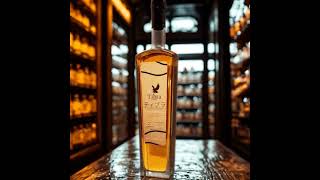
Dr. Ronen Yehuda makes Tibra, a kosher liqueur distilled to 190 proof from organic botanicals like anise and fig. Each bottle is numbered and signed, limited to 10,000 yearly, and costs about 600 shekels. The spirits are certified kosher for Passover and can last 50 years.
Chapters
Welcome to the Kosher Teruah. I'm Simon Jacob, your host for this episode from Jerusalem. Before we get started, no matter where you are, please take a moment to pray for the safe return home of all our soldiers, If you're driving in your car, please focus on the road ahead. If you're relaxing at home, please open a delicious bottle of kosher wine and pour a glass, sit back and relax. Welcome back to the podcast, everyone. Grab a glass, get comfortable, because today we are embarking on a phenomenal tasting journey. I want to give you a quick tease. Next week, we're going to dive deep into a fascinating new trend we are seeing across the industry, the great cultural shift from wine cellars over to the distilled spirits cabinet. But before we explore the why of the broader movement next week, today we are focusing intensely on the incredible how. We are looking at the absolute pinnacle of pure, clean distillation. I'm very happy to welcome today's guest, Dr. Ronen Yehuda, the mastermind behind Tiborelic Kors. Dr. Yehuda has an amazing personal narrative, having traded the familiar suburbs of New Jersey for the ancient sun-drenched hills of Jerusalem to perfect his craft. In an era where so many of us are demanding truly pure products in our glasses, Dr. Yehuda is a breath of fresh air. His spirits are crafted from organic botanicals with absolutely zero GMOs, no artificial flavorings or chemical additives. What you are getting is pure water and a beautifully crafted botanical mash meticulously fermented and distilled into liquid art. And here is the absolute kicker for our listeners, especially since we are exactly 2 weeks away from Passover. Dr. Yehuda has achieved the highest levels of kosher certification for his spirits, making them proudly kosher for Pesach, kosher for Passover. Finding a truly sophisticated, high-end liqueur that meets these strict requirements is incredibly rare, making these bottles a massive win for your holiday table. Before we hit the record button today, we had the absolute pleasure of sitting down and tasting 3 distinct varieties of his lineup. We started with the beautifully complex Tibra Licorice and Fig Liquor. It packs a wonderful punch with an alcohol by volume of 40.5%, crafted from a pure and simple blend of alcohol, water, sugar, licorice root, carob, and figs. Next, we tasted the classic Tibra Licorice Liqueur, which strips the ingredient list back to just the bold essentials. Alcohol, water, sugar, and pure licorice root. Finally, for an unforgettable finish, we poured the Tibra Black Licorice Liqueur, maintaining the same strong 40.5% alcohol by volume. This dark variation introduces a beautiful twist by adding coffee to the base of alcohol, water, sugar, and licorice root. Because of the coffee, this specific liquor actually contains caffeine. It is a lineup that proves purity and potency can go perfectly hand in hand. So let's get right into the art, the science, and the soul of this distillation. Dr. Yehuda, welcome to the show. So I have here Dr. Ronen Yehuda. Welcome to the Kosher Terroir.
Thank you so much.
So you manufacture a number of liqueurs. They're infusions of botanicals.
Yes, yes, yes. It's actually anise, pure anise that's made to alcohol, which is a different process than regular. These people put just the Alcohol with flavor. And there is fig, le figue, plus haruv, haruvim. They actually boiling them, it's called fermentation and turning them to alcohol.
Right.
And it's not the flavor of, or licorice, which is the black licorice, it's called glyceria galabra in Latinic. And shorashasus, beivrit. In Hebrew. And also turning into actually amazing drink that made to very, very high level of clean. You can feel it. You taste it now. So it's so clean because Rambam saying that licorice, y'awer zrimat adam, which you actually kind of waking up the bloodstream and and "no'ar simcha," meaning that it's going to cause you kind of happiness because Rambam discovered that the licorice have a definition of a lot of things to help, which lately 3 big professors in Rambam Heifa just revealed that licorice dropping the blood pressure down, dropping the cholesterol over 50%, Wow. And in increasing the blood pressure to a good thing, it's not too high. Right. In addition to that, it's actually anti-inflammatory.
Okay.
The same is the anise, which is the clear one, which taste can remind you mistakenly taste like arak or pastis, but no, because most of the arak, just to explain to people, they made from anethole, some chemicals. They're not real. It's not real anise. And the anise is very healthy because We know that Middle East or Moroccan or Tunisian, all the Jewish that's coming from that country, they're using it for heal for many years. We're talking about over 2,000 years of history. So this is a very ancient tradition.
So it's not just simply alcohol that is mixed with some anise.
Exactly. Okay.
This is distilled from the beginning, fermented and distilled.
Yes. Also, even the The other things that we can do, and we have companies in somewhere which I don't want to disclose, that's giving us all that fruits or vegetables.
Yeah, botanicals.
Yeah. They're doing it, Badatz, which is CRC, the Badatz Miuchad of America and Canada, the biggest in the world. It's bigger than the Badatz in Israel even. And we have OU, we have Starkey on the fig.
Wow.
Which is the fig. There is no one in the world have fig on fig Starkey for Passover.
Right.
Because you have to make them in special containers. You cannot even do them in regular. So actually, it's exquisite of liquor, which is this kind of liquor defined by Ministry of Health in Israel. When you take your plants or fruits and turn them to alcohol, technically, by the natural of them, it's called liquor. But it's not liquor. Because liquor sounds simple, like, you know, 50 bucks, you know? But it's not a liquor. It's a handmade, rooted in the Maimonides way. And also, if we look even 2,000 or 1,500 years ago, it's coming from Lebanon, Greek, and before Greek, 2,500, 2,700 years. And it's come, of course, from secret family recipe. And many of them today do not make it natural. They make it like flavor, which is will different, like, you know, about wine, right? And many other things in whiskey. Many. Yes.
So how, how do they infuse the anise into the, into the alcohol? They actually take anise plants and they mix them and then boil them and then distill them?
I cannot say.
Okay, you can't really disclose the process. Okay.
But the process is 100% natural. Every ingredient natural. But in the end, I can tell you a secret, and I'm not afraid if anybody know about it, that we bring it to a level of 96%, 190 proof of cleanness.
Wow.
And then we have to mix it with the water.
Okay.
The water of Upstate New York or somewhere in America, it's very, very sweet and clean, very clean. And this is why, by the way, that is, it gives you such a beautiful taste. I'll tell you, it's like, it's a crisp, it's a sweet of notes, and it's, when you want to taste it, even the fig and the licorice is giving you actually a real taste, not fake.
How long have you been making these alcohols?
It's almost 12 years. In the last few years, I moved them to different places in Europe also. We have them in Michelin-star places in different and everything is by Mamonidas. And it's very hard to compete with the Michelin star restaurant. And you cannot, you know, to foolish people to give them something there. Somebody understanding alcohol or in drink, even he drink wine or whiskey, he testing that and they say, oh my gosh, I never taste something like that.
So when— so you started in America, and when is this normally— is this an aperitif before you have food? Is this when you have food? Is this after you have food?
Whatever you go, you can do it as aperitif.
Okay.
You can take it pure, which I recommend always. Right. Nettle with nothing. If you add the ice, you can make it a little bit weaker. You add more water so it doesn't, it's not so clean, you know. And you can do it with the recipe which we have in our website, tibrashop.com.
Okay.
You can do it in different form of mix it with mint, with the limoncello, whatever you want if you want to take the anise. But I'm not recommending to mix it with anything unless it's a professional barman that can do it for his creative way.
Okay, you transitioned from New Jersey to Jerusalem. We're now in Jerusalem. So how big a change was that for you to come to Jerusalem?
It's a big one because there was in many places. I was in the Lower Merion, Pennsylvania, in Florida, and we went to a tour like all of Israel, like Exodus, you know, Gola, which is— and then I traveled to Europe. In Hungary, and Baruch Hashem, I want to make Aliyah to Israel to bring this beautiful thing with me. And people have to understand that Tibra, this brand, it's called Tibra. Tibra, yes, by Tiberias. This was in Europe because everything is Tiberias, but Rambam is buried in Tiberias. All the Tanaim, good old people. But the greatest one, favorite mind is It has been crafted lately in the last 4 years or 3 years by the wisdom of Rambam. I changed everything. So I changed the kohel inside. I changed the contain to make it tastier. And actually, it's a celebration of Sfaradic literary giant that's actually laid to rest in Trélia and the wisdom of the legacy that actually, be'ezrat Hashem, will forever endure. That's what I did, actually. I brought his idea, and I also see in that drink something other people do not do. I want all of Israel to love it. The Sephardi will love Ashkenazi, and Ashkenazi will love Sephardi, and to mix it for all the beautiful culture we have from everywhere.
Are you thinking about bringing it over to make it in Israel?
Oh yeah. I have a friend also that is doing also organic wine. I'm not going to talk about him now, unless if you want. He also did in America and he moved it to Karmel HaSef, to that area. And he's doing organic wine. So he moved all his factory here. He implant the seeds. He even did now, his name is Moshe Elul, I can say it. Elul, Karmel Elul. It's a beautiful organic wine, Lom HaVushal. And he did even a research with Mahon HaMikdash and Orvestat Ariel, University of Ariel. It's 1,600 to 2,000-year seeds they found. And they implanted them in his land and growing up now to make wine.
The seeds, the specific seeds.
Yeah. So the idea of mine also to bring it over here to make 100% Zionism here, bring it over. The regulation is not simple because the alcohol is very expensive in Israel, very. It's about 90 shekel, which is $30, a little bit more. $30 per liter of alcohol, only tax without The content without the bottle, without filling, without nothing. So it's a lot of money. That's why this drink is not cheap. Because I believe the cheap things is not good always. It's like my uncle, lalavashalom, used to say, I'm too poor to buy expensive things. It's King Solomon said it. So the amazing thing is that to bring it over to every Jewish table, Slowly, but we don't sell so much because I cannot make a huge batch from that. It's very limited.
Okay.
So every bottle in Israel have number, have a signature that we won year and a half ago. We won in a Rhyme in France in a competition with the 14 chefs of Hilton and Marriott. We won in a bottle, like in a competition to the best, and is that the best one in licorice also. So it's very hard to win it and get signature on the bottle and get serial number to every bottle. So we made to Israel only 3,500, which is 1,166 from every flavor. From the anise crafted.
You have 3 flavors.
3 flavors.
So tell me again, which are the flavors?
Anise. Anise. Pure one, licorice. Licorice. And tena, which is the fig with the haruf.
So anise is normally Anise. Yes, normally anise is normally in what liquor?
Fennel. It's like fennel. You know the fennel? Fennel. Yeah. Fennel and similar to shuma we have in Israel. Same idea. Very healthy. Healthy to the brain and memory. It's anti-inflammatory. It's avoiding stomachache. I can tell you about the material if you want. It's avoiding stomachache. It's avoiding mucus. Right? It's amazing. Yes. The fig, Rambam says, tov la'aynayim. It's good for the eyes, for the sight. And adding wisdom, musif chokhmah, kohelet rabah, it's mentioned. The licorice, as I said before, it will increase you and improve you the bloodstream in the body and make you happy more. And if somebody does not believe, you can try it.
Yeah, no, I—
Chaim, so you can test it now. We test the anise now. Anise with fig, it's insane. The taste is so clear. You feel it?
Yeah.
It's very rich. It's crispy. I do not know how to say it in Hebrew. It's very beautiful when you feel it and it gives you a few hours of good taste. You don't mix it. It's like when you drink a good coffee, you say, don't give me any other drink. I want to feel the taste in the mouth.
It has a very long finish to it. So it's continuing. It's continuing in my mouth and I'm continuing to experience it. It's got a nice warm feeling, not burning or anything. It's just nice and warm and very pleasant.
Thank you.
Okay.
Another little things I would like to add, if you mind. If you drink it with whiskey or wine before and after, there is more probabilities that the wine or the whiskey was not in top level will cause you stomachache and headache. This will not do that. 100%. I'm getting thousands of taste, maybe tens of thousands. We did it also last year in different festivals in Hungary and Europe. And I'm talking about tens of thousands of shots. And feedback from people, wow, it's so clean. I don't believe it. I don't have a headache. How can it's 40.5%?
That's what it is. It's 40.5% alcohol. Alcohol.
And it doesn't make you headache, not dizziness. Of course, empty stomach, if somebody sensitive, you always will feel a little bit, but you will not feel a very serious disease or stomachache or pain or whatever. Which is very important.
Normally when you take arak and you mix a little bit of water with it, it becomes white.
Exactly.
So they call that lion's milk here in the Middle East. Do you know what's happening? Why does it go white when you mix water with it?
Let me explain you. So my medical chemical explanation, when something is really not pure and you mix it with the water, it changes form. But if you take something that's pure, you mix it with water, it stays water. Okay, so that drink, the anise we have, the tibra, the little one, when you mix it with the water, how much you want, we can try it now. Put the ice inside the water and you will see it will stay the same color. Wow. How? Because it's showing you it's a real material. A real material never, never changes form because it's real, always going to the base, whatever is that. It's like a, like us, we, we come from the land, from soil, we're going back to the source. It's amazing. So you can try it and put water inside and you will see what is the quality of the material.
Cool. I'm glad I asked the question.
Thank you.
I'm glad I asked the question.
It's a very good question.
I'm glad I asked the question. Good. Thank you.
Just mix it with the ice and mix it for please like half minute. Yeah. And you can see when you mix it how much you want, it will not change the color. No. Because ice is water, right?
Yeah.
You can bring your regular water and put it. Did you see the anise stay the same?
Yeah, it stays the same.
The licorice stay the same.
If I take Pâtis downstairs and I put a piece of ice in it, everything goes white.
I don't want to talk about any other name, but generally, yes, if you take some brand, yep, and it doesn't make from real material, he will change his form. If you take a real brand alcohol, you put it in the freezer, right? Yeah, you're not gonna freeze. Yeah, this one became to be more viscous, more thick. Because there is a plant inside.
Okay.
It's amazing. So it became more thicker. It's more tasty when it's chilled because you can feel the real fruity, but it will not be freeze. Of course.
It won't freeze.
Because the alcohol that you turn the fruits to alcohol, it's actually giving unlimited expiration, meaning that this bottle can stay on the shelf for 50 years. It will never change form. All we need to do is to a little bit shake it, mix the fruit, and they're going to go back to the form. You ever in your life saw licorice like that, Black?
No, it's very cool. If you make it other places, what do you have to do to make sure that the water content is pure?
This is the problem right now. We— let me explain you. We— this is the reason I don't make it yet here, because I— Eretz Israel have the best flavor and everything in the world, but the water is more salty. The water is less sweet. And I'm very afraid if I make it here, it might gonna change its form or change the taste. For sure.
Okay.
So even you use the best, if you take a pure water from the mineral and you do filter, even carbon fiber, you know, something with the osmotic function, you will take some molecule that's very, very essential and change the taste. It's like in Europe, also in Hungary, we're living in area that's Hungary have billions of liters of water, or gallons. So the water you have in every house, you have a well. The well keeping the water is insane. So you just need to filter it and put it in your cup. And you don't believe. In the area we're living in next to Danube, the water is insane. So if you change the water, maybe it's going to change the taste for sure. Yeah. This is the main reason I'm not moving it, but I'm not selling it to America for now, only for Israel.
Okay.
So whoever wants to buy it, they have to come to Mikaliya or come here.
Okay. They're selling it here.
All right.
What about the actual botanicals? Where do you collect the actual, you call them fruits, but they're like, they're spices or whatever that are going into it.
Yeah, we're buying the plants from different vendors in, I cannot of course disclose it, but there are They know how to grow them organic.
Okay.
Which organic in Hebrew, in English it means no chemicals, no any boosting chemicals that's actually ruining the material, non-GMO, non-genetically modified. Okay. Which unfortunately in America there is a big problem, which is also in Israel. In Europe also, but example in Hungary, Orbán forbidden to bring stuff from America. And non-GMO, meaning that if you buy peppers or vegetables in Hungary, they are non-GMO.
Okay.
Meaning they doesn't put any genetic material or engineering inside to change the form of the fruits. And America, unfortunately, we know that all the fruits are there, they are fake. You're buying organic, you're buying a fig, half pound in $20. Insane is the price. So 1 kilo fig, You know, imagine how many kilos to order to turn it to 750ml or 1L. How many kilos of organic fig or karuv you need, haruvim, in order to turn it to alcohol? It's insane. It's a lot of money. And the price of this bottle is actually nothing comparing to the process to produce it. And also the same about the licorice. It's going in the ground. The same We know the Australian licorice when we've been the kids, you know, the black one that we used to chew them.
Yes.
But to come out to this kind of color, it's complicated and it's a long process. That's why you cannot produce 100,000 or 20,000, even not 10,000 a year.
So how much of this do you produce?
Barely, barely 10,000 a year. Barely.
10,000 liters?
That's it. Even less, 10,000 bottles.
10,000 bottles. So there are 75.
Yeah, approximately. Which to Israel going to come in Japan only 3,500 bottles. And it's very hard. It's very hard. There is a line we did before that was actually more simple, less kohol, less quality. And it's in Europe, it's selling cheaper. It tastes the same almost, but not the same quality. Okay. Like in everything in life, you know. Right. You buy, there is people do not feel if they're going to buy cucumbers and tomatoes. I don't care, it's not organic, I'm eating in any case. But if they will learn about genetic engineering, what it's doing to the body, and we do not know even which kind of influence and disease we have. So this is actually a healthy drink. A healthy, it means, of course you cannot drink alcohol how much you want because you're going to harm your body. You cannot even eat chocolate how much you want. You have to be careful. Like Rambam says, is the middle way. The middle path. The middle way is exactly, do not exaggerate. Even you said that, shkedim, alemont, and anavim, and tanim, umeyochal men kefyochlo. Eat how much you want, how much you want, you can.
Is there a master distiller who makes?
Yeah, I had the partner, which I don't want to disclose his name. Okay. That's why we are not together, but he has actually the brain to to distill it originally and it's do the fermentation. If you do 1, 2, or 3, or 5, you cannot tell, of course. And he doing the process and he knew how to do this. But because I have a chemically understanding background, I improved it with a different way and I changed the kohel even volume, it make it even tastier. And all the time I'm trying to improve more, make it maybe less sweet and more tasty. But I think the sweetness Of the fruits, you cannot avoid it. This is something natural, Hashem created it. I can always try to make it better. Like in life, we're trying to be better always. When you taste something real, you cannot say anything. This is real. And it's also gentle. It's not too strong. So you can take a little shot of, I don't know what, 0.2 centiliters or 0.3. That's it. It's wonderful. You can smell it. If you don't mind, I can give you a little bit, even the licorice just. Just put it on your nose. Just get it closer and smell it. How it can be so, so good. You smell it, right? It's not a story. It's a real one. You taste it and you understand, wow, what is that taste? The smell. The smell of the anise even stronger. Don't worry. You smell it?
Yes, I did.
Take a deep breath.
This is the—
Ah, you smell it? It's insane. It's insane. You can put ice even. You can see this. It doesn't change the form. No question.
All right, so let's just go through them again. So this is the licorice? No, which is the one you just gave me?
This is the tena.
This is the tena.
The fig with haruv. Even though Rambam says, haruvim im kashim laguf, kaharavot, it's a little amount, 0.2%. Fig is the main one, licorice.
Yeah.
And there is, I can give you a secret, a little bit touch of real coffee. Real coffee, which is always good. It's good for everything. There's many, many— disagree with the doctors. And anise, only anise. But in all of them, there is also anise, so you can smell it. See, I always recommending to L'Chaim. I'm always recommending to serve them chill, even frozen. Very fresh. You have to remember, it never expired. Ever. This batch was made like a year or something ago, right? Two years even. It can stay for 50 years.
Your markets are where? Japan is a market for you?
Soon, be it Hashem, we're starting with Japan. But right now it's only in Israel. It's selling in boutiques.
And where could I buy it if I wanted to?
You have it in, example, in Asa Deli, which is delicacy, ultra-premium delicacy in Givat Zeev. You have in Wine and Cigar, which the same one, Umm Amila, but his brother is in—
He's in what you call it, Kivat Sha'ul.
In Kivat Sha'ul, Kefesh Harim 20-something. Yeah, yeah, yeah. I'm not marketing them.
I know his brother.
And soon gonna be in the Bar 22. So it's gonna be only in the super prestige premium. You have Bacher in the market, Bacher. Yeah. And there is a few of them in the Usha line. And we're giving them only to ultra premium boutiques and delicacy for now. And two people personally.
Anybody in Tel Aviv yet?
Not yet. We have in Rehovot, in Dr. Dream. We have in Beit Shemesh, in Samboutique. L'Atlat, we coming, you know, I just four months and a half with this here. Not too long in Israel. But something I want you to pay attention. We have by that CRC. We have OU.
Kosher Kosher.
Pasover.
Yeah, which is unusual.
Yeah, you cannot find almost drink like that with this content. Right. And Starkey. No one have Starkey for fig. Starkey, they checking you every one by one. They're very annoying. I've never got crazy. And there is, I think, only one company in Baltimore in America that's doing something similar, but not the same taste. And, but not Starkey. And Starkey, it's very, it's like, it's like makhpoud here. Right. It's very, very kosher. And as a matter of fact, the grandchildren of Reb Shaleh, Satmar guru, everybody drinking it. And I give it to myself. But you see, here I wrote inside, in the box, all the recommendations of Rambam, which is my monidas latinit, it's called the Litteriza Galavra, and you have the Ficus carica, which is called TNA, fig, la fig, and you have the Pimpinella anisum, which is anise, the clear one. And here we wrote the recipe. We have a website in the back, referral to the website.
I'm going to include that on the bottom of the podcast so that people can go and check.
Yes, it's tibra.shop.
So how much does the bottle cost typically?
To the customer, normally it's about 600 shekels.
Yeah. Which is your favorite out of these? I know which is my favorite.
My favorite is the licorice.
Is the licorice.
Right?
I like the anise.
The anise?
Yeah. Anise is my favorite.
Truly, really not because I'm doing that, because I love all the flavor.
Okay.
I love the anise more frozen, the licorice could be also cold, but not too chill. The anise you can mix it, I told you, with the nana, which is mint, or mix it with some avatia, insane, which is watermelon. Anise you can play, the pure one, you can play whatever you want. The licorice, I love it clean.
If you had only one that you could make to drink for the rest of your life, what would you choose?
All of them. I'll tell you why. Like Rambam says, everyone have different opinion and different way and different choice. I have to give people all the choice. Example, there is a different flavor which I don't want to mention them. Flavor which means it's Hashem, not me. It's not like water that you mix them with some flavor. It's a real one. I tend to believe that that kind of taste, the anise, the licorice, and the ténard, the fig, they are the perfect combination. Which is, if someone do not like the anise, he can go to the licorice. Which can remind him the Jägermeister or something much better. But I don't want to say names because different material that tastes like medication because they're not real. But all, all, all one of them give you different experience, which is maybe someone like you say, I rather the licorice and I love the fig. Someone else—
I would like the fig. I like the fig the most. I, you know, I take it back. I like the anise, but the fig is perfect, amazing for me. I love it, especially for Pesach, because in the past they have had figarach that they made in America, but it was never kosher for Pesach. They never brought it out for Pesach. Dates are my favorite, so maybe one day in the future. But cool.
B'ezrat Hashem. I love it.
Thank you.
Thank you so much.
Toda, toda.
Thank you so much. Shalom. All your blessings, man.
Be well. Bye-bye. This is Simon Jacob again, your host of today's episode of The Kosher Teruah. Please subscribe via your podcast provider to be informed of our new episodes as they are released. If you are new to The Kosher Teruah, please check out our many past episodes. Thank you.










