Uncorking Creativity with Michael Kaye's Winemaking Tales
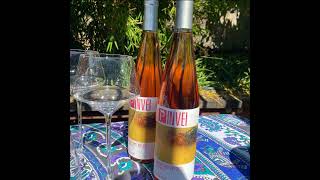
Michael Kaye went from book editor to winemaker, apprenticing at Hagafen, Gallo, and Shiloh before founding Invey Winery in Berkeley. He walks through koshering tanks, fixing protein haze with bentonite fining, and building a portfolio of dry Malbec Rosé, dry Muscat Canelli, semi-sweet Gewürztraminer, and Petite Syrah while navigating COVID, wildfires, and bottle shortages.
Chapters
Welcome to The Kosher Teruah.
I'm Simon Jacob, your host for this episode from Jerusalem. Before we get started, I ask that wherever you are, please take a moment and pray for the safety of our soldiers and the safe return of all of our hostages. The following episode of The Kosher Terroir is a detailed conversation with a tenaciously creative winemaker at Invey Winery on the West Coast of the United States in Berkeley, California. Michael Kaye, the winemaker and winery founder, discusses his past while focusing on the complicated steps that Hashem has led him through to fulfill his currently truly creative potential. We explore his internships with winemakers, both in California and in Israel, and the lessons he's learned from all their diverse backgrounds. If you're commuting in your car, please focus on the road and enjoy. If you're home, please choose a delicious kosher wine, sit back, and listen in on this surprisingly personal wine adventure. Welcome to the Kosher Terroir. It's a pleasure to have you, Michael Kaye, and, uh, welcome, welcome.
It's a pleasure to be here and it's wonderful to see you, Simon.
So Michael has a winery called Invey and, uh, he makes wine in Berkeley. So let's, we'll talk a little bit about your history and then we'll come back to, uh, the actual winery and specifically some of the, uh, varietals that you're making. And which ones do you feel people should buy, especially for Pesach? So we'll come back to that. Okay. So tell, let's, let's discuss a little bit of your origin story. Where, where do you come from? How did you get into wine? Tell me a little of your background.
So I was born in Johannesburg and my family emigrated to the States when I was 5. We lived on the East Coast for about 5 years. We lived in Maine, we lived in Brooklyn, and we lived in New Haven. And then, my parents decided that they couldn't handle the East Coast winters and wanted sunnier climate, a sunnier terroir. And my father ended up getting a position in Fresno, California. He's an ophthalmologist and I basically grew up there.
So, how did that introduce you into wine?
It didn't.
Okay.
I knew very little about wine. For most of my life. I got into wine by hashkacha pratiz. Wine came after me. Essentially what happened was this: I used to be a book editor for many years. I was a book editor, and in 2009 when the economy crashed, a lot of that work dried up. What I would do is literary agents and typically in New York, would send me manuscripts to work on, or authors to work with, to get the final product to publishable status so they could then approach publishers. Well, that became an extravagance when the economy crashed, and I was really in a bad situation, and I was talking with, uh, a local rabbi here in Berkeley about my situation. And he said, well, why don't you do some kosher supervision for me at this bat mitzvah this coming weekend and I can pay you? And I said, well, I've never done kosher supervision. I don't know. He said, I'll teach you. It's a pretty simple thing this weekend. So I did that. It was nice. And then he started throwing me a few bones here and there, and I did more and more. Meanwhile, you know, davening, hoping to get back to the editing. And one day he calls me up and he says, look, I got a call from a national kosher agency. They, they have requested you to come and do a champagne production 2 hours north of the Bay Area in a place called Hopland. And I said, well, that's really strange because I've never worked for them. And I know nothing about champagne. He says, well, this is how much it pays. So I said, look, I love champagne. I'll be there tomorrow morning, 8 AM.
So that's what you meant by hashgachat pratit. It's really hashgacha because that's what you were doing.
It's very strange. So I get up there to the location and I'm walking around trying to find the person in charge. Finally find the person in charge. And I say, hey, I'm Michael. I understand that you requested me. And he says, you're not the Michael we wanted. So he gets on the phone and calls my rabbi to discuss situation. It turns out the Michael they wanted had been living in the Bay Area a few years before, but no longer lives there. And there was some kind of mix-up. But now there was 20 people, you know, set up there with all these vats and all the champagne equipment and everything. And they said, well, I guess we're gonna have to teach you. So they taught me. I spent a week there, uh, working with them and, uh, enjoyed it. And then they said, uh, it turned out it was Hagafen, um, and they then asked me if I'd like to come work the fall harvest with them. So I said, okay, sure, I'll work the fall harvest with you, but I just want you to know that I'm really a book editor and I'm going to be going back to that once the business picks back up. So I started working with them and I was doing some editing in between, and then the harvest turned into filtration and bottling and then coming and topping things up and all the stages that a winery goes through in the course of a calendar year. And then I, I was back for another harvest. Eventually I ended up doing 5 harvests with Hagafen. Wow. During which time, you know, I became much closer with Ernie Weir, the owner of Hagafen, the winemaker. And he's a wonderful person, really a wonderful man. And, um, he was very gracious with me and answered all my questions and I thought, oh, well, this is— this looks easy, so maybe I'll try making some wine. So I got together with a friend there and, uh, we made a very small batch, one barrel of wine, and it was terrible. I mean, it was really undrinkable.
Wasn't so easy after all.
It's not so easy after all. And so what I realized was there was probably a lot of things that I wasn't actually paying attention to that was going into the winemaking to ensure that the wine turned out well. And that's where I really began to get interested in wine because I'm a person who likes to do very well at things and, and, and do things well. And when I'm unable to, then I get motivated to try to figure out, well, what do I need to do to get better at this? And so, in many ways, that has been the— one of the guiding motivators in my winemaking career, which is whenever I have some kind of setback in the winemaking process, I wouldn't say I'm delighted because it's very deflating, but I'm then motivated to figure out, okay, well, what do I need to learn here? And I have to be careful because if I ask Hashem, please help me learn this year, I don't want a doctorate in one season, just a weekend course level of challenge.
You want to be able to produce a quality wine that you can learn from each year rather than a disaster that teaches you everything all at once. Yes, I hear you.
Correct.
I hear you. By the way, Ernie Weir speaks extremely highly of you. So because your name came up on— we did a podcast, uh, a few, a few weeks ago, and, uh, your name came up on it. And, um, he spoke, you know, stellar, stellar recommendations. So if you ever want to get recommendation from him, he's, he's the person to go to.
Great. Hey, that's nice to hear.
So when you, when you were doing the supervision, did you have to kosher a winery at all? You, did you actually go through the process of koshering a winery?
Yes. Well, when I came to El Goffin, there were, there were many tanks, let's say, for example, and that were already containing kosher wine that had been under supervision. Because Hagafen had been kosher for many years. But when we would start a new wine into a tank, we would make sure that— I had to make sure that it was kosher. And so that involves sterilizing and sanitizing the tank much in the same way that one would in your— in one's own home. So you have to add very hot water to the tank and make sure it reaches all of the tank for a certain period of time. And the standard that we had at that time at Hagafen was 190 degrees of hot water going for— that you would measure, it would be hitting at the very top of the tank and coming down the tank. So it has to be 190 degrees coming out of the bottom, the very bottom.
So then it had to be really hot.
So it was very hot going in, and by the time it got to the bottom, it still needed to register at 190 with it, with the thermometer. Um, and I think it needed to run, if my memory serves correctly, for 3 minutes, um, coming out of the bottom.
How did you make that much hot water? How did you make that much hot water?
So, uh, Agafen had a hot water heater that they would use for koshering equipment, particularly, for example, like bottling lines, new pieces of equipment that would arrive. And it's also helpful at a winery to have a method of heating water up because even if you're not koshering a vessel.
Yeah.
If you need to clean off residue from, let's say, a previous wine that you've had in there, or if there's— even if you've racked a wine and you want the tank to be clean when you put the wine back in there, it's very helpful to have hot water because it removes the debris much more efficiently than cold water, just, you know, like, like in a washing machine.
Very cool, very cool. So you had to wash them down and then also wash lines? Did you have to go through and wash all the lines and the pumps?
And yes, so you, you could, you could run the hot water through all the lines. Usually would also add something to it that was, you know, like citric acid, um, or some kind of maybe SO2, something that would, that would render any of the tom, any of the taste that might still be in there out, um, with something that it would, you know, you, one wouldn't typically eat. Um, and so you do the, you do the lines, you do, you do the pumps, you do the clamps that attach the hoses to the pumps and to the tanks. Um, you could do the press. You could do the crusher, destemmer, the hopper that the grapes are dumped into. All of those things we would make sure were kosher before using.
Before using them. And then you—
and barrels have a different methodology. Barrels, typically what you do is you You wash it out, you know, like you would with barrel cleaner. So let's, let's say a winery purchases used barrels from a non-kosher winery or from a barrel seller.
Yeah.
The process is that first you wash the barrel out using standard methods of like a barrel cleaner solution and that sort of thing. So you, you wash it thoroughly, then you fill it up with water and let the water sit there for 24 hours, and then you dump that out, and then you do that for 2 more days, and at that point the barrel is considered kosher. Okay.
After you were working at Hagafen, at Hagafen, you went on from there to where?
So from Hagafen I went to Gallo, actually. Okay, uh, and, and there, you know, I was lit— I was working at the largest winery in the world, so it was a very different kind of space in, in many ways than, than Hagaf, but not just because of the, the size, but also because of the, the culture, the structure, all of those things. Again, I, I was there as a, as a, you know, kosher supervisor. And at Gallo, while they weren't making kosher wine, they were making kosher grape juice concentrate and then food coloring from grape juice. And they also did the pomegranate juice for Pomme Wonderful. They had a couple of tanks. So they sometimes would con— get be, be contracted out by other manufacturers because they had such large tanks. So for example, the tanks at Hagafen might be 10,000 gallons. I mean, they may be different now than when I was there, but let's say they were 10,000 gallons. The tanks at Gallo were 625,000 gallons. Wow. So in fact, I, I, I was speaking with one of the winemakers there once and he told me that they sold one of their old tanks to an architect who turned it into a home for his family because it's so massive, right? Imagine 625,000 gallons of, uh, jugs of milk, and then multiply that by 110, maybe 150, uh, of those tanks, and you get a sense of the scale of the facility. Most wineries when you're going to bottle wine, you put it through a series of filtrations. Sometimes you put it through something called a plate filter, which is a series of plates that have a membrane on them of some kind. And the wine goes through and it removes some of the heavy particulates in there. And this is a— this is significantly more important with like white wines because you really want whites to be clear in the glass, whereas reds is not as essential. So, you know, a plate filter in a standard winery, it, you know, maybe is 4 feet long, right? At Gallo, it's like a cruise ship size. I mean, the plates, each plate is like a wall in your home, and there's like 100 of those plates. And, you know, it looks like something out of Star Wars, like you're approaching one of the, um, you know, one of the giant cruise fighters. It's, it's really something kind of otherworldly. But so at Gallo, um, what I was able to luckily, uh, get out of the experience was, you know, they had 6 or 7 professional winemakers there because they're, they're working on such big volumes who had, you know, between them many, many years of experience. And so I often, when I had spare time, would go into the winemaker's office and just schmooze with them about the winemaking process. And they loved it. They loved talking about wine. And so, it was a little bit of a dream. I was getting— after being at Hagafen, it was like going to a graduate program every day with professional winemakers. And during all this time, I was making wine, not professionally, but I was working on my winemaking skills and making more wine. And I would bring the wine in to the winemakers and they would give me feedback. We would run tests on it, run it through the lab. And I learned a tremendous amount from these people. You know, it turns out that, you know, most people talk about UC Davis or Cornell in terms of winemaking programs in the United States. And, but it turns out that Fresno State is considered the third best winemaking program in the country. And they also tend to be dealing with different styles of wine because they're in the Central Valley of California. So, these winemakers, you know, had great backgrounds and training. And it also happened that I had gotten into— and I'll tell the story about that— but I was working with Muscat Canelli, and it turned out that the preeminent professor on Muscat Canelli taught at Fresno State. So when I had issues with my Muscat Canelli, I was going online trying to find somebody, maybe the Australian Wine Institute, somebody at Cornell, somebody at Davis, and it turns out it was the guy down the road. So I just drove over and met with him, and he was delighted to have a visitor who was very interested in his research, and he was so helpful in terms of fixing some of the challenges that I was encountering with the winemaking.
That was one of the first wines I tasted that you made, that Muscat Canelli, and it was just amazing, especially the sweet one for sure. And then you made a dry one, didn't you?
Yes. Yes.
So that was really, uh, so I've enjoyed your wines along this path that you're discussing, but I'm glad, you know.
You know, Baruch Hashem, that most of the wines have turned out really well.
Yeah, yeah, they really have. So I cut you off a little bit. You were discussing being able to just go down the street and discuss it with that professor whose specialty was that.
Yeah, so Gallo gave me an additional education after Hagafen. But really, the the, the education that was most valuable to me was making the wine myself. And so what happened was, you know, I made a few batches of wine while I was in the Goffin, you know, personally. And then I got this position at Gallo. And I wasn't actually thinking about continuing to make wine myself. Because I was away from the Bay Area and I was down in Fresno. And what happened was a family friend who subsequently would eventually become my partner, who is a Chabad shaliach up in the Bay Area, had a congregant who had bought a vineyard and said, look, we've got some extra grapes. If you want to make some wine for the community, we'd be happy to let you have some grapes. So he knew me and he contacted me and said, look, I know you know how to make wine. I've got access to some Zinfandel. Would you be willing to help me make it? And I thought, you know, I don't know if I really want to do this. It means driving back up to the Bay Area and doing this thing. But he pushed me and I said, okay, we'll make this wine. So we, we, we, we walked the vineyard. I tried the Zinfandel and I tried some other grapes in the vineyard. And then anyway, we ended up getting about a ton and a half of the Zinfandel. And I spent a year— we spent a year working on it, and it was awful, Simon. It was, it was so bad. And I remember sending pictures of the grapes, you know, very excitedly, you know, like a little kid or a puppy to Ernie at Hagoffen, saying, Ernie, look, look at my Zinfandel! Like, because it was more than I'd ever made. And the first thing he said is like, he just wrote back a text that just said, "Unripe." It was like so defeating, but I was like, "No, no, no, he doesn't know what he's talking about. These are good grapes," et cetera. Anyway, so not only were they unripe, but our whole process of making the grapes, sorry, of making the wine was really not at the professional level yet. And so all these issues happen with the barrels, with the tank, uh, not checking the, the levels of the, the chemicals properly, etc. And I ended up having to dump the wine in the streets of Oakland. I poured it out of the barrels as little kids were walking home from school. They jump— I remember they were jumping over the, the wine like it was a river. It was like a more like a river of shame. But anyway, uh So my partner said to me, look, we should try again. And I said, okay, if we try again, we're going to make it from the Malvasia grapes that I tasted in the vineyard because those ones I really felt had some potential. So we made this Malvasia, and I had heard from somebody that if you entered your wine into the California State Fair, the judges give you feedback on what's working, what's not working. And so I thought, okay, here, this is a great opportunity for us to learn, to see how the wine's doing. And so we submitted it and we ended up winning the double gold, which was something that I didn't even know existed. But the double gold is when all the judges decide to give you a gold, then you get a double gold. And so the feedback was tremendous and it was Far surpassed my expectations for what would happen. Um, and we then made it again and won it again. And then what happened was that the vineyard owner, I think, suddenly realized they had something very good on their hands and they decided they wanted to keep their Malvasia and make it themselves. So you have to be careful when you don't own your own vineyard, you never know what's going to happen. And I know that winemakers all over the place deal with things like this, but it was very upsetting. So then what happened is we decided to try to find something that was like Malvasia, and we did the Muscat Canelli. And this time instead of just doing it sweet, we did sweet and dry.
Yeah, it's, uh, I remember it. I remember it being excellent.
Yes, well, thank you, Simon. So we, we did, we, we made that and it was, it was wonderful. And again, we, the Muscat Cannelli won the double gold. So we, we were beginning to get confident at making the wine, but then there were additional issues that happened. While the wine tasted great, it turns out that Muscat Canelli is a grape that has a particularly high concentration of protein in it. One doesn't typically think about getting their protein from grapes, and I wouldn't recommend that. But at the biochemical level, the molecular level, different grapes have different amounts of protein in in their flesh and the skin. And, the reason that protein becomes important in winemaking is that when a wine is high in protein, it makes it more vulnerable to developing protein haze from heat. So, if you are storing your wine just in the— in your living rooms, for example, at room temperature, and you haven't dealt with the protein issues, you'll start to get a haze inside the bottle. And this is an example of— and I could give you many more— but of another step in my winemaking learning process, which is I didn't know that grapes had protein in them. I didn't know they could get haze if you had that at room temperature. And then I didn't know, well, how do you deal with that? And it turns out that that professor that I mentioned at Fresno State had written a whole series of papers on dealing with protein haze in Muscat Canelli wine. So I drove down the street, Baruch Hashem, you know, I wasn't across the world. I could just drive down the street and ask him, you know, here's the wine, what should we do? And we went, we spent hours talking about it, and we developed a whole process for managing that issue. So we don't have that issue anymore. So with wine, the, the way that one approaches protein stability, which it's really called heat stability, is through a process called fining. You're probably, you've probably heard about this because I know you're, you're familiar with winemaking, but fining, it is essentially where you add something into the wine that will draw the protein particles down to the bottom of the tank so that you can rack the wine off of that. And there just are simply less protein particles in the wine that could lead to haze when the wine gets into a warm environment. And there are many methods of doing this. Traditionally, back in France, many years ago, they would just pour in sheep's blood or pig's blood. How they discovered that is a whole nother interesting journey. But, since that time, we've evolved a bit and discovered one of the methods is to use clay, also referred to as bentonite. And, bentonite comes in a powder. Essentially, you mix it with water and you add it into the wine. And the charge of the ionic charge of the bentonite is the opposite to the ionic charge of the protein in the wine. And so they, you know, opposites attract. And so they come together and then they precipitate down to the bottom of the wine. And when you've done that, you can then rack the wine off of the sediment at the bottom and then you can test it. I mean, essentially you're putting the wine into an oven. It's a little more sophisticated than that, but what happens if you heat up the wine? Does it get hazy or not, essentially? And so, there's a whole scale of turbidity that they use to determine when a wine is at a commercially established level of turbidity that will keep it clear. And so once you do that, you have eliminated the issue. But the thing when you— but it's a little bit more challenging when you have a wine that has a high protein concentration like a Moschettonelli versus like a Sauvignon Blanc, which has much less protein in it. Because you don't want to over bentonite the wine because the bentonite may also remove other Beneficial things. Beneficial, yeah, other beneficial attributes, aromatics, taste, etc., that might be removed as well. So without going into all the details, you have to have a protocol of when you bentonite, how much to bentonite, like what's the highest level you can go before it's going to be affecting the aromatics, for example. At what stage in the winemaking process is it ideal to bentonite? It could— people do it at all different stages. They could do it right after fermentation. You could do it right before bottling. There's different things. And so I work with this professor and we came up with a process for our wine and we eliminated that problem. My general feeling with my partner is that we— I wanted to make sure that before we launched commercially in a real significant way, that we had worked out all of the kinks, because the last thing I wanted was to have the wine, uh, turn on somebody once they purchase in their home, or if it's sitting on the shelf in a store and it starts looking cloudy, for example. Bottle or, or if it starts to re-ferment. We, we were using a filtration company initially that I didn't realize wasn't, uh, at the professional level. But what was happening was our, our Masset Cinelli, our semi-sweet, because it had residual sugar in it to give it the sweetness, was starting to re-ferment in the bottle. When it would get hot. And we had filtered for yeast, so I didn't understand why that was occurring. But what was happening is that corks were popping off of people's bottles. Very embarrassing. Although some people loved it. Some people thought it was exciting and interesting and alive. Uh, it was alive, but not, not the way you wanted it to. Not the way I wanted it.
Yeah, not the way you wanted it to be. I've, I've seen bottles like that, that, um, where the fermentation starts again and it pushes the corks through the capsules and stuff. It's not a pretty sight.
It's really not a pretty sight. And it's not, it's not like a PET NAT, right, where it's planned and you've got the right enclosure on the top. And yeah, so, so then I had to do a deep dive into filtration processes and find out like what is a real high-grade filtration. And so then I was able to, you know, shop around and interview different filtration companies, and we finally found one that was much up to speed. And so, you know, each of these stages is a learning stage, each of these challenges, really.
So you also visited with Amichai Luria in Shiloh. I remember when you came to Israel and you took like a sabbatical and, uh, yeah, and came to Israel.
Yes. So what had happened was, um, I have a childhood friend that grew up with me in Fresno, and we were— when we were growing up, neither of us was religious, didn't know anything about wine. And in some hashgacha pratiz, again, we both ended up in wine. And this person is Yeshua Worth. Oh wow. Who runs the Grapevine in Muncie and does his own kosher wine tasting podcast.
What a small world.
It is unbelievable. I mean, this is a guy I used to skateboard with, you know. I mean, no idea that we would both end up in the same industry, uh, in the kosher world of all places, right? So what happened was I was, uh, I was in Muncie— well, I was back in New York, and he was having a gathering of winemakers at the store, and he said, why don't you bring some of your— I, at that time, I had a Syrah that I was working on, and you can share it with the other winemakers, you know, it might be interesting for you. So I said okay. So, um, I brought my Syrah there, and All the winemakers oohed and aahed over it, except for one winemaker, and that was Amichai Luri. And he said, yeah, there's some problems with this. And he, he talked to me. He said it was a bit reductive and it had this and that. And, and, you know, I felt, I, I felt defeated. So I remember I was standing there in the store and just feeling like, wow, and then I walked back over to him and I said, do you ever take interns? And I think, and I'm not sure if it was the Israeli cop that just lit up and thought, ah, free labor, or if it was just Amichai. And he said, yes, we do offer internships at Shiloh. And I said, well, I'd love to come in and learn from you. And so I ended up taking 6 months off from Galo and I went and lived in Shud Rachel, this tiny little village essentially next to Shiloh. And I worked a harvest with Amichai and I can honestly say that Amichai Lurie is the hardest working individual I've ever met in my life. I mean, at a remarkable level. He would pick me up at 2 in the morning and then we would drive north in Israel, way north, and we would just go, we would basically start near the top of Israel and go through all the different vineyards that he sourced grapes from until we got back down to Shiloh, which would be around 2 PM. And then I'd work at the winery for about 7 hours. We were doing 19-hour days, and it was very intense. How he did it, you know, this was, was remarkable. But he just has such a passion for what he does. I mean, real, real passion for what he does. And, uh, he was just very generous with his time. And he was also very helpful to me because my Hebrew was and still is pretty rudimentary. And, uh, Amichai is very fluent in English, so he was very helpful to me, as were the staff at Shiloh. So I did everything there, you know. I cleaned the tanks, I, I helped with the crush, I supervised the harvest of the petite fourdeaux, I You know, help with the pressing. I did lab work. You know, I did, I did many, many things. Cleaning everything, cleaning barrels, helping to install new tanks. It was an incredible education. It was really wonderful. And it was during that time that I met you.
Was there? Yeah, we met in Israel. It was amazing.
Um, it was amazing. I mean, that— and that— and I think as anybody who knows Amichai knows, he's an amazing cook too. And so we met at one of his phenomenal dinners where there was, you know, 6 or 7 different animals being served amidst, you know, 20 different types of incredible wine, right?
He has a— he has a knack for, um, he has the most incredible barbecue that he manufactured. He actually made it in his backyard that has multiple heat sources from different directions and levels. So he's, he's like, uh, he is, he's crazy about everything that he focuses on, and he's just like unbelievably, uh, it makes it unbelievably special. So yeah, did you find anything with him that was different? Anything in, in, um, Shiloh? That was different than what you'd been exposed to in Hagafen or in Galo or what have you?
So there were, I would say, two things that I noticed with Amichai, my experience there, besides his incredible work ethic, were that one, I got exposed to vineyards. And I hadn't really had that experience at Agafa because the grapes simply just arrived. I mean, there were vineyards there, but, but that wasn't really the focus for me and my work there. But with Amichai, we spent a lot of time in the vineyard, a lot of time in the vineyard, and he taught me how to check for ripeness, how to check for spoiling, how to look at canopy cover and leaf cover and, you know, how the watering affects things and the sunlight and dealing with different vineyard owners. You know, there's a lot of drama that occurs in winemaking. Somebody's vineyard, when I arrived there, they had this huge issue with the Chardonnay. As you may be aware, in Israel there's a lot of wild pigs. I mean, it's really, it's a safe haven for pigs because Jews and Muslims don't eat them. So they're really, you know, they're really in heaven there. And they had gone into one of the vineyards that Shilo sources from and eaten all of the Chardonnay. So now they have to figure out, okay, what's their white going to be for that year? So they had to pivot and find a different vineyard. And then in negotiating with the people who, you know, run the vineyard about watering procedures, how much they're going to water, how little they're going to water, when they're going to harvest, etc. But also, like, I mean, he taught me even how to smell. Like if there was rot occurring in the vineyard, he taught me how to smell that. He taught me even how to sense the difference in the air in a Cabernet Franc vineyard versus like a Sangiovese vineyard. So I learned all of these skill sets that I hadn't been exposed to because of Amichai. That was one thing. The other thing is that Amichai is very intimately involved with all the winemaking steps, even though he's got an incredible staff there, wonderful assistant winemaker and wine cellar master. He gets into every tank each day, opens them up, he's in there, he's smelling it, and he would teach me how to smell. I mean, I know it sounds funny, but there's a learning curve in being able to smell well in winemaking. And I think anybody, you know, such as yourself who collects wine, you know, probably when you first started, most people can't detect all the different nuances in wine. But over time, your olfactory sense develops and you're better able to detect the nuances in wine. Both in terms of wine faults or, you know, non-faults and wine scents and flavors. You know, when people say, oh, this wine has a— smells like eucalyptus and chocolate and mint and or blackberry or raspberry, as opposed to just making things up, you actually get a— you actually get a sense of it. So So, from Amichai, it's interesting because, you know, he's a very intense man who works very intensely and his wines are intense, but he has a sensitivity to himself that he imparted to me. And also, an ownership of the winemaking process that he modeled for me, which was, you know, truly valuable.
He, he is really a special individual. And you're right, that sense of smell to, uh, especially, you know, people develop it from drinking different bottles of wine, but there's another whole sense that you get when you're leaning over the top of a fermenter or a steel container, trying to sense whether there's, you know, what's going on with the wine. Should we stop the fermentation process now? What's happening with it? Is there something special about this wine, or is there something bad about this wine that we need to correct for, deal with? It's hard to get that sense unless you're doing this on a daily basis over many, many, many, you know, many, many, many containers. So, yeah, he's—
you—
the only way I learned to really drink wine was by comparing wines one to another in glasses next to each other. Um, there are some people who have incredible taste memory where they can taste things over many years and they can, and they know the nuances that are different. I'm not one of those people. So when I get, when I get a hold of something and I'm comparing glasses next to each other of it, that helps me in an incredibly, uh, positive way to get a sense of what I'm trying to, what I'm trying to smell, what I'm trying to taste for. And, um, and he gets that from, from, uh, from these huge, uh, steel containers where they're making the wines. So it's— and also certainly over— from the barrels as he's tasting wines over a period of time.
And yeah, I mean, it's, it's remarkable. And, and winemakers have to deal with this. Many winemakers have to do with this, but You know, when he would make— Amichai does a lot of blends.
Yeah.
So when he was making blending decisions, it was 2 or 3 days of tasting wine from hundreds of barrels and having to make decisions about which barrels to blend with other barrels and what percentages. And it's It's actually exhausting. You know, it's like doing a— it's like taking some kind of standardized exam like the SAT or something that's hours and hours and hours, and you have to be very focused and very clear, and you're dealing with alcohol, so you've got to be drinking water and you've got to be taking breaks so that you can actually make a clear decision, a confident decision. And it sounds to the consumer like, oh, that just sounds fun. You get to taste all this wine. But when you're doing it from 150 barrels and you're making decisions that are going to impact the consumer, your bottom line, etc., it's a very different experience. And it really requires tenacity and endurance. That, that was remarkable to see. You know, I, as you know what I, you know, I mentioned Amichai's work ethic and it was just, he just raised the bar for me. He raised the bar for me.
I want to discuss with you one more winemaker who, uh, who impresses the daylights out of me, who you've had some, uh contact with over the years, and that's Ben-Yo at Four Gates.
Yes, Ben-Yo.
He's an interesting individual, very special person. So how did you get to know him?
Definitely my, my, my top nominee for, uh, one of the Lamed Vavniks, you know. Uh, Ben-Yo is a, is a real tzaddik, really special individual. And I knew Benyoh years before I got into winemaking because Benyoh is in Santa Cruz, which is not very far from Berkeley, about an hour and a half away. And Benyoh often came up to spend time in my community, particularly with the family, the Felds. Rabbi Feld, zechron halevracha, was my rabbi, and he was very close to Benio. And so, Benio and I had spent a lot of yontov meals together. I just knew him as the winemaker, and I wasn't a winemaker at the time. But then, once I got into winemaking, I would occasionally reach out to him and ask him questions. And he has always been extremely generous with his time and his knowledge. And then, I went and spent a few days working with him. Now, I mentioned that I worked at Gallo, which is the largest winery in the world. Working with Benyó is about the most opposite extreme one could imagine because Benyó does everything by hand and by himself. So, most wineries have a forklift that they use to move things around with. Benio has Benio. You know, he literally has milk carton crates that he rolls barrels up to get from the barrel storage room up to the area where he's going to press or he's going to rack or he's going to process. I mean, this is, these are 600-pound items. You know, and I remember saying to him, Benio, you know, I've been in a lot of wineries, they have forklifts. And he's like, no, I don't like to use forklifts. I like to do it this way. And, you know, he is— it's like with Benio, the wine and the terroir and the grapes and the barrels, everything is an extension of him. It's him. It's like, it's just benio, you know. And I think that's one of the things that makes his wine so special, in addition to the fact that he does his own vineyards that he tends himself year-round, and that he's been doing this now maybe 40 years. I'm not sure exactly how long, but, you know, he really is a seasoned winemaker. And he is somebody who also, at least he's very verbal about how much he relies on Hashem for the end result of his wine. You know, Benio does everything in his power to make great wine, But he often is dealing with things that are beyond his control. Obviously, the weather that can affect the vineyards, the supply chain issues that might come up, fermentation issues that could come up. And so oftentimes when I would ask Benio for advice, you ask Ernie Ware, you ask Amichai, you ask the winemakers in the at Gallo, something, they've got a very straightforward answer for you. Either they don't know the answer, or this is how you deal with this, A, B, C, D. Benioff is much more philosophical. He's like, well, you know, it could be this, it could be that. I don't know sometimes. I'm not quite sure why the wine ended up that way, but it was great, and I thank God, you know. So, uh, Either he's being, you know, coy, or he's being very genuine, which is what I suspect. And that there's something just very personal about his winemaking style, and it's very relational. He's in a deep relationship with Hashem through the process of making wine. And I think that shows in the end product that he's got very— he makes very special wine. And, and, and his presence too. We know when we did like that wine tasting at your home in Jerusalem, it just adds something. People just enjoy him. And so, like I said, his wine is really an extension of himself. And he's just been so generous over the years. You know, when I have whatever challenges might come up with the winemaking, You know, he'll take my calls and— but we've known each other long before I got into winemaking. So, you know, again, it's another example of how sort of wine, the wine world came to me. I didn't really have to look for it. It just came to me. So, yeah.
So tell me about Envée. When did you start taking it seriously? When did you start making wines that you wanted to start marketing? Um, and what wines are you making? So tell me, let's talk about the history of it first and then get down to the actual bottles.
Sure. So, so as I mentioned, uh, a family friend who is a Chabad shaliach, uh, was the first person Well, a family friend who's a Chabad shaliach needed some help making wine because he had access to grapes. So we sort of came together like, you know, Reese's peanut butter cups. He had the grapes, I had the knowledge. We came together and we were really just doing it as a hobby. You know, we would release maybe 50 cases or something small like that. And We'd split that between the two of us. So, 25 cases. He had 25 cases. And once— but once we started winning these awards, we won double gold 3 years in a row. We won gold, we won silver, we won awards from Winemaker Magazine. We started getting people in the kosher wine world who had tried the wine like yourself and others who were really excited about it, I began thinking like maybe this could be a commercial venture. Uh, but I wanted to make sure before that level of commitment, you know, before like leaving my job and all that sort of thing, that whatever kinks could be worked out with the wine were had been worked out. I wanted to make sure that I was going to launch professionally and not sort of learn while things were in the stores, so to speak. So, it took a number of vintages for me to go through that process and to really to discover all the possible things at all the possible stages, even after bottling that could go wrong with the wine. And how to make sure none of those things went wrong. So, you know, it's like, it's like the reason somebody wants a very well-trained surgeon, it's not necessarily because they will do a better surgery than somebody who comes from a less fancy school. It's because you want that person to be the very best in case something goes wrong.
Yeah.
And so, that's the approach that I took with the winemaking. And, eventually in 2017, I said to my now partner, I said, "I think we should get commercially licensed." So, we went through the long process of that, which is of course a whole different skill set beyond winemaking, you know. Compliance and all these things that you have to go through, all these different, uh, government agencies, etc., uh, getting the winery license. We finally got licensed by, uh, 2020, and then COVID hit. So we didn't know at that time— people might remember, you didn't know, could you be next to somebody, could you get it from a surface? Nobody knew. Um, and then once COVID finished, we had these wildfires in California that went on for months. I mean, at one point the sky in the Bay Area was simply just red. Uh, and so a lot of vineyards were— the crops were ruined that year because of smoke taint. And so then finally we were able to harvest after all of that has occurred. We were finally able to harvest in '21. Um, and then the Ukraine war started. The problem with the Ukraine war, which I had no idea about, is that the Ukraine is one of the largest manufacturers of glass wine bottles in the world. So now there was suddenly a shortage of wine bottles in the United States. Because everybody was, you know, clamoring for to get their bottles and there was just less supply. So we had to actually wait an additional 6 months to be able to bottle our wine than we had normally planned to do, which was okay because it's all in tanks and it's fine. So to make a long story short, we officially launched at the beginning of 2023. And the name Invey comes from a phrase in Tanakh, Invey Hagafen, which means grapes of the vine. So, Invey means grapes of essentially. And so, the different types of wines we make, it's like grapes of Muscat Canale, grapes of Petit Syrah, grapes of Gewürztraminer, whatever it is. So, we started that and the original idea was that we were just going to do purely direct-to-consumer, meaning that we would sell simply through our website and do events, wine tastings in people's homes essentially, or in synagogues or different places. To get people exposed to the wine. In other words, we would bring the winery to you. And while we still do that, what happened at the beginning of this year is we pivoted and decided, okay, we want greater exposure and we want to be able to move the product in larger numbers. So we're going to try to get into stores and restaurants. And that process is— it's a process, you know, you have to introduce yourself, you have to set up tastings with the store owners or the chefs, and then they have to make a decision that will they add you to their menu, etc. And so now I'm happy to report that we're in a couple of stores, we're probably in 5 stores now, you know, that we've started since the beginning of the year, and we're in a restaurant a high-end restaurant in the Bay Area, and we're expanding in that direction. I still do wine tasting. I'm actually flying to Pittsburgh this week to do a wine tasting out there, and I just did a wine tasting in Berkeley last, last Sunday. But we want to make the wines more available and have a broader market, so we're now exploring doing that.
How about Mr. Werth?
Mr. Werth. Yes. So, so Mr. Werth has a stash of our wines that he stores in his— the basement of his 18th century home, um, and he sources them to people, uh, in New York, in the New York region. New York, New Jersey, that sort of thing.
Because it's Michael K. Your wines have been called lovingly Special K bottles. And people just know them. People know about wine, kosher wine, especially in the kosher wine world, know about them. They don't really have that much exposure in Israel, but certainly in the New York area and in the United States, They, um, they're really special. So tell me a little bit about the varietals that you're putting out there now. Are they, are they all single varietals? Are there any blends, or what, what are you producing now?
So right now we have all single varietals. What we have available at this time is we have a dry Malbec Rosé that we get from the San Benito Mountains near Monterey. Many people who try that say it's unlike any rosé they've had before, and often people who aren't even into rosé love it. One of the reasons I chose to use Malbec is because it's got a thicker skin than many of the classic varietals used for making rosé, and it provides a different flavor profile. So, it's really a special rosé. Then, we have the dry Muscat Canelli, which is got a wonderful bouquet to it. It's very aromatic but still has a dry palate. Then, sort of keeping in line with my love of traditionally Alsacian wines, we have a semi-sweet Gewürztraminer, which as You probably know Gewürz means spicy, really because the grapes themselves, the color of the grape, which is like sort of pink and little spots, it looks like a cluster of spices, but it also has a spicy palate to it. So, what's interesting about Gewürztraminer is particularly when you have it sweet is that it ages. Unlike many white wines, it will age well. It can age 20, 30 years actually, Gewürztraminer. And so, this is a delicious semi-sweet that's got a high alcohol, 14%. So, it's got a wonderful bouquet and— It's floral?
Is it a floral bouquet?
It's floral. You'll get rose petals. You'll also get lychee. You'll maybe get crushed white flowers. And then, you know, you might— you may also get things like, um, you might get hints of like peach or almond blossoms, things like that. But really, rose is probably the, the dominant thing, like rose water, if you think of that. And now we're releasing, um, the first red and quite a number of years, which is a pure Petite Syrah. And, I honestly feel, Simon, that it's the best wine I've ever made. Well, it's delicious, but it was fermented with 50% whole clusters, which added a much broader array of tannins to the wine, which also means it will age well and move from like a a dark fruit-forward palate to an umami one, depending on what year you would open the bottle. I mean, it's drinking deliciously now, but it will evolve in interesting ways. It was aged in barrels for 18 months with French oak. And it's got a— right now, it's got a blueberry chocolate, uh, peppery kind of palate, maybe hints of sage in there. And it's, uh, 15% alcohol, so it works.
Yeah, very cool.
Yeah, very cool. Yeah.
So how do people get a hold of this? How do people contact you, um, and get a hold of your wines or speak to you?
So, so, so all of the wines with the exception of the Petite Syrah are available at the website which is invei.com, I-N-V-E-I, I-N-V-E-I.com, uh, www.invei.com. You can get the rosé, you can get the, uh, Muscat Canelli, you can get the Gewürztraminer, and they can be shipped anywhere in the States. Uh, so if you want them for Passover, I would suggest putting in your order soon. Um, if you want the Petite Syrah, uh, that will be getting up on our website later this week, hopefully. Uh, we're, we're just waiting to get something, uh, done with the sort of the photography, et cetera. But, uh, you can order that directly from me. You don't have to wait till it's up on the website, or you can write to me and I'll give you all the information. You can write to me, michael@invei.com, M-I-C-H-A-E-L, michael@invei.com. And, or if you're friends with me on Facebook or WhatsApp, you can do that way as well. But that would be the simplest way, michael@invei.com. And then hopefully we'll have it up on our website by the end of the week.
Very cool.
All right.
I, I, I really look forward to tasting it. So I'm, I'm certainly going to place an order and have it shipped to my son and make sure that he brings it with him in June when he comes back to Israel. So I'm looking forward to tasting the wines. I'm also looking forward to your next trip to Israel. So whenever you get a chance.
So am I. You know, as a winemaker, one of the hardest things is that the two biggest times of the winemaking season are Sukkot, when we're harvesting and crushing, and Pesach, when we're moving, when we're shipping bottles and doing big sales. And those are the times I would most like to be in Israel. So I don't believe I'm gonna be there for Pesach, but I'm hoping to come in the next couple of months because I miss you. I miss some of my family over there and I miss Israel and I'd love to be there, you know? All of our hearts here in Berkeley are with Israel and we're doing our small important work here to fight against antisemitism and anti-Israel stuff because of what's going on. We've got a heavy dose of it here in the Bay. But there's interesting to see the allies that come out of the woodwork, you know, who want, who, who, who, who love the Jewish people and want things to be, uh, good in the world. And so, you know, it's, it's a time of sifting the wheat from the chaff and, and really hopefully leading towards a greater harmony in the world, I hope.
Please God. Michael, yeah, thank you. I know people can also contact you if they want to do a wine tasting. Uh, yes, if there's a sizable number of people, or if you can get a number of wine tastings together, you're willing to travel to do that. And, um, yeah, I, I just look forward to being here. So blessings and prayers from, uh, from Jerusalem. And, um, again, thank you for being on the Kosher Terroir.
Thank you.
This is Simon Jacob again, your host of today's episode of The Kosher Teruah. I have a personal request. No matter where you are or where you live, please take a moment to pray for our soldiers' safety and the safe and rapid return of our hostages. I hope you have enjoyed this episode of The Kosher Teruah. It was exciting and informational for me as well. Please subscribe via your podcast provider to be informed of our new episodes as they are released. If you're new to The Kosher Teruah, please check out our many past episodes. Again, thank you for listening to The Kosher Teruah.










