Uncorking the Secrets of Shiloh Winery with Amichai Lourie
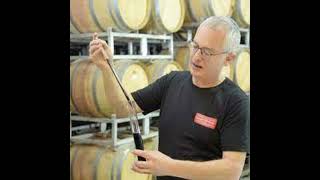
In this first part of a Kosher Terroir podcast, host Simon Jacob tours the newly built Shiloh Winery in Jerusalem with winemaker Amichai Luria. Luria explains the design philosophy behind the facility, emphasizing scalability, efficiency, and a visitor‑centric experience. He details the new barrel room, temperature‑controlled tanks, an inert nitrogen press, filtration systems, and computer‑managed pump‑overs, highlighting how these technologies enable hands‑on quality control while increasing capacity. The conversation covers operational logistics such as 100‑hour work weeks, strict adherence to Orthodox Jewish practice, 100% Jewish labor, backup generators, dual cooling systems, and the challenges of obtaining permits for a massive underground cellar. Luria shares business metrics: past production of ~300,000 bottles, plans to reach half‑a‑million, and the use of long‑term contracts with growers. He describes the visitor center’s catwalk, spacious bathrooms, event spaces, and future ideas like a library and private rooms for weddings or corporate gatherings. Throughout, Luria balances ambition with a commitment to quality, noting personal anecdotes about past vintages, equipment choices, and the importance of continuous innovation.
Chapters
Welcome to The Kosher Terroir.
I'm Simon Jacob, your host for this episode from Jerusalem. I was privileged to visit Amichai Luria in his new Shilo Winery. In part 1 of this podcast, he walked me through the different spaces of the new facility, discussing some of the goals in its design including significantly scaling up its capacity while especially focusing on broadening its capabilities. He discussed benefits he has planned for customers in their beautiful new visitor center, as well as being excited by some of the planned programming it will enable. As you listen in, please note the incredible detail in all the different elements of the facility he is discussing. Also note that I edited out many, many calls during the interview, which included growers, winery assistants, outside distribution partners, accountants, and construction designers and managers, to name just a few. As you get to know Amichai, you quickly realize how much more achievable his remarkably ambitious goals are. He is a total workaholic, putting in 100-hour weeks, while impossibly balancing a commitment to his family as well as a rock-solid dedication to being an Orthodox Jew. In part 2, we sit in his new office and discuss the past, present, and future, and actually taste some of his new Chardonnay from the fermentation tank. A truly remarkable personal story of the winemaker, who has handcrafted Shilo Winery and its brand from its origin.
How you doing?
I'm giving you a kiss. Shilo, brachah. Mazal tov. Mazal tov. Mazal tov. The last time I saw this, they were just putting up beams. So, refeshem.
Yes. So finally we moved in, we started making wine. Unbelievable. Still a lot of last-minute touch-ups. It will take about a year to get up and running. You got to get through at least the harvest. At least I have to get through the harvest.
Yeah, right. But the harvest is happening here.
Yeah, yeah, yeah, we already harvested. We have a Pinot Noir already in the tank. We have a Merlot. We have two Chardonnays. Tonight I'm harvesting a Malbec. Wow. Motze Shabbos, I'm harvesting Sauvignon Blanc. And I don't know, and then, and the, the, no matter what between Rosh Hashanah and Simchat Torah, like, it's insane no matter what. But, oh, Hashem. Wow. So we got a lot of new tanks. We obviously moved everything that was there, we moved here. But we also upgraded by buying a lot of new tanks. All the tanks here in the middle, for example, are new. Most of them, except for these two that I got in a bargain, somebody didn't want, so I took them from Italy, but all the rest are made in Israel. Wow. By the way, this whole building, everything here, 100% Jewish labor. When I say 100% Jewish labor, that means the guy that brings the concrete in the— what's it called? The steamroller? Not steamroller. What's it called?
Cement mixer.
In the cement mixer? Yeah. That truck driver? Jewish.
I want to say thank you for letting me come and talk to you from—
I almost canceled again, you know, it's like it depends on harvest. Yesterday I finished everything, I said, okay, I have a day. Okay.
So now, Baruch Hashem.
We have an interesting wine tasting if you want to stay a little bit later.
Okay.
I'll show you after it's up there. We have a catwalk on top that you can see the tourists can be there. It's not connected to the catwalk of the tanks. Okay, okay. So basically I can make much more because I'm on hands. Like, you know me, I like to smell and taste every barrel, be on top of every tank that's fermenting at least once a day. So now because I don't have to run around with ladders and everything, I can get done that much more in less time.
Wow.
Yeah, but we also made a special catwalk that has a view to the vineyards and a view inside to see the tanks, so guests can see everything that's happening in the winery without, you know, stumbling around my feet. Hexer reasons.
Without even having to come in.
Right. And I also— I'll take you up there in a couple of minutes to show you around.
No problem.
So this is our new, new barrel.
What a difference! What a difference.
Yeah.
Wow, wow.
It's much easier. So this is our barrel room. You get the catwalk, all actually comes all the way to here. See?
Yep, comes out to there.
So you people can come in, it ends over there, so you can see the barrel room hopefully by I'd say December, hopefully this room will be, uh, already full with barrels and set up.
It's pretty full. Yeah, I know it's not full, but it's pretty full.
I'll show you from the outside the rest. Yeah.
Wow, the smell of the oak is also—
these are new, also made in Israel. These are mostly for whites, rosés, and preparation for bottling and stuff like that because our bottling room is over there. We got a new press that if I want I can work with— first of all, it's a closed press, but it's not just closed press. I can work 100% under nitrogen. Wow. So it's inert. Inert? Yeah, yeah, inert.
Perfect. So there's no oxidation.
So there's no oxidation. So there are advantages and disadvantages to that style, and there are times that I will want it and times that I don't, but at least I have the option of doing it. I have to say that if I always learn something new, it's fascinating. The options when you have an inert press. Literally fascinating. And, uh, like what sort of—
what sort of—
so for example, did you know that if you, um, do 100% inert, uh, a Chardonnay on presser, so from the destemper into the tank it's inert because I pump nitrogen in my, in my pumps and everything. But also this like sucks out all the air, fills it with nitrogen as it comes in, so it's 100% thinner. There's so much to do to— first of all, it means you have to be much more careful through the whole process all the way to bottling. Um, and there's so many things that you can do to make this, the wine, much more interesting. So we had Chardonnays that I just had my last bottle with Ben Weber, I think it must have been about a year ago, my last bottle of Chardonnay 2007 that I did that really took the extreme much more than all the rest of the years. It was really good. 2007, we're talking like it was then, it was like 15-year-old bottle of wine. Insane. Yeah, ask Ben, you know, you'll— it's like we were like blown away. And b'ezrat Hashem, I'm hoping to start again this year to take it to the extreme like that. No, but I don't know, but, uh, that's unbelievable. It's very interesting. I had a— I had once a Sémillon 2009. That's from Yakov Vogel. Yeah, I had it at the beginning of COVID with my wife. It's one of the only times that my wife said, oh, I like a white wine.
Okay, I still have some.
So as you can see, like, everything in the winery is temperature controlled through computers, through apps. And the pumpovers control instead of the Shabbos clocks. I can like, I have a Pinot Noir that I want to very, very gently, I'm working with it for the first time. So I'm like, instead of giving it massive pumpovers, I have the ability to give it a minute, 2 minutes, once an hour. So it's like very gentle pumping over. And it's a lot of little Tiny things like my son is now putting in micro-oxidation. Shalom. Shalom.
Shalom.
The last minute, I almost didn't buy a generator. We bought it, and thank God, because we were doing the last-minute touch-and-goes here. I was 1 AM fixing things that I had to, and there was a blackout, and it took like 7 seconds and it started working. The guys were about to leave. And then everything came back on. Everything on. So we have two cooling systems. We have a backup with the generator and everything. We have a very big, uh, wine tank for blending that's coming in on Monday. It's going to be right over there where you see those special platforms. It needed a very special kind of, um, metal inside the concrete and very special kind of stainless steel pads and screws, and afterwards it gets molded with a special kind of concrete.
So you like circles?
So no, there's— these are easy. These were just circles of a top and bottom with a special kind of concrete in the middle. It's regular concrete. This is— it's more than enough there because it's a very big tank. It needs a special kind of molding with special kind of concrete. 66,000 liters for blending. So we have wines that are already very close to that amount. So we're getting there. That's the ideal, right? So that's what we want to try and get done. Okay. So this is the barrel room. By the way, underneath this whole building, okay, all the way to the end, is an enormous cellar that we're trying to get permits for so we can start working with it.
Wow.
This is our bottling room that's probably only after the harvest will be able to start working here. So basically the empty bottles come from the other side. The line will be that the bottling line starts over there, empty bottles come in. Full bottles over here. Yeah. And either I take it to the right to where we store our bottles, or to the left to that elevator that you saw that goes underneath to the cellar. Oh, because, uh, I came from construction in my life. Yeah. And because I've worked for too many years and this is way overdue, then everything that's designed here is designed in a way that If I need a light switch somewhere, if it's— it has to be over here, not over here, you understand? Because, right, okay, if I— if the— if the forklift has to move right, then the door will be where it's supposed to be. If you have to move left, it'll wait for you on the left. Every little detail. Nothing is perfect, but every little detail that we're not wasting even a fraction of a minute for something, because in the long run, I want everything to be done. I want everything to be easy, not to waste time on it. Let me focus on wine. This is building this, so it took about a year and almost a year and a half, almost a year and a half. Uh, this and this is the end product. Uh, maybe we can go from here. Storage, yeah, for bottles. One of my mistakes is that I didn't make a master key for everything, and to change all the locks for doors for a master key will cost me like 25,000-30,000 shekels just to get it all done. So here's the storage. And I have another machzan at the end, right?
These are all chilled and—
yeah, yeah, temperature controlled. Still working on touch-ups. What's the volumes you're doing now? So the past couple years we were— except for Shmita, of course. Yeah, uh, we got up to around, uh, We got up to around, uh, um, about 300,000 bottles the last 2 years before Shmitah, close to it, 280, 300. Shmitah was Shmitah, and this year hopefully we'll, uh, grow considerably. And, uh, in the next couple of years we hope to continue growing. When we were— when we bought this land, we planned on— we planned on— we were then making, when we bought the land, we were making a little over 100,000 bottles a year. We said, you know what, let's build the winery for $250,000 and maybe we'll be able to get to $300,000, and that way we'll be able to overlap the gap of Shemitah. And we did all the plans and permits and arc— it took years because somebody put a sewage pipe and a water pipe through our property, and Misrata Kalkalah had to take it out. They would postpone us for years. And then finally we're about to start building, breaking ground, and I say to my— the owner of the winery, Royal's nagging me I don't give them enough wine. Wines are sold out in weeks or months. Here in Israel, I have some of my wines are sold in hours. The yearly amount is sold in hours. So I mean, what are you building a wine for 250,000 bottles a year? We're already selling more than that. What's going on here, okay? So last minute, we changed a lot of the plans here. So we'll be able to make much more. So even on this level, we'll be able to get close to half a million bottles. And once we get permits and finish the cellar, the cellar, to finish the cellar is a good 2-3 million shekel to finish it. It's all ready, but you have to still finish it. Let me show you, it's really cool. Then if we invest a couple million more, then obviously we can get much more than half a million bottles.
This is under the whole building.
This is all under there. Can you imagine? Everything was done 100% Jewish labor. That means that the people working on the big tractors, digging the hole, pouring the concrete, making the metal, a lot of people from— you see guys here with payas, this is how some people are from doing everything, everything. So this enormous room will probably have a lot of purposes. We have a couple of rooms over there, smaller parts of the— they were planning for, uh, special colder rooms for barrel, long barrel aging for wine, aging for longer periods of time, for barrels and wine. Uh, obviously barrel room down here, obviously regular storage. And one of the guys here is like driving me crazy, my main man here, the guy's been with me for at least 15 years. He says I want to make a, I don't know, a wedding down here. It's not going to happen. We'll never get permits for that. But we're thinking of maybe if we're, if we, when we get to the stage that there'll also be a lot of barrels down here, to have it designed in a way where 50 people or 100 people can sit around one big enormous table with barrels all around them. Something like that, with like a nice fence so you can't touch it, but you're inside. And so I'm thinking of something like that. B'ezrat Hashem, you know, but this just, you see, it looks as if it's ready, right? I have electricity, I have water, I have sewage, I have an elevator. The walls are painted with special kind of paint. Everything is done. So you think the floors are, you think, okay, I'm ready, right? Just to get the electricity to level of permits, to get water, to get special fire thing permits and everything that you need for that, which includes suction of air in and suction of air out. All these things, when you put everything together, okay, you're talking about I'd say if I'm lucky, I can get done here with 1.5 million, probably closer to 2 million shekels just to get that. So it's no matter what you do, it's always—
it's expensive.
Big money. Big money.
So you can— you know, they have these huge barrels. I was over at Yatir.
Yeah.
And they have these barrels from Austria, oak barrels, huge ones.
So there are huge oak barrels that I looked into big oak barrels. I looked into concrete things, all different sizes from small to big. And I looked into ceramic special stuff and everything. Amphoras. Amphoras and so on. And to be completely honest, maybe one day, maybe one day the amphoras, maybe, maybe. Concrete and big oak barrels don't interest you. They don't interest me because too many things can go wrong and its benefits are— it's good for a story. It looks nice, but taqles, when you drink two bottles of wine, one with this, one with that, Forget it, it's not worth it. It's not better, you know.
Well, it's much less of an impact. I mean, when you put wine into an oak barrel that's that huge, the impact from the oak is much less. And you can always use it over more than once because those things are not built for using them once.
So the same thing, I can use a barrel that's been used for the first 3, 4 years, and from the 5, 6, 7, I can use it for— like that. Easier to clean, easier to maintain. Much more micromanaging. Don't forget, it's a batch. That's it, you know? You can't play around with it. You don't have nothing to play around with it, which is scary when you think of it, okay? And I could do the same thing with small barrels. And concrete, it's nice for the story, but the people that end up working with the concrete, you know, physically working with them. Yeah. The people that work, the cellar master, the winemakers that actually get their hands dirty and not winemakers that look from far away, they all say that the concrete is a pain in the neck. First of all, temperature control is very difficult. Cleaning it and maintaining it is Totally insane. It's unbelievable.
Yeah, you don't need to do a wedding down there.
You've got this. So it depends on the size. Let me show you from there the whole little thing. So, um, so basically the entrance is over there. There's for people and for cars. Well, this will still be still has to be fixed up. Uh, so this is the entrance, and it's very important for us that the entrance looks nice from far away too.
So, yeah, of course.
Okay.
Uh, I like the stone you used.
Yeah, looks—
and yeah, and the roof.
Uh, bathrooms are locked, but there are two sets 6 of each, you know. There are more bathrooms here than when you go to the visitor center in Golan Heights or any— or Sagot or anywhere. I said I want— I don't want people to wait in line, and the bathrooms here look like— let's put it this way. When I— each time I'm in the States and I go to eat at Reserve Cut, I say the bathrooms are wow. Yeah, the goal was to do just a little bit better. Okay. Okay, I think I nailed it. Okay. I'm not sure. We'll know in a couple of weeks when I'm finished with the touch-ups. But, B'ezrat Hashem, I think I nailed it as a better than reserve cut. Okay, that's the idea. So, because that's west. Yeah. And that's east.
So, the view through these doors is what?
So, here I'll show you. So first of all, you have an inside court, sukkah. There'll be a sukkah here, and you can sit here, and even in the winter with the gas heaters, really nice ones, or in the summer. So basically, they're going to be like two, two rooms. There'll be probably like a very nice bar over there. Um, people can either sit on a big table, you know, and have a big wine tasting, everybody around it, or it can be more intimate tables. You'll be able to change it back and forth. That's our idea, very quickly. So let's say every day the place will be open from 9 or 10 o'clock till 5, let's say. And then from 6, it's events or special things or special gatherings. Doesn't have to be a wedding, can be, I don't know, poker night or whatever, okay?
Right.
Or special tasting nights, etc. So it'll be like we made these big doors and windows, so basically if we want, we can open everything up and you can have one big event. Okay, and you can also have close and have more intimate areas, separate intimate areas. Love it. Uh, and then you can come out, so, and you can open up all these doors and have, uh, have this as part of the inside or separately, whatever you want, right? So our land that we bought ends here, but this is like closed that nobody can get to because there's going to be, uh, probably some sort of parking thing over there. So this whole area will be something that I'll be able to, with the mozza, to put nice picnic tables over here outside. So basically The sun sets over there, and the summer over there, and the winter over there, but you see beautiful sunset every night. You see the vineyards in the valley. Yeah. You see the vineyards on the mountain ridge over there. So you actually see the vineyards from the winery, from inside and out. You see the sunset on the vineyards. It's like you get the whole perspective. And these are those— that catwalk over there, Basically all those windows you can see from high up on top. You can see the whole thing. So you have that whole extra— that's so cool.
So these are actually owned by you, or but they're owned by this?
So we don't own any vineyards. We have long-term contracts with, uh, vintners. Um, the average contract is 20 years. Some are 24, some are 10 plus 10, all kinds of options. We're going to probably have some sort of pathways to walk to the vineyards, and we'll have something over there either walking or with one of these, you know, ATVs or electrical little things or whatever. We want people to— the idea is when somebody comes to the winery on Wednesday with his wife, he'll want to come again next week because there'll be something else to do. So one day he had a wine tasting over there, and some other next time he came, he did something else. There's always something new to do, another corner, another different kind of tour. You can't do everything at once. There's, there's, there's almost like, like there's a menu of what you can eat in a restaurant. There'd be a menu of what you can do at the winery and around the winery. So the, the idea— I don't want it to be like Mitzvah. Okay, you went to Mitzvah, very good, thank you, you're done. Next time you come is when your kids grow up, or couple years from now. I want people to— for, for people to feel like home. Uh, there's a big kitchen over here, not very big but relatively big.
I love this, I love the roof, the ceiling, I love the wood ceiling.
I got very angry at them. All these were supposed to be brown. I'm gonna have to somehow, uh, to make them browner. No, the, the, the white— oh yeah, there are all kinds of things that legally you have to have.
You know what, while you're setting it up originally, it's better to have them white.
We did a lot of last-minute changes, like the architect had only this is a small balcony for 2 tables, and all this was supposed to be for storage and, you know, all kinds of machinery, air conditions. And like, this was supposed to be all the way to the end and just 2 tables over there. Yeah, I said then, no way, this is more than enough. Let's have another suki here for suki. Place for a bar I made, and we're gonna have probably up here, 24/7, uh, station for soldiers. Okay. So where the insurance is giving us trouble with it because it has to be locked at night and trying to figure some way out of it, but we want to have a 24/7, uh, soldier place. So hopefully when the whole thing is set up nicely, it'll look like a sea of, uh, barrels of barrels. Now it's impressive, but yeah, and give me, give me 2-3 months and this place will look like, oh my God, like that's, that's the idea. I'm also looking for somebody that can play with, um, lights. So there's lights for work and there's lights for impressions. So if you get— yeah, after it's set up and you can leave some lights show you the depth.
Yes.
And it's really, uh, smart. It's really special. Yeah. So that's, that's—
and actually the catwalk comes right over the top of some of these barrels.
So some of the tanks over here. Well, so, uh, when we put wine in here, the tanks obviously be sealed, right? So nobody drops anything inside. And when we work on it, nobody's going to be up here. And probably after we get the permits, but the permits force it to be like this, I'll close it. We have the visitor center up and running. We'll have tours here. Then you can imagine, you know, people mixing paints, working, whatever, working in there. And a person could come in here, taste wine, look outside, look at the vineyards. Even at night, the view here is amazing. And then you see this whole production in front of you. I don't know, maybe it's my eyesight, but people even look small from up here. It gives you perspective. It does, it's huge.
It's huge. It's really, it's wow, what a difference compared to what you've been working with for so many years.
So for me, if I had to, let's say I had 10 tanks, 15 tanks fermenting, and I had to go on top of every single one and mix it and check it, with the ladder to take me a day or, I don't know, through the night. Now I can do the same work for more than double the amount in less time. So hopefully it gives me better control because to increase production on expense of quality, that's not what we want to do. We've been increasing production from day one, but everything was like very carefully hands-on and with the goal of just making better every year, not making worse because I have to make more. Blending tanks, it's like, because I didn't want to compromise. All the barrels have to be in a single tank before or bottling. There's no mishugas, no mixing between tanks and hoping for the best and say, okay, can barely taste the difference. Okay, and then 5 years from now, you might taste the difference. I've been looking for years for a high-quality filtration system for young wines, for rosés, for whites, and for leaves for leaves, leaves for the, for the mud. Yeah, yep, yep, yeah. And, uh, all the solutions were interesting. None really did the job. I finally found something. I'm going to start using it this year. Uh, bought one of those. I was there a couple times the past couple years to see it up working. Let's put it this way, if it does half of what I predict, I'll be happy.
Who had one?
Rekhanaati has one.
Oh, Rekhanaati.
Yeah. So this is for bride. So, right.
So I see the fancy bathroom. It's beautiful.
Downstairs is 10 times fancier. So the idea is you can't legally, the winery has to be in an industrial zone in Israel. But there is no such thing as having guests for sleep, that means tzimerim, hotel, in industrial zone. That is the law. So there is no way around it. So what we did here is we planned like 3 of these, because we wanted to rent out tzimerim and stuff. Then we saw it was impossible It means years in the Knesset to change the law. Forget it. So we did something like a private room because there is a lot of demand today. Somebody has a company or a business or whatever, and they want to rent a private place to sit down, 10 people, 4 people, 20 people, 2, 3 days, end of the year, all kinds of— they want a private place to do it, not at their fancy place in Herzliya. They want to do it here. So we're— it'll be like a mini kitchen over there, fancy bathroom, a table that can sit 4 people or 20, and you have a beautiful view. It gives you like privacy in a winery, everything you need. When you have a bride, right, you need a bride's room.
You need a place where she can prepare.
That—
this is like a chalet. She's—
they got a balcony, you've got everything.
It's like gorgeous.
Like if somebody wants to propose to his wife. Get everything all ready.
The engagement.
Yes. A small engagement party, Sheva Brachos, you want a private small Sheva Brachos for 20 people. You want for 50 people downstairs, you want 100 people. But it is suddenly like—
This is a great space.
Mezuzot, we are not worried. This here, we do not have a mezuzah yet.
No, no, but the others, I noticed mezuzot all over.
Yeah. So we're slowly putting them up, and B'ezrat Hashem, we'll pick a room that we're starting to work now, and we didn't put a mezuzah up, and you'll put up a mezuzah for us today.
Relax. Toma.
B'ezrat Hashem.
I love it. I suddenly realized that, I don't know, it's like a good 20,000-30,000 shekels to put up mezuzahs here. I didn't take into account I have so many doors. Wait a second, what's going on? Now, could you imagine at night in August where it's 18 degrees Celsius, you know, it's— people wear long sleeve in August outside here, to sit here at night and have an amazing barbecue out here. It's like, I'll rent you the space, do it yourself, you understand?
It's like, wait a second, you're not gonna Move your oven. No, no.
Yeah, like, let's put this— I, I'd be happy to give some pointers, but I don't want to be the chef. You can tell them this is what I want, this is what I like, but I don't want to— I don't want to give— we made also over here— I see the lab. So we made a big— we're still setting up the lab.
Yeah, that's great.
And, uh, so once, once it's up and running, we'll— when everything is working, then obviously this will be nice and clean so people can see the lab. And there is something with, you know, you came for a wine tasting, you took a peek at the lab, and you know that next time you come, you can get a private tour in the lab. Okay? Or you, you came for a wine tasting and you sat outside and you saw that there's an option to see everything from outside. Next time you do that, there's always something, a reason to come next time. I have a dream. I'm trying to convince my— the owner of the winery to find a small section in one of these rooms, okay, where it's like an old-fashioned desk with an old-fashioned green reading lamp, library lamp, and there'll be like 10, 15 different books for sale that I pick and have those open with pointers So you can see why I want to sell those books, and you can sit down, read a little bit, and then buy a book. Like, I want to put the Rafsulević books on wine, uh, uh, Colato, uh, a bunch of these.
Thank you for listening in. This has been part 1 of our interview with Amichai Luria and the Shilo Winery. Please tune in again for part 2, where we sit with Amichai in his new office and discuss the past, present, and future, and actually get to taste some of his new Chardonnay directly from the fermentation tanks. A truly remarkable personal story of the winemaker who has handcrafted Sheila Winery and its brand from its origin.
Thank you.










