Unveiling the Craftsmanship Behind Agur Winery's Unique Judean Hills Blends
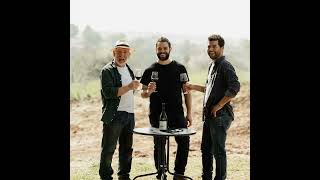
Agur Winery's CEO Eilad Katz and winemaker Eyal Drori discuss their Judean Hills vineyards and experimental techniques like amphora fermentation and carbonic maceration. They taste flagship wines including the red blend Kessem and share how they created Ella, a herbal-fortified product from foraged local plants and legacy rosé barrels.
Chapters
Welcome to The Kosher Teruah.
I'm Simon Jacob, your host for this episode from Jerusalem. Before we get started, I ask that wherever you are, please take a moment and pray for the safety of our soldiers and the safe return of all of our hostages. The following episode of The Kosher Terroir is an exceptional conversation and wine tasting with the extremely creative team at Agor Winery in the Judean Hills wine region of Israel. Eilad Katz, the CEO, and Eyal Drori, the winemaker, along with the winery founder and winemaker emeritus, Shuki Yeshuv, have formed an incredible partnership embracing the spirit of Agour's past while focusing on its truly creative potential. Eilat and Eyal shared with us some of their older offerings as well as some of their new creations. There was so much to taste and absorb that I've broken this episode into two parts, this being the first where we were treated in their visitor center to a review of the history of the Agour Winery and a tasting of their current production run. Next week, we will visit the actual winery and taste all the newest ideas and offerings being developed for the future. If you are commuting in your car, please focus on the road and enjoy. If you are home, please choose a delicious kosher wine sit back and listen in on this personal wine conversation among friends.
We're sitting at Agoul Winery, which is celebrating its 26th vintage, I think, this year.
It's an important vintage. That's shem hashem. You know that? That should kebab keh. That's a very important vintage.
It is.
It is for us.
I know, I'm telling you. Because of what you said and because it's the first, uh, harvest of our new vineyard that we've planted just a minute before we joined here as partners, Eyal Drori and myself, Eran Katz. Um, so the winery is 26. It was founded by Shuki Yashuv. You met him.
Yeah.
Um, and, uh, from day one, actually, it started as a joint venture between two young, young winemakers, Shuki Yashuv and Zev Dunia, And after one year that they produced one wine called Elul in 1999, they decided to split. Zev Dunia went up to Bar Giora and established his winery called Seahorse, Susanya, and Shuki stayed here with the name Agur.
I didn't know you guys were that close. That's amazing.
We're only starting with the karma stories. Yes. So 20-something years after, I was the CEO of Castel. I worked there for about 8 and a half years and I quit. And after a couple of months of thinking, this was the early days of Corona, of COVID I made a decision that I want to stay in our industry and do my own thing. And my first phone call Mr. Eyal, which I didn't really know. I heard two things about him. First, that he is a mensch, and the second thing, that he's a highly talented professional winemaker. And we met, took us some couple of months, maybe almost a year, until I convinced him to join me in this venture. Eyal, he present himself, but it was back then The winemaker and seahorse. Okay.
And, um, you look how it goes, no?
Yeah.
Wow.
The first thing we've done together was planting a vineyard in Givati Shayaou for the future winery that we will establish. And this vintage is the first one, as I said, this harvest. And the second thing was thinking about how will our winery look like, and we had a dilemma whether to establish a new one or joining something that was already here. And for all kinds of reasons, Agour was in our minds. Now I live 3 kilometers from here, so Shuki was a good friend of mine. I would stop after work from Castel drinking a rosé with him and, you know, giving some tips, and I asked Csuki, I told him, Csuki, you have a place, but the energy is not what it was. I have the energy and I don't have the place. And he was willing to give space, and then I asked him whether he will accept another partner which will replace him as a winemaker. And he said, you know, I can try, but you have to tell me who is this guy that will replace me. He said, he's a young professional, his name is Eyal Drori, maybe you've heard the name. Shuki started laughing, and apparently I didn't know that when I did the shiduch, but Eyal was Shuki's student, how would you call it?
Prodigal.
Project.
Yeah, his first harvest vintage in life was when he was 18, and he lived here actually. So Shuki kind of taught him the work, and just after the army, Eyal went on to study in Italy. So it was a kind of weird and cosmic meeting.
Wow.
So that was in 2020. October I joined and Eyal joined a year after me. And since then the winery is growing. Maybe we'll talk about it a bit later. You want to present yourself?
Yeah, so this is the winemaker, your side. Yeah, my side of the story. Now, as that said, I'm Eyal Drori, I'm the head winemaker here in Agour. And it's funny because, yeah, my journey started here in 2005. I was 18 years old before I had some time before the army, and I wanted— I always had this dream to work in a winery. And so I looked, and a friend of my father is a brother of Shuki, so he did the match, and I called him and he said, come over. And from there, for me, it was the history. Like, I fell in love in this place. I fell in love in this, in the work, in the winemaking. And then after the army, I used to come here every harvest to help a little bit Chouki. It wasn't that serious there. And then after the army, I decided that that's what I want to do with my life. And I went to Italy. I did a bachelor and master's degree there. So I lived there for 6 years in Piedmont, in north of Italy. I worked a little bit in some wineries there. I did— it was important to me also to work in the same climate of Israel, but abroad, like not in Israel itself. And I went to Crete, the island of Crete in Greece, to do an harvest there. And, uh, well, finally after 6 years, I decided that I'm ready to go back to Israel and Then I worked in Recanati winery as a young winemaker for 2 years. I did a couple of harvests with Itay Lat as a consultant in the Golan Heights, in 2 wineries there. Then I worked as a winemaker in Seahorse winery for 3 years. And in the last year of Seahorse winery, then when I met Elad, then we decided eventually We decided to do that and let's say the first thing that we did is to plant our— I call it the coral vineyard because it's really—
What variety is it?
Oh, so it's in Givati Shayaou, which in our opinion is one of the most interesting and the best terroir, microclimate that we have in Judan Hills.
It seems to be that a number of wineries are buying plots up in that area.
Absolutely, it's becoming cool.
Yeah.
It's really like that. And so for the question, we planted— so first we did some wine tasting. We invited some friends and some wine professionals, and we start to ask questions like what we want to do, what are the right varieties for this region and for this specific plot. So we did a lot of tasting, Israeli wines against wines from all over the world, blends, varieties, and eventually we decided to go with Syrah. So we had 8 dunam, so 0.8 hectares of Syrah. We have Roussanne, we have Chenin Blanc, we planted, uh, Mougueblais. Bush vines of Carignan and Grenache. And this year we had for this plot another 5 dunams of Assyrtiko. Assyrtiko is one of those varieties that I really waited for more than 10 years. I waited to bring it to Israel.
I don't know anything about it, so tell me a little bit about it.
It's a white variety that originally is coming from the island of Santorini, which is a very extreme climate. It's hot, even hotter than here in Israel, windy. The winds are always—
Santorini, where they have the round, the circle ones?
It's like a—
yeah, it's like a nest. They grow the vine in a nest. No, it's not a circle, it's a nest.
It's actually very specific for Santorini.
Like what we say, gefen suha, you know, gefen on the ground, right? But it's nestled like a—
like a bird's nest.
It looks like that. It's just to protect it from the wind.
Protect the grapes.
So it's an upcoming style, the Assyrtiko in the Santorini region in the last 10 years. But it is not the reason why I wanted to plant Assyrtiko, because it's coming from an island with basaltic soil, so it's not necessarily the same conditions. But the thing that convinced me to do that is that I tasted an Assyrtiko, one of the best Assyrtiko that I ever tasted, that coming from Peloponnese, which is the mainland in Greece, which is really similar to Giordano Hills limestone, terra rossa. So this is for me was the—
What sort of characteristics do they have?
Well, it's in Santorini, it's different. It's more mineral and lemon, lemony zest and this kind of aromas, but when I tasted the one that comes from the mainland, it's something that is— it's always mineral, it's always with the lemon citrusy aromas, but also have very round and balanced body with a good acidity, high acidity, which gives him the longevity to be aged as well. And I think that is— well, I look at it as a blender for me. Like now, I want to add to our wines the minerality, the sharpness, and the limestone notes that we have here.
So I'm looking forward.
I think that in the vineyards, the work we've done, we've planted more plots since then in the Elave, up on the Elave Valley. The hills that surrounds it. And we did a long, long research of tastings, very open-minded about the question. And the question was, what is suitable to here? Not just what is fashionable now, because, you know, fashions and trends change.
Yeah.
What— and we are already feeling comfortable enough, confident enough in as people and as a region to really do what's best for the plant, what's best for the wine. So we really ask the question very openly, very open-minded, and in that sense we're just following, uh, Shuki, which was a pioneer in more or less everything he'd done. He was always a crazy redhead. So in 2013, he bought the grapes from a plot of Ozelletta which is also a very unique variety coming from the northern parts of Italy. And then in 2010, before that, he started producing a wine he called "La Yam," "To the Sea," because he was a bit, maybe bored from the Bordeaux blends that were very, very popular back then, and he thought we should look to the Mediterranean. This is where we are from, and started playing with Syrah and Mourvèdre And we just took some inspiration from that because Eyal blends— we'll talk about the wines in a minute— are super complex. So we usually try to simplify to the customer and say a Syrah-based blend. But behind that, in the kitchen, is being blended like 7 varieties more or less in every blend. Because we're trying to say something about the region, not about the variety. Varieties are instruments for us, varietals.
It's an interesting— it's a good philosophy.
Well, there's a lot of inspirations from a lot of different places in the Mediterranean countries, let's say like that. And what I had most, like what I'm feeling the most correct for our situation is that, as Elad said, the variety, the varieties are tools for us to extract out from this land the characteristics of this region and our wines. And this philosophy I met in Portugal, first in Portugal, and also in, well, the oldest region in the world, Châteauneuf-du-Pape, is exactly like that. So Châteauneuf, we have 13, now 15 different varieties. It's true that it's Normally it's based on one variety, which is Grenache, but it's always a blend. And so also in Portugal and also in Spain, I will start to see some things, and in France in general, this philosophy works and it suits for us.
I just want to add that our vision or motivation is that our wines will be recognized as Judean Hills blends and not a Bordeaux blend, a Rhone blend, even not a Mediterranean blend. So really, this is another reason why blending open-minded, because we are in the process, like the Israeli cuisine is going through, we are in the process of creating a unique identity for Israeli wines.
Shivi Drori also specifically You know, people always call Rhone blends Mediterranean blends, and he basically fights that. He said they're still European blends. They're not, um, they're not what you call— they're not Mediterranean. There's a lot more to Mediterranean than, uh, than what's happening in the Rhone.
Yeah.
So I agree with you 100%.
It's—
I love the this is the direction that Israel is going in order to really make wines that are exceptional specifically for this area.
Okay, Al is a winemaker that gets bored very easily. He also produces vermouths. He likes his beer, he likes his whiskey, he likes a lot of— he ferments more or less whatever. Just be careful, he might ferment you. Um, so he does Mitzpetel and, uh, grapefruit, pet nut, all kinds of weird stuff. So in his wines, he has to maintain this interest, you know, something that we call attention.
Hi.
Newly bottled, huh?
This is brand new.
It's brand new.
This is what? Tell me before we—
So this is our young wine. We do two kinds of white wines. We have the young Syrah that is It's based on Sauvignon Blanc.
Now it's called the Gour Blanc.
It's called the Gour Blanc, yeah.
2023.
It's a new vintage. It's just been bottled.
Yeah, great.
Sauvignon Blanc-based blend. That's the short line, right?
Yeah, this is short line. No, but, um, like, if we can back a little bit for the philosophy, um, when we choose to do, um, whites Here in Judan Hills, I wanted to understand fully the— what— which variety has the biggest potential for what kind of wines. This is the young wine and its process, the vinification process, is not a classic of white wine, young white wine. It's not just standstill. It's half of the wine always fermenting in old barrels, old barrique. And I keep it on the lees for 4 months and do some bétonnage, especially for the Sauvignon Blanc. I'm trying to get from the Sauvignon Blanc not the fruity characteristics, the tropical fruits, not the New World style. I try to extract out the minerality, the herbal notes, this kind of Sauvignon Blanc that I truly believe that has the big potential in Juranj. So this is the case for— this is why I chose Sauvignon Blanc for this wine. And as we said, it's a blend.
And what about the others?
Yeah, so it's 60% Sauvignon Blanc. Then the others, we have Chardonnay, Roussanne, Viognier, and a little bit of Grenache Blanc and Chenin Blanc. Okay.
I think that the young— we call it the Young Wines Series. There's a trick. We— it's about the, the— how do you say, like, the khanem shu'taf, the common denominator, yeah, is that we try to look for fruit, flowers, and some minerals. You know, that's the, the 3 things in the series, and it, it's about being accessible. We try to price it quite reasonably, but then the trick is that because of Élias Ambition, it's not a simple wine. So you can enjoy this like fun in the sun, no problem. People are drinking it here on the grass and enjoying it. But then if you are a wine connoisseur, you might dive deep and find all kinds of things that are not usually in a young wine. Um, yeah, and in the rosé it's even more dominant.
This is This is almost got like a Pouilly Blanc kind of a smokiness in the top of it.
This is one of the inspirations coming from, not necessarily from the region or from the style, but just to understand the right techniques in order to have these characteristics from Sauvignon Blanc.
Wow. I especially, I love the It's also beautifully balanced right across the whole palate. It's just lovely. Great.
Nice. Yeah.
It's like really cool.
I want you to stay with it for a while. We have two kinds of glasses. Now this is for the Léonce. I pick this one.
I just want to say something about Layam. So in 2010, Shuki, he back then had two partners, cousins from America. They thought they can manage him from there. They were wrong. But in 2010, they found out that Shuki decided alone to produce a new wine in the winery called Layam. It was a red blend, kind of a field blend of Syrah and Mourvèdre, 50/50. And they said, "Why are you producing a Syrah blend? Who buys Syrah?" It's not—
How long ago was this?
It was 2010.
2010.
And this was the thing that made them break apart the partnership. So he was forced to pay for the grapes and barrels of Layam. And they split. And when we came to the winery and tasted with Shuki what he was doing in 2019— no, 2020— we thought Layam was the best thing he ever done here. He was like, again, pioneering before his time.
In those days, if you're focused on the United States as a market, nobody was buying Syrah. It was like if you put the name Syrah on it, nobody would buy it. Um, and, and I know people were strongly recommending Israeli wineries to stop with the Syrah because they couldn't sell it. And, um, and they needed cabs, and, uh, and that's what they needed.
Yeah.
And it's, it's so, um, it's amazing that, uh, that you've broken through and now all of a sudden people are very interested in Syrahs. Uh, and it's, it's beautiful. It's a beautiful thing. I, I wish there was a way to change the names on some of the bottles to just say, like, we tasted a Merlot yesterday that if they called it a Cab, people would buy it. People would buy it. It was just because of the name.
So, so notice that we don't have the variety names in the front label. Just the wines have names. This is Layam Blanc, Layam, which Eyal only started producing a year, 2 years ago. So this is the second vintage. This is Layam Blanc 2022. 21 was the first. It was actually the only wine we've added to Agul's portfolio when we joined. So Eyal, we look at the portfolio and Eyal said, I want Layam is such a great idea, I want to elaborate it into white.
Yeah, and then in this case, the variety that I choose to be the most dominant is the Rosanne, which is one of my favorite. Rosanne is a variety, it's true that it's coming from the Rhône Valley, but I— well, we tested a lot, we tested also from Israel, but also tasted from Australia and the States. A lot of full sounds, and it's a versatile variety. It has this characteristic that can be very— like, stone fruit is always towards apple, something more fresh, like green apple, Granny Smith, and the minerality is always there. And from the other hand, it's it gives you a rich wine. So we need to be careful if you don't— in a warm country like us, we need to be careful to not have the style that I'm not want from the Roussanne. For example, the Châteauneuf white, which is mainly Roussanne, which is very heavy. It's not kind of white wines that I want to do. I want to have this freshness and lightness, but complexity. So it's all sand-based. Then we have Chardonnay, Viognier, and a little bit of Chenin Blanc and Sauvignon Blanc as well. Each variety has its part in this blend. Sauvignon Blanc, for example, gives us some cruciform fruits but many freshness, good acidity, something harsh even.
How much Chardonnay is in this?
This is 22, it's about 10%. The Chardonnay here is giving the Roussanne some help with the structure. Gives us a lot of also the minerality notes, but also the bétonnage method that I'm doing it, it's 10 months in barrels. The Chardonnay gives this richness and the yeasty characteristic that I like it in this wine.
It's not quite buttery, but it's lovely. It's got a real— wraps around your mouth. It's also wonderful. Great.
I love it. So it's like a mirror of the Agour Blanc, Layard Blanc, variety-wise, but then winemaking-wise, a totally different style. And we thought that Agour should try and produce a high-end white which will again show the greatness of our terroir. And it's only the second vintage, so we're humble about it. It's only a start. And Layam is, for us, is the series. The two wines are the most important wines of the winery. They're not the flagship. There's a wine upper class than them, but they kind of define the style and direction. They're the compass, and they're about complexity and silkiness. Maybe this is what you're feeling. Silkiness.
It's also, it fills your mouth. It's not like so, um, It's not so light and springy that, you know, you sit outside and you drink it and it's just— you just drink it almost like water. This has got some body to it.
It should give you this feeling that we're talking about a serious wine. It is. But on the other hand, it doesn't need to be heavy.
No, it's not.
It's rich, it's complex.
Not too buttery.
Yeah. Balanced.
This is in oak for how long?
10 months.
10 months, okay.
Naturally, part of it is new oak. Also the oak, the blends of different barrels is so critical for these kinds of wines. I'm using a French oak, but I'm using also acacia.
Acacia, okay.
That was another thing that when Elad told me, I mean, He told me this at the festival when I met him, that he's ready to tap on the bottom, he do acacia, and I was like, no one else is doing it like this.
It's a hybrid barrel.
Yeah, it's a hybrid.
The top and the bottom are from acacia, and the staves are oak, and then you get this crazy minty eucalyptus nose.
I was gonna say, it's almost eucalyptus.
The acacia is so going well with Ossan, it's just amazing. This This combination gives the rossan, it's uplifting.
Yeah. This is, I think, the best rossan I've ever tasted. Just so that you know.
By the way, it's a nice phrase, so I'll— Shuki is a veteran of the Yom Kippur War.
Okay.
And on the bottle of the first Layam, he decided to write something from Job, from Iov, a very interesting pasuk talking about how God comes out of the sea very dramatically, and then he's wrapped in fog, "chatul ba'afel." So it's a sentence about the sea, about "ayam," "layam," but it's something about his PTSD, that he's wrapped in fog, that's part of his feelings. Some mornings. And we've decided to take this idea of, instead of writing on the back labels, you know, fermented, all that technical stuff, we wrote just varieties and some phrase as inspiration. But on the Layam Blanc, we chose something about this wine actually. Bekochot lagah hayam uvetvunato mechatz rahav. Which for us means that—
Restraint.
Restraint is power and not, you know, and if you are really strong, you are restrained.
There's a lot of people who should know that verse, especially these days. Yeah, especially these days.
Especially.
Rukashem.
What we really, really want to do, and I say we, not just me as a winemaker, a good winemaker, in general a group of new winemakers or younger winemakers or ambitious ones, we start to understand the potential that we have in Jordan Hills and we want to give that expression out with the wines in the highest level that we truly believe that we can in terms of international wines. So we said With Sauvignon Blanc, I really believe in this. In some very specific plots, in microclimates, you can have here perfect conditions for this variety, even though we are not in the Loire Valley. Let's say, when we sit in the winery, I'm using, I'm doing a lot of different fermentation, different yeast, different techniques in order to get that. And it's hard work, but eventually we're learning. And my idea is to study the right techniques to each wine. And eventually, in like, I don't know, in 5 years or 10 years, because it takes time, it's wine business. Even generations, we will be on the right track. And then everything is more clear. And I believe that I would say, damn, why didn't I do that before? Like, it's just the process.
It is a process. And it's just, it requires an exceptional amount of documentation. It's just every single moment.
He's laughing, but we know why.
He knows. I don't know. But you can't, this is not making wine seat of the pants. You can tell this when you taste it. It's, um, it's got a fullness about each of the wines that they're, they're not just, um, they're not just light wines that you've put together. This is, this is really something that you've It's like a puzzle that you've put the pieces together in a way that it's beautiful. It's really beautiful.
Okay, this is the rosé. You can call him a winemaker or a pixel manager. There's a lot of pixels here, a lot of pixels.
This is the rosé. Yeah. The new vintage, 2023. So the rosé also has its own unique methods. And to be fair, Shuki started it in 2006. He was—
again, before anyone was producing rosé.
Yeah, one of the first in Israel to produce high-quality rosé. Because we had some rosé and, you know, bulk wine style rosé for the big wineries, but a high quality, it was in 2006, it was crazy to think about it. Nowadays it seems so obvious, no? But so he did it in his own way. He did it— the inspiration comes from Bandol area, but he did the rosé in barrels, in old barrels.
Okay.
The fermentation, and stayed on the lees for a couple of months until he had this reductive characteristics, notes that comes from the lees. And it was a crazy rosé for us.
Rustic.
Too rustic. And I really wanted to delicate things there and to elevate it to something serious as well, but more elegant and more gastronomic. And I also, I grew on rosé in my house, and especially my father is from was born in France, so he introduced me to the rosé, the Provençal rosé, or the rosé in general, as a good wine, not just as a bad wine that we back then, we used to have here in Israel. So I had this purpose on my mind, and eventually I decided to keep this technique of fermenting barrels and stay on the lees. So it's 80% of the wine of the 4 varieties, it's a blend. Fermented by each variety by itself in barrels, in oak barrels, and then stayed on the lees for 4 months until— it depends on the variety— but until I have these reductive notes. And then I do the rack, the racking. I'm racking it and do the blend, and then we have eventually the 80% of the lees section, and then we have the 20% of the standstill just to give it a little bit more sharpness.
And it's more red.
It's more red.
Grenache, Cabernet Franc, and Marselan.
Cool.
Barrels are 225 liters and up to 500 liters. And yeah, it's a homage to Schuki in some way, but then Eyal's style. And it's also a saying because usually you like— I think the world of rosé has gone flat. Everyone is producing more or less the same fruity juice with acid and no substance. So you already see Eyal's like— Eyal likes his wines, um, like presents. But then it's a rosé, you have to be able to drink it. It's not, uh, so he kept the style of Shuki but gave it a polish, we call it, an uplift.
Was there an impact from the war?
Oh yeah, well, I know first of all I was recruited on the 7th, um, for about 50 days I was in Gaza. Um, our mashgiach, Hanan, which is originally from Long Island, I think, right? He's still up in, up in the north. So we had to recruit more workers.
New workers. This one's new.
He's also, isn't he also assistant winemaker or something?
He is the assistant. Eyal recruited him from another winery that he was working as a consultant. He's a very talented guy, very knowledgeable.
Yeah.
And he's still up north in Milouin. Liel, our office manager, was recruited. So half of the staff wasn't here. Eyal was here for almost 2 months alone. With the worker alone. Like, I always joke about him. I left my espresso cup on the bar on this, on the 6th, and when I came back somewhere end of November, it was still there. He's a winemaker, he's into winemaking, you know. And the grass was like this high, and we didn't sell anything in Israel. So, uh, October and November were quite hard, and then we came back and we're, uh, we worked hard I think we're okay now. So, but, um, you know, from our, uh, from our balcony, you can really— it's safe, safe area, but we hear everything. Yeah, it's like a balcony to, to the sea, to the Mediterranean. So we really— we're not— we feel everything with a finger on the pulse, as we say. Um, we hear everything. But we were, um, actually, we finished all of our plots harvesting before. Yeah, we were supposed to receive another one from the north because the yield was very low in 2023, and that plot never, never, never was harvested. Yeah, so we've— our vine grower is a high-ranking official in the military, like reserve, so he's still there. I just met him a couple of days ago in the vineyard. So we are helping him now to grow the vineyard, to prune and all kinds of stuff. But we're okay. Luckily, the war was just, you know, the minute the harvest was done and when the vines go into dormant. So yeah, we're waking up now like the vines.
Everybody's saying that, and I agree, it's probably the best rosé that we No, this is like— That we did?
It's not '22 even, it's just—
It wasn't an easy year. We had a lot of heat waves. Actually, it was— for me, it was like one big long heat wave that started in late July. And so it was a complicated year, but eventually we have a very surprisingly very good quality. Very high quality. This is where you see the quality of also for your growers or the plots. And in this case, you can see, you can feel it. The 23 vintage is amazing.
This is like, uh, really fantastic. It's a real Rosé. No, it's not excessive, it's, um, clean, and, uh, the tastes are exactly what you want them to be, and it's just beautiful. Really, really beautiful rosé. Amazing. Wow, I love that you're expressing this from here and this is what you're getting, and I, and I just It's just amazing. It's just great. It's really great. And I'm most happy that you make this kosher. It's just amazing. Please, thank you very much for all of the effort.
By the way, when Eyal was here as an 18-year-old student, the winery wasn't kosher. That was 2005. It became kosher 2006.
Yes.
So it was the last year before. Yeah, but he came back home. I live here, so it's my home as well. And this is an expression for us, for me, I don't know about Eyal, of wet limestone after the rain up in the hills here. That's exactly the smell I feel. It's wet limestone and it's a rosé. So you would express, you would expect maybe strawberries, all kinds of that stuff. We like it like this, mineral, a bit fatness, substance.
It's not strawberries and it's not cotton candy type of stuff.
And it's just—
No.
And when we talked about the portfolio when we joined, so I said to Eyal, my job is to, you know, to keep up the sales. And I said, look, this rosé, it's not for everyone, you know, it's not an everyone rosé. But actually, we liked it, so we said, okay, we're not a big producer, we don't have to be loved by anyone. We just have to produce our own thing, and if it's good, people will come. And it's kind of an educative approach, not with arrogance, of course. And we find people surprised that a rosé that looks very, you know, it's kind of fair, it has a nice color, It looks like an easy drinking rosé. That's the trick I was talking about earlier. And then you get something which is— it's a serious rosé.
Start with the reds.
Yeah.
So we start with the young red wine, Kessem. So Kessem, I think Kessem is the wine that we change It's the biggest change that we did for wine when we joined. It always was a wine of the portfolio of Schuuki, but the model was like a Bordeaux, Bordeaux mentioned, like you had a young Bordeaux which like was 1.5 years in barrels and it's more soft and it's more fruity, and then you have the special reserve with like the Gaune, Vins, etc. So I want to change it. The problem with the hot climates when you work with Bordeaux varieties is that you, if you want to lower a little bit the percentage of the alcohol and to pick earlier, you get this green notes, green taste. So it doesn't make sense. And I wanted to put inside more those varieties that don't have this green characteristics that are suitable perfectly for our climate and this region. And the first one that we add is Carignan, but we add also Marselan and Petit Syrah to the blend. So it's a, it's a cross between Bordeaux varieties and Mediterranean varieties. Say like that.
It's a unique blend actually, we haven't seen anything like that before.
It's Merlot and Cabernet Sauvignon. The KSM was originally for Cabernet Sauvignon Merlot.
KSM, that's the acronym.
Yeah, it's the acronym of KSM, that's why Chucky called it like that. But so we, I want to, we keep the name and we kept also these two varieties, so it's a blend based on Merlot and Cabernet, then Carignan and Syrah, Petit Syrah, Marselan, and also a little bit of Cabernet Franc. And Grenache Tinto Rera. Yeah, and the last one is Grenache Tinto Rera. Grenache Tinto Rera is Alicante Bouchet in France. It's a variety that I fell in love—
Joker.
It's a joker, yeah. No, it's crazy.
It's an unbelievable color. Yeah, because the color is even in the meat of the grapes.
Yes, but it's also when you taste some wines that's coming from the old vineyards, it's a very unique variety. It has something very— that reminds me sumac, one of the spices, local spices of Heaville, but also like cherry, black cherries. It's a unique variety and it's a perfect blender for the Kessim. It gives us this juiciness. For a young wine. So all in all, it's 6 months in barrels. That's it.
Barrels and clay amphoras.
And clay pots, yeah.
And amphoras. And also, I thought I'd say it again, there are malocarboni to the left.
It's carbonic maceration.
Well, it's 7 varieties blend. Each variety has its own unique method to eventually, you said puzzle, to create this puzzle in the right way that I want. And the final picture, it should be juicy summer red wine. Juicy and fresh. And one of the techniques that I have, the tools that I have as a winemaker, one of them is to do carbonic maceration. Which is not fit for every variety. Specifically, I love to do it with Marselan and Petit Sirah. So you get the red fruits, you don't have the tannin structure that can be very, very harsh from Petit Sirah and Marselan, but you also have a round structure and very soft tannins in the end. And eventually that's what brings this wine the freshness, also from the stems.
I try to explain to people the difference between a wine, which we'll talk when we get to the last one, which I love the name of your last one that we'll have. We're trying to explain like not everything is for aging, a lot of things are just made now, especially in Israel, because in Hebrew we don't say wine ages. Israelis always say "yan mish tabech," which is wine improves. Obviously isn't always true. So when I've seen people at festivals and you've been there, or if I poured this for people at my house, I was like, okay, you don't even hear the theory, just try this, you understand what I'm trying to tell you. Yeah, this is good now, you don't need to age this, you don't have to wait with this.
Carpe diem, seize the moment.
This wine for me is the full picture of Judan Hills, Judea, the region, the full picture, because you can get the Bordeaux varieties from the best, from our best plots, by the way. It's also the same fruit going also with the Special Reserve. But still, part of it I'm bringing it here to the Kessam because it's— we are a boutique winery, we can't afford us to do the entry-level wine as a cheap wine. It's a mistake. It needs to be as serious as your best wine. And this is what we're doing here. So the Bordeaux variety is coming from our best plots in Matta village, it's 700 meters above sea level. The high altitude. And then the Mediterranean variety is coming from the, from the Rafat, the valleys, the valleys, and from Givat Ishayahu as well. So this combination for me represents what I called the three sub-areas of Judea region. You have the Judean hills, the mountains, you have the valleys, the foothills, and you have the, what I call the, the Givati Shau, many, but what I call the valleys, like in Arab, valley is like, it's a stream or streams. It is very unique, specific microclimate there.
So Givati Shau has its own creeks. It's just like 500 meters from Ella Valley, but it's a different terroir. Ella Valley is wider, hotter, soils are more chalky.
Yeah, more limestone and chalk.
Whiter. Yeah, limestone and chalk. And Givati Shayaou rivers, creeks are very different.
Is it a rosa soil? What's the soil?
The terra rossa mainly is coming from the mountains because of the evolution there. But Givati Shayaou, because it's a creek, it's a stream, It was a stream, so you have more deep, more clay. Okay, got it. But you have also, it's like a, also, uh, it's kind of a gravel. You have all the small rocks that's coming from, uh, and, and so you have, all in all, you have a good structure for the soil, but then it's, it's quite airy because you have the rocks inside, and it's really completely different soil from the one that we have in the mountains.
So when we've planted the vineyard, uh, you can see it on the radio, but we dug that deep down to see how— so it's terra rossa on the surface, but when you go like a meter down, you see this. It's like pebbles.
Pebbles.
Pebbles.
Pebbles. Yeah.
Halukayinakhel.
Halukayinakhel.
It's more like river.
Yeah, it's like river.
What you call it?
Yeah.
It's halukayinakhel, is what we call it. So this is about like 60 centimeters deep. So it means that there's awesome drainage of the soil. You see terra rossa as something that can be a bit muddy, but down there, there's a river. So the water just drains down.
Like ideally what you want when you plant plants in a pot. The bottom of it you want to be exactly like that. It's like a—
how do you say it in English?
A sieve.
This is what it is. So we're waiting for the vineyards to arrive to that level of—
How old are they now?
4?
3.5. They will yield now.
Not Sirtaka though, that was from July. Sirtaka is not there yet. That was in July.
So Kastamia, young wine, but we again— young doesn't mean simple. Young can be complex. It has to be accessible.
None of these wines have been simple and every one of them has been balanced.
So I have a technical-ish question because he said that— he said that like he thinks in Judea. And I know you're part of the appellation, right? Right. So in the appellation they have the two sub-appellations of the hills and the foothills.
Now you—
well, I'm not surprised that this is where we hear something like this, but like you're saying the third level in terms of the appellation, how would you—
next step?
Yeah, this is going to be the next step.
Probably there'll be a sub, another sub, or you think you'll just have to put it in? I don't know.
I will fight for it though.
I, I think we're—
I mean, it can take 50 years, but I mean, the appellation itself took forever.
So you get that, you get Bourgogne, and then you get Côte d'Or and Côte de Nuits, and then you get the village. We'll be there at some point in time. We'll be there.
I'm sure that Privat des Châteaux will be a difference.
We're in a much premature question.
I'm not sure that it will be as well because so many people are counting on that, those vineyards.
Yeah, and so that's true.
We're still, um, dealing with the question of whether we should produce, uh, Juden Foothills blend and a Juden Hills blend, or use the advantage of both. And I guess this also will be solved in time— with time, I mean. This is what you're This is Layam 22, also bottled a couple of months ago, before the harvest. So Layam was here before us again. It was back then 50/50 Syrah, Mourvèdre, and I took the blend, mixed it all up.
I also love on the bottle it just says— all the other ones you write the varietals, here it just says Syrah blend.
It was too long. Only in the In the States, we write down, you know, the percentages and varietals. In Hebrew, we just write Syrah-based blend. Blend means Syrah. 14 months of barrel aging.
Old, yeah, mainly, mostly old barrels. Talking about maybe 4% of new oak. That's it. Mainly Syrah. When I say mainly Syrah, it's 60%, 55%, yeah, but it's an 8-varieties blend. You can look at that like as the wines that you can do in Châteauneuf or in Portugal, but the idea is to to have a red wine that is complex, deep, but light. So it's not like the Kessem. The Kessem is juicy and fresh and light and fruity, etc. And this one is something more deep, more elegant, more serious wine.
You're looking at the stage. To age over time?
Yeah, well, we— because it's, frankly, it's kind of a new blend for us, so we don't, we don't know yet. But yeah, it's going to be lovely after 5 or 6 or 7 years.
I think, I think we should— okay, so we had a worker here on Friday, like the shift manager on the visitor center, and he asked, what is the aging ability of Layam? So we said, frankly, we don't— the new Layam, we don't know, but let's open a 2010 Layam of Shoukis. And it's gorgeous. It's not the same wine. It's a different approach or style, but it can age for sure. These vineyards can age. And I think we should open a bottle.
I'm not being— I know I'm not being fair to ask. The reason I'm asking is because this— all the wines that we've had so far have been not only approachable, but I think exceptional. This is the only one that I kind of feel like it needs time.
It needs time.
It needs time. And, um, and that's okay. This is supposed to be the one that does that. So I mean, I'm not— that's why I'm asking you what the expectation orientation is for it.
So if we're looking like, from point of, like, mathematical point of view, yeah, imagine you the graph. Yes, I see that, I see that it's going to evolve, uh, in the next 3 years but still remains his fruity, uh, characteristics and notes. And then after 5, 6, 7 years, you would start to see the tertiary aromas that's coming mainly from the, the their own varieties here, which we didn't say, but it's Syrah, Grenache, Mourvèdre, Carignan, Petit Syrah, a little bit of Cabernet Sauvignon, Grenache Tinto Reira, and Marselan. So this is the blend. Now, when it will age, eventually after 7 years, I I guess, I think, maybe even less, you will start to have the tertiary aromas for their own varieties, as you know, Grenache and Mouvette especially. They tend to start to be something that is more spicy and a little bit of tobacco and something more earthy.
Some leather.
Leather, yeah. And that's not in a bad way. It's going to be very balanced because you will still have some fruit notes, especially from Petit Sirah. When it ages, it still remains its own, like it's the berries, blackberries, fruits, and the Syrah as well. So it would be a nice combination between those two. And then, you know, after 10 years or even more, you will when you open, we're going to open now that, I don't know, just find some, one of the aged Layam. You'll see that when it's old, it's very, very silky, especially in the mouthfeel, and it has this leathery, earthy kind of aromas.
I have another idea actually, but you choose.
Yes, you tell me.
So we're now selling 2021 in the States. And I just came back from New York and Baltimore, and for me it was a nice surprise to taste again the 21 because we forgot about it a year ago, more or less. So we can taste that or something from the old period of Agul.
I'd love to taste the 21.
She's bringing it, just question is maybe we'll move on to the special, to Shmirami Yuchedet, and then—
Okay, when it comes to special, I just want to point out real quick that I love the name of this, because in English it's Special Reserve, which is a standard, but in Hebrew, Shmirami Yuchedet, which means—
it's more of—
it's like special protection, because this is like— I feel like a wine that, like, put it in a special place, put it away, take care of it properly, and then you'll be—
you'll be rewarded.
Special care.
Yeah, special care.
Special care.
There you go.
Yeah.
Yeah, it's kind of funny when you say to native Hebrew speakers, "Shmiram yuchede," they're confused. "What do you mean?" But sometimes, because you lose the literal meaning of stuff, you know, that you say "special reserve," I'm sure that English native speakers don't really, you know, think about it. Yeah, they don't stop to think of it.
What does "special reserve" mean?
What does it mean? So when you say "shmiram yuchede," they say, "What do you mean?" I said, you're a Hebrew speaker. Shemira, we keep it, we give it special care. And then they say, ah, now I understand. It's something that you take special care of. You can see the label.
Yes.
And this is our view. The place, the sense of place is very important in our experience. This is before wine, because the wine can change. Eyal's been changing the blend each year now, like an evolution, small steps, but the place stays the same.
Yeah, so this is Shmirami Ukhet Special Reserve 21. Vintage. It's the first vintage that we did as the new group, the new team. I still worked in Seals Winery, but I did like a remote winemaker, you can say like something like that. I worked there, and then after I finished the day, I went here to taste the wines and to give them some, you know.
That was like Batman appearing only on night.
Yeah, it was a very— it was difficult, but it was exciting because it's the first, our first vintage. It's coming mainly from Matah village, from the high altitude plot that we have. So 2021 is mainly Bordeaux varieties. I add a little bit of Petit Syrah and Syrah. It's about almost 2 years in barrels, 20-25% new oak, and it's— 2021 was quite a balanced, hot but balanced vintage. So it's, you have, we have full, full of body, deep, good tannin structure, good acidity. That's why I said it, because it's hot but balanced here. This is, this is very important, especially for the Bordeaux varieties that's coming from Matat. The high altitude really helps to keep this acidity. You can feel it. It's more Cabernet than Merlot, this vintage. I think it's just now it starts to open up. We just opened the bottle, but it's what I love in the Judaean Hills region with the Bordeaux varieties. You have something that is fresh, you have the fruits, but you have this, um, it's not green notes that's like the pirozine, like the pepper notes. It's, uh, it's like mint and eucalyptus, sage, thyme, all the local herbs. All the local herbs, exactly. So it's, it's, it's a very unique and classic characteristics of Juden Hills, which I really love. Combine that with a, with a good oak the best barrels come for this one, you have a complete picture in my opinion. And it's 21, it's so young.
I know.
I want to point out the quote you put on this one, a line from Yudal Mikhai where it says, "V'yesh ahavot she'ir v'shal ha'virutam makom acher," which loosely translates to, "There are loves that you can't move to anywhere else." So that's also in We spoke earlier, I was like, technically I bought the blend, but it's a Judaean Hills blend.
It's a Judaean Hills blend. That's what I said.
When we partnered up, we asked each partner to write down how he sees this partnership because, you know, we're different people, different ages, different state in life, and we all failed to write down. So Shuki brought up a picture and I brought this poem which I really like, and we all agree that it's a good description of our thoughts and emotions. And it actually speaks about how— about the valley. We live in a valley and how this valley is a chance to restart without dying, okay? Not in a more Vedic way, but really Restarting without burying the past. I think that's the most important phrase. And then the second important phrase is what we wrote on the bottle, which is a distillation of what winemaking is: making love in a very specific place. You can move only when it's bottled. You can't make this wine anywhere else. You can make great, excellent wines in the Golan or I don't know, wherever, in France. But this love is very specific to a place.
I love your honesty. I love your honesty. It's important. It's not— you try to express things. You can't always express them the way you want to express them. But it's, it's, um, it's amazing because you've got a person who created the winery to begin with, who was a winemaker who put his love and his efforts into it, and it's difficult to move on. It's especially difficult to take the next step, um, and A lot of wineries say, oh yes, we've got our children and what have you, but it's not, it's not the same thing at all. Um, it depends how passionate you are about it. So you guys seem to be exceedingly passionate about what you're doing.
Oh yeah.
And, um, and it's great that you're honoring Shuki's contribution in the beginning. And it's also really special that he's, uh, he's honoring your, um, coming in and, uh, absolutely making changes and doing stuff that you want. You want— I'll be honest with you, there are very few older people, and I and I rank myself as one of them, um, there are very few older people who can do that. Oh yeah, open their heads enough to be able to experience new things without saying, 'I did that.' No, you don't want to do that. Um, it's a really exceptional quality. So, um, You, you picked the— you picked a good partner. Yeah, you picked a good partner. So say someone—
like I said, I've read literally every article written about you. Um, I thought it was interesting when you started the partnership how it was covered, and someone asked Shuki, how does it feel that you're giving up control a little bit?
And he said it—
I'm translating loosely from Hebrew— yeah, But he said, "I'm not giving up anything. I'm getting so much." Yeah. And when I read that, I was like, that's— like, it's like Simon's saying, like, it's, um— I mean, you already answered this, so I didn't have to ask this, but one of my questions I wanted to ask you when Simon asked me if this could happen was I was curious to see what you had to say in terms of, like, what Shuki's approach was versus what your approach is. But you've already answered it. I feel like I guess loosely you're doing similar things just in different time periods. Like, he already had— he did one sort of— revolution is the right word, but he was ahead of his time in a way. You're good ahead of your time in a different way. So that you've already answered, I'm not gonna ask that. But I, I was very moved when I— I mean, I met the two of you. I'm not gonna pretend to say that I'm like, we're like best friends or anything. It would be nice if you were now, but, um, I just thought he put it so beautifully where he was just like, almost like it was a stupid question, like he's giving up almost control. And then he also said that same interview and he said, "And when I die, they'll have the winery." Like, it's very cool to me that you're like, A, continuing it. I also thought it was really cool when I read about how you like started here in a way, your journey. So I read that you say you call him like your second father, or like avosh, or something like that. No pressure, that's what I said in the hour. I'm not trying to put you on the spot. No, but I think it's very cool that it's like, so like I was saying, so earlier I said I think part of why I like your winery so much is because it has very much of the Israeli chutzpah. So you talked again, the first, not the first one I had of yours, but like the first shirky one I had was the Osereta. So I was like, No one else is— I know you guys didn't actually plant those. I know you bought it from someone else and then he tore them up because they don't have any more. Yeah, so Tsoab planted them, but he didn't want to use them, so Shuki made 3 vintages of it. So it's in the same chutzpah that he had to do that.
You got—
it's so clear to me how much you guys are a continuation of what he— what, like, his style, I guess, in a way, even if it's your own style, obviously, but it's a continuation.
Yeah, I think, uh, it's a continuation for them. and we were hugging it, you know, the opportunity, and seeing what we can do within. So, okay, I just want to say something about the cheese that you just tasted. So it was made by our friend Ro from Kibbutz Be'eri. He's still kidnapped.
Wow.
Yeah, so Kibbutz Be'eri, their dairies, we've— I've been working with them since ever, at least 10 years, from Castel days to Agur. And also we have a small family winery in the Arava of my wife's family, Moa. So we all work with Be'eri, and Dror was the head cheesemaker with Dagan, his partner. And just 2 weeks before the 7th of October, he came to take some wine leaves because he's been producing cheese with our wines.
Leaves? With the leaves.
With the leaves.
Carignan leaves.
Yeah, using it for the, what you call it, for the ferment?
They color it and also they put like layers inside of the cheese. He was kidnapped on the 7th with 2 of his children. They were released and he's still there. And then, you know, in the first days, When I was still serving, November or end of October, I actually went into Beheri to take some cheese and brought it into the winery, and the feeling was like, it's— this is how we felt, like the last cheese that we will ever taste from Beheri. Happily, Dagan, the other partner, was partnered up with actually a young winemaker from Berry that studied in, I think, in Piedmont or Milano.
In Piedmont, but in— yeah.
So, and now he's, uh, he started producing again cheese. So, um, but we're still waiting for the raw anyway. I think, I think we should, uh, definitely, I mean, within time, we're 26 but we're 3 years old. Okay, so, and Eyal has how many vintages behind you?
2005.
Well, I don't know, 15, like 17.
So cool.
Something like that.
I have 13. So we're a young winery with old history and some experience. And part of it is, yes, and understanding that maybe Layam should be released a bit later on because the aging period within the winery for us is I think is good. We don't want to—
the right—
no, the change is crazy from '21 to '22.
Yes, like, yeah, vintage variation, but obviously, but also, yeah, it's more, um, luscious, like it's open, it's open up. It's a, it's a word in English, it's, uh, enjoyable, maybe in very sensual taste-wise way.
It's really delicious.
I mean, I think it's more integrated for sure. I will say in general for Hebrew, this isn't a problem, Simon, for your listeners, the Hebrew vocabulary of wine is not— I feel like it's not fully developed yet, as rich as in English. Even if you just go like, there's a sweetness and dryness. So in sweetness and dryness in English, you got off-dry, semi-dry, semi-sweet, off—
right?
In Hebrew, you just have matok, sweet, yavesh, dry, and chasiyavesh, which is the whole middle category.
I have to defend the Hebrew now because we're big Hebrew lovers.
Obviously, you're the host.
Vine growing, wine making.
I can tell that.
Vine growing, wine making-wise, Hebrew is much richer than English.
You know why?
Because we only missed like the consumer's part. 2,000 years ago, you had a lot of vine growers here. And they called each part of the vine a different name according to the season. Okay, so a shoot changes its name in Hebrew according to the seasons. Okay, we say—
"Steal"?
No, shoot is like the "sarig" when it's green. "Sarig" is "smoa." And then it becomes a "smoa" when it gets brown in the winter. You prune the "smoa," not the "sarig." I didn't know that.
You—
Dilute the shoot. It's dilul srigim when it's green, but you prune the zmorah, you prune the shoot when it becomes brown, and so on. So yeah, we are lacking some terms in wine consumption. That's true.
Yeah, my connoisseurism, maybe.
Yeah, yeah, exactly.
Description.
It's new for us.
We'll get there.
So, um, this is what? This is a Syrah, 100% Syrah from 2014. Wow.
The plot that goes into Layam, um, later on versions. But this is a wine, uh, specially produced for a German client, an Israeli-loving German client, uh, by Shuki, without the Mourvèdre, only Syrah. So we've tasted only blends so far. This is only the Syrah. I think it exemplifies the vineyard more. Although it's quite kind of a hotter version, but yeah, it's full. Yeah, this is by the way the old label of Layam.
This is the same label as Layam.
Yeah, the 13th, 100% Syrah.
The AOP, yeah.
AOP is what?
Let's talk about an idea, okay? And then the one—
EOP.
EOP. Okay, so now you'll, now you'll discovered that the love of language is not just for Hebrew.
Yes.
And it's just, it's, it's, this is Shuki, okay?
So you've got one of the best quotes on the back.
It's Greek.
It's Greek.
It's a metaphor.
It's from Deliana. It's Homeros.
Epi oinopa ponton essi as dark as wine. It's a Greek metaphor. Which Csuki really liked. Csuki had his education in Vienna, okay? He lived abroad— Vienna, Mexico— and he had to memorize the Iliada when he was there. And this is one of the opening episodes. So he wanted to produce a wine which will be As Dark as the Sea, or Sea as Dark as Wine, whatever. He made it out of 100% Cabernet Sauvignon. And now we haven't produced any EOPs since, but Eyal has like in his pocket an idea. An idea. It doesn't have to be Cabernet Sauvignon.
Yeah, it's not going to be.
I think, yeah.
Now I just want to say that Shuki did it twice, just twice, 2 times at the AOP. The first vintage was 2006, and I really, I, I have in my memory the exact, yeah, the exact taste of this barrel. Yeah, don't worry, it was one barrel of Merlot, 100% Merlot. 2006. Oh really? It was, and still remember it, one of the best wines I ever tasted in my life. Obviously it was almost 20 years ago, but he did it just twice, he did it just because it was really a unique barrel. In this case it was 3 barrels, but a very unique material that he decided to put aside. And so I have an idea also. Obviously, I really wanted to do that for the 25th anniversary of our winery, but it wasn't— it didn't justify it. But I guess that is going to be one in the first vintage of our vineyard.
Our own plot, yeah.
Because I have something in mind and normally the first vintage of a young vine is one of the best.
Sure, youthful, like vibrant.
It's just something about the balance inside the plant. That's in the first vintage. The last thing that we're going to taste, it's actually the Elah.
Elah Eretz Israelit. And Elah Tamastic, you see these fruits?
Yes.
Elah is always— it's not planted, it always resides near oaks. Alon and Elah usually live together, symbiotic. In the Mediterranean slopes. So they're part of our "horesh." Like a forest.
You got me. I don't know.
Forest, but... Forest is more than forest.
Forest is like an... It's indigenous. It's an indigenous or local...
It's not a high forest, it's a low forest. The "horesh." "Horesh" is a low forest.
Yes.
It's not eucalyptus, you know, it's the trees that are like up to 4 meters, 5 meters, very Mediterranean forest. So it also started as part of our counting the stocks.
Yeah.
When we came in, we found 3 barrels of rosé, mourvèdre, which Eyal, as a consultant to Shuki 6 years ago, told him, you know, it's okay, but it's not enough.
It wasn't good enough to enter the final blend of the rosé.
Let's keep it aside and we'll see what we'll do with it. 6 years after, we come in as partners and we find these 3 barrels.
Polish.
So we find these 3 barrels, or 2 barrels, and I say to Yael, let's distill it like moonshine. We have a barrel here with some brandy that has been lying there for a couple of years. And he says, no, I have an idea. So he goes out to forge on Tu B'Shvat.
And actually in Rosh Hashanah and Tu B'Shvat.
And he comes back with this basket of all kinds of local herbs growing all around the Ella Valley, which is like 2 kilometers from here. He fortifies the wine with some alcohol. This is 15.5. It's still wine fortified.
What was the fortifi— the fortified you put in was how high?
The percentage? It's I had two tanks. Yeah, the one for the, um, the resins from the Ella tree and the leaves are in 70%, 70%. And the other tank for the flowers, especially for the shkedia. Yeah, by the way, tuberspot, uh, it was, uh, 25%. Wow, lower.
Because it wasn't, it wasn't like you were fortifying it with like 95% alcohol or what have you.
No, no, we use We use, we send our— it's not, it's like, it's also the gephret, but also some, like, it's not leftovers, but like the mishkayim, how you say, like sediments. Like, it's kind of like the sediments of the, of the must. We send it for distillation in Hollander Distillery, if you know.
They make the course.
Okay, that's the alcohol. He's asking about the percentage.
Yeah, I might have the original.
It's not fortifying by adding alcohol straight, but the alcohol for the fortification— actually, the alcohol is being used to macerate the flowers and the plants.
It's a tool for extract. Yeah, for maceration.
Then he adds the macerations into the wine.
Into the wine.
You will see And he has all kinds of like plastic barrels or other kind of barrels that every, every barrel has its own batch of flowers or herbs. From flowers to orange peels, everything is foraged around here. And the cool thing about this is that we took— this is how it started, now it's a different product— we took a rosé which was nice but not fresh enough, and Eyal actually expressed our region through a different product. Which is not wine, it's more like a vermouth. But you get the flowers and the herbs of the area in a specific season here.
So the idea for this, for the Ella, for me is to take the local thicket, local herbs, the local— it's the smell and the taste of this place.
The terroir.
And to put it in a glass.
I get a comment from Americans sometimes, like throughout the years, which always hits me. And they say, whenever I get down of the plane or when I get here, you guys don't realize, but there's a different smell here rather than back home, wherever they live in, right? They come down and they said the smell here, and it's the smell of the terroir. And I think this is the smell.
This is Simon Jacob again, your host of today's episode of The Kosher Teruah. I have a personal request. No matter where you are or where you live, please take a moment to pray for our soldiers' safety and the safe and rapid return of our hostages. I hope you have enjoyed this episode of The Kosher Terroir. It was exciting and informative for me as well. Please subscribe via your podcast provider to be informed of our new episodes as they are released. If you're new to The Kosher Terroir, please check out our many past episodes.










