Unveiling the Mastery Behind Castel's Celebrated Wines
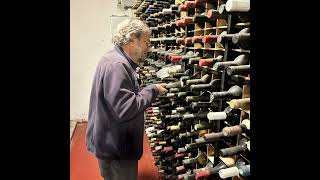
In this three‑hour Kosher Teruah podcast, host Simon Jacob interviews Eli Benzaken, owner of Castel Winery, to trace his personal odyssey from Egypt to Israel and the birth of Castel and its sister brand Raziel. The conversation weaves through the winery’s humble origins in a former chicken shed, the planting of the first vineyard on rocky soil in 1988, and the evolution to high‑density vines and wooden tanks suited to Mediterranean varieties (Syrah, Carignan, Mourvèdre, Grenache, Roussanne, Viognier, Chardonnay). Benzaken explains his winemaking philosophy—favoring blends over single‑varietal wines, extensive barrel aging in traditional French oak, and the meticulous hand‑crafted barrel room. The dialogue delves into the development of a non‑vintage sparkling wine program, the use of 600‑liter barrels, and the technical steps of fermentation, cold‑soaking, and disgorgement. The interview also covers operational challenges: the impact of the recent war on sales and staff, financial constraints, lack of government subsidies, and regulatory hurdles for small Israeli wineries. Benzaken shares his innovative irrigation regime, the shift toward organic viticulture, and plans for olive‑oil production. Throughout, he reflects on resilience, Zionist motivation, and the broader role of wine in Israeli society, concluding with lessons learned from decades of building a winery against adversity.
Chapters
Welcome to The Kosher Teruah. I'm Simon Jacob, your host for this episode from Jerusalem. Before we get started, I ask that wherever you are, please take a moment and pray for the safety of our soldiers and the safe return of all of our hostages. The following is a conversation with one of the most respected personalities in the Israeli wine industry, the owner of Castel Winery, Eli Benzaken. Eli was originally very reluctant to participate in this podcast, as I'd invited him just as the war broke out. The extreme violence directed towards our women and children really mentally impacted everyone here in Israel. and it was hard to focus on anything else for weeks. Eventually, he came to the conclusion that life in Israel must go on, and that delaying was only playing to the terrorists' ultimate desires. Born in Egypt, Eli's journey and experiences finally led him to Israel. His adventures here could easily be serialized into a blockbuster movie. Of note to me was that even though he has an exceptionally driven personality, his path through life has been surrounded by misadventures and negative outside forces. But at the same time, it has been a step-by-step successful progression of being in just the right place at just the right time. We toured the old Castel winery, which they have now upgraded into the home winery of their sister brand Raziel. We continued stopping to taste many of their latest wines in the midst of development. We were also treated to a look into the progress of their sparkling wine adventure. Eli, the consummate showman, wowed us for over 3 hours on a morning after having outside guard duty the night before. I'm incredibly thankful to him for his patience and openness in our discussions, and especially his dedicating so much time to us. If you're commuting, please focus on the road and enjoy. If you're home, please choose a delicious kosher Israeli wine, sit back, and listen in on a truly interesting conversation with this exceptional leader.
Well, here we are, uh, in the old Kastel.
First of all, thank you very much for agreeing to be on the Kosher Terroir podcast. Thank you.
Well, you know, I hesitated very much because it was, uh, your invitation came, uh, the war has started.
Yeah.
And I It was hard for me to— in Hebrew, litnatek— to get away from what's happening and think of other things.
I know you were very reluctant because of the timing and because of the war.
Yeah. Now, that changed my mind a little bit.
Okay. Baruch Hashem, thank you.
I think we have to prove that it will not disturb our everyday life, that we have to carry on. So, the premises here is— I don't know if you've ever been before.
I've never been. I've never been to—
This is the first Kastel.
This is the first Kastel.
This is the first Kastel. If you look at the low roof, this is the original structure. Of the chicken shed.
Wow.
Which was like this until the end there, and also here. Here you can still see the pipes. We built this in '70, spring '73, as stables.
As stables?
Stables. We wanted We wanted to have a riding club here. And you see, you saw Fear.
Yeah.
His father and I built this. Wow. And in the end, the war came and we were away for 6 months, both of us. And there was no more money to feed the horses. They had to be given away. And that was the end of the horse adventure. Later, this became a chicken shed.
This was after the restaurant in Jerusalem?
No, no, no. This is before. We're talking '73. We're talking '73, we're talking, uh, '74, after I came back from the front. And, uh, no money, certainly not to buy any meat, right? And 3 children, uh, the youngest 1-year-old and the oldest 4. And my wife selling, uh, uh, Tupperware, and I giving English lessons and bridge lessons. And, uh, until '75 when I got a job in Kibbutz Suba in a new hatchery, uh, Our future was uncertain.
Wow.
I, I came from Egypt, not to Israel. I was born in Egypt.
Your family was from where? They were Halabim? They were—
No, from my father's side, Morocco. His father was Moroccan, from Tangier.
Okay.
Not from Tangier, from Tetouan. It's a Spanish enclave in Morocco. And, uh, and his wife, my grandmother, was from Damascus, not, uh, not Halab, but Damascus. And the Mawas family. And, uh, we were planning— my father was— I am an only child, and, uh, The war for us stopped us. Like, after— we were planning more. In fact, we made 3 in 34 months. Wow. But the war and the financial situation we were in after the war prevented us from thinking of any more children. I came to Israel I am the only one in the family who came to Israel. My father was an amateur Zionist, and I heard a lot of stories about how proud he was of Israel. But then, but then we, when it was time to go anywhere, it was Australia. And at the last minute, he got a job in Italy in a firm he was representing in Egypt. So we went to Italy. My mother was Italian. And that's it.
Wow.
So I came to Israel in—
what year?
In '70, September '70. Actually, it's very Interesting. I don't know, you know, some things are there to make you ask questions, but you don't know where to look for the answer. I left Egypt on the 20th of September '58. On the 20th of September '70, the Soukhoulout put me on a boat from Marseille Israel. To Israel. That is, I did exactly the trip in the other direction. Eitan was born in Jerusalem, May 14th of May, 14th of May '71. And for the 14th of May '71, in the Jewish calendar, was Yom Yerushalayim. Wow. Now, we have— I have other dates like that. I was born on the 18th of September. It was Rosh Hashanah. My son Ariel was born 18th of September, Yom Kippur. We covered all the holidays. All the holidays. Wow. So anyway, I came to Ramat Raziel in '71. I realized that I wanted to live next to the land, to have real roots, to have a house that will last generations. I became a restaurateur. Which saved us financially. Suddenly we had money.
Baruch Hashem.
And we did it with the house. It was a mistake. We should have taken it down completely and built a new house. But it, you know, they call them sukhnut houses. They were built standard building chip. Uh, in '88, I planted this vineyard.
So this was the first vineyard?
This was the first vineyard. Wow. It's, uh, it is, uh, on a plot that is very, very rocky, very hard rock, and I couldn't plant any other trees there, so because it was so not rocky in the sense of stones, really flat rock, right? So I got— it was about 20-30 centimeters of soil. I got a, a bagger to, to break the, the rock in the rows, right, so that the roots could get through. And this is— from this came the first Castel Grand Vin in harvest '92. If you go back and visit in Yad Hashmona, there is a film, a video showing the first harvest.
Wow, wow, wow. I saw it last year.
Yeah, it's a— it's a going for one year already.
So who already— these are so beautifully trained, they're unbelievable. I mean, who— you already learned how to do the vines, to train the vines and what have you?
These have been replanted.
Okay, but these are just amazing anyway.
Yeah, these are being replanted, and this is very unusual, you know. These are, uh, a thousand, uh, vines per hectare, per dunam. Wow, that is very, very high density, right? Uh, in Tsuba, we are the only ones in Israel probably who have high-density vineyards. Uh, in Tsuba, in, uh, we planted in, uh, in 2002, um, high density, it's 660. Wow. Plus Bedouin. We have come to the conclusion that it's not really improving very much. It is true that about 440 is the best in Israel.
The ideal.
The ideal in Israel.
But this is how many?
This is 1,000.
Wow. No, that's— I'm looking and it's like so—
And very low also.
Yeah.
Okay, but on a very small plot you can do it. We have renewed all the winemaking here, moving to wooden tanks.
Wow.
Which are more appropriate to Mediterranean varietals. We do Syrah, Carignan, Mourvèdre, Grenache. And of course, we have some big tanks for blending, and we can taste something here. Very cool. Sadia, bouteille de Villa Loucoussot, Télano-Liton pour monsieur.
These come from where?
From France.
These come from France.
These are very expensive, you know. They only last about 10 years.
You know, I'll tell you something. I have always been unbelievably impressed by your— by the new winery and the barrel room. You could almost eat off of the floor of the barrel room. It's so clean and so well kept.
Once Adam Montefiore wrote, uh, that I built the two most beautiful, uh, wineries. Uh, no, barrel rooms in Israel. Yeah, there's one here.
Yeah.
And the one there. This is a rosé.
This the rosé.
This is not the rosé. This is a rosé made from urved. What?
This is my favorite to taste rosé, but I haven't ever tasted it from a wooden barrel. I've only tasted it from steel.
This is, you know, this is the Raziel rosé. This is only from Mourvèdre. This is only from Mourvèdre.
Wow.
It's not blended. It will be blended. You know, these are— this is a wine that is fermented in barrel, not here fermented. You'll see the— in 600-liter barrels, big barrels. And now it is here and also in the barrels down, and it will be bottled around May, June. This is the Rosé— will be the Rosé 23.
Yeah, I can't spit it yet. It's too good. It already, it already really has the characters of a rosé.
It's just—
this is my, well, favorite way to taste rosé.
So here, uh, here we make, uh, the wines, and, uh, it used to be all stainless steel tanks here. Yeah, in fact, the easiest— the easy things was to, to stay with the same tanks and, uh, and do more. Uh, in fact, the easiest thing was to make more of Castel here, right? But we decided to do new things. So, uh, and, uh, and you know, it is not like I don't like to talk about other wineries. But what is done usually is that a winery would have different varieties and make different wines of different backgrounds. And we in Castel were Bordeaux—
Totally.
Focused because when I started in '92 and I— or '88 when I planted the vineyard next to the house, I— for me the only wine I really knew and I really loved was Bordeaux. And the white is Chardonnay.
Between those two.
But in between those two, Chardonnay is for me is the Reddest of the white wines.
Yeah, because it's full.
It's full. It ages well in barrels. It's, yeah, it's— I love Chardonnay. I have this, the story I love to tell is my first Chardonnay. I was in a gastronomical trip with my wife. In France. And we go to Burgundy, to the town of Puligny. And there is a restaurant there, 2 stars. It's November. It's really empty. We order the food. And when we get to the wine, I said, what is the local wine? We're talking about 85. I'm still far away from wine. And she says, "Pérignon Montrachet." And I said, "And what color wine is this?" Wow.
Okay.
And she says, "White." And I said, "Well, bourrarets." You know, like— and I feel So ashamed, I said, okay, I don't like white, but I'll order a bottle.
One of the best whites in France.
And, you know, a bottle for then, it was about $100.
Right.
But the dollar was very strong and the franc was very low then. And when I tasted it, I had tears in my eyes. I told my wife, You know, if I didn't know the color, I would be sure it was a red wine. So this is how I fell in love with— but we only made, you know, we started really very slowly. We started with 2 barrels from the plot here in '92, bottled in '95. And in the meantime, growing slowly, like from 600 bottles to 2,000 to 3,000. And for 6 years, we only made Grand Vin. We didn't make other wines. Only in '78— '98, we added the Petit Castel. Yeah, in full force. That means differently. And a trial of 3 barrels of Chardonnay. So really, we— and then we stayed for— with 3 wines. We are talking of '98. 2009 is the first rosé. You know, there's a lot of talk about new wines.
Yeah.
And, uh, okay, it's fun, but It's fun, and for people looking for their place in the wine industry and so on, all this is really the seder. But you cannot build an estate like we have with playing around. People like to ask, "And what's new?" And I said, "The new vintage." You know, I'll tell you something.
I only started drinking Castel in 2002 and a half. In 2002, half of the run was kosher. So that's the only time I drank it. And from then on, I have some 2003 Petite Castels that people said, no, Grand Vin, that's good, but Petite Castel, it'll never last. Unbelievable bottles. They're just fantastic.
I'll let you in on a secret.
Yeah.
We grow our own grapes, except for the vines we have in Kibbutz Zuba. All the rest we grow. Maybe we buy 5 to 10% from other origins. Mostly to check the sparkling wine we make in Raziel, it's totally not from the region. It's from the Golan Heights, from Barom Golan, 1,000-meter altitude.
How high is it here?
Here it's 700.
Okay, because it seems very high.
It's 700.
Yeah, okay.
But we talk about the terroir here. Maybe afterwards.
Right.
Well, no, we are talking Petit Castel.
Okay.
And the aging capacity. Because we grow our own grapes, we can produce really a lot of very good grapes. So, but the standard is always gets also higher and higher with time. That you would— and so, but in the end, when we taste the vintage before blending and decide what will go in what, we mark them with A, B, C. And the number of A wines, because they're all put in barrels separately. You know, it's not every plot is put in barrel as a plot, as a tank, as a plot. And we keep them like this until May the year after. So when you have too many A wines and you cannot flood the market with Grand Vin and also keep the Grand Vin for 2 years for a second year. In the barrel room. So there's a limit of how many barrels of sec— full you can keep from one year to the other. So really, there's not much difference. It is more Merlot than Cabernet. Usually it's more fruity, but with age potential. I can open I have a bottle of first vintage '98 if you want.
I won't drink it.
You won't drink it?
I'm sorry.
But it was not— we never worked on Shabbat.
No, you know what, I'll tell you something, you could convince me.
These are traditional Burgundy barrels. We use only traditional style barrels. They cost a little more. More, but for the aesthetics. So we are now in the sparkling wine, sparkling wine operation.
Okay.
It used to be the Chardonnay cellar of Castel. And we have transformed it with, as you can see, little tanks.
Yeah.
Little tanks. And because we have many wines, for example, this wine is a blend with wines from 2016. This is also '17, '18 in it and so on. This one is Chardonnay from '21. Here we have also Pinot Noir. This is a Chardonnay from '20. This is this year Pinot Noir and Chardonnay blend. This is this year's wine. And what you have in the barrels is all Chardonnay for sparkling, not Chardonnay for—
For the sparkling, not for the sea.
Yeah, not for the sea. But there are sea old barrels.
That's why they have the dates on them from then. Okay, that's— I'm figuring it.
Okay, they first started working in 1917, right?
Right.
So they are 6 years old. So we, we start with the blend, uh, the oldest blend we have.
So I just want to tell you one other thing that I noticed in the bar— in the, in the barrel room. Most other people who have barrels put them on metal racks.
Yeah.
Not only is every bottle, is every barrel absolutely perfectly aligned, but they— you do it with these wooden blocks, which must be an unbelievable amount of effort to get them exactly aligned. And it's just, it makes the room look amazing.
It's a traditional handwork. You can't Look at that color.
Can I just say, I can go on record because I'm not the official podcaster, your Blanc is absolutely my favorite white wine in the world. Absolutely my favorite.
You know, you know, in France, uh, they pour back after tasting, if they have wine left, they pour it back in the barrel. So this is, uh, our oldest blend. When we make the non-vintage sparkling, we take from different vintages. This is '21. Salty.
What?
It's always salty. '21 was a particularly good vintage.
'20?
Yeah, in Marondolan.
The 20 Petit Castel is absolutely my favorite vintage. Have you had, have you had the 21 yet? Because I had it on the plane and it was spectacular also. The 20 was just like—
Petit Castel can age as much as Castel. And, uh, you know, as I say in Hebrew, Yeshanu Kabbalot. We have, uh, receipts for that. So this is this year's vintage, uh, Chardonnay from Meron Golan. Most of it will go into the— this year's bottling of sparkling wine.
This is super approachable. This is amazing.
Nice.
It really is nice.
So this is previous bottlings of sparkling wine. They are on the lees. Yeah. Every 6 months we move them from one place to the other so that they mix a lot, so that the leaves can mix again. And we still have, you know, we make every year 3 cuvées. One is non-vintage, We make non-vintage, rosé non-vintage, and a vintage wine, a vintage sparkling. The first one was 2018, and it is still here. We haven't released it. There are only about 1,100 bottles of it, and Ophir says by the time we want to release it, there won't be any left because we taste it. So you can see—
yes, wow, you see the— if you go like this, you see it will come back in.
These are the 600-liter barrels, twice the size, yeah, 3 times nearly. And it is— we ferment in it. And we have pipes, flexible pipes we put in.
Yeah.
During fermentation with cold water, that means we can control the temperature of the fermentation. And in fact, all the wine, all the rosé and all the sparkling wines undergo fermentation in these barrels. Then they're taken away.
I was never here before. Wow.
You know, when you came in after the gate on your right, the is, uh, there are, uh, olive trees. Yes, they're on top of that. Wow, wow. So these are, uh, uh, our— we use them to ferment. For example, all the Chardonnay for the sparkling wine was fermented here, but it is being aged there. After fermentation, it went there. And you will be the first, uh, uh, not from the family or, or the team, yeah, to taste our white, first white from Brazil. Wow. First one from Azial. It's, uh, 85% Roussanne. Upstairs you tasted Grenache and Syrah.
Yeah.
And a little Mourvèdre.
Yeah, this is the Mourvèdre.
This is another Mourvèdre.
It's beautiful.
We did the We were not able— we didn't have enough tanks to do it separately. So 75% of the wine, it's Roussanne, by the way.
Yeah.
Roussanne with a little Viognier.
Wow.
And so what we did is—
you're really playing, you're having a good time.
I know. 75% is without malolactic fermentation, right? And 25% did malolactic fermentation.
You could be a traditionalist, but this is an incredible, you know, scope of experimentation and, you know, beautiful wine. So, kolakovo.
Wow. By the way, in this room, you can see there the stack of wood on your left after the barrels. These are what the French call pupitre desks. In these, you turn the bottles of of sparkling wine in the traditional method by hand to get the lees down. Well, so soon in February, March, these will go away and the tables will be here. Yeah. So this is the first Rousanne.
This is lovely.
No, this is, uh, on the level of, uh, of Chardonnay traditional. Uh, it's, uh, uh, in wood, not, not in small barrels but in, uh, 600-liter barrels. Batonage once a week. So here, as you can see, we have Bordeaux barrels which are— which we get from Castel because we don't want to have a new wood here. These are 18, 19 barrels. That means they are 4 or 5 years old. But slowly, slowly, we are getting getting the big barrels. That means, um, the first year the vintage is put in small barrels, uh, the second year it goes into large barrels. Uh, in March all this will go up, the big barrels of, uh, '22. '21 is already bought but not— this will go up and, and 23 will go into it. So this will be, this will be bottled much cheaper, kept for 6 months in the bottle.
And then so again, this is the 21, 22, 22, 21.
It's already bottom, but not—
Okay, the 22, right. He said the 22. I love this experiment.
Well, you see, our experiments are large-scale experiments.
No, but it's also—
But yeah, we— We have to, in my opinion, people have to decide what they want to be. Of course, it is not fine. For example, my consultant winemaker tells me you have to decide whether you are in this wine Northern Rhône or Côte du Rhône. I don't— I have no answer, but Definitely there's a style that— of wine we want to make, and we put all our efforts, you know, from the beginning. Castel has never cut corners, and even when we didn't have money and we were on the verge of of bankruptcy, we bought the new barrels. So, so, and in the long run, it's proven itself.
You have to believe in yourself before other people believe in you.
Yeah.
Even though sometimes you can have nightmares.
Thank you. This is the equipment for, for the sparkling wine. It's crazy. In Europe, where people are producing sparkling wine, small producers can have people who Their job is to give you a service, you know, they come with a truck and, and they do the disgorgement for you and so on. And it's really pennies. The equipment you can see here is €100,000. Wow, wow, wow. So really, even when we play.
It's, yeah, it's an investment. It's a huge investment.
We put all the, all the best cards, all the jokers in our, in our hand. And then if we fail, we don't blame the equipment, but only ourselves. This is your This is a collection of some Israelis, some from abroad. Here is a Witkin, for example. 12. Petite Syrah. Here are all the Castel '98 first vintage, Petit Castel. We have two Philippe here, Ramat Angolan '83, first vintage.
I'm sure it's still good. It's crazy. That's the first vintage?
First vintage of Matagolà. Claude Gatt, 2002.
Merlot, 2005.
It's time to, to open these bottles.
This is what you call it. This is the old Carmel, 17 '79.
This was a huge—
this was one of the best vintages. The '76 was—
we finished the '76.
You know, I opened a bottle of the '76. I finished the '76 and the '79s, but I opened the bottle of the '76 with Jay Buchsmann.
Yeah.
And I said to him, you know, I found it in my cellar, I'm sure it's not good anymore. And he said, let's open that up, that's supposed to be very, very good. And it was excellent. The other two bottles that I had were terrible, but that one bottle that we opened were superb. Oh, this is Essai de Chêne, a 2000. Wow, I have a 2000. Wow, and these are all your big bottles, '97s, '96s, '97s. Wow. Amazing. So is this the width of a barrel?
Sorry?
Is this the width of a barrel?
No. In its length. The width of the barrel, not the height of the barrel.
Wow.
And these are, you know, with trolley.
Yeah.
Every single barrel you've seen there has gone through there. The big ones don't come through here. We have a hole in the ceiling here with a winch. They're taken down one by one. Sorry not to be immediate receiving you this morning. Why? You came early.
I came early.
That's okay. And I had got I had guard duty this night.
What?
I had guard duty.
Okay.
Do you want to go up to the house?
We can. Yes, I would love to. Let's go.
Hopefully this year we'll make olive oil. We have— these are trees that I planted here about 10 years ago. They were already 25 years old.
Wow.
They came from Amushav, not far away, Misilat Zion. They wanted to plant a vineyard. And in Israel, you cannot destroy an olive tree. You have to find somewhere where to replant it. So I bought them for very little money. But they were Manzolino. It's an olive to eat, not to make olive oil. So 2 years ago, we grafted them all with Souri olives.
Yes.
By the way, you know, Souri is not from Syrian.
Okay.
It's from Tzor.
Oh, interesting.
You see this rock here?
That's what's underneath all of this.
All that was like that. Wow. So I couldn't put any fruit trees. You know, I had no intention really of making wine, really. I had no dream or— and When I couldn't plant anything else except for vines here, I said, okay, vines, but I'm not going to eat all these grapes.
Right.
So it has to be for wine. So I planted Cabernet and Merlot. I planted Cabernet first, as they plant in Israel. 3 meters by 1.5 meters between vines. And then I said to myself, anyway, you're not going to go into this small plot with a tractor. It will be all handwork. So in between the rows of Cabernet, I put a row of Merlot. And I harvest them, and I had no idea what is, you know, the right maturity. And we harvested them together, the Cabernet and the Merlot. And it came out a wine surprisingly good. Wow. When I bought the farm, here was the chicken shed. And it was all in wood and asbestos roof. And Shimon Zal, the father of here, and I, we dismantled it. We built the frames from the— of what was supposed to be one day a stable. And to adapt all the asbestos we had here. I cut them with disc for days. And then to think now what we know about asbestos and what we didn't know then. Luckily went through it without any damage. Prashant.
So sorry you weren't able to live the dream of the horses. But thank you.
You know, it's in my DNA. I like challenges. The same about the sparkling wine.
Yeah, you have to love challenges to take on sparkling wines.
You know, this is incredible.
Yes.
How, how they made this, you can't really see it. Yeah, maybe you can. Yes, they take, they took, they came, the Arabs, they came with pieces of bark of the, of Suri.
Yeah.
You know, with the eye where potentially you can have a shoot. Here they cut the same size of the bark. They put one, the new piece of bark on it. They put a— they wrapped a film, you know, plastic film on it for a month until it was sure that it's taken. And then with time, you know, it's growing. You can see the cut here.
Yeah. Wow. Yeah, right here, all the way down.
Yeah. But we have to go through to, for example, this.
To prune those back.
Yeah. This does not belong. All this.
Yeah, that's the old growth. That's the growth coming out of the original tree.
Yeah. Yeah, we can sit outside also, wherever you'd like. Wherever. Maybe outside.
Let's sit outside. It's good.
Uh, did you get the book?
Not yet. I'm going to get— I'm going to buy one. I'm going to— Toda, toda. I was going to go by the winery to buy it. So thank you. It's amazing.
We can go through the kitchen and outside.
You have the right person write it?
It was obvious.
What?
For me, it was obvious who will write it. Uh, what would you like to drink?
I'm okay, I'm okay. Um, you know what, uh, what do you have that's open?
I know, I Nothing is open, but I'll open it for you. I have in the fridge a sparkling wine.
Yeah, let's— I have— yes, yes, I have sparkling wine. I have some of your sparkling wines as well, but I have— I would love it. Let's have some sparkling wine. That's fine.
And I have also a bottle of sweet muscat. Have you tasted sweet muscat?
I have. I have. I bought it at the— the only place you could buy it is at the winery when I bought it. So I bought it from there because I have, I have children and a wife. I have children. My wife has got a good palate, but my children are all— they like sweet wines.
Not all.
But I like it as well.
Not all.
Some of us know what's good, you know. Yeah, my son is— my son is my wine. This view is just incredible.
Yeah.
Wow, he does have enough room.
Wood. Oh man, you see how much you went in? It should go— it should be in about this length, right? So our thoughts with the— our soldiers, how do you feel? And our kidnapped brethren. And, uh, may, uh, the government has the dvuna to find a way out. Amen. Solve all the problems we are facing.
Has there been an impact on the winery from the war?
Now?
Yes.
Yeah, of course. We didn't sell a bottle for, for a month.
Most of the distribution goes through, through restaurants and things like that, or no?
Also. Okay.
Don't worry, I'll let you eat a little bit.
For what it's worth, they're good, the They're made in Castel.
We try. We buy bottles of wine. The problem is that they have to— the wine shops have to buy it from, you know, from the winery also. So we had on Shabbat, I had 2021 Petit Castel that was beautiful.
Thank you. Look, we did a lot of charity work. We have a lot of staff in the army, you know, soundbound, right? Our vineyard manager, she's an officer in the army also, so she was taken away. So, and our 3 Thai workers asked to leave, so we were left with nobody there. And, um, by the way, how about the wine?
It's delicious. I already tasted. It's crisp and fresh and wonderful.
What most amazes me is how small the bubbles are, and this is a sign of a good sparkling wine. Now you can feel them on your palate, on your tongue.
It's, uh, what about you personally? How are you impacted by it?
Look, I am a Zionist. I came to Israel out of Zionism, you know. I took, uh, my wife, uh, who is not a Zionist, and, uh, I convinced her, uh, uh, to follow me. We had already a daughter, 10 months old. We came to Israel, um, Within a year, I was enlisted in the army for 3 months because I had 2 kids already. I was 27 years old. I managed to do 2 miluim before— one training and one miluim— in the Golan Heights before the war. The war, I was 6 months in Sinai and what we used to call Africa. That means the other side of the, of the canal. Without any second thoughts, like, that this had to be done. But what's happening now, it's worse than Yom Kippur. I volunteered. To officer's course. I was in artillery. I was discharged major. There is a lot of land in danger in Israel of before '67, like all the Old Galilee, all the Negev, all what's happening with The Arab population is majority in Galilee. The Negev is not ours because it belongs to the Bedouins.
Yeah.
And we are looking for new ventures which will not resolve the problem of us living with the Arabs. It will not resolve. They, they're here to stay. We are here to stay. So what do we do now, you know? And, uh, so it's very sad for me because I am old school Zionist, uh, you know, left-wing, um, kibbutzim, moshavim, working the land. Today we don't We get zero help from the government. We lost 10 million shekels on a fire in '21. We got zero money.
So I don't really honestly understand that myself because it's ridiculous. This is a huge industry in Israel and they need to support that industry because Every other country is supporting it. In the United States, you can buy a bottle of Spanish kosher wine for $10. How in the world can you ship a bottle of Spanish kosher wine, make it, and it's not bad wine, and ship it and deliver it and have the distributor make a profit on it at $10? It's like crazy.
That means it was sold for $2 or $3, right, at the winery. All the Europeans, and I have a lot, they come to visit, right? They, at one point, you know, they see the winery in, uh, the Castel winery, the other Shponay, and they said, uh, how much help did you get to build this? You know, because if I would have built, if I would have built it in, uh, in France, let's say, between 25 to 35% subsidies I would have got from the state or from Europe, right? You know, every tractor you buy, uh, you, you get a subsidy on it, and we don't get anything, you know. And this is the main reason, you know, why, why making in Israel is expensive, because people say, ah, The kashrut is expensive. The kashrut is not expensive. You know, anyway, I needed a staff, a winemaking staff. I am limited in my choice by religious Jews, but I have not— I am, and I'm very happy with them, by the way. I have fantastic staff. I think our head, what are we, 22?
23.
Uh, so I think, uh, um, in China, I can't— it's so long, I can't remember how long. It's over 12 years. A brilliant mind, intelligent, very good memory, uh, developed to be a very good taster. He's become a winemaker. You know, he's not a mashgiach, he's a winemaker. And we have David, who lives in Tel Aviv, comes with a bicycle, and he manages all the barrel room. You know, it's 1,300 barrels. And all by hand. They, as you said, you know, there are no racks, no forklifts to put them in. Every barrel is emptied with a pump in its place, put on a trolley, taken to the washroom, which you cannot see. The washroom, next time you come, I'll show it to you because it's my my invention of how to wash the barrels. And every barrel is taken by hand, emptied of the leaves, washed, steamed, and brought back. And there are two times a year when most of it happens, and it starts in May And the second time is during the winemaking. And you know why I like to have barrels? It's because I like to grow my wines separately, every parcel in the vineyard, which is also a variety. So I have my Cabernet from Samer Bech, thyme, betzuba. Wow. And it will go into a tank. From the tank, you never know exactly how much— you cannot put it, the juice or the free-run, into another tank because it will not be full. But when you have barrels, so you can have exactly— and then you can have all your pressed wines separately and It works. So, and we, we do tasting. We do tasting. You know, it's the name of the vineyard, the type of vines, and, and how many barrels of it you have.
I've seen the pictures of you when you do the blending. Wow. That's like— people don't realize how much effort that is.
I know somebody said on your podcast, winemakers live in fear. The fear of difficult weather during the growing season, and then the fear to have missed the right time to pick. Or to have picked too early or too late. And then fermentation can be stuck, successful fermentation, and then the quality of the, the quality of the wine. And, and, uh, and until the day you put it in bottle, and it is not that really the fear ends, but then you know you can't do anything about it anymore. A wine critic who gave me a low mark on a wine, on a Cagranvin, and then a few years later asked to taste the wine, all the vintages. So, and he gave me 2 or 3 more points. Of the second tasting. So what the shit, you know? My job is to make a wine, and once I put the cork in, I can't change my mind anymore. Why? His business is to know at the first tasting what is the potential of the wine and not have to taste it 5 years later and say, you know, got it wrong. Yeah. He doesn't say it.
Never would say that. I love your quote. Your quote is, "History will remember wines and wineries, not critics." Perfect. Absolutely perfect. Very true.
We don't do shows anymore except for the local, uh, uh, Maté Houda. We, we, we support from the beginning. We support, uh, the region. You know, we have the the Quartet, the Venice Quartet. And we support the region because the administration of the region since the '90s has supported wine, uh, wineries. All the wineries in, in the, in Israel, the small wineries, are, uh, breaking the law, right? Because the law doesn't— in Israel does not allow them to to make a winery out of their—
Out of what's called a flat of land.
Their sheds, which are empty anyway. They used to grow chicken and they don't anymore. And the local government has, although it has the authority to close them down, does not close them down.
Has looked the other way.
Look, yeah.
Just making some of the best wine in the world. Maybe, yeah, bootleg.
Yeah, exactly. So I really, I support them. I support the local authority and I, and we take part in their wine festivals. But, you know, wine shows are very expensive and it doesn't really help for the business.
It doesn't. You don't have enough bottles.
No, I don't know about that.
You don't need it for the reputation at this point.
Yeah, we don't need it anymore.
The only mis— the biggest mistake I made in my life was making Aliyah 50 years after wanting to make Aliyah.
For me, it was very, very clear and And simple, you know. As I told you, my father was an armchair Zionist. And in '67, I was at the University of Geneva. The Syrian students would say to us, you know, this time we'll throw you all into the sea. There were 3 weeks of not knowing what will happen. You know, from the moment Nasser asked for the UN to withdraw and close the Gulf, the Gulf of Aqaba. So I was supposed to get married in July '67, but the first plane that left Switzerland the day after the war, I I came as a volunteer. And 2 months later, my future wife came. Eventually we got married in December. But I decided this is where I want to live, and I'll come back. I'm back in '70. Parnassah was difficult until the Mamma Mia restaurant. Very difficult. I went from one job to the other. In agriculture and also in jobs around agriculture. The restaurant really gave us, changed us, our situation financially. We didn't become millionaires, but We became well off from poor, we became well off.
Why did you change then? Why did you decide to close the restaurant?
Oh, the restaurant went bankrupt.
Oh.
Well, it didn't go bankrupt in the sense that it was closed, it was not working anymore. And it was not working anymore because of the Second Intifada. Tourists didn't come, right? People didn't go to restaurants because the restaurants were blowing up everywhere in town, in Jerusalem. Yeah. So, so we were losing money. Also, the bank didn't want to recognize the wine stock as collateral.
And, uh, that's, that's really difficult.
Yeah. And, uh, so that was the end of the restaurant. And in a way, luckily, we had started the winery, uh, professionally in '96, because until '96, we, we, we, we were— it was a hobby. And so it's, uh, really very lucky that we had an alternative, although it was not still viable. And— but wine being a product that does not go to waste, and by 2004 we were out of it.
With all the adversity When did you realize that you were going to be successful? Was that the 2004? Or do you ever realize that you're going to be successful?
Look, I, I, uh, I'm a difficult person to convince. For example, the restaurant, I was, uh, put out of work in, uh, In the middle of 1980, I had an American friend from the Army who was a guide. We were making fresh pasta at home, and he used to come to eat with us. And one day he said, "If you open a restaurant, I'll put $5,000." That's what we did, and He was with us for 1 year. After 1 year, he went away with 10,000. It was a big success. So, but I— my wife was determined, convinced that this was the right thing to do, and I went along. I didn't have any gut feeling about it. And I went along with the winery. When Serena Sutcliffe wrote the fax to, in 1995, to Dalia Penn Lerner Zal, who brought her the bottle, saying that this was probably the best Israeli wine she ever tasted. But she also said something which very, very important, apart from the compliment and, uh, classic and a real tour de force in French. And, uh, but she wrote something very, very convincing for me. She wrote, uh, the terroir must be right, uh, the height, the clone, and of the grapes. This was very important for me. I'm not a religious person, but, you know, I live here and not in Ramat Gan.
Yeah.
And I have a plot of land and I am agriculturally minded. and suddenly, you know, it's as if I am in the right place at the right moment. And so we— at that point, I had a definite gut feeling that this is what I should do, because also of my background. Multilingual, cosmopolitan, very European.
What prompted, what prompted Raziel?
Raziel is because we had the winery. We had a winery. We had a winery, although as you saw, we, we invested a lot to change the the equipment, the tanks have become wooden tanks. But we had the winery and the choice was— the idea was to make something new. Usually wineries have, small and large, have different types of wines of different regions of the world. They make Cabernet, but they also make Syrah, and they also make Argaman, and so on. And Petit Verdot, by the way, I brought Petit Verdot to Israel, although hardly anybody remembers. But I brought it from Davis against the decision of the Ministry of Agriculture who bought a lot of— it was '96, '97— and they wrote a list of new grapes to Israel. And I said, where is Petit Verdot? And said, but if you— okay, if you want to fight and bring it, it's your decision. Decision, and I had to fight the Agenata Tzomeach, how to bring it. They said you can only bring it from Davis, California, and— UC Davis. Yeah, UC Davis, and I did. And so I don't believe in varietal wines, and even our Chardonnay, it's not called Chardonnay on the label. I believe in blends, and the Chardonnay is an exception. Uh, I, uh, I like blends.
Yeah.
And, uh, one— once I was at the tasting where, uh, the winemaker of Mouton-Rochin was there, and he was asked, uh, why, uh, you know, why why Bordeaux makes blends. And so he said, why should I tie my hand behind my back? You know, sometimes this plot is better, sometimes the other plot. This, the Cabernet, is very good this year, but the Merlot less, so I'll put less Merlot. And so I And I have a philosophy that a winery should not do too much. We, as I told you before, you know, for 6 years we did only Grand Vin. Then we did, in '98, we did the first Petit Castel and a trial of Chardonnay, which was— blew me up completely, you know. And I couldn't believe what I tasted. So the decision was to make also a white wine, a Chardonnay. In 2009, we did our first rosé. And '10, we didn't make because it was very hot and we missed the time to pick the grapes. But it's a wine we can't make enough of. My kids were against it. They said, you know, Abba, you taught us that 3 wines is enough, and now you come with a pushed wine, with a simple wine. And I said, but it's so good, you know, and our clients will appreciate this drink in the summer. And when we, we moved to, to the new winery, uh, we didn't want to make too much of what we already had, like Petit Castel and Grand Vin, and, uh, and we thought we should have an entry-level wine. The La Vie, La Vie Red and La Vie White, which is simple but very, very good value for money. It's, you can drink it every day. It's fulfilling. It's very fruity. And the Sauvignon Blanc in the La Vie White, in my opinion, is really For the money, it's one of the best. And so what do we do now? We do Sierra in Castel, like everybody does, and it is not in our school, so With the winery in Ramat Raziel being available, it was ideal to make new things, new varieties, and a new style wine. So we have the Raziel Red. The Rosé Raziel is also barrel fermented. You taste it. It's delicious. The new vintage. Yeah, it's a, it's a, it is a wine that, uh, it's not a light rosé. It's a really mid-body rosé with, uh, which will goes very, very well with food. We make sparkling wine, which is quite an adventure.
I don't know how in the world people get into that.
No, not—
I love it, but I don't know. It's such a— it takes wine and makes it 3 times as difficult, doesn't it?
Yeah.
Because you've got to ferment it, you've got to go through all the process, and then you've got to go through the disgorgement.
You have to ferment it twice.
Yeah.
If ever I do something, I want to do it completely. And I'm lucky that the family is accepting to make the investments. For example, you know, we have nearly 8 800 dunams of vineyards, all in more or less in between 650 and 800 meters altitude. And they're all on both sides of the highway. Two-thirds of them we are tending ourselves. One-third is in Kibbutz Uba. With whom I, I've been working since '97. And, and so, you know, from, from very early, you know, I told my son Ariel, the most important is to get our hands on, on land. Is very little very little available land in the— in the hills, yeah, very little because it's so stony. So, you know, it's, uh, look at the hill across the valley, you know, you can't plant anything there.
Yeah, it's all stones.
So, so, uh, but we, we, we, we succeeded with, with Malech HaMishan, Nevei Lan, And by the way, between here is the only vineyard I can see from my house, my vineyard. You see the antenna? Yep. You go down the white buildings.
Yep.
Under the white buildings, you can see— now for the season, it's gray.
Yes, but it's— I can see it. I can see the flat area.
This is the Mourvèdre. You have tasted.
Yep.
You have tasted.
That's it. Wow. What do you like the most about the business? What's always been the thing that's driven you in the business?
When I decided in '76— in '75, after Serena Sutcliffe wrote about all the compliments about the wine, I imagined something different of what I got in the end. So as I told you, I was not There was no dream and there was no goal. We were making a small amount of wine, 2,000, 3,000 bottles, buying grapes because the small plot was not enough. So we were buying grapes, making only one wine. Which is most difficult to make one, only one wine, because all what you make will go into that wine. You cannot say like we do today, this is not good enough for Grand Vin, it will become Petit Castel, and this is not enough for Petit Castel, it will become La Vie Rouge. So, you know, then whatever you got, you made. And then I read— then we planted first vineyard '96, and then the vineyards in Tsuba '97. And but my dream was, well, what I wanted What I imagined would be at the time, when I got that gut feeling that that's what I want to do, was that I will work about 6 months a year and 6 months I'll be able to travel around the world. It's a good dream. Yeah. The business is a 2-minute walk from the house.
Right.
And, you know, once the wine is in the barrel, there's not much to do and so on. But it's not that. You still have to sell it. And it has become a full-time job. But it's a fantastic occupation because you have everything in it. You have agriculture. And really, you know, it's not a— it's not a stam, it's not just a saying that wine is made in the vineyard. And wine is really made in the vineyard. You cannot improve good grapes or bad grapes. So, so really you have agriculture.
Yeah.
And, and, uh, you know, maybe we buy only 10% of the grapes we use. Uh, definitely we buy the grapes for the sparkling wine, and then the rest, uh, we have, uh, for example, we have Grenache planted, but it— and Carignan planted, but they're not in production yet, so we buy some. But the idea in the end is to use only our, only our. And, uh, and we learned a lot. We learned a lot about irrigation, uh, completely different from the irrigation done in Israel, or what we were taught to do by the Ministry of Agriculture instructors at the beginning.
What was different about the, if you don't mind saying, what's different about the irrigation that they were telling you that's?
We were taught not to irrigate until the growth of the shoots will slow down. And you can see it when it slows down. You know, the links between where the leaves are on the shoot are large at the beginning and become smaller and smaller. And that would be usually around June, sometimes even the end of June. And then to start irrigating. And then we saw in the vineyards places where the canopy would not grow. At its full capacity. So we started asking questions, and then we found a research in the University of Montpellier in France about irrigation. We, we saying exactly completely the opposite. The vine should grow without stress until very long, when the grapes change color. And so you have to keep them unstressed during that period, which will last until about July, depending on the variety. But, and then—
and then stress them.
And then stress them. Stress them to give them, first of all, a message: stop growing leaves and take care of the new generation, the babies. But to do that correctly, you have to do another operation. First of all, this is expensive because It's a little more water than what you used to give, one. Second, you have to crop all the time the vine on top because of the growth, because you're giving water at the time of growth, so that the growth is even more vigorous. So you have to crop. So it's more expensive to do that. But at the same time, you have to check the water potential in the vine. Which is— this is an operation we do every single parcel in the vineyard once a week. It's the job of 2 people, 2 days. In the week— 2 days because We do it in all the vineyards. And this gives you, by a method of trying to take out a drop of water, the first drop of water out of the stem of a leaf, how much vacuum you have to do to have to get that drop.
I was going to ask you how you do that. That's exactly— that's brilliant to use a vacuum to figure out how much water is in there and how—
So at the beginning of the season, you will have values of -4, -5. By the time of Verrezon, you should not be more than -9, -10. And then when you start irrigating again, You keep on checking, but by the end of the raisin, you start— you try to keep the vineyard at about minus— between -12 and -15. And this is— so practically, and until the harvest, we have our hands on the growth how much water and how much we give. And it's always— and also the weather, like this year, which was a very hot year, we were giving— we were irrigating much more so that the stress would be as small as possible. Now, We didn't have damage in the vineyard this year. No, no, no, no bunches have crippled themselves, dried up or anything. What we don't know about the '23 vintage is what did the heat do to the grapes. That means, okay, we lost acidity. It tastes fine now, but in the long run, we don't really know what really happened, what really has changed, maybe potentially.
But you can't just taste that and in the grapes and the juice that's coming out now?
We can't— we don't taste any difference now.
Okay.
But I don't know in the long run. Okay. We're very satisfied for the time being with the vintage. There's also, you know, we're investing really a lot of energy and money in our vineyards. We are in the process, we are in the 6th year, 6th year of conversion into organic grow, handling of the vintage of the vineyard. It is, it has been, it had been a preoccupation of mine for a long time, but We had to solve other problems before, like making wine, making good wine, selling the wine, paying back the bank, because we, you know, many people think we have partners in the winery. We don't. The only partner we have is the bank. And also, when we had to shut down Mamma Mia. All our debts were in the bank. We didn't have— we didn't owe a single penny to anybody except— we paid everybody at the bank, and the, and the— what we owed was, uh, we owed it to the bank. So, so first of all, you have agriculture in, in this business, which is very Very, very important. And you know, the Romans used to say that in every new territory they invaded, they planted vines. You know why? They planted vines to show the local population that they're there to stay.
That's a good symbol. That's a really good symbol.
So this is the first positive aspect of winemaking, winemaking as a winemaker and owner of a winery. The second is you're dealing— I'm not a chemist, but I understand a bit, you know, what's happening. Fermentation is something extraordinary. There's a lot of talk about spontaneous fermentation or whatever. You know, whatever yeast ferments your grapes do not come from the vineyard. The vineyard, the yeast that comes on the skin of the grapes is minimal, really. It's, it's in your, it's in your equipment, in your building, in your tanks. This is the, this is what you have as a natural local yeast. And, and, uh, and the way we, we, we ferment It's dangerous, but this is what we do. We cold soak the grapes for a long time, between a week and 10 days. Wow. And even with the very, very, very low temperature of about 6 degrees, it begins to ferment. It begins to ferment. With indigenous, in inverted commas, yeast. But then we put commercial yeast or industrial yeast, whatever.
Your selected yeast. Because it's not like just industrial yeast. You pick the yeast that you want to—
Yeah, and the yeast I pick has been selected.
Yeah, right.
This is the right word to use. And then what happens, in fact, we get the first taste of the indigenous, but we get the finish of the selected.
Yeah.
And I think this is part of the taste. This is not a secret. This is, you know, I have no secrets in winemaking. In my experience, winemakers have been Are you in a hurry?
No.
Winemakers have been very good to me all over the world. Everyone tells his— whatever he does and has no secrets. But because it's not like cooking, you cannot copy really because you You have another terroir, another climate. You can do the same thing and get different results. And in the end, I had to decide which kind— what made more sense to me to make wine. And this is what we decided. Very long, you know, it's rich people winemaking. In the tank for a week to 10 days of cold soaking, another 10 days at least of, or more, of fermentation, then alcoholic fermentation. So already we're in 30 days, and usually we go up to 40. Now, it means that those tanks cannot be used twice. In the season. In the season, right. That means it limits your capacity of winemaking. But we have found that the exchange between the skins and the wine in long macerations, it's as if at the beginning there is extraction from the wine extracting from the skins a lot, a lot, a lot, a lot. And if you, you would do, uh, you would separate them, then you will have more in the, in the wine than in the skins. But if you give them more time, the wine will give back to the skins because they will, they will try to go back into a, a balanced medium that not one has more than the other. And this is Castel, this is the time, the time in the tank. So all this part of the winemaking and the pumping and not pumping and what kind of pump and so on appeals to me very much. So two aspects are Already, and then you have the tasting with people and the exchange. Asaf Paz told you about his answer why we won't make peace with the Arabs is because they don't drink wine. It's exactly, you know, it's so important to sit around the table with a bottle of wine. And lately, a new friend on on Facebook who is Lebanese Christian winemaker living in France. And at one point he said, he wrote, no, nothing like a good wine to solve problems. And he said, this is exactly our problem.
I agree. I agree. I don't want to go against their religion, but I agree.
And then there is the art part, the choice of the bottle, the labeling.
But you picked the label.
I made the label.
I know, but the label you picked for Grand Vin was from the very beginning.
Yeah.
It's not changed. It hasn't changed. I'd like your meticulous attention and caring about all of the details. It makes a huge difference. You can taste it.
But maybe the most— the biggest, uh, challenge for me today, of course, apart from every year, you know, you finish a vintage and you say, next year we will do, uh, we learn from this vintage to do next this and this and that. Next year we'll do different from what we did this year. And, and this is full of expectation. And, and you start— you finish a vintage and you're already thinking of the next vintage and, and what changes you will do. So really, but, but, uh, the most important, uh, thing is, uh, challenge is the vineyard and, uh, And we are really, you know, the vineyards are our responsibility, they are ours, except for Tsuba, and with Tsuba our relationship is such that really they do exactly what we want.
This mirrors exactly what I heard at Flum. I know they're your partners in the in the quartet, but they're also, they're trying very hard. I think they're behind you as far as timing is concerned, but they're trying very hard to get into control of their own vineyards and their own destiny and their own future.
Yeah, they came a bit late on that, with that understanding, and it's difficult to find land. It's very difficult to find that.
I have one last question.
Yeah, sure.
Okay. You've been in this business for a long time. You've been in Israel for a long time. Are there any lessons that you've learned from it that you, I mean, you've been describing lessons all through this session, but is there any overall lessons that you've learned in in dealing in the wine business and dealing—
No, but I have another one because this podcast will be heard in other, all over the world. Yes. When I was a student at the University of Jerusalem, I was given a job by the Jewish Agency to the offices in Geneva were the central offices for Europe. And I don't know if it exists today, but there was a— Nuat Aliyah that I was organizing, they gave me to organize, Nuat Aliyah and the World Union of Jewish Students, WUJS, also. And the guy who gave me the— my boss was not in the office in Geneva. He was in Jerusalem, a religious Jew, Naftali Bargiora. Naftali— I have tears when I think of him. Naftali Bargiora afterwards His cousin's children worked for me at Mamma Mia. Naftali was Bamberger. Bamberger, Margiora. And he said to me, you know, if you want to succeed in Aliyah, there is only one way. You burn all your bridges. There's no—
So there's no going back.
There's no way back. You come and you have to make a success out of it. Because, and he said, and he gave me examples of lawyers, American lawyers, taking a year off from their partners and giving a year to give them a definite answer and then finding themselves in— in the impossible situation of what do I do now. And that's it. You know, we came here. It was not easy. I'm sure that thanks to my wife, who was the hero of the Yom Kippur War, she was left here for 6 months, 3 kids, 1 to 4, and, uh, and, uh, uh, 12 horses, uh, 2,000 chickens.
Wow.
And, uh, no, no driving license. She used to take the bus with the little one in her arms to town to have driving lessons, and she would put the— on the instructor's lap, the baby.
Wow.
And, uh, yeah, and we made it. I was lucky that we made it. It could— we could have also not made it.
I don't know if you could have not made it. You're, I'm telling you, you're, from what I've observed, your drive and your, you don't just let things go. You pick up everything that you see and it's important.
Yeah, to me it is important.
Yeah, no, but it is important.
But it is the machala.
It's an obsession. Yes, I know. But you know, without that obsession, it's very hard to get things done. Yeah, it's very hard to get things done. Thank you. Thank you very much for being on the Kosher Terroir. This is Simon Jacob again, your host of today's episode of The Kosher Terroir. I have a personal request. No matter where you are or where you live, please take a moment to pray for our soldiers' safety and the safe and rapid return of our hostages. And whenever possible, buy and share Israeli wine. I hope you have enjoyed this episode of The Kosher Terroir. It was exciting and informative for me as well. Please subscribe via your podcast provider to be informed of our new episodes as they are released. If you are new to The Kosher Teruah, please check out our many past episodes. Again, thank you for listening to The Kosher Teruah. The Kosher Teruah is also available on the Nachum Siegel Network at 6:30 PM New York Times Thursday evening and on the world-famous NSN app.










