Whats in a Nickname?
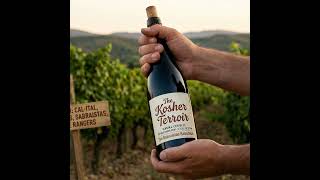
Solomon Simon Jacob traces wine's great rebellions—Rhône Rangers, Super Tuscans, Barolo Boys—and finds a kosher counterpart for each. He names the kosher sector's own uprising the Sabaristas, a movement led by winemakers like Shivi Drori and Gil Shatzberg that has no mainstream equivalent.
Chapters
Welcome to the Kosher Teruah. I'm Solomon Simon Jacob, your host for this episode from Jerusalem. Before we get started, no matter where you are, please take a moment to pray for the safe return home of all our soldiers, If you're driving in your car, please focus on the road ahead. If you're relaxing at home, please open a delicious bottle of kosher wine and pour a glass. Sit back and relax. April 15, 1989. The COVID of Wine Spectator magazine. A man stands against a dusty backdrop black mask across his eyes, cowboy hat pulled low, and in his hand, instead of a six-shooter, a glass of red wine. The headline reads, "The Roan Ranger." The man behind the mask is Randall Graham, a Berkeley philosophy student turned California winemaker who decided against every market signal of the 1980s that the future of American wine was not Cabernet, not Chardonnay. It was Syrah, Grenache, and Mourvèdre, the grapes of the Southern Rhône Valley in France. Grapes most American drinkers couldn't pronounce let alone buy. In the language of his industry, he was a heretic. That magazine cover changed everything. Within 10 years, Roan Rangers was no longer one man. It was a movement, a not-for-profit, a federation of rebels who had replanted California with grapes, France had nearly forgotten. And here's the thing nobody tells you about the wine business: it runs on nicknames. Cali Tal, Super Tuscans, the Barolo Boys, Gradistes, the Bordeaux Bad Boys, the Flying Winemakers, the Moselle Mafia. Young Turks of Rioja, In Pursuit of Balance, and The New California. Every one of those names started in the margin of a magazine article, and every single one of them marks a moment when somebody somewhere broke the rules. I'm Solomon Simon Jacob, and this is The Kosher Terroir. The show about the wines that live inside the laws and the people who make them sing. Today I'm doing something I've wanted to do for a long time. We're going to take a tour. 12 nicknames, 12 rebellions, from the Berkeley dropout in the Lone Ranger mask to the Tuscan aristocrat blending Cabernet into Sangiovese in defiance of the Italian government, to a man named Jean-Luc Tinouvin making 12 bottles of wine in a garage in Saint-Émilion that would sell for $1,000 a bottle. And at every single stop on the tour, I'm going to ask the one question almost nobody else asks. Where is the kosher version of this story? Because here's what I've learned after years of making wine and studying it: every rebellion in the mainstream wine world has a parallel in the kosher one. Sometimes we're a decade behind, sometimes we're running shoulder to shoulder, and sometimes in places you would not expect. Kosher winemakers got there first and nobody else noticed. By the end of this episode, you're going to know why two brothers named Weiss in Paso Robles are Rhone Rangers in everything but the membership card. Why kosher wine is structurally the largest garagiste movement on Earth. Why kosher Nebbiolo, a grape that almost nobody outside of Piedmont can grow, is being made right now by two California producers nobody talks about, and why a man with a medical degree from Brooklyn just might be the most important figure in the history of kosher Italian wine. So pour something Anything. A Syrah, if you've got one. You'll understand why in about 6 minutes. Settle in. This is the parallel universe of kosher wine, told through the nicknames that built the modern industry. To understand the Rhône Rangers, you have to understand what California wine looked like in 1983. It looked like Cabernet Sauvignon, and it looked like Chardonnay. That was the deal. Napa had won the Judgment of Paris 7 years earlier, the famous 1976 tasting where California cabs and chardonnays beat the French at their own game in a blind flight. And the entire industry, from Sonoma to Santa Barbara, had decided that the path forward was paved with exactly two grapes: plant them, oak them, sell them, repeat. In the middle of that consensus, a young man named Randall Graham walked into a vineyard in the Santa Cruz Mountains with a philosophy degree from Berkeley, an obsession with Burgundy, and a plan to make great American Pinot Noir. He failed. He couldn't get Pinot to do what he wanted to do in that climate, in that soil. So he did what wine writers love to write about and what most winemakers will never actually do: he changed his mind. He looked south, not to Burgundy, to the Rhône Valley. To Châteauneuf-du-Pape, to the 13 grapes the French had been blending for centuries in the southern Rhône: Grenache, Syrah, Mourvèdre, Cinsault, Counoise, and Vaccaresse. Names that in 1983 almost nobody in America had ever heard of. In 1984, he released the first vintage of a wine he called Le Cigare Volant, the Flying Cigar, named after the 1954 ordinance in Châteauneuf-du-Pape that— I am not making this up— formally banned the landing of flying saucers in the village's vineyards. That's Randall Graham. That's the whole man right there. A serious winemaker with a sense of humor about the seriousness. He was not alone. Down in Santa Barbara County, a former wine retailer named Bob Lindquist had started a label called Coupé in 1982 and was quietly making some of the first serious American Syrah anybody had ever tasted. In Edna Valley, John Alban was about to plant the first commercial vineyard in the United States dedicated entirely to Rhône varieties. In the Sierra foothills, Steve Edmunds— Edmunds St. John— was making Mauvèdre in a state that barely knew the grape existed. These men did not know each other yet. They were working in parallel. And then in April of 1989, Wine Spectator magazine put Randall Graham on the COVID in the Lone Ranger mask, calling him the Roan Ranger, and the parallel lines suddenly intersected. Within 3 years, the They had organized a festival in Paso Robles called Hospice du Rhône. Within 5 years, they were a recognized movement, and by 1998, they were a nonprofit. The Rhône Rangers, plural, with bylaws and a board and requirements that members' wines be made from at least 75% of the 22 recognized Rhône varietals. And here is the part of the story that matters most for what we're about to do. The Rhône Rangers did not just sell wine. They changed what California was allowed to be. They proved that an American wine region could have an identity beyond Cabernet and Chardonnay. They created the permission structure. That's right. That's the right phrase, permission structure, for everything that came after. For Cali Tal, for the natural wine movement, for the new California, for every winemaker today who plants something weird in the Sierra foothills and tells the market, "I'll figure it out. I'll figure what to do with it." That permission structure is what I want you to hold in your head for the next few minutes. So where is the kosher Roan Ranger? The honest answer is he has two first names, and he shares them with his brother. Shimon and Gabriel Weiss, two brothers who in 2009 looked at the kosher wine market which at the time meant probably Israeli Cabernet, French Bordeaux, and a lot of wine that tasted like it had been made primarily to be kosher rather than primarily to be wine, and decided to do something different. They went to Paso Robles, they went to Santa Barbara, they sourced fruit from the same vineyards the Rhone Rangers had been sourcing from for two decades. They named their winery Shira, the Hebrew word for song, and they named their flagship Rhone blend Coalition. If you have never had a glass of Shira Coalition, I want you to understand what it tastes like because it matters for the argument I'm making. It is a wine of blue fruit and crushed pepper, and a long, dusty finish that reminds you that you are drinking a Central California coast. It doesn't taste like a kosher wine that is trying to be a Rhône. It tastes like a Rhône that happens almost incidentally to be a kosher wine. That's the entire revolution in a single sentence. 300 miles north in Napa Valley, a man named Jonathan Heidu had been doing the same work in a quieter register. Heidu came up as the assistant winemaker at Covenant. We'll get to Covenant in a minute. On the side, under his own label, Heidu makes some of the most serious kosher wine varietals. Being made anywhere in the world. Grenache from old vine vineyards, Syrah from Napa hillsides, the Counois— that's one of the obscure 13. Almost nobody plants it. That is, I will say, and I'll say this out loud, one of the most interesting kosher wines I have ever put in a glass. And then there is Covenant itself. Jeff Morgan, founder, former Wine Spectator writer turned winemaker based in Berkeley. Geography is poetic here. Randall Graham walked these same streets. Morgan built Covenant in 2003 primarily as a kosher Napa Cabernet project, but the Red Sea Line The second tier of the house from the very beginning has included Rhône varieties, Syrah blends, wines that don't apologize for being kosher and don't apologize for being Californian. 3 producers, 2 brothers, 1 assistant turned principal, 1 founder— none of them, to my knowledge, are formal members of the Rhône Rangers nonprofit. All of them are spiritually, structurally, viticulturally Roan Rangers in everything but the membership card. Now, before we leave California, I owe you a footnote because the Roan Rangers were not the only rebellion happening in the state in the late 1980s. At almost exactly the same moment A second movement was forming: Italian-American winemakers, and a few who had simply fallen in love with Tuscany. They started planting Sangiovese in Napa, Nebbiolo in the foothills, Barbera, Anglinico. The wine press gave them their own nickname, Cal-Ital, and for brief hopeful moments in the 1990s, It looked like Cal-Ital might do for the Italian varieties what the Rhone Rangers had done for the French ones. The mainstream version of the story is that the movement stalled. Sangiovese turned out to be a lot harder to grow well in California than anyone had hoped. The market never fully embraced it. By the 2010s, Mainstream khalat al had quieted to a niche. But here is something the mainstream wine press has almost entirely missed. In the kosher world, khalat al didn't stall. It just got built quietly by a few people without the magazine covers. Ernie Weir at the Hagafen Cellars California's very first kosher winery, founded in Napa in 1979, a full 6 years before Randall Graham put on the mask, has been making serious Sangiovese for years. It is the wine of a man who has been farming Napa fruit longer than most California winemakers have been alive, and it tastes like it. Bright cherries, dried herbs, and the kind of structure that tells you the grower respects the grape. And then there's the Nebbiolo question. Nebbiolo is the king of Piedmont, the grape of Barolo and Barbaresco, the grape that taught the wine world what austere meant. It is famously, almost comically, difficult to grow outside of northern Italy. And yet, both the Weiss brothers at Shira and Jonathan Haidu in Napa have made kosher Nebbiolo from California fruit. Small lots, hard to find, but real. So the parallel here is not absence. The parallel is undertold. The kosher Kalatal story exists. It just hasn't been on the COVID of the Wine Spectator yet. Hold that thought, because we're going to Italy, and when we get there, the question becomes interesting. Not why is there no kosher Italian movement, but why does nobody know that one already exists? Pour yourself the next glass. We're going to Tuscany to understand what one man from Brooklyn has done for kosher Italian wine in the last 15 years. You have to understand what two Italian winemakers did 60 years ago because they wrote the rule book he has been quietly tearing up. Story 1. The year is 1971. The place is the Antinori family cellar in Tuscany. The Antinoris have been making wine since 1385. That's not a typo—1385. And the head of the family is a man named Marchese Piero Antinori, who has decided that he is tired of being told by Italian law what Chianti is allowed to be. At the time, Italian wine law said that to call your red wine Chianti, you had to use a specific blend. Sangiovese, the dominant red grape of Tuscany, was required. But this is the part that drove Piero Antinori out of his mind. You were also required to blend in a percentage of white grapes— Trebbiano, Malvasia— pale, thin grapes that, in the view of every serious Tuscan winemaker of the post-war era, were dragging the wines down. So Piero Antinori in 1971 made a wine he called Tignanello. No white grapes. Sangiovese, yes, but blended with French Cabernet Sauvignon. He aged it in French oak barriques instead of the traditional large Slovenian casks. The Italian wine authorities looked at his wine and demoted it. They told him he could no longer call it Chianti. They told him he could no longer even call it a wine of Tuscany. He had to put it on the shelf with a label that read vino da tavola, table wine, the lowest legal category of Italian wine, actually below jug wine. And below cooking wine. That demoted bottle, that piece of disrespected, downgraded vino di Tavola, became one of the most important wines of the 20th century. Within a decade, Tagnanello was selling for more than the Chiantis that had been above it, and within two decades The entire generation of Tuscan winemakers had followed Antinori's lead. They got their own nickname from the wine press: Super Tuscans, the aristocrats who broke the rules and got rich doing it. Story 2. 12 years later, in 1983, 300 miles north in the village of La Mora, In the heart of Piedmont, the kingdom of Nebbiolo, the home of Barolo, a young winemaker named Elio Alteri walks into his father's cellar. His father is a traditional Barolo producer of the old school, the kind of man who believes that great Barolo must be aged for years in massive Slovenian oak botte, the giant casks that have been used in Piemonte for generations. That long, slow, oxidative aging that gives traditional Barolo its famous austere, tannic, almost forbidding character. The character that makes Barolo, in the words of the old saying, The wine of kings and the king of wines, but a wine you cannot really drink for 20 years. Elio Alteri had been to Burgundy. He had seen the small French oak barriques the Burgundians use. He had tasted what shorter, cleaner fermentations and small barrels can do. So he walked into his father's cellar with a chainsaw. He cut down the old bowtie. He cut down 100 years of family tradition. He cut down, in the most literal possible sense, his own inheritance. Because his father, when he discovered what his son had done, disinherited him on the spot. Elio Alteri started over with small French oak, with shorter macerations, with a vision of Barolo that was approachable in 5 years instead of 20. He was not alone. Roberto Vareso, Domenico Clerico, Paolo Scavino, and others joined him. They got their own nickname. The wine press called them the Barolo Brothers, the modernist revolution in Piemonte. So now you have the picture: two rebellions, 12 years apart, both in Italy, both about breaking the inherited rules. The Super Tuscans tore up the DOC. The Barolo boys tore up the cellars. By the year 2000, Italian wine, for the first time since the Roman Empire, was being shaped by the winemakers rather than the regulators. Teganello, Sassicaia, Ornella, Solea. From Piemonte, the Martinis Barolos, the James Suckling and Robert Parker were rating in the high 90s. And the kosher world watched all of this happen from the outside. For about 30 years, if you walked into a kosher wine store in 1995 or 2000 or even 2005, Looking for an Italian wine, here's what you found. You found Bartonura Moscato. You found a handful of safe mass-market Chiantis. You found maybe even a Suave or a Pinot Grigio if it was a good wine shop. And that was the deal. There was no kosher Teganello. There was no kosher Barolo, nothing from the modernists. There was no kosher Brunello from any of the great Montalcino houses. The Italian wine rebellions had reshaped the global wine map, and the kosher world had been excluded from the entire conversation, not by malice but by structure. And this is the part that, until I sat down and wrote this episode, I'm not sure I had even really understood why. Why did the kosher Italian wine market take 40 years longer to develop than the kosher French or the kosher Californian one? The honest answer is Italian wineries are small, family-run, fiercely traditional, and deeply Catholic. And until very recently, almost completely uninterested in the logistics of a kosher production run. To make a kosher wine, the entire process has to be supervised by an observant Jewish team from the moment the grapes arrive at the crush pad. The equipment has to be koshered. The handling has to be exclusive. For a tiny Tuscan family estate making 3,000 cases of their family Chianti from grapes that they have been growing for 2 centuries, the idea of stopping their normal production cycle to host a mashkiach team for a dedicated kosher run was for decades a non-starter. Somebody had to convince them. Enter the man with the medical degree. Dr. Ralph Madeb did not start out in wine. He came to medicine, which is why in the small world of kosher wine, the people who know him don't call him by his name. They call him the Wine Doctor. And by the end of this part of the episode, you'll understand why he earned it. He came from a Lebanese Jewish community in Brooklyn, a community with deep roots in the New York food and beverage world. And at some point in the last 15 years, he looked at the kosher Italian wine market, the Bartonura, the Safe Chiantis, the Pinot Grigios, and made a decision that changed the category. He decided he was not going to import his way out of the problem. He was going to commission his way out. Here is the model. Dr. Ralph goes to Italy. He does not walk into a winery and ask if they have a kosher cuvée for him to buy. He walks into a winery, and we are talking about serious wineries here, wineries that get 95-point scores in the Italian wine press. And he says, I will buy a portion of your harvest. I will bring my own kosher team. I will pay for the supervision, and I will pay for the dedicated equipment. You make the wine the way you make your wine. I'll handle the rest. It is structurally the same model that the flying winemakers use in mainstream wine, and we'll get to them a little bit later. But Dr. Ralph applied it to the kosher problem in Italy specifically, and the result has been a transformation of what kosher Italian wines can be. His first big partner was a winery in Umbria called Falesco, now operating as Famiglia Cotarella. Renzo Cotarella, the family's senior enologist, is one of the most influential winemaking consultants in all of Italy. He helped shape the modern style of Antinori's Taganello itself. When Renzo Cotarella agreed to make a kosher run for M&M Imports. That was the moment the entire category turned a corner. What followed is, I think, the most important kosher Italian wine portfolio that has ever existed. Let me take you through it. From Maremma on the Tuscan coast, the Rocca di Frassanello. A joint venture between the Castellera di Castellina estate of Paolo Panari and the Rothschilds of Lafitte. The sentence alone should tell you the level we're operating at. The wine is a Sangiovese-based blend with Cabernet and Merlot, a super Tuscan in everything but designation. And it is kosher because Dr. Ralph asked. From Piedmont, the Pesaccaia Solitaire Barbera d'Asti. Bright, cherry, tart, alive. The kind of wine Piemontese drink with dinner every night of their lives. Until M&M came along, you could not buy a serious kosher Barbera. Now you can. Also from Piedmont, and this is the one I want you to remember: Tierra Alfieri Tuc Nebbiella. Kosher Nebbiella. Kosher Nebbiella from Piedmont, the most demanding red grape in Europe, the grape of Barolo and Barbaresco, made under supervision on contract by a serious Piemonte estate because Dr. Ralph went there and asked. If you have ever been told that kosher Nebbiolo doesn't exist, that bottle is the rebuttal. From the south, two Aglianicos. Aglianico being the great red grape of Campania and Basilicata, the grape sometimes called the Barolo of the South. M&M imports both a traditionally vinified version and one made by the passimento method, where the grapes are dried before fermentation to concentrate them. Two stylistic versions of the same noble grape, both kosher, both serious, And then there is the headline. In 2016, in Montalcino, the most rigorous and prestigious red wine appellation in all of Italy, the home of Brunello, the producer— the famed producer named Fabio Tassi made a kosher run specifically for Dr. Alf. The wine was called Bettina Cuvée Franci. It was a Brunello di Montalcino. It was made under supervision. It was kosher, and James Suckling rated it 97 points. The Wine Advocate rated it 96. At the moment of its release, it was one of the highest-rated kosher wines on record, and at the moment of its release, the highest-rated kosher Italian wine ever made. And it happened because one man in Brooklyn decided that the kosher world was no longer going to watch the Italian wine rebellion from the outside. Now I owe you a counterpoint before we leave Italy, because the M&M model is not the only kosher Italian story being told. But there is a parallel chapter, smaller and quieter, of Italian families who decided to build kosher wineries from the ground up. In Chianti Classico, in the village of Castellanovo Berendenga, There is an estate called Terra di Seta. The family that owns it is Jewish. They farm their vineyards organically. They produce Chianti Classico that is kosher from the soil up. No commissioning, no outside teams, no contracted runs. Their land, their own grapes, and their own hands. And in Terricicole In the hills west of Pisa, there is a younger estate called Cantina Giuliano, another Jewish-owned Tuscan producer making kosher wines as their full and only business. Sangiovese-based reds, whites from the local varieties, and an entire estate built on the proposition that kosher Italian wine can be both serious and homegrown. These two estates are doing what Dr. Ralph is doing from the opposite direction. He goes to great Italian producers and asks them to make a kosher run, while they are Italian producers full stop who happen to be Jewish, making kosher wine every single day. Both models are working, both are necessary, and together the commissioning house in Brooklyn The estate in Castelnuovo Berardenga, the estate in Torricicole. They have done something nobody thought possible 20 years ago. They have put the kosher world back into the Italian wine conversation. The people who actually fly between these projects, the men who land in Tuscany in September in Bordeaux in October and Mendoza in March. The kosher world has its own circuit of consulting winemakers, and almost nobody outside the trade knows their names. We're going to fix that, as this is the Kosher Terroir. In the late 1980s, a British wine writer named Janice Robinson, the most influential wine critic alive, noticed something strange happening in the global wine business. A small group of mostly Australian-trained winemakers had started doing something no generation before them had ever done. They were boarding airplanes in March, working the harvest in the southern hemisphere—Australia, New Zealand, Chile, South Africa—and then boarding airplanes again in August and working the Northern Hemisphere harvest in France or Italy or California. Two harvests a year, two continents way apart, same winemaker. Robinson gave them the name the Flying Winemakers. It was a generational shift in how wine was made. Before the Flying Winemakers, A winemaker belonged to a place. The man who made Châteauneuf-du-Pape lived in Châteauneuf-du-Pape. The woman who made Barossa Shiraz lived in Barossa. After the flying winemakers, a great winemaker could belong to the world. The archetype became a man named Michel Rolland, a consultant from Bordeaux who at the peak of his influence was working with more than 100 wineries on 5 continents. If you drank a wine in the 1990s and thought it tasted oddly polished, oddly ripe, oddly consistent across regions that should have tasted nothing like each other, that was probably Michel Rolland landing in another time zone. The Flying Winemaker's Globalized Wine They standardized it, for better or for worse. They are the reason a Chilean Cabernet and a Tuscan Cabernet and a Napa Cabernet can sometimes in 2026 taste almost identical. And here is what almost nobody outside the trade knows: the kosher world has had its own flying winemakers since before Janice Robinson coined the term. Story 1. The year is 1982. A new Israeli winery on the Golan Heights is looking for a trained winemaker to design their entire operation from scratch. Israel at that moment had essentially no fine wine industry. The Golan Heights winery wants to build one. They send a search party to California looking for the best young viticulturist that they can hire. They come back with a man named Peter Stern, Californian from UC Davis, that had worked at Gallo and at Robert Mondavi. He flies to Israel, he designs the facility, he plants the vineyards, he creates the Golan Heights Winery's flagship brand. And gives it a name that will become the most recognized name in Israeli wine. He calls it Yarden. For 20 years, Peter Stern is one of the most important figures in Israeli wine. He shapes the entire premium kosher category. And then, when he is not in Israel, he works as the head winemaker for Herzog Wine Cellars in California, the Royal Wine Corp.'s flagship operation. The Herzog Reserves, under his hand, become the first kosher wines ever to score above 90 points in Wine Spectator. Later, he consults for Carmel Winery in Israel, helping the country's oldest winery transition from mass market to quality. Now here's the wrinkle, and I love this wrinkle because it tells you something about the kosher wine world. Peter Stern is not Jewish. Despite his name, despite his career, despite his shaping more kosher wine in the last 40 years than almost any single human being, Peter Stern is a Californian Gentile. Who happened to be the right winemaker at the right moment, and who built a working relationship with Kashrut supervisors that allowed him to design wines that he would never himself drink in the manner they were made. That is one model of the kosher flying winemaker, brought in for his skills, living at the edge of the world he serves. Story number 2, same year, 1982. 3,000 miles to the west, in the Languedoc region of southern France, a young winemaker named Pierre Miodownik, born to Polish-Jewish parents who had settled in the city of Bizay, starts walking into French wineries with an unusual proposal. He says, I want to make kosher wine inside your winery. I'll bring the team, I'll bring the supervision, I'll buy the grapes. You just need to let me work in your space. This is it, by the way, exactly the model Dr. Ralph Madeb would adopt 30 years later in Italy. Pierre pioneered it in France in 1982. He formalized the operations in 1985, calling it M&G Wines, and it was acquired by Royal Wine Corporation. M&G becomes the platform that puts the first serious kosher Bordeaux on the American market. From France, Pierre expands into Italy Portugal, Spain. He becomes, in the words of one of the wine writers, the father of drinkable kosher wine. In 2005, Pierre makes Aliyah to Israel. He founds a winery in the Lower Galilee in a village called Mitzpe Netofah, and he names his estate Domaine Netofah. He plants Rhone varietals Syrah, Mavedra, Roussanne, at a time when almost nobody in Israel believes those grapes belong there. He turns out to be right. Netofah today is one of the most respected boutique wineries in Israeli wine. That is the second model of the kosher flying winemaker, a man with his own vision flying between countries for decades who eventually decides to plant roots, literally plant them, in the soil of the country whose wines he had been making from a distance. And then there is the man currently wearing the title in its purest form. His name is Menachem Israelovich. The wine press explicitly calls him the kosher flying winemaker. That is the phrase they use in print. He works primarily in France, but he also works in Spain and Portugal. He makes wines on contract in regions that the kosher world would otherwise have no presence in. He is doing today, in 2026, what Pierre was doing in 1985. But at the speed and scale that modern travel and modern winemaking allows. So now you have three figures: Peter Stern, Pierre Medoffnik, Menachem Israelovich, the kosher flying winemakers. And the common thread through them all is this: none of these men needed a permission structure to exist. They built one by showing up, by learning the work, by convincing wineries that had never made kosher wine before to let them try. And the wine world we live in today, the kosher wine world, was built on the airline miles of those three men and a handful of others. Which brings us to Bordeaux. Story 1. The Garagiste. In 1991, in the small town in the Saint-Émilion appellation, a former bank clerk turned wine retailer named Jean-Luc Tenouvin made 12 barrels of wine in the garage attached to his house. He used grapes from a tiny vineyard he had purchased almost by accident. He had no formal training. He had no estate. He had, in the most literal sense, no winery. He called the wine Château Vallandro. The critic Robert Parker tasted it. Parker, at the height of his influence, one man whose 100-point scale could move a market, gave Vallandro 95 points, 96 points, 98 points. And the price went from $40 a bottle to $400 a bottle to $1,000 a bottle in the span of 5 years. Deneuve was not alone. Other Bordeaux outsiders followed him. They made tiny quantities of intensely concentrated wine from rented or borrowed parcels. They worked out of garages and converted barns, and the French wine press, both admiringly and appalled, gave them their name: le garagiste, the garagistes. The English language press preferred a different one: the Bordeaux bad boys. And here is the thesis I promised you in the beginning. The kosher wine world is structurally the largest garagiste movement on Earth. Think about it. The defining features of the garagiste movement are small production, no inherited estate, working inside or alongside someone else's facility, intense supervision, fanatical attention to detail. Hand-built wine that exists because somebody refused to accept it couldn't. That is almost word for word the operating model of nearly every serious kosher wine producer alive. Shirah in Paso Robles, Heyduh in Napa, Four Gates in the Santa Cruz Mountains, the Cohens At Elvy Wine in Spain, Dr. Ralph's commissioned runs in Italy, Pierre Midovnik's work across 3 countries— none of these operations look like the wine business as it existed in the 1980s. All of them look like the garagiste model that emerged in the 1990s. The kosher world didn't follow the garagiste. The kosher world already lived there. We just never got the nickname. Now, story 2, and this is the one. While Jean-Luc Deneuve was making wine in his garage in Saint-Émilion, the rest of Bordeaux was and remains the most aristocratic wine region on Earth. The classified growths of 1955, first growths and second growths, châteaux that have been making wine on the same parcel of gravel for 300 years. Lafitte, Latour, Mouton, Margaux, Aubryon, the 5 first growths, wines that auctioned for thousands of dollars a bottle. The kosher world, for most of its history, has been outside of that conversation. The reason is structural. A classified growth Bordeaux makes its wine every year from the entirety of its prized harvest in its inherited cellars with its inherited equipment in a process that has been refined over the centuries. To make a kosher cuvée requires stopping that process, koshering the equipment, bringing in a dedicated team of Sabbath-observant workers to handle the wine from crush through bottling. For an estate that produces a wine selling for $500 a bottle and a critic score that determines its market for the next decade. The request to do all that for one-time kosher run is not small, and yet quietly, beautifully, against considerable odds, it has been happening for 40 years. The Royal Wine Corporation, based in Bayonne, New Jersey, has been commissioning kosher runs of classified growth Fordot Estates since the 1980s. Château Léoville Pauferet, a second growth in Saint-Julien, one of the most respected addresses in the entire Médoc, has produced kosher cuvées for the Orthodox market in selected vintages. Château Giscourt and Château Pont-à-Canet The great biodynamic Pouliac. Royal Wine has built relationships with estate after estate, walked in with their team and convinced some of the most tradition-bound wineries in the world that their cellars could host for one harvest the work of making a kosher wine. But the headline, the absolute headline of kosher Bordeaux stories is Château Smith Haut Lafitte. Château Smith Haut Lafitte is a Cru Classé estate in the Pessac-Léognan appellation, just south of the city of Bordeaux. It produces both red and white wine— Cabernet dominant reds, Sauvignon-Sémillon whites. And it has, since its renovation by the Kétiar family in the 1990s, become one of the most respected estates in all of Bordeaux. Every 5 years or so, in vintages judged by the estate to be of sufficient quality, Smith Haut Lafitte has agreed to a kosher run. The kosher producer brings the team Smith Haut Lafitte provides the grapes, the cellars, and the consent. And then in 2009, something happened that nobody had been entirely expecting. The 2009 vintage in Bordeaux was, by general critical consensus, one of the greatest vintages of the 20th century. A long, warm growing season Perfect harvest weather, wines of astonishing concentration and balance made across the entire region. Smith Haut Lafitte in 2009 made what may simply be the wine of its life. 64% Cabernet Sauvignon, 30% Merlot, with smaller amounts of Cabernet Franc and Petit Verdot. Rich, concentrated, silky, effortlessly harmonious are the words from Robert Parker. He gave it a score that was literally off the charts—100 points, a perfect score. And in a state that had never previously exceeded 96 The price of the 2009 doubled within a week of its review. Smith Haut Lafitte ascended in the space of one Robert Parker tasting note from a great estate to a legendary one. And inside the 2009 production unit, in dedicated kosher equipment, with the same grapes from the same harvest, under kosher supervision, a kosher Cruvée was made. That bottle exists. It was made. It is in the cellars of some of the most serious kosher collectors, in the auction listings of fine wine merchants, on the shelves of a handful of specialist stores. A 100-point Bordeaux made kosher. It is, in the strongest possible terms, one of the most important kosher wines ever produced. And the story you have not heard until this moment, sitting in the middle of this episode, is that it is not the only incredibly highly rated kosher Bordeaux. Royal Wine has done other vintages with Smith Haut Lafitte, other vintages with Leoville. The kosher Bordeaux program has been quietly producing for decades some of the most serious kosher wine on earth, under the supervision of mashkikim who fly, who fly into France in October and live in the cellars until the wine is in the barrel. This is the chapter of the kosher wine story that the mainstream wine press has almost completely failed to tell. But we're running out of time, and there is one more chapter I cannot leave Europe without telling you about. In the 1990s, a generation of Spanish winemakers decided that the rules of Rioja, the slow aging, the Crianza, the Reserva, the Gran Reserva hierarchy that had defined Spanish red wine for a century, needed to be rewritten. They began making single vineyard wines. They emphasized fruit over oxidation. They borrowed techniques from Bordeaux and Burgundy. And the Spanish wine press called them los Modernistas. The English-language press called them the Young Turks of Rioja. The leader was a man named Telmo Rodríguez, working out of the family estate in Rimiuli and then on his own. Juan Carlos López De la Calle, et al., and a handful of others put modern terroir-driven expressive Spanish wine on the global map. And here is the part of this episode that I find most quietly extraordinary. While these mainstream rebellions were happening, in parallel, the kosher Spanish wine story was developing. And it became, I think, the strongest kosher chapter of any wine country outside of Israel and France. In 1995, a Jewish family from Barcelona approached a small cooperative winery in the Catalan village of Capsanes, in the Montserrat d'Iò, adjacent to Pierrat. With an unusual request. They asked the cooperative to make kosher wine for the local Jewish community because the only wine that was available to them was coming from France. The cooperative had never done such a thing. Spanish wine had been functionally absent from the kosher market for 500 years, since the expulsion of the Jews from Spain in 1492. The cooperative said yes. The wine was called Pir Habib, Hebrew for fruit of spring. It was made in tiny quantities for a tiny community by a Catalan cooperative whose members had probably never met a Jew before, and it became almost by accident one of the greatest kosher wines of the modern era. Robert Parker's Wine Advocate gave it 90+ points in the next vintage, and then the next. 500 years after the Inquisition, the kosher world had a Spanish wine. 8 years later, in 2003, an agricultural engineer from Casablanca named Moises Cohen and his wife Anna, a historian and sommelier from Toulouse, founded Elvi Wines. They had bought an old vineyard in Pierrot in 1996, bringing it back to blazing life kosher style, in their own words. And over the next decade, they expanded across Spain. Today, Elvi makes kosher wine from 6 Spanish regions. La Mancha, Rioja, Alea, Cava, Priorat, and Mansant. Their wines are on the lists of Michelin-star restaurants in more than 25 countries. I think Spain might be the best argument in the world for what kosher wine in 2026 has become—a category that was once A Punchline is now producing wines from 6 distinct Spanish appellations, sold to non-kosher Michelin-star restaurants, who are buying them because they are good wines, not because they are kosher wines. That is the whole story of this episode, compressed into one Catalan cooperative, one Casablanca engineer's vision, One 100-point Bordeaux that almost nobody outside the kosher world has ever heard of. I've been waiting for this whole episode to tell you not what's missing, not what's hidden, but what's being invented right now in a country where the rebellion is not a parallel to anything. Because there is no mainstream version. We're going home. This is the kosher terroir, and we're not done yet. We have spent a long time in this episode walking through rebellions. The Roam Rangers who tore up the Cabernet consensus in California. The Super Tuscans who tore up the DOC in Italy, the Barolo boys who tore up the cellar in Piedmont, the Bordeaux bad boys who tore up the price list in Saint-Émilion, the Young Turks who tore up the Gran Reserva in Rioja. And at every stop, we've asked the same question: where is the kosher version of this story? And we've found it, sometimes in California, sometimes in Brooklyn, sometimes in a Catalan cooperative that hadn't met a Jew in 500 years. But there is one more chapter, and this one I've been waiting for a whole hour to tell you, because in Israel right now there is a movement happening that is not a parallel to anything in the mainstream wine world. It doesn't have a Wine Spectator cover. It doesn't have a famous critic to anoint it. It doesn't have a nickname. It doesn't have a mainstream version because there isn't one. These winemakers are not following anybody. They are inventing the rebellion. To understand what they're doing, you have to understand what Israel wine looked like in the year 2000. It looked like Bordeaux. That was the deal. The Israeli wine industry, reborn in the modern era from the late 1980s onward, had built itself on the international playbook: Cabernet Sauvignon, Merlot, Chardonnay, and Sauvignon Blanc. The grapes that scored well in the global wine press, that competed on the international stage, that proved Israel could make wine. The mission of that first generation was legitimacy. And they earned it. Yarden, Castel, Flam— these are the names that put Israel wine on the map. But Israel is not Bordeaux. Israel is a Mediterranean country with a Mediterranean climate, growing grapes on hillsides that have been farmed since the Iron Age. And by the early 2000s, a small group of winemakers had started asking a question the first generation had been too busy to ask: What if we made the wines this place actually wants to make? One of the first to act was a winemaker named Asaf Paz at a small estate in the Heffer Valley called Vitkin Winery. Paz looked at his vineyards, he looked at the climate, and he decided that Israel had no business planting more Cabernet. Instead, he planted Carignan, he planted French Colombard, he planted Petit Syrah, and he planted Grenache Blanc. Grapes that thrive in heat, grapes that thrived in the stone, grapes the Mediterranean had been growing for 2,000 years. Adam Montefiore, the dean of Israeli wine writing, has called Vitkin the real ABC icebreaker in Israel—anything but Chardonnay and Cabernet. And he is right. Vitkin was the first. Vitkin opened the door. Sometime later, Recanati, one of Israel's most respected mid-sized wineries, picked up the same mantle and ran with it, carrying on from old, old vines in the Judean foothills. Marcelan, Roussanne. By 2015, Recanati had restructured its entire portfolio around the Mediterranean argument. The Israeli wine establishment had begun to follow. And then the story got stranger, because in 2011, a researcher named Shivi Drori, winemaker at Kivaot Winery in the Shomron, but also an academic viticulturist at Ariel University, began a project that in retrospect may be the most important single act in the history of Israeli wine. Funded in significant part by a grant from the Jewish National Fund, Drori and his team began taking DNA samples from wild grapevines all across Israel. Vines growing on hillsides, vines growing in archaeological sites, vines growing in places that the genetic record would eventually show had been growing there for thousands of years. They sent the samples to Italy, to the University of Milan, which maintains the largest grape DNA database in the world. And they began to identify what they had found. 120 unique varieties native to Israel, genetically distinct from any grapes in the European wine catalog. 20 of them potentially suitable for making wine. These were not new grapes, these were ancient grapes. Varieties that had survived under the Ottoman rule because they were sweet enough to eat as table grapes. Varieties that had been mentioned in the Mishnah, in the Talmud, in the inscriptions older than the Mishnah. Varieties that had simply been forgotten by the wine world for 1,900 years. The first one Drori was able to formally identify and characterize was a white grape grown in the Hebron Hills, known to Arab farmers as Hamdani and known to Israeli researchers by its older name, Marawi. What happened next is, in my opinion, the single most important moment in modern kosher wine. A man by the name of Gil Shatzberg, the head winemaker at Recanati, agreed to make commercial wine from this resurrected variety. The grapes would come from a Palestinian farmer in the Bethlehem area where Marawi had been continuously cultivated as table fruit for centuries. The 2014 vintage of Rekanati Merawi was the result. It was the first commercial kosher wine made from a native Israeli grape variety in approximately 2,000 years. Let me say that again because I want you to feel the weight of it. The first commercial kosher wine made from a native Israeli grape variety in 2,000 years. 1,000 years. Drink the wine and you taste something the wine world has never tasted before in living memory. Saline, savory, stone fruit, but in a register no European white grape has. A slight grip to it, almost a peach skin, and a finish that tastes— and I say this without exaggeration— like the wind coming off the Judean limestone. It is the taste of a country that has been here longer than the grapes the country has been growing. The next year, Recanati released a red companion, Bettouni, an indigenous Levantine red grape. The wine writers struggled to describe it. Eventually, one of them landed on somewhere between Grenache, Pinot Noir, and Gamay, but not actually like any of them. That is the only honest tasting note you can write for a grape the wine world has never had a vocabulary for. And this is where the cohort gets interesting. Because once Vitkin had opened the Mediterranean door, and once Drori and Shatzberg had opened the indigenous door, an entire generation of Israeli winemakers walked through both of them at once. Yaakovoria, working out of the Judean plain, became Israel's first serious natural winemaker. Skin Contact Whites, Native Yeast Fermentations, Israel's First Orange Wines. A man with a background in both religious studies and viticulture, which tells you almost everything you need to know about the seriousness with which he approaches the work. Avi Feldstein, formerly the chief winemaker at Segal Wines, where he pioneered some of Israel's earliest indigenous variety experiments, then went out on his own under the Feldstein label. He makes Argaman, a uniquely Israeli crossing developed at Valcani Institute, and Debuki, a white variety that may be the oldest continuously cultivated grape in the land of Israel. Ayele Drori at Agour Winery in the Judean Hills makes Mediterranean-style blends that taste like nothing else from anywhere else. Shivi Drori himself at Giv'a'ot, putting his academic work directly into commercial bottles. Betuni, Hamdani, Jendali— the scientist who finds the grape, is also the winemaker who proves it can sing. And Kobi Arviv, dividing his time between his personal label Mia Luce and his work at Recanati, taking what Shatzberg started with the Marawi project and pushing it further, vintage after vintage. There are more. There are always more. But that is the core of it. The Mediterraneans and the Resurrectionists working in parallel, sometimes in the same person, building an Israeli wine identity that does not look like Bordeaux and does not apologize for not looking like Bordeaux. So they need a name, because every movement in this episode has had a name. And the absence of one for what may be the most important kosher wine movement currently in motion seems, on reflection, like a failure of the wine press. The Rome Rangers got a magazine cover. The Super Tuscans got a slur, vino di tavola, that they wore as a badge of honor. The garagists got a sneer that turned into a brand. The Young Turks of Rioja got the most flattering team name in the entire international wine press. The Israeli winemakers have gotten, until now, silence. So I'm going to give them a name on this podcast today. I'm calling them The Sabaristas. Sabra for the native-born Israeli, the cactus fruit that is prickly on the outside and sweet within, and the affectionate term for the generation born in the land, the -ista suffix, to rhyme with the Mardenistas of Rioja and the Garagists of Saint-Émilion. With the long lineage of rebellions in this episode that got their names from the press willing to honor what they were doing. Sabristas, the Modernistas of the Levant. If the name travels, good. If a better name comes along, better. But these winemakers have earned a nickname. And a nickname is what they're getting. I promised you at the top of this episode that I would walk you through 12 nicknames and ask the same question at every stop: Where is the kosher version of the story? And what we found together is that the parallel universe is bigger and stranger and more vibrant than almost any of the inhabitants realize. The Rhone Rangers have their kosher answer in Shirah and Haidou. The Calatal movement has its kosher answer in Hagafen's Sangiovese and the small lots of kosher Nebbiolo coming out of California. The Super Tuscans, the Barolo Boys, and the Brunello House have their kosher answer in Dr. Ralph, the Wine Doctor, and his portfolio at M&M Imports. The garagists have their answer in the entire structural model of how kosher wine actually gets made. The flying winemakers have their answer in Peter Stern, Pierre Miodownik, and Menachem Israelovich. The Young Turks of Rioja have their answer in Capsanes and Elvi, in Catalonia and Pirot. And the Israelis, the sabraístas, are no longer answering anybody's rebellion. They are inventing their own. That is the parallel universe. And I think, after this hour, you will agree with me that it is no longer parallel. It has merged into the main road. I'm Solomon Simon Jacob, and this has been The Kosher Terroir. Thank you for spending this hour with me on the parallel cellars and on the nicknames that built the modern wine world, the kosher one included. If this episode meant something to you, share it, send it to a winemaker, Send it to Dr. Ralph. Send it to anyone who has ever been told that kosher wine is the lesser version of the real thing. Because what we walk through today is not a lesser version of anything. It is its own universe. It is the people who built it. It is the wine they made. It is the wine they are still making, from the cellars of Castelnauve-Beradenga to the Judean Hills to the Golan. And it is in 2026 an extraordinary moment to be paying attention to all of it. Pour yourself one more glass, whatever you have in the house. And drink to the Sabraistas, to the Wine Doctor, to every Rhone Ranger in everything but the membership card. L'chaim. This is Solomon Simon Jacob again, your host of today's episode of The Kosher Terroir. Please subscribe via your podcast provider to be informed of our new episodes as they are released. If you are new to the Kosher Terroir, please check out our many past episodes.










