Ya'acov Oryah Winé Class, Turning Reductivity, Skin Contact, And Oak Into Elegance
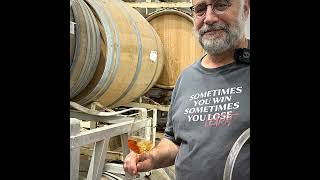
Yaakov Oryah of Pinto Winery discusses experimental harvests, skin-contact wines, and oak aging with host Simon Jacob. He describes early-harvest rosés with low alcohol and high acid, blends like Würztraminer with Chardonnay, and tasting notes ranging from turmeric to forest floor. The conversation explores Israeli wine's lack of a single identity and positions creativity as its defining trait.
Chapters
Welcome to the Kosher Teruah.
I'm Simon Jacob, your host for this episode from Jerusalem. Before we get started, no matter where you are, please take a moment to pray for the safe return home of all our soldiers, and the full return of all the remains of our hostages. If you're driving in your car, please focus on the road ahead. If you're relaxing at home, please open a delicious bottle of kosher wine and pour a glass, sit back and relax. In today's episode, I'm joined by winemaker Yaakov Oria of Pinta Winery and his own Yaakov Oria brand label. Along with returning guest and young winemaker in the making, Gidon Marcus, together we taste through Yaakov's newest releases under the Pinto brand and explore his personal wines. And then go even deeper into the future, sampling barrels and experimental lots that are still evolving in the cellar. This is an extraordinarily long episode, but scattered throughout it are the kinds of gems only Yakovoria can drop. How he thinks about textures and oxidation, blending and barrel work, desert terroir and patience, and what it really means to raise a wine over time. So settle in and treat this conversation the way you would treat one of Yakov's wines—not rushed, but savored. This is Wine Class with Yaakov Oria on the Kosher Terroir.
Starting off with whites. The '25 harvest.
'25 harvest, yeah. We start off with Pinto Chardonnay. I think is a very good example to what Negev does to white wines.
So the color already is really cool.
Chardonnay is a grape— sorry, excuse me— Chardonnay is a grape that usually has some kind of body structure, sometimes something square about it. And the Chardonnay here is almost— the body is almost like a Sauvignon Blanc. It's crisp, it's light, but it has the Chardonnay flavors. It's Chardonnay with freshness and structure that comes more from acid than from weight.
Okay, so it doesn't have the whole big surround, mouthfeel surround of Chardonnay.
I can't call it light because it has a center, like a solid center. Yep, definitely. But it's not a heavy wine. So you would expect more weight on this kind of— for this varietal. The next wine we'll have here is Pinto Chenin Blanc. Our Chenin Blanc, which is a grape that does very, very well in the desert. In the desert. It's not really expected because it's, you know, its best place to grow is in the Loire, cold place, damp place. Now here we're dry and hot. That's different. Yeah, this is still going to go through an oak treatment, which it didn't go through yet. —give it a little bit more complexity, a little bit more body. But it's still— these are very balanced. It's balanced. It's more weighty than the Chardonnay. Over time, it gets also more— becomes more aromatic than it is at this stage. Gets, uh, maybe we'll open a, a bottle from 1924. We'll see where it goes. Very cool. Come, let's pass here.
Yeah, pass here. Okay.
So you keep it in the smaller in the smaller containers because you don't have enough to put into a vat where the cooling jacket extends low enough down to keep it cool?
It depends on the type of wine. I mean, some wines are of big volume, so we use the stainless steel. Some of them are small volume to begin with. Yeah. We receive a little bit, let's say, for a spice, or I want to add an aspect of skin fermented wine to a white wine. All those things will give us a reason to Use a small vat. Where are we up to? Ah, here we are. Prime, this is Gidon. This is Gidon. Gidon is a lechadash. He's working now in Shilo Winery. And is that wine you're always sipping? Yeah, yeah, sounds really good. This is blanc de noirs. This is our Malafel.
Okay. Wow.
It's going to get a little bit lighter than it is right now. You see it still has a certain tint of color.
Yeah.
This is a real lean wine. You can spit on the floor. We're going to rinse the floor here. Okay.
Yeah.
Wow. This is cool.
This is a mistake. It tastes kind of like, not in like a bad way necessarily, it's almost like a blue cheese type flavor on it. Okay.
In 2016, I wanted to make a rosé, I got zero color. I resisted temptation to add to it a little red wine because I believe that if things happen to you, you're supposed to learn from them. And, uh, I just didn't add the color. I got a rosé without a color, and the reason was I harvested so early. The reason I came up with this, I wanted a do bleeding to make a red wine more concentrated, but instead of doing it to the vat, I wanted to do it in the vineyard. I made an early harvest, just enough, like at around 11.5 potential alcohol, which is around 18.5 Brix. And I was just meant to— the red wine will have lower yield to ripen, and that didn't happen. I mean, I wanted to make a rosé, but that didn't happen because it harvested so early there wasn't enough color. That's when I was tempted to add some red wine. I did it, and it became one of my better-selling wines because for restaurants is just great because it's— each sip encourage— it's like mouthwatering, and you want to have the next sip.
The acid is really, really strong, right?
And you want to— and it has a certain kind of complexity even though it's unspecified because it's not, you know You can't say you have your raspberries or strawberries. It's, I think, a little vague what fruit we have. There's something juicy about it, but a little vague. And each sip makes you want to have the next sip. So basically, you order a bottle for your friends, and it's— you finish it. You need another bottle soon. You need a bottle number 2.
Is it a lower alcohol?
Very low alcohol. This is around 11%.
This is definitely one of the most acidic wines I've ever had, and it's awesome. It's really, really cool.
It's a very food-friendly wine.
It's very— it'll be very dull to drink it by itself, standalone wine. On the other hand, it's a great mouth cleanser if you want to have clean your mouth before the next bite. Does the job.
So I could see this going crazy. I could see this going crazy with, uh, with— I always say with spicy food, but Great.
Food, food in general.
Yes, food in general this would go with. Orange wines go really well with very spicy food. Right.
I always find it hard to, like, the hardest thing to drink, to eat with chicken wine is spicy food, I find, because often it doesn't match.
It doesn't match. Except orange wines.
Orange wines. You should try an orange wine with, like, Chinese. Crazy. Crazy blend. It's really crazy blend. You're the one who told me about that, and I said, "Yeah?" Because I like hot wings and what have you like that, and it was perfect. And everybody I've told since then has come back and said, "Wow, I tried that with, you know, Chinese, and it worked. It really was good." And I said, "It's from Yaakov.
It's not me." Let's continue with some whites. Yeah. Mouth is still watering from that wine.
Really great.
One of the more challenging grapes, I think, white grapes, is of course Traminer, which I tended in the past not to like because it was just too much of everything. Too much perfume, too much— too much cheap perfume.
Whoa.
I never had this grape before. This is very, very rich. Ken. So this is— I started to do this past few years with whole pressing whole clusters to get a little bit less phenolics, a little bit better acidity, and it tends— it's a varietal that tends to be soapy.
But it also has like a banana Laffy Taffy, like banana candy. Agui. It has banana.
It has a lot of banana. You're right. Usually it has lychee and—
what else does it have? It does have like the soapy, deodoranty, like clothes, like laundry detergent smell.
So I don't put it out as a varietal. Varietal?
This would be a little intense. Whatever. Both work?
Yeah, both work. All right. Retro— retrospectively, I'm happy I didn't make too many mistakes. No. And I use it in blends. I have a blend, Queen of Hearts. It's a very classic, uh, royal almost grapes: Chardonnay, Chenin, and Semillon. And this gives it liveliness and spice. I use it in Anthology of Spice orange wine. There's a blend based on orange Gwurztraminer. I have a varietal orange Gwurztraminer, and I make a dessert wine from this. Not this year, but I do.
And the dessert wine is just the variety by itself? Right. Where does this usually grow?
Like, are we— The term Gwurztraminer is in German, the word, the name. But it really means Gewürz is spice in Germany, in German. And Traminer means the one that came from Tramin. There's a village in northwest Italy, it's called Tramin. And the grape that grows there is Traminer, the one from Tramin. And then it went to Germany and Alsace and it went through some kind of mutation and it became a lot more spicy. So it becomes Gewürztraminer, the spicy one from Tramin. Spicy chaminade. It's usually too much. Even this is almost— it is too much. Ah, rose petals. That's what it has. Dried rose petals, almost rotting. Shema bracha. Shema bracha.
Like the type of bathroom scent. What? It's a bathroom scent for Israel.
Yeah, yeah, the potpourri. That's what they call it.
Yeah, the spray or whatever. That's cool. How many people in Israel— like, is this grown a lot in Israel?
It's, uh, grown a lot in Germany and Alsace and Austria. It's, uh, usually you'll find it as a cheap semi-dry wine because without— I, I do whole clusters now so you don't sense it so much, but usually it's a wine that has bitterness and it's used— they leave a little residual sugar to mask the bitterness, but this doesn't have bitterness and this is dry.
And the whole cluster in Tavka makes it less bitter, you're saying? Yeah. Interesting. Isn't the logic often hafukh? Because you get like the tannin from the wood and—
No, you don't get all the tannins. It's not fermented with the skins here. This is a white wine. It's pressed. When I press it, I don't crush it and press it. I just press the whole cluster.
So it's going through one less squishing stage, basically.
Right. So you're getting less extraction of the bitter tannins.
I've never smelled anything or had anything like this. I've never had anything like this. It's not like, it's not really like heavily aromatic in the way like a Persian tea is aromatic.
Normally it would be a lot worse than this or stronger than this. This is very restrained.
And therefore it's more refined. And wortz has tendency, what most kosher people have tasted, wortz have tasted, is a sweet, like dessert, very aromatic wine.
Very what? Aromatic wine. That's typically. Right. And usually we'll find it like, I don't know in Dallas, but like in Shekalim would be like a 50 shekel wine. For people that don't drink wine but they like a— they got to drink wine, so it's like a kind of a— almost a juice. It's usually on the low scale of the market.
I've only tasted it. Hmm? Yeah. I get it, but I'm only in the kosher market. So in the kosher market, it's—
Wow. Let's go back there.
Yeah. It's like, you're saying you wouldn't put it as a single varietal, but it's like just, it's just enough that it's a little too much, but it's kind of cool because it's unique in that way.
He makes a sweet dessert wine.
We'll get to it. We'll open it later.
Are you going to open it? Yeah, because then you'll taste it and it's cool. It's one of the most incredible dessert wines in Israel.
Like even smelling the empty glass, it smells like Backside. Yeah, I know. Saucy. Very cool.
This is Viognier. Viognier is also a grape that— there you go, we're talking about— in the family of too much. Most people—
family of too much? Yeah, I love it.
What's Kermaner's in the family of too much?
He was working with Covenant, so one of the— we were talking about this on the drive down, that one of the things that really hooked him was the Covenant Viognier.
This is very different.
From Covenant?
Yeah, the Viognier, and the California Viognier, for sure. In what way? Well, it's a lot more like peach and fruit-forward. Here? No, on the Covenant, I'd say. Like, it's almost like smelling a few tea. Okay. That's how it was. Here, different. I'm figuring it out how. Like, this is more of a kiwi, like pineapple. It's also a little bit more aromatic.
I would say it's pineapple, passion fruit, and apricot.
I would have never come up with that, but I'm smelling it and tasting it.
The apricot and the pineapple, I think, stand out the most.
I love passion fruit. I do get the passion fruit, yeah.
So I'm getting the passion fruit too. Now, when I say family of too much, it's people that if you don't drink wine, but you're in the business of smelling wine, and some people, okay, we had our fun smelling, now let's also gulp it down, then these varietals are amazing. And if you want to drink them, drink them as, you know, that's your focus, then they're in the family of too much. Right. How much of this could you drink? Now, both of these varietals, also Mike Vourtz and also Pinto's Viognier, I work very hard on restraining them. They could be a lot more. Okay? I don't want them to be more. I want them to— even first of all, neither of them are going to be put out as a varietal wine. But even as a role, as a component, I want it to be a component with finesse and not a component with Lack of elegance. So for what they are, they're more refined, and in the blend they'll give their note in a more restrained and elegant way. Not just theoretically, you could use a smaller quantity if you make it more extracted. I don't like that. I'd rather use a little bit more but more refined. And keep the overall sensation.
What are they doing? That's not pumping over.
No, but if that sits for a long time, yeah, it becomes inconsistent. The acids settle down. Okay. And if you taste the wine from the top and taste the wine from the bottom, you're tasting really two different wines.
So it's, it's actually like a pump over. It's, it's, it's harmonizing it.
Okay. So it's just circulating it just to make it— Efraim, that's round enough. Yeah, just— not that it bothers me because it's not picking up the leaves. It's not picking up the mishka, the sediment. What?
How does it not pick up the sediment if it's going from the bottom part of the tank?
Oh, because it's already went through a first racking. So it's just like a little sand on the bottom. So if you do it gently, you'll be able to circulate without picking that up.
This also, I feel like, has a little bit of the perfumey smell, like clean, like, like bathroom scent smell. Like it's had— much less than the other one.
What's amazing me, this is also a negative wine, right?
This is a negative wine.
So this is amazing to me. You have gotten— you've really figured out how to beat the desert.
Hmm. On the contrary, we learned to work with the desert. Right. Instead of going against the desert, we learned to walk together.
Did you find that over the years you've been working in the Negev that the things have changed and become a lot better very quickly? Or not so quickly? Meaning in your working with the Kameem here, down here and I assume you learned a lot very quickly because it's so different than a lot of other places.
I can't say that. I started to work with the Negev wines in 2009. I had a winery, it was called Asif, it was located in Arad. It was important for me to make local wine, and from 2009 I've been making red and white wines, and the whites tended to be easier to understand.
As far as how the negative affects them?
As far as how to work with them after the negative affected them, to be accurate. Which means you have a very short ripening cycle, and therefore the skins are the main problem. And the acids are an advantage because you are able to harvest before the acids crush— crash. And you're able to get interesting acids, which is a cocktail of acids, as opposed to acidifying wine, which you only acidified with tartaric, so it's a little one-dimensional. So if you harvest early, you get the primary acids of the grape, which are mainly tartaric but not only tartaric, and they're more complex. The problem part is the skin that didn't ripen yet, and it's very— and it's harsh. The phenolics, the tannins— the phenolics, not tannins— are harsh and green. And so the real challenge here is working with the skins. Which is, lends to say, red wines, which is really the main issue. And that is why I came back down to the Negev, because, you know, I had a winery here, I was working here for 9, 10, 11, 12, 4 years, and I did not feel that I really figured out the red challenge. And when Pinto Winery was starting and they offered me the position, one of the main reasons I came, first of all, was the people. They inspired me for this project and also for the professional challenge. When I was the winemaker of Psagot, the wine basically made itself. You just had very good grapes, you know. They had 11— I was the first winemaker, but after 11 years of the winery existing without a winemaker, as long as you don't mess up You have the wine makes itself, and can't say that about here. Here it's really from year to year I try to understand better the environment, its effect on the grape, and what you do with it afterwards. Okay, our next wine will be a Roussanne.
Okay, I happen to love Roussanne.
This is a Roussanne which we found We found a vineyard in 2020 when we started to work. It was a vineyard here that was machine harvested and went to bulk wine to Arza, Mishor Adumim. And I, you know, we were just starting. We didn't know what's growing here, not growing here. I asked Philip, the winemaker, to allow me to have one row so I can make one barrel. So we did one barrel in 2020. I loved it. And in 2021, we planted a vineyard from the same— they were allowing us to take grapes for, for that vineyard of Arza. And in 2024, we started to harvest our own grapes. And this is, this is already from Pinto. This is from Yerucham here. Wow. Now the main purpose of this wine is the Cholot White. So the Cholot White is— we'll go taste it. We actually just finished building it this morning. This is a wine on the higher level, really the medium level of Cholot White. It's based on— it's around 75% Roussanne.
I thought the Cholot was the lowest level of Roussanne.
No, the entry level is the varietals. Okay. Then is the blends and then is the Tsukim, which didn't come out yet.
Okay. So this is?
This is the kolot. We actually finished building this when you were here. This was actually built this morning. It's not— a big percentage of this was built— it was in oak as opposed to a vat.
I was about to say, it smells like the Roussanne with some oak on it.
Most of this wine here fermented in oak as opposed to what we tasted before, which is a vat fermentation.
It's the same grape as the Roussanne as well, fermented in oak.
It's lovely.
I like it a lot. And we'll get a little bit more oaky, and then we'll let it, uh, integrate in the bottle, probably. Now let's taste the tsukim. Okay. We built the tsukim yesterday. Yeah, I know.
That smells lovely. It was a—
what was it? It was a new oak it was fermented in?
Yes. All 100%? No. Oh. The oak was 100— all the oak was 100% new oak.
But not all of the wine.
But it's not the whole component. It's not the whole percentage of the wine. You built this— you—
Good topping job. Hmm? Good barrel topping. You heard it that.
No, it's actually— it means that the temperature is not good here. Warmed up. It wouldn't be this full if it was cooler. Yeah, it was cooler, but that's okay because the room here is around 16 degrees, 14, 16 degrees, and this is coming out of vat that was kept at 12 degrees, and this was done yesterday. So right now it's, it's okay. Yeah, we're good here. Oh, we smell a lot of fresh oak here.
That's, that's pretty much—
oh, that's not, not a good thing. That's what you're getting. This, this is what— sorry, this is not a good example. This is a completely new oak. I don't want to give you this. Here, you could give me that back.
That's definitely oak. That's—
let's put back in here. Now this is— we have 11 barrels of this. 2 of them are new. Okay. This is what you're supposed to taste. This. What do we have here? Yeah, it's a Radu. That's right.
When it sits in the bottle, like something that, let's say, like the Roussanne we just had, which has a good amount of oak on it, that oak flavor tends to kind of lessen as it sits in a bottle or in a barrel. Or I guess not a barrel.
First of all, it depends on how much you have there. This is to rinse your glass from that oak, please. It depends how much you're starting off with. And if you have too much, it will always be noticed. And if you have a balanced amount, then it will be integrated. Yeah.
Using it from the start, can it start as quite prominent and then integrate over time? Yeah.
Again, as long as you don't have too much to begin with.
Yeah, it's more like it.
I was shocked before, expecting that.
Mm, yes, big difference. Big difference.
Still oaky. Yesterday, before I put it in the vat, it was better. In the barrels, I mean. Not the vat. It tastes more oaky than it smells.
What? I think it tastes a little more oaky than it smells.
Yeah. Be careful with that. Okay. Simon, I'm sorry I'm schlepping you back and forth here.
No, I'm happy to go. I'm walking. I'm fine. Okay. I don't like to stand for long times, but I don't mind walking. It's okay. For this, any day. If I start complaining about walking through wineries to taste wine, you know what? Push me off the cliff. It's over. Oh, because we have a lot.
We could test through a lot. Now we're gonna go through a few reds of Pinto. Yep. And then— okay, so wine unlikely to see in Chile. Color-wise.
Oh yeah, for a lot of reasons. What is it? Grenache. It's Grenache.
Grenache of the negative. It has like, like, like a, a candy kind of sweetness to it.
Red candy.
This is really cool. Oh, it's a beautiful color.
It's almost like a Pinot color. A Pinot color.
It's, you know, Grenache is referred to as Pinot for the poor.
Okay, I don't mind. I thought petuni was that. I thought petuni was that.
Petuni? Ah, petuni. Petuni. This has a bitterness, has an austerity. Austerity is part of this harvest. 24 and 25 had a higher austerity than previous years. I don't know why. Could be it has to do with the heat.
How did the dryness— did you guys get impacted by the dryness of the of the year?
No, because we actually irrigate. Okay. Everything's irrigated here. Most places that rely on rain and irrigate what's needed are, for example, my vineyards in Ramat Hagolan, which hardly are not irrigated at all because there's so much water in the ground. Right. And they don't need irrigation. This year they were irrigated and it was not enough and the yields were low. As opposed to here where the yields were high.
It's kind of like, like a, like a hybrid. Like if you close your eyes and you get like, it has a light mouthfeel, but like the tannin is there. But if you look at the color, like you don't expect nothing kind of aligns.
That's one of the fascinating things about Grenache is that it has a big body. But usually you don't see it with color like this. And you would don't, exactly. It's, it's a dissonance between what you expect because of the color, like a light thing, and a wine that has— it's actually weighty. And this is not a very high, high sugar harvest. It's not a high ripening position of harvest. If you would let it fully ripe, it would be a monster as far as volume with not a lot of change in color.
How long did this sit on skins for?
On the skins? Uh, 2-3 weeks. Not a long time. No, it's really—
it's cool. It's, uh, it's really not like if you If you would close your eyes when you look at it, it's a little bit of a—
One of the things, when we finish our tour, we're going to— a walking tour— we're going to open a few bottles. One of them will be Grenache 22, which I really love to taste.
Huh?
It's, it's something, you know, that Simon and I have been discussing. This is really cool.
Uh, Jakob is the one, look, who introduced me to a bunch of different wines besides orange wines, which I originally absolutely disliked, and which over time, I don't know how anybody drinks non-orange ones. So that was kind of crazy to me. Instead of it being— it was like turning up the contrast on your color television and seeing these vivid colors. It was like unbelievable. But it took me a bit to realize that or feel that. So that was one thing. The other one was Grenache. I just, I've fallen in love with Grenache.
This Grenache is, it's so different from any of like the California stuff. I, I guess it's also, it's still Grenache, like it's still there, right? But at the same time, it's especially in color and body and weight, it's so different.
Before we go to our next varietal, I want to taste you the hard press of this, this, this wine. Okay. Yep. So that's really cool. The first time I met Simon—
It's like wine Inception. Wine what? Inception. Like, he's guessing one thing and another.
It's— yeah, go ahead.
First time I met Simon was a tasting in his house. He had two things to say about my wine. The orange wine, this is not for me. Yeah. And the dessert wine, I have nothing bad to say about it.
He's a musketeer. I know. And you know something? The trouble with dessert wines for me is they're so sweet and they're almost like— they're all medicinal almost. And they all have like this medicinal edge to them. And this is the first sweet dessert wine I ever tasted that was like, there's nothing wrong with this wine. It's just delicious. And actually, now I go back and I love the wine. Anything I can do to get a bottle of that '08. And it's a Chardonnay. That's a wine that is crazy. He made a wine called— he makes a wine called Muscatier. We're gonna taste it for barrel tasting. Okay. Muscatier, the '08. The '08 is a— hmm, it tastes like waffles with maple syrup. I've never tasted a wine that ever tasted that way. And when I tell people, they go, yeah, right, okay, yeah, you know, that's one of your BS wine tasting notes. And then they just go, oh my God. This is— and you know what? You know, really, I drove crazy at our wedding, at my daughter's wedding. We— I served a bottle of the 8— 8 years— 8-year-old, and, and my mechutanit doesn't drink wine. And I went over to her with it in a glass and I poured it and I said, this is for you. And she said, I don't drink wine. And I said, I know you don't drink wine. That's why you have to taste this. And she said, "No, no, but I don't like—" I said, "Please, all I want you to do is taste it. You don't have to drink any more of it, just taste it." She goes, "Oh my God, where did this come from? This is delicious!" Now this is what?
The same wine, the hard press of it. Mmm. I separated the press.
I think I kind of prefer the press. Of course.
That's why I brought you here.
This is great.
I have one barrel of it.
This is the hard press of it afterwards. This is the free run.
Free run and mild press. Here, taste this.
The hard press tend to be more— like, I would assume the hard press is more tannic.
Yes, but this is— it is more tannic, but it's not— it's less austère. It's a Grenache hard press. It's a I have one barrel of it. I really wanted to take it to Yakova Royal Wines, but just being decent, I said it belongs to Pinto. It's a nice wine. Isn't this nice?
This is delicious. This is absolutely delicious. And this is the same Grenache, only—
Same Grenache. Yeah. You know, I'm besrat Hashem making this year, I'm going to attempt to make an SOB. Okay. I like this a lot. This is nice, right?
Yeah. Both the Grenaches are different, but very cool.
This is something special.
Really unique. Ooh, this is really nice.
Well, they have that, like I said, the flavor of a Grenache that like you put it in your glass and it's really dark color and it's much heavier body, but without looking like that. But it has more silk. It's not as much, but it's kind of somewhere in the middle. It's really good.
This would be my go-to Grenache as far as overall impression. It has just, just what you said. It doesn't have those sturdies that bothers me there. It has a little bit more weight, but not a lot more weight. It's just, it's just a very balanced wine. I separated it because I— what you, what you said is what I expect, more tannic, more harsh.
It just came up for a hard, like a hard press. It's not what you would expect. You would have it at all, right? Right.
Yeah. Okay, we finished Grenache. Let's go to other varietals.
Whatever you want. Very cool. What? Is this okay for you? Yeah, no, we could go. We could leave now if you want. We can go.
Actually, I'm actually doing something that I don't have a chance to do myself.
I know, this is the best.
This is really awesome.
When do you get a chance to do this sort of thing?
Okay, this is— now we're going on to our Malbec. Okay. Malbec is a very successful grape in the Negev. It's one of those things that happened and we like them, so we're doing it more. If you would think about it, you wouldn't plant it here. Yeah. But it works.
Yeah. Which is exactly why you plant it here.
I know it. People have been doing things here for 20 years without a lot of understanding, more of— but probably what their consideration is what was available in the nursery. Okay, we'll plant that. Some of them work, some of them don't work. Like Cabernet Sauvignon and Merlot don't really work. But Malbec, from all odds, from all odd grapes, this is very nice here.
What I'm still thinking about that Grenache is that I actually think it went very well, like a little chilled. And I think it's good. A lot of people are probably going to be drinking it out of the bottle not chilled, and I think it's going to be less good.
Yeah, that's what we recommend. By the way, the reason we started to bottle varietal Grenache was what you just said. I— it was my request. It was not on our planned portfolio, but I said we need a white wine for hipsters, a red wine for hipsters, which is light color and chilled. You don't want a tannic, you want it pale, you don't want a red, you don't —It does have like that.
I'm saying it's somewhere in between. It's not totally to like the Chillable Red, no tannin wine.
—No, no, but it's something that we could aim to that crowd, and I like it. Now this wine is not ready yet, okay? It's just, uh, it's light and spicy. That's what's behind it. It's just, it's one of our bigger hits. It's one of those wines that we have a hard time making enough of it, thank God, because it's light and spicy. It's not a heavy wine.
It's not a— it's a good food wine too.
Yeah, it's a good restaurant wine because you could say overall in my profile, in my portfolio, and in Pinto's portfolio, I don't aim to make heavy wines. That means one of my better friends in the wine world is Amichai. But we're practically on both ends of the spectrum.
Yeah, I'm noticing that.
Yeah, okay. We get along well and we love tasting each other's wines, but it's really everything he aims for I try to get away from, vice versa, because he's going the other way though.
Huh? He's going the other way.
What do you mean he's going the other way? He's getting lighter? Yeah. All right.
Yeah, yeah. I really love that flash. That's very cool. 'Cause I find that like wines, like he was saying, in that more light—
I can't sit in the lab because they're sitting in the lab, but that's okay. We'll sit here. We'll sit here.
We'll lean on the chair. This one is— I like the Grenache a lot better than the Malbec. This Grenache.
Yeah. Yeah. The difference between the Grenaches is one of them is a beautiful woman in a yellow sundress. And the other one is a beautiful woman in velvet, a black velvet evening gown. It's like so loose.
It doesn't lose though its softness. Like it's not— it's very funny also coming from like— I mean, working with like Heidum. Yeah. That is such a specific like Heavy, huge, tannic, full body. Like every wine comes out like dark as can be. There isn't anything— Like there is no lightness in Jonathan's wines. Like that is not anything— a word that I don't think anyone's ever used to describe a single wine he's ever made.
Here it is, here it is. We're here.
So it's cool to see the other side of like making red wines. This is like being a lot more light and like the body is because I think the way he— not the way he thinks about it, but the way when you drink his wine, it's almost this impression of like, oh, the lighter it is, the less successful it is. Yeah. But here it's a very opposite.
Opposite. Yeah. You know what? Yaakov makes wines for restaurants, and a lot of the restaurants are looking for a lighter wine. It's not going to kill the food. It's not going to kill the food. But remember, we're in a Mediterranean food experience here. People aren't serving big steaks. You know, they do. Amichai is a steak guy. Yeah.
It's a lot of fish and salad. Yeah.
It's fish, salad, lamb, lighter stuff, but with a lot of salads with spices and stuff. And the lighter wines just work off of them so much better.
Covenant, where the, that was my first exposure to like working in wine and learning about it. And they describe themselves, and I think rightfully so, as like minimalist intervention. Like it's native yeast fermentation. They're like, they're trying to add, they're not—
I don't always buy into that native yeast fermentation because if you ever use a yeast in the winery, it's everywhere. There's no way you can have Native yeast fermentation.
Yes. Well, so, okay, fine. Maybe the term native yeast. No, no, I know. I'm thinking about it. It's a good point. I'd say the term native yeast, maybe in that regard, is a literal term is correct. Like, are you exactly getting, like, is it just the vineyard's expression of yeast and that's it and nothing more? Never.
Not unless it's the first time it's ever come into the vineyard. Into this wine vat and this barrel. Right, right. Oh, because the yeast, just goes into the air and it's everywhere. It stays there.
Yeah, it doesn't go anywhere. Right. That I agree with, but it is, you do end up with, like, when you choose a certain strain, you choose one strain, you say, this is my strain, you end up with a much more diverse profile of yeast that are active. And then the question is, okay, as it ferments, like, usually from what I understand, one yeast will kind of take precedence depending on like if it survives well in alcohol. Sometimes.
Sometimes it does, yeah.
CBD and stuff. Then you'll get a little more, I understand, I think it makes sense that you'll get a little more complexity in your fermenting yeast. Yeah, because they'll have a larger diverse profile as opposed to saying this one yeast is what I want to use. Right, right.
Okay, so I think we'll taste some bottled wines before we go on to desserts. Okay. What's Yotam? Yotam is a winemaker, used to be a winemaker in Barkan, then he became a consultant and an importer, and all our vats here are imported by him, Yotam Sharon, and he Also made a small label of his own. This recently became the winemaker of Biniamina. Okay. So now he's less, uh, or more occupied. Yeah, I'm sure it keeps him busy. This is Pnina's wine, by the way.
That's Pnina's? Okay.
Oh, which one? Are there any female winemakers in this area? Huh? Are there any female winemakers in this area?
Yes. Like which one? Huh? Pnina.
Oh, oh, what did you say? Female. Oh, female.
Oh, but there's Ahad, there's Ahad, and there's Tel, and there's Nika, and there's Ramata Golanda, part of the team. Not too many, but there are. Oh, there's more. There's There's more incoming ones. Tutah is run by Anata Gmon. And Blendin, there's a winery called Blendin. Blendin? Blendin, that's the name. Yeah, it's also, she's a winemaker, expert in Matagolan, that started her own brand. And there is—
How do you have a bachelor's? Yeah, I was about to ask. It's just the vet.
He's bought it or?
We bought it a few years ago. They didn't need it, and I took it from the importer.
Also in California, Alicia Will is winemaker for Herzog. Oh, really?
Yeah. I guess we were kind of surprised.
She's a religious woman who's a winemaker.
Alicia Will. Cool. Here, it's over here.
OK, come.
Yeah, you can rinse your wine. I doubt you tasted wine made in this way.
Well, I mean, it's different from the start, that's for sure.
I told him a little bit about me.
Not about me. He's a nice guy. He's about me.
I know there's something here that's registering, but I'm not figuring out how to stand it, if that makes sense. It's great. That's funny that I know what it is.
It's lovely. You like it?
I like it a lot.
What do you think? Which one is this?
There's something that stands at the front of it. I'm trying to, like, I know what it is, but I can't place it. This is like— go ahead. Like a fermentation-y type, almost.
Just smell it before we taste it. Just smell it. What do you get here? Like almond oil? Almond is a good guess. Sewage belongs there too. But not a bad sewage. On the contrary, for me, I always add in Hebrew, biyuv beketetov. I don't know if I ever smelled biyuv beketetov. This is it.
This is it. It's like funky, it's like funky old, like—
I don't think you ever tasted a wine made in this way. It's something I started last year. It's one of the components of the Me, but it was so mind-blowing to me that I just— but whatever didn't go into Me, I bottled separately. This is wine that— it's a white wine that usually when you make wine, you crush it. You press it, put it in the vat, you let it settle, you rack it, and then you make a wine from the clean juice. This is unracked. This is make a wine from the whole gook, murky gook, without refining it by settling it and racking it.
So it's like the ultimate Sourlis, kind of?
No, Sourlis, lis is yeast.
It is just awesome. I thought it was settled into claret.
It could be. I'm not— my French is not that good, but usually yes. And basically, this is an unracked white fermentation, and those are very reductive components because the box that takes all the oxygen, basically, probably. And therefore, I was in the Loire on the wine tour, and I found a winery that does wine without racking, and then it's reductive, and then they keep it in a barrel for 2 years. So the micro-oxidization of the long-term barrel, okay, aging balances out the reductivity.
I, when I was like first understanding reductivity, and I still haven't understood reductivity, I always understood it to be like an egg smell.
No, egg smell is a derivative of sulfur. If you have egg smell, that's It's really caused by yeast. They're in stress because of excessive sulfur, and you get egg SO2 components, SSO components. So that's not reductivity really. It's really yeast, a combination of yeast stress and sulfur, sulfur, sulfurous derivatives. This is not pure reductivity.
This is recently bottled.
This is pure reductivity. You don't have sulfur here, you don't have yeast stress, you just have that gook that changed the profile of the wine.
And this is, this is like I said, is a new vintage. This is not like a used—
this is '24, it's bottled, it's not on the market yet. It's called Unracked. And how do you say Unracked in Hebrew? How do you say racking in Hebrew?
I say rapping in English when I'm talking to people that you know, and then they get angry at me because they don't understand what I'm saying.
What's the word for racking in Hebrew, do you know? Silun? I don't know. No. Shpia.
Ah, oh yeah, I do know that actually. They say that over there. It's never registered as racking.
So this is Loshfia.
There is something like also like older about it. Like if you were to blindfold me.
One second. Do you agree?
I agree. I get what you're saying. Cool. I love it.
Do you read Hebrew?
I really like that, it's very funny.
That also means insane. This wine didn't come out yet. This is from 24, this is part of the components of the Emmy. Emmy learned a new method how to extract different profiles from the grape.
But like, smelling past that, like, main note, it's like an herbal, like a— It's not herbal.
It's not herbal. It's not minerality. No, definitely not minerality. It's not sulfur. It's insanity. It's just good old bad reductivity. Insanity.
Hmm? Insanity.
Insanity is what it's called in Hebrew. For most people, you know, people that like wine are intrigued, but people that enjoy drinking wine and not wine people, you don't drink this.
Well, if I was expecting like, like just a standard, like a white wine, you know, like floral, whatever, you know, this would be weird.
It would be weird. But now this was really the introduction to going on to our Grenache '22.
Can I say that I think If this was like a semi-sweet dessert wine, it'd be pretty apt.
Okay, semi-sweet. Because I think it has a funk that we associate with the Old World, which is really damp cellars.
Yeah, I call it, um, wet. Wool sweaters.
Okay, I hear. Yeah, that's, that's, that's not far. Yeah, damp wool sweaters with, with a note of, uh, of copper.
People, people like— yeah, a little bit.
To your point about like wine people versus not wine people, like if someone just wanting a bottle of white wine would be like, what the heck is this? Right, it does It does make you think, and make me think sometimes, like, oh, am I like, are we a little nuts? Like, you know, when you sometimes get a wine that smells like wrong but good but interesting.
We're not nuts. We're sensual people. We enjoy the activity of our senses as opposed to a consumer, which you want it to taste good and smell good. We're actually—
I don't want to play with it. Huh? Yeah, I don't want to have to explore. Right.
I just want to know. I know what I know.
I don't want to know anything else.
Now I'm going to get you the Grenache '22. I'll bring a few bottles. Give me a minute or two and I'll— No problem, we're here. Hmm, okay. After what we just tasted, we will go on to the Grenache 22.
Yes.
Which was another— just continuing with the exploring the reductivity route.
Right.
From here going back to your chalet? Yes.
One? No, I'm going to go to another one.
Are you able to drive after all this? Yes, I can. Good. I can.
I'm going to have something to eat. Maybe I'll stop and eat some pizza or something.
What time is it now?
What? It's not late. It's not yet 2 o'clock.
Ah, okay. This is a rinse. And this is your wine. This is the Grenache. Grenache 22, which was unsold for 2 years, undrinkable for 2 years. Tasting it with Simon and being interviewed about it.
I listened to something, a podcast, you tried it.
Yeah, yeah. And I asked Simon to delete because it was simply reductive. And the same thing we were talking about, the previous wine had that very dominant. What happens with reductive wines over time, that the reductivity is converted into complexity. Once that stink goes away, it has an added dimension that most wines do not have.
I was about to say, I'm not like— I don't think I've ever encountered a wine like this. Like this? Yeah. I'm not sure like what's going on. Thank you. Like usually It's like you're pinpointing, oh, like reference points and I have something similar. It's all like my own idea.
There's a whole route, there's a whole section, not route, of wines. The whole section of wines that go instead of through an oxidative route, they go through a reductive route. And you'll find that in Northern Rhône, Roussiras. You'll find that in Sémillon. You'll find that somewhat in Chenin Blanc. Usually do not find that in Grenache, but when you do, you get this. Amichai was here on his way to Eilat. I opened the whole slew of wines. It was on Friday. He was on his way to Eilat for the weekend. The winery was closed. Didn't know what to do with all the open wines. I told him, take them, you know, enjoy them with your family. I asked him, what was— what did the wines behave, you know, on the weekend? Everybody did. What was the best? Grenache. Grenache 22. You guys are makbir to taste wines on the right days, biodynamically.
Are we on the right day biodynamically?
No, no, no. We're on the worst day. Today we could start tasting wine at 6:00 in the evening.
What does that mean, biodynamic?
Because of the sun?
Because of the moon. Moon, moon, moon.
Because the moon is— we're actually at a time with no, to be honest, we're in a time with no moon. It's Rosh Chodesh. So there's no moon. Rosh Chodesh is Friday. Friday. Yeah. But, yeah, but it's, we're not quite there yet.
Wait, what do you mean by, what do you mean by that?
Biodynamics is a movement. You don't know about it?
I know about trying wines and moon phases and this, that, and the other. What are you kidding?
That's the whole thing with biodynamics.
Biodynamics is, first of all, it's almost a religious movement. No, no, no! From the biodynamic point of view being organic is fighting a battle with one hand tied behind your back. Basically biodynamics says if the moon could influence the tide of the ocean by gravity— Yeah, I feel you. It pulls the water. So probably will be pulling the water within the plant.
But the mass is very small.
The mass is very small, but it has an effect. The big— you take this, you take what happens in a big mass and you see it happens. So you say it's unmeasurable in the, in the vine, but it's the same effect happening.
It does make a difference, and, and it's even in the barrels.
Even in the barrels. Gravity is all about mass. Like these little grapes. That's like saying grapes—
No, no, no, no, no, no. I think the measurability is about mass. Correct. Not the effect. The phenomenon is there. Okay. That's just that they have a whole—
It's like saying if you put enough grapes in one space, you're going to buy a home.
It's like saying if you put enough grapes in one wine in one place, You will see the difference in fluctuation of the level of the liquid based on gravity. If you have an ocean of wine.
Well, the movement of the liquid, not the—
No, but it's not so much the liquid as the sediment. So that when you get into your barrels, you end up with all those—
So there's a whole cycle, there's a whole idea behind it. And biodynamics is making the bio dynamic. Which means we talk a lot about terroir in wine, but it's terroir based on what's living in the terra, in the ground, which is nematodes and fungi and bacteria and a whole bunch of things that actually make the environment healthy for the grape. And if you, uh, use too much pesticides and the soil dies you'll get a very poor wine. And you are very much focused on biodiversity. That means if you go to Elvi in Spain and you walk in the middle of his vineyards, he has a row of apricot trees or cherry trees. He doesn't pick them. Yeah, he just wants the birds or the insects that are drawn to this, make a diversity for the drones that were drawn to a monoblock of just vines.
It's the opposite of pesticide.
Pesticide is controlled, it's clean, it's removing. And here the diversity creates a balance. That's the basic idea. So there's a lot of vineyards, especially in Europe and also in California, that are grown with the idea of creating a balanced environment rather than a controlled, suffocating environment.
A lad versus a knife, of course.
Right, because the idea— there's a book written, I think, in the '60s or in the '70s called When the Birds stopped chirping, something like that. That's what started the organic movement, that by using pesticides, the soil died, the environment died. And that's what started the organic movement. But they were not— they were stopping pesticides— sorry, sorry, stopping the use of pesticides, but they're not— they were not encouraging the soil and the biosphere of the soil to be healthy. And the biodynamics is like a step beyond. It's not, it's not just what you don't use, but what you do use to encourage the diversity and the livelihood of the environment of the soil. Within that cycle, there's days of fruit, there's days of flowers, there's days of root. And I think there's days of leaves. Fourth one, I'm not sure. And when you have a day of fruit and flowers, the wines will taste better than a day of root or leaves. Okay? And it works. Why I say it's religion? Because it's very difficult to prove it at a one-to-one level. That means it's very hard to prove that this happens. But you look at an overall, in blind tastings, the biodynamic vineyards score better than the non-bio.
But I would say, as someone who's trained in the sciences, is naturally not a skeptic in a cynical way, but my initial reaction to things is skepticism. I ignore them and prove them, if that makes sense. To me, that sounds like it might be a very similar phenomenon with, let's say, invisible wine, right? Like, it's a good example. Jewish wine is seen to be horrible, seen to be crap. Even so, I actually spoke to this family that was coming to Israel, not religious, and they, like, family friends, and they said, oh, we're looking for some wine here. And I said, well, what are you looking for? Like, something to, like, if, you know, I can help recommend some places. And one of their conditions, well, we will not go to a winery that produces Jewish wine, period. Like, you can go to that one, we're not even going to attempt. And especially after working at Covenant, where they produce some, like, pretty high-end wines and, like, doing a lot of wine tastings, Like my conclusion is that Mouveau Gevrey doesn't make wine bad, but most wine that is made in Mouveau Gevrey wasn't good before it was Mouveau Gevrey, right? So like with something like biodynamics, it's likely that a lot of vineyards that are going through the process to ensure that they're, you know, the winemakers and then the wineries are quality winemakers to start, as opposed to, you know, if you're a box winemaker, you're not going to really give a crap your vineyard is 5 and a half, if that makes sense. So it's a little bit like selection bias in a way. That's obviously, it's a perspective. I'm not saying that's the way I think, but immediately that would be my first thought, right? Like, no, well, if you're drinking wine from a biodynamic vineyard, the person making the wine probably is a little bit more on top of what he does than a person who doesn't much care.
That's what I thought. What you're saying is basically what I thought about the biodynamic movement for a long time. It's because if you give meticulous care to the vineyard, you're probably going to get good wines, biodynamic or not biodynamic, right? Of course. But big wineries, big producers, important producers said what you and I just said, and they did comparative protocols. They had huge vineyards, the same vineyards One of them was grown in modern protocol with pesticides, etc. One of them was grown organic and one of them was grown biodynamic. Same vineyard, same producer, and then they did blind tastings. And there's a lot of research on them. I'm just quoting. At the end result, at the end result, the biodynamic was always better. And it's the same producer. So to tell you, I can scientifically explain it. I can't. To tell you that it works, it works. To tell you that there's people today that take the religion and try to transform it or translate it into a science and try to understand why they're better and ignore that religion aspect of it and just do the science of it, I could send you to someone in California that does an amazing work for that. Okay, he's an Israeli guy, moved to California, works with Kingsmark.
Roy? Oh yeah, I think I met him because I couldn't talk about a lot of these when I was there.
Okay, so he, first of all, he transferred— he's in charge of vineyards, like 10 vineyards. He transferred all of them to Demeter, which is biodynamic protocol. But he's not a religious guy as far as biodynamics, and he just takes that, the science behind it, and he makes healthy vineyards. Okay, now we're going down to the Mii. I'm not opening you the Chardonnay. By the way, Chardonnay Mii, or actually the series Mii, was inspired by a process that I went through with Simon.
Thank you for giving me any credit. Any credit?
I'm writing a book about that, and your whole story with your father is definitely described there. Really? Yeah. Awesome.
That's crazy. It was just his yahrzeit, by the way. This last Sunday was his yahrzeit. Oh, really? Yeah. Yeah.
We're going to be using the burgundy wines glasses, and that's exactly—
it's just around the corner.
You go here and then go right, right, left, and right. I think that should be— that was very complicated.
Nothing is easy in life. This is a white burgundy for me.
This is the Viognier. I'm curious what he thinks about it because he made Viognier with Jeff.
Yeah, he especially loves Chef Vignier. Yeah, but I, I don't think it stands anywhere compared to his Israeli Vignier. This is Chef Israeli Vignier.
This is not Israeli Vignier, this is Vignier Me, which is Israeli plus— I know, multiple expressions, plus the multiple.
Yeah, but it's also Me is a perfect name for it because it's you.
Because at the end of the day, the putting together all the components is a personal decision, right? 100%. It's me or somebody else, it's the same. It's still a personal decision.
It's totally you. You are Mr. Anti-Terroir. You are. It's okay.
I believe I'm a super terroir. I know, I agree, because I'm extracting everything the terroir has to tell us, has to offer. Yes, this is a Vionnier. What year is this? 22.
Hi guys, how are you? Thank you. I'd say, like, in the, like, a little bit more aged on white wines, that's one of the ones that I actually like. I don't have the reaction of, "Oh, yeah, I would like to have more of those." No. I'm trying to understand why, though. But that's my first.
This is like a Burgundian white, but made in Israel, which is, like, honestly unheard of.
This is really good.
Tell Jeff. I, I—
he would never go through this.
No, this is not Jeff at all.
The idea behind this series is extracting different profiles from the grape by different methods, different protocols of fermentation. What are the different, like, fermentation protocols that you use? First of all, and really first of all, is different harvest dates. Like years or time? I don't know, time is same. It's all single vineyard. You come in twice or 3 times and you get a good acidity, good minerality, good body. And then you come in later for the ripeness and the flavors.
So kind of, if I say correctly, it's the dilemma of like, oh, this time of year, this time of the harvest, you have the acid and the flavor development versus the sugar development and all that. Like basically taking the best of both worlds and combining them instead of choosing one or the other.
That's number one. Then each of those decisions, you use different protocols. You use vat fermented, oak fermented, carbonic, orange wine skin macerated, and recently unracked. There's a lot of protocols in the same harvest. They have 5 fermentations. There's the orange macerated, white part of it, there's like a classic white and oak, white and oak unracked, and unracked and skin macerated, and regular skin No, Skin Macerated is an orange wine.
You did one with each harvest as well, or no? No. Oh, it was good.
Yeah, but I get that theoretically there's only 2% alcohol created by carbonic maceration. In fact, I get, I don't know, 10%, 8%. There is real, real dry environment, carbonic maceration. I don't know, it's not right by science, but it works.
It's called experience.
I guess I'm like, I'm trying to pinpoint about why is it that you like this. You can pour glass for me. I don't love— like, I don't taste like I particularly love it.
It's delicious in the mouth. It's got this great mouthfeel.
It's, it's just— it has acidity. It has the— not the, not heavy clawing ripeness, alcoholic content. It has a twist of a skin maceration. It has the aromatics of a carbonic. It's just complex and balanced.
And I think that the best thing for me is that flavor of like, um, almond, woody— I don't think we would categorize that flavor as a lot of times.
It's there, but it's not overpowering. Well, that's 100%, and that's the difference between that's it and that component within a greater whole.
Like, it's present, I like it, it doesn't like Take a look inside. I miss the view in here.
Pretty cool.
Thank you. When you, when you like are starting to think about these, call it, I don't say to sound like mad scientist kind of perspectives on life.
Yeah, like what generated that thought even?
First of all, what generated that thought, but also like I can think of myself as someone like it is a certain sort of—
I didn't say mad scientist.
Yeah, I didn't use that term. Gabe Geller, that's what it is.
I told you I have a friend Gabe Keller at Royal. Yeah, yeah, but he hates Chardonnay.
He hates Chardonnay?
He hates Chardonnay, but not—
he wouldn't hate the Chardonnay. He hates Chardonnay.
Let's go to the Chardonnay.
Please. He hates Chardonnay. This is a Viognier. This is, yeah.
But like, I guess there's a lot of moving components here. Like, I guess my question is about confidence. Like, I— How do you have the confidence to do such a thing? Like, deal with so many moving components and feel that you could have some element at the end that makes sense?
That's a mad scientist. It's not really a scientist, but it's really mad. I have to give you something. That's the mad aspect. Wait, give me a little bit more.
Okay, that's the thing. That's just—
I guess it's like— I know that— and other things. I'll tell you, I'll tell you the truth.
I'm not afraid to fail.
Crazy. Because you failed in the past. Because you failed in the past.
I failed so many times. We tasted the start of this tasting with the sparkling wine. I can't say it's a success. I don't care, you know. I don't have the belief that when you're tasting wine, you're tasting me. Where's yours? It's here. The wine is the wine, and I'm Yaakov, and the wine could fail, and I'm okay. I don't take it personally, the fact that my wine failed.
Let me see that shirt again. One second. That's perfect. That's exactly his theme. Okay, it's exactly his theme. It's so much your theme.
Was it always like that for you, or is there a certain point that it shifted? Always like that for me. In mind-making, definitely thought it was a little bit more aromatic about this It's a Chardonnay. Yeah, the truth is, if you want to really enjoy this wine, drink it tonight. I'll take a sense of tonight will be better. Chill it and let it sit for a few hours open, and you'll get a lot of layers that right now are not coming out. And this wine has a slow amount of TCA. TCAB corkiness. This one is slightly corky.
That won't take you out much.
Prime is good at TCA.
That's pretty whack, I got to say. What? It's pretty whack. Isn't it crazy?
Pretty whack is a good description.
I think me a lot about is like the identity of Israeli wine, especially talking to a lot of people recently. There is no uniform identity.
It's not only that. It's not only that. This is like, if you know the right winemakers, this is like a place where there's so much percolating. It's a playroom. And with so many incredible things coming out of it. You know, that's why when people say, oh, I hate Israeli wine, you're out of your mind. You know, like you've basically closed— you've got to open your head a little bit.
That's what I was exactly kind of thinking. So what is representative of Israeli wine?
Like right now the answer is creativity. Creativity in my mind, creativity. All of these guys are making the most crazy creative wines, and we're all— it's within driving distance. You know, like, all of these wineries are within short driving. It is. It's like, you know, when they talk about Startup Nation.
Yeah. This is very much—
this is it in wine. This is it in wine. How can you, how can you, how can you categorize this and say, oh, Israel makes wines that are overly extracted and the taste that are all the same and they don't age and they don't do this and they're very— Come on. You're not tasting half of the creative winery.
It was really funny because the Grenache tasted and the last one on the side is all boring anyway. Right. Very funny. The smell for the Virginia was more like it was easier to get past the one opening in the front. Well, I'm deciding I like the taste of Chardonnay a little bit more complex.
It's more complex. It's a varietal that has more complexity to begin with. I think Viognier is very powerful, but a little bit more one-dimensional.
So each one of these, have you ever thought about adding, like, because I guess Chardonnay is a bunch of different, I'm just thinking of Ohio. It's like the opposite idea of a blend, kind of in the same idea of a blend. Like instead of different varietals, you're doing one varietal in different ways.
That's exactly what this is.
Have you thought of different, I don't think you have, like what about different varietals combining the two basically and making the biggest combination, like the exponential one? Don't start. It's just varietals.
It's part of my future portfolio. Okay. Which means that I planted more varietals in 2000 and 4, 5, 6, 4, 2024, 2023. To make more, to make this into a bigger series, right now I have a Chardonnay and Viognier. I'm going to have there also Chenin Blanc, Sauvignon Blanc, and Sémillon.
I can imagine Sémillon being really, really interesting.
And then I want to make a subsection of the ME with blends of the ME. Okay, for instance, if Bordeaux White, which is a Sauvignon Sémillon Sauvignon, I want to do with not with the ME Sauvignon and the ME Sémillon. Keeps me out of mischief.
No, it keeps you right in the middle of mischief. That's what it does. That's what it does. I— you're the one who totally turned me on to Samoyed. I just blew my mind. I never understood.
I had recently experienced something that I liked. Was— Dongdong does this like a soup series, it's called. Yeah. And they have Semyon on stage, like a few years model, I think. I would model, I don't know.
What year? 2021.
2021 or 2022, one of them exactly, one or the other. And I think that was the first event I had. I haven't really had much at all. And I liked it.
You're the one who introduced me to Semyon and how it is ages over time, can age over time. And when they make the blend right, I love how they'll blend it together with something else.
And the Silent Hunter, Bordeaux white, right?
And it'll just— it just suddenly comes out after a few years and takes over the The wine, it's just amazing. I have— do you have any more of this, of the '09?
No, I like 6 left, which I just got open.
Keep those, keep those. Don't let anybody touch those bottles.
I want to see if I could find the '17. What was this? What are you tasting? You tell me.
No, go ahead. No, air it out a bit. I'm getting like kind of pine notes. Pine notes. A little bit.
Like grassy. Grassy? Yeah. I also get bee wax.
That's there as well. Like dry fields.
Like hay. Dry, dry, dry hay.
Never in the world do I ever think I'm going to taste this. Like these things, and it's like crazy.
There's a flavor that I need to figure out, but I don't know what it is. It's not on this bill. It's different. Maybe it's like a honey design thing.
It could be, but I kind of think of, you know what it tastes like?
There's something the petroleum there like you get in a Riesling.
You know what this tastes like to me? A root thing, like almost like a carrot without the front end of the carrot.
Just the aftertaste. I don't know. Turnip. Turnip, that's it. That's a better description than a carrot.
No, well, I said a carrot without the carrot. It's a root vegetable. I wanted a turnip.
What are you tasting? Uh, I'm still on the turmeric world.
Turmeric, okay. 100%. You could even say there's a— how do you— how would you say, uh, it's like a root with a purple shade.
Yeah, the beets. Not beets, but it's the other one. It's the lefet.
How do you say lefet in English?
Radish. Radish. No, it's radish.
No, sweet turnip.
It's not radish?
No. It's not radish.
Turnip. Turnip. Turnip. It's a turnip. You're right.
I was thinking about something else. I was thinking about the root of parsley. Yes. Huh? Very earthy. Earthy. Yeah.
What is it? It's a sanyam.
Is this, do we say, Representative of like classic, and I really haven't tried most of them.
You saw the year? What? You saw the year?
Oh, that's crazy.
What year is it? What is it? 17.
8 years old. Yeah, it's not 10 years old, but it's 8 years Does it taste like it's anywhere close to 8 years old?
4 years old, I think.
No. Yeah, it's much fuller than the 18. It tastes fuller than the 18.
17 was a better vintage.
I know, but I'm telling you, you should taste the 2009. It's like fresh, like fresh, super, super fresh. It's much fresher than this, the 2009.
2009?
Yeah, yeah, the 2009 is crazy fresh. What? 2009. Nobody— yeah, nobody tastes that.
It's a little bit of like the Finnish, like a sourness, a blast.
It's almost bitter, but it's not.
I wouldn't call it bitter. It's not bitter? No. But it's very— it's sour.
So this is— tell me again what this is. This is the Hunter Valley, uh, Emek HaSairdim.
'Kay. '17. '17. 2017. Because of the quality of the wine, the last 100 bottles I did not sell, so I have where to take from, because this wine will go lovely into the future forever. It's not— it's not— I don't know, forever, but you can give it another 5, 10 years easily.
You know, I gave— I opened one of my last bottles of the 2009 at the wedding. I opened it at the wedding.
We had it at the wedding.
I opened it at the wedding.
That was the last time I tasted it. Was that your—
it's the wedding. That's Dina's wedding. My youngest daughter's wedding. I opened a few bottles and it was cool to see winemakers holding 4 glasses. It was like so cool because they were just like, they didn't want to give up any of them. It was like so cool. They were really good. They were great.
I can't stress enough that he is a true Hungarian. Like, if you didn't tell me this now, I didn't even notice. I was just looking.
It's amazing.
Very cool.
And when it comes to, like, obviously they said, what's left in them?
There's different preservatives in Hawaiian that will allow it to last. From what I understand, that will allow it to last, let's say, you know, 10 years, whatever it is, 20, 30, etc.
Don't agree.
You have tannin acid.
This is what I would say. Tannin acid, sugar, which is not really put, this is not present here.
There's two main things that help a wine. What you're saying are shields from time. But really what makes a wine age is not neither. It's not the tannin and it's not the acid. It's the dry extract that's actually developing. You have two shields here of tannin, which is an antioxidant, and acid, which are both helpers to what's here to develop. The tannins don't develop. The wine develops. So those are two shields against time. But what the shield is against? But what the shield is protecting, the substance, that's what develops.
Something has to be there. If it isn't there, you can't protect it.
And number two is what we're talking about, this whole tasting is the root of reductivity. This is a reductive root. That's where you'll get the earthiness. It's not an oxidative root. Chenin Blanc, Mourvèdre, Syrah, Petit Syrah, Sémillon. The winemaking of Dom Pérignon as opposed to Cristal in the non-kosher world. It's all reductive roots. Reductive roots are an ugly duckling. That means they're terrible in the beginning and they're rewarding over time.
So this wine that's been made from 2018, do you remember how— what you thought about it then and how it tastes?
I am making this wine from 2009. I pretty know what to expect, but the wine is not rewarding. It's just acid, minerality, water, and alcohol. The 2009 It was an amazing vintage.
It was an amazing vintage, but it was terrible. It was terrible for the first few years. 8 years.
8 years.
8 years it was terrible. And then all of a sudden it was like— and they kept trying to sell it, like Midbar wanted to take—
not wise.
No, they tried to sell it and it was a waste of time. Nobody would drink this stuff. And then all of a sudden, after 8 years It became magical.
It became absolutely magical. You are not familiar with, uh, orange wines too much, are you?
The only orange wine I've really had, I think, is Sagi Kleinler's very, very short period of time. Sagi, he works at Covenant. He started producing some of his own wines.
So what process did he do?
He did a very— I mean, it was a very short, like 2 weeks, I want to say, 3 weeks maybe.
Within fermentation? Within fermentation, yeah.
Okay, that's pretty much the style that I do.
Chen Bran is friendly. Yeah, Chen Bran is polite.
It has a little oxidization on it.
Okay, so we're going to taste through 3 wines. One of them is aged, 2 of them are different expressions, both 24. I'm not selling nothing from Song 22. Okay, but it's just interesting for the comparison.
Everybody have two? You need two glasses. Here, here, use that, use this, use this, use this. These are—
you could ignore, but I want two regulars.
Do you have two?
I have two right here.
No, these two.
Okay, so yours— no, that's his, that's his, that's his. This is yours.
This one is Is that mine? Yeah, that's yours. Okay, this— we're starting with number 1. Everybody on their left, you get rid of your water. I also have some water here. Yeah, this is your left, right?
Yeah, this is an orange wine ice cream. That's a good assumption. I'm gonna take a guess.
And number 2 on your right. Let's go from left to right. All right. We are tasting now two expressions of Wurztraminer, skin macerated. One of them as a component in the blend, which is on your right, the second wine. And the first one is a varietal, 100% Wurztraminer.
Yeah, this is really floral, Really strong, really aromatic.
You can make perfume out of this.
Yeah, it reminds me of the—
what was it?
Which one is the variety that was very perfumey and very like matcha on its own?
It was stronger.
It was the— it was, yeah, the gourds.
It was, it was the gourds. The second one is a blend of Würztraminer plus friends. We have here 52% Würztraminer, and with it we have Chardonnay, Semillon, and Umsan, all skin macerated.
But these don't taste— do these taste skin macerated to you? They taste orange. I guess I've gotten used to orange.
Honestly, they don't taste white though, so I would say yes. No, they don't. I would say yes.
They don't taste white.
I don't know if they necessarily taste orange, but they don't taste white.
You're a racist. They're not white wines. No, I know, I know, I know.
But the idea of this pairing, it's the same grape. One of them is in your face, and one of them is restrained.
The restrained one is definitely where I lean, for sure.
From all the skin macerated wines, that's my favorite. The restrained was stronger. It's really cool.
This is cool, but it's a little bit much in a way that what was in the, in the tank wasn't even—
wasn't— Which one do you, which one do you preferring?
The second, and I'm preferring the It's 52% Pouls de Strominger, but it has also Chardonnay, Roussanne, and Viognier. Sorry, Chardonnay, Sémillon, and Roussanne. Yeah, like this, the 100% varieties, it's definitely too much for me. It's a little bit mind-boggling. It's a bit intense.
I love it. I love the single varietal.
I love the single varietal.
I'm telling you, we should stop. Is there a spicy restaurant in, in Yeruham?
Yeah, maybe I'm not going to go south.
And my favorite Chinese restaurant— There's a pizza place, isn't there?
Yesh Makom La Pizza.
I'm gonna give it a shot. There is. It's wine and— Yeah. But we'll give it a go. I understand that— No, but it's like good pizza. It's okay pizza. The problem with red wine is the tannin and spice does not go. Like, you just end up with this kind of gross thing.
Something about these wines, all of them, even the Chenin Blanc, which is gentle and almost a white wine, it feels Just goes great.
Really cool. I'm just, you know, I'm thinking about Mojo or Crave with chicken wings, you know, like, come on, it's just crazy. Shall we move on? Yeah, yep, yep, yep. I like the gourds a lot.
It's also, it's just very like cool when you can have a varietal and then a blend and sense the varietal in the blend. Yeah, like it's hard It's very unique, you know, I'm getting that.
There's a thought behind that. Blend, let's say, use 2/3, that can be the same thing like 50%, and then the other 50% are, are 3 varieties.
This is what now?
This is Malkitselik. As opposed to the 2 wines we just had, this is a wine that went through oak aging.
First of all, the color is So you get a difference in the color. It's like golden. Yeah, it's awesome.
It's not— it's very— it's not like golden, it is golden.
This might be my favorite of some of the white wines that we've tried. It's like, the reason why I like it, it's almost like it leads into what it is.
I think it's a less aromatic.
I know, I know, I know, I know, but it's like This has also like a little bit of like brioche butter. Yeah, yes, yeah, yeah, you've got the brioche. Mhm. Honeydew. Mhm.
Awesome, awesome, awesome. 3 more wines to taste. It breaks— 4 more wines to taste.
For me at least, it breaks a lot of like Different ways that I thought about white wine before. It just doesn't fit in any type of previous white wine I've had before because it's very different, made differently, and I like it. But I really like that this one leads into it the most. The other ones are almost like on the go, like they make it, they're somewhere in between.
At the end of the day, it's not a hobby. If you want to continue producing, you have to be able to sell what you produce to be able to make the next vintage.
Well, I guess, of course, but do you find that from an education perspective, I guess being down here it's a little difficult, not so many people pass by relative to— I assume down here—
thekosherterroir.com I don't sell my wines in, uh, in the winery. Sell my wines in restaurants in Tel Aviv. Here, not here, irrelevant. But even there, people have to like the wines.
The olive brine is really jumping out to me. The olive?
Yeah. Okay, come, let's have some red wine. We're going back to the Burgundy glasses.
Also, to smell this after smelling the— this is not easy to do here—
after smelling the, the really— I know, I know. It's like, it's like, it's like it's not really that. No, no, no, no.
That's what Simon said before about turning on the volume.
It's turning up the contrast. This is lower contrast. It's almost like volume, but it's for colors. This is— what is this?
Wine? Yeah, wine.
Look, we're wining. Grenache for the rich. Grenache for the rich again, you know.
This is a bottled wine. This is his real— wow.
I've been working with Pino from 2011.
Only 3 times I bottled it. Wow, man. Wow. This is 2023. I bottled '19, '20, and '23.
This mouthfeel, like the feel in the mouth is really mutsrach.
Thank you. It's wonderful.
It's heavy, but there's really very little tannin relative to, I think, the other Pinot, and it's a cool contrast. Oh, like usually less tannin in Pinot, like that, like watery. Type of flavor. It's not this.
I call it silk.
It is. It's like velvet. It's like silky, silkiness, velvety.
And this is the Duc Pontife.
You're talking about— it's not a good day for it because it's not biodynamic.
That could be the reason. In fact, it's not being what it's supposed to But sometimes in better days it is, which is more strawberry and cherry. And here it's more herbaceous and earthy.
There's a lot more— on the palate, there's a lot more fruit on this one than the Pinot. It's also— I think there's a little bit of like juicy fruitiness that is on the palate here that wasn't on the 100% Pinot that helps it a lot.
It makes it a lot more drinkable. That's why I make it. It's really historical wine.
This is amazing. Wow, this is absolutely amazing. This is very aromatic, very, very Pinot.
Yeah, this is the last tasting today for Grustraminer. We had a Vett, we had a Very little orange.
So from other, like, I mean, in truth, the only semi-sweet Gewürz that I've had have been like pretty low-end type bottles. This has a lot more character, a lot more Gewürz to it.
This is an orange wine. It's an orange skin macerated dessert wine.
In dessert wines, you don't have this. Because it's very hard to look past the sweetness, right?
Like, usually sweet in restaurants, in high-end restaurants in Tel Aviv, this is served as part of a food pairing of a meal and not as a dessert.
You found it. I wonder, like, I'm trying to think for myself, like, a sweet wine as like a food pairing for a meal that isn't a dessert, like, what would it go for? Like, something more like spicy. Foie gras.
Okay, you want a final tasting?
What else would you like?
Actually, two more. Two more? Two more. Wow.
Come, please bring two glasses. 9 years in the barrel so far. Wow. Okay. What a color. Nobody tasted this before. The only person that tasted this so far is Andrew Bluesmoke. Port like 15 years. It's a Tawny Port. It's really the root of Tawny but in a red wine.
This is so good.
This is freaking good. It's very young for a Tawny Port.
I know. Wow.
I never had a sweet Pinot before. I don't think most people have shuahou.
Like it, Simon? I love it. I love it. I think it's awesome. This is not fortified. That's how it's sweet because it got the higher alcohol levels with 4.
How long were you able to stop fermentation? 14 and a half alcohol.
I was wondering if you stopped the fermentation earlier? I stopped by fortifying it. 14% alcohol or about? What did you— I know, what did you fortify it with? 96% alcohol produced from either beets or sugarcane. I'm not sure, I don't remember. Oh, you didn't use a brandy to fortify? No, it depends on the style. Israel is very complicated because, uh, the price of taxes The alcohol costs 20 shekels, and the price and the taxes are 100 shekels, and they end up paying 120 shekels a liter.
Cool.
This is some fun stuff.
This is fun. This is a lot of fun.
Anything. Wash it off. Please rinse the glasses. Come, you have here a faucet. Which one is this?
Oh, this is not that, is it? It is.
Oh, 18 years in the barrel.
In the barrel.
Wow, wow.
It's worth a picture. It's worth the picture.
Hold on a second. It is worth the picture. Hold on, hold on, hold on, hold on, hold on. Especially the picture with you.
It's 18 years. It's 10 years past, uh, what you call it. If I— if when I take it out, it'll be 20 26. Yeah, and from 2008.
2008 was—
wow, 18 years.
I'm getting a vanilla extract kind of—
yeah, this is so delicious, this stuff. I don't even want to drink it. I'm It's not. How many barrels of this do you have? 3.
These 3? I plan to make a bottling this year in 2026. Yeah, what I do is I blend, take all the barrels out, harmonize it, fill in 2, and what's left I bottle. You bottle. How many did you start on? 11.
This thing is maple syrup.
Isn't this crazy? This is crazy. This is a Chardonnay.
This is maple syrup and waffles. Maple syrup and waffles. 2008 is more maple syrup and waffles. Here you're getting a other level other notes. Pineapple schmone. Pineapple schmone. This is— yeah, you could. You could.
You could. No.
The pancakes wish you could do this to them. The pancakes wish you could do this to them.
You know what I'm getting here that I didn't have in the earlier vintages? What? Mushroom. Yeah, wow.
Yeah, I don't know. The Pinot's amazing. The Pinot's amazing, but this is like heaven. The Pinot is— I know, but I think that they're— I'm telling you, Kodesh Baruch Hu in heaven serves this. Seriously, this is like— it's like crazy. It's like absolutely crazy.
Did you read the You read the story that I wrote about how this wine was made? I didn't read it. No. It's on Avi's, uh, Avi— It's on Avi's website. Yeah, blog.
Yeah.
Where, from which plot is the muscat from? This wine? Not this, the muscat. I didn't ferment the grapes. I bought a faulted wine. What? I started my brand in 2011. This is 2018. I went to a winery and they had their 11 barrels that they didn't know what to do with. They were damaged.
They were Muscat? They were Muscat. I thought they were Chardonnay.
No, they were 100% Muscat. Yeah. And they didn't know what to do with it. It was sitting in the first year, the first 7 years of the first 8, not in my hands. And I understood what could be done with it. And they thought they had a damaged wine. So they started fermenting it. They fermented it. They did everything. And they got it. For them, it was a damaged wine. And they didn't— they fortified it or not? They fortified it. They fortified it. But I dealt with it in a different way. I just made lemonade from lemons. I know.
This is so special. Still on this.
I don't even want to drink it.
I didn't want it, but I called Ben. The level there of mushroom— There are.
We didn't have it in 2008. Like an earthiness.
Yeah, but specifically more mushroomy. Yeah, forest floor mushrooms, but not truffle— no, on the contrary, it's uh, sorry, it's more like real mushrooms. Portobello, but very light mushroom grill. Something like that. Very porcini.
Porcini? It is, it's very forest-like sort of thing. Something— I feel them— like earth, forest, spice. It really takes you for a loop when you start to have a white wine— white wine is not even the right word, but let's say white, like the white grapes. This isn't orange. That make you think about red wines and the flavors that usually come with that. Like, you're not thinking peach and pineapple and green apple and mineral. Like, it's a different world. It's a—
somebody told me this was a wise statement. In red wines, you have dry mostly. We don't drink non-dry red wines. They're either with oak or without oak. Yeah, that's the fluctuation that you have. The white wines, you have lean, full, oaked, unoaked, skin macerated, Me, semi-sweet, sweet. It's a world of wine.
Well, with the red wines, I think maybe one of the reasons why you end up with less variability is because the skin maceration, meaning, or whatever, the red wine process of making it, it's long enough that you start to mask everything else. So when you make wines like, for example, the Grenache that sat on skin for much less time, you have a lot more opportunity for the small details like you're talking about in white to come out. That it's less, it becomes less overpowering.
That's my big argument with Shilo. Shilo loves a lot of extraction. No, not Amichai, but Shilo has a profile.
I know, I know what you're saying.
Shilo has a profile, does something that is good for the consumers because you get a very good wine. It's with a consumer's palances.
It's with the consumer palate in mind, right? And less so with, like, amichai. Yeah, this is what I've been learning.
I think it's a lot of wineries has this, let's say, problem. And this in Israel, like, Golan Heights also makes very undetailed wine. They're changing.
That's it. It's changing. They're changing. They're going back to— they stopped. Yeah, they, they tried to make more sellable wine that was— that— and now they've started, like, as an example, the Syrah. Now they've started to make it more like the old Syrahs that were— really? Yes.
I want to buy that.
I want to taste that. I know, that's the good ones.
I know. Syrah of all wines.
I know. What year is that?
Do you start tasting the change?
The new ones are, are supposed to be— this is what I'm hearing. I didn't taste it. We should taste it.
Okay, I will. Yeah, talk about these wineries are focused on selling. Yeah, it doesn't— that doesn't change. It's just that the selling is changing because consumers want to— already want something else.
Yeah, but it's— I don't know if that's it. It's that the— I don't know that that was driving it. As an example, with Barkan, I think Barkan was trying to make They were trying to make money. They tried to lower the price that it cost them, but to maximize the wine that they produced, the yield. And that doesn't produce anything that's good, but it does produce a commodity, profit. So that's what they were doing. And that works for a little bit because people are still counting on what they used to have. And then all of a sudden they see what they do have. And then everybody cuts back in buying it, and then you've got to start again.
Well, one thing that I've been like slowly understanding in the world of wine, I guess not everyone's in a position to do it, but it's a lot about— it's hard, but the producer in a weird way educates the consumer in a way that doesn't exist in a lot of other products. Some.
Not in a weird way, for sure.
Very— look, From my end as a producer, it's a tango. On one hand, I'm trying to teach him something that he doesn't know. On the other hand, he's teaching me what he likes, what could sell and what can't sell. Yeah. So it's— we're dancing together. On one hand, I want to give him my ideas, and on the other hand, he's the barrier, tells me what works and doesn't work.
So you find, as someone who's trying to do things particularly or as evident, particularly a little bit different than a lot of other wineries that are just selling, like, as Simon and I were talking about, like Cabernet, Cabernet Cabernet, or whatever, like just classic, what you might expect the consumer to want. Like, do you find people getting angry at you for doing that? No, no, like the consumer.
On the contrary, you could say that most of the— somebody had this conversation right before you came with the guy that you saw leave. He said that the wine world is a bit of 80— it's a Pareto concept. There's 80% and 20%. 80% know what they're drinking, or go by— 20% know what they're drinking. 80% go by what's accepted to be drinkable. Yeah. And, yeah, Coforia brand goes to the 20%. Pinto conceptually, because of the volume that they're Please God goes to the 80%. Please God goes to the 80%. I mean, they're wanting to increase. I can't make what I do here at 300,000 bottles a year. I can do 30,000. I can do 10% of that, not 20%, 10% of that. So that goes to the consumers that I have a dialogue with.
It's more like it's— even though at the same time it's still tango, as you call it, because Pinto is still in a way like it's boutique specialty wine still. —It's not, you know, buying in a grocery store wine by any means.
But it's palatable by a lot more than the other wines. For example, I can make my— yeah, I can make in Pinto a Chenin blend that's lovely. I can't make the orange wine. It would be wrong for the brand, would be wrong for the consumers to find an orange wine in Pinto.
Yeah, they won't get it.
Because that's not the 80%. In the 80%, I could take my experience, expertise and also reputation to make a brand that people are interested in. But I have to stick to the Chenin, Chardonnay. Yeah, I can't take the orange wines. I can't. It's just wrong. You have the alcohol wheel, right? That's why I thought— because if I want to make a— you do it through that avenue. I have to, I have to have an outlook for it. I have to have a platform for it, right? One of the biggest There's two big challenges for me in winemaking. One of them is sparkling, and the other one is sweet. Sweet is challenging. Sweet? Oh yeah. You produce wonderful sweet wines. The fact that I succeed doesn't mean it's not a challenge.
Not wonderful. You produce the best sweet wines.
I think, like I said before, like the big— as like, meaning from a drinking perspective of sweet wine, the biggest issue is that you never taste passionfruit. Or rarely taste past the sweet. I think there's not many examples of times where, like, you get sweet, you get sugar, you get— that's it.
Most people are happy, but the real wine starts after you ignore the sugar and the sweet, and the quality of sparkling is after you ignore the bubbles. Simon, that was fun. Thank you for coming. Thank you.
Thank you. And also Please, you have to— hugs to Patricia. I will.
It's a little bit less oxidative than the last one, right? It's more reductive.
On the contrary, there's no— this is not—
this, this needs like another 5 years.
I, I think it's— if you— it's excellent right now. I, I'll come back in 5 years, but I'm sure it's excellent right now.
The last one was 10 years.
This is Simon Jacob again, your host of today's episode of The Kosher Terroir. Please subscribe via your podcast provider to be informed of our new episodes as they are released.
If you're new to The Kosher Terroir, please check out our many past episodes.










