Yaakov Ben Moshe's Passionate Pursuit of Winemaking
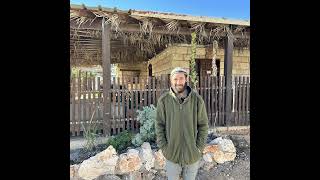
In this episode of The Kosher Teruah, host Simon Jacob interviews Yaakov Ben Moshe, founder and winemaker of the boutique Gatt Basella Winery in Esh Kodesh, Binyamin region. Yaakov recounts his personal journey from a Massachusetts childhood to Israeli settlement life, his involvement with the Hilltop Youth, imprisonment, and the founding of his winery by carving a cellar into the bedrock of his home. He describes the physical construction of the winery—moving the house, excavating, installing a crane, building a press, a custom HR&T still, and a self‑made cooling system—while explaining the technical aspects of grape sourcing (≈7 tons per season, including Muscat, Cabernet, Merlot, Syrah, Petit Verdot, and the rare Argaman), fermentation, distillation cuts, and aging experiments. Yaakov details his product line: a flagship Bordeaux‑style blend (Cabernet‑Syrah‑Petit Verdot), a fortified Muscat, a port‑style wine, a Merlot, and the Argaman‑based “Choshen”. He discusses his hands‑on, autodidactic approach, low‑budget label design, reliance on family and volunteer labor, pricing of grapes, and the philosophical view that winemaking is both art and science, likening wine aging to human development. The interview also touches on regional settlement politics, the growth of vineyards in the Shiloh‑Binyamin area, and Yaakov’s broader work as a shochet and steel‑frame contractor. Additional details reveal infrastructure challenges such as limited three‑phase electricity, reliance on a trickle of power, and storage constraints that affect aging decisions. Yaakov shares tasting experiences of his Merlot, the high‑priced flagship wine, and a unique fortified Argaman wine called “Ali Ustan” (14.1% ABV). He recounts early formative experiences working for a French‑born winemaker in Tekoa, learning batonnage/remontage, falling into a vat, and later supervising harvest operations on catwalks, witnessing accidents, and deciding to pursue a small‑scale, boutique operation instead of industrial winemaking.
Chapters
Welcome to The Kosher Teruah.
I'm Simon Jacob, your host for this episode from Jerusalem. Before we get started, I ask that wherever you are, please take a moment and pray for the safety of our soldiers and the safe return of all of our hostages. Our conversation today is with Yaakov Ben Moshe. Homeschooled with years of experience garnered while interning since his youth in winemaking, this boutique winemaker at Gatt Basella Winery in Esh Kodesh has created a unique establishment which he personally carved out of the bedrock beneath his home. Located in the Binyamin region, this area is known for its vineyards and wine production, with several well-known boutique wineries operating in the vicinity. Gattbasella Winery produces a number of wines including a Cabernet Sauvignon, a Merlot, and several blends, all with grapes harvested in vineyards surrounding Esh Kodesh. Yaakov also distills some of his wines, producing alcohol which he uses to fortify a simply delicious port offering he produces. If you are driving in your car, please focus on the road ahead. If you are relaxing at home, please select a wonderful bottle of kosher wine, sit back, relax, and enjoy listening in on this remarkable self-made winemaker and his incredible journey.
Awesome.
Yaakov Ben Moshe.
Yaakov Ben Moshe.
Welcome to the kosher terroir. We are here.
Thank you very much. You are giving me a little tour of the Yeah, I want to explain to you first what you're seeing, what's going on over here. Usually what I explain also to people that come by to the winery, I'll explain to you what you're seeing, what's going on. And so usually I stand people over here first.
Yep.
And I explain to them a little bit of history of how I actually got to live in Eshkol Dish, how I got to be here. So I grew up in the States till age 10. Where? Massachusetts. Massachusetts. We were in Maryland. Boston? Suburb of Sharon, Massachusetts.
Sharon, cool.
Yeah, and then, so I came to live in Israel with my parents, and I, very interesting teenage period, but at some point, we can get into it later, I joined what's called like the Hilltop Youth. Noar HaGvot. I lived in a cave for a while in Chavat Maon. I lived under an oak tree near Hebron.
In the big oak tree.
Givash Monaislev.
King, King, King, King, sure, sure.
You know Givash Monaislev? Yeah, yeah, yeah. So I was there for, I was one of the founders, if you could say. And then at some point I went to prison for some of my political activity, of course. And it's just another story, if you're interested we could talk about. And then I was looking for actually to begin my own hill, like my own giva, my own hilltop. I met my friend-to-be, we're still friends till today, who had just got married with his wife, a newlywed couple, and they were living on a hill 3 kilometers east of here, of Yeshua HaNeshamah. I had actually met them at their own Sheva Brachot. Funny story, I came to the Shabbat Brachot, some friends had set up an encampment for the Shabbat Brachot in the middle of the Judean Desert, near Ujjamanaka, if you know where it is.
I don't know where that is, but okay.
Behind the Ma'alei Hamos and Meitav, it's an old army post from the time of the British, I think.
Such a beautiful view of the mountains there, it's crazy.
It's crazy, it's like—
It's unbelievable.
They had set up this tent and they were doing a mangal, you know, they barbecue. And they were eating shishlik. I told them, you can't eat shishlik. It's Sheva Brachot. You have to have meat. Meat and wine. You have to have— So they said, where are we going to get meat? We're in the middle of the desert. I said, ah, what's the problem? We have a bunch of nareg vaut, you know, some wild kids over here. We'll go to the closest Bedouin tent. Tell them, you know—
Buy a goat.
Well, convince them that it's a good idea to donate one so they don't get a visit here from all these drunk guys. And that's what we did. And then I shected them the sheep right there on the hood of the Jeep. And now we had meat. So this is how I met this guy, and I told him I was looking for, you know, to found my own givai. He told me, listen, you can come by where we are, where I just built this house for my wife. We have another couple single guys. You can come by, but you can't live too close. Of course, the whole idea is to take up as much space as possible, right? So I had built my tent. I built like this tent about, I would say, 500 meters away from where he was. And I was living there. At some point I went with him to learn how to raise olive trees, g'dur ubal, which is raising without irrigation. I went to learn how to do this with him. And we left his little younger brother, who was then 15, to babysit the sheep and the whole hill, whatever. Arabs from the closest near town, Qudsra, they came, they attacked this little kid, this teenager. And basically he protected the sheep, but he was able to protect the sheep, but he sort of had to back off to where the sheep were. And my tent got— the Arabs burned it down with everything I ever owned, all of my possessions I have ever owned. Wow. Which wasn't very much. This is right after I got out of prison. I didn't have very much. And basically the only things that had survived—
Thank God he stayed alive.
Well, he— yeah. So he stayed alive. And the sheep were okay, but everything got burned down and everything was destroyed except two of my possessions, which was my cast iron tea kettle, which couldn't get burned from the fire, and my parchiyash, the Yad of my tefillin, which survived because of the explosion of a gas balloon that went flying and the outside got burnt but the inside was safe. So I didn't leave the area. I brought a mattress and I found myself sleeping on this mattress there in the middle of the this mountain, again, 3 kilometers from here about. Wow. And I brought out like a tarp, you know, to cover myself from the rain. And the Arabs didn't stop, you know, there. They used to try to continue on attacking us every Friday. They would get out of, you know, shul, or the mosque, and try to attack us. And they would come and start a fight. The men here from Esh Kodesh would come and try to help defend us. It was a very good arrangement because the men would come and help and then, you know, all Friday they would be in this fight and then in the evening they would come back and Shabbos would be ready, the kids would be showered and everything. It was a good arrangement. I get it. But at some point what happened was an Arab was killed during one of these fights and the army decided that enough is enough. They got sick and tired of it and they declared our little mountain over there a closed military zone. And that was, and then I, and then, and then, and now I found myself running away from basically from the army during the day and guarding from the Arabs at night. And it became a little bit too intense at some point. So we decided to dismount, to come down from the mountain for a little while and let things calm down a bit until things calm down. Then we would go back up. Now the end of the story is that today there's a Jewish settlement there. There's vineyards there that are planted. Kida's winery.
Oh, it's Kida.
Yeah, they have vineyards over there. And there's also people living there even further out than where we were. There are people over there. It's completely in Jewish hands. So that's okay. It's good. And what's ironic is that during one of these fights, I met my wife, which is a whole story in itself. But now we decided to get married and to live in Eshkol Dish. Now, when you want to live in Eshkol Dish, you have to build something. Back then there was about 17 families living here, and I, you know, turned to the community. I was a single guy. They told me, listen, if you want to build, we're working on the plan here, the architectural plan for the whole settlement, so you can build, but we don't know where. And I told them, listen, I'm going to build over here at the edge of the Yishuv. The head of security told me I can only build at the edge of the settlement. Which is right over there. That's where that tall tree is. That was my front yard. Now that was the edge. That was the edge of Eshkol Dish. That was the end. And everything here wasn't here back then. And they told me, this is public property over there. You can build over there, but you're gonna have to move your house. So I built the house, okay? Like this front cube of the house. I built it over there. Yeah. Okay. And this was about, 12 and a half years ago, almost 13 years ago. I built it over there, and I lived there for about a year and a half. And then at some point, we finished the plan here for the whole settlement, and I, you know, brought a tractor.
Yeah.
The tractor was standing— again, the house was over there. The tractor was standing right here where the porch is. Yeah. And sort of digging here into the mountain and digging this winery. Okay, then I poured a bit of cement around the hole, picked up the house with a crane, and put it on top of the hole.
Right.
Okay, and then afterwards I built the extension of the house, which is there, and then the porch and the yard. And it's an ongoing project. You can see things, a lot of things here aren't really finished because when I say that I did it, I made it, it means with only with my own two hands. Mamash. My friend helped me pick up the main beam of the house, but besides that, everything here I'm like doing myself. And then at first I had like this trapdoor that, like, you know, like in the Holocaust, like to get in. It wasn't practical at all to make wine like that. I'm talking about back when I was making like 50 bottles or something like that. So I dug out these steps.
You know what, I want to get a picture of you in front of the house. It's a sukkah, and then you cover it over the top.
Yeah, so this part I just leave it covered during— this other part, it has a tin cover, but I take off the tin. I take off the tin cover before Sukkot and sort of close it off. We have lights, whatever. And this is our sukkah. So now usually I take people, you know, to see the winery. So I have this 30-pound jackhammer that I like to work with, which I dug out the steps over here to the winery. Watch your step, it's a bit steep. I'm sure you can make it.
Yeah, I'm sure I can. Wow, it smells like a winery.
Yeah, because of the still. This is my new HR&T still.
Wow, love it. Yeah, I'm gonna hang that right there.
Yeah, no problem. So then I bring people down here, we, you know, we see the still, we see the, you know, the winery. And, um, so at first the, uh, at first the, uh, you can see the walls here of the winery are on a slant. You can see over here it's like on a slant. Yeah, because when the tractor is digging, it can't dig.
Yeah, all the way. You're right.
So the two winters ago, basically what I did— also these walls over here were also in the same, same situation. Two winters ago, I, I straightened them out with my 30-pound jackhammer, right? I straightened them out and, uh, and I was able to push things back. And then I had 2023 still in vats I wanted to bottle it. I dug, and then this past winter I dug out all these, uh, this shelving. Okay, also you see this is like 3 bottles deep over here, right? Uh, and then, and then I, um, that was, and then I bottled 2023, and it's most of it's here, here, and some of it's over here. These bottles are from 2012 and onward. There are different things going on here. Some of them, you know, I keep from everything I make, I keep a little bit. Just to see like experiments, aging experiments. This is 2021—
So this fermenting still? No!
I'm not talking about fermenting.
Okay.
I know what you're talking about, the bottles.
Yeah, no, no, I know, the vats.
The vats are this year's wine.
Okay.
There's different things going on here that I explained to my mom but just these past summer what happened was I reached a decision to really grow, try to grow as much as possible —like, so we excavated here much more. You can see this we did also with a tractor. Yeah, once you step over here, and, uh, and then, um, and then I dug out these steps also with the jackhammer, uh, poured the floor over here. You can see it's an ongoing project. It's all— it's great. Yeah, and we had to support the porch during the, you know, the excavation. Then I I'm building this wall over here to close it. This whole thing is going to be closed out. It's going to be a closed room.
Okay. Yeah, but you should be careful. You need ventilation. No, no.
So this is going to be like an elevator sort of.
Okay. So this is going to be open.
You can always open this up. Okay. Get enough air. Yeah, of course. You don't want to get— you need ventilation. And so this was just ready in time for this year's production. Wow. So these are this year's wine. Different things going on over here. Also this press, the hydraulic press I bought this year also, and it was a whole thing because it was in the middle of— I bought it, but it was 3-phase electricity, right? And I don't have 3-phase over here. We don't have the electricity here, isn't so stable, whatever. So I have 1-phase. I basically turned myself into a technician over here. I changed it to 1-phase. Wow. Okay, it was like a whole thing, like, and I had to do the press, like, I was like every day, like, working on it, going to Richelieu to get a piece and come back just to get it to work. And finally we got it to work. It was like, it was like a holiday. It was like, it was like amazing. Yeah. And so there's a lot, a lot of investment here. Like I said, this isn't my main, what I do for my living. So this is like— What do you do for a living? I do projects like B'ni Akkala, like panels, building with steel frames and styrofoam panels. So I do that, welding projects, and I have a bunch of stuff that I do. I'm also a shochet, I'm a caretaker by the chagim, or people that want to slaughter. This year was a little shvach because of the war. You can see here, when I placed the house, you could just understand what hasgacha happened here. I told the guy, he was in the tractor, he was standing right here where the porch is, right? Right. So he told me, I told him, dig a pit, 5 meters by 5 meters. So he's like, where? So I took 4 stones, I told him between the stones here, over here, and that's where we put the house. Now when we came to excavate over here, we were digging out and the guy told me, how much am I supposed to dig? So I told him, dig until I tell you to stop. So we're digging, digging, digging. This whole thing was filled with dirt, stone, right? And what happened is what we discovered, this is where the mountain starts. Yes. I placed the house right on the edge. Okay. Wow. Imagine like if it was another meter this way, it wouldn't have any support, right? It would stand.
That looks almost like a cistern, an old part of a cistern, right?
No, but it's not. It's, I mean, it was, you can see here we had to chisel a little bit, chisel over here. I know, but there That's so smooth. What? No, this is the cement. That's just, that's just poured cement? This is concrete that I poured, yeah.
How did you get it so smooth like that? It was, it was in a pack. Okay, you put like a case.
Okay, so very cool. So it's that the house is right on the edge of where the mountain actually begins. So it's like, uh, yeah. And like I said, everything I do by myself, things are moving like a little slowly, but yeah. Amazing. That's basically it. And then after I explain to people that, I explain to them about the process, what fermentation, you know, we go, we pick the grapes in the cool night, you know, in the summer when it's nice and cool and why it needs to be cool and the whole thing with, you know, keeping the yeast from reproducing before the grapes reach, you know, the environment.
So you get a hot day and you get Very cool nights.
Right. So what I tell people, first of all, is that the legend, and I don't even remember where I got this from, but the legend basically is that after the Six-Day War, people came to this area to volunteer for the archaeological dig in Shiloh, where the Mishkan was. And then they wanted to volunteer. On the excavation. That was how they were allowed to stay here in the area. And then they slowly brought the— they had to build some tents to live in. And then they brought their wives and then they pulled some electricity from somewhere. And that's how you have modern-day Shiloh today. But there were some guys over there that were very, very interested in making wine. Planted some vineyards, didn't think very much of it, but they planted whatever they could get their hands on, Cabernet, Merlot, whatever.
Yeah, I know. One of the first ones.
Right, so there's a few. Ira.
Ira, of course. Ira is a friend. I know Ira for years.
So some of the grapes here are from there. Yeah, of course. And some of my— one of the wines that I made in '21 was made— I'll get into that in a second. Anyway, so these guys planted a vineyard and then they didn't think very much of it, but at some point one of them had some type of a Proteccia. This is a legend that they got the wine into the competition in France to the sommelier, and then they loved it, and then they were like, wow, there's amazing potential. Where's it— where do these wines come from? And they figured out— they came back home, they're like, wow, we have to figure out like how we take this potential and, you know, and build it up. And they— how this area was discovered to be an amazing, amazing, you know, terroir. Yeah, amazing, you know, potential over here. And that's how this area became to be. There's so many wineries here and so many vineyards. And the way it is, people plant a vineyard here and you can make a lot. You buy the grapes here for twice as much as what grapes cost in, let's say, Beit Shemesh area, for 4.5-5 shekels a kilo. The cheapest the winery here pays is 10 shekels a kilo, about something like that. It's amazing. And the reason they're willing to pay so much is because the wine from the grapes here winning national and international prizes every year. Right. So I'm making, I'm living in this gold mine of making wine, prize-winning wine. So how can I not make wine? I've been making wine since I was a teenager, even before, since I was a kid. I remember myself going and picking grapes and playing around with fermentation and so on. So I live in this goldmine of potential. How can I not make wine?
So who helps you? Anybody helps you? This you do by yourself? I do.
So I have my wife and my kids. They come to the grape picking even in the middle of the night. We go with flashlights and we pick. But because it's growing to be a bigger— So this year I had some volunteers also. Showed up. Or, you know, we have this whole thing over here with kids, child labor. Yeah, I know.
Baruch Hashem for all this.
Connect the kids to the— and no, they pay— we pay them, you know, 7 shekels per box of grapes that they pick. And, you know, we go to the vineyard and you advertise on the WhatsApp group, you know, we have a grape picking from 6 in the morning, come on. And the kids show up, we pay them cash, you know, whatever it is for each box.
I have a friend in Itamar, Tomer, Tomer Pinini. So he has a vineyard called Tom, and I've harvested there. But all these kids come out of the— all of a sudden they come walking up the road. It's amazing. Right.
So here it's like the kids here, they get rich. My kids, they, you know, all of a sudden children are willing to get up at 6 in the morning, 5 in the morning, and go out and pick grapes work hard. This is something that's very, very rare in today's world, that kids are willing to do this. And how much they get paid, you know, after working for, you know, 6, 7 hours, they end up, you know, with 70 shekels, whatever it is, but it's money. Spending money, yeah. But more important is the ethics that they're getting here from the work.
So you used the press this year?
Yeah, yeah, we used the press this year, and I had bought secondhand also this pub. I also changed it to one phase and I also got it working. This crusher I also bought secondhand. This stuff is very expensive, but I wasn't able to get it to work this year, so I reused this one. Right. But it's okay. So I've used that.
I've used one like that before.
Yeah, so, but this one isn't, it's not tough enough to take these amounts that we're trying to do.
Right. So how many tons of grapes are you getting in?
Wow, so it's a good question. So there's different types of grapes also. There's the good quality grapes, which are expensive, and then there's grapes that I use for other things, or let's say I make muscat.
Is it in English? Muscat. Muscat. Is it sweet?
Right. The Muscat grapes, they don't grow here in the area and they grow up north and they're a bit cheaper than that. So I went out and I bought about a ton and a half of two different types of Muscat, the red one and the Hamburg one and the Alexanderorni. And I like to play around with those grapes also. So I bought altogether, we did the count, you know, for the True Mountain Marsot, it comes out that I think we're somewhere around 7 tons came in, maybe more. Okay. About 7 tons, I think, came into the winery. So that's what's— Wow. Yeah.
So how many bottles does that turn into, approximately?
0.75. So it's about 10,000, but But not all of it's gonna turn into wine that goes into a bottle. Some of it's brandy, some of it's distilled alcohol that I use afterwards for fortifying my muscat. It's just something that I started telling you about, something that I like to experiment and do things. I'll tell you, wine— what I tell people is wine is a combination between a art and science. Okay? And people need to understand that you need to stay inside the lines of the science. Yeah. Otherwise, your wine is not gonna— it's not gonna be good wine. But on the other hand, the— what's the word I'm looking for? The expression. Yeah, the self-expression of the winemaker comes inside the, you know, the Mizgirah, the box of the science. So you express yourself within those lines. And sometimes I like to go out, even out of the lines. Out of the box. Out of the box. But that's something that I do. But not with— so I make traditional Cabernet, Merlot. I have my special, you know, two blends that I make, uh, one of them like a Bordeaux-style blend, uh, you know, Cabernet, Shiraz, or Syrah, and Petit Verdot. And, uh, this year I actually added a little bit of Merlot to it to see what happens with that. So those are like the more traditional types, and the wine comes out amazing. Not just because of me, I'm not, you know, but because of the grapes here, okay? I'm talking about— and then there's things that I like to play around with, like my Muscat that I fortify it with alcohol that I distill here from, you know, myself. And that's something that's more like out of the box. I don't know, I haven't seen many people that actually do this, that take a Muscat and fortify the wine with alcohol. You can taste it. Cool. Yeah. Come. Wow. So that's basically what I tell people. Another wine that I love making is my, like, Port.
Yeah. So it's also fortified?
Yeah, yeah, it's fortified. And I would say the Port is like a port, right? So you're not supposed to call it Port. Some people, you know, say style, Port style, right? So I, after a little research that I did, there's a wine that was a dessert wine that was drunk back in the time of the, I don't know, in the time of the Tanakh, but in time of Chazal, they would drink this type of very concentrated sweet wine. This is only one of the only sweet wines that they had, and the way that they would make it was, they actually, I think they imported this tradition from Cyprus, I think. Okay? And the only factory that was found in the archaeological digs in Israel was near the Yeshiva Nevitzof. And they found these huge circles, well, not huge, but these 3-meter diameter circles of stone that they didn't know what it was. And they figured out that this is a factory for making this wine that's called called Al-Yustan. Okay, Professor Zohar Amar and Shibi Dori, they have this whole thing that they, you know, they have articles about it, academic articles, and they— it wasn't fortified, but what they would do is they would take the grapes, dry them out in the sun, and flip them, turn them, you know, every 3 times a day for 3 days, and it would come out sweet very concentrated wine. So I do something sort of like that. I do fortify it a little bit. I dry them out in the sun. It's this whole thing. And then, but I, and I do fortify it with a little bit of alcohol to just put, you know, as a preservative, like, so it doesn't rise the alcohol level a little bit. But it's not too, it's not too strong. It's, it's 14.1%, which isn't—
it's interesting. So that was kind It's coming through. The alcohol is coming out.
Yeah, yeah. Slowly but surely. It's coming, it's slowly and surely, and it's reaching the lower side, which is fruitier and more concentrated on taste, but lower in alcohol. This is a Charentais. You know how it works?
No. I'll explain to you.
You know, a regular still, you know. Yes. Right? Yeah. So basically, what's going on here, I see it has a little leak. Away.
Don't worry about it. Don't worry.
Okay, it's okay. Uh, basically it's a— steam is coming up through. Yeah, so it's a regular still. The steam comes through here, and then basically the— there's a coil here that goes around and around and comes out over here. Yeah. Okay, so this is just like a pot with the coil. It's like this one, but instead of having water in it, it has more wine. Okay, you can open it up, you pour wine in it, and you have the faucet here which is closed. And it heats the wine here in the meantime. Okay. So at first it's using the wine to cool the steam. Okay. And then as it heats up, now it's getting really hot. And once you're finished with this one, what you can do is just open it up, take it out, close it up, and open it up.
Now you have already hot wine that can go back in.
Then you can refill it and you can just keep— it's to save energy.
How empty does this become? It goes all the way down to the bottom?
You can see it was up to here. And this is about, when it's finished, about 9 liters came out, right, out of 27. Okay, so it'll come down to here, something like that.
It comes up. So then, but you need to, you need to, what you call it, you need to, um, empty it first. You can't just keep refilling it. No, no. Well, why do that? You're gonna— no, no, the question I have is, it's, it's because it's already taken the alcohol off of it. So isn't it more concentrated then? No, it's more liquid, it's more water.
Yeah, there's nothing.
Okay, okay, there's no, there's no alcohol in there anymore. Okay, because of that. Okay, I see, I understand, 100%. I don't know what I'm thinking, you're right, 100%. Yeah, no, it's a good question because I've never seen that where it refills the wine back. It doesn't refill, it takes the wine, it keeps it warm.
The idea is here It's very hot. The idea is that you're saving energy. Okay, right. That's the idea. And this is a cooling system I built out of an external unit from the air conditioner. Right. So you just sort of close the circuit of the gas with the coil. So instead of cooling an internal unit of air conditioner, it compresses the gas and cools this coil, which cools the water. And it circulates with a little fish tank pump.
Yeah, so it circulates into this, so that coil goes into here. Okay, I see. That's— I was wondering where— I was wondering where the water cooling was coming from. It's coming from there, right? So this is just a secondary step in order to keep it, um, to warm the wine and to use it as the initial coolant.
Well, it cools at first, it cools these somewhat, but then as it heats up, and then now you have nice hot wine that's ready to to start. Once you take this out, you can immediately open it up and you have one. It'll just keep going, and then you can fill this up again and keep going.
So doesn't this— how does the wine originally get in there? This doesn't feed the wine. This feeds into the cool— this feeds into the core. Open the top here and then just pour wine. So it's just a pot of wine. Okay, that's what was confusing me because I'm seeing it, it looks like a closed loop, right?
And I'm going like, how do you do this?
This is this, and yes, this is its own, and this is this. Yes, you got it, got it, got it, got it. And that's showing the volume, that's showing the volume that's left.
Oh, it's because it's the wine, it's dirty, so it's— yeah, because it's hot, so it, it, it expands, so it's not really that full.
It's right, I get you.
It's not the most sophisticated. No, no, no, no, no, no, I'm not saying— I'm not saying it's not the best quality thing. You have these things that are big and expensive expensive. And this is like, whatever. I, I had this one before. This is, this is the one that I had before. Yeah, served me for a few years very well.
But, um, so what type of, what temperature do you need to run this at?
So stilling alcohol is completely, you know, it's a whole— yes, science— it's a whole science, a whole branch. But basically, um, like water, which cannot rise above 100 degrees Celsius, right? What is it, 212 Fahrenheit? So the same thing with alcohol. Alcohol steam will only reach a certain point and then it'll evaporate, like an evaporator. Just totally evaporates. And comes out. So what happens is that you start, the distilling process will start basically at It depends what type of alcohol. There's many types. There's methanol, and then there's acetone, and ethanol.
And so how do you make sure that you're not getting the bad type?
So first of all, temperature. Yeah. Okay, so the first, when you're distilling at a certain temperature, you make a cut. Okay, meaning whatever's coming out here, you see this is the cut. Okay, so from one temperature, from 60 from 68.4 and onward until 82. Right. Okay, 84, if you're a machmir, you're okay. Then, no, that you cut out, you take out, that's methanol. Okay. And then you start getting other types of alcohol coming out. Right. Some of them just don't taste good and you're No, but some of them can kill you. Right, right. So the methanol, so I'm very machmir that I take out much more than what you should. So I do have a little bit of brandy over here that I age brandy. You can taste also if you're interested, but I mostly use it for fortifying my wines.
I would love to taste some of your wines.
Yeah, let's taste. Tell me what you're most interested in. I for sure want to give you to taste the Muscat, the fortified Muscat. Yeah, I want to taste that. I'll introduce you to it. Go ahead. From the— we're talking about 2023. Yeah. So I have a Cabernet Sauvignon. Beautiful. Okay, which actually has an interesting funny story about it. So I'll tell you what happened is I was at this wine fair in Yafo. Yep. And I was— it was actually a little bit strange that I actually showed up on time. Yep. Actually before, you know, before the time. I showed up before and I was already on time and I had my, you know, I had my wine set up and I had my little roll-up, you know, that has my story on it and whatever. And who comes early to these things? Uh, you know, journalists, you know, people that want to, you know, photographers. I don't know. So the— so, so I had everything set up, and this guy, short, short guy, bald, short guy, walks up to me. He has a notebook in his hand. Like, who runs around? Who goes around today with a notebook? This guy has a notebook, and he looks at me, and he looks at the— he looks at the wine, and he looks at the roll-up, and all of a sudden he screams like I don't believe in God. I told him, what? What are you talking about? What does that have to do with me? What does that have to do with anything? So he says to me, and then he looks at me and he looks at the roll-up, he's like, and you're a settler too. I said, dude, you want to taste my wine? Like, what's the story? What's up with you? Like, he's like, oh, what do you have to offer? I'm like, okay, well, taste, whatever. He And all of a sudden he screams, "I was more religious than you are!" Now this guy obviously has something, you know, with, uh, an issue. An issue, I don't know, whatever. So I, you know, I was polite to him. I told him, "Listen, you want a taste? You want to?" "Okay, fine, give me a taste." So he gives me a glass, I pour in, you know, some of my Cabernet Sauvignon. No, first I poured in the Muscat. He tastes it and he rolls it around his mouth a bit. Give me another one. Taste this, taste this, taste this. And he tells me, you know who I am? I'm like, no, who are you? What's your story?
He's like, I'm Jonathan Livni. I know Jonathan Livni.
Wow, wow. And I'm like, okay, I'm Yaakov Ben Moshe. Like, it didn't mean anything to me, right? So this guy, so he's like, no, you have to understand. I was Haredi. I was religious. I went to Harvard. I have a degree in law and I learned this and I did that and I'm a successful person. I'm like, okay, fine, and I make wine like Naim Rod. He's like, no, you don't understand. I write for École des Châteaux. Okay. Yeah. I didn't mean very much to me. Like I said to him, nu, stop, you know, what do you want from me? Do you like the wine or you don't like the wine? He's like, no, you don't understand. You don't understand. The problem here is that I like your wine. Your wine is amazing. Your wine is exceptional. I'm like, nu, so very good, so buy a bottle. He's like, no, you don't understand. He's like, now I have to write about you. Now I have to write about you. I said, nu, so write about me. No, but you're that. You're a settler. And you're this. And you're religious and this. I said, dude, what does it matter? So he's like, okay, fine, give me your phone number. So he gave me a phone number and the next day was Friday. I sat down with a coffee and we picked up the phone. We were on the phone for at least an hour and telling him about this wine and this wine and so on and so forth. And he wrote— so the whole thing I was telling you about this is that, you know, it went into the article, whatever, is that what he wrote about the Cabernet Sauvignon He's like, listen, what can you already say about Cabernet Sauvignon? Like, everybody makes Cabernet Sauvignon, and like, what can you already do something interesting and new about Cabernet Sauvignon? What is there to le chadèsh, you know? What can we do about it? What's new? So, so he's always like, but this Cabernet Sauvignon is very special. So if you want, we can open a bottle of Cabernet, you can taste the Cabernet. I'll introduce you to the, to the other 3 red wines that I have from 2023. There's the Merlot, which I hadn't opened a bottle for at least 2 months. I had no reason to open one because I don't— also, when people come by, I usually don't refer them to the Merlot because I thought that it needed more time. But I did open one actually last week. Yeah. And, um, it was actually a second wine that I opened. At first we were drinking something else and then, and it was, it was amazing. It was really amazing. So maybe it is ready to drink. The other two red wines I have are blends. So there's my flag wine that I would say my, the flagship wine of the winery, which I call Yoshvé. It's a blend of Cabernet, Syrah, and Petit Verdot. And And it's— I perfect every year that goes by. I perfect it a little bit more, do something a little bit different until I finally reach the final, you know.
What do you look for from that wine? What's special about it? I wanted to—
so this wine is a wine that I want to represent the blessing that's going on here in this region. And what's special about blend is really when you're trying to get all, you know, composition of different attributes of each, you know, different, um, each variety. And so that's what's so— that's what's so good about this is that— and, and I'm trying to bring that to the— to its height, you know, to its peak, to its potential. Because when you drink Cabernet, so you could taste it's a Cabernet, and Cabernet represents its terroir very, very authentically. Wherever you raise the Cabernet, it's going to present that specific terroir, raise 4 or 5 Cabernets in different parts of Israel, you're gonna get— you behave with the same exactly, same yeast, same brick, same vat, as you know, same barrel, same everything, you're gonna end up with 4 different wines. Yep. But, uh, but, uh, so I'm— so, so what I'm trying to do here with the blend is to— for it to represent authentically the way that each variety, you know, grows specifically here. And I'm trying to do that. And also careful with the barrel because some people tend to add too much, you know, barrel to the wine and then you're drinking basically oak juice.
And so these are new barrels or old barrels?
So I do different things. With the— also, I work with old barrels, and I also work a little bit with chips. I'm not ashamed of it. Yeah, no, no, no. Okay. I think it's a great thing, you know, oak chips. And what's so good about it is that you can really control what, you know—
Exactly what the— what you're doing.
You can know much better. And I know big wineries— I won't go into names, but there are big wineries that that use a lot of chips. Okay, and the whole barrel thing is like more of like a— it's sort of like a play or I don't know what they're doing.
So there's two reasons to use oak. Right. One is to impart flavor.
And the other is oxygenation.
But the other is oxygenation. It's true. So you don't get the oxygenation, but you get the—
So it's a question. I really, you know, what I've seen over the years, and I don't have so much experience like big winemakers, But what I do see is that in certain types of vats, the valve is not— the valve is not completely sealed. Right. Okay. So the oxidation that goes on, it may be, you know, so you get the part of the wine that's near the valve is getting more and less, but in the end it does get mixed. Maybe what I'm saying is not true. Yeah. Okay. But I'll tell you something about this before I— is that in the time that's gone by, and I try to look into these things more and more, what happens is that sometimes I go to professionals that I really think of them as professionals, okay? People from Yaakov Shilo or Yeshivi Drori, for instance. And I go to them, I tell them, listen, what's going to happen if I do this and this and this, right? And in the end of the day, you know, I get answers like, Really, we don't know because nobody actually does that because we don't check because we don't believe in doing things like that because it's not, you know, it's not the operation, it's not the procedure, right? It's not, how do you say, masorti, it's not traditional. Yes. So we don't do that and I don't know what the, I don't know to give you a correct answer because I get it because we don't do that. So they don't know. So these are some gray areas here where the professionals don't research because nothing's going to come out of it for them. So I don't know. I'm getting good results with what I do.
So why not? And it's also, you're being creative. You're trying to express your own creativity. Exactly. What did you get any training in wine making wine?
So I'll tell you about my history in wine making. Okay. Wait, there's one more wine I didn't tell you. I'll tell you about one more wine and then we'll change topics. Good, no problem. So the last wine that I make is, I was, how do you say, a miksafti, I was a I don't know. I'm sorry. No, I was introduced. I was introduced. I was introduced to this variety of grape, Argaman. Oh, sure. Okay. So most people, a lot of people have never heard of Argaman, which is a shame. And I figured out that this is a—
It's very hard to deal with, but yes.
It's hard to deal with and it's very watery. It's not— it has an amazing color, but it's— and I said to myself, why aren't people raising this grape more, playing, you know, using this grape. People use it for color, but— and, and, uh, so I, I sort of developed this wine that I, um, was able to produce in a large portion on in 2023. It's a little hard also to get your hands on this Algarban because it's right, it's a little, you know, so not all people— not a lot of people raise it. So I was able to get my hands on some and I made a wine that I call Choshen. A whole explanation on the bottle, you can read it if you want. And it's a blend based on Argaman, but I bring, you know, some Cabernet and Merlot. And this year I also added a bit of Shiraz also for the more, you know, for, not for color, for flavor and for body. Right. And, And so that's my other one. And I do add a little bit more oak in this one for people that like that aspect of the wine. Okay, let's try the reds.
So you— Yeah, yeah. Just over the— Good. That's good.
Okay, so which one should we start with? Whatever. Personally, I think we should start with the Cabernet.
Cool, let's try.
Let's start with the Cabernet. I also, it should have, I should have wine bottles with labels in English, but they're somewhere deep there. Don't worry about it. Don't worry about it. No, I know. I was just saying, every time I, you know, I think they're buried there in the bottom for some reason. But, you know, this whole thing with the—
Who designed the label? So, oh, so the label.
So what happened was that I, you know, it started to grow. To get normal labels. At first, the labels were like terrible at first, and like stickers. I was sticking stickers on by hand. And so what happened is I, you know, I developed a logo for the, you know, for the wine, a name and a logo. And then I went to a graphic artist and I asked her how much she's going to charge me for it. She told me just for the logo, like 2,500 shekels. So I said to myself, you know, I'm not that type of person. I'm an autodidact, you know, we do things here ourselves. We're not, you know, I was homeschooled ever since I was a kid. You know, people ask me, how do you have time to learn to do all this stuff? How do you? Listen, I didn't go to school. I didn't waste my time in school. I had plenty of time to learn. Right. If you want, I'll tell you more about my history. You asked me about my history, where I was working in the wineries when I was a kid instead of going to school. And so I said to myself, listen, 2,500 shekels, I can— That's a lot of money. I can buy my wife a laptop and she'll do it. So that's what we did. So I bought her a laptop. I should have bought her a more expensive one, but I bought her one for 2,500 shekels. And I told her what I want and she worked on Canva. And this is what we did. This is the first time that we did it with the machine. You know, you turn it by hand, right? So this is the first time, uh, that it came out like this. And we have where to, you know, yeah, advance to a little bit. But this is what came out. And this year we hope to do it even better. So this is the Cabernet.
Wow, this is the Cabernet Sauvignon.
Yeah. It's pretty fruity.
Yeah, it's very fruity. It's very good. It's very good. Very interesting.
It's not typical.
This is what year? This is 2023. This is a 2023.
Wow. So it's a bit young, but it's, uh, people have this thing with, with old wines with aging wine. And what I tell people that come here, you know, this is one of the most, you know, most asked questions that people ask me is like, you know—
How old will it age?
Aging and aging and aging. And I tell them, listen. No, I tell them, listen. I have this whole thing. Wine is like a human being. It's the same exact thing. And everything depends on a lot, a lot of different perimeters. Right? You say in English, parameters.
Parameters. Parameters.
Not perimeter. Parameters. Parameters.
Parameters. Yeah, you're okay.
Yeah. And so it depends on, first of all, on genealogy. Just like a human, it depends on the genealogy, where the vine came from, and then where you planted it. Like, just like a human, you take that most amazing human being with the most biggest potential, you plant it in a bad neighborhood, you're not going to get a good human. Same idea with the grape. You have to plant it in good soil, good terroir. And it grows, and you have to prune it a bit and make sure that it grows in the right direction, and you water it, you fertilize it, you know, give it a lot of, you know, a good environment, and it grows, and then you get grapes, okay? Then you have, you have like the, the, you get the actual, the human being develops into something, and then you have these grapes that have a potential to be turned into something, and you take the grapes and you crush them a bit, just like a human needs to be a little pressured, you know, a little crushed, a little crushed, and it goes through fermentation. And just like a human when it's young, like, you know, a small child develops very, very fast. You look at it one week and you come back the next week, it's gonna be completely different. Same thing with the wine when it's young and when it's in the vat and fermenting, and it moves very, very fast. Every hour, every— you're gonna come back, it's gonna be different. Different things are gonna be happening in the fermentation and changing all the time and developing and moving and moving. Moving, moving, and then you press it and squeeze it and you get out the good part. You get out the juice and you throw out the bad part. And then you end up, you know, with the wine. Things start coming down and it moves a little bit slower, you know, just like a human when it gets a little bit older, they move a little bit slower, but it becomes wiser and more with more depth and more, you know, and then If you behaved correctly, you protected it from bacteria and from external, you know, from oxygen, from bad things, bad influences from the outside, then you end up with a human or a wine that has a potential to age correctly and become a productive, good, you know, something when they're older. It's the same thing. So you— it doesn't— what matters a lot, a lot on the potential of how you than what you started with. And then you could talk about aging. And some wines are not good, they're not meant to be aged. Enjoy it the way it is. And that, it's not going to develop, it's not going to go anywhere. And then you have wines that are, that they're going to be much more, you know, they're going to be much more of what they are now. And they're going to be productive and they're going to be amazing for the next, you know, whatever. So that's, that's, that's So I like to age everything. Every wine that I make, I put aside a certain amount so that I will, you know, it's a learning process for me to learn, you know, and how much can you write down what you're tasting and what it tastes like? And you have to remember what it was and what it became. And oxidation, you know, open a bottle and then leave it open for another you know, for another half a day or a day and then come back the next day and taste it and see what it— how it developed. It's an ongoing process. It never ends.
No, it's— yeah, it's very interesting with it. Tell me, what should we taste next?
What should we taste? So maybe the flagship wine. I don't know. Okay, so let's taste it. Let's try it. Yeah. Let's move it on.
It's so beautiful up here.
The vineyards are asleep, but— Yeah, I know.
What's on top of that? It looks like a chuppah.
There's a pergola there. Yeah. But yeah, it's like a mitspeh, like a lookout. But Really, the mountain over there, if you look on the side of it, it's already, the whole other side of the mountain is already developed. That's Achiyah. Oh, that's Achiyah? Yeah, so they're developing over there. And one day there's going to be a lot of buildings over there. That's what the, at least the Moatzah here, is planning to build a lot, a lot of, planning to be a lot of building going on after the What's that over there to the— That's Achiyah.
That's Achiyah, so that's stretching.
Yeah, they're very big. Wow, wow. So that mountain and the next mountain is also supposedly theirs.
So what's going to happen then with Esh Kodesh?
It's supposed to be legalized. Okay. We had a little bit of a fight with the Moatzah, with the about how many people to stuff in the area over here, right? We wanted, you know, less people and, you know, more spread out, but we got over it. We finished the fight and now, uh, that's it. So I'm gonna wash out the cup a bit. It's okay. I'm interested to hear what you have to say about this one, because, uh, this is a blend. It's a blend of Cabernet, Syrah, and Petit Verdot.
Okay, this is really Lovely.
It's really nice. All 3 of the varieties were raised, mamash, in Enik Shilo, like in the Shilo Valley, which, you know, has the whole Tubal story with the maidens over there. And yeah, so this is sort of bringing Bordeaux to Israel. There's a whole theory with Shibidoria that, you know, that maybe the varieties, the top varieties there in France originated maybe here in Israel. In Choliot. From the, you know, from the time of the Chorban Beit Hamikdash.
The last one is the Merlot. Yeah. These are what? These are olive trees?
No, so sadly enough, these are, you can see these are grapevines actually.
Oh, they're grapevines.
The bottom ones. On the top, they're a little bit of olive, but these are the grapevines that were uprooted because of the Bagatz, you know, the Supreme Court order. Really? They were owned by Meshach Ahia over there, near Sommet Yeshuvadat over there. So they told them, either we're going to come with the police and uproot it, or uproot it yourself. So they said, oh, we'll uproot it ourselves. They uprooted it, and now they're— it's not like the Arab came and started cultivating the land. Nobody's gonna let the Arab near there. So now they raise yearly things like hay and stuff like that. So this is the merlot. So you use it for firewood? Yeah, because the electricity situation here is not— because Eshkol Yishmael is not completely legal at the moment yet.
So we don't have real electricity here. That's why you only have one phase.
So there is 3 phases here, but it's not like they all work. They're not going to all work at the same level. You can use 3 phases here. I just, I don't have personally in my house at all. Also, I don't have. So what happened is that we pulled electricity from Achiyah and they pulled their cable from Shuvut Rachel and they pulled the cable from Shilo. So until it actually gets here, we get like a little trickle of electricity. And when people are actually actually using the electricity. Like on Friday, you really do not have enough power. Like you're supposed to have 220 volts in your socket, you can have sometimes 160. Appliances don't work. People send on the WhatsApp group, you know, shut off, everybody shut off one appliance so that we can bake for Shabbos and take a shower. And we have the same size cable that we had back when there was like 40 families and now we're past 100 and something, 110, I think, or I don't know, something like that. Wow. The situation is going to improve hopefully soon. And, uh, we do, you know, we deal with what we have.
Oh, this is definitely more low. This is what year? This is 2023. This needs more time. Needs to settle. Right. This really needs to settle down a bit.
So that's why I tell also people who come by and ask me, what wine? I say, listen, 'Let's leave it, come back next year, we'll taste it more.' Actually, I enjoyed it very much as a second wine, like after I had a steak with the Cabernet, then we had— I opened the bottle of Merlot.
Very often it depends on the company. If the company is good, it's amazing. What, the straight Merlot? No, the wines. The wines taste better with good company.
Ah, you mean with the people.
Yeah, the people make a big difference. Yeah, I like this. This you really need to keep— to age more. You were right. You need to let it settle a bit more. Right. This is delicious though. Yeah, they all are, but this one is really special. So this one sells for $180? No, $150. $150.
But because I don't— you can see the situation, I don't have so much room for storage. Right. So I tell people, listen, if you want, you can buy and store it yourself, because if I age it for you, you're gonna pay for it, and I'm gonna raise the price at some point. There's one more wine also. There's my Port. I don't know if you're interested in tasting. I put most of the Port into aging for a little bit longer in oak barrels. Yeah. But there's a few that, uh, there's like, uh, I think like 50 bottles of 500 liters, 500 milliliters that I, uh, that I, that didn't fit in the, in the, in the barrel for the continuation. I bottled them and we're working on the labels at the moment, but if you want, you can open them up. I could taste it also if you're interested in import.
Do you have any crazy wines we haven't tasted? What do you say? Do you have any crazy wines we we haven't tasted?
Uh, I think this is the pork.
What? It's the pork. Okay.
I personally think it's very unique.
You know what, I'll taste it.
I'll taste it as well. Okay. Okay, so there's the, uh, yeah, so that's— we're working on the labels now. Okay. I brought the mechitzot and maybe wipe them off of that. Here, I'll pour you and then I'll organize. I'll do this. So I was able to find you a few Yoshvez with English labels.
Okay, good.
Which is amazing. I didn't know where they were. I didn't know they were there, but I guess I— Great. Okay, so in this court, the Al Yustan, what I call, is— I also, I use the Argaman. Oh, cool. So that's— So you got an amazing color here. Look at this. And, uh, yeah. Wow, these are great. It's fortified, but it's not, uh, it's not too strong. This is like 14.1%. Wow.
I'm glad I tried this. What do you call it? Ali Ustan. Ali Ustan.
Yeah. You wanted me to tell you about the history, no? Of how I got to—
Yeah, I want to know that too.
So basically, I was raised as a homeschooler. Like, I was in the States. When we made Aliyah, we moved to Israel, I Your family was religious in the States? Yeah, my parents are Chasdim Yitzchuvah. Okay. So when we made Aliyah, I was homeschooled, which is whatever, it's a whole thing. The authorities actually showed up at our house and started threatening my mother to enroll us in school. And she told them, listen, We basically, you know, we saw the Kotel, we were at the Israel Museum, and if you want, you can deport us, but we're not, you know, we're homeschooling. So they harassed us every, you know, 1st of September, they would harass us a little bit, whatever. But in the end of the day, I was homeschooled. I had a lot of time on my hands. And there was a winery in Tekoa where I grew up. And there was a French guy there. Yeah, named Dov Levi Naimund, who had made Aliyah from France, and he invested his whole life in planting vineyard over there, and he dug also a winery under his house. And I didn't understand very much about wine back then, but for me it was cool, like, working in the winery. Um, people that would taste the wine would, would say that the wine, you know, a lot of times I would hear them saying the wine is like, not bitter, like chamutz. But whatever, it wasn't even important to me. Like I was working at this winery and he wanted to have hashgachaal, so he wanted to be kosher. He wasn't shomer Shabbos. So he wanted to have hashgachaal. So the mashgiach told him, listen, you're not shomer Shabbos. So I ended up being the worker and the mashgiach at age 14. I was working in this winery. I found myself sometimes working for like 10, 12 hours a day bottling, you know, remontage. I remember him screaming at me in French, right? T'as fait remontage?
Remontage in French means mixing the— Yeah, they call it batonnage.
Batonnage and remontage. Yeah, it's the same thing. And mixing it. And one time he had me jumping inside the vat with people peels, like a huge vat in my underwear.
In order to, what you call it, in order to break it.
To break the cap. Yeah. And I fell into the cap up to my armpits. And then I, whatever, with the carbon dioxide.
It would kill you.
That's what I'm telling you about this. You need to have ventilation.
I know, it was crazy. Yeah, yeah, we're going to have that.
You can actually die. Yeah, yeah. No, so it was—
and then there was no water in the faucet to wash myself off afterwards. It was this whole thing, whatever. This old crazy French guy. But that's how I fell in love with with making wine. And he also gave me a lot of, you know, an idea to dig under your house. So that's how I— and then at some point I went, I saw an advertisement, they were looking for workers in Karmel Mizrahi in Zichron for the summer, for the harvest. And they gave me this whole thing and this whole lecture, you can live here and you can do that. And I ended up, I told them, okay, I'm gonna come by and work. And they told me basically, when you show up, we were like 35, 40 people that showed up to work for the summer. And they said, if you leave early before we release you, then you're signing here a paper that you give up half of your salary. And in the end, and I found myself in Zichron on the top of the 12 12-meter vats, okay, high up in the sky. And my job was, instead of a machine doing this, my job was to every couple of hours open up the vat, huge vats. I'm talking about like, I don't know how many cubes of, and the trucks would, I would see the trucks under me pouring the grapes into the pit, you know, the same pit that they use since 18 who knows what. They just added a snail into it. And they're sucking the grapes in, the trucks would come and pour the grapes in. And then do the crush, and it would go into the vat. And my job was to every couple of hours open the vat and look and see where it's— what level it's at. And when it reaches the right level, to close the faucet for this vat and open the faucet for the next one. Because why don't they have a machine doing this or a computer or something? Because one time they did have one, and it didn't work, and they had grapes Pouring over the top. Pouring all over the top. They didn't want it to happen again, so it was worth it for them to pay me this crazy salary of, I don't know, what was it, 6,000, 7,000 shekels, which was like nothing, for sitting there for all this time, wasting my time doing nothing.
Were you on at least a catwalk, or you had to climb a ladder?
No, no, I was on a catwalk. Oh, okay. And I was sitting there learning Torah, listening to the radio, you know, and I love learning philosophy. I was learning Rambam, which was amazing, but it was like boring. I want to do something. Super boring. And also I saw a few accidents happening there during that summer. Somebody got caustic soda poured on him. Wow. They have, thank God he knew what he was doing and they have these emergency showers just for this reason. And he jumped into the emergency shower and he was saved. Some other guy, a pump fell on his leg and broke his leg. And I figured out I don't want to work in the big industry. I want to do something small. So that's one of the reasons that I'm just living here. This potential gold mine of making prize-winning wines.
Everywhere you look is vineyards. It's unbelievable here. It's unbelievable.
So how can I not make wine? Right.
I love it. I love it. This is great. This is beautiful. Thank you. Thank you for letting me talk to you and come and visit you here in Esh Kodesh. This is an amazing place. Baruch Hashem. Pleasure.
This is Simon Jacob again, your host of today's episode of The Kosher Teruah. I have a personal request. No matter where you are, or where you live, please take a moment to pray for our soldiers' safety and the safe and rapid return of our hostages. Please subscribe via your podcast provider to be informed of our new episodes as they are released. If you are new to The Kosher Teruah, please check out our many past episodes.










