Yom HaZikaron & Yom Ha'atzmaut an Interview with Uri & Zohara Bachrach
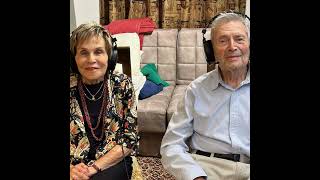
In this episode of The Kosher Teruah, host Simon Jacob interviews Professor Uriel (Uri) Bachrach, a molecular biologist and founder of the Israeli military science corps Hemed, and his wife Zohara (Zahara) Bachrach, an ethnobotanist. The conversation weaves personal memoir with historic narrative, covering the Bachrach family’s forced emigration from Germany in 1933, their settlement in Palestine, Uri’s involvement in the Haganah, the creation of Hemed in 1948, and its pioneering work in military chemistry, improvised weapons, early rocket development, and a secret 1949 uranium‑search expedition. Uri recounts a daring operation that used a custom‑built 50 kg bomb cannon to capture a fortified Egyptian position in the Negev, illustrating the ingenuity of a small team of scientists‑soldiers. The interview also touches on the evolution of Israeli infrastructure, daily life in pre‑state Tel Aviv, Zohara’s childhood, and the cultural role of wine. Both guests reflect on the personal cost of conflict, including the loss of Uri’s grandson Yiftach in the October 7, 2023 war, and share their thoughts on Yom HaZikaron (Memorial Day) and Yom Ha'atzmaut (Independence Day). They conclude with advice for young Jews worldwide and for Israelis, emphasizing education, scientific careers, and steadfast commitment to Israel. The episode ends with a brief historical note that Hemed later became the defense company Rafael.
Chapters
Welcome to The Kosher Teruah.
I'm Simon Jacob, your host for this episode from Jerusalem. Before we get started, I ask that wherever you are, please take a moment and pray for the safety of our soldiers and the safe return of all of our hostages. Living in Israel is different. At this time of the year, we experience Yom Hazikaron, Memorial Day, in somber ceremonies held across the country. The sadness then normally comes to an end around sunset with a transition to the celebration of Yom Ha'atzmaut, Israel's Independence Day. But this year is not like any other year in Israel's recent past. We're at war. We have lost since last October 7th hundreds of soldiers with over 1,300 civilian casualties and over 130 hostages being held somewhere in Gaza due to continued rocket barrages from both Gaza and Lebanon. We also have over 100,000 civilians displaced from their homes in the north and south of Israel. No, things are not normal here. But with all that, we in Israel are hopeful and continue to work towards defending our country, defeating our enemies, and making the best out of our lives. Rather than produce a typical podcast this week, I decided it more appropriate to focus on Israel during these two important days of the year and to interview one of my incredible neighbors, Professor Uriel Bachrach of Hebrew University, Chairman of the Department of Molecular Biology, and his wife, Zahara Yaniv Bachrach, an ethnobotanist in the field of medicinal plants. Professor Uriel Bachrach is a true partner in the creation of the State of Israel. He was a founder of Hemed, the science corps of the Israeli military. The organization Israel's first Prime Minister David Ben-Gurion pinned his hopes on to defeat the invading Arab forces as the British withdrew. He was given a special prize presented to him by Prime Minister Shimon Peres in 2009 for his efforts in Hemed and his dedication and contributions to Israel. Uri, as he insists on being called, published a book called The Power of Knowledge in 2009, detailing the creation of Hemed and stories of its development and achievements in the 1948 War of Independence. The following is a conversation with both Uri and Zohara about their backgrounds, the early days of Israel before the creation of the state, stories about Hemed and its activities, and thoughts about their feelings on this Yom Hazikaron, Israel's Memorial Day. If you are listening to this in your car, please pay attention to the road ahead. If you are relaxing at home, please sit back and listen in on this conversation with two amazing people who had a front-row seat and a hand in the creation of Medinat Yisrael, the State of Israel. This podcast starts with the sound of the Yom HaZikaron sirens heard across Israel. And the sound of a lone Israeli aircraft flyover. This is different from the sound of our air raid sirens, but some people might not know the difference and be scared by it. Please be aware, this is just a Memorial Day introduction and not a reason to run to the shelter.
Welcome to the Kosher Teruah.
I have here in the studio Uri and Zahara Bachrach.
Let me ask you a few questions first. First question is: Do you remember Germany from your youth?
Yes, I was born in 1926, and in 1933 my parents were expelled, so we left Germany. I went to school in Germany for about 1 or 2 months, and I remember the house where we lived, and I also remember the school where I went to. And actually, I took the whole family to visit the origin of the family, and we came and saw the house and also saw the school where I went to. I went to the school, the first grade, and close to me was sitting a young boy with Hitlerjugend uniform. I liked it, it was very picturesque. So I came to my father and said, "I would like to have uniform like this." So my father said, "It's not for us." So I forgot about it.
Wow. I was gonna ask you, why did your family immigrate to Palestine at that time?
Okay, so my father, he was a clinician, a doctor. In April '33, he received a letter from the Gestapo saying, "You cannot act as a doctor anymore because of your Jewish origin. You can lose your profession." So my father knew that he really, cannot work anymore. And he decided to leave Germany, but he didn't want to come to Palestine. My grandfather, who was also a doctor, he was a Zionist, and he convinced both families to immigrate. So in 1933, the whole family left Germany and we moved to Palestine because of my grandfather. Wow.
They actually allowed you to leave at that time? They expelled you, so they let you leave.
At that time, they were interested in expelling Jews. They wanted to have a Jewish-free Germany. So actually, my parents could sell the house, pack everything, books, even the car, and to ship it to Palestine by boat. So at that time, really, they had enough. Money to get a certificate because you needed 1,000 British pounds to get a certificate. So he did, because they had to sell the house and all the property.
When you came to Palestine, where did you come to? Where were you based when you first got here?
As I said, my grandfather, he was a Zionist. So actually, he convinced two of his sons to immigrate to Palestine in the '20s. So one of them became a farmer and had a farm in Kfar Hasidim, near Haifa. So the first thing to do, we came to my uncle and we settled there. And my father look around to find a place to settle. But the first thing, we lived with my uncle in the farm.
Kfar Hasidim.
Yes, first of all, let's start from 1944. '44, good. I finished high school. I was a member of the Haganah, so I went to a platoon course of the Haganah, and I became commander of the Haganah in Petah Tikva. And I was really recruited to the Jewish Settlement Police. And in 1947, I moved from Petah Tikva to Jerusalem and studied chemistry. I actually, I wanted to study medicine, like my father and my grandfather. But there was no medical school in Palestine at that time, and it was still war, 1944. I couldn't leave for Europe, so I studied chemistry, which is close to medicine. But actually, I planned to study medicine, but I couldn't do it in Palestine.
What were you doing at that time in the Haganah? What did you do?
As I said, after graduating high school, I went to commanding course one month. And I became commander in pedagogikva for religious group of teenagers. And I trained them both in arms and self-defense. We had training in kibbutz Kivata Shlusa because there we had concealed arms. And they could train them with pistols and hand grenades and rifles. This modern did in pedagogy, I trained them. This was in 1944. 3 years later, these boys and girls became commanders in the army and they fulfilled very important functions. They were in Golani and other units.
When did you meet Ben-Gurion?
Okay, the story is the following. Ben-Gurion looked at the past, he studied Bible, Even in the present, he knew that we are going to establish state, and he was very energetic about it. But he also looked about the future, unlike other leaders, and he realized that in May '48, the British will leave Palestine, and 4 or 5 armies from Arab countries will invade. So he was really very much bothered, and he asked one of his assistants to make a survey: what kind of manpower we have, what equipment we have to counteract the invasion. And he gets the result of the review. It says we have about 30,000 potential fighters. Half of them were new immigrants who were not trained. These 30,000 potential fighters had 10,000 rifles, one rifle for three soldiers. The Palmach was 2,000, had 1,000 rifles. And the rifles were different types, different ammunition. No air force, no navy, no tanks, nothing. So he was really very, very much bothered. So he went to some of his advisors to do what to do. Aharon Katzalski, Katsir, was one of his advisors. So he asked him, what shall we do? So Aaron told him, look, we are a small nation, small country, but we have one advantage— brain, the Jewish brain. What we should do, we should develop chemical military, military chemistry, apply chemistry to military purpose. Perhaps we can invent some new weapon by which we can succeed. So the idea was really very much attracted by Ben-Gurion, and he said, how many people do we need for this? So Aaron told him about 20, and there was a discussion. Shall we take professor? Shall we take young people? So they decided we have to take young people because they are open-minded, they are ready to go to books, they are ready to crawl in the sea, in the field, and but there are two prerequisites. One, they should have some military experience, and at least 3 years at university, chemistry or biology. I was selected because I had 3 years at university and had a military background. So I was told to come to a meeting, a secret meeting at the Gymnastikverein, and Aaron Katzir was there. And he— we were about 20 boys— and he said, look, Ben-Gurion sent me. You have to save the country. You have to study military chemistry. I don't know anything about military chemistry. Go up to Mount Scopus to the Hebrew University and study. We went up to— this was February '48, February '48. We went up to Mount Scopus. We found a book about military chemistry, and for one month we studied what are explosives, gas, smoke, and after one month we were experts in that. And this was the beginning of the military chemistry. Everything was top secret. Aron was called On, so it was called On Company. Everybody had a nickname. Nathan Zhaun was Natasha, Ueli Zell was Ueli, my name was Avishai. And so we really produced weapons in Jerusalem. And this was in February, March. In April, Ben-Gurion decided we have to enlarge the scope of the unit, not to have a unit of 20 boys the own company. We need an army, a big unit, and we have to remove the unit from Jerusalem to Tel Aviv because all the industries in Tel Aviv, the headquarters in Tel Aviv, and the training are in Tel Aviv. So we moved in April from Jerusalem to Tel Aviv, near Tel Aviv, in a camp. And it was divided to have a new unit in the army. Called Chelmada, Scientific Corps, and it was divided into 3 sections. A was chemistry, B was biology, and C was geology and nuclear energy.
What became nuclear energy. It was initially geology.
Yes. This was in April '48. And in addition of doing research, there was the operation unit. Whatever we did in the lab, we could transfer it into the field, in the battlefield. And I was really member of the operation unit, and we did really very important functions.
So where you created a weapon of some sort, you had to go into the field and actually try it and use it and see how it worked and whether it worked.
Okay, so I mean, actually we can divide our function in two pieces. One, he needed to develop new weapons according to the request of the army or something which he suggested to the army. There are two ways. And the second, to wait, the army would come to us and ask for support, or we would suggest we could do something which they couldn't do. I give you an example. There was a fortress near Kibbutz Negva, a fortress called Irak Zoridan, and there were about 100 Egyptian commando soldiers there. They blocked the road from north to the south of the Negev. There was a junction or the road, and it was blocked. So any supply which has to be transferred to the south had to be done by air, because on the road it was blocked. So the army for 6 months tried to conquer this fortress. Palmar, tanks, even air force, for 6 months they couldn't succeed. Because really the Egyptian commando unit were well trained and they had all kind of minefields around the station. They came to us and said, "Do a miracle, conquer the station." So we knew the kibbutz is about 1,600 meters away from the police station, about 1 mile. And the attack should be launched from the kibbutz to the, to the police station. We decided in order to conquer the police station, we need explosive, a bomb, about 50 kilos explosive. And if you put this bomb on the wall of the police station, it will pierce a hole and you can penetrate. The other question, to produce a bomb is no problem, but how can we transfer it from the kibbutz to the police station, the distance of 1 mile? So we constructed a special cannon to deliver the bomb of 50 kilos from kibbutz to the station. This was really a big invention because nobody ever developed any cannon which can deliver a bomb of 50 kilos of explosives to this cylinder. I was sitting on the tower, water tower of Geregba, and arranging the fire because I was a member of the operation unit. We were about 10 boys. And actually the bombs were— we had 6 bombs. The bombs hit the police station, pierced a hole in the wall, and because of the explosion, the mines and ammunition inside exploded. Wow. And because of that, one-third of the soldiers died because of the explosion, and the rest surrendered. They left the police station. We were 10 boys. With this, what the Haganah and the army couldn't do in 6 months, we did with these 10 boys. Because we really had imagination and determination. And then something really unusual happened. Yitzhak Zadeh, who was the commander of the tank unit, sent some soldiers to conquer the police station, which was empty already. And he met the commander of the Egyptian army, and the commander surrendered. And there's an inscription near the wall, tower of the wall of the hotel, saying the police station was conquered by Yitzhak Sadeh, and no one would give it to our function. Because of our function, the police station was empty. And actually they took the police station without any shootings because it was empty. And really one of my struggles nowadays is really to have some inscription near the tower saying that in addition to the Sachsen, there were other units who were very helpful. So this is one example of operation which really required a lot of imagination and determination. Actually, Ben-Gurion had the vision that we need rockets, because at the time we had hand grenades and the range was about 40 meters, 50 meters, not more. So he said, we need, we need rockets. And there was a fellow called Epstein, a good friend of mine, who tried to develop rockets. And he studied engineering at the Technion Haifa, and he built some rockets of wood because he didn't have money to build it with iron. So he asked for money, he couldn't get resources, so he went to the chief of staff and said, I need money. And the chief of staff asked him, what for? So he said, for rockets. He said, did you ever build rockets? How can you ask something which you never did? So he said, have you been chief of staff before? You are a good chief of staff even if you didn't have this before. So he gave the money and he built the rockets. And then he said, I can hit the target 2 miles away from the fort. From shooting place. And they gather all the chiefs of staff, and Ezer Weizmann came. He was the chief of the Air Force, and he was standing near the target, and he said, "I'm sure he's going to shoot, but it would not reach the target." So they told him, "Look, he promised to hit the target." So removed him, and they were shooting, and the target was hit. Wow. So it saved the life of Ezer Weizmann.
It was interesting. His comment was, "I think that you'll hit something, but you'll never hit the target." So it was crazy. There were some amazing stories from Hamed, from all the things you were doing at that time.
Yes. I'll tell you another story which is interesting. In February '49, February '49, 76 years ago, a scientist called Ernst Bergmann came to Ben-Gurion and said, "We need nuclear energy." February of '49. So Ben-Gurion said, "Okay, do it." So Ernst was looking for somebody who can lead a study of this kind. And he found a scientist in the Weizmann Institute called Yisrael Dostovsky. He came from England. He was studying radioactive materials. And they asked him, are you ready to cross the Egyptian lines to look for uranium? He said yes. So he recruited two scientists, geologists, one from Jerusalem and one from Haifa, and had another group of support to accompany them. I was selected to be one of the guards. I was an expert in explosives. I was a guard. So we crossed the border. We went into southern— we caught up with the West Syrian Egyptians there and Jordanians there, and our disguise was that we are German engineers, we are going to construct a railroad, and therefore we are interested in the terrain. And actually, we found uranium in '49 in the phosphates minerals, and we really extracted the uranium. And at the beginning of the Six-Day War, We had 2 bombs based on our uranium. And actually, I'm the only one who is still alive who was really a member of the expedition who found the uranium. And here there is another story which is quite interesting. We need communication with the headquarters in case of emergency to evacuate us by planes. So we were looking for a signal officer We went to the Palmach, and the Palmach said, "We have a girl called Leah in a kibbutz, Dorot. Ask her if she's ready to join you, to go with you 10 boys in the desert for unlimited time." They asked her, and she said, "Is it important?" They said, "Very important. Are you ready to go with 10 boys in the wilderness for unlimited time?" Yes. So they brought her to us. We were sleeping in small tents. And there was a question, how, where should she sleep? And they said, Uriel is religious, we can trust him. They trusted me and she trusted me and we trusted each other and we shared the tent for 2 months. And we, as I said, The result was that we found uranium, and this was the beginning of nuclear energy, started '49. They asked me to Dimona to lecture how nuclear energy was developed, and I could really testify that I was a member of the first expedition in '49.
Did you know you were looking specifically for uranium at that time? No.
No, no, because for uranium we had the geologists and they went with the Geiger counter. Whenever they heard some noise, they knew there's something suspicious. They collected specimens and the specimens were then analyzed finally, and they knew exactly the location from which the specimen was taken, and they could really dig and do it.
You, you said that you went from Jerusalem to Tel Aviv. You moved, Hamed moved its organizational, from organizational structure group, from Jerusalem to Tel Aviv. How did you travel? How did you travel then?
Okay, first of all, it was Shabbat. And I had some really questions whether I should go on Shabbat away. They told me, look, it's the last convoy to leave Jerusalem, go. Near Tel Aviv, a place called Tel Hanan, there was a German colony of Baptists. They were working in, they had a workshop in Jaffa, but they lived there. The beginning of the war, Second War, they were expelled to Australia and the buildings were empty, Tel Hanan. And the Tel Hanan buildings, which were all Germany By origin, they were given to us at the camp for Chemit with the base in Tel Hanan, houses built by Germans.
Wow. Especially because you were deported from Germany and it's, you know, Kadosh Baruch Hu works in strange ways, in circles. But transport then was by trucks or cars or—
Armored cars, armored cars. You see, when we crossed Sahara Gaia, there was a village there, they were shooting at us, but we were in armored cars, so we were relatively protected. And we came from Jerusalem directly to the site of the camp.
During this period of time, Did you feel like Israel was going to succeed? Did you ever have any fears that Israel wasn't going to succeed? I mean—
Look, at that time, we were ready to do our best. I had to fight against 200 Arabs, a convoy which came through Hebron to the Old City. We are 10 boys fighting 200. We were not afraid because we know, we knew we have to climb up a mountain and from the top of the mountain we see the Promised Land. So it's worthwhile to climb up because when we reach, not if we reach, when we reach, we see a new land from above. And this will be the Jewish state for which we have been fighting. And we were ready to do our best.
When you were in Jerusalem in the old time, Israel was not formed yet, so the Old City of Jerusalem was open to Jews as well at that time, before they were expelled. So you could go to the Kotel?
Yes, we did.
Okay. And the Kotel was that little narrow—
And women and men were mixed.
Yes. I see pictures of that now. And I look at it and everybody seemed to be able to pray together. Then, so, yeah. Okay, so my podcast is normally about wine. You were religious and you were in Jerusalem. At that time, what did you use? Did you have wine? Did you have access to wine?
No problem. You see, in Ben Yehuda Street, there was a wine shop, Karmel Mizrahi. And when the state was declared, He opened the shop and delivered wine to everybody. He opened a barrel. So wine was available. Karmel Mizrahi had a shop, no problem of wine.
So before that, though, when it was under the British, I guess, before the Jordanians took over the Old City, there was wine. The Jews provided wine to each other and what have you?
No problem, you see. When I grew up in Petach Tikva, also, there were two wine cellars. There were barrels of wine, and you could buy wine without any problem.
Okay, so Zahara, I haven't spoken to you much till now, so I'm going to ask you some questions too. You were actually, where were you born?
I was born in Tel Aviv.
In Tel Aviv?
Yes, 10 years before the creation of the State of Israel. 10 years before.
So what was it like? What was it— what was it like for you at that time?
It was actually great. I mean, we had very nice childhood, except that we— in our schools, we had a lot of new immigrants coming the whole time.
From, from where?
From Europe.
From Europe?
Yeah.
Most of them were European?
European immigrants, yes.
So European meant where? Germany mostly?
No, Germany, Poland, Russia, many countries. Whoever could escape from Europe came to Israel at the time before '48, and the schools were open to them. And I remember the whole action of having foreigners, I mean, children my age who didn't speak Hebrew. And actually, we were we had a good approach to them. We knew that they were refugees and we were trying to help them, invite them home and so on.
So when you grew up, your whole, your whole life, you spoke Hebrew?
Oh, yes. Wow. It's— and my parents, they came from Lithuania, but they, they knew Hebrew from Lithuania, from Tarbut. From the Hebrew schools, and they insisted, insisted to speak Hebrew. So they spoke Hebrew among themselves, and I'm one of the few, few children of my age who doesn't know Yiddish because they avoided speaking Yiddish. They know Yiddish, they knew German, they knew Lithuanian, they knew many languages, but the principle was, let's speak Hebrew.
What was life like? I mean, you Just like today?
No, no, no. I mean, we didn't have much money, right? And we had to protect ourselves against attacks. The Italians attacked Tel Aviv. We had— we covered the entrances of the houses with the sandbags. Some of them are still there in Tel Aviv. We have some entrances with sandbags.
Wow.
And one of my girlfriends lost her mother during these years from an attack, from an Italian attack, air attack.
So the Italians flew in and attacked.
Right. Yeah.
You were born into a religious family?
No.
Okay.
No.
You were a non-religious family?
No, but we were very traditional. We celebrated all the holidays.
And also wine was something that you had access to? Oh yes.
My parents didn't drink too much wine, but in all the holidays we had enough wine. We didn't know any— not much about types of wine.
Yeah.
People at that time didn't really distinguish between quality of wines.
Yeah.
So they got wine.
Yeah.
Sweet wine, which we didn't like so much. And dry wine also.
You got dry wine as well?
Yeah. Yes.
Okay.
At that time, could you travel around Israel or you— it was dangerous to travel around and you only went around like as an example, could you travel to Jerusalem?
Yes. Yes. It depends. Until '48, until '47, we traveled to Jerusalem. Later it was a convoy. Convoy. It was, but before '48, we did travel to Jerusalem and also all over the place.
All over the country.
All over the country, yeah.
So traveling around Israel at that time before the state must have been so interesting to see. There were Jews, really, there were Jewish, you know, cities or villages around the country? At that time?
Oh, sure, sure. There were, what, in the— from the 1800s, many kibbutzim. I belong to a youth movement, the Scouts.
Yeah.
And this part of the youth movement activities was traveling around. In every vacation, the group went out and did traveling, especially by walking, climbing, really touring the country by foot to know it. And we knew a lot of the historical places, and our guides were anxious to relate the present-day Israel to what's written in the Bible. So we had many biblical tools, so to speak, and they were all over the place. And when we went to dangerous places, the scout leaders collected and called our parents for a meeting and asked their permission, should they go or not go, because when we went to the desert, Ma'ale Akarvim, which was a very dangerous place, The parents got around, and my father, I remember, one of my earlier memories, that he was for continuing to travel. He said, "Let them go. They have to know the country. Let them go." Wow.
So were they exposed to it? Were your parents exposed to it when they first came? When did they actually come to Israel again?
Well, my father was 16 when he came. He came in 1925.
So he was also.
And yeah, he was in the Haganah, and he, he was in Damascus. He, he went all over. He went all over. There were no real borders at the time. And, uh, my mother came a little bit later, 1932. She was a dentist, so she practiced, uh, dentistry in Tel Aviv.
What was it like being part of the founders of the country? I can't imagine what it was like to walk around Israel, or to walk around Israel now, after you had a role in its founding, and looking at what's happened here, what's going on here. It must be an amazing experience for you.
I tell you, when we were children, I did believe in coexistence with the Arabs. We had many Arabs friends, the doors were not locked, and I sort of had an image that someday we'll have peace. But now I don't believe in it anymore, not so easy. I mean, I would like to see peace, but I'm much more realistic, and I see us and I see all our enemies around. It's really different now, in that term, in that sense, in looking at the future. We were much more naive at the time.
Uri, what do you feel like now? What do you feel like now when you travel to Tel Aviv or you travel to Jerusalem?
Well, first of all, I mean, we have a train fast going to Tel Aviv. We had a train in the British time, but it took a long time. And we have better roads. And the communication is better, even though We have traffic problems, parking problems, which we didn't have before because we have too many cars and the roads are narrow. So there are advantages and disadvantages. But to get from Tel Aviv to Jerusalem, Jerusalem to Tel Aviv, in the past it took several hours. Now you can get by train in less than 1 hour. And, um, Also in Jerusalem, you have the light train, which is really very helpful. So there are big advantages, even though on the other hand, we have problems in parking and—
How did you actually, you know, meaning to ask you because I'm trying to think of what it was like at that time at the very beginning of this back in the late '30s and early '40s, or even in the middle of the '40s when you were in Hemet How did you communicate with other people? I mean, no telephones.
No telephone.
No parents had a telephone. My parents had a telephone because my mother was a doctor, but people didn't have telephones.
First of all, my parents, my father had a telephone because he was a doctor and his phone number was 269-12. So this was his telephone number. So we had to telephone at home. And usually every weekend I would communicate from Jerusalem to Petach Tikva to my parents. We went to the post office and there we could really use the telephone from the post office. We didn't have telephone at home. And what Zohar mentioned about marching, we marched a lot. We had a march from Quaritión to Masada through the desert.
And, uh, wow, that's, that's not only a distance, that's very arduous.
About 300 boys and girls, and we were attacked by the Bedouins on the way, and it really was really a very, very courageous event. And then we camped in En Gedi. And then we moved from Ein Gedi to Jericho. It was really very, very, very dangerous.
There was no television either, you know. Think about it, there was no television at that time.
No.
And we didn't listen to the news the way we do now. We did hear the news, but not, you know, we're not hooked to the news the way people are now.
Yeah.
So you're not connected all the time.
But we were happy.
Yes, we were happy. We did use the post office. We do it. We did send letters and postcards to each other. Nobody uses them nowadays.
Inside Israel?
Yes.
Inside Israel you did that?
Yes. Okay.
Well, and the post office worked better then than now, isn't it? Now we text. I got a letter yesterday from the United States. They took 3 months to arrive. They sent it to me the end of February. and I got it 2 days ago. Yeah, amazing.
It's, it's really crazy. It's really crazy. Um, what about people? What about friends that you had then? Okay, do you still have— do you still have friends from that time?
Yes. Well, first of all, most of them are not alive anymore, right? But you see, um, I lived with a family, we had a room, two students in a room of a family, and the door was always open, and friends would come in and have coffee. And really, the relationship, we were very close, very close. And we were not afraid of thieves. People trusted each other. Right?
Yes. There was also not enough for the newcomers, there was not enough room to live, So in our apartment, we gave one room— inside apartment, we gave one room to a woman who came single and she needed a place to stay. We rented a room to her. Now we wouldn't even think about it. It's within our own house.
Right. So—
But it was common. Many of our friends rented a room to people who came and didn't have any place to stay.
So how big was your family and how many rooms were they living in before you rented one of the rooms to somebody else?
No, I had two brothers and my mother actually practiced dentistry in the apartment. One of the rooms—
In Tel Aviv?
In Tel Aviv. One of the rooms was her clinic. And so people came and waited in our corridor for her to go in. And then we had two more rooms. Then I had to move away because of Doda Ester. Doda Ester is the one who we rented a room to her.
Okay.
It was not very convenient, but we all felt that we have to do it. Also, many of the houses didn't have elevators. I remember going up and down to all my friends, climbing up the steps.
No elevator.
No elevators.
Yeah.
We've gotten very spoiled these days. But, you know, thank God it's in time for— at that time I could walk up and down the steps. Now it's like It's— we have the convenience just when we need it. It's very good. You know, it's Yom Hazikaron coming up in a few days, and I— when I was looking at the stories from your book, I noticed that there were, um, because you were working so quickly and so— and pushing to do things very rapidly, unfortunately there were a number of people who were killed just even when you were trying to develop things. So it wasn't as safe an environment as something in the lab today that they were doing. So you must have lost a lot of friends during that period of time, and certainly through the wars we've had. And even till recently, I know on October 7th, you lost a grandson. Who was defending the Israeli settlements next to Gaza.
Nahal Oz.
Yeah, Nahal Oz. What do you think when you, you know, when Yom HaZikaron comes, what are your thoughts?
I'll tell you something. When I was studying chemistry, I had a partner who worked with me in the study. His name was Daniel Reich. He was the only son of a professor in the university. He was a member of the 35 people who went— lamethei— were killed on the way to Jerusalem. He was a very close friend of mine, the only son of the family. When they heard about it, I volunteered to the most dangerous place in Jerusalem. Because I think I had really to do what he couldn't do. It was Daniel Rye, the only boy, my, I mean, schoolmate of mine, the only son of the family. He was killed with the 35, and it really touched me very deeply, very deeply. So I really had to volunteer to the most dangerous site in Jerusalem. Because of him.
Can you tell me a little bit about your grandson?
Yes. The grandson, his name is Yiftach. He was a sportsman. He was really one of the experts in tennis in Israel. And actually, he was debating with himself whether he should go to a combat unit or continue as a sportsman, because he could really transfer or delay his service because of sport. So he decided to use— to become a combat soldier like his father. His father was in the same unit, so he went to Maglan, and he was a good officer. He was very strict. But very friendly. Actually, many of his soldiers came from religious background, and he could really understand them because really he used to go to synagogue. He did bar mitzvah. He did bar mitzvah on Purim. Wow. On Purim, he did bar mitzvah. So really he used to, he liked to go to the synagogue. And he was very friendly but strict, and soldiers really loved him. It's very difficult for my daughter, for Sheera, because they were very close, very close. And for me also, I mean, he used to hear stories about my past and would tell me a little bit what he was doing, because it was top secret. He wouldn't tell me. Okay.
He was in your grandchildren. He was the eldest grandchild?
No.
No.
No. No. No. Kiki is the oldest.
You see, Gilad, my son, he has two daughters who served in the army, and the son was also in Maglan.
He's 25.
Okay.
So he, how old was your grandson?
23.
23.
Wow.
And he was really about to leave the army. He planned to travel abroad.
Yeah, he left a lot of written things. He was also a big thinker. And only today at lunchtime, or at 10 o'clock, Shira, the daughter, on the radio, she read loudly one of the letters that he wrote.
He wrote—
he left a lot of thankful things.
Thoughtful, thoughtful things.
Yes. But you see, this year is really different after October 7th.
Yeah.
We had how many?
670 soldiers have died in it. And all of the civilians who were killed.
1,500.
And the prisoners.
Yeah.
And, and so, and policemen, it will be very hard on the day of Yom Hazikaron.
I have a question for you. What advice would you have for young Jews growing up outside of Israel today? Do you have advice for them?
Yes, to study, because that is here —on technology, it's on a very high standard. So really, we can compete with any other country. And if people come here, the first, they can only build something for themselves and also for the country, because we are really very advanced in technology, in high-tech, and also in science. So to come here, we wouldn't be inferior to any place in the United States.
What about for young Israelis growing up in Israel? Do you have any advice for them? The same thing, or?
I think to study is really very important because first of all, you can have a profession. You need a profession. And if you take a profession in technology and science, you have a future for yourself and for the country. Don't you agree, Dora?
I tell you, before October 7th, people tend to look down into the young generation and say that this present young generation is interested only in Twitter and, and Facebook and pleasures and drinking. But what happened since October 7th showed us that this young generation is wonderful. They are all ready to fight and ready to help the country, which gives very, very positive, enthusiastic feeling to these young people. And they are connected to Israel. The main thing for them, to still feel connected to Israel and believe in it, because like, it's the only place we have to live. I don't believe in all these people who think now, let's change the place and move to Hawaii or to New England or some other faraway place with no troubles. The only place for us Jews is Israel. Especially since all this antisemitism that is now going up all over the place. This will be the only place for us. I really feel very strongly about it. Don't you?
Don't you, Uri? Look, both of us are scientists and we are well recognized all over the world, and it wouldn't be difficult for us to find a job in Europe or in the United States. But we would never consider this idea to leave the country and to acquire a job somewhere outside.
Yeah. If you could go back in time, what would you tell your teenage self? Is there any message you would give give to your teenage self?
First of all, to be careful. Okay. To be careful. But on the other hand, not to refrain from doing dangerous things, but to be careful. To be careful. I wouldn't tell him not to go to a combat unit, but be careful.
Zahra? If I had to go back, I wouldn't do anything different. I would go with the same path, getting my own profession too, which makes me very happy with it, and have good example to my children and my grandchildren. I would do the same thing.
Very cool. All right. I thank you very, very much.
For the real pleasure. To be exposed to this kind of conversation. And I hope really that we could really express our feelings to you, both of us, because I think it's important to convey whatever we have in our mind.
I'm in awe, to be quite honest, because I'm living as a neighbor to you for quite a number of years. When I started to do a little bit of research and look into your background, I was blown away. I mean, I know that you've done some amazing things in your life. I started to read excerpts from The Power of Knowledge, the book that you wrote, to see all of these people who we look back at the State of Israel as being the founders, and, um, and you were right in the middle of all of them, and not only participating, but making a difference. And it's just amazing. So I thank you very much for agreeing to speak to me. Thank you very much.
We appreciate it very much.
In 1952, Hemed, the Israeli Science Corps, was privatized and the staff and projects were transferred to a civilian organization under the supervision of the Ministry of Defense. In 1958, it became known globally as the dynamically creative Israeli defense company, Rafael. This is Simon Jacob again, your host of today's episode of The Kosher Terroir. I have a personal request. No matter where you are or where you live, please take a moment to pray for our soldiers' safety and the safe and rapid return of our hostages. Please subscribe via your podcast provider to be informed of our new episodes as they are released. If you are new to The Kosher Teruah, please check out our many past episodes. And thank you for listening to The Kosher Teruah.
Mm-hmm!










