Siobhan Wilcox shares how she recovered from burnout at 26 and offers parents of autistic children practical ways to catch negative self-talk: trusted friends, audio-recording yourself. Self-care isn't optional if you want to keep going.
Questions this video answers
Day 24
June 15, 2012
The Thrive Now Blueprint for Parents
siobhanautismexpertsalliance.com
autismexpertsalliance.com
Chapters
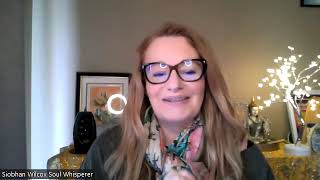
Hi, everybody. It's Siobhan Wilcox here. This is day 24 of parenting. Autism, real and raw. Thank you. Welcome back. You know, I just want to say that in all my experiences, I've never met a group that is so loving, so, so heart opening, so magnificent. As all the special needs parents I meet, I mean, it's just like this uniform energy that comes from this group. You know, when we parent a special needs child, we need to be in a very different place. We need to be sitting in our heart spaces and we need to be patient. Hmm. Something I was never known for as a child, but it seemed to have developed it, thank God. As an adult, we need to have a deeper understanding for our children and their nuances. And sometimes their inability to communicate directly with us through language makes means that we need to really kind of be much more intuitive and try and figure things out. And I find that that creates a wonderful group of parents, you know, really, I want to honor you. I wanted. You are just magnificent. This journey you are on is not always the easiest journey on the planet. Sometimes it appears to be the most challenging journey, you know, And I just want to say to you, you are wonderful, you are special. And when it feels like sometimes it's just so hard. Just look after yourself. Take some time out. Wrap yourself in your favorite blankie like you would your child. Have a bath, have a glass of wine if that's what you need. Spend some time on the phone with your best friend, or even better, out in a restaurant with your best friends. It's just about looking after you, because if you don't, you burn out. And that's really what my journey has been about. I burnt out when I was 26 from stress. I had to learn how to rebuild my whole body. My physical body was completely shot. My emotional body. I couldn't stop crying for days and it took a long time. I had chronic fatigue. They thought I had maybe Ms. Or me. I just. I was so shot, but I wasn't. Thankfully, I didn't have any debilitating condition that I couldn't recover myself from. But it took me many, many, many months. And I did it. I rebuilt my system, I rebuilt my mind, which was actually the hardest piece, but the most important piece I found. In those days, I used a lot of negative self talk. And I'm writing about this in the book I'm writing now, the Thrive Now Blueprint for Parents, because, you know, it's a really key piece. We use highly evaluative words a lot, which the shoulds the ought to's, the must dos. We use catastrophic words. It's awful, it's terrible, it's devastating. And then we use over generalizing words. I'll never be able to do that. Nobody loves me, you know, as I call that, that's usually the child speaking. When I hear people talking in overgeneralizations, it's usually their inner child that feels hurt in some way. And that child is always like everything is falling apart. That's the baby, this child. So negative self talk was very damaging. It was very in lack, it was in limitation. It just kept pulling me back down all the time. When I would hear my language coming out my mouth, I was constantly using the shuvs, the autos or the catastrophic or the over generalization. It was just all bleh, bleh coming out, you know. So I needed to recruit some people around me to help me with this. And this is an idea you may want to take on board. If you have people you really trust and you can say to them, okay, this is what I'm trying to stop myself. And I don't even know sometimes I'm doing it. Another way to do it is to tape yourself. You know, I have one of these little audio recorders I carry around a lot and I don't use it to tape negative self talk anymore. I now use it for taping other my sessions with people and my book I'm writing and stuff like that. But some people use these to tape themselves, their everyday conversation and then to check how many times did I say I should I ought I most catastrophic. How many times did I overgeneralize? And you will be surprised how often you say these words without even knowing you're saying these words. But if you have a trusted friend or a tape recorder, I'm showing my age when I say tape recorder, right? That you can grasp the concept of this and you can really see what am I saying, when do I say it and then notice how you feel afterwards. What I started to do when I noticed this is I noticed that my energy would dip after I used these words. And they're hard to get out of our language because they're in there, they're ingrained in our language, but it's not impossible. And now I have such a. It's like I have a little guy sitting on my shoulder. And when I use the word, it's like you've used that word again. You've used that word again. Stop using that word. I'll catch myself. I oh look, there I went. I Should. I should? No, I should is not the word. If I wish to, if I want to, if it feels aligned with me energetically. And in the beginning, you can feel like you're being very strange to people and you know, you start to actually really align with what you want in your life and you change your language. But that's another day's conversation. We can talk about that another day. But I want you to really get this. I want you to start monitoring yourself and just see if you can catch yourself and invest a friend to help you. Say, I need help with this. I'll spot you. You spot me. Let's do this together. Let's see. Can we change the language? I do this with my children as well. I help them spot their language and it helps everybody all around. So. So your mission, should you choose to accept it, is to see how often you use this negative self talk to try and stop using it. Just as I say, oh, look, there, I did it again. Laugh at yourself. Don't get down on yourself for doing it because that only makes it worse. Just go look silly on me. Look what I did. Then I'll talk another day about how we can start counterbalancing that and really shift that internal self talk, that internal monitor, that internal critic that is constantly reducing your energy levels. So have a blessed and wonderful day and I look forward to speaking with you again, hopefully tomorrow or the next day. As always, you can email me at siobhanautismexpertsalliance.com and register at autism expertsalliance.com for our upcoming teleseries. I'm also going to start registering to get sneak peeks of the book, so I'll send you out chapters of the book as well. So I'm going to put a form up on my website by next week and I'll let you know exactly when that goes up so that you can start getting samples of the book sent out to you soon too. Have a blessed day. Thank you.