Episode 4: Sonia Couto
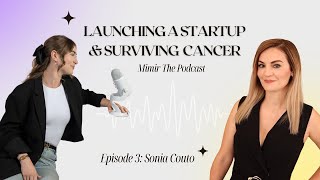
In this interview, Sonia Couto, a Portuguese‑born Canadian tech entrepreneur, shares the evolution of her 30‑year‑old software development firm into a product‑building company and the story behind her health‑focused app Menu Sano. She explains how she moved from accounting to operations and eventually CEO, offering practical advice for early‑stage founders on bookkeeping, burn‑rate management, bootstrapping versus venture capital, hiring the right roles, and building a customer‑driven product roadmap. The conversation details Menu Sano’s initial market failure, the pivot driven by feedback from restaurants, a public‑health pilot with Ontario that led to legislation, and the creation of a client advisory board to steer product development. Sonia also discusses her personal battle with breast cancer, how running the business helped her cope, and her subsequent advocacy work, including a survivor podcast, clean‑beauty recommendations, and daily wellness routines. She closes by describing her current activities, upcoming podcasts, and how listeners can connect with her.
Chapters
At what point, like what, what stage of your businesses were you at when you were diagnosed?
We were just launching and I didn't take any time off.
Okay. So, Sonya, thank you so much for joining me. Why don't we start by you just telling me a little bit about yourself?
Yeah, my name is Sonia and I am— I run a technology company. I live here in Toronto, Canada. I was originally born in Portugal, but yeah, a little bit about me.
So tell me about your tech company.
Yeah, so it's actually a software development company that's been in business for 30 years now. I've been there for 17 and As it started out as obviously web development, it's now turned into software. And since I've been running it, I've turned it into a also product building company. So we, we build our own tech startups, take them to market and sell them. And now a lot of them are worldwide companies.
How did you get started in tech?
By total accident.
Really?
Yeah. I had been in accounting for gosh, most of my life. And I started working at this tech company in their accounting and operations. And slowly I sort of, I always stayed in accounting, but they had a gap in the business where accounting and operations and production weren't really talking to one another. And because I had, my background was in manufacturing previously to tech, So I knew that, you know, finance and operations and expenses and all that really tied in together. And this company wasn't really keeping an eye closely on that. So I sort of brought in the operations and the finance together. And then I went from just, you know, being an accounting person to being their operations manager. And then I went into director of operations. And then the company went through a shift. At that point, I had been there for a little over 10 years and we were already starting to build some products. And the original founder decided to do something else and decided to sell to one of our investors. And so they asked me to run the business. So I've been doing that since 2014.
So it sounds to me like, so you were in finance and you were in manufacturing before. So Let's go back like to the beginning. You know, what did you go to? Did you go to college?
Um, I went to college for accounting.
Okay.
So just basic accounting stuff. And I sort of started working. I left— I grew up in Portugal. I moved to Canada when I was 10. And I'm— I used— I lived in a little town in Ontario and then I moved to Toronto at the age of 19. So Um, going to school full-time wasn't really an option, so I sort of did it part-time and got a full-time job and sort of did that for a long time. And accounting just worked out really well because I could go to school, study, and also do it full-time and learn at the same time.
Were you always very like math-oriented?
No, I hate math. I still do.
So how did you end up in finance?
It's so funny you say that because like I always, when I was young, I always looked at math as like, you know, really complicated formulas and things that I didn't understand. But everyday and even business math, it's not as complicated as they make it sound in school. Yes, there's some complexity to it, but if you understand basic things, then you can, you know, keep learning from it. Obviously, I know a little more.. But, um, it's not, it's not as difficult as they make it sound like it is in school. Like, I'm not, you know, I'm not a, a, a scientist or I'm not a, you know, I don't work for NASA, so I don't need math degree.
I think that's an interesting point cuz I feel like a lot of new founders or like new entrepreneurs when they're starting their business, um, they are obviously typically like the product person or they're the visionary behind the business. And to also have to think about accounting and finance as part of building that business, like creating a strong foundation right from the beginning might be daunting to some. So do you have any advice for people who are just starting to get into it? Like, do you recommend any particular app or service or like what would you say to help them get started?
Yeah. So for founders, I will say. Knowing basic bookkeeping skills, I think, is going to make a huge difference in their journey as a founder. I talked to, I mean, I was just lucky that I had been doing bookkeeping and accounting since very early on, but, you know, I work with a lot of startups and founders who are raising so much money from their VC or from capital, and they don't know how to manage it properly, or they don't know what to do with it. So you find where, you know, they're building software to get this product off the ground and they're spending a year or two or three or four just building, building, building, and they're not going to market early and they don't have an MVP to start generating some sort of revenue. So very early on, they're just spending and they're not thinking about— they're always thinking about how to raise the next round and not how to properly manage their money, I think. So I would, I would say For a founder, that would be like a critical thing. You have to know how to read a general ledger, a trial balance, profit and loss. Um, you don't have to be a mathematician, but know the basics of this is what I'm spending every month, every week. This is my burn rate, and this is what I have coming in. And it could be, you know, VC money, it could be private, it could be bootstrapping, whatever it is, but This is my burn rate. This is what I have coming in. This is why it's what I expect to be coming in in the next month or two. And this is what I expect to be spending. And then if I'm spending more than I have coming in, where can I cut? You know, can I do some offshoring? Do I really need 2 people for that? Can I just get a consultant and will that be cheaper short term? Do you know what I mean? Like really managing your expenses. Really important skill to learn early on.
I think that's such a good point because when founders are just getting started and their, their mindset is how can we go to market and how can we get this product physically off the ground? And some of those important foundational moments don't always occur. And I think like this was something that I thought about for myself even before I started a podcast. And I think that this also applies to other entrepreneurs besides tech startups where it's like, if you're a creator and you're generating money online, you wanna get yourself in a good position where you have like a, at the basics, an Excel spreadsheet of exactly what you said, where you're tracking your expenses and you're tracking how much is coming in specifically regarding the business. And foundationally speaking, it's really not that different from doing your own personal finances, right? You're like, okay, what are my monthly expenses? What are those fixed expenses? Like, do you have recurring bills that you pay every month for your gym, for example? And it's like, you just similarly apply, apply those principles to your business because as you grow, you don't wanna be in a position where suddenly you're like, oh my God, I have all of this money coming in from VCs, for example, where it's like potentially thousands or millions of dollars and you don't know how to manage it.
Yeah. And you did ask me a question. I'm sorry, I didn't answer it. I think that one of the best tools out there, and I'm not like associated with them in any way, but I have been using this tool since like 1994, uh, QuickBooks. They now have an online version, and I, I really like QuickBooks because they've evolved over time, and now they have like this great tool where you can do all your invoicing and your clients can pay you directly within the, the QuickBooks app by credit card, any way you want. So I do think it's a tool that's very good for especially founders because it's not like You know, you, if you already don't know accounting and you don't know how to use accounting software, I do find that they make it a little bit easier. You do have to learn basic things like, you know, how to do a journal entry and what, what are credits and all that stuff. But it does, it is a good, and there's a lot of help that you can get along while using the tool.
That's what I was going to say is I think that that platform also allows you to send invoices, receive them, like all through the, it's like a very holistic app. And yeah, I'm sure that under their blog section they have something where like, oh, how do you do this or how do you do that?
So that's good.
I'm also curious to know, so I was doing a little bit of LinkedIn stalking prior to our interview and I noticed that you had an app called Menu Sano. Is that how you pronounce it? I'm curious to know how that got started.
Oh gosh, Menu Sano. Yeah, that started years ago. So basically, at the time we had like a bunch of people working at the office that were just really health conscious and a project we were working on, a software project, a massive one. And we had to stay at the office late and we ordered food from a restaurant and we were all sitting down eating and someone brought up the question, you know, isn't it funny that when you go to a grocery store and you buy something, you can turn it around and see a label and you sort of know what's in that package. So when you go to a restaurant or takeout, you don't get that information, especially like in Canada, we did not have any of that in place. So we all started talking and it was about a group of 4 or 5 of us. We're like, well, we're a tech company, why don't we do something about it? And then we're like, wait, if something doesn't exist, it's because there's probably like, there's probably a reason why something like this doesn't exist. So we started down the path of just doing some basic research. And we discovered that nothing existed because at the time we thought that it was because everything had to be done in a lab and there was no alternative and it was too expensive. Labs are very expensive. So we did, we set out on a vision to say, you know, we're going to create something using software that will encourage the food service industry to provide this information to people like me who want it. So we wanted to make sure right from the get-go that it was going to be a very inexpensive tool that was going to encourage food service to say, this is so cheap that yes, we want to use it and we're just going to provide all of this information to consumers and diabetes are going to go down, all that stuff, right? That's so interesting. Yeah, that's not what happened. I love that. It was a complete fail. Not anymore, but it was in the beginning.
So what happened in that moment when— so like, walk me through that moment where you're like, okay, this isn't working. Like, how did you recognize it? And then how did you pivot?
We, we built it and then, uh, we had like a, an MVP that was good enough to take to market. And we went to market and we started knocking on the doors of restaurants and then we started getting answers that we never thought we would get, which was restaurant owners were basically saying, if we tell people what's really in their food, they're never going to want to come here and eat here. And we're like, oh crap, we're like, we really messed this up. And over and over and over and over and over again, that's what we got.
I feel like that doesn't say any— that says more about the restaurants than it does about you guys though.
I don't, I don't know. See, I think it's, it's a fear because I know in the US they've had something in place for a long time, but in Canada, it's just like going out to eat is like a treat. People never saw it as, uh, it's a contribution to public health. Interesting, right? So now we're saying you can contribute to, you know, heart disease reduction, diabetes, and all that stuff, because that was our goal. Our goal was around diabetes because You know, diabetes, diabetes, diabetes is a global pandemic. So we are like, people reduce their calories, which is made up of their carbohydrates. We're, we're helping that. Yeah. And we don't blame the restaurants and we don't think that they're doing anything wrong. It's just, it's around education. So we shelf the product. Well, the company went through a little bit of changes. Some of the original, all of the original founders of the product ended up going to other companies and I sort of got left with it. And I said, you know what? I think I did a very smart thing. I said, I'm not going to keep spending money on something that is clearly not doing well. And I think that's important for a founder to at some point say, I need to take a step back and stop putting money into something that's clearly not going to work.
Definitely. So after you went to market and you were getting all this feedback from restaurants, was how long between time-wise was that versus you being like, okay, I think it's time to move on to something else?
I think it was about 6 months, but I never had the intention of just moving it, moving on. I just said, I'm going to shelf it and I'm going to really figure out what's happening out there. And then I'm going to come back to it and say, okay, now I'm going to— now I know how to pivot. How to bring it back, what do I need to change and things like that. And that's sort of what I spent the next year doing before we brought the product back.
I think this is such an important moment because I would venture to guess that a large majority of founders, if not all of them, have experienced something very similar where they put out their first product, realize that it needs tweaking in some area, whether that be like customer feedback or if you're working B2B with restaurants that they have some sort of feedback or like, you know, what you thought was the perfect product or the perfect idea turns out not to be that. But instead of being deterred and being like, oh my gosh, like I'm a failure, you were able to be like, no, no, no, the intentions were good and we are on the right track. We just need to sort of like, I mean, what, you know, it's a perfect word, pivot into a different direction. So what was your next move in that regard?
So I sort of, I shelved it and I, I said, okay, you know, a lot of countries are putting legislation in place to, to help public health and bring down the health bills. So what is Canada not doing? And so we started getting more involved in, in understanding why we didn't have anything in place. And while doing that, we discovered that Ontario, which is where I live, was actually, public health was looking to put together some sort of pilot to try and put something in place. So we reached out to them and we said, you know, what are you guys thinking? We have this tool and they're like, oh my gosh, this is perfect timing. So we partnered with public health and we put together a 1-year pilot in Ontario. We worked with, I think, about 100 restaurants, dietitians, nutritionists on a pilot that would eventually, a year later, put into place a legislation that restaurants in Ontario with 20+ locations would have to show the calorie information on their menus. Wow. So we worked with public health on that pilot, and it allowed us to unshelve the product, work with different restaurants to get feedback on how to make the product better, get public health to test the product, which was really good for us, and also have feedback from nutritionists. So a year later, when that pilot project ended, we now had a demand for the product, which we did not have, you know, a year prior. So we worked with public health on the pilot project, and we sort of created, um, a demand for our own products.
That's amazing.
Yeah. And then, uh, we started launching and, you know, Canada's not the biggest market we're in. US is. We are, uh, we have clients all over the world. We pivoted over and over again. But one of the things that I think was really critical in what we did, we did eventually find that there were some competitors doing what we were doing, particularly one in the US who had been around since the '80s and they sort of dominated the space and they were doing whatever they wanted to do. They were pricing things like at a price of a new car. It was ridiculous. And we went into it with the purpose of this is not, you know, just to make money. This is to encourage food service. So we, I started a program with our existing clients, which I call it our client board of directors. So everyone who signed up to use the tool and is paying for the tool sits on a customer board where they can, they have authority to with us and they work with us to on our roadmap. So they tell us this is what's going on in the food service industry, this is what we need, this is what we want, this is what's going to impact our business, or when are you going to build it. So we're always building features for the product that we think are, you know, going to be awesome, amazing AI, you know, cool things. But the real value in building out the product and making it better is in this, in this board that we have of client feedback. And we've been building out the product based on that structure, and our clients don't pay for it because it's our product roadmap we have to build regardless. But it's also allowed us to build a relationship with our clients and build a lot of trust because our clients know that we're here to serve and we want to build based on your needs, not us being like a cool tech company.
This is one of my favorite things about tech is that, is the ability to hear feedback and then build it in such a quick time. Time turnaround. I think it's such a cool experience because I, I've talked to people who work in big corporate and I've talked to people who work in tech and I've talked to people who have done both. And the overarching consensus is always with corporate, inevitably you experience a distance from the product that doesn't allow you then to connect with your customers and really understand what they want. Whereas with tech, it's much more of a direct-to-consumer approach where you're like literally talking to them, you're understanding their pain points. And like, that's the foundation of tech is you like, okay, we hear you have a pain point here. Let us solve it for you quickly and efficiently through different mediums of technology, whether that be AI or whether that be, I don't know what else, but I think that's just such a cool, unique point to tech where it like really gets me excited because you're genuinely helping people solve problems every single day and the ability to tailor those solutions to each of your customers, I imagine then set you apart from that other company that you were talking about in the US.
Yeah, cuz that company, you know, older companies that have been around for a long time, it's really about the bottom line. They need to, they have boards and they need to, they need to make money. Right. Tech startups, or I think any startup, they really like, they, they want to, you know, their dream is to be their own boss and have their own little company. So the dream is different and the priority is really the client. And particularly for tech, it's how can you build something that's disruptive that no one else is doing that's really going to make you stand out. You know, things like ChatGPT, like look at that, like that's completely disruptive, it's changing the world. So I think tech is always thinking about that. However, I will say to the point you just made, tech is innovative and they do things, they do do things a little different, but I do think having the right team in place in tech is critical because between like developers and, and your, your founders, you have to have what I always call the person with common sense. Sometimes, just sometimes, developers or the tech people like to overcomplicate things. And you always need the person with common sense where it's like, we just need right now, we just need to do this, this, and that. Later we can do this, this, this, this, this, and that. Right? So if you always have somebody like that on your team, you're able to build faster and go to market faster. And then once you're in market, you're building those other features, getting them out. And that's sort of how tech works, right? You get the basics out and then you go back, you build more, and then you keep that going on a circle. I do find that a lot of founders make that mistake where I have a friend who's a founder and he's literally been building for like 7 years and, and it's never really launched. And it's always like, When are you going to— okay, when is this thing going to go to market? Oh, I just need to, like, I just need to do this one thing. And I'm always like, just get it out there, get it out there, get the feedback, see how people react, see what they like, and then you can go back and fix it. With tech, you have the, you know, we have the advantage of being able to do that versus a lot of other companies who can't go that back and forth because once they launch their they're in market and it's going to have a huge impact. Tech is a little bit of an exception, I think.
Yeah. So you work with founders every day. What is like a, maybe like some common thought patterns that you see that you then are like, oh no, no, we need to address this before you guys can even move forward?
I think it's the one that I just mentioned where they, I mean, I love founders, don't get me wrong., but sometimes they're so stuck in, I have a million-dollar idea that they can't move past it. And a lot of times, like, million— everybody has ideas. Anyone can have a million-dollar idea. It's execution, right? So it's not just about picking the right team. I think, I think founders need to realize, I have a good idea, but I'm not very good at this, this, this, and that. So who can I bring on, on my team that's going to support me in these points? Like you see a lot of times these big startups that do really well and then they bring on these boards and then they get kicked out of their own companies because they can't run them. Right. That's exactly the point I'm making. And I do see that a lot where I'm just, I'm just giving founders the advice of saying, start off like by putting together a good team and not Not hiring your best friend to be a CTO, like hire a real CTO and don't overcomplicate anything. Don't overspend, don't make promises you can't keep. Draw out your plan on a whiteboard. You don't have to overcomplicate it and put together like a whole business plan. Put it on a whiteboard, look at it every day and say, this is my goal and measure where you're at. But I think really understanding your, your weaknesses, where, where your strengths, and where you can fill in those voids in your weaknesses by bringing in people to help.
Totally. I, I think about this a lot. I had a conversation a while ago with another girl who, she started a fashion company and she was not a designer. Like, she knew that she could run the business, but she was not the person doing the creative design work. And so she hired a freelance designer to come and do the work. And it was like exactly what, to your point, and it's like recognize your strengths and also your weaknesses and then outsource. So then that way you can be as strong as possible. I think it's so important to have people around you who are smarter than you, who can really help to point out any holes that you have that you don't even know. Because I think the biggest issue in general for anybody, especially those starting a business, is you don't know what you don't know. And oh yeah, you, you just don't. And you can't anticipate that. And the best way to anticipate that is to, like you said, surround yourself with people who can help you. And I feel like founders need a great foundation of people around them. And in order to do that, they have to be self-aware and introspective enough to be like, you're right, I'm not good at X, Y, or Z. Like for me, I, you know, I would be like, I'm not great with finance. Like I would need somebody to help me with that. Um, or in any other realm of that, like you just have to be self-aware enough to recognize it.
Yeah. I also think that it's important to, so, you know, you have weaknesses and you don't, you're gonna hire a team to, to manage those areas. But I do think it's important for founders to understand those roles. So one thing that I think I did really well, and if I would go back in time, I would do it again, was I took the time to, you know, and I didn't do it like fully, but I took the time to understand and do every single role for a couple of months. So I did project management. I have no idea. I had no idea what a business analyst did, but one time we had one of our business analysts leave and I said, I'm going to take a stab at it, you know, walk me through the steps. And I sort of, you know, I think I probably did it not fully to the way I should, but I, at the end of it, I understood the process. Okay, this is why I'm hiring this person. This is why I need this role. This is what this person does. And then I was able to start doing my own hiring based on understanding each role, like a CTO, people hire a CTO. What does that mean? What do they do? What do you need that person for? You know, it's not just because they know technology. You also want a CTO who can manage people because that's really important. You want a CTO that understands different technologies, so they guide you on which one you should use, which one is not going to overcomplicate the product, which one's not going to cost you more money down the road. And then like just a good person who can think logically, right? So I think understanding the different roles that you're going to have, like you don't have to be a master at all of them, but knowing the basics, like accounting, you don't have to go and be a mathematician, but at least know how to read profit and loss. That's it. You don't have to do any accounting, just learn how to read the profit and loss and understand it and you're good to go. Now you know what an accountant is basically doing.
Yeah, I think this is because every new founder feels like they have to do everything. They're like, I have to be the CEO, I have to be the engineer, I have to be the marketing person. And it's like, you're just doing everything you can to stay afloat. You're like, I'm doing 800,000 things because I'm trying to get this product off the ground. And so you're in survival mode. You're like just trying to, get everything out the door efficiently and effectively. But to your point, they don't really understand exactly what each of those roles do and why it's so important in the machine as separate cogs to all work together to have like a great foundation for your business to grow and succeed.
Yeah. And also that, that doesn't help you grow, right? Because as you grow, founder's roles change. You're more on the business development side, promoting the product. You're still leading your team, but now you're, you're leading it to maybe exiting and getting to a certain revenue point. Or maybe it's about raising more money. Like, raising money is not an easy task, and a founder is going to focus on that. They need to make sure that the machine is operating properly so that they can focus just on their presentation, going out and pitching, doing pitching competitions. That, that in itself can be a full-time job.
I think that's another good question because that's an excellent point. At what, because I've heard some conflicting things, like at what, if a founder were to come to you and be like, okay, I have this product idea, at what point in their development as a product would you recommend that they go out and raise money? Would you recommend that they do that right at the beginning? Or do you think it's something that they should maybe like launch, get some feedback and then go to raise money so then they can talk to VCs and be like, listen, we have this product, we know where we're lacking, here's what we need the money for.
Yeah, I mean, I have my own personal, um, idea of it, and I'm not saying that's the way you should do it, but me personally, I always think that the best thing to do is if you have a little bit of money, build it yourself, just build a minimal viable product, get it to market and see what the market is like versus going out, getting— first of all, getting VC money when you don't have anything is extremely hard. VCs want to invest in something. Usually when you talk to a VC, they'll be like, are you at $1 million? Or some of them want, want you to be at $5 million before they even consider investing. So you have to have like an amazing idea if you're going to get an investor to, to invest like early stages. So I always say, if you can build, build it, get it out, start getting that feedback, and then really analyze how big this can be., and then maybe your friends and family are going to become your investors because they think it's so great and they're going to want in versus you giving it all away right up front, right? And then you can get to a point where you're like, okay, well now we want to bring on a big VC, help us like get out of the tiny little market we're in and become, you know, really big. I always say go down that path and if you can bootstrap, like we did with MenuSano working with the government, we got paid for that pilot. Hmm. So we used that to bootstrap us to the next phase and then the next phase. And then once we started getting revenue, we just kept bootstrapping along the way. So I do think that because there's so much emphasis now on VCs and angel investors, a lot of people are not really focusing on the art of bootstrapping, but I do think there's still a really good way to at least maybe get you to a certain point. So I don't, I don't think it's wise to try and get investors right out.
I actually agree with what you're saying too. Bootstrap is a little bit lower risk. And also with VCs, a lot of the time, especially if you're a first early stage founder, they're gonna want a percentage of your company. And so that means that even before you've launched, you are already giving your business away. Like, and they probably don't want a small percentage because they're taking a big risk in you. And so it's like even if you were to grow big, like you are essentially at some point like no longer a part of your business. And that's, I think, kind of sad as a founder. Like you, you spend so much time with this baby of an idea and then to like give it all away before it even gets off the ground. I personally wouldn't want to do it that way. And I think that that's such an excellent point and a common misconception today because it is like so glamorized to be like, oh yeah, well, I raised $2 million from VCs. And it's like, okay, that's interesting. But like, my next question will be like, what stage are you at? How much percentage of your company now do you even own?
You know? Yeah. And also like getting VC is a lot of pressure.
Mm-hmm.
Because now you're gonna have a board to report to versus if you go at it alone, your board can be your friends and, and, and your— the pressure is low.
Yeah, exactly. So my next question is, I feel like you've been kind of floating around health for a long time, and especially with MenuSano, it's, you know, that was something that you were very passionate about, helping other people get healthy. Have you always been very health-focused?
No, not always. I actually just completed my 5-year remission, so I went through breast cancer. And that's really what made me become a lot more health conscious and wanting to, I've always, I always wanted to sort of have some sort of health in my life, but now that I've overcome cancer, my, I'm always thinking about is it going to come back and what can I do to prevent it from coming back? What can I do to live a healthy lifestyle? So I'm always focused on that. At the same time, I want to live my life, you know, to the best I can and not be restricted. But I've learned, you know, there's like technology now. There's so many things out there to help you live a healthier life that I feel like if you don't, then you're sort of missing the boat. There's just so much out there to help you live a healthier life. So yeah, I wasn't heavy on it, but I've become a lot more conscious and aware and living my life healthier because I did. Cancer.
So were you— at what point, like, what, what stage of your businesses were you at when you were diagnosed?
Yeah, so Menu Sano, we were just launching. Wow. And, um, I didn't take any time off. I just kept working. And Menu Sano actually did a lot better during that time because I was so— I needed a distraction from, you know, going to the doctor almost every day and I had 4 surgeries and I was just, I felt like I, I felt like I had a part-time job at the hospital, literally. Wow. Working on MenuSano gave me something to look forward to and I was like, I was determined, I was on it and MenuSano really started taking off during that time.
That is so interesting. I've, I've heard that the mental fight of cancer is almost, if not sometimes the biggest struggle in combination with the physical aspect of fighting cancer, because it's exactly like you said, it's almost like you had a part-time job at the hospital. You're there all the time, you're surrounded by sickness consistently, and it like takes over such a large part of your brain. So for you to have the almost escape of your business and like growing it and feeding it and nurturing it, Do you think that it helped you fight?
Oh my gosh, totally. I think that if I didn't have that, I probably would have gotten depressed. But I had, you know, when I woke up in the morning, I thought about cancer and then I thought about, I got to go to work and I have a team depending on me and I got to make this work. I got it to this stage. Failure is not an option now. Right. And it just kept me going. And I had, I had so much to look forward to. And then once we started like really generating revenue, I'm like, no, this is like, I gotta keep going now. Like we're onto something now. It took so long to get there, right? Yeah.
You're like, well, I can't go now. Exactly. That's fantastic. So congratulations on 5 years.
Thank you.
How do you, what kind of things do you do in your daily life to like stay motivated? Mentally positive and to assist in your continuation of remission every year?
Yeah, you know, living a healthy lifestyle. I was part of an organization that helped women after breast cancer. For a lot of women, the journey during breast cancer is really tough. For me, it was afterwards because I spent so much time thinking I was going to die because you just, you hear the word cancer and you just don't know. And then when I realized I wasn't going to, I felt a little bit lost. And so becoming part of this organization not only helped me sort of give back to that community, but I also met a lot of women who were survivors like me. And everyone has a different story and everyone's had a different treatment process. And I actually ended up meeting one of my best friends now through that organization. And we started our own podcast of 4 women who have— are going or have gone through breast cancer. And we're just talking about the topics that everyone wants to talk about but are not really topics that are discussed with hospitals. Everyone's so focused on treatment, but no one's focused on afterwards. Like, I had a double mastectomy and she had a lumpectomy. So our mental state based on that and the treatments that we had are very different. So we're just having those conversations around like, what do you do when you're dating with a double mastectomy? Or, you know, how are you dealing with your mental health? Or, you know, what's, what's the best thing to do is to have a lumpectomy or just a double or a single mastectomy, like, and we're— and that's really helped me giving back and having those conversations mentally. That's really helped me. I— and it gives me something. And we do it on weekends, and then sometimes we'll do little road trips and we have like these car conversations that are just random, and we post it on our social media and people love it. And, and now we've started collaborating with some, uh, brands around clean skin care for that are chemically free and also like a lot of companies that, you know, do different nutrition products. And we're talking about like what are the effects of chemicals in your body as a breast cancer survivor and things like that. So that's sort of what I do in my spare time and it's so much fun.
I love it. That's so cool. You know, you're really giving me a new perspective on the term survivor. I think everybody listening and everybody in the world has been touched by cancer in some way, shape, or form, whether that's a family or friend, family member or friend, or whether you have experienced that yourself. And personally for me, I've had family who's had cancer, of course, because I feel like everyone has. But to understand that there's something that comes after that is still just as challenging. And to hear how you persevere past that really makes me, I think, understand what it means to be a survivor. And I think you just assume that once you're in remission, you're like, okay, great, life is good. And to hear you talk about what it's like to go on a first date and to be with a guy that you really like again for the first time and have to be like, how do you explain this? What do those conversations look like? And I think it's so incredible because your experience has then allowed others to feel seen and heard and to then help them through it. And then by proxy, by helping them, you're helping yourself. And it's like, that is your purpose after all of this. It's like you went through that, so then now you have the opportunity to help other people grow and like get their lives back almost.
Yeah. I mean, I could not have said that better than what you just did.
You just like nailed it. Gosh, that's so amazing. Like, I, I, yeah, you're kind of blowing my mind a little bit here. I think like this is such a, such an amazing, such an amazing topic and So, so tell me a little bit more about what you're doing right now. So you're doing all of these, your podcast on the side and these car conversations, and then what does your day-to-day look like now?
Yeah, I, I get up every day at almost 6:00 AM. I hang out with my cat. I like to be—
Oh my God, wait, you're a cat person?
Cat person. Me too. You know, I'm just like, I'm, I'm at a point in my life where I have to operate slow, even though a lot of people meet me and they're like, oh, you're probably like, go, go, go. I'm not. Like, if I have something that's really important to do in a day, I try not to overwhelm myself with like a whole bunch of meetings, although sometimes I can't avoid it, but I try to like operate really slow. So I get up early, but I take time for myself, journal. Play with my cat. Um, you know, I do what I need to do. I go to the office when there's nobody there because it's just good for me.
That's the best feeling when there's no office.
And as people already start coming in, I've already been in work mode. Like, by the time people start coming in to work, I'm like ready to go home. I'm like, I'm done for today.
Yeah.
And it also allows me to sort of like get up, go for a walk, go get a coffee, and just— I don't I can't— like, I'm just thinking back to like my early 30s. I was like, go, go, go, go, go. I was talking to my friend the other day and we were like, remember on a Friday night we were like exhausted from work and we go home and get dressed and like go out for dinner?
And I'm like, I can't even imagine doing that now. I'm 28 and that sounds like my worst nightmare.
Like, and it's winter. I'm like, I can't. So I try to like just take it easy on my body, on my mental health, and just do what I got to do and do it really well.
Yeah. Do you do any form of exercise on a regular basis as well?
I try to do— I do a lot of walking. That is the one thing that I can physically do. I have a bit of a hard time with my upper body because I had so many surgeries back to back. I'm sort of still healing from that. I used to love yoga, but it's hard for me. But I do right now. My exercise is just a lot of walking.
Yeah, I think like When I think it comes to exercise, people always find— I always tell people to find the kind of exercise that you like to do because it makes doing it on a regular basis so much easier. And walking is an excellent form of exercise that I feel like is totally underrated. Like the amount— I saw some statistic where it was like you— the amount of calories you burn in the gym is very similar to what you would do if you just like went outside for a walk. And you know, you got to do what you got to do to get you out and moving on a regular basis. Whatever that looks like.
And I found that like putting the stress on myself to exercise was stressful. It was like, oh, I didn't go to the gym today. But walking is just something I do. So instead of driving to the office, I walk. Or if I have a meeting, I don't take an Uber, I walk. So I always have like a pair of flat shoes in my purse 'cause I can just do that. So I sort of integrated it into just like my everyday. And then the stress of I gotta go to the gym, also the gym is really boring. It's not my thing.
Yeah.
Yeah. Yeah.
And that's what I mean. And I think like everyone's different in terms of what exercise excites them. And it's like, just, just follow that. Just like follow your excitement wherever it leads you. If that's to the gym, if that's on a walk, like if that's to Pilates, whatever that might be. But the fact is the important thing is the doing of the exercise, whatever that looks like.
Yeah. Whatever, however it gives you pleasure or however it can be easier for you.
Exactly. And then the other thing that I'm curious also about is you talked a little bit about like eliminating certain chemicals. Could you give a couple examples of those that you would say like are the most important to pay attention to?
Oh my goodness. I wish I had my spreadsheet in front of me. I don't know the names of these chemicals, how to pronounce them by heart, but I will say one thing. Look at the brands. So I'm not going to go through the actual name of the chemicals for you because I could be here all day. But I will say, look at brands that are focused on clean ingredients. So one of my favorites, and the reason why I love this brand is because the founder and CEO had a brain tumor and she was given less than 6 months to live. And she had the brain tumor removed and she lived and she told herself. So while she was going through discovering she had this brain tumor, her doctor kept asking her like about her lifestyle and things like that. And she was like, there's no history in my family. Like, I don't know. She was just like, I don't know where this came from. And then the doctor actually asked her one question and it was like, what are you putting on your skin? A lot of people don't realize that our skin is the biggest organ in our body. Totally. She was determined and she started a brand for skincare that is amazing. And it's one of the ones that I use. And it's all the ingredients are good for you and they're not, you know, they don't have petroleum and they don't have— there's a chemical that makes like hair shampoo and face wash like foamy. Forget the name of it.
There's one of them.
Is it the sodium lauryl sulfate? Something. Yes, something like that. They even put it in your toothpaste. That is one of the worst chemicals to put anywhere on your body. Right. And I think generally we're just not aware of things. But yeah, I just, I just, you know, I'm aware of the chemicals. I have them all written down, but I try to focus. What's the brand that you recommend? So this brand is actually Indie Lee. Oh yes, yes, I'm familiar. So founder, she's, she's like, she's got such an incredible story. And, um, she's, she's now sent me a couple times some of her products. And I have to say, like, it's mostly what I use. It's actually what I'm using today.
I don't—
I'm not a big makeup— I don't wear a lot of makeup. My, my go-to is my eyebrows because I have '90s eyebrows. And I feel like if I put like a little mascara and a little blush, I'm good to go. But I don't like to put a lot of makeup on my face. But since I've been getting into these clean things, I'm feeling more comfortable about putting a little bit extra. I mean, I'm in my 40s, so, you know, a little makeup can do a little, you know, go a long way. But yeah, I just try to stick to only— I don't buy drugstore stuff. It's just I focus really on brands that are— and here's the thing why I love Indie Lee, because I remember when I first reached out to her, She actually wrote me an email and she was like, I'm so happy you reached out to me. She's like, a lot of people think or claim that their brands are clean, but nobody really actually knows what clean means. You have to dig and you have to really look at the ingredient list and go on Google and compare. And then also, I think one way, a good way to identify if a brand is clean is their certifications. Are they actually certified with all of these different things like animal testing? There's actually like a lot of different companies out there that will certify you if you're not testing on animals. PETA is one of them. There's another one, the one with the bunny, like the logo with the bunny. And Indie Lee, they're there for all— they have all of these certifications and they have like all these amazing products. And then there's another one called Jane Iredale. They do makeup and they actually are very conscious of breast cancer in October because it's Breast Cancer Awareness Month. They actually had like this lip stain that all the proceeds were going to, to breast cancer awareness. So there's a lot of brands out there that the founders have gone through something and they've built this with a mission, not just, you know, I'm going to make money and here's another makeup brand by a celebrity or something like that.
I love that. Well, um, I, I want to be conscious of everyone's time, so I really appreciate you coming on. And I think this is such an amazing episode for so many reasons. I truly enjoyed our chat, and I think it's going to be super valuable for so many entrepreneurs and women in general. I feel like this is such a great women episode. So thank you so much for coming on.
I hope you had fun. I did. Thank you for having me. I appreciate it.
I had lots of fun. Good, good.
Okay, good.
Um, well, I will, uh, tell the people where they can find you and your podcast and your, your, um, your convos and stuff like that on social media.
Yeah, so, um, you can find me, uh, my company website is www.converge kaykaykay.com, converged with a K. My email, my contact information is all there. I actually have, I put away 3 of the podcasts we had for the business. We're sort of relaunching everything. So I'm going to have a new podcast coming out called Tenacity with Sonia C. That's me. And it's going to be all around women in tech, talking with leaders and founders around how to overcome some of the hurdles in in, in early stage startups, or how to, uh, prepare for an exit, or how to, you know, pivot and things like that. So I'm going to do that. I also have the other podcast, which is actually called Life Unleashed by Sonia and Sarah, if you want to check it out. That's all about breast cancer and living your best life, um, after breast cancer.
That is fantastic. Thank you so much, Sonia.
I really appreciate it.
Thank you.