Strategic Innovation and Women's Empowerment in Tech with Sonia Couto
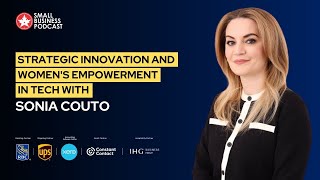
In this episode of the Canadian SME Small Business Podcast, host Nidhi interviews Sonia Couto, managing director of Converge Digital Solutions and a veteran of 18 years in software technology. Sonia shares her entrepreneurial origins, citing early side‑hustles and the influence of Canadian businesswoman Arlene Dickinson. She describes a heart‑led, empathetic leadership style and outlines three core scaling strategies: building the right team (including the willingness to refresh talent), establishing a strong client support system, and creating a customer board that lets clients directly shape product direction. Sonia discusses her commitment to women’s empowerment, serving on the board of the non‑profit Hacker Gals and mentoring through Scotiabank’s Forum, highlighting success stories of mentees who secured funding and launched MVPs. She reflects on product design lessons, emphasizing the importance of simplicity after early user‑feedback revealed overly complex interfaces. Her mentorship philosophy centers on being a listening ear to combat the isolation many women feel in tech. Finally, she offers practical advice to aspiring tech entrepreneurs: prioritize execution over endless ideation, develop a minimal viable product quickly, document thoroughly, plan long‑term revenue and fundraising strategies, and keep the customer at the core of development. The conversation underscores resilience, strategic growth, and the need for diversity in the tech ecosystem.
Chapters
Hello and welcome to another episode of the Canadian SME Small Business Podcast. I'm Nidhi, your host, delighted to bring you fresh insights and stories from the heart of Canada's entrepreneurial spirit. This episode will focus on the challenges and triumphs of scaling startups, the unique perspectives of women in tech, and the transformative power of technology in enhancing business efficiency. Today we are joined by Sonia Couto, a trailblazer in 18 years in the software technology sector and managing director of Converge Digital Solutions and tech founder. Sonia's journey is one of immense resilience, having battled breast cancer and navigating the tech industry's complexities. Let's dive into her compelling stories from from founding startups to mentoring future leaders, and uncover how she simplifies complex challenges to innovate and lead. Hi Sonia, how are you doing?
I'm good, how are you today?
Absolutely fine. So Sonia, let's dive deep into your journey and the foundations. So was there a specific event or person that inspired your career direction?
Not really. I think, uh, when I was young, I always wanted to to do something in business or entrepreneurship. When I was younger, I had like, I always had like little side hustles and that's what I enjoyed. And then I accidentally got into tech and it was just something I really enjoyed and I took the time to really learn the different roles and different spaces in the industry. And then if there was a person, I'd have to say Arlene Dickinson. She's Canadian businesswoman who is on Dragon's Den. So in my early 30s, I read her first book and she's really been an inspiration. I've always really admired her, her tenacity in business and just everything that she does.
That's amazing. So, but how does Foundation influence your approach to leadership and innovation?
I think if I were to follow her example, she leads with her heart. She has a lot of empathy for the people that she works with. And even when you watch her, she just comes across as a really caring person. I think I learned a lot from that because I don't think I was that way when I first started out. And sort of learned to be a little bit more empathetic, more, you know, just caring about the people around me, what I want to do, and also run a business that is changing and having an impact, a positive impact on people and the world, and not just necessarily building cool tech to be cool, right?
That is amazing. Sonia, let's talk about your scaling strategies. What were the main strategies you employed to handle the growth?
Yeah, I mean, obviously having the right team in place is really important. And one thing I learned really later on was don't be afraid to let people go even if they've been with you for a very long time. Sometimes fresh blood is great for, especially when you're growing. And the other, I mean, and obviously the team is really important, but I also think really important is having a good support system in place for my clients. So that they have a process that they can follow in order to go through that. And then the last part I think is really when I decided to put together a customer board. So most companies, they put together a board of directors to help them with the direction of the business. I did the opposite. I made our clients our board and they have an impact on the product growth, what we're gonna be building next, what we're not going to be building, what's important for the industry that we're serving, what's not. So our clients really get a say in what we're doing and how it's impacting their business and the industry in general. And that's really helped us get to the next step in our growth, which is to other countries and especially the US.
So I, I believe those 3 strategies will be, uh, like your best team that you had, then, uh, like the young blood that usually, like, because I think that's something that brings always the fresh ideas and the new ideas into the industry. And then client is always number one.
Yeah.
And if you, if you put your client and customer always forward, I think that, that's, that's the formula for the growth in the future.
Yeah. I mean, especially with technology, a lot of leaders get stuck in building the tech. And not necessarily about pivoting and growing. And they, they get stuck in that phase. And don't get me wrong, we were stuck in that phase for a little bit, but I had to really learn and grow and get out of it and understand what were, what were the things that I could do that were really going to allow us to grow and not just be stuck in development for, you know, 5, 6, 10 years. So small, they seem like small things, but they had a huge impact on our business.
Absolutely. Uh, Sonia, let's talk about empowering women in tech. So how do you use your position to support and empower women entering into this field?
Yeah, I always try to help as many people as I can with the limited time that I have, but I'm actually— I'm on the board of the, um, I'm on the board of an organization called Hacker Gals. So we are a non-for-profit that encourages young girls from grade 6 to high school to learn how to code. So they have after-school programs, hackathons, and they're really just encouraging girls to learn how to code and get into technology, you know, when they're ready to go to university and things like that. But they're teaching young girls on how to go through that process. And obviously the hackathons really help. I'm also a mentor for an organization that's run through Scotiabank. It's called The Forum, and I have a couple of mentees that I've had through, through that platform where I'm just helping women who want to get into business or into tech navigate the early stages so that they can sort of put themselves in a place to be successful later on.
As you rightly said, that you are on board on a couple of these women featuring organizations or like groups that you have. So could you share a success story from your mentorship initiatives?
I don't have a specific one. I do know that like there's been two mentees that I've had that have gone on to raising funds for their companies and getting investors on board and getting their company, you know, at least the MVP off the ground. What I'm really good at is working with a founder to understand the future and not necessarily be stuck in the present. So you want to get something, you want to build something, think about building that really quickly and getting it to market so you can start getting information from your clients, from your beta users early on so that you can continue building and really learning from what the feed— from the feedback that you're getting. From the product being out in the market. So I think I can think about, of about 2 mentees that have gone past the just initial idea stage and actually built something out. And then overall, I have a lot of friends that are in tech startups that I give advice to on how to, you know, get unstuck. I have a friend of mine the other day told me that I'm his startup therapist because I'm not only helping him trying to figure out what he can do in his company, but I'm also just talking to him about little strategies and things that you do to think beyond just business. It's more than just that. It's a lifestyle. I don't think founders or startups have a work-life balance. I think you're working all the time. So it's good to understand all the little things that you can put in between that so you can find like you're having that balance.
Very rightly said. Uh, Sonia, let's talk about some, uh, technological impact. So what feedback have you received from your clients about like your products?
Yeah, um, do you want good or bad feedback?
I would take both because I think, I think people, people should know, uh, I think both the impacts, whether it's good or whether it's bad, because I think these are the impacts and these are the stuff that will help them if a new business is starting up or if even a current business is doing, like how they are doing in their future. So I think both experiences will be really good for our listeners and our audience.
I mean, one of our products very early on, we didn't think about the end user. And so the feedback that we got right away was, this is too difficult to use. You know, we had like an older workforce that were using an application on a tablet. And they were just like, I don't know where I need to go. It takes me 2, 3 clicks to get to the end result. So we took a step back and we basically redesigned the whole user interface alongside with the end user to really oversimplify what we were doing. Because like in tech, we tend to sometimes overcomplicate things when things should be very simple. I think the user interface was a huge lesson for us because it's not something we had really put a lot a lot of emphasis on. We just thought everyone's going to get it, you know, we're going to put like a little video on how to use it and it's going to be super simple. With being said, the good thing is that when we built our other product and another product, we really took that into heart. And one of the feedbacks that we get now from that product is that what people love about it is the simplicity and how easy it is to use. Mind you, I think we oversimplified it a little bit based on the feedback that we got from the other product that was too difficult. But one of the things that, I mean, one of our products, um, there, we have competitors, right? There's other people doing what we do. Uh, but at, at the same time, everyone's sort of doing the same thing. We're providing these features to solve this problem, but the simplicity of it, even though we have all these Technologies built in. It's the simplicity that people really like.
Absolutely. I think simplicity is the key, uh, like, to key to, uh, have your business work in the best and the, uh, best possible way, I guess. So let's talk about innovation and mentorship. So could you share how your own experiences have shaped your mentorship style?
I didn't really have any mentors. I had sort of people that would give me some advice here and there, but I didn't have like an official mentor when I first started out. I think later on I sort of seeked some people. So, I try to, you know, wing it and just start with based on my experience when I was there. I think one of the things that I found and I struggled with was that it was very lonely, especially as a woman, because it was such a male-dominated space. Space, and I didn't really know how to navigate it well. So one of the things that I try to do when I bring on, when I'm working with a mentee, is be an ear, someone that they can just talk to, who's going to be there to listen. And sometimes they may just want to vent. Obviously, they want me to be a mentor because they want to get all the value out of it, but I think it's really important to also just be a a listening ear just to let them get things off their chest. And I sort of do that and where it's like, I'm here, I'm gonna help you walk through all of these things that you need or scenarios or where you're struggling, but I can also be an ear for you to vent to or talk to just so you don't feel so alone because that was one of the things that I felt when I first started.
So that's amazing. So Sonia, before we conclude, could you offer one piece of advice to our aspiring tech entrepreneurs?
Yeah, don't get stuck in the idea. Everyone has ideas, but it's about the execution. And don't think short-term, think long-term. When you're, when you're putting together your idea, when you're document— documentation is so important, especially in tech. Really think about the vision. It's what I tell in tech startups all the time is think about, plan out your MVP, your minimal viable product, get that to market really quickly. Don't take 4 or 5 years building the perfect MVP, get it out. And then think about the next phase. Now that it's out, you're going to get feedback. What's your marketing plan going to be like? What's your— how are you going to monetize this? How are you going to make money from it? What's your sales team going to look like? If you grow from this phase to this phase, who are you going to need on your team? Where are you going to get the money? If you're going to go and raise money, tell your investors what you're going to spend the money on. Don't just spend money on development, development. Really work hard on having a plan where you're going to be doing research and development, but also bringing in revenue.
Thank you so much, Sonia. Thank you so much for joining us and sharing such valuable perspectives. Your stories of resilience and strategic innovations are truly enlightening. Today's dialogue highlighted the significance of resilience, strategic business scaling, and fostering diversity in the tech industry. These insights are valuable to anyone looking to make an impact in the SME sector. We are grateful to our partners RBC, our exclusive banking partner UPS, our exclusive shipping partner Xero, our exclusive accounting software partner, Constant Contact, our exclusive email partner, and ILG, our exclusive hospitality partner. Remember to subscribe to Canadian SME Small Business Magazine for more insights and resources. Visit us at canadiansme.ca. Thank you for tuning in and keep supporting your local businesses. This is Nidhi signing off from the Canadian SME Small Business Podcast.