How Amplitude Went From Skeptics to “All In” on AI
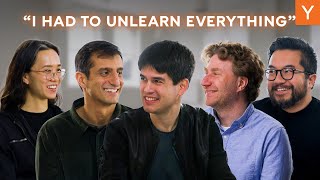
In a lengthy interview on The Light Cone, Amplitude CEO and co‑founder Spenser Skates walks through the company’s evolution from early AI skepticism to an aggressive AI‑first strategy. He explains how board pressure and the rapid productivity gains seen in software‑engineering tools (Cursor, Claude, Codex) sparked a shift in late 2024, leading to key hires (engineering leader Wade Chambers) and the acquisition of Command AI, which acted as change agents. Amplitude launched several AI‑powered products—AI Feedback, AI Visibility, an MCP server—and announced a forthcoming "Ask AI" chat interface and a "cursor for analytics" feature. Skates details the internal cultural transformation, including an "AI week" training program that got product, engineering, and design leaders hands‑on with LLM tools, and how the organization restructured, reorganized, and integrated new YC‑founder talent. He contrasts the top‑down adoption pattern seen in large incumbents with the bottom‑up enthusiasm typical of startups, discusses the jagged capabilities of current models, and shares leadership lessons about clarity of purpose, mentorship, and the difficulty of moving from founder to public‑company CEO. The conversation also touches on strategic perspectives on competing with giants like Google, the importance of building AI‑native products that solve real customer pain, and the broader vision that analytics will be reinvented in the next few years, with Amplitude aiming to lead that change.
Chapters
There is a point that you get to a year, maybe 2 years in, where from a rational standpoint you probably should quit, but for whatever reason, those successful ones don't. And so that is the number one filtering criteria. The best advice I can have is be clear in your own head about what you're trying to learn and then, you know, be open to where it comes from. And that's where I think people fuck that up a lot. They don't get really crystal clear on why they're trying to build a startup or what they need to do to be successful. There is going to be a reinvention of analytics in the next few years. And, you know, we want to be the ones to go lead it.
Welcome back to another episode of The Light Cone. Today, we're really excited to be joined by Spenser Skates, CEO and co-founder of Amplitude. So Amplitude went through YC in winter 2012. Amplitude is one of the world's leading analytics platforms, and they're used by some of the biggest companies in the world, like Cursor, DoorDash, and Walmart. Thanks for joining us, Spenser.
Absolutely. Good to see you here, Harj.
So I was really excited to have you here because both of us made people on the internet angry recently, specifically on X or Twitter. I made them angry because I said that a lot of the reason incumbent tech companies can't build AI products is that the engineers are kind of grumpy and don't believe in AI and its capabilities. They don't want to build the products.
People got mad at you for that?
Yeah, people got really mad. Turns out that, like, there are actually a lot of grumpy engineers that don't believe in AI. So I was curious to hear for you as like a company that started well before the AI wave and is now trying to move in, is moving into AI and building more AI products. How has that change been for you and what have been some of the challenges you faced?
It is hard as a larger company to reorient and rebuild your company to use AI well. And this is, I think to your point, the huge advantage that a lot of earlier companies that can build from the ground up in this way. I mean, I'll just tell you the Amplitude story. So we were frankly skeptics on AI for a while too. So started to become relevant in 2022, 2023. There's discussion, but we didn't really do that much. And it wasn't until late in 2024 that we're like, okay, we need to get serious because I think this has the potential to reshape analytics and what we're doing. I think, You know, just to defend the skeptics for a second, I think I remember being in a board meeting once. You had like, you know, all these like board investor finance people and you had all these salespeople like, hey guys, shouldn't you look at this AI thing? Like, isn't that getting hot? Shouldn't you guys do it? And it's like—
What's your AI strategy?
Yeah, exactly. Exactly. Yeah. Actually, that literally was a question like from one of our execs to me. It's like, we got to get our AI strategy. What's our AI strategy, Spenser? And I'm like, this is the wrong way to think about what it is we're doing. It's like, you guys think it is— you guys think you can figure it out, go do it. I remember one of my co-founders, Jeffrey, actually was the most frustrated because I think he saw a lot of grifting happening in AI, being like, oh, it's going to replace all these jobs and like, you know, it's going to do all these things and we're not going to, you know, it's going to create this world of abundance and it's just going to totally reshape how we're building products and shipping them and how our customers are using them. But the reality was if you use any of these models at this point, it's like It was not clear at all. I think if you look at the capabilities of any of these models, it's like they're very, very jagged. So there's some things they're exceptional about, and there's some things that they're just absolutely terrible about. I think the frustrating part is to be told by someone who has no clue about what stuff falls in what buckets, like, oh yeah, you should do more of this AI thing. It was very, very— that was frustrating. And so I think there was frankly skepticism on my part. There's skepticism on the part of my co-founders and some of the broader team with an amplitude about what was actually going to be possible with it.
But something changed.
Yes. Well, I think you saw the transformative effect that AI had on software engineering. Like, no question if you were using— I mean, started by Cursor, but then, you know, all these other amazing tools, Claude Code, Codex, like tons, you know, tons and tons of others. It was, it was very clear that you would be a lot more productive using these things.. And so that was kind of the first of us saying, okay, there's something there, there, and let's go after this. Um, so we really, uh, started on this path in earnest in around October of, uh, 2024. And kind of two things happened then. One, I hired a new engineering leader, this guy Wade Chambers, who's just Silicon Valley legend. The other is, uh, we acquired this company Command AI, also a YC company. Uh, in both their cases, they were kind of the change agents that Amplitude needed. So Wade, uh, had been working on AI, uh, to in previous company and had known a bunch of people who were on the bleeding edge of leveraging the capabilities of models. They had been building a product where they were trying to— they're doing a bunch of different things, but they were trying to smartly trigger guides to end users just based on if they were confused. And they, you know, created this chatbot that very much like an Intercom fin that would yeah, interact with users and, you know, help them answer support questions and stuff like that. And they had been, you know, leveraging a bunch of model capabilities. That was kind of the first point that we started to get serious about it. And then since then, it has been a very— I'd like to think we're kind of coming up. I mean, we just launched a whole bunch of AI products in the last few weeks. We did AI Feedback, we did AI Visibility, we did our MCP server, and then we're going to go much, much bigger in December, January, and February, where we are going to be coming out with what we call the cursor for analytics, which I'm incredibly excited about and I think will dramatically change how people use and leverage analytics. But it's taken to transform, you know, Amplitude as an organization. I like to think we're still small. We're about 800 people. Product, engineering, and design, that organization is about 200 people. So, you know, it's like you can know most people in it and change pretty quickly. It's still taken us a full year to get the team kind of fully on board and ramped and like believing and seeing and building.
ChatGPT launches, AI starts taking off. And it sounds like your investors and board members and maybe people who aren't in the day-to-day are sort of like, hey, what are you doing with this AI thing?
Yeah.
What about— They read about it in TechCrunch or something.
Yeah, exactly.
Yes, exactly. Exactly.
What about internally? Like what was the vibe internally at Amplitude on the team? Like was there anyone internally asking, hey, like should we be building AI products or doing something the ALA?
There were a few, uh, people that were kind of testing out ideas, but I think we were so focused on our regular motion. Like we were coming out with a lot of other products outside of analytics. We were doing, you know, we launched Experimentation. We were building Session Replay internally. We're building this thing, uh, Activation, which targets your users based on their behavior. And so there was a lot to do that was just kind of right in front of us. Um, that was clear, like, okay, hey, we can be much more competitive with 'You know, and there's this revenue that's just sitting here if we go build these things.' You know, there are a few folks that were messing around with it, and there were some people that had used Cursor and other things, but the organization as a whole did not have— it's not like it was conscious and aware of this change, this massive change that was about to happen. I give a lot of credit to Wade, and I give a lot of credit to the command team of being the tip of the spear in terms of showing people what is possible and then getting the organization to embrace. Early 2025, I was convinced and I was like, all right, we have to be very aggressive on this. So the first order is to train the organization of what the capabilities of AI are, specifically engineering.
What was like the lightbulb moment for you? When did you flick into this needs to be my priority?
It's hard to say that there was, there was one moment. We've always had this vision at Amplitude of a self-improving product where you have a product that dynamically responds to your user feedback. So it knows what features you like. It knows when you're getting frustrated and stuck. It knows how to change things based on your input as a user. And I had always thought this vision was like, you know, 10 years out, if, if, if, you know, if, if even that close. And one of the things that was becoming clear, it was actually a lot closer. That, that moment was actually probably a lot closer than we had realized because of what we saw happening on the coding side with AI. I said, okay, look, we, you know, whether or not a self-improving product is going to be possible. It's clear at least a step towards it. We're going to have to go do it. So, and the way to do this is we're going to have to train the organization on this. I started working with James, the founder, CEO of Command, as well as Wade, our engineering leader, to figure out how do we train the organization on AI. And we came up with an AI week. And unfortunately, for a bunch of reasons, we weren't able to actually do that until June. But that was a, that was a key pivot point, what we did was we got a bunch of the existing leaders in the organization. So, you know, our VPs of product, our engineering managers to use this technology and to see what was possible about it. And then during that AI week, what we do is we train the team. We had our, like our, one of our product leaders, you know, vibe code, like a dark mode for Amplitude in front of the entire organization, which was actually very scary, but actually it happened, you know, they ran into a bug, but they'd happen to sort it out. It was actually kind of a cool moment because the entire engineering product and design organization saw what was, it's like, wow, okay, you know, all the leaders within Amplitude are saying this is the thing and they're showing how they're doing it. And, you know, I better get with this as well. And then the rest of the week, you know, so we did training for about 2 days and then the rest of week was just, you know, like a hackathon, work on stuff you're already doing except, you know, do it faster and better by, you know, getting set up with Cursor as well as a bunch of these other pieces of tooling.
So step 1 was actually not like, here's what we need to build at Amplitude with AI. Step 1 is just get the existing team using tools and, and believing in them.
This is the core difference between building product in SaaS and building product with AI. In SaaS, SaaS, I mean, it's the best business model and the best product delivery system of all time. You go to your customers, you ask them what they want and what they're going to pay for. You prioritize that list and you start building it. You get them to those customers and then you just do the whole thing over and over again. That's the delivery loop that Amplitude has mastered over the last decade. And, you know, that's, that's our core competitive advantage, you know, as, as an analytics company as We're better at that than anyone else. The key is you can go to your customers, they can tell you what they want. With the capabilities of AI, because they're so jagged, it's a technology-first understanding of what is possible. And so if you go to your customers and tell them and ask them what they want, like they're not even gonna be able to describe what's possible. Give me a faster horse. Yeah, give me a faster horse, you know, or it'll be asking for something that's not quite possible or possible in the wrong way. Or like, hey, you know, I want something that ships insights to me and, you know, does it in this a particular way and you'll get all sorts of different visions of it. And what's much more important is you, you have to be familiar with the capabilities of the models and then how those can map back into what your product does.
The thing I just find really surprising about this is usually the way it works with new technologies is like the engineers are the early adopters and they are usually like bugging their like company. I really want to use like this tool. I don't like, and it's like the companies are resisting saying, well, it's not like tested yet. It's not safe. But like, It seems to be a more common pattern with AI that it's like going the other way.
Yeah, it's tops down.
Yeah, like why do you think that's happening?
Um, I mean, it's going to sound extraordinarily reductive, but I think, I think Sam Altman is the best salesperson of, of this generation by no bar none. Like, I think he has done an exceptional job stating a very ambitious vision, getting a lot of people rallied behind it at OpenAI, um, showing what's possible and convincing you know, the entire world of the impact that this technology is going to have. And so you have these, you know, investors already bought in, executives are bought in, you know, world leaders are bought in. Like, you know, as a society, we, you know, the people in power have said, hey, this technology matters. And the reality is the capabilities are still trying to catch up and it's not clear if they'll catch up to those aspirations. And so you have, to your point, Harj, the opposite disconnect happening where, you know, yeah, you have a lot of desire for this thing to happen, but, you know, it's not clear if the capabilities are there yet. And so this is why, you know, you had a lot of frustration, you know, in Amplitude as a case study, you had a lot of frustration from engineers being like, man, I see just tremendous what they feel is grifting in AI where it's a lot of talkers, not many doers. You know, it's not till the last year that, you know, okay, hey, we think the capabilities are here for it to transform the business that we're in analytics.
One thing that comes to mind is this mode of running the company more like founder mode is even more present. And there's a story of the transformation with Case Text where just founder-led to do that transformation.
Sounds like this is what's going on with Amplitude too, is coming from, from you. Absolutely. So I've had to learn over the last 10 years how to go from being a founder to being a large company executive. There is no way to understand what is possible than being using the technology and being on the front lines of it. And so So, you know, that's why it's like, yeah, you train the entire organization and it's a much more bottoms-up thing on what is possible. And so out of that AI week came basically all the AI stuff that we're working on now. So our MCP server, which we didn't even plan for, like that was actually one of our engineers, Brian Giori, who's incredibly excited. You had one of our engineers, this guy named Leo Zhang, who built AI visibility and he just wanted to, he was actually going to leave Amplitude to start a company. And we're like, look, just come here, stay here, learn how to do this while getting paid, and we'll teach and coach you, and then, you know, we'll fund whenever you do go something. And I didn't even want him to do AI Visibility, but he was like, oh, I think that there's a huge opportunity here to like build something for free and give it away. And, you know, now that's, now like, you know, it's been this explosion. Like we have, that product launch doubled new signups to Amplitude, which is wild, you know, like every week it's like we're getting twice as many signups to our free plan as we did from before our AI visibility launch, all the way to what we're going to be launching in January, which is we're going to launch a what we're going to call Ask AI, which is a global chat interface very much like Cursor, where you will be able to chat with— yeah, chat with AI and ask it to pull certain charts for you or do analysis or figure out why something has happened to you for within within, you know, your data and pull that back out to you, to our agents, to like so many different things have come out of this from, but it's all been very bottoms up. And then it's about, you know, for me and for Wade to sculpt, okay, how do we set these up in the organization for success?
So not many large companies like yourself have been able to do this transformation.
A lot of them are stuck. It's extraordinarily hard.
Stuck and it's been probably very painful to overcome. What are things that you had to give up to get to where you are right now?
I mean, we've done 2 reorganizations in the engineering, product, and design organization since the, since the start of this year. And so, you know, there were leaders and executives and different people who were very much kind of in the SaaS modality but were not on the bleeding edge of AI that just unfortunately were not quite the right fit for what we were trying to build in the future. And so ended up having to move folks out of the business. I mean, doing that level of reorganization, you know, twice in a year is very disruptive. We've also acquired other companies. So we brought in the Craftful team and Jana, who's been phenomenal. And we brought in Eric and Frank from Inari. We brought in also a YC company. We brought in Enzo and Ferruccio from June, also I think YC company. Yeah, so we brought in all these great YC founders and then kind of melded them with a lot of longtime Ampliteers. And that combination has been very, very special.
What are like the specific differences? Like for people who are really successful, I think especially engineers, like who are successful in sort of pre-AI SaaS world, kind of grew up in that environment. And then you compare, like, what are sort of the things that they're, I don't know if lacking is the right word, but what are the things that they can't see or they're not as naturally adept at as people who came up in sort of post-AI world and are like AI native engineers and believe in it deeply?
To say the more uncomfortable thing, like, is it an age gap?
Is it an age gap? It's not an age thing per se. It's a mentality thing. Like in the SaaS world, you can take, you can do that loop I talked about earlier, talk to customers, ask them what they want, prioritize that list, build it, deliver it, do it again. Like you, you, you kind of, I don't know, it feels very cliché to say, but you, you want to take kind of the state of the art in whatever field you're building for and then start to say, okay, if I were to redo this in an AI-native way, why? On the flip side, I think what a lot of these AI-native teams are really missing is they haven't learned the product and the problem and why things are solved the way they're solved. And so, like, they try to create these new interfaces from scratch without drawing on the previous, you know, expertise that's happened over the last decade on whatever problem that they're solving. And so, you know, if you try to build an analytics interface from the ground up where you're just, uh, say, you know, starting with questions and you're not seeing your data, it's actually— that actually has its own set of challenges. And so I think, um, you know, what I'll say with the Amplitude team is like, there's some incredible engineers there. I think the ones that have adapted the best have always been very in tune with, okay, the code is not an end in itself. It just, like shipping it, that's just a side effect of solving whatever problem for the customer. And then, hey, now I need to get up to speed with this new technology. And if I can marry those two things, then I'm going to create something amazing.
I guess one of the weird things that I've noticed in my own behavior is we have an internal agent infra at YC and it has access to all our, you know, databases and everything like that. And then Jared recently told me I'm like sort of a super user for it. And then what I realize is, uh, I don't— basically it actually fails most of the time still.
Yeah.
But I just like try and ask it in a different way. I tried, you know, if it failed with Gemini 3, then I'll try it with, you know, Claude, I'll try it with GPT-5.1, like I'll change the reasoning levels, like, and then eventually I figure it out and it's like, and it works. So. Whereas like in B2B SaaS and/or building, you know, sort of standard Web 2.0 software, it's like, man, if it broke even once, like this thing is a piece of crap and I'll never use it again. So it's like a weird— yeah, you have to like rewire your brain to be— it's like working with a child right now.
This is why I think a lot of the hype in that AI killing SaaS is way overblown because particularly for a lot of business workflows, like very high guarantees on performance are fundamental to it. You know, if you put a record into your CRM, that stuff better be there. You know, you don't want it, oh well, it put this in with 80% probability. It's like you want it to be there, and SaaS does a great job of that. It actually took a set of existing workflows that were handled on-prem or by paper and just moved into the cloud, and so it wasn't really like, it wasn't any workflow transformation, and this is where I think Andrei Karpathy's point is totally right, where a lot of these businesses are trying to overshoot the mark and just say, okay, well, hey, we'll just have this agent handle this workflow end to end. Actually, the editing and redoing it like you, like you talk about, Gary, is actually incredibly important. And so how do you create a product that allows you to do that really well, I think is the key challenge that a lot of AI B2B companies are figuring out.
Speaking of things that you had to give up in order to do this, what happened to the existing Amplitude robots? Roadmap? Like you had all these other things that you were working on before the company got AI fervor. Did you throw out the whole roadmap? Only like half of it? How are you thinking about like allocating resources between these new AI bets and the like existing stuff that makes the money?
It's not like there's, there's totally separate products. Like the goal of, for example, our, what we're calling Ask AI, which is the chat interface in Amplitude, is to make it easier to use the existing product. And so So, you know, as we've looked at next year, there are 4 big priorities we have. One is rebuild Amplitude to be AI native. The second is make it much easier to use. The third is make sure our other products outside of analytics have parity with the competition. And the fourth is serve marketers really well so that we can take on a bunch of the legacy martech guys. There's still like basics that we're doing or foundational things we're doing on our session replay product, on our experimentation products, on our guides and surveys product. Like, you know, for example, one big thing that we're going to be coming out with in Session Replay in the next few months is zoning, which is this way where you can look at a web page and then see the analytics overlaid on top of it, which is super cool functionality. And so that we're still doing in the same way. I think what getting the team to embrace AI from the, from the ground up has happened, has allowed us to do is one, you know, they're a lot faster and more productive. So they're shipping a lot more, which is absolutely amazing. And then two, they are looking at these problems with this lens And so the big change we did organizationally is we had a lot of these AI projects as kind of side projects for a bunch of people. And we said, okay, let's have a dedicated team that kind of goes after them. But the existing team is still going to do, you know, work on making the Amplitude product great. And that work is just as important because I think the timeline for change in the business world is the cycles are just much, much, much longer.
And how do you allocate people between the teams working on the new AI stuff and the more traditional SaaS stuff? Did they self-select into different groups? Is like, is there like a, like a, like a challenging cultural divide there that you have to navigate?
No, you know, I think by doing the AI week and make it clear— we had this whole, uh, metaphor. We talked about burning the boats, like we're all in on this. Um, and there were some people that got even more into it, and they very naturally self-selected, uh, into a bunch of, uh, a bunch of this work. Like, we— and it's, it's crazy. It's like, it's not It's not just, hey, engineers, it's like designers too. Our very best designer at Amplitude, this guy named Will Newton, we actually had him spread among way too many projects and he was like, no, I got to focus in. Let's say no to some of these for a little bit so I can go really deep on this chat interface and make sure that when we launch this thing early next year, it's going to be awesome. So yeah, people will naturally kind of self-select in or out and it's a 200-person org, so you get a whole spectrum of this.
Can we talk about the thing that you said that made people angry on the internet? Yeah, which one? I think, yeah, I think it was the AI visibility tweet, right? I think generally, I think you were making the point that a lot of these startups are sort of like features, not companies. And obviously, like at YC, we're going to take the other side of it.
Hell yeah.
I would argue that you guys have a visibility company.
It feels like every batch, right? It's become a popular idea. That is true.
We fund founders, not ideas.
I love love it. But AI visibility aside, I guess you've gone through the whole journey. Like, you were in the batch, you started a company, now you're running a public company. I mean, I think we would argue the side of just that the advantage that startups have in general is just like they don't have an existing customer base, they don't have revenue. Their customers are going to be more forgiving if the thing doesn't work yet. And these seem like advantages for new startups attacking incumbent companies with an AI product. But from your perspective, what are the advantages that incumbent companies have over them? How do you think about it?
I think the real business has to be downstream of AI visibility. It's valuable. There's value in it, just like there's value in the SEO world, but it's so easy to do. We did it, as I mentioned, in probably more like a few months and a few weeks, but we did it very quickly and gave it away for free. And it's been this incredible lead generation for us. And so commoditization is going to happen real, real fast. I mean, you talk about, like, you know, people talk about, hey, SaaS going away because of AI. I think that's a great example of it. And so in contrast, if you look at, I think, businesses that have done very well here, so like, there is a business I think that is very viable here, which is what AirOps is doing, where they're, yes, they have some visibility aspects, but they have a whole content generation business to help you create blog posts and other material. On that, and that's their real business. So I think all of these visibility businesses, you can get it for free from us, you're going to be able to get it free from a lot of other places, and you're going to have to construct a real business downstream. Maybe to give the flip side of it, I think innovation in the space is great. It's already moved a lot in the last few months. One of the advantages we have is because we have an existing revenue base of hundreds of millions, we can give away this for free free, you know, and just, and that's great because, you know, now a lot more people can get visibility without having to, you know, go through all the hoops of paying a company and get like, you know, tons and tons of value out of it.
You have like, you were Spenser the founder, like right out of college, started a company. Now you're like public company CEO. Let's say, so you have all this knowledge from seeing like what things look like at scale. Let's say you went out and started another company again and you were looking at like markets to go into and you were thinking about like, like, where are markets where you would imagine like, oh, like this incumbent is actually really good and like we should just stay away and AI is not going to give us an advantage? And which are ones where you'd be like, oh yeah, like actually, no, that's totally vulnerable and they're not going to, like we could really compete with them.
I mean, honestly, I joke about this, but anything Google's trying to do, I think that Google is the worst B2B company of all time. And there's an incredible opportunity to compete with them. So, you know, I'd look at email, I'd look at a lot of the workspace stuff. I think what the Notion guys, for example, are doing as a competitor to Google Docs is, is very exciting. Institutionally, Google's way too slow and way too conservative, um, that to be able to do this. And so it's only when other companies start to innovate that they get their stuff together. You know, same on this coding thing. You know, they've proven it can work from a technology standpoint, but bringing it to market, selling it to customers, making it work from a product standpoint, I think is very ripe for disruption. Honestly, so we've seen it in coding, we're starting to see it in support. We're seeing, you know, we think there's a massive opportunity in analytics that, that we're uniquely positioned for. Um, I think it, you know, there's going to be a cursor moment in analytics in the next 2 years, no question in my mind where people are going to use analytics with AI and you're going to be like, why did we ever do it the old way? And I can't even imagine going back. I think there's a lot of very generalized agent builders and I think picking a particular problem in a particular buyer,, is going to be a much more successful way of building a business, you know. Yeah, there's a general, you know, there's probably multiple generalized agent builders every YC batch now too. Um, and so, having a, a strong point of view for a particular buyer that cares about some things, like one of the ones, I saw recently was like, I think, you know, there's all these studies being like, hey, enterprise is failing to adopt AI. And if you look at you kind of dig into the why behind it, um, there's all these security and compliance concerns. And so, okay, I think there's a huge opportunity to solve those, uh, to get much faster adoption of these products. There has to be an Uber for tech support. When I was in high school, I ran my own IT support business, just helping people around the neighborhood fix their computers because it's like, set my Wi-Fi network up, set my printer, you know, whatever. And the fact there's still not a scaled solution, it just blows my mind for this. Like, you have a lot of people that, you know, are older, that are not native to technology, that have a bunch of money and want this stuff to be set up. And you have this young generation that desperately needs money, that has a ton of expertise on technology. And so a business that matches those, that's kind of supply and demand.
I mean, we also spend a lot of time helping people figure out the idea actually.
And, and I was like, it's hard. It's really hard. It's extraordinarily hard.
I don't think everyone realizes how Amplitude started out. Could you maybe talk about your journey to actually finding the Amplitude idea and maybe reflections on it a decade later.
So before Amplitude, we started this company called Sonalight, which was a voice recognition. It was like an early version of Siri, and it had this really amazing demo actually where you could— it listened in the background for your voice, and this was before any of the "Hey Siri," "Hey Alexa" stuff. And so it like listened in the background on an Android phone. As far as we could tell, we're the first to come out with the technology. We didn't know anything about what made for a successful product or business or company, and we were just kind of taking our shot on that. That. We were just two kids at a college that were like, okay, what's a problem that seems barely at the edge of possible? That's probably an interesting place for us to go to. And we ended up choosing voice recognition, not because we were passionate about the space. So we did YC with that. We did, went through the whole batch, did Demo Day, did this amazing demo on stage. We got tons of press written about us, but the product and the tech, it was just not not good enough. It wasn't a good enough product. And so we ended up right after Demo Day deciding to shut that down. And then we had always built our own analytics in-house, you know, because like, it's what you do as an engineer. You're always like, I want to build this instead of paying Amplitude money because it was very clear to us this was the right way to build product. It was, you would look at what people did in your product, you would understand them deeply, and you could build and iterate on a better product. And so we ended ended up, and when we showed what we had done on the analytics side to a lot of other companies, they're like, "Hey, we want this." And so that right after YC Winter 2012 Demo Day, we ended up pivoting to Amplitude. And that was, I think that was June of 2012. Analytics was a pretty crowded space at that point.
Oh, extraordinarily crowded. Like, did that factor into your thinking about getting into it at all?
A little bit, you know, and so you have to ask yourself, it's like, okay, why do you think you're different? We knew this was a particularly good problem for, compared to voice recognition, you know, and a lot of this AI stuff, frankly, Those were probabilistic problems, so you could not get a right answer. And we were a bunch of algorithms engineers coming out of MIT. And so this problem of how do you— analytics seems amazing because it's like, okay, you build this really scaled distributed system and you can get a right answer and it's just about doing it better and faster. That sounds great and amazing in comparison to voice recognition. I think in retrospect, we got lucky that we were particularly suited for that problem. And then the other part of— the other point of view I think I had was that I'd see all these great engineers and these great founders who built these amazing pieces of technology, but just did not really understand how to get it in the hands of customers and sell it and all that. So I'm like, okay, I'm going to go all in on learning how to do that. I don't even think I do that particularly well, but just because we were willing to do that and kind of build the next thing and build the next thing and build the next thing, you compound that 10 years later and now you're the leader in the space.
Do you have like a method for learning these things? Like one of the things I remember was once you went to Amplitude, then it was was, you know, B2B sales and then you got really good at it, but you didn't know anything about it.
I am not good at B2B sales, to be clear. I still feel an imposter to this day.
But being able to do it at all, like from an engineering background, I mean, and being willing to learn how to do it and realizing like, oh, this is actually my go-to-market and I have to do it this way.
Yeah. Analytics, I think in particular, there are some products that you can adopt without selling in that like people just, you know, they have single-player mode, you know, Cursor's a great example. Slack's a great example. But there's some where you need to convince multiple people at the same time that you're going to go do it. And that requires a sales motion. The number one misconception I had was like, this would be something you learn out of a book or on a website, or, you know, you kind of read about, but one, you have to do it. And it's like, two, you just want to get someone who's good at coaching you. So we worked with this guy, Mitch Morando, who coached, uh, you know, was a sales exec who had gone on to coach a bunch of other companies. Um, and I just happened to randomly meet him through, through, uh, Sensor Tower guys actually, and I was like, okay, this is the expert I need, you know, teach me everything you know about sales. He's like, whoa, whoa, slow down. And then he would just come in once a week and just beat me up and just being like, hey, you don't really, you know, what's the customer pain? And I'm like, oh, they want some dashboards or charts. Like, Spenser, that's not a business pain. Like, what's the pain? And so after a while, I like finally get the message. It's very much like learning a sport or to play an instrument in a lot of ways. You're not going to to do it reading a book. You want to just do it and then get a little bit of advice and coaching on the side. Like, that's the, that's the much, much better approach.
I mean, you've said this several times even in this hour that, um, you know, you find certain people who are really, really great. If you could, you know, give your— the 20-year-old version of yourself, like, the cheat sheet on what you learned about finding those mentors, like, are there— you know, is there— is it like, I know it when I see it, or Or there's a track record or—
Oof, it's so hard. I mean, I've been extraordinarily lucky. And this is one of the great parts of Silicon Valley is there's such a positive-sum, help others, pay it forward mentality. I mean, Mitch was an amazing— YC is an amazing one. It was very clear. I mean, the best advice I can have is be clear in your own head about what you're trying to learn and then be open to where it comes from. So you first need to be clear on what you're trying to do. And that's where I think people fuck that up a lot. They don't get really crystal clear on why they're trying to build a startup or what they need to do to be successful. And then from there, you know, how you get the, how you get the mentorship or advice may come from a lot of different directions.
Can I ask like one more kind of meta question? Hearing you speak about your experience at Amplitude, it's just really inspiring to me because like you go all the way into the details. You have this capability to like hyperfocus. I guess like, how do you direct it? Like, how do you know that you're hyper-focusing on the thing that, you know, really is the number one thing? Like, do you have like a cycle in the back where you're like, I just, you know, spent 10 minutes thinking about blah, but like, is that actually the most important thing or not? Like, how do you, you know, prevent just like rat-holing on something?
It's hard. One of the things I did before starting a company was getting real clear in my head as to what I wanted to do with my career and why. And one of the takeaways I had was, uh, you know, you want to dedicate yourself to a mission that's greater than yourself, and you'd be part of contributing something larger to humanity. And what I knew how to do was to, you know, build software and sell it. And so I was like, okay, what's the best way I can do that? You know, starting a company. And then from there, it's just, you know, like, you kind of— the goal, you know, you create a goal tree that goes down from there. Okay, let's Let's figure out what product to build. Let's figure out how to sell that product, you know, and then it just kind of falls into place. I find that where people get screwed up the most on that is they are not clear. And by the way, starting a company, it's extraordinarily emotionally painful. Like, I do not recommend it for the vast majority of people. I mean, there's so many times, like every few years, I've gotten to a spot where I feel like I want to quit the business and you feel that deeply. And the best counter to that is I kind of go back to the why of why I kind of came into this business. And so I think if you get that top node really right, you can always kind of anchor or go back to that. You always know, okay, look, if I just continue to see this through, somehow, I don't know necessarily how, it'll lead back to, hey, I'm going to create a, you know, build technology and make the world, you know, a better place in my own little way. So I just, that would be my number one advice for, you know, anyone that's coming out of school or thinking of starting a company is get really clear on that. I think the worst I see you guys see it all the time, which is like, hey, you know, I'll do it and if it takes off, I'll double down. If not, I'll go back to grad school or a job or whatever. And that's like the freaking worst of this because you have to put up with uncertainty for long periods of time. You have to have all these existential questions hanging over your head. It's, it's, um, you're not going to get through it. Like if you look, one of the big takeaways, like I read Founders at Work, um, and one of the really clear takeaways from any of these journeys is there is a point that you get to a year, maybe 2 years in where from a rational standpoint you probably should quit, but for whatever reason, um, those successful ones don't. And so that is the number one filtering criteria. Now, not to say, you know, that, you know, there's no guarantees. Getting that, that top node really clear so that you can anchor on it, um, over very long periods of time is the most important I found. Intrinsic motivation. Yeah. If you're, if you're doing it for like recognition from others or, or, you know, hey, you know, because you're gonna get paid a lot or whatever else, you'll—
your, your ability to last through is going to be much, much worse than someone else's. I mean, embedded in that, you know, I I'm taken by earlier you were saying like at every point of Amplitude, there's sort of a moment where you have to learn how to do something and like grow into that. And then being a public company CEO is one of those things. Walk me through like the, you know, how you started, like the, you know, the intrinsic motivation. And now it's like, it feels like you have a really big responsibility on your back. It's like, you know, people look to you for leadership and, you know, you were the leader of a great many people and they have families and totally.
Oh yeah. You know, hopefully they're betting their careers on what we're doing here. It's, it's a, it's It's a very deep responsibility. As a founder, your job is always to run to the most difficult problem in the business and lead from the front. And so if there's an incredibly difficult piece of code, a difficult product or design problem, a difficult customer, you know, a difficult employee problem, whatever, you need to go. The great founders will go headfirst into it and lead from the front, and they will rally the rest of the team behind them. Even if you look at the successful founder CEOs, after about a decade, most of them leave. And in my mind, it's actually for this very reason, because being a large company executive is different. And because you can't lead by example everywhere all the time. There are places you can, but you can't do it universally because it's like, okay, you got to do it in sales, you got to do it in marketing, you got to do it on people, you got to do it on the product, you got to do it with customers, you got to do it with the press. It's like the list goes on. There's just too much. You have to be much more disciplined about your time and say no to most stuff. And then what you realize is you become the person you hate. You'd always make fun of big company executives for not doing any work for themselves and just like judging other people's work all the time. But there's a reason for that. And you have to embrace that reason. And so it's, it's very hard. That is a very hard thing to unlearn. Another thing, which still trips me up to this day and I hate, and I try to run Amplitude differently, but there's truth to it, is like hire hierarchy. There is a reason for hierarchy.
Oh yeah. I've learned that the hard way many, many times.
You need to have people who own certain things and who are responsible for leading certain teams and other people within the business. It's much easier in my mind, I think, to be a large company executive because you have all these resources, you have all this leverage. Well, you actually work less hard and get product market fit and you're running, you know, like you're deploying, like, you know, we're $350 million in revenue and, and, you know, we're deploying close to that in terms of total spend every year. So you have a lot of resources to do stuff. Now you're learning about how do you actually deploy those resources effectively. So, so, so there's levers that you have as a large company executive that you don't as a founder, which is awesome. And, you know, but it's a different, very different toolset and a very different set of skills in order to build a business successfully. And that's been the hardest transition by far.
I think this will be really interesting next couple of years then, because like sort of this flies a little bit in the face of the most facile view of what founder mode is. Like, the most facile view is like, you have to be all the way in the weeds 100% of the time, which is like obviously not possible when you have 800 employees.
Well, you can't do it everywhere. You have to be clear on where you're doing it.
Yeah, yeah. So there's just like a lot more nuance to—
Yeah, yeah.
I mean, you know, it's one of these like, you know, there's like a million management books about this thing, and you know, they kind of all try to abstract it into some framework, and it's— none of them are really right. You go through it and experience it yourself and get coaching from others who do, and that's how you end up figuring it out.
But that, that transition to large company executive, that That one's a really hard one. Well, in the immortal words of Bob Marley, one good thing about product market fit is when it hits, you feel no pain.
Oh yeah. Oh yeah. Oh yeah.
Growth solves all problems. And then hopefully people watching this will actually get a chance to experience some of the problems that you get to live on a daily basis.
Absolutely. Absolutely. One of the things I'm actually very appreciative, Gary, that you and PG and Jessica and others are doing is just helping people tell these later stage stories. One of the things I think YC's done exceptionally well is like You know, to the extent you can have a playbook for what is like the early stage, stages, you guys have, you know, written and talked about it and made everyone out there aware of it so they know what the path is and what it looks like. Still incredibly hard, but, you know, now it's like, okay, you at least have some guidance. Doesn't exist for a lot of the later stage stuff as you grow up. So I'm very appreciative that you guys are building that.
There's levels to it, but thank you for sharing your levels.
No, of course. Do you feel like we could turn what you did with Amplitude into the playbook for how SaaS companies should reinvent themselves in the AI era?
You know, I still feel like an imposter on this thing to this day, but I'm very happy to contribute. You have to get very judicious with your time. There are a lot of people who want your time, you know, and you could spend infinite time within people in the organization, with customers, with, you know, partners, with, you know, investors, whoever. And so you have to think about like, you're like, no one owns your time but you. As a founder, you're just like, nobody cares. And so you're just desperate for anyone to give you attention. So if they do, you're like, okay, this is great. But as, you know, a large company, it's like, no, no, no, like you have to be very, very judicious. One of the things I am deliberately trying to do is just be more out there and vocal. Um, so you see it on Twitter, you see it, you know, I'm just trying to be unfiltered. There's still, you know, there's still an aperture you're constrained to as a public company CEO, but most are just so conservative they're not putting anything out there. And so, you know, I'm at least trying to kind of share my story, put it out there, put my hot takes on, you know, politics, politics, religion, whatever, you know, uh, products, uh, companies out there. So at least, at least others, you know, can, can learn and benefit from that too. And honestly, it's like, it's just I am, you know, ultimately. I want to be able to express who I am. I don't want to argue with people on the internet. I don't want to have to be this other persona that I'm not, you know, or try to represent something I'm not. You know, if I believe and I have conviction in something, I want to be able to say it.
Spenser, thank you so much for spending time with us. This is super illuminating, and can't wait to see Amplitude AI, the new resurgence coming into every company in the world.
There is going to be a reinvention of analytics in the next few years, and, you know, we want to be the ones to go lead it. So thank you guys.
You heard it here first. We'll see you guys next time.
More from Spenser

The Library of Minds: Product Expert: The Future is Fully Automated Software Development | Spenser Skates, Amplitude

Why The Second Decade Is The Best For Startups — A convo w/ Spenser Skates, CEO Amplitude Analytics


How Amplitude Became the #1 Product Analytics Tool | Spenser Skates, CEO & Founder