Why The Second Decade Is The Best For Startups — A convo w/ Spenser Skates, CEO Amplitude Analytics
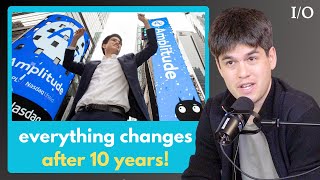
Spenser Skates, CEO of Amplitude Analytics, discusses why a startup's second decade is its best. He covers early fundraising with Benchmark and Eric Vischeria, the shift from founder to executive skills, and Amplitude's 10-year equity exercise windows that let employees hold options longer.
Chapters
There's this debate on SaaS. A lot of that's driven by AI. Two arguments. One is that the incumbents are screwed because they were built pre-AI. The other argument is no, no, no. Amplitude is well positioned to capitalize on AI. How do you reinvent yourself as an AI-first company when you started well before this revolution?
A lot of SaaS executives that are used to one way of operating will not make it in this AI era. Software becomes much cheaper to build. What's the limiting reagent? Turns out it's data. It's all about can you create a generative model or understand and evaluate if what you're building is the correct thing?
You've checked so many of the boxes, right? Raise from top-tier firms, take a company public, have, you know, the hundreds of millions of revenue, all these things. How do you, like, judge success?
The revenue is not an end in itself. People who think that get very rude awakenings later in life. You have to retrain your skill set, and that's a hard thing to do. And the only reason we're able to do that is because we have All right, Spenser, man, it's good to be here.
Sterling and I are in the Amplitude HQ in San Francisco. Thanks for hosting us. It's good to meet you.
Of course. Great hanging out with you guys. Thank you for coming all the way out from Utah.
No, we're glad to do it, man. Hey, part of the reason we reached out to you is because we had your Series A investor on, Eric Vischeria. And why don't we start with a question there? So in our, in our convo with him, he told us about his first impression with you and why he got excited about Amplitude, can you tell it from your perspective? What was it like as a 20-something-year-old, I think, pitching Benchmark? Tell me why you went with them. Give us that experience of a young founder going to meet Eric and the Benchmark team.
We almost didn't take Eric's money. It was like this close. And thank goodness we did because Amplitude would've been 1/3 the size if, or maybe not even gone anywhere if we hadn't. I have learned more from him about what it means to be a great CEO in the last 10 years than anyone else by an order of magnitude. Um, and so he is my vote, uh, for the best Series A board member of all time in that, like, I, I have talked to hundreds of entrepreneurs, uh, and compared notes on the quality of their board members from the Series A, and none has come close to the value I've gotten out of Eric. So anyway, let me tell you the story of how we got together.
Okay, we got a bunch of questions.
Why is he so valuable? So we almost didn't go with him, because at that time, we were very integrated in the YC community. So we had done Y Combinator Winter 2012 batch. We had graduated from that, we pivoted the company, you know, got in a few Laters, but that's who we went to for advice. And for whatever reason, Benchmark and YC didn't have a ton of overlap. YC was more in with Sequoia or Andreessen or some of the other top firms. Uh, and the reputation of Benchmark at the time was, um, you know, top-tier firm, but they never make investments, so, you know, don't spend a lot of time. And so that, that was it. That's all I knew about them. Um, I got an intro, uh, I think— I can't remember if it was from Sam Altman or from Harge or Gary, but one pretty good intro, either a good intro from one of the YC partners to Mitch Lasky. Okay. Uh, and Mitch His first comment on analytics and Amplitude was like, oh, analytics companies seem to pop up like mushrooms after a rainstorm, so we're not that excited, but okay, we'll take a meeting. Mitch handed me off to Eric, who was the newest—
Brand new hire, right?
Brand new hire, hadn't made an investment up to this point.
He hadn't even done Confluent?
Yeah, yeah, I think he literally did Confluent a month before he did Amplitude, so it was like go from no investments for like his first 9 months at Benchmark to 2. And then at that point in the process, we were also very far down the line. So we had already gotten 4 other offers from 4 other VCs, and some good ones. You know, I'll call his name out because I actually really respect him. And there's part of me that misses him. But we actually had gotten one from Ronnie Conway at A Capital, and I love Ronnie. He was phenomenal on a whole bunch of fronts. Anyway, but figured we had nothing to lose at the end of the process. It's a reputed firm, let's go make the pitch. So I show up. I didn't even care at that point. So I show up to their office, like about 20 minutes late. I didn't have my computer for some reason.
Was this the Woodside office?
No, this is the San Francisco office. I didn't have my laptop with me. And I kind of just go through the pitch. Eric still wants to hear it. And for some reason, he really got excited. And And we just hit it off in that moment in terms of thinking about how to build great businesses. At the time, I was just coming out of being an— so I'm an engineer, and I had just gotten up to speed with how to sell over the last year and built out an early, very, very small sales team and gotten the business to $2 million ARR and was just talking about how so many great engineers and product people did not build successful companies because they didn't have an appreciation for the depth and complexity and importance of selling. Um, and so we, anyway, we, we really jived and he's like, okay, I like you. Come to the partnership pitch next week, but just make sure, bring, be on time and make sure to bring your deck. Okay. And I'm like, yeah, yeah, yeah, of course. Of course. Of course. Uh, so I go home that night, um, and then I look up Benchmark and I'm like, who are these guys? And then I start looking at the, the list of companies they've been involved with and it was It was like every one of the who's who, uh, back in 2012 or back in 2014. So, uh, Snapchat, Instagram, Uber, Twitter, WeWork, Uber, WeWork, Zendesk, New Relic. Like, you, you just go down the list and it's like, holy shit, half— like, not even kidding, 50% of the successful companies in Silicon Valley, they were investors in, like, the ones that we aspired to be like. And we're like, oh my God, like Wow.
And you didn't know that before your pitch?
I didn't know that. I didn't know that.
That was how little you cared. 20 minutes late, didn't know the investments.
Yeah, didn't even bring my laptop or deck. Like, I just, so I'm very lucky Eric saw something in that moment and wanted to continue the conversation.
So when you say you almost didn't take it, is it because of that lack of—
Well, that was one. And then I'll tell you the second part of where we almost didn't take it. So we go through the process, we do the partnership pitch, They get really excited about us. They said they were 10 out of 10 on me and Curtis, and they were 5 out of 10 on the market. But, you know, they're like, okay, let's figure out how to work together. We do a few more sessions with Eric, and he eventually comes out with an offer to us. And he's like, all right, here's what I'm going to do. And so, and so at that point, we had already gotten 4 offers, you know, they were in like the $30-$35 million range. One of them, Ronnie's, had like no board seat. It was only—
$1 million in revenue?
Is that what you said? $1 million in ARR, yeah. So this goes to show how times have changed. We had gotten from $0 to $1 million ARR in 9 months, which was very fast at the time. And had all these offers. Yeah, so A-Capitals was no board seat, smaller dilution, it was like only like 11% dilution. Eric came out with the worst offer out of everyone's, and he's like, I want 25% of the company, I'll do it for $8 million. So low, $24 million pre-money valuation, which is the lowest. And I want a board seat. And I'm just like, man, this is like literally worse in every dimension. So I go back to the YC guys and I'm like, what do you think? He's like, well, you have these other offers, so there's no downside to pushing Eric very hard. So I, I was really aggressive in, in pushing him to give me better terms. And I said, okay, like, look, dude, I cannot take the worst offer. Like, it just doesn't make sense. And he was firm on it. Like, he's like, look, I love I love you, and I want to work with you, but like, it has to be under these terms. Like, because that's their model. Like, they only work with a select set of entrepreneurs, and they go deep with them in order to make that worthwhile. And to spend so much time and help them out, like, they need a certain percentage of the company. And it gets so intense, at one point, he's like, you know what, Spenser, just, just go take Ronnie's check.
He said that?
Yeah, he told me that. And I'm like, no, no, no, no, no, no, let's, let's work something out.
Why at this point?
So you flipped.
So now you would rather go with Benchmark at this point, it sounds like.
Yes.
You're just trying to make it, you know, more more palatable. What had changed in your mind?
Well, I looked at, I mean, first I really enjoyed my time with Eric and I don't think I appreciated in that I started, I got a sense, but I didn't fully appreciate how good he was going to be for me and for Amplitude. But the other thing was you look at the track record and you said, okay, well, is this correlation or causation? To the extent it's causation, even a little bit, that matters. What am I trying to do? I don't care about optimizing percents on this thing. I want to make the biggest impact I can. For whatever reason, these guys clearly know how to do that and have this amazing track record. Um, and so anyway, so he's like, go take Ronnie's money. And I was like, no, no, no, no, no. I want to work, you know, with you. Let's figure out something. And so finally, just, just to, just to be nice to me, he was like, all right, I'm going to come down from 25% to 24.5%.
And, you know, I'm like, I didn't know I could set the bar that low.
I'll take a little victory and like, okay, fine. You know, and then we took it, and it was the best thing, uh, we ever did in terms of working with investors.
So you, you mentioned kind of getting started that you made the claim he's the most valuable Series A board member, most valuable Series A board member that, uh, in, in, you know, of this generation by far. What, what did he do after, you know, the 24.5% deal? What did he do that made you feel that way?
He has spent So much time in helping Amplitude and helping me be great that I have learned a tremendous— I've just learned so much. We would talk at least once a week, if not more. He'd send me emails, texts, all sorts of stuff on just advice on how to build a great company and a great organization. And as an early-stage entrepreneur, you may know the engineering, you may know building a product, but the rest of company building and business building, it's very, very new to you. And the hard part is how do you get really high-quality advice? Because most of the people who are any good are going to be running the companies. They're not going to be doing the executive coach or they're not even going to be the investors, frankly. What makes for most good Series A investors is a good dealmaker where they're very optimized around how do I get the best terms into the best company and make the best decision on what to do. And that's what 99% of VCs are. And, you know, they may have some arm that nominally helps you, and they're supposed to help out companies. But honestly, if you look at the returns, it's like, okay, yeah, did you get into the right deal at the right time? And that's what drives everything. And so it's a very rational thing for the, uh, for a partner at a VC firm to just focus on the deal. Um, Eric was different in that His model for what made a great VC was he had actually worked with Bill Campbell, so the legendary Silicon Valley coach. The trillion-dollar coach. Trillion-dollar coach that's worked with Steve Jobs, Larry Page, and tons, and worked with Bezos at Amazon, worked with tons of legendary founders, and worked with some not tons. For every one of those, there was 10 guys like Eric who their companies didn't go anywhere, but he put in the time nonetheless to help them out. And so Eric's, his aspiration was to be Bill Campbell, and that came through in everything he did. And so I, whenever, like, he interviewed hundreds of candidates for us over the years, every single problem of organization and management and, you know, hey, this organ's not performing the way I want, and, you know, is this person the right person? He was my go-to. I'd call him and talk with him in depth, and he'd spend hours with me working through that. He did it because he deeply cared. He thought all the time and would obsess about Amplitude's success.
Like it's his own baby.
And my success, exactly, exactly, exactly. 'Cause the dominant strategy, again, as a VC, if you think of the incentives, it's like once you've gotten the deal, like the good companies, well, you can't make a bad company good. Like it's really up to the entrepreneurs to drive that. And so, you know, you'll give advice and you'll be pulled in You'll be when the entrepreneur asks you, but you're not going to be obsessing about how can this company operate better, because that's not your role. Your role is to advise. And so whereas that's not what he's trying to do, like he's trying to work with a few companies very, very deeply. And so just, you know, to go into more specifics, so yeah, interviewed hundreds of candidates for us over the years, was a part of every single executive search through 3 executive teams. I've probably done, you know, I don't know, 40 executive searches at this point. Was, uh, like, any time the business was in trouble— like, we've had our fair share of bumps over the years, whether that be in 2022 when the stock came off and SaaS went way down after being overhyped, whether that be in 2018, uh, when, uh, you know, we ended up missing a bunch of quarters and we had an executive candidate who backed out of joining Amplitude, uh, whether that be you know, the first set of executives I hired, and then the first set of executives I had to move out of the business, that was, those were really tough. Like he was obsessing about how can you make Amplitude great? And how can I help Spenser do that? Like, so let me give you, let me give another example. In 2018, I had to step in as the interim sales leader for about 6 months, 'cause we had a candidate that had signed with us, but then had backed out., in the last minute. Um, and Eric, what he did was, uh, he went and interviewed a bunch of sales leaders and wrote up a 3-page PDF on how to do sales forecasting for me, um, and shared that with me and the Amplitude team and kind of walked me through his learnings on how to be a CRO, um, and allowed me to effectively step in. And that actually led to a series of good quarters and the business reaccelerating. Um, but You know, it's— no one else was doing that. Because at the time, it's like, you know, the typical VC's algorithm is like, okay, a company's hot, I want to associate myself with them there. Okay, if a company's not doing well, it's kind of not worth your time. Because like, you know, what do you get out of tying yourself to its success? But as an entrepreneur, you want the exact opposite. When you're hot, lots of people want to help you. And it's like, you don't really care, you don't need the help, like you got all the resources in the world. In fact, you're trying to be more disciplined with your attention. And when you're not, it's like, that's when you need help the most. And so, you know, there's No question, you know, he was in it for the, the much longer term. So anyway, I have learned more from him, um, you know, they have from anyone else by an order of magnitude. And, um, you know, again, I, I genuinely believe he is the best Series A board member out there. Like, I've talked to hundreds of entrepreneurs over the years and compared, you know, the value they've gotten. There's been some great Series A board members, but none have, have hit up to nearly the same level as Eric's impact on Amplitude for me.
You heard a testimonial like that before? No, that's one of one for me. Eric, if you're listening, you can send payment in benchmark carry anytime.
So this is an interesting one for me because usually I see advice from board members and investors fall in two different buckets for entrepreneurs.
Yeah.
More in terms of how an entrepreneur receives it. So on one hand, It's like, leave me alone. I don't want your 3-page PDF on sales forecasting.
Like, piss off.
And then on the other hand, it's like, OK, I'm going to do every single thing that you tell me to do. And it kind of becomes like the tail wags the dog a little bit. And I've seen those. What you're describing, I think, is something that would be useful for everybody to understand. Like, how did you know? Because I'm sure Eric would give advice or send things that you don't necessarily agree with, and you're going to go a different direction. But what made it so that between you and Eric, you had a much healthier dynamic than, like, oh, I'm just gonna like do whatever you say to try and ingratiate myself, or hey, I don't need you, leave me alone, I'm gonna go build this business?
I think the best advisors are really clear on their expertise versus the expertise of the entrepreneur. Okay. And so as an example, there was nothing ever, frankly, that Eric or frankly any investor was ever gonna tell us about engineering or building product that we didn't know. Because that's the knowledge we have, the differentiated knowledge that we have that makes Amplitude successful. But there's a lot that he can tell us, like how to be a sales leader, or how do you hire and evaluate executives, or how do you manage a team, that I hadn't had experience with that he can offer a lot on. The best investors, the best advisors in general, know what they know, and more importantly, know what they don't, and so can offer the value. The other thing he did, he was also very clear about his role. I mean, one of the tough things with board members is, as a CEO, it's kind of the closest thing you have to a boss. You don't have a boss as a CEO, but you are accountable to the board, and they can decide to fire you. But the CEO needs to make the ultimate call for the business, and so the board is there to advise. I think some of the investors who are too involved and too prescriptive don't understand their roles, that distinction in role, and so Eric was always very clear in reaffirming that with me. It's like, look, I'm going to give you the best advice I can. It's your call. I'll back you either way. I want to give an example, a bad example of this from another investor I talked to, and then a good example that Eric did on this where I disagreed with him, but he was amazing about it. I remember pitching one of these investors once, and they were like— and so Amplitude has a data volume pricing model because that's how value is created and it aligns to our costs because the more data you track with Amplitude, the more valuable we are, and so the more you should pay us. Now, in a lot of SaaS, you actually have a seat-based model based on how many people use it. As it turns out, for a whole bunch of different reasons, that's not the right thing for this market. If you look at Adobe, if you look at any of the analytics competitors, if you just look at, you know, how we— how our buyers attribute value to us, um, it's clear that data volume as the meter is the way to go, not seats. I remember sitting in one investor meeting, and I was being lectured on why seat-based models were so great, and I should consider they're switching over to seat-based models. And I'm like, what the fuck do you know about this business? Like, shut the fuck up. Like, just like, okay, like, you know, and then it was another, I remember there's another one one time. So like, hey, you guys heard of this database named Spark? It's really cool. It does real-time, like, dude, we built our own fucking database. We understand how, like how this, so it's like, you understand, you got to understand what you know and what you don't and conversely where the entrepreneur has perspective and where they don't. So that's like first order. And that's where I think most investors screw it up. Like, if you want to get into operating, go be a PE firm and acquire these businesses and tell them to fucking run it. Yeah. And there are great companies out there, like Silver Lake, you know, like that, that have done that and created playbooks and have done amazing things with businesses. But, you know, like, if you're trying, if you're a dealmaker and you're trying to cosplay as an operator, like, it's just, it's like, it's so, it's so incredibly frustrating. Okay. Now, once you get past that, you do need to know how to reaffirm whatever it is the entrepreneur wants to do. And this is where the good ones, the ones that are good and know their competence and know where they're not competent, sometimes will get tripped up and forget that they're not CEO. So I'll give you an example of where Eric handled this brilliantly. Really early on, when we were starting to grant options to people, I felt really strongly— so options, incentive stock options have this issue where after you leave a company, you have 90 days to put up the money, otherwise you will lose them completely and you will lose the ownership you have in the company. It's actually an artifact of tax law. The reason, because you need to be employed to hold ISOs. There's actually a different type of option, NSOs, that don't have this constraint, but don't have a bunch of the benefits of ISOs. It's actually possible for you to to convert ISOs to NSOs and just have them, uh, uh, employees who leave keep them. Now the whole argument from venture capitalists— and I had to deal with one of them on the board who was very, very excited about getting rid of this thing— you don't want to let people hold options after they leave the company because they're no longer contributing to it. But actually that's a bunch of bullshit because one, it's only an artifact of tax law, and two, it's like, hey, they've earned the vested ones, they've invested that, and it's just because they don't have cash and can't take the risk and that's why they can't exercise. You're screwing over people just on the basis of whether they have cash. That's really fucked up. It's not like I take an investor's equity away if I don't find them helpful or they peace out later. They get their equity because they paid it and they've earned for it. Just like an employee who's worked for their ownership in a company, it's like they should be able to hang on. My opinion, they should be able to hang on. They call me a socialist for saying this, but my opinion, they should be able to hang on to the equity that they've earned in the company invested and not get screwed over because of this artifact of tax law. I remember being like, like, look, I want to do this where I'm going to do this ISO-ENSO conversion and grant everywhere a 10-year exercise window unconditionally. So you join the company, you get 10 years to exercise your options even if you leave. And that's a huge deal if you're an employee because like now you get to participate in the upside of this company. You don't like— you're not— you don't have golden handcuffs where you're forced to stay in the role even if you don't want to be there. It's a great recruiting tool because the best people always know. And like one of the interesting things is like Employees in general do not understand equity compensation. Out of the hundreds I've explained it to, like, there's, oh, even the pros, there's some details that they don't understand. And so because of that, it's like this, it's this like cloudy thing that, you know, companies, investors are always fucking with to like pull one over the employees. And I was like, no, we're going to do the exact opposite. We're going to like do this 10-year exercise window. We're going to explain transparently the value of these things under different scenarios. We're going to help them understand what it's worth because we want people to think like owners in the business, have the upside, and not try to screw them over and be transparent and forthright with them. And it was amazing. It was amazing recruiting too. People loved it. Great candidates would be attracted by it. People appreciate I spent so much time explaining equity compensation and the ownership and the upside they had in the business. They were really appreciative if for whatever reason someone had to leave, or got fired, they could still hang on to their equity upside. It was great. Now, easy to say that in retrospect. At the time, no Silicon Valley company had done this. Some had flirted with it. It's like, "Well, we'll give it to you under certain circumstances, or maybe we extend it a little," or whatever. I was like, "No, this is fucked up. 10 years, unconditionally, everyone in the business gets this." Eric didn't like it for all the reasons VCs don't like these things. But I was adamant, like, we had to do this. This was the right thing to do for employees. And more importantly, like, and like it would attract great talent and great quality people. And so what I said to Eric as a compromise, I'm like, look, fine, instead of doing 10 years, I'll do a 7-year exercise window. He's like, dude, like that does, that's not my point. Like, I don't like it, but like, if you feel strongly, do it and do it right, do the 10-year thing and get credit for it. And so we ended up doing it, putting out this blog post about it being the first company in Silicon Valley that unconditionally give 10-year exercise windows to everyone. And, you know, awesome, awesome, you know, great, ended up being a great place for top talent, and huge, huge deal for us. So that, to me, the way Eric navigated that conversation was a phenomenal example of like, he gave me his view, and it was a pretty strong view. And it was like, look, you're bucking industry standard and a whole bunch else. But I took the time to understand the compensation, this compensation issue so deeply and want to do a particular thing. Because I thought it was the right thing to do. Um, and so not only was he like, okay, yeah, do it. Like, but yeah, don't compromise on it. Like, just do it just for me. Like, do it fully. Um, and then we got an— the funny part, and it was great. Uh, the funny part is later on we get investors, uh, on our board that would like always fucking complain about this thing every single board meeting. I'm like, dude, like I already explained this thing so many different times, wrote a blog post about it. We're doing this. Like, I'm not backing down, backing off this. And I had to like pretend like, fine, I'll fucking pretend to entertain this. Just for you. But like, it— but it was great. It was, it was an awesome thing. And so we have created so many more millionaires at Amplitude because of this, because we didn't, we didn't screw people over by taking away their options after they left.
So I want to talk another thing that, as I thought about this podcast, that makes you unique, I think, is you're now entering— is it the second decade of Amplitude?
Hell yeah.
And you appear to be as fired up as ever before. I mean, I haven't known you for that long, but followed you on Twitter, and You're fired up in a time where many people, given the turbulence of SaaS market—
Probably SaaS is under fire right now.
SaaS is under fire, AI's the thing. It could be time to like sell the business or start to just think about what's next. And you appear to be doing the opposite. Why? Where does that drive come from to do another decade of this?
Look, it's the same thing from when I started the business. I'm a huge believer in technology to make people's lives better.. And we have this incredible lever with Amplitude to like help them build great products. And if we can do that and make all these products better, technology becomes less frustrating, you know, people get more stuff they want. It's just absolutely amazing. And we are in such early days of this thing compared to the future. I, one of the things I always say on every earnings call is like innovation is the biggest driver of long-term growth. So we still have tons of innovation, tons of stuff. Stuff to go do. And frankly, I'm having a good time too. You know, I often— my wife and I sometimes talk about like, okay, what would it take for me to leave Amplitude? It's like, look, if I were unhappy for many, many years and I could not see that changing, then, you know, that might be like, look, I'm not— you know, I'm— look, I want to be clear, I'm committed to this thing and I've set up my life around it, around doing it. But, you know, I— while it's been hard, it's like there is no better way to have great impact. One of the interesting things you point out, yeah, SaaS is in a downturn, the cycles come and go, that's whatever. But the biggest trend I see is a lot of founders, and in particular founder CEOs, where after a decade of building the business, they end up leaving it. And the reason I think that is, is because the skillset to be a large company executive is very different than the skill set to be a founder. Yep. Um, as a founder, you are always leading from the front on every problem. As a large company executive, you can't because you don't have time. But what's funny is like you kind of have to become the person you hate. Like, right, as a small company, you're always making fun of the big companies. They don't do any work, they pay themselves a crazy amount, they don't have hustle, they're not leading from the front. But you have to become that. There's good reason for that when you're larger, because there's too many problems, too much surface area. And so you have You have to give ownership to other people, and your job is just to evaluate their work. And so there's all— anyway, that's one example of you have to retrain your skill set. And that's a hard thing to do. And that's kind of what I went through over the last 4 years with Amplitude is just retraining my brain. How do you be a large company executive and stop being a founder? And believe it or not, it's actually easier to be a large company executive. Like, there's— you get— you have resources. There's moves you can do. Like, you don't actually have to lead and do the work. You can evaluate.. But it's, it's a, it's, it's in a lot of ways, the unlearning of the founder part is harder. And you don't want to fully unlearn it. There are times where you, where that's important, you need to go do that.
Yeah, that's what I was gonna say. There's this big trend of founder mode, right? Hell yeah. And what I'm hearing you say could be interpreted as, oh, you need to grow out of founder mode and be big executive.
You do, you do, you do.
But how do you disagree with founder mode?
Or how do you reconcile? I actually strongly agree with founder mode. Okay. The whole thing, the whole genius of founder mode is giving the confidence to founders and founder CEOs in particular that they are the keepers of the vision, the bar, the execution for the company. They're in the details. That, well, that they can call out bad performance and that they're the judge of it. One of the things that happens as you get larger is that you have a lot of variance in performance around the organization, a lot. And one of the things that gets frustrating is you know, intuitively know, hey, I could do better This could be done better. Um, and you'll get all sorts of reasons why it can't. Like, it's like, well, you know, don't have the resources, don't have the detail, like, whatever, fucking whatever. And, um, one of the genius parts of founder mode is like, no, no, you should have the confidence to call out this is not meeting the execution bar and make the change where you see fit. Um, there's also a bunch of like honestly MBA management like crap out there about like what sounds good in terms of management versus what is good in practice. Like, what is good in— like, there's this great— and so most, most of that stuff is, is a bunch of garbage. It's like cosplaying being effective as a leader. Um, whereas, you know, there's a great saying, expect what you inspect. It's like, you should inspect things, you should give feedback, and you should hold a high bar. And so I've always been been very clear that that's, you know, how I'm running at Amplitude, and that's what I expect outta leaders here as well. And I think getting away from that, getting away from, hey, you are responsible for holding the bar, inspecting the details, holding people accountable to them, a lot of entrepreneurs, especially as the organizations get larger, lose confidence around their ability to do that. And that can be a really, really hard thing to do.
One other thing you mentioned that I think's very interesting, and this is something like Jason Lemkin will talk about from time to time, is a lot of the reasons why businesses don't, don't eventually succeed is because people, people end up quitting somewhere along, along the path.
Totally. Yes.
Yes.
You said, you said something super interesting, which is like, I'm having a good time and I would only stop if for years I was having a bad time and couldn't see a way to fix it. What's the difference between when you are having a good time and could do it for, you know, for the rest of your life, or when you're having a bad time and, hey, if this lasts for years, I wouldn't— and I couldn't fix it, I would do something else?
Like, what are— what's the difference? That's a great question. 'Cause it's probably not just when you're ripping and when, well, I don't know, maybe. Totally, totally. This is what people get wrong about it. This is the first order thing that people get wrong is that momentum comes and goes in these businesses and there's different points in time where it hits and it feels great when it's there and it feels bad when it's not. I don't think that's, but anyone who's in business knows that anyone who has the discipline to understand the long-term picture is not gonna be, worked up about that. I think there are heat chasers, a lot of heat chasers, especially now these days in this business, and those will wash out. Like, and so, you know, if you don't make it past that first gate, that's on you. Okay. Um, so I don't worry as much about those. You know, any entrepreneur who's built a, you know, business over a decade, he gets— got— get— knows how to get past, uh, you know, has had times when they're hot and has had times when they're not, so that they know that lesson. Um, the, the, the reason it happens at the 10-year mark, I think, is because of the change from the, the founder to the large company executive. I think every 3 or 4 years at Amplitude, things get rough. Um, and it's like a brutal reset. Um, it could be 'cause of the momentum, it could be because the role's changing, it could be because there's a problem I don't know how to deal with, and it get— it gets rough. Um, and you just have to believe that you'll figure it out.
Out.
You know, it sounds very cliché, but like, there is no more complexity to it than that. I think the 10-year mark in particular is more rough for entrepreneurs, because they have to unlearn a bunch of the founder skill sets and have to learn a bunch of the large company skill sets. And that's a really, really hard thing to do. In a lot of ways, it's actually easier just to go back to being a founder and going back to an early-stage company. Brian Chesky, when he did the talk on founder mode at the YC retreat, one of the things he said which really resonated with me is like, yeah, I could leave Airbnb and spend 10 years just to get it back, a new company back to the same point. Or I could just spend 2 years learning and fixing the thing I have. And it's like, yeah, that's much easier and shorter. And like, yeah, there's a bunch of bullshit that seems almost insurmountable to fix. A lot of times you think like, man, if I could reset this from a clean slate, I would change this cultural value or this way of operating or, you know, this, this part of the organization, but it's actually easier just to fix the thing you have, 'cause there's a lot of good things that have compounded over time. So yeah, I just, it's such a pattern. I mean, we saw in our cohort a lot of like, you know, I remember looking at Mixpanel and the CEO there left after less than a decade, Optimizely, PagerDuty, you know, there's like all these SaaS companies that got to, you know, hundreds of millions in revenue, but, got so demoralized because they didn't understand. They, unlearning the founder stuff and learning the how do you operate as a larger company, you know, with hundreds of people is just as tough.
Can I ask another sort of weird question? You've checked so many of the boxes, right? Raise from top-tier firms, set, you know, do things for the first time in Silicon Valley, take a company public, have, you know, the hundreds of millions of revenue, all these things. How do you, like, judge success? Like, Amplitude is successful if kind of stuff. Like, how do you think about that?
You're a great CEO if? Ooh, man. I mean, look, let me talk about Amplitude and I'll talk about myself. With Amplitude, I mean, we want to change the way people are building products. And so if we make a contribution and move that thing forward, I'm happy with our success. Now, it'd be really awesome if that came as part of being, you know, multi-billion revenue, massive company, you know, all of that. But, you know, that's the contribution at the end of the day is like, can you move forward the state of the way people build products? And the revenue is a scoreboard of that. Revenue scorecard. It's the clearest metric we have to how much change in value you're contributing, you know, 'cause that's customers voting with their money saying, yeah, this is having this much impact. So yeah, it's not the end in itself, you know. Revenue, money is this made-up human fiction. It's like, it's fucking made-up thing by society, but it's a way, it's a way to track, uh, you know, who's creating value, um, and how much value. And so that's, that's, um, you know, the revenue is not, not an end in itself, um, you know. And the people who think that, you know, get very rude awakenings later in life, um. So that, that, that's the amplitude version. I mean, I think for myself, look, if I can make a contribution where people are better off for me having been there. Like, I'm happy with my life, you know, and not to get too philosophical and religious, but I grew up Catholic, and one of the teachings of the church was that one of the best ways to find God was through serving others. And so, you know, it's like, here's this thing that's greater than yourself, which is like, there's no end to how much you can serve people. And so if I can do that in whatever capacity I live in, like, I'll have a happy life. Life. Um, now I'll give you the cynical take on it, which is like, I'm like a very anxious, motivated, and driven person. And like, if I'm gonna be that way, might as well channel that into something worthwhile. Uh, so, you know, it kind of all these different things come, come together on it, um, to make this the, the place and the role and the sort of impact that I, I really enjoy having.
Spenser, we probably only have time for a couple more. Uh, one that I really wanna ask is, We've mentioned a few times, like, there's this debate on SaaS, and I think a lot of that's driven by AI. And if I had to simplify two arguments, one is that the incumbents are screwed because they were built pre-AI, and now all these new AI startups have a fundamentally different starting point and will eventually kill the Amplitudes of the world. The other argument is, no, no, no, Amplitude is well positioned to capitalize on AI. We're going to ship just as fast or faster than anyone, and we're going to We're gonna reinvent ourselves as an AI company. You're obviously, I think, making a bet on the latter, but how do you win that argument?
How do you reinvent yourself as an AI-first company when you started well before this revolution? It's hard. It's very hard. Like, I first, it's like, you know, if you look at any technology disruption, it is extraordinarily hard for any incumbent to disrupt themselves. Like, you know, you look, the music industry during the first dot-com was deathly afraid that anyone would put music online. Against the entire industry screaming at them to do it, finally came around after 4 or 5 iterations with Spotify. Even that's still contentious. They're barely managing to hold on to relevance. But then there's the companies that do, and do massively and successfully. I'll give you a great example of one, Walmart. They've invested super aggressively into being into being really understanding. They spent a lot of money acquiring and buying talent and rebuilding. They found, look, if you shop online and in person in store, we're going to leverage our strengths from our traditional business. You're actually going to spend 3 times as more than if you just do in store. It's hard, but it's very possible to do. With any technology disruption. What's really ironic on the SaaS versus AI stuff, it's like actually all the business models, the AI companies are SaaS. It's like you have some meter and you charge people on it, and then that grows and you get people locked into these contracts and that presents a recurring stream of revenue. So it's the exact same. SaaS is just like, it's the same business model. I think most SaaS companies are going to have a really hard time reinventing themselves because it is, the, the way you build product is, is different. Um, now we've been very lucky in that our ethos has always been most of the vast majority of the innovation is in front of us. Um, and so we have continued to aggressively innovate in analytics. Um, and that, you know, that's been true, like, you know, ship the most features, like get the most reports out there, get, you know, be closest to the customers and just do that again and again and better than anyone else. It wasn't any magic insight about the market. That led us to the first place position. When AI comes along, it's like, okay, how do you do that with this new technology and have people that close to it? We've been very aggressive in the last year about doing it. I mean, I reorganized the engineering product and design organization twice in the last year. Really disruptive. Changed the set of leaders that are leading it completely, and not just once, but twice. We acquired 4 different companies. In the last year, Command, June, Inari, and Craftful, and had those founders take on leadership roles within the new organization and be the kind of spearhead on teaching. We've trained the entire organization on AI. We had an entire AI week back in June where we had people use the technology and we had a bunch of leaders show off them using the technology. So that was a, that was a huge deal. Um, and so yeah, we've just been very, very aggressive about transforming the organization end to end. And I still think we're early, like on evals, for example. I don't think we understand how to do, like, while we've made a lot of progress and there's some good work going on some teams like Automated Insights, there's still a long ways for us to go for to get really good at doing evals or to get really good at, you know, prompt and context engineering. So, um, we've done better than anyone else in the analytics space, but we still have a lot that we need to go deliver. We launched, um, and then it's not just the product, um, you know, although it starts with the great product, it's also how do you go to market. And so you've probably seen me very active on Twitter the last few months because I've been very deliberate about, okay, how do these AI companies go to market? Well, there's a particular— the AI ecosystem is centered on Twitter as the place that this stuff gets shared and looked at and where all the experts are. And so that's where you want to be too. And that's a very new muscle for us. You know, I, I I hadn't really had a huge Twitter presence before the last few months. And so we're just going, and so, you know, I've spent a lot of time on like, how do we do launch videos well there? You know, how do we get the right insights and the right type of controversial takes to draw attention to what we're doing? You've done that a few times now. I've noticed. Those are all legit things I believe.
Oh, I know, I know it's not fake, but they're controversial.
So the cool thing is, as a public company, like, you can— I mean, Twitter's like, you have all these crazy people screaming into the void. But like, as a public company, that gives you a certain amount of credibility juice. And so as long as you're one of the more controversial ones, people are fun engaging with it. So learn that as a channel. We're training the entire organization on how to demo and evangelize our AI products. And so it's a whole company transformation. And, you know, easy to say it, very hard to execute it. Frankly, I find a lot of SaaS executives that are used to one way of operating will not make it in this AI era. I'm actually very fortunate to have a bunch of the leaders we do here at Amplitude have been leaning in, like Thomas, our president, who's like been very aggressive about using this technology, leading by example, training others on how to do that. The same thing, um, you know, and, and to get an embrace this company-wide. Now, there's still pockets that are, you know, slow or resistant or skeptical or whatever, but, um, you know, we're only 800 people, so it's very possible to cover, you know, the, the most of the organization in short order. I think with analytics, the— so the, the next thing I'd say, okay, so that's, that's the transformation bit, and that comes with any technological cycle. Uh, the next thing I'd say is that, you have to think about what the advantages are in this new era. And so if software becomes much cheaper to build, what's the limiting reagent to build great products? So it turns out it's data. Data is the limiting reagent. You look at any of these AI model, the foundational model companies, you look at any of these applications, it's all about can you understand, can you create a generative model or understand and evaluate if what you're building is the correct thing? Is the correct thing. That's the much harder part. And so luckily we're, you know, this is a massive advantage that we have as an incumbent in the analytics space, 'cause we've seen millions of analytics queries and we know what good and bad looks like. And we know, okay, hey, we can train a model and we can train, we can look at that and we can say, okay, let's actually get a product that does what an analyst does. Like, so tomorrow we're gonna be launching automated insights, which I'm really excited about. This has been the holy grail of analytics for, like, decades, which is, like, can you have a bot look at anomalies in your data and figure out why they're happening? Not just identify the fact that there's a, you know, spike or a dip, but identify the cause. Start to find the cause. So start to ask the follow-up questions. We actually built a bot that does that. It's freaking amazing. It's gold. Like, customers are raving about this thing. And so we're gonna do that launch of this tomorrow. And the only reason we're able to do that is because we have this repository of millions of analytics queries, and so we know what good and bad looks like. Looks like. Whereas I see a new startup that tries to do automated insights like at least once a month, if not more. Like there's a new startup in everywhere. I see Batch that does automated insights. Uh, there's like just things popping up all over the place. And one of the things is they don't know what a good analytics query— they don't have that data. And so this is one of the advantages that you have a right to win there, uh, and right to win. Now if we sit in our rest on our laurels and we, we're not aggressive on anything in the AI stuff, if someone's eventually going to crack it, but we significant head start over any of the other companies out there.
Makes sense. Sterling, you have any final questions before we wrap up? No, just our classics. We know who your favorite investor is. We always ask favorite investor.
We don't need—
you covered that on that one. But the last one is, who's your favorite operator? Operator you admire most, another founder or executive that you're like, I want to pattern my operating after him or her.
It's very, um, I mean, the classic one was always, you know, I'd always think about early Microsoft under Bill Gates, like exceptional, like just very aggressive and execution in market after market. Um, I, you know, very controversial, but I have a lot of respect for what Josh did on Omnisure and then Domo.
Uh, not many people know about Josh, but the Utah guys do.
The, the awareness he generated, um, you know, you talk about some of the best salespeople in the world, like he's, he's at, he's near the top of the list. He's very exceptional. Um, I have a lot of respect for what the, for what the Datadog guys did and the way they've continually innovated at scale. I think a lot of companies, when you get past $100 in, the SaaS innovation stops. And it's like, no, no, no, that's, that's just the start. Um, so we actually modeled a lot of what we did in terms of building, um, a suite of products and how to acquire companies and like how to build a great product off of them. Um, actually, uh, another, another great, uh, Utah company, Qualtrics, what Ryan and Jared did, um, you know, now with Zig. Actually, what's funny is now our, one of our board members, uh, Jim Whitehurst is now the co-CEO over there at Qualtrics. Oh, I didn't know that. Um, and Qualtrics is incredible because they have taken, you know, this commodity surveys, which is like you can get anywhere from very cheap to nothing. Um, and they've created a whole practice around what does great customer experience look like. And, you know, it's a multi— it's a billion-plus dollar business as a result. And you have, uh, you know, you— they've evangelized this incredible movement and they've added employee experience and all these other facets to it as well, just off of a surveys product, because they really cared about being this change in the world. And so that's a phenomenal example. It's like we think of the same thing. We think a lot about customer experience, and we're doing that from a quantitative perspective as opposed to qualitative from surveys. So I look at a lot of what those guys do. Awesome.
Spenser, this has been a blast, man. Thanks for spending time with us. No, of course. We're excited to see how the next few years go for you.
Awesome. Thank you guys for reaching out. And yeah, it's been a pleasure, guys.
Thank you, Tyler.
Starlink.
First impressions talking to Spenser. It's very cool to see people who have done kind of all of the things you're supposed to do and are still excited to like show up and work on the problems and keep going at them. That was really fun for me. It was also interesting to see almost the engineering-first approach to company building, CEOing. It's building a product. Yeah, exactly. And I think that's just really cool when you can see that. The other thing that I just like was very apparent in the conversation is he's a student of this game, you know, of the people in his space that came before and the ones that are coming up now and all of the different, like very much studious about this space and an expert in it.
I thought that was really cool. Yeah, a couple, couple things stand out to me. So the audience didn't get to see it, but before we started recording, Sterling looks at Spenser and says, hey, by the way, one of the first softwares I log into every morning is Amplitude. And you remember his reaction? What can I do to make it better? He stiffens up quickly. He's like, oh, that's awesome, what can we do to make it better? And it's not fake. I didn't read it as fake at all.
It's incredibly genuine and incredibly like day one hungry like, what needs to be fixed? And the suggestion I gave, you could tell he had already thought about. Oh yeah, he's like, it was something that, like, he probably is a little bit— and he's like, yeah, we should just do that. Yeah, like, I've thought about that too, which, uh, is cool.
So that was the first thing, is this guy is, like, incredibly hungry and customer-focused. And it's what Eric said stood out to him in the first time they pitched, was that Spenser had a GTM mindset that most engineers in Silicon Valley do not. And you can kind of see it. He wants to talk to customers, he wants He wants to sell, he's a salesperson. And then the second thing that stands out is, you and I have talked about this, but how much of the value when you're in an exponential function gets created the longer you go out. And it's very rare to find someone who wants to do this in decade 2, and his ability to think long-term, it's pretty rare. I think he's been doing this longer than any founder we've, maybe except for Henry Ward at Carta. These guys are willing to do it for 20 years and you never know what can happen far out in the exponential function when you're willing to play to play that long-term of a game, and almost no one is.
Yeah, no, it's true. There was another interesting thing during that convo where we were talking about how to like basically have that interaction with investors, right? Not to, they don't walk on water, but also, you know, don't just dismiss everything out of hand. The thing that was unspoken there, but very true for him, is he said investors need to know like their areas of expertise and their roles he didn't talk about it, but implied in that was his— a founder knowing his area of expertise. And, and like, I thought that was cool. And it's something that made me think about like, okay, where are the areas where like, okay, I feel like I'm an expert here, but I could use some help over there.
Self-awareness.
Yeah, like the self-awareness he had, I thought was, uh, was also a good just learning takeaway for me.
My, my probably last key point is the way he talked about his partner Eric, as a partner, not as just a dealmaker investor, is both very rare and very cool. And it's gotta be 99 out of 100 that are not that. And it's the rare few, both on the investor side and the founder side, and hopefully they can meet up and water meets its own level, where you can have an actual partnership that looks more like marriage than it does a business partnership. And when it does work that way, you get people gushing about their spouse in the way Eric gushed about him.
And Eric talked about him the same way.
And that's an amazing thing. And so the convo we could have around how did these two lovebirds meet up and get married is a fun convo because that's when beautiful things happen, like businesses and families.
Amen.
No, fun convo.
Hope everyone enjoys it.
Me too.
More from Spenser

The Library of Minds: Product Expert: The Future is Fully Automated Software Development | Spenser Skates, Amplitude

How Amplitude Became the #1 Product Analytics Tool | Spenser Skates, CEO & Founder