#63: Burn the Script — Alicia Teltz on Leaving the “Perfect” Life.
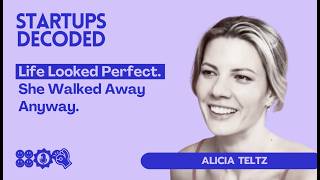
Alicia Teltz left her six-figure LinkedIn sales job, ended a long-term relationship, and moved back to London to become an independent creator. She built an audience by posting vulnerable, unfiltered content on LinkedIn, challenging the platform's corporate norms, and now coaches others on authentic personal branding.
Chapters
So in the end, I did take the leap with credit card debt, no savings, nothing. Because the question is, and this is what kind of helped me to take the leap, is who says that I will not be able to be so successful with my own business that I will make the same amount or even more money in a very short amount of time? Who says that when you start your own business, you will not succeed and you will have like no money and you will work for minimum wage?
Welcome to Startups Decoded, the show that gets real about what it takes to build a successful startup. I'm Andy Walsh, 2 times exited founder, strategist, and your host. Each week I talk with top founders, investors, and operators to unpack the plays that drive real traction, not just headlines. If you're building something bold, this is where you'll get the honest insights to scale with clarity and confidence. Let's keep growing together. Hit subscribe and share with your community. It would mean the world to me. Hello and welcome back to Startups Decoded. My name is Andy Walsh. What if one step in your life could change everything, create new opportunity, new connections, new environment. Well, this is what happened to Alicia Teltz, who I've got on today. Alicia, welcome to the show.
Thank you, Andy Walsh, for having me. I'm excited.
We met on LinkedIn, which is going to be core to our story today. And I love it because right now you can get a real sense when someone's being honest and open and sharing real stories, real insights, writing with their own voice. And observing what you were doing and your own personal story, it just stood out for all the right reasons in a world of, we could regurgitation. So it, it allowed me to connect with you in a way where I felt like I knew you before we'd even spoken. And I think that's a beautiful way to start a connection. And for you, is that, I guess broadly, is that intentionally who you are as a human being, or is it something that you've just applied when you're communicating about yourself?
No, honestly, I do think that's just me as a human being, but also I find it so fascinating because in this digital world that we live in, it's easy to put on a facade. It's easy to pretend to be someone you're not. And especially on LinkedIn, a lot of people always think they have to pretend to be someone else. So, I made the conscious effort to be myself. So, I, like, in theory, yes, I'm making a conscious effort, but I make the conscious effort to be myself because I always want to make sure that if I speak to someone on LinkedIn and then jump on the phone, that I'm exactly the same person, that I sound the same person, that the people are not surprised. That they kind of, yeah, know me already.
And for me, I've learned through, I guess, maybe not active testing and learning, but people will know me that I talk about vulnerability all the time and vulnerability is a connector. People get scared about sharing who they are and what's, what ultimately makes them tick. And I've found the more honest and open I am, the more people resonate with what I'm saying, who I am. It opens up doors as well. It feels counterintuitive, which I think is a product of what society has taught us. Probably more so males as well, like being vulnerable is seen as weakness. And I definitely know through research and through my own experience, it's the complete opposite. So to do that is important. But to rewind, I would love to give some context about yourself because in life you make a lot of choices and that can be career, it can be personal. And you had a moment where you decided to have a pretty big change in your life on both. Can you take us through where you're at in your life and then maybe the catalyst that that opened the door for you to do what you do now.
Yeah, absolutely. And I do hope that this is inspirational for others, and that is also one of the reasons why I open up. And I love that you also said in terms of like, you are vulnerable yourself. This is how we connect with people. We connect on the human level. And also this is where people think like, she understands me, she gets what I'm going through. And therefore I really appreciate people opening up. And that's also why I opened up with my story, and it's a very personal story, but it got me to the place where I'm right now, and I'm I'm going to give that whole introduction in a second. But yeah, this is why I share that story so that people can, yeah, see it is possible for them too. So basically right now, as of kind of today, I have my own business. I left a big corporate career. I go into that in a second. And I'm basically in a completely different space mentally, physically, emotionally than I was just 18 months ago. So 18 months ago, By the way, I'm from Germany. I always like to tell people because they might wonder the whole episode, like, where is that accent from? So yeah, I'm born, I'm born in Germany, but I left Germany when I was in my early 20s, booked a one-way ticket, moved to London, checked into a hostel, complete other story. But anyhow, I basically now live in London, and I was in a corporate career, B2B tech sales for 15 years, biggest companies, SAP, Mastercard, Gartner, and most recently LinkedIn. So I was in very nice, comfortable position. Let's say I had a $250K paycheck, my pension, like all of these things. And LinkedIn, by the way, is the best employer I ever had. Like, it's such a good employer, work-life balance, all of these things. I had a long-term boyfriend, we were together for almost 10 years, had a dog, countryside house, big house, big garden. I had a Tesla on the driveway. Like, you know, on paper it looked like the perfect life for so many people. Like, we were just gearing up to getting kids, marriage, all of these things. But actually, and I do hope that people resonate with this because yes, on paper it was perfect and everyone would assume my life is perfect and I'm super happy, but I wasn't. I was in a loving relationship. My partner was great. There was no cheating, lying, whatever. It was a perfectly fine vanilla life. And that's the thing. It was vanilla and I wanted more from my life. I had that itch of like, I wanted more excitement. I wanted a little bit of unpredictability. I know it sounds weird, but I just felt there was more to life. And I could, at that point, completely envision how my life would go. Like, I knew how my future would look like, and I was bored by knowing how my future would look like. So that's where I took that step to end the relationship with my partner, which was incredibly hard because, as I said, like, when you're in a loving long-term relationship, there is nothing that has gone wrong. It's literally just because I needed something else. And this was then the catalyst that put everything into place in terms of losing a lot of weight. I was heavily overweight, which— and so many people, when they're in a— not necessarily saying long-term relationship, but when they're in an unsatisfied state of their life for a period of time, they don't realize how they physically just get like deteriorating kind of slowly but surely, and you don't necessarily notice it. And that was exactly me. So since then, leaving that relationship and losing a lot of weight, changing my whole physical appearance gave me also that confidence to then think, what could I do professionally as well? So I moved back to London and my whole life centered then around, okay, I've already done this fucking— apologies for saying— fucking hard thing in my private life. How can I then apply this potentially also in my professional life, which I also did in the end, and I'm happy to dive into that, but I'm pausing here for a second. But yeah, this is kind of like this one massive step of taking that decision, really fucking hard decision that then put everything into motion.
Thank you first. I love having these kind of conversations. I recently had Xaver Lehmann, who's a fellow German as well. He had a $60 million exit and through the diligence process of that acquisition, his His mum died in the middle of that.
Wow.
And it was heavy. And even just saying it now out loud, I get goosebumps. Like we were both crying on that episode and him sharing that story was something that he never really had done before. But we had this really beautiful conversation and in the startup world, it's mental health is not talked about enough at all. But mental health broadly, as far as the world that we live in and the stress that we're under, we all need some help. And it's amazing that you had the strength and ability ability to be able to, one, acknowledge what was happening in your life personally and realize that you had a path that felt like it was greater and more opportunity for you. And that takes a, like, very brave—
ultimately. So I just really quickly wanted to say, because I love what you were just saying there, because a lot of people would have looked at someone like me at this point, and there are so many other people who are in kind of this situation where on paper it all looks perfect and you feel guilty for feeling bad. Because why should you feel bad? You have the perfect life. And this actually takes such a toll on you because yes, there are people out there that go through insane hardship and you then feel like, well, I shouldn't feel bad, I shouldn't be depressed, I shouldn't feel dissatisfied with my life. And that actually takes a huge toll on you feeling like this and feeling guilty for feeling like this. So I just want to encourage people that might feel like this, you're allowed to be frustrated and wanting more from life and wanting to drive a change even though on paper It looks perfect.
Again, I go back to these norms that we have in the world that we live, and it could be in startups, it could be in relationships, but there's things that almost feel like that you have a sense of guilt by wanting more. And wanting more is not a bad thing. It's, we have one shot at this life. So to be able to make the most of it is really important. You don't want to be that person and you hear stories about people in their last weeks of life talking about all the regrets that they had and they'd wish they'd done these things. And we're always going to have regrets, of course, but taking the initiative, I would call it, or the pragmatism, the strength to do what you did, you know, that is ultimately a huge reinvention of yourself to a certain degree, but it also is who you are. And it sounds like that's what was happening for you. You had this bubbling around inside of you of like, on paper, as you said, it all looks great, but you actually wanted something different. You wanted life to be challenging or inspiring in new ways. So you made that big personal shift. And through that process, at that stage, was it just a desire to want more or did you, and you took that step, or did you think through what are all the things that are happening in my life that I need to change and had a grander plan? Was it like small steps or did you just tear the bandaid off and jump in and change a lot of things all at once?
Kind of, if you think about it. Now it's been 18 months. In the grand scheme of things, yes, it was a very short amount of time. So it kind of did happen all at once, but it didn't all happen in one day. But was so exactly what you said earlier. I also, when I was feeling at that point, very dissatisfied with my life, I had a coach, a therapist. I was speaking to them because I felt like, again, they're a neutral partner. I felt like I was allowed to tell them how I truly felt because when I speak to friends or my family, they would not understand. They would try to reason with me and it just made me really angry. So then speaking with a therapist, I felt like I can finally say what I really think without being judged. And they did exactly that exercise which you just described of imagine you're 90 years old on your deathbed. And then I had to fill in sentences that said like, I regret not having done, I regret not having said, I have like all of those questions. And this was really where like, I need to change something. I absolutely need to change something. This was then breaking up with my partner, meant selling the house. It meant moving back to London. That also means selling the car because you, it's ridiculous to have a car in London. Like that, that is just ridiculous. So lots of changes there, but also again, some people might roll their eyes, but I had a dog with my partner. We raised him as a puppy. It's kind of my child, it's my baby. Like saying goodbye to my dog because the dog is a countryside dog. He has a much better life with my now ex-partner than with me in London. But I knew I needed to be back in London to fulfill the dreams that I had. So basically also saying goodbye to my dog. Luckily, we went through like a process where we had relationship therapy. We like discussed, can we have like a future together in whatever shape or form? And we figured out we couldn't. So luckily we could still speak to each other afterwards and I could still see my dog every now and then. But those changes, like breaking up with my partner, moving back to London, selling the house, selling the car, that happened like one after the other. And then I also thought, a lot of chapters had closed, which also meant professionally, it felt kind of strange because colleagues have met my previous partner and it kind of felt strange continuing that in the same way when there has been so much other change. I'm not a psychologist or I don't know, but I wonder when we are already going through much change, maybe another big change feels easier to do it straight after rather than waiting another 5 years and then doing it. So I felt like, let's just, let's just do it.
I tell you, and it's in the moment and I've made some huge changes. I was talking to someone recently about my personal story. I'd started a business in Australia. I moved to New York City with a 4-month-old child bootstrapping my startup. And you talk about life challenges all happening concurrently with a brand new baby, new city, new business. It's a trifecta of chaos. And for me, I never thought twice about it because I had such conviction and purpose around what I was doing that I knew it was going to work out. And work out for me didn't mean that I would create a business and sell it for hundreds of millions of dollars. It was actually having satisfaction in my day-to-day life of something that I genuinely believe in. And I didn't reflect that deeply at the time, but as I went through, you have moments where you have a sense of pride in you, and you take a little bit of a moment to look back at what your life was and then now what it is and comparing the two. Because it's impossible to have a foolproof decision-making process. It sounds like you were pretty thorough, which is important too, to be able to explore different ways of understanding your decision, the impact it has on you, partner, everything else in your life. Because the more that we can do that without overanalyzing, the higher sense of confidence that you have in the decision that you're making and backing yourself. And that's ultimately what a startup is in many regards. And you did it for yourself, but then on the career side, you changed as well because people get stuck about, and whatever it is that's blocking them to take the next step. Were there things that just floated up for you? I'm always curious about this because a lot of people have big ideas. They've got a job they don't like or they're getting paid well, similar story, and they never ever take that chance to be able to go it on their own. What do you think are some of the blockers that actually stop people from being bold like you were?
For me, and I think probably for a lot of people, is the financial aspect. When I took the leap, so I left my corporate job now about 8 months ago, so it was last year in June, and at that point, and I'm being completely transparent, Yes, I had a $250K paycheck, but that doesn't mean I'm great with money. That doesn't mean I have a lot of savings. Actually, in fact, because at that point I was already separated with my partner, but it took ages to sell the house. So I was still paying the mortgage and I had to pay rent in London. Imagine like New York City, for example, how much you have to pay per month. So, and then I still had my, my Tesla. I couldn't just get rid of the Tesla because also thank you, Elon Musk. Lots of changes happening there, so I couldn't just sell the Tesla. I was locked in a contract because if I would have sold it, I would have lost insane amounts of money. So anyhow, over a very long time— well, I say very long, like a few months— I had to pay like twice for properties, I had to pay for the car, and so many other bits and pieces that came up. And I didn't have like a big, as I said, like safety net. I wasn't— I was never great at saving money, always good at making money but not at saving money. So that then in the end And I was thinking, I have to pay off my credit card debt first. I have to do this first and I have to save this. You know, you listen to like the typical advice that people give, like have like a rainy day fund of at least like 3 months salary, all of these things. And I thought like, okay, I will do that. I just could not save it up because yes, I had so much debt, but also I just wanted to finally take action. So in the end, I did take the leap with credit card debt, no savings, nothing, because the question is, and this is what kind of helped me to take the lead is, who says that I will not be able to be so successful with my own business that I will make the same amount or even more money with my own business in a very short amount of time? Who says that when you start your own business, you will not succeed and you will have like no money and you will work for minimum wage? It's a money mindset. And to be fair, it also turned out. So, I left in at the end of June. So, July was my first month of being self-employed. In September, I already had replaced my corporate salary, like the monthly equivalent of it. So it, not saying that it was just like easy and just all up from there, but just saying from a money mindset, it actually did happen very fast for me.
And having the ability to test that out a little bit and have a like simple budget checks, things where you know what your lifestyle is and being aware of the conditions you're stepping into. And I didn't to a certain degree, and I reflect on that a lot. Was I naive? Maybe a little. Was I optimistic? Yes. That's how I live and breathe my life. Did I have high conviction what I was doing? 100% I did. And I didn't do the behind-the-scenes play. And anyone that knows me well knows that I'm buttoned up and organized and structured with everything that I do. So it was, it was in probably like contradiction to my standard behavior, but I'm so glad that I did because it's created more opportunity. And there's a real element of momentum off the back of such, like, huge action. And you talk about that a lot as far as the decision that you made. It didn't just change your ability to chase your dream, it actually changed the way that you process and think and make decisions. And that leap is the biggest one from what it sounds like. But can you tell me a little bit as far as the way that you saw the world like after going through that huge shift versus when you're in it? Because it sounds like you were frustrated. What happened next as far as your state of mind? Did you feel like you were seeing the world in slow motion and like all of a sudden you had like grander things happening around you? Talk us through that shift a little bit.
It was actually, it was, was a process, I would say, going forward. Because by the way, I, in the end with my therapist, I had some help with going through that breakup because they prepared me for it. And I had no idea because they said when you go through a breakup, you go through stages of grief, like as if someone would be dying. Like you go through those stages and they can take up to like 2, 3 months and obviously longer. But that means once you break up, you go through so many emotions that you're kind of like in a shock state. You're just like, this is kind of like pure survival until you realize what's going on. But then also you get that sense of, oh my God, I can do whatever the fuck I want in my life. I'm an adult. I have my health, thank God. But I can, if I make the decision to travel to Spain tomorrow, book a ticket, I do it. Obviously, if you have a job, et cetera, like it's not that easy, but in theory, I can make the decisions that I want, like quitting my job, for example. That sense of finally being able to be in full ownership of your life, that was so powerful and so enlightening. And suddenly I was just like spreading like love and positive energy because I was just like, I felt like I can rule the world. This is also a feeling that was like huge euphoria. I kind of then settled back into like, okay, I'm still in the reality, but it is just something that just gave me so much excitement, which in the end, so for anyone, I don't assume that a lot of people have come across my name before, but I started posting on LinkedIn, making myself visible around February time. So that was about half a year after I broke up with my ex-partner. Because previously I was always way too scared to like, yeah, just talk about things that I'm doing like publicly, like putting out a LinkedIn post and sharing my journey, et cetera. But as I was feeling so empowered and strong mentally, that gave me also the confidence to put myself out there. And this is what in the end on the professional side changed everything. As I said, like on the professional side.
It's I love it. And I repeat this a lot, but it's worth repeating, is there's an element of human being and human doing, and people blur them way too much. And what I mean by human being and human doing is that people define themselves by what they do and not who they are. And it takes a journey of sometimes large impact. Sometimes it can be a combination of other things to really truly understand who you are. And for me, leaving Australia, moving to London to live for a few years and traveling through Africa, Asia, Europe a lot. The people that I met in context of that part of my own personal journey, and that has 100% impacted my professional journey and a level of pragmatism and connection and community. But the human doing part, the problem that I see, and I want to hear it from you, is that people that define themselves by what they do and not who they are is a real problem because you start to have this unhealthy attachment to your job, your business, things that cloud your judgment. Through your own experience, do you feel like that enlightenment that you explained that you had allowed you to be really clear on what was motivating you personally, professionally, and have some light and shade between both?
That's a very good question. I have never really reflected on that in, in that kind of way. What I find interesting what you were saying that people might like really identify themselves with their job, and that makes it so much harder for them to take a leap and make a change. That's actually something I never felt as much because being in a tech sales job, there is a lot of movement. There is a lot of hire and fire, and you need to move, and a lot of pressure. So, I was changing roles and jobs quite frequently, some would say quite frequently. So, that was not something that I was completely like identified with my job. Also, I never went to university, so it's not that I'm an accountant for that firm, like that I was always like stuck in it. My career journey was always a little bit all over the place. But yeah, in the end, showing up on the platform, making myself visible, this was interesting because I started to talk about things, and talking about things made me realize, what do I want to talk about? So it's like, this gave me a lot of, like, insight into what do I enjoy talking about, what are my passions, what is something that I enjoy writing about and sharing with the world. And that gave Yeah, a lot of insights into me and my personality and how do I want to show up. And yeah, I think that is like the aspect where I think that gave me a lot of, yeah, insights into my human person.
Yeah. And I don't think as human beings that we look inside of ourselves anywhere near as often as we should. And the ability to take lessons and learn. And I think about my own business journey, we were just so focused on where we were going. We never paused and stopped about success and lessons and learning and and that changed my life in so many ways, good and bad, the things that you learn through that. But that active reflection is really important. And you touched on something there as well, which I want to unpack a little bit, is around your experience that you had in storytelling through that too, because that active reflection allowed you to really think about your personal passions, your values, the things that motivated you. And funny enough, I've got lots of worksheets on the Substack for Startups Decoded. And the most popular one still is the values exercise. I've got about 7 or 8, I think, worksheets in there that you can do. Some of them are really simple, and then some of them are more complex in nature as far as like what you put in and what you get out of it. But the intention is to craft who you are as a human being. What do you stand for? And then how do you start to build that culture around you where people have shared values? They don't have to be exactly the same. There's an intention that goes around it as well. Like, so through your own journey, were you able to then test and learn a little bit as far as when you're writing and sharing those stories, understanding who you are? Because it's a really, I'd say, almost confronting place to be sometimes in the sense of when you start, what do you talk about, how much do you share? And it's, it's a real personal journey, and you have to have a lot of conviction, but you also have to have courage to do that.
Yeah, you know previously, and whenever I was thinking about like my values and what do I stand for, I always looked for them with a mask on, always thinking, what should my values be? What would be good values in terms of helping people in need? Or like, I don't know, travel, and like certain things that are again like just nice-to-have things. But actually, when I really think about myself, and this is also why now I talk about these things so openly, is I am money-driven. That's why I've always been in a sales job. Nobody happily does a sales job. It comes with a lot of pressure and responsibility and burnout. Like, why would you do it? You do it for the money. Fair enough. And I want for people who feel in that way, tell them you're allowed to have whatever values, to want whatever you want in life. You don't need to apologize for it. You don't need to justify it. And this is also another value of mine in the sense of you do not need to justify your goals, you do not need to justify your dreams to anyone, and being unapologetic. So this is like the ambition, being money-driven, yes, but also being honest and unapologetic and standing by what you want. And if someone doesn't agree with it, that's fine. I have my goals, you have your goals, they might be different, we can both live happily ever after and be friends, but stand by it. And I think for so long, especially whilst I was still living that vanilla life, I tried to please everyone I tried to be that good girl and have like, as I said, like those values that on paper look great, that everyone would agree with. I know today there might be people even listening to this podcast thinking like, she sounds a bit like a bitch, she's after money and like this and this. But hey, at least I'm being honest and I do hope that other people think this and they're like, yeah, it's okay to feel that way and to have those desires.
Anyone who has that opinion can hit me up because I can course correct immediately as far as who you are and your story. Because if you look at startups, I would guarantee you that so many startups are created because people want to get rich. And it's, it is what it is. And there's nothing wrong with that, as you say. I mean, it doesn't mean that there's not genuine purpose behind it either. If you're creating a company where you feel like you can impact a lot of people around the world in a positive fashion, and that was my journey. I never did it to get rich and I didn't get rich out of it for clarity either. But for me, it was bigger than the making the money part of it. It was actually the ability to be part of something that you were contributing to and finding that like-minded people that we were talking about. But the other side to that coin though too is, which I'm glad you talked to, is that being comfortable with people not liking you, like being a people pleaser dilutes your own personal value 100%. There's no debate about that because as soon as you start to adapt and compromise around other people because there's conflict or tension between the two of you and what you believe, you start to lose sense of who you are. And a diluted sense of yourself is not good for anyone else in your life, particularly yourself. So being able to have conviction on who you are and stand tall and be proud and be comfortable if someone doesn't like you, that's okay. It doesn't mean you can treat someone like shit. It just means that you can be proud of what you're doing. If someone doesn't resonate with that, then just accept it and sleep well at night is the advice I would give.
Absolutely. But it is also, it is so hard. It is so hard not to please people. It is so hard to not give the answer that you know would be the satisfying answer and to stand by what you truly believe, even if it pisses some people off. It is insanely hard. So I just want to say, if other people feel like, oh, I get it, I feel the same. And I need to remind myself proactively that I cannot, literally cannot please everyone. And that is fine, and you live a much better life if you don't try to. And also, by the way, what I have learned fairly recently actually about money is I was always chasing money, money, money, money when I was in school. I saw my school book the other day, and there was like, what do you want to be in the future? And that was like, I was 18 when it was written, and I wrote down, I want to be a millionaire. Now, and as I said, this is literally just a few months ago, I realized I don't want to be a millionaire. I want to have the lifestyle of a millionaire, which in the end for me distills into freedom. And that goes again back to why I broke up with my ex-partner, is that freedom over where I want to live, what decisions I want to make, how much I want to work, when I want to work. Being a millionaire, that gives you that lifestyle. So there might be ways how some people could be engineer their life to have a bit more of a millionaire lifestyle without actually having to be a millionaire.
You can flip that and reframe it really simply as far as like millionaire basically empowers you to chase the things that you're passionate about. So if you're able to do the same exercise and put your North Star down, which is ultimately your purpose, like what gets me out of bed, what drives me, and it's not something that's ever achievable. It's a, it's something that anchors your direction. It's a path that you want to tread and then what you get passion and joy out of along the way is part of that journey and you never ever get there, as I said. But I love that you say that too because what you're doing is saying, I'm actually want to succeed so I can have a lifestyle that suits me rather than feel like I'm just chasing my tail every day and really struggling to get by. It's all around thriving and not surviving mentality. So I I really connect with that a lot. The other part there too, which is perfectly set up for today, is your experience within LinkedIn, which was another catalyst moment for you as far as observation of what was happening around you. And in the last few years, LinkedIn, it probably happened around the pandemic time. It went from people using it and it was probably more like a resume service rather than as a storytelling platform for people as well. But you were working at LinkedIn. You talked about such a positive experience. But the observation that you've talked about though, is that it didn't feel like it, the culture reflected the way that people now use it. And there was a bit of a contrast in the lack of people using LinkedIn almost.
Yeah. So from, to take a step back, I think what a lot of people don't know about LinkedIn is it's an $18 billion software company. It's not a fun social media company. It is a proper business that is owned by Microsoft with shareholders, very revenue-driven, huge, 20,000 employees. Like most employees on LinkedIn, they don't post themselves because it is not part of the onboarding process. It's not that this is really encouraged internally. It's not that they say don't post on LinkedIn, but it's not that they, that it's ingrained in the culture because it is, funnily enough, yes, we have the LinkedIn feed, but the employees at LinkedIn, the things we're working on, the feed is secondary, not even secondary. It's like really far in the back out of our mind because we work with software products that us normal people who use LinkedIn day to day don't even know about. Like, LinkedIn's number one revenue stream is their recruiter tools, is LinkedIn Talent Solutions. It's a recruiter tool that only hiring managers or staffing firms are using. Then there is LinkedIn Talent Insights, a data tool that, again, us normal people don't even know about. Those are the key revenue streams. So, as a LinkedIn employee, it's a similar company as Workday, Cisco, like huge software firms. So, at LinkedIn, when I actually started to post on LinkedIn and make myself visible, which is so funny because it's literally the platform we work for, I got so many eyeballs internally, so many colleagues asking like, what are you doing? I was just like, I'm literally posting on a platform that we work for, but people just couldn't understand it, and it's just so crazy. So, that was actually, I was going like, against the norm. I'm sure there is some sort of saying for it, but I was like the fish that was going against what it should be, and that was really scary. And people at LinkedIn, it's a great company if you want to be comfortable, if you have kids, if you have family, if you want that life that is just very comfortable, perfect. But if you want more excitement, it might not be the best firm because it is a huge organization. There is not a lot of change or startup vibe, or as I said, like encouraged to take that creator recruit and make yourself visible. It's just a big, stable organization.
Fascinating insight. And I guarantee if you surveyed some of the biggest users on LinkedIn that none of them would know the revenue splits as far as if you gave them the like 5 that they could choose from, that none of them would get the order correct as far as what generates the most revenue on that platform. And, and it's fascinating because there's a lot of obviously conversation happening there and people are using it to create businesses like you would on social media. And the opportunity that comes through there, and a lot of it now is the connection that's happened. So before it was very much presenting yourself in a certain way to get a job. The connection and community that's happened around it now is a huge part. And for you, it opened the door, one, to be able to share your story, which was important, but two, it's allowed you now to to escalate your own career, to connect with other people. As far as your approach and strategy to LinkedIn, just as a strategic arm, like what are some of the things that you focus on as far as the way you're building connections or sharing stories, et cetera? Like not, not how you write a post, as in like the right, the way that you use it.
Yeah. Um, so first of all, yes, previously most people used it as like Facebook for jobs. It's a jobs platform. You have your CV and you go on LinkedIn if you try to find a new job. Then also, exactly as you said, COVID COVID happened and our lives kind of blurred. Lots more people work from home, our lives intertwined so much more that people started to share more the behind the scenes. But also at the same time, we have platforms like TikTok and we have Generation Z coming up and they expect much more vulnerability. They expect much more the human connection because they grew up in a social media world and they really want to see what's happening behind the scenes. So we see people like Ben Francis from Gymshark or Grace Beverley from Tala, she's like more big in the UK. Those are all founders that started their business by being open and transparent what's happening behind the scenes and showing up as humans. So, once we started those people sharing insights, this then reflected back onto the normal employee as well, where we wanted to see a bit more the glimpse into their life. And again, going back to COVID is we saw people holding conferences with their, like, kids coming in and in their bedroom, and the lives are just so much more intertwined. So, this is why people start to open up a bit more on LinkedIn and share what's happening in their lives. And this is also the approach that I always like to take and encourage other people to take. LinkedIn still has that stigma of you need to pretend to be someone you're not essentially, like in the sense of you have to say you're an expert because otherwise you don't have the right to say anything on LinkedIn. But that's not true. You can show up as your true authentic self and also admit saying, I'm not an expert on this topic. This is what I'm thinking. Help me understand it better. That could be a perfect post because you indirectly kind of position yourself as an expert by saying, I'm learning about this, this is my understanding so far, this is the very clever question I'm asking, now help me understand the rest. That already positions you in a great way. So, I want to encourage people and lead by example myself to just show up authentically. Where are you in your life? And that means for me, currently with my entrepreneurial journey, Yes, I'm sharing my highs. I'm super happy to put out a post celebrating that I had a workshop at Google and how cool is that? But then also just a few months ago, I shared a post saying, I'm fucking burned out. I don't know what to do. I'm frazzled. I didn't think it would be that hard. Like, it's such a rollercoaster. I share what it really means because I think in the end, people make business with people. So I'm not just showing up to like make business, but I just mean, we connect with people. I want to show up with people that care about me and that resonate with it. And in the end, again, that just makes our whole life and business just so much better if we connect on that level. And then it doesn't feel as cringe. I think it's like, this is why so many people shy away from LinkedIn because it feels so cringe and it only feels cringe because you think you need to pretend to be someone else, but you don't.
Right back at the start, we talked about the fact of being your authentic self and being vulnerable as being like really important things to do. And I often remind people that I'm mentoring, coaching, advising on my side is that it's much easier to tell the truth than it is to remember a lie. The truth, you were there, you experienced it. And what I mean by that is in not saying that people are lying on LinkedIn, but as in lean into your own personal experience, everyone has a story and everyone has moments that they've had to navigate, challenges they've overcome, skills that they learned along the way. And sharing that, it's like having a conversation. Like you and I are having a conversation now. I would share any of this on LinkedIn. LinkedIn confidently. And obviously this is a podcast and people are watching and listening, so everyone can hear it. But what I mean is the ability to sit and have a chat, like share that, because it's easy to have a conversation, but when people write, they seem to overthink what they're talking about.
That also, I always give the tip of use your phone to record yourself. So use that note function, but use the microphone function in the notes function, and then just talk to it, and then you have a rough draft of what you want to say, and then you can tweak it and move it around. But this just means you just start talking first and you have that structure and you're not overthinking it. The worst mistake, although I see a lot of people do, is then use ChatGPT, and that is just number one mistake. I have nothing against using AI to help you come up with some ideas or reframe things, but sadly a lot of people use it to just outsource, and we can all smell it from a mile away. So that's the opposite of authenticity.
And I see it myself and I iterate on ChatGPT and sometimes I probably don't craft it with my own personal tone as enough as I should. And I see the drop and, and the, the chat on LinkedIn right now is the fact that LinkedIn are very hyper-focused on identifying people that are using agents of any kind to do writing, comments, etc. And you can pick the tone of voice that's in there and it's actually deprioritizing you in in the, in the ranking. So people are seeing their engagement drop significantly if they are taking shortcuts.
Yeah. So LinkedIn has publicly said that they're going to tackle one, which is called like engagement pods and AI commenting. And the other is just the way how the feed itself is structured. Just as a very quick recap, because now with AI, it's so much easier to put out content in general. LinkedIn is growing and growing and growing. It's 1.3 billion users by now. People are more comfortable in posting on LinkedIn. So the feed is getting fuller and fuller. So now they need to really decide how to curate someone's feed, and they want to prioritize quality over just rubbish. Well, when I say rubbish, a lot of people also use LinkedIn, for example, for like promoting a podcast, which is perfectly fine. But if you just put out a post saying, check out my podcast, that's not helpful for LinkedIn or for anyone, because that means they have then to click and go somewhere else. Much better would be to summarize like, wow, this is like what I didn't expect for this conversation to happen, like key insights, and then saying, check out the podcast. So LinkedIn wants to have posts that are giving value, value in the sense of educational, but also in the sense of it motivates people, it shares a bit of a story, like it is interesting for people to consume. And yes, right now LinkedIn has no way to detect whether something is written with AI, same as with the comments, but exactly as you said, there are certain things that scream AI and LinkedIn tries to understand what could have been written with AI that is of low value. Value, and it will be deprioritized. So the easiest for people is to literally try to stay away from AI because also if you use AI, like originality, innovation will be dead. It's all just recycled ideas. I want people to show up with their raw ideas, and even if they're a bit quirky or strange or weird, I don't care. I want to see that. I want to embrace it. I want to learn together. But don't just recycle by trying to be perfect.
Please take note, everyone. I'm, it's filtering through the noise is just overwhelming and I like LinkedIn and I like to learn and grow, but filtering the good from the bad is, is tedious. Yeah. So to, to finish up, I'd love to hear from you around the day to day, like what sort of things are you doing now? You've got a really fascinating story. How do you help other people now in your own business?
Yeah, so I basically, I started started posting on LinkedIn, grew my following, and I was still at LinkedIn when I started that journey. So I learned a lot on what it actually means to post, because as I said earlier, I had no idea how to do it. So now I continue that journey, but on a self-employed basis. So when I started showing up on LinkedIn, so many people came my way asking, how do I best do it? How do I do it most authentically? And now I'm actually at the point where I can say, I can teach you how to do it, but also I can say, this is how it transformed my life and my business. This is how I just love to see and empower people to take that action in the right way because it just amplifies their business, career, wherever they are in life so much more.
A story. We're human beings who have had tens of thousands of years of storytelling baked into our DNA, and it's what connects us ultimately. Sharing that personal story, which is what we've covered today, is a great way in, and it makes a lot of sense that you're able to help people do it because standing out is hard. It's competitive and people are trying to find ways to make money. The industry is shifting as far as like where you get a job and how you earn money and people are having to get creative and hack and find ways to do things. It's going to be a really fascinating year. So Alicia, I'm so grateful for your time. This has been really fascinating and thank you again for being very open about sharing your story.
Of course. Thank you for having me. Me, and I hope it was helpful for people.
Absolutely. Thanks for listening to Startups Decoded. If today's conversation helped you think differently, share it with the founder in your network, and don't forget to subscribe for real-world startup insights every week. We really value your support. If you're interested in partnering with us, email hello@startupsdecoded.com. I'm Andy Walsh. I'll see you next week.
More from Andy



EP#88: Why Most Founders Misread Their Own Traction. Vanessa Larco - Premise VC

EP#87: Founders Obsess Over the Raise. Investors Care About This More. — Carina Cunha






Ep#86: Early Decisions That Define Your Startup Forever. With J.P. Morgan Asset Management
