Ep#21: How To Secure An Angel Investor with Tony Kula
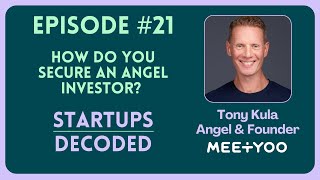
Andy Walsh talks with angel investor Tony Kula about how founders should approach investors and what actually catches their attention. Kula shares what he looks for in founders, why relationships matter more than a perfect pitch, and how the funding landscape is shifting for software and SaaS startups.
So I checked these three pillars if you want. So one is that someone that is easy to work with, Is he coachable? How fast is he reacting? I look then a bit on the numbers, on the data, on the market. What has he achieved, what has he done? What is the founder's experience? And the third thing is who else is joining?
Welcome to Startups Decoded, where we uncover what it really takes to build and scale startups. Andy. I'm Andy Walsh, founder and strategist. Each week we will bring you actionable insights and real stories. Let's dive in. Hello and welcome back to Startups Decoded. Today we're going into angel investment, which we haven't tackled on this podcast. And I'm really excited today to have Tony Kula. Tony, welcome to the show.
Hi Andy, thanks for inviting me.
It's a treat and it's really important today to set the context of us. We're meeting for the first time. We connected on LinkedIn and I'm always interested in people's experience and you've been heavily focused on sharing your experience as an angel investor, looking at the market, looking at things you've learned and you're very transparent. And we were talking just before the show how within the community that you're in, and particularly as an exited founder, that there's a lot that you've learned on both sides that you share. And I think today that sets a really strong foundation for our conversation on how you come from one to become the other and how that creates for you empathy, but also probably some scrutiny I would imagine, as far as when you're making those decisions. So to give people some context, I would love to look back at how you started, what set the scene for you in your early years.
Yeah. So let me do that quite quickly because I'm an old guy, I'm 55 and so I'm not going back all, all the way, but just the most important steps in my life. So I started really early, like with 18, should I go to university? And, and I was enrolled and, and everything because I could go cheaper to the swimming pool, everything. But this was not after, like during high school and everything. And I always wanted to make money. So I was like a seller all my life. I still am. And so I wanted to have my own business. So. And that's how I jumped into it. So I was not the type of founder that had a real big vision or mission. So for me the mission was simple. I just wanted to move out from my parents house, have my own money and and, and live my life and, and, and do the things that I enjoy doing. And yeah, so I started with different things and I ended up in it. I was working when I was still in school. I was working assembling PCs and this is how it started. And for me, all my life, one thing developed out of the other and fast forward, I met someone that was in video conferencing. And there was a company at that time that I really admired. It was called Picture Tell. It was like the first video. It was a, A gigantic company. Video conferencing. For us, it's so normal. But at that time it was a huge things with big TV sets and everything. And I said, I want to sell this and okay. So I became the distributor and I built a distribution company around video conferencing. That was heavy gear at that time. You have to imagine those were like big, big things. Yeah, I started this company. I met a. On my way. I had a very bright co founder and he came, he had a software background and he had developed that software. And that was not. We didn't have rolled it out or anything. We just. And, and another one, that guy from the US that we met, Ken Kalinowski from Fortune, and they were a NASDAQ company, said that is so smart. We want to buy that. And we just got invited. It was like out of the blue with no customers for that product. And, and it was not. It was like alpha and. But we could get a functioning version. And it was also, I always remember that my first flight in business that they paid for and we got just silly drunk and this guy was still coding all night and that was in Texas. And we landed in Dallas and they invited us and then we had this, I think the biggest stake I had in my life. And we went to them and he just said, I want to buy our software. And. But you have to decide now. And he just put a price on the table and we said okay.
And.
And so without a, without any experience, I sold it with not even 30 years. So this was the first exit. Was not a super big exit, but like looking back how long ago that was, it was a serious amount of money. And I thought, okay, that's entrepreneurship. You build something, you try to find someone and he's paying something for. So that, that was a nice thing. And, and yeah, out of that I started to develop my other things. But it was of course Andy, you know that from, from your experience. Not all Sunshine in a 30 year entrepreneurial journey. And I also had a lot of things that didn't went that well. We had this business for a very long time. My partner's still doing it, 350 person company, still active in Europe and did some acquisitions but I did like two secondaries and sold all my shares over time. So I exited the rest in 2018. Before that I in parallel I started something out of mvc, another company which is called MVC Teleconferencing. And again I met us guys and they said you're doing video conferencing, but there's something that much, much more people are using and that is audio conferencing. And that was like in early 2000. And I said yeah, but that is so boring. Telephone conferencing. So no video, why should I do that? But I did not understood at that time but how scalable that was. And this was like if you want, this was like my first touchpoint with SaaS. And because it was so repeatable and yeah, we again I was like bit naive. I bought the first conferencing bridge from those guys from the U.S. i installed it and we had this gigantic competition from Deutsche Telekom which, I mean every big carrier offered that. Yeah, but we did it with heart and passion, like everything. And we just became the biggest independent service provider and changed then also the name to meet you and managed in I think it was 2010 to acquire T World Service center from Deutsche Telekom when they were splitting off that services. So as the smallest competitor, we were like the people that could buy that service. And that was like a very, very profitable decade for me. Which like crazy. I mean it was like 90 cents on the dollar in profit. So it was like wonderful service. But again like time is changing everything. Like you see it now with AI it started Microsoft was coming up with like what they had before teams. It was BPOs and there was other things and they integrated that and Google integrated telephone conferencing. And I knew I had to do something. So I acquired a company in 2016 called UEvent. And we saw it because I wanted to go a bit more like into media and into web conferencing. And they had all this and they had something that was like at that time like a real, very exotic thing. But I, I loved it called digital events like this graphics interface and everything. So I bought this in 2016. I wanted to take it a bit slower. It was like, like beginning of 40. And we did that for some years. And then the pandemic came and that company scaled from 1 million to 20 million from like 30, 40 people, 250 people. While conferencing service was declining. That was like growing like crazy. And this could have been my biggest exit, Andy, but it wasn't. I had a very big offer, but I was like, maybe the consultants, maybe I was thinking we can grow that bigger. I was buying that I had a very good offer, a great offer that would be the, like the real champagne exit from a US company to, to acquire that. I mean, you know, the Hoppin Store, it was like this was the trailblazer in our industry. Valuations were just crazy. Everyone said physical events are dead forever. It's all digital now. And we had that platform and we scaled so fast and we had so profitable years. 20, 21. And then I didn't sell and the momentum was gone. That was a big learning. They tried to create some competition because they wanted to, to lift the buying price and everything. And then I turned 15. I said it's enough for me, like off this roller coaster. So I, I'm still the majority owner in Metium. We restructured the company. It really came down. It's more like a webcast company, but it's run by, by other younger people. So it's starting to look good again. But it was a very, very tough period. Like, I mean basically all digital events providers, they just, just wait. I mean Hoppin had this billions in, in, in valuation and it's just they, they were acquired like for 50 million. Then I said, okay, I changed sides and started angel investing again without any previous experience. And, but my kids say you can't just be around all the time. You have to work something. My wife too. And yeah, I saw this. I mean it's the classical things in angel investing is it's. You want to be part of the game. You're like, curious what's out there. You want to share a bit. And, and then I did probably all the mistakes that every angel investor did, like too fast because what angel investor are you without any sink in the portfolio? So I was like, I, I did had no experience and I haven't seen enough deals to be in, in a position to judge. Is that good? Is it not? Or, or. And I was writing two big checks and, and in different industries where I have absolutely no idea of. And. But then I started to, yeah, get better. And I decided, okay, I missed the point when there was. When everyone went onto Facebook and Instagram. I'm just on Strava and LinkedIn. And so I started to write. And writing is something for me that helps me reflect A little bit my experiences and everything. And I thought, okay, so I should write about angel investing and like investing in public. And here I am now with 17 deals done. Not much smarter I would say. Beside that, it's really more art and science. But no, I enjoy it. It's like, I mean, you're an angel investor too, you know, it's like, it's a bit of gambling, but it's also interesting and I'm trying different approaches, trying to work a little bit more with some founders that where we have a stronger connection and get to know them better. Some I don't see at all. They just do their own thing. So what I believe in is that you need to diversify the portfolio. So I'm trying to bring that to 25 maximum 30. I reduced my check size which was like too big. Now it's like between 25, 50K regularly and and I have a lot of exchange with other angels. So I try to not to take decisions too fast and speak with others and those sort of things.
It's really useful. And for people listening who are founders and looking to secure angel investment, it's a really genuine and transparent insight into someone who's gone through and you've helped create technology that people take for granted today. And you've gone through that journey yourself as someone who learned and also made some mistakes. And I think that's important to talk about too, is that you have great success, you make mistakes and that's normal. And part of my mission with what I do is to normalize all of those things. So having those open conversations is great. And I think what it also does, which I'd love to explore a bit more with you as far as an exited founder, you come, you decide that you want to stay in the venture world, give back, support young founders. But even then it sounds like that you also made mistakes. And I think people would assume that all angels are cut the same ways that they come from capital, they're investing their money and they know best. And quite often that's not necessarily the case. Sometimes it can be almost a hobby where they like the idea of being involved in a startup. Maybe they've never done it themselves and everyone comes with a different perspective. And I with your experience as a founder who exited and have a portfolio of 17 companies as an angel, is there something that you would be able to simplify for a founder to get inside your head and say what are the things that a founder could do to get your attention? What are the things that they focus on so let's start with the first part of that. If I'm a young founder, I've started a business, it's got some momentum. I want a capital injection to be able to grow my team and product, whatever that looks like. That outreach stage. What sort of things are people doing to get in front of you or get in front of angels more broadly?
It's really interesting the question because they try to. There is no pattern. I was writing a little bit about it. How should you do the outreach? How should you do. For me, I mean, there's always a bond between people that was like, I'm a salesperson and it needs to click. It can be something that at this special moment that just captures my interest. And I think especially now with all these AI things going on, you somehow feel that something is like more genuine and someone is just putting a bit more effort in what is writing and has he done a bit of homework? And so these are things that I also perceive how he would. How fast. That's the answer. Is he prepared? So I have examples. I say, okay, someone is reaching out and I like the space. I like. And then he needs like a week to send over the deck. So that's a red flag for me. I like speed. I've been always like a zero inbox guy. So I want to get things quickly done, better done than perfect. And for whatever reason they might have, but being prepared, being like, it's. It's basic things. So. And that starts a conversation and then it's. For me, there are parallels to sales and you need to be patient and you cannot just connect. And then one minute later there's hey, boom. Like I, I don't know. And then maybe my name written wrong or whatever. So you need to, to follow up. Many don't even follow up and you need to be a little bit persistent and get that first call. I always say I also take calls with no intent, just to get to know the other person. And then it's about the special chemistry. And so these are like the sub facts. I like to separate that and, and the hard facts are for me, as someone that went through, I mean, I've just told you the, the good things. There's been a lot of on the way and a lot of very hard moments where you question everything. So I have this, this, this bootstrapping mindset. For me it's important to see someone that has financial discipline where there is like if they have may bit already or I don't mind if they failed before, but I want to See, capital efficiency, don't do anything where I say, hey, I have a nice idea. I haven't to get my MVP funders and everything. I think those times are gone. I believe attraction. So because I don't invest into rockets or into spaceships or whatever, it's software and those days you can really test that very quickly the concept. So I need to see that and I need to, to like the founder. And what also helps me course, I think this is a general thing of investors. This a bit, this, this FOMO thing. So if someone comes and say, hey, I have this guy has committed already, so I don't want to miss out. And then, so I checked these three pillars, if you want. So one is like the soft is that someone that is easy to work with, is he coachable? How fast is he reacting? I look then a bit on, on the numbers, on the data, on the market. What has he achieved, what has he done? What is the founder's experience? And the third thing is who else is joining? So I need a, I mean, you need a lot of conviction to be the first.
Yeah, it's great. And I have similar advice. Only yesterday I was approached cold on LinkedIn from a founder and they tried to disguise the fact that they were seeking investment and their approach was paraphrasing, but it was in essence, I see what you've done. We'd love, you know, feedback and advice from you on what we're doing and would you like to meet? And I asked for more context and don't just give feedback and advice to strangers as well. And I said, are you fundraising? They said yes. And I said, well, just be honest about that. And I gave this person some advice and rather than just have a cold, no, I'd say if you're going to approach someone, this is how you should think about it. And the advice that I give them in the example is if you're meeting a stranger at an event, I wouldn't go up to you, Tony, at a room having not met you, and just say, hi, Tony, my name's Andy, I have a business, I need $25,000 from you. Do you want to invest in my company? You just wouldn't do that. It would be awkward for everyone. Right. So just cause it's digital doesn't give you permission. You need to nurture those relationships and demonstrate value, show your personality like you talked about, share numbers, share data, share what you've done and show that you're actually someone who wants to invest. There's no shortage of things to invest in out there, you need to buy into the person as you said, you need to understand the data as far as numbers, traction and the product state as well as far as where are they at and how will they use that money? Because and I think I want to go on to this next, but I think the relationship between advisor board member, angel, those early people involved in your company with the founders is critical for success and I think that that's changing in 2025. So I think it's really important to call that out is like don't go straight in selling, like, treat it like it's a relationship that you want to build as a long term friend. And I think that mindset will go a long way to establishing a deeper relationship that earns respect rather than is chasing money.
Yeah, I can only agree.
It's fascinating that people still don't get it. And for me, having these conversations and sharing our knowledge on a podcast, and I put a lot of this stuff out on LinkedIn as well, is to make sure that people feel like they're getting a wide range of opinions and that they can improve and grow. If they don't have the right mentor as a founder, then they have access to content like this. It's really important to me. I'd love to go on to next. You talked a little bit about the relationship that you have and I'm an advisor on five companies. I have my own angel investments as well. I've been on boards and each of those dynamics is very different. There's been a real conversation at the moment around bootstrapping. If you bring an advisor in that they need to be an angel advisor and put capital in, are you seeing some of the pattern shift as far as expectations from founder, not just for capital from you, but also your expertise and network to help them grow?
I think where I see or sense the change is that I meet more founders that are saying I rather explore other options than the classic VC route. And also for angels, I mean and you know that Andy is like we've been also part of this very early of this journey. So we always were saying, okay, we're like the first money. And maybe they went to an accelerator, was just writing about that today and then they have some angels and then also angels were looking to get markups and hope. So we were also having that in our mind that we can play in the mini BC and hope they're getting more rounds and more funding and valuations is rising and at some stage they're getting acquired. I think that is changing And I also was like thinking if this is the right way for me to try with my limited access to. I mean I get a lot of outreach but to be honest most of the things that I did were like from warm intros or where I knew someone. So it was not so much to LinkedIn. I see founders, they're also exploring other routes and that's the same for me where I say okay, so I'd rather be with a little group of people. Maybe it's just like one and done in terms of funding. And so then we also don't have this big expectations they might be acquired from a just a larger competitor or someone. But I tried to learn about angel investing and they were like, like basically acting like VCs but with their own money. So they were also looking for that 100x things and that big unicorns and everything. And you need to have the outliers in the portfolio and everything. Maybe this is like in the way and I'm talking about software and SaaS and not deep tech and other things where you need initial funding. Maybe that is about to change. Where you will see smaller teams are building good companies, taking it to 3, 8, 10 million ARR and then they're getting acquired. If they're young they can do another thing. So this is how I'm advising them and say okay, keep that as an option. But this is not the default path. So I think also the narrative was always a little bit also from if we read and go on LinkedIn and see that so there all these big funding rounds is celebrated. So for them, for many young first time founders that is the validation they were seeking for. And I, I'm like from a time where I say I would be more proud if you said we have a profitable business or. But this is, I feel this is changing and this is due to AI in my opinion because people are able to build so much faster and to validate easier and you don't need a big tech team like, like we needed back in time and having backend and front end and all those people in the team. So now you can just have an idea, test it and try to see if someone is willing to pay.
I see the same thing and there's been a lot of conversation on this podcast and the things that people are saying is there's no excuse right now to not have a prototype from a product perspective and not having to put a ton of money, people resource, et cetera to be able to get to an MVP which you touched on before. So having that early traction action helps on the approach too because if you have data and some markers and gates that you can talk to to help quantify what you're doing, it doesn't become so abstract because you said it before that a lot of investing is art more than science. And I would agree that for me it comes down to the dynamic that I have with the founder instincts around their business model. What I see that's happening right now. So if you're able to substantiate that with broader data, then you're able to have more conviction and more confidence on what they're doing. But I think as far as how competitive it is too, which is where I'd love to go to next. I've said Openly that in 2025 I'm not doing any angel investing, but I am getting to know a lot of founders and maintaining conversations because I want to follow and track where people are at. So I encourage everyone who has access to my email, which I share openly to add me to all of their email lists and keep me up to date with how their business is growing and nurture that relationship because at the right time then I may invest. But for the moment I see the world having so many founders creating so many businesses and I don't think that the market demand can sustain all of these companies in parallel. So there's going to be a moment in time where they start to disappear and that's the part that makes me nervous right now. So if you're an angel investor and I'd love your take on this assessing businesses in 2025, are you adding a new filter as far as longevity of category and if a business can last within the AI empowered business.
So it's either it's an experienced team. So like my last investment that was and I was invited to join that round that was Oversuppl Scribe which a business of the accident as founder. So sometimes you have a chance to jump. So that was just something that I wanted to have in the portfolio at the two YC investments. But now I solely focus because I see this is where I can and maybe that is how the game is changing, where I can make an impact. Also as an advisor, you've been asking that before is and I feel best in that role. So I start a conversation. I do I. I have one team that I'm supporting. I haven't invested yet. I can't see how do they hustle, how do they work, how do they act? So it's because angel investing was also like like dating. So you meet one time, you get the deck and then you're supposed to get married and and you don't and you have to stay together for at least 10 years. I mean this is like the concept of accelerators where you say okay so you give a little bit in the beginning, you give tuition, you give mentoring, you speak and you have the opportunity to invest. So I and now I really stay within my. And that is enterprise SaaS which I have done for the last 10 years. So been always. No actually always selling not in SaaS but always selling to to large corporations. And this is where I can help young founders to understand stakeholder management, how to scale a company. All those things I invested before in businesses that I have not even contact. I don't join the investor calls and because I can add zero value so I can just hope. So I stopped that approach just to put some throw some money over the fence and hope it somehow going well. And I look in 10 years so I feel better with that role. And I also learned that I have to accept it's not my business. And I mean they have to do their fair amount of mistakes on their own. But I appreciate if they asking me but I don't want to be so like I mean we have some co investors that are just having one or two investments and they're like from the corporate background and they just want to say angel investor on LinkedIn and they are asking questions with our not helping anyone. So I try to be as an angel helpful but also respectful with the journey that this founder is going on. And they know they can call me but it's not I had to first I had to say, I really had to breathe and say okay, okay, you would do that totally different. But it's not your companies. I try rather to in order. I'm not saying I give advice, I share my opinion and let them decide.
It's useful for people to understand that too is that if you've got 10 angels that have put in $50,000 each, you've got $500,000 establishing the workflow pretty important too. Those 10 people may have 10 different ways of thinking about how they do it. There may be a set and forget where they write a check and they probably just want to get an email every quarter to see how things are going and don't want to hear from you again. But there'll be others that will be really hands on and will try and help you succeed with all their network, energy, experience, et cetera. So on that scale as a founder you Almost need to. And I encourage this with any investments that I've made. Even with advisory roles is having a really tight job description of sorts. As far as what do I need from you outside of capital, what role can you contribute? How do you help us grow? Because it's a two way situation that the investor doesn't have all the power and as much as they have the capital that can empower you, they don't have to call all the shots. And understanding that dynamic is really critical.
Yeah. And since I don't want to build like a portfolio of hundreds and you just have this relationship with like a few that are. And I also enjoy spending my time with them and yeah. And I think it's also important from a founder perspective to really think about who is your angel. Not just okay, this is someone that. So you can't. It's okay if it's around like you mentioned and you have 10 people, you have more those that are passive but they would sign any agreement and everything so they're. They're easy to deal with. So they're not blocking anything. So they're also valuable as long as they're not getting in the way and say okay, I want to have now a protocol from everything and why is it going or getting panic when things are. If they don't have X operator background they get start panicking quite fast and they say but you promise or you said in the last meeting that you going so so and then you have some that are more so this. But what I want to say is that this angel composition or investor composition is something that can be very powerful but it can be also negative if it's. If it's so I would really say and do also this investor founder fit is also founder investor fit. So both sides should, should be aligned on. On what it means and educate themselves about the others and really understand also from an angel perspective this is a long term engagement.
My mentorship and advisory roles that I do are all pre revenue, all very early stage because that's what I love and that's my passion and I add a lot of value in that stage for founders and the thing that I always coach on is storytelling and their own personal brand, the company story. And that includes investment relationships. And we talked before a little bit about the founder needing to build a relationship with anyone who's going to be a customer, a partner, an investor and really respect that relationship. And I think storytelling and being vulnerable on storytelling is really important because the things that go bad can be more important than the Things that go really well and people lose sight of that and try and craft a narrative that's not true. And I've seen it so many times where they catch themselves out.
I always think it's okay to be authentic. How can you be 25, 26 and say, okay, I have 10 years of experience in that space where you started with 12 or what? And it's like we need to be realistic. And I rather prefer founders that say, look, we haven't completely figured it out. And I said, look, I also haven't figured it out. So it's like it's human to human. And if they are, I mean, of course you want to see bright people, fast people, but I really don't like if they're coming with fake fomo and I have soft commitments and blah blah, blah and all that. And once you dive deeper and do some sort of due diligence, you see there's nothing, it's just. So I think storytelling is very important also. Be able to acquire customers, have a team, becoming a leader. And I think I always try to say them, just be yourself. So people ask me when we start conversations, how do you want to do that? I always start, I really prefer if you're just you yourself. I'm not here and you're here. Just I, I did my thing, you did yours. And so I try to, to be on eye level with, with commoners.
Such great advice. I, I love that Tony is there for 20, 25. We're halfway through. There's. The world has been turned upside down in many ways.
Many ways. I was just going to say for.
You, for the rest of the year, what things are you looking at? Like as far as the type of founder, the type of business, is there anything that you're excited and looking out for for the rest of the year?
Yes, there's one thing that I'm really excited because my daughters started in VC and in consulting that have just left the corporate world to start their own Pilates studio. So that's like a big, big shift. So. And I liked it because that could really be a nice cash generating business. So I'm supporting them. And so I like this longevity because there's a strong connection to what I believe in, in sports and all these things. So I like that. And they just told me one day, look, we don't want to be 12, 14 hours in front of. So. So I'm excited about them following my footsteps and starting their own business. So this is something that I'm really proud of. And of course Once we can say it, you read about it. I'm trying, but not more like you, not with pressure. I'm not saying I'm not going to do anything, but I'm speaking and with, I have no idea when and what type of investment I'm going to do next, but it should be closer to, to from my background and I'm supporting Jennifer. I think this is something that is important to, to get more women funded. So I, that is something that gives me also purpose. We try to turn that into business. Let's see if that that works out. It's also close to what I've did. It's like events, online events and things like that. So I like that. And besides it, you never know, I might start something in a co founder role like being a partner of younger guys. I'm like if you have this entrepreneurial gene inside yourself, you're active and I, I just can't write all the day so I write a lot of hours a week, but I just enjoy doing things and. Yeah, let's see.
Amazing.
What about you?
Yeah, I'm kind of the same. My daughter's 11, but she's already asking me about how I can set her up to be financially independent as well. And she's on, yeah, on that path. For her it's shopping and things that she loves doing. But yeah, for me, I'm excited about the podcast and interestingly I've got Jen from Unstoppable joining me in a few episodes, which I'm particularly excited about what she has created and the effort and energy she put in to support female founders and investors coming together.
I think she's really someone with so much energy and you will have a good conversation.
Yeah, I can't wait. She's a force and in the best possible way. So I think giving back to founders, supporting founders is my mission. Particularly early stage having these conversations is important and I think Tony, I'm really glad to be able to have you today for the podcast. You've shared some really, really great insights that will help. I think a lot of founders understand not just angel investment, but how they think about building relationships and community more broadly as well. So thank you for your time.
Thanks. Also from my side, it was really a nice and lively conversation. I know I talk much, but I admit I love it. And thanks for listening and yeah, best of luck with the podcast series.
You're listening to Startups Decoded. We drop episodes every week, so follow share and I appreciate all your support. We'll be back next week. Thank you.
More from Andy



EP#88: Why Most Founders Misread Their Own Traction. Vanessa Larco - Premise VC

EP#87: Founders Obsess Over the Raise. Investors Care About This More. — Carina Cunha






Ep#86: Early Decisions That Define Your Startup Forever. With J.P. Morgan Asset Management
