Ep#65: The Identity Problem Behind Most Startup Brands — Jill Smith.
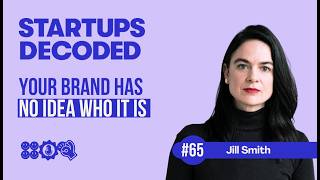
Jill Smith, CEO of Iris, explains why startups fail at branding: they chase mass audiences instead of micro-communities. Her company uses real-time consumer data to build synthetic personas and stress-test audience engagement. Brands like Liquid Death and Elf Beauty succeed by being genuinely unique, not just different, and by turning mistakes into loyalty.
Chapters
And that whole tech data spine is in service of finding your high-value audience. Who is that unique customer that is going to fall in love with you? And that is really key. You don't want passive engagement. You want to go for someone who is going to be driving, you know, has significant lifetime value.
Welcome to Startups Decoded, the show that gets real about what it takes to build a successful startup. I'm Andy Walsh, 2x exited founder, strategist, and your host. Each week I talk with top founders, investors and operators to unpack the plays that drive real traction, not just headlines. If you're building something bold, this is where you'll get the honest insights to scale with clarity and confidence. Let's keep growing together. Hit subscribe and share with your community. It would mean the world to me. Hello and welcome back to Startups Decoded. My name is Andy Walsh. Today we're looking at brand and where innovation happens. I'm fortunate today to have Jill Smith, who is CEO of Iris here in the US. Welcome, Jill.
Hello.
Hi, Today we're back in the studio. We have a live audience for me, which is always fun to sit in front of people who are doing the hard work from a founder perspective. And the reason that we're having this conversation today around startups is that starting a business is hard, but then growing a business is even harder. And part of that is anchored around storytelling, how you build your brand and grow. And today in the oversaturation of digital and the way that it's going, having community is really important. And we're going to kick off the conversation talking about South by Southwest, which just happened. Have quite a forward point of view as far as something that happened and probably peaked in 2010 from my perspective, as far as true innovation and what happened. And now it's become a meeting place rather than a sense of innovation. Jill, like working in advertising, brands have now a key part of South by Southwest. As far as innovation and from the outside looking in, you've been there, but what's your observation broadly as far as where South By is at?
Yeah, I think, um, South By is not alone in sort of how it's changed over the past several years. If you look at Art Basel Miami, for example, so prior to being in advertising, I was in the art world and I remember when Art Basel made its way over to the US. And so Miami was the place to be for anyone that was a maker, a creator, or working within the professionalized art world. And it felt really underground. It felt very raw, but also very grown up all at the same time. Whereas now it is again, just another place to be that has music and parties and art has almost become sort of secondary to what the experience is for brands and people that are there. So I think South By is sort of that. There are of course going to be incredible things that are launched at South By. It's still a platform. That brands are going to use and innovators are going to use to launch certain things in the same way CES is, but has become sort of a catch-all versus the, the cultural moment during the year where innovation takes place.
And it's the nature of the beast, right? Anything that becomes popular, then it gets saturated with people who are just curious. It's almost impossible to stay cool, like for a long period of time. You have to either turn yourself inside out and recreate what you're doing. Or build something completely new adjacent and spin it out as well. And if you look at music festivals, another good example where they start off as something humble and for the fans and they turn into commercial machines and this is going that same path and to set that conversation up then as far as the trajectory of being relevant from a brand perspective, there's different ways that you can do that, right? In the sense of the world is moving quickly as far as how you create how you innovate and do that storytelling. From a, like, big picture perspective, what are the things that you would look at as far as how a brand builds foundations from a strategy perspective? Like, how do you anchor yourself in something that has any longevity as far as not trying to keep up with what's happening, but actually stand for something? And like, where do you start that kind of planning process?
I think first starting with South by and then kind of zooming out. For me, I haven't been to South by in a couple of years. But one of the things I look for every year is Amy Webb's Futurist Report, and it's this really comprehensive overview of what are all of the really massive, like, macro trends that are happening within technology and innovation. And it goes through almost every category and industry, and it looks at both the catastrophic version of the trend and also like the optimistic view. It's this incredible, like, massive document that takes them a full year and they launch it at South by. This year, Amy Webb, this is the last year she will ever do like a fiscal outlook because the industry, not even the industry, technology is moving so quickly that you can no longer do fiscal views. That alone should be an indication of sort of directionally where we're headed. Her whole sort of career is built around being a futurist, and she herself is saying, I can only look so far out. So if you look at brands focusing on building brand equity is still going to be key, but looking in a, in a macro lens is not going to be effective. It always comes back to connecting to communities. And last year at South by, Iris actually did a two-part workshop on what does connecting to communities look like. And this is a real zero in on the audience is going to be high value for you as a brand. And it's not tens of millions. In some cases it might be, but it's what are the micro communities that are actually going to be most relevant to you and how do you continue to stretch and pull that and engage with that audience?
The part that I see in there too is that by nature of things getting popular, what happens is it starts to fragment and people who are super passionate about something start to form their little microgroups. And that happens as a cycle. It's happened for a long time and it used to be quite vertical focus where in the '80s and '90s you would be a surfer or a punk or a metalhead. And it's interesting now that it's almost happened in reverse. Everything got homogenized and then stripped back again. So being able to think about who your people are. Because the thing for me, and we've talked about this a lot before, about being different versus being unique. And like, they're two very different words. Like, being different, if you're trying to just be irreverent for the sake of being irreverent, it typically, it has a short cycle as far as traction and impact. Whereas being unique means you're standing for something. Can you talk from a brand perspective how those two things show up?
I think, um, the, the benefit of all the technology we now have at our disposal means that we just know so much more. So for your example you just gave in the '90s, if you were a punk or a surfer, that was who you are. Whereas now I know that if you are a surfer, you're probably also into these 3 very niche publications. You also are into going to this very specific place. When you vacation, you go to these 3 specific destinations because it caters to the 2 other very specific characteristics of you. We now know so much more about the community that you're engaged in that allows the brand, like, you know, a lot of room to be able to meaningfully connect. So The idea of being different is not very interesting. Being unique really is. So what are those unique characteristics that, that make up who we are? We recently did an exercise for a client, and because of our proprietary data and technology spine, we're able to really look at a, a core community and what are some of the key characteristics. One of them is this audience is 20% more likely to have asthma. That is like a really specific and seemingly in like innocuous detail, but actually that's gonna impact a lot of things, where they go, how they engage with certain products, scent profile of products, if it's in the beauty or wellness space. So these small details tell you a lot about the individual.
Yeah. And from a startup perspective, everything is anchored around one ICP. If you talk to anyone who advises, they'll say, choose one person, write that person down and chase after that person and, and try and validate if they're your your it ultimately as far as where you get stickiness and traction. And if that works and you can multiply around that same person, they typically anchor around certain passions or things that they like as well. But as you get bigger, I'm always interested in how you think about multiplying and growing that audience because typically if you have one ICP, there will be a ceiling on that as far as from a revenue perspective, but your service is relevant to someone else. In a later stage from a brand perspective, if you're thinking about different audiences, How do you approach retaining the current customers so they still feel like your story is relevant, but being aspirational to a whole new group of people so they want to try you and see if the shoe fits ultimately?
Yeah, the way that we look at it is sort of a layering effect. You're going to have like your most valuable audience that's going to be really passionate about your brand, business, service, but there's going to be a halo effect because certain characteristics of that core audience are going to exist in other people. They just might not be the anchor. So we'll always look at what's the layer audience potential, what's your universal audience ceiling. So in the instance I just referenced, Gen Z and millennial, there's 120 million in the US. So we know that that is like a mass group of people. All of that 120 million are quite unique. Like, so they're, you can't just market or cater to that audience. You have to look at what are the 5 or 6 segments that make up that group. And where am I going to have potential opportunity that's most likely to continue? So your core might be small, high lifetime value, but you'll have halo with two other segments within that overall $120 million. Is that clear?
Yeah, definitely. And I think that the part that I see from a startup perspective is the early adopter. And right now there's such a large volume of businesses out there, and 2026 is going to be an interesting year. In the sense of who can survive from a runway perspective, just practically, like earning enough money. And a lot of the forecasts, I was reading something from NVIDIA the other day around the cost from a hardware perspective. And AWS, same thing. Costs are going to jack up at the end of the year.
They're now, it's like, I think the, the hangover effect of things that are happening now will be so much faster than it has been in past. But I don't think it's going to prevent people from starting things. I think this will be the year where we see the impact of technology that allows people to build make faster. So you'll have a lot of founders who will be very new to the space and will not know how to fundraise, but they'll know how to make a thing. It's going to be an interesting year in terms of new businesses being acquired, new businesses starting, and sort of what that's going to look like in the marketplace.
And if you look at innovation, going back to our central theme, startups are always the people that are innovating. If you like, look at the banking finance sector as a really good example, right? If you look at Stripe now, which is a global beast—
Looking to buy PayPal.
Yeah, exactly.
It's incredible.
Yeah, and the inverse of what you would expect to happen. And someone like a Chase Bank or a Bank of America, do you see them innovating like that? No, they're not doing anything like that. They don't have the ability because it's so slow to innovate internally and it comes down to a process and structure if you're not set up correctly internally to be able to create that. So what happens is that startups create the foundation of what the next chapter is. In technology, period.
100%.
And whether they even survive or not, what they do is create a motion forward where someone else is like, okay, we need to think about that in our larger business. So it's either acquired, merged, or disappears because the bigger, older businesses are able to slowly build and roll that out. So we're at that phase now where 2026 is going to be that part. So we'll have the trailblazers from a founder perspective doing that. Whether they last or not, for me, doesn't even connect to innovation surviving or not. It happens by default.
Yeah, I totally agree. I mean, again, back to the speed piece. If I look at the businesses that are able to be nimble, implement quickly, fail fast, that's all startup mentality. It's like those are key defining characteristics of how a startup needs to behave to even try to be successful. The businesses that are able to do that will be successful. If you even look in recent past, the rise of corporate venture capital, so within businesses to try and find a way to focus on innovation with, with a whole separate track. It's too slow. Like, that will not be successful. So, your Chase example, and even PayPal— PayPal was the upstart, the financial innovation. The fact that they're now potentially being acquired by Stripe is really telling. So, the businesses that are able to adapt and move quickly, but by move quickly, it's not like you're looking at a 24-month horizon. You're looking at what's happening in the next 3 months.
As you like, your first point, going back to a futurist.
Yeah.
Like, no one is brave enough right now to predict what happens in 6 months. And I love people talking about what's going to happen in 2030. And it's like, you are literally just talking about hopes and dreams right now.
For sure.
If everyone keeps saying that at this point in time, we're already 6 months ahead of where we thought we were going to be 6 months ago. Yeah. And it's, it's wild to think about that acceleration curve and what's going to happen. But the fallout though, from a startup perspective, anchoring back in that innovation, the process of innovation happens by observation, experience, being around certain people. And like community part of it, I'm fascinated too, because that is quite often two-way. If you've got a brand that's selling to customers, the way that you retain and grow is by having direct relationships. The work that you're doing, like advertising, people have certain perceptions, But it's such a broad skill set now as far as where you need to show up and how you show up. How do you think about storytelling where it shows up in person and how the brands that you work with actually build in physical relationships with people in their base?
Well, I think for brands, the number one thing is you, if you know who you are, you know how to behave. If so, that's like so true for brands. If, if they truly know who they are, they have like a vision of the person or We think of brands as people. Oftentimes when we're coaching our clients, you know how to behave and we know how to behave. You know what that looks like in the world. And so now in terms of storytelling and messaging, it's so layered. It used to be a very traditional approach. It would be a fiscal marketing calendar. We would know that there's 3 tentpole activations throughout the year that would be 360 campaigns that included out-of-home and TV. And now that's very different. It's a total overhaul of investment dollars and where the focus and attention is. and it has to be continued optimization. It's not a set and forget, but it is heavily reliant on a solid mix of creator, influencer, and dynamic digital content. And the volume of that is the piece that's changed so much. So the need to produce, create, um, just to stay relevant is, that's the piece that feels quite, like quite a significant departure from where we were before.
And my background is in agencies as well, but I come from a creative culture background. So working in music, art, and fashion, and at that At that point in time, we were getting engaged to be a strategic agency to think about the community of people that these brands are going after. How do you become relevant? How do you show up in their world and be additive? But what was interesting from a structural perspective is that we would go to a planning meeting, there'd be a PR agency, there'd be an experiential agency, there'd be a media agency, there'd be a creative agency. And just the power dynamic was like, obviously tension, everyone's scope creep, trying to pitch for more. As far as the modern advertising agency. Is it literally one hat but doing lots of different things? Is that discipline focus disappearing?
Hmm. That's a really good question. And the way that we are set up is we provide one solution for a client that extends from brand through to demand. So we are able to support you in understanding who are you. So that goes back to like, if you know who you are, you know how to behave. Brand positioning, which is your comms planning, social influencer. The demand side of the house is first-party data strategy, loyalty creation, so driving loyalty, but also pricing strategy. So we have a strong consulting arm. So we look at your full funnel, which a funnel mentality is totally eradicated with zero-click discovery. So forget about the, the funnel doesn't exist anymore. But we, we really look at brand all the way through to demand, and that is how we can really support a client end to end. I think philosophically, I don't want discipline, like practice to be, you know, no longer relevant. I think that there's a time and a place, but you need to be able to have a real 360 view and multidimensional approach to client work regardless of category or industry.
For me, looking at that ability to understand what everyone else is doing in how you're planning is really critical too. So the, how you show up, you need to have that holistic thinking across specialization. And even at an early stage startup, depending on where you're at, thinking about contextual planning and how you get traction. Like if you've got limited budget or no budget.
Is the case for every single brand.
It's like then how do you get stickiness? And it's showing up in person. It's being clever on how you're doing it. And like earned now is very different as well. It feels very stunt-y. And sort of influencer focus, whereas before, like putting a press release out and courting press and being able to have that moment and get a whole bunch of free media ultimately has shifted as well. And that comes from cultural moments. And going back to the start of the brand, like being known for something, I want to really explore that uniqueness of a brand as far as like how you become unique, because being unique is being relevant to certain people and not relevant to others. And from a psychological perspective, it can be hard because as a human being, we're hardwired to feel like that everyone want— you want everyone rather to like us. I'm very comfortable with someone not liking me, but from a— if you're a founder, it's like, how do you actually deal with negative feedback and doing that? Because by being unique, you are going to isolate certain people. So where do you start from? This is from a strategy perspective, thinking about defining what unique is for your brand. And you talked about behaving like a person. What does that look like?
Yeah. So behaving like a person means being a little bit more weird, being a little bit more human. Um, like those are the two, and be willing to make mistakes. So not being perfect, which we've seen that, that sort of shift from overly produced content. We remember sort of like the top-down. I remember years and years ago I was doing, um, social strategy for, um, for American Express and also Chipotle. In the way, two very different things, but I remember the, the, the look down the way that all social static social, this beautiful display of like pretty things for Amex and for Chipotle, it's like a splattered sauce and like kind of a messy meal, but like so intentionally messy. We are so far from that. But, uh, I was gonna give an example of being truly unique where you're doing the unexpected. So Liquid Death is a great example of that. So Liquid Death does a lot of their creative in-house, but they made a very, you know, a clear decision on how they wanted to show up in the world that was incredibly disruptive, really loud, and doesn't go with the typical still or sparkling water playbook. And if I go think back to like their Super Bowl commercial, not from this year, but from the year previous where they had the kegs of water and it was a, you know, 12 or 15 pregnant women in a bar. Drinking from kegs, like high-fiving in the middle of the game. And that's really incredible. And is it, are they doing something totally different? How they show up? Yes. So it's a unique way to show up, but they're just selling water, you know? So I think, um, be willing to do the unexpected because people naturally, when they lean into conversations, it's because either there's vulnerability or you're sharing something that's really they just didn't see coming.
And I love that too. Like, I've actually had a podcast episode about Liquid Death previously. It came out of a venture studio, funny enough.
Yeah.
And within that model, as far as how you create a company, like if you think about just even practical things, if you go to Whole Foods, there's probably 50 different seltzer waters, et cetera, in the fridge. And they're all very like small, dainty, soft color palette, et cetera. And separating them in the fridge is really hard if you stood back. If you go Liquid Death, the size of the can, it's like a Monster Energy. It's like a big thing. And then also the colors. And then if you're appealing to a different audience from a masculine perspective, people resonate with that. They feel fine having a big can that's black versus something that's slim and pink. And it's like, and just make a massive stereotype or an assumption here, but that for me is, is not necessarily what stood out for them. It was actually having a point of view, having a point of view. Yeah. And making yourself relevant to a group of people. And one of the things that I've used as a framework, and it's useful for founders as well, is the tribe versus a pack. And tribe versus a pack in community is a really interesting model because the tribe are the people who you're, you're aligned passions. So like we talk about it from a music sense. If you go to a gig and you could stand next to a perfect stranger, you're singing word for word the song of your favorite artist. You can forge a friendship with that person just because you love something exactly the same. And by the end of the show, like, have a new best friend. Whereas your pack are the people that you spend time with in person, and like, you may not even have aligned passions. And you might have a friend that loves music, someone who loves eating out, someone who loves going and watching baseball. Like, it's very different around those passions. So the separation of the two, if you're thinking about storytelling, like, within both of those people, like, one's very passion-forward The other one is very anchored to friendship and loyalty as well. In storytelling, are you catering to both of those to build engagement?
That's a good question. I think that the, you know, if you look at sort of the shift from Web 1.0 to where we are now, there's been a continued focus on personalization. You're getting closer and closer to like one-to-one personalization. So even pre, like 2 years ago, thinking about things that were catered specifically to you. So I would. We would send an SMS to a person that would engage with mobile versus sending an email to someone else. Like, these things are— we still do those things, but now that there's an expectation that you're a lot more personalized, I will say engaging with the audience that matters most to you is where brands should focus their attention. And that's still true. It's like of, you know, marketing spend energy and time. It's like the audience that's going to engage with you is where you're spending your energy. So that goes back to that core. Tight, focused audience of that universal 120 million. And so that's where you're gonna build loyalty, but also fandom. Like, that's a very different type of relationship. If you remember during COVID there was a real shift where certain brands that previously, you know, were doing fine, but they were no great shakes, like people weren't obsessed with them. People became obsessed with them, but that was because there was an overarching focus on utility. All of a sudden you needed a thing from Amazon that you never would've previously have purchased, but you started to use Amazon as a platform in a way that then of course there's been habit formation and reliance on Amazon well after COVID, but brands served a different purpose during that specific time period. That is still going to be true. So I think knowing who your community is gonna matter most and being with them during the, the ebbs and flows of whatever's happening in the world, because we are going to continue to see that happen.
Part that I love there is the almost vulnerability of a brand as well. You talked about owning mistakes in a very legitimate way is like making yourself relevant by not being perfect and this seek for perfection in storytelling and how you show up as well, but can also be in the fact that we're human and, and almost leaning into mistakes. And I can't think of a good example at the top of my mind, but as far as brands that have done something and owned it, but then turn that into a positive story in the sense of like, they all make mistakes as well.
I have two. Elf Beauty last year during, you know, the very beginning of Liberation Day. So tariff central where tariffs were introduced, it had an impact on most industries. But for Elf Beauty, it really impacted their business. And instead of just quietly raising prices, they gave all of— they have, you know, a very loyal following, Elf Beauty. They gave their audience, I think, 6 months notice that they were going to be increasing prices. And it was done via social in a very cute human way that was like, this isn't great, but we're gonna have to raise prices kind of across the board by $3. But it was sort of asking for their people to support them and to continue to partner with them. So it was very much like, I'm really sorry we have to do this, but we do. We hope you'll stand with us. It was cute and funny. That wasn't funny, but you get the sort of sentiment. I think being real with your audience about where you are really ends up having an impact. Second example is California Pizza Kitchen, one of our clients. They had a situation where their delivery, uh, they sent mac and cheese for delivery to someone's house and they forgot the mac. This person just got melted cheese in a container. And the person, fortunately, unfortunately, was an influencer and went ballistic on social. And so it quickly became like far more viral than we would ever have expected for a little melted cheese. but we had to quickly— so how do you then come back positively with that? And we had like a really tight approach that relied on speed, speed and showing up like a person. So within less than 24 hours, we sent a care package to her house, um, that had a year certificate for free mac and cheese. And then also I think 50% off on pizza for the rest of the year. But it was just done in a very cute care package way. She then of course posted that on social. Their head chef did a post that was like, gave a tutorial on what's the right way to make mac and cheese. And it was like, you add the mac to the cheese. But then we gave the country 50% off on mac and cheese for the 50% of mac and cheese we forgot. They saw a 25% sale increase across mac and cheese sales at every single store. We 2x their social following. It was covered on USA Today. Like, It became a movement because people lean in when somebody's life gets messed up. They're like, ooh, what's going to happen here? But if you show up like a person and not a brand and you, you know, admit that you made a mistake, but then you do good, then, um, you know, that lands well. So be, be more human.
So good. And that nice little sink into my next topic, which is all anchored around trying to keep up with what's relevant today. Versus building in perpetuity from a storytelling perspective. And I look back to, if everyone remembers the Ocean Spray thing that happened where there was a guy who was traveling to work on an electric skateboard and he was filming himself and he was drinking Ocean Spray while he was going and he was playing a Fleetwood Mac song. I can't remember what it was. And then Mick Fleetwood got in on it as well and did the same thing and replicated it. And then Ocean Spray then jumped on the wagon and had their CEO do the same thing. And by that point, the social currency had already diluted so much because so many people did it and it felt a little bit cringy. But then as a nice gesture, they gave this guy a vehicle as a gift because he was traveling something like 15 miles on his electric skateboard to get to and from work. So they gave him a big F-150 or something obnoxious. But as far as that moment, that life cycle was doing its own thing. They didn't need to jump in and be part of the story. And, and it got a little bit awkward at that point. From it, like how you do content to be in the moment and the mac and cheese is a great example, but then the perpetuity part of it, like how does it continue on? Because if you're trying to be in the hype cycle in storytelling with what you're creating and from an advertising perspective, just the process of the idea, the production, client approval, like that has its own cycle. So how do you actually be in the moment? Is it like having a north star and saying, this is who we are, this is how we show up. So if you do something, you've already got contextual relevance.
Yeah, I think it goes back to, again, like, if you know who you are, you know how to behave. Client knows sort of the moments that we would show up, you know, the type of creators, influencers that would be a part of your brand because of who they are. But I think it's about paying attention to what's going on in the world. It's like you're, you want to be part of the conversation, not part of it. You want to be driving or creating conversation, not party to it. So like riding the bandwagon of like things that are going on is not very interesting. But a good example that happened really recently is a woman on TikTok created a jingle for Dr Pepper. I don't know if you remember this. It happened just during the Super Bowl this year. Mm-hmm. Created like a jingle for Dr Pepper, you know, on TikTok. It gained, for some reason, went totally viral. And for the Super Bowl commercial, Dr Pepper had her sing the jingle for their Super Bowl commercial. This woman now has like an agent, has transitioned completely into making jingles for which I'm like, are we still doing that? Okay. But, um, but that's, I think that if you're paying attention, 'cause things might be happening fast, but what's interesting about the speed is that we all of a sudden can, you can see so many interesting conversations. So like, how do you pick and choose the ones that actually are gonna have relevance for you? 'Cause there is an audience that's paying attention. So that's a kind of a neat one. But again, like if you know who you are, you know, you know, how you behave, then you're not going to be all things to all people. You'll be something interesting or unique to a certain group of people.
Great call out. And I want to build on the music thread. My heartland, as far as thinking about how cultural relevance plays a role, and if you're a brand, and I'll give you a good example. I've worked with Visa for a long time. And if you think about Visa, you're not thinking about kids that love music. Those two brands don't really go hand in hand, right? But thinking about what is the intersection and understanding your target audience and understanding who you are, you have to have very clear frameworks to be able to do that. But the thing that people wanted in that was additive, like complementing and scaling what they already love. So understanding their passions and building on their passions. And the program that we ran for them was anchored around presales and getting access to tickets, one of the most hype moments. And that shifted. That culture a little bit now, people actually buying tickets closer to the show. But it used to be a thing where like, I'm sure we've all done it and probably still do it, where we sit on a queue online to be able to potentially get a ticket for an artist that we love. And that process is stressful as hell. So being able to relieve that stress made Visa relevant. So if you're building your own brand and thinking about, okay, like, what are the things that I do that is way beyond the product that actually allow me to build a relationship? I'm always fascinated in the actual, the audit process, not your own strategy, but what are some of the ways that you can start to immerse in data? It could just be an LLM. What are the sources that you would go to in just understanding that without doing your own custom research?
Um, to understand like where, where can the brand relieve tension? Like where is there like a key insight?
The tension part of it. So yeah, it's like testing ICPs. Who are they? What do they love? What are some of the little sort of insights to allow you to engage in a way that's beyond what you're selling to them?
Yeah, 'cause I mean, if you try and talk to a mass audience, you'll get probably really limited engagement. But the way that we do it is we have now with AI, how we've adapted that for our business is we have an always-on data source that is real-time, real consumer data. It's a mix of things. So, it's LiveRamp, which, you know, includes lots of different data sources. GWI, and then Simmons, which again, there's like survey data, but it gives you a sense of like certain profiles, both globally and within the US. We then also layer on synthetic user data. So, we create individual personas around assumed audiences. So, we're able to basically stress test levels of engagement on certain topics before anything even goes into the world. So, making sure you have the real, but you also have synthetic, so you're getting like a pretty robust understanding about a really hyper-segmented or targeted audience. All of that is, is relatively automated. So our technology and data spine informs how we then approach strategy, and that whole tech data spine is in service of finding your high-value audience. Who is that unique customer that is going to fall in love with you? And that is really key. You don't want passive engagement. You want to go for someone who is going to be driving, you know, has significant lifetime value. So from From there, that relatively automated process, we can really look at what are some of the key characteristics and features, like the asthma example I gave earlier. But from there, that's where you find the interesting insight, like that audience is 20% more likely to be going to concerts. They're 20% more likely to really only have one drink and it's socially with friends. You then can start to look at, well, where might their pain points be and where does Brand X actually service them best? Is if you're a haircare brand or you are a, um, a digital payment tool, it's going to be a different area of tension or stress, but you can find a unique solve for it. The ticket example is a great one.
And being able to understand the person and engage them at the right time is one thing. But the other part now, and we're seeing Clay as an example, get huge traction, the ability to automate to a certain degree, finding your target audience, engaging, testing A/B style. Some of that messaging as well, but I don't know about anyone else, like my inbox and even like random Gmails that I don't use anymore is just overwhelmed with inbound now. So there's a lot of noise that happens. Like you can find your people, but if I can find my people, then everyone can find the people. So you're all of a sudden, you've got what I equate back to programmatic advertising where knowing who the person was you were talking to was great, but then everyone found out the same way to do it. So all of a sudden the effectiveness just tanked.
100%. And I think like this is I hope ends up being sort of directionally where things are headed, but it's passive brand, not engagement, but introduction through long-form content. So I think you're seeing sort of a pendulum shift where we were in this low engagement, people are on two devices, which they still are, where you then have like a dumbing down of content on like streaming channels like Netflix. Heard so many actors talk about, I think the most recent one, Matt Damon talking about, um, or was it Ben Affleck? One of the two.
I always They're the same person, right?
They're the same person. Talking about whatever their new action film is, but the going back and forth on the actual script, because you need to make sure that every 20 minutes you're introducing an action moment, otherwise you're losing engagement. That's really depressing. So I would like to think that we're in a moment where people are re-engaging with analog while still living in a world that's moving very fast. So this is a possibly a dated stat, but last year, remember Barnes Noble opened 60 new stores across the US because there's a re-engagement or interest in books. I've never lost faith in the book, book. So I've still been doing that, but I think people want a break from the things. But for film or long-form content, most people are watching programs or whatever shows on YouTube. So if there's a re-engagement long-form content, what's the role of brands within content? So is it you have a Rivian that's in a show you're watching? Like, that's where it starts to get really interesting. 'Cause I agree with you, programmatic and having a banner run alongside the newsletter you're reading is not very effective. You have, uh, I'm forget— 78% of people don't engage with advertising at all, or in fact fully block it.
Yeah.
So you have to find an experiential way or a way that feels really native to the platform you're on.
For me, there's something poetic about the fact that the oversaturation of content and how we consume it now has got to a point where it doesn't impact. Because if you watch the trends as far as like you might, you talked before around people now can't concentrate for long enough. They need to know what happens next to stay engaged is really sad in the sense of long-form storytelling, but I can speak from me, like my podcast numbers keep going up and I see—
Podcasts are fascinating though in that way. Go ahead.
Yeah, but it's the part that I love is that if you think that the decrease in time of content engagement is a reflection and a mirror of people's concentration where you could do a 60-second video, people would watch it, went to 30, now probably 5 seconds of just impactful noise. And like, what does that even do? And you look at people, I watch it on the subway. It's fascinating, like a social experiment of how people flick through their social media and engage. And there has to be a breaking point as human beings.
Yeah.
Over the last probably 20 years, we've went from having no social media to being connected to friends and it felt positive to now where it feels like it's completely overwhelming and this reset that's happening, but alongside a world that is so growing quickly from a digital perspective, there's a real tension that exists between those two.
It is because if you look at sort of the, the behavior on social and how it's like you're not engaging, you're just doing. It's like, what's the thumb stop? Like, that's like a big thing. Like, what are you going to do that's going to stop the scroll? But in contrast to that, podcast listening continues to increase. Podcasts are really fascinating from an advertising standpoint, 'cause it's one of the only mediums where someone does not need to, um, listen to something in linear order. So you can go backwards to the very first episode of insert podcast here, and someone will engage with it because of the subject matter. So you don't have to just do the latest thing. People are actually going into archive. Interesting stat, there are more true crime podcasts than there are Starbucks in the US. Isn't that wild? And so like people really, really engage in podcasts, but to the converse of that, from a social standpoint, it's really passive engagement. But what is the average, like 4 hours a day spent on your phone? Like that's, what are they doing?
There's an interesting TED Talk that I saw recently that blew up and it was someone looking at consumption of content and how people spend their days. I feel like it was 18 or 20-year-olds, it was in that window, and it presented a whole range of data. And big picture, it was analyzing like, if you have a job and then you sleep and there's things that you have to do every day, basically there's 100% of time that you have outside of that for things that you would choose. Based on the pattern of behavior, 90% of that time is spent on their cell phone. So if you think about 10% of your spare time being spent doing this, having a conversation, going out and exercising, whatever that looks like, it's pretty sad as far as as human beings, we are, and it's already starting to happen with, we have got less people to talk to in our inner circle, like as far as in-person friends and connection, is that depression is going up, anxiety is going up. As far as like, and this is not a big question for you, but I'm always fascinated. Do you think that from a brand perspective that we have a collective responsibility to try and find ways to change that? Because brands typically, if they're culturally relevant, can lead people a certain way and influence in a positive direction, you know, can go the way too, of course. But, you know, what are some of the things that, that we could do as a collective in storytelling to try and lift people up and bring them together?
I think that experiences— at the end of the day, the world comes together around cultural inflection points like the Olympics, like the World Cup. Like, these— like, this year, next year are filled with these really big moments. The Olympics this year felt more connected and in— because in past, I feel like I've had this feeling that people weren't engaging with the Olympics for some reason. But this felt like people were really paying attention and invested. And you had really fascinating stories come outta the Olympics about individuals. So you had like, you know, the US against Canada hockey game as one of the last events in the Olympics. Feel like everyone was watching at 8 o'clock in the morning, East Coast time, this game. But then of course you had the US figure skater winning gold but a truly unique person who left the sport and came back. So I think experiences are gonna be the thing that people truly engage with. And so that is, of course, there's like a, an omnichannel experience where it's both phone, it's in real life, it's influencer, but people are moved by being together and that's not gonna change. And so you have certain brands, like ABI is a great example, who over-index on experience spend. So that's experiential, that's sponsorship. That is in-the-world engagement. That is, we are social beings and we like being together. We also want to share that experience though, and that's where that social piece comes in. So neither thing will go away, but I would like to see a shift in investment dollars into experience.
From a foundational perspective on startups as well is that we all have this ability to make a difference and we're trying to create a business and, and sell something, but being able to be additive and connect people as well. And anyone who is building a startup knows that you typically have early adopters and quite often they'll find each other and finding ways to nurture and mobilize that to a certain degree as well. Because if you're starting a business, those people that you're supporting and helping impact and improve their life ultimately can come together. And we go back to that passion alignment as far as the tribe that you have in alignment. So from a structural perspective, I would encourage anyone to think about who are your first customers? How do you build personal relationships with them? But even stronger, going that one step further. And I've talked before around Sonos. Sonos are an amazing case study of how they've mobilized that for their own benefit and even had cost savings. So they have super users that they bring on to the platform that run their forums and run their tech support. Basically, people get it for free. I mean, sorry, they do it for free. They don't even get paid. They love the product so much that they get early access to new products and they become these evangelists of what they're doing. And so, you know, I'm very familiar with it. Cause the irony is that they have a lot of technical issues with their product. So they need those people, like mobilizing those folks early. Do you have any clients that are actively looking at ways that they have a personal relationship? Cause you're dealing with brands that are much bigger scale than a startup. Are there programs that you've observed where there's really been a customer-forward approach to mobilizing them in a way that uplifts a brand beyond any storytelling could do?
Yeah, I mean, I think across the board you have different, different versions of this. Like, so the super user example is a great one. Thinking about Bentley, for example, we work with Bentley. We've worked with them for over a decade. I mean, think about the price point of the vehicle. So the total number of cars they sell a year is quite limited. And so because of that, they have a real sense of who the audience is. They do have direct relationships with the owner, like owners of Bentley. Those are individuals that are tapped as soon as there's a a product innovation or a private dinner in X location in the US. So, there's a real one-to-one relationship because of the sheer size of owner groups within like the US, as an example. I'm trying to think of other examples where it's a real one-to-one.
Yeah, there's different versions of it, but I would say like what you're describing, like the superuser power group, And I would say as far as an early stage founder, and I, I see it with largest startups as well, where they'll nominate 2 hours a week as a CEO and actually get on the phone and do customer support and start to nurture relationships and actually be at the frontline because you can get reports, you can get all this information in front of you. Digesting it is one thing, actually understanding from the person's perspective directly.
Yeah.
Is really important as well. And I've heard such interesting stories, even from an innovation perspective, where some of that feedback has led to a new feature in a product, to some of the new release. And like the mac and cheese story, I love. And that's ultimately almost a version of the same thing. Like what started as a failure, you would call it from an outside looking in, actually turned into such a big opportunity.
Yes.
Because people had a relationship with what had happened. And like, they're the things that learning that, if you don't listen to it, As well, and I'm, I love this as far as a tactic, and I've talked about it before, is some of the best campaigns that startups have been doing has been anchored around feedback that they've got through customer service. If you get little patterns, if you're short of ideas, like going into all the questions that you get asked, you might update your website with a Q&A and just go, okay, we're getting asked this all the time. Our FAQs need to be updated. Lean into that.
Yeah. I was going to say, so while we might not have like a one-to-one program aside from the Bentley example. Every client we work with, we are paying attention to what's the chatter on the brand. So that's like real live social listening always on because that does inform updates that need to be made where there are gaps in your business that you didn't recognize or realize. So we are very much doing that. I do love the idea, though, of, of having, you know, super users or beta testers because that's— you are engaging an audience that already is very engaged with you. And so that can be done in lots of different ways, but either it's a social group. We have something for Bentley also that we call the Luxury Council, which is a group of luxury tastemakers across different sectors, be it film, be it jewelry, perfume, etc., that are not just in the automotive space, but they really are giving us insight around the world that Bentley exists so that we're not missing a beat. So a couple of different versions of how you can go about that to make sure you're staying relevant and connected.
Sounds like it goes back to that sort of current customer and the aspirational customer and keeping like a barometer on both.
Very much so. For Bentley, again, it's like they have a relatively older audience and they, like every other brand, need to be looking towards who is their future buyer. And it needs to be a high net worth younger audience. Well, what does that look like? So we have a creator program that brings in fashion. We worked with Dominic Ciambrone, the shoe surgeon who does one-of-one sneaker design, and he did a shoe that went with a custom car. That is really relevant to a very specific sneaker culture buyer who then all of a sudden has been introduced to Bentley. So you need to sort of look at who is your future buyer and what would they want to see, what would be interesting to them.
I love that, that succession planning of who's coming next. And from a car perspective, a lot of them spend money on video games because you get people that fall in love with certain car brands as teenagers and then they go on to buy the car in the future. It's playing the long game. but it creates such strong allegiance from that perspective. And I know like Ford Mustang here had huge sales when they re-released it for the people that couldn't afford it the first time around in the '70s, had nostalgia and then decided to purchase it when they had high disposable income. And that's such a, a long tail legacy of what you're doing. And for a startup, it's probably not relevant at this point, but thinking about who your customer is and how you grow and how you become relevant in the future state. Is really important.
Yeah. And things change. Like, I mean, car culture right now is in a really interesting place where so many automotive companies are releasing a not EV, but your gas performance vehicle because there's real motor culture. So, if you think about the rise in fandom for F1 that's happened just within the past 2 years, I myself have gotten really into it and it's, it's like anything else, it's a really it's a really fascinating, um, and I've got a friend doing the same thing.
Like Drive to Survive became such a cult thing. It was like even the Wrexham Football Club, like, yes. Oh yeah.
Great example.
Yeah. Like $2 million purchase now worth $350 million because of the TV rights driving such huge reach and merchandise and like the sales around it as well. And they were a chance to get into the Premier League 4 promotions in a row off the result. And it's like that's hero storytelling part of of someone that's an underdog in the middle of Wales. If anyone's been, like, there's nothing there. It's like such a random place, but it's become on the map now as a result of someone seeing an opportunity and telling a story around it. Yeah.
People love an underdog story. Yeah. You know, nothing interesting about the leader of the pack doing more great stuff. One other example of like building a community that feels really unique is, um, we built IKEA's loyalty program. And we built it 10 years ago, and that is a one-to-one with a very specific group of people that we've followed through every major life stage, and we're very engaged with them. Different brands create different versions of that, but this is loyalty program, but we've been with folks since they got married, moved into their first house, had a child, got a divorce, like all the different moments where you need to sort of, you know, move into a new place and what that means in terms of the things you need. Bentley is an example, IKEA is an example, and then just keeping your, your social listening really current and always on.
Amazing. What a great place to finish up today. Jill Smith, CEO of Aira. Thanks for joining me.
Thank you. This has been great.
Thanks for listening to Startups Decoded. If today's conversation helped you think differently, share it with a founder in your network and don't forget to subscribe for real-world startup insights every week. We really value your support. If you're interested in partnering with us, email hello@startupsdecoded.com. I'm Andy Walsh. I'll see you next week.
More from Andy



EP#88: Why Most Founders Misread Their Own Traction. Vanessa Larco - Premise VC

EP#87: Founders Obsess Over the Raise. Investors Care About This More. — Carina Cunha






Ep#86: Early Decisions That Define Your Startup Forever. With J.P. Morgan Asset Management
