EP#68: Why We're Lonelier Than Ever, And How to Fix It - Michelle Parsons
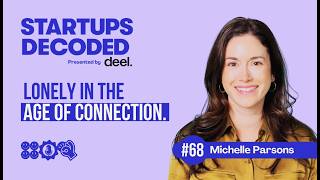
Michelle Parsons built Laura, an astrology-based community app, after product roles at Spotify, Netflix, and Hinge. She uses astrology as a framework to help people share deeper context about themselves across five life domains. The Discord has 9,000 members and the Substack reaches 80k weekly readers.
Chapters
they're trying to get some sense of direction or understanding on, because the world is a little bit chaotic and confusing right now. It's changing really rapidly, and people just want a sense of direction. And what we're using as our mechanism through which we provide context is the framework of astrology, because it naturally helps to pull people into like those deep conversations.
Welcome to Startups Decoded, the show that gets real about what it takes to build a successful startup. I'm Andy Walsh, 2 times executive founder, strategist, and your host. Each week I talk with top founders, investors, and operators to unpack the plays that drive real traction, not just headlines. If you're building something bold, this is where you'll get the honest insights to scale with clarity and confidence. Let's keep growing together. Hit subscribe and share with your community. It would mean the world to me. Hello and welcome back to Startups Decoded. My name is Andy Walsh. A lot of people are building products, particularly in the world of AI, where building comes so much easier. But a lot of these products are serving quite functional roles. They help solve problems, they create new opportunities, but not many are actually creating something that has a bigger impact and has brand fame around it where it becomes culturally relevant. So today I've got Michelle Parsons from Lora. Welcome.
Hi, thanks for having me, Andy Walsh.
I come from a creative culture background and I don't get to have enough of these conversations. I really, really love just the impact that you can have on society with businesses and it's the practical part. Sure, but how do you actually find a way to have an impact that's positive, particularly in the world that we live in today where connectedness seems to be disappearing, like genuine connectedness? And what you're doing is really fascinating, but to set it up, I always like to learn a little bit about you. You're very much a pure product person. Yeah, definitely. And you've worked at some really major companies. How did you find your way into product and what are some of the things that you worked on in that time?
Yeah, I always like talk about how like my, my jump into product was very nonlinear. I actually had no idea that product management was even a job you could have. And so, I actually started off as a high school science teacher. I was the very much like pre-med track and my senior year of college, I was like, "Well, I don't think that I wanna do this right now, so what do I do?" And I had basically planned my entire life like many people do, you know, you're like planning your life. Year by year and, you know, milestone by milestone. And so, I was kind of like left in this like lurch of like, what do I do? And so, I went off and I did Teach for America. I taught for 2 years high school science, um, and it really changed my perspective on what I wanted to do. And I ended up going into the edtech space. Um, I had always had an interest in tech. I was using a lot of like tech-enabled experiences in my classroom that I was creating myself. And so, I said, wow, well, one, one of the ways I could make an impact potentially on this like industry, this very fundamental thing for society, is by going into the tech world in the business world and see if I can, you know, impact it from that angle. Spent a few years in edtech and that's kind of where I discovered product. I was, you know, always had like my hand raised, you know, theoretically. And my boss was eventually like, hey, there's a team called the product team. You should go talk to them. And so I talked to the team, it was a very small like edtech startup. So it was like 20 of us in total. And they just started giving me like little jobs to do, you know, some user research, some data analysis, analysis, like things that now I really understand to be just part of the job that I do on a daily basis, as an afterthought really. But those are kind of my first entry points into this world, and I just— it really just tapped into two things that I, I think I'm just really innately curious and good at, and that is deep empathy, like really trying to understand the behavioral science of environments, of people, of cultures. And then the analytical part, which is all about the scientific method and data and analysis and, and hypothesis generation. And, and, um, it just kind of clicked. And very shortly thereafter, went into the consumer tech space. Um, was like the third PM at Kayak early the day when it was primarily everything was still desktop driven. Um, and then very quickly was like, okay, I really wanna work and understand this thing that we're calling personalization, which essentially is precursor to modern day, what we, you know, we are all obsessed with AI. And I joined Spotify where I was working on our personalization platform, essentially building out new AI tools and ML models to power much of the personalization that you see across Spotify. So, the playlists, year in review, shared listening models, like what today is like the Blend. And it was just really fascinating work to see the mixture of both like the UI front-end experiences And then how those were actually just like supercharged by having it built just for you. Right. And I think now what we're seeing in this day and age is that on steroids. Yeah. And it's awesome. You know, I, I spent my time then after that working at Netflix, like really thinking about this like personalized problem from a different angle. You know, you have Netflix proper, but I worked specifically on kids and family and You're taking kind of a very unique user archetype within the broader ecosystem of Netflix, which has its own goals, and then saying, okay, how do we make this work for kids and their caregivers? And that's a very different kind of nuanced approach to really understanding behavior. And I think that that's really been like where the rest of my career has really centered on. It's like, how do you really understand behavior and use that to drive deeper human connection? Just deeper connection in general. Even Spotify and Netflix, that's connection with content, which ultimately then connects you to others, right? Through kind of shared culture, shared lexicon, shared interests. And, uh, my time at Hinge was really spent trying to like uncover and really understand this, like how do we actually help people develop deeper connections with one another? And in this particular world, you know, it was really about the love connection, finding some, a partner that you could, you know, essentially delete the app for. I started at Hinge when the company was 80 people. I was the CPO there, helped you know, scale that organization from 80 people to over 300 people, over $300 million in revenue. When I first joined, it was just in English-speaking markets, helped take that international. So really the, the key thing that we focused on at Hinge was how do we focus on getting people to the outcome that they want? And what is that outcome? It was great dates per user, codified that everybody would speak to that, and it wasn't about daily active users or revenue or any of these other types of metrics. I think sometimes companies can fall victim to always tracking these like numbers that don't actually tell you the true story about how people are emotionally connecting to your product and if you're actually delivering them value. So, you know, we were able to basically during that time, one of the key changes that we made there was there was Tinder and Bumble. They were the prevailing dominant dating apps of the time. Now you look actually at the market today and you see Hinge is the dominant prevailing app of, of today right now. And the key change that we focused on was all of those products gamified connection. They were all focused on homogenized, very flat, shallow representations of you as a person. And the key insight really is that when we're talking right now, we're getting so much more from each other than we would ever get from just one looking at us via text or email or a picture or even via Zoom, right? And so how could we actually take what it is like to engage with somebody, you know, in IRL and try our best to translate that to the digital space to actually create a greater dimension in people's profiles. And that fundamental change really kind of reset the trajectory for Hinge. And it was all about people don't really care about connecting on these shallow surfaces, interests like looks, et cetera. They actually care a lot more about vulnerably expressing themselves in more authentic ways. And that actually will lead to better, deeper connections, better matches, better dates. But people don't know how to do that. They're scared and they're not, they're not equipped anymore because we've gamified it. We've created a formula that we know that, that people know wins. If you have the fish pic, if you have the XYZ like snarky prompt, that's going to get you more likes, but that's actually not who you are. And so when you show up to these dates IRL, it's like almost like you're putting on a mask, right? So we changed that. We introduced the, this concept of voice prompts. So introducing voice into the profile pages was, um, a really, that, that feature single-handedly like really reset the trajectory. Um, And then from there, I've been just like thinking about this problem space a lot, right? Like, what does it mean to really be authentic? What does it mean to be vulnerable? And when we occupy so much of the internet with versions or compartmentalizations of ourselves, how do we actually do that for real?
So much in that I resonate with a lot. Like, firstly, if you look at the run there of Kayak, Netflix, Spotify, like really institutional companies. But the part and the thread that I want to pick up on within each of them there is just an understanding about being a human being. And if you look at social media, and I'm so anti-social media as much as I show up on there, what they're doing, and very openly, is that they have psychologists mixing with engineers looking at human behavior and how they manipulate it in a way for their own commercial gain. And what's happened, that gamification means that we've become these dopamine-hit addicted people that rely on some kind of vanity metric to make you feel good about yourself.
Totally.
And what you're doing is stepping outside. And I love the pre-med connection as well. I did a double degree in exercise science and marketing, and exercise science I was fascinated on around the human body, human psychology, how you show up in a sport sense. But then marketing felt like my practical, safe decision.
I'm sure of that.
Yeah, 100%. And I think I lean on more the human psychology start now, and part of the conversations that I'm having is really understanding a human being, not just the skills that they have, but like why they're doing things. So to step outside of all of that for you, within human behavior, what are some of the things that you're seeing that you think we need to overcome now? One of my observations is around the fact that people don't know how to do this, sit down and have a conversation. They're so engaged on phone and that's how they communicate. What are some of the things you think at large that we have a responsibility to try and overcome?
Yeah. I mean, look, I think that you, you talked about the dopamine hit. It's like we are looking for validation in some places. I think a lot about this concept of like the loneliness epidemic. And you know, when you really unpack why we're lonely, like it doesn't make— I mean, it makes sense why we're lonely. I'm not gonna say that, but we are, we are more online than ever. We have access to more people than ever before, more information ever before, and more spaces really of people who essentially might have our similar interests or passions or demographic or preferences. We can find those spaces online. And I think that what we've lost in all of this is truly being understood.
Mm-hmm.
Because if you think about why people feel lonely when they probably do have friends and they do have places to connect, it's cuz they don't feel really deeply understood. And I think that's by design because essentially where you've spent most of our time today now has optimized for shallow, really quick-hit experiences. And what gets likes or engagement or consumption is your vacation that you went on. It's not you posting about how you're feeling super sad and down today, right? And so I think we've kind of lost our ability to like show up more authentically and just like tap into those pieces of ourselves. Um, I think the attention piece is another thing. We just have such short attention spans that we are constantly looking for the next thing. And I, I like to give the example of the LaBooBoos where everybody went in this like craze and all of a sudden everybody was interested in LaBooBoos and you actually had no idea whether you were interested in or not, or whether you were just like, you know, uh, had been served it so many times and wanted to take part in culture, be part of something. And I think that's like constantly like what you see, you know, we're in New York City. I, I love the SNL skit, like, waiting in a big dumb line. And it's just so funny because it just so emulates this idea where we are all trying to take part in shared experiences by doing the thing performatively. And we have no idea why. We don't even know if it actually matters or means anything to us, or maybe we're pretending it does. And so I go and I wait in a line for this like amazing new pizza and I get up there and I'm like, eh, I don't know. It's, uh, it's okay, I guess. But I post about it anyway online just so I can be part of that kind of conversation. And so no wonder we feel lonely. No wonder we feel disconnected and alone. And so I think that what, what our, you know, goal is, and especially when I'm thinking about how I'm building Laura and what, what our main objective is, it's like, okay, in order to have deeper relationships with others, We need to first like have a deeper relationship with ourselves. And I think that, you know, there's many ways to do that. I'm not gonna say that like Laura is the only way, or kind of like through a spiritual kind of like angle's the only way, or through the framework of astrology is the only way. It's one way. And I think that what we're really trying to get at is how do we help people understand themselves more so that they're able to use that to have deeper connections with the people that they care the most about. Versus a surface-level conversation that they probably get into these like cyclical habits and moments of. And we're seeing that already, which is super interesting. You know, we can dive more into Laura obviously in a little bit, but I think, you know, that's, that's really where I see the opportunity for us as builders, for us as marketers, for us as just stewards of culture and stewards of humanity is to really think about How do we help people engage more deeply with each other through more authentic moments and more vulnerable moments? And that first relies on our ability to like really unpack that and feel okay doing that and feel safe doing that.
It feels like it's mission critical in the stage that we're at in the world, just at large, like everyone across the world, which is crazy that no one's talking about this as an endemic. Which I see it as, it's a real problem. Johann Hari's Stolen Focus is one of my favorite books, and I recommend people read it because it, it gives you some of the data that you're talking about, concentration you talked about, like college students in the US can concentrate for around a minute 10 on a task before they drift off and do something else. That is alarming to be able to start something, can last a minute and then tap out and do something else. Like there's no effect in this anymore. And in that he talks about the inner circle as well, which is another fact that I want to call out. I feel like it used to be maybe 8 people that you could call on if, say, something catastrophic happened, you're in hospital, you needed money, whatever it was. Used to be about 7 or 8 people. Now it's less than 1 is the average that someone feels like they could legitimately turn to if they're in a real spot. And those kind of stats for me really jump out because we've never been more connected, yet we're so far apart. And that's a line that gets used. But can you imagine, say, like 20 years ago, you lived in this world, you went into a coma, and he came back out of it. I know medically it's not possible, but imagine like you had this world and it's like, but you're so connected. You've got all these platforms, all these ways that you can see each other, but there's this complete juxtaposition of people that are lonely, depressed, and having all these issues. It's like, it would be a massive red flag for someone that was coming in completely blind.
Yeah. I think that there's a really interesting, um, stat I just recently read, which is Gen Alpha. Is— has more and will have more parasocial relationships than real relationships. And it's, it's really— and that's happening right now too, right? But that's— they're gonna be the first generation that has that, that will out far surpass, you know, authentic real human relationships. And again, I think that there's, there's— we need to adapt and evolve to that world, right? I think that that's one piece where it's like we don't need to stop progress, I think that that is the reality of us being online native, right? I mean, that is, that's the reality. We're not gonna go back to just being offline. We're not going back to the dark ages. And so I think the real question is like, what is the problem that we are really facing as a society and how has that been actually created and almost frankly speaking, started by the platforms that we spend all of our time on. And how can we actually think about using technology in a new way that allows for us to almost like redirect a little bit? Cause I'm not, I'm not suggesting that we don't have parasocial relationships. I'm not suggesting that we don't have online communities. I'm not suggesting any of these things, that we don't have dating apps. I'm not suggesting that we don't have social media in some capacity. There are positive aspects of it. Like my partner and I will send each other memes all day and laugh about it out loud, but it's really built off of something very deep that we share in our day-to-day basis. Right. Um, and that we can come home together and then talk about it as well. I think that where it becomes risky is when that is your only source of interaction. And I think a lot about this and, you know, as I build Laura, really where we're building Laura is like, is a way for people to essentially understand their context across 5 key themes. It's their self, their purpose, you know, their sense of self, their sense of purpose, sense of, of belonging, if you will, their family, their friends, their career, and their love life. And what we see, like, these are the top 5 things when we talk to users, when we see users interacting in our communities and in our products that they care the most about, that they're trying to get some sense of direction or understanding on, because the world is a little bit chaotic and confusing right now. It's changing really rapidly. And people just want a sense of direction. And what we're using as our mechanism through which we provide context is the framework of astrology. Because it naturally helps to pull people into like those deep conversations. It's funny, we have a Discord community of almost 9,000 people, and it is so interesting how people find this community, whether it's through one of our kind of, uh, mini feature experiments or through our newsletter, or it's through our, um, social TikToks or Instagram. They pop into it, they come into it for curiosity about astrology or trying to connect with other people who are kind of like similar, like-minded, or also curious. And then the next thing that happens is they start to dive into really deep things really fast. And I think that that is what most people are trying to get to when you go to a run club or you go to a book club. So these IRL experiences, I feel like, are one bucket of the way that we are trying to solve this, like, loneliness problem or connection problem, right? It's about, oh, well, we share similar interests, or we share similar demographics. Or we share similar preferences, so therefore let's aggregate together. And then like, we're kind of like, you know, self-selecting into like a, a group of people who might like, like each other. But the reality is, and I, and I spent, you know, 3 years building Lex, which was essentially an LGBTQ+ platform to connect people based off of interests and passions and beliefs and hobbies and all these other types of things. And what we found was That's not enough. You know, just because I'm queer and like books or like wine or like dinner clubs doesn't mean that we are going to connect or relate. And so what I find from these kind of IRL interest groups of like, oh, it's a creative night or it's a run club or it's an XYZ club, is that you still have so much of a hurdle to overcome to get into that moment of deep connection, which is like, who are you really? And who am I really? And how then do we kind of form a relationship and a deep bond? And so what's interesting about the community that we are building is you immediately skip that 0 to 80% of like the shallowness. Like, what's your favorite color? Like, oh, you like guitar too? I like guitar. Awesome. Okay, now what, right? How do I break that ice to get into that deep conversation that actually I think I'm craving, but I don't really know how to articulate? And so immediately you see people saying just the other day, it was like, you know, I, um, have been in my career. I— it's a great career. I make— it pays my bills. I make a lot of money on it. I'm just unhappy, and I really wanted to pursue my, like, my, like, my passion of writing, but I'm scared, you know. Ken, has anybody else experienced this? Like, what does my chart say about this, right? Yet another person who was like, so much change is happening, you All good stuff, but it's a lot of change and it's overwhelming. I just got engaged. I just moved in with my fiancé. I like, AI is changing how I work. Um, and I'm going through some medical stuff. Like, I just wanna know, like, you know, I just need some direction. And these, I think these conversations allow for people to, to find solace in connection, true connection where you can really relate. And I think that's what we need to start to build towards. It's not Again, shallow-based connection, interest-based connection. It's not, you know, the other thing that people are spending some time trying to build tech solutions for are these AI chatbots. And it's like, yes, actually those, in those moments, like the, the problem it solves for is going really deep. If I feel alone and I feel scared and I'm gonna share my deep feelings, I can feel comfort that I can go really deep with, you know, ChatGPT or something of that nature. And it's gonna like, have that confirmation bias and it's gonna really kind of like understand me, but that's not connection. That's just like me talking to a computer and believing that I feel understood, right? And so how do we actually build solutions and build communities and build products that actually facilitate deep understanding and then use that? And that's what really Laura's mission is, and use that to help strengthen and broaden Connection.
Quick word from our friends at Deel. Founders, if you're hiring, whether that's your first person or your 50th, you've probably already hit the moment where the best candidate isn't even in your city, let alone your country. That used to mean so much paperwork. Deel removes all of that. One platform that lets you hire in days. They handle payroll, compliance, contracts, and benefits. Plus they're across 150 countries. Don't lose good people because logistics were too hard. Deel solves that problem. Check it out. startupsdecoded.com/deel. That's D-E-E-L startupsdecoded.com/deel. One of the things you touched on there, I'd love to look at because I think about use cases for social media, for Discord. For chatbots, all those things have very specific use cases and quite often they can be positive. But what's happened is that we put all the things that we need in life into one bucket and think that that's going to fulfill all of our needs. And like we're hardwired over tens of thousands of years of human beings to sit down and do this. Like stories were told around campfires. That's where you learnt the history of your ancestors and that turned into song, which we all participate in now. And then The evolution of technology in the last 20, 30 years has fast-forwarded everything to a point where it's so condensed into one platform ultimately, where we've lost all of that element. And what I'm curious about, and I'd love to have some, like, genetic person who understands that evolution to explain to me, is there a, like, an innate default where we're actually trying to come out of that? Whether we realize it or not, you just gave some good examples. Where we're craving connection and we may not articulate that we're craving connection, but we're starting to find those passion-aligned run clubs. You talked about dinner clubs. What are the things that really connect us in a way? And I'd love to be able to understand that further. And I know you probably can't answer that, but if we're able to crack that, it's like that hybrid nature of digital and physical being almost mandatory as far as how you show up, then I think we can start to get back pretty quickly because it's only been like that 20, 30 years, as I said, human evolution means that we have not adapted to that being the norm.
Totally.
We're adopting it to a point and we're adapting around it, but that's still going to take multiple generations for that to be normal.
Yeah. And I think you bring a good point, right? This has only been the last 20+ years. It's not been 100 years of this. And so I think that the, what we see and what we observe, and again, like we're looking at, I'm looking at my career. Right. How things have changed over the course of the past, like 15, 20 years of my career. They've, I used to use Facebook, you know, when it first came out in 2006, like more broadly, it was still, I think still almost still EDU at that point. Um, and I was going to my freshman year of college and a friend, not even a friend, it's like a new college mate emailed everybody and was like, hey, this, everyone get on Facebook. And we're like, I was like, I guess, like, I don't know what this thing is, but sure. He's like, like, I was like, actually, I don't want a Facebook. I'm not really an online person. He was like, I'll make one for you. Don't worry about it. I'm like, okay, sounds good. And so when I came to school, I already had like 300 friends, right? Friends. And I was like, oh yeah, this is overwhelming and cool. It was a small school, so, you know, we ended up actually having, I knew all those 300 people. But it was interesting. I remember the way I used to use that product and I can go back and find you know, just the old post from like 2006, which is, you know, at this point 20 years ago. And it was literally like your wall and you would post like, Michelle is— and that was like the beginning. And then it was the empty block. And then I would type in— I, I just— one came up in my memories and it was like, Michelle is feeling tired. And like, that was my post that I would post. I'm like, it's kind of like a, a, an offshoot of AIM back in the day that I used to be in my chat rooms. And you know, I would, after school I would say like, Michelle is eating dinner and that's, you know, so funny. And I think it's interesting though, because underneath that Michelle is feeling tired post, I would have friends comment underneath it and being like, oh my goodness, I'm so tired too. Finals are just like rocking me. Oh my goodness, I cannot wait till Friday until we're over all of this. Can't wait to see you at this party. My friends from home would comment, oh my goodness, finals are killing me too. You know, they're thousands of miles away in Texas. Can't wait to see you over, over break. It's just so interesting how that's fundamentally changed. But that is, I think, ultimately what we are trying to get back to, which is how do we leverage our online presence and kind of online communities for the things that actually connect us, not keep us glued to like an ever-ending scroll and isolate us. And I think that I don't— I, my partner and I, we are going through kind of our own like IVF journey and We went into Reddit and it was super incredible 'cause we were able to find other people who were going through similar things that we could ask real questions to and not just like sit and ask, you know, ask the internet, broad Google. Um, and I think that was just super helpful. But I, I, again, I do think that there's opportunities for us to figure out like how do we marry the URL and IRL in a way that starts to create more equilibrium between the two of those things and not just like again, overweights one of them, which right now is consumption on consumption of content, really. And we understand why that's because the algorithm has been optimized for that.
100%. And I look at ways of connecting. If you look at passions, I want to unpack that some more, but vulnerability, empathy, things that just natively as human beings we're drawn to, like empathy. You talked about your Reddit experience is a beautiful thing because if it feels like that lots of people are going through the same experience. All of a sudden it makes your problems seem smaller for whatever reason. Vulnerability, people are scared to do that, but actually being like, I'm sad today, like going back to that Facebook status thing that would've happened once, now it's just a hot mess of everything you could ever think of in one platform. But like, I'm feeling sad or I'm really excited and like being able to sit down with someone in solidarity and just be by their side or celebrate a win. Those kind of things get lost a little bit. So to be able to lean into the passion part, I want to continue on that thread. I grew up in music culture and I love, love going to see bands. It's my happy place. I can sit there for hours and just watch live music. And the thing that I love about it too, though, is you meet your people and you could stand by someone who you'd never met before, become friends by nature of the fact that you love this band so much, you know, all their songs, their records. And it's something that you're purely passionate about. And I want to get your take, cuz you are leaning with Laura into astrology is something that has become hugely topical and it's obviously been around for centuries.
Totally.
But as far as the mainstream consumption of it and it being much deeper now, it's fascinating. I'm, I'm a Scorpio and I love it when someone says, oh, you are such a Scorpio. And I'm like, what does that even mean? I have no idea. And then when someone was asking me like the date I was born, the time I was born to calculate all these other things, I'm like, again, out of my depth, but it's, it's a curiosity thing for me as well. And it starts to form a bond with sometimes a perfect stranger. For you, what has been your— I know you don't have your product live yet, but your experience within the community, how does that central thread start to connect people in a way that opens up conversations where they feel like they can be vulnerable and find ways of bonding with perfect strangers?
I think this is like such a, a salient point, right? Astrology is something that's been around for a long time, centuries. I mean, if you look back to some of the Roman Empire, you know, even Egyptians, like, it's been around in some aspect. And, um, I think the interesting thing about astrology is if you use it as a framework, just as a mirror, as a point of like an alternate perspective or reflection, it actually starts to tap into something that humans are innately, innately gravitate towards, which I want to know something about myself and I want to like know an interesting take on who I am from a different perspective. We love data, you know, it's, it's why we love our Spotify Year in Review. We want to see what are our, what does our music consumption actually say about us? But in general, I think we've always gravitated towards different kind of data outputs. It's just like, how does that presented to us that we can consume it in a way that again helps us be like, oh, that's interesting, or that's curious. And some people depending on where you are in the spectrum, will go like far deep into, and some people say it's pretty surface. For astrology, it's interesting. You said you're a Scorpio, right? Immediately, if I was a Scorpio, I'd be like, oh, interesting, let's see how similar or not similar we are. And so it immediately starts to create a level of connection between us, and also it creates a shared, a shared point of lexicon for us, and it lowers the friction or lowers the barrier for us to get into a conversation. I'm a Libra. I could be like, ooh, I'm a Libra, you're a Scorpio. Let's see how the, how the tension is there, or where, like, where the power between us lies, right? So it just creates different ways for us to actually, I think, relate to our, our individual kind of unique personalities and personas and approaches in a way that's shared. I think for what we see is that astrology is, is interesting because whether you are a diehard person for astrology or you're somebody who, like, uses it more like socially, culturally, um, and super shallow, it doesn't really matter because it still offers you a glimpse into who— and into one perspective of who you might be. And I love it because what we find is that, you know, one of the— one of the ways that we actually got a ton of kind of early adoption to our product was this, um, we saw basically on TikTok that— and many of the astrology content there'd be a video and that other people in the con— in the comments would start to say, hey, I'm a Libra Sun, Cancer Rising, Cancer Moon, anybody else? And you would have tens of thousands of comments of everybody else like commenting on this, on that, and you maybe would find like one or two. There were actually 1,723 different combinations of Big Threes, so very hard to find your match. So we said, why don't we create a system to actually automate this. You put in your top big 3, I put my top big 3, and we'll create a matching system. And our matching system right now is done through Discord, actually. So we have 1,000 channels right now of different big 3 combinations with people in them talking to each other. Because I think people want to feel unique and special. They don't want to feel like the only one. They don't want to feel alone. And so how can we feel unique and special together? And that's really interesting because I think that that really starts to tap into the specificity of what we potentially can offer with Laura, which is, wow, you're also 28 and— or, you know, you're going through your Saturn return, that you're between the ages of 28 and 30. You're also a Libra Cancer Cancer, and you also just went through a big breakup. Now, I can't find that on Reddit. But we can find that on Laura. You can literally find that on Laura, and you can start to have conversations like, how did you deal with that? How did that affect you? Oh my God, you also went through the breakup on this exact month? Whoa, like, that's mind-blowing. And it starts to help you feel like nothing's wrong with you. You're not the only one going through this. Actually, there's a shared, like, dynamic that maybe everybody like me is going through. And if you strip away astrology and you just, like, look at what it means to be 28 Being 28 just means like you're almost— you're in your late 20s, you're starting to have these like existential kind of like conversations with yourself. Like, is this the right job? Are these the right friends? Is this the right person for me? Why haven't I found the right job? Why haven't I— why don't I have the right friends? Why can I not find love, right? And these are the questions that everybody has irrespective of astrology. It's And so astrology helps to kind of provide that framework, and it already has the lexicon and the verbiage to give you some answers to that. It's not even the answers, it's like insights into that. And so that's what we're doing with Laura, is we're just surfacing all of that and we're making it way more accessible regardless of if you're a die-hard astrology person or you're just somebody who's 28 going through a hard time in your life and you're looking for some kind of guidance.
I love that. It's, it sounds like it's a framework. As much as there's science and, and looking at the skies and the way the planets are moving around and stars, et cetera, there's a lot that goes behind it, but it's simply a framework to be able to make sense of things that are happening in your day to day. And you can either believe it or not. You can take it literally, you can take it as guidance, but what you're doing is that, from what it sounds like, neutralizing a connection with someone else in a way where you can actually lean into being imperfect. And the best thing about human beings in my mind is that we are imperfect and we're all going through our imperfect journeys. Yet the social media on the other side is typically presented as perfection and, and they have the opposite end of the scale. So having something to bond and unite people, for me, that creates that purpose and passion that then people can buy into. And what that creates then is that bigger flow-on effect. And the conversation we started today was around how do you make a product famous for more than what it is? And you do that by being human and actually being additive. And social media, again, to dwell on that, it interrupts rather than be additive. And it sounds like what you're doing is actually being human. And that seems crazy that to actually get success and that drives some stickiness where people get benefit. Being human is such a hard thing to do.
And I think that's like so spot on, right? Whereas like on social platforms, consumer platforms today, you know, whether it's LinkedIn or TikTok or, or IG, or even like, I, you know, insert whatever you want there, it's compartmentalized, right? So like LinkedIn is for your job and IG is for like your photo dumps of your like vacation and TikTok is for like the authentic, but it's still like performative authenticity cuz we, we're trying to like play for the algorithm here a bit. You know, I think that it's shallow and it's compartmentalized. What we're trying to lean back into is like, how do you actually look at something holistically? You as an— who's a full individual? And how do you go deep? And how do you help people not stay on the shallow— in the shallow— in the shallow end and dive into the deep end and feel safe and comfortable doing that? But you can only feel safe and comfortable doing that If you— you— I love how you said it's like we're all imperfect. And like, the thing that we always say, you know, with my team and at Laura is like, we all just like need a little bit of grace. We need to give ourselves grace and we need to give others grace. And how can we do that when like the world moves so fast that we forget to slow down sometimes? And I think that, you know, that is, that is a really critical piece to all of this that I think has been missing for, for some time. And I think we see Laura and the framework that we start with, which is astrology, as an opportunity to kind of dip our toes into that. Uh, and yeah, and it's been great. I think what we've seen to date is, you know, we started building a couple, like 2 months ago maybe. In just 12 weeks, we have been able to get more than 120,000 people into our platform, into our experiences. And it's not passive interest, they are going deep there. We have We got 10 different feature experiment experiences that you can use. On average, people use 2.3 of them. The, our power users using 5+. People are, we have 80,000 subscribers on our Substack that open our Substack every single week. We have over like almost like 9,000 people in our Discord that are sending 45,000 messages. We have IRL events with over 2,000 attendees. We, we, what we are seeing is craving for this. And they're not just talking about astrology. Sure, that's, that's part of the discourse, but they're talking about all these other things and they're connecting with each other and with us. I think that's really critical when you're thinking about building a business, a business that lasts, a business that drives impact, is how do you kind of create this momentum and resonance around your brand, infuse that into your community, and then build your product around that?
As a brand strategist, I'd separate into two simple narratives. You got the brand story and the product story. And the brand is the emotional connection where you actually relate to something much bigger than what actually is. And Liquid Death is my default. People associate the brand with something that is this punk lifestyle and the product is just a seltzer water, right? So you can talk about the product features, you can talk about the brand and people naturally want to feel like they're connecting to something beyond what the features or the services that they're actually getting out of it. The separation of those two is where you've hit a sweet spot. We've talked about that connection and human part of it. I'd love to explore the product part a little bit. You're talking about Discord there, but as far as the product itself, like what kind of experience can you build where you start to nurture people's curiosity, passion, and bring people together in a way that does feel very organic as far as how humans connect?
Yeah, and that's a great question. And I think right now, you, you, we spent the first like couple of months just like looking at what is actually the need in the market, right? What, what do people actually need? What do they want? What's gonna resonate? What's gonna keep them? I think there's a lot of astrology products on the market today, and I look at them like kind of like fortune cookie products. They're content engines really. Um, and then you have a bunch of like AI companion chatbots that like help people go really deep and understand. You know, they can— we could probably do a LoRA through chat. So let's scratch that. We have a bunch of like AI companion apps on the market that help people kind of like unpack their context and unpack what's going on. But that's like very disconnected from human. And so you have like frameworks like astrology, like the astrology apps that help people connect actually, because like people are sharing with their friends or like looking at their compatibility with their friends. You have products that are going deep that are solo. So where we feel like we sit really is like kind of in the middle of that, right? So we are a product that is You come onto the product, you'll onboard, you'll give us your birth information, you'll tell us a little bit about the 5 things that, that you— I talked about. From there, we'll give you kind of like a top-line breakdown of who you are, in the same way you would get from like an astrology product, you know, or from going to an astrologer themselves, or a personality test, if you will. And so it's like, that's kind of our, our goal is to get— kind of give you a snapshot or a glimpse of you across these different vectors through the lens of astrology. But it's like, it's like, it's not context-rich where you have no context on you. All we have is like these very basic information pieces about you and a very like doing good in career, not doing good in career, right? It's a kind of spectrum there. And so what we want to do though from that, facilitate that context exchange, that progressive disclosure in a way that feels so grounded to who you are So let's say you're going through a career thing. You see this all the time. They'll give you a vignette. Um, let's say Alexa, she's 28, just started a new job, and she is like, man, it's, it's awesome. It's been really intense. You know, I'm also just like struggling with like a couple other things, you know, with respect to like some family dynamics or family health issues or something of that nature. You know, she's sharing this with kind of like our Laura, with Laura. And Laura's able to say, "Oh, interesting. Okay, so like, actually you're going through this really big career transition, and like, let's leverage astrology to actually help contextualize this for you." And so now Alex is like, "Oh, interesting. Okay, I see that like, in July I started this kind of this big career shift in the astrology. Actually, if I think back on that, that's kind of when I started to feel a little bit like more uneasy," or more excited. I had a lot more, um, I had a lot more opportunities come into my life. And so from that, Alexa continues to disclose more and more and more. And then tomorrow when she comes back, we don't just give you like a regular little horoscope or a blank screen that says like, what next? We actually contextualize that tomorrow we're looking at your birth chart, the context you gave us, and any of the transits going on around you. And we can say Hey Alexa, today be careful communication, especially at work, because Mercury just went into retrograde and you're already dealing with a little bit of career tension. And so here's how things might show up for you. Here's how to navigate that. And then we open up that conversation for her to give us more, which is, which is great. And then on the social front, we connect that to social, right? And so we say like, Alexa also has her like 3 best friends, and all of a sudden she like, they can see, they can see, or she can share with them, oh, going through some weird career communication stuff. Like, remember when I told you about my boss? And now we have context and we're talking not just about the latest TikTok meme or the celebrity drama that's happening. Alexa and her friends are talking about how they're both kind of going through these like really weird career messiness that they otherwise might not have gotten to because they didn't want to burden each other with that.
Fascinating. And the part that I take from that is it's almost a normalization of life. Like life is a rollercoaster for everyone. Anyone that says that their life is smooth sailing, like they're not telling you the full scale of what's happening behind the curtain, right? So normalizing patterns of things doesn't mean that you can be flippant and just go, well, I don't have to take responsibility because Mercury's in retrograde. Today's gonna be bad anyway, so I'm not going to care. But the other way, it's like, okay, looking at this and have a pattern, and then you find like-minded people that are having the same thing, and all of a sudden you feel like you're being human again. So I love that. That normalization of life stresses through something that feels rational to a certain degree.
Totally. And I, and I think that that's like one of the things I get most excited about with the product is actually our ability to connect people over that like vulnerable, deep stuff and do that in a way that has minimal friction. Right now, if I wanted to go, if I had a bad day at work, I'd have to take out my phone, text my friend. Is my friend busy? Should I really burden them with the dumb thing that happened to me at work today? Or if I do text them, they don't text me back cuz they're busy or they don't have time to respond or they're dealing with their own things. Now I'm feeling bad that I didn't get a response back or they responded to me 2 days later or they don't wanna talk about it. I don't wanna talk to them again about it cuz I've already talked to them for 2 weeks about how I'm feeling burnt out from work. That's annoying to them, right? So that's the experience that exists today. That's a real life experience. And so my default then is to go on TikTok and post my latte that I had at work or to like share some memes or to like basically like just like dissociate and just like start to consume and scroll content or find content on TikTok of other people who feel burnt out that I don't know. And so what we want to do with Laura actually is like change that conversation to make it feel super seamless. Oh, I can see that Andy is kind of like going through like a weird tense moment. I'm also going through a weird tense moment. Let me talk to Andy and be like, hey, we're both going through like these weird things. Want to go and Grab us some coffee. Or, hey, I was just going through a weird tense thing last week. Like, you got this. Don't worry. Here for you if you need me.
Well, I can't wait to see where it goes. For folks listening, watching, where can they get more information on Laura?
Yeah, you just go to getlaura.com and there's all of our microsites are there. All our features are there. And then we also have a little waitlist so you can sign up for our Discord community. You can join our Substack. We, we post once a week and we We host IRL events all over New York City right now. We host virtual events twice a month as well.
So fun. That's Laura, L-O-R-A.
L-O-R-A, yep.
Amazing. Thank you so much, Michelle.
Thanks for having me.
Thanks for listening to Startups Decoded. If today's conversation helped you think differently, share it with a founder in your network. And don't forget to subscribe for real-world startup insights every week.
Week.
We really value your support. If you're interested in partnering with us, email hello@startupsdecoded.com. I'm Andy Walsh. I'll see you next week.
More from Andy



EP#88: Why Most Founders Misread Their Own Traction. Vanessa Larco - Premise VC

EP#87: Founders Obsess Over the Raise. Investors Care About This More. — Carina Cunha






Ep#86: Early Decisions That Define Your Startup Forever. With J.P. Morgan Asset Management
