Ep#71: Launching at 21 With No Money and No Plan. Now 4 companies & 2 exits. With Taryn Williams.
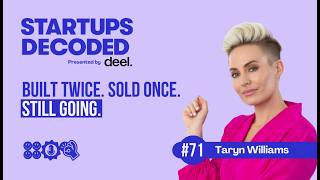
Taryn Williams launched a modeling agency at 21 with no money, identified that the industry delayed payments to talent, and built a system to pay models within seven days. She scaled to thousands of models across Australia, invested $500k to build a marketplace platform called The Right Fit, raised VC funding, and eventually exited to a strategic buyer with a 12-month earn-out.
Chapters
I actually wrote a blog probably maybe 18 months ago called The Pain Is in the Execution, because the number of founders I would meet who'd be like, well, I'm not going to tell you my idea because, you know, you might steal it, or like, I'm going to get you to sign an NDA. I'm like, no one's got time to steal your idea, believe me. Like, the pain is in the execution. Ideas are free, but actually getting that business birthed into the world and going and growing it and scaling it and all of the things that come with it, that's where the pain is.
Welcome to Startups Decoded. The show that gets real about what it takes to build a successful startup. I'm Andy Walsh, 2x exited founder, strategist, and your host. Each week I talk with top founders, investors, and operators to unpack the plays that drive real traction, not just headlines. If you're building something bold, this is where you'll get the honest insights to scale with clarity and confidence. Let's keep growing together. Hit subscribe and share with your community. It would mean the world to me. Hello and welcome back to Startups Decoded. My name is Andy Walsh. Founders aspire and dream about launching, raising, selling, and living the sweet life, but very few folks actually get to that part. Today I'm speaking to one of those people who've done that journey, Taryn Williams.
Welcome. Thank you so much. Thanks for having me, Andy.
We've been talking about this for a while and I, I don't want to calculate how long it's been, but we met a long time ago and we've stayed in touch across the country, across the globe for a long time now. And this is, feels great to be able to speak to you again because you were super early on your journey when we would have met, right?
Yeah, it's got to be at least 15, maybe longer years ago. So quite, quite scary, which I mean, we're still young spring chickens, but yeah.
Totally. We're still looking great. Well, maybe you are. I'm definitely showing my age. But starting off, you came into the professional world through modeling. And through that time, you decided to launch your own agency. Can you take us through just a little peek into model life, but then really what made you step outside and start your own business?
Yeah, look, it's a, I look back on it now and think, God, I was so crazy, but you know, it really was the blissful naivety of youth and that you just don't realize how hard it is to start and scale a business. I'd been modeling myself since I was about probably 15, and it had afforded me so many amazing opportunities. You know, I got to travel, got to see so many parts of the world I wouldn't have got to see otherwise. I got to meet and work with incredible people, like so many great creative directors and photographers and brand managers, and I just, I really, really loved the industry, but So there were so many inefficiencies and inequalities that just didn't make sense to me. You know, agencies had a pretty rule-by-fear attitude back in the day. And so, you know, this is well before the days of sort of any automated platforms or systems or anything like that. And so you would call up the night before and say, do I have any jobs tomorrow? And they go, nope. And so you just sort of lived on this like really precarious situation and you didn't get paid until probably 90 days after the date of doing a job, which was just wild, like financially totally not sustainable.
And I was like, look, it doesn't need to be this way?
Why can't we just have, you know, agencies who really love their talent, who bankroll payments and pay models within 14 days or something more reasonable like any other career in the world? Why do we have to wait for— their excuse was that they needed to wait for the client to pay them. So they would wait for Coca-Cola to pay the advertising agency and the advertising agency to pay the casting director and the casting director to pay the talent agency, for example. So I was like, well, that's not how any other business in the world works. You know, that's what bankrolling payments is all about. I just thought, you know what, I can do this. I'm going to start an agency, a really boutique agency for commercial talent, and I'm going to bankroll payments. We'll pay all of our models within 7 days, be like a really beautiful family and a supportive network, and our clients are going to thrive because they get these amazing talent who go above and beyond and are really passionate about being there and doing a great job because they're getting paid really quickly and they're getting supported by their agency. And, you know, talent are going to refer other talent to us because they love being with us. So that was the really basic premise of the idea. And it was supposed to stay really small, like no more than 30 models at any one point in time. And that business is 20— so I was 21 when I started it. So 20, basically 20 years old now. Thousands under management across Australia. So it just grew and exploded and it's such a beautiful business. Like I'm so grateful for that journey, but God, it taught me so many things along the way.
Can you talk us through, like, if you remember first few weeks of starting that, was it a side hustle or did you just tear the bandaid off?
Yeah, I was still modeling at the time, and I sort of say I was working every hour that God sent. Like, I was hustling. So I deeply remember in those first— probably first 6 months, actually. Obviously I had no staff and I didn't have an office, and I would be on Google at like midnight after doing a shoot all day, and I would be Googling like the first 50 pages of Google looking up photographers or advertising agencies or production companies and, you know, making a spreadsheet of people to email and literally cold emailing and cold pitching pitching. Like, the hustle was so real. Like, often I meet founders now and they're like, you know, I just, you know, don't know how to do biz dev. And I'm like, it's just brutal hand-to-hand combat. Like, I was on LinkedIn hustling, I was on email hustling, I was cold calling people's offices. Like, it was really brutal. And probably the thing that I look back on now is that I was probably the blocker because I wanted to do— there was that fear mindset of going, okay, if I I'm going to completely rip the bandaid off and go into this full time. Obviously I'm going to be losing an income. And also I wanted to do absolutely everything in the business. So like, you know, I was doing our BAS and tax returns and things like that, which was just nuts, like, right, things that were just not a good use of my time. But I didn't know that, you know, so young and I had no business, like really no commercial experience. So, um, yeah, it was a bit of a baptism by fire, I guess.
Most founders would say the same thing that most of the tasks that they do, I would say the ones that challenge the most of the things that they don't even realize that they need to do. And it's jumping in the deep end and just trying to make it work and you find your way through and I've done it myself. Like no one taught me about finance and cash flow and pipeline and tax. It was just a steep learning curve and going from Australia to US where I started my first business, it was just, they add a whole nother element on top of that. But at that point, you talked about one of your proof points being the payment timeline and like passes through so many pairs of hands. To get to the point where the models get paid. As a startup, that would scare the hell out of most startups in the sense of bankrolling someone else before you actually got paid. How did you approach that from a cash flow perspective?
Oh my God, it was a nightmare. I really did. I mean, obviously I understood because our clients still paid in the same timeframe, right? Like they still would pay in 30, 60, 90 days. They weren't paying us every 7 days, but I made this promise to our models. We will pay you every 7 days, no matter what. Like we will bankroll all of those payments and we, you know, we still do it today. Right, right through 20 years later. So yeah, I had to get really, really good at juggling cash flow. So I didn't pay myself a cent out of business for the first 2 years. I just absolutely hustled and, you know, lived on bread and water and, and had a very unglamorous, you know, the true startup life of working absolutely every single hour, hustling favors, you know, doing beg, borrow, steal, like absolutely anything I could do to make that business successful. So it so unglamorous, but it did mean that, you know, I just reinvested every single cent back into the business. It meant that we could afford to pay all of our talent within 7 days, and that was such a, um, really critical piece in the business growth, I think, is that we had these incredibly loyal talent who would go above and beyond for us and refer clients to us, refer talent to us. And our talent just— our clients just really appreciated it as well. Like, they could see what I was trying to create and the vision and, and the values, and they, they really wanted to support that. So in the end, it became sort of a self-fulfilling prophecy, but it's certainly, yeah, there was a lot of pain along the way.
It's, I tip my hat to you, like it's brave and it reflects the vision to create culture and a lot of founders are terrible at it. I see it all the time. They're so focused on growth that they forget about the people that are standing beside them and that next wave of people that they need to bring on and, and they're influenced by the people that are around you. So if you have a bad culture, it, it sets the scene for everyone that's hired from day one. So for you to set that tone. And I'm curious, you said there that clients liked it. So the culture that you were creating reflected and externalized through the way that the models handled themselves. Did you find that that was a pay-it-forward situation? So the way that they treated the clients with greater respect had a positive flow-on effect for you with growth?
Yeah, absolutely. And our clients would really be, if they had an opportunity to help us win a piece of work above another agency or, you know, put one of our talent forward for an opportunity, if it was completely up to their selection, they would because they could just see like, gosh, she's really trying to build something here. And I would, I would answer the phone on at midnight over the weekend. Clients could come to us and say, oh my God, I've stuffed up. I got the dates wrong on this thing. I need you to help me out. I've got a shoot tomorrow morning at 7. Like, on it. I got you. We'll solve this together. And so for them, it felt like we were an extension of their team, um, and they just so appreciated that. And so I think, uh, talent saw that I was, you know, I was putting my absolute back into this business and there was nothing that I would ask them to do that I wouldn't do myself. And, you know, I remember in the early days, like, there would be times where a model would call me and be like, oh my God, like, my car's broken down, I'm on the way to this job. And I'd be like, I got you, like, I'm booking you an Uber, or I'll come pick you up myself. We're going to get this sorted. Like, it was just, you know, I was obviously young, I was full of hustle, I was full of energy. And it just felt like there was nothing that we couldn't solve with good people and the right attitude. And it really did. It all came together. I'm not saying that there was not like incredibly challenging times where things went wrong, but I do think that that overarching sort of Yeah, culture and values and the premise of why the business existed really was what helped the business grow and help us retain. I mean, we have models that have been with us for literally 20 years. Wild.
Wow. And it's to have a business open 20 years. I don't think many startups would be able to say that as well, that they've operated for that long. And if it does, it's generally been acquired and it's been absorbed into something else, or maybe it's IPO'd, they're not a part of it anymore, but it'd be uncommon. So that's a huge, huge effort. Through that time, you also split lanes a little bit and you looked at an alternative way that you could do a different format of booking models, right?
Yeah. Yeah. So after about, gosh, the business was maybe, Wink was probably 6 years old, something like that. And obviously all being run pretty manually, like spreadsheets, models texting in their hours after a job, everything in email. Like it was very much like a small business. Solution, but we were managing probably, I don't know, maybe 250 models or something at that time. So it was, you know, complex beast. And I was like, okay, this is not sustainable. Every time a booker left the agency, we lost all of the information that was held in their head, right? Like, does this model, is this model gluten intolerant? Does this client prefer this kind of model? Are there any, does this client have a preferred supplier, right? Any of that stuff. And so I was like, I'm going to build an app, you know, this is like, whatever, 15 years ago, it's going to be a cool app and it's going to check availability of our talent. It's going to automatically submit those comp cards or profiles to our clients of who's available, and then clients can pick and choose and book them in. And it's going to be like an automated scheduler. And I thought, this is not going to be a super hard build. And I did all the things I thought I should. I went and got 3 competitive quotes from, you know, digital agencies to build this thing. And I actually chose to build it with a company who had built a platform for a mining company that did fly-in, fly-out, like FIFO workers. And people were like, that is not at all aligned. And I'm like, no, no, no, hear me out. It is. Basically, I want to be able to filter by, you know, blonde, over 5'9", with a size 7 shoe. And in their case, they needed to filter by someone who has a, you know, heavy truck license and lives in Toowoomba and then can schedule them on. So I was like, it's not, it's not actually that different. It's just different, you know, filtering. And obviously I'd never built a tech product before. And so I went to, to the process of like going, okay, well, I need to have to schedule them on shift. Actually, I need talent to be able to build their own profiles, to upload photos. They're super their tax information, all of their skills. Can they dance? Do they, can they roller skate? And then into building an actual calendar project management software. So I need that. And then I need client profiles, all of their preferred history and their booking rates and everything like that. Oh, then I need two-way SMS. Then I need email integration. Then I need booking reminders. I just built this bigger than Ben Hur solution. It was. Nuts. And obviously the agency were like, absolutely, you can have all of those things. You just, you keep going. The bill was just through the roof. And so look, it went from being something that was supposed to cost like $90,000 to costing like probably $500,000. And it was super painful. It took us about 18 months, but it completely transformed that business. And it's still what powers the modeling agency to this day, completely custom built. And it's phenomenal. And I just fell in love with like solving problems using technology. And it was super fascinating. And I got to the end of the build and I went, uh, what I should have done is actually built this for clients to use. Because essentially at that point, all clients were doing was ringing us or emailing us with a brief. And then our team would put it into the system. It would go out, check availabilities, do all of the rest of it. And I was like, mm. And it was just around the time where Freelancer had started. There was this sort of advent of marketplaces. So it was all very new. So I went to see a bunch of our clients and talent and said, okay, if I built a marketplace where you could find things online in the creative community, so photographers and actors and makeup artists and stylists and models, would you use it? Would you, would you feel confident in posting a brief and vetting people who applied and chatting and booking online? Obviously, if we looked after payments and insurance and contracts like any other marketplace, would you use it? And clients were like, Actually, yeah, that would be really awesome. Like, this would be really like a real problem solve. This time I knew a little bit more obviously about how to build a tech platform, so I built a really quick and dirty MVP, spun it up, and took it out to market and, and could see, you know, we were definitely getting the signs that, you know, this was something that both clients and talent wanted, um, there was a real need there. And I was like, okay, I think I want to go and do this thing full-time. So obviously I had a great agency business that was thriving and growing with, you know, quite a big team by that point, you know, probably 400 models. And I was like, I'm going to go and build this tech startup. And again, like, I didn't realize quite how different that would be. Obviously, I was, I was so used to running a P&L by that point, running a business, managing a team, setting OKRs, all of those things. I didn't know anything about building a tech product. I certainly didn't know anything about raising venture capital. Like, it was a completely different journey. So in my head, I was like, just starting another business, but it was a completely different ride.
I Love your observation. And a lot of people observe those problems and probably accept it. And you go the complete opposite way and go, well, if this is a problem for me, it's a problem for a lot of people. And you go in and build something and building an app back then, like $500,000. I'm sure that that was probably common for a complex app back in the day. You look at Lovable now and tools where you can get things live, like the same day. I mean, it probably wouldn't do what you were describing, like full bells and whistles, but It's changed a lot. So being a tech founder then was much more complex.
It was so hard, you know, and with that business we had 3 full-time developers from day one, you know, and that was, it was hard. Like, I mean, this is 10, 11 years ago, something like that. It was hard to find great engineers in Australia and they were expensive and, you know, you needed front-end engineer, back-end engineer, sysadmin, you know, we needed a head of product, a designer, like, you know, it was, it was hard and expensive to build the right fit. Like it was a. It was such a different journey. Even, you know, I look— my latest business, Hash Gifted, is SaaS business, and that's probably 3 and a bit years old. The difference between building The Right Fit and building Hash Gifted, like, fundamentally different in terms of the tools and open-source technology that was available and plugins and APIs and off-the-shelf solutions. But now I think about 3 years to now, I'm like, oh my God, if only I was building a tech company now with Lovable and, you know, Framer and all of these, you know, super easy to spin up landing pages.
And anyway, It's a very different world, but I also think that what you're able to do though too is understand like top to bottom every little detail of the customer journey, both sides from marketplace perspective, know that the pain points within that experience and intimately get to know it because you're having to spend a lot more time on it, right? And I feel really confident that doing that is you learn a lot more about your audience and the product than you would today where A lot of the time you're just doing little prompt updates and things to solve problems and you can do load automation and fixes, et cetera, and you can just do it while you sleep. It's impressive. Adjacent path too I want to touch on is around raising capital. Did you raise at all through this journey? Quick word from our friends at Deel. Founders, are you hiring? Whether that's your first person or your 50th, you've probably already hit the moment where the best candidate isn't even in your city, let alone your country. That used to mean so much paperwork. Deel removes all of that. One platform that lets you hire in days. They handle payroll, compliance, contracts, and benefits. Plus, they're across 150 countries. Don't lose good people because logistics were too hard. Deel solves that problem. Check it out. startupsdecoded.com/deel. That's D-E-E-L startups decoded.com/deal.
Yeah, we raised 2, 3 rounds for The Right Fit, and it all started because I actually went to see— I was recommended to go and see a venture capitalist purely because I was trying to make a decision about whether or not I should step out of Wink full-time. Because obviously this was— The Right Fit was a completely unproven idea. I had a very successful business and I had the idea that there was a lot of key man dependency in Wink and that if I left the business— I had a great team, don't get me wrong, and a really good general manager— but I was like, if I leave, like, it's probably gonna fall over. And so I'd gone to see this, um, person and said like, look, at what point do you actually recommend to— if someone was going to quit their full-time job, what sort of metrics are you looking for? Or what advice do you give of like, hey, no, like, try and do both concurrently for a year? Or do it until you get to this kind of MRR or whatever. What advice do you give to people? Cause I'm really scared if I step out of this thing, it's going to fall over. Should I actually just get someone else in to run The Right Fit and I just stay with Wink? Like, and, um, so we had this really great conversation. He was like, you know what? I think this is a really excellent idea. And I think that you should do it full-time and we will back you to do it. And I was like, oh God, this was like, I hadn't even thought of that. Like, that was not the point of the conversation. And I didn't know anything about raising capital. And all of a sudden it felt very, very real. And I actually went back and spoke to the team and said like, okay, you know, if we do this, this is completely changing our trajectory. Like we are going from being a bootstrap business where we're masters of our own destiny. And obviously I was completely funding the project, um, bleeding, like bleeding one of my businesses dry to support the other. But I was like, okay, you know, this is going to fundamentally change things. Like we are, we're going to have to run really, really hard. How do we feel about it? We had a really good, robust conversation as a team and went, okay, it's going to expedite our growth. And I really firmly believe that, especially with marketplaces, it's like a winner takes most approach, right? Like, and there was no reason that— I mean, apart from the fact I had really deep domain expertise and great, you know, supply and demand on both sides from a relationships perspective— there was no reason that, you know, another marketplace couldn't launch into the market and do exactly that and raise venture capital and acquire customers. Um, through marketing spend. So I was like, okay, we've got to do this. If we're going to do it, let's do it properly. Let's run really, really hard. So we raised money and yeah, and I basically stepped out of Wink with almost zero handover, like a month's handover. I was like, bye, good luck, godspeed. And, and was full-time in The Right Fit and, and running and scaling that business.
Wow. Because I know a lot of founders get very, very parent-like with their, with their babies when it comes to startups. How did your desire to want to get back into the Wink and do it, like, how did you set up reporting or understanding where it was at, et cetera? Because it'll be hard not to take your eyes off that completely.
You know what, the best thing I did was move their head office to Melbourne and I'm based in Sydney. So that was probably the best. It was almost out of sight, out of mind. I had a really great GM who had been in the business for probably 2 years before I stepped out. So she had a pretty good understanding of the company and, you know, could run it predominantly without me. And probably the other best thing was that when we raised the venture cap— our cornerstone investor, the venture capital partner, because there was so much overlap between the two businesses, I couldn't have a non-compete or a non-solicitation. You know, we would very much be speaking to the same sort of audience on both sides. So I had an employment agreement that said like I need to spend basically every hour of every day purely focused on this one business. And I took that really, really seriously. Obviously no one's going to come and like audit your emails and look over your shoulder and be like, why are you doing this today? But I was like, I'm taking other people's money and that's like a huge responsibility. So I'm going all in on this thing.. And I kind of guess I'd mentally accepted that if that meant that Wink stopped growing, or, you know, that that was kind of the price of building this other big thing. And I'm just really, really lucky that the business continued— Wink continued to grow. We had a great team. The culture and the foundations were there that it continued to sort of work without me. Honestly, it was a little bit of an ego blow. I really did think that I was sort of more integral to that business's success than I was. And so I think, you know, a healthy distance geographically was important, and also just being so busy with the fight of building marketplaces is so hard. So, so, so hard. And so the fight of building that every single day meant that, yeah, I just probably didn't have any energy left to sort of worry and care about the other. So probably for a good 12 months, I really, I mean, I think I looked at the end of year tax returns and that was it. I just was completely hands off.
And being able to keep one business going rather than evolve that, like you could have easily wrapped it up under one business, right? And, and did it, but to separate it was smart. And in the negotiations with the VC, first time doing it, you weren't even actually looking for capital. How did you establish that relationship? It's one of the things we talk about a lot on Startups Decoded is around finding capital, but then establishing the right relationship and make sure you can retain some semblance of power and that you're not beholden. Because a lot of founders treat VCs like their boss, which is not the case. So I'm curious, how did you navigate that dynamic?
I was really lucky in— when I first was thinking about the idea of building The Right Fit, I went to see a, um, CIO/CTO. He'd held both titles at two major Australian tech companies, and I'd gone to see him about building a payment gateway, of all things. I was like, I've never built a payment gateway before, can I have 30 minutes of your time? I've narrowed it down to Stripe or Braintree, PayPal. These are the pros and cons of each, blah blah. And I came in and had this coffee with him, and he was like, okay, well, what about this? What about that? What about that? And I was like, oh, I don't know. And he was an American entrepreneur. He'd exited a bunch of businesses. He'd moved to Australia because he'd married an Australian girl. And he was like, right. And he was so incredible and he really lent in and he's like, look, so many people paid it forward to me in my career. I'm going to do it for you. I'm going to mentor you through this process. I'm happy if you come out here and have a coffee with me, you know, once every 2 or 3 weeks, come armed with your list of questions. And, you know, I'm happy to spend some time with you. And it was phenomenal because when we were raising capital, I was like, oh my gosh, you know, these These VCs have said they'll invest in us. And he's like, hold fire. Firstly, you need to go and see the rest of the market and talk to some other venture capitalists. Also, have you thought about strategic investors? And I was like, I don't even know what that is. He was like, okay, all right, well, we need to go through that. Like, who's going to open doors for you? How can people add value outside of just capital? Went through all the term sheets with me and he was like, oh, you'd want to have liquidation preference on this. And it was phenomenal. You know, I cannot thank him enough because it was transformative in me. One, understanding that physical deal that I was doing at the time, but two, in just completely resetting how I was thinking about the relationship. Because you're absolutely right, I was going, okay, well, these people are going to be my boss and I'm going to front up every month with like, here's my board pack and this is what I did, you know, do you approve, was that good? And it took me, you know, a good probably 6 months of that working relationship to go, okay, you know, these people are there not to serve me because it's certainly not that, but we're business partners and, you know, I need them to open doors, to add value, to see around corners. You know, they bring a wealth of expertise and years of helping build marketplaces.. And so they have pattern recognition, right? Like they can spot things before I possibly will. So it was about resetting how I thought about that relationship and also, you know, really giving me some rigor around how I thought about capital raising and capitalizing company moving forward, which just really changed how I raised our second and third rounds of capital.
It's so amazing. And mentors and advisors, whatever term you want to give that person that helps you along that journey, and it's the same as a strategic investor, people that are able to use their expertise to lift you up. And I I had the same thing in my first company in 2012, and it was a legal angle for operating agreements and foundations of board meetings and how we're reporting, tracking, diligence, all of these things that we wouldn't have done. And it made life so much easier as we went, got later stages of our business prior to exit. And I look at that and go, well, how would I even know to ask for that? And it's something that I talk a lot about on here is like, how do you know what you don't know is the question. And thankfully information's becoming more easily accessible now and that AI has made that.
Yeah. I think back to our time, there was no podcasts about startups. There was no YouTube channels for you to go and learn this stuff on. And there was no, there wasn't even startup networking groups. Like these things did not exist.
It's just a different world. And recorded an episode earlier today. And we were talking about that as far as the democratization, which clichéd word overused, but it's important that it helps describe what I'm doing is that becoming a founder now is never been easier, but building a business is not easier. It cuts down the barriers a lot, like building a product, getting it live, selling, making some money, but you still have to know how to run finance, run operations, think about tax, do all of these things. Like you can use platforms and plug them in, but you still have to give it information and make decisions.
Totally. I actually wrote a blog probably, I don't know, maybe 18 months ago called The Pain Is in the Execution because the number of founders I would meet who'd be like, well, I'm not going to tell you my idea because, you know, you might steal it, or like, I'm going to get you to sign an NDA before I'm like, no one's got time to steal your idea. Believe me, like the pain is in the execution. Ideas are free, but actually getting that business birthed into the world and going and growing it and scaling it and all of the things that come with it, that's where the pain is.
So yeah, 100%. And knowing that through that process that you have to think about the world that you live in, and particularly today, there's so many lookalike companies that are getting spun out because people can replicate it very easily and you see it with the same websites, the same approach and go-to-market program and everything that they're doing. Building a moat is really complex.
Absolutely.
Yeah. Okay. I want to continue on the journey here and because The Right Fit for You became your baby, you focused and doubled down on that. Wink was still cruising along and it's still doing strong today. You exited The Right Fit. Exit. Can you talk about that? Because you accidentally fell into fundraising and raising capital. Can, like, tell us about your exit? Was that something that you, you were looking for, or did it— or were you approached? Talk us about that journey.
Yeah, so I exited. I built another business called The Influencers Agency, basically to service— we had a lot of clients coming to The Right Fit who wanted to run an influencer campaign. That was one of the categories that we had, um, on The Right Fit was influencers. And they didn't know how to do that. So I built another business called The Influencers Agency that helped them run campaigns. And so probably about 2.5, 3 years before I exited, we'd had a private equity group out of the US who had been approaching us repeatedly, sort of probably every, every 5 months saying, hey, you know, we'd love to acquire you, we'd love to acquire you. And we could just never get there on terms, never get there on a deal. Like it was, yeah, we were close, but never quite close enough. And sort of probably. And thankfully I got the business to cash flow positive. It was growing. We didn't need to raise any more capital. Obviously we would have had to if we want— we, we were sort of across APAC by that point, but if we wanted to go into the US or UK, you know, we certainly would have had to raise more capital. And we got to the point where we're getting pretty close on terms, and that was probably the trigger for me to go, right, we need to really run a formal process and, and see who else is out there. Um, I'd navigated the business through COVID and actually thankfully I thought it was going to be the death of that business, but thankfully it was like actually a really growth period. Weird for the right fit. And, um, and so I was like, right, it's, it's really time. I had got the business probably as far as I thought I could in its current state, and for us to really expand, we needed a significant amount of capital or we needed the right strategic buyer to really take us into new markets. And so I was very much looking for someone that had a lot of international locations that they could tip the business into very quickly. And so we started a roadshow and went and saw I did management presentations to companies all over the world, you know, other marketplaces, some of the holding groups like the big advertising agency holding groups, influencer marketplaces. Like, it was a really interesting mix— private equity groups, really interesting mix of bidders and buyers. And, um, and it was definitely the most overwhelming experience of my life because, you know, firstly, it is like you were saying before, it is your baby, right? And like, you've become so close to it. But also, you know, I had an incredible team who had carried carried big rocks uphill for me for a long time and was super passionate about business. And obviously they all had ESOP in the business, so that was great. They were going to get a return, so it was excellent. But it's obviously you're also really thinking about what did I want for the next chapter of my life. And I was engaged at the time, I was living between two countries, you know, it was messy and complicated. Um, and being a founder is like a journey that is all-consuming and takes 110% of your time, energy, you know, mental capacity. And I was like, okay, I need an exit that makes sense for me and my shareholders and my team, but also allows me to go and think about the next chapter of my life. You know, whether I wanted to have family and all of those sort of things. So it was a really complicated, um, yeah, it was a really complicated time of trying to get the balance right between, um, a deal that made sense for financially for everyone and a deal that made sense for me personally. For example, I was just not willing to do like a 4-year earn out. For example. I knew that that wouldn't be good for anyone. I'd never worked for someone before. I knew that I wouldn't thrive in that environment. And I was very clear that, you know, I really needed some time to reset and go and sort of focus on my personal life and, and take a big breather. I was, God, 33, 34, something like that at the time. And I'd been running, I'd been solely running a business since I was 20, 21. So I needed a bit of a breather.
Looking back on what you just said, you touched on a couple of things there that the various platforms private equity, you talked about holding companies and advertising agencies. Again, you were doing this for the first time. How did you even know where to begin in finding those people and setting those conversations up?
You know what, I'd done a lot of reading over the, since we'd sort of started having these initial conversations with the private equity group sort of 2 or 3 years before we sold, I'd really started doing a lot of reading around like the path to exit and thinking about who would make sense sense as a natural acquirer for the business. And probably what I'd learned from capital raising is that you want to start having conversations really early and building the relationship and building rapport. And because obviously it is like a marriage, and, you know, you're in this for at least some period of time together, you know, whether that's a 12-month handover or 2-year earnout or whatever it is. And so I'd actually started a list probably 3 years before we exited of people that made sense to me to be a potential acquirer. And so as I was reading articles or I saw a new company pop up, or, you know, I would just put them on my list and start thinking about, okay, and start building a little, a little network across LinkedIn and keeping sort of strategic, you know, people in my pipeline. So when it came time to sell, well, obviously we used a broker as well and we had advisors in the process and I actually could sort of come armed to them with a lot of information. I was like, right, I've mapped the ecosystem. This is who I think makes sense. You know, I think we should be having parallel conversations with, you know, tech companies, but also holding groups, but also other marketplaces and blah, blah. Which I think made their job a lot easier because obviously they're, you know, advisors when they're running a sell-side process. They, they don't have the deep domain understanding of your industry that you do. And so as a founder, if you can come armed with that information and go, right, like, here's people that you may never have heard of but would make total sense as a buyer, whether that, you know, they, they come with the supply side or the demand side or the ability to launch it into new markets or whatever it might be. So I think I would highly recommend doing that if you're, you know, a founder looking to sell, is like, just start the process really early, start thinking about it, start keeping a list of companies that could be suitable potential acquirers. It also really shaped how I built the product and what I was thinking about, you know, and how I, how I shaped our product roadmap in thinking about what would make sense for a potential acquirer, what sort of features and functionality. And so yeah, it is really, you know, a multi-year process, I think, to get a good sale done.
We talk a lot with, within my own inner circle of people in the startup world here around that process of Fundraising for me starts almost before you start your business. And, and I run that same linear process right through to exit as well. You need to start thinking about your network and, and like it could be someone who works with you, works for you. It could be someone who knows how to open a door for a strategic partnership. You need to be able to hit the ground running. Just starting flat-footed is not going to help you. And what you did there by instinct, it sounds like, is start to think about, okay, well, I'm getting some interest. I need to learn about this because it sounded like you're open to that idea, but you did it over a period of time and educated yourself so you could hold your own in the room. And that network is really critical. And I know it's something that you are passionate about. And if I was to put everything that you've just talked about with your own sort of life story and the businesses that you've created, it felt like the connections to the right people have been a catalyst for you to be able to navigate all these things with, with some form of grace and sanity in what is a chaotic world.
Yeah, it's really interesting. I didn't probably think about it until maybe 3 years ago how deep my network was and across such disparate industries. And it was something that I just, I really naturally did. I mean, I kept a personal CRM for a number of years where I would keep a list of people that I wanted to catch up with monthly, quarterly, biannually, yearly. I'd keep information about, you know, they're really into the Swans football team, or, you know, their kids are into this. And, and it was just, I really enjoy meeting people, and I really, I think so many people paid it forward to me, and I really wanted to make sure that I was returning that. So, you know, if I went and picked someone's brain about something, I would always make sure, like, send a handwritten note for thank you afterwards, touch base with them again 6 months' time and say, hey, you know, you gave me this advice, this is how I implemented it, this was the outcome, just want to thank you for that. Closing the loop. And it was just, I didn't realize at the time But that's very, very rare. Most people don't do that. And so I think that set me in really good stead that I had this great network of people who were heavily invested in my success and really did want to see The Write for Succeed, see me succeed and were willing to pick up the phone and help. So, yeah, I do think your network is invaluable when it comes to capital raising, exiting, and just scaling a business in general.
I would 100% agree. And the people that have popped up in my life that have needed help or I've needed help. And it's been through old connections, like friends of friends, you're in the same room and, and there's this beautiful thing that happens. I think collectively most people want to see other people succeed.
Oh, great.
Australia has a little bit of a tall poppy syndrome. It's a little different here in New York, but it's still super competitive and the ability to form deep relationships and trust it's, it's giving without asking ultimately is a philosophy that I would use because you want to help people and it's not because you have currency you want to trade in, in future state, but the good people around you will always remember those things.
Could not agree more. I could not agree more. And I do believe inherently people are good. They want to help others and that the world is very karmic and it all comes back. So I think, yeah, I really like that. Giving without the expectation of receiving.
100%. Okay. Fast forward, you leaped into more study post-exit. Like actually, how long did you, you talked about doing a shorter exit term. How long did you do a lock-in for on your exit?
12 months.
Okay. Yeah. Which for me, if I had time over again, like 12 months would be beautiful. It's enough time to hand things over, maintain culture, get a sense of all your own personal IP that you're sitting on. That's just institutional knowledge that you have to be able to translate. 4 years for me just seems completely unnecessary. It feels like, like, what can you get from someone in 4 years? It just seems ridiculous.
And I think it's very rare that you find— I mean, I feel the same about founders being CEOs. I don't think a founder and CEO skill set are very different. And so I think founder and employee skill set, very different again. So I think it's very rare that you are going to buy a founder and that they are going to thrive within a larger organization unless they are fully unlocked and left to, you know, grow and scale their business within a larger organization. And unfortunately, most sort of institutional companies don't work that way. And so I do think, and you know, it truly depends on the founder, it truly depends on, on the terms of the deal. But I knew personally for me it was not what I wanted. I didn't want to work inside a larger organization. And I had a burning other desire, which was my next business, um, Hash Gifted. I had another, you know, this idea and, and desire to sort of spin up one more thing. And so I knew that I probably wasn't done with being an entrepreneur and, and And so I wanted the freedom to do that, plus take a little bit of breathing room and, and re-explore my, the other dimensions of my life outside of being a business owner.
And have a personal life.
Yeah, God forbid. I mean, God forbid.
Nice. And now, like, you're doing a breadth of things. Um, can you talk to us about some of what your day-to-day looks like?
Yeah, so I think in true avoidance style of committing to just one thing, so I still own, uh, Wink, my first business, and I still own Hash Gifted, my fourth Business, which is a SaaS platform. And then I sit on the board of a bunch of companies, and predominantly I consult to high-growth tech companies who are raising capital or expanding or looking for go-to-market in, in new, um, usually new international markets, usually, um, or who are looking to implement AI and completely transform their business, um, using AI. So yeah, about 2 years ago I went to Harvard and did their Competing in the Age of AI program, which I loved and I just could see that AI was going to fundamentally disrupt the industries that— I mean, one, probably all industries, but two, the industries that I was heavily involved in. So content, talent, social media, I could advertising, all of those things were really going to be disrupted. And I really wanted to be at the forefront of that. I really wanted to understand it. I wanted to be able to look at my own businesses and go, okay, what data do we have here that could be really useful in commercializing, you know, new products now that we have AI, or where are going to be the opportunities for cost savings, new revenue streams, all of those things. So that sort of started my deep exploration into the world of AI, and now I get to work with really interesting, great companies across, you know, such a breadth of industries, from really traditional companies, you know, like retail businesses with 60 stores across Australia who are like, right, we, we want to transform our business using AI, right through to, you know, fast growth tech companies who are digitally native kind of AI-first and, you know, have incredible internal AI teams and are looking for new revenue opportunities or growth opportunities. I really, really love it. I love being exposed to incredible founders and, and executive teams who have got such a passion for the build. And I think you realize that you've picked up such a depth and breadth of skills being a founder, and no, you don't really realize that because you don't— obviously I don't have a CV, right? Like, I don't— I've never had a job. So you don't kind of realize until, you know, you're sitting board meetings and you've got that pattern recognition and you can add so much value to someone else's journey that is going to really expedite their opportunity to get to where they want to go. And so I really love that. I derive a lot of satisfaction from it.
A beautiful way to finish off today. Taryn Williams, I could list out your companies, The Right Fit, The Wink.
Keep going, Andy.
But we don't have time to list them all out, but in all seriousness, it's been fascinating to watch. And when we met, you were just the Wink, which is no mean feat in itself. And to see what you're doing now, it's amazing. So I appreciate you making the time today, Taryn.
Oh, thank you so much, Andy. And back at you. It's been such a pleasure seeing you grow and thrive and go through all of these different chapters too.
Thanks for listening to Startups Decoded. If today's conversation helped you think differently, share it with a founder in your your network. And don't forget to subscribe for real-world startup insights every week. We really value your support. If you're interested in partnering with us, email hello@startupsdecoded.com. I'm Andy Walsh. I'll see you next week.
More from Andy



EP#88: Why Most Founders Misread Their Own Traction. Vanessa Larco - Premise VC

EP#87: Founders Obsess Over the Raise. Investors Care About This More. — Carina Cunha






Ep#86: Early Decisions That Define Your Startup Forever. With J.P. Morgan Asset Management
