Ep#91: Burnout Isn't a Workload Problem. It's a pattern. James Oliver Jr.
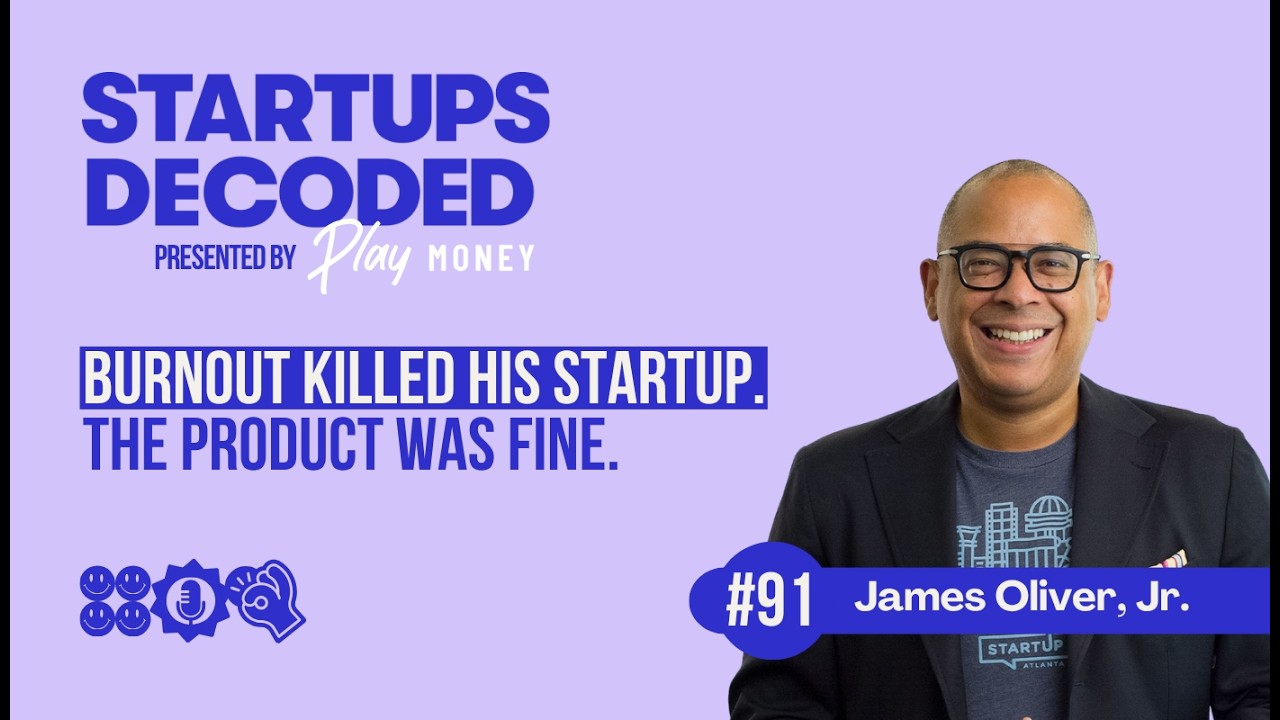
In this episode of Startups Decoded, host Andy Walsh interviews founder and mental‑health advocate James Oliver Jr. The conversation begins with James describing his harrowing personal journey: using his retirement savings to launch a startup, enduring a premature twin birth, an emergency C‑section, and a divorce while trying to keep his company afloat. He recounts the financial strain, investor rejections, and the toll on his mental health, which led him to create resources for other founders. James founded the Kabeela Foundry Mental Health Fund (with grants from Brad Feld and Techstars), co‑authored the book Burn Bright, Not Out (foreword by David Cohen, chapters by investors and founders), launched the Founder Exhale Walks (global monthly walks for founders), and partnered with the Una mental‑health AI app, offering free licenses. He shares practical self‑care practices—daily meditation, walking, biking, therapy, journaling, and habit formation (Atomic Habits). The duo critiques hustle culture and the “all‑in” investor mindset, urging founders to seek aligned investors and prioritize purpose over relentless grind. James also discusses the importance of purpose, referencing Mark Twain and a personal conversation with his cousin, and emphasizes self‑awareness, rest, and community support. Throughout, both hosts exchange personal anecdotes, jokes, and reflections, ending with mutual appreciation for vulnerability and a call to action for listeners to adopt mental‑health habits and support the resources mentioned.
Chapters
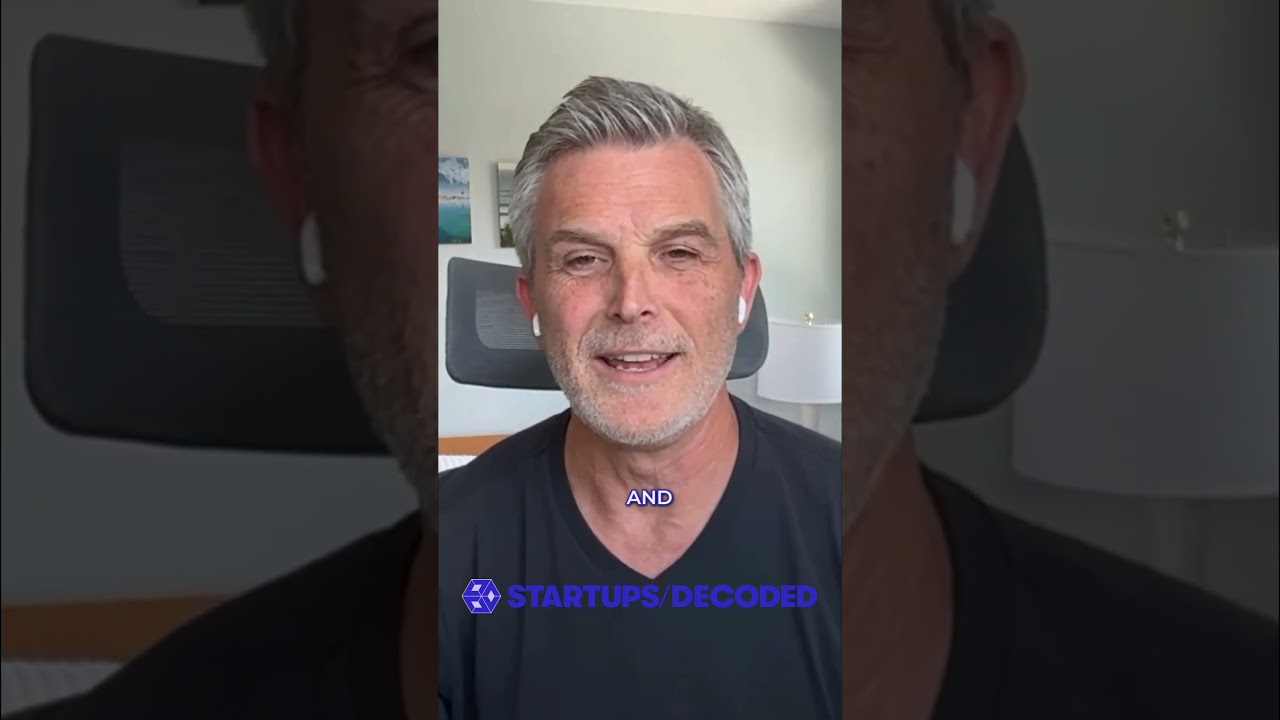
I agree, bro. Hustle culture is trash. And, you know, it's just, it's wrong thinking. You can't go hard in the paint all the time. Look, I have an incredible capacity to do very good work. My wife's always amazed at how I can do so much so often, right? But I also am very smart about, because my mental health is good, I'm very self-aware, right? I know when my tank is low. But, you know, if you have investors out there talking about you gotta do that, I would encourage you to find a different investor, right? Not all money Is good money? And do you even need money from an investor?
Welcome to Startups Decoded, the show that gets real about what it takes to build a successful startup. I'm Andy Walsh, 2x exited founder, advisor, and your host. Each week I talk with great founders and top investors. We unpack the plays that drive real traction. If you're building something bold, this is where you'll get earned insights to scale with confidence. Let's keep growing together. Hit subscribe and share with your community. It would mean the world to me. Hello and welcome back to Startups Decoded. As anyone who listens to the show regularly knows, I am a big advocate for mental health. I've had my own battles and I talk openly about it. I was fortunate to have my guest today invite me to join his show and I shared a lot of my own stories and those things are always cathartic and worthwhile and it would make sense to actually flip it the other way around and peek into my guest today, James Oliver Jr. Welcome to the show, my friend.
I'm so excited to be here, buddy. Thanks for having me on the show.
I like to get into this topic because I feel emotional immediately, just even acknowledging that mental health is, is such a struggle and not talked about enough. And you're doing some fantastic work, which we'll get into today as far as the, the signs, the programs, just basic community things that you can do to have some good hygiene along the way. And, and I'm fascinated to learn from you because you're actively doing this. And for me, I'm, I call myself on the periphery, but for me, having good mental health is a lifelong journey and it's something you have to exercise. And I don't mean literally exercise, although that's one part of it, of course, but it's something that I want all founders to take away. So if you are listening now, please tune in because we care. We want you to have the best startup journey you can have. And James is someone that can help do that. So Mate, I would love to get started. You do a lot of different things. You've got a book, you've got a podcast, you've got a great program that helps people understand their mental health and get solutions. Where did that start for you in your own personal journey to lead you on that path?
Oh boy. So back in 2011, uh, 2011, 2012, I cleaned out One of my qualified retirement accounts. I think it was like $60-some thousand in that one and, you know, paid the taxes and the early penalty to go build an alpha version of a website. Right. So I was building a product that lets you turn your digital images into a custom collab or custom collage on repositionable wallpaper. And, uh, so I'm like grinding away right now. I'm living 1,000 miles away from friends and family in Wisconsin. My kid's mother, you know, just finished business school a year prior. That was right around the Great Recession time. And, you know, job she got was up in Neenah, Wisconsin, Neenah-Appleton area. Great people up there, but you know, it's a pretty small town. It's not a ton of diversity up there. And, uh, she was working, working up, uh, Kimberly-Clark, I think. I don't think, I know. Sorry. So I'm like working on this idea that I got from watching HGTV. You know, they were in this family's basement and there was this massive photo on the wall and I had like these great pics and I'm like, I want, I want one, you know? And there was no way to do it. I'm like, this is stupid. Like, this should be a thing. Right. So, so clean out my savings. Uh, so in the middle of all this, you know, she decides that she wants to have kids in the middle of launching a startup. She wants kids. So I'm like, all right, just being a good husband, right? Okay. Okay. So then, you know, we do IVF, you put in 2 embryos and we're like, you know, because if you put in one, I think it was a 40% chance of having what they call a singleton. You put in 2, it's a 45% chance of having a singleton. I'm like, well, hell, nobody wants to do this crap again. Let's just put in 2 and hope we get one, right? So you put in 2, they're like, you know, yeah, congratulations, you're having twins. I'm like, wow, yay. And I'm like, holy crap. I'm like, I'm freaking out of money. I'm grinding away on this thing, right? And I'm like, the only chance I really got to make a go at this thing is I gotta get in a generator, right? So it was about like a 2-hour drive down to Madison, um, hour and a half to Milwaukee, but I was applying for the Madison cohort and I got in. Right. All right, cool. Like, I'm gonna raise $250,000. I'm in. And then I'm like, the timing of all this works cuz the generator was over top of April. Kids were supposed to be born March 27th, I think, something like that. I'm like, all right, this timing is great. You're laughing already. You already know what I'm gonna say. I'm like, oh, I got this, B. Right? So, so routine checkup, uh, end of December. They're like, yeah, um, your son's blood looks like it's doing something weird. If it starts going backward, we'll have to do an emergency C-section. Put her on bed rest. Next morning they're like, all right, blood's going backward. We gotta do emergency C-section or else he's gonna die. Right now, this is 2 days before I was starting, 2 or 3 days, I can't remember. It was right before generator. And again, I'm 1,000 miles from friends and family. It's a 2-hour drive each way to the accelerator. And so we took, we did emergency C-section. The kids weighed 2 pounds each. Uh, my daughter was 1 pound, 2 pounds, 3 ounces. My son was 1 pound, 14 ounces. Yeah. Let that sink in. So I'm back and forth to Nick, back and forth to the accelerator, just trying to build something that somebody would want. Side funny story is, you know, I spent all that money on that alpha version of the website, got into generator, we blew the whole thing up. It's hilarious. It's hilarious. Now we actually ended up building something that was really good, but we blew it up. So, uh, Yeah, bro. Like, Andy, you could have walked up to me any day, 'cause this happened. Good morning, James, inside the accelerator. And I'd sort of start crying, you know, 'cause I was crying all the time. I was waking up every morning at like 2, 3 in the morning. I couldn't sleep. I was just stressed out. My face was breaking out. It was a lot, you know? So anyway, long story short is my daughter came home after 6 weeks. My son came home after 10 weeks. He wasn't doing great. He was still tethered to this machine and his oxygen, and he had to have a hernia surgery, a blood transfusion. Yeah. You know, thank God the kids are doing great now, right? They'll be 14. In January, they're on honor roll, all that. So they're doing well in school. So, you know, we ran outta money, um, right after I got it on the Today Show the first time, 'cause without the help of a publicist, I got Remontage on the Today Show 3 times. Good Morning America, DIY Network, Money Magazine. I was on CNBC's version of Shark Tank, like all this stuff. And any founders out there listening who think they want PR so desperately, like PR, if you have a customer acquisition problem, you know, PR does not necessarily equal cash flow. So instead of wasting your time chasing PR, I think it's better to get your customers to tell 10 of their friends about your business. That'd be a much better use of your time. That's the use of money. You like that, right? You like that point or no?
Yeah, I do. I, and it's, it's perfect because it sets up a conversation we're gonna have today, which is around chasing after the wrong things and the negative impact that has on your mental health and seeking that gratification unnecessarily. That means nothing.
Yeah, exactly. So, so we ran outta money. I had to come back home. You know, I got this hilarious video. From like 2015 or something. And I was trying to send a cold email to one of TechCrunch managing editors to get a feature. And my daughter's like screaming at me because her, the battery in her toy was not working. And that was like my life for a while. And then, you know, so then we finally ran outta money. I'm just grinding and, you know, one of the investors who told me before, I thought they were gonna put some more money in, it was like, hey, I'm not gonna throw good money after bad. If you ever had an investor tell you that, that really stings. But then he came back, he was like, oh, we like your leadership. Yeah, I bet you freaking do. 'Cause I'm busting my ass over here. Right. And somehow keeping this Things still going, right? And, uh, we want to put another $100,000. I'm like, all right, well, it's just me ham and egging it. I got some ideas about, you know, some go-to-market thingies and how to fix the product a little bit. And so, yeah. And plus I can keep feeding my kids. So sure, I'll take the 100 stacks. Let's do it. Right. So anyway, run out of money. My mental health is at this point in the toilet. And, you know, the children's mother decides she wants to file for divorce. So you add that. To the, you know, massive crap sandwich I was already eating, right? So I'm not doing great. And I didn't know anything about mental health, really mental health hygiene. I didn't know anything about any of that. So the work that I'm doing now is building and providing the tools and resources that I wish existed for me when I was going through my stuff. So we have Uh, the Kabeela Foundry Mental Health Fund, which I launched with a grant from Brad Feld. He's a legendary investor, a partner at Foundry, co-founder of Techstars. He's a good friend. He's given us 2 grants so far, $50,000 total. And then we got a little bit of money from Techstars Foundation providing mental therapy grants for Techstars founders. So we all total about 100 mental therapy grants we've given so far. We provide— I wrote a book. Burn Bright, Not Out. Foreword was written by Techstars CEO David Cohen. Brad wrote a great chapter. In the book is stories from founders and investors about their mental health journeys. Just like really raw, really real. It's called Burn Bright, Not Out: Shattering the Silence Around Mental Health in Tech Startups. Uh, point of the book is to normalize these conversations around founder mental health. I started these founder mental health walks called the Founder Exhale Walks, which, you know, you said you're gonna— I can't wait for you to spin yours up in Crown Heights. You're gonna lead a walk in Crown Heights, Brooklyn, which is Near and dear to my heart, 'cause I grew up in Flatbush, Brooklyn, right near where you're gonna be doing your walks. Super excited about that. Uh, but yeah, we have walks once a month in like 11, 12 neighborhoods around the world now. We just did Barcelona last weekend. First walk in Barcelona, just founders going for a walk with other founders, man, for 60 minutes or so. Just no agendas, no, no pitches, none of that nonsense. Just prioritizing mental wellness. Going for a walk. There's a lot of really good benefits for going for a walk, going for a walk, exercise, nervous system reset, lower blood pressure. Et cetera. It's great. And then I have my podcast, The Founder Exhale. You were on my latest episode, which was remarkable. On the podcast, I talk with primarily with exited founders about their mental health journeys prior to and subsequent to their exits. I talk with people building in the space, leaders. I just interviewed Dr. Michael Freeman, who's like on the top of the food chain folks in the founder mental health space. That'll be my next episode that I publish. So I've sort of become this accidental, globally leading voice for founder mental health, and I love it here.
There's not a good word to describe what I'm trying to say to you right now. But humbling is the first one I'll lean into, having my own experience and to rise above it and turn it into a mission that can help other people. And I talk about the word adversity and I've actually got a piece coming out on Substack, maybe out when this episode drops, but talking about my journey from Tasmania in Australia to New York City. And there was no adversity per se, but I definitely took the path least traveled and put myself in situations that were tough that not every person would. And that That was an active choice, but I look at you with your two kids and then at the same time launching a business. Overcoming that is significant, and one of the things that I talk about in this article is that overcoming adversity is something that you only hear about when someone comes out the other side. For all the people that don't, and I'm not talking about the end, I'm talking about never reclaim their own mental health, and they're just perpetually struggling with this chronic condition, and you're able to rise above that and then turn it into something really powerful, and it's it's incredible. incredible to listen to that story and take it in and realize that how important that is, not just for you, but everyone else that can do this. So when we first met, it resonated so much because I'd struggled and I talked about that on your episode as far as my own journey. Yeah. And mine was bad during my startup and I clocked it, but I did nothing about it. I just pushed through. And then when I exited, took some time off, I came in a crashing heap and it took a lot of work to rebuild. And one of the things that I really grapple with and I'd love get your take on this is that unfortunately there's not enough people talking about founder mental health. There's VCs that will be like, you need to work around the clock 7 days a week, otherwise I'm not investing. And it's like all in or nothing. And there's bravado that happens. There seems to be a lack of empathy or normalization of having good days and bad days. Where do you think this comes from? Why is our industry littered with this hero attitude of like sleep in the office, work around the clock, whatever it takes to survive? It's so unhealthy and It is not aligned with success, I can promise you.
So before I answer that question, I wanna say that, you know, so I've been listening to this really great book called, I'm on like my 6th time listening to it. It's called A Pocket, Happy Pocketful of Money. And it's explored, explores wealth from a quantum physics standpoint. And one of the things it talks about in the book is that, you know, the easiest way to get what you want, I mean, you've heard this before, is like to help other people get What they want kind of thing. Right. And, and it's just like right now, since I've been doing this work, Andy, my mental health is the best it's ever been. And I've been through a lot. You know, my wife now, she has the best mental health hygiene out of anybody I ever met. And the quality of our conversations is simply off the charts. And I've been using the Una Mental Health AI support app. We all, by the way, we actually We give free subscriptions away for that. That's a $200 gift. Those guys donated $60,000 worth of licenses. I mean, we can put, we can put the link to that in the show notes for this episode. If there's any founders out there listening to this, just courtesy of Kabila Founder Mental Health Fund and Yuna, we'll drop the link. It's a mental health AI support app. I use it daily. It's my mental health AI companion. You know, I have 2 therapists, one for specific situations. I was seeing one recently. She's pinging me like, hey, you good? I haven't heard from you in a while. I'm like, yeah, I'm great. I don't need to talk to you and I'm certainly not paying you to tell you I'm great. So, so we'll drop that in the show notes, right? That's another thing that we do that I think is phenomenal because look, if you wanna see a therapist in person, it could take weeks or months to get an appointment. So we, we pay for, uh, we reimburse up to $300 if you go see your own therapist, or we pay for 4 virtual therapy sessions on BetterHelp. But in between all that, if you have something you can do, which is what I do every single day, I take my dog to the dog park. I walk around the track. He does his thing. He's the boss of the park. He's peeing Everywhere, marking his territory. Right. And I'm getting my mind right while he— Thor's name's Thor, right? Thor, Thor, Thor, Thor in the park. I'm getting my mind together here, yo. So, uh, just wanted to drop that and we can come back to this. We were talking about this at the top, top. I'm gonna answer your question. I promise. I have ADHD, so I bounce a lot around a lot, but I usually come back to the thing. But we were talking at the top before we came on about how your episode and a conversation with my wife about your circumstances led me to relaunch that first startup I was So if you wanna ask me about that, we can get into that in a little bit. But I wanna thank you for inspiring my wife because my wife talks to me sometimes and I feel like God is speaking to, to me through her. And that was one of those moments where I was completely like, wait, what did you just say to me? I should do what? So anyway, to your question, why are people, you know, on the hustle culture train? Look, we talked about this in your episode on my podcast and you think hustle culture is trash. Actually, I think I named the episode Andy Walsh Thinks hustle culture is trash, and he has the receipts. Which I, I did. I love that title. I just thought it was so perfect. So perfect. But I agree, bro. Like hustle culture is trash. And you know, like man, it's just, it's wrong thinking. You can't go hard in the paint all the time. Look, I, I have an incredible capacity to do very good work. My wife's always amazed at how I can do so much so often, right? But also. And very smart about, because my mental health is good, I'm very self-aware, right? I know when my tank is low, right? But yeah, if you have investors out there talking about you got to do that, I would encourage you to find a different investor, right? Not all money is good money. And like, do you even need money from an investor? Like, bro, like you could spin up. I mean, so look, I went through Techstars, right? We were building a co-founder matching app. Duh. Like nobody needs that anymore. Right. So that's, that's done. And to, to this point, like, so my first startup was called WeMontage. You know, I'm working on that thing. I spent 5 days building, using, getting, using Claude to build a prototype of the, the website and the collage builder app and all that stuff. It took me a couple of days to do it and I'm non-technical. So, you know, just, just make sure you get investors who are aligned with you and your values. And I think Brad talked about this in his chapter in the book, you know, just finding investors aligned with your values. I know some people are like, oh, it's easier said than done. But yeah, but if you get the wrong investor, your life's gonna be more miserable. I promise you don't want that. And you know, there's just this, it's just the perpetuation of the thing, bro. So everybody thinks the way, that's the way you gotta do the thing, but you, that's not the way to do the thing. You have to rest, right? Because sleeping is when you look, I'm not a neurologist, I'm not a brain scientist, I'm not any of this. I just write about this stuff. I talk to a lot of people, you know, The brain, when you sleep, your brain flushes itself out. It cleans itself, right? I know when I'm sleepy, I'm irritable AF. You know, I'm already from Brooklyn, so I'm already impatient, right? I mean, naturally impatient. I've had to fight for years to like tamp that down. Uh, you know, my poor daughter the other day, she was over here doing her homework and I said, look, I'm really tired cuz I just came back from New York. My daughter, my cousin, 42-year-old cousin passed away from breast cancer. My mom's not doing great in the nursing home. Had to go see her. Like my wife, my wife just came outta Out of a hospital for 5 days. I got all this stuff going on. We drove back. I told my daughter, I said, look, if you want me to help you with homework, I already told you I'm very tired. I don't have a lot of patience. So I'm forewarning you with whatever you ask me, you could get your head bitten off. But the point is, and she did a little bit because she wasn't listening, but it's all good. The point is I'm very self-aware. So you have to be self-aware. People are doing that because that's just the status quo. But the smart people, because I talk to exited founders all the time, they were dealing with this and they know better on the other side. So when you know better, you do better and simply just do better. Don't do it. It's not good for you.
I love that story about the brain flushing itself. It literally gives itself a bit of a cleanse overnight. The liquid goes, from what I understand, I think it goes down to your spinal column and gets flushed out through kidneys potentially. It's freaky, but it's that I remember seeing it once that I think the bags under your eyes are actually a result of fluid retention because you're not flushing your brain.
Wow. Fascinating.
Yeah. And it's, it's just, yeah, it's a, it's a muscle. It needs to breathe. And, and I do it and I teach other people to do it too, is they're going for a walk for 15 minutes. Like you talked about the hour, just getting some sun reset. People think they're losing time. It's actually gaining time because you're so much more effective to stop and pause, reflect. Don't have any stimulation. Just take in nature. I mean, I live in Brooklyn and I feel that energy of, of the impatience and it's, and it's hard to separate, but I live pretty close to Prospect Park. Which is where I'll do the walks.
I used to ride my bike there when I was a kid, baby.
It's the best. And you can literally detach and randomly you might hear some car noise, horns, construction, but you can pretty much escape. And right now we're going into fall. Seasons are changing. The colors are absolutely beautiful. It's majestic in there. And just being around that can calm you. And like listening to you talk, like one, I'm gonna say this probably 3 or 4 times through this recording, but thank you for being so open and vulnerable. And it's how we forged a relationship is we both wear our heart on our sleeves and is prepared to share it. And, and the problem is that most founders go the opposite way, right? They see being openly vulnerable as a sign of weakness. And if you are chasing headlines, if you are chasing money, if you are chasing things that are very superficial in nature, you're never gonna have true purpose either. So you need to not only have good mental health, but you need to have a purpose. What drives you beyond what you're doing, making money and those things? And a lot of people go through their lives Actually not understanding why they're doing something other than external feedback.
So 2 things about purpose. Um, so I had a conversation with my young cousin at the, um, at the repass on Monday. We were walking to get some ice or whatever. I was asking him what he wants to do. He's 23. And he said, you know, I think I may wanna do this. I'm thinking I might, might wanna do this thing or this other thing, neither of which are remotely connected. As I told him, I said, listen, man, You know who Mark Twain is? He said, yeah, I've heard of him. I said, Mark Twain said the 2 most important days in your life are the day you were born. He goes, and the day you die? I said, no, the day you figure out why. So go figure out why. All right. So that's the first point. Second point is, you know, going back to this book I've been listening to, Andy. So this book, it talks about the natural order of how life ought to flow, right? And it's, it's, and it starts from a state of being, right? And then to feelings, because the feelings are being communicated from your soul or spirit. And then that's going to drive your thoughts, which drives your words, which drives your actions. So for the longest time, I was doing it backward. I was thrashing about in the damn pool, bro. You know, hustle, hustle, hustle, hustle, hustle, hustle, hustle, hustle, hustle. Right? So that's just a bit of a digression. But when you talk about purpose, I think that that's spot on.
The why you do something is so empowering. And, and I had it with my first couple of businesses working in music because I could see the direct impact that it had on people's inspiration and connectivity with the arts and creativity and, and helping musicians earn a living in a world that is so competitive and, and brutal and exploited by large corporations to take money from artists. Yeah. And that gave me so much purpose. And it took me a little while after exiting to find my next one, and I'm on it now. Which is very much anchored in helping other people succeed. And I started the podcast as a mission to give back and to have conversations like this because it's really important for people to listen, to stop and learn and grow. And you can't get all your answers from an LLM. You need to be able to think about the purpose of the tool that you're using, the output that it gives you, but then also have creative thinking, have innovation happen for real. Get people together, take yourself into a different environment, do a course, do something that just challenges you because it'll There actually is a decline happening broadly in the world. A lot of it's social media, but just a broad dopamine hit. There's like a dopamine lash that happens. If you're overstimulated, then you can't be effective. You can't concentrate. You can't get back on task. If you're then using the LLM, it's a slippery slope because you're not being creative and challenging yourself. You're looking for shortcuts to answers. And that's what we've come to is this shortcut. And it's, people have lost their way and it's going to be a great reset that happens. And I can't tell you what that is, but— Yeah. But people are already starting to stop, not stop using AI, but stop using it the way they thought they had to because they're seeing how contrived that everything is becoming.
It's just slop, right? They call it slop. It's just, you can tell it's just slop. So, so I expect you're going to ask me this question in terms of like, what are some of the things you can do as a founder to avoid burnout, for example? And like for me, I, uh, I think I told you I walk every morning. I use my Una mental health AI I ride my bike as often as I can. I try to do it 2 or 3 times a week, which is great because when you get like the— I forget what you call it. Oh man, I did a Substack thing about a conversation with somebody who knows about these things, but when you got 2 different sides of your body moving, I forget what you call that, but the bike does that. But for me, so, I mean, it's like everybody else. I get those anxiety demons churning in my stomach, right? Churning my stomach to a bloody pulp sometimes. And the one thing that without fail makes it stop, Is meditation. Fifteen minutes of meditation is like the panacea for that for me.
I is it bilateral?
The yeah yeah bilateral something stimulation is it?
Yeah, I think so.
That's it.
Yeah, and for me, I love biking. It's my happy place. It makes me feel like a little kid zipping around in Brooklyn traffic, which can be harrowing.
God bless you.
I
wouldn't do it. No, but it's.
Yeah, I love it. And I do a meditation before sleep. I do it when I first wake up. I have one in the middle of the day, sometimes more. And sometimes it can just be a nice thing to do just to really anchor into a moment and be present. Other times it's intervention because I'm having a day. And I said to you before the show, I've, I had an anxiety day today and no real reason. I've learned to just roll with it a little bit, but I continue to work on it. Yeah. And my pattern at the moment, I'm reintroducing a few things and being steady. I do yoga, I do exercise, I bike ride, I go for a walk.
Yeah,
I've not stopped drinking, but I've limited my alcohol intake pretty significantly. Hydration, good sleeping patterns, so many things. And for me, I've found my version of what that looks like from a pattern perspective. We're creatures of habit. Sometimes that first month, two months, three months of actually resetting and trying to change your default behavior is the hardest period getting over that hump. Are there some things that you would suggest that have shown to drive adoption to be able to pick up some practice? Because you don't want to do. everything all at once. It's a build, right?
I'm not an expert in that, man. I would recommend go reading the book Atomic Habits. That's, I think that's actually, I read, that's in my queue somewhere. I haven't read it yet cuz I'm still reading Happy Pocketful of Money for the 6th or 7th time. So I, I look, I have on my calendar every day during the week to meditate for 15 minutes. Some days I do it, some days I don't. Right. But always when I do it, I always feel better. I'm like, wow, when I just do this every day. But you know, the meditation has actual physiological benefits to you. It actually increases the gray matter in your brain, which helps you with stress. So it's not just, you know, calming you, it's actually building up gray matter in your brain. So like, why wouldn't I do that every day? I never said I was the smartest guy in the room. I don't know. I don't know, man. You gotta read that book and figure it out, but you gotta, you gotta get started doing something. And, you know, look, even if you can't do it every day, just be kind to yourself, right? Don't beat yourself up about it. Even when you're like meditating, I find myself, my mind's wandering, but I've been doing this for so long now that I know that's part of the deal, right? I just go back and focus on my breathing and I don't sweat it. Because if you're worrying about that, you're defeating the purpose of meditating, right? So
it's a little counterintuitive. And for me, I've done a lot of experimentation with different things and I know what works. And the irony is that when I'm in a flat spot, it's really hard to get back into the groove, even though I know it's going to be good for me. And old behavior is hard to shake. And sometimes it takes formal intervention with a therapist and someone that can help give you some structure and outlet. I, for whatever reason, just recently started maybe 6, 8 weeks ago of journaling. And I have a daughter who's 12. I get up, I will meditate, I make her lunch, get her prepped for school, and then I'll hit my cafe and I'll journal sometimes for an hour. I just filled a book this morning.
Amazing. That's amazing.
And for me, just all the things that build up in your narrative overnight, particularly your brain has a funny way of processing things in your lives. Sometimes it can be quite intentional and there's things I want to talk about. Other times I just write and it's amazing when you get into a flow state, all the things that come out. And what I've started doing is looking back and looking at patterns. I'm actually using a little mini Chord project I built to start identifying it so I can pull back into my therapy practice as well. So I'm, I'm looking for pattern recognition, not trying to diagnose myself, but flagging some of these things. Yeah. So when I'd go back into that flow state of writing with the structure, with the therapist that I've got, then I'm able to really get into the heart of something and explore it. And quite often, And getting out is everything. And there's a beautiful book called The Gift with an author. Her name is Edith Eger. She was born in Poland. She was in a Nazi camp for about a year. And then when she left, she came to the US and she became a therapist. And she's probably, I'm going to say 90 now. I heard her on a podcast, such a beautiful soul. But one of her sayings that she says is that expression is the opposite of depression. But her point is that if you're able to externalize things in your own way, then things don't build And buildup can cause resentment. It can cause depression. There's other causes for depression, which is why it's slightly flawed, of course. But her whole thing is communication, connection, community, all the things that you can do. And her story is amazing where she took something where she lost family members literally in the camp with her and turned it into a mission to learn from that and empower others. And it's such a good book.
Amazing.
But you have a book which you talked about a little bit, 'cause I also want to touch on your startup, what you're going back to, but can you tell Tell us a little bit about the book and context of what it is and how it can help folks.
Yeah, the book's amazing. I'm not just saying that because I'm co-authoring the book, but you know, the thing I love about that book is I actually wrote a book without having to write a book because we got all these people to contribute chapters. So we got a few investors in there, like one guy, Will Allen. He's a VC and he's actually a Super Bowl-winning defensive back for the Pittsburgh Steelers. He got a Super Bowl with the Tampa Bay Buccaneers, but he was with the Steelers for a while. He talks about his mental health approach to dealing with founders. Um, you got Brad Feld in there who's like OG. He was talking about mental health stuff back in 2013, his OCD, his massive depression, all this stuff. David Cohen wrote the foreword. We got some founders in there just talking about their real stories about the stigma, the grind, the anxiety, what they do, how they do it. Mitch Rainer. Mitch was the CMO of DigitalOcean, co-founder, which IPO'd. Mitch is in there talking, telling a story about how he almost Like he had some serious health issues. He thought he was going blind or something like that in his eye or something. Well, obviously his eye, duh, but because of all the pressure, because he was, you know, doing the hustle culture thing. So it's a really great book from that standpoint. It's, it's completely like the unvarnished truth about this and what's great about the book. And so there's lots of really great books about founder mental health. You know, Andy Dunn's book Burn Rate is a great book. Andy's a great guy. I like sent Andy a cold email just trying to get on his radar. Andy started and sold Bonobos for $310 million. I think I sent Andy a cold email just to get on his radar with my work. Wasn't asking him for anything. He was like, email me back in 10 days. I'll donate $10,000. I'll donate $1,000. I emailed him in 10 days and he donated $1,000. So, you know, what I found is the founders who've been through the journey came on the other side successful. Those are the ones who've actually been supporting this work with donations. It's not so much the investors because, you know, while they may say they care, they, they're not so much willing to put their time, money, or attention to the thing. But the book, you know, 90% of the net proceeds from the book actually go back to the nonprofit. So from that standpoint, In my not so humble opinion, it's the most important book ever written about founder mental health.
I love it. And again, it continues the path of you of this really tough period of your life driving this selfless behavior to help. And if you're not leaning into community, into peers, and I encourage any founder, particularly if you're a solo founder, is to find someone else who's a founder. And empathy is a beautiful thing. It allows you to ground yourself, understand that you're not suffering by yourself. Other people have—
Go for a walk with you in Crown Heights, right? Come on.
Well, I need to book it in. I, and again, part of that is when you're having poor mental health, it's, it's hard to get motivated to do things. And, and that's hard because it can compound into negative behavior where you feel like you're making no progress because you're like, you can't get through things and then it builds more pressure up. So yeah, a walk is a simple and easy and like no excuse type situation to be able to put into your routine.
By the way, remind me, I actually have some free premium 3-month Calm app subscriptions I could donate to your people who listen to your podcast too.
I love that. Yeah.
It's just remind me though, 'cause I gotta, I turned off the Zapier 'cause it's just, it's too expensive and the thing keeps breaking. I'm like, this is stupid, but I'll rejigger it and we can figure it out. I got, I think about 30 or 40 of those things left. Happy to donate them to your founders. Listen to your stuff.
Amazing. We're going to have some good links in this. Well, we got Atomic Habits, James Kreis. You've got the daily mental health support. Calm as well for meditation. It's my go-to as well. It's one of my favorites. I use it a lot for different reasons, but I want to go back to you to continue your own personal journey. Like we had such a great conversation and I'll share the link to your episode that I did with you on your show. And I'll put it in the show notes because we had a very vulnerable conversation about my journey exiting and what I went through. And you alluded to there before that you had a conversation with your wife that was quite profound and you're revisiting you were doing. Can you give us a little bit of a peek into that?
Yeah, man. So, you know, We Montage, it shut down the first time, then after my divorce, cuz I'm, look, I'm in the 99th percentile of persistent and resilient people on the planet, and I'm a Taurus, the bull, so I'm stubborn AF, right? And nobody's gonna tell me my thing's shutting down when I wasn't ready to shut it down, right? So I turned the lights back on on the thing, just like I really had no business doing that cuz I had no money. The, the, the software was so outdated, it was collapsing under its own weight. It was like a slow-moving train wreck. But I actually learned something really, some really valuable things from a unit economics standpoint when I turned it back on. So like, so now I'm turning the thing back on cuz my wife was like, you know, you need to relaunch WeMontage. Now mind you, this thing was dead and buried in my mind, but I never Never canceled, um, the server domain, the domain address, never turned off the email. I never did the things that somebody would do if something's dead, dead. Right. So I think there's a reason for that. So then I'm listening to her talk about why I need to restart this. And I'm just like, what are you saying to me? And I'm thinking about it, bro. And I'm like, holy crap. Like, she's right. Like the thing never had a chance. Like you can't be launching a business like that and having premature twins and all this other crazy stuff I had going going on at the time. And I'm looking around in the marketplace. There's still nothing like it. Still. I got customers emailing me, hey, can I place another order? I'm like, I would laugh. I'm like, God, why are you sending these emails to me? You have a wicked sense of humor, God. Like, haha, not funny. Please stop. This was so painful for me. You know? But I'm like, yeah, I'm going to restart it. So I spent the last couple of weeks just like rebuilding the prototype for the website. Like, I'm just gonna raise $250,000 from some angels. I have a plan to get to $10 million, you know, inside of 5 years. I believe I can do this. Um, you know, we didn't raise, never raised a bunch of money. So I'm like, you know, exit multiples are 2, 3x revenue. If we exit for $20 to $30 million, everybody, we can 10x everybody's money. You know what I'm saying? So like, I can do this. The product is still brilliant. The collage building tool is still unique. Like it's, it's just so many reasons. Like it's a brilliant It's a brilliant— you don't get on the Today Show 3 times with some crap. You know what I'm saying? You don't have the Good Housekeeping editor emailing you talking about, hey, I'm gonna be on Good Morning America on Michael Strahan's first day, talking about I want it on the show, contacting me if you got some crap. That does not happen. Right? So I'm relaunching it. Uh, just put together a deck. We got a new logo, a new tagline. Let's effing go. Amazing.
I love it. And because, and I, the founder journey is, is a rollercoaster to say the least. And sometimes timing, circumstance, there's a lot of variables that go into it. And I shared my story on, on your show, which was moving to New York City. It took me about 2 years of backwards and forwards. And between Sydney and New York City is, is not the friendliest flight in the And for me, that took its toll. But then I came here with a 4-month-old child. So new country, new business, new baby.
But that's what inspired my wife to start talking about this. Yours, that part of your story right there. And then she connected it to my twin premature thing in the middle of all this. And she was like, this thing never even had a chance, but yours did naturally. So it's different, but that's what it was right there, bro.
Yeah. And yeah, mine had a chance, but my gosh, I had some hard lessons and, and I still paying for some of those now. And I'm talking about my Mental health, not financially. And
yeah.
And so I want people to walk away today and, and we've covered a lot of different topics, but I also—
But if I could just one thing before you ask this question, I apologize for cutting you off.
Yeah, go.
I wanna say, why am I confident that We Montage is gonna be successful this time? It's because of what I just told you about me. I am fundamentally different at like a spiritual energy and mental level, I have no doubt that I'm going to crush this thing, bro. I have no freaking doubt. Sorry to interrupt. Continue.
I love your passion. It's why we became friends and it's so important. And the things that you learn as a founder is personal and professional, right? You learn a lot about yourself, the people you're in business with, your closest family and friends, and everything gets tested beyond the limits sometimes. And if you're able to pull that apart, learn, put it back together in a fresh new way. It makes sense. And I wish you every success with what you're doing because it's—
I appreciate you, man.
Love the passion, love the energy.
And I'm gonna send you one. I'll do a 4-foot by 3 one right in that door right there. You and the family right behind you in the background. I'll send you one.
Down. It'll look good. Okay, so to finish up today, I'm gonna throw something back at you that you threw at me, and I don't know if you're ready for this, or not. Do you know what I'm gonna ask you?
Dad joke?
Yeah.
Oh my God.
You put me on the, you put me on the spot on your first day.
Yeah, but you knew it was coming.
No. Okay. You didn't put me on the spot.
I know. I got one. I got one. I got one. My daughter told me a great one. Oh, by the way, they hated your dad joke. I loved it. My kids, they were like, what? They didn't get it. It's like, oh, it's kind of crass. I don't get it. It's an adult joke. My daughter's like, what? Yeah, it's not good. I'm like, this is hilarious. And I'm like, I'm like, whatever, what do they know? Anyway, they're super judgy on the jokes.
Yeah, my, my daughter said the same thing, so I, I'm fine with that. Kids are perpetually not impressed by their parents. That's part of the norm.
Well, I got one since you're putting me on the spot. My daughter— I'm actually gonna use it on my next podcast episode that I record, so I'm gonna tell it to you. So, uh, you ready? But you don't have the sound effects and stuff like I, like at the satirical—
No, I do not.
I could— this, the rim shot. You're in Riverside, they got sound effects over there, right?
Yeah, I can do that in post. I can All right.
All right. So, all right. What's faster than an escalator?
I don't know. Tell me.
An esca-sooner. That's good, right? That's good. That's good.
That's, that's solid. That, that is like textbook dad joke too. It's, it's inoffensive. It's cheesy. Play on words. All the good things.
Yeah. My daughter told me that joke. I love that joke. Loved it.
I love it. Well, I had an episode just drop with a lady called Vanessa Larko. She's a legend, ex-product person, went to NEA as an investor, launching her own VC fund. And we actually had a whole conversation about Bluey. And I'm Australian and I have a soft spot for it, but it's obviously been a global phenomenon. And our version of the dad joke with her was, what are the lessons that founders can take from the show Bluey? And she told 2 beautiful stories and it really hit me. And we were talking about how Bluey is a show that makes you laugh and cry. And it just hits you so hard. And it's a great thing. There's a lot of things in there about vulnerability, about conflict repair.
No idea what you're talking about.
Oh, wow. Bluey. It's a cartoon from Australia.
I figured that much.
Yeah, it's, it's, it's about a family of 4 blue heeler dogs. And, but it's basically like living an Australian life. So they're dogs that live like humans in a house and they have all these quintessential stereotypes about Australian upbringing in the suburbs. And it's super fun, but that was our version of the dad joke, but I need to find my own. I'm not gonna do Bluey. I'm not gonna do dad jokes. So I'll keep working on that.
You thought you caught me off guard, but you didn't.
Sorry. No, you're, you're quick on your feet. I don't know if I would've had one on the fly.
So, well, I had another one I was gonna tell you in case that one didn't land for you. I'll just go ahead and tell anyway, just for kicks. I might've told this on your episode. I don't know. I remember it was, why do bees have sticky hair? Is that from our episode?
No.
Why do bees have sticky
Tell me, why do
they have a— Because they use a honeycomb. Boom.
That just elevated the cheese levels. It was, that was up there. Good job.
Thanks. Appreciate it.
James Oliver Jr., what a treat to sit and have a chat, flipping roles, me doing the questions. I appreciate your openness, your vulnerability, your connection. I feel better after having that conversation with you, trying to control myself with not crying in front of you. You're a beautiful human, sir.
I appreciate you, man. Well, you said when we had our talk on my podcast, you're like, this is like a therapy session. So I'm glad it's some semblance of that for you, man. I'm so glad for you, and I appreciate the work that you do, man. Keep it up.
Nice one. All right, thank you. You have a good day.
All right, brother.
Thanks for listening to Startups Decoded. If today's conversation helped you think differently, Share it with a founder in your network. And don't forget to subscribe for real-world startup insights every week. We really value your support. If you're interested in sponsoring the show, email hello@startupsdecoded.com. I'm Andy Walsh. I'll see you next week.
More from Andy


EP#88: Why Most Founders Misread Their Own Traction. Vanessa Larco - Premise VC
EP#87: Founders Obsess Over the Raise. Investors Care About This More. — Carina Cunha




Ep#86: Early Decisions That Define Your Startup Forever. With J.P. Morgan Asset Management