S2E11: Use Banks, Not VCs: Non-Dilutive Capital for Founders with Ashley D. Bell & Redemption Bank
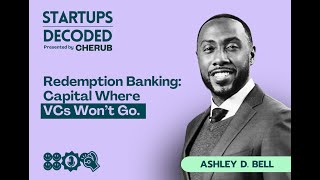
Ashley D. Bell, co-founder of Redemption Bank, explains how startups can borrow from banks instead of raising venture capital. The minority-owned bank uses foundation investments to offer lower-cost debt to post-revenue founders, plus access to 2,000 family offices and mentorship. Bell plans to take Redemption public within 4-5 years.
Chapters
And Dr. Bernice King is the torchbearer of our generation, sits in a very unique space of inheriting a legacy that will travel throughout time, beyond my time and my kids' times. And she's very conscious of this moment. And for her, it is, you know, most of us, if you have kids, you look at your kids and you hope they live a better life than you. Her father famously said in his I Have a Dream speech that he hoped that one day his four children would be judged by the content of their character not the color of their skin in his I Have a Dream speech that summer, uh, in DC. She, like everybody else, wants to make their parents proud. And I think for her, it was realizing that, you know, she had two of the most iconic names in the world, uh, as parents.
Welcome to Startups Decoded, the show that gets real about what it takes to build a successful startup. I'm Andy Walsh, two-time exited founder, strategist, and your host. Each week I talk with top founders, investors, and operators creators to unpack the plays that drive real traction, not just headlines. If you're building something bold, this is where you'll get the honest insights to scale with clarity and confidence. Let's keep growing together. Hit subscribe and share with your community. It would mean the world to me. This podcast is brought to you by Cherub. Cherub connects founders and angel investors. Find the tools to fundraise seamlessly. The future of fundraising is here. Investwithcherub.com. Hello and welcome back to Startups Decoded. My name is Andy Walsh, and today we're exploring banking and treasury, but in a much more interesting space, which is how do startups partner with banks and what does it mean, but also going deeper into access to capital, how that works, and how people can overcome barriers. And joining me today I'm really, really fortunate to have Ashley Bell, who is co-founder and chairman of Redemption Bank. Welcome to the show, Ashley.
Thanks, Andy. Really appreciate you having me.
I would love today to be able to walk away understanding modern banking and treasury and not down to the micro level, but how banks function today, but also the focus that you're building. And for founders, there can seem like there's 1,000 barriers to overcome. On that journey and you as a founder yourself, but also now helping work with a whole bunch of founders, understanding what they go through and what they need to know through all stages is definitely super knowledge that a lot of them don't have. So to kick it off, I'd love to hear a little bit as far as your background that led you to Redemption because you've had such an interesting path and you've worked alongside amazing people as well. So I feel very humbled to have you on today.
Well, thank you. You know, I've had a bit of a journeyman sort of experience coming from Gainesville, Georgia, which is a small town in the deep south of the United States, about 52 miles northeast of Atlanta. So, you know, today's day and age, you are from where your airport code says you start. So ATL is my airport code. And, you know, it's a small town. You know, I grew up in a world where, you know, my dad worked at a company called Chicopee, which was a subsidiary of Johnson Johnson. This is pre-NAFTA. And, you know, a world where, you know, across the street from where he worked in a factory as an engineer, there was a little town that the company built and a company store, like old America that just doesn't exist anymore. It was the last bit of that. Everybody knew everybody. And, um, NAFTA happened and you saw, uh, a huge section of our manufacturing go, leave the United States. And so I, I watched my dad who was the exact same age I am now, early 40s. Yeah, I watched him have to start over, uh, 'cause his job went to Mexico and he was like, well, I'll just stay and figure it out. And one of the things I had to watch my dad do was, you know, try to get a, a, a interview at places where People were half his age. I saw him delete degrees off of his resume just to get a shot that, you know, I asked him, 'cause I was in high school at the time, and I asked him, you know, what do I have to do to not have to have this sort of stress? 'Cause I see it stressing you out. And he says, I mailed my keys to my factory back to Newark, New Jersey, where Johnson Johnson was headquartered. And he said, if you don't want to be early 40s trying to figure out how to start over, you got to keep the keys in your pocket. Keys got to belong to you. If you're— if they're not your keys, then one day you may have to send them back. And that was the day I knew I wanted to be an entrepreneur, is that I knew self-determination was such a— going to be a critical factor in my life. And I tried to figure out the best way to stay in control of my own destiny. And so here I am today owning a bank and co-founding a bank with some amazing people. But along that journey has always been How do I create a space for my own talents and the connectivity that I've created with amazing people to create enterprises that are making the world better? But to do that, I had to, you know, do some things before that. You know, I was elected to office at age 26 as one of the youngest in the state of Georgia to be elected to local office. Running a local government is kind of like running a business. It's definitely not a startup. but it definitely has all the fundamentals. Market pressures are real in running a government and, and especially running one in the middle of the Great Recession. 'Cause local governments in the states, fundamentally the number one revenue source is pro— are property taxes. And so when you had the crash and everybody's property taxes were the opposite of where they are now, they were cratering, then you weren't getting in any revenue and you had to figure out, you know, how much runway did you have to keep the government open, right? It's the same thing we're dealing with right now in the United States with the government shutdown. We didn't have it. And so I had to get very creative and as head of my budget committee for my, my town and a $250 million budget and figure out how to get out of it. And I think at that point I really had the bug for just the, the chaos of the uncertainty in the marketplace and trying to figure out how to survive it. And, and I, I attribute all of that as well as my time as a lawyer doing public finance and then working at the federal level in government at the White House and other places of just giving me a collection of very bespoke experiences and, uh, pressure under intense pressure, whether it was the Great Recession as a local elected official, or it was working on a coronavirus task force at the White House when COVID first came out. Both of those jobs are the two bookends of, of the government experience in America, local government on one side and then the White House on the other. And having to survive, uh, through that by creating policy and procedures that could fix what would be otherwise a, a, a, a extreme crisis for our economy. And, and that, that gives me perspective. Things are never as bad as you think they are. And the ideas to fix where you are are literally right around the corner at all times. You just gotta know and have the resources around you to know where to look.
So powerful. And it's something that I observe a lot with any founder. You are a product of where you grow up, what you observe, the things you have and the things that you don't have. So I think having a life experience where you clearly listen a lot to your dad and not a lot of kids listen to their parents. And I think the observation though of what set your path the way that you did, it feels like it had an anchor point. You almost had a purpose from day one thinking about where you would go next. And you had moments along the way in different parts of your career that led you back to what you're doing now.
Yeah, absolutely. My trajectory has been unconventional. I think having a law degree really helps. It, it just really gave me the, and practicing law really helped. Because as a lawyer, all you really do is get paid to ask really good questions and solve other people's problems every day. So you get good at it. You get confident in somebody showing up with a problem and asking you to solve it. And I think that creativity is needed as a founder because, you know, every founder listening to this definitely knows that, you know, wherever you were, whatever you thought you were doing the first time you put your deck in front of somebody to invest, 2 years later, very little of that is the same. Very little of that is the same. So you, you have to be able to adjust and to find your voice over and over again to speak about, you know, what you believe your solve is and why it is relevant in a market that is ever-changing.
Absolutely. And, and I see it, I have a portfolio of companies and the problem that they had a year ago looks very different than it does today. And the things that we need to navigate, and I think an observation from your side has led to creating what you're doing and now being able to multiply that at scale to lots of people with your experience and insight is, is fascinating. And I'd love to talk a bit more about role models, but I'm going to park it for now because I'd love to learn a bit more about Redemption. And you're working with the amazing Dr. Bernice King, obviously daughter of the famous Dr. Martin Luther King Jr. And I hear those names and they're iconic around the world. Like you won't get many bigger names than that. Your experience meeting Dr. King, but also then launching Redemption. I'd love to hear about how that came to life. You know, launching a bank is no mean feat. So take me through how that started.
Yeah. You know, you know, being from Atlanta, you know, Atlanta and, and, and, and many communities, especially when it comes to civil rights and social justice, has always been the moniker of Atlanta influences everything. If it comes to those issues. And obviously the King family are from Atlanta. They're deeply Atlanta. As much as they are global, Atlanta is, is the birthplace and the cradle of the civil rights movement. So growing up in the Deep South and growing up in Atlanta, you were surrounded by and warmed by the heat of history at all times. Everything around you is a reflection of intense levels of generational sacrifice, intense moments in our nation's history. That called out, you know, all of the injustices that were happening in our country and watched men and women bend the arc of history a little bit closer towards justice. And they did it in the most spectacular of ways. And, you know, we are just recipients of that work, that good work, that good trouble, as John Lewis would say. And Dr. Bernice King is the torchbearer of our generation. Sits in a very unique space of inheriting a legacy that will travel throughout time beyond my time and my kids' times. And she's very conscious of this moment. And for her, it is, you know, most of us, if you have kids, you look at your kids and you hope they live a better life than you. Her father famously said in his I Have a Dream speech that he hoped that one day his four children would be judged by the content of their character and not the color of their skin in his I Have a Dream speech that summer. In DC. You know, she, like everybody else, you know, wants to make their parents proud. And I think for her, it was realizing that, you know, she had two of the most iconic names in the world as parents. And, you know, it wouldn't be fair for her to try to live in a life that would surpass the notoriety of names that, you know, may be the most famous names in the world. And still, if you go to the Nobel Peace Prize, the I Have a Dream speech still is the most studied, recorded, and documented speech of all time. And she came to a place where she realized that, you know, her role in this world was not to surpass her parents, but to help others love, lead, and live like her parents. And if she can empower other people with her legacy and her insights that she's inherited in earnest and expanded upon to her own experiences, then let that be her life's work. And I'm honored that, you know, some of the things that we're doing together, she considers a part of that. And, and so she's a co-founder with me on several enterprises. And I, I consider her, you know, a woman of deep faith and conviction who, you know, definitely saw that her father's bend towards the end of his life took a very economic shift. In, in the earlier part of the '60s and the late '50s, it was very much more civil rights, you know, as far as let's get the right to vote, let's get the right to eat at lunch counters. And then there was a market pivot towards the end of his life where he started talking more about an economy that could work. And I think many times he gets mischaracterized as thinking more of a socialist sort of bend, but that was absolutely not what he was leaning on. He was leaning into a space of challenging capitalism to say that America's the wealthiest nation in the world, and we all know that, you know, capitalism works, but we don't have receipts that we've proven that it can work for everybody. And when you look under the hood, he was calling out America to say that, you know, capitalism probably could work if you let everybody own a home and not just people of a certain race, because that's the American dream. Capitalism could work if you allowed people in marginalized communities to get the same access to the same jobs. It could work if the school systems were funded adequately and people could get a shot at education. And so I, I think that that sort of raising the standard of what it takes to truly have a free market means that free people need to have access. And, and we lived at a time that is hard for you and I to imagine, but we lived in a world in a time where it was literally codified in our federal law that up until the late '70s that people of color could not get an FHA loan to own a home. Like, that's wild to think about now, but you know, that's like one generation before me. My parents could not get an FHA loan for no other reason outside in the books. It said they were Black and they can't get a loan. And if you can't get a loan on a home, that's a cornerstone of American Dream, it all cascades from there, right? So we have to take advantage of the sacrifices that her father made and others have made to really take this capitalism thing out for a spin. We, we, we, we have an amazing opportunity ahead of us and we felt like there needed to be— banks are the cornerstone of that. And we had to re— we wanted to reimagine banking. We wanted to reimagine what was possible, especially for founders. And we think that, you know, Redemption gave us a shot to do that. You know, we bought a bank in Salt Lake City, Utah, a bank that was called Holiday Bank originally, and we rebranded it as Redemption Bank, a small bank, commercial bank, you know, mostly did small business loans, but we saw it as a unique opportunity. One, you know, for all my friends out there who have founders doing retail, location, location, location, it still doesn't, you can't beat it still. So Utah is the best state for banking in the United States. And so we didn't buy a bank just to buy a bank. We wanted to buy it in the best possible regulatory environment. And for everybody out there that has to deal with regulations, you have to consider that there's a cost to operating if you're in a heavily regulated space. And especially when you add state and federal regulations, when Utah doesn't really have a concept of usury, meaning that most of the credit cards in my wallet and yours have at least a 200-square-foot office in Utah somewhere because it makes their life easier to— that's why Goldman Sachs' biggest office is in Utah. That's why American Express credit card services in Utah. It makes lending easier when you don't have that regulatory pressure, but it needs to be used correctly and wisely. And I think that return on assets were the best in the state of Utah for banks than any other state. And it was really hard to get a bank in Utah. It's already hard to get a bank, but it was really hard to get one in Utah. So we did what we had to do to, to, to consummate the deal. And our goal was always to serve small business owners and to, to be with them on that journey. I think we, the great irony is that we filed this bank application a long time ago and it took us an extra year and a half because a bank that was the preeminent bank in this space, Silicon Valley Bank, went down. And we're, we have the same regulator as they do, the San Francisco Fed. And so they went down, the PacWest went down, the Signature Bank went down, all these banks went down and they were in the same region. So that that slowed us down a little bit and it made the regulators basically say, you know, we gotta kick the tires 3 times on you guys instead of once or twice. We're better for it and we're more sound. And I think that our story will be one of being a unique partner for founders. You know, I, my, my, I talk to people my age all the time who, some of 'em are second generation money, wealth, and they say, look, Ashley, you know, I, I'm at a point where my dad, you know, uh, you know, created our family office and now I'm starting to do my own thing. And, uh, if I wanna get a loan, my dad has to call his buddy and I'll go in there and, and, you know, he'll, he'll listen to me and he may think my idea's great or not, but he's ultimately like, okay, I know your dad, I'll make it work. Um, but there's a lot of founders who want that relationship for themselves. And what makes it rare for Dr. King and I, it's like we're, we, we own the bank and it's, it's, it's, it's, we're, we're still, we're, we're small enough right now where you can build that relationship with us. And have a partner with you growing along the way. Like, you're not gonna call Jamie Dimon on the phone and tell Jamie you got an issue. It's just not gonna happen, right? So, and the banker that you're working with at your private bank or at your bank you're with now may probably be gone in 2 years 'cause he's gonna move up and find another place. So we're in a sweet spot right now where we're able to offer a really good connective service for those founders that want somebody to grow with them. Um, and, and, and we think that, um, you know, because we're smaller, we can have more flexibility to have a holistic look Uh, and I, and I get the venture capital space, you know, we, you know, we, we have a hard line. We only deal with businesses that are post-revenue for sure. But, um, you know, for those, you know, I talk to investors all the time who Andy come to me and say, look, you know, um, I'm a high net worth investor. I got 3 or 4 companies in my portfolio that need cash right now because they're growing so fast and they need more cash to, create more product or to do, you know, hire more people. And I, if I go to private market, they're gonna be paying somewhere between 9% and 14%, 15% for private debt. And I'm willing to sign for them because if they don't get this debt, I gotta come outta pocket and give them my own cash. And I'd rather not do that. And so I just say, look, you know, come talk to us if you're willing to sign for 'em. Our debt's gonna be cheaper than anybody's in a lot of instances, especially for companies like that. And I think what really gives us a market advantage is we were the first sort a bank that was founded by PRI investments, which are program-related investments. And so what that means is like right now while we're raising capital, people that have foundations, if you have a $100 million foundation, they all have to give away 5% every year to keep that, those funds tax-free. And so most of them plan their giving and they give away 5%. Well, because we are a minority-owned bank, we actually qualify what's called a PRI, a program-related investment, which means that you can take some of that 5%, actually invest equity in us. And it counts towards that 5%. And when we IPO in 3 or 4 years, let's say you buy shares at $10, IPO at $40, that increase, you don't have to pay taxes on it if you redeploy it in the year. So it's a win-win for everybody. And I say that because our mark, our strategy is those foundations that are mission aligned with us, these are foundations that are trying to make the world better for entrepreneurs, more healthy cities, climate work, all the things where they're trying to make the world better. They're also investing in companies that are in that. Space and they give us cheaper deposits because we're a mission-driven bank. And instead of, you know, this gives me the flexibility to charge lower interest rates 'cause my cost of capital is gonna be cheaper than other banks. So if I'm getting money from a, you know, millions of dollars from a foundation at 0%, because in their mind they're like, okay, I could take that $10 million and make what, $40,000, $50,000 a year in interest. What does that matter if I'm a $100 million foundation? But if you can take that $10 million and turn it into like 40 loans for cash-strapped businesses, that's gonna create jobs and, and tilt the needle towards success, then let's just do that. And, and I could take that cash savings, that cost savings on that cash and pass it on to my founders and give them even cheaper rates than they would get at other banks. So we think we cracked the code on something to be able to, you know, be impact-driven, partner with nonprofit sector. And still work with for-profits in a way that can give them low cost of capital, uh, and get them on their way to, to being successful.
This podcast is brought to you by Cherub. Cherub is an AI-powered investment platform matching founders and angel investors. The future of fundraising is here. Delightful data rooms, diligence, and deal flow. Founders Get your application fast-tracked. Use the word decoded. Invest with cherub.com. I'd say twice through that story then I got goosebumps. It's amazing how something that is old as far as history in that speech to sort of to hear even just a small part of it, the resonance and the impact of what that means and, and to hear that through line from that to the family, to you coming together to be able to launch this. And even understanding that from a regulatory perspective, compliance, different states, the things that you're able to do to reward the people that need help, right? To be able to get access to capital in the traditional sense of a VC through to personal loans, debt financing, all of those have barriers. And how you summarize then clearly painted what the opportunity is, not just for you, but for a more equal version of capitalism if that's if that's how we're operating, then everyone gets an equal chance. So I'd love though to, and I talked about it a little bit earlier, within that there's two parts to it. There's the finance and getting access to capital to grow, scale, whatever you need at that point in time in your business. But then there's also role models. It's something that I'm really passionate about. I've been fortunate to have great mentors and advisors in my own businesses. But for people who are starting, like where do they find those people? And it sounds like a big part of your is anchored to people that have come before us and inspired this legacy to be able to create your own path and build your own business if that's your choice. As far as the culture of that, how do you start to go into the Redemption Bank story and how you tell people what you're doing and the opportunity as far as why they should come to you and how you can help?
Yeah, you know, mentors are critical. I would not, you know, be where I am if I didn't have great mentors or people that I could emulate. Relate, you know, things that, that I'm doing now that I've seen before. You know, as kids, they always teach you, you can't be it if you'd never seen it. You can't be it if you haven't seen it. Like, no kid wants to be a fireman if he's never seen a fireman, right? No kid wants to be a schoolteacher, never seen a schoolteacher. You gotta see it. And so I didn't see anybody owning a bank until way later in life. But, you know, as a lawyer turned entrepreneur, you know, I met people that, you know, I gotta say the most critical people, one I never met, Andy Walsh. That was, you know, past the year I was born, and that was Reginald Lewis, who was the first African American billionaire. And somebody gave me the book about his life called Why Should White Guys Have All the Fun? And I was like, what the hell is this little quirky title? Like, what is this about? You know? And it was like, I read it and it was about just a guy who was like, you know, private equity and venture capital just shouldn't be, you know, for white guys. Everybody should be in this game. It's a lot of fun. And so he was right. And so I read it and it was an incredible story. He became the first African American billionaire and he was a lawyer and he did LBOs and And so I think that his life was definitely impactful. And then there was a guy who was a client of mine when I was a partner at Dentons, and I spent some time as a partner at the largest law firm in the world. And a guy named Joe Lubick, you know, Joe is self-made guy, Jewish guy down in Florida, owns probably the fourth largest apartment holdings in America. And you know, So he just gave me that speech. It was like, you know, at some point you need to be on the other side of the table. You know, this is me being his lawyer at times, you know what I'm saying? You know, at some point you need to think about being on the other side of the table. And eventually I thought that was right. I needed to go, you know, solve my own problems instead of solving everybody else's problems. And luckily Joe was one of the first people that wrote me a check to go figure this out, right? He invested in the bank and that helps, right? When you have people who, are willing to invest in you. And I think every founder out there knows this, 'cause if you, if you made it to the position of being a founder, then, you know, your deck and your business plan matters, but who you are matters more. Like, people are, are banking on the founder that they'll just figure it out because, like we talked about when we started this, you know, your deck only is good for that moment. Like, everything changes every day and people are gonna invest in you if they feel like you're the type of person that's gonna figure it out, that won't take no for an answer, that will maneuver and do what's necessary to succeed. And so I try to also pass that on as a mentor, but I also think like, that's why I think our bank is unique because I think our bank needs to be in a role to not only, uh, we're ecosystem, we're not just, um, a bank, you know, like for our, our customers that are, that are leaning into, uh, venture capital and other things, uh, we use our network to share investors. We, we, we share ideas. We, We have bespoke private events around the country where if you're a client of ours, you can get invited to a dinner with 20 people who are, you know, looking to invest, 20 family offices. They're looking to, you know, maybe look into what's the future of oceans is, is, is what the opportunities are there, or climate, uh, looking for businesses in certain areas. And so we think that the future of banking, you know, is not just offering low-cost debt, but to offer access to a community that can help founders raise capital. Extend their networks, challenge them, and know that their banker's not just a banker. They're not just a part of a bank. They're part of a community that sees the world as, you know, as they do, which is full of opportunities. And we just have to reach out and grab them.
There's something in the word banking too. Like you said, you're not just a bank. People's perception of what a bank does feels very transactional and simple at its core function, right? Where you keep your money, you pay bills, you save money. And it's really basic. But I think now with the evolution of AI and tech platforms at large, we've seen the fintech category just explode with companies that are worth billions of dollars that have only launched in the last few years. And as far as founder's necessity, as far as operations, financial support, but then also financing, there's a lot that goes into a bank. And what you just touched on is important. Been having the confidence to start, seeing the role models, but then having the understanding about how do you actually get going? How do you run cash flow? Can you go into debt? All the simple things that you do. But within that, as far as the product itself, how do you start to evolve and compete? I feel like that you're sort of sitting doing what Chase does to a certain degree, but then operating more like some of these fintechs. So how do you stay contemporary with the industry from a founder perspective to help them get the right money? Because you offer debt financing, which we'll probably need to unpack a little bit as well, but then also connecting with investors. So there's different ways that you can get capital. So you are doing much more than a bank.
Yeah, I, I, we're reimagining what banking should be. And I'm, and I'm doing it from a perspective. Like many of the people watching and listening today, what did, what the hell did I actually need? You know, not what the bank does, but what do I actually need? Hey, I need a bank that understands that I have some very, you know, powerful people betting on me. It's a lot of pressure. I'm delivering, but help me figure out how to get the capital I need to grow it as fast as opportunity will allow me. And understanding that my bank needs, you know, it's gonna need the basics still. Gonna need collateral, gonna need cosigners, but a A lot of founders have that. Like, you don't really get to being a founder without somebody who's got money betting on you, right? So, you know, get them as a part of your journey in that way. And I think from a financial services standpoint, fintech, you know, fintechs all want to be banks and every bank wants to be a fintech. That's just, that's the rule. You know, it's like, it's like, it's like we always joke about, you know, you know, rappers and athletes, you know, every athlete want to be a rapper, rapper want to be an athlete, right? That's, that's our dynamic. You know, it's like we both want to be each other. And so, and we romanticize both. So, but, but being a fintech, Tech, to me it just means that we have to stay on top of the technology to make people's ability to move money and transact as frictionless as possible. And that, that is gonna be a constant chase for every bank because we're highly regulated. But I think at the same time, people are learning that fintechs, that world's getting harder. It's gonna get, it's gonna be harder for fintechs to deliver the services that banks offer. And I actually think that, that, that crunch from a regulatory posture in the long term, it's just gonna force banks to either acquire good fintechs or, or just build those services out themselves. So I don't, you I'm not really bullish on fintechs as they are extending themselves out. I think that the regulators are going to force us to be more accountable as banks. And that's just because of KYC and, you know, you got too many people too easy to fake accounts on some of these apps. And the government wants their money. They're not going to let people just move that kind of money and not know where they are, where it is. So they can always look at us. So we'll end up holding the bag on that. So I say that because we think community is important. We think the word community bank, you know, in 1950 meant the bank that was inside of your community physically, that you drove by, who your, your Little League coach went to to ask for a $100 donation to put the name on the back of a jersey. Like that was, that was 60, 70 years ago. But to now, I think the community bank means that and that and help people build community with other people who can help them on their journey. And the building community is not, in today's day and age, is not landlocked by zip codes or census tract. Community is finding people who are aligned with you no matter where they are in this world and bringing them together under aligned mission and purpose. And I think that's what Dr. King is so great at. I think that's what, you know, what her, her center, her being a center of gravity pulls in those people who are truly looking to make the world better. And I think, you know, her job at the bank, that's, that's what she does best. So I think we are in a unique position for our customers to help them build a community that's going to sustain them on the journey to building the world-class businesses and, and, and doing an amazing part for this generation to do what prior generations have done, which is take that togetherness and, and bend that moral arc of the universe a little bit closer towards justice, as King said.
Beautiful. And I have a nothing to that scale, but a curated community to do the same thing where we're all able to lift each other up and you're able to learn from each other, find the right connections. And it's critical today for any business whatsoever to have a network of people around you that lift you up and open doors. And I recently became friends with a very funny guy here from New York, John Laster. I don't know if you know the name, but he's an amazing man. He's by night, he's a host and comedian at the comedy club here in New York, but he also has a platform called Blap, which is, um, platform for e-com. So it's only African-American owned businesses. There's 200,000 customers and his single goal is to diverting money back into a community of people that can then sustain future generations. So you need that catalyst moment, right? Where you're able to get more money back into a community. If they have success, they can put it back into the next generation. And all of a sudden you start to get the balance, which you talked about. About previously, which is tipping the scales. And I think giving people the power to make choices— and I love telling this story, but I think one of the companies on the platform has got the best name of a company I've ever heard. It's a toilet paper company and they're called Royal Flush, which I love. It's not very often those names come up, but, but to be able to buy toilet paper, it's like you buy toilet paper anywhere and everywhere, but to be able to support a community of people. And I think where grows really strong with what you're doing is you're connecting people that otherwise wouldn't meet each other and opportunity comes through community and finding new paths to be able to do that has never been a bigger opportunity for anyone. So curating that feels like something that would not only acquire people for you, but also drive great retention and create bigger opportunity. Oh, absolutely.
You know, as a, as someone who just moved to New York, that's just fancy, amazing to hear. And I would love to learn more about that app. Those ecosystems are important. You know, what we've done to create ecosystems for people in various industries to raise capital has been catalytic for so many because, you know, we are, I mean, I have probably 2,000 family offices that we work with now that are reaching out to us all the time looking for the best in class and how we, you know, approach the marketplace and how we vet the businesses that we work with gives us a level of clarity. Credibility when we approach people saying, look, here's what we know what this business can do. And I think that's something that a lot of our new founders need. They need, they need somebody to be credibly on their side, someone who can help them go to market and give them that credibility that they may not be known, you know, and they may not have that platform like your friend with Blap and they need some shoulders to stand on to reach the heights that they wanna reach.
And I feel like we've all got a responsibility in my personal mission is how do I support people? And I've got a portfolio of companies and about 70% are female founders. And I do that intentionally. Again, anything that we can do to help close the gap where they're getting less than 2% of funding. Yeah, if you look at any reports, female founders typically have a higher chance of success in a startup environment. And it's interesting to watch the difference of sitting in a room and talking about businesses of male versus females and hearing just candidly people's stories and experiences where great businesses aren't getting funded and underwhelming businesses are. And you can get where I'm going with which one of those businesses owned by what sex. And I think that that for me becomes something that just, it just hits me really hard. And being able to combine like a sole purpose and a mission, but actually give someone a modern service as well. Those two things are critical because if you are a big bank and you try and reverse engineer what you are creating, it feels contrived. So I think that culture and community are able to lift that up. And what you're able to create now is your own legacy. And I love that kicking off that story there about Dr. King and how she's continuing that legacy that was laid before her. And it feels like that multiplier effect that you are going to have is huge. And I, I know you are very new, but do you have any early indications of sort of any change that you've made that you could share as far as a story?
Yeah, you know, we were created in June, so we're a couple months in. You know, we've seen tremendous sort of support from the communities. You know, we, in our first call report, we grew by 20%, which is crazy for a bank. And, you know, being able to help small businesses and some of the people that I could talk about who don't mind us talking about them and some like there's so many people out there that actually just don't trust banks, just to be honest. Like our, we, we realize that we have a market of people who just, especially in marginalized communities, founders that are bootstrapping, you know, and many times you think of bootstrappers as people who like, you know, I'm just gonna have a second job, save some money and bootstrap my business. We got millionaires that are bootstrapping 'cause they don't trust banks. And you think a lot of times they're like former athletes, right? So we have like, uh, Like Kevin Johnson is one, one we get to talk about all the time. Kevin was one of our first clients. And Kevin, you know, for those who know basketball, Kevin was, you know, was the— he was the John Stockton to Charles Barkley. You know, they had the one-two punch in Phoenix. He was an all-star. And then later when he became the mayor of Sacramento, California, just a very colorful guy's background. And, you know, he's not hurting for money. The guy's got a lot of cash. He had a great NBA career. Managed all his money well, but at the same time he wanted to go out and become a restaurateur. And, you know, most of the time that sucks because the restaurants are hard to make work, but he found a way of doing it. And, you know, I meet him and we're talking, he's like, you know, actually I got 3 restaurants. I open up one every 3 or 4 years. They're all doing amazing in LA and Phoenix and Sacramento. I'm getting ready to go to New York. And I was talking about his cap table, like we do with every founder, right? All cash. All cash. He was like, well, I'll just start one. And then when that one does so amazing and I have so much overflow cash, I take that one and start another one. And I said, you don't have any debt? He said, none. I don't trust banks. And I thought about it and I was like, you know, there's this misconception that the people don't trust banks who don't have money. But the reality is there are, there are populations in our, in our country, especially for historical reasons, that don't trust banks because when they didn't have money, you know, banks banks would discriminate against people at times, and they still do. And you have people who are thinking like, you know what, a bank's not gonna give me money unless I can prove to them I don't need it. And then what's the point? And I think that's how he felt. And so we were able to sit down with Kevin and show him how we can help him leverage his success. And Kevin's now gonna be opening up possibly a new store every year instead of every 3 or 4 years and come outta pocket not one Not, not come outta pocket any. And so those are the stories for us that we're able to tell people, you know, the entrepreneur who we see every day on, in the market reports doesn't really tell the whole story of who's out there. Like there's a lot of people out there who look at the system as it is, have extreme distrust of it, and are looking for a trusted partner. And that's really what Redemption is looking to do. Like we're really looking to stand in the gap for those people who look at banks, to your point, and think they all do the same thing. They're all transactional. Personal, you know, I may not be the fit for them. They may not see me for the hard work that I put in my business. And we wanna be able to see those folks. We wanna be able to show them that we understand what they're going through, that we'll meet them where they are. And if we're not the bank for them, to refer them to a place that could be helpful. We think there's a spectrum of bankability and everybody falls on it somewhere. Somewhere you either fall on it from, hey, I got great credit, great cash flow, banks compete to give me the best or it's, I'm a startup, I'm just now getting revenue. I'm just trying to keep my cost of capital as low as possible so I can, you know, keep running. Wherever you fit on that, we want to meet you where you are. And I think Redemption, when the story's told, we'll IPO this bank in, in 4 or 5 years and we'll be one of the few tickers that people can look at and say, all right, that's a bank that I know was founded by people of color and I know was able to do what hadn't been done before, which is is have a minority-founded bank that service everybody in an extremely, extraordinarily relentless way of finding opportunities to support entrepreneurs. And I think that's what we want our legacy to be. We want to be remembered for that.
Flashing back to KJ, I used to love watching him in the '90s, him and Charles Barkley, Dan Marley. They were quite the combination then, but obviously we're under the shadow of the Jordan Bulls. So hard to stand out. But it's fascinating that someone who's so well known, and I don't know what his business associates are like as far as his insight, but maybe he's a product of the home loan crash that we saw and all these really bad loans handed out to everyone and banks collapsed and were taken back in the game by taxpayer dollars. And you know, there's a lot of legacy of people, and if you grow up in that era, that could leave a pretty be bad taste in your mouth, but even more so how you live your life. For people that lost out through that time, that's a long tail legacy. So to be able to overcome that stigma for someone like a Kevin Johnson, you need to be able to stand up in a way that is not typical in the way that you can support and having just simple ways to look at it. And I assume you're talking about debt financing with Kevin, but if you've got an established business and you wanna scale and you've got an operating model that, you know, OpEx, all the cost of goods, and you can forecast it accurately, then it's really simple to run analysis of that and know you've got a timeline to get back ahead rather than dilution. Because today we're seeing it, it's a really hot topic. Bootstrapping's become a hot topic. How much that shifted as far as bootstrapping versus in businesses with investment. But I think it's really interesting to look at you as a partner and go, well, we can actually help, and we can also look at other ways to drive investment into you. Because if you're our customer, we all win together ultimately.
That's right, that's right, that's exactly right. And, and I think that's, that's, that's what we're missing. I think, you know, we got to prove in this country that smaller, mid-tier regional banks are still, you know, critical. After the fall of Silicon Valley Bank, people started believing once again that you needed to be at a bank that was too big fail. And that's, that's, that, that will completely destroy our system. People continuously get better rates, better deals, better services, smaller banks. And, uh, we just can't put all of our eggs in these large banks, uh, because we're missing out on tremendous opportunity and value by working with banks that are closer, uh, to your core business and understand you a little bit better. And so we want to be a part of this next generation of banks that are emerging that are, at this point, it's all pre and post SVB in a post-SVB world. And we think we can really lean into that space in a very unique way.
Definitely. I guess SVB or a modern version of what we witnessed with the home loans I referenced earlier.
That's right.
You just, you need to be really careful. And then to build on that, as far as founders and how they can join Redemption, I guess I'm assuming traditional banking services, but you are day zero in a business. What are the upsides of coming and jumping on with Redemption?
Yeah. You know, one of the upsides is just the level of service, just because of our size and nimbleness. You know, when we sit, you know, we make decisions on credit, they're very holistic. Yeah, we look at the basics and the tenets necessary to keep the regulators happy, but we go above and beyond to understand what your ecosystem looks like, who are the people around you, and we try to get to yes if it's any way possible. And the bigger part is, you know, you're going to get not only advice on the best way to structure your debt or the best way to structure your cap table, but you also get advice on maybe an investor that you interested in meeting, or invitation to an event that you think could be a door opener for you. And I think that being able to do that for people around the country is, it's just a unique position for us to be in. And yeah, so you can go on the App Store, Google Store, download Redemption Bank app, jump on board and, and be a part of an ecosystem of conscious impact investors, impact bank, and lower cost financing because we're supported by some of the best foundations, world-class. They give us cheaper cost of capital that we pass on to you.
Such a pure model in the sense of it feels like you've built it for today going into tomorrow, which is hard for traditionally iconic institutions. And we talked before as far as fintech companies and your comment around longevity and, and how long they could sustain it. But what's happened in the last 12 months to 2 years is the innovation of young founders, ones like you're supporting. Have just completely turned finance on its head. And I would probably argue that modern banks, if they had saw that opportunity, it would take them a lot longer to get to the same point. So it takes young founders and innovation to be able to move the whole industry forward at large and to be able to create broader opportunities that everyone can benefit from.
Yeah, yeah, absolutely. You know, I think, you know, when we look back at this time and banking is shrinking, you know, You know, when you look at how many banks we had in this country, you know, 20 years ago, it was almost twice as many. You're seeing numbers of banks shrink, and we, we can't live in a country where the banks get smaller and bigger. You know, we're, we're not out trying to be the biggest bank. We're trying to serve a particular market. We know we're gonna grow because we need to be bigger to be able to serve that market better. But technology's gonna drive everything. You have to be able to meet people wherever they are in a way that is gonna help them be better at what they do every But we think what's also unique is, is the, the financial literacy for the modern founder. Uh, we're gonna be releasing a whole series of financial literacy, uh, components online, partnering with Brilliant Minds, uh, which is one of our, you know, one of the best financial literacy coaches in the, in our country with Dr. Natalia Belenton. And that you just can't get anywhere. You just can't get like you, you, every founder has their kitchen cabinet, but also being able to have like access to, you know, the type of services and ideas on how to make your business better at the same time. Like you just can't get that anywhere, especially from people who aren't, you know, speaking to you from a professorial background of, you know, esoterically understanding the market and business, but people who are literally doing it with you at the exact same time. And that's a different perspective than you're gonna get anywhere else.
This has been so insightful. You've been such an amazing guest and the insight as far as something that is, as I said at the start, it's not something that many founders appealing, but I'm so curious to learn more about what you're doing and definitely be chatting to you more ongoing. But for today, I know we're out of time. Thank you again for joining me.
Andy, I appreciate you. Congratulations on such a wonderful platform. And to all the founders out there listening, you know, these are the places where you're going to get the best information and where you're going to be able to connect with others. And I hope that today they take something from it that can be helpful in their journey. So good luck to them. Good luck to you. We'll be with you again soon.
Thanks for listening to Startups Decoded. If today's conversation helped you think differently, share it with a founder in your network. And don't forget to subscribe for real-world startup insights every week. We really value your support. If you're interested in partnering with us, email hello@startupsdecoded.com. I'm Andy Walsh. I'll see you next week.
More from Andy



EP#88: Why Most Founders Misread Their Own Traction. Vanessa Larco - Premise VC

EP#87: Founders Obsess Over the Raise. Investors Care About This More. — Carina Cunha






Ep#86: Early Decisions That Define Your Startup Forever. With J.P. Morgan Asset Management
