S2E15: We Need To Scale Angel Investing — with Cheryl Kellond, Play Money.
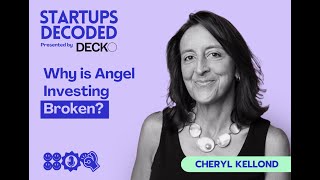
Cheryl Kellond, founder of Play Money, wants to make angel investing accessible by solving the real bottleneck: time, not deal access. Her platform uses curated deal feeds and plain-English tooltips to help investors build diversified portfolios of 30-50 companies, where research shows 50% fail but 8% return 10-100x.
Chapters
Startup investing is intimidating because we make up all these words, right? There's a SAFE and there's a convertible and there's a valuation cap and it's like, you know, ARR and MRR and like all this garbage. Every one of those terms in the pro— we don't shy away from those terms. Those are big girl investing terms, but we highlight them and it'll explain to you what it means and why it matters. And those little subtle, subtle examples of like education and context, a little more explanation when you need it, greatly reduce the barriers because I've seen so many people that are executives Executives at Fortune 500 companies, they run multi-million dollar organizations or nonprofits, but when they come to angel investing, it all feels intimidating because it's new, and that's not right.
Welcome to Startups Decoded, the show that gets real about what it takes to build a successful startup. I'm Andy Walsh, 2 times exited founder, strategist, and your host. Each week I talk with top founders, investors, and operators to unpack the plays that drive real traction, not just headlines. If you're building in bold. This is where you'll get the honest insights to scale with clarity and confidence. Let's keep growing together. Hit subscribe and share with your community. It would mean the world to me. Startup Seedcoded is brought to you by DECO. Are you raising capital? DECO builds pitch decks investors say yes to, designed by expert VCs. Create the deck that gets you funded. Getdeco.com. Good morning and welcome back to Startups Decoded. Today I'm joined by Sheryl Kellan, founder and CEO of Play Money. I'm going to let Sheryl talk about that, but first, welcome to the show.
Hey, thanks for having me here, but hold on a second. I thought you were going to call me Shezza the whole time. You promised you were going to call me Shezza.
Okay. I've been caught out. I love that that was how we left our last call.
Yep.
And me being an Australian, it's, it's something that's a very affectionate thing when you meet someone that's one of your people to give them a name that is from your home country. So yeah, Cheryl, if you're in Australia, you'd be Shazza. And so we can go Shazza all the way through. It might throw some people a little bit. They're wondering who this Shazza person is, but let's stick with it. I like it.
I love it. It's great to be here.
So today I'm going to let you tell your story, but we're talking and focusing around the democratization to access to capital historically, and even today, it's still really hard for most founders to find relationships, to even get a meeting to pitch their business, let alone actually close a deal and get funding in, in any shape and form. So we're going to unpack that as far as the challenges that people face, what you're seeing day to day, and what I'd love doing is explore some of the success stories that you've had. And we were chatting just before, you've had a massive month. So I'm excited to see what that looks like in your world. But to help people understand a little bit about Shezza, let's, um, go back into your story as far as how you ended up in Play Money and what led you to, to start this business.
Yeah, so I am a multi-time founder. I started my career as a concept-to-launch project expert in Silicon Valley back in the day. Um, I did my first startup about 15 years ago. And so my consumer electronics company, we were one of the very first companies companies to raise on Kickstarter. We were one of the very first companies to raise on AngelList back in the day when Naval sent out emails on Sunday with all his favorite companies. We eventually had to shut down that company, but when we, when we left the market, we were the number one rated product in our category on Amazon. So we shipped something good. I did something stupid hard, like didn't ultimately work out, but we felt proud about what we did. Second company was a healthcare fintech, raised about, I don't know, a little bit over $15 million in like tier 1 VC and grew that company super fast. Like in 4 years we went just from scratch to $10 million in ARR. We also ran smack dab into the pandemic. Turns out midsize blue collar employers in the Midwest, they don't switch health plans during a pandemic. So we, we, we definitely ran into that wall. We sold the company, we got acquired, and after that, every single person thought I was gonna raise a fund, cuz that was what all the exited founders were doing. And I was like, ah, hell no, I'm not raising a fund. Partially because the thing I hated most about being a founder was fundraising. But more importantly, through these years of experience, what I could see was that early-stage funding was changing. Institutional money is not actually the smartest money for most new ventures to take. It has a different set of needs, a different set of requirements that don't always purpose-fit early-stage businesses. And we had a moment where you've got more, you've got startup, new startup communities launching with more experience than they ever had before. You've got multi-time founders doing their second, their third, their fourth startup. So like the founders in the space, sort of the gig was up. They're smarter. They know they're starting to know better instead of raising a fund. But I was passionate about founders, right? Like I'm founders all the time. I meet with hundreds of founders a year. My calendar is always open to talk to founders. So for me, this business came about because I was supposed to start a fund. Didn't believe in the fund model anymore. I thought there was something new that we could be doing, some innovation we could make in early-stage capital. So Play Money is the output of that. And really the goal at the most simple level feels a little bit like Instagram meets AngelList. The goal is to let anyone build their dream startup portfolio without making investing a full-time job. You, you talked a little bit about access to capital for the founders. I also see it on the flip. There's a whole lot of people that want to get into early-stage private market assets, and it's still so hard to break into that place. And so we took a little bit of a different approach on that to open up that market, and it's benefiting founders and funders.
So good. And it's something that I heard a stat the other day, and I don't know how real this is because I, I like to fact-check pretty diligently these days. There's a lot of, a lot of fake information out there, but the fact was that 97% of accredited investors in the USA are not are not investing in startups. So if you think about, flip it the other way, only 3% of accredited investors are investing. So whether they don't know about opportunities, they don't know where to find them, they don't know how to quantify them, but there's so many gaps there. So if you're able to create a space where one, they can access those opportunities, but two, feel a higher level of confidence that what they're doing is legitimate, then you have more access for founders to be able to tap into capital that didn't even exist.
Totally. And if you look at those people that aren't investing in startups, if you take just a third of those accredited investors and they each invest $10,000 a year, which for, you know, which for my people maybe looks like their Target or their Amazon budget, right? You've now replicated the entire early-stage funding market. From friends and family through Series A. You could move that much capital at just a fraction of the people doing $10,000 a year. So it's a hugely powerful pool of capital. And it's an important pool of capital because at the end of the day, right, first check calls game. If you write the first check, you get to decide what problems get solved and who gets to solve them. So if there are more faces and more lived experiences and more people choosing to write those first checks, we are going to actually have a broader swath of innovation than I think, think we're having now. Like, we can be better than a whole bunch of B2B SaaS companies, right? Like, we could do more than that.
Absolutely. And obviously the last 12 months, that has been one of the biggest growth areas, is a really specific niche in B2B to solve one problem, but it's so fragmented now as a result that you have to have a tech stack of 15 different platforms to operate in the same way. So I'm skeptical about that too. But the other thing that I want to double-click in there a little bit is around the fact that capital and capital investment. I remember, what would it be, 15 years ago that seed would be as early as you would go in a formal capacity, right? You would have angels that would happen through personal relationships. It was like angel as a category. It was more friends and family, might be some personal money. And I think the formalization of that space pre-seed has been a really interesting growth area because you get to Series A, you can look at a business and you can look at revenue, you can look at margin, staffing, you get to know the founder's experience and you've got a lot more data to help validate who they are and what they're doing. Whereas the early stage, you don't have that. So a lot of it comes down to founder personality, concept, market opportunity. You're looking at different variables as far as what it looks like. But also you can write much smaller checks and have potentially significant exits. And there's so many big stories of the early days of Meta or Snapchat, Airbnb, people that put tiny amounts of money and it could be a $30,000 check that ended up with $300 million based upon that company going through to IPO.
Yep. I've, I've got a buddy that wrote a $5,000 check into Uber and yeah, it was worth millions later, but you don't even need at the early stage and with changing capital needs, you no longer even need a blockbuster, you know, $10 billion exit to make a lot of money. 'Cause founders are getting smarter about how they build their companies. And we're seeing, you know, a new group of founders say, hmm, I wonder if I can do this with less, right? And you can make that same kind of multiple. 'Cause remember, as individual investors, it's not— we're looking at cash on cash. We're looking at multiple. We don't have a, fun to return. You can make that same kind of uber multiple when a company exits for $50 or $100 or $200 million, all of which are way easier than being a multi-billion dollar company.
And once you start to get into Series B, Series C territory, you're, to your point, you have a lot of stakeholders around the table that probably have board seats. They're pushing you to drive profitability and growth as fast as possible because to your point around LPs, they have a whole group of people people that they need to please with returns across their portfolios. So they have a very single-minded agenda. And to the point where I hear it all the time, that a lot of VCs will tap out if they see some of their portfolio not hitting certain markers and don't support them at all. So they're basically a commodity to help return money. There's no personalization, there's no relationship that happens. Plus the dilution factor you talk about, you could do a $100 million exit with Series C funding and walk away with a small amount, whereas you could do a $50 million exit with some angels and some pre-seed and seed money where you may only dilute 20% and walk away with a much bigger check. And you don't have that pressure of stakeholders that are driving you for purely one reason ultimately.
Yep. And like, you know, no, no harm or foul in those later stage rounds. I mean, venture capital is a financial product and there's rules to that financial product, right? I mean, that's— you're signing up for those rules if you take make it, and that's just fine, cuz it's great for certain businesses. But as more of us are able to build really big businesses with less resources, we want a different kind of level of control of that. I mean, is there a, do you know any $10 billion companies that you don't think are somewhat extractive? As founders, you've gotta choose the path you wanna go on and the kind of capital that matches that. You said something though earlier that's still sticking in my mind. So you said, you know, at Series A, there's a lot of data to evaluate and earlier stage. There's not, there's not as much data, which makes it, you know, obviously a more appropriate asset for angels because you don't have all that data. But whenever, every time someone mentions data, I always like to point out that there is a lot of data on that early stage of a company. And the real data has come out of research people have done about how to invest correctly in those early stage companies. And the answer there from all the data and tons of data is It's not about picking, it's about shots on goal from an individual investor perspective. Like the data says, your best chances of success are to fish, fish in a well-lit pond, but then make enough shots on goal and have enough bets and enough diversification. So I don't wanna say there's no data about it 'cause there's limited data about those companies, but the data about that group of companies as an asset class is really clear on the right way to play on it, which is build a diverse portfolio. Sure. It still might be the few outliers that, you know, pull your portfolio up, but you've gotta get enough shots on goal to get those outliers in there. And I think that's, that is an important piece of information that I, at least I have thought, has been really important to educate our users about because, because it's not what you hear in the market all the time. You hear a few highly concentrated bets and bigger checks and you act like a, like angels are small VCs. They're not in a lot of ways. They need to invest with a different strategy. So whenever someone says data about early stage, I'm like, oh no, no, no, no, no, but here's the thing. So that's my thing.
Love it. When, when we met, I knew that this is a conversation that we were going to have. I love the energy that you bring because it's important to float these things forward. There's so many stereotypes that are not actually true within the world of startups and trying to unpack that and let people hear facts rather than just pick up on a narrative. Because they're probably time poor and they make assumptions around things. So to your point then, let's look at that. So if you're an angel and you've got that $100,000, like to be able to use the insights that you're seeing, what are the ways that you use the data to your advantage to make the right investments and have a higher chance of a return?
Yep. I mean, what we talk to people a lot about is the math behind portfolio construction and the different needs of angels and VCs. And more particularly for angels, I mean, the math shows that once you get to around 30 investments and definitely 50 investments, you have changed like this, the lottery ticket game of startup investing. You've changed it from lottery tickets to a more predictable, high-performing asset class. And it, it, like, there's a graph that shows it happening. It comes out of AngelList and Abe Hoffman, who I think is their, it's their, he's their chief data scientist. Andy Walsh, super smart, one of the smartest people I've met. Um, but the graph shows it. If you make enough investments, you've got a more predictable, high-performing asset class. So what we're talking to people about is what's the right percent of your portfolio to put towards early-stage startups. And then if you're gonna play in that space, figure out your budget based on the percent of your portfolio you wanna put there, break it down into 30 investments. Like, what does that check size look like? Okay, now spread it out over a handful of years, spread it out over market cycles because you don't wanna be the damn fool that threw all their money into the market during the ZIRPY years, as a lot of fund managers were forced to do 'cause they had to deploy, right? Artificial fund mechanics. And then they're like, ooh, that wasn't so great. So we start with that as one of the basic premises, like come on the platform, see if you like it. And then if you do and you want it to be part of your portfolio, think in a structured way about it. So yeah, I would cringe if someone was only going to make 10 investments. I'm like, that's not enough.
And for me to use an example and to see your reaction is important, right? Because there's data out there and AngelList obviously have been around for a long time and have a lot of history and there's so much data there to look at as far as angels, but because it doesn't live on Pitchbooks typically, then there's no public source of that information. And I don't think people have enough. And so if you're an accredited investor, and you are looking at that data, like you would say, okay, I need to make 30 bets across a diversified range of companies and it increases your chance, whatever that multiplier effect is. And so do you know any of those numbers as far as the more investments you make in that 30 to 50 range, what are the chances of success? How do they increase over that range?
Well, we refer back to, I mean, the, I think the, one of the better bodies of data here are the better snapshots of data that people can actually ingest. Comes out of 500 startups in their portfolio of 2,500 companies. And it, it clearly shows 50% will go to zero, which you should expect. We talk a lot about how going to zero is not always a failure. Yes, it's a financial failure, but when you think like an angel, you're not just looking at financial. Most angels are not like strict financial. It's like, you know, what did they build? What did they learn? What's that founder gonna do next? Are all important questions. But 50% will go to zero. 40% will do a 1 to 3x return. From that 40%, your portfolio will break even. 8% will do X, X, maybe flirting with 50x, 100x, you know, um, that'll be 8% of your portfolio. And that's the part that helps you outperform public markets. And then that last sliver, that 1 or 2% that go to the moon, that's where your outlier results come from. And that's pretty, that's pretty consistent over that, that distribution data is pretty consistent over different data sets, whether it's from AngelList, whether it's from 500 Startups. So you're always hoping to get that 1 or 2%, one of those companies in that 1 or 2% in your portfolio. But even without getting lucky enough to get one of those, just the normal distribution is gonna knock you above, knock you above public markets. From historical data. But you know, here's the thing though about the data, and here's where our whole premise of this conversation is wrong. Those 97% of people who aren't in these private market assets, a big chunk of them actually want to be, but they're not going to go look for that data. That's not their job, right? Like they have, they have real jobs where they make the money so they can be accredited investors. They have families, they have hobbies, We're increasingly out there fighting fascism. We got things to do with our time. So I think where the market has missed, or this is, this is what my earned— there's a few earned insights we have gotten over the journey of Play Money, but we really started with this one. Where the market has missed is every solution that is built for this has been built for, from the point of view of someone who lives and breathes startups. It's fund managers, it's startup geeks, it's people at PitchBook, and they're like, oh, here's how you do it. Those people sitting on the sidelines, they don't have time for that. They think differently. And I think that's sort of the elephant in the room on angel investing is not access to deal flow or the size of the entry points and smaller checks. The elephant in the room is time. How do you have time to build a portfolio of well-vetted, you know, clean, well-lit space kind of startups if you're doing all these other things as well. And that's what no one's talking about. I think it's where our biggest insights on the product and so much of what we're doing always falls back to is how do we solve for the time problem? Because time is keeping people out of the market.
Why is that information not more readily available? Like, that is gold for any accredited investor to understand how they can drive a pretty significant return on investment across a set number of investments at an angel level. But to your point, it doesn't seem to be out there anywhere. No one's sharing that information at scale because if you get more accredited investors understanding that, more capital goes into the market. It sustains a lot more businesses to be able to get going and get momentum. You can change industries and change lives by sharing that data.
Absolutely. But you, it's not just about sharing the data though. You can share that data all you want. You have to enable people to do it. So like my story, I geeked out and I dug into that data and, you know, I understood that data and I'd probably had an advantage understanding it cuz I'd been a founder. So it all sort of made sense to me viscerally, but then I tried it to act. I tried to act on it. And I spent a full year trying to make 10 angel investments in the course of that year. I am a girl who lives and breathes startups. I'm plugged into deal flow. I'm helping founders. I'm in several groups, paid membership groups that show you deal flow. And my gosh, I hated everything about it. It was too much. It was exhausting. It made it not fun. It felt like work. Like I tried to do it myself and I have as much access as anyone could just as a fund manager. And it felt like a job. Because guess what? If you are sourcing your own deals and doing your own diligence and for 10 deals a year that you like, it actually is a job. It's called a fund manager. You know, you might think about your decision-making different, but that's the kind of volume they do. And that was really our biggest aha moment. This thing I loved started to suck. And that was the aha of like, we've got to solve for the time factor here. We have to make this something you can do without making it into a full-time job? How do we make, how do we make private market investing on, on— don't talk about them as assets, they're storytelling assets. How do we make that as easy as retail therapy and shopping? How do we make that as easy as scrolling Instagram, which is, you know, you're learn— sometimes you learn a ton from that. Sometimes you're entertained, sometimes you're social, sometimes you meet friends. How can we bring that kind of modern content, modern commerce that kind of experience to private market investing, because by doing that, you solve the time problem and people can fit it into the nooks and crannies of their day because the information is presented in a way that they can absorb and in a multitasking kind of way they can absorb. So I think that it wasn't about leading with the data. It was about leading with the experience and then wrapping the education and data around that. So as people decided they liked the experience, they could then sort of boost their knowledge and go on that journey.
Startups Decoded is brought to you by DECO. Are you raising capital? DECO builds pitch decks investors say yes to, designed by expert VCs. It's like having a venture capital firm in your back pocket from pre-seed A to Series D. We know what works. Create the deck that gets you funded. Getdecko.com. And the public markets, it's so easy to invest. There's platforms for days where you can just put down a little bit of money, you see your returns, but the private market is more complex as far as how you actually do that. And I, I look at something like Forge Global. Who buy and sell in the secondary market, and they've launched a platform now, which is ideally for someone who may get an ESOP program. They get, they're an early employee, they get a small portion and get capital out of their equity if they don't exit. But I think what you are talking about is that earlier stage where if you've got capital and you want to invest in startups, go into a platform that allows you to get visibility, transact, and do it in a turnkey fashion that doesn't take too much of your time makes it easier. And that barrier of entry, like the irony there is not lost on me, is that there's so many founders that need capital in that early stage to get going. There's so many accredited investors with money to spend, but there's a void between how they find each other.
There absolutely is. There absolutely is. And so that's part of the void we're trying to, to close for sure. For sure. But there's, you know, people will point out, well, things like Kickstarter have been around, you know, forever. That doesn't close the void in the right way. I mean, or, or, um, Kickstarter or WeFunder, whether it's, you know, equity crowdfunding or product crowdfunding, it doesn't close that gap. Because if you think about something like WeFunder, right, you're buying equity in those companies, but it's a giant shopping mall because it's regulation crowdfunding rules. They have to present it like a giant shopping mall. It's not a clean, well-lit space. It's not curated. It's founders post your thing and buyer beware. Part of solving for the time factor is that you've got to present people, folks with deals that are not only cued to their interest but are well curated. Someone's done that diligence. Someone with experience of seeing thousands of thousands of deals has picked that one. And here's why. It's wrapping a layer of trust and credibility and curation around the deals. To help solve that time problem. 'Cause no one wants to, I mean, that's like, you know, no one wants to sort through 100 founder-posted deals to see which one they like. I mean, that's not much better than AI slop these days. So we've rethought the experience from what does it mean to build trust? What does it mean to use someone, you know, someone's time wisely to create a really different kind of experience? There's different factors that are important.
And you need that institutional knowledge too, like a Kickstarter or a WeFund, the curation element and some of the things there just don't exist. So bringing your experiences as an exited founder combined with your own personal experience as an angel into what is a two-sided marketplace, it just, it elevates everything collectively. So let's go into that a little bit. As far as Play Money, let's continue on the angel side. What does that journey look like if you're an accredited investor and you want to write an angel check? Entering the platform? How does that work?
Oh my gosh. Anyone who's accredited should just go on and sign up. It takes less than 2 minutes. It's always free to lurk and learn, but I mean, it is a— we've made a really simple process. We ask for a few pieces of information, like required by law, and then we take you through a— I don't want to call it a Noom-like onboarding experience, but it's a little bit like a Noom-like onboarding experience. You know, we ask guys We ask you about your goals and your, how, how you view the world, and we give you some lightweight education about investing and about how to use the product. Once you're in, we drip some more education information to your email, sort of custom tailored to your level of knowledge and experience. We've got education wrapped all through the product, like every funky, I mean, startup investing is intimidating cuz we make up all these words, right? There's a SAFE and there's a convertible and there's a valuation cap and like, you know, ARR and MRR and like all this garbage. Every one of those terms in the pro— we don't shy away from those terms. Those are big girl investing terms, but we highlight them and you can mouse over them and it'll explain to you what it means and why it matters. And those little subtle, subtle examples of like education and context, a little more explanation when you need it, greatly reduce the barriers because I've seen so many people that are, you know, They're real lives. They're executives at Fortune 500 companies. They run multimillion-dollar organizations or nonprofits, but when they come to angel investing, it all feels intimidating because it's new and that's not right. So the experience when you come on to Play Money is it's quick, it's easy, it's supportive, it's a little bit fun, and we're, we're educating you every step of the way. Um, that's a big part of it. You know our big thing, right? Like, new deals drop on Thursday. We have made new deals not chaos in your inbox, but more like must-see TV. Every Thursday, you will get one well-curated, well-vetted startup deal tailored to you. So, people, you know, you learn to tune in. You know where it fits into the schedule of your week. You look forward to that content. And that makes a difference. Because if you ever signed up for a bunch of angel list syndicates and then look at your inbox, you're like, oh no, turn that off. That was a bad idea.
Yeah, I know that feeling. And I love that too, because the education is interesting. It's as a brand strategist, I look at that as Marketing 101, right? If you're trying to build a relationship with somebody, you need to build trust and trust comes through education. It comes through empathy. A connection of sorts that allows you to go, okay, if I'm going to spend money on a product, then I'm going to do it with this company because I know more about them. I trust them ahead of their competitors. So doing education to break down those terms because it is complex and whether it's intentional or not, the investment world and startup world has so many acronyms and terms and, and people love creating new terms. And if you look this year alone, like something like vibe coding gets talked about all the time. And it's interesting now seeing the, the downfall of that in a way too. And I don't want to go too much off in a tangent, but everyone seems to be creating the same products as each other because they're using the same platforms to do the same thing. But see, what you're doing though is letting people have trust and confidence in what they're doing because they're educated. They get curated content from opportunities that have come through your platform. So there's peace of mind that comes through that. So it's not the wild, wild west. There's still obviously risk in investment, but once you get them onboarded, they're educated, they understand the data about how to invest and how to get a well-balanced portfolio that optimises their chance of returns. All of a sudden it becomes sticky and then you get an increase in people starting to do that because they typically spend time in the same circles, right? So Angel will talk to another Angel and if they're sitting there with capital and they at a dinner and one of their friends says, yeah, I got onto Play Money and and this is what I'm doing and I've had success, then that viral effect happens and again, makes the industry more buoyant.
It does. I would say this though, none of the, very few of them consider themselves angels, right? They're not like, oh, I'm an angel and I'm talking to another angel. These are folks that don't normally call themselves angels and don't normally call themselves investors, even though that's what they're doing. But they, but they do talk to their friends about it like crazy. They, they're like, you know, like I'm, I've done 3 full Ironmans. I spent a good 10 years being a, you know, triathlete was my, was my hobby. I would never call myself an athlete. It's like that. We've got people with, you know, 15, 30 companies in their portfolio. They won't call themselves an angel investor. So we're, we're, it's a little, yeah, I don't know what they call themselves. But I shy away from that word sometimes because they don't see themselves that way.
I'd love to be a fly on a wall around just 10 of those people that have done it and understanding what they do call themselves, because what they call themselves, it's irrelevant, right? What you are doing is creating a way for people to invest and drive multiples on what historically as well is almost a known timeline. So you would have historical data on at what point, you know, is it a 3-year, 5-year, 10-year exit? So it's quite a controlled environment ultimately, despite the risks involved and the data, which I'm going to share multiple times at the start, as far as what percentage of your investment portfolio actually drives returns is fascinating. But obviously to be able to do that, you need plenty of startups on there that are at the right stage and are on there, 'cause it's a two-sided marketplace, has to have both sides. If you're a startup, and a lot of my audience are founders, what does that look like as an experience as a founder to get onboarded onto Playmoney and then how it's curated to your database of investors?
Yep. You know, it's so funny because we talked about the angel experience and the, you know, the TL;DR on that is it's way easier than you think. And we have people sitting on the sidelines 'cause they're like, oh, I must, I, I have to wait till this weekend when I can put a half a day aside to line up, 'cause it must be really hard. And I'm like, no, you pretty much can do it while waiting for your flight to be called at an airport, right? Like we wanna fit into those nooks and crannies. The experience on the founder side is also not that onerous. Like for a founder that we're putting on the platform, for the founder, it's a 10-minute form to fill out and a 45-minute recording slot, but it is a highly curated and vetted experience, right? We mostly only take startups that have some kind of professional investor involved. Could be a high-velocity angel group. It could be an experienced family office. It could be an emerging fund manager, but we want someone there that's done the good hygiene due diligence. They've background-checked the founders, the cap table looks good, they're incorporated the correct way, right? So we can vouch for this being a clean wallet space. We like someone who's seen thousands of deals to have picked this startup, like something special here. And then we curate on top of that. We spend— it's so interesting cuz we get to spend 45 minutes with the founder recording their founder videos. So we get a strong Spidey sense of vibes on people as well. And we've got a pretty good pulse on what the community, even though it's changing and growing so much each month, what they'll like. And so we try to do a little mixing and matching there. And increasingly, if you— for a deal that comes on the platform, what we ask from the founder and whoever their, you know, investor is, we ask them to bring a certain amount of capital into their SPV first, right? Like, show me you're gonna go out and hustle. Show me you're doing the work to bring people in. And also by doing that work to bring people in, if you've, if you've seen the product, it's, it doesn't look like AngelList. It's a more social experience. You see, how many people have invested. You see who's invested. They share their reasons why they invested. So you feel like as a new angel coming in, you're not alone. There's other people here with you. But if you're a founder, go bring some of your own angels in to speak on your behalf and make those first investments. Because then when the rest of the Play Money community sees you, maybe angels who don't know you at all or don't know you as well, there's social proof on your deal and it makes a huge difference. To get the momentum rolling. So it's an easy process for founders, but it is not a wide open door. And I sometimes think like, we've seen enough stuff. We're pretty, we are pretty exacting. There's a whole lot more people we say no to, or we, you know, we put their deal up and say, go see what you can do with your community. And it falls flat and we're like, yep, not gonna make it. So it's, it's pretty curated.
I love seeing people's personalities come through in their product. The fact that it's more interactive and fun is 100% you. And the fact that it's no BS as well is 100% you. I, I love that, and I say that as a compliment. And I think to click on that a little bit more, as far as the, the validation, the peer-to-peer aspect is critical. So that feedback for founders to go, well, I've got 5 angels, like, they invested in me for a reason, to be able to get them on board and on to Play Money and to get them talking about their experience of investing, all of a sudden opens up a much bigger pool of people because If they're validated by you, which I want to explore a little bit more, plus there's some validation peer-to-peer, all of a sudden the brand health of that startup is going through the roof because they're not at a point where they can validate in the later stage investment rounds, but they've got enough to be able to say that someone else is taking a chance in me and seeing the opportunity. So that is one major part. The second one there, the validation that you are doing, that's the part I'm curious on because we touched on it at the start. And being able to identify a founder who is just making it up as they go or someone who actually truly understands a problem, has lived the problem, is focused on a single ICP, they know who their audience is and they're going after that and they're building solution for it is key. And then the personality, like for me personally as an angel investor, looking at personalities is massive. I I, I wanna get to know someone and I ask very loaded questions to see like who they are and see the whites of their eyes, so to speak. But then the way that they understand the, the industry, their competitors and their category is another part. So let's go into it from your side. What does that look like as far as that onboarding and validation?
So I, I don't wanna, you know, lead anyone astray. We are not doing formal diligence on these companies. We proxy the good hygiene diligence to a professional player in the market. And then our job with the founders is to really ask ask those probing questions that an experienced angel would ask to surface the things about their business, good or bad. Um, and we do it all on video because so much about early-stage investing is sort of that, that vibe check. Is someone sitting right with me? Right? We all have a million data points in our gut already about what's gonna make a successful person. We want each individual angel to be able to have that kind of reaction. So our job is to highlight all that information so each individual can make their own choice because the thing in a founder that probably attracts me and would get me to write a check is gonna be different than what it is for you. And neither of us is wrong, especially neither of us is wrong if we make enough bets and write enough checks, right? Like, so that's, that's what we are trying to do in the, in the vetting process and the discovery process is to give every individual the information they need to make their own decision. However they wanna make it, right? Like if you look at the platform right now, we, we did a survey on this recently. 25% of the people make a decision within the first 2 minutes if they're gonna invest. 50% of people dig into every piece of information on the deal memo we create, which includes videos and decks and points of view from their investors, um, before they make their decision. And 25% of people do outside research. They do outside competitive research about the market space. Before they make their investment decision. So we want to be able to serve all of those different kind of decision-making needs. 'Cause again, none of them are wrong. They're all right as long as you make enough bets.
The piece to call out there as well is the fact that you are not vetting, you're not a GP in a VC fund that's vetting on behalf of your LPs. You are, you are curating a group of people and defining best practices for what you believe is important but presenting all of that data to an angel or an early-stage investor to be able to look at what you've, I guess, created and put together to understand, but giving them every opportunity and I would assume encouraging them to do their own research and make a decision on their own, right? Because that's gonna be important as well. One, for you legally, but two, for them to have peace of mind that they're doing the right thing. But again, And I think the gap that I see there is that not many of those accredited investors would know best practices. So by having the process that you are doing, you're actually giving them some benchmarks as far as here's the breadth of things that you need to look at to make an informed decision at that stage.
Yeah, we're subtly educating them the whole way through and they recognize that, right? They'll come back and they'll be 6 months in and have made a few investments. They're like, oh my gosh, I'm getting so much smarter. I'm learning as I go, which is really exciting for us to see. So we love that. I will say this though. I will say this because someone called me out on this the other day. I sound so casual about that, right? Like, oh, we do a little bit of vetting, but this, that, and the other thing, blah, blah, blah. And this person pointed out to me, they're like, stop Cheryl. You've got these amazing deals on your platform because you have been building the foundation for this business from your network. From the fact that you've given first, from the fact that you've been so plugged in. You've been building that for 30 years. This business right now is just a manifestation of that. So no one else could have built this with this quality of deal flow, this quality of founders. And they like really challenge me to stop underplaying that. You know, don't make it look like it's by accident. It's not. It's because of where, you know, a big part of where I've been in the industry for a long time is bringing great deal flow, which is then bringing more angels, which is then bringing better and better deal flow the whole time. I wanted to point that out because someone called me out on it the other day. So now I'm like, look what I did. I called it out on a podcast. It's not by accident. There's, there's 30 years of playing in this ecosystem that's coming into play on these, you know, the deals you see on the platform, which feel a little bit like entertainment, a little bit like education. It does not feel like financial product research. These deals are multitasking for you as an angel. So, but that all comes from, you know, a deep network, a deep kind of trust in the industry.
And years of experience go a long way. And so many people walk into this naive and then they may have one bad experience and walk away and never come back. So that education is, is really important. And humility is, is a great thing, but sometimes you have to validate and that's not bragging. It's not being egotistical. It's demonstrating your knowledge to validate why you've built the product that you have, which is the lessons, good and bad. That you've experienced wrapped up in one product.
It's so funny sometimes to talk to these new, you know, sort of fund one new emerging fund managers because a lot of them are younger and they haven't seen a full market cycle. And I'm like, oh my gosh, I've seen 3 of them by now. And I think, you know, part of my evolution as a founder this year is realizing even though we're founders and always supposed to be curious and testing assumptions and all of that, there are places that actually our experience, we do know a lot. We are actually the experts. We've seen more than most people that, you know, call themselves professional. We are just deciding to take that knowledge and apply it in a different way. And at this point, like, we are deploying as much capital on this platform as a $15 million fund would. Except that we're growing 15% month over month. So like, yes, we, yes, we do deserve to be here. Yes, we are professional. Yes, we're using information just in a different way.
Mate, it's a perfect way to close today. So we talked at the start that you've, you've had a really big month and I'm curious, what does success look like as far as growth? Is it, is it return to your angels? Is it more buoyant and more capital distributed to the founder market? What, what does that success look like for you?
To end up being a billion-dollar fluid fund where we are deploying a billion dollars of, I'm gonna call it permissionless capital. Bryce Roberts talks about permissionless entrepreneurship. This is permissionless capital. It doesn't play by, it doesn't have to play by big institutional rules. It has its own need for returns. So I wanna be deploying a billion dollars of capital a year to new kind of ventures with new kind of return profiles. I wanna do it in a way that makes the investor, the angel— what's the point of money just to make more money? It's supposed to bring joy. So I want them to be making money, but I wanted them to be doing it in the process of having impact and learning and meeting people and being curious and whatever other psychographic things really motivate them. That's my dream because we are gonna, by doing that, we are gonna be the best place. Space for people building new businesses to come and get that early capital. Because you know what, those angels over here, they're also gonna be the most valuable people on your cap table. 'Cause they have the connections, they have the expertise, they have the networks, they have the amplification, they have all the non-financial things an early-stage business needs to be successful. And I wanna play that matchmaker. I wanna move more than just capital for those founders. I wanna give them more different ways to build their businesses in the way that's right for them. And I wanna sit in the middle of making that happen. And no one has done that yet. Not just moving a billion dollars of capital, but no one has put the non-capital soft benefits wrapped around it for founder and funder. And I think that's where the magic lies.
Cheryl, that is such a— no, that's beautiful. I, I love your philosophy and the energy that you bring. And for me personally, I'm walking away today with absolute gold and I can't wait for everyone to, to listen to this and learn. To get in touch with you or to join Play Money, what's the best way to do that?
Yep. I am easy to find on LinkedIn. I'm easy to find on Twitter as @xxfounder. But what you should all do, if you are accredited, just sign up. Let'splaymoney.com. I promise you will not regret it.
It's free. So good. And I can definitely endorse Cheryl. And as far as what she's doing, it's a really important place to substantiate and validate this stage of investment and to drive such great returns. So Cheryl Kellands, thank you so much for joining. I love what you're doing with Play Money. This has been a real treat. Thanks.
What a great way to kick off a Monday.
I'm feeling super. So good. And if you do reach out to Cheryl direct, please mention Chezza. That's C-H-E-Z-Z-A in the email. And then I'll know that it's come through me, but you'll have as much fun talking to Cheryl as I have. Thank you again. This has been so magic.
Oh, thanks for having me. I appreciate it. Bye now.
Thanks for listening to Startups Decoded. If today's conversation helped you think differently, share it with a founder in your network. And don't forget to subscribe for real-world startup insights every week. We really value your support. If you're interested in partnering with us, email hello@startupsdecoded.com. I'm Andy Walsh. I'll see you next week.
More from Andy



EP#88: Why Most Founders Misread Their Own Traction. Vanessa Larco - Premise VC

EP#87: Founders Obsess Over the Raise. Investors Care About This More. — Carina Cunha






Ep#86: Early Decisions That Define Your Startup Forever. With J.P. Morgan Asset Management
