S2E17: Nervous to Become a Founder? Start Here (Before You Quit) — With Niluka Kavanagh
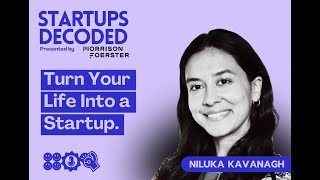
Niluka Kavanagh left KPMG to start a tech business and public-speaking coaching practice, then built Imagine That, a community for first-time founders. She walks through the mental shift of leaving corporate work, validating ideas with a why-you-who-customer-what framework, and building a founder brand separate from your company.
Chapters
Don't get too fixed on the vanity metrics. Actually think about what value are you giving to your audience and how can you become that person of influence? I think that is a really good way to start and you'll feel, you'll enjoy it more. You know, I never would have started any of the posting and things that I do across Instagram, YouTube, and LinkedIn if I was so fixed on, I need to go viral, I need to have lots of followers. I think actually if you have influence and you're able to create good content that speaks to someone, you are halfway there.
Welcome to Startups Decoded, the show that gets real about what it takes to build a successful startup. I'm Andy Walsh, 2x executive founder, strategist, and your host. Each week I talk with top founders, investors, and operators to unpack the plays that drive real traction, not just headlines. If you're building something bold, this is where you'll get the honest insights to scale with clarity and confidence. Let's keep growing together. Hit subscribe and share with your community. It would mean the world to me. Morrison Foster is the legal edge behind the world's boldest innovators. They go by MoFo and are the team behind Startups Decoded. For decades, MoFo has helped startups turn complexity into freedom. Learn more at mofo.com. Hello and welcome back to Startups Decoded. My name is Andy Walsh and today's episode, we're going to pre-launch, pre-launch, pre-launch is what I'm gonna call it, is if you're an aspiring founder, Maybe you work in a big corporation and you've got an idea you want to do. There's a lot of confidence and probably a lot of reluctance that comes into doing that. And to unpack that topic, I've got Naluka Kavanagh. Welcome to the show, Naluka.
Thank you for having me, Andy. It's good to be here.
We met just recently and on our first call, we had a really beautiful conversation. And the thing that stood out to me is that how a life, even working in very different industries that you and I did and where we came from, the intersection that we had. And a lot of it was focused around being a human being, traveling, listening, learning, and being aware of who you are and what happens around you. And there was something that for me really stood out in how you'd approach your life. And I love the contrast that you had of working in consulting in the Big Four, which is really the probably epitome of corporate life as far as if you were to put down like banks, insurance companies, consultancies, like consultancies, I think you've got a bit, it's a bit sexier. You can do a bit more fun work, but to now do what you're doing, I find that contrast really fascinating. So to get started today, I would love to hear from you as far as your background in big consulting and what were some of the things that led you to what you're doing now? Was there an aha moment where you just pulled the ripcord? Was it a series of events? Take us through that story.
Absolutely. So graduated, and like many people, went straight into a grad job and was like, okay, let me get a big name on my CV. Went into KPMG, and when I was there, worked in a range of different teams. Probably a bit like you, I get bored easily, so I started off in our sales and marketing team. I did a little bit in A and then in customer. What's really interesting is people expect me to say, and I think we spoke about this, but people expect me to say, you know, I was burnt out, or it was toxic culture, or I just really didn't enjoy what I was doing. Actually, things were pretty fine on the outside, but I got to a point where I thought, is this it? You know, I got to, I worked there about 5 years or so, and I just thought, if I project forwards and I look where I'm going to be in 5 years, 10 years' time, that didn't excite me. And so the decision was more of a pull decision, being pulled towards something exciting, than a push decision, being pushed away from something. And I basically, Andy, I just had this thought that kept coming up to me on a run in the middle of the night, which was, can I work for myself and can I work from anywhere? That was the question. And I remember talking to a mentor at my company and she said, you know, maybe you should pick one of those. Maybe you should go into entrepreneurship or maybe you should travel. And I thought, nope, I'm gonna do both. So then, uh, in July 2022, I left KPMG. I had a one-way ticket on a plane to Valencia in Spain, and I just thought, right, let's begin the experiment. And that's how I got to here. I initially started with a tech startup. I had a public speaking coaching business. And during that time, a lot of people were like, how are you in this cool country and you're working for yourself? How are you able to do that? And I just thought, there's nothing what's that special about me? Yes, you have to be brave to be able to do this, but why can't I help other people who want to make the transition? And so that is how Imagine That started, which is a community for first-time founders.
Okay, so founders typically have really unique qualities, and if I heard you correctly then, did you say that you had an idea while you were going for a run in the middle of the night?
Not in the middle of the night. Either this idea, this question, can I work for myself? Can I work from anywhere? That came either in the middle of the night in my bed or if I'm on a run or just out and about.
Yeah, I mean, I know some people have got some really interesting habits that they've created for themselves, but that's, that would be a first.
No, not that one.
And I think that, and this is a whole separate topic, but the idea of being able to actively reflect, it's like trying to be creative. Sometimes you just can't do it. You need to be able to take yourself out of one environment, put yourself somewhere else, and that's where typically your best ideas come from. So you you did it going for a run, and then that led you to a path where you then moved to a whole other country and, and sought, you know, inspiration to be able to find yourself. And I, and I love the analogy too, is that people assume burnout and all the things that you talked about in, in large corporations, but for you, you looked at it in a way of what you'd learned, the lessons that you could apply, and then how does that drop in somewhere else and having that as a momentum, because I was the same and you called it out in that I get bored if I'm doing the same thing. I just, I'm curious. I ask questions and I like to ask, why do we keep doing this the same way? And in certain businesses, you are told to act and behave in a certain way and they talk about innovation, but when you try to innovate, it quite often gets a big door slammed right in your face.
Right, right. Totally. And also, I want to come back to this idea, Andy, that you mentioned there around being able to almost project forwards and think of your life as a whole. I think, as crazy as it sounds, the reason a lot of people don't do this, even though they want to, is they're so in the motions that they don't have the time and space to think. And I know that sounds quite dramatic, but I spent a lot of time on my own and I shut out the noise. Of everything happening around me, and that allowed me to really look inwards and think, right, what do I want to do? And I think you have to give yourself that space. You have to give yourself alone time to really think about it and then go from there. And as you say, I, I mean, I love innovation, and as much as companies say that they're innovative and all of this, when there's 5, 6, 7 different layers to go through to get approval, it slows everything down. And I just thought, you know what, let's do my own thing.
That is like textbook the antithesis of innovation, right?
Right.
And it's like when there's a convoluted process to innovate, you have to step outside and go, hang on a minute, why do we have such a convoluted way of coming up with ideas? And being empowered to do it yourself is, it's scary, but it's also exciting to think about how do you reapply what you've learned in that context into another environment. And Going down the path of taking that step, it was, you said 2022, so 3 years ago now that you did it. Have you reflected much at all as far as the process that you went through and how you've turned that into a system for someone else to identify what are the things that are your motivations in life? What's your purpose? How do you create a way to have some structure on how you analyze your current situation and some form of where you want to get to, to be able to help clients of yours think through what that process looks like?
Yeah, it's a great question. And I think what's really interesting is people often start with, okay, I have a great business idea and let me just go all in on that. And what they don't think about is the vision for their life. And what I mean by that, I learned that quite early on with my public speaking business. So that was public speaking coaching, and that was me trading time for money. And I quickly realized, yes, okay, I could obviously put my rates up by huge amount, but I'm not a Stephen Bartlett or someone like this yet, so that would be quite tricky. So I realized in that moment I did not want to trade time for money and just be working with individuals. And I think what a lot of founders don't think about in the early stages is, what do I want my life to look like? Like an average Tuesday, what does that look like? And then reverse engineer that to your business model. So if you are someone who thrives off having lots of clients and deadlines and this type of thing, which some members of my club are— they are, you know, creating consulting companies and boutique agencies, which is fine— then think about, okay, how does that model fit your life? If you are someone who actually is like, I want to have time— so for me personally, time is really important, time freedom— how are you going to reverse engineer that life and make a business model that fits it? I think a lot of people, maybe you've experienced this and seen it yourself, they kind of build a business and then they're like, oh my gosh, I have no time. This isn't what I wanted. I feel like I'm back in corporate except now I'm the boss. But You know, my customers are kind of the boss of me and they end up actually not that happy. And so I always encourage my founders, at least when it comes to creating the life they want, to think about it very early on and then build backwards. And we can talk a bit more about the business side of it, but that's the life and vision side of it.
Andy Walsh: And the balance of life and business are really important. And the intersection of both of those is your own mental health. Choosing a life you want to live, choosing a career you want to be in, but then how do you make sure that you have a greater purpose outside of that as well? What unites the two? What's separate in each of those buckets? And I want to double-click a little bit there on something you talked about, which is that understanding what founder life actually is like. And I would say now that being a founder has become mainstream and, and they're not quite music stars in the sense of screaming fans, but it's borderline that for your marquee founders. Like if you had someone, let's forget their personalities and what they do, but if you had an Elon Musk and Mark Zuckerberg or a Sam Altman walk into a room, a lot of mainstream people would know who they were and would get excited about it just by nature of what they do. And that wasn't the case. You imagine being a tech CEO back in the day No one would care about you, right? Can you imagine Bill Gates walking into a room 30 years ago? Do you think people would lose their mind? I don't, I don't think so. So what I mean by that is that there's something about the dream of being a founder that people look outside in and think that they're going to be the boss, they're going to make millions of dollars, and they don't realize what goes into it and the things that you have to compromise. So to be able to look at the human side of that What are some of the things that you're weighing up in that conversation as far as your personal life and whether you've got a partner and kids, mortgage? What are some of the things that you would encourage people to look at on the personal side?
Absolutely. I think I would say, and I'm sure you'd agree with this, entrepreneurship is not for everyone. And I think we sometimes think and see it and, oh my gosh, it's like the only path. It's not the only path. It's the path that I love. It's the path that you love, but we're probably a little bit I wanna say weird, but you know, definitely weird. There's probably our appetite to risk is probably lower than most people's in the sense that we're more likely to take risks. I think also, what is your relationship with uncertainty? So, this for me was a big one. I was able to get on that plane, take a leap of faith, go into a tech startup initially. Even though everything was uncertain, because I had a relationship with uncertainty, which was, right, what is the worst that can happen? And I think for me, and for anyone listening to this now who's thinking about it, I actually had a sabbatical in place before I left. And what did that do? That meant that yes, there was still uncertainty, but if the experiment didn't work, I had a nice corporate job to go back to. So I think first you need to weigh your risk tolerance, but then you need to think about how comfortable are you with uncertainty. Now, for me, the flip side of uncertainty Uncertainty is excitement, right? Uncertainty means excitement. There's possibility. You know, this year, if I think about this year and the things that I've done and you've done, I mean, it's amazing. But how are you with being okay with a bit of uncertainty? You're not necessarily getting that comfy paycheck in those first months. Um, you might not know what the future of your business is going to look like early on. So being okay with uncertainty. And then I would say also knowing why you want to build a business. Don't just go into entrepreneurship because you think, yeah, I want to be my own boss. Think you need to have a deeper purpose to what you're doing. And the last thing I would say, Andy Walsh, and, you know, happy to talk about this more, is something that I didn't prepare for, that I only know now looking back in hindsight, is how isolating it can be. So something I wish I had done sooner was have more of a support network around me. It's one of the reasons I created the Imagine That community, because starting a business can be incredibly lonely and isolating. So think about if you are going to go down this path, what is your support network as well? Because that can make a huge difference.
Having a person who just has a default level of empathy, that they're living the same experience as you and they get what you're going through. And sometimes just having a 15-minute conversation with someone else who's not even in your industry can be really grounding. So that resonates with me. And, and I think about that leap of faith and uncertainty. I started my own business in 2007. 2012 and bootstrapped it and was living paycheck to paycheck and sometimes not getting paid for month after month after month. And to add complexity to that, I moved to New York City, which is one of the hardest cities in the world to build a business. And I had a 4-month-old child. So to take a leap of faith with a brand new baby, new city, new business, I look back at that and go, was that insane or is it just a lack of really thinking it through as far as how bad that could have gone? Or glass half full, what opportunity am I creating for myself and my family by doing that?
Right. And I think, I mean, that's amazing, and I didn't know that about you. But I think also not overthinking. You know, I think if I had sat down, probably like you had done, and gone through all the probability and gone through every single thing that could go wrong, you just wouldn't do it. I'm a massive believer that you find the answers through action, through doing. That is how you often move forward. So don't also overthink. If you overthink, you probably will never do it.
And there's a real fine line in that assessment, right? Because you talked before around what you're able to do with your life and what you need in your personal life to balance out your professional life and where those two intersect. If you go into the depths of realizing what you're putting on the line financially, relationships, family, all of those things, You probably would, if you had had any level of pragmatism or maturity, look at that and go, this is a stupid idea. But on the other side of that same coin, there's a level of braveness and confidence and independence that can actually help you become the person that you want to be. And it, and for me, that was my experience. And I didn't second guess at all. I just, I took a leap of faith, but I also knew what I was doing. I was creating a business that one, to your point, I had purpose. It was in the creative industry. I was helping create art and take technology and art into a space that no one had done before. And for me, those two things were part of my passion. And to do that in New York and work with seminal artists, I look back and I was so fortunate, but I didn't manifest it. I actually planned it and thought it through and knew that I could do it. And it wasn't naive. It was actually a calculated risk of what I did based off my experience. Your experience is the other component of that too. So I want to go back to community, but I think for now let's focus on the business part of it first. As far as understanding all the components of what goes into creating a business, because typically people have one expertise, they live in one part of a startup and they come from maybe that's finance, maybe it's investment, maybe it's legal, maybe they're tech people that are building products. And having the breadth of skills to be able to do everything, it can be pretty overwhelming. And I've lived it as a bootstrap founder, teaching myself things that I knew in context what they were and how they functioned. It was very academic what I knew, but doing it was a whole other thing.
That's so interesting. I would say, so with someone who is starting their own business and they're wanting to You know, take their expertise and use it to create something. I always say, and I'm sure you've seen it a lot of the time yourself, and it's something that I learned from one of the first startups I did, you need to validate as much as possible before you put all your time and energy in. And that's what I say to a lot of the founders in the club. Have you done your market research? And your market research means looking at trends, but it also means knowing your potential customer really well. Do they have not just a willingness to want your service, but a willingness to buy? And so I think that's something that I would say to anyone on the business side of things who's starting. Have you actually validated enough? And because a lot of people, and I've been there myself, you go out, you create this website, like, this is amazing, I know that this is great, and then it's like, oh, no one is buying from me. Well, no one is probably buying from you because are you really solving a problem that they want? And not only that, are you solving a problem that they want to pay to have the solution to? And so that for me is a really— if I had to go back, I would have started with that question. And then I think there's 3 things to think about: the why you, the who is your customer, and then the what are you building. So the why you— I don't know about you, Andy Walsh, but I think now both of us have platforms We're in a stage where building a founder brand, I think, is the best thing that you can do, honestly. Whether you are building a SaaS product and something very technical, whether you're a life coach, having a founder brand and being able to articulate why you are the person that people should buy from is really important. Second pillar is whom. Who is your customer? Are you really clear on who they are? And I have someone in the club, for example, she says, my customer is young people. Then I I say, well, that, that can mean so many things. So how do we really go into that? And she said, people in their 20s and 30s. I said, no, we need to get into this more. So who is your customer? Knowing not just their age, their demographics, but their interests, their psychology, what is it that triggers them, these types of things, having quite a granular understanding of that. So that helps your messaging. And then you can get onto the what, what it is that you're selling, what your offer is, what your service is. I think by starting with the why you and the who is your customer, The what will come, but a lot of people do it the other way around. They start with the what and then they're like, why am I the right person for this? Or who really is my customer?
I love that framework. It's, it's simple and it's an easy exercise. And if you're the right person for that job, you should be able to do those 4 buckets within an hour. Yeah, it won't be, it won't be perfectly written, but you should be able to write pages on those things and be able to summarize that into something which is simple and articulate. That says what you're trying to do because it gives you enough confidence and to be able to go, yeah, I think I can do this, or I need to spend more time in one of these boxes. And then the validation at the start is 100%. It might seem a good idea in your head, but an idea is easy in theory. Actually executing and finding someone who's going to buy that is a whole other thing. And that's typically big picture where most founders fall over. And one of the things that I heard you say, which I would, and it's probably cheesy and I don't know if this is me and my sense of humor, but I feel like when someone says something that I love, I want to have some kind of air horn or bell or applause or something that I can go off. Yeah. It's like the, I think it's in Google Hangout, you know, when you do certain hand symbols that like you do a thumbs up, it comes up with all these things. You can get confetti over the screen. Like that kind of vibe. And the one that I would have done, actually, I love the model, period. But the first one around the building the founder brand, I mentor and coach and I'm on boards and I'm advisor and all of those, I consistently say, I separate yourself from the business. Who are you? What's your purpose? And actually having the ability to define what you believe in, what your values are. And how you tell stories in an authentic way. And, and right now we're seeing this whole boom of AI content and it's just a bunch of generic crap that I can spot it a mile away and it's really hard to stand out. But I think if you tell your story, no one else can do that. By backing your story, it allows you to find staff, investors, it allows you to get customers, strategic partners. It opens a door and is actually in the early stages much more powerful than the brand itself. From a company level to allow you to grow.
Absolutely. I was interviewing someone on my podcast who, he's ex-BBC. He was a broadcaster there and did various shows. And when I was talking to him, he's very successful now. He's an international keynote speaker. He told me the thing I wish I had done sooner was create content and start building my brand. And I think there's no point which is too early to start doing that. Okay. Maybe if you're, you know, 10 and you want to do that, maybe that's a bit early, but after university, whatever, if you go there or not, that's— I think starting to create your founder brand is so important. And what I wanted to say there, Andy, as well, is I love that you said separate the business from the brand, because what's really interesting is imagine that and what I'm doing now, it's not my first rodeo, right? I had a public speaking business, I had a tech startup, and they didn't go quite the way I wanted it to go, but my brand is the consistent, it's the common denominator. So I think if you can build your founder brand, it's almost like a business in and of itself. So if you do have a pivot or if you do change path, well, good news is you have an audience, you have awareness of who you are. And that I think is, is so important. It's so important.
If you're building the future, you deserve a legal partner built for it. Morris Foster, the legal edge behind the world's boldest innovators. They go by Mofo and are the team behind Startups Decoded. For decades, Mofo has helped startups turn complexity into freedom. They combine deep market insight, tailored legal strategy, and a Mofo passion. Discover how Mofo can support you. mofo.com. I did a workshop recently with a client and she was starting a business in an adjacent category, but she was in stealth mode and she couldn't talk openly about it. And she wasn't from that industry, like purely from that industry. She obviously knew it and saw the opportunity. So she had these two stories in parallel and she was struggling to think about how she creates future opportunity by building her personal brand. And high level, the simple exercise we went through was basically a two-circle Venn of writing down the, across a few three different categories. One was values, the other one was purpose, the other one was functions, and the fourth was outcome, as far as like what does it mean for the people that use your service. And then on two columns, literally side by side, put one in the middle and went, what are all the words that connect about you and your business? And then that middle column became her narrative that she could use for her founder brand because she was talking about herself, but every one of those things connected what she was going to be doing without giving it away. And that's a really quickfire process of what I run, but they're the type of things that I do because it's, it's actually a really simple thing to think about. But what it also does is not only helps you inform your story, it gives you a really good framework as far as who you are, what your business is. And that's an exercise that most founders don't do. And hers was a specific case because she was trying to solve a problem. But that is a structure that every founder should be doing is to write down about themselves. And I've got an exercise on my Substack, which is how you define your values. And that part of it came through someone else who is really an expert in that space, but I ran it myself for me, and then I built it into a framework that people can use. And it's been one of my most popular learning modules because your values can inform so much.
I love that. I love that. And what a great exercise. And I think also it goes back to what we were saying at the start around And thinking about your vision as well for your life, you know, all of this comes together and we start to see that running a business is so much more than just the functional. It's around what do I want my life to look like? What are my values? What does that mean for my brand? And just going back to the founder brand point, someone in the club was saying to me, Naluca, I don't have a niche. You know, I feel like I could talk on this and this and this. And actually, when it comes to building a founder brand, I don't know you, I'd love to get your take on this. But I think you don't necessarily have to have a specific niche for your brand. So if I think about myself, yes, I talk about early-stage entrepreneurship, also talk about future of work, and I also talk about creating careers you love. Yes, they are all quite complementary to each other, but I can go in different directions with many of those. And I think you are the niche, right? And as a founder, don't feel like you can only ever post content on one specific topic. You know, think about, yes, your business, and that should be relatively niche, and you should know who your target audience is and create content for them. But then think about if there's other things that you're passionate about and that you can create good content on. Don't be afraid of not posting about that, because I think we buy into people as three-dimensional people, as 360 people, not just, you know, Neluca who only runs a community for founders and that's it, right? So it's also in a look who's traveled the world and other things. So I think, yeah, don't be afraid to show your full self. I don't know if you have any thoughts on that.
Yeah, definitely. So I see it and it's interesting people who are really successful on LinkedIn. I'll use that as a channel because it's probably most contextual that say what you're saying in the sense of be known for one thing and like people know what to come to you for, but I disagree as far as a rule for your own personal brand. Maybe channel-specific content. You could focus on one area so people come to you as a consistent resource around that. But if you were to think about the business mission and applying the same exercise to yourself, which is what I do, is thinking about your mission, which is literally what you do. Your vision is what does the future state look like if you achieve your mission? And that allows you to have a North Star. So it's like, if you're always on a journey, people are fascinated by stories. We're hardwired for stories. Stories. If you tell your vision and what you're doing to get there, then people get excited by the end. And it's interesting, my, my daughter's watching Friends at the moment, and it's, it's fascinating because I was talking to her about relationship dynamics in that and the way that they drag out the flirting nature of, say, Chandler and Monica. Like, that starts literally in season 1, and it takes so long for them to end up being together because because people just want to know how it plays out. So it keeps you engaged. If you think about that from your own personal brand, what makes people curious? And it's a good story. So be clear with your vision. And then the purpose is anchored around values and why you do something. And if you're, if you're doing that, as far as every day you're making a decision to do that, being human is the easiest thing to do because you just be who you are. The more contrived you are, the more people can see through it and you, you seem like you're broken. You go off on things all the time and then you can be clear and go like, here are my skills, here are the 3 things that I'm best at, but here are the things that I love to talk about. And being human in that sense is how you do it. And on LinkedIn, if you want to be known for SaaS and that's what you do, talk about SaaS. That's fine. But don't limit yourself to just one thing because I think you miss out on a much bigger opportunity to build genuine and deep connections rather than think about yourself as a business and a commodity that just transacts on one currency.
Right. Right. And I think now, Andy Walsh, with AI, that's becoming even more desired, right? Because anyone could go to ChatGPT and say, 5 ways to find product market fit, write me a post on this. You know, you and I could both do that and post the same thing. But what we couldn't do is bring in our story. And so I always like to say to people, in your content, you should be bringing in story, but also value, not just value on its own, bring in the story and the experience and what you, makes you different as well. And the final point on that is you want to become a person of influence, not an influencer. So an influencer can go online and post a picture and get thousands and thousands of likes or whatever, but does anyone actually really find them credible? Would they part money with them? I'm not sure. If you're a person of influence, you may not get a tonne of likes, but you are getting credibility and you have influence. And what does influence mean? It means partnerships, podcasts, getting invited to speak, customers that you really want, this type of thing. So I think also people sometimes feel like, I can't start, and maybe people listening to this now are like, I only have like 1,000 followers on LinkedIn, or I haven't started my Substack yet, or I'm nervous to start a podcast. Don't get too fixed on the vanity metrics. Actually think about what value are you giving to your audience and how can you become that person of influence influence, I think that is a really good way to start and you'll feel, you'll enjoy it more. You know, I never would have started any of the posting and things that I do across Instagram, YouTube, and LinkedIn if I was so fixed on, I need to go viral, I need to have lots of followers. I think actually, if you have influence and you're able to create good content that speaks to someone, you're halfway there.
I agree. And a few things to build out there, the vanity metrics don't mean much. And I give the metaphor of marketing. If you could hit a million engagements, but only 10 of those people are your customers, it doesn't mean anything, right? Like, why would you spend money on engaging a whole bunch of people that will never buy services, products, etc. off you? If you treat that the same way as far as your own personal story, hitting a million people might give you a dopamine hit. But if it doesn't have any benefit of actually adding value, building a relationship, and driving some mutual value off that communication, then there's no point doing it. And I see it on mine, like my LinkedIn probably grown 100, 150% this calendar year. And it was through just testing and learning and I'm writing content, sharing stories and stories I agree are the key thing. And I had this interesting conversation just the other day. It was in context of fire and I was upstate, had an open fire going. And I was just fascinated because I was drawn to it and not like a pyromaniac drawn to it. But human beings have been around for 50 to 70,000 years. Don't quote me on that. I think that's roughly what it is. But if you go back through time, whenever humans first managed to discover fire, And then use it for the sense of, it became safety, it became a way to have a different way to cook food. It became a place of storytelling where people sat round and shared problems and shared experiences. And then those stories became basically the history book for those tribes and communities to be able to pass through mulry generations. So in our genetics, we're hardwired to be able to do that. And everyone has something interesting. And my life, when we first met, I talked about some of the things that I've done, but only because you ask questions and you were really like, for me, humbly so, complimentary of some of those things. Yet I see my life as pretty sort of standard and I'm not doing anything that's monumental. I look at other people and go, I wish my life was as amazing as those people. But we live our life, right? I'm in my 40s. I'm not going to say how old, and I've got a lot of memories, a lot of experiences, but I've lived every second of every day. Of my life, so I find it boring. Let someone else, I tell them a couple of things and it goes off on a whole tangent of something that is a really powerful way to connect ultimately.
Mm-hmm. I love that. And I think so many of us have our own story to tell. And, you know, it's interesting because you, you said there, well, I look at my life and I just think, ah, you know, I've done something, but you know, there's other people who've done more. And I think that's something as a founder you have to be careful of because you can beat yourself up so much. You know, I sometimes have the same thing. I'm like, oh, I haven't done this, or look at that person and wow. And sometimes we actually need to stop and realize, actually, you know what, I've done, I've done a good job here. And yeah, it's very easy, isn't it, to keep looking at other things and actually taking stock and being like, actually, what I have done here is great. And I say that, by the way, to early-stage founders as well. You know, we're often told like, only celebrate when you hit like 10K month MRR, and then when you get to this. And I say, actually, you need to be looking every 3, 6 months backwards and and seeing, right, where have I come in this period? And, you know, have I moved forwards? And I think sometimes we don't do that. You know, I, I have an advisor myself, and she told me today— it was our last session this year— you know, Neluca, this year you've really come forwards, and, and you've kind of achieved a lot. And just hearing someone external say that makes such a difference. And this is why I care so much about community as well, and having people around you, because otherwise you don't, you don't have that. You're just in your own bubble.
Perfect step into our next chapter for today. And I agree, we all need someone to be able to, I guess, create some objectivity around ourself. It's easy to carry bias as a human being, but also be hypercritical, have imposter syndrome, all the things that can hold you back. And from a formal sense to therapy, to a mentor, to an advisor, sometimes a friend or a colleague. They all have different roles and perspectives, and it doesn't mean you need to do what they say. What it means is, and this is how I treat it, it's like a big casserole or stew, depending on where you're from. But you put all these things into a pot and you let it simmer away, and your own flavor of what that looks like is based upon what you decide that looks like. But we all need outside context, and context is really critical because you can become really myopic. On the way that you act and behave and having people around you to one, hold you to account, but also challenge your thinking in a constructive way.
Two reflections there. The first is in one of the startups I did, that was something that I saw and something that I think we didn't do enough. We were so in our own bubble and I see this with other founders. They think, but I'm a genius. I'm really good at this. And therefore, you know, I don't need to speak to other people. And that's very dangerous because you just kind of end up in this confirmation bias where you're kind of confirming to yourself because you had a great career in corporate that you are great now. And yes, you probably are great now, but we all need to be challenged, especially in entrepreneurship. It's very different. So that's the first reflection. The second reflection I had as you were talking there is when I started the Imagine That Club and the community for first-time founders, I thought initially people are joining, and this is one reason people join. Is because they need help with the very functional aspect of starting a business, you know, sales, marketing, knowing your customer, finances, and this type of thing. What's really interesting, when I talk to members, a lot of them also say that— one lady called it therapy for her. She said, "It's like my therapy sessions." Someone else said, "It's like a hype community." Someone else said, "It's so good to be in a space where I can talk about my challenges and and guess what? Other people are experiencing the same thing. That sense of belonging, of knowing that you're not in it alone, is something that I think is— it's honestly priceless. It helps so much. And I, I mean, I laugh sometimes. Part of the reason I created this was partly selfishly because I needed that. I wanted to be around other founders. I wanted to— I really felt lonely kind of working from anywhere, working for myself, and I missed it. And so if you can find your tribe, it will just help so much, not just functionally in terms of communities and the practical things that something like this can do, but the emotional sense of belonging and psychological belonging that it gives you. So important.
And it is lonely, and you touched on that before. And I'm technically a solo founder right now. I've got some things bubbling away to change that, but for, for the moment, it's tough sometimes. And being motivated trying to be objective and make the right decisions. And there's, excuse me, there's obviously no right decision, but there's ability to have confidence in yourself and it can create doubt. It can create ineffectiveness. There's things that flow on as a byproduct of that. And community is a really powerful element to be able to avoid and overcome some of those challenges. And I always reference, there's a beautiful, beautiful business called the Resilience Project out of Australia. They've just launched in the UK actually, but their foundation was around mindfulness for young kids and how do you have gratitude in a world that is just overwhelming and overstimulated and confusing and all the things that are happening. And they have an acronym that they use called GEM, which is gratitude, empathy, and mindfulness as three foundational things that you can do to not only improve and sustain your own mental health, but actually everyone else around you. And gratitude is just acknowledging the smallest things that you have in your life that you're thankful to have. But empathy, you touched on there, which is having a sense that there's other people who are going through the same thing as you. And that can make you feel so much better. It's such a crazy response, right? It's like if you've got a chronic illness and finding a community of people that have all got the same thing, you share stories and all of a sudden the load feels lighter, like you're spreading it around. And no one's taking on responsibility for you, but that conversation and relationship literally can change your state of mind.
Absolutely. Absolutely. And that's what we have in our founder roundtables. People come in and they say, this is what I'm struggling with this month. And we all chip in. We try to help each other. And obviously I'm there as well. And what the founders tell me is that when you look on LinkedIn, everyone is smashing it, right? You just open it up and some, by the way, just never open it up before you're going to bed because you'll have a terrible sleep and you'll feel terrible about yourself. So I have a rule now, no LinkedIn 2 hours before bed. Um, but you know, everyone is just smashing it online, and it makes it seem that like if you're a founder and you're an entrepreneur and you're struggling, you're doing something wrong. I think communities like this help you realize actually that's not the case. And that sense of belonging, and even having someone else go, yeah, I experienced that last month, or you know, someone in our club said, she said, I'm just feeling really low on motivation this month. But then at the end of the session, she was like, right, I actually feel like this has really helped kind of just kind of kick me up the bum a little bit and be like, right, let's, you know, think about the next step. So yeah, there is something to be said around the psychological journey of a founder. It is tough at times. You need a lot of resilience. What helps is having people around you.
Element that I take out of that is vulnerability. And as human beings, particularly males, we're told that that is a weakness. And it is actually the complete opposite. The more vulnerable you are and the more you share about your feelings, things that have happened that haven't worked, et cetera. But you can also share the things that you've been proud of and success within that as well. If you run the full, I guess, breadth of the things that you're able to talk about, it builds deeper connection with people around you. It builds trust. It plays into empathy as well. And, and what you just described is a perfect way to do that is that you don't have to be be, you know, talking like a press release and have this bravado online. And I saw one yesterday and it was a, I think it was a business that had created $43 million annual recurring revenue and it opened in January. And it's wild to think that people are doing that. And like people that are getting $1 billion investments at a $10 billion valuation having been open for 3 years. And it's, for me, I don't do this to try and be a billionaire. Where if I had a billion dollars, I'd give away probably 98% of it. And I think to be able to focus back on purpose and why you're doing it and coming into the conversation you're talking about in community, it allows you to be vulnerable because it's like, hang on, just pause and reflect. Why am I doing this? What do I get out of it as a reward that fuels me and gives me a sense of pride in what I'm doing? And then having the gratitude to then be able to go, I'm thankful that I have this opportunity to be able to do it. And these people who I'm sharing this with are also in the same boat. And it's, and I love that you're doing that. And to explore that a bit more, imagine that if you were to summarize high level what the key thing that you're doing for your community and the type of services you provide. I'm just fascinated because I have something similar and I always like to hear other people's stories.
Yeah, so Imagine That is a community for first-time founders and tends to be— not always— it tends to be for people who've come from corporate or they've worked in a company before and now they're transitioning to entrepreneurship for the first time. We do have some younger folk who maybe just have 1 year or 2 years of experience and then they're starting a business, but that tends to be who we're for. And inside the club, we have monthly roundtables So, you know, founders come in, they share something they're struggling with, they ask a question, we come in, it's like a mastermind, right? So much comes through the power of multiple brains. And I love the analogy you made around the stew, right? You don't have to take what everyone gives you, but you get those different vegetables and elements and then you are left, okay, this might be the flavor or the direction I go in. So we have the monthly roundtables. We then have expert masterclass. I don't know everything. Not everyone knows everything. So I bring in experts in finance, ops, sales, whatever it might be to come in and run sessions for the community. We also have a sales and marketing lab, which is very specific on the sales and marketing side of things. And that can be things like LinkedIn DM scripts. What does that look like? Building your Instagram following. I've been able to do that. I'm at about 5K now growing. Tin, having a sales call, very much things focused on sales and marketing, which tends to be what early-stage founders really struggle with. And then we have various resources, templates, useful gems— I call them founder gems— that people can pull on in the community. We have a chat channel where people could come in, and we also have a directory now as well where founders can come in, share a bit about who they are, and they get the exposure that way. So it's very much, um, say it's an intentional community. It's You've got a Slack channel with thousands of notifications every single day and you're struggling to keep up. It's much more intentional, welcoming, and for that founder who is like, okay, I'm building a business for the first time. How do I do that? And hey, it would be nice to be around others doing it.
Beautiful. And what we described on this episode, it sounds like that what you've created is a bunch of like-minded people that are going through the same journey of the ups and the downs, but the excitement and, and it can be a really subtle, sometimes confronting way just to remind you about why you're there to start with. So I'd call that a healthy check-in as far as reality on what you're doing and why you're doing it on an ongoing basis. So is that just in person? Do you have a digital community? How does that manifest?
So it is online and it's global. I mean, having lived and worked in 14 places around the world, I'm a big fan of global global community and, you know, bringing in people and geography not being a barrier. Yes, the club is global and you can join online and it's very much like you create your profile, you come into the club, you can see the different spaces and that type of thing.
So good. And I will share details in show notes for websites, emails, all the details so you can reach out to Nailuka and share on my LinkedIn. LinkedIn channel. But what a great conversation. This has been really healthy and I'm passionate about this topic too. So I feel like I've got to get on my soapbox a little bit today.
It's been brilliant. And I think with you and I, I mean, we could go on and on and on and I could keep talking to you for a long time. So thank you so much. I've really enjoyed this.
Thanks for listening to Startups Decoded. If today's conversation helped you think differently, share it with a founder in your network, and don't forget to subscribe for real-world startup insights every week. We really value your support. If you're interested in partnering with us, email hello@startupsdecoded.com. I'm Andy Walsh. I'll see you next week.
More from Andy



EP#88: Why Most Founders Misread Their Own Traction. Vanessa Larco - Premise VC

EP#87: Founders Obsess Over the Raise. Investors Care About This More. — Carina Cunha






Ep#86: Early Decisions That Define Your Startup Forever. With J.P. Morgan Asset Management
