S2E20: The Intro Economy: How Trust Moves Deals — With Mike Adams
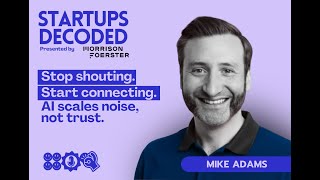
Mike Adams, founder of IntroStars, argues that warm introductions and personal relationships are the antidote to AI spam flooding inboxes. His platform tracks introductions and rewards connectors with commissions, betting that 90% of sales effort should focus on genuine referrals, not cold outreach.
Chapters
And the way they're doing it more and more is to use AI spam filters, which block all this incoming junk. And so think of it as a war of AI versus AI. It's AI spam bots doing outreach campaigns versus AI spam filters. And so AI versus AI is a zero-sum game. It will go to zero where at some point no one will open a single AI-written email from someone you haven't met before.
Welcome to Startups Decoded, the show that gets real about what it takes to build a successful startup. I'm Andy Walsh, 2x exited founder, strategist, and your host. Each week I talk with top founders, investors, and operators to unpack the plays that drive real traction, not just headlines. If you're building something bold, this is where you'll get the honest insights to scale with clarity and confidence. Let's keep growing together. Hit subscribe and share with your community. It would mean the world to me. Morrisson Foster is the legal edge behind the world's boldest innovators. They go by MoFo and are the team behind Startups Decoded. For decades, MoFo has helped startups turn complexity into freedom. Learn more at mofo.com.
Hello and welcome back to Startups Decoded. My name is Andy Walsh. 2026 is going to be a big year. The dust has settled a little bit on AI and everyone is scrambling to think about their path forward, how they generate leads, how they build relationships, and how they differentiate their business. And I'm so lucky to have Mike Adams from IntroStars joining me to unpack this. Mike, welcome to the show.
Thank you so much, Andy. A pleasure to be here. Always happy to talk to really smart guys who get it. And you're definitely one of them. You've been on my show before, so, you know, it was just a matter of time for me to be on your show.
And it's been a long time coming. And We were laughing beforehand and it sets up the topic today very beautifully is that there's another person we both know, Andy Caruso from Nacho Nacho, shout out to Andy. He's the best. And we were talking and laughing because yesterday Andy and I had a meeting and he's like, do you know Mike Adams? If you don't, you have to meet Mike Adams. I'm like, I know Mike. I'm actually recording him on my podcast tomorrow. And that little loop of people. For us is critical to how we move through the world and do what we do from a podcast, business, growth, consulting, everything comes back to knowing people.
I mean, it's all about super connectors knowing each other. So Andy Walsh is a super connector. You're a super connector. I'm a super connector. So it's obviously there's a high likelihood that we know each other, right? Yeah.
Yeah, absolutely. So to give that some color and depth, I love to know a bit about people and not your favorite color and whether you like long walks on the beach or not, but for you, where you came to be in this path that you're on right now, how you started, what you observed, and what led you to create IntroStars.
Yeah, so I've been working in sales and partnerships and marketing for 30 years at big tech companies like Apple, HP, Zoom, etc., but also smaller companies. When I was working in sales, my job was to find new leads, new business. And so I didn't wanna do a bunch of cold calls and cold emails all day. For me, that was just really soul sucking and that's something I wanna spend my time doing. And so someone invited me to a random business networking event and I just started talking to everyone there and I had so much fun. Then went to another event, another event, another event. And very quickly I, I started going to really a lot of events in a strategic way, going to 10, 15 events a week, which is insane, like 3 events a day. And I spoke to so many people then realized that everyone who goes to these networking events are all looking for introductions to potential clients, number one. Number two, are super well connected and love to make introductions for other people too. And so I realized there's this whole ecosystem of super connectors, introducers, and networkers who go to network events day in, day out to send each other referrals and find introducers who can open those doors for them. And so I realized that there's really people who, who spend their whole life doing that, and they, they define themselves as super networkers, connectors, professional networkers, introducers. There's this whole cottage industry of are people who spend their time doing this. And I discovered it's like nearly a mafia of super networkers, super connectors who literally go to all these events every single day. And then the next day they go for coffee to exchange introductions and leads with each other. And so I managed to build enough trust with some of these people to be inserted in that secret society of super connectors. And I realized that's where the money is. If you can be part of that circle because you've built enough trust and you've sent them enough referrals and leads, they're gonna do the same for you. And so I realized that's where the money's on the table, introductions and referrals. And so I thought back then, if only there was a platform to scale that, because lots of these introductions are done under the table. It's a gentleman's agreement. Sometimes you sign a referral agreement, sometimes you don't. Sometimes you pay a referral commission, sometimes you don't. It's got a bit wishy-washy and it's always a bit of a gray area. So I thought if only there was a platform to track every introduction you make and receive to officially tell the world, hey, Hey, this is what I'm looking for. These are types of introductions I want. And by the way, I'll pay you 10% of the deal if you close the deal. If only there was a platform to do that, that would allow millions of people to get warm introductions to their ideal customers, close deals, and reward introducers. So everyone's a winner. So whether you give, you make introductions, receive introductions, you're a winner every single time. Everyone's a winner. And so that was my inflection point to think, no, I need to build this platform. I need to do this. And that's why I built my startup IntroStar. It's really based on my personal journey as a sales guy, looking for leads, looking to find those high net, high net, high value introductions and referrals and going to 1,000 networking events. So people call me here the king of networking after 1,000 networking events. Like I've just networked so much and I enjoy it. Of course, I have a lot of fun and I went by, this was about 10, 15 years ago. I built a pipeline of $7 million of business, just networking, zero cold calls, zero cold emails. Pure in-person networking, building relationships, building trust, and then sending each other referrals. I mean, for me, that is the way of the future. I think everyone should do it. I think that's where we should spend our time and our energy. So that's a bit of my story. I worked in all these companies for 30 years, and then I finally decided to launch my baby into the world. And now I've been working on IntroStars for 2 years now. We've raised a bunch of money, we built a team, we've got more than 2,000 users now in London and New York, and we're expanding to Silicon Valley very soon. So Very exciting. I really want to change the world. I want to inspire millions of people to become professional introducers. For me, that is the ultimate side hustle, the ultimate career path for people who are looking for purpose in life or looking for a way to change the world. Become an introducer, connect people. That's the best thing you can do in the world.
Always appreciate your energy and where you've landed is a result of experience, but also a lot of human observation. People aren't focusing enough on the, on who they're talking to, why they're doing what they're doing and being curious. And Ted Lasso is my spirit animal for folks. If you haven't watched it, please get amongst it. I cry, I laugh, I do all the things, but one of the things he talks about in the show is curiosity. Asking questions and being curious is the most beautiful way that you can connect with anyone, period. And it could be for business, it could be for personal, it could be your future partner. All those things come back to an element of trust. And you talked about trust through that. For you being in places like Apple, HP, Zoom, they're really reputable brands, but you've built trust independently of those companies. A lot of people ride the coattails of where they worked. And I actually am a real anti-X-Amazon, X-Apple, X-Google. I don't really care where you work. Who are you? What do you do? So for you to separate yourself, what are the kind of things that you were doing through that time where you started to realize that trust in relationships were a superpower that could allow you to step forward?
I mean, I realized that if you could build trust with someone, that person will be happy to send you introductions and referrals. If they don't trust you or don't know you well enough, that's not going to happen. And so really it's in everyone's best interest to build that trusting relationship. To stay top of mind so people remember you. Oh yeah, he's a cool guy. She's a cool woman. I'd love to do business together because you enjoy their energy. You enjoy spending time with them, talking to them. And if you can build that trust and be likable, automatically people will be more than happy to send you introductions and referrals. I think it's in human nature to want to help others, and we all love to make introductions to connect people. It's something we innately love. I think it's something in our human nature to connect people. It's fun because For me, it sounds a bit like you're solving a puzzle. You do, you know, people are like puzzle pieces doing their own thing and you want to create order out of chaos. You want to bring them together. You want to attach those puzzle pieces, right? And it's fun. It's like you get an emotional dopamine hit when you do that. And so if you can help others become those introducers by being trustworthy, being nice, and make it very clear what kind of introductions you're looking for. I think that can scale really nicely. So that's been my experience talking to so many people at so many networking events. If you're likable, if you're nice, you're friendly, you're smiling, you listen well, you, you listen more than you talk, important, curious about the other person because you truly care. That will go a very long way to build your personal brand and your reputation that so that people will think of you and want to send you referrals and introductions. Even if you don't ask for it, they'll think about, oh yeah, I need to send an introduction to Mike. He's a cool guy. You just met someone else. Yeah, I talked to Mike. Like you just mentioned, Andy Caruso, right? Hopefully, I'm in his good books because, you know, he's built trust with me. So now he obviously mentions me when he talks to new people like yourself. So, that's exactly what we should all be striving for, I think, building our personal brand and our reputation by being nice to others, being trustworthy, being authentic and vulnerable, opening up, and really being a good listener. I think all these things will go a long way. And a great way to do that is to be vulnerable. You know, I know when you go to a networking event, everyone wants to blow their horn saying they're the best, they're amazing, they're doing so well, they close massive deals. But that doesn't impress anyone. People don't want to hear that. They want to hear your vulnerabilities. Like, what are you struggling with? Well, you know, be humble. Say, you know, maybe I've done really well there, but actually for this other thing, I'm actually not doing well. I really need help and I would love for you to help me or someone else if you know someone who could help me. So show your vulnerability, open up, and that will go a long way to build trust. One of the most powerful networking events I've been to was a guy called Thomas Power here in London. He's an ultimate super connector. Like he truly knows everyone here in London. And he did a networking lunch with about 20 people around the table, and he literally opened up talking about all his life tragedies, all the terrible things happened in his life. It was very dramatic and emotional. There's lots of crying and emotional. But then afterwards, everyone around the table started opening up and talking about their personal life struggles and issues they had in their personal life and their business life. Very serious drama. It was like very, you know, it was very emotional, but that means that everyone in that room completely trusted each other. It was 100% trust because the barrier was gone. Like, it's not about how successful you are. It was all personal struggles you actually had in your life. And that completely changes the whole conversation. And that means you open up, you remove your barriers, and then the person you're talking to will do the same. And that, that's a game changer. So again, I'm not saying you should meet people, network, and instantly start opening up about your personal drama. I mean, obviously there's a balance there, right? It's a balance. I think it's just finding a balance between being vulnerable, but also showing that you have something to bring, right? And that, that will go a long way.
And I can see now that you have your own podcast because you literally stepped into my next question. And in the sequence of the conversation, which is what goes behind trust and vulnerability is a superpower. And people don't understand that the posturing and the term, which I love, which is walking press release. Like no one wants to hear your repetition of your greatest hits. It's right now, who are you? What do you care about? What value do you bring and how do you help other people rather than what do you get from it? And I had David Homan on a previous episode. I love David.
Oh, he's amazing. He's such a cool guy. Oh my God.
He's the most understated super connector in the world. And I've met David by chance at an event, of course, in the world of super connecting. And then I had him on the show and he's written a book, which came out, I'm going to say maybe 4 or 5 months ago, really interesting read about The Power of Super Connection, and he talked about takers and, and it's the opposite of what you're talking about right now, where I feel like there were 15, I'm going to say, different categories of takers and the ones that go to network events and it's all self-fulfilling for them. It's who can they meet to be able to get something that they want rather than attending, connecting, being curious and seeing how they can help someone else. From your experience, I would love to know the giving versus taking. And because in the moment it feels like you have to get something from it and it's a transaction, but playing the long game, put those two side by side. Tell us your experience in both of those.
Yeah. By the way, I had David Homan on my own podcast as well. I've been to a few of his events. Yeah, he's one of the greatest, the greatest, right? And I did buy his book. I haven't read it yet. It's on my to-read list. I've got so many other books to read, but definitely I'm I can't wait to read it. I'm very excited. The thing is, I don't tend to categorize people that much, like takers, givers, this, that. I don't put people in boxes because it's always a gray area, kind of a bit of a taker, a bit of a giver. You know, it's not all or nothing. However, there is a mindset and an approach when you go to a networking event or in life in general, which is if you go to a networking event trying to sell your product or service, trying to find a customer, and everyone you meet in your head is a potential customer. With that mindset, you will always fail miserably because people can sense that, that you're trying to sell them something, that you're not being authentic, that it's all about taking, right? And that approach will actually have the, uh, a counterproductive result that you're gonna end up with zero customers. Everyone's gonna hate you and you're not gonna come away with anything. So the more productive way to do it is to think about building trust and relationships and helping others because that will come back as a potential deal. Not that the person you target will be a potential customer, but that person can introduce you to a potential customer. So really the, the, the mindset shift here is that everyone you meet at the networking event, don't see them as potential customers, see them as potential introducers. And that's a game changer because if you see everyone as a potential introducer, what do you wanna do? You want to be on their good— in their good books and you want them to like you so they'll make that introduction. How are they gonna like you? Make an introduction for them and see how you can help them. So really the best productive way to get more customers is to send introductions to other people and be likable and help them and, and meet them at networking events to build trust and relationships so they like you. And by it, to do that, help them and send them introductions. So the, the best question you could ask to someone at a networking event is, what introductions could I make for you? That is the best question you can ask someone and mean it. Not, don't just say it, actually mean it and follow through, of course, make the introduction afterwards because that will go a long way and that will pay back with return introduction. And so that's how you're going to close more deals.
And I saw a great post just the other day of someone that is clearly in the same headspace as you. And they were talking about their life and how they've grown their business and their community. And they were reflecting on the importance of actually thanking people who have connected you to someone else and that feedback loop. So as an example, if you're in a meeting and, and someone says, hey, I've got a person who's doing something similar, I'm going to connect you. And I think you two can really do something special together. You meet that person, something special does happen. Going back to the person who first connected you and, and just acknowledging and saying, hey, I remember that you connected me to this person. It's going so well. That means a lot to me. It can be a really small gesture. It doesn't have to be, you know, going and taking them out for dinner. Just that return feedback can be really powerful. Have you got examples in your experience? It could be career or even with introverts where that's happened for you, where you're able to give feedback and that humility to acknowledge the person in the start.
If you've got some ones that spring to mind, Yeah, so I don't have a specific example to give you, but it, it's just general good practice to always thank the introducer for sure. Every time I get an introduction, I get lots of introductions. I'm always very grateful to the introducer. I always thank them. Uh, I thank them after I've met with the other person. So yes, that, that will definitely go a long way to improve your personal brand and your reputation and encourage that introducer to send you more introductions, right? For sure. Uh, but then it goes further than that. A thank you note is great, but imagine you get an introduction and close a $50 grand deal. Just a thank you note maybe is not good enough. You should actually pay the introducer a commission, right? Because you wouldn't have that $50 grand deal without them. So, so then I think that goes one step further. And so the way I look at it, I really separate introductions into two separate buckets. There's introductions where I'm just introducing two nice people to each other where they're probably gonna get along and You know, they're probably, uh, gonna help each other with best practices, maybe share information, maybe do a partnership and all that's great. And those introductions are, are your typical day-to-day introductions. But then there's a separate bucket of introductions, which is you're connecting a service provider to a potential client who could buy or that service, that product or service. And for me, that's a separate type of introduction. That's where, you know, there's gonna be money involved because it is a service provider selling a service for a, specific amount of dollars, and that customer could buy that product or service for a certain amount of dollars. So that separate type of introduction typically would do it where there is a referral commission attached, where I know there's gonna be a 10% commission or 5% or 20 or whatever it is, uh, on that deal. So then I obviously want to make sure those introductions are tracked to make sure the introducer gets rewarded. And so that's really— IntroStars, my own platform, is only geared to that second type of introduction. It's only service providers and potential clients you're introducing to them where, you know, every introduction will potentially become a large business deal and the introducer will get rewarded commission. So yes, there will be a thank you note. Yes, they'll get a thank you for sure, but they're always also gonna be potentially a $20 grand check on top of the thank you, right? So, so again, that, that's a different type of introduction and I, I separately clearly separate those two types.
Yeah. And that's a good call out. And whether you've got a formal contract with someone on a referral situation, and I've got some myself and I have my own custom URL. And if someone clicks and purchases, I get a clip of that. And most often I'm not doing it for the money. I'm doing it because it builds a relationship with a partner that's deeper because you're having conversations, you're encouraged to learn more. And I've got one with Cherub, for example, and Cherub is a platform that connects angel investors to founders and it's pretty early on, but it's for me, I, I love it because what it allows is more capital to be deployed. So if I'm able to share that story to folks and let them learn, listen, and find opportunity to invest and or receive investment, then that makes the industry more buoyant. So for me to be able to do that, like the feedback for me is actually understanding what's happening, not the money in my pocket, because it's not a large amount of money. But that's something I have in a formal capacity. But I love what you said there. I never thought about it, the informal one. And being an Australian, beer currency is a big deal. So if, if you've got a, a friend that's a plumber and they come and do some work for you for free, buying them a case of beer can sometimes feel like a $300 investment when it probably costs you $30 or $40. Yeah. And there's something quite nice about that cuz it's very human. Yeah. But if you are someone who opens up a deal to your example of $50,000, being able to just acknowledge the effort and ability that someone has done because it's, they've invested a whole bunch of time building their own network and relationships and you're able to ride the coattails of the time that they invested to do that. And that's been a benefit to you. So a financial obligation is great. And I'd love to know if you don't have a formal deal or a formal platform, have you seen any fun ways where rather than just transferring some money in, like, do you take someone out on a lavish experience? Where they get to have fun spending your money. Like, is there something you can do there that's more playful rather than just cash in bank?
Yeah, to be honest, the motivation for most introducers is not the money. Motivation is to help someone, help two people actually find each other, create opportunities, and improve their personal brand. I mean, that's really, every time you introduce two people, you're improving your personal brand and your reputation. So that's really number one. And then yes, the money is just a thank you commission because you made it happen, but Really, the motivation is always your reputation, personal brand. That's number one, the number priority for everyone, because if your personal brand reputation are really good and high up, automatically you're gonna get more money, you're gonna get more customers, right? That's just automatic. It's really a consequence of that, meaning your number one priority is always your personal brand and your reputation. And so everything you do to improve that is a good thing, which is making lots of introductions. But yes, on top of that, you get thank you notes and you get obviously paid commissions, et cetera. And then going to your other example, yes, that could also be a nice dinner or invited to get invited to an event. So me, for example, I've helped so many people. I get invited all the time to events and dinners where I don't pay anything, like even paid events. I get free invites all the time because people, again, I built my reputation and my trust and my personal brand. And so to a sufficient level of people will say, hey, we need to get this guy Mike at our event. He's going to bring some good value there. And so now again, I get all these thank you events and invitations to various things just because I've been helping so many people over time. And so I think that should be the mindset for everyone. Always help others. But then yeah, if a large deal comes out of it, it's great to get paid a commission. Sure. Everyone needs to pay their bills and their mortgage. So I think it's only fair, it's fair compensation that an introducer would get paid a commission of a large deal if that happens. But obviously for that to happen, you need to have a signed referral agreement in place, you need a tracking mechanism, etc. So that's where, you know, Intrastars would do all of that for you in one click instead of you having to sign a bunch of documents. It's all instantaneous, one click away. So we just make it so easy, it becomes a no-brainer. It's like, yeah, it's obvious. Of course it's on Intrastars. Why, why wouldn't it be? It's the only place to go, right?
If you're building the future, you deserve a legal partner built for it. Morris Foster, the legal edge behind the world's boldest innovators. They go by MoFo and are the team behind Startups Decoded. For decades, MoFo has helped startups turn complexity into freedom. They combine deep market insight, tailored legal strategy, and a MoFo passion. Discover how MoFo can support you. mofo.com.
I need to spend some more time on there. I've been slack and I do it just informally all the time because I've got an interesting network, but something that you said there jumped out to me is that when you have a strong reputation, you then start to get invited because having you attend becomes a catalyst for the person who's hosting the event, right? If I'm going to an event and I don't know Mike Adams, and I meet you in the room and I start talking about what I'm up to, I ask you some questions and you connect me to 5 people that change the trajectory of my own business. That obviously is a good brand halo for you, but for the person that's hosting the event too, because for me, I'm going to go, I want to go back to that person's events because I met someone like Mike who really helped my business. So the brand value that you bring as a human being elevates the experience that you're part of. Absolutely.
I think in the age of AI, one thing we need to focus— each and every one of us has to focus on is their personal brand and their reputation and trust and human relationships. That really should be the major— whatever job you have, whatever company you work for, whatever you're doing in your life, work on relationships, on personal brand, on trust, on reputation, because those are your most important assets, no matter what you do in your life. On a personal level, on a business level, on every level, at every level. I would say that.
I couldn't agree more. Yeah. Yeah. Powerful statement. And for me, the last 2 years, I've spent a lot of time for no direct benefit other than earning trust and building reputation. And I would go sometimes 3 or 4 events a week in New York to be able to meet people, learn, grow. And now that I'm building a business again, the ability to not recall, but go back to people and say, it's good to connect with you again. Are you interested to be a part of it? I find that it opens door after door after door. I'm not trying to like feel like they owe me a favor, but building a trusted relationship means that when there's something that I see value in for both of us to do together, they'll take a meeting instantly. It's something that, that for me, I don't have to hustle and do cold outreach and I want to tackle that one next because that's a big one this year.
But yeah, I mean, yeah, helping others and being really someone people think of in a good way, that will help you in every aspect of your business. You're going to get more introductions, more referrals, people invite you to events. And so do the same for others. Do to others what you want others to do to you, right? So if I want to get invited to events and I want to get loads of referrals, what should I do? I should invite other people to events and send them loads of referrals. Right? Do that to other people, they'll do it to you. Simple as that.
So simple and so impactful though, as well. One to write down if you're listening, just think about that, that flow-on effect. It may feel like you're giving away all of your time and energy, but that comes back tenfold in my experience. And you've built a platform based purely on that human behavior of the ability to get formal kickbacks, but also build a deep relationship with like-minded people. That can play a role in your own journey, either immediately or sometime in the future as well.
For sure. And you have to play the long game. Think of everything in life as the long game. It's not short-term. It's not like I send you a referral tomorrow, so I expect you send me a referral 2 days later. I mean, that's just not the way things work. I mean, this is a long game. You're building a long-term career, long-term reputation, a long-term personal brand. So always think of longer term, right? Uh, it's not everything's not instant short-term, instant reward, instant gratification. No, that's not how it works. Like you have to be a bit more thoughtful and strategic about that.
And the important thing there to take away is that you're not building a favor bank. You're actually building trust. It's just because you've done something for someone else. It doesn't mean that they owe you. It's not an IOU situation of like, Mike, I got your coffee last week. It's your turn this week. It's, it's deeper than that. It's adding value to someone to help their journey puts a positive halo around you as a human being. The right person is going to remember that and then give you something back at some point, but you don't, you're not there to call on it. There may be a time when you need a favor, but it's not an obligation. It comes through mutual trust and All of that comes out in the wash if you believe in, in the system and the process. And that's what I'm learning from you today is that you've done it. You've done it over a long time and you've earned it and you've created a business out of it. It's human psychology. We don't evolve that quickly where we're going to stop doing that. I think people feel like that if someone does the right thing by them, they want to help them out in some capacity as well. And that's a, that's a given in how we interact.
For sure. The only question is where do you start? You know, you could do a million things. So the easiest way to start is to go to a bunch of networking events, talk to random strangers and ask them, hey, what introduction can I make for you? Who could I introduce to you? Make those introductions and that's it. That's enough to get the ball rolling. And, and it's very easy if you don't— let's say you start from scratch, you're like 22 years old, out of college, you don't have a huge network of people you could introduce. It doesn't matter. Go to 2, 3 networking events, meet 5 or 10 people per event and ask them, what introduction could I make for you? And over 2 or 3 events, you'll already have met enough people that you can already start introducing people to each other. It, it's really that simple and everyone can do it. You don't need special skills. You don't need lots of money. You don't need any— most of these events are free. So again, it's very easy to get started in that mindset that you go to events to be likable, to have fun, to be friendly. Ask people who they want to meet, and after 2 or 3 events, you'll know enough people that you can start making those connections. And that will go a long way to build your personal brand, your reputation. Everyone will like you, and you're going to have fun. Most importantly, you're going to have fun. That's important too, right? You need to enjoy it. Enjoy the ride.
Yeah, you do. And if you're not making friends and learning and getting inspiration and connection, then you're not living.
It's—
we're not here just to transact and make money. Work is such a large portion of our time through the week. So make it part of your life where it's a passion and you get joy and you get that feedback and things that add to it. So here's the sentiment. I think it's beautiful as a human, but also from a business standpoint. Okay. I want to be able to turn up the spice level. We were laughing before. Cold outreach is something that has shifted dramatically. So through 2025, we saw the build out of AI automation, but it went much deeper and Let's use Clay as an example. Clay has got huge traction because it allows you to look at who your ICP is, find them, get messaging in front of them, and basically end up with a warm list of leads that you can engage to sell whatever you're selling. But now 12 months down the track in the start of 2026, what has happened is that more products like Clay have come to the market. People are getting all of these leads, but the person who is being chased is getting so many of these people reach out to them that it can become overwhelming and it's hard to filter one from the other. So there's a little bit of oversaturation. And for me, the ability to automate it is one thing. Cold outreach is another approach to do that. And those two things are being compared side by side, but to give it a full frame of reference, let's look at cold outreach. And there's certain individuals that can just spam and spam and spam. And it feels like almost bully other people into buying whatever they're selling. And it's like preying on the weakest person that has a sense of obligation that they have to buy it because they've had so many conversations now. So to answer the big question, in 2026, is cold outreach dead now with automation tools, or is it still playing a role in how you start to think about building your own network?
Well, two things. What you just said there, you said that Clay gives you a list of warm leads. I would strongly disagree with that. Those are cold leads, not warm leads, number one. And then you said it's slightly getting saturated. I would strongly disagree with that, saying it's completely a billion percent oversaturated. We're being bombarded and spammed all day long, every day with ridiculous AI spam bots spamming every human being on this planet. Every 7 billion of us are receiving ridiculous amounts of AI spam slop, right? And so, and it's just gonna get worse and worse and worse and worse. Now imagine if you're like a senior person in a big company, a Fortune 500, you're a C-level executive, you're being spammed even more than everyone else because everyone's trying to sell, everyone's trying to sell to you, right? And so I can't imagine being a C-level executive in a big company, your inbox is just full of spam all day long from AI spam bots. And all these companies selling these AI outreach tools are promising super personalized messages. No, will not be blocked as spam. It's so personalized. It's all bullshit. Like people can read through it instantly. It is so obvious that all these messages come from spam bots, even because even when they're too personalized, it makes it look even more like spam because you know it's been written by an AI spam bot. When I get a super personalized message which tells me, hey Mike, I love what you wrote there and I love that post you did 3 weeks ago and I love what you're doing there. I mean, it's clear it's not a human being who's looked at everything I do. It's clearly an AI bot. So the problem with all of this, it's becoming insanity where 90% of all the incoming messages we get in our inbox, whether it's LinkedIn or email, is all AI slop. That's all there is. And so what's happening, everyone is becoming desensitized to all this AI slop. And we just assume that every single message we get is AI slop and we just delete it right away. Don't even read it. It's just like, what's— why, why waste my time reading a message written by an AI bot? And since this is getting worse and worse, we're, we're literally not reading any more emails which come from people you've never met before. And so in this age of AI slop extravaganza, the only way around it or against that is to focus purely on warm relationships, on people you actually know, people you've actually met in person at a networking event. You actually know that person, and if they send you a message, you will read that message because you've actually met that person. They're not some AI bot you've never heard of. And so that's the game changer, is focusing really your efforts on warm messages to people you actually know, you're actually connected to. To. Now, easier said than done. How do you actually scale that? Obviously, that's the question, right? And so the, for the first thing you need to understand is that all these people being bombarded by this AI slop are becoming more and more sophisticated to block all this AI spam. And the way they're doing it more and more is to use AI spam filters, which block all this incoming junk. And so think of it is a war of AI versus AI. It's AI spam bots doing outreach campaigns versus AI spam filters. And so AI versus AI is a zero-sum game. It will go to zero where at some point no one will open a single AI-written email from someone you haven't met before. And so we're not there yet. There's still a bit of— no, some is still coming through and there's still a tiny, tiny, tiny conversion rate and open rates and click-through rates and all that stuff, that's all going to zero. Don't be oblivious to it. It's obvious. We all know it. And so when people say and proclaim out loud, cold outreach is dead, the death of cold outreach, it's not dead right now today. It's not. There's still a bit of conversion rate, but it's clearly going in that direction. The writing's on the wall. It's super obvious. It is going to zero at some point. Right. And so what is the antidote to all of this insanity is to really focus your effort. If you work in sales or you're a startup founder, you wanna get more clients, focus your efforts on warm introductions and warm referrals from trusted people. So how do you do that? Well, you build a scalable referral program where you incentivize people to send you warm referrals and warm introductions to people they know. And so that is really the secret to get new leads and sales and close business in 2026 and beyond. And so my advice to any startup founder or B2B sales leader or sale or CA, CRO, or CMO, stop focusing 90% of your efforts on cold outreach and AI spam slop and focus 90% of your efforts on warm introductions, warm referrals, referral programs, in-person networking events, personal brands, reputation, you know, those are things, the things that matter. And again, that's still a big shift. People are still in their mind when you talk about lead generation, the term lead generation. If I say those two words, lead generation or lead gen, the first thing that pops into your mind is a cold outreach campaign, right? An AI outreach to send a million messages to a million people. And we need to change that. You and me, Andy, Andy and Mike, we need to change that around. And change what people think about Z generation is all about warm referrals, warm introductions, in-person networking, personal brand, reputation, content marketing. That's where it's at.
I realized through that, that I need to get some kind of spice meter and it's, it's some kind of detector that can look at the energy and some of the words that are chosen to elevate how far it goes, but it's such an important debate and I love that you're so passionate about this because it's not just an opinion, it's, it's earned experience that you've built through a period of time is human relationships. And for people that are listening, just stop and pause for a second and think about human relationships. Human relationships are not going away. It's tried and tested for a reason. You can try and automate being a human, but the problem is you reach saturation point to what you were saying. And I go back to an example that I've lived and breathed myself back in the day, which is around media and advertising. If you look at digital media now, most platforms are dying and not even a slow death anymore. The ability to sell ads digitally is getting harder and harder. So they just can't sustain that because what happened is that as they got more data, You could do retargeting and then it went into programmatic where programmatic allowed you to target certain people on platforms and get cheap inventory. And they had a lot of intelligence behind it to allow you to be hyper-targeted. But what it meant is that people were so saturated with advertising that the impact and effectiveness of those went down and down and down and down because as human beings, we just can't sustain that level of inbound information. And there's a book that I tell everyone to read, which is Johann Hari's Stolen Focus. Beautiful English author, deeply researched, talking about the impact of overstimulation on our ability to focus, on our ability to be effective, be able to have human relationships. And it comes back to this thing around, we are hardwired to be human and human means you have a tribe of people around you. You have stories that connect you and unite you, and there's things that happen in person. So to be able to continue that human relationship and double down, because human relationships aren't going away. There's no technology that's ever going to take away you and I going for a beer, Mike, and talking about the state of the world. I can't send someone on my behalf to have the in-depth conversation. And if that ever happens, like, please take me off this world because I love human connection. So that's, that's me and my soap. Sorry, what were you going to say, sir?
Yes. And getting a beer with someone. You don't want to take that out. Yeah.
And there's a great anecdote I heard through someone else's podcast actually called The Imperfects. It's an Australian podcast. Really interesting look at that doesn't matter what you do as a human being, you always want more. And understanding that everyone is vulnerable, everyone has things that they deal with and challenge with. And he gave an example where he had some time where he deliberately separated himself from his phone and he went to a bar and catching up with a friend and his friend went to the toilet. I'm guessing it was a number 2 because he was gone for a while, but in that moment he didn't have his phone. So he was like, what do I do? And started talking to the guy behind the bar and the guy behind the bar had, had some relationship issues. He was really down and just needed someone to listen to him and he was a perfect stranger. But just having that moment for him to share what was happening in his life, get it off his chest. And he didn't talk about what happened because it wasn't his friend, but he said that he had a sense of this person getting eet and some relief by just articulating what was going on. And that was a positive interaction because he didn't have his phone. And I love those kinds of stories. It makes me feel good about being human and actually doubling down on what you're doing. So To help us understand a bit about IntroStars, I'm on the platform. I'm clearly not using it enough that I don't see that money flowing, but you've had great success and it grows quickly. Can you tell us a little bit about how it works and for people like me or others that are aspiring to be super connectors, how does it work and what's the best way to approach joining?
Yeah, it really, it's, it's tapping into everyone's desire to be a super connector, whether you're already a super connector who loves to make introductions or just wanna get into it and start to make introductions, you sign up to IntroStars completely free. It's introstars.com, free of charge, one click you're in, super easy. And as soon as you're in, you can start seeing what other users are looking for in terms of introductions. They describe their ideal introduction, who are the people they wanna meet. And so you just browse through that list. List of people you could introduce. And if you can think of someone in your own network who could be a match, you then make the introduction on the platform. You click on a button, it creates an email template, and you send it to the person you want to introduce from your own emails. So you just— we just write it for you. So super easy, one click really. You make the introduction, it's then tracked over time. And if 2 months later that introduction ends up in a deal, you get paid your referral commission. You get an email saying, hey, there's $3,000 waiting for you. Click here to retrieve it. Simple as that. So really as an introducer, it's just a way to help you make more introductions and improve your personal brand, improve your reputation as a great connector, as a great introducer. And then once you start doing lots of introductions, you get lots of points, like IntroStars points, like a gamification. And then when you get enough points, you get a badge to say you're officially a super connector, and you can publish that badge on your LinkedIn profile to tell the world you're a great super connector. So people will come to you for more introductions. You can help them and of course they'll help you in return. So it is really a great way to enhance your personal brand and your reputation. Now, if you're on the other side of the equation and you want to receive introductions to your ideal customer, you're looking for referrals, you're looking for warm leads. Well, while you're logged into Intrastars as an introducer, there's a little button on top to publish your own referral request. You just click on that little button and then you spend 2-3 minutes describing your ideal introduction, your ideal customer. and then you post it on the website. And once it's posted, you've got more than 1,000 introducers are gonna see that on, on their feeds and they can start sending you referrals. So really simple. You can use it as an introducer or as an intro seeker to receive intros. So you can be on both sides of the equation. I think most people love to make introductions for others, but are also looking for introductions to their own ideal customers, of course. Right? So it works both ways. Uh, it's really super easy to use. Like you, you don't need a long tutorial. Like you just sign up and you figure it out right away. It's very obvious. We, we designed the user journey to be really minimal friction. It's like very, very simple. And we use LinkedIn login, meaning you don't have to create a login or password. We just use your LinkedIn authentication. You're instantly logged in. And so that makes it so easy. Think of IntroStars as an add-on to LinkedIn to track introductions, and to also get rewarded. When a deal gets done, you actually get paid money. So again, everyone's a winner. You're always a winner on IntroStars.
I had a meeting cancel immediately after this recording, and you know what I'm going to do in that hour time that I had? I'm going to actually get on there properly because I know a lot of people and, and I know that I, and not to monetize them, but if I'm connecting two people where there's a mutual benefit, like everyone is winning in that.
Of course, everyone's a winner. And I think that's a very important aspect of every relationship in, in the world is you always think of helping someone else so they're a winner. And then in return, that improves your personal reputation, your personal brand, and you potentially even get paid money. So you're a winner as well. And then the people you introduced, they're a winner as well because they get to meet someone they could do business with. So really everyone's always a winner. So So going back to David Homan's book about takers and givers, I believe that everyone should be a giver and a taker. And you, you give and you receive, or, and that's a taker. I would say a receiver, not a, a taker. That's probably a negative word. So let's say everyone is a giver and a receiver. Let's put it that way. Right. And I think it's in everyone's best interest to, to help others, to get help in return. So again, always a win-win situation. Everyone's a winner. And I think that again, that's a long game, right? If everyone's a winner, Everyone's gonna do more of the same, help each other, and it creates a positive wave around you. So I look at it, I look at it not just from a business point of view, I look at it from a spiritual point of view, and I really mean it. On a spiritual point of view, bringing people together, connecting people makes the world a better place. You're literally creating positive energy and aura around you. You're creating new opportunities. And so really my personal spiritual mission in the world is to connect millions of people and to inspire millions of people to become super connectors, to become introducers, because I truly believe that will make the world a better place, bring people together, uh, and create opportunities for everyone. And so it's a very powerful statement. It's not just about business and money, et cetera. It's about the bigger picture as well.
Beautiful way to close out today and to have a couple of closing remarks. What we got into there, cold outreach is not dead, but it's dying. AI outreach and lead generation is also saturated and a bit of a hot mess. But the relationship is something which is tried and tested for tens of thousands of years, is talking to another human being. And to your point around spirituality, I think having human connection is what we need more than anything in the world right now. So if you can do that and make money off it and build a business off it, then you're in a great place.
That's it. And it's easy. Everyone can start making more introductions. It's a it's very accessible, right? It's not the elites, it's not a closed group of people. Everyone, everyone can get on the bandwagon and start making introductions or more introductions. I think, you know, let's just do it. More is better. More introduction is always better.
Love that. Mike Adams, founder and CEO of IntroStars. Thank you so much for joining today. This has been an absolute treat.
Thank you so much, Andy. Really appreciate the conversation. Station for sure.
Thanks for listening to Startups Decoded. If today's conversation helped you think differently, share it with the founder in your network, and don't forget to subscribe for real-world startup insights every week. We really value your support. If you're interested in partnering with us, email hello@startupsdecoded.com. I'm Andy Walsh. I'll see you next week.
More from Andy



EP#88: Why Most Founders Misread Their Own Traction. Vanessa Larco - Premise VC

EP#87: Founders Obsess Over the Raise. Investors Care About This More. — Carina Cunha






Ep#86: Early Decisions That Define Your Startup Forever. With J.P. Morgan Asset Management
