S2E21: Specialists Optimize. Operators Build Companies. Casey Woo (FOG Ventures + Operators Guild)
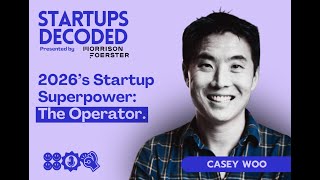
In this episode of Startups Decoded, host Andy Walsh interviews Casey Woo, founder of Operators Guild and Fog Ventures. The conversation traces Casey’s personal journey from a Harvard‑educated investment banker and hedge‑fund analyst to a fintech startup operator, highlighting how the lack of fulfillment in high‑paying, title‑driven roles led him to seek breadth and team‑centric work. Casey explains the rise of the "generalist" operator: a professional who tackles multi‑departmental problems without being confined to a single title, viewing a business as a set of daily problems. He describes the Operators Guild – a paid, global community of 1,200 operators across 20 chapters that shares real‑time solutions via an online forum, archived posts, and live Q&A, enabling members to learn from each other's diverse challenges. The discussion defines the distinction between founders and operators, noting that founders start companies while operators (often second‑in‑command) execute across functions, and that early‑stage founders often act as operators themselves. Casey emphasizes how modern tech stacks and AI have shifted from specialist‑only tools to horizontal platforms (workflows, BI, system intelligence) that amplify the operator’s leverage. He introduces Fog Ventures, the operator‑led syndicate that invests in B2B infrastructure tools, leveraging the Guild’s 1,200 decision‑maker members to provide customers, talent, and rapid sales demos for portfolio companies. The interview also covers practical advice for aspiring operators/solopreneurs: join a community, gain first‑hand experience, master "brilliant basics" like unit economics and sales efficiency, and use first‑principles thinking. Throughout, Casey stresses authenticity, the importance of environment over titles, and the value of community‑driven learning. The episode ends with contact details and tips for founders seeking investment.
Chapters
When you are a air quote generalist, we don't really go by titles, even though there's the common titles are there— CFO, COO, Biz Ops. You realize a business is just a set of problems. That's all it is. Every day is a new set of problems, and a lot of the problems are multi-departmental. So you'd be surprised how there's a new problem set every day that someone is facing. So we have such diverse operators in the group that you can immediately say, okay, is this something that has already been answered.
Welcome to Startups Decoded, the show that gets real about what it takes to build a successful startup. I'm Andy Walsh, 2x exited founder, strategist, and your host. Each week I talk with top founders, investors, and operators to unpack the plays that drive real traction, not just headlines. If you're building something bold, this is where you'll get the honest insights to scale with clarity and confidence. Let's keep growing together. Hit subscribe and share with your community. It would mean the world to me. Morrison Foster is the legal edge behind the world's boldest innovators. They go by MoFo and are the team behind Startups Decoded. For decades, MoFo has helped startups turn complexity into freedom. Learn more at mofo.com. Hello and welcome back to Startups Decoded. My name is Andy Walsh. In 2026, the world is changing a lot. People will require to step up and those people are operators. And to help give some more color to that, I've got Casey Wu who plays two roles, but first, Casey, welcome to the show.
Thank you for having me.
I was just getting maybe a little too excited before we jumped on here. As a purebred generalist who once didn't fit into the world, I was told that I didn't fit into a box, which made it hard to progress. So I took matters into my own hands and basically built my own career. But if you're a generalist today and you can do a breadth of skills, it's now become a superpower. And today we're going to really focus on that growth as far as how you learn a breadth of skills in your career, how you use it to scale a startup. But to give us a bit of a foundation about yourself and what you're doing, I'd love to look back and where you first started. You're a trader and then you made the leap from there into startups, which feels a brave move, but talk us through that. Decision and—
Yeah, so, uh, not specifically trader, but I was an investment banker, basically Wall Street. Um, a book I'm trying to write, you know, called, working title is Black Sheep, is I went to Wall Street because I was, I was told, you know, I studied economics at Harvard and they said, all right, that's the, that's the path. You go to a place called Manhattan, get an investment banking job, and then after the investment banking job, There's only one last step. You get a private equity or hedge fund job and you're golden. And it is, it is a really nice path. It is an amazing career. And I got to basically the second step. I was at a hedge fund, quite prominent one. It was amazing. I was 24, overpaid, had a great corner office. Everything was great. And, uh, and then I, something was missing for some reason. It was like, I don't know what it is, but is the job great? Is it intellectually stimulating? Yes, but I'm not excited. I don't know if I can do this for 10 straight years. And yeah. And so long story short, I left, joined a, after 8 years of Wall Street, joined a 10-person fintech SaaS startup in New York, or otherwise known as Silicon Alley, 2010. And I loved it. I can talk a bit more about that, but then I fell in love with basically building at early stage.
And when we first spoke, you were talking about eating glass, which is a term that gets used in the startup days, particularly in that growth hacking development where you're trying to establish a business, set up foundations, and get some sense of control ultimately to know what you're doing where you're not spinning every minute of every day. So the contrast for you to go from the investment banking world into that, like culturally is hugely different, but what you did learn and is now ultimately what you're doing today is that you have to get your hands dirty in so many things. In that role, the breadth of what you did, can you give us just a bit of a taste on some of the things that you were doing?
Yeah, so it was a, you know, sub-20% of the time you know, type of size company. The titles, you know, I had title at the time was, you know, head of finance or CFO, COO, which I soon look back in hindsight, it was basically anything that needs to get done that a specialist is not doing is essentially what it is. So I was obviously covering finance, um, you know, obviously the exec team and strategy, fundraising, moving offices. I remember literally Monday night moving boxes around, making sure everyone's laptop, everything was all set when they come in Monday. Big office move, all the things. But I, I was like, why do I like eating glass? Like, why do I like making, make a lot harder to make money, right? I mean, it's, it's emotional, it's physical. You have limited resources. It is a low cash, high equity type of situation, right? So it was very different, you know, but I realized a few things. One, I missed a team. So I was a hedge fund, uh, analyst or manager. And I, while you, no one ever told me a corner office is lonely or can be lonely. There's not a lot of people visiting, you know, you just write your stock thesis. And I realized that mattered more than the prestige or the money. It was the environment. So I write about, you know, when you look at careers, look at the different lens. It's not just the title and the pay. I mean, those are important. It's the environment. Do you like to be outdoor? Indoor. Do you like to be at a desk? Not at a desk. Do you like to work on a team? Not on a team. You know, there's all sorts of things. And anyhow, I realize I'm very team-based. I love to build. In general, consulting, banking, investing in general is more of a transactional and advisory sport. Lawyer is great. Those are the common prestigious paths. But what I, no one ever told me is those are more transaction-based. Building a tech company. Is building and it's, it's very different. You go from 1 person to 3 people at a company, that's building, that's different. No system to a system, no process to a process, trying to close a customer, fixing that sales deck. It is infinite build. And that is what I realized was what I was addicted to. It's like almost like a business artist.
I love that term, business artist. It's, it's the ability to be pragmatic at a time when everything feels like it's overwhelming. There's no path forward, but be able to almost have a vision of where you're going and the task project, things that you're working on in that moment, being able to step forward with confidence and a little bit of grace under fire. And the breadth, again, going back to that anchor point, what you learn is to be resilient, but you also learn skills in different areas because you have to. It's a necessity. There's no one else you can turn to for advice and no one else is going to get it done. So you just get in and get it done and you define your own success. And with that comes a lot of pride in what you're doing and confidence as well. So to go from a place that was on paper, as you say, textbook, sounds dreamy, corner office, well-paid job to the opposite end of the scale. But fast forward to today, if you hadn't taken that leap and got your hands dirty and learnt those breadth skills, you wouldn't be able to do what you do today. And I see each time we talk the passion that you share by having that experience. And I wish I'd known you back in the day when you were 24 and had that same conversation to get a sense of what you were like. And I don't know if you've reflected on that. But before we go into what you're doing now, how do you see the two versions of yourself in who you are today versus who you were when you had the corner office?
Yeah, I am far more authentic to what I want to do every day. That's a huge difference. It's the whole, like, I don't feel like I'm working. I'm much more highly convinced of why I do what I do, why building is something that speaks to me more than another profession, what types of environments get me going versus deflate me. So what energizes me versus not. But yeah, before it was, I write about this in the book, I was following a path, which is very reasonable for someone that's younger and is not sure what they want to do yet. And those paths are very well trodden and so many people go into them, you know, legal, doctor, engineering, consulting, Wall Street, but it's only until you start to experience different environments, will you really find out who you are. And so that's what I tell people is whatever you're doing, what is energizing you and what's not. Generally, if it's not a lot, you'll move, you'll change, you'll find something else until you do. But yeah, I'm much more energized today. I think my impact and mission is a lot more pure, which is helping builders because I authentically am one. And yeah, so excited to share what I'm up to now, but I'm much more authentically enjoying what I do every day.
It's a beautiful look at the different paths that you can take and ultimately what society defines as success rather than what you find within yourself to have purpose. And outside looking in, people look at you based off what you've done and they'll have points of view even without knowing who you are, right? So to be able to find something that drives your own purpose, it's allowed you to have not only the conviction, but the rigor and I guess confidence to be able to take that step forward. So right now you've got two things that you're working in. It started with the Operators Guild. Can you tell us a little bit about what that is and the function that it plays?
Yeah. So the Operators Guild was started after I got, I had a rude awakening coming from New York to the Bay Area. So when I came off of Wall Street and one startup, and I came to the interview in, at tech companies, I found out very quickly finance and operations and business generalism was not really valued, or I think really understood of what it could do for a company. So basically the question I got was, do you code or do you sell? Because everything else is back office. Finance? Oh, are you an accountant? Are you doing my taxes and my, um, expense report and budget? Is that what you do? Otherwise, you're not a 10x engineer. You're not a 10x head of sales or product or whatever. So I got lonely. I tried to join a CFO group. No offense, it was kind of like Dilbert-ish. It was more, I think what I felt more siloed. Uh, and I just didn't feel like it was me. Tried to join a founder COO type community. Felt a little bit more high level, a lot of fundraising, VC stuff, a little less building at the time. Okay. Also wasn't me. And then I just couldn't find the community. So then I started my own with, um, a co-founder innocently. I was a 9-person lunch group of VPs of finance and biz ops and ops that are all in this, like, we don't really fit a silo and yet we're not a founder founder. What are we? You know, the COO slash CFO. You know, became a very common head of biz ops. And that 9 is now 1,200. It is the only professional community I'm aware of that's a paid community that has 100 and organically. And that's, it's significant. Meaning since then I held 6 different startup jobs, COO, CFO, interim CEO, janitor, you name it. But along the way, Operate As Good would just keep growing. Anytime you see something grow that's paid, right? Not free. Free is, you know, a different type of growth. Something is missing in the world. It's called reverse product market fit. If people are coming to your door for something that you never advertised, okay, it's wanted. What is it? So what is it? And that was the impetus of the book, is that, uh, the Operators Guild is now home to some of the best scalers in the world. We are the horizontal specialists at being generalists. Think Special Forces for business. It's high stakes. You're gonna run outta money, generally VC-backed hypergrowth tech companies. But scaling is, is a, is a new profession at early stage. And so that's what Operators Guild is. We're 20 chapters around the world. Think, you know, YPO, you know, any of these professional organizations with events, networking, and it's fantastic. You know, we have incredible members from seed to pre-IPO, mainly the Series B, C, A range where you're doing everything.
And It feels like that it's been so timely as well. And whether you had a crystal ball as far as where the future would go, because the role of operator has changed significantly in the last 2 years. It's been really tightened up by definition as far as what that person does. Before it was someone that had a breadth of skills that could do a lot of things concurrently. And now the terms founder and operator are used sometimes interchangeably within the Guild itself. Have you put definition around founder versus operator, can they be the same thing? Are they separate? Is it stage-based? Like, what does that structure look like?
That's a great question. Founder and operator are different. To me, founder is distinctly was different because they started the business. A lot of founders are operators, but an operator is not necessarily a founder. You know, the other way of thinking about it is, you know, the number twos and threes are the operators, right? And the number one is generally the founder and/or operator. Some founders are more visionary, big idea based. They're a little less operator. To me, an operator or scaler is business first, finance second. I'm sorry, business first, function second. They don't really think of themselves as a department or function. So I kind of joke, I was a 5-time CFO, but I wasn't a CFO. I wasn't a finance person. I'm T-shaped. I understand business in general, but I spike in finance. It's very different than I'm a finance specialist. So, so yeah, so the operator became a more formalized profession, but there's no title for it that there's no single title for it. We come in different shapes and sizes. Very common ones are COO, VP of Ops, I, I think strategic finance, Biz Ops, Rev Ops, Chief of Staff. And then of course, you know, there's country managers, general managers of business units. And the reason why founders are there is because if you're early enough, you pretty much do all those jobs. You know, if you're a sub-50-person company and you're the founder, you're doing a lot of generalist roles until you hire your head of finance, your biz ops, you know, so it's really a gap filling role. Yeah, but I think early stage founders and early stage operators are much closer together aligned than late stage founders versus late stage operators.
I would agree. And in my own business, we grew from zero. I had two co-founders, uh, to about 35 we peaked at, and my role was literally an operator. So my day-to-day, I was strategy in the brand strategy side, creative strategy, but I was also CFO and COO. So I was running the ship while also overseeing all of our clients at the same time. And I lived and breathed what happened as we grew. I put on a bookkeeper and then a finance director, and then I had an operations manager and basically split my role out across multiple people so I could focus on what I needed to do. But For me, having the breadth of skill was amazing because anything that happened in the business, I had such deep historical knowledge that allowed me to make quick decisions, look at data based off operating procedures, templates of reports, et cetera, that I'd defined and built myself. I could pick variances like nuance in data and things to be able to move at pace. And with the right people around me, we grew really quickly as a result. So I lived it outta necessity. But it was critical to the scale of our company.
Yeah, absolutely. No, it's, it's extremely critical now as a role, as critical as engineer, as critical as sales.
So in that time that you've had the Operators Guild, how, how old is that business now?
It's about almost 11 years. Yeah, 11 years. Yeah. It's 11 years old.
Yeah.
20 chapters around the world. We're director and VP and C-level. And then we host CFO Summit, OG Summit, and Demo Day. So for all the operator tools, but essentially the, you know, you can see by the growth of the organization also is that how much the profession is formalizing.
And what we've observed mainly in 2025, it kicked off in probably 2023, 24 now is a tech stack that allows operators to actually shine. So the ability to get a lot of things done in a turnkey manner with a range of platforms now means that. Depth and breadth of skill is, is that superpower, which we touched on at the start of the show. As far as your insights on what you're seeing, that, that breadth, do you think that that operator role has single-handedly now created the ability to have more companies growing quickly, getting market share and single-handedly change the nature of what a startup does today?
Absolutely. I think the tech stack is moved toward the generalist. Uh, it used to be the tech stack was Salesforce for salespeople. Atlassian for engineers. Those were the first-class citizens. And now they're like, wait a minute, workflows, project management, productivity, business intelligence, systems intelligence. Those are all horizontal, not vertical. But thanks to the operators, I think, who have surfaced it, you know, who have shown what system intelligence, business intelligence can do aside from building a good product and selling it, you have now AI helping do that. And And if you think about, if you actually think about what operators do that's unique is that we're horizontal. So we are taking multi, multiple functions or multiple departments of stuff and putting it together or working with it together. For example, sales efficiency, that is not just sales or marketing, it's sales, marketing, and finance, right? So you have to combine that to get sales efficiency or BizOps is combining different things to make something launch. So there you have it. So AI, what's unique about AI is that it takes unstructured, heterogeneous, not homogeneous data and can make sense of it. Well, what do you know? That's pretty valuable. You know, to take product data and mix it with customer data and mix it with, you know, finance data.
Woo.
That's really interesting unto itself by itself is less interesting. So business intelligence now, which is an operator's role, I think we're good. It's, it's very valuable. And of course, you know, when you want to run a project, make sure something's going to build smoothly, grow smoothly, AI has really helped because what AI is doing now is it's starting with all the specialists. Automation is easiest when something is homogenous, like legal work or accounting. It has rules. And so the agents are going to start by helping become specialists, a legal agent, you know, a writing agent, a note-taking agent. Operators, because they, they operate left and right, can now stitch these together and provide far more leverage to a company than ever before because of their knowledge in legal and knowledge in marketing, their knowledge across the business. So I think, um, the operator tech stack, both AI and specifically operators, has, as you mentioned, has exploded in the last few years, which by the way has led to Fog Ventures. Fog Ventures is the investing arm of the Operators Guild. It stands for For Operators Guild, but basically we invest in some of the best B2B operator tool stacks in the world, from the best CFO tools to, you know, infrastructure to Um, you know, Vibe Coding, but there's all the tools that our operators use. Uh, and that's, uh, gave way to Fog Ventures.
It almost feels like an unfair advantage to have a pool of people that live and breathe such expertise to be able to get a look at these companies that are early stage and at an investment level and know where there's a hole, where there's an opportunity, and how you invest in something that not only can create a return for, from an investment side, but also help change the landscape that they live and breathe and operate in themselves. Themselves. So there's a, there's a double win that happens off the back of that investment.
That's exactly right. That's exactly right. So it used to be before being a specialist was cool and being a generalist was like lost. You were just lost. Now I think due to early stage tech, you know, air quote generalists or scalers or operators are now very valued. And then now they have the tools now to really showcase and make an impact.
It feels like a new playing field, right? You used to have the specialists that would all come together, create a holistic team to be able to build and grow something. Now the generalists can do it with the tech stack, and that's only going to get more effective, more efficient, and scale. So the new playing field has a different set of rules as far as how you build a product, how you launch a product, how you grow a customer base, and how you operate it. So to compete in that field, You have to be a different person because the lookalike category, I mean, sorry, lookalikes within category has become a real challenge for a lot of people where they might have market share, but someone sees their business, understands the data, say someone's building in public and they're reporting that, yeah, we have $10 million ARR and we're clearing $3 million a year and someone is like, I want a piece of that. And they get unlovable for a few days, build it, literally rip off what they're doing and start eating market share out of this business without any real insight. And that is a strange space to be in because the survival of the fittest, it feels a little bit Hunger Games-esque as far as what it is. Whereas before you typically have someone that would get market share and become a category leader, and it was actually really hard to compete if someone had a few steps ahead of you in that race.
Yep, absolutely.
Do you think in that future state that everyone talks about the solo unicorn, and I hate that conversation, but In a serious question though, that goes behind that solopreneur who can actually create something. What type of skills do you think that people need to start with? If you went to university, you might've worked for a consulting firm or you went investment banking like you, maybe you worked for a startup. Like, how do you start to think about that breadth of skills early to set up a career as an operator to potentially be a solopreneur and create a business where You live a great life because you have a tech stack doing the heavy lifting for you.
Yeah. Like what's the best way to go about doing that? Yeah.
What are the things that you would recommend someone starts to explore? Because you need to be pretty brave to bounce around and learn different skills. What are some of the foundational things that are important to set yourself up for that career? If you're building the future, you deserve a legal partner built for it. Morris Foster, the legal edge behind the world's boldest innovators. They go by MoFo and are the team behind Startups Decoded. For decades, MoFo has helped startups turn complexity into freedom. They combine deep market insight, tailored legal strategy, and a MoFo passion. Discover how MoFo can support you. mofo.com.
Yeah, well, one, I know this sounds self-serving, but it's, it really is why I do what I do is find a community of people who are doing it. It is changing so fast, everything. Now when people say, you know, is there a book? Is there a mentor? Is there a blog that you recommend? I'm like, no, there's no one single. I recommend a community because the community is building all the time. And that's where you get the best recommendations, tips and tricks, watchouts, pitfalls, what to do, what not to do, is a living, breathing group of people who are doing what you're doing. Hence why I think Operators Guild has been so successful is we are always relevant. You know, we don't do playbooks and send them around. Yeah. So, so like there's, there's no recommendation to any one fixed resource, but there's definitely living, breathing is what I would do. Um, of course the other one sounds, sounds like it's very simple, but I have found no replacement for actual firsthand experience. The faster you make mistakes and learn, the faster you learn. I think it's helpful to read what other people do, but the analogy I use is, you know, when, when we had our first kid, no one went to my, you know, the mother of my children and handed her a book on motherhood. Hey, it's been going on for, you know, whatever, a million years. Here's the playbook of how to raise a kid. Why, why doesn't that exist? Because it doesn't work that way because it keeps changing and it's different and there's nuances and there's textures. So there's moms groups and those are really, really effective, right? There's a lot of people who like help out and give advice and no different, you know, replace mom with anything. In this case, you know, entrepreneurial groups, founder groups, there's many of them. But yeah, I think literally that is the answer.
And there's a lot of nuance that goes into businesses. There's foundational things that are consistent in any startup. That you have to do start to finish, but understanding those little intimate moments that happen where you're required to make judgment on something that you may have zero expertise on, but it's an important decision and you don't know what you don't know. So being around those types of people is so valuable. And I can relate to the parent experience. I've got an 11-year-old daughter and I read 3 books and very intentionally very different. One was from a geneticist specialized in your child and how they form. It was quite scientific. I read one written by a dad who had personal experience and shared what it meant for him. And he had 3 kids and all 3 kids were very different in how they grew up, what they liked, what they didn't like. And that would be quite typical for most parents. And the third one was from a pediatrician who had expertise in health and wellness of kids, like pretty holistically. And for me, I distilled all that information down into what became my pool of knowledge as a starting point. But in the moment, you're still reacting. It's not like all of a sudden I had the playbook. Book and I was going to be the best dad in the world, right? Like there's things that happen and you have to use some common sense and pragmatism to move forwards.
That's exactly right. Experience, just do it. The best people have done it once or twice, but obviously you can reduce the amount of errors and mistakes, right? With a community. And there are also things, you know, despite there's no playbook, there are what I call brilliant basics, you know, or business physics, for example, unit economics. I think you need to understand basic unit economics, you know, of how that must work, or sales efficiency, or fundraising staging, right? Those are also just building a team, how to influence and motivate a team. Because at the end of the day, what is a business? It's just a bunch of people. It's, that's it. It's people. It's people. So when I, when I got into reading entrepreneurship books, I was like, wait, why is everything about psychology? Like, I'm not a psychologist, you know, I'm a business person. And you're like, no, it's all about communicating and interacting with people. So I think those things in general are great fundamentals to just know. And then after that, you know, you build from that. But basically it's first principle. I think, you know, Elon talks about it a lot. He just uses first principles. What's the problem we're solving? Why can't we do it that way? And just work backward. And then you come up with a lot of interesting innovations if you do that.
For me, the business, or I guess all the scientific part of it versus the art part of it, which you've touched on previously, there's, there's the things that you can test and learn on and be quite simplified with how you're doing on those first principles versus like having a vision and thinking about future state. What are the things that you want to try and test and learn and be able to have that longer term vision of where you're going? Because it allows you to have a framework. To be able to make quick decisions. And that comes from experience. Like, you can't do that just off a whim. So you have to spend time in the trenches like you recommended there as well. And as far as then stepping back a little bit, for an operator today, the juxtaposition for me, or the difference between the two, is in a world where AI is allowing us to do more and more automation, it's actually gone the other way in some ways where you touched on it there before. Human relationships are becoming more important because when everything is democratized to a point where everyone has access to the same tools, the bar raises to a whole new level. And then it comes down to who can use that tool in the best way. But even then there's a ceiling on that that will happen. And you then need to turn to, okay, who am I? What relationships do I have? What stories do I tell? And those two skills side by side. So I, I love the idea of community sitting alongside building the functional day-to-day skills as well, because you have to have both to not only survive, but to thrive in today's environment.
Yep. 100%.
So in the Operators Guild itself, how do those kind of conversations come to life? Like how curated are you having within your events, within catch-ups, et cetera? How do you think about themes and what you focus on to make sure that you're sharing that knowledge across the group?
Yeah. So what I learned is when you are an air quote generalist, so we don't really go by titles, even though, you know, there's the common titles are there, CFO, COO, Biz Ops, you realize a business is just a set of problems. That's all it is. Every day is just a new set of problems. And a lot of the problems are multi-departmental, multi— for example, compensation policy. That is not just an HR problem. That is not just a finance thing. It's a cultural thing. It's a recruiting thing. It's a whole thing. So you'd be surprised how there's a new problem set every day that someone is facing that is not in our archives. So the way that OG works is we have an online forum, you know, like most forums, but we don't have a ton of different places you can ask a question because things are multi-departmental, meaning if you just have an HR or people space to ask people questions. And then there's a space called OG Live, which is for general questions. And you have a compensation policy, you actually would post it in the generalist one because you want to hear from a CFO. You want to hear from a CEO and a founder. You want to hear from maybe someone in people. So we have such diverse operators in the group that the way we share is by literally asking questions. If you have a problem, you first search. We have 10 years of archived posts, webinars, you name it, that you can immediately say, okay, is this something that has already been answered? If not, ask. The other way is that you just learn by reading. So some part's like, wait a minute, you know, if you just read the last 10 questions and they're all over the place, one's about debt funding, one's about how to hire someone in Canada as an engineering, you know, they just open up One's how to properly account for a multi-year SaaS deal with a trial period. So just, I think people would be surprised if you just engaged and read, just by reading, you will start to really pick up, oh, I didn't know that's a thing. Oh, interesting. Oh, you hire engineers that way? I didn't even know that's different. A multi-year deal. Why is that hard? Oh, that's interesting. I didn't know that. That's it. So you become very good at business. You just keep learning about, it's like your general contractor in a home about how to tile and then stairs and then carpentry and then nails. And you're just like getting so good at putting out. And then once you have all these fundamentals or seen enough, that's, I think, where there's an additional unlock where when you face a problem, you already have a lot of interesting insight or frameworks. Or gut to solve your own problem. So, so it's this diversity intelligence that I think is very unique and applicable to horizontal generalists as compared to, like, let's say you're a lawyer that just does legal. I mean, do you really need to be reading about how to hire Canadian engineers? No, you don't. You go to a legal group and they talk legal. But if you're someone that doesn't have a specific specialty like that, vertical, You're doing yourself a disservice by being in any type of specialist group, I think, because your specialty is horizontal. So be with those horizontal people. Um, and that's the biggest learning.
It's fascinating. And it's something that I'd never would consider is that what you're getting is a barometer and a look at everyone's problems that they're living and breathing today as well. So that critical mass gives you people throwing things down that they're dealing with today that they need to solve. And there may be things that you've not even thought of. You're in there and you'll be like, okay, that's my category. I'd not thought of that. I need to read about this and put it into a plan that I do in the future. So it actually solves problems in the future by putting things in front of you, you didn't even realize were important.
It's also, think of it almost like reading the newspaper. So for example, someone was like, what is this ChatGPT thing? Has anyone used this thing? This is crazy. And you know, if you didn't know what was going on, you'd be like, wait, what? You know, so there's, or one is like, um, uh, there's a new policy regulation that comes out on hiring, for example, but someone would say, hey, this new policy is really hurting us. Is anyone saw? And you're like, wait, what? There's a new policy? So you'd be surprised how much you learn as like current events. Staying on top of stuff just by reading or discovery tools. Wow, I'm using this tool called Granola. It's amazing. You know, does anyone know what? So there's just so much what I call relevant, on-time, real-time pulse of the world if you are in a group like that.
So invaluable. And I've got a friend who has a non-alcoholic beer out of Australia and with the tariffs that have come in, he knew nothing about it until it became something that he had to solve immediately. So to become an expert, and I'm sure that if there were groups like yours, then it would be someone who's probably already thought about it. So it's being able to feel confident with conviction. So it's a living, breathing breadth of skills that you talk about. So I love that. To take a beeline into the venture part. In Fog Ventures. It'd be very remiss of me to not dive into that for the founders that are listening. Can you tell us a little bit about the thesis just to set the tone? Yeah.
Fog Ventures is the leading operator syndicate. We bring, we were a quality over quantity type focus on basically B2B slash infrastructure private tech companies. And if you think about it, You know, the, you know, the website fog.ventures has a little bit about our philosophy, but there's only 3 things every founder wants: money, customers, and talent. Now take all the founders in the world who are raising money. There's 2 buckets, those that are very sought after and those that are, you know, less so. Well, in general, you're generally, there's a high correlation of people that, you know, you want to bet on the multi-founders or the product that's taking off. Whatever. If you go to those companies and you go to the founder and say, I, I have money for you, name your price. You'd be surprised that they're actually not as interested as you think because they have $70 million sitting on their books already from Sequoia. You know what they want and need? Customers, talent. Great. You raised that $1 billion. Good for you. Now guess what you gotta do? Grow. Like they'll take 100 customer calls before they'll take another fundraising call. Okay. Fog leads with the customers. So we are the buyers. We have over 1,200 members that are all decision makers. It was born out of OG. So we're talking CFOs, COOs, CEOs, you know, heads of sales, et cetera. But we have operationalized it where we invest in the tools that we believe in and understand. It's really powerful because we see so much signal. So in fog, we see a lot of what's coming up, what's making waves. We see a lot of breakouts before they're breakouts. Okay, well then you have signal. Great. You do work with a company to give them exposure, you know, take a $500,000 check from someone, you know, who has money and take a $500,000 check from someone who has 1,200 decision makers. Uh, so we do super pitches for those, for those companies. I think we've, at a minimum, they'll get 50 to 100 one-hour slots, you know, at one time. Decision makers, that's like, that's, that's 100 sales demos. Go to a CEO, I, I, I dare you and say, I can in 3 days put together 50 to 100 one-hour sales demos in one call for you. Yeah, I think they'll be interested. And then what do you wanna do in exchange? Invest in them. Wait. Do I pay you or you pay me? No, we will collectively, people that love it and then they become evangelists, they become advisors for that. It works really well. So anyways, Fog, we are now, we recently went through the CFO tech stack. So there's a lot of amazing tools in the CFO tool stack, um, that we invested in. You can go on our website and see them, but they are, if you combine 'em, they're Sequoia, Lightspeed, Kozla, uh, you know, you name it. They are, uh, Andreessen, the best of the best in every category because we know what are the best in every category and it, is a win-win. So for people that want to get into angel investing, people that are very passionate about operator tools, it's a fantastic— the only qualification is you have to be a badass operator. There's no required contributions or capital deployment, but you get to see confidentially some of the best deals.
So good. And everyone wins in that situation because investors, depending on the firm that you go to, they're going to have category expertise, but whether they've lived it and breathed it is the other question. And I always ruffle feathers when I talk about the founder who's exited and then became an investor in a VC, their skills versus someone who's learned on the investor side but never been an operator and that tension. And I love the founder-investor combination because of what you are doing is that lived insight that you have natively able to lift you up in many ways. But what you are doing, you're multiplying that by 1,200. It's not just one person who you deal with as a GP. They might have some platform folks, but that multiplier effect of not only the feedback that you get and insights that you get. But then if those 1,200 people have 100 people that they know that they can push you out to, that's huge. And opening a door through a qualified lead within your group, that from a sales point of view, that conviction and conversion multiplies and reduces CAC significantly as well. So the flow-on effect of what you get with an investment then sets up future investment because you've got this living, breathing dynamic feedback loop, which is so powerful.
That's exactly right.
Yeah.
It's, it's also the diligence. The best diligence is the customer. Now, you know, we are, I would say post-product, mostly post-product. So seed, a little different at rare times we'll do very interesting seed, you know, founders, but otherwise you already have a product. So once you have a product, And you have competing products and you have a customer base that's been exposed to it. Well, ask them what they think and you'd be amazed. You just ask 10 customers or 5, not 500. Hey, what do you think about them? You'll really quickly find out who's number one. Very quickly. Uh, the best ones are, we signed up for this product and then we churned. We did not renew, and we went to this other one instead. Woo! That's like a really powerful diligence, right? Is avoiding things that are like, you know, not delivering and going to the one that's gaining market share, taking market share. Like that is the one that you want. So we are very, very close to the customer. Uh, we are the users of it, right? But, and it also, they, we can, we're also talent. So the other thing is we have a talent arm. Called Guild Talent. Yeah, well, you need to hire amazing— we talked about it— operators and generalists to build. You raise a lot of money. That's good for you, but money doesn't just automatically build stuff. So both talent and customers. That's FOG.
Hiring talent can be super, super competitive. And you set it up from the beginning. Quite often it's low cash, high equity, and, and that's all hopes and dreams at that stage. There's, there's no promise of anything. So it takes a certain type of character. To do that. So that's a challenge in itself. And I love the customer element and I'd love to just touch on that briefly, but I'm on the board of a company and we did a brand strategy overhaul and as part of that did some research to the customers and we got some great quantitative and qualitative feedback. But you called it out then, we also then learned who are the ones that were most passionate about the brand, the ones that were first to reply, quick to reply, very diligent with their answers. With what they're doing. And we're now turning that into a formal panel group that we can use to help evolve the product, make sure that we're keeping them informed with what we're doing. And that two-way feedback is such a beautiful way to retain and create evangelists, as you said. So anyone who's thinking about that early stage build, I know your customers, know your super customers, and really, really lean in on that trusted relationship because they're a superpower. And what you've done is literally create a group of people that turns that into a machine and they're a machine of operators who know what they're doing.
Yep, absolutely. Yes. So it's a win-win-win for everyone. Yeah, it's, it's really fun. And, um, yeah, I hope a lot more people, you know, share it because I collectively, we are, you know, for the operator, by the operator.
What a great place to finish up. To either join the Operators Guild or start to look at the syndicate in Fog Ventures, what are the ways that people can reach out to you, Casey?
Absolutely. On LinkedIn, definitely through operatorsguild. Casey@operators-guild.com, not, not the lowercase, not the underscore, but just dash. And then, you know, Casey@fogg.ventures. You can also reach me there or obviously apply through Fogg and we'll get your application or apply through Operators Guild. There's a lot of overlap there. But yeah, I'm easy to reach and, uh, or through you.
Yeah, absolutely. And I'll have all those details in my show notes. You'll be able to find that very easily. But also the last question I'd love to close on. Any tips that you would suggest if they're, if you're a founder, you're looking for investment and they're coming to you, if you've got a form online, anything that will help folks stand out in that process?
Well, definitely, I think through any OG or FOG member referral who's either used the product or knows them. Um, and of course, I mean, there's standard things, right? It's traction. I think for any investor, you know, brag about your traction. You can also brag about your historical past, right? Experience. So I talked about experience. I think Multi-time founders, all else equal, more de-risk than a first-time founder. So brag about historical, what you bring. Traction could be, customers get me all the time, right? If you're like, you know, so-and-so and so-and-so use and love our product, you know, or we started getting this many signups. That's it. At the end of the day, name me a big company that doesn't have a lot of customers. Okay, well then let's talk about customers if you can, if you can. And of course, if it is a tool for operators. Right. That, that one is extremely relevant. It's very easy for us to evaluate and diligence. It's our sweet spot. We're less so, you know, very deep tech, highly technical, you know, healthcare. I would say, you know, I'm not smart enough to understand, you know, cancer, you know, cancer saving viruses. But when it comes to B2B and infrastructure, that is what I call tier 1, tier 1 traction, tier 1 team. Please send it our way.
And I'll make sure that I package all that up as well. So you can get some of those things from Casey. And from my side, my recommendation to completely outside of startups is David Epstein's Range book, which is textbook looking at specialists versus generalists and some really beautiful stories from Roger Federer and Tiger Woods through to NASA, through to the amazing Californian firefighters who parachute in as well. And that gives you that beautiful context about how you solve problems, how you innovate, and that 2026 is going to be the year where operators really shine. And I'm sure when we catch up maybe in 12 months, Casey, we can have a reflection and see what happened to the operator.
100%. And hopefully I have a book by then. Awesome. Thank you for having me.
Thanks for listening to Startups Decoded. If today's conversation helped you think differently, share it with the founder in your network. And don't forget to subscribe for real real-world startup insights every week. We really value your support. If you're interested in partnering with us, email hello@startupsdecoded.com. I'm Andy Walsh. I'll see you next week.
More from Andy



EP#88: Why Most Founders Misread Their Own Traction. Vanessa Larco - Premise VC

EP#87: Founders Obsess Over the Raise. Investors Care About This More. — Carina Cunha






Ep#86: Early Decisions That Define Your Startup Forever. With J.P. Morgan Asset Management
