S2E7: Boards That Raise, How to Turn Advisors into Capital - with Breen Sullivan.
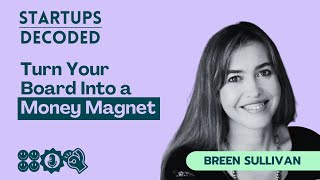
Breen Sullivan, CEO of The Fourth Effect, explains why most founders build boards wrong and how his platform uses AI to match advisors, manage equity, and generate contracts. Advisory boards directly influence fundraising success, and the platform's 20+ advisor archetypes help founders find the right fit at any stage.
Chapters
You know, sometimes founders are intimidated and they think, oh, I'm, I'm too early for a board. This wouldn't make sense for me. There is no founder out there. If you're serious, you've incorporated your entity, you have plans to scale, you are ready for an advisory board and you're already late. You should be coming and building out your advisory board. So there's no founder that's too early. I want to be clear about that. And starting with the advisory board makes a lot of sense.
Welcome to Startups Decoded, the show that gets real about what it takes to build a successful startup. I'm Andy Walsh, 2x exited founder, strategist, and your host. Each week I talk with top founders, investors, and operators to unpack the plays that drive real traction, not just headlines. If you're building something bold, this is where you'll get the honest insights to scale with clarity and confidence. Let's keep growing together. Hit subscribe and share with your community. It would mean the world to me. Hello and welcome back to Startups Decoded. Today we're looking at boards and advisories, something that is completely underutilized by most founders. And to help me unpack that story, I've got Breen Sullivan, who is the founder and CEO at The Fourth Effect. Welcome, Breen.
Thank you so much for having me here, Andy. So excited to be a guest on your podcast.
We've been working together in an informal capacity, it feels like, for at least a year. So I've had the privilege of being in the front row to a certain degree on what you do with your co-partner, Kat, who is another good human. And your mission in Big Picture is really interesting. And the role that founders plays is tough already, but there's people who are out there who can support. And what you're doing is connecting and letting people get experience from experts. And the vision that you have was founded by your experience as a general counsel. So I'd love to start there just to give a little bit color to you, your life as a general counsel and what you observed and how that became The Fourth Effect.
Yeah, so I was a general counsel for about a decade, so 3 different midsize high-growth tech startups, different industries. But what struck me were the similarities when it came to advisory boards and governing boards. When you are in that general counsel seat in those companies, you tend to kind of have a front row view of what is happening and what's not happening when it comes to these boards and the strategy around these boards. And so I think it was, it was really just recognizing there's this huge gap. So founders don't know what they don't know. And, and there's not kind of a standard what is fit for purpose, what makes sense for a scaling for-profit company, you know, at this stage or at that stage when it comes to advisors. Like what are the right skill sets? You know, when do you tap them? What do you get from them? How do you compensate them? And this is also true with the governing boards. So really recognizing that absence and, and connecting the dots on how that contributes to the really high failure rate of startups and just how difficult it is to build a successful for-profit company.
Today, I really want to focus on the insights that you're seeing and a bit more of an evolution of your product and platform and the benefit that will drive, but to set up some foundations, let's go from the founder side first. If you're a founder and you're coming to The Fourth Effect, what are the types of things that you can gain benefit, experience, information on, just to set the, um, a good scene for people that want to know more?
Right. Okay. Well, absolutely. Thank you. So first of all, community has always been kind of front and center and at the, at the center of what we built and what we do. Because at the end of the day, nobody is putting you on their board or writing you a check if they don't know you. So really authentic relationships are critical. So we have, and we've always had a really robust community and that, you know, for, for founders, whether you're idea stage through really growth stage scaling, uh, being able to connect with other founders and with investors and with potential advisors, directors that can really make a difference for your startup on that human personal level is very important. So we have a robust community. There's a lot of education that is kind of insinuated into that community. There is. And then of course, for founders who want to make use of our Board Command Center to really build and manage and get value from their advisory boards and their governing boards and also fundraise kind of directly and indirectly, and I can get into that more later, then that's where we would encourage founders to become subscribers to our platform and really sign up for a more fulsome experience. They can create a profile for themselves, for their company, and they can— we will help them identify the gaps and, and take those gaps and cross-check them against their goals and then really help that founder understand what skill sets they should be looking for at what time. And, and then we can help the founder kind of immediately go public with that request and then match them with the right people that really meet that need and facilitate their ability to get to know those people, interview those people, and then hopefully secure that advisor or director or investor in a more direct way. And we have a lot of tools to help them do that as well.
I love that parallel path of the education, which is critical. You made a comment before, which I love, which is that you don't know what you don't know. And the startup world, being a founder is complicated enough without trying to learn large volumes of information. And what you're doing now is allowing someone to get a linear path that is quite traditional for a startup. And the irony is that people don't know what they're doing, but there's millions of companies that have done this before. So the path is well trodden. So what you're doing is consolidating that information down into a linear journey for founders to follow. Seeing where they have gaps and then pairing them with the right people. And, and that in itself is education and opportunity merging in one place, which is so needed because I look at my experience, I was really fortunate that I had 3 amazing advisors as part of my first startup, and they all in their unique way added value that allowed me to exit in a way that was so much more streamlined and buttoned up. And one in particular was a lawyer whose background was in M&A. And just the foundational things that he added value on from our operating agreement to our board meetings, minutes, strategic decisions, things that help the data room. So I think that combination of what you're doing is so overdue.
Well, I couldn't agree with you more. And that's a great anecdote and really goes directly to a lot of data that increasingly is out there. It's getting published. It's recognized for-profit companies when they have independent directors. So meaning not just the founder and not just the investor director, but actual independent directors who join their governing board, especially when it's early, like seed, seed plus, before they're really raising serious money, if, if that's the journey that that founder's on, that company outperforms. So it's very clear in terms of the revenue, in terms of the exit, in terms of the success of the company. And, and it, it's a giant gap. You would think if this is so clear, wouldn't every scaling startup take advantage of this? But they don't. It's, it's a, it's a very small minority. And, and then also, wouldn't the VCs pay attention and, and really put pressure on startups to do this? And, and I absolutely believe, as an expert in the field that has thought about nothing else for many years at this point, um, that this really boils down to— it, it is because of the lack of clarity. And because everyone's confused and because it feels overwhelming and because just because you're a VC, that does not mean that this stuff is not, you know, kind of ambiguous and confusing and opaque and unclear. And, and certainly for founders it is. So, so there's all of these kind of unnecessary hurdles and complexities around forming and leveraging strategic fit-for-purpose advisory boards and governing boards as you scale. It doesn't need to be that way. It's not rocket science. And that, you know, understanding that and recognizing the need to come in and create that common framework and that common playbook for both sides, and then the tools that make it very accessible and manageable for both sides to participate in these relationships and get ROI from these relationships and track that ROI. So that's a lot of the value add that we're bringing. I have to say, though, AI changes everything. Because what I'm describing and what we're talking about, there's so many expert hours that would be required for every single startup because every startup's idiosyncratic and they have their own gaps and they have their own needs. And so to sit there and really meet the startup where they're at and analyze how this common framework and playbook, like what that means for that startup and who they need to seat at the table when and how they need to manage those relationships, that would not be an economic model that could be a for-profit company without AI. But Agentic AI, the difference, and I'm sure you're probably hosting many guests in your podcast that are talking about this, but it does replace lots of expert hours because of the way Agentic AI can function in these platforms. So suddenly we can do that. You know, we can meet every startup where they're at. and we can do that instantly, and we can do that very inexpensively. To spend 25 hours with a deep bench of experts and lawyers and everyone else to give that startup that framing and that roadmap to success, and then really equip that startup to paper those relationships with the right contracts and understand what type of equity needs to be granted and really be able to track the value. We can do all that now in an affordable way. And part of why that makes me just so excited as someone who's been trying to solve this Rubik's Cube of a problem for so many years is just how much value it will bring when it comes to innovation, because 90% of startups fail. And so many of those startups are failing because they have not had this resource. They haven't had these tools at their fingertips. Now they can. And so ultimately, our test of success. Can we bring down that startup failure rate? And then how many more solutions will be out in the world for all of us to benefit from? So, it's really about innovation.
And there's two things that you said there that I'd love to expand on. The first is fit for purpose, and the second is around the role of AI and how those two things ultimately are hand in hand today in that process. So, the fit for purpose, and to give it a high-level snapshot, you talked about three different roles and the investor, the board member, and then the advisor. And the three of those have a very large overlap as far as their role. You could have an advisor that can invest, you can have advisor that earns in equity. A board member can be a VC, can be someone that's independent. There's a really healthy intersection if you structure it in the right way. So under that umbrella of fit for purpose, there's some really foundational things that to your point that many founders don't even understand about the role, when to bring that person on, how they help them, even simple things. How do you set up a, a role summary for them to make sure that you're getting value? And, and I'm an advisor for a, a company at the moment, and the CEO just exited 3 advisors because they had a role summary, they committed to doing their job, they had a vesting period for equity, but they just weren't actively contributing at all. So she's removed them and I encouraged her, and that me included, if I'm not driving value, then you can exit me. That's fine. They're here to help you. And if someone's just clicking and getting a bunch of equity, then they're not driving value in the right way. So to ask a question of that fit for purpose, let's start with advisors at a high level. What's the typical role that an advisor plays with a startup?
Well, I love everything you just said and couldn't agree more. One of just the very tangible basic bits of utility we're baking into this platform is to make it very easy for founders to pause vesting, to, you know, to pivot, from one advisor to a different advisor. If the advisor that is currently on the books vesting equity for whatever reason doesn't make sense at this moment, like it doesn't have to be acrimonious, it doesn't have to be a negative thing if you have the right framing around it. This is a very, you know, the advisor should want that too, right? That, that, you know, it, this is a mutually beneficial relationship. If the advisor is moving the needle for that startup, then it's to everyone's benefit because the advisor has equity in that startup. If the advisor is not moving the needle for that startup, the advisor shouldn't be vesting the equity, at least not at that moment. So, you know, being able to have that both sides really empowered and have that transparency can totally change the dynamics of getting value from a board, which brings me to answer your question about fit for purpose. I think what's really the most important concept there is that It is a dynamic, living, breathing, evolving construct. This is true for advisory boards. This is true for governing boards. I think a lot of times in people's heads, they hear the word board and they don't hear anything else. And then it feels like it's this very formal thing. It feels like it's written in stone. It feels like you assemble an advisory board and then that's who you have forever. No, it is fit for purpose. It's a dynamic, living, breathing thing. So when you are idea stage, when you are pre-seed, when you have some massive challenge, you have some giant goal that you need to get to, whether that's a seed round, it's, it's launching a version of your platform, whatever it is, you will have a set of very clear needs as a founder, as this tiny little cash-strapped team that you can't go fill in other ways. You can't go fill those needs with W-2s. You can't go fill those needs with, you know, this service provider over here, that person over there. So you get a sense of all these different needs. And then understanding that advisor relationships, that there's flexibility, there's ways to negotiate, there's ways to articulate those relationships so that they plug those gaps. They help you hit the KPIs. They, they help you avoid the pitfall. And maybe it's because that you're able to have an advisor relationship depending on the stage of your startup that is more operational. You know, that advisor is coming in and like literally filling a skill gap on some limited capacity in exchange for equity. Sometimes that advisor is overseeing or is helping, like enables you to take on interns and then get so much more value from those interns because of that advisor. You know, these are just some tangible, practical examples of this, but advisors come in all different flavors, all different, you know, all different shapes and sizes. So sometimes an advisor is there with you for 4 years. Sometimes it's 1 year. Sometimes it's 3 months. You know, they're coming in and out at different points and they're contributing different things. And, and the, you know, that range of equity typically is how you're compensating these advisors, sometimes also cash and sometimes a combination. That is, for a founder, it's, it's such, um, it's so, so much value that, you know, that you're leaving untapped if you're not creative and flexible about how you deploy that to meet the needs of the startup. So, so I guess I just like this idea that it is a living, breathing, ever-changing thing. So what's fit for purpose for you in December of 2025 is probably a very different advisory board than May of 2026. And it's okay. And these, these people can move in and out. And then also this concept of an advisory board to a governing board, because a governing board also needs to be fit for purpose. It also is dynamic and evolving. It is more structured and it's less kind of dynamic and evolving. You know, the time span tends to be longer. There's more liability and there's also more compensation and more responsibility with fiduciary governing board roles, whether those are independent director seats or even an observer relationship on your governing board. But even so, it still is evolving. It's still flexible. Sometimes you might wanna pluck an advisor and elevate them to be an observer. Maybe one of your advisors makes a great independent when you get to that level. Sometimes whoever is an independent when you're a seed stage or a Series A is not the right independent director when you're a Series C. So you can sometimes— you're that person maybe steps into an observer role. You know, everyone can be shuffled around. And so I think this is, it's a really important part of the fit for purpose and strategic aspect to these boards.
And for me, the advice in there for founders is understanding your business. And I have a system that I've built that I've called the 20X Startup System. And it's 20 verticals of your business that every founder needs to do. And it's as simple as one being legal, IP, and trademarking. Another one being operational strategy. Another one being brand strategy. And the, the list goes on, but I have a scorecard that I do when I first meet a founder that I'm going to invest in or join as an advisor or board member. And across those 20 work streams, I'll give them a score based upon their knowledge, where they're at in the process, and identify some red flags, but also opportunities for them where it's matching gaps in skills to the right kind of people. And what that does is inform a really simple process to understand what you know, what you don't know, and then finding the complementary skill sets and finding those people and go, hey, we need someone who specializes in go-to-market sales and lead generation. Because we're technical founders, we'd never done that before. So finding an advisor that can help get that started, and that's probably someone that is a 6 to 12 month role because you just need momentum to get going with process and tools, et cetera. And there's ways that you can be really functional about that assessment. It doesn't have to feel overwhelming. So what you're saying there is really important because it can flex at certain times, it can consolidate, those roles can come and go, but consider them like a copilot who is there for your journey and dips in and out as needed. And whether that's advisor or a board member or an investor, I think that it's really important to think about the practical part of your business.
And really well said. And also it harkens back to your point earlier about how there's so much overlap. So a lot of times advisors are investors. A lot of times directors are investors. You know, clearly whenever you take money from institutional capital, they usually take board seats or observer seats. So there's so much overlap between investing and board service. Also, one point we love to make is that whether you are serving as an advisor or director, you are investing whether or not you're writing a check because you are investing your expertise, your sweat equity, your time, your energy. And a lot of times you also write a check. So, you know, it is about alignment. And investment when it's a for-profit company. So I think that's really important. And then another thing I wanted to mention based on what you said, this process you're describing, Andy, that you're doing for your startups, yes, that's a, the heart and soul that, that is what we are automating in our platform, a version of that. And we in fact have identified 20 archetypal advisor types over the years we've been doing this with thousands of companies. And, and we're constantly refining those advisor archetypes and the kind of go-to-market sales for example, that's a primary one, but there are many. Storytelling, that is one. And so understanding these different archetypes that are out there and then matching, doing the gap analysis for these startups based on where they are in their, in their maturation and, you know, what their challenges and goals are, then it's really connecting the dots. So that, that is at the heart and soul of the technology that we're patenting that, you know, is making that happen. Without Andy having to do it. And, and, you know, and then on, on the other side of our, you know, intelligent platform layer, you know, for these executives, as opposed to needing to get the email from Andy and, you know, then get to know the founder, we can, we can immediately also categorize those executives in terms of those advisor archetypes and also some other things about them, like their, how they lead and, you know, their kind of soft skills as well. And we can help surface for the founder, okay, You know, you have these particular needs right now at this moment. Well, here are some excellent potential candidates that, you know, really could slot right in. And, and then, you know, of course it's going to be up to, ultimately up to those two people to really feel like it's a match. But then, you know, the other piece that I think, especially as a tech lawyer, I have a lot of opinions as to why, but you know, that, that I think has been missing. From this ecosystem, you know, then how do you actually negotiate the contract? How do you paper that relationship? What is that contract? How much equity is granted? You know, how, how should you think about, like we were talking about earlier, pausing that equity or terminating that agreement? So, you know, that whole part of it is a really important missing part of it because startup founders are not going to go pay a really expensive lawyer to give them advice on this front. And executives, frankly, a lot of them don't want to do that either. You know, so, so there needs to be a legal tech solution there that can, that can solve that problem given what we can do with AI and with technology today. You know, that's the, you know, the kind of second part of the service in our platform that we're building.
Great. And I've seen more than my fair share of advisor agreements, board agreements, investor agreements, and there's always uniformity with sections included in there, and ones that are cumbersome are the ones that I'm most nervous about. And what I mean are the ones that are long for the sake of being long, and I'm like, what do you need to include? It feels like there's things there to be concerned of. So knowing what is best practice and good examples is really important. And to continue that thread you mentioned there around the new evolution of your product and how AI and understanding You as a founder, your business, your category, what stage you're at, and then helping give you proactive advice to be able to get ahead and plan with good lead times to find the right advisors in those 20 categories that you talked about with certain skills into board roles, finding investors. Let's go into that a little bit more because I'm curious as far as if you're a founder, you're coming in, you may be pre-revenue and you sign up to the Fourth Effect platform, which you can do. Right now as a founder to be able to get in for early access to what you're doing, what does that look like as far as the information that you would need to input for you to understand and then the LLM to be able to recommend what your journey looks like ongoing?
So one, one bit of great news with technology is that you don't have to input too much as a founder. So it should be pretty seamless and pretty easy. We want all founders to come in and get started as part of our community. That's free. It's really valuable in and of itself. Networking's really important. Just immediately kind of being able to connect with this potential bench of advisors, other people in the trenches with you. So come do that right away. We hope that you'll really give it a go, you know, testing out this Board Command Center. Can we be your tool to make your boards work for you? So, you know, that next level is giving us a little bit of information about yourself and your company. We You can scrape the internet and get a lot of information to connect the dots there. And then because what we have worked so hard to build over the last however many years, we have, you know, we have our own kind of data taxonomy and framework around what are the ideals, you know, given your industry, your stage of development, your challenges and your goals. And so then we can, you know, the, the kind of automatic part is quickly benchmark you against that ideal and surface where, you know, what advisors, what skills, what resources resources we have in our world that would immediately help you get closer to that ideal. So that part is just kind of automatic. When you tell us about yourself, we will come back to you with, you know, kind of a personalized dashboard of, okay, this is where you are and this is what we recommend you do next to get to, you know, closer to the ideal. And, and part of what we're recommending you do next is going to be publish these specific needs that you have. And, and when you agree with those needs, as we've articulated them for you, you can press the button and those go live. And then immediately we can already surface candidates, executives on the other side of the marketplace that meet your needs. If you want to start interviewing right away, you can also— there will be many that come inbound to you. You can also go out and proactively search, but this enables you to right away, immediately know what you're missing, who you should be tapping, and then gives you a bunch of people to start talking to. If you do decide that it's a good fit, and this is going to help you at the advisor level, at the governing board level, and, and to be clear, many startups come in and start with the advisory, advisory board. These relationships are less formal and they're, you know, they're kind of, there's more maneuverability and you can have more of them. So that is a great, you know, that's a great way to start. You don't have to, you know, feel that you need to be ready to, build out a governing board that is bigger than just you as a founder on day one, you know, that— so I just like to say that because sometimes founders are intimidated and they think, oh, I'm, I'm too early for a board. This wouldn't make sense for me. There is no founder out there. If you're serious, you've incorporated your entity, you have plans to scale, you are ready for an advisory board and you're already late. You should be coming and building out your advisory board. So there's no founder that's too early. I want to be clear about that. And starting with the advisory board makes a lot of sense. And then, you know, once you find this great person, then you can use our dynamic contract generator and the relationship platform management tool. Those are probably not going to be live until later in 2026, but immediately today, getting started, what you can do is, is everything else. So you can come in, benefit from the community and the education, you can get that gap assessment and that roadmap for success, and you can immediately start interviewing candidates and start assembling that fit-for-purpose strategic board. You know, we have a lot of templates and a lot of tools to help you paper that relationship and manage the relationship, but the automation, the full automation of that second part is, is what we are actively building, and it's on track to, to launch in 2026.
The perfect combination of education, but also network and connection that goes around it. Those two things running in parallel. It's the, the classic Forrest Gump peas and carrots situation. And for me, if I had that tool available, like the benefit that it gives, because it gives you peace of mind in a founder journey is tough, as we've mentioned, to know that there's a linear path to know that that you can track where you're at. And you need to start from day zero. And I was lucky, it wasn't by design. I was just fortunate to have from day zero an advisor who was an M&A background, as I mentioned. And even the operating agreement, just putting into practice principles of how we communicated, how we made decisions, tipping points for a drag and tag into selling, what what that minimum dollar looked like. We had things that were predefined and it allowed us to trade and operate really effectively because we didn't have to get stuck in details and any tension. We had quick resolutions or we had a process to solve things. And so you avoid potential conflicts and issues down the track by putting in a little bit of effort up the front. And then that person also sets the scene for everything you're thinking about with bringing the right people on at the right time. What I feel like you're getting with the Fourth Effect now is that done through a tool that is trained intelligently on that practice, that process, what fit-for-purpose boards look like and what you're doing. So I see such opportunity with this, and I'm sure you're all excited to get the full product live.
We are. And I guess the last thing I'd say about fundraising, because, um, because I absolutely understand standing in the founder's shoes myself, how incredibly critical capital is and funding is and revenue is. And what is not obvious to founders, especially when they're starting out in this journey, is how closely connected your informal and formal advisors and your governing board can be to capital coming in your bank account. So we help to connect those dots for founders and, you know, just very tangibly, all the founders that join us, many of them, part of that gap assessment initially, they need money, right? You know, part of their big challenge they're experiencing and their big goal is, you know, getting that pre-seed round in, getting that seed round in, getting that angel, that Series A round in. So understanding that and working that into your roadmap for success, that is part of what we can do for the founder. So say, say it's a pre-seed round. And you're going to raise $500,000 from angels, we can help you connect those advisor needs that you have to angel investors in our ecosystem that want a two-for-one. They want to serve as an advisor on an advisory board. They also are interested in angel investing. So, you know, that, that is, it doesn't always come together, but a lot of times it does. So that's one very direct way you can be strategic with your advisors in connection with your active funding round. Also, there are absolutely advisors out there that can help you who have been there, done that, can really help you with the fundraise. And there's many, as you know well, Andy Walsh, like if, if you are as armed and as informed as possible going into a fundraise, it can make a dramatic difference in terms of do you close that round and when do you close that round? So. You know, those are, that's like a direct way that it gets you money in the door. And indirectly, it is so much more powerful to be able to pitch investors with a compelling story. If you've made use of the right strategic advisors at the right time, it, it can fill so many gaps and it can get you, I mean, even in terms of like getting you LOIs and getting you revenue and getting you traction and getting all the things that you need to be venture-backable, it can make a huge difference in getting you funding. So, you know, so, and, and so actively startups who join us are, many of them are fundraising. You also can list your fundraise in our investment club and all of the people that are joining us that wanna go sit on boards and that wanna sit on your advisory board and eventually your governing board. Many of those people are accredited and many of those people are LPs and funds. So what we do is we also encourage all of those executives to join our investment club. And we have over 300 angels, LPs, GPs right now in that investment club. And then we really help, you know, those investors get to know these founders better, you know, on many levels so that they can invest directly in the founders. And sometimes it's through the boards. And the last thing I'll say about that is that we are, are going to launch soon, although it probably won't be by the date of this podcast, but hopefully soon thereafter, the Fourth Effect Angels. And so this is a formalized group of angels sitting on top of our informal investment club, which is very sizable. And the reason why we want to do this is because we want to directly invest in a subset of the startups that come through The Fourth Effect and are strengthened by building fit-for-purpose and strategic advisory and governing boards. And we think that, you know, we can invest in some of these startups directly, and we can also then galvanize our much bigger investor community to, you know, to help get more gas in the tank. So, so that's yet another way that we can be a direct source of capital for, for certain founders.
So good. And I tell this to every one of my portcos, your brand storytelling from day zero sets the scene for fundraising. You can't think about fundraising a month before you want to start. You need to start telling your story, building connections and building network. And if you're early in that founder journey, your brand has limited exposure and profile and credibility. So the right board members and advisors can help validate what you're doing because their credibility goes such a long way to one, just by association, but two, the network that you talked about as well. So who they're connected to, opening doors, getting meetings that you can't get, or even knowing the people that are out there, particularly angels. Angels can be a mysterious group of people. Quite often high net worth people that wouldn't even call themselves angels. They just, through their network, get opportunities in front of them to be able to put some money into something that a friend recommends. And it, all of that conversation that happens, if you're not in the right network to do that, then you're way behind on even having a chance to get those meetings, let alone get capital in the bank.
Yep. Yep. And it's all connected. I mean, that's the, it's kind of the beauty, the agony, and then the ecstasy of the whole thing because, you know, this is a capitalist society. These are for-profit entities. The growth is king. That is what matters. And, and, you know, the investment and the kind of governance strategy, leadership of scaling and growing this for-profit entity. I mean, all of it is just deeply intertwined. So you can't, so sometimes I think it feels really frustrating as a founder. That these things are so connected, but they should be because, you know, at the end of the day, you want people on your cap table who are really aligned, who are going to help your company scale and grow on many different levels, you know, with that cash, but also with their networks and, you know, with their expertise. And you want to add people to your board and have people in your bench that are going to be really aligned, same incentive. You want them on your cap table, you want them to be helping you get more gas in the tank, you know, directly and indirectly. So that is what it's all about.
It's amazing. And I love the thing there as well. You talked about angel advisors, which is a new term that's popped up recently as founders have got more educated on the role that an advisor should play. There's still a large gap, but advisors being held to account is really important. And if someone's writing you a check as an advisor, then they're obviously committed in more ways than one. So you probably have a better rate of them being sticky and committing to what they're doing. And they're the conversations that if you've never done it before, you wouldn't even know where to start or even set the scene that that's what you're looking for. So the advice that you can give people, it's almost like a decision tree as far as timings, amounts, how you can do it, different opportunities, et cetera. That education is so valuable.
Well, and even just, just connecting the dots that, you know, if you're sitting there negotiating with an angel, An angel is writing you a check at a certain valuation. They're getting a little bit of equity for the money that they're giving you. Advisor equity is an additional, it's an additional grant of equity that for that angel, it's really that the angel is getting better investment terms and they're also getting to start their for-profit board career. So kind of thinking of it that way is a different framing around it that that make— this is about, it's a mutual value add because for the founder, great to get a check, great to be able to say this advisor also is an investor, but for that advisor or for that angel, it can also be this giant win. They're getting better terms. They've negotiated more equity for their cash, but then they're also getting this opportunity to translate their skills and experience. Into the beginning of a for-profit board career that they can leverage themselves in terms of their own portfolio career. So turning that into just making the pie bigger for both sides, I think is an important way to frame that, that a lot of founders aren't thinking about. And similarly, it, it goes to the other side too. So if you are an advisor, you're getting advisor equity, you have never thought about investing. Okay, well now you're directly contributing to this really cool growing venture and you have this little, little bit of advisor equity, well, maybe you want more skin in the game. And, and you would know better than anyone that this is a really good investment. And you also have a hand in ensuring a return on your investment. That's what capitalism is. So, you know, so but I think it's really helpful for founders and executives that want to sit on board. To look at this through that lens, because that's what I mean by you can't separate board service and investing or money and power. I mean, capitalization and being in the boardroom, it is the same and it should be in a capitalist society. Like, this isn't bad, you know, this is how we all make money. So anyway, this is like a lot of the education that we do on both sides. And then if you can bake in those norms and those those best practices and frameworks, then we can really facilitate this. You know, we can help more founders make use of this and help more executives build their personal portfolio of wealth and also really get in the game. Because I know a lot of this call, we talked about founders, the other side of our marketplace, it is, it's not founders, it's executives, right? It's people who want to help founders. Also, they want to help themselves. And I think there's a big shift happening right now, certainly in the United States. I think, you know, it's also global where people want impact and ownership. You know, we love our jobs. We love, we build careers we value, but there's increasingly post-pandemic, you know, this feeling of, but there's a portfolio career version of my career that I might also want to pursue because this is a way to get on cap table. Capitalization tables directly, this is a way to have a lot of influence and impact, especially if it aligns with values or what you care about. So, you know, we're meeting that need for, for those executives. Without, without us, without a platform like this, it is very difficult for those executives to know how to translate their own expertise, their own experience into an immediate value add for a scaling for-profit company. That is a very hard thing to do, but that is is what we have now worked with thousands of executives over the years, helping them do this. And that's part of our technology that we're patenting, is, is really being able to categorize those executives and give them that useful framing and contextualization so we can connect them with the right for-profit opportunities so that they can have impact and ownership.
And I can speak from my personal experience. Historically, I've been on two boards and had a range of advisory roles. And in the last 12 months since I've been on the Fourth Effect platform, I've picked up two advisory roles, and I've signed a contract on a board role. So for me, those opportunities wouldn't have come my way. The historical ones have come through personal connections. This came literally through the platform. I think I met one at an event, another one on your platform through a recommendation, and I can't think of the board role, but it was definitely on The Fourth Effect. So for me, like I've opened up my opportunity and I'm going through an evolution of my own personal career to take what I've done with my two exits and my skills to be able to give that back. And for me, I'm one of thousands of people, as you said, that wants to do that. So there's equal energy and activity coming from the executives, exited founders, high net worth people that want to contribute and help founders on their journey because they see the opportunity from a capitalization perspective is to get money out. But also people are passionate. They care. They love to be a part of the energy of a startup. So that energy you can bottle that up and use it to your advantage as a founder. So I love, love that kind of experience.
Well, thank you. Um, and, and I'm— congratulations. So, so we love to hear about those success stories. Um, it's really exciting. And it— yeah, this is why we're doing what we're doing. Um, because if we can, uh, clear up the inefficiencies that exist right now, you know, this, this big kind of systemic gap in the innovation ecosystem, it's going to enable so many startups to thrive and survive and put their solutions out in the world that benefit all of us. And it's going to allow so many more executives to be able to plug in and have impact and ownership and shift some of the wealth to, you know, other groups in the population and also just grow the wealth. There will— the pie will be bigger for everyone and more people can eat pie. And, and, you know, from day one, this was very mission-driven to can we, we make the pie bigger and can we help more people eat pie? The answer is yes, but, but this, you know, we need to get rid of all these inefficiencies and we need to create this kind of framework to do it. And that's, that's why we built this.
Yeah, the passion comes through in the product and what you're doing. And if you're a founder, as we said earlier, sign up for free because it's going to be worth it. And it's where I found people and there's thousands of more people like me. So Breen, really, really important conversation. I'm thankful to be a part of your community and thank you for your time today.
Oh, thank you. This was so fun.
I'll share details, of course, in show notes where you can get in touch with Breen and Kat and join the platform. I'm excited to get this one out. So thanks again. Thanks for listening to Startups Decoded. If today's conversation helped you think differently, share it with the founder in your network and don't forget to subscribe. Subscribe for real-world startup insights every week. We really value your support. If you're interested in partnering with us, email hello@startupsdecoded.com. I'm Andy Walsh. I'll see you next week.
More from Andy



EP#88: Why Most Founders Misread Their Own Traction. Vanessa Larco - Premise VC

EP#87: Founders Obsess Over the Raise. Investors Care About This More. — Carina Cunha






Ep#86: Early Decisions That Define Your Startup Forever. With J.P. Morgan Asset Management
