Literati Book Club | A Most Beautiful Thing: Ask the Author with Arshay Cooper and Sam Puryear
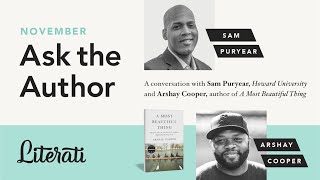
In this Literati Book Club session, hosted by Howard University golf director Sam Puryear for Stephen Curry’s first book‑club interview, author Arshay Cooper discusses his memoir and documentary A Most Beautiful Thing. Cooper recounts growing up on Chicago’s West Side, the formation of the city’s first all‑Black high‑school rowing team, and how rowing became a non‑violent outlet that helped him and his teammates process trauma, build leadership, and envision futures beyond the streets. The conversation explores the importance of a “village” of mentors—chefs, barbers, pastors, coaches—and how their support enabled dreams such as becoming chefs, entrepreneurs, or athletes. Cooper reflects on race and representation in rowing, noting that recruitment is less the issue than retention and cultural inclusion. He shares practical advice for coaches and parents: listen to youths’ small dreams, eliminate barriers incrementally, and make consistent “positive deposits.” The dialogue also covers the Most Beautiful Thing Inclusion Fund, plans to expand rowing into HBCUs, the 2028 Olympic goal for a Black American rower, challenges faced in publishing a book as a Black author, and the loss of Black‑centered TV role models. Throughout, Cooper emphasizes respect, community‑building, and the collective effort needed to create lasting change.
Chapters
Well, first of all, hello, Arshay. For me, Sam Pree, I'm really excited. Number one, honored to have been asked to host Stephen Curry's first book club interview, and then to do it with you is also a true honor, because I'll tell you what, your story is enlightening, you're truly uplifting, and incredibly positive when you think about the long-term impacts it had on the neighborhood and the people involved. So, I'm really excited. Also, just to give you a little background and welcome Literati Book Club to— this is really exciting for me. So, let me tell you a little bit about myself. Again, I'm Sam Puryear. I'm currently right now the Director of Golf at Howard University in Washington, D.C. Stephen Curry has had a huge impact on us. I mean, without his contribution and donation and involvement, I mean, think about it, we wouldn't even have a golf program. So, He was involved, got involved and gave me the green light to go out and recruit a team, recruit a team of women, recruit a team of men. And at this point, it's real exciting because I know we're going to have an opportunity to positively change the, you know, the plight of a lot of young people going through a true non-traditional perspective of playing golf, just like you can relate to in rowing, at an HBCU. Yes. So that being said, welcome, and I'm really excited about what we're about to talk about today.
Thank you. I'm excited to be with you, Coach, and, you know, again, thank you, Literary, for hosting this amazing event, right? I've received a lot of emails and messages from people who was a part of this book club who were excited, who also watched the film, and who had just, just a lot of questions, you know, and so I am pumped, I'm ready to go, I'm happy to be with you and, you know, and get to know you a little bit more as well after this event. Oh yeah, yeah.
Well, I appreciate it and I would love to just jump right in. I mean, my background, you know, prior to coming to Howard, I coached at Stanford, I coached at Michigan State, and I was always in a sport where I was always the only one. And what jumped out at me when reading your book is you guys were the only one. And I know how that made me feel, and I know how that continues to make me feel. And so one of my first questions for you, just considering the enormity of what you guys have done, would be considering that Ken and Mark were both white and they weren't from the neighborhood, but they had servant hearts Do you think it would have really mattered if they had been Black? You think you could have gained the same things? Would you have done the same? You know, your dreams would have been the same, been altered at all?
Yeah, good question, Coach. You know, they love was real for us, right? And we received a lot of love. I think that when you look back, and we talk, I talk about this with them today, I think there would have been definitely some things that would have been helpful You know, with our, with our season, meaning that we lost Malcolm, right, because his dad didn't want him in an all-white space, right? And the coaches didn't quite understand at first. But if you look at Malcolm's family, Malcolm's mom's brother was hung on a tree and she left the South because of that. And so when they say, "We don't want our kid in this space," it comes from a place of safety. Because they not— they don't want their kids to experience what they experienced, right?
Mm-hmm.
And I think it, you know, and I think that there were many parents who— mothers and families migrated from the South to Chicago, didn't even want their kids in a space like that, only because of what they experienced. So I think if it hadn't been Black coaches, I think they would have felt like we would have been a little bit more protected, right?
Mm-hmm.
And we were, right? But there was still a lot of mistakes made, right? They, and also I think that the recruitment, right? There's a part in, I have to say, Coach, in the film where all the guys' sons and daughters, teenage sons and daughters walked into the rowing tank and you had all these Black men teaching them how to row, right? And right away, just because someone looked like them, Show them that it's not far out of reach, right? Like, I can accomplish all this now.
That's right.
And that was a very powerful scene. So I think that we would have got more kids, right, in the beginning of their recruitment phase if they had to say that someone can relate to them. And I think we would have won a lot of parents over in the beginning that we didn't win over at first because, you know, parents felt like the coach didn't really identify with the community.
Yeah, but you know, the interesting part though, just bringing that part up, the interesting part along with my relationship of going into Eastlake, which we had, you know, your community, you had 4 gang territories on each side of either direction you walked in, you had a gang. You described it as Holy City, you know, each neighborhood had a nickname. Well, the Eastlake neighborhood where I was for 9 years, We were called Little Vietnam. You guys were called Holy City. But yet at the same time, there's still, to me, there's still a level of identity even within the negative name. So as I look at outsiders coming into your community, you guys were really protected. So like when you say if we'd had some minorities involved, you probably would've gotten some things quicker, your recruiting, But it leads to something that you said in the book, which I love. You said, often, and I'm paraphrasing, oftentimes when you come out of the same environment, you're kind of handcuffed by the same thoughts. So as I look at a lot of what you wanted to do, I would say to you, what really allowed your dreams to prosper and grow? Because I mean, to hear you want to be a chef, and I still have some questions later down the line on that. Yes. To hear you wanna become a chef, to hear a couple of your buddies say, "I wanna own a moving company," one guy say, "I wanna be a comedian," what do you think still helped continue to foster those dreams?
Yeah, I think it was the village, right? I think it wasn't one person, it wasn't one nonprofit or one school. I think, you know, if you talk to all those guys, they talk about the village that we had. You know, when I went to school, I had Chef Singleton that was there, it was like, you can be a chef, "you're gonna be great." He said, "I'm gonna set you up with an internship." And then I met a chef there. Then it was at the barbershop when I was questioning these thoughts, the Barber D was like, "Nope, do it afraid, do it alone. You gotta do it," right? Then it was my mom's church where the pastor was like, "Listen, here's $50, I want you to read this book," right? So I think that what helped all of us is that a lot of people don't talk about is the village, right?
Yeah.
Those unsung, local heroes that, that really contribute to, um, the, the success and also the need to be successful?
Well, I'll say one thing. I know Stephen Curry is famous for shooting that deep jump shot. He can hit the tray. And you, you talked about Jordan and your upbringing. Well, the first question out of the box from one of the members of the book club, uh, @JRollins, said, what motivates you to share your story? And to me That's the deep jump shot. I mean, what, what puts you in a position to lay this out? Because I really believe this story had to be told.
Yeah, you know, Coach, I moved to New York. I was a chef. I worked for WWE Wrestling as a personal chef, and then Warner Brothers, and then, you know, and then I started work— working as the chef instructor at a school that was similar to mine.
Okay.
And once I started spending the time with these young— these younger Arshays, younger Malcolms, younger Prestons, these memories. And these young kids have a lot of questions and they want answers and they want to know the roadmap. How do I become successful if I'm not an athlete? How do I become successful if I only live home with one parent, right? What is the roadmap to get there? And I would answer those— their questions and I would help them and I would slowly see them get there. But I would go back home and speak at a school and the kids there have the same question. Or I would speak in Detroit and kids have the same question. How do I scale Mawei? How do I tell the story of how we became successful through this foreign sport? And that's when I began to start writing down my story and talking to the guys and say, hey, I want to give young people that grew up like I did the roadmap, but in a story form. And so that's when I started writing and it was awesome.
Yeah.
It was awesome experience.
Well, here's a question too. And I remember, you know, working in at East Lake, and I can imagine in that part of South Side part of Chicago on the West Side, all of you guys were talented in something. I mean, there had to have been incredible basketball players, football. You guys gravitated to rowing. Do you think, I mean, if rowing hadn't been available that you still would have been able to land in some level of sport?
For me, I'm not sure, like, to be honest, right? So I always say that whenever there's a mass shooting in a suburban school, they talk about sending these trauma counselors in right away, which they should. And I've, experienced this stuff every day and never saw anyone, no one on my team, right? Like, our community, we walked out of the door and skipped over pools of blood. We heard gunshots when we slept. And I've been chased. I got into fights. Like, all this stuff always triggered trauma, arguments, right? And to be honest, Coach, I tried out for the team once, right? And the coach was like, "Knock 'em dead!" And I felt like I wanted to hurt somebody if they tried to hurt me. Like, I would get angry. Yeah. You know, I was like a walking storm. And for basketball, it's a trash-talking sport. And I wasn't that great, but I would play, and you would hear things like, "You garbage, you suck, you're good, you're never gonna be—" Things I heard growing up from adults, and I wanted to fight, you know? And rowing gave us an opportunity because it wasn't like— you didn't need any athletic abilities, right?
Really?
I mean, you had to— you know what? You had to just be willing willing to do the sport, sit down and you need to work on your engine, right? Because there's people who have no good coordination and rowers are full of people who didn't make teams, right?
Yeah, but Arshay, Arshay, I'm gonna cut you off. When I go to gym and I try the rowing machine, I'm dead after a minute.
Yeah, man. So for you, so in order for you— You're not in the gym.
Yeah, but for you to do a 2,000, whatever trick, the stuff that you guys are doing on that water, that's special. I'm just being honest with you, and I'm an athlete.
Yeah, and it took us a long time to get there, but none of us was just like, we had no athletic abilities, right? And when you sit there, you know, it's not like you, you know, you have to jump or be fast or know how to do certain things. You sit there and you just move in one motion and you're slow, but every day you get faster, every single day. And so we were basically just building our engine. And for me, it was great because every team I've been on triggered trauma, but when I got into the sport and being near that water, which was so meditative, it really decreased the trauma because it was a non-conflict, non-combative sport. And, you know, again, just to answer your question, I would say that I would have been a good person, right, if it wasn't for the sport. I don't know if I would have made it to any other team, but this sport really gave me the ability to be a leader, to be a captain, to be a good team player, and to overcome my fear of water. You know what I mean? Which was huge.
Mm-hmm.
And so, you know, I would say, like Malcolm said in the film, that people people call him 6 feet for nothing, right? Because he said, I wasn't good at basketball, I wasn't that good at football, but I had a lot of strength and I had a lot of power, right? And, and, and, and, but that sport, um, really, really helped us to bring out those gifts and those talents.
That's awesome, that's awesome. Here's a great question though from, uh, Free Spirit. Early in your story, you showed a self-deprecating sense of self and a stubborn will to survive. Basically on your own terms. Where do you think you got that strength from, especially at such a young age?
Yeah, you know, people will say, "Were you born with those abilities?" I don't, you know, I didn't have that strength. Actually, I gave up a lot, but it wasn't until my mom's recovery, right, when I went to go visit her finally, I kept going back because the testimonies of people who were like my uncles, my aunts, my mother, and not only did this program serve the adults, which you see a lot in neighborhoods or in programs that would just serve kids only, but they served the whole family. And so when they had these meetings, kind of like an NAOA meeting, It was for the kid and the parent, and to hear other kids' stories, right? And to hear every week these adults talk about how they made it through, uh, at a young age, combined with all the lessons I learned watching Black television shows like, uh, Fresh Prince and Family Matters. Like, I got a lot of wisdom. That was my church service. And then the real church service, I think at a young age, um, the gift of storytelling from these families in my neighborhood really challenged me as a young person, um, every single day to kind of think about things. And that was the first moment, learning their trauma, learning where they came from, and learning from their families and all the things they went through, that my perspective went from negative neighborhood to neglected neighborhood.
Yeah.
Bad neighborhood to underrepresented neighborhood, right? Because I started learning about the trauma in Chicago and in the South that I didn't really learn at school. So that kind of changed my perspective as a kid, and I became more caring for people like Alvin, when at first I was like, I don't even know about this dude, I don't even like this dude, you know. And so sitting in those services every day and having those discussions really helped me as a 14, 15-year-old kid.
Well, I tell you what's interesting is you referenced in the book many times, and, and me being a little older than you, I, I did it too, but I again, our neighborhoods were slightly different. You referenced A Different World, understanding what college was like, and then you referenced Mr. and Mrs. Huxtable and seeing how families, Black families, really treaded their way. Now that you're older, and this to me is where I think you've hit on something pretty special, now that you're older, you went to the television, and the television in some in a weird way helped raise you. Those shows that you lived on aren't even on anymore. And I don't even think those same type shows exist on TV anymore. I mean, what's your take on that? I mean, to think about where you came from, what helped raise you, and the faith that you were able to exhibit. I mean, where can it go from here realistically? Because I know you right now, you're involved in so many different change agents in cities all around the United States, but it's all still a part of your beginning.
Yeah, and I think— and that's why it goes back to what I told you why I wrote the book. Like, how do I scale these stories that are so powerful, right? And it was everywhere. I can talk to— I would mention just that A Different World scene, and every person that is Black that is my age will say, "Whew, wow." Like, Dwyane Wade taught me to go back to the place that gave to me, right? You were like, Steve Urkel taught me how to treat a girl and how to be patient, right? You know, and Uncle Phil, you know, showed me that even if my dad not in my life, I can find a Black man that can be strong in my life, right? I can find that, right?
Right.
And I think that now that we don't have those shows is so hard, right? Because now you have, Individuals at schools, folks like you who are making an impact on young Black people's lives, I wish that was on TV, 'cause I would wanna play golf. When I heard about you, I was like, "How come I didn't hear about this guy?" You know what I mean?
Yeah.
You know what I mean? But I think in the sport, what I'm doing now is that I am working with people. There's an organization called, I mean, a podcast called Rowing in Color, where all these young, these Black athletes are sharing their stories and their experiences. And we're getting it out there, right? And people are hearing about it and they want to run. I think we have to find creative ways, you know, if it's not on TV, which is hard to do, to— oh, and writing books and writing stories to, to get it out there. And I see it seems like podcasts, and, and I'm glad that we got social media to be able to lead as an example because we lost those TV shows.
Well, Coach D sent in a great question and said, what type of deposits. What, what type of advice would you give coaches and teachers in order for them to place positive deposits into some of these youth? Which then leads up to something that you and I had previously discussed, which is based on the way your book was articulated and the people at the school constantly told you what you couldn't do. To change that narrative, what advice would you give coaches and parents?
You know, I would say, this is what I would say first, listen, right? Listen to their dreams and their goals and where they wanna be. I say that to say that I was speaking in Harlem and I asked every young person after my speech, "What's your dream?" And this one kid said, "To eat at Chipotle." And the kids giggled, they thought he was playing. And I remember saying to myself like, I did— if Chipotle was there when I was younger, I definitely couldn't afford Chipotle. I couldn't afford the guacamole now, you know what I mean?
Yeah, how about $2 for the guacamole tacos?
And so I remember giving $20 to the school counselor and I said, you have to make sure this kid eats Chipotle. Why? Because if you can eliminate that small dream, his dreams become even bigger. There's a new dream tomorrow. So when I work with athletes and rowers, I asked about the small dreams and the big dreams. And every day my goal is to eliminate a dream so they dream to get bigger. You know, I have never been downtown Chicago. And then Rowan did that. And I was like, wow, we need to go out of town. Then we go to Wisconsin. And I was like, we need an overnight trip. Then we go to Philly, right? Once we got a little bit faster, I was like, we need to compete. So every time a dream was eliminated, my dreams got bigger.
Mm-hmm. Mm-hmm.
And I put myself in a position to continue to do that, but I think if we can ask the young people what they really wanna do, what are the small things, what are the big things, what are the things you wanna do in a year, and really start to eliminate their dreams. If it's introducing them to someone on social media, if it's finally speaking, right, and being a, speaking to young people, whatever it is, let's help them every day or every week eliminate a dream, and it will get bigger.
Well, I think too, another thing that you exacerbate is that there's a diamond in the rough in every community, because as I listen to you talk, and I thought about this, uh, when reading a book, and when reading your book, you talked about there was a big trip going out of town that was downtown, like you just mentioned, and then you talked about going to the University of Wisconsin, and I agree with you, it's a beautiful campus, and then you talked about going to UPenn, going to Philly, and all that was involved. Well, I've seen the same inherent things with students in inner city Atlanta, inner city New Orleans, inner city Houston. It's the same concept. Those diamonds in the rough, what can we do as communities all around the United States to just literally give those students a shot?
Yeah, you know, I think honestly, like, and I've seen those kids go to those trips, those events and see all these beautiful things, and then they go back home and they feel like, "Oh my God, I'm back here," right? And I think there's two things I need. Number one, you have to engage the parents. If my mom, if Malcolm's dad, if Elliot's dad would have went on a college campus trip with us, they would, I'm telling you, they would experience what we experienced. They would have been like, "I'm gonna do whatever it takes to make sure they get there," right? Mm-hmm. But we have to provide resources for the families too, the parents too, right? Sometimes nonprofits, or we go into these neighborhoods and we only work with the kid and there's nothing for the adults. So if we can figure out a way to engage the whole family— I love that. I think that, you know, we can all move together as a community. And I think one last thing is, you know, I heard someone touch on something, on just seeing a Christmas tree, right? Like downtown Chicago, It's beautiful. You go down there, you hear Sam Cooke playing "This Christmas," you see the lights, Christmas trees, and you get inspiration from that. Like, you can't wait for Christmas. But those things, in the city, invest in that. But not in our neighborhood, there's no Christmas. That kind of inspiration just changes the way you wake up, the way you think, the way you walk down the street. If I can walk out of my house and see that in my neighborhood, that music helps, right? So I think it's really investing in those communities and simple things like, Christmas trees, right? And, and challenging leaders in the community, um, city leaders, city officials, to, to invest in that way in the small things and making sure that families are involved and parents are involved.
Well, that's also a great segue into something you mentioned in the book, which I love. I'm— and again, I'm paraphrasing, but you talked about the fleas in the jar. So literally what you just described— now let's just say proverbially, we open the jar How do we retrain the fleas to leave and to do what fleas are supposed to do?
Yeah, you know, I think it's that constant, constant mentorship, right? I think it's— I call it youth development coaching, right? Like, you see a lot of coaches who get kids in the sport, and it's really about the sport, right, which is important, but the lessons outside of the sport was just as important as the lessons in the sport. For example, every day, And this was in my mind, you know, Victor would say, leave the boathouse better than you found it, even if you don't make the mess, 'cause it, you know, it leaves room and better opportunities for the next group that comes in, right? And for me, I was like, okay, how do I leave the boathouse better than I found it? How do I leave my classroom better than I found it? How do I leave my community better than I found it, even if I don't make the mess, right? And so those lessons that you teach, Every day, those everyday deposits. Coach saying, hey, you know, I do the same thing that one— the guy at my church used to do. I, you know, I pay kids $40 to read this book on leadership, and I say, I want you to answer all these questions, right? And then tell me how you're going to apply it, and here's the cash, right?
Mm-hmm.
So I think it's taking your mentorship to a whole different level, right, as a coach, as a teacher, as a mentor that will help them. To continue to thrive and work and give, do whatever you can, right, to raise money, to make sure you just continue to let them just see things that are different, right? And because it really keeps you going.
And you mentioned, and this is random, but you mentioned Coach Victor just now. Man, when I was reading the book, where did Victor go? Where'd he go, man? When I'm reading the book, And it said Victor left.
I said, "Oh, where you going?" Yeah, you know, maybe his pay wasn't good enough. I mean, you know, Victor, you know, I think he moved on to a different job. Alvin would say he chased him out. No, no, no. No, but we was just kidding. I think, you know, honestly, I think Victor loved us, right? And I think he got another opportunity, and it was sad to see, your only Black coach go, right? And I think Ken did a great job of making sure that he brought in Coach Jones and other Black leaders that would just show up at practice and be there. And I was glad that we had Eugene at the Boathouse, right? People that we can talk to and, and, and, and share our stories with. But I think it, it was a matter of, of even needing more security, needing more money, right, to take care of yourself. Yeah.
But which is a real problem in the neighborhood.
Yes.
Because in the neighborhoods that you're describing that the students really need to support, those people are the worst paid.
Yes, 'cause I mean, there's teachers that I talk to now who are Black and say, "You know what? It's not enough resources. I am not getting paid enough. Like, I have to take care of my family." Exactly. You know? And this has been happening for years and years and years. And we are losing good people because they are not taken care of, and it affects us.
Oh, it destroys a community. But here's a question for you. So when you describe the moment that you decided to forgive your mom, you list the actions you felt compelled to take to be patient with her, to love her, to laugh with her, talk with her, pray with her, walk with her. What do you think gave you the strength to love even after you felt that you had been betrayed and hurt?
Yeah, you know, I think it was hearing her story for the first time. I didn't know, you know, and again, mothers don't tell you things to protect you, right? And to hear the things that, you know, she'd been through, you know, but like she says that she, at one point she said, "I just didn't want to feel anymore because of all the hate."— that I went through, all the pain, I didn't want to go through it. And there was no one to talk to. The only thing I had was those liquor stores on the corner—
Yeah.
—to deal with that pain, to make that pain go away. That's all the resources that they had, right? You talk about untreated trauma, right? And I talked about that a little early, but my grandmother, her mother, who also at the same time, we, you know, who moved from the South because a friend was hung on a tree, right? Like, to, to, to live with that and not be able to do anything, and you can't unsee that, you know? Um, and, and that trauma is passed down to the next generation, right? I mean, people, families get— parents get a divorce and they in therapy every week for a long time, right?
Yeah.
But to see your friends Yeah. Right? Killed like that, right? And domestic white terrorism, right? And then have my mother who was married and husband who basically, you know, done something very small, like stole something, and he's locked up for a long time, right? And that affected our communities, right? And so, Again, hearing my mom's story and hearing the things that she went through really allowed me to say, man, this is rough. And I forgave her as a young person, and to see her change was very helpful for me and gave me hope in a way that I've never had hope, you know?
Well, I'll tell you one of the funniest stories, and it's probably not funny, But it was funny to me at the time, you know, I'm reading the book like everybody else. You guys are in church and your stepdad steals all the coats in the back. Did they get the coats back?
They did not get the coats back. Oh my God.
Well, I was like, please let him give the coats back.
No, no, they didn't get the coats back, you know? And you know, I think it's like, people were upset at that moment, but I think, you know, It was a church where people went through some rough stuff before, but changed, right? That's the kind of church it was. And so I think at some point they were definitely forgiven.
But E. George was asking, what's your favorite memory from being on the crew team?
Yeah, you know, I think it was, you know, everyone's from different gangs. And there was a moment when we traveled, we went to the race in St. Louis, And, you know, a lot of things have been edited out of my book. I wish this part would have made it, but, you know, that we were kind of like cool, but we wasn't friends.
Mm-hmm.
And we had that moment where we said to each other, "Hey, if you walk to the porta-potty, make sure you take one of us with you." Mm. 'Cause we were the only ones. And because we were so isolated, because we were the only ones, and we did not— we were not friends, but we knew we had to look out for each other. It was the moment we kind of said, okay guys, in order to, to, to win, in order to be successful, in order to make this thing work, we have to pull for each other.
Right.
And I think that that was such a beautiful moment and a turnaround for for all of us, right? And I think, you know, you go back to years ago when, you know, you know, when soldiers would go to war in this country, Blacks and whites, there was, there was no relationship, but they was like, listen, we are away from home and we have to fight for each other.
Same mission, same purpose.
Same mission, yep. And that was that moment where we started to bond, where we was like, okay, we have to pull for each other.
Yeah, so here's a great— this is a great question from Samyam. So, and I was thinking the same thing, I can't lie. Did you ever reconnect with Grace, man? My goodness, you chased her for real.
You know what, when I bring that up in front of the guys, even till this day, they was like, man, what was wrong with you? Nah, you know, it was— she was great, man. She was great. I think that When I started writing the book, right, I started reaching out to everybody like, "Hey, I'm putting this story out there." And so I reached out to her and she was like, "Yeah, as long as you tell the truth." I was like, "Of course I'm gonna tell the truth." You know what I mean?
Yeah, yeah.
I didn't get the girl, you know? And, you know, and so the book came out and everyone from Manly was reading the book, right? And people were talking about it on Facebook.
Yeah, yeah.
But weeks went by, I hadn't heard anything from her. No one heard anything from her, and I was like, oh my God, like, what happened? Then finally, like, a few weeks later, she was like, oh my God, just read the book, moved to tears, can't wait to give a 5-star review, you know what I mean? And that was kind of our interaction, you know, social media friends and stuff like that, but yeah, that's, you know, she was cool, but she, you know, she went to the Air Force, got married, I'm married with a kid, we just all—
Sure.
Just good friends, it was all, All high school stuff, you know?
Yeah, why do you think you're so smitten about, I mean, what was that? I mean, was she just, I mean, now of course we're reading the book. Was she just, like they say in the neighborhood, was she just fine?
Yeah, yeah, I mean, she was fine, captain of the cheerleading team, you know, top of the class, like the top of the class. And for me it was like, that may be the person that, you know, I wanna chase after that may not get, but I'm gonna, it was the chase, man. I don't know, I guess it was the chase, you know. I told you, I watched a lot of Family Matters. So I don't know if it was just like, you know, watching Urkel navigate Laura or something like that, but it was just like, she was just good. She was good.
So I know that you're involved a lot today with programs all around the United States. Do you still see,— which is a good question from Jones Y— do you still see any level of racism at all? Because as your book progressed, the racism seemed to delineate.
You know what, we just had the U.S. Rowing Convention this past weekend, and it was full of stories of collegiate athletes now —of not only being the only Black on a rowing team, but 90% or more of the kids on a rowing team has never interacted with a person who look like them.
Mm-hmm.
And hearing the things that they go through just for posting, "Yes, Black Lives Matter," and then someone saying something like, leave that, leave that out of the boathouse, or the only race that matters is the race in the boat. You know what I mean? Um, it exists very well, and I think, you know, I said, I believe I wrote this in a book, you know, I said I had to prepare for race day, and that was mentally, mentally exhausting, but I also had to prepare for race issues, and that was even more exhausting. And I think that in this sport our young people are still dealing with it, right? It's an elitist sport. It's not just a white sport, it's a wealthy white sport, right?
Totally.
And yes, our young people are still dealing with it every day. Someone just posted on Instagram things about Middle Eastern rowers, Black rowers, female rowers. I mean, found out the school who did it, right? But this just happened yesterday.
Mm-hmm.
Right? And so this racism is very much real and it's true and it's existing in our sport. And the issue of not a lot of kids of color not being in the sport is not an issue of recruitment. We have done that every year in hundreds of schools. It's— the issue is retention. The boathouse is not warm. It's not welcoming. The images doesn't reflect the kids that they're trying to put in the seats, right? And, and, um, you know, and so that's something that we're, we're working on today.
Well, I'll go back to again, and I started it talking about your mom, but one thing that really impressed me— I mean, I literally, I felt like reading the book that I knew you. I've talked to you now, I know that I know you, but one thing that I'm, I'm still really amazed at is your level of patience and puissance, the strength that you had with the people that you encountered. So it's funny how in your book, you know, of course you talked about your mom, but yet even as time passed and like you hooked up with Preston, you never judged that guy based on what he was doing. He was transparent. Hey, okay, yeah, I sell drugs. But you seem to, And I've noticed this in most communities where you were from, and like we all are used to, there's a high level of acceptability, there's a high level of understanding amongst the people that live there. There's not a lot of judging. I mean, what's your take on that?
Yeah, you know, I grew up with these people, right? You haven't seen the film yet, there's a part where I invited CPD to our boat to row with us. And I said, in order to find alignment, we have to refocus the lens. And I wanted to give them an interaction that they don't get.
Mm-hmm.
And I wanted to recast the narrative that when you watch the film and we read the book, when you are near these guys, there's no way that you're not moved by them. And it kinda gave you a glimpse of how these guys grew up.
Mm-hmm.
And how the systems have failed them. But they're so good, like they, the cops would tell you, and they had interviews, they tell you they learned that Preston is one of the best entrepreneurs on the West Side of Chicago, right? He still wears his hoodie and sag his pants, right?
Mm-hmm.
That Alvin grew up not making bad choices, but difficult choices and hard choices to survive, to eat, right? That, you know, and so everything I've learned, I've learned from the people in the communities who are good but have dealt with mistreatment from the neighborhood all their lives. I mean, this gang leader will always tell me in the neighborhood, he used to say, you know, I would curse and he was like, "Hey, you don't sound right cursing, not you," right? And he would say that, you know, He said, "It takes a village to raise a child, and our village is drug dealers and gang members, and it's amazing that you grew up here and didn't get bit, right?" But he said, "Whatever you do, make sure when you get your plate full of mashed potatoes that you scoop potatoes off for everyone else." I'll never forget that. But he was that guy where when they tore down the YMCA and all the kids, 150, we talked about this in the documentary, 150 kids just hanging out in the street now, that's where the mentors was at, the coaches was at, the chess players was at. He would say, "Hey, you need a pair of shoes? I'm gonna get you that." Right?
Yeah.
"Hey, don't work this basketball court? I'm gonna make sure we pay to clean it up." Right? These are good people.
Right.
Talent is everywhere. But it's access and opportunity that is not right. And so we all know that, we understood that. We— those who— you may see people fighting, but right, and they protecting themselves, right? But we sat in the barbershops with them, we heard their stories, and, and, and, and so we have that love for each other. Although things come down to it, it's hard, and there's gang members and you have to fight so you can help there is an understanding that we don't, we don't judge each other because we all know that.
Well, that was a great point at what Ken said to you, I think. Well, he said to someone in the book, he said he really thinks that some of those drug dealers would be great in the financial world.
Great entrepreneurs. I mean, I mean, they were great leaders. They took risk, right?
They had leadership skills, uh, you know, um, you know, they Well, here's the deal, drug dealer has great risk aversion. The drug dealer has great fiscal understanding. Hey, the profits have to outweigh the losses. You know, there's a supply and a demand. If you think about it, there's truly a spreadsheet for a drug dealer, but it's not written down.
It's not written down.
You won't make money if you don't have product.
Yep, and I tell you this, till this day I have never, Young shorties, Alvin hires kids, right? And Alvin hires people from the street to his moving company. There's never been a kid selling on the drugs, a kid on the corner selling drugs, there's never been a time where Alvin went up to them and said, "Hey, stop, I'll pay you this much an hour, stop selling drugs." A kid has never said no.
Wow.
They have never, they all said, "Okay." I stopped, and they worked for him. No one has never said, "No, I want to stay here on this corner, and I want to continue to do it." Well, no, no, that's great, because then now that's going to lead to my next question from Time to Read.
What is the best way for somebody to support not only communities like that, but your efforts and what you're doing presently with these young people in rowing? What can they do now?
Yeah, you know—
What can we do to support you?
Yeah, it's a number of things, right? You know, so we started the Most Beautiful Thing Inclusion Fund, right? And that brings the sport of rowing to schools like Manly, right? And we go there, we actually go there with our team, we recruit the kids, we make it exciting for them. You know, we introduce them to college coaches, right? We train the coaches. We use the sport as a form of healing first, and then a sport to compete. We give them academic support, social-emotional learning help. We work with the families, college readiness, everything they need. And I think, you know, it's honestly, it's always, people can always give money, right, to the Most Beautiful Thing Inclusion Fund. It's those who, if you have a skill, right, if you teach entrepreneurship class, message me, right? We can use you virtually. Right. You know what I mean? We will love for you to come and talk about your company. We would love for you to talk about the economy, the importance of networking. So I think you messaged me, and I think that there's always a place for people, but I think it's an opportunity to learn, and I would say go to the community first. Get involved in something, right? Talk to someone, learn, ask questions, and I think that people in the community will always appoint— Mm-hmm. Point you in the right direction.
So J. Rowling asked a great question too. So what, what support did you have getting your book published? Do you think there's enough support for non-white authors?
It was hard for me. It's not a lot of support. It was rough. I mean, first of all, I tell you this, Coach, that I have messaged so many agents and talk to agents face to face, and you know what they told me? They said, you have like 90 seconds to pitch your story, whatever. Did you win? And if I— and I said no, and it was like, not interested.
Oh.
And these were no one who looked like me. And the one woman I met first, when I first put the book out there, was a Black woman, and she asked me these questions. "Did y'all learn how to swim?" "Yeah." "Did those guys from different gangs get along?" "Yes, we became a brotherhood." "How did you get to the water?" I was like, "First, they brung us, and then eventually we took public transportation." The way she knew, the way we measure success in our community is different from a person who went to Ivy League or just wanna see boats go fast. Because our community is trying to figure out, right, how can we get them to culturally overcome the fear of water, right? To build a brotherhood, to be committed. We had all those different things, and they measure success in a way that we would measure success. And that's bigger than making a boat go fast. What we accomplish— not only that, those every 90% of my team, Coach, are entrepreneurs and hire people from the neighborhood, right? That's what our community needs, not a gold medal hanging on the wall, you know what I'm saying? And that's it, you know what I mean? And so I think it— a lot of agents told me no, and it took someone who looked like me to first help me get my story out there to the world. So it is hard, and it is a lot of work, but I always say, you know, you will find someone who's passionate about your story who will help you. But there's also people of color who are now launching, uh, you know, their literary agent agency company to, to give more attention and help to people who have stories like me.
Well, you know, as I read the book, you know, one of the overarching themes were, to me, where it just kept coming back to in my mind was respect. And when you guys off the grid raced St. Ignatius towards the end, and I love the way you described it, but you beat them. At that point, something biblical hit me, and it was— it said, job well done.
Hmm.
Do you think— do you think the overarching element of what you guys— because you're a remarkable human being. But do you think the respect piece is probably, uh, understated in most communities like the one you grew up in? There's not a lot of respect given to the tenants of those quadrants?
Yeah, I agree, I agree. It's not— it's not— it's not a lot, right? And I think it goes back to what I was saying earlier. It, it's— it all goes down to just, again, I know it's simple, the lack of access, not being able to give opportunities to show that respect, to have respect a part of your life and a part of your culture, right? And once that happened, you know, it would be scalable, just that simple word, respect.
Yeah, that's awesome. Are you currently working on any new projects now?
Yeah, so I got— so, you know, we got a few things coming up. We got a lot of feature film activity happening. Like, people want to do a feature on the story. And, you know, we are now working with members of Congress, the Most Beautiful Thing team, around the issue of mental health and trauma. And, you know, they hosted the documentary, which was awesome. You know, and there's this 2028 goal that I'm working on. There's never— I have a passion for a lot of young Black men, I mean for everyone, but there's never been in the 150+ years that our sport has been an Olympic sport, there's never been a Black man who rode on American soil in the Olympics. And so LA 2028—
Right.
I am identifying those young people and working with those young people, and we started a campaign around those young people to give them the tools that they need to compete, right? And, and, and, and to make sure our boat reflects the diversity in this country. And so we are working very hard on that, and, um, you know, and it's, it's exciting, you know. And so I'm happy to be where we at today.
Well, if I had to add a quick HBCU element into it, are you looking at expanding what you do into the HBCU realm?
Yes, so we have a couple young kids who rowed for us in high school who are messaging me like, "Hey, you know, we want to get the word out in Howard." Fact, here's a fun fact and real fact. I don't know if you know this, so our team is the first Black high school rowing team in the country.
Right.
First all-Black rowing team was Howard, class of '57.
There it is.
You know? There it is. '57, and there's some great photos I wanna send you of—
There it is. I was trying to get that out of you.
Yeah, yeah, yes, yes, yes. And powerful, powerful, powerful. And, you know, so we are now working with HBCUs, and so we just did an event with Pepsi. They showed the film, and we did a talkback, and, you know, Derek, who's in charge of the Pepsi division when it comes to just service and work and doing more in communities, is like, now we need to hit up HBCUs and figure out how can we get these teams started. And so I am working on that. Would love to pick your brain on how to make that happen, but there's some kids there in Howard that are hungry and they want to see the sport of rowing at Howard.
That's pretty cool. So what— Just for a fun fact about you, some people are asking, what are some of the great books that you've read recently?
Yeah, you know, I read a lot of books on leadership, right? Developing the Leader Within You, Developing Leaders Around You by John Maxwell are really some of my favorite books. But, you know, Leaders Eat Last. I'm just really into like leadership books, you know? And of course, I, this year, just to help me through 2020, right, I've revisited books I've read in the last few years, which is Between the World and Me, right, The New Jim Crow, you know, I finally just read The Hate U Give, a lot of books, right, that I think that really will put mercy, Just Mercy, they'll put information out there about, about the Black life, right? And some of the things that we experience as people of color. So those are really good books. And I have to say, you know, not just The Most Beautiful Thing is a good documentary, there's a documentary, I don't know if you've seen Cracking the Code? That was a— Absolutely, I have, yeah, absolutely. I've just seen that, it's a very, very beautiful documentary. I always say, hey, read this book, watch this documentary and listen to this song, "No More Teardrops." I don't know if you heard that yet. Um, really great song, um, again about the, the Black experience. So that's kind of what I'm, uh, working on today and hopefully get a chance to write at some point soon again.
Well, I tell you, I'm— listen, man, I'm honored. Number one, I'm honored to have had the opportunity to host the first, uh, book club for Stephen Curry and Literati, and, and you be a part of this deal is just huge. I mean, I'm honored. I've done a lot in my life, and when I see young people like you that have been affected, because you're just a touch younger than my brother, and I— so I consider you like a brother. I mean, to see what you've done, I'm incredibly honored, and I feel good because if young people like you are coming with your ideas, then I know the world is in a better place. We're going to be okay because we have people coming with great ideas, great great energy, great positivity, an unrelenting, unrelenting just desire to want to make the world a better place. So for me, that's a blessing. And I want to thank all the book club members for being a part and submitting questions because they keep all of this going and they keep everybody in business. But at the same time, they always said that the world and truth is always hidden in a book. Wow. And so what we're doing right now is uncovering the world and uncovering some hidden truths. So I think it's exciting, and I'm definitely inviting everyone to continue to read using the app and go through the app. I mean, it's just amazing at some of the things which are transpiring right now. I want to give you, give you a couple minutes to articulate some of your final thoughts, and then we'll continue to keep this movement going.
Yeah, I was just saying, again, thank you all. Thanks, Steph, for picking my book and putting the book out there. You know, the biggest lesson I learned in the sport, you know, coach is 8 people in a boat, right? So the biggest lesson is that I can't do the work of 8 people, but I need 8 people to do the work, and we'll get there much faster, right?
Yeah.
And so how can we get everyone moving together? There's communities, sports, schools that have a 4 move into 8, and it's heavy and it's hard. And so my hope and dream that through this book that everyone get involved with something, right? We can't build the bridge in one day, but we can all lay one brick as perfect as we can, right?
Mm-hmm.
And for some people it's giving, for some people it's volunteering, for some people it's standing up against it, injustice, you know, it's many different things, but just lay your brick and we will have that bridge. And so again, thank you for reading the story and do it afraid, you know, that's something that the Barber has told me and I will never forget, right? You know, I was never fearless growing up, I had a lot of fear, I was scared all the time, but Courage isn't, uh, being fearless. It's, it's being afraid and doing it anyway. So continue to step out and, and, and do what you know, do what you do best, and, and, and let's build one nation on the love, right? And I think, um, um, great things will happen when we decide to do that.
Well, I can't— I have— before I let you go, I'm going to give you— this is my last visual. This is incredible. All I— in my head now, all I can see is that final image of you rowing until you cramp up at the very end. And that just to me seems so symbolic of life. If you can give it all and leave it all out there, then you've indeed done a job well done. And with that, Arshay, you did a job well done and what you're doing around the world It's unbelievable. And hey, brother, I'm proud to call you a brother, and I'm proud to see what you're doing in your community. And we're better, we're in a better place because of people like you. Thank you for your time.
Thank you. Appreciate it.
Thank you.
Thank you.
More from Stephen



Just touched down in Beijing. See yall tomorrow! #stephencurry #currybrand #lining