Literati Book Club | Black Brother, Black Brother: ATA w/ Jewell Parker Rhodes and Ibtihaj Muhammad
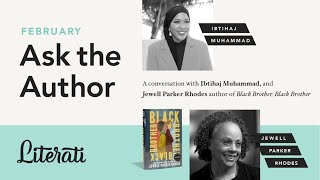
In this Underrated Book Club session hosted by Olympic fencer Ibtihaj Muhammad, author Jewell Parker Rhodes discusses her middle‑grade novel Black Brother, Black Brother with Muhammad and a virtual audience. Rhodes shares how discovering Black authors in college sparked her commitment to write youth fiction that centers African‑American history and culture, and how she wove fencing into the story after learning about Alexandre Dumas’s biracial background and visiting the Peter Westbrook Foundation. Muhammad reflects on her own fencing experience, explaining the three weapons (foil, épée, saber), the tactical nature of the sport, and how the mask erases visible identity, allowing performance to be judged on skill alone. The conversation delves into systemic racism, implicit bias, and the importance of introducing these topics early in children’s literature. Both guests emphasize equity in access to books and sports, citing the lack of resources in low‑income schools, the high cost of fencing, and the need for mentors, coaches, and community programs to broaden opportunities for Black and other under‑represented youth. Audience questions explore how to spark interest in non‑traditional sports, the role of representation, and the influence of mentors like Dr. Jan Cohen and coach Frank Mastilli. Throughout, the dialogue is enthusiastic, personal, and advocacy‑driven, underscoring the power of storytelling and sport to empower the next generation.
Chapters
Okay. Hi everyone, my name is Ibtihaj Muhammad. I'm so excited to be here. Welcome to Underrated Book Club. I wanted to thank Stephen Curry for inviting me to host. I am an Olympic medalist, I'm a fencer, entrepreneur, author, and honestly just super excited to be here, especially during Black History Month. With the profound Dr. Jewell Parker Rhodes, author of Black Brother, Black Brother. I'm so excited to finally get a chance to meet you, even if it's virtually. How are you?
I'm fine, and I'm equally excited to meet you. Your work and your career inspired Zara in the book. So she's a rocking woman fencer who's going to one day be the best of the best. So thank you for that gift.
Oh, yes, she is. Tell us a bit about your background as a writer.
You know, I actually always loved using my imagination and reading books. But I actually didn't know that people of color wrote books until I was a junior in college. I literally went into the library and saw on the new fiction shelf a book by a Black woman. And in fact, from K through 12 and 8 years of college, I was never even assigned a book by a person who was not white. So the representation was always important to me. And when I found out that Black women wrote books, I decided I'm going to write. And I'm always going to include African American history and culture, include and write about the stories that have been suppressed over time. But I also always wanted to write for youth. But I wrote 7 novels for adults trying to become good enough to write for youth. So now with Black Brother, Black Brother, and my youth canon, I feel as though I'm living my version of the Olympic writer's dream. So I'm very happy.
I mean, I believe that you really nailed it in this book. As a fencer, I felt it.
Really?
Oh yeah, I mean, it feels so— like I was able to feel so present throughout the book because I could really recall so many memories that were just parallel to the experiences that I was reading throughout the book. What was your experience like? Were you able to go watch fencing and really, I don't know, be able to feel what your characters were experiencing as athletes throughout the book?
You know, there's a magic that happens when I write books that I really don't quite understand. Two nights ago, I was dreaming, but I was telling a story. And my husband said it was like I was writing a novel. I am the least sports person you would ever meet. I mean, I'm awful at it. But I've always loved swords, you know, all kinds of swords— samurai swords, you know, King Arthur kinds of swords. And my husband did in fact take a fencing class when he was a college student, but I never saw him. But I never ever, you know, got involved in it as a sport myself.
Yeah.
What really spurred me is the fact when I found out that Alexander Dumas was a Black biracial writer who had written all these great fencing stories, The Three Musketeers, and all of a sudden it's like, whoa, another— like, I didn't know that. Maybe I would have fenced if I had seen myself in a fencing story rather than seeing the colorization, making them all white in our popular media. So that happened when I was 25. My sole interest in in fencing, meeting my husband who likes swords too, and then all of a sudden learning about the school-to-prison pipeline, which somehow or another came out in fencing. So I have no idea how I put all those things together. It was a long gestation period. I did go to visit the Peter Westbrook Foundation and other fencing clubs. My dearest friend, his nephew-in-law was Benjamin Bratton, and Benjamin Bratton—
Oh, wow.
Yes, and Ben— Oh, word.
Wow, look at that.
And he hosted me when I went to the Westbrook Foundation one Saturday, Ben and his wife Brennan, and that was wonderful. And I just read a lot. So sometimes it's like I just have to imagine, wait until I hear the voice, and things just come to me. But if you ask me to do what you do, I couldn't. And the fact that you think that I captured some of what you do, that is like the highest honor and the compliment. But it also underscores how with our humanity, our imagination, we can take ourselves anywhere and become anything. And racism and racial bias then is generally one of the— or gender bias or religious bias. Those are the roadblocks that society puts in front of people that sometimes prevents that from happening.
Mm-hmm. Mm-hmm. So that otherness creates obstacles.
Yes.
That's barriers that we have to overcome. I think what really spoke to me, one of my favorite quotes in the book, "Fencing isn't just slapping foils. It's lightning-speed decisions, thinking in a split second about possible reactions to one decision and how it affects decisions afterward, remembering who has right-of-way, athletic chess. One thing that I loved about fencing, and I played a lot of different sports growing up, coming from an African-American household, we did not have a choice in our involvement in sports. It was more so of which sport do you want to play, and I think my parents really saw the value in sport, um, and also they knew where we were after school.
Yes.
Um, but when it came to fencing, I love that tactical element to it. It wasn't necessarily about being the fastest and the strongest, but really outthinking your opponent.
Mm-hmm.
And I also secretly loved that it was an individual sport. I was solely responsible for whether or not I, I won or I lost, and that I could do everything I could to get better. And I think that's why I really felt so connected to Dante as a character. Because it seems to me as though like his initial interest in, you know, in fencing was like revenge, right?
Exactly.
But it really morphed into something a lot different. Can you talk a little bit about that?
Yes, it morphed into more of his own growth. The idea that, like you said, that he could be an individual and an individual in terms of his own excellence. That there were markers that he could work towards meeting. But I did also like the fact that he was on a team, so it's also like the best of both worlds. You could shine as an individual, and yet you also have this supportive network, uh, that, you know, helps, you know, give you that extra boost of love and self-confidence. But I do like the idea— and this is why I will always love things having to do with Swords— of fairness. Honor and integrity and the idea that strength comes from applying a sort of ethical system to the world. So he's not going to like just go back and hit a bully. In that transformation, to not do it for revenge but to do it because he wants to do it was really a major maturation. For me, Dante learns that being himself his best self was really the perfect way to be in the world. And I personally love with Alan, when finally, you know, he has beaten Alan and he says to himself, "I don't care whether, in effect, Alan sees me or not, because I see me." Right. You know, "I'm proud of me." And I found in writing for youth that a lot of times as they're trying to form their identities, they will absorb what society tells them about themselves.
Right.
You know, I've heard so many biracial kids or kids of color say, "Oh, I thought something was wrong with me, and that's why the criminal justice system or that's why the school system, you know, is treating me a certain kind of way." And this book was really written with the armor of saying, "No, you have a glory, and if somebody can't see it," that's their problem. So being himself is the best. Can I also add one other thing too?
Yes, please.
Yes. Dante also was inspired by Ralph Ellison's Invisible Man. Ralph Ellison, you know, starts his novel saying, you know, I am, you know, invisible. I'm not a spook or an ectoplasm. I'm invisible simply because you referring to white people, refuse to see me. And my novel riffs on that by making them the Ellison brothers. But it's also about becoming visible to yourself is really the highest form of compassion and self-love. And if you have that, you can be resilient in the face of anything. And so that if somebody can't see your glory, that's their problem. And that's what Dante feels. And I'm so proud of him.
Oh, I mean, I love everything that you just said. I feel like that has been this mantra and almost evolution to myself and like my life. Like I resonate so much with those words because as someone who, you know, is not only an ethnic minority, but also religious minority, and I grew up similar to Dante in a space that was predominantly white. And joining a sport that's even more white than the school that you exist, there's all these different stereotypes that people try to label you with, and they have these misconceptions about who you are.
Mm-hmm.
And even, you know, for Dante being seen as a troublemaker and being made to be a villain simply for his skin color, that is something that a lot of Black kids, not just Black boys, but Black girls as well, you know, see themselves in Dante. A question that Steph actually has, he says that you're so proficient in writing about race and these complex issues for younger audiences, and he finds that really admirable and impactful. He's curious to hear your perspective on why you feel it's important to start the dialogue early and how you started writing for this particular age group that topic.
Well, starting the dialogue early— thank you, Stephen— is important because the racism and the bias starts early, that children are imbibing all this negative energy that not only affects their mental health, but their emotional health and their physical health. Racism gets in the bones. And I also experienced some of this raising my own family. My husband is white, and like Dante and Trey, we had two kids, and one presents as white and the other presents as Black. And so we got to live this, the sense of such negative things about our son, you know, or they would see me as the nanny for my daughter, or the kids running running up to us from a Hawaiian vacation saying, "Mom, this adult woman kept telling us that we can't be related because our skin colors are so different." So I always felt in raising our children that race was picking at them and trying to disrupt the love that we had as a family unit, the love that all of us genetically as humanity share. And so— Mm-hmm. I wanted to show all kids that you can find a place for, for all of us, that we have this identity and that the representation of color, it's no— it's a superficial thing just as to whether you're tall or short or blue-eyed or green-eyed, you know, or you have curly hair or straight hair. And the fact that someone would take this one aspect and use it to suppress is something that they have to know intellectually as soon as possible before it becomes then part of their own identity.
I mean, yes, yes to everything you just said.
Yeah, yeah.
This social construct really attempts to paralyze our kids, right? It changes the way that they view one another, it changes how they view themselves, and like you said, it does begin to pick at you even if you're aware of it.
Yes.
Or not. And I think that is one of the powerful things that sport has the ability to, to give us, is to see yourself and your abilities and kind of what you bring to the table. And I, for me, that was really my, my interest in fencing. I love that when I put on my fencing mask that no one knew No one knew my skin color. No one knew my religion, like my faith. No one knew my gender. It was really about how good I could be. And I thrived beating the guys at practice. I loved it. And that's why I think I connected so much with Zahra in the book. I love that you introduced this female athlete into the story.
Yeah. Well, I've got to say that in particular, I got to listen to your book, Proud, and that was really really wonderful. But I actually regret that I didn't have the moment in the story in which you describe what you just did, that sense of having the mask on, you know, where, you know, the whole identity in a way is hidden, and then flipping it up and saying, "Aha, you know, I'm a gorgeous Black woman, and I'm fencing in hijab, and I won," you know, that moment. But I also— I did get that sense through you that the strategic thinking, that the stronger you were inside as a person had a direct impact on your ability to fence well. And I agree with you about sport. I love sports movies. Like I'm a sports, I just adore them, but I was a dancer. So one of the things when I see you and when I see Steph, I see any great athletes, I see that connection between mind and spirit and body. And I've always wanted to know, why did you pick saber?
Ah, great question.
Ah, yes.
This is for all the fencers on the call. For anyone who doesn't know, in the sport of fencing, you have 3 weapons. You have foil, épée, and saber. And the weapons are a bit different in each of them, the shape of the weapon. But also the target area, I would say, is the most important part. So Dante and his brother Zara, they all fence foil, where the target area is just the torso. Epee, like foil, you hit with the point in the target area. In epee, it's full body. But in saber— that's the weapon that I fence, the best of the three— the target area is actually from the waist up, and we use slashing motions to score. So I always describe Saber as being the closest to like Zorro. I like to think of myself as a superhero. But I actually started as an épée fencer. I fenced épée for about 2 and a half years at my high school. I started at 12.
Mm-hmm.
And I ended up switching to Saber because my high school fencing team in New Jersey, state championship team, like this award-winning program, the best in the country, they were graduating their entire saber line.
Oh.
Yeah, I have a coach, Frank Mastilli. He was like, you're fencing saber. And I remember crying and, you know, all these tears because my friends that I had, you know, these friendships I had like kind of forged in fencing, they were épéeists.
Right.
And yeah, so I like begrudgingly switched to saber, but man, was I a much better saber fencer than I was an épée fencer. So shout out to Frank. For forcing me to switch weapons.
Oh, that's wonderful. I always wanted to know. And also, I remember one of— a fencing coach told me that the saber fencers, they're the swashbucklers. And I gotta tell— I don't know if that's true or not, but in terms of describing it, but that just made me go, oh. So I think if I could have, I would have written saber, but I didn't dare.
You know, when I think of the sport itself and the breakdown of weapons, I would say that saber fencers are like the closest to sprinters. If you're thinking about it like track and field, like épée would be more marathoners, foils like middle distance.
Okay.
And yeah, I would say that saber, we're the sprinters. So all of our points happen in like milliseconds, like sometimes less than a second. Really, really, you have to be fast. Explosive and think on your feet.
Oh wow, I love that explanation. I'll store and save that for the next book.
Oh man, we cannot wait. I actually have a question from one of the book club members. Anthony asks, thank you for bringing this layered, wonderful book into the world. I love that you introduced fencing as a sport for Dante to center himself and also fight back in a healthy way. Have you ever tried the sport yourself? And if so, what are the most important things you learned about yourself and/or others?
No, I've never tried the sport. I've watched my kids try, and my husband, he would play around in the living room and try, like the dad in Black Brother, Black Brother. I think I still felt intimidated. Now, the dancing would certainly help carry me through, I think. But I think it was just a matter that secretly, if I had been a young kid and I had read Edogaji's book, I probably would have wanted to be a fencer. That that was actually in my heart and soul. So now I just live through it vicariously. But, you know, I'm going to take that as a— Mm-hmm. As a throwdown. And as soon as this pandemic is over, I'm going to go join a fencing studio and I'm going to go ahead and do it. So who cares that a lot of time has gone by? I'm going to go do it and not live vicariously. So thank you for that. But fencing and any sports would help all kids, that sense of belonging, that sense of that excellence that you're in control of, you know, your body and your mind and the bored. And it bothers me just as when I go to schools and I can tell that in schools in lower-income communities, they don't really even have sometimes libraries or no books at all. It's really appalling. And the same with sports. So why is it we aren't as a nation giving all kids equal access to books and equal access to all sports? You know, there might be someone out there who's great at ice hockey. I don't know. You know, but for a lot of kids of color, you don't see, you don't think that you can do it. And I'm of the generation too where we didn't even learn how to swim because in the urban segregated community there weren't pools. So I'm now writing a new book that's about, well, being an outdoors person, you know, as a way of representation, you know. But I'm going to do fencing and yes to sports. And I think yes to Miss Muhammad and Miss— because they are the best representatives our youth could have.
Well, we— I definitely appreciate that. I will receive those words, and I will receive them for Steph as well. I believe, like you said, in equity and accessibility when it comes to sport, and it's a passion of mine. To get our kids out there and to try sports that, you know, they may not have direct access to, it may be a town or two away. But Elizabeth actually has a great question for you. How do we spark interest in our inner city kids to try extraordinary sports in addition to what they know and love, like in the book, basketball for Dante's brother, Trey?
I do think that by having books books that introduce, you know, new kinds of sports, such as fencing or hockey or water polo, are ways in which children can connect imaginatively and develop empathy for these other worlds and these other kinds of characters. But I really think it's a message more for the adults in our world. For what are we doing to make it more equitable and fair for these kids and to have exposures? No child should have a limited horizon. And earlier You reminded me that I wanted to say that one of the things that happens to children of color is that their innocence is stolen from them before they've even really had a chance just to be a kid. You know, we find that with, you know, Emmett Till, or the way in which in social science and psychology they talk about how when people look at Black girls, they see them as more advanced and sexually knowing than they are. When they look at young Black boys, you know, they see them as being hoodlums and thugs. And this starts and you can even find it on YouTube today, as early as preschool, kindergarten. So in that sense, why are we as adults not giving every child the right to their own innocence, the right to be loved and nurtured? And if a child doesn't have that exposure to sports, you know, and all kinds of sports, then that's, that's on us. Yeah. That's on the adults in society who don't, you know, help make change. So some of it might come from the kids by reading the book and say that I want to try that, but we need more systemic change that we've— Got to understand that kids are our most precious resource and helping every single child, you know, helps all of us. Some people are so selfish and they'll just say, oh, well, I'll do this for my kid. But your kid is going to live in a world of other kids who grow up. So the reliance and strength and the knowledge, the horizon building for all of them, their education for all of them makes your child's world better too. You know, so use your self-interest. But I get emotional about that stuff.
Thank you.
It shouldn't be class, which is something that you also spoke about, that, you know, there are sometimes that class can allow you to give certain privileges in sport to your, to your kids or to your family. But I know from firsthand experience that my son went to school like Middlefield Prep, you know, in, in Boston. And one day he was upset— great school, great you know, enrichment. But one day he was upset and they called me and I went to, you know, go see him and see what was wrong. And he wasn't hurting anyone. He wasn't with anyone, didn't have a stick, didn't have a weapon. He was just pacing. But soon as I got to the campus, an employee said, "Next time I'm going to call the police." So it's like, I nearly fainted because I saw his life pass before my eyes.
So—
It really is, you know, we have to break down class, religious discrimination, you know, gen— you know, gender, colorism, all of that.
And implicit biases.
Pardon?
And implicit biases.
Yes!
We have, and we show up, and we don't even realize how those biases affect our children.
Oh, absolutely. And so, and the people, you know, all of us have bias because we're human beings, but we have a responsibility to think, why am I reacting this way? Is it based on a stereotype that I've been fed through our culture? You know, is it based on, you know, some sort of real evidence, or is it just me responding in a very, you know, id-like, like way? Absolutely. No, absolutely.
I, you know, you mentioned Ben Bratton earlier, and that's your connection to fencing. Ben was one of my teammates. I was on the US National Team for about 8 years, and every single team I was on, Ben was on as well. And I remember the first day I actually went to the Peter Westbrook Foundation, which is a nonprofit in New York City. There's about— pre-COVID, you could find about 200 brown and black kids learning how to fence in New York City every Saturday morning. But I remember the first time that I went, I was, I think, about 16. I didn't know anything about the sport of fencing outside of what I had seen in my high school and at local competitions. But I'll never forget that day because that was the first day I was introduced to fencing outside of, right, this high school level. There were Olympians, Olympic medalists, world champions, NCAA champions, and— Wow. These people who had traveled the world and had done so much in the sport. And seeing them, seeing people who look like me in the sport, which I hadn't seen before, allowed me to unconsciously graft my aspirations in the sport. And so when I—
Wow.
Access and having the opportunity to, like, say, a program like this, it really, I think, opened the door for me and paved the way for me to exist in the sport of fencing to see my dreams through. You talked, and you touched on this a bit earlier, about, you know, when it comes to your family and the affordability of sport itself. Fencing is top 5 most expensive Olympic sports. It's about $20,000-$25,000 a year to compete at the professional level, and that's out of pocket.
Yes.
Without the Westbrook Foundation, I wouldn't have been able to show up to the competitions or to travel Like all those different things that we don't really consider. Like I didn't have— I went to my first senior competition at 21 after I graduated from Duke, which again, unheard of. It's like we're a little behind the curve because, you know, I— my parents work. My mom was a teacher, my dad was a cop, so they didn't have just, you know, this, this, uh, income sitting around to, to send me to a World Cup on the weekend. It was something that I had to pursue as an adult. But I think a great question that we have is really about creating, I think, the availability of extracurricular activities. How do we make sure that our kids have the opportunity to pursue a sport like fencing or even swimming? Like in the last Olympics, we saw so many firsts in the—
Oh, yes.
In the polo manual, we saw them on the— the floor with Simone Biles, or even like in fencing, I'm not only the first Muslim woman to represent Team USA in hijab, but also the first woman of color on the U.S. fencing saber team, which is crazy because—
Wow.
You know, 2016 and now 2021. So I love that sport teaches us a lot about ourselves, but I think it also helps create space.
Yes, it does.
For more of us to exist.
Yes, it does. And I actually have to give a big shout out and lots of love to how in particular athletes bear witness and athletes have, you know, begun foundations or just by their example or their mentorship of others, they've enlarged the sports community for so many young people. And when I talk about in particular my novel Ghost Boys, which is about you know, police bias. You know, I talk about how even going back to, you know, the Mexico Olympics, you know, we have Juan Smith and Tommie Carlos, you know, do the Black Power salute, that that bearing witness keeps opening the doors for other kids to follow behind them. So that equity and justice. So, you know, to me, shout out and love to all the athletes too. Mm-hmm. Who keep moving it forward in terms of equity and access. But it shouldn't just be an athlete's responsibility or a parent who might have the money responsibility. It should be, you know, or just some nonprofits. It really ought to be all of us. And then you start talking about equitable funding for all schools.
Mm-hmm.
It should not matter where you live. Whether your school gets to have computers or a fencing team or a swimming pool or a library. All schools should be funded equally.
Yes. Love that. And '68 Games, so pivotal in our history. I know for us as athletes, especially as Black athletes, it— I had a poster of Peter Norman, Tommie Smith, and Dr. John Carlos on my wall all 4 years.
Really?
I did. I think that even subconsciously, it— that image is so powerful, it's so motivating, and it reminds you of your responsibility to humanity.
Yes, yes, and to your heritage and the next generation.
Oh yeah.
It's that whole ancestral tradition, I think, within you know, the African American community, that who you are is— it's not the sort of American or white Western tradition of "I did it my way," that there are people behind me who help make it possible for me to be me, and my responsibility then is to help the next generation, and that the line goes on forever.
I always think of it as like my ancestors, I stand on their shoulders. Yeah. Because of their strength, their resilience, their fortitude, I'm able to do what I do today. And I have to keep in mind the next generation, right? We have to continue to implore one another, empower one another to push past even the systemic racism that we're experiencing in 2021.
Yes, yes. I love in particular when they talk about, say, footballers taking a knee and how that's been distorted in the world of politics and sport. Being able to explain to young people, no, this is part of our heritage of bearing witness. You can bear witness through sport, you can bear witness through a salute or taking a knee, you can bear witness through a commitment to a religion, you can bear witness by a song, you bear witness by voting, you bear witness on and on and on. It's all about us. Carrying everyone forward with us in terms of our history and for the future.
Yes, love that, Dr. Rhodes. Um, I have one last question from Steph. Mentors and coaches are so important for everyone, and I wouldn't be successful without the ones I've been blessed with in my life. Uh, Dr. Rhodes, the lessons taught through Arden in the book are so impactful Who was your inspiration for Arden?
Arden, actually, he just came to me. I think he's based on all the wonderful supportive men that I've known in my life. But my coach was actually, in terms of my own personal life, was a white Jewish woman named Dr. Jan Cohen, that when I switched to English at Carnegie Mellon University, for a lot of reasons I was not well prepared because of the school district. Plus I had been on my own since I was 15, so there are a lot of gaps and holes in my knowledge. And she mentored and coached me, and this— she might be why I wrote this book or all the books that I've written, because she started the idea of do the hard thing. What good is it to try to do what's in your comfort zone or what's easy for you? Do the hard thing and to take pleasure in it being hard. Because even if you don't succeed at it, you still have learned a lot. So in fact, why can't a non-sports girl write a sports book?
Right.
And so my Arden was Dr. Jan Cohen. She's dead now, but she was very impactful because no one in my family had been to college. You know, I— you know, didn't know much about this college world that seems so foreign. And at the time, I didn't realize that the lifeline she was throwing to me, and she was beside me for all the rest of her days, coaching, cheering me on. And I think that transference of knowledge, knowledge is so important. So anybody who wants to be— have a coach for a writer, It can do me. I'll do that. So I would like to be a coach.
Yes, and shout out to Dr. Cohen. I— my Arden in my life was my first fencing coach. I mentioned him already, but Frank is Mr.— like, Frank Mastilli is one of those coaches and one of those guys who have the ability to help any child see the power within themselves. I remember there were kids on the team who honestly didn't have an athletic bone in their body, but this cool— the cool part about my high school fencing team was that no matter your skill level, no matter if you, you know, were on the varsity team, if you were the manager, if you were the team armor, whatever it is, you were a piece of this greater puzzle.
Yeah.
And so when we won together, we lost together, there was just this real community and this unified vibe that always existed on the team. Like everyone felt a part of this unit. And I think having a coach like Frank, who got, who had this unique ability to help all children see the power that they each had. I'm, I always feel so indebted to Frank because I think that he was one of the first sport coaches, right, coach I've ever had in my life to help me understand, you know, this power that I have and how something that's inside and you just have— sometimes we need help awakening, you know, that like inner tiger, as Frank would say. And yeah, I just, I hope that we're each able to find our Frank.
You know, I, I think that's so beautiful. And I love the description of yourself or his description of you with that inner, that inner tiger. But think about then what what Frank did or what, you know, Dr. Jan Cohen did. They saw us. They saw us at that time better than we could see ourselves, you know. And so that means that they had good hearts. They had empathy. They were not, you know, biased or prejudiced. You know, they just saw clearly. And if you think about all of us giving that kind of sight back to a growing child, how much better we would be. But I'm glad to see your tiger.
Yes, I mean, I think that, you know, we spoke a bit about this prior to the start of the call, but that was why we got into children's literature. You know, it's important that our kids see themselves in the books that they read. I didn't have the opportunity to see myself in the picture books that I read or in the stories I read about myself, so I feel really strongly that every single kid between the ages of 8 and 12 need to have this on their bookshelves. It's a really important story. I think it's a great introduction to systemic racism, how it exists, how it operates, and how it can live within each of us.
Yes.
I feel like these are— I don't know. I think that these books are a family, right? Like, you can't have one without the other. Even though Black Brother, Black Brother is fiction, you know, my young adult reader, my memoir Proud, is really about my life, right?
And how—
Yes. The similarities that exist between myself and Dante are so uncanny sometimes, right? And I think that a lot of kids with brown skin can relate to these stories and feeling othered how to overcome, you know, that overwhelming sense of otherness and really— for all children, no matter your color, your gender, your sexual orientation, your religious identity, we need to learn how to celebrate the things that may make us appear different. And I think that that's the beauty of being an author in the children's literary world. That was— Mm-hmm. The premise behind my children's book, The Proudest Blue.
Yeah.
Yeah. I feel like I would have been able to be in this space without having women that I look up to like you, Dr. Rhoades. I'm so appreciative of your work, and I look forward to giving my nephew Black Brother, Black Brother as his birthday gift come April.
Oh, you're so sweet. And let me just say that your work is equally important to me. In particular, just hearing your story and following your story. And it's like, I'm really glad that I've gotten to meet you and that we're here. But I think being children's authors together, we're just trying to make it not so hard for the next kid. You know?
Yeah.
Let's make it a little bit easier and get it easier and easier. Because of representation.
Yes, God willing, that is the plan. I want to thank you, Dr. Rhodes. I want to thank all the members of Underrated Book Club for joining us today and reading Black Brother, Black Brother with us.
And thank you, and thank you, Steph. Wow, made a dream come true. I really was a fan, and I am a fan, and saw you as my birthday present at the basketball game with the Warriors and the Clippers in the old arena in Oakland, and I was so, so excited. So I feel as though the world just decided to give me another kind of blessing and another kind of like rainbow sign through the selection of Black Brother, Black Brother to be part of your book club. So thank you, everyone. Thank you. Thank you.
And Steph, thanks for having me. You are phenomenal, as you know. From Athlete to Athlete, Olympic Committee. It is so— it's an honor to be here. Anytime you guys want to have me, I am here in a split second. Feel free to post any follow-up questions or thoughts in the Literary app. Thank you for having us.
Thank you so much. Bye-bye.
More from Stephen

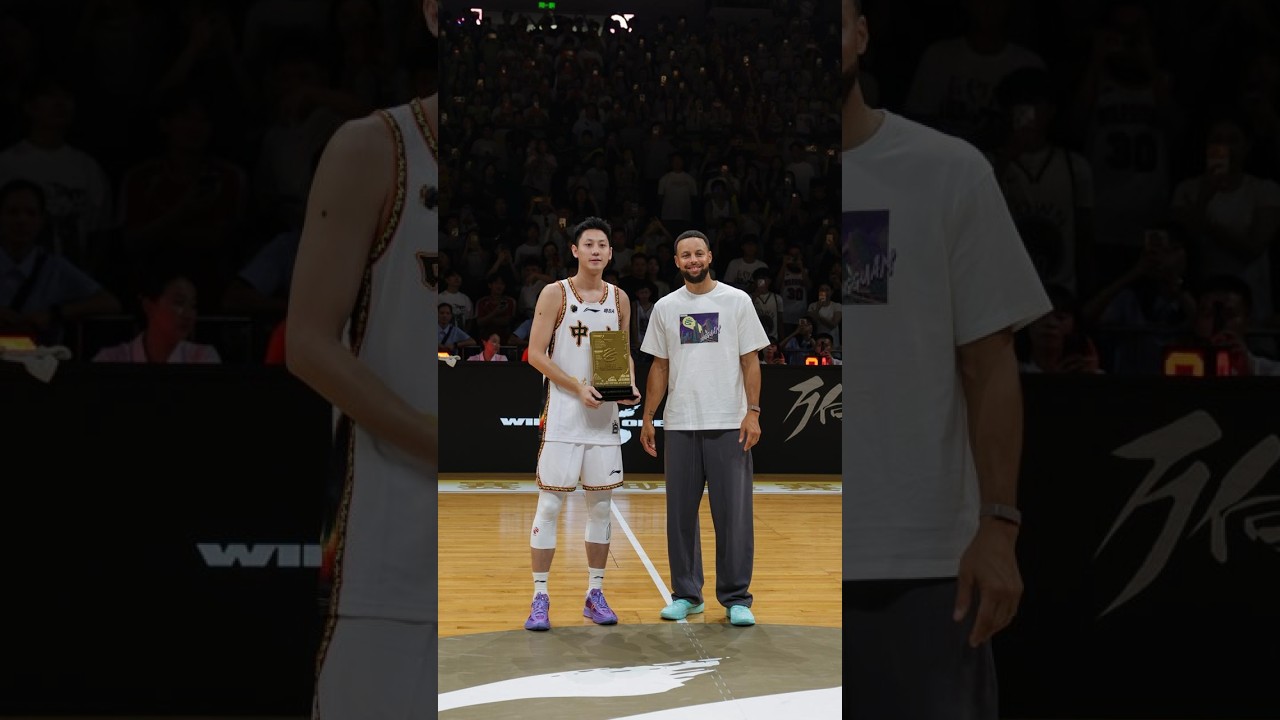


Just touched down in Beijing. See yall tomorrow! #stephencurry #currybrand #lining