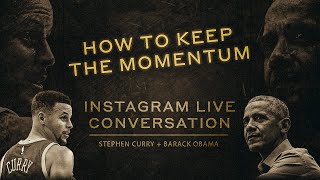
Stephen Curry asks Barack Obama how to sustain momentum for racial justice after 2020. Obama points to Georgia's Senate runoff as immediately crucial for voting rights and criminal justice reform, then emphasizes local power: mayors, police chiefs, school boards, and district attorneys shape policy more than most people realize. His My Brother's Keeper initiative offers cities training and handbooks to drive change.
Chapters
I'm gonna bring it kind of towards, you know, some current events in terms of, you know, like we just went through an election, you know, hopefully we'll have a peaceful change of power, and I think with all that's happened over the last year, and that's kind of been exposed in the conversations that have been happening that need to continue, you know, how would you advise us as citizens, no matter where, you know, what walk of life you're in, to kind of continue this pursuit of social racial justice in America, and I say that in terms of, you know, we don't have, you know, loud protests, you know, every week. We don't have the news coverage as much as we might like to, but I think we all have a voice and a platform, and whether that's, you know, through social media, whether that's through our families, our workplaces, what have you, how would you advise us, you know, going into 2021 to continue these important conversations that we need to have, you know, to not, you know, lose the momentum that I think we've gained over this last year, no matter how hard, you know, some of these things have happened.
Well, I— look, it's something I spend a lot of time thinking about, and, you know, I write in the book about how after my election— and I saw this coming, and I was worried about it— I think there were a lot of people felt like, woo, we're done.
Right.
You know, Barack's in office now, you know, change is here. And look, we had a big financial crisis and we had two wars and you had a big chunk of the Republican Party that were going to refuse to work with me. And, you know, so No one event like an election settles things. This is— democracy is this constant process, and you're never done. And so I was really— I felt so optimistic this summer after the tragedy, as heartbroken as I was, to see the response to George Floyd. I was, you know, we talked about how proud I was of how young people engaged, got involved, people from all walks of life.
Mm-hmm.
How proud I was of you and some of the other high-profile athletes who, you know, were very clear in their convictions and expressed them in ways that You know, didn't leave any doubt in terms of the demands of justice, and then translated that into actually voting and, you know, really specific organizational efforts. But you're absolutely right to now say, okay, what's the next step? Well, number one, I hope people know just right away, anybody who's listening in Georgia, there's another election coming up. Special, you know, the runoff election after the Senate election. You've got 2 seats at stake in Georgia, and man, that's important because that'll determine who is in charge of the Senate.
Mm-hmm.
And anything that Joe Biden and Kamala Harris want to do has to go through Congress. It has to go through the Senate. And if we are able to win those two seats with people who want to pursue voting rights legislation or criminal justice reform legislation, that is important. So pay attention to that, make sure you're registered, and, and make sure you vote. Uh, the other thing that I've spoken about a lot, uh, and you're absolutely right to say everybody can be involved in this, is so much of the change people aspired to after the George Floyd tragedy happens at the local level and not the federal level. And so the mayor of cities appoints typically the police chief. There may be an elected school board and they have meetings. There are negotiations. Between the police and City Hall about what does their contract look like and how are police held or not held accountable. How are the district attorneys or state's attorneys approaching cases and how do they think about diversion, for example, of nonviolent drug offenses and treatment and education as opposed to incarceration. A lot of that stuff is happening at the local level, and that's where just a pretty small number of individuals, or, you know, a group of churches, or, you know, a coalition of young people can have an impact, you know.
Mm-hmm.
It's harder sometimes to affect what happens in Washington, but in your local community, you can actually show up at these meetings and ask questions and promote this kind of work. And one of the things that we're doing with, you know, My Brother's Keeper, which, you know, you and Ayesha supported, our goal— and then we started after the Trayvon Martin death as a response to make sure that We're getting to some of the root causes of racism and structural injustice. Uh, you know, one of the things that a lot of these MBK communities have focused on is, you know, putting together handbooks and manuals and training programs and policy recommendations for cities. And in some cases, You know, we've asked— you know, one of the things that we did after the George Floyd murder was to insist on cities taking a pledge that they were going to move this process forward. And hundreds of cities have actually signed up. And so that's one way, if people are looking for ways to plug in, they can go to, you know, Obama.org, sign up to see if there's a My Brother's Keeper community in their area. If not, you can start one. But that's a place where you can immediately start getting information about concrete actions we can take to reform and improve the system.