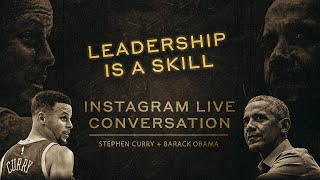
In this interview-style conversation, NBA star Stephen Curry and former President Barack Obama discuss the nature of leadership across different domains. Obama emphasizes that leadership is a skill that can be learned, not an innate trait, and highlights the importance of setting a cultural tone and clear values within an organization. He shares a concrete example from his 2008 presidential campaign, describing how trusting and empowering a largely inexperienced Iowa staff led to a pivotal victory. The dialogue draws parallels between leading a basketball locker room and leading a political administration, noting the responsibilities of the oldest or most senior member to mentor and guide the team. Both speakers stress that effective leadership is less about dominance and more about fostering success in others, maintaining integrity, and prioritizing service over personal gain.
Chapters
I know as like a father, you have a sense of, you know, leadership and you need to direct and make those tough decisions. And obviously, you know, you and Michelle battling through the ups and the downs together. But in terms of like the leadership perspective, obviously you're also accountable for a staff and—
Right.
An administration that is looking, you know, at you for guidance and leadership. And, you know, I'm not— they can't compare, you know, me and my locker room to the White House, but in terms of, you know, the position I'm in and being the oldest guy in the locker room and having to lean into that leadership—
You're an old man.
I didn't say all that. I just said I'm the oldest. That can mean that I'm a young old, you know? So in terms of leaning into that leadership and mentorship side, are there any examples of, where, you know, that materialized for, you know, during your first term?
Yeah.
And, you know, some tough decisions or some ways that you leaned into that role as president?
Yeah. Well, you know, one mistake I think— one mistake I think a lot of people make is to think that you're just either born a leader or you're not. When, in fact, leadership is— Like anything else, it's a skill. And there are a bunch of different ways to do it. You know, I've known people who were great leaders but were really soft-spoken and, you know, weren't always trying to seek attention. You know, I think that the thing I try to communicate in the book, and I learned this, I wasn't always I'm not, you know, perfect at it. Number one was realizing that the most important thing a leader does is they set a tone in terms of culture, a team, whether the team is a basketball team or a business or an administration. And so what are the values around which you are organizing yourselves? You know, one of the things I'm most proud about during my administration is we never had a scandal, you know, and the reason was that, you know, I felt it was really important if you have been elected to serve people that that's why you're there.
Mm-hmm.
And we were very clear to everybody who was serving, look, if you're here because of something other than service, then this is probably not a good fit for you. You know, if you're interested in leveraging this to make money somewhere down the line, well, there are a lot of other ways of making money than being in public service. If you're interested in the attention, well, you know what, right now we got a job to do. So I think being clear about what your values are as an organization, that's part of leadership. The second thing, and this I know you can relate to because there's a direct analogy in basketball or any team sport, is figuring out how do you help the people around you succeed.
Oh, absolutely.
And so one of the things I learned in the White House and in my campaign, I'll use a campaign story as a better example. I would not have won the presidency if I had not won Iowa.
Mm-hmm.
Because that was the first big test, the first state where you have an election contest back in 2007, 2008. And, you know, it was 98% white, a lot of rural voters. People didn't think that somebody of my profile could win that state. And the reason we won is not because I was the best candidate. The reason we won was because I trusted this amazing staff who knew Iowa, who were great organizers. They in turn hired a bunch of young people, many of them fresh out of college or, you know, had didn't have a huge lot of experience, but we trusted them to go into these little towns, talk about what we, you know, were about, talk about healthcare and, you know, jobs, but also listen to people, find out what they believed in, what they cared about. And at the end of the day, the reason I won was because we had empowered this whole team of people. Mm-hmm. To go out and they made relationships and figured out what our message should be and brought people to the polls, or in that case, the caucuses. And I think that's the second thing about leadership that I always try to emphasize. If you can figure out how to empower the other folks on your team—
Mm-hmm.
—so they're doing great, that's good for you. And by the way, they'll feel good about your leadership because they're seeing that you're invested in their success. And I think, you know, the mistake a lot of folks make is to think being a leader is, how do I dominate and stay on top of folks?
Right, right.
And if you have that kind of approach, your organization, whatever it is, is not going to be as good as it should be. And by the way, you're not going to have the same, you know, tight bonds so that when inevitably something goes wrong, you got other people to pick each other up.