Stephen Curry and Barack Obama Take To Instagram Live to Discuss A Promised Land

Stephen Curry interviews Barack Obama about his memoir A Promised Land. Obama discusses how his marriage to Michelle shaped his decisions as president, the bin Laden raid as an example of teamwork, and why understanding how government works can inspire people to become agents of change.
Chapters
There he is.
I'm tech savvy. I'm just happy we got this. We got this connected. I was a little nervous.
I think it's fair to say that I had a lot of help.
I don't care if I do. I got some support staff that gave me a little assist too, so it's all good.
How you doing, man? How's the family? How was Thanksgiving?
I'm doing great. Thanksgiving was great. It was a good time. Had a nice small gathering at the house, a little meal Ayesha threw down. It was amazing.
I know she did. She can throw down.
She can throw down. And then I got on a plane that night to head down to Phoenix or to Tucson to participate in the match.
I wasn't going to bring that up.
Oh, I had to bring it up because I know we've played golf plenty of times before. I know we've been on the same team once. We've been on opposite teams. I think I played a lot better when I was with you than I did with Peyton. Let's just put it that way.
So the question is, was, I assume it wasn't Chuck that was intimidating in that kind of, in that situation.
Nah, Chuck, well, the only thing that Chuck did, he played it, he played dumb leading up to the match talking about, you know, his swing and all this stuff. And I saw his swing on the range right before, and I knew we were in trouble at that point, so.
Listen, I watched a little bit of it, and for those who are following us right now, Steph is an unbelievable golfer, much better golfer than I am, but—
There's always a but.
Well, the but is that if you play against a Hall of Fame professional golfer, all Chuck had to do was get it in some grass and he will get the next shot on the green, right? It really didn't matter where it was. So, and Chuck was a better putter than I expected.
He— that, that is for sure. He definitely is anywhere around the green. He knew exactly what to do. So if you hit a 7-iron off a par 5, I think, uh, and you know Phil's coming up and gonna do his thing. That's what I knew. We got the— we got the first hole, it was all— it's all downhill from there. So I just need to get back with you. Yeah, I just need to get back with you and get my— get my confidence back. That's all.
We'll make that happen.
Absolutely. I appreciate you taking some time to talk to me. I know you're a busy man. I know you have a lot going on and a lot of wisdom to share with a lot of different people, but obviously I got this little amazing piece of work back here, and I know you have a lot of experiences and part of your journey to share, so I kind of wanted to kind of take a little step-by-step and some of the themes that are important to you that you want to share with the people through your book and then obviously through this IG. So, um, you know, speaking of like the pressures that, uh, that we all feel like we face, I know as fathers, um, you know, whatever career path you've chosen, trying to provide for your family, there's always that, that balance of pressure, right, between, um, finding success in your career versus, you know, being there, being present with your family. And I can't imagine if we feel this, you know, as a professional athlete and any other walk of life, that as the President of the United States, um, that was, you know, it felt exponentially higher. And I just kind of want to start there in terms of, you know, having been through 8 years of your presidency and now, you know, out of office. How do you— how would you frame that experience of balancing all the pressures in life knowing that you wanted to succeed at everything?
Well, look, I mean, I think that A lot of the book, it talks about the, the fact that although the White House is obviously different and the presidency is different, in a lot of ways it's a job. And the White House was where my family was living.— and the same kinds of issues that I think we all struggle with, that was part of our journey. You know, I'm pretty blunt in the book about the fact that a lot of times during my political career, Michelle wasn't feeling the amount of time and stress that I had to devote to what I was doing. She believed in the work, but she also felt as if, you know, this was exposing our family to stresses and putting us out there in ways that she didn't always feel comfortable with. I'm pretty honest in the book about, you know, she was not wild about me running for president. And I don't blame her because we had already gone through a lot. Even before I'd run for president, I'd been involved in a U.S. Senate race, and, you know, I was traveling the country and missing, you know, events at home, and the burden was on her because one difference between being a U.S. Senator, running for President, and let's say an all-NBA basketball player—
Right.
Is you still have some financial strains when you are a U.S. Senator. And, you know, you got two households and, you know, because I was going back and forth from Washington to Chicago, and I described in the book, I said, you know, look, Times were tight. Michelle had to work still. She's got two little kids. So, so figuring that out was, was challenging. One of the things that I write about that we were worried about was how would it be to raise kids in that kind of environment?
Mm-hmm.
And I know you and Ayesha are experiencing some of this just by virtue of there being your kids they're in the limelight in some ways. And, you know, Michelle and I understood, I think, kind of early on that, you know, that's a double-edged sword. And we wanted them to have a normal experience of growing up and being able to make mistakes and not being scrutinized and commented on about every single thing that they did. And we also want to make sure suddenly, you know, we're living like normal middle-class folks, and then the next thing you know, they're butlers. And, you know, as, you know, we talk about the fact that, you know, we had to tell the staff at the White House, look, you know, the girls have to clean their rooms. We're not having y'all clean their rooms.
Principles.
Discipline. Yeah. They need to learn how to do that.
Yeah.
And we were worried, would they end up somehow not having a sense of reality? And part of the reason I think we were able to keep them grounded was because we ourselves reminded ourselves, look, we're just here temporarily. This is a blessing. It's an opportunity to serve, but this is not who we are. And it helped also to have my mother-in-law, you know, who, you know, anybody who knows Michelle's mom, she's like salt of the earth, no pretension, wouldn't put up with any kind of attitudes or fuss out of Malia and Sasha. And that really helped. And I'm sure you guys with your, you know, grandparents can be lifesavers.
They can. They have been in our experience for sure. Absolutely. Especially when they carry the same temperament and perspective as you in terms of not getting too big-headed. Like, you have the highest, you know, office in the land, and that could mean a lot of great things, but your kids don't have— they don't have that.
Well, that's— my mother-in-law literally said that to Malia and Sasha. They were acting up one time, and she looked at them and she said, "Y'all do understand you haven't done nothing. Y'all are just along for the ride." Real talk though. Yeah, I mean, you know, if you get elected president someday, maybe you can tell me what to do.
Yeah.
But not now. Go do your homework.
I know as like a father, you have a sense of, you know, leadership and you need to direct and make those tough decisions. And obviously, you know, you and Michelle battling through the ups and the downs together. But in terms of like, the leadership perspective, obviously you're also accountable for a staff and—
Right.
An administration that is looking, you know, at you for guidance and leadership. And, you know, I'm not— they can't compare, you know, me and my locker room to the White House, but in terms of, you know, the position I'm in and being the oldest guy in the locker room and having to lean into that leadership—
You're an old man.
I didn't say all that. I just said I'm the old dish. That can mean that I'm a young old, you know? So in terms of— Leaning into that leadership and mentorship side, are there any examples of where, you know, that materialized for, you know, during your first term?
Yeah.
And, you know, some tough decisions or some ways that you leaned into that role as president? Yeah.
Well, you know, one mistake I think— one mistake I think a lot of people make is to think that you're just either born a leader or you're not. When in fact leadership is like anything else, it's a skill.
Mm-hmm.
And there are a bunch of different ways to do it. You know, I've known people who were great leaders but were really soft-spoken and, you know, weren't always trying to seek attention. You know, I think that the thing I try to communicate in the book and I learned this, I wasn't always, uh, you know, perfect at it. Number one was realizing that the most important thing a leader does is they set a tone in terms of culture, a team, whether the team is a basketball team or a business or an administration. And so what are the values around which you are organizing yourselves. You know, one of the things I'm most proud about during my administration is we never had a scandal, you know, and the reason was that, you know, I felt it was really important if you have been elected to serve people that that's why you're there, and we were very clear to everybody who was serving, look, Mm-hmm. If you're here because of something other than service, then this is probably not a good fit for you. You know, if you're interested in leveraging this to make money somewhere down the line, well, there are a lot of other ways of making money than being in public service. If you're interested in the attention, well, you know what, right now we got a job to do. So I think being clear about what your values are as an organization, that's part of leadership. The second thing, and this I know you can relate to because there's a direct analogy in basketball or any team sport, is figuring out how do you help the people around you succeed.
Oh, absolutely.
And so one of the things I learned in the White House And in my campaign, I'll use a campaign story as a better example. I would not have won the presidency if I had not won Iowa.
Mm-hmm.
Because that was the first big test, the first state where you have an election contest back in 2007, 2008. And it was 98% white. A lot of rural voters. People didn't think that somebody of my profile could win that state. And the reason we won is not because I was the best candidate. The reason we won was because I trusted this amazing staff who knew Iowa, who were great organizers. They in turn hired a bunch of young people Many of them fresh out of college or, you know, you know, had— didn't have a huge lot of experience, but we trusted them to go into these little towns, talk about what we, you know, were about, talk about healthcare and, you know, jobs, but also listen to people, find out what they believed in, what they cared about. And at the end of the day, the reason I won was because we had empowered this whole team of people to go out and they made relationships and figured out what our message should be and brought people to the polls, or in that case, the caucuses. And I think that's the second thing about leadership that I always try to emphasize. If you can figure out how to empower the other folks on your team—
Mm-hmm.
So they're doing great. That's good for you. And by the way, they'll feel good about your leadership because they're seeing that you're invested in their success. And I think, you know, the mistake a lot of folks make is to think being a leader is, "How do I dominate and stay on top of folks?" Right, right. And if you have that kind of approach, your organization, whatever it is, is not going to be as good as it should be. And by the way, you're not going to have the same you know, tight bonds so that when inevitably something goes wrong, you got other people to pick each other up.
100%. You said surrounding yourself with good people that have similar mindset in terms of what is the ultimate goal, and to your point, the opportunity to have, you know, that shared experience of success, and it's not being all about you, is I got some construction going on around here, so hopefully you can still hear me.
That's all right, I can hear you fine.
But yeah, that's important. I feel like every time you see us on the floor celebrating championships, and even if you don't win, there's still that respect of the people that's from your right and your left that you get to go to war with.
That's right.
And they look at the top and they can see that authentic, you know, approach that you just mentioned around, do you have, you know, their best interest, even if you don't agree all the time, even if there's some hard times, hard conversations, that you always have a sense of—
That's great, Corey.
We call it trust, care, and commitment. I learned that back at Davidson when Coach McKillop used to say, like, you can have all type of, you know, tough spots and disagreements and growth, but at the end of the day, that authenticity of looking out for each other, knowing that you don't achieve anything successful by yourself, you gotta live that out, and so—
No, that's exactly right. I mean, prior, you know, the book ends with, the raid to get bin Laden. And, you know, I kind of lay out step by step how that happened. And when you look at all the moving parts and the hundreds of people who, under complete secrecy, had to, you know, operate at the highest levels and trust each other, everybody from the intelligence folks who figured out meticulously the detective work to figure out where he was, to the Navy SEALs who, you know, built a whole compound just like the compound in Abbottabad, Pakistan, and practiced and trained, to the, you know, translator who, in case, you know, the neighbors came around as the helicopters landed, you know, could, you know, tell folks, oh, this is just a military affair, go back in your houses, to the dog, you know, the canine, you know, who was on the helicopters, and to the diplomats who had to manage the fallout. You know, you look and you— it's a perfect example of what you described. And that's part of why I end the book, because I want people to see when government works, When any important thing happens, it is because we're doing it as a group collectively, you know, with a shared sense of mission. And when that falls apart, I don't care how much talent, how much money, you know, it will not work. Things will break down. And that's, I think, one of the biggest themes of the book because that applies to America as a whole.
100%.
We're in a moment where we're really divided right now, and it's just really important for us to remind ourselves, you know, when we send a man to the moon, or, you know, we defeat, you know, the Axis powers in World War II and defeat fascism, or, you know, any of the seminal moments of American history, You know, there may have been a leader who helped make that happen, but it's thousands, hundreds of thousands of people, you know, who are involved in that success. And that's, I think, has to be where we get to. That's why I called this book A Promised Land. We're not there. Just like Exodus and coming out of bondage, we're right now in the midst of that wandering 40 years in the desert. And it may be it's our kids or our grandkids who get there. But what I know is that in the same way biblically, when folks start turning on each other and worshiping false idols, it makes us more lost. You know, if we're to make progress as a country, it's going to be because we get past some of these divisions that have been— in some cases, been around for hundreds of years.
I got to bring it back to the beautiful First Lady Michelle Obama. I know everybody sees— you know, the polished product when you come out and give your speeches, or when, uh, you know, you, you have that stature about you. I always have this, this kind of imagination right before you come out, like you and Michelle just had some real serious conversation, she gave you some good wisdom right before you turn the corner, because that's my experience with Ayesha. That's what I know, uh, she keeps it real and always kind of has a little gem of some kind of, you know, idea that I wasn't even thinking about. I'm like, you know what, you right, you right. I gotta implement that into what I'm doing. Can you kind of maybe give us an example of maybe a hard decision that Michelle was, you know, instrumental in helping you, you know, land it in the right spot or somewhere that she influenced the way that you presented yourself? Yeah.
You know, I think, I mean, we've been married almost 30 years now. And so she's so woven up in me and, you know, like I don't even know, well, you know, did I used to be like that or?
Right.
You know, has she just been training me all this time? So now I'm this way. It's interesting though. A lot of times with Michelle, in really stressful moments, the thing that she's really good at is actually making me laugh. Like, I write about how right before the Democratic National Convention speech in 2004, which, you know, I'm doing the math real quickly, but I guess you were, what, in 8th grade or something.
I'm not there.
So you don't remember this, but this was my first big national speech. It was really kind of the coming out party nationally. So it was a big deal. And it was sort of a surprise that I had been selected. I wasn't even in the Senate yet. I was still in the state legislature. It was very rare for somebody like me to get this, you know, millions of viewers. And so I'd written this speech and I knew it was good, but, you know, I'm feeling a little bit like, man, you know, I wonder how this is going to go.
Right.
So, you know, she comes up, you know, I'm about to be announced, you know, and she comes up to me and she looks at me, she squeezes my hand, and, you know, she leans over real close, and she says, "Honey, don't screw it up." And I start cracking up, right? And that was perfect. That's what I needed.
Right.
You know, if she had said, "Oh, honey, I'm so proud of you," I would have still been a wreck.
Right.
But when she said it like that, you know, then—
Got you out your own way.
And that was exactly what was needed. So, um, look, she's been such a powerful partner for me in so many ways.
Mm-hmm.
The most important things she's done that helped me become a better president was reminding me of my other responsibilities. Because, you know, her insisting that I was going to be home for dinner at 6:30. You know, her attitude was, look, you know, we're starting dinner because I'm not going to have these girls waiting for you and wondering, is Daddy— dinner's served at 6:30. I would advise you to be home at 6:30.
Mm-hmm.
And so I just set up my schedule so that no matter how busy I was, unless there was a genuine emergency, I was home at 6:30, had dinner, you know, read to the girls, helped them with their homework. And then if I had to go back to the office to do the work, you know, obviously I had the advantage I was living above the store, so I didn't have to commute. But, you know, her anchoring me in that way, that actually made me a better president because it reminded me, all right, this is what families around the country are looking for.
Right, right.
How can they spend time with their families? Their kids live a good life. And so it, you know, was a continuous sense of focusing on what's important, and that made me, I think, a more compassionate, more effective president. And the other thing that I think she did, you know, she teases me because I'm more the— she calls me the fact guy, you know, that like I always got facts in my head.
Oh, I'm trying to solve everything.
Yeah, and I'm constantly, you know, reading stuff and analyzing, and I got data, and I'm— and, you know, she understands the world more emotionally.
Uh-huh.
And I think that there were times during my presidency where I had gotten the policy right. I had figured out, all right, this is how we're going to get healthcare done, or, you know, this is what we need to do to, you know, deal with climate change, or— but I was communicating to the public in such a kind of dry way that it— people were— they just couldn't connect.
Mm-hmm.
And it was interesting during the campaign, I was telling stories and connecting with people. But once I, you know, I'm in the White House, all right, now I got to be serious all the time. And, you know, I've got to have these formal press conferences and I've got to, give all these statistics. And she was always good about saying, hey man, you know, why don't you tell a story that people can relate to? Why don't you, instead of having a formal press conference, why don't you do something fun that people might actually want to watch, right? You know—
Did she tell you to come on this IG?
Absolutely. You know, but that kind of, you know, when I talk to younger people now, you know, a lot of my staff, they're coming to the age where they're starting to get married, have kids, et cetera, and/or they're thinking about it. They've been with somebody for a while. They're wondering, should they take the plunge? And what I always, you know, what I say to them is, look, Nothing's better than having a partner who is complementary to you, right?
Yeah.
That sees things you don't, that has you covered on some blind spots, that can teach you something. Now that means that, you know, there's probably going to be a little more friction because if they're strong-minded and they've got opinions, they're not always going to mesh. And I describe in the book the fact that, you know, Michelle and I are temperamentally different. She's got a strong personality, so do I. You know, there are times where we're butt heads, but I am better because I've got someone who has strengths that I don't have, that sees things I don't see. And I would like to think that she feels the same way. Mm-hmm. And that, I think, has been one of the foundation stones of our relationship.
Couldn't say that any better. That complimentary piece that kind of gets you out your comfort zone.
Yeah.
And if you have that mutual respect and you're on the same level where, you know, you value each other's opinion and you try to integrate that into how you're seeing things and how you react. And to your point, over the course of time, you might get confused. You don't know if it's your thoughts, her thoughts, y'all's both thoughts. Like, it's— It does catch you off guard, and it's the best thing in the world. So just the way that you demonstrated that, you know, again, through all the stresses of the highest office in the land, like, that to me is one of the most amazing accomplishments, and the way that you've kind of inspired, you know, relationships of all kinds all across, you know, our country and the world, it means a lot. So just encouraging you guys on your journey.
Well, no, I appreciate that.
We appreciate that.
But look, You know, the other thing it teaches you, which becomes even more important when you've got a daughter, as a man, you've got to have confidence in seeing the strength of your wife and partner rather than wanting them to make themselves small—
Mm-hmm.
—to pump you up. You know, one of the great blessings of being married to Michelle is the example she set. Now I don't have to worry that Malia and Sasha are ever going to kind of dim their light because somehow that's supposed to be the role that they play. Because, you know, that's just not—
No.
You know, that's not what I want than their lives to be. I want that light to shine, and I want them to find people in their lives that love that light and love to see that shine.
Absolutely. I'm gonna bring it kind of towards, you know, some current events in terms of, you know, like, we just went through an election. You know, hopefully we'll have a peaceful change of power, and I think we With all that's happened over the last year, and that's kind of been exposed in the conversations that have been happening that need to continue, you know, how would you advise us as citizens, no matter where, you know, what walk of life you're in, to kind of continue this pursuit of social and racial justice in America? And I say that in terms of, you know, we don't have loud protests, you know, every week. We don't have the news coverage as much as we might like to, but I think we all have a voice and a platform, and whether that's, you know, through social media, whether that's through our families, our workplaces, what have you, how would you advise us, you know, going into 2021 to continue these important conversations that we need to have, you know, to— [FOREIGN LANGUAGE] not, you know, lose the momentum that I think we've gained over this last year, no matter how hard, you know, some of these things have happened?
Well, I— look, it's something I spend a lot of time thinking about, and, you know, I write in the book about how after my election— and I saw this coming, and I was worried about it— I think there were a lot of people felt like, "Whoo, we're done." Right. You know, Barack's in office now, you know, change is here. And look, we had a big financial crisis and we had two wars and you had a big chunk of the Republican Party that were going to refuse to work with me. And, you know, so no one event like an election settles things. This is— democracy is this constant process, and you're never done. And so I was really— I felt so optimistic this summer after the tragedy, as heartbroken as I was, to see the response to George Floyd. I was, you know, we talked about how proud I was of how young people engaged, got involved, people from all walks of life.
Mm-hmm.
How proud I was of you and some of the other high-profile athletes who, you know, were very clear in their convictions and expressed them in ways that, you know, didn't leave any doubt in terms of the demands of justice, and then translated that into actually voting and, you know, really specific organizational efforts. But you're absolutely right to now say, okay, what's the next step? Well, number one, I hope people know just right away, anybody who's listening in Georgia, there's another election coming up, a special, you know, the runoff election after the Senate election. You've got 2 seats at stake in Georgia, and man, that's important because that'll determine who is in charge of the Senate.
Mm-hmm.
And anything that Joe Biden and Kamala Harris want to do has to go through Congress. It has to go through the Senate. And if we are able to win those 2 seats with people who want to pursue voting rights legislation or criminal justice reform legislation, that is important. So pay attention to that, make sure you're registered, and, and make sure you vote. The other thing that I've spoken about a lot, and you're absolutely right to say everybody can be involved in this, is so much of the change people aspire to after the George Floyd tragedy happens at the local level and not the federal level. And so the mayor of cities appoints typically the police chief. There may be an elected school board and they have meetings. There are negotiations between the police and city hall about— Mm-hmm. What does their contract look like and how are police held or not held accountable? How are the district attorneys or state's attorneys approaching cases and how do they think about diversion, for example, of nonviolent drug offenses and treatment and education as opposed to incarceration? A lot of that stuff is happening at the local level. Yeah. And that's where just a pretty small number of, of individuals, or, you know, a group of churches, or, you know, a coalition of young people can have an impact, you know. Uh, it's harder sometimes to affect what happens in Washington, but in your local community, you can actually show up at these meetings and ask questions and promote this kind of work. And one of the things that we're doing with, you know, My Brother's Keeper, which, you know, you and Ayesha supported our goal, and then we started after the Trayvon Martin death as a response to make sure that we're getting to some of the root causes of racism and structural injustice. You know, one of the things that a lot of these MBK communities have focused on is, you know, putting together handbooks and manuals and training programs and policy recommendations for cities. And in some cases, you know, we've asked— you know, one of the things that we did after the George Floyd murder was to insist on cities taking a pledge that they were going to move this process forward. And hundreds of cities have actually signed up. And so that's one way, if people are looking for ways to plug in, they can go to, you know, Obama.org, sign up to see if there's a My Brother's Keeper community in their area. If not, you can start one, but that's a place where you can immediately start getting information about concrete actions we can take to reform and improve the system.
I love the actionable items, specific concrete ways that we can participate, and how important information is. Like, that was the main effort over the—
That's right.
—pre-election season, and obviously it worked in terms of voter turnout and just a new energy around how young people can influence influence the outcomes of these elections. And like you said, Georgia's extremely important. So to get plugged in there, keep that conversation going. I put obama.org at the bottom so you can get that information there and sign up. I got one last question for you before we get out of here. I know you got a busy schedule, and I got to get back to training. But I got your book here, and obviously— It's a big boy. Your first term. It's an unbelievable picture. I don't know where you posed for this at. You look good.
Thank you. But, uh, touch up on the gray though.
Yeah, well, no, the fade is nice. I saw Spice Adams in here talking about the fade is nice, so I'm trying to, you know, that's, that's goals right there. So there you go. Just what would be one takeaway, um, that you want people to know from the book and why, you know, you wanted to put the time into to bring this to the people, you know, after your presidency?
You know, the main takeaway, especially for young people who read it, and, you know, whether you're reading it or there's an audiobook, you know, some folks—
The audiobook's you, right?
Yeah. So, you know, folks who want to soak it in that way. My main takeaway connects to what you said just before. Which is, I want people to read this and say, okay, you know what, actually I have a better sense now of how our government works. I have a better sense of how the world operates, how power operates, how decisions get made that influence the world around me. And my voice, my ability to impact that, is more significant than I thought. Part of the reason that I wrote this, you know, tracking my journey as a young man through the presidency—
Mm-hmm.
—was so that people would look at it and say, oh, you know, well, he's smart, but, you know, he's not a rocket scientist. He's not Einstein. You know, he's— you know, yeah, he's a good speaker, but, you know, he wasn't always a good speaker. You know, yeah, he obviously had some talent, but man, he made a lot of mistakes. And, you know, he had some stuff that wasn't working out for him and he was disappointed and stumbled and sometimes got embarrassed, you know, in public. You know, I write about how, you know, first couple debates I was in, man, you know, I would stumble through my answer and have them— [LAUGHTER] buzzer would go off, like I was halfway through my answer, you know, I was terrible. And so the reason I want folks to see that is so that, you know, if you're coming up and you want to do something, whether it's around criminal justice reform or it's around climate change or it's around, you know, inequality or, you know, kids getting a better education, whatever it is, I want folks to read this and say, "I can do that." You know, now you may not end up being president, you may not want to.
Right.
You may not run for public office, but what I want people to be able to see is this idea of government of, by, and for the people, it actually can happen if you get involved.
Right.
The reason that, you know, so much of our public life is governed by, or at least seems to be governed by greed and power and, you know, cynicism and, you know, folks want to take advantage of of other people is so often because the rest of us just sit back, because we kind of think like, well, I can't make a difference, I can't do anything about that. And the more cynical we get, the less involved we get, and then the more disappointed we are in the outcomes. And it gets to be a vicious circle. And, and, and what I want to communicate is Look, put yourself out there, get in the arena, right? Take your shot. And yeah, it's not going to be perfect and you won't get everything out of it that you want, but you will have more power than you understand if you just let it, you know, let it show and take some risks. And so, you know, you know a little bit about something about take the shot, right?
Well, that was gonna— I was gonna end with that because I know our season's starting up and, you know, we all saw the video. We all saw, you know, the ratchet that you got. We saw the effortless— I'm lefty right now— the effortless motion. I just want to know, can I borrow—
That's what I do. That's what I do.
Can I borrow that?
Did you notice, by the way, that I wasn't sure with the mask on that everybody heard me? I had to pull it down and repeat it.
You gotta let them know. Then you hit them with the Larry Bird, put the finger up as you walked out.
I know. Just let them know. Look, you know, you know the best thing about that, Chuck? I got the dish, I got the feed from Joe Biden's granddaughter, Maisy Biden.
You can't make this stuff up, man.
She was campaigning with her granddad, and she was one of Sasha's best friends. And I had coached her in rec league when she was 8, and she was like the LeBron James of the league. I mean, she was really good. And so she was just out there. We were in the gym and we were just shooting. So just as I was walking out, I said, "Mazzy!" On time, on target pass. Well, and it just goes to show, you know, it all comes full circle, you know.
Absolutely. We're not gonna have any fans in the gym, so you're probably gonna hear me yell it on the court.
I'm looking forward to it. I'm expecting it now. All right. All right, brother, listen. I can't wait for the season. Give Clay my love.
Absolutely.
And respect.
I appreciate that.
You know, I can only imagine what he's going through, and, you know, but good luck, and give all my love from Michelle and the girls to Ayesha and the kids and your mom and dad.
Absolutely. I appreciate you. I appreciate your time. Looking forward to everybody digging into Promised Land. We're always grateful for you, so we appreciate you.
All right, appreciate you.
Yes, sir.
More from Stephen

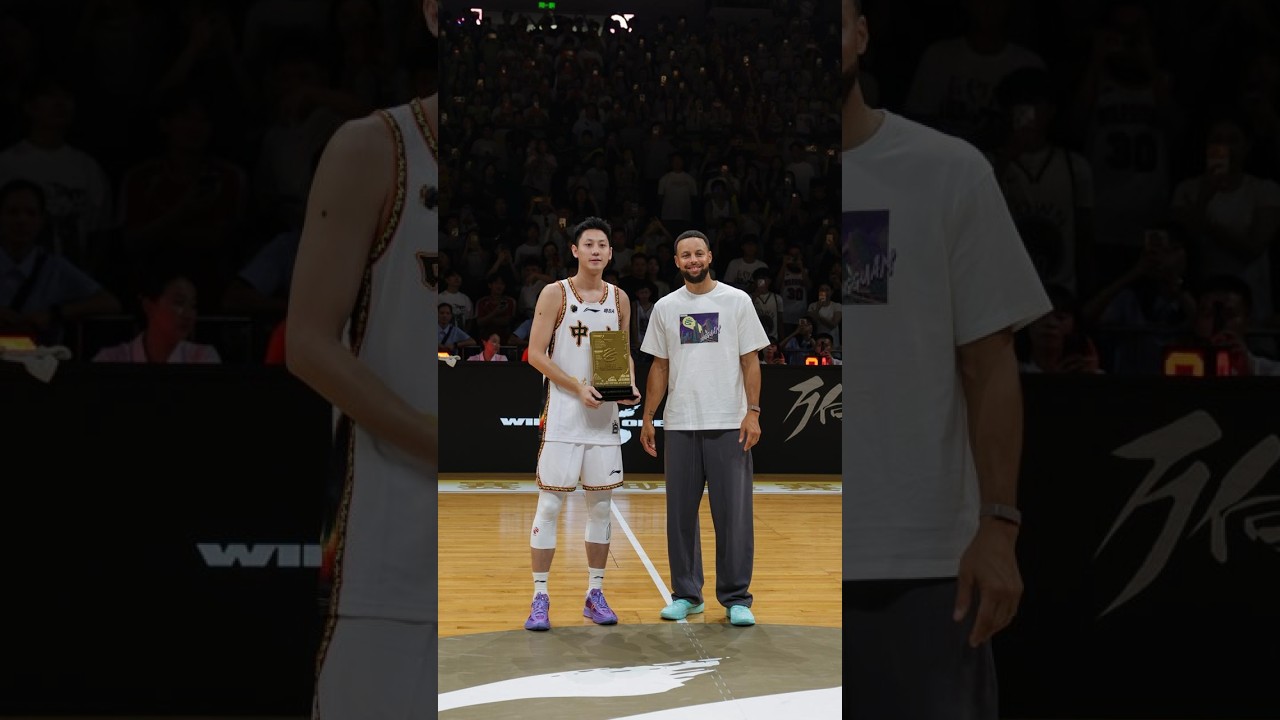


Just touched down in Beijing. See yall tomorrow! #stephencurry #currybrand #lining