Stephen Curry: Golf obsession, Davidson Cinderella run & road to the NBA | Full Interview

In this extensive interview, Stephen Curry reflects on his lifelong love of golf, detailing how he began playing at age 10, his off‑season schedule, the frustration of skill loss during the NBA season, and memorable moments from celebrity tournaments and a family trip to St. Andrews. He recounts the pivotal summer between his freshman and sophomore years of high school when he and his father completely overhauled his shooting form, describing the physical and mental challenges of relearning his shot. Curry discusses his size disadvantage growing up, the influence of a supportive but disciplined family—his mother’s vocal presence at games, his father’s NBA career, and a household where parents, aunt, grandma, and brother were all involved in his schooling. He explains his early recruitment experience, the disappointment of a walk‑on offer from Virginia Tech, and how he ultimately chose Davidson, leading to a Cinderella Elite Eight run. Curry narrates the decisive breakfast before declaring for the NBA draft, the stress of draft day, and his first NBA game. He highlights career milestones such as his first All‑Star selection, first playoff series win, and relationships with coaches Mark Jackson and Steve Kerr. The interview also covers his national team tenure under Coach K, his charitable work with Nothing But Nets in Africa, and the personal impact of those trips. Finally, Curry shares intimate details of his relationship with Ayesha— their early meeting, proposal on his parents’ driveway, marriage, and the birth of daughter Riley— and how fatherhood reshapes his perspective on competition and life.
Chapters
So I talked to a few people close to you. I talked to your college coach. I talked to Kate, talked to your wife last night. And a couple of the people I asked, like, so what is, you think he likes basketball or golf more? And neither of them could, like, none of them could say.
I thought my wife would get it. I always tell her, like, obviously basketball is what I've been doing for a long time, but golf, I love playing golf.
Yeah.
It's hard in the summertime. I go work out, get my stuff in, knowing that I can hopefully go get some good swings in later in the day. But it's fun.
Yeah.
Fun to me. I don't know which is 1A or 1B, but that's my job, so I gotta say basketball. Oh, I feel for you. One pays, one doesn't. Exactly, right?
Yeah, right.
Exactly.
There you go. So I was gonna actually start off by talking to you about some golf and then like, mentality, what makes you kind of a unique basketball player, then get into family and growing up and kind of go from there.
Sounds good.
Um, you guys good?
Yep.
Okay, cool. Um, so, so we were just talking obviously a moment ago about golf. Um, explain just how much you love the sport.
A lot. I've been playing since I was, uh, probably 10, 11. My dad, when he was in the league, in the summertime he just picked it up. And we were living in Charlotte and he kind of introduced me to it. So I'd go around and just ride, drive the golf cart. And then eventually he gave me, you know, my own set of clubs and I learned to play just watching him and him teaching me. And then I played some competitive golf in high school, but it's something I look, you know, in the off-season I have a very defined golf schedule from hopefully the middle of June to September. And, you know, I love playing 3, 4 times a week and just getting out there, fresh air. I'm very competitive, and that's one of those games that always is very humbling. So I love it.
What about during the season?
I'll play probably 3 times, maybe. Schedule's tough to find.
3 times?
Total.
The entire season? Yeah.
It's tough. You're traveling, and— With practice schedules and games, and obviously I like to get a little bit of extra work in sometimes, it's tough to find that, you know, 2, 3-hour, 4-hour block to go play, so.
How much do you find your skill drops off from, you know, the preseason or whenever you stop playing to when you pick up again after the season?
Pretty significantly. You lose, like, just your feel, your timing, everything. For some reason, my first round of the offseason is usually my best round of the summer. It's this uncanny thing that when I go out right after the season, my first round, I probably shoot my best score, get my expectations real high for the rest of the summer, and then I never get back to that level.
Really?
Which is pretty frustrating, to say the least.
So your wife tells me that she thinks during NBA timeouts when you're on the court sometime, you might actually be thinking about golf.
Occasionally.
Really? For sure.
What do you mean? There was a, we went to play in Orlando last year and Bubba Watson was sitting on the courtside across from our bench. And when I was out of the game, I noticed he was at the game watching. And like, I'm picturing myself like, what would it be to be Bubba Watson? Like going and playing in the Masters and winning and you know, what his life might be like traveling from here to here, playing the best courses in the world and things like that. And then sometimes I'll watch like Golf Channel a lot and maybe a swing tip will kind of pop up in my head and be like, hmm, what if I get my wrist turning a different way or something?
When you're on the court?
Something random. Not when I'm on the court, when I'm on the bench for sure. Like maybe, 'cause we got a lot of golfers on the team so we talk about it a lot during the season, but you try to channel your focus as best you can.
Yeah, apparently it's only Golf Channel and SportsCenter on.
Yeah, those are my two.
At the Curry household. I've seen you at the celebrity golf tournament, the American Century. Championship in Lake Tahoe. And tell about the year you were in the lead, middle of the night going into the final day, what you were doing and how nervous you were.
That was a— I didn't know what to do, to be honest with you. That was a whole different experience. Because like you said, there's a lot of competitiveness up there, and I'm sitting in the lead after day 2 on my second time being there, wanting to win but not knowing how to deal with those kind of nerves.
But you're a top basketball player.
It's a totally different experience. You know, when you're in a situation that you haven't been before, you feel like you can keep your composure, but I was just so excited to be in that position, leading. I can't sleep the night before the final round. I'm in the mirror. I read Tiger Woods' book and he was talking about how, you know, He would stand in the mirror and do practice swings with no club just to work on his positioning, his alignment for hours the night before a big round. I'm thinking about that, I'm like, "All right, so let me get myself right while I can't sleep. Maybe I'll be somewhat productive." But I ended up not winning. But it was a cool kind of experience just to learn how to deal with different emotions and nerves that I've never experienced before.
The best part of playing St. Andrews this summer for your father's 50th birthday was what?
Hmm. I can't remember what the bridge is called. And me being a golf nerd is killing me. But on the— after your 18th— after your tee shot on the 18th hole, walk across that bridge. And we took a picture as a family. My brother was there. My dad was there. That was pretty cool because I've seen it on TV and played it on Tiger Woods' game. Whenever you go there to see it for yourself in person, it's a pretty special place. And I'll have that picture for the rest of my life. I missed a birdie putt from 30 feet by just an inch on the last hole with a big old gallery that was in downtown Scotland right there in St. Andrews. And they were kind of cheering, seeing if it would go in, but it just missed. But that was a fun time. Yeah.
So I wanna talk to you about your mentality and just kind of what makes you unique as a basketball player. But first, going back to high school, the summer between your freshman and sophomore years of high school, you and your father just completely overhaul your shot. Why did he suggest doing it?
I was a short kid in high school. Played JV my freshman year. And you notice the, you know, how the change in physicality from JV to varsity. And my shot was kind of a fling from my hip kind of a deal. And we kind of were talking about it and thinking, you know, you gotta get that shot off really, you're a lot quicker on the varsity level with taller guys and, you know, better defenders and guys that can maybe block your shot. And so, me being a short kid trying to get my release a little higher so that I'd have more of an advantage when I was out there on the floor. And it was a frustrating summer, to say the least. I couldn't leave the paint for a good month.
Well, you said it was the worst summer of your youth.
Basketball-wise, for sure.
Why so bad?
'Cause you, I, obviously I had tendencies with how I shot and I could shoot pretty well. With that form. But once we started to change it, you have to really retrain your brain and your muscle memory. And for a month, I couldn't— I literally couldn't leave the paint because I couldn't get the strength to shoot it out outside the paint with any kind of consistency. So, you know, as a guy that— that was what I did, I was a shooter. To not be able to shoot the way I wanted to was really frustrating and kind of had to be patient with it. And finally I started to get it, it started to click. It would be shooting over my head with a high release and thankfully I figured it out just in time for our basketball season the next year.
Well, I was kind of laughing when I was reading one of the stories on you that talked about how you went to some basketball camp that summer and kids were looking at you like, what the heck's this kid doing here? He can't play.
Yeah, exactly.
What the crap? What was involved? With making the change?
Well, it was kind of just taking where I shot from and just continuing the release up to my forehead and almost somewhat mimicking what my dad did with his jump shot. But I go out in the backyard every day and just repetition after repetition, just shooting in the paint, that form. And allowing my body to kind of feel the difference. It's funny you said that because one of my teammates, his name was Demir Pitts, I'll never forget this. He was coming over from a different school to play for our team and he had heard about me and heard I played pretty well. And we got to our first practice and that was when I still couldn't figure out the shot. We were going to a—
Yeah.
Summer league for our high school to play, and we were getting ready for it, and he's like, "Who? I thought he was good. He can't, I don't know what he's good at on the floor. He can't shoot." I could dribble a little bit, but that shot was what my reputation was, but I didn't have it. He mentioned that in our first practice, and I'm like, "Ah." It kind of eats at your pride a little bit, but I stuck with it, with the process, and it worked out.
Yeah. Your dad said you were probably ready to quit that summer.
I was close, man, 'cause—
How close?
I don't think I was ever close to quitting, but it just frustrated, you know, just how frustrated I was with something I never dealt with in the game before. I wouldn't say everything came easy. I had a great work ethic, but to kind of hit the reset button was just something that, You know it was gonna be a long process, but when you're in the middle of it, trying to see the end result, it was tough at times. And there's certain days you kind of felt defeated a little bit just because, you know, you don't know how long it's gonna take for you to actually figure out that new shot. And, you know, thankfully, them encouraging me to keep going, and I knew that it would all be worth it.
It's interesting, we taped an episode with tennis great Billie Jean King, and she was talking about how she went through something similar right after she became a professional. She completely changed her shot and it took forever to figure it out, but then she ends up going on to win, you know, multiple Grand Slams after she does it. How much did it end up helping you?
A lot. You could— I watched film of my freshman year and then my sophomore and junior year just to see the change. For me, it actually built my confidence even greater than it was before I made the switch, 'cause I knew how much time I put into it and knew that, you know, it was obviously for a reason and allowed me to be a much better high school player on that level, being able to get my shot off quicker. I got stronger and, I did some good things when I was playing back in Charlotte to hopefully get to the next level.
Early on, your size apparently limited your confidence. How so?
Well, I think when I first started in AAU ball, like when I was 9 or 10, I was always the smallest kid on my team. You know, you know that scene as a young kid, you see looking around, everybody's got big arms and like comparing yourself to them and you're like, ah, you know, I'm not there yet, but there's something I could do on the floor to hopefully help my team. And it got all the way, that kind of trend all the way through high school until my senior year was when I was actually taller than somebody and it felt pretty good. But, uh—
I mean, you're tall, you're 6'3", but just not tall for— Now I am, yeah. Fiey.
Yeah, I'm a late bloomer too, so up until I was like 5'6" my freshman year in high school, so it just, you just see things differently on the floor and try to find how you're gonna be successful and how you're gonna impact the game as a smaller guy. Not being able to just physically dominate somebody, you gotta be smarter, you gotta have a better IQ, you gotta be a little more crafty on the floor, so it actually helped my game a lot. Unfortunately, major D1 schools, when I was getting recruited, kind of saw how limited I was physically and kind of let that kind of affect the scholarship offers from those big schools that I hoped to go to. But I had one coach that believed in me, and that's all I needed. So it worked out.
And I'll touch on that here in a little bit. But one thing I read, which I found was interesting, You said that not trying out for the varsity team your freshman year of high school was the biggest regret of your career. Why?
I think it would have been a great experience to just go through practices and hopefully a couple games with that kind of, you know, competition to push me. It was one— it was a decision that— I thought about it for a long time. Once I got to high school and up until the tryout period, knowing that we had a pretty good varsity team that year and they had a lot of guys returning, so I didn't know how much playing time I would get and didn't know really how ready I was for that level. But I got a lot of reps in the JV, you know, with the JV team. And at the end of the year, they called me up for, you know, the state championship or the state playoff run. And I was on the bench and just looking, obviously with 20/20 hindsight, I think, you know, playing on that varsity team would've been a little more of a challenge to hopefully, you know, accelerate my improvement as a basketball player. But those last 3 years, they did enough. And I think, you know, it all worked out.
Your college coach told me you have the unique ability to know what's going to happen on court before it actually happens.
He's saying that now. After my first college game, I had 13 turnovers and the other team saw exactly what I was doing before I—
Yeah, but what happened the second game?
The second game I came back strong against Michigan, yeah. I think I had like 32 or something like that. So I was able to— bounce back pretty quick, but it's always good to hear your coach comment after good games.
Well, but a lot, I mean, not, this wasn't just after any game. I mean, this is the guy who coached you for the 3 years you were in college saying that, and others have said it as well, just your ability to anticipate what's going to happen on the court before it actually happens. Why do you think you're able to do that?
I've been around the game a lot. Obviously, watching my dad play, I kind of You don't know if you subconsciously just taking, or you have a, you know, taking little tidbits that you see and increase your basketball IQ. I try to be as in control of my game and what I see and the flow of the game as a point guard as I can because, you know, that's your job as a point guard to, you know, distribute the ball. Yeah. Pretty much know where everybody's gonna be on the court when, you know, as the timing of plays, you know, develop and—
What will you see as a play is developing?
You just kind of read the defense to see, you know, who's gonna help. And if they help, who's gonna be open. And you kind of, especially a lot of like pick and roll situations, that's the way to attack it is you have to be aware of where not only your defender is, but the two defenders that are gonna be involved in the play once you come off a screen. And knowing, you know, who's gonna be open and be able to make that pass right when they need it. And that's what the great point guards do. And I want to be one of those guys.
How do you go about deciding how to shoot from any spot on the floor?
Just pull the trigger. There's no real— deep thought process when it comes to that. I have a lot of confidence that I can make any shot on the floor. And, you know, when you're in rhythm and you feel like you're open, you just gotta, you know, rely on that muscle memory to take over and just pull the trigger and shoot it. That's kind of— if you have— if you think too much about it, I think you're at a disservice because then you start to kind of break down your mechanics and overthink. The situation. You kind of got to be free on the court. And when— even regardless if you're 4 or 5 feet outside the 3-point line, if you feel like it's a good shot, which is a, you know, momentary just reaction or a thought, just, just do it.
What makes you so efficient from the moment you decide to shoot to actually releasing it?
Uh, I think the foundation of your shot. You're always prepared before the the ball comes or before you're going into your shooting motion. That's one thing my dad did teach me was—
And you get it off faster than everybody in the league. At like what point?
What'd they say? I don't know what the difference was, but yeah. If you do your— my dad always say, there's a saying, "Do your work early." So if I'm coming off of a screen or getting ready to catch and shoot, I'm pretty much, you know, in balance and square to the rim. The only thing I really got to do is just catch and get it to my shooting pocket. There's no real time to, you know, catch, get your feet set, you know, get down in your, you know, in your good shooting position and then release. You got to do your work early so that once you catch the ball, all you have to do is just kind of jump and release like you've done millions of times in the practice gym. And that allows you to be a lot quicker and a lot more efficient and consistent as a jump shooter.
Stephen Curry. Your mom, explain how vocal she is at games.
She's amazing. She, uh, when you came to Charlotte Christian High School, you knew she was in the stands because she'd be yelling at the ref, she'd be yelling at me, my brother, whoever's game she's going to watch. She's the biggest cheerleader, but also, you know, could be, in a nice, encouraging way, I'll say, She could get on you for sure if you weren't doing what you're supposed to be doing, so.
Would she get on you a lot when you're playing?
Oh, for sure. Yeah, for sure.
Like, what would she say?
If, I guess, if I wasn't playing defense, that was her thing when she played in high school, when she was a big-time defender. So if I wasn't playing defense the way I was supposed to, she'd yell at me, "What are you doing?" From the stands? Yeah, "Guard your man, guard your man." And so basically that, She's giving away my, as an opponent, whoever I'm guarding, she's giving him fuel. 'Cause he knows, oh yeah, he's not guarding me, I gotta keep going at him. But I always loved to know that my parents were supportive and were engaged in what we were doing. So I had no problems hearing her from the stands.
Your dad's sitting there quiet and he's a 16-year NBA vet and your mom's the one, Yelling at you. Explain why she was trending on Twitter at one point.
Man, it was in college. During the tournament, she got a lot of FaceTime. And I think when we played Gonzaga, she got really emotional in the stands. I think I hit a big 3 with like a minute left to go up 3.
Davidson's on this Cinderella run.
And up, yeah, we were our first, going for our first tournament win and my coaches, 10-year at Davidson. I hit a 3 and I pointed at my mom and my dad in the stands as I got back on defense and she lost it. Got really emotional, started crying. My dad's showing the most emotion I've ever seen from him.
What did he do?
He basically stood up, was yelling, and gave me a big fist pump in the air. He usually sits just like this at games. He sits like this with his hands chin in his hands, no emotion, whether we're playing well, whether I have 40, whether I have 2 points, he's always, you know, real stoic. And that game he just let loose, which was fun to see. But my mom, she got a lot of FaceTime. We had played some, you know, obviously on, you know, tournament coverage, she got a lot of attention. And to see her just showing that much emotion in the stands and following our run in the tournament was a lot of fun.
In elementary school, your mom is the headmaster, your aunt's a teacher, your grandma's the school cook, and your brother's one of your classmates.
Yes, sir.
How did that work?
Some days it was good, some days not so good, 'cause there's nowhere to hide, really. You go anywhere, one of my family members is watching over me. And my brother. And we usually got— we're very competitive as siblings. And older brother, I'd pick on him a little bit, and, and he tried to get under my skin a lot. And, uh, there was one, one story, uh, we were in the same class. So it was like a Montessori school, so you have, uh, you know, 3 different age groups together in one class. And so me and my brother were in upper elementary class at the same time, and my aunt's the teacher. And I borrowed his chair to grab a book from like the third shelf on the bookshelf, and he didn't like that I used his chair. So he came over and tried to pull the chair under me when I was still standing on it. And so I'm yelling at him like, "Leave me alone, I'm trying to just get a book." He's like, "Give me my chair back, give me my chair back." So we're arguing in the middle of class, and my aunt sends us to the principal's office, who— [LAUGHTER] As you just said, is my mom. And so she passes us off. My mom's yelling at us in the, in her office for not acting right, not being respectful. So she sends us home to go with my dad until she gets home after school. And yeah, that was not a fun day. So things like that, if we made it hard on ourself, obviously we would get in trouble. But it was fun to have all the sorts of family members there. Having fun, and my teacher, obviously my aunt was, she showed a lot of love for us while I was there at the Montessori school.
What happened when you purposefully did not do the dishes the night before your first middle school game?
Ah, that was not fun. Imagine going back to your middle school basketball team locker room and saying, "Hey fellas, I'm not gonna be playing today." 'cause I didn't do my chores last night. I didn't do the dishes. So good luck to you guys. I'll see you next game. That's basically what I had to say. So I had to, I missed my first middle school game for not taking care of my business. So that was kind of how the Curry household was run. If you don't take care of your business at home, which you're supposed to, basketball's a privilege and it can be taken away, so.
Tell about the high school curfew. That you had?
Hmm, it was basically whatever grade you were in was the time that you had to be in your room ready to go to sleep. So for freshman year it was 9 o'clock and on up. I got a little bit of freedom every single year if I acted right. So yeah, it wasn't too much that I tried to get away with really, but they were pretty strict with it. You knew what the deal was and don't try to skip around it.
Right, and tell why you'd often have to make excuses to your high school teammates who were throwing parties.
I didn't go to many of those parties for sure. Didn't go to many of those get-togethers for that reason. Even when I got my license my sophomore year, 10 o'clock was the cutoff, so if you're not at home, getting ready to go to sleep by that time, then I learned from the dishes situation. I don't want to mess with that.
Is it true that if you wanted to hang out with a girl, your parents wouldn't let you hang out with her unless they first met her parents?
Old school, baby.
How does that go over?
Old school. That was, I mean, that was, I knew that that was the situation, so I had to pick the right girl and obviously know whole backstory before I initiated that whole process.
Right, how does the conversation go over with the girl? You say, by the way, before I go to the movies—
Yeah, exactly. Before we go to the movies, I need your parents to come over to the house and just sit down with my parents, just have a talk. We're very just welcoming, warm family. They just want to get to know you, that's all. So we skipped a lot of the— we skipped a lot of the— the middle ground before we got to meeting the parents. That was step one.
So you end up meeting your now wife when you guys were 14, 15 years old in a church group. You end up dating, starting to date when you're in college, get married when you're 23 years old. Why get married so young?
Why waste time if you found the right one, right? That was my, you know, I knew, having met my wife in high school, kind of her story and just knowing her family and what she was about, you know, very faith-oriented woman. And she was so driven. We didn't date, like you said, through high school. And, you know, got to college and we met again. I like to say we always met again. Mm-hmm. Out in LA when I was at, for the ESPYs after the tournament run. 'Cause she was living out there pursuing her acting career. And that was kinda just fate right there. We two kids from Charlotte meeting again in LA on a whim and then kinda keeping it going and dated for what, 2, 3 years? When I got to Golden State and knew I found the right one, so didn't wanna waste any time. And start a family and get married and, you know, life is good with her.
Your wife Ayesha was laughingly recalling this last night on the phone when I was talking to her. Even though you despise chocolate, which is shocking in and of itself, explain why you were willing to eat lots of it in Kortingaer.
Oh man. So I went to her house and it was during the summer so she had a lot of family over and her mom's a really good baker and she made this chocolate cake. And so I'm just trying to impress and go over there and her mom offers me, "You want some chocolate cake?" And so I'm looking around, I know she had made it from scratch and I didn't want to be disrespectful so I'm like, "Yeah, sure, I'll have some." So I'm just trying to eat it as fast as I can because I just don't like chocolate at all in any shape or form. So I got one plate, ate as quick as I could, thought I was done with that test. And she's like, "Oh, you want some more? You liked it so much, you ate it so fast, you want some more?" I was like, "I guess so. I guess so." And then fast forward, it was kind of funny, at our wedding we had like a 4-tiered cake. Mm-hmm. Cake and it had different flavors and we were supposed to cut into this amaretto flavored portion of it. But we got it mixed up somehow and we're at the wedding doing the cutting of the cake, cut right into the chocolate portion. And so it was kind of cool how that started, impressing her mom, eating her chocolate cake. And fast forward, I'm still trying to avoid chocolate and can't do it at the wedding. I'm eating chocolate cake again. Mm-hmm. Right in front of everybody, so they gave me some crap for it.
So tell about how you went about proposing on your parents' driveway.
So the story was, yeah, with the proposal was my sister had a volleyball game that day, and we were gonna have a get-together at my wife's apartment, which was, that was a story that she thought. But I had everybody, all our family, her family, my family that was in Charlotte, prepared to meet at my parents' house. To kind of watch over the driveway spot where we had our first kiss. And so everybody's at the volleyball game and we all leave and say we're gonna— everybody's gonna go home to their— or get some stuff from the house, maybe go grocery shopping or whatever for the party that we're gonna have at my wife's place. And I told my wife on the way to her apartment, "Oh, we have to stop by my parents' house to grab this board game that we all like." Mm-hmm. Which is called piquino. It's like a card version of bingo. And so, like, oh, it's at my parents' house. We'll just stop by right quick and grab it. So we drive over, pull in the driveway. Parents did a great job, and the family, they had all the lights off in the house, so it seemed like nobody was there. So I go up to the front door, and I know it's locked. I didn't have my key either, so I'm like, oh, they left the door locked. I go around to the side, which is where the spot was. And so we walk around to the backside of the driveway, get to that spot that I planned, and she's about to walk into the side door, and I'm like, "Hold on." There's like a bug on me or something, so I'm like swiping it off me. And she turns around, and I'm like on one knee right there at the spot. She's like, "Wait, what are you doing?" And then I go into my spiel. And at the end I say, "Will you marry me?" And she sees the ring and she goes, "Are you serious? Like, stop lying. Are you serious?" And then at that point, I'm like, "Wait, you're saying yes, right?" She's like, "Yes." And then everybody opens up the windows and comes running out the side door with cameras and taking pictures. And her brother was filming it. So it was a cool experience and thankfully she said yes. Yeah. She said yes, but she definitely, she was hesitating a little bit with that. "Are you serious?" Like, 'cause I think I got her really good. So it was good.
How were the nerves?
That was a long day. It was like 9:30 at night when I actually proposed. So I'm thinking about this obviously for months, but then that day just, it wouldn't go fast enough to get to that, to the proposal. 'Cause a lot of planning going in and making sure everything goes right. But I was definitely nervous and anxious and, It's a big day.
And you have a young daughter now, Riley. And I understand you actually like delivered her.
Yeah, that was an experience. I didn't know going into the delivery process that I was gonna be that hands-on. Riley came so fast that I almost didn't have time to get my scrubs on. 'Cause I was actually taking care of Ayesha when she was getting the epidural and that whole process. And Riley was hustling to come out. We were on a— we were rushing to get my scrubs on and get in position, and the doctor kind of was like, "Hey, you want to take over?" I'm like, "What? What do you mean? I don't know what I'm doing." He's like, "No, just stand right here and you can hold Riley for the first time when she comes out." And that was a very, very cool experience.
How has having a child changed you?
It just puts everything into perspective, man. I don't ever have a bad day. Knowing, you know, when I go home, I have a wife and daughter, you know, to enjoy life with. So, you know, especially with basketball and having that as my career, you're very competitive. When you have a bad game or you lose, it seems that used to be, you know, my world. Like that was it. Like, you know, it kind of altered how you felt about the day. But now, Obviously you're frustrated when things don't go your way, but when I go home, that's— there's nothing that's more gratifying than coming home and spending time with your daughter and your wife and just enjoying what God's blessed me with. And I don't really know what I used to do with my free time. That's the other thing. Like, you know, when you have a daughter— me and my wife were sitting around the other day just watching her play. Now that she's 2, she's kind of a little more independent, but we used to ask her, like, "What do we do? Like, when you came home from practice, like, what did we do?" Because it's now all about Riley. So it's a good thing going on.
That's why the road trips are so great, though, because you get to catch up on sleep and relax when you're on the road.
Exactly. I wanted to hear Riley calling or hit me in my face yelling, "Daddy, wake up!" at 7:30, no matter what I did the night before, because she doesn't care. It's time to go.
So your dad, Del Curry, 16, you know, successful seasons in the NBA. How often did you used to tag along as a kid to his practices or games?
A good amount. We always had the— you can't go to games on school nights. That was a rule in our house. So coming up, I'd go to games on the weekend. And then when he played in Toronto his last 3 years, we were living in Charlotte, so we'd go up to see him. Twice a month for extended weekends, and we'd go to every practice and every game that we could. My favorite part of that was just going to shootarounds on the day of the game, because we'd go to the arena and sometimes the coach would let me get into the shooting drills with the guys and get shots up. So George Karl, when he was in Milwaukee, was a guy that I think he had Vinny Del Negro on the team, Ray Allen, Sam Cassell, my dad. And we'd all— I'd get in all the shooting drills. I was 11 at the time and get to shoot with the pros.
What's that like for you then?
You remember? That was surreal, yeah. That's sort of surreal. I know my dad's an NBA player, but to actually be on the court with them while they're preparing for an NBA game, getting shots up and shooting drills and shooting competitions was— I was obviously confident as a kid to go out there and hopefully help my team win, but it was— You had to like stop yourself and think like, "Where am I? I'm actually on the court right now with them in practice." And coaches let me do it, so it was fun.
Other than that, is there a moment with your dad's teammates that you most remember?
Um, there's a couple. I think the one in 1994, I was 6. It was like one of my first memories of him and his team. Charlotte was playing Boston in the playoffs. And it was a close game down the stretch at home. And my dad threw an inbound pass to Alonzo Mourning, who hit a buzzer beater from the free throw line to win the game and seal that series. And my dad threw the inbound pass, came in and watched the ball go in, was the first on the dogpile, you know, jumping on Alonzo as he celebrated on the court. And me and my mom and brother were sitting in our normal family section seats and just going crazy, 'cause that atmosphere was just unbelievable. But then also in Toronto, I used to go play one-on-one with Tracy McGrady, Vince Carter, Mark Jackson used to be my coach.
That's cool.
After practices, I'd be sitting on the sidelines and they'd call me out, check the ball, and we'd play one-on-one. And my dad still has a— a newspaper clipping of me guarding Tracy McGrady in the post. I'm like having an armbar on him, basically coming up to like this style, I'm like real short, and playing one-on-one that they took a picture of and put in the Toronto newspaper. So it was pretty cool.
Tell about the picture of you sitting on your dad's lap during the All-Star Game.
Yeah, sitting, I don't know if we were watching the dunk contest or what, but My dad was in the 3-point shootout. And so we're sitting, he's in his Hornet warmup and I'm sitting on his lap and to our left is Mitch Richmond and behind me is Coach Don Nelson. And so that was a picture that came out when I got drafted. I can't remember exactly what year it was. I was probably 4 or 5 at the time. But fast forward, you know, 17, 18 years, and now I'm playing for Coach Don Nelson and Golden State as his draft pick. So those are moments that are, you know, are pretty special growing up with a dad that played in the NBA. And you see Mitch Richmond at certain events around the league, and he comes to the Golden State every once in a while. Kind of something to talk about. I remember I was sitting right next to you when I was 5 years old.
Right.
Watching you as an NBA player, and now I'm in your shoes. Myself. So it's something that I always remember.
What do you think you most learned from your dad?
Uh, I guess just how to balance, you know, an NBA life with a family. He involved us a lot in things that he did, and I'd go to appearances and just how he engaged with fans and always seemed to have time to sign autographs or take pictures or talk. We were going around Charlotte. Just, that goes a long way with now that I'm in his shoes as an NBA player myself. It's just how to be gracious and be thankful for where he is and how he balanced how much time he spent on the road and—
And—
a 16-year career to still raise 3 kids with my mom and just do it the right way. And so that's kind of— you don't take those lessons for granted as I come into the league now, trying to, you know, not— to be respectful when it comes to, you know, when I'm in the public just hanging out with fans and understanding that it's about them and how they— They support us on the court and just, you know, not being that guy that is not about that.
How often do you guys speak today?
A good amount. And a lot of it's not really about basketball, which is refreshing. So that's, you know, we live basketball 24/7 and to be able to just call him about anything. Looking forward to seeing him when we play the Hornets. And we talk about golf a lot, which is fun too. We have that thing between us that kind of, it gets competitive when we play, but we love to talk just about our trips to Scotland, about Tahoe tournaments, about, my first question I always ask him, like, when was the last time you played? And there's a golf course that we joined in Charlotte called Longview, and he's always, oh, I played 3, 4 times this week. Longview's in great shape, man. I'm like, oh, that sounds great. I wish I could play. Yeah. It's just kind of a— we talk a lot though.
You guys still play horse?
Occasionally. A lot of it's mostly at camps and things like that when they want to see the show. But he's beaten me a couple— too many times, actually, recently. So I got to step my game up. He always says you're only as good as your last game. And he won the last horse game. So he has the crown right now.
Well, there you go. Before you were in college, you're at— you're in Las Vegas for a high school travel team tournament, and D1 coaches are filling the gym, including Duke's Mike Krzyzewski, who's now obviously your head coach with Team USA. How did you play?
Terrible. I don't know. I wasn't nervous. I didn't feel the pressure knowing that there were so many coaches in there, but just things didn't click. I played— I didn't shoot the ball well, had a few too many turnovers, and got a little down on myself because, you know, that's a big stage. But you hope that they saw something in how you played and how you carried yourself and, you know, how much energy you put into it that they would hopefully give you a shot even though, you know, Stephen Curry was there. Stephen Curry. Statistically I didn't play well.
How did you feel after?
Um, a little unsure, I guess you'd say, 'cause I knew how crucial that summer was to hopefully getting a scholarship offer from those big-time schools that you talked about, like obviously Duke or Carolina, growing up in Tar Heel country in North Carolina. But I felt, I just wanted another shot, really. To go out and play again, 'cause I knew I could play better, and hopefully they would take notice. Knowing that I gave it my all was something I kind of laid my hat on too, 'cause in the game of basketball, you don't know what's gonna happen. As long as you played hard, you should be okay with the result.
There did end up obviously being limited interest in you from a recruiting standpoint when you were coming out of college, or coming out of high school, you know, with the college's few scholarship offers. Since your father, though, played for Virginia Tech and was in their Hall of Fame, you wanted to go to that school as well. How long had you wanted to be a Hokie for?
For a long time. We used to take trips up there on Saturdays to go watch Virginia Tech football games. Um, you know, that was something that I had my eye on to kind of follow my dad's footsteps and play, you know, for Virginia Tech. It was close to home but far enough away where I could, you know, enjoy the college experience. All those thoughts kind of came to my head, and when you get to the recruiting process, you just hope that, uh, that something good would happen, they would offer a scholarship, and I remember going up and playing with the guys on an unofficial visit and feeling pretty comfortable up there. Things didn't work out with their plan when it came to how many scholarships they were going to offer out. They offered me a walk-on position, but that wasn't what I had in mind when it came to playing for the Hokies. But I always had that— [FOREIGN LANGUAGE] You know, everything happens for a reason. I had a plan to end up at Davidson, and thankfully, you know, that worked out.
How devastating was that though, at the time?
At the time it was tough, 'cause it wasn't like they, you know, they put a lot of effort into, you know, the actual recruiting process. I talked to Coach Greenberg a lot, and he kind of spoke very highly of, of how I could help their team down the road. And I remember one of their assistant coaches, Stacy Powellmore, who would come and have meetings at my school and come to my open gyms at high school. And so when you see them and their presence pretty much at all your games and practices, you think something good is gonna happen because they're there for a reason. I wouldn't say they got my hopes up, but I felt— They got your hopes up, right? Very promising when it came to, you know, getting a scholarship offer. And then, you know, at the end of the process, it didn't work out that way. So it sucked a little bit for sure, because, you know, being that both my parents' alma mater, that was kind of what I thought would be the end of that story.
Your parents were regulars at the Virginia Tech games up until that point. And they just stopped going after that. To what extent was it painful for the family too?
Um, it was a sore spot, I think, for sure, 'cause like we said, they, it was, I don't feel like we get duped, but it felt like, you know, there were countless opportunities and for me that I showed that I could play on that level. And the way that they, you know, Coach Greenberg and his staff was talking that that was going to happen. And it didn't. You know, I know from my— I haven't really talked to my dad specifically about how he felt about it because I know he didn't want to put a lot of pressure on me at the time of how much, how emotional it was for him. So that's a good question, just how, you know, how much it might have stuck with him. But—
What do you think?
I think with Coach Greenberg, it might be a— if I know my dad, I think he probably would maybe have some words with Coach Greenberg just about how the whole process went because it was a little wacky. But I know he still goes to the Virginia Tech football games and supports and enjoys that whole process because you want to be— you're involved with your alma mater as much as possible. But from a basketball standpoint, I know that was a tough process and something that, you know, he probably is holding on to a little bit.
All's well that ends well, obviously. You end up going to Davidson, a school of 1,700, 1,800 students that, you know, hadn't had basketball success really forever. And, you know, the rest is history. Revitalized the basketball program. You had this Cinderella Elite Eight run. I was talking to your Davidson head coach, you know, the other day, and you fast forward a few years, so the end of your college tenure, and he said that he was texting with you, your coach, the night before you made the decision to leave to enter the NBA a year early, and you texted him back saying you hadn't made a decision yet. Tell about that breakfast you went to the next morning with your teammate.
My teammate Steve Rossiter, we, that's funny. He was my roommate and we had the same class schedule, so we always go to breakfast together. He'd order 3 eggs sunny side up and I'd order a nice omelet. And I told him when I got my omelet and sat down, that's kind of when I first could breathe easily knowing I think I knew what I was going to do and I was going to leave. And he always joked, "That must have been a really good omelet that you had that morning for you to make the decision." Because that day I knew we had already had a press conference set up regardless of what I was going to do. And— Yeah. I knew I had to make a decision because the deadline was coming up. And that breakfast was kind of my first moment of clarity to know that it was time to go and enter the draft and take, you know, see what the NBA was like.
And you didn't know until—
I really didn't know. Me and our sports information director had written two separate kind of speeches about, whether I was going to stay or whether I was going to go. I had both of them in my pocket. I had no idea what I was going to do. So I went to my first class after breakfast, and that was when I could just, you know, just relax and know I was going to go and kind of prepare for that whole day with how it was going to happen, knowing that I was deciding to leave.
Explain the stress of draft day.
That's a— it's an interesting experience because for me, I was at the— I was invited to the green room, so you know you're going to get drafted. But there's that level of uncertainty. You don't know where you're going to spend your next 4 years and trying to get— hopefully get to a place that's the right fit for your style of play and just trust in the process. So I actually didn't work out with— for Golden State during the pre-draft process. I had like 4 workouts and I met with Larry Riley, who was the GM then.
You weren't really interested in going to Golden State then.
No, it was a situation where, talking with my agency and obviously New York and Coach D'Antoni when he was there, felt like the best fit. And so we had kind of had a lot of real tunnel vision for that team, and they said if I was on the board that they would take me. I didn't really know how highly, you know, Coach Nelson and Larry Riley were on my game and me as an individual. So when I got to the 7th pick and I was on the board, you know, David Stern come out and announced my name. And they always joke, 'cause like when you watch the telecast of the draft or whatever, like he comes out and like, "With the 7th pick, Golden State selects Stephen Curry." And I like put my head on the table and like pounded twice. And a lot of people were like, "Are you even happy that you got drafted by Golden State?" I'm like, "Yeah, that was just a sense of relief." 'Cause there's nothing that can prepare you for that moment when you hear your name called, regardless of if I thought I was going the next pick. Like just knowing that dream had become a reality. That was kind of how it came out of me. Like, "Oh, all right, I'm in the league now." and can enjoy the process from there. Because it was— I was nervous for sure.
Your first NBA game, you know, you're out there on court, there are dancers, there are videos of you guys in the preseason. I think you're the second-to-last person announced. Your mom said she cried. You said it was very intense. What do you recall? From that day?
I remember playing, we were playing Houston at home and it was just, I knew I won the starting job so I was starting in my first ever NBA regular season game and I got dressed up in this outfit I'd probably never wear ever again going to the game. I had this ugly hat on. With a, I think a sweater with a button-up that was not my style at the time. So I was actually trying to outdo myself when it comes to my first NBA game. And then just the whole day leading up was kind of a blur, to be honest, until the game started. 'Cause you have so much, I was so anxious to just play. And when you get to, when you're a rookie, you get to the game like 3 hours before the tip-off. And that seems like an eternity. For just so many thoughts going through my head. And I'm just, you know, fidgety, ready to go. And hearing your name in the starting lineup with, like you said, all the theatrics of the game. I think we ended up losing, but it was just a pretty special night all the way around to go and just enjoy the life of NBA, NBA game and get my season going.
Stephen Curry. What would you say is the most satisfying moment from your career to date?
I think, you know, becoming an All-Star was definitely special. Because when you're recognized as one of the best in your— at your position in your conference, that's a dream come true. It's a part of the process of hopefully becoming, you know, becoming one of the greats. And I think just being able to help a franchise come from where we came and become, you know, a winning franchise, have representation at the All-Star Game for the first time since like 1990— what, '96? It was Latrell Sprewell, '97. And all that kind of goes into just hopefully leaving a lasting legacy. And I think we— obviously a lot of work to do. I'm still in my 6th year, so—
Yeah.
A lot of work to do. But becoming an All-Star and winning your first playoff series are two things that I'll never forget. And hopefully they're the building blocks to a championship.
You mentioned Mark Jackson and playing with him when, you know, you were a kid running around and your dad was an NBA player. He was obviously your head coach here in Golden State for many years, was fired in 2014. Why do you think you took it so hard?
He did a lot for me as a player. Instilled a lot of confidence and a lot of growth on and off the court. And for me, he embodied success, you know, with the Warriors organization. He changed the culture. From being a lottery team to, you know, winning 50 games, consecutive playoff appearances, and, you know, going to the wire with San Antonio in the second round, trying to make it to the Western Conference Finals. All that was embodied for me in what Coach Jackson was about. So, you know, when you have a relationship with a coach on and off the court, it's tough to see that end. Especially, you know, coming off the season that we had. And, you know, that was just tough because I didn't see it. Obviously, there's a lot of questions about it throughout the season, but me personally, I didn't think that, you know, it would go down like that. But, you know, as players, it's not in our control. And obviously, I had a reaction to it, but— Yeah. You know, as players, we gotta move on.
Looking back on that today, how do you feel about what happened?
I mean, the same. It's just, you know, I knew it was a decision that, you know, our organization had to make, and, you know, it's really all it is, 'cause I'll still have a relationship with Coach Jackson regardless if he's like my coach or not. And I know they hired a great coach in Stephen Curry that is gonna take us to new heights, but, you know, when you deal with— when you go a 7-game series against the Clippers and you fight and fight and fight, you know, with a head coach that I loved playing for, then, you know, 2 days later he's fired, it's tough to deal with. And then you kind of separate yourself from that and and look at the situation for what it is now is, you know, we're in a good place with Coach Kerr. You know, I'm happy with the direction regardless of my personal relationship with Coach, and it'll continue.
What'd you say to him the first time you talked after—
To Coach Jackson?
Mm-hmm.
I told him thank you for everything you did for me. You know, like I said, He put me in positions to be successful and take my game to new heights. And, you know, I'm very grateful for who he was as a person and what he did, you know, for the Warriors, you know, putting us in position to be a successful team and be, you know, relevant. And a lot of what he did is gonna last for a long time.
Stephen Curry obviously replaces Coach Jackson as, the head coach. How much did it mean to you that he called you before news of the hiring became public?
It meant a lot because he— I know he knew how much I love, you know, Coach Jackson, and him coming in as our new coach was about a new journey. You know, we did some great things under the new regime, but he was going to come in as a prepared coach. And asked me to be, you know, to lead that charge, to have faith in his process and what he was about. And that meant a lot 'cause he not only talked to myself, but every single one of our teammates. He tried to be as personal and as open as possible, saying he wasn't gonna come in and try to reinvent the wheel. He inherited a very solid roster, but was gonna try to do, you know, little things to take us to that next level. And I believed everything he said, and so far it's been exactly that. And, you know, he's definitely ready for the job.
How's playing for the national team?
It's an amazing experience, 'cause it puts you in a different situation as a basketball player. You have to play a different role on the team. There's so many talented guys, so many superstars that You know, you have to find different ways to play and be effective on the court. Obviously, you don't lose who you are as a player, you know, with your regular team, but it just takes a different kind of shape and form with the Team USA. And just representing your country and the places that we've gone and traveled to and played, having been in Istanbul in 2010 and Barcelona and Madrid and— ¿Cómo te sientes? This past summer. You know, those are moments that you relish because you build camaraderie and chemistry and partnership with the teammates that you have in the short time that you're together. But it's all, you know, about maintaining that American dominance of international basketball that we've established under Coach Krzyzewski. So it's a special experience that— [SPEAKING POLISH] that I'm proud to be a part of.
What have you learned from playing for Coach K?
Man, he's just such a consistent guy with how he approaches everything. He never cuts corners, he never takes shortcuts, regardless of who our opponent was during the run. It seemed like the championship game, and he tried to invoke that kind of atmosphere. And that high level of expectation every single game. And that's why I think we've been so successful under his regime is 'cause there's no drop-offs, there's no, you don't come out flat playing for Coach K. Just, he gets everybody riled up and motivated and, you know, in line mentally with the task at hand. And he has a great way of doing that.
Paul George's injury in summer 2014 and the bone obviously literally coming through the skin, you were there for it. How did that impact you and, you know, cause you to question, if at all, the commitment to the national team?
You know, when I saw it, it just shakes you. I didn't actually see when he landed, I didn't actually see it happen, but as he landed and fell on the ground, my view from the bench kind of opened up and I could see like, that doesn't look like it's supposed to. And you know, you see everybody has their own reaction and it kind of just takes you aback because you never want to see a guy go down like that and you just feel for him. Knowing that it was a pretty serious, you know, catastrophic event. But, you know, that next week in between training camp periods, you kind of reassess. For me, it just— it allowed me to reassess just, you know, why am I playing for Team USA? And if that reason was good to keep playing. For me, it was, you know, to hopefully get better as a basketball player, represent my country, and take advantage of a great opportunity, um, that was in front of me, and that was a good enough reason to keep going. Um, obviously had a lot of discussions with Warriors ownership and our GM, my parents, my wife, um, because it is a huge commitment. And you obviously— anytime you play basketball, you're going to put yourself in at risk of getting hurt. But, um, at the end of the day, playing for Team USA is something that not everybody gets to experience, and I Didn't take that for granted.
What's LeBron like?
LeBron? He's a cool guy. He's a guy that actually, for me, when I was coming through college, when I first met him, he came to a couple of my games. Just real down to earth, approachable. Gave me a lot of mental nuggets that I could take with me as I started my own NBA career. And, you know, obviously as a basketball player, the dude's amazing. So somebody that has a lot of pressure on him and somehow seems to keep getting better.
Whether it be your first time with him at his Cleveland house or another time, the best time the two of you have ever had together?
It was probably that. We went bowling in his house, which was pretty, pretty cool. And he actually—
You were a young guy then, right?
Solid, my, yeah, my rookie year in the league. It was him and his two sons were around and we were playing bowling, we were bowling, watching some basketball games at his house. And we played in Cleveland, but he's pretty solid bowler. I didn't have a chance.
Is he?
Yeah, I didn't have a chance that day. And then the next day they beat us in Cleveland. So I was 0 for 2 that week against LeBron.
Charity and nothing but nets. I've had the chance to go to Africa a few times before, and we were there actually this past summer with Dikembe Mutombo. We spent the better portion of a week with him in the Congo at his hospital there. And so I can kind of attest to this. You know, you can read about it, you can see pictures, you can watch what's on the television, but until you're actually there, you're incapable of fully appreciating both the beauty of the continent and just the also dire poverty that's there. Your wife said that 2013 Tanzania trip really changed you. How so?
You basically just described it. I mean, when you go to refugee camp and— and see 60,000 displaced Congolese refugees with nothing, really. They had really nothing to live on. Everybody has the orange tint from the clay that's there. But they seemed so happy when we came there to see visitors. [SPEAKING FOREIGN LANGUAGE] and people that were there to help them. Just see the smiles on their faces. For me, being with Nothing But Nets and hopefully, you know, doing whatever we can to eradicate malaria, because it is preventable with the bed nets that we've been purchasing and sending over to places in need. To see moms and dads over there with, you know, 1, 2, 3, 4, 5 kids not be able to protect their children from something as simple as a mosquito was very heartbreaking. Because we talked to a lot of families and they had stories of— basically 99% of all the kids that we talked to, or families that we talked to, their kids had had some episode with malaria, whether it be one of them passing away before the age of 2, which is where they're most likely affected, or— [FOREIGN LANGUAGE] you know, having to attend to, you know, their children being sick. It was just heartbreaking and something that, as a parent myself, I couldn't imagine being in that situation. And doing whatever we can to help them and just, you know, hopefully raising enough money to get rid of that problem, which is definitely realistic, a realistic goal that we can do. Thank you.
What from what you saw most sticks out to you?
Um, we went to the maternity ward and there were about 9 or 10 moms that were nursing their infants who had malaria already in the first 6 months of their life. And it seemed— they were almost helpless to a certain extent because the facilities there were not what they should be for— to help, you know, that situation. They didn't have the supplies. They didn't have all the things that they needed. And you walk by that maternity ward, you see those— those sick children, and you look on the wall and there's a big poster that they keep with stats of all the diseases that they're dealing with on a daily basis, and you see malaria and see how many children have died just in that refugee camp alone. That's something that you never want to see. And that image just sticks with me pretty heavily. [FOREIGN LANGUAGE] knowing that with a couple more nets and a couple more people there to help, there could be— we could hopefully take that number way down and have these kids survive.
One of the guys at the camp that played basketball, the best, gave a note to you at the end. Do you remember what the note said?
He wanted— one of them wanted to have an email chain and wanted me to be his— basically his pen pal. He gave me his his email. I actually still email him about once every month or so.
Oh, really?
And he was actually really good. He could play. They made a basketball court out of clay with chalk lines. And it was fun to see him just enjoy the game that's meant so much to me and my family all the way in Tanzania. And then have that kid, you know, reach out to me and say, "I just want to talk," you know. He gave me a little trophy that they made. It had like two hands coming up like a jump ball with a basketball on top of it, which I still have in my house. So that was pretty special to watch them play and just try to showcase what they could do for me. I don't think they really knew who I was as a basketball player, but I'm just a visitor here to distribute some nets and help them out.
You're doing great things with the foundation and you obviously have a really unique story and I appreciate you sharing it with us. Yes sir, thank you very much, man. Thank you, yes sir.
I appreciate it, man.
More from Stephen

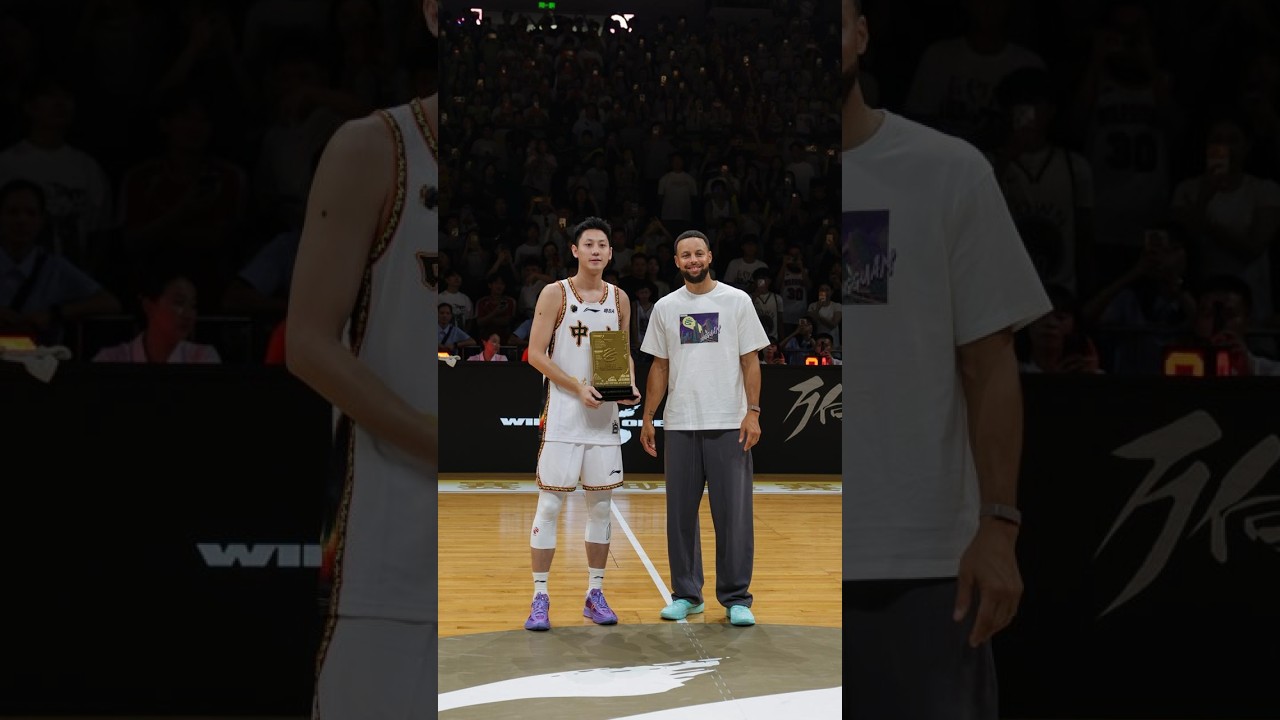


Just touched down in Beijing. See yall tomorrow! #stephencurry #currybrand #lining