Underrated x Literati Book Club | Black Oak: Ask the Author with Harold Green III and Matthew Cherry
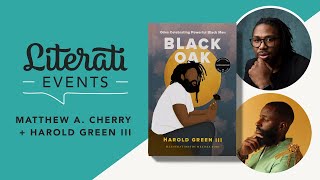
In this Underrated × Literati Book Club conversation, host Matthew Cherry interviews author Harold Green III about his debut work Black Oak (and its companion Black Roses). Green shares his Chicago upbringing, the two‑decade poetry journey that led to the 2019 video odes that sparked the book, and how a long‑standing editor connection eventually introduced him to a literary agent. He discusses artistic influences—Rapsody, Eve, Def Poetry Jam—and describes his writing style as a blend of rap rhythm and poetic cadence meant to feel like a church sermon. The core mission of Black Oak is to celebrate Black men (the “Black Oaks”) who stay rooted in community despite societal pressures, offering both a specific mirror for Black readers and a universal portal for all audiences. He explains the importance of representing diverse Black experiences, from fathers to trans men, and how representation and identity reinforce each other. Green offers advice to emerging writers: persist through rejection, keep honing craft, and use personal experience. He also advises youth to navigate social media cautiously, building a solid real‑world foundation first. The interview wraps with Green outlining upcoming projects—children’s books and further Black Oak‑related work—and concludes with a heartfelt spoken‑word ode to Matthew Cherry.
Chapters
Brother, I cannot thank you enough for being here and taking part in this conversation and for all the work that you've been doing.
Oh, no doubt, man. Appreciate you as well. Yeah, no, really incredible work, man. You know, one of the first questions I wanted to ask you was, before I— we get too deep into the book, could you provide a little background on yourself for those that are watching?
Yeah, definitely. I hail from Chicago, grew up on the South Side in Englewood, and started writing poetry my senior year of high school, and been doing this going on 2 decades now. So that's the short of the long on me.
Ah, no doubt. Yeah, I'm also from Chicago, West Side though.
Oh yeah, oh yeah, I know, I, I done my research.
Yeah, there you go, there you go. But, uh, you know, also an author too, um, Grow Hair Love, a couple years back, and, uh, still working in the space. So it's been, been really awesome to have this opportunity to talk to you. Um, you know, one of my first questions for you was just, uh, really, how long did it take you to put this whole thing together, and how did it feel when you completed it, just kind of knowing how arduous that writing process can be.
Yeah, it really, from the inception of the idea to now, it's been about 3 years or so because in 2019 is when I decided to start doing the Black Roses and Black Oak video odes. So that's how it started on the internet. I was writing these odes and recording them and then the pandemic happened and I got a literary agent and we got a proposal proposal together and we got the book going and, you know, sat there and wrote it and, and here we are.
Nice. Um, you know, having kind of worked in that online space and kind of using it to my advantage to try to help, uh, move forward a literary project, could you kind of talk about your process even with that? Was it kind of more like you doing these videos online and then it kind of caught the attention of a literary agent? Like, I'm sure people will be curious about how that part played out.
Oh yeah, absolutely. Yeah, people are always curious about that part, man. It took me— honestly, I was in conversation with an editor friend of mine for 5 years, and she had happened to see some of my work before, reached out, and we started conversation, and we were trying to steady work on some work on something, and it just wasn't working. And then One day it clicked and she was able to put me in contact with my literary agent, and that's really how it came about. So the videos were doing their own thing in a whole different, you know, universe, and then the agent came from just a steady stream of conversation with an editor friend of mine for over 5 years.
I copy that. You know, and obviously Chicago is just such a home to so many, like, incredible writers, like you know, who were some of your early influences for this project?
For this project, really the people that I wrote about were the influences for the project. I was just so moved. Like, the first person I did an ode for was Rapsody, and Eve had just dropped, and I remember how moved I was. Like, her work always moves me, but like, when you're a fan of somebody and you feel like when they put out something like, oh, this is gonna be the one to get everybody on board, you know what I'm saying? And Eve felt like, you know, right after Layla's Wisdom, Eve felt like, okay, this is where she gets the Grammy, you know, and this is where things move into another stratosphere. So I really wanted to throw her flowers and her reaction to it and us, you know, becoming friends after that and all of that, it was just so beautiful the way it all kind of organically worked out. So everybody that I wrote about really was the influence for the project.
No doubt. No doubt. No, I love that.
And like, one— another big question I have for you is just like your writing style, you know, is so unique. Like, how would you describe your style?
I think, you know, because I started my creative writing path really started with writing raps, like when I was younger, all the way into like my high school years and things like that. And I really believe when you even, read and listen to me now, there's such a musicality to my writing. And I think it comes from that, you know. And I was so moved in my high school years by HBO's Def Poetry Jam. Yeah. And I remember watching and thinking like, wow, I can fuse hip-hop with poetry. Like, this is a thing, you know what I'm saying? And I remember just thinking like, when I do this, I want people to feel moved like this. I don't want people I want people to sit still and just listen. I want people to— I want this to feel like church, you know what I'm saying? So that was a big part of my influence, you know, once I started actually writing poetry.
Do you see like a big difference between rap and poetry?
No. Like when I was younger, I thought they were like two totally different things. You know, I was like, yeah, you know, people be rappin', and then people be writing poetry. Like, old dead white men be writing poetry. Like, what you mean? You know? And then, you know, once I— once I really got into it and paid more attention, I was like, oh, this is the exact same thing. Okay, I got it, I understand, you know. So it's no difference.
No doubt, no doubt.
You know, with Hair Love, like, it was really important for me to kind of highlight Black fathers. And, you know, in your work, you're really dedicating this specifically to influential Black men. And I was curious, like, how did you come to want to focus on that specifically?
I think one, I think is so— in all the conversations that I'm having around this book and even thinking about the inception of it, I really wanted Black men to have the confidence and the tools to look each other in the eye and compliment each other and affirm each other and say to each other, I see you. You know, like, it's one thing when you get it from outside sources, and that's a beautiful thing too, but I think that there's something very special about our kinship. And I've even noticed in the, you know, just the publicity runs and every different thing that I'm doing with the book, how much this is needed, you know, because I do it in my own friendships and I just want to see this spread, you know, to the world. I think we deserve each other and I think we deserve to look each other in the eye and say what we feel. Mm-hmm.
Yeah, no doubt. Yeah, I mean, you know, and obviously being from Chicago, you know, Chicago tends to get a bit of a bad rap, you know what I'm saying? Like, are there any kind of lessons from your upbringing in Chicago that you feel like really kind of helped you with the influences of this book as well? Because, you know, I feel like Black men in Chicago is just kind of a— Oh, absolutely. It's like a different connection and a different vibe, you know what I'm saying?
Yeah, absolutely.
It's—
my upbringing definitely played a big role. Um, like, even, even the way that I moved with my friends, you know, like, I, I knew I always felt, like, safe and protected, and I felt like I was around the right people. And that really played a huge part in my success, or like my ability to stay safe, or my ability to be in the right places at the right time. And I knew that my homies was always looking out, and I knew that they were good guys, and that continued as I got older. And then just thinking about the moments and memories I had with the men close to me, like my dad, my granddad, and my uncles, and things of that nature. And Chicago can harden you, you know, in a real way that like—
That's true.
It's hard to like let things in, it's hard to drop your guard, I just, I have noticed that the way that I carry myself and the way that I've, you know, been able to move through Chicago, navigate the streets of Chicago, but also still have a beautiful heart, it plays a part in the way that I'm received with people, you know? And I just want to show, you know, my brothers that, hey, you can be as manly as you want to be and all this other stuff, that don't stop you from seeing the beauty in this world and seeing the beauty in others, you know? Yeah.
Yeah, no doubt, no doubt.
Yeah, no, and really speaking to that too, you know, I know the Oaks really speaks to a lot of different backgrounds as well. And, you know, obviously Chicago just has such an array of different kind of, you know, classes and different, you know, Black folks that are really in kind of every space kind of in the city. You know, what's the importance of you kind of speaking to us being able to speak to all those different and occupy all those different spaces?
Yes, it's about 11 Oaks in the book that have Chicago origins, and they're from all different, you know, sectors of life. And I think that that, to me, is important, and it was important to diversify, you know, the backgrounds of each of the Oaks because we as Black men come from all different, you know, shades, colors, forms, backgrounds, size of the tracks, you know, and I wanted to be able to relate to so many different people, you know, that pick up this book and see not only the words, but see the portraits and see themselves. And I think that that's highly important because, you know, even when we're talking about, uh, litera— uh, the literacy of it all, you know what I'm saying? Like, everybody not a reader. You know, everybody not gonna pick up the book, you know what I'm saying? There may be guys who pick it up, read it, and may have some homies that, you know, still outside of Rothschild's Liquors, you know what I'm saying, doing their thing. Right.
And they may have—
they may engage in conversation So I want to make sure that it's touching so many different people because so many different people have their own circles and their own orbits that they touch too.
Yeah, no doubt, no doubt.
Yeah, I mean, and I was also going to ask you, you know, what did you hope that your readers would resonate really with this book the most and kind of why? Like, I'm kind of getting the vibe a little bit, like, do you see this as a work that's kind of specifically for Black men, or do you feel like people from all different backgrounds could kind of learn something from it?
Nah, it's universal to me. Like, there— I think— but there's tiers to it, you know. I think there's kind of a hierarchy to some degree of how I want this to kind of play out. Like, first and foremost, I want Black men to see themselves in this and see the opportunity to communicate more in a more crystallized way with each other, you know. I think that's highly important. I think that the friendship, the fatherhood, all these different things that kind of continue to pop up throughout the book, I want those things to really bubble to the surface for the universe. I want people to be able to, even if you've never been around or, you know, in very scarce degree been around Black people, I want you to be able to pick up this book and still, this book should still be some type of a mirror, some type of a portal, you know? And I think on a very like surface level, you see this book in a bookstore or you see this book displayed then Black people exist in these spaces, right? They're taking up space, and that's a beautiful thing, you know? Because I think, you know, one of the things I keep talking about with— because people always want to know, like, why do you decide to just talk about, you know, Black people in the present? And that's so important to me because I think there's a certain strategy to making a people feel like their greatest is behind them, right? So if we're only talking about Black history, that means that things are not happening right here and now, and that—
Right. Right.
And that makes you feel like there is no hope. That's a hopeless existence, you know? So it's so important that people see Black people being amazing right now. Like, that's a very interesting and, to me, revolutionary concept in and of itself, because we have Black history. We're doing a decent job of creating Black future talk, but let's also not forget that we are here right now.
Yeah, no doubt, no doubt.
Yeah, I mean, and that's definitely something that I kind of saw and experienced even with Hair Love. It's like you tell a very specific story, but because the themes and, you know, themes of life, like in love and friendship and kind of wanting to do right by your kids and things are so universal, what ends up happening is like all groups end up kind of being able to speak to it and pick things up. And, you know, I think really in the book world, like the important thing too is like not just to only read stuff about your own culture, you know what I mean? That's how you kind of get a very limited and kind of narrow scope.
Right.
You know what I'm saying? Like, I think that's why, you know, mainstream media, it's important to like look at all kinds of things and kind of learn from all kinds of different backgrounds. And I think your book really did a good job of telling a specific but also a universal story. And one thing I wanted to ask you about as well is just like to get a little bit more specific in the book is like— Yeah, no doubt, no doubt. You know, what Oak would I say— what I wanted to ask you, do you kind of hold in the highest regard?
Man, I'm gonna be honest, all of them. Like, I wouldn't have wrote about them if I didn't, you know? Like, I have, obviously, there's very, you know, special connections in there, you know? Like, my dad is in there, my granddad, like, 3 of my best homies are in there, you know? But like, in all honesty, man, like, each one of you all, I hold in such a high regard. Like, I had to, and I called, my research for each Oak, I called it sitting with them. So I would sit with y'all for a whole day, just trying to find any interview, any podcast, any article, any, just any asset that I could get my hands on and really try to find those special parts of you that are not just also talked about every turn of the corner, those things that make you special. Yeah. And that to me, allowed a better insight into who each one of these Oaks were, you know, and that grew that esteem for me, you know, and I thought that's, that's what made the regard, you know, grow even more for me.
Ah, no doubt, no doubt.
And I was going to say, is there any— let me see how to phrase this— like, in terms of like the Oaks' contribution to society, like, do you see any of them being a little bit more meaningful than others? You know what I mean? Like, or do you kind of feel like it's a thing where just depending on where you're at in life, you can kind of relate to certain ones better than others, you know?
Yeah, I think it is that the latter. I think it's where you're at in life, you know, it really depends. You know, like even when you think of people who are with such acclaim as like a Tyler Perry, there may be people who regard like Jamal Bowman you know, with the same regard because maybe they're in the streets and they, you know, had these conversations with them and, you know, they've done these different things that have directly impacted their life, you know. So I think that there is— there are these degrees of separation and not only separation, but there's degrees of impact as well, you know. So there are people who are directly connected to some of these people and some of their work and some of these things that have affected them in a real way.
Yeah. Yeah. Yeah, no doubt, no doubt.
And then the next question I have for you is kind of a little bit more specifically about identity. You know, how do you see the intersection between representation and identity? Do you think one helps inform the other, or do you think it's a— they both kind of give to each other?
I think it's a— I think it's a mixing pot, in all honesty, because You know, even specifically with this book and with Black Roses, which is the female companion to it, they both open up with Black queer individuals. So Black Oak opens up with Billy Porter, right? And I think that that's such a beautiful one to open up with because Billy Porter is probably one of the flyest people on the planet, you know what I'm saying? And in my opinion, I think that his identity is a representation of more than just a label, right? He represents so much just through who he decides to identify as, you know what I'm saying? And I think that that in and of itself, it becomes this vice versa thing, you know what I'm saying? Mm-hmm. So I think it's a beautiful play off, you know, a nice little pick and roll that identity and representation have going on.
No doubt, no doubt. You know, I also wanted to kind of ask you a little bit too about, you know, just what's the journey been like for you, like, since you, like, released the book, you know what I'm saying? Like, because I know everybody always asks the question about, like, what's it like to write the book, but obviously trying to get a book like this out into the world is kind of a journey in all of itself. And I was kind of curious for you, like, ever since the book has been out in the world, like, what's that experience been like for you?
You know, it's something new every day. It's been a beautiful experience. You know, like, this right here would not have happened, you know what I'm saying, if I hadn't wrote this book. You know, like, seriously, like, I was, you know, telling my wife and my sister and stuff, we were so excited. I'm like, man, I'm going to be talking with Matthew Cherry on Tuesday. You know what I'm saying? Like, these are beautiful experiences that I birthed out of this moment. And I think that that is something that I will never get back. Like, these are things that I'm cherishing. Like, just the other week, I was, you know, in conversation with Jason Reynolds, who's on the COVID of the book, you know what I'm saying? Like, these are things that I, you know, I have this visual, you know, dream board and all these things I want to accomplish and things like that. But to see these things actually checked off of a bucket list in real life, in real time, has been— Yeah. Just amazing. And, and, and it's inspiring too, because every time something happens, it shows me like, okay, that next thing that you want to see happen can happen too. Let's just keep pushing, let's keep pushing, and, and more beautiful conversations are going to come out of this.
No doubt, no doubt. And you know what, I was— I also want to ask you, just in terms of advice, right? So outside of like how you came about writing the book and everything else, just like people that kind of have an idea that they feel like is similar, not similar, but like hopefully similar in scope to how this is gonna end up being remembered. Like, what advice do you have for somebody who kind of like has this idea, they're like trying to figure out how to get it out into the world, like they're kind of thinking about all the— like, I'm a big picture guy, so I'm like, I'm thinking about, you know, the book release, I'm thinking about, you know, like grandkids reading it, you know what I'm saying? Like, a lot of people think that you're like that, like, you know.
Yeah.
What advice would you kind of give like a young writer who has like a a really good idea and something that's like really passionate and kind of burning in their spirit that they feel like they need to get out, but they don't really know how to begin?
I think, you know, one of the things that I've always been, that I've always subscribed to is keep pushing, you know, stay consistent because you can have that big idea, you can have that big dream, and then that one little no sometimes deters people. And it's like, oh my God, the world doesn't want this because one person said no. And it's like, nah, you're gonna have a lot of nos. You're gonna have a lot of people that's gonna ignore you. You're gonna have a lot of situations where it just don't play out the way you thought it was gonna play out. But if you keep working in the midst of those, in between those yeses and nos, that's where you continue to refine your craft. You know, because if you just sitting around waiting on a yes, then that was time wasted that you could have spent honing that craft that you're waiting on that yes for. So what's the point of the yes if the craft ain't beautiful by the time it's, you know, given to you? You know what I'm saying? So my advice is always, while you waiting on that green light, man, keep driving, keep driving, getting better and better.
No doubt, no doubt.
No, love that, man. And you know, and for the viewers who may have not had the chance to read the book yet, a question I wanted to ask for you is like, Could you define what a Black Oak is and kind of touch on their importance in the community?
How I like to describe a Black Oak is a Black man who has decided through everything that the world throws at them to stay rooted in their culture, in their community, in their family, in their friendships, any of those things, you know, and the list goes on. A Black man who has decided to stay rooted is a Black oak, you know what I'm saying? And I think that, that as simple as it sounds, I think it has played a huge part in moving things forward for us, you know, because I think there has been a lot of uprooting in our culture, you know, and in our communities. And when that uprooting happens, whether it is, you know, by choice or by force, it throws off the forest, you know what I'm saying? So, you know, Black Oak is dedicated to these Black men who has decided no matter what's going on through the wildfires, through the drought, through all of it, they have stayed rooted.
I love that, love that. Um, yeah, and I was gonna also ask you, you kind of touched on this a little bit, but I want to ask it a little bit more directly. Like, you know, obviously there's so many things that you could write a book about, but like, why would— why did you feel like it was very important that you talk on that specifically and you wanted that to be the forefront of this work? Because, you know, a story like this, like, you know, we've seen people attack this from different ways, but you're kind of speaking, like you said, when you spoke on Billy Porter earlier, you know what I mean? Some people may look at that as a little controversial, but I love that the way that you frame, like, his contribution to society and kind of all that he's kind of done for the culture, like, it feels like a more of a positive, um— Yeah. Centering kind of of certain Black established men who have kind of rose, you know, without— throughout their ranks and everything. And I'm just kind of curious, like, why that specific angle on your book?
I think because, you know, it's like I was saying earlier, I think it's one thing when it comes from the outside world, but when your brother look you in the eye and tell you, "Hey, you're doing a great job, bro," like, I guess it got a different feeling to it. It hit a little different, you know? And I think there are so many— There's so much barbershop talk out in the world, right? Like everybody got an opinion, everybody got a platform to say something 'cause of social media, so it's so different. We don't, you know, we're no longer waiting on one source for our opinions anymore, you know what I'm saying? Like everybody got an opportunity, and I think with me having a platform as an artist, and now an artist with a publishing deal, then it's my chance to, amplify these positive images and these positive conversations, you know what I'm saying? Because even when with people like D-Wade, who's in the book and saw his video old and things like that, we all know how the barbershop talk go with that type of stuff. Everybody got an opinion, everybody got something negative to say, but we have to remember how important it is for our brothers to be rooted in their household. This brother is rooted in that house and ain't moving, you know what I'm saying?
Right.
He said, I don't care what y'all talking about, this is my child and I love my child. How can you not— how can you not applaud that, you know what I'm saying? Right. Like, those are beautiful things, you know. We have a Black trans man in the book. Like, all of these lives exist and matter very distinctly, you know what I'm saying? And I think it's important to approach that as a Black— as a Black man, and even more specifically when we're talking about representation and identity. I am a Black straight man with children and married and all of this other stuff, you know, all of these, you know, different different roles and titles that could have me looking like, you know, the barbershop talk guys. But I want to show you, I look like this, I come from a certain background, and I'm still telling you this is how we should be talking to each other. And you can disagree if you want to, but at the end of the day, a book is a one-sided conversation, you know what I'm saying? So if you choose to engage, you just hearing mine, you know.
There you go, there you go. And do you have any advice for kind of young people? Because, you know, like, I know social media is like obviously been fairly controversial, you know what I mean? Like, a lot of times people's self-confidence is being kind of attacked, you know, people are kind of coming at you for your looks or your opinions. And, you know, it's like a lot of times it's like a very negative space. Like, you have any opinions for like young people that are kind of like in the middle of trying to form what their identity is and kind of trying to figure out what type of, you know, young person they want to be, um, like how to kind of navigate this space? kind of with your principles in mind?
Yeah, and you know, and I'm around youth a lot, man, and I tell kids all the time, like, you gotta, one, I always try to tell them, like, as long as you can hold off, hold off from social media, you know what I'm saying? As long as you can. I know that the urge be, you know, but like, it's really for a more developed mind. Like, once you kind of know who you are and how you exist in this world, you can navigate those spaces better. Matter. But if you're on there, like, to me it's important to know who your real friends are and what the internet is, you know. Like, everything that you thinking, everything that you feeling, you ain't got to tell because they don't have your best interest at heart. Talk to your real folk, you know what I'm saying, and, and allow your identity to be built up and reinforced by those who love you. By the— so by the time you get over to that, that internet world, anything that's thrown at you and whatnot, you have a solid foundation. Yeah. That doesn't get shaken by every little rustling of the tree, you know.
Yeah, no doubt, man.
No, man, this has been a really awesome conversation, man. You definitely dropped some gems, and, you know, I hope people definitely make sure they, uh, write those down, and better yet, buy the book so they can have them in their household.
Absolutely.
Years to come. But, um, I can't stress enough how much I love the book. And, um, I also want to ask you, are you working on anything else now, and kind of what's coming up for you on the horizon?
Yeah, yeah, man. So I have Black Roses and Black Oak came out this year, and then I have 5 children's books that'll be coming out over the course of the next couple of years or so. So 2 board books, 2 picture books, and a middle— a middle-aged book. So yeah, it's a lot of exciting things that I'm really looking forward to, um, in the next, you know, few years. Like, you'll be seeing more and more Harold Green works, man. And, you know, hopefully, hopefully Harold Green and Matthew Cherry can get together and do something special, you know.
No doubt, man. No, man, would love that, man. You know, definitely want to thank all the book club—
I'm sorry. Yeah, absolutely.
Yeah, you know, and I just want to make sure that we—
Yeah, before you leave though, I got to do this.
Okay, let me know.
This is important. I want to do this. I want to read you your ode before we sign off, okay?
Okay, let's do it.
Matthew the Normalizer, ode to Matthew Cherry. What you chose to do with the light given to you speaks volumes, and you are at 16-inch subwoofer levels. We hear your light from miles away. Actions are so loud and we see what you have to say. You make sure people are visible without putting yourself in the way while putting in all the hard work to make it possible. You are worthy of ovation but always seem to be the one giving it. The receiver turned quarterback, the way you put things in motion. This is for all those nights you were working and hoping. Thank you for putting it all in focus. A king on his proper throne, the director's chair, under the crown act, over the monkey paw. The world watched her love, but Black girls saw themselves through love's lens. The world saw you win, but Black fathers saw themselves and knew it was okay to try, to love, to fail, and do it over. Thank you. Often you normalize the relationship we all know exists but is treated as myth. You have lived up to your name, Matthew. You are truly the gift.
Man, that's amazing, man. I need to put that on my voicemail. Nah, man, that, that means so much coming from you, man.
Congratulations, brother. I saw that you are expecting, man. You are going to be such an amazing father, man. Congratulations to you and yours. Thank you. Like, man, please, I'm so excited for y'all.
Oh, thank you, man. You know, we're really excited too. Um, yeah, it's like, uh, you know, you just gotta try to do your best you can, right? And keep, like you said, keep working at it over and over again.
Always. No doubt, no doubt.
Absolutely. No, man, but I really, really just want to thank you for your time, man. This was really amazing. Looking forward to obviously just continuing to read Black Oak, but then also continuing to read your future work that's coming out in the future. You know, we want to thank the book club members for joining and taking their time to read the book and engage within the app. And please feel free to post any follow-up thoughts for the questions or for any of us in the Literary App. So thank you for your time, brother, and I'll talk to you guys later.
More from Stephen




Just touched down in Beijing. See yall tomorrow! #stephencurry #currybrand #lining