Underrated x Literati Book Club | I Am Restored: Ask the Author with Lecrae and Jeremy Lin
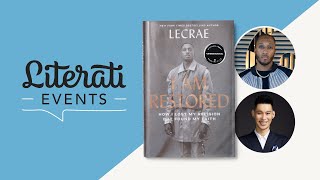
In this hour‑long conversation hosted by former NBA player Jeremy Lin, Grammy‑winning artist and author Lecrae discusses his memoir I Am Restored. Lecrae explains how his early love of communication—poetry, short stories, then music—evolved into writing, and how a severe depression in 2018 and subsequent therapy sparked the book’s central theme of restoration as an ongoing process rather than a destination. He describes the deliberate vulnerability he chose to share, from childhood molestation to marital struggles, and why exposing his wounds can help others heal. The dialogue moves through four major themes: (1) the concept of restoration and the book’s title; (2) re‑examining faith, shifting from a rule‑keeping devotion to God’s devotion to him, and the deconstruction of institutionalized Christianity; (3) mental health and self‑care, including therapy, meditation, a four‑month “off‑grid” sabbatical, and practical advice for destigmatizing brain health; and (4) fatherhood and marriage, where Lecrae reflects on how parenting challenges reshape his identity and push him toward compassion rather than perfectionism. Throughout, both hosts emphasize the transformative power of honest storytelling for readers and listeners.
Chapters
What's up, everyone? Welcome, book club members. My name is Jeremy Lin, and I'm super excited. Thank you, Steph, for inviting me to host. I've never been a part of a book club. So I feel like this is pretty cool. And today we have an awesome opportunity to chat with Lecrae and to talk about his book. I actually read it, I want to— yeah, about a year ago, exactly a year ago, pretty much. And when— at that time, I was in the G League bubble playing for the Santa Cruz Warriors. And I had brought a few books for inspiration during that time. And Lecrae's book was one of the ones that I remember texting you right away. I started it and then all in that one day because I couldn't put it down. And then I texted you, but now Lecrae, we wanna just chat about it. You know, what's, I guess like, I guess you could update us first. Where are you? How are you doing? And then we'll jump into the rest of the questions. Sorry, that was kind of rude. So where are you in the world right now? What's going on?
I'm actually trying out for the G League here in Atlanta. So, no, I'm joking. Nah, man, I'm in Atlanta. I'm in between working on some music and actually another book as we talk about it. And man, yeah, just being a dad, being a husband. My life is pretty boring outside of that—carpool and, you know, going to volleyball games.
Nice. I guess, can you just share a little bit about your background as a writer? I know a lot of people who are listening might not, might be just hearing about you and the book. Well, maybe not you, but at least the book I Am Restored, just hearing about that for maybe the first time. Can you just share a little bit about the inspiration behind the book and kind of what you felt like you wanted to accomplish or what you wanted to get through?
Yeah. You know, I think I'm a, I was a born communicator. Since I was a kid, I loved being able to, like, express myself. It started with, like, poetry and then, like, you know, short stories and things like that. And then music became an outlet for me to communicate. And as the ideas got more complex and bigger, it got harder to, like, articulate it in music. You know, it's like 4 minutes. So I started writing, and my first book, you know, was received extremely well. And then I went through a lot of internal crisis, you know, just being a person of faith. I started to struggle with my faith because I had seen so many— I don't know, so many What's the word I'm looking for? I guess demonstrations of it that were not helpful, were harmful. And so in my brain I thought, wow, maybe this whole thing I believe isn't real if this is the way it's being manifested. And I had to realize, though, that's not the accurate picture. But it was a journey to restore my faith and to process all of those particular distortions that I had seen. And so this book is kind of the product of that, you know, whether that was racial, political, occupational, mental, emotional, all those different storms I had to process through the lens of faith. And that's how you got this book.
Yeah, and I guess I'm gonna try not to spoil anything, but I would say, like, after reading it, what I One, you are definitely a natural born communicator. That is very evident. And two, just everything that you shared, I was surprised at how many topics you touched on, how many different, you know, it could be, like you said, it could be your marriage, it could be fame and celebrity, it could be music, it could be politics, faith, you know, social justice, everything in between. But then, not just that, but the level of depth that you got into it. And that's what I'm going to start off with now because I'm going to get more into it a little bit later. But, you know, I guess what has the reaction been since you've released the book from literary circles?
Oh, man. You know, it's been overwhelmingly positive. I think everyone who makes it through the book is very challenged. I think some chapters are more challenging than others for people because you have to fight through, you know, we all have biases, we all have like perspectives that we need to be challenged, and so I think, you know, especially like politically, we're just in a politically charged— in America is like a politically charged season and era, so people are having to wrestle with that nuance. And I think that's one of the places where people really get shaken up. But yeah, it's been overwhelmingly positive because I think part of that is just a lot of vulnerability. I'm not in— I'm not writing and trying to put myself as like the person who knows it all and has it all figured out and is perfect. I'm writing from a place of vulnerability and transparency. And I think that helps people see like, oh, this is a real person. Yeah.
Yeah, and I don't know how much you want to reveal here, but let's start with the title, I Am Restored. The concept of being restored, restoration in general, like, yeah, just talk a little bit on how you came to the title. Again, I don't know how much you want to divulge in this conversation, you know, but yeah.
Yeah. So I— yeah, I mean, and I talk about this a lot in the book, but I experienced, you know, a severe depression back in 2018. And it was so bad that, you know, I had to seek therapy and just really shut my life down. And I realized that that was an opportunity for me to find some holistic health and wholeness. And just, I had to believe that I could be restored. It was so bad. I was like, man, the fear is, am I going to be like this forever? Is this going to be my life? And I had to believe that restoration was possible. And the irony is, and this isn't even in the book, but the irony is the counselor That I was seeing, the practice was called restoration. So it was like, oh, wow, this is crazy. And so I had been wrestling with that idea. And, and I didn't know what it looked like to find restoration emotionally and mentally. But then I, when I, you know, I discovered that it's not a— it's a process, not necessarily like this destination, you Restoration and being restored is this process. It's a regular process. So I mean, you know, as an athlete, it's like you don't like tear your Achilles and then like, all right, it's fixed. It's like you have to continue that journey of keeping it healthy. And so that's really, you know, where the concept and the title came from.
Yeah. And I will just share a little bit after reading kind of what you talked about restoration, like I went through similar battles even since you've written that— well, since— sorry, not since you've written, since I've read it. I've struggled a lot with certain questions. I've read other books. I feel like there have been a lot of things in my theology as a believer, as a Christian that I'm putting back on the table and wondering, is that true? Where did this come from? Mm-hmm. Who was the source and what was his underlying motivation for it. I've been asking a lot and I've been reading a ton. And since I've read your book also, I've really gone more deep into addressing my mental health and trying to restore certain things. I've started therapy and I've started brain spotting and different things, you know, different techniques that can help for me because, you know, going through life, And it doesn't matter, forget like whether we're celebrities or musicians or authors or athletes, like anybody who goes through life, you're going to go through a lot. You're going to go through traumas. And that's something that, you know, you in the book kind of inspired me like, hey, I can't always just press forward, you know, be stronger or in athlete culture, just like suck it up and be a man, right? Like that's kind of what it is. And I think that catches up to you after a certain while if you don't address things and you try to gloss over it or you try to, you know, just brush it under, you know, brush it to the side, eventually it's going to lead to like an iceberg of trauma that you need to address, heal, and be restored. And so thank you for kind of going off of that. And there's a few topics that I wanted to touch or, you know, kind of dive into. There's 4 topics that I wanted to, or like themes. The first one, which I would say—
Yes.
My goodness, I have so much respect for you, but it's vulnerability and transparency. People, you know, I always kind of express to people, you know, one of the things that's hard about being a celebrity is when you have a bad day at work, everybody sees it. The whole world sees it. The whole world can laugh about it, can make memes about it, can write about it. And there's just so much that goes into trying to cater what you allow other people to see, what you allow the world to see, what you allow your fans to see. The one thing about this book that I'm like, you're a better man than me, I could never have gotten that done, is just the level of vulnerability and transparency because that takes so much boldness and courage to really like bring your mess, like proactively bring your mess out into the world. It's not like you got caught in TMZ or somebody is like making you, you know, it's like— Yeah. You literally decided to do that in your, you know, in your own volition. Like, can you, uh, talk about just the process of and how you came to become so vulnerable and transparent and why you did that? Um, and, uh, man, it's a must-read if, you know, for that alone. Uh, yeah, man.
Um, it's funny, it's, it's really like there's a, there's a, it's a lot of different reasons. So once on one end of the spectrum, it's like if you ever see the old movie 8 Mile starring Eminem. He gets in this rap battle, and, uh, in the rap battle, the guy does his research on Eminem, and he's like, he's about to tell all Eminem's dirt in, in the battle. But before he can do it, Eminem tells all his own dirt. And so he's like, cut his own legs off. And so there's nothing anybody can say or accuse him of because it's like He's like, what are you going to say? I'm a white kid who grew up in a trailer park. And he just says all the things that he knows the opponent would use against him. And so there's a part of it is that it's saying, listen, I'm not here to save face. I'm not here to look perfect or to look like I have it all together. Matter of fact, that's the crux of my faith. It's not about me being put together. It's about me admitting I'm broken and I need to a God who's greater than me, who can provide, you know, health and healing for me. But then the other thing is, I realized that, you know, my wounds help others heal. So when people see my scars, they believe that their wounds can heal. They're like, oh shoot, that happened to you? Well, I battle with this secretly, and if you can find healing in that, then I can as well. And somebody's dirt has to be revealed for that to be a reality for people. I mean, it's not saying everyone needs to go write about all the terrible things that they've done and share with the world. I think you should be sharing it with someone confidentially. I think people do need to know you holistically and fully, but Somebody has to put it out there for others to realize that, and I didn't mind being that person because I needed it. I needed someone to be that candid. I needed those examples. And so I thought, who better than the person that looks like they have it all together from the outside? Why not me? Because if I can be used, anybody can.
Man, that's amazing. And I guess, you know, you touch on, you open up a lot of things, you know, addiction, mental health, trauma, your marriage. I guess this question is kind of, you can kind of choose or you can answer both, but I guess, was there one specific one that was really hard, maybe the hardest to open up about or the toughest to open up about? And then, you know, and/or, um, was there like a moment, a catalyst, uh, some— was there a conversation or something that, you know, uh, you felt like happened that was like, okay, um, I'm, I'm ready and I need to open up about this to the world?
Yeah. Um, yeah, it's funny, a lot of people think that It's, um, me being molested as a child is like, whoa, I can't believe he put that out there. And the truth— truthfully, that, that wasn't the toughest part for me because, um, one, I had processed that for so many years, and two, I was the victim, right? Um, but the hardest thing was to talk about my marriage, um, because me being a father and a husband, those are probably the toughest things to talk about because, um, my actions affect my kids and my wife. And so they, in a sense, are the people, you know, who were the most at harm from, you know, me not being a healthy person. And so that was hard to talk about because, man, it's like, man, I failed, you know. That's what it felt like, man. I failed my family. Mm-hmm. You know, I'm not healthy, I'm battling addiction and all these particular things. So that was the hardest thing to talk about. And then even thinking like, you know, I got little kids now, but as they, you know, become young adults, if they go back and read this, they're like, whoa, we did not know all this was happening during this time period.
Mm-hmm.
And so that's going to be a challenge as we get to to that place in time. Um, hopefully I'll just, you know, will be transparent and walk through it, and they'll see the consistency of my character. Um, but yeah, and then I would say the catalyst honestly was, um, you know, being in therapy, because, you know, I wrote the book 2 years after starting therapy. So I had already gone through this process of integration and transparency and healing. Mm-hmm. And so I was a lot freer to share these things. And being in therapy, I realized how liberating it was to put this stuff out there and look back and say, but I'm healed. You know, it's like you look at people, you know, as a Christian, I look through the scriptures and I see there are no perfect people in that book other than Jesus. It's like David, murderer, adulterer. Moses killed this guy. Mm-hmm. Noah gets drunk, Rahab sold her body, Paul killed people. It's just on and on down the line. And so it's like, oh, I'm just— I'm human like the rest of these people. I just need— I need God. And so that was kind of the catalyst for me to be able to be transparent and honest about those things.
Man, that's— yeah, I mean, and that's a perfect segue because the second thing, the second theme or topic I would definitely want to talk about was Faith, which your breakdown of so many different things across faith, I mean, that was definitely one of the catalysts for me to go and learn more, read more, search more deeply, question a lot of things. And, you know, at first, you know, and people kind of sometimes— and I even had a conversation with my family and some close friends. I'm like, hey, I'm kind of questioning this. I'm putting this back on the table. I'm reconsidering this. And at first when you say that, everyone's like, what? Like, it's like this, like, it's a huge reaction. But I ended up actually like realizing that like asking these questions and putting things back on the table, you might get to the same conviction and same belief that you had before, but you have a different level of depth to it.
Mm-hmm.
And that it's a healthy process to it. And actually, if you're just trying to block out You know, and that's actually the part of the restoration. You have to go through this. And I even read a book on like different stages of doubt and how doubt is one of the biggest things to restoration.
Mm-hmm.
Asking those tough questions and really confronting that. And so one of the things that you talked about was you said you felt you were focused on your devotion to God. Rather than God's devotion to you. Um, that sounds— you know, I'll say it one more time. You said you were focused on your devotion to God rather than God's devotion to you. Can you kind of dive into that a little bit more, explain the difference, um, and just, you know, go, you know, uh, speak more in depth about that?
Yeah, well, you know, um, in our culture, in our society, the idea of being religious is to be a rule keeper, right? Is to be very rigid. Um, it's like, oh, you're religious, so you have these rules that you follow. And, and, and the outside world picks up on those things because that's what we give off, you know, as, as followers of God. And we give off like it's about rules. And so, um, it was easy for me to kind of do a self-check or an analysis and say, well, I follow the rules, so I must be good. You know, it's, it's about my devotion to God. Did I wake up and read this morning? Did I listen to this sermon? Did I walk the lady across the street? Check, check, check, I'm good. And, and then I began to realize, you know, I can do all those things and still not have a healthy relationship with God because my relationship with God was deteriorating. But it— but I could check all the boxes, but I knew I wasn't healthy, right? I knew I was not a healthy person emotionally, mentally, spiritually, but I could still check these boxes. And, um, and then I realized, you know what, I'm more focused on what I can do for God, like, did I check my boxes? And I'm not focused on how devoted he is to me, how he's consistently caring for me and walking with me and is willing to walk with me through my doubts and my inconsistencies and my lack of, you know, compassion and care and concern. And so, you know, a lot of people are afraid of this word deconstruction, but oftentimes if a house is dilapidated and molded and has, you know, all kinds of terrible things going on with it, you have to deconstruct it. You have to tear it down. Doesn't mean you get rid of the foundation. Right. You keep the foundation. And for me, my foundation was my belief in Christ. But what I built on that was more— it was more institutional, corporatized, gentrified, politicized, and racially or culturally exclusive. And it did not include a global perspective. It didn't include, like, the nuances that I needed. And so I just began to put pieces together. But in order to put the pieces together, you got to dig and you got to say, wait, this wall should come down. And people are like, no, no, no, no, no, no, tear that wall down. What are you doing? You know, but it's like, I have to because I need to figure out what wall needs to go here. And, and so that was a lot of— and that's where I realized God was devoted to me because he allowed me to tear those walls down, walk around on his foundation and just take my time and put stuff together. And he was there with me and cared for me the whole, the whole time.
And that's, that's awesome. And yeah, I would just wish I could ask a few more questions about that, but, but it's all good. I know a lot, I know a lot of the book, book club members have, have, have read the book and have, and have really like been able to see you know, the intricacies of everything that you just talked about. I kind of— before the third theme that I wanted to chat about was, uh, self-care, but I kind of have this like in-between question of self-care and, uh, faith combined is, you know, in your book you talk about taking 4 months off and you go out, you went off the grid, you left social media behind, um, and it's this, this concept of self-care is very like People are talking a lot about that, but the Bible talks about that a ton, and it talks about rest, it talks about Sabbath, it talks about— I mean, you know, God models that for us. Can you talk a little bit about the concept of rest and you taking the time off? Because a lot of times people will say, you know, and there's hashtags, #NoDaysOff, or, you know, whatever, in the gym every day, we're grinding every day, or this it's elevated to be working all the time and to be going all the time. And if you sleep, if you stop, if you rest, people are gonna catch up, people are gonna pass you. Can you talk a little bit about those 4 months off and the concept of rest for you?
Yeah, I think, You know, being concerned about being a healthy person, um, you know, I think I didn't realize at the time, but of course, yeah, I'm following a model, you know, that was already set before me of someone who found solitude consistently, someone who was around good friends and community consistently, someone who took time away to pray and to meditate and, um, and would not answer every beck and call that people had for him. And, um, and this was during his time period, one of the most sought-after popular people to walk the planet. And of course, that was Christ, right? He took all these, these things. And I was like, oh shoot, you know, that's what he did. I I didn't realize that I was following that model, but I did realize that this is just a healthy lifestyle, right? It's just healthy to go off the grid. It's healthy to take a break from answering everyone's call and everyone's desire for you to, to move. It's healthy to consider, you know, your mental capacity and You don't— you know, I think as technology advances, um, we get benefits and we get detriments, right? The wheel gets invented and it's like, awesome, we have a wheel, we can go further than we've ever gone before. Now we can put it on a carriage and just go way further. Um, but the problem is we're gone more, right? It's like, now you're gone from your family more than you were before. Now you're gone from, you know, you're tempted to go to as many different things as you can possibly go to. And, and so you lose something with that advancement. And so the advancement of technology, we can be in multiple places at the same time, but there's also a detriment because I don't think our minds were created to handle the weight of everything happening simultaneously. Mm-hmm. All the time. It's, it's too much. And, and I think that's why you see the mental health deteriorating astronomically is because we're taking on way too much. You know, it's, it's like, I don't— I do want to be abreast of what's happening globally, but I am not built to sustain the weight of the world and all the issues of the world. Simultaneously and then worrying about how many likes I got and then worrying about, is it— are they talking about me because I didn't do well? It's just too much. And so it was necessary to get away, to stop, to pause, to meditate, to think about things that are, you know, what is my contribution to all of this versus just being overwhelmed by everything going on. And so I think that was a huge part of my process and something I encourage everybody to take time to do.
Yeah, and that is the third topic in terms of mental health. What is like something that you would say to somebody who maybe just read the book and maybe doesn't even understand, maybe doesn't even understand the battle, and the reason why I say this is because I didn't understand, you know, you kind of go into therapy or anything, you're kind of like, oh, I want to address my mental health, but it's almost like, like you don't know what's, what's behind that door sometimes, you know, and you don't know how deep it goes, you don't know how much of the— and it's almost scary, uh, you know, but I think there's a stigma around seeking help or going to get help. I mean, let's say somebody, uh, one of the book book club members just read this and says, hey, I want to try to address my mental health. What's a piece of advice that you would have for them?
Yeah, I would say the first thing to help destigmatize it is that you have to consider that your brain is an organ. I think too often we have this existential view of the brain and the mind, and it exists way out here. You know, and it's like, oh man, my consciousness, and you over-spiritualize it or over-whatever, instead of like, yes, there's a dynamic to your mind. And, you know, regardless of what you believe or what your, your faith background is, of course, there is something other-dimensional and spiritual happening there, right? But at the same time, there's still an organ inside of your head. Yeah. Right, that, that has to remain healthy. And so if you were having heart problems, I think we are culturally conditioned to go see a doctor because, oh shoot, my heart is having issues and it's a very important vital organ in my body. But we don't tend to think of our mental health connected to our brain, right? So it's like, hey, my brain is having problems. Mm-hmm. I need to see a specialist for my brain. And I think it's because generally psychiatry or psychology does not go in with tools and touch it and put stuff back together. There's exercises that are done to help with your brain health. And, but it'd be the same with your heart. It's like you may not get heart surgery. They may tell you to go running. That's an exercise that's done for your cardiovascular health. And so journaling and meeting with a therapist and talking through things and having cognitive behavioral help is exercise for your brain. And so that's one way to break the stigma for people is like, you're going to get brain help. That's what you're going to do, right?
Mm-hmm.
And then the next thing I would say for people is to understand that You know, whatever it takes, the goal is health. So a lot of people are afraid of, you know, being looked upon as weak. But the goal is health. It's like no one sees you with the cast on is like, oh, what a weakling, you got a cast. No, I have this on because it's leading me to health. Or no one sees you with glasses on, it's like, freaking wearing glasses, you wear contacts, what's wrong with you? No, the goal is to see. So I'm wearing glasses so that I can see. And so if it's medication, if it's meditation, if it's mediation, do them because the goal is a healthy mind, right? Maybe medication for you is a cast that holds your brain in place so that you can process healthy for a season. That's okay.
Meditation.
It doesn't have to be some weird thing. It's just, hey, I'm calming my brain down. So I can be healthy. And then mediation is meeting with a therapist or counselor. It doesn't make you weak, it doesn't make you anything, it makes you healthy. And so that would be my encouragement for people is to not worry about all those stigmas, but the goal is health. And so go get healthy.
No, I appreciate, appreciate you sharing that. And even since reading the book, like, Yeah, like, you know, meditation and mediation are two things that I've started. I used to think meditation was like some weird thing with like, you know, I don't know, you got to light certain candles and have like— I didn't even know, like I didn't, you know, it was just like, so in my mind it was just like, dude, that's so like, like, like, it's so like weird. Like, and now, you know, there's times where I'll do it like every day, you know, and, and after going to therapy, you know, It just showed me just having somebody else to talk to and kind of talk to me about it and a professional, somebody who studied it. They've taught, you know, my therapist has told me like, Jeremy, like it doesn't, you know, it doesn't seem like anything you do is ever good enough for you. Like it doesn't seem like, it doesn't seem like you know how to be still and to not be problem solving. It doesn't, seem like you know how to really just be in the presence of God instead of versus always be trying to think about the next thing you need to do for God. I mean, these are like hard-hitting themes that, that touch every aspect of my life. And if I'm not able to— and, and these are people who are, you know, my therapist is, is helping me and talking me through, and just by just the fact that I could realize it takes— I mean, that's a huge part of the battle. And that somebody could help reveal that problem to me, that is, man, that is— it's literally life-transforming, you know, restorative.
Yeah, you don't know what to fight if no one puts it in front of you. Yeah.
Exactly, exactly. So no, and I know, you know, we have a— You know, I know we are on the clock. And so I wanted to wrap up with the fourth theme and the final question. This concept that you talk about fatherhood. What else do you feel like fatherhood has taught you about yourself? I mean, the way that you have talked and opened up about your family is, again, very, very inspirational. So, yeah, what has fatherhood taught you about yourself?
Man, that I still have a long way to go. It's taught me, you know, growing up without my father and, you know, him battling his addiction, battling his incarceration, really put this unhealthy need to prove I could be better inside, right? And so I'm, I'm constantly wanting to be the ideal dad, you know, the picture-perfect television dad. And, and, and the challenge for me in that process has been being a dad is not about like um, looking at my kids as a reflection of myself. Like, if they don't— if they mess up, I'm— I did not do right, right? It's, it's really challenged me to be more compassionate and more gracious in the same way God is with me. It's like he's looking at me and he's perfect, and I'm, I'm supposed to be a reflection of him. And, and if, if I'm a reflection of him, then he must be like, oh my gosh, what the heck is going on? You know what I'm saying? Um, and so I'm less like overbearing. I'm less, you know, like the Little League dads who are like, John, what are you doing? Ah, I'm less like that because I'm not living vicariously through my children. They're not a reflection of how awesome or not awesome I am. They are their own individual selves in their own minds that I've I get the privilege to help mold and to help lead and guide. And I want to do that compassionately and lovingly. And so that's been a challenge because, you know, they— yeah, it's, it's, it's me trying to be the standard that I've created for myself instead of being who I— who they need me to be. Mm-hmm. And so that's, that's always going to be a challenge, man. It's in anything you do, you know, it carries over. So the same way you were just saying, you know, you're trying to do these great things, like you're challenging yourself, that can be healthy. But sometimes we put these, these weights on ourselves, you know, we're— and everyone is religious, right? Whether it's sports or your work, you're religious because in your brain you're thinking, I do this, then I'll get that. And, and you begin to just dedicate yourself to it, and you put these unrealistic standards up on yourself that if you don't meet, somehow now you're worthless. Versus putting goals up that say, hey, this is what I'd like to accomplish, and this is what I'm aiming for. If I get it, awesome. If I don't, my value has not decreased, right? Mm-hmm. It just— it didn't happen. It didn't work out. Um, and so again, like, being a dad had— I've had to like stop carrying that stuff over because for me it's like, oh man, look, I had a goal, I hit it, you know what I mean? And so I did that in other aspects of my life. I gotta do that in my house. And then when my, you know, my son is caught stealing cookies out the cookie jar, I'm It's like, oh, I'm a terrible dad. And, um, that's not the case. Um, I'm a human and so is he, and this is an opportunity for me to lean into it and get to the root of, of why he feels the need to steal the cookie instead of asking for the cookie. So that's my long-winded, roundabout answer for that. But, um, that's what being a father has taught me. Yeah.
No, that makes a lot of sense. That's— don't worry about— I mean, we're all here to listen to you read from you, so no, thank you. You know, it's again like, yeah, I mean, I know I went to Harvard, but I really didn't read much growing up at all, and I didn't even start reading like recreationally until a couple years ago. After I turned 30. So just for me to be able to read your book and the impact it's had on me, and I know that a lot of book club members have written different things and has had a very positive engagement on it. And so, Lecrae, I just want to thank you for your— for writing the book, for having this conversation, for sharing your insights. Thank the book— I want to thank the book club members for joining, taking your time. To read and engage. Feel free to post any follow-up thoughts or questions. Feel free to post or engage further on the app. Thank you guys for, for just being a part of this engaging. And again, thanks, Lecrae. We appreciate it.
Nah, bro, thank you. I'm, I'm very proud to have a friend from Harvard. That's, that's my biggest claim to fame.
I was recruited, but it's cool.
It's all right. You still win. It's all right. It's true.
More from Stephen



Just touched down in Beijing. See yall tomorrow! #stephencurry #currybrand #lining