Ep. 2: Stephanie Zhan, Sequoia Capital General Partner
Stephanie Zhan, a Sequoia Capital general partner, discusses her decade at the firm watching AI evolve from computer vision to large language models and agents. She backs companies like Skilled AI in robotics and Reflection AI for autonomous coding, favoring narrow domain expertise over broad scaling. Her advice to engineers: build deep networks with VCs early, understand your market entry strategy, and maintain conviction while iterating.
Chapters
Today, we're super lucky to have Stephanie Zan from Sequoia. First, let's go ahead and just like walk through your background. So, I mean, before coming to Sequoia, you were at Stanford, and before that you were super involved with computers and had a little bit of background. Walk us through, like, a little bit about your experience growing up and how did you get interested in computer science.
Sure. So I was born in the us but I actually grew up abroad, mostly in Asia, and, you know, grew up really admiring Silicon Valley as the epitome of innovation. You know, I, I was lucky to kind of experience the early days of the Internet wave back in Asia, you know, in the early 2000s with the rise of the first social media apps, the rise of the first E commerce platforms, and really be an early user of these things. And to me, it was magical. You know, it was, it gave me this outlook of this idea that, you know, you could build anything out of nothing that anyone could do. So, and it really had the power to transform everyday lives around you. And I think especially growing up in these cities, it really shaped my perspective in two different ways. The first is that, you know, know, one, just a sense of optimism for the future, that if you had the tools available to you and if you could equip yourself with the knowledge to go learn how to use these tools, that anyone could build anything and that the future was going to be better than the past. And then the second thing that really stood out to me was the sense of ownership and agency. You know, it wasn't upon anyone else to help you with anything, and you couldn't rely on other people to teach you anything necessarily. It was really upon you. But, you know, with the rise of the Internet, the information and the tools were all available to you to go make the change that you wanted to see happen. And part of, you know, that perspective is what actually drove me to come out to Silicon Valley, which had always viewed as the epitome of technology. And that got me out here. You know, I first got into the world of computer science, I would say more so as a kid and as a teenager through playing games. Like so many, you know, other folks in our generation, I was obsessed with all the social media platforms, all the chat applications, you know, games like Neopets and Roller Coaster Tycoon and things like that, that really got me into playing, building games, you know, so that's how I got into computer science. But I really formally got into it while I was at Stanford. I. It was a pretty, you know, magnetic Draw literally quarter one, you know, in the fall of my fresh year.
Awesome. Awesome. So I guess, like, yeah, I mean, Stanford is a pretty magical place. There's a lot going on, especially in computer science. And there has been for a while, like, what were some like, key moments during undergrad that you felt like, really helped define your decision to go down venture? And like, how did you sort of like end up pivoting down venture? Because you started pretty early on, right? Like a little bit after college.
That's right. I mean, I joined pretty much straight out of school at Stanford. I first got my exposure at a venture actually as an intern at another firm. And I was so excited to get this job just to be a fly in the wall and to observe and learn. You know, I was literally helping with anything that I possibly could, you know, helping them keep track of companies that we were meeting, helping them do research and diligence on companies that we were looking at, helping to formulate some perspective for any, you know, live investment decisions that were being made. But I really view as it was, it was a peek into how an incredible reputable firm, you know, analyzed, you know, how they make an investment decision. And the reason I was so excited about that is, you know, as a student at Stanford, in the midst of everything in Silicon Valley, I. I'm a natural optimist. And so in that environment, I was also so excited about so many different avenues. And what I really wanted to learn was how do you evaluate, you know, what makes an incredibly outlier founder? How do you evaluate what makes a really special business? What are better markets than others? And so that was just a learning experience for me and I am eternally grateful for that. I was lucky enough to meet one of my partners here at Sequoia towards the end of my time at Stanford. And, you know, I was super struck by a couple different things, you know, in that conversation and in meeting the entire team over time, which was one, just a sense of, like, never ending curiosity to a sense of zero complacency. And three, a sense of wanting to give back and to teach and mentor and really hand the baton and to, to really nurture a future generation. And, you know, I'm now almost 10 years in at Sequoia and all of that has proven to be incredibly true. And I'm really grateful to be here.
Yeah, no, it's absolutely amazing. So I guess, like, once you got to Sequoia, obviously, like you mentioned, you've been here for a while, how do you feel like your sort of like, trajectory has changed over time because Obviously like the AI boom has happened quite a bit since ChatGPT and some sort of the LLM stuff. I mean, thinking back 10 years ago, we were still in the days of like convolutional neural networks and things like that, you know, and GANs and generative things, but nowhere close to the amount of generative capabilities we have today. How has your sort of like trajectory and career path changed over time as like markets have changed?
Yeah, that's a good question. I mean, I remember. So I studied CS at Stanford, was very much immersed in the world of AI, you know, right at the beginning in that earlier wave, it was very much, I would say, more computer vision and I would say the earlier innings of language, you know, and onwards for folks that were all kind of already headed down that perspective. But because of that, you know, I was following the industry so closely from the get go. You know, I worked at nest back in 2013, I want to say, and this was the earlier days of computer vision. I remember we had, the company had just acquired Drop Cam and I sat right next to the founders and we were so excited about being able to detect literally cats and dogs on the Drop Cam. So it was, you know, interesting to find interesting use cases and business opportunities even back then in the earlier days of computer vision. And then I remember following the language world really closely because a couple friends of mine at Stanford were co founding OpenAI, both at Stanford and then obviously in San Francisco. And I really got a front row seat to that development through just spending time with that team. And you know, I saw the development of that entire trend, I would say with Transformers, with the rise of, you know, I would also say following the developments that we actually had in the games world with Go and then with Dota, you know, being in all these tournaments and just seeing the developments that we were making over time. And then obviously I would say the, the real, you know, turning point, I think for most folks was with GPT3 and, and then GPT 3.5 and then ChatGPT for the mainstream. And so we really had a front row seat, or I really had a front row seat to watching that entire evolution from the get go. How has that kind of changed and morphed our perspective? You know, I would say that in the earlier days of computer vision that led to, I would say, more direct applications in the world of autonomous vehicles. That was, you know, one of the first, I would say, business opportunities that we spent a lot of time looking at. You know, there was drive AI, which came out of Andrew Ng's lab at Stanford. There was Aurora with Chris Urmson, there were, it was Embark trucks and we were investors in, you know, two of the latter companies I just mentioned amongst, you know, a number of others. So that was really exciting for a long period of time. And then, you know, I would say that the real turning point was really with GPT 3.5 when we start, we started to see an entire developer ecosystem emerge around language models and find interesting new use cases for that. You know, I think ChatGPT really solidified the application of search and Q and A. And then we saw the rise of other vertical specific applications that leverage the capabilities of language models. Harvey and Sierra were both big partners to at Sequoia. And then, you know, I think since then we've also seen the evolution of what comes beyond language models. And we were the first investor into skilled AI in the world of the embodied intelligence. And you know, we're really starting to see that business inflect in a very short period of time. So we've really been on the front lines of all of this and it's been honestly just the most thrilling adventure of my life.
Yeah, absolutely. I mean it definitely sounds like you were there at the right time, at the right place. You got like, like basically a front row seat at the cinematic movie that is what's been going on in the past like decade in AI. So that's super exciting. So I guess let's, let's go and like walk back through like some of the companies you've invested in and a little bit about some of your relationships with some of these companies. So we sort of talked briefly about skilled AI. Obviously Skilled is like probably one of the leading robotics companies right now. And Deepak is, is slash currently adjunct at CMU where he teaches a bunch of classes in like robotics, computer vision. Sort of walk us through how you got to know Deepak because obviously he's off at cmu. You know, he's in his heavy research lab, he's working super hard. He has tons of really amazing students and they're sort of like, you know, separated from Silicon Valley with all these really exciting advancements going on. How'd you meet Deepak? How did you build that relationship over time? And what have, what does sort of relationship look like since investing? Interesting.
Yeah, so we originally met Deepak through Peter Abil, who Deepak was a postdoc for back at Berkeley. Peter Abel is someone I've known for, for many years and he's, you know, very close to the he obviously he was at OpenAI originally on the robotics effort. And so I met him through a bunch of OpenAI friends way back in the day. He was all. He also knew a couple of my partners very, very closely. Bill Karn specifically, who was the former VP of engineering at Google. So that's how we met Deepak originally. And then the reason that it really lit a fire under me was both because of obviously Peter's recommendation of Deepak, as well as other, I would say, folks in the industry who just raved about both Deepak and Abhinav, but also through my brother who worked at Meta previously and had known of their legendary reputations while at Meta. And, you know, so that really kind of struck this light bulb of this is a true outlier team. And if you had looked through their backgrounds, they'd really push forward the industry over the last decade. Plus, I mean, they really pushed forward the field of AI robotics in particular. They were taking a very different approach to the traditional robotics world. And they'd spent, you know, they'd followed what was happening in the language industry, and they'd spent basically a decade figuring out how do you get over the crux of this problem, which is how do you get the scale of data that we need to go build an incredibly powerful model like we have with language, with access to the entire Internet of data? And unfortunately, in the physical world, we don't have that. And so they spent the last decade figuring out, can you collect it in the real world? Can you collect it through simulation? Does Sim 2 real work? Does Sim 2 real work? You know, all these different avenues, and they really push forward all of those unlocks over the last decade.
Amazing. Yeah. So I guess, like, since you've joined Skill Skilled AI as like a board member, like, how have you sort of supported them in, like, the past few years?
Yeah. So, you know, at Sequoia, we like to say that we are your sparring partner at the highs, and we want to be the person to soften the blows at the lows.
Right.
And what that really means is that, you know, we're going to cheer you on, but we're not going to be the number one cheerleader at the company. Our duty to you as founders and to the company is to help us figure out how do we really realize the full potential of the company and how can we help you as founders realize the full potential of the company. And so that means seeing, you know, when you're on kind of one hill, the mountain, you want to help them see what's next on, you know, six to 12 months down the road. What are the things that we should be thinking about both in terms of building out a business, building out a team, you know, things that are changing in the market for various reasons. So, you know, just to put this in more practical terms, you know, in the beginning it was, we have an amazing team and amazing technology. What do we do with it and how do we help the team figure out the potential commercial avenues that we could go down? Not even necessarily as initial pilot customers, though a couple, you know, have, have turned into really interesting conversations as potential customers, but also just as exploratory learning for the company. And so we've helped with a lot of the learning around different markets, different use cases to go after in the applications that we care about. Whether it's with security and surveillance or manufacturing and warehouse and fulfillment type applications or hospital type applications. I mean, the use cases are so widespread. The other avenue that I spend a lot of time with is helping them figure out who else do we need to add to the team to help us realize our full potential. And the team has been incredible at growing the team to date. I mean, we've gone from the businesses. The company is less than, I want to say, two years old. It's probably a year and a half years old.
Right.
And we've gone to, I want to say about 40 people with another, you know, 10 probably joining imminently and that span all across engineering, product, research and early, you know, I'd say go to market and figuring out what roles we need to hire for helping them calibrate to what is excellent, you know, look like across some of the other domains that are new roles that we've never hired for before. That's incredibly important. And so we've made a couple hires or we're in the middle of making a couple hires right now that I'm excited about and that I think are really going to help change the trajectory of the company and help bend the arc for the company. It's a really, really special company in the making and I think we have the potential to really be one of the most highest potential, legendary companies in the making in the world of AI today.
Absolutely, yeah. I mean, when it comes to AI and robotics, I know skilled AIs talent density is absolutely through the roof. It's like not even close. So yeah, I know it's absolutely amazing company. I mean, I know people who are there, they are very, very, very, very, very strong and could have easily worked pretty much anywhere that they wanted To. Yeah, yeah. All right, awesome. So let's also walk into Reflection, which is another very, very, very exciting advancement that's been going on right now, and just a really, really exciting company. So you. You walked a little bit through, like, how you were front seat into Go and all the other cool stuff that was going on. And I think the co founders, I want to say, of. Of. Of like, Reflection AI had some involvement there as well and used to be at DeepMind. And also it seems like their vision has a lot to do with agents. And obviously Agents is another really amazing topic to talk about because it's something that everyone's talking about. Like, walk us through, like, you know, how you heard about Reflection. Obviously you spent a lot of time, you know, building these relationships with people that are actively working. So I assume that you've probably known the founders for a while as well. You know, how did you hear about Reflection? What made you think that, you know, this is the agent company versus all the other companies that are currently going on and. Yeah, sort of. Sort of walk us through it, through that.
So I originally met Reflection through a very good friend of mine who works in the field, and he had known one of the co founders of Reflection at the time. And so that's how I knew immediately as well that this team was just an outlier team. I also, you know, we ended up building trust really quickly with the team because Misha was actually also a postdoc at Berkeley at the same time as Deepak.
I see. Of course, of course.
And so it was. It was very much, you know, this. This idea of just, like, compounding relationships that help you build trust and that also help you understand how outlier these founders are within, you know, their. Their circle. And I was immediately, you know, hooked on Reflection as well. To start. I. You know, what I didn't mention earlier on in the AI question that you asked me earlier was, you know, a lot of my favorite movies through that, you know, over the last, I would say, decade and a half, it's been her right, which was kind of the ultimate founding thesis of OpenAI. And then also AlphaGo. I remember the, you know, the week that that movie came out, and I watched it with a ton of my close friends who were building the category at the time. And so it always, like, really, really stuck in me. And I remember how legendary that development was. You know, I remember watching Move 37 and it was just an oh, shit moment. And, you know, Giannis is so humble. You know, I remember when I first met him, one of the questions they actually asked Misha was why does he not have a Google Scholar? This guy's legendary, but he's, he's so humble about it. He was one of the founding engineers at DeepMind. You know, he joined back in 2012 and he was one of the co creators of AlphaGo. So I actually went back and watched the movie sometime last year and I remember I saw Misha, you know, all over, which was fun to see. And then he actually ended up leading the AlphaZero and the new Zero effort. So he really paved the way of this idea of how do you build agents and games. And then he went on to go become one of the, I want to say 15 leads of Gemini. And he led RLHF on Gemini. His co founder Misha was the reward model lead on Gemini. And that's actually how they ended UP meeting at DeepMind. And together they realized that if you take pieces of what they've learned, both in building agents and games, and with the things that they saw that ended up giving Gemini the core insights that kind of drove obviously the success of Gemini, they realized that you could really build towards more agency today. So that was the original, I would say founding insight and domain expertise that Reflection was really built upon. And under this core thesis that as in Misha's words, main quest, as your main quest versus a side quest, you can accelerate and make progress so much faster. Obviously you need the capital and the talent to go forth with that. But they were able to, and they have been able to recruit for that today. We ended up applying that for building autonomous coding agents today, which we think is the root, you know, no to actually getting to agency because coding is actually like the most native and familiar language for computers to talk to each other and also you know, obviously a category that has the most product market fit today. And they've, they, you know, I think they've really, really just accelerated in terms of the progress that they've made improving their thesis. And I'm really excited about our journey for Reflection. I also think it has potential to be one of the most high potential, legendary companies in the making in AI.
Yeah, absolutely, yeah. I mean a lot of the companies you've invested in have a lot of really amazing potential. And yeah, Reflection and Skilled are absolutely no exception. They're two incredibly strong companies. I guess one main thread that combines them is knowing really, really, really amazing people well, well, well before they choose to actually build said company, which I think is super important of think it's a very long term relationship building Relationships with great people, especially like when they're postdocs at Berkeley. I've seen like, Berkeley has done an incredible, incredible amount of stuff.
They really have. And as a Stanford graduate.
Yeah, I know, I know, it's. It's been insane. It's been insane. Yeah, yeah. No, I mean, honestly, I think I kind of slept on Berkeley for, for a long time. But then like, I visited like a few times and as part of Elevate, we did an event with Andreessen Horowitz at Berkeley. And you know, like, as part of that was cold emailing a bunch of like Berkeley PhD students. And I met them and I'm like, oh, damn. Like, I had no idea. Like, I just, I just had no idea. I feel like, yeah, I mean, it's obviously a great school, but just like the amount of things going on, especially in ML Systems through Skylab, just absolutely incredible. So definitely, definitely very, very cool that you, you guys had built such strong relations with Peter Abeel and the other amazing robotics professors, Jitendra, so on and so forth. They're all really amazing. So I guess, like reflections thesis, like, I think that they talk about like these two things. Like, the one is, the one that you mentioned, right, this autonomous coding component, how that's like a huge, really important, like, step for super intelligence. And the second one is that like real world evaluations, not just benchmarks, matter most. So I guess, like, walk us through, like, what?
Perfectly articulated.
Yeah, yeah, well, I appreciate that, but like, walk us through, like how those two things, how those two bleeding beliefs, like, really resonated with Sequoia based off of everything that you had seen.
I mean, it's a, it's a great question. So, you know, I would say that the Misha has a wonderful way of putting, putting this, and so I'll share his perspective around their strategy. But you know, maybe what I'll say first is that we were aligned on the vision from the get go. I mean, from the very first conversation, you know, it's pretty obvious that where we are with language today has been all around understanding, right? And what we lack today is actually the, the ability to act on that. Right? And so that's the, that's like the founding thesis behind skilled in the physical world and reflection in the digital world, right? The perspective that most, or the strategy that most of the large AI frontier labs have taken to date is rooted in generalization, meaning that they believe that by continuing to scale the model, obviously, as well as pushing forward algorithmic improvements that drive more improvements, both on pre Training and post training, new architecture improvements, et cetera, that we actually can. And by training on, I would say data all across domains that we get to generalization across many different fields, including math and coding. And that is the strategy that all the AI frontier labs take today. What is different about reflections approach is that they're taking more of a narrow, deep approach versus a high breadth approach.
Right.
And you know, that is a thesis that they've really developed from drawing from a lot of their experiences that I'd outlined previously and that gives them the focus to actually unlock more capabilities in autonomous coding faster. Part of that also is what you just described around real world data. And so, you know, I think so many, a couple of my friends are, you know, they lead, you know, various other pieces of the large AI frontier labs. And you know, we've made so much progress in moving forward on these benchmarks and math and coding and we've done so much of that also through all the available data that we have, as well as through synthetic data and great data that we've been able to actually generate on math and coding competitions. But that only gets you so far. The real alpha today is in how do you get more real world data to actually go solve real world tasks. And so this is where the main quest versus side quest philosophy also comes into play. But with a focused team that is the highest quality talent and that is well resourced. You know, I deeply believe that we can make more progress than the others and punch at the level of the frontier.
Right, Absolutely. Yeah. I think, yeah. I think the main thing I underscore here is talent density is so important and it sounds like it would be easy to get. It is quite, in fact, not that easy to get. It's very difficult to convince like great people to take a chance on you and your startup instead of walking the golden path of going to OpenAI or anthropic that everyone is now following. And so, and so, absolutely, yeah.
It matters a lot to me. I think, you know, the bar, I, you know, I, we're all very selective on the companies that we end up partnering with. But the bar that I hold myself to is obviously, you know, it's, it's, it's related to the founder and whether or not I can see myself working with a founder over the long run for 10 to 15 years. But it's also, would I genuinely believe that a very close friend of mine should go work at this company?
Right.
Could I honestly hop on the phone and go sell a family member or a, a very close friend on whether or not they should go join that company. And, and that really, really matters. And so, you know, I think your point is, is. Is absolutely correct.
Right? Absolutely. All right, so I know we're getting close to the end of our time here, so I guess the last question, you know, for engineers and researchers that are, you know, listening to this podcast, I'm sure some of them are probably postdocs at Berkeley that might want to be following in the footsteps of the legendary Deepak Pathak and some of these other really amazing people. Some of them might be engineers at Google or Facebook that have gotten a few years of experience and are considering maybe founding down the road. What do you think are three really helpful pieces of advice that you would give them? Whether that's about how to recruit, how to think about startups, who to meet, how to reach out to people, what should they do next?
That's a great question. One, come talk to me as early as possible. Honestly, I think the thing that I would say is these relationships are built over time. And it's built over time because it takes time to build that trust. And usually the perspective or thesis that you have is generally non obvious at the time. And so it really takes time to talk it through, to get up to speed and to build that trust and to get people to kind of morph around this philosophy that you have. So reach out and come talk to me. I want to brainstorm over time. And the second thing I would say is, you know, the. I would think about, I would think about where you have extreme domain expertise. It might be a place that you've already done research. It might be your experience working in a particular domain already. It. And it might be just a, you know, an interesting. Yeah, I would say generally, you know, usually falls into those two buckets, right? You've either worked in the industry or you've pushed forward the researcher technology for a while to date, and, and so really dig into that and, and figure out how that shapes certain beliefs that you hold and where you might have a competitive advantage going after that versus some of the other players in the market. And what opening exists in the market for you to go run with that idea. You know, I think they're generally kind of, you know, in very simplistic terms, two kind of critical moments outside in that matter. Obviously there are a lot of critical moments as you build, you know, internally out that matter, but outside in the two moments are one. What gives you the right to exist? How do you actually insert yourself into this ecosystem? What gives you the right to build the best product for it. What, what gives you the right to serve this set of customers? How do you just exist and insert yourself into the market? You. That's the hardest question to go solve. And getting to that actually like gets you early product market fit. The second piece is that comes, you know, many years later, which is then what gives you the right to win? How do you play to win in the category? You know, you've generally, you've built a business that is inflecting, you've got a great set of customers, there's compounding advantage to it. But then how do you really go build a company that can be worth, you know, a couple billion, 10 billion, 50 billion, you know, in market cap one day? And, and that's a you, that's the journey that we really want to help you with from literally day zero through to many years in the 10, 15 years in the making as a public company, even many, many years after the ipo. And then I would say the third thing is I would just highlight that these things are generally unobvious. And so I would take in feedback that you receive from other folks in the industry. And it's a careful balance between listening and refining your perspective, you know, and taking that feedback also with deeply holding the conviction that your philosophy or perspective makes sense. You know, I would say for both skilled and reflection, it sounds, they look, they, they sound so obvious today. But both of the investments, you know, in May 2023 for skilled AI, for essentially a straight to series A at the time and for reflection, you know, back in February, March 2024, you know, a bet on where the open source ecosystem was going to be before everything that we see today. A bet on this idea that agents and games was going to be the right approach and a bet on a team that was killer and just as killer as the other folks leading the AI Frontier Labs. All of those things combined were non obvious and a bet on agents and for coding in particular, a market too where there are many players. And reflection is certainly not the first, although I think that we are actually the first taking a very unique approach in the category today. All of that is so non obvious. And so it's really upon you to take in that feedback, learn and iterate, but also, you know, hold conviction to what you believe and find partners on your journey that you can share that with and really bond over assured vision and strategy on how to get there. And that's incredibly important. And so anyways, I'm excited to have that conversation with so many of you. I'm always open to a coffee or zoom and just to get to know folks better, I think that this is a long term game and I love meeting folks early on as early as possible.
Yep, absolutely. Absolutely. Yeah. I mean, I guess the one thing I'll echo is it is always a long term game, especially in engineering and research because quite frankly like what's going on right now is it's actually only like a sliver of what's to come. And honestly you see the same names again and again. Like the Berkeley postdocs that have done so many amazing things in the past decade or so, Sequoia has made so many really amazing investments. So you know, it's really important to, I'd say partner with entities, partner with people, then partner on just one idea or just one thing. Building that long term relationship is so important because it's not about any one company, it's about your journey throughout everything. And so that's once again why we think that, you know, like elevate's super important to bring together these amazing people for that long term relationship to build this really, really strong ecosystem and then help surround it with innovation, entrepreneurship. But yeah, thank you so much for, for taking, taking time out of your super duper busy, super busy schedule to to to meet with us. We'll have your email in the description below. So everyone should go email stuff immediately after seeing this, after seeing this, this video in case for some reason you don't see the description box, it's S Zan so S Z H a n@sequoia cap.com and yeah, so if you're working in robotics, AI anything, you just want to chat, you just want to meet stuff. Just definitely send her an email, you know, like, don't I, I guess the one last thing I would say, like my advice for engineers and researchers. Oftentimes it can be a little bit scary to reach out to people for engineers and researchers because you're so busy like, like reading papers and doing work and things like that. But like you don't lose anything by sending cold emails. You don't lose anything by reaching out. If anything, you can only gain, right? So it's almost like a positive expected value play. Like there's some presented chance that the other party will respond. So I mean never like shy away from asking anything. And I think especially asking for help is super important. Like Drew, Stephanie got to where she is by asking for help at times as well. You know, like everyone needs to ask for help, everyone needs to reach out. Everyone needs mentors. And so I think one piece of advice that I have for engineers and researchers is think about, like, where you want to be in the next five to 10 years and then just find people who are there or who would know a lot about that, about that place, right? And so I think in this case, you know, if you're a postdoc at Berkeley, you're a postdoc at Stanford, you know, you're a grad student at cmu. You know, if building a company is something that you want to do in the next five to 10 years, then you should probably talk to Steph, because she can probably point you in the right direction of some people that you should meet that would be able to give you really helpful advice. And I think it's so important that engineers and researchers really internalize, like, you know, VCs are more than just capital. I think, like, Khosla Ventures calls it venture assistance. I would call it, like, venture support. Like, it's much more about supporting you throughout the journey. But even before you start a company, like, there's just so much that they can help you with, right? They can help you with recruiting, figuring out the best company. They can help you meet other really great people in the field. They can help you, like, learn a little bit more about some of the theses in the fields. I mean, it's just like their job pretty much is to look at great companies and meet great people all the time. So, like, it's especially relevant now where, like, these. These fields of, like, AI are sort of closing in, like, research is closing in much, much, much closer to industry. And we're seeing conferences like Neurips, you know, have more and more entrepreneurship and venture capital firms, things like that. So this is just becoming more and more important. So, yeah, thanks again, Steph. We're super happy to have you on the podcast, and we really appreciate your time.
Thank you so much for hosting this. It's awesome. It's such an incredible community and platform. And thank you for inviting me. I had a blast.
More from Stephanie
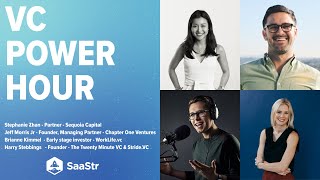
How to pitch Sequoia & Angel Investors w/ WorkLife VC, Stride.VC, Chapter One Ventures, and Sequoia