Justin Rosenstein - Keynote
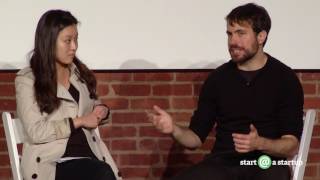
Justin Rosenstein built the Facebook Like button and Gmail chat before co-founding Asana to solve "work about work." He shares how the company grew from a simple idea into a tool used by Uber and the Malala Fund, and his vision for technology that empowers rather than distracts.
Chapters
Thank you for joining us, Justin.
Thank you for having me.
So let's start in the early days of your career. You started your career at Google and then left for Facebook when it was, as you put it, on the cusp of changing the world. What inspired you to take that leap?
Yeah, the changing the world language has gotten turned into a cliche over time. But I kind of want to just pause for a moment and say I grew up in the Bay Area. Grew up where in a time before the most recent tech boom, when people just pretty unironically, but also fairly humbly just said, oh, the reason I'm in the technology industry is because I think I can have use that to have real impact on the world in a positive way. And it's been kind of disheartening to see over time how that's become this kind of like, oh, no one's saying that seriously. I think partially that's the. A lot of companies have co opted that language to talk about our automated doorknob is going to change the world. And in other cases, there's been a kind of as it's become this, like, ooh, this is the way to get rich quick. A lot of people who maybe were going into finance are now going into tech, but to me it seems really obvious that there are lots of ways in which technology can be massively impactful to the world in very positive ways. And so I guess I just want to stand like unabashedly in the camp of like, no, that really is a thing you can optimize for and such an exciting opportunity to, if you're in that. To have the privilege to be in this incredible time and to have this skill set where you can simultaneously be doing well for yourself and positively impacting the world is so incredible. So the decision to join Google was, or just really admired their mission of organizing the world's information. I think Google search has done so much in changing the way that we can just, you have to go to the library and now you can just immediately access human knowledge. It's incredible. And in joining Facebook, you know, I joined Google and It was like 1900 people and Facebook was 250 people at the time. And I could just see how it felt like it was on the cusp. It had a similarly enormous mission. It was doing really well. This company was small, but they had the right culture in place, they had the right technology in place. And it almost felt like an arbitrage opportunity. It felt like, wow, is there really this sweet spot of company size where They've mitigated a ton of risk, but it's still really early. And you can just come in and have kind of outsized impact, outsized equity, and just come in and do that and it's like, whoa. So that's part of my recommendation for starting at a startup like asana is at 220 right now and just seems like it's in a similar sweet spot.
So take us back to the creation of the like button. How can something so simple become so meaningful so partially?
It's what we were just saying of the fact that Facebook was at this perfect point in time where it was starting to take off. And it seemed like the writing was on the wall that it was going to be huge, but there was so much foundational work left to do. Was just, you know, could just do something that was a hackathon project for me that, you know, didn't know if anything would come of it. And then now it's, you know, it's pretty heartening to see it's such a big cultural icon. And the impetus there was from a pretty like a place of we have all these people communicating. And the goal of one of the goals we have, or certainly I had, was to increase the amount of positivity in the world, right? To not just have that be generic infrastructure, but really take an opinionated perspective on we'd like more positivity flowing through the system. And so choosing a specific thing of how can you make the path of least resistance to kind of spread this little bit of positive affect into the world has this huge effect. For the longest time, the biggest feature request was the dislike button, and they've added emotions since then. But there'll never be a dislike button because that defeats the whole purpose of what we were trying to do, which was make it easy for there to be more positivity.
What were your most valuable lessons from both Facebook and Google?
Yeah, I think the biggest thing in both those companies is just you can kind of do anything. And maybe that was a particular. Obviously lots of startups are not successful, but there was a feeling at Facebook of there's all these other companies that were trying to do social networks, small companies, big companies. But it felt like we just cared more and were just more committed to making something really great. And there was a sense of if we just put one foot in front of the other, we can just keep going and keep doing this. And that's really inspiring in terms of starting a sauna or just thinking about the world. It's easy to think oh, if it was possible, it would have already been done. It's like, no, that's not necessarily true. So an example of this is the origin of Gmail chat was we had Gmail and we had this standalone AOL Instant messenger like product that no one was using, but people weren't really using Gmail. And I said to someone who ran that part of the company, why don't we just put chat inside Gmail? It's like people are already there. It'd be nice to chat and email in the same place. And his response was, oh, that's impossible. You can't do chat in a browser. And I wasn't, you know, I was just like, impossible doesn't seem very likely. So I went home and just prototyped a simple version of chat. Just like kept pinging the server for, you know, as a way of simulating. Later there were technologies like Comet, but at the time just used AJAX and just kept pinging every couple hundred milliseconds to pull if there were any new messages down and in one night had hacked out a simple version of. Of chat inside of Gmail. And that just led to the creation of that project. So, like, yeah, when people say impossible, rare, that's true.
So now let's move to the genesis of Asana. You're working on a similar internal project at Facebook. So how did the walk us through the journey of working on a project from Facebook into what Asana is today?
Yeah, so I had a fantasy when joining both those companies of I'm going to be working with all these great people and we're just going to be figuring out how to build the future. It's going to be this really fun experience. And I was very sad that I felt like literally 90% of my time was spent not doing work, but doing work about work, like reading emails, writing emails, sitting in status meetings, doing status updates, and all these brilliant engineers, brilliant designers, just spending ridiculous amounts of time on this busy work that we had to do. If you didn't do it, then there would be no coordination and you'd never get anything done. But it felt like we just spent all our time on this. There had to be a better way. And searched around. There were no such. I mean, there's lots of project management products, but none of them were good. And so inside of Facebook started working with Dustin Moskovitz, who was the co founder of Facebook and VP of engineering at the time, and just started building an internal tool that felt to us like it would be the right way to do this. Kind of work tracking. And it just really quickly took off within Facebook. And pretty quickly you could feel the number of meetings going down, you could feel the efficiency of the company going up. And at first we were like, okay, this is just going to be our secret site. This is how Facebook will get so much more done than everyone else. This is great. But the more we thought about it, the more we realized the problem we were working on was universal and the solution was universal. The average knowledge worker spends literally 70% of their time on this kind of work about work. And we realized that as per my original change the world, the reason I work and the reason I do technology is in the hopes that it can have some positive impact. And when I think about all of the different ways that I would want to have positive impact or the ways I'd want to see the world change, whether that's improvements to health care, improvements to education, biotechnology, changes to governance, all human progress basically comes down to groups of people working together. And the fact that apparently the majority of every single one of those teams jobs is coordinating just made it seem like if we could improve that part, if we could make it easier for any organization, any team, to accomplish their goals, that's a Facebook sized mission. That's something that's really worth doing for real. So I'm a reluctant entrepreneur. I kind of wish the software had already existed and if it had, wouldn't have had to start Asana. So we left with this kind of audacious goal of what if we could make every organization in the world 5% more effective? Does that mean we've sped up progress by 5%? That'd be so cool. And we're definitely not at every organization in the world part. We're very fast growing, but that might take a few more years. But we recently surveyed customers and said, how much more efficient do you think you are? How much faster are you in achieving your goals? And I was like, I wonder if it's already at 5%. And the average answer was 45%. So even if they're exaggerating, which they have no incentive to do by a factor of four, just the idea that you can do one piece of software that can have these big horizontal impacts across all these different kinds of organizations is just. Yeah, it's really heartening.
Let's talk about the importance of user experience. How does Asana tackle the complexity of simplicity?
Yes, the complexity of simplicity. This is especially in enterprise software, which I guess is the industry I work in now accidentally is particularly bad where like the majority of software people use at work is pretty hideous, pretty hard to use, or is very, very simple. And, you know, as Google has come to market, there's a few companies who have been changing that, but the history of that software is in a really bad state. And in our own area of tracking work, yeah, we've generally found that software, it's either a toy where it's, like, pretty easy to use, but can't really be used to run an entire company, or it's very powerful but so cumbersome that in practice, even if people spend a million dollars buying it, they don't end up using it. So I think that Asana, in that work tracking space, is the only product that's both easy and powerful. And it turns out that being easy and not powerful or powerful not easy is much EAS way, way easier than being easy and powerful. Because you have to think so hard about how do you design things in an elegant way where, like, when you first come into Asana, it feels just like a simple blank sheet of paper. And over time, it unfolds its complexity as you need it in just the right places. And so we just have been. We think a lot about bringing the level of quality of design that you expect from consumer products like Apple, but bringing that into this place, that actually is more important because people spend the majority of their time, the majority of the time that they use software at work.
So a big part of Asana is helping teams work better together. How does Asana help empower teams? And can you share your favorite customer story?
Yeah. So some of the stories I like the most are the ones where I feel like they. In turn, the first order effect of Asana is making people's lives at work better, but the second order effect is what they're able to do as a result. So Uber is able to roll out in new cities, like, four times faster because of Asana than they could without Asana. And I think in the long run, Uber and Lyft. Lyft's also a customer that these companies are going to reduce the number of cars that need to be created and reduce our dependence on fossil fuels. There's nonprofits like Possible Health, which brings health care to the rural poor in Nepal, who say the number of people who are well who would otherwise be sick because of the extra organizational power they've had with their team on the ground in Nepal of doctors has just massively gone up. Or the Malala Fund, the youngest Nobel Prize winner. They're bringing education to young people, young women in underserved areas, they run on Asana. So I could keep going on these different biotech companies that are making huge medical advances. And each one of them, if I'd spent the last several years of my life just helping them accomplish that mission, that would feel so worthwhile. So the fact that there's so many of these stories is a great diversity.
How do you see the way we work changing and how do you think about helping Asana stay ahead?
Yeah, so I think work will change in two ways. One is cultural and one is technological. So on the cultural front, I think you're just gonna. I think the ways we've been working are, in a lot of cases left over from the industrial revolution haven't been well thought through. And we really. Companies often treat process and culture as something that just happens, it just emerges. We've taken the opposite extreme approach where we have designed the culture of Asana with the same kind of care and rigor that we design the Asana product. Really thinking what kind of, of company do we want to live in? And so that. Talk about this for hours. I'll give one big example, which is the culture of empowerment. So at most companies there's a very top down hierarchical structure. If you're an individual contributor, even if you think, you know, even if you're making recommendations, you're ultimately kind of at the mercy of whatever your boss decides or their boss's boss, and they can always overrule you. And I found that really frustrating at Google that Larry Page could just come in and change any of my decisions at any time. When I felt like I was thinking about this thing full time, he was thinking about it like five minutes a week. So we try to push the decision making as much as possible to the people who are actually doing the work. We often joke that if we were to ever draw the org chart, instead of drawing it top down from the CEO, we, we drop bottom up. Where you have the managers are a system of branches that are support structures for the individual contributors who are the fruits of the tree, who are the people who are actually getting work done and are actually empowered to make decisions. And so there's all these conversations where I'll be with a designer doing a design review and I'll give them feedback, make a bunch of suggestions, but ultimately they can ignore me or figure out a way to get inspired by what I said, but take it in a different direction. So I've just never seen a company, it's frankly kind of scary for me, but I've never seen a company that's that aggressive on pushing the decision making to the people actually making the who are actually doing the work. So that kind of cultural design, I think has really paid off. Someone pointed out that if you go to Glassdoor, there's a website that shows like anonymous reviews from employees. The they have 280,000 companies listed in the United States. And if you sort by rating, the number one company that comes up is Asana. Wow. So I think that's a testament to the power of using design to really think it through. And then on the technological front, the future of work is just us becoming more. Our mission at Asana is to make teamwork effortless. And effortless is, if you really think that through, like what do it mean for teamwork to be effortless? Where the friction of groups of people working together just keeps going down and down. I think that the. We're just going to keep chipping away at all the things that lead to any sort of friction. But the, just to get very futuristic, the very long term is, I think of it as like the limbs of my body. Like you feel like a person, but really it's just that you have a bunch of different subsystems. You have different parts of your brain, different parts of your body that communicate so quickly and are so well coordinated that it creates the emergent phenomenon of being a person who's walking around making decisions. And I think just as you go from organs to organism, the next step is from organisms to organizations where the groups of people are working together so, so effortlessly. Eventually brain computer interfaces telepathically, that a group of people can actually coordinate their collective action as seamlessly as the parts of your body coordinate their collective action. That just leads to, I think, crazy next levels of what we would be able to do as a species. And so ultimately, yeah, I guess the long term vision for Asana is to be the telepathy protocol for how humans work together. And lastly, but that may take a few years. If you join, that's not what you'll be working on next year.
And lastly, taking a step back from Asana, what advice would you have for your 18 to 22 year old self on how to make the biggest difference?
Yeah. So just starting with thinking about that as one of the primary things that you're focused on. I often ask people, what are you looking for in your first job? And you'll hear things like, I want great mentorship, I want to learn a lot. I want to be at an exciting company whose business is doing well. And I think all those Things are absolutely critical. What's amazing is that there are companies that have all those qualities and on top of that are very mission driven and are thinking a lot about how can we use this organization as a means toward an end, not just of making money, but also of having this positive impact on the world. And so I often think about just really meditating on what are the things I'm passionate about, what do I think are the most important problems in the world that are worth solving, and then what are the organizations that are out there or if necessary, starting an organization. But I think that's a last resort because starting companies sucks, but doing whatever, basically figuring out what are the problems that are most worth solving and then how can I take my specific passions and energies and talents or develop new ones if necessary in order to apply it specifically to solving that problem. And it's such a big complex civilization, it's very easy to be like, well, I can't possibly make a dent in that. That's a huge problem. Millions of people are thinking about that. But I think that, yeah, generally the people who end up doing these sorts of big things just kind of have the combination of the hubris to be like, no, I think it's possible, and the humility of, oh, it's probably going to be really hard and I'm going to have to really work hard and think, think hard and try things that haven't been done before. But if I just kind of keep going, be okay with making mistakes, pivot, figure out how to learn from that mistake and just kind of keep swimming generally in the direction I'm trying to go. I think you'll be amazed at how much progress you can make against even large scale systemic problems. Great.
Well, let's open it up to the audience for Q and A.
Hey, my name is also Justin. So I see on Asana's website you guys always highlight mindfulness, your core company things, but I didn't hear you bring it up. I'm curious, like how that comes into the work life balance or what that really means as a core value, because I don't think I've seen that. Yeah, I feel like we were saying mindfulness before. It was cool. That's a buzzword. I'll tell you a few different things we mean by it. So one is just remaining very present and that can take a bunch of forms. So I think often people get to the end of their career and they look back and they're like, wow, that was amazing. That was such a cool ride. I wish I hadn't been so stressed out in the middle of it, and instead taking time in the middle to pause and breathe and celebrate and appreciate. To appreciate the moment as it's happening leads to a happier life, but also, in our experience, leads to better work. When people are really. People often think like, oh, if I want to get a lot done, I need to be stressed out. But the research does the opposite. The stress just gets in your way. If you can simultaneously be committed to working really hard and being really calm and mindful and appreciating the moment as it's unfolding, that leads actually to much better outcomes. We also think of mindfulness in the sense of paying really close attention to what's going on. So I think a lot of how we've gotten to the culture we have is that we are constantly looking at what's going well, what's going poorly. A lot of times you'll go to a company, ask them what's going poorly, come back a year later and ask them what's going poorly, and it's the same thing or things have gotten worse. At Asana, we have enough mechanisms for finding out through like anonymous surveys and committees what are the things we need to fix. And then we go after them and we address them. And so a year later, they're almost always fixed in some form or getting a lot better. So that kind of constantly paying attention. And then on work life balance, people often have taken that phrase to mean, like, oh, not working very hard. People think there's these two extremes. You either are actually trying to get stuff done and then you work 80 hours a week and you kill yourself and you lose, miss out on your youth. But at least you got a lot done. Or over here, you have your lifestyle business and you have fun and you don't get a lot done. And I think that's just a false dichotomy because we're not robots. There's all this research that shows that once you've worked more than 50 hours a week, you're actually just doing yourself a disservice. You're not actually getting more done. If you can work 40, 50, 55 hours a week, spend the rest of your time relaxing, rejuvenating, enjoying your life. That gives you the energy you need to then actually get more done during the time that you're working. So we talk about it as work hard, live well. When we're at work, we're very focused. There's no foosball tables. I mean, we're having fun, but like, we're having fun in the context of how can we get, like, how can we manifest this huge vision and mission we have? And then we stop and we go home and we relax.
Kind of along those same lines. I know that technology and like constantly being plugged in can often be a deterrent to mindfulness. So what are some ways you think technology in Asana can be used to actually encourage, like, time well spent as opposed to just losing a ton of your time, you know, on these platforms?
Yeah, I think you're referring to Tristan Harris's work. Tristan's a good friend of mine. I've actually been. I've been in the conversations with him as he's been developing that framework. Yeah, Being the co creator of the like button is like a weird. It's done a lot of good. And then all these weird negative consequences of being like the most addictive thing on the Internet. I think that as technologists, we have, let's say, the opportunity to really design in this way. I think there's just, there's just mindlessness on the part of people creating the software and as a result, like in the sense of not thinking through the consequences of the behaviors being created. And without that, it's easy to create these addictive technologies. If instead we paid really close attention to how can we make the technology really focus you on getting the things done you want to get done, Instead of being these kind of consciousness traps, I think we can create things that are a lot more healthy and helpful to the world. So for example, when you go onto a computer right now, you're just kind of met with like, here are all these options, and the easiest one is the big Facebook logo that opens you up into News Feed. And then you're kind of trapped for several minutes. If instead the first thing you saw was like, what task are you trying to perform? Or you could say, hey, I want to spend 30 minutes a day being entertained, but only 30 minutes, and then cut me off from that. The technology could work better with you in the business world. Asana does try to be a great example of this, where the default for a long time became. You looked at your email the first thing in the morning, which is just whatever random stuff sorted by recency someone happened to have sent it you. I think Slack. These chat products are valuable in a lot of ways, but I'm scared. They have that same Facebook News Feed effect of just like, here's a bunch of random information flying at you. And Asana tries to order your work around priority. So you're like, okay, what's my goal? What are the set of steps between here and accomplishing my goal? Which of those steps am I responsible for? What's the status of each of those steps? And then it walks you through, one at a time, the steps you need to do in order to accomplish your goal. I've actually had friends say that they love asana, but it makes them uncomfortable because there's nowhere to hide. It's like with most other tools, like, oh, I'm just gonna. I feel productive. I'm answering my emails, I'm responding to people. And asana, it's like, no, here's the thing you gotta do. If you really want to get your. You really want to manifest your imagination, you got to do these things in this order. It's like, okay, and do those things. Hey, why do you think that sometimes after people use asana, they go back to using email? So we have very high retention? So while it does happen, the general case is the opposite, is that sometimes it takes people a while to get onto asana because it's like a learning curve and a different way of thinking. But in the vast majority of cases, people do that and then they never look back because they just feel like they're working so much more effectively, I think. Yeah. So, I mean, most of the times when people switch back to email, it's fairly early in their life cycle where, like, there's a few people on the team who are really enthusiastic about using asana and then they can't get their team on board. There's a lot of resistance, and that's something we've thought a lot about. I think it's actually going to be the biggest focus for 2017 is this team adoption, is how do you enable teams to more easily get on board? And I think a lot of it is just that it is such a different way of thinking. It's not like, oh, here's a behavior you were already doing and here's a better way of doing it, like a prettier way of doing it, a slightly faster way of doing it. It's take your work and structure it in this more structured, ordered way. And people really dislike change, but that's a real thing. And the onus is on us to how can we make the transition feel really smooth? How can we understand the team leads often love it. And then the individual contributors might have more resistance, but we have tons of ideas of how can we make the experience for them simpler, easier, where they don't have to look at this whole complex management interface that the team lead wants to see they can just have much more of this experience of like, okay, now do this thing. Are you done? Do you have any questions? Great. Next thing, do this thing and just make it a much more streamlined interface.
Last question from the audience. Yeomani. So you talked about this culture of empowerment. So how do you actually create this? Because it requires a lot of trust, and you're trusting your company right in the hands of people you hire. So how do you vet for that and how do you foster that?
Yeah, the question was, how do you create empowerment in practice? And that requires a ton of trust. So on the trust front, yeah, this would not work, I guess, at a lot of organizations we are just really obsessive on. And that's another thing I learned from Google and Facebook. Those are companies that put spend an enormous amount of time on recruiting and trying to find the best people in the world. And when we left, we were like, well, if that works as well as it does, what if we just took it to the next level? What if we made it so that the median level of talent at Asana was like the 90th percentile at a Google or a Facebook? And I think we've achieved that. The recruiters who've worked at both companies generally say that's about what we've done. The downside of that is we just spend a ridiculous amount of time, like meeting with people, talking to people, trying to finding the very best people in the world. But the upshot of that is that then we can have this culture of empowerment and of trust, because they are. Now, that doesn't mean that everyone we're hiring is already the best. We're hiring people out of college who we think can become the best in the world. And so we also have another answer is that we spend an enormous amount of time on mentorship, on helping people grow both as people and in. In their talent and skills at work and learning how to make those decisions. Even though we do throw people in the fire, we also have tons of support structures to help them swim. I don't know if you swim through fire, but you can go to lots of mentors and get advice on how to do those things better. And then just a lot of it comes down to just repeating those messages over and over again. I just did a talk, but on all hands, for the whole company, of just like, really going through examples of what this looks like and how different people have taken it upon themselves to make sometimes controversial decisions. But because they had so much information, the company stood behind them, even when people like me were biting our nails at the time and let them do it. And in a lot of cases, that worked out super well. In other cases, it worked out really poorly. But there's so many places in the world where if you make a mistake, the reaction is, oh, well, that's evidence that you're incompetent. So now we're going to give you less responsibility. And at Asana, it's the opposite. It's like, oh, the fact that you tried something and have learned from it, and we have structured processes for reflecting on mistakes so you can learn from them means now you're actually better and now you're more equipped and actually deserve more responsibility. So demonstrating that we're willing to give people, I wouldn't even say second chances, but to reward risk taking goes a long way toward that. But it is really funny how I think empowerment is both the number one reason that people say they want to join Asana and is the number one thing that people find uncomfortable once they arrive is that they're like, oh, you were serious? The buck really does stop with me. I really do have to make this important strategic decision that really does affect, like, you know, some huge portion of the company's future, and it's pretty terrifying. But if you're.
If you.
You like that kind of adrenaline rush, then it's a good fit.
That's a great note to end on. Thank you so much for joining us, Dustin.
Yeah, thanks.
More from Stephanie



How to pitch Sequoia & Angel Investors w/ WorkLife VC, Stride.VC, Chapter One Ventures, and Sequoia