How Saying NO to Customers Led to Record Growth | Kyle Norton, Owner.com CRO
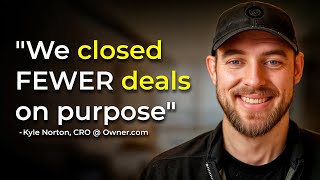
Kyle Norton, Owner.com's CRO, cut half the sales team in his first 45 days and rejected poor-fit customers to fix 30% early churn. Saying no to deals and reps who didn't fit the long-term vision led to record single-day ARR growth and stronger retention through word-of-mouth.
Chapters
One of the things that I think CROs struggle with the most is they have a really hard time thinking about anything outside of the close one number. All they care about is the close one number, and nothing else really matters. If you want to be like, a CRO and not a VP of sales, this is one of the three biggest changes you can make is being able to think more holistically about the business and seeing your role as generating enterprise value and not just hitting a sales number.
I. Oh, my man. What's up, dude?
Good to. Good to meet you.
Good to meet you. Oh, you've got a good setup, too, dude. Look at that. You've got the nice c. What camera are you using over there?
Like a Sony digital slr.
Oh, okay, you got that too? Yeah, I've got the same. Okay, See?
Yeah, I don't know. I don't know what it. What one it is, but this guy, Neil Topinka, who's a Toronto dude, is. Does, like, home studio setups for executives and in, like, content folks. So he just, like, did it all for me.
Oh, nice. Yeah, I had my buddy come and, like, do that same thing with, like, the light and, you know.
Yeah, yeah, yeah. The key light up here. And actually there's. I have a podcast setting. Like, he set up a podcast setting for my room. Okay, Rafi, get out on.
Go.
My dog's just going to sit here and bark the whole time. And so he set up the room so that, like. There you go.
Oh, do you have, like, buttons and stuff where you can, like, change the setup?
No, I don't. So I. I'm like. I've seen it. I'm like, that looks cool, but I think it's overkill. But, yeah, just like an. It's an Amazon. It's an Alexa setting, so it turns down my overhead lights so that the key light does more and then, like, these lights on a certain thing. So.
Yeah, we did that with the. I don't even want to say the name, but the. The a. Because, you know when you say, what's up? And. Yeah, I just say, like, studio on and then freaking it just like, lights all this up and. Yeah, dude, it's, like, so cool.
Yeah.
Well, dude, stoke to be chatting and you're in Toronto. Do you ever, like, get out, come to Austin or, you know, any of that stuff or what?
Yeah, I was in Austin twice last year for conferences. Yeah, I spoke at Pavilions Conference, and then I spoke at SAS Open.
Yeah, it's sat. It's coming up, actually. What is it sass. What's his name? Puts it on. Yeah, yeah, I'm totally.
You know, he's got a big YouTube thing.
Big. You. Yeah, I forget his name, but he's got, like, a media and finance company.
Right, Exactly.
Yeah, yeah, I'm totally saying. Nathan Latka.
Nathan Latke. Yeah, yeah, yeah.
Nathan. That's Nathan, man. Yeah, yeah. Well, dude, excited to have you on the pod, man. This is gonna be fun. I. I think where we should start, what would be interesting, we keep it super conversational, I'm sure. You know, I've listened to a little bit of your pod and stuff too, so I think that an interesting thing was that, like, your career path wasn't exactly traditional, which I think is interesting.
Yeah.
And I read that you went from, like, owning an MMA studio to becoming like, you know, a SaaS revenue leader. So when I read that, I imagine in the office of owner, you guys have like a Bruce Lee, Kyle Norton, you know, like, poster up there, and it's like, don't hit quota, get sidekicked or something like that, you know, like, then I'm like, that's probably why owner is doing so well, dude.
Yeah, exactly. Yeah, I would. I was a sales rep. I was a rep and then a manager for a couple years, and then I left the corporate world and then I came back into tech.
Oh, interesting. And so you went and did an MMA gym, like, in between. That is what it sounds like, yeah.
Well, I started it on the side, like, when I. After my first year and a half of working, because I'd always trained. And so, yeah, I had, like, met my business partner at the time.
Who.
Wanted to, like, open up a studio, and I was like, okay, like, let's do it. Like, I'll be the business guy. And so I had done it. I did it on the side for like a year or two, and then did it full time for like a year and a bit. And then just realized I'm like, oh, man, running a small business is rough. It's tough. And I just missed sales like that. That's really, like, that's my calling. That's what I like to do more than anything, is build teams and coach and teach. And so then when I came back, I knew I needed to be in tech.
So, yeah. Yeah, I will. So during COVID I, like, I did boxing. We were in Mexico, like, throughout Covid, the wife and I, and, you know, big boxing culture. And so we. I got a boxing coach, right? I'm like, okay, well, the gyms are closed. I'M gonna get this guy and he's gonna come over and we're, he, we're gonna like box, you know. And the first week he goes, hey, we're gonna get in the ring with a guy. And I go, dude, it's my first week. I'm like, dude, like, you're gonna want, you want me to get my ass beat like the first week, you know. And he goes, he goes. And he, you know, this is a lesson that I like, just a life lesson. That's a good reminder. He's like, dude, to learn you got to get beat up. Like, that's just. You kind of got to like fail and get beat up at times. And like, that's how you're going to learn. We can train all day, but if you don't actually get in like the ring, nothing's going to happen. And I'm like, oh my God. So dude, every Friday for four years, I'm not kidding, he made me get in the ring with someone. And it would be like these kids that have been boxing for like, like sometimes like 16 year olds since they were like 8, you know, and like they like just whoop me. Like, you know, I would get like, we wear some guarding or whatever, but still, man, they'd get in there and like punch me in the nose. I'd be, you know, I like have to keep camera off on the calls and all that. So that was a good lesson and kind of reminder, you know, especially like in the sales, in the sales role where you're, you know, you know, getting let's. Let's call it beat up in a way where you're getting a bunch of no's. Right. And you're like beat up mentally. Yeah, emotionally beat up. Exactly. But yeah, so super interesting. But for you, are you still training and like doing that?
I two knee surgeries, almost a back surgery, and was just like always beat up. And at some point I was just like, you know, I couldn't my. I just don't have like any cartilage in my left knee now. And so no matter what I did, it would like catch and click and then swell. And so training, training became like a lot less fun. And yeah, I'm not good at. And I'm not good at like doing stuff casually. So I could probably, I could probably train and just like take it easy and you know. Yeah, I just don't have that gear in me. And so. And this is what happened when I went back to training after my second knee surgery. I was just, you know, like I. I would get moving and then the intensity would pick up and I like, don't have an off switch. And then all of a sudden it's like, oh, like something catches again. My knee swells up and then I'm like limping around for two days just. Cause. Yeah, I like, would aggravate something. So, yeah, I hung up the gloves. I'll still go in and like, to a Muay Thai class and just like, play around. We did a class with my leadership team when they were here. Like, that's fine. But like, I'm a Jiu jitsu guy. Like, I'm. I want to wrestle and I want to do Jiu Jitsu and like, that's the, that's the sport that's most challenging for my body now. So.
Yeah.
Yeah. So I like ride a peloton and lift weights and.
Your official tech pro, dude.
I'm like a middle aged. Middle aged dad is what it is. So.
Yeah, yeah, same man, same in the summer.
Um, but like, not super serious because I travel too much. And if you want to like, be serious about it, you got to like, really put in the hours. And I just don't have those hours. So for me, it's like, I'm on like a longevity program, you know?
Yeah.
Huberman Galpin style program, which, which is great. I've actually never felt. I've never felt stronger and healthier in my life, which is great. I just, I don't have a sport now, which is a bummer. Yeah. Yeah.
Well, the trial will keep you busy. I've done a couple Iron Mans and like, I'm gonna do another one in November because I, you know, before I became a dad, I was like, all right, I'm gonna do an Iron man, like, for my son so I can like, you know, prove, like, I'll do anything for my son. Or, you know, I have this like, weird thing and I'm like, well, we're having another son in September. So I'm like, I have to do another one. Because, like, that wouldn't be fair. You know, that's funny. And I'm so. I'm like, yeah, but I'm gonna do this one a lot more chill. Where I'm not like, go. You know, trying to finish in a record time. I'm just gonna try and finish it, you know, because last time I killed. It kills your body, right? Like, it just wrecks. You're wrecked for like two weeks after that. Yeah, it's just intense, man. But okay, let's get into some. Some go to market sales stuff. All right, so one thing I also read about, I want to hear about this because this is, this takes a lot of speaking MMA and cajones and, you know, stuff the leaky bucket fixed. So one thing that I, that I kind of looked at is that you mentioned the company had a leaky bucket and you let go of half of the sales team in your first 45 days, which is also like, obviously a really hard decision. And you started saying no to a lot of potential customers, which, which sounds like super counterintuitive to a startup. Right? You're like, wait, why would you say no to a startup? So, like, walk us through that bold call, man. And you know what? Other startups can learn about focusing on the right customers early on? I think this is something that a lot of people make a huge mistake on.
Yeah. And there's two ways to answer this question. So, because I think it's, it's a good example of where I think revenue leaders and CROs need to focus themselves. So let me, let me answer the question sort of at a higher level of abstraction and then we can talk about the details, details of that decision. So one of the things that I think CROs struggle with the most, especially in the eyes of founders and board members, is they have a really hard time thinking about anything outside of the close one number. All they care about is the close one number and nothing else really matters. And if you are a C suite executive, if you want to be like a CRO and not a VP of sales, this is one of the three biggest changes you can make, is being able to think more holistically about the business and seeing your role as generating enterprise value and not just hitting a sales number. And generating enterprise value means closing customers and compounding revenue over a very long period of time. Because if you close a bunch of deals in an SMB case, they like churn in the first 90 days or in an enterprise context, they're churning after the first year. You're just on a hamster wheel and you're not really going to get anywhere. And even if they don't churn after year one, if they're not really happy customers, then you can't build word of mouth momentum. It's always been important in a world where it is so easy to start a company and write code and build software, like in this AI era, what is going to enable you to be differentiated is much more challenging. And so like word of mouth, customer satisfaction and like market momentum are more important than ever. And so that is just like the big change that I think people need to make. And for me, you know, I learned this lesson as a first time VP of sales. I, you know, I made the same mistakes everybody does. I was super focused on just the sales number and didn't think as broadly as I should have learned that lesson. And then, you know, at Shopify, a thing that people commented on is like, how holistically I thought about the business. And this is still feedback I get from, you know, my boss here and the board. It's like, wow, you just, like, you know, we don't see a lot of sales leaders that think about all these other things. And so if you want to go from like VP of sales to CRO, like, this is. This is the big change you need to make. And an example of that is the situation you're talking about where we were churning, like 30% of signups in the first, like, 60, 90 days. And so, you know, there was such strong desire from the market that we were sort of growing despite that. But it's just. It's just so many wasted calories. It's so much wasted effort to close a bunch of deals that. That are churning because then, you know, your reps waste time on it, and it's not accretive. It's not really building enterprise. Then your launch team spending time on it, and your CS team gets dragged into a bunch of, like, problem solving for crappy fit people. And your product team gets. It's just sand in the gears because, you know, you're not thinking about anybody but your own team. And so, you know, I saw that even before I started, you know, when I was just advising Adam, and that was like, one of the first things I tried to address. And we cleaned it up and, yeah, it was difficult at the time and led to, like, an uncomfortable first board meeting.
Yeah, I bet, right? Like, yeah, you come in and you kind of just like rip the band aid off. You pull like a Elon Twitter move.
Yeah, yeah. And it's like, hey, my first month at the company, we closed less than the month before. And then my second month at the company, we closed even less than that. And like, that doesn't look awesome. But I knew I had enough time and trust, and I had communicated. I'm like, hey, this is what I'm doing. This is why I'm doing it. This is where we're going to end up. And I had confidence that once I had cleaned it up, we would be able to grow in a more healthy manner. And by the time we hit my third month. We were now then closing more deals, and the quality was so much higher that actually the value generated for the company was drastically better than what it was 90 days before.
And.
And we've basically just been like up into the right, like, craziest since then.
Dude. Yeah, it's. It's. This is like the epitome of that, like, you gotta slow down to speed up kind of thing.
Slow as smooth and smooth as fast is an old Jiu jitsu saying that the Navy SEALs use as well now.
Yeah, yeah, yeah. Oh, did that come from Jiu Jitsu? I didn't know that.
Yeah, yeah.
Oh, wow. Okay. Because you. I've. Yeah, I've heard. I didn't know that was a. It came. That came from. Originated from Jiu jitsu.
That's like Japanese Jiu jitsu, like hundreds of years ago. Yeah.
Oh, yeah. Like the, you know, the. What's that stuff that people do with, like the, the moves and they like the breeding. What's that called? Do you know what I'm talking about?
There's a lot of different things. There's like aikido and Tai chi and.
Yeah, Tai chi. Tai chi, man.
Tai chi's Chinese, but.
Yeah, okay. Yeah, yeah, okay. That is. That's right. That's right. But there's. There's all the, all that stuff, which is awesome. Man, that. That's crazy. Yeah. And that, like I said, that takes a lot of cajones, right? Because you're like, like, how do you keep people kind of in line? Because I'm sure your founder, right, Who's, I think, a first time founder or younger, right? And like, they see that and they're probably like, you know, what the f.
You just got to communicate. No, he never said what the f. No, no.
Okay, great.
Yeah, you have to communicate. That's the whole thing. If you can clearly architect a plan, a vision, and you explain why you're doing what you're doing and, you know, I gave him the heads up. I'm like, hey, like, we're gonna clean a bunch of this stuff up. I'm gonna change the deal qualification rules, I'm gonna tighten the screws on it, and it's probably gonna mean less deals. And he understood, you know, like, very well, that that was a. That was an issue for the business and why we needed to fix it.
So.
No, he never, he never batted an eye. Yeah, he wanted things to turn around quickly, and we were early in our relationship, and so I, So certainly like, Adam was going to. Was Keeping close tabs. He's like, I hope. I hope this is going to work.
I hope he can pull it off.
But, yeah, he had full trust and support, I think. Like, that first board meeting when I presented, I'm like, okay, you know, the sales number's gone down two months in a row, but, like, look at the deal quality. Look at the, like, sticky revenue coming out of it. And I remember. And I talked about this with Jason Lemkin on the podcast I did with him on my podcast.
Yeah.
Where we talk about this story. I'm like, do you remember our first board meeting? You didn't really. I was like. So I presented all this stuff, and he was like, yeah. He's like, it's not revenue now yet, though. He's like, so I get it. It's. He's like, it's a great story. I love the story you're telling, but, like, it's not revenue. So, like, let me know when it's revenue. And I've looked up to Lemkin for. So I've been in tech. I started reading lemkin stuff in 2014, I think. And so. And he was one of the most influential people for me, figuring out this whole SaaS tech thing. And I was really excited to work for a company where he was on the board. Like, meeting him for the first time, I was like, holy crap. Like, this is Jason Lemkin. This is awesome.
Yeah.
Trying to play it cool, but, like.
Inside I was like, you're a fanboy. You're like, this is sweet. I'll never drop kick you, Limpkin. Don't worry.
Yeah. And, you know, because I learned so much from him. And so hearing that from him, I was like, oh, my God. Jason Lemkin just said like, yeah, cute story. Show me the revenue. And. And then the next month, it turned around, and then the next board meeting was awesome. And he gave me. Gave me credit and was super great. But, yeah, like, that put. You know, had some butterflies. It was. Yeah. Getting that feedback. But, you know, he gave that feedback because it was good feedback. And he's a type of guy that is a straight shooter. And, you know, like, I always know if he's telling me good stuff, he means that he's not blowing smoke and he's gonna, like, help push me. And I deeply appreciate that about him. And I mean, I appreciate, like, so much what he's provided for owner and for me personally.
But, yeah.
Yeah, it was a tough one.
Yeah, that's. Well, you know, like, just thinking about this is kind of scary. Like, it kind of gives me anxiety just thinking about it. Because you're, you know, making that decision. Because we're kind of talking about decision making right now, right? And like making that decision and you have a good idea, like, hey, dqing is good. Hey, you know, like all these things we always talk about. But like, did. Were you just 100 confident or how did you, you know, I'm sure in your head you had a little thing like, holy shit, what if this doesn't work?
You know, you're never a hundred percent confident. Yeah, we're always playing a game of probabilities. And Even if you're 80% confident in the decision, that's great. You know, like, I encourage everybody to read Annie Duke's book, Thinking in bets.
Oh, yeah, that's a great one.
You're always, you're always like assessing the world and trying to discern probabilities and payoff and then make the highest expected value decisions. And so was I completely certain that that would work out right away or fast enough for it to not get uncomfortable for me? Like, no, absolutely not. You can't predict the future. But yeah, I knew it was the right thing for the business and you just got to keep. This is another thing that I think people struggle with who, you know, people who are frustrated that their CEO won't make them CRO and they're stuck at VP of sales. You have to make decisions for the best of the company and you have to put yourself, you have to put yourself second sometimes. And, you know, it's really easy to make personally optimized decisions. And maybe I could have played that a little different and, you know, strung it out and, you know, like, still closed some crappier deals and like, you know, so the number looked better while I figured out the other stuff, like, yeah, but it just, it wasn't the right thing for the business. And so I think, you know, doing, making the hard call, putting yourself second in just like prioritizing enterprise value. It's difficult. And oftentimes like CROs and VPs of sales get into this weird like, everybody's out to get me mindset. And you feel like you need to be in self preservation mode. But the counterintuitive insight is like, you putting yourself into self preservation mode. And this mode of everybody's out to get you is actually what ends up getting you fired. Because people don't think that you have the company's best interests at heart and they don't see that in your decisions. And then you end up Being somebody that they don't feel like they can fully trust, you need, you know, like your revenue leader is one of the most important people in the business. And if you don't have absolute massive trust in that person to make enterprise value maximizing decisions, then yeah, it's, it's. That's like not a great place to be. So you got to put yourself out there intuitively.
Yeah, like what? You know, running Distribute right now, running a company. You know, we're, I'm dealing with something like this right now, right? Where it's like, you know, we're obviously like revenue is doing pretty well. We're trying to grow. And then like some companies are like, hey, buy, you know, on the startup world to get some, some more traction too. You want to get a certain revenue number so that you can raise and have leverage. You know, the whole game. Right. And something we're struggling with is, is I'm like, okay, we need to get a little more revenue so we can raise. And while doing that, I talked to some companies, they're like, well, if you buy us, we'll buy you. And I'm just like this, I get. It's part of the game, man. But like, this just doesn't, it doesn't seem like what's right for the business other than just being a number, you know, and it's like, then you guys turn in a year or like we don't get value out of yours. We turn and then you get pissed and, and so you turn and it just seems like this like downward spiral. And I've just made a rule with my team, like, we don't do that. Like, no, they, they either see the value or they don't.
You know, like, and that's the key thing. Like, they got to see the value. If the com. If that customer is not, if they don't have a problem you can solve and they're not going to be highly engaged to drive adoption because like you're a GTM tool. Like you, you need reps to go create deal rooms and like use it in their funnel. And if they, if you don't have the, the interest or excitement or engagement, then you won't get it. And you know, yeah, you know, it's revenue you don't have now, but you know, once you're a seed, if you guys are pre seed and you're raising a seed, but if you're like a seed stage company and now you, you've bled out like 15% of these like questionable customers, then all of a Sudden, that's the problem for you into your next round. You're like, well, like, especially in GTM tech, you know. Yeah, well, if, you know, you don't have good retention rates, then like, what, what is this business? And it's just a future. It's a, it's a future problem. So much of, so much of success in life is being able to defer the short term in favor of the long term. You know, everything is the marshmallow test.
Yeah, it's. I heard a great quote. I forget who said it. So I want to credit whoever it was, but they were like, be long term greedy, right? It's like, be long term greedy, not short term greedy. Be long term greedy. And I'm like, oh, that's an interesting way of putting it. Like thinking long term, yes, you want the best for you and you know, what you're building and all that, but like, you got to do it in a long term way. Right. Which is super interesting. So that, that's always stuck with me. And that was years ago when I read that. I'm like, oh, it's good to be long term greedy, like, or it was like short term. It was like short term impatient, long term greedy. Right. Or something like that where it's like short term, like you want to get things done. Yes. But be long term greed. Don't be greedy in the short term, be greedy in the long term. It's something like that. But that sticks with me. And I'm like, yeah, it's true, like, get done what you need to get done. But also, don't lose sight of like, how this is going to affect you in the long run.
Yeah. You know, and it's really hard because.
Yeah, it's, it's discipline, man.
Yeah, you have to be super disciplined. But you know, you could say this about founders, you could say this about sales reps, you could say this about, about sort of anybody wanting to accomplish anything. Being having the mindset where you were like impatient day to day with your action. Like you are, you are going at things with urgency and speed every single day, but being patient with the results and understanding that like inputs and skill development, all these things compound over time. That's a hard lesson to learn. But if you just do the right things day to day and you execute and you put in the effort and you have a learning diligence, you will always get there in the end. Might take you a little while, but you will, you will like, you will get there for sure. Yeah.
And I saw a phrase associated with you. I think. I forget where you said. I think it was on Saster or Jason tweeted it from. From Yalls conversation and it was revenue leaders need to run towards bad news.
Yeah, Jason said that. Actually.
Did Jason say. Okay. I wasn't sure if that was Jason. I was listening. I was like, was that. Jason said that?
But that's another example of something short term difficult, long term extremely beneficial. Yeah. In the short term, in this conversation, it's going to be pretty difficult to tell the board that you missed the number, you lost your best rep. You, like, you know, you booked revenue, you shouldn't have booked. Like, those are. Those are difficult conversations to have. But in the long term, those are critical conversations to have because again, it's, it's trust. And if you start to lose trust with your executive, with your board, like long term, you're. You're absolutely cooked.
Yeah. Yeah. And I think the best sales leaders I've seen going back to this, like, when they see a problem, they do run towards it, but they're also pretty chill about it, you know, like, and the worst ones I see, the worst ones I've experienced, I won't make, I want, I won't name anyone, but see it. Everything's a fire, you know, everything's like a fire and it's like, whoa, whoa, whoa, whoa, whoa. Like, not everything's a fire, man. So, yeah, I've kind of seen that. It's like, chill out and know that, like, hey, we're going to look at it, but we're also. It's also like, we're not going to blow everything up because of it. Everything's a problem and you're just constantly dealing with problems is kind of how I look at like business. Right. You're just always solving the next one.
Yeah, Something. Something I say to my team there, especially when stuff goes wrong, is like, it's tongue in cheek. Well, what did you expect? Did you expect it all to go right? Did you expect it to be easy? It's like, yeah, no. Okay, well, did you expect there to be problems along the way of trying to build a generational company? It's like, yeah, yeah, for sure. I expected there to be like, ups and downs being okay, well then this, this is just sort of an expected bump in the journey and let's go handle it. And so, like, if you can help people zoom out and understand that, it's like, hey, these are just problems that we have to deal with. And this is. These are all opportunities to, to improve the business and ourselves and just like get after it and try to do it. The other like paired thought with this oftentimes that I talk about is having an abundance mindset. It's like when things go wrong or you're down on the month, you can't start to act out of desperation and scarcity where it's like, oh, we don't have the pipeline, I don't know how we're going to get there. Dah dah dah. Like that, that mindset and way of being like comes out in everything you do. It comes out in front of a customer, comes out in front of your team. And that scarcity mindset and that panic ends up being the reason that you miss the thing going wrong is not why you miss your reaction to that thing. Thing is why things get bad. And so instead you want to have an abundance mindset. It's like, okay, look, you know, we expect things to go wrong. We expect there to be hiccups in you know, our biggest deals or in marketing or in you know, my best rep gets sick for a week. Like you know that that's part of what we do. That's why it pays well, that's why it's fun and challenging. But you just have to attack every day and every month and every quarter with an abundance mindset. With like an optimism that you will figure it out because, because that bleeds through for everything. Not in the woo woo. You know that movie or that book, the Secret where it's like just like ask the universe for it and it'll. No, no, no, no. That's not at all what I mean. I'm talking about like the neuroscience backed impact of having an optimism and abundance because that makes you like execute on the things that will get you there. It makes you operate with people in a way that's conducive to getting to your goals. That, that abundance mindset is everything. Like yesterday we, so we set a crazy goal for ourselves in April and we had like big ground to make up. Like arguably it was the biggest gap that we've had in a while.
Yeah.
And you know, you could go into, we could have gone into the last day of the month. We're SMB. So it's like the, the end of every month, it's like the end of a quarter and we could have gone in being like, oh my God, like we have so much, we have so far to go. Like this is going to be so difficult. But you know, you look at, I was like, okay, look at all the meetings we have on the calendar. Look at all the open pipe. Look at some of the whales that we have to be able to get there. And we ripped off the biggest single day in the company's history. We like set a, set a record by record for new ARR by like over 8, I'll call it 9%. And like just shredded it. And people were closing. I ran my last call of the day. My last call of the day ended at 11:57pm last night and the rep and I were in the office and he closed in Salesforce at like 1:15. And. And like people on the west coast, people in our San Francisco office, like, Daniela closed the last deal of the month at 11:30 at 1:30am Eastern time. So it was like 10:30 on in San Francisco and they had all gotten to the office at 7am yesterday ripping their first demos because they take some east coast demos and whatever. Yeah, like one of my reps, his first call was at 6:30 in the Uber. He got it, he closed the deal, got credit cards and then him and I were on a call with like a whale deal at 7am his time and yeah, and so like we need.
A Bruce Lee Kyle poster in the office.
Dude, this is happening.
We're gonna send you one. This is happening, man.
Yeah, but that's, that's the abundance mindset. Like yeah, with my team we call it can't miss mentality. Like we have the can't miss mentality. It's like no matter what happens, we will get there. And it's wild what you can accomplish when you go in to, you know, the last week of the month, the last day of the month with that mentality. Like, yeah, it's.
It's pretty cool, dude. It's. And not in anything, you know, you going and doing martial arts. You know, I did boxing. Like everything is like any. Like. Yeah, I played tennis too. Like and this is gonna sound very cheesy and I know people know this, but it really is always like the mindset is crazy, man. I know. I remember when I was at Outreach, our CRO at the time. Matt Millen. I don't know if you've met Matt, but I haven't. Yeah, he was, he was one of the early SVP sales or CRO, but he used to be Tony Robbins, right hand man. Really?
You know?
Yeah. Oh yeah, dude, Matt Mill, he's running Reggie now. You've probably seen Reggie. Oh yeah, yeah, yeah, yeah, yeah.
So I should have him on the pod then.
Yeah, you should. Yeah. Talk. I can intro you. Yeah, He's. He's a great guy to have. He's. And he used to be a race car driver too. Like, this guy's the man. Like, yeah, dude, he's super interesting. Talk to the. Yeah, have them on. So Matt Millennial, you know, he. He sent a few of us at outreach to Tony Robbins. Like the four day. Yeah, like the four day.
Awaken the giant within.
Awaken the jet. Yeah. Some unleashed, I think was what I was.
Oh, unleashed.
Yeah. Unleash the giant within.
And I've seen that documentary. It's great.
Oh, that. That's like the eight day one or something, right? Or does he have another one for. Because there's like the four day. Then there's like the eight day one or what?
I think it's. Yeah, whatever.
Yeah, whatever. So he sends me. So he sends me in a few other people and when he sends me, I'm like, I don't know, dude. Like, this just seems.
Woo.
Woo. Like, whatever, you know. And like, I don't. I'm not really into this stuff. Like, I'm just gonna work hard, you know, like.
Yeah.
But dude, I went and like, it wasn't one of the coolest things I've ever done. Like the. My like you. I literally just felt this transition mentally after being there where I came back and I felt like I could conquer the world. And yeah, nothing changed except this. And it was like. And dude, it was a stadium full of people.
Yeah.
Like, that's a whole different topic on how he can do that. That's like a magic power. But like, this dude literally has like some. Like, the fact that you can do that to a stadium of people is wild.
Yeah.
And you come out in the third day, at some point he makes you yell and do all this crazy stuff.
Jump around and. Yeah, jump around.
Yell. And you're not allowed in. The one rule that Matt told us is you're not allowed to sit next to anyone, you know. Oh yeah. Because we all went. He's like, you're not allowed to sit next to each other. He's like, that's my one rule. I'm okay for you to do this. And I'm like, oh. I'm like, why? But now I get it. Because they make you talk about stuff and open up and do and like yell and you don't want to have like this people, you know, these people that you already know and try and fit that mold and like not, you know. And so did that and I came out and I'm like, okay, I'm A believer in this. Now I'm a believer. And then you see thousands of people that volunteer for free to help at these events. You're like, okay. This guy's like, got some crazy. Like, it must work.
People should watch the Netflix documentary.
I haven't watched it. It's. Yeah, believe it.
It's good. It's. It's all the behind the scenes and how he, how he does it all and, and his process. And because I was never a Tony Robbins guy, I also thought it was a little cheesy. And then he was on a podcast. It was either the Chris Williamson podcast or. Yeah, like, one of the ones that's in my rotation. And I was like, huh, yeah, this guy's pretty. Like, he's got some interesting stuff to say. This was maybe six months ago because he was doing a free version of it online. And so I listened to some other pods that he had done and then watched the, the documentary. I was like, okay. Like, it's, it's pretty cool. And, and you know, he. The, the interesting. The thing that I thought was most interesting is the, the scientists that have followed his people around and looked at sort of the lasting impact. And it's basically like these are like large scale control trials of people who go versus people who don't. And like, on depression and anxiety and their life happiness and all this stuff. And it's really, like, it's really material. So it was cool, dude. Like, even, you know, we. I brought in this company called Dream Fuel this month to do a visualization exercise with my sales team. So, like, I did a prep call with them, talked about what we were accomplishing, and then we did somatic breathwork and then this like, 20 minute visualization of like, what we were trying to accomplish that month. And we were, a bunch of us were in the office, like, all just laying on the ground in the office doing this crazy breath work, like, and.
I was like, what the hell is this?
Everybody's just like, in their, in their own world. And then we got up off the ground and people are like, that was crazy. Like, wow. Like, be like, I'm ready to. I'm ready to take over the world. And you know, we, we carried a lot of that intensity through, through the month. And, and yeah, like, mindset is everything. And, and I know people are really. I was always skeptical about it. I was, like, skeptical about meditation and all this stuff. But, you know, I read Search and Search Inside Yourself, which is the book by the guy who built the Google mindfulness program. And he's an engineer. So he explains all the neuroscience behind it and, and sort of the system of action. And. And so I was like, okay, that was maybe. That was seven or eight years. That's probably eight years ago. So like meditation was like definitely coming to prominence, but it was early days. Yeah. Yeah, but it's, it's been so impactful for, for my life. For sure.
Yeah, for sure, for sure. Yeah. And it's. You have Matt on, man. He'll tell you like his stuff's directly from Tony and so he'll tell you stuff and you're like, okay. It like clicks, you know, you're just like, it like pumps you up because you're like, that is so right. You know, like if Tony taught you that, like, it's probably like the thing you need to know, you know.
That's awesome.
It's awesome, man. Yeah. All right, dude, let's get tactical here. So now let's dive in. Let's get a little more tactical. So you're building a go to market, obviously for small businesses. Owner.com. it's like the HubSpot. Shopify for restaurants, if I understand correctly.
Shopify for restaurants. Yep.
Shopify for restaurants. Yeah. Coming from Shopify makes total sense. Okay, so we're in this world you can build anything, right? Like if you want to build for SMB businesses and not just like one, you know, one person founders or stuff, but like small businesses, a few seats, you know, a few people running it. Because I'm actually working on this myself right now, so I'm kind of. I'm actually like trying to get free consulting from you at the same time. Yeah. How, like how do you get through the cold, like how do you get through the cold start problem right, in this market? One thing you mentioned that was super interesting was word of mouth momentum, and it sounds like you put a huge emphasis on that. But like, you know, walk us through. Like if you were to start today with the company that's targeting SMB, let's say, you know, in my world, 20 to 500 employees or 250 employees or whatever. Like how, like how. How would you go about thinking about it from a tactical perspective?
And you're talking about winning your first, first customers, right?
Yeah, winning, let's say winning the first 20, 50 customers or whatever. Yeah, yeah.
So in the very early innings where it's founder led sales, it's really about the. Those first concentric circles. So like there's people like you're coming out with an awesome network from outreach, obviously. And so who Are all of the people that know and trust you enough to basically take a bet on you because they like you, they want to do you a favor, they trust that you might build something good because most of the time your product sucks in the early days, it's like riddled with bugs. It's feature poor compared to everything else that's in the market. Like, you're running an uphill battle. And so people aren't making like rational value optimization decisions when they partner with a tiny startup. They're, they are partnering with you because they trust that you can build something great and you have some unique insight that you're building towards. Like, there's some reason why you've built distribute in a way that is different than all of the competitors in this category because there's a few of them. And so you need people that are, that are like mission driven, that go, yeah, I've been frustrated by the fact that, you know, all of these other deal rooms take so much time and effort and this is like AI powered and it's going to do all of these things or you know, this is, you know, controlled by Revops. But my platform is actually in the hands of the rep. I don't, I'm just sort of making stuff up. But there's some, there's some point of view that you have about this category that needs to have differentiation so that when you explain it to people, some of those people will be like, yeah, I've been saying that's how it should be. Like when, when I'm looking at GTM tech, like there's some reason why I'm like not satisfied with the tooling that's out there in the world today. You know, like Salesloft and outreach I've been using for like a decade now and Salesloft in particular. But for cold calling centric SMB sales orders, there's a bunch that's left to be desired. And so if a really small company that is a deficient product calls me and is like, hey, what we hear from people who are 90% cold call based is that these tools are too much obsessed with the email and they're not as call centric. And we want to give you a product that actually gives you like dynamic call scripts and better call dispositioning and more like assisted call data and I'd be like, great. You know, even though that product is way worse in almost every single way than Salesloft, like that fits my view of the world in a way that I would go, I would make a change wow.
And there you go. Guys, if you're listening, there's a product idea for you.
I'm trying to give this away. I'm giving this idea away constantly because I want somebody to go build this thing so that I can, I can be a first customer and be an advisor and tell them like, I'll give. I've actually written a PRD for this because one, I sent the PRD to SalesLoft. I'm like, hey, can you build this? Like, can you build this for me? And I've sent it to some founders and we're thinking about just like actually building it ourselves internally. But, but that would be like a philosophy that's a point of view about the market that is outside of like, buy my deal room product because it's better. Because it's impossible to make the argument that any one product is better necessarily, especially when you're a seed stage company when the product tends to be at its. Well, it is at its worst. So here are the keys to winning your first customers. So one is start with your most like, close network. Your closest concentric circle of people who trust you and will like, do it just because they like you. You come from outreach, so you got a bunch of those people out there. Then you can go out to the like next ring out there and that's, you know, friends of your friends or friends of your advisors or friends of your board members and investors that you know, you're at least you've got like a big head start. You can close those deals. You can close those deals even though there's product gaps. That, that. So this is like concept one is like think about these concentric circles and start with like the highest trust group first.
Before degrees.
Yeah, before you ever think about like cold outbounding. You don't really want to cold outbound your first 20 customers. If necessary maybe, but you want to avoid it. Then two is be really sharp about your point of view and just go find people that have an alignment of that point of view. Find we think that other deal room tools in the market, like are not good or they miss the point. They miss the point. They're too complicated. And so because of this key insight, we've built this in this way and some group of people are like, well no, I actually like it to be complicated because we're really sophisticated and I have a route ops team that manages it and blah, blah, blah, blah. And you're like, okay, that's never going to be a buyer for you. But you're some people are going to be like, yeah, I use X and Y. I'm not, I'm not naming them because I know people at a bunch of these companies. But I've used this company and it is too complicated and I just want something simple. And you're like, well, we're the simple deal room. And those people will buy you even though you have feature gaps compared to those other people. So that's number two. And I call that point of view positioning. So like, so go to market with a point of view. Don't go to market with like, my product is better. And then three is like, make absolutely certain that your first customers are massively successful. And you got to do all of the unscalable stuff. You got to spend people hours and your time and stuff that's like not in product. You're doing like weird mechanical turk stuff behind the scenes. But you just have to make sure that your early customers are as successful as they can be. And even if there's bumps along the way, as long as those early customers feel like you as the founder and you as the early team are really going above and beyond to try to help them, help them win and help them be successful, they'll give you a lot of grace. They'll give you a lot of grace. Like, I have a. Yeah, I partner with a lot of early stage tech companies because I like to be at the cutting edge. And yeah, some of them, it's a little rough at the beginning.
Yeah.
But if the founders are like responsive and they're swarming their teams around it and they're keeping me in the loop, I have a lot of patience because I know what it's like to build an early stage company and I understand that's part of the deal. And so I think like swarming those early customers to make sure they're successful is massive. And if you can do those three things, you can build yourself enough momentum to start then being smart about. Okay, so now I have these customers who are all of the people that know this company or this CRO or this VP of sales. And then I'd be like, hey, you know, like we're working with Andy doing this thing. And then so now that these concentric circles keep growing and growing and you can avoid cold outbounding as, as much as you can for as long as you can.
That's interesting that you say that. Right. Cause like a couple thing. Oh, so two. Two points on this, which is, you know, you know Udi from Gong, obviously.
Yeah. And sat across from him at Dinner, like, three weeks ago.
Oh, yeah. Udi's great. And one thing that, you know, I consider him a mentor of mine. I'm always hitting up for positioning and stuff. And one thing that he mentioned, he's. When I had him on the pod a couple months ago, he's like, it's better to be different than it is to be better. Yes.
And his whole new book is about this. He was.
Oh, really? Does he talk about it in the book? I haven't read? Sorry, Rudy, I need to get the book, but I haven't read it yet. I need. I need a. Yeah, he.
He talked to me about some of the key insights at this dinner. I was like, this is exactly how I think about positioning, you know?
Yeah.
Obviously he knows he's awesome. He built an entire category. And Gong has, like, an incredible brand.
Yeah, they're one of the best, man. Yeah.
Yeah. So his. He has different language for the same thing that I say. Point of view. Positioning or radically transparent sales is like, sort of the language I use around it. It's like, just tell people what you're good at. Tell people what you're not good at, and tell people why they choose. Why certain customers choose you. Yeah. And then they can sort themselves.
Yeah. And what you're saying about that, it definitely validates. Cause we've done. We did a. Because I'm always. I'm, like, maniacally obsessed with positioning and, like, figuring out this out. And, you know, what I did is I came in, I was being a little soft, I think, on, like, how we were different. And, like, three weeks ago, I totally changed it. I'm like, look, we're different. Here's why. And, like, the way I position is, like, if you want a complex deal room where you can mess with the margins and have reps try and become web designers, great. Use those. But if you want something that's more like a document, something they already know how to use, and use that to make a deal room. That's where we'll win. And that, for them is like, no shit. Like, it sounds crazy, right? Right. Like, for some people.
For the. For the people. For some people.
For some people.
Yeah, for the right people. And so this. This radically transparent selling methodology that. That I teach, you lead with that. So, like, the first thing I do when I get on a call, I'm like, okay, so we'll dive into a bunch of stuff. I got some questions for you, but, like, let me just map out what the heck is owner so that we, you know, we know where we're what we're talking about. And so, and that is after actually counterintuitive. A lot of time people like don't want you to pitch right away. They want you to do all the discovery. It's like, no, I actually want to give them the elevator pitch up front so that they have context for the discovery. I'm asking. So I'll be like, owner does five things and I actually drop the features, which again, people will tell you not to do. But I find people's elevator pitches like, we're a next generation platform to accelerate revenue acquisition through the improvement in buyer experience. Like, dude, what? Like, just tell me what you do. Oh, your deal room. But I find people's elevator pitches like, we're a next generation platform to accelerate revenue acquisition through the improvement in buyer experience. Like, dude, what? Like, just tell me what you do. Oh, your deal room. Thank you. You could have just like said deal room as opposed to like next generation, like, customer experience platform. Like, like, get out of here with that. And so I will say at the top of my calls, there's like five things that owner does for a customer. Build you a website, online ordering, email, text message, marketing, blah, blah, blah, blah. I will feature as hell.
Yeah.
I was like, I feature dump. Even though, like, people will tell you not to feature dump. And then the thing I do is like, what's important to understand is like, where we're different than everybody else in the category is you get less choice and flexibility on owner. You, like, you can't do custom fonts, you can't have like video embedded and do all sorts of crazy stuff. Like we, we make you fit into a box so that we can hyper, hyper optimize every single customer of ours across thousands of individual restaurants. So when we run experiments on one set of 50 or 100 customers and find something that improves conversion rate or search rank, we're just going to make that change across every single customer without even asking you. And you got to be comfortable with that, that we're like pulling a lot of strings. But what you get in return is an army of literally the best software engineers in restaurant tech and some of the best restaurant marketing minds doing all of this stuff on your behalf. And that's why people make way more money on owner, you know? Yeah, you don't get, you don't get all the choice and flexibility of our main competitors, but you're just straight up going to make more money and you're going to do less work. And so you just have to decide, do I Care about brand and do I see myself as like a creative director artiste that wants to choose every little piece of their website? Or do I just want a website that gets people. That gets people to find me when they search for the best tacos in Austin and convert them to an order and then bring them back or again and again and like, just have money on autopilot and people be like, well, you know, like, yeah, actually, like, we hired a graphic design firm and we've got this stuff and yada, yada, be like, cool, man. Like, it's, it's. Honestly, I don't, like, I won't waste your time. Like, if that's what's important to you, like, I don't think you're gonna love this. Yeah. And people will be like, you know what? Yeah, thanks for being straight up. Like, I actually think I, like, I think you're right. You know, we, we can save the time or. And it's a little. It's, it's not strip lining. It's. I call it off ramping. But sometimes people will be like, no, no, no. Like, actually, this is what we're looking for. Like, you know, I get we, like, you know, we have these design assets, but I'm just sick of doing it. I want to see. And then so the wrong customers off ramp right away so you don't waste any of your time on them. And the right customers move forward with way more momentum and trust because you've been transparent and open with them. I think it's a way better way to sell. You just have to have a good product. You have to have a good, like a legit product insight or else it doesn't really work.
Yeah, it's, it's funny, you kind of gave me my pitch. Like, it's like very similar, right, for distribute because that's where we're like, hey, we're going to use AI. You're not going to be able to tinker with everything. And like, if you want your reps tinkering with stuff, great, then here you go. Many people don't want the reps tinkering with Stella, if we're being honest. So it's, you know, but if you want AI to use your call data and create the content for them and them to create stuff easily. More like on a doc notion. Doc meets Canva versus like a website builder. We're for you. And you know, something interesting I think that I thought of as we're here and we're in the last couple of minutes is I get A lot of questions like, what's the best. Best sales books I could read? Right. And going into this stuff and what you're talking about and what we're talking about and what I always tell people and recommend is honestly, don't read any of the sales books. Read the copywriting books, big time.
I read. Read all the Dan Kennedy stuff back in the day.
Yeah, it's. The copywriting books are the best sales books you're ever gonna read because it tells you how people consume information to be clear versus clever. Right. Because everyone in SaaS today is trying to be clever. And it's like, no, dude, just tell them what it is. Like, for me, I'm like, it's a deal room. And people, like, some people still don't know what a deal room is, but, like, that's the closest thing to what we.
Yeah, we do.
So we tie to it. Right. But, like, what do you do? And be clear versus clever. You know, starting with the problem telling people why they shouldn't buy you because psychologically you actually turn that to an advantage. Right. Is kind of what you do. And so the way they break this down is like, sales, dude, you know, and they're.
They're.
They're trying to basically create a piece of content that sells you without having to talk to a person.
Yeah.
So you can.
If you actually think the old school sales letters. Yeah, yeah.
Old school sales letter. If you think about it like that, dude, it's like, this is logic, dude. They used to do this without you needing to talk to someone. Like, I should probably study that, you know, like, so if you do talk to them, and I actually use a lot of these frameworks in my decks or my pages and stuff, and I'll say like, hey, you. You know, all of my prompting. Actually, here's my secret. For all my content, I say write, like, the best direct response writers. Dan Kennedy, Eugene Swartz, David Ogilvy. And I start there. Yeah, dude. That's how I do all my content.
Interesting. Yeah. I've never thought to use those as the mixture of experts or the panel of experts.
Yeah, dude, use those. Those are like. Use those because they're direct response. They're. And what are we doing? We're trying to get people to respond. Literally.
Yeah. What's the most important thing in writing LinkedIn content? The hook.
The hook, yeah.
And they'll get them to hit see more.
Yep, they do. And then the line after that, and then obviously they go, you know, they. And then they, you know, people don't Skim or don't read. They skim and then they decide to read.
Right?
Like little tricks like that. So you want to make it skimmable and blah, blah, blah. So all these are built in. So when I prompt, I do it exactly like that, dude. And yeah, it's, it's.
I'm gonna borrow this. This is great.
Borrow it. It's the, it's. Now everyone's gonna do it and they're gonna see you be like, no, no.
One will do it. I've. I've given away all of my secrets for years and years and years. And like, it's hard to do 1%.
Of people do it.
Yeah, it's hard to do this stuff. You know, like, people are always like, man, like, you like, give away a lot of what you're doing. Aren't you afraid your competitors are going to like, borrow your stuff? It's like, I've seen what my competitors are up to. Like, they couldn't. You're not wearing out of a web paper bag. Yeah, execution, like, it's all about execution. Like, can you understand it in a level of depth to really make it sing? And not all of our competitors, like, we have our larger, like our biggest competitors are really well run businesses and I have a ton of respect for it. But like the startups in our category, like, you know, I could give them my whole playbook and they couldn't run it.
Yeah, that's something you learn too, right? Is like, because I give away all, like the exact emails I use and all that stuff and the templates I give away, people are like, dude, same thing. And I'm like, I don't care. I'll tell them anything. On the podcast, I literally reveal my dirt, you know, like, tell them exactly how we're doing it. But it's like, it takes a special kind of person to like actually go and implement anything, you know, in, in a lot of cases. So. Yeah, man. But, well, hey, Kyle, this has been great, dude. Great combo. Amazing, man. If you're ever freaking down in Austin, let me know, we'll hang out. I'll let you know if we're in Toronto is like sales, dude, you know, and they're, they're.
More from Kyle
E99: How GTM Revenue Leaders Are Operationalizing AI for Growth with Kyle Norton of Owner.com
On the Record #14: Change management made simple with Kyle Norton (CRO, Owner.com)
Scaling SMB to $30M, Investing in RevOps Early, and Stage-appropriate Sales Hiring with Kyle Norton

Building Repeatable Revenue Engines at Outreach and Catalyst with Mark Kosoglow
The Untold Strategies of High-Impact Sales Recruitment with Asad Zaman - CEO, Sales Talent Agency