
7 Psychology Secrets That Make Viewers Watch to the End
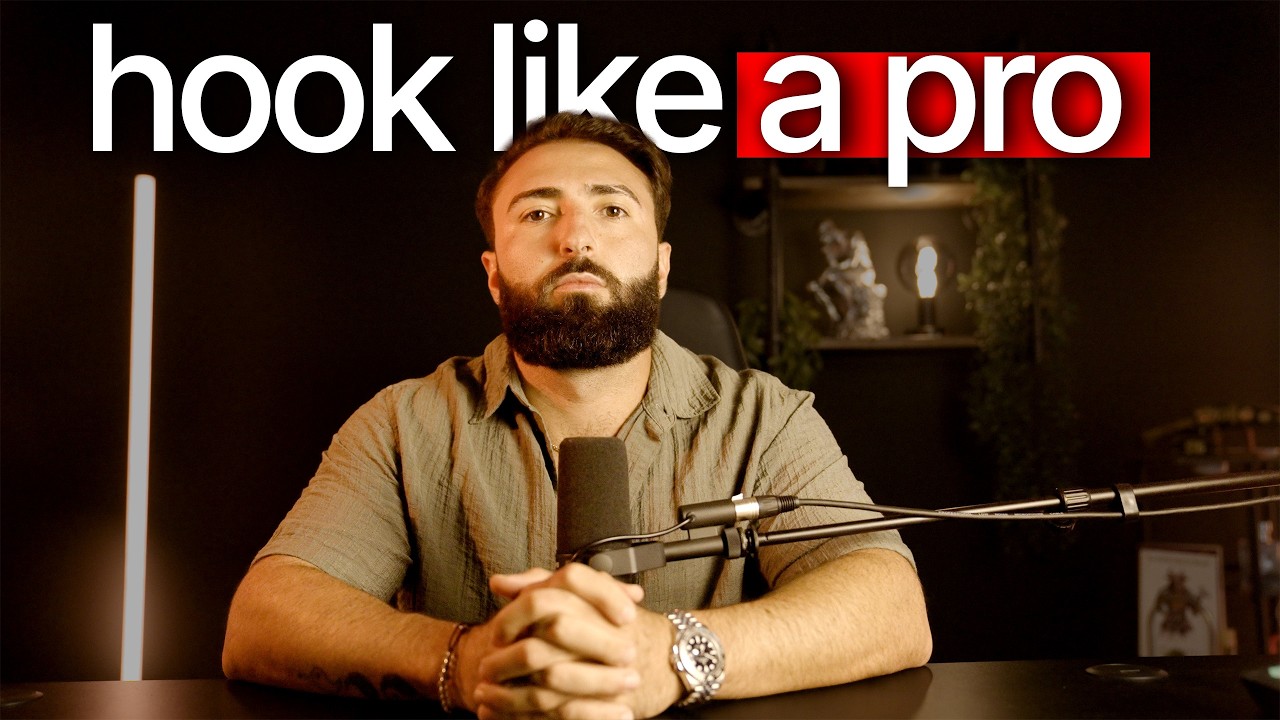
Kyle Fernandez, who runs a YouTube agency that's generated hundreds of millions of views, breaks down seven psychology tactics that keep viewers watching. He covers loss aversion hooks, the Zeigarnik effect for suspense, authority layering, curiosity gaps, emotional language, scarcity, and consistency principles. Production quality matters less than stacking these psychological levers throughout your script.
Chapters
Stop losing 90% of your viewers in the first minute. Most YouTubers have no idea they're leaving money and attention on the table by ignoring how human psychology actually works in making them stick around for your videos. And if you make better videos, chances are you'll make more money. Not only is this backed by human behavior, I've also owned my agency for 7 years now, and we've garnished hundreds of millions of views, tens of millions of dollars for all of our clients. And there's one thing that we've learned when it comes to marketing. In this video, you'll learn 7 psychological triggers that hook viewers, keep them watching, and make them act, and the real science behind why they work. Marketing case studies and YouTube examples that show in action the advanced applications that you can literally steal for your next video. You see, I used to obsess over editing, camera quality, and fancy intros, but none of it really fixed the brutal truth, which is if you don't understand why people keep watching, your production quality doesn't matter. And once I studied how advertisers, sales pros, and behavioral scientist get people to pay attention, everything changed. Now, these aren't hacks. These are frameworks used by billion-dollar companies and the world's most viewed channels. And now they'll be yours. Secret 1 is pain first. We all know everyone says you need a strong hook for a good video. Reason being is because humans care first about avoiding pain, then seeking pleasure. In fact, science backs this by the Prospect Theory, which was conducted back in 1979. And this study shows that loss aversion is twice as more powerful than potential gain. There's a famous quote that we've probably all heard, and it goes something like this: What we fear doing most is usually what we need to do. Tim Ferriss. To give you a real marketing example, pay attention to weight loss ads. They don't say get fit. They say stop feeling embarrassed at the beach. Or let's look at another industry like insurance. The ads don't say live confidently. They say don't fear leaving your family with debt, which is an emotional anchor. Let me give you a YouTube example. A bad hook would be something like, today I'm showing you 7 tips for retention. Instead, what I did was stop losing 90% of your viewers in the first minute. What you wanna do is open up your videos with mirroring the pain of a viewer. So when you make a video, you need to build it off of what is the pain point that this viewer is then watching me for that I will explain to them. Now that's using this principle live for you to feel. Next is the suspense anchor. The Zeigarnik effect, if you haven't watched my video, the thumbnail looks like that, watch it after this. But basically it says humans remember and fixate in incomplete information. And this was done back in 1927. And to put it in layman terms, Quite literally, people recall interrupted tasks better than completed ones. As Neil Armstrong once said, mystery creates wonder, and wonder is the basis of man's desires to understand. That quote he's referencing is exactly what the Zeigarnik effect is insinuating. Now let me give you some real life marketing examples. Think about the last time you went to the movies. If people still do that, they would show a movie trailer and never reveal anything. But all of a sudden you feel that you need to watch that movie. It's because they anchored the end in the beginning, leaving that gap of interpretation, which makes you want to watch the movie to figure out what you're missing out on. It creates tension in the brain in which you need to solve. And an easy way to do this into your videos is by planning your script backwards. Write the payoff first, then design the tease which forces them to want to stay because now they need to finish what it is that you just opened up in their mind. Stack multiple open-ended loops throughout your video. Let me give you another example. In this video, I stated at the end, you're going to learn tactics that you could use on your next video. In fact, rewind the clip. And a lot of these secrets we use for our clients. And in fact, I'm going to unveil how I'm using the secrets in this very video that you're watching at this moment. What I just did right there was one tactic that you may not even know. And by the end of this video, you'll know exactly what I just did right there. I planted a promise right at the start, which makes you curious enough to watch through, and hopefully I deliver on my promise. Now, the third secret is authority layering. This is very important. People defer to experts and signals of credibility. Even subconsciously they do, which if we rewind the clip, I've also owned my agency for 7 years now and we've garnered hundreds of millions of views, tens of millions of dollars for all of our clients. And there's one thing that we've learned when it comes to marketing. What I did there was show you why I was credible to be speaking on these exact matters, because it's something that I've actually done, which automatically builds credibility in this video and builds trust in why you're watching me for the things that I'm saying to be true. There was an authority principle study done which basically showed that perceived experts increase compliance. A real marketing example would be something like, 4 out of 5 dentists recommend. In fact, Harvest Business Review articles gain authority through the brand even when the ideas are very simple. But who cares about that? Let's talk about YouTube. Easy way to implement this into your YouTube videos: instead of saying, I think, state real data, real results, any studies that you could find backing what you're saying, which would automatically creep that authority inside the vision of the viewers watching you. It's basically borrowing authority from cited academics, like different studies or quotes, kind of like what I've done a couple times throughout this video. Research published in Psychologist Science found that uncertainty can actually increase engagement. This isn't bragging, this is proof. This is why I am saying the things that I'm saying, but then backing it up by true studies that endorse the things that I'm claiming. Now, how can you implement this? Let's give you an example. In fact, in this exact script, I said, these are hard-learned, research-backed tactics that top creators and marketers use to dominate attention. I'm showing you I'm not guessing. I'm teaching from real marketing and science. Now, the fourth secret you want to be using in your videos is very important. This one is the curiosity gap, and the definition of that is basically this: curiosity arises when people know a little but not enough. And the science proves it. In fact, back in 1994 when I was born, there was a theory called the Information Gap Theory, which shows curiosity spikes when we're aware of what we don't know. And there's a very famous quote in marketing, and if you haven't heard it, it's something like this: curiosity is the wick in the candle of learning. But let me give you some real marketing examples. BuzzFeed said 17 Secrets Airlines Don't Want You to Know. The headline gives you partial info, but it also highlights the gap of things you may not know, which will ultimately make you click. Now, how you can implement it inside of your very own scripts. In fact, Let's take this script. In this script, I said, in this video you'll learn 7 psychological triggers that hook viewers. I'm literally using the information gap by promising a list but not revealing all 7 immediately. Have you ever seen YouTube videos where people have a list of bullet points but they blur out the things? That's creating an information gap. It's giving you a little bit but knowing you can learn a lot more by the end. So there's this gap in which you know a little but you don't know everything, but if you get to the end, you'll know everything. Now, the 5th secret is an emotional language. If you haven't watched my video on dual theory, check it out. The thumbnail looks like this. But basically, you want to operate off of System 1. If you don't know what that means, basically your viewer's brain is wired for fast emotional reactions. That's what System 1 means. And the rational thinking would be System 2. In dual process theory, which was conducted back in 2011, this found that our brains operate in two systems. One is emotional and automatic, and the other one is thought out and methodical, which is System 2. You want people to respond in system 1 because now they're having instant click on your video, causing you to get the view. And if your videos are good enough, then they'll stick around and then you get all the benefits of getting that click. Let me give you some real-life marketing slogans that maybe your brain can identify when I say them. Do any of these ring a bell? Got Milk? Think Small. Or better yet, you definitely know this one, Just Do It. They're all short but emotional, and emotions are evoking to action. Let me give you a YouTube example now. Now in YouTube terms, what you wanna do is avoid avoid the abstract. So let's take this video for example. One thing that I wouldn't do is say improve retention. Instead, what I would say is stop losing your viewers. Now let's take that a step further. What you don't want to do is say something like strategies. Instead, say something like this: secrets they don't want you to know. Reason being is because now we're operating off of System 1. Strategies is very anecdotal and allows for rational decision-making, but when it's secrets, like something being gatekept, This implies System 1 to be activated because people don't like secrets being held from them. What you want to do inside of your scripts to make sure that you're hitting these points is you want to have punchy, short, emotional lines that hit System 1, then justify with rational data. So open up with emotion, close out with logic. The emotion gets the attention, the logic gets the view. Let me give you another example. Stop losing viewers. This isn't guesswork. It's proven psychology. What I did there was use emotional words to reinforce System 1. Now let's take a look at my script For example, I said, "Stop losing 90% of your viewers." I'm deliberately using fear-based emotional language to hook you immediately because if you're watching this, chances are you're trying to make good videos or you want to improve your videos, and the only way for you to listen to me is to point out a problem you're probably having. Now, secret 6, this is the scarcity and urgency. You want to drive action now, and the way to do that is have limited access or increase the time perceived value, and this will motivate immediate action. In fact, the scarcity principle, which was conducted back in 1984, where people assign more value to things perceived as scarce. I know you for sure heard the quote, people want most what they can have least. Let me give you real marketing examples. Booking.com would say something like, only one room left at this price, or a Black Friday sale with a countdown. Let me give you a YouTube example. Instead of something generic, Here's a tip you would want to say. Most creators will never learn this. Or better yet, something I did in this video: use for your next upload or lose your viewers, which I referenced earlier. You can use this in your next video. How to apply this? You basically want to frame your knowledge as rare. An example would be, I spent months testing this so you don't have to. Or create time pressure. Don't wait until your next video bombs. Now, how can you implement this into your scripts? If we rewind my video to when I anchored you until the very end of the video, By the end of this video, you'll know exactly what I just did right there. That is a great demonstration of how you could see this would work. I'm using urgency to tell you that there's something rare for you now rather than later, because you could use it for your next upload. And the 7th secret is commit and consistency. You want to turn your viewers into participants. Reason being is because once people commit, they're more likely to stay consistent with that commitment. Because why? People never like to be wrong. So if I subscribe to your channel, you popping up on my feed is giving me a positive feedback loop in my mind. I subscribe to this person for a reason and I believe that they're valuable. So your videos by default, next time I see them, probably have something of value that I should be watching, which is why you always want them to get a commitment. And this study was done again back in 1984 called The Consistency Principle. Small early commitments lead to large future ones. As Aristotle once said, we are what we repeatedly do. Now, a real marketing example would be something like petitions asking for a signature before before they ask for a donation. Or better yet, we're all marketers here, most likely. Email opt-ins lead to buying courses. Once people opt in and take an action towards an ended decision, typically they want to know that what they did was right. So if they gave you their email, chances are they probably think that there's value in there, or they're just trying to copy your marketing tactics. Regardless, it's garnishing attention, and they don't want to be wrong by giving you that attention. So what they're already doing is assuming What you have is perceived value in their eyes. So what you could do in your videos is ending it off with something like this: subscribe so you don't miss out on the latest strategy that can help your next video. Make them feel like they're gonna miss out if they don't subscribe. And once they subscribe, now they've already committed, and a commitment is normally backed by some perceived thought of them being right. And the right is this person will give me value later. And you want to do this about 2 to 3 times throughout your entire video. And the way to do this is at least plan 3 or more engagement points throughout your entire script. These micro-commitments prime the viewers to watch longer and potentially subscribe. As much as people say they don't like it, they actually love being told what to do. Remember, engagement isn't an ask. It's a psychological contract that increases retention and loyalty. For example, as I end the video, I would say something like, If you want more real psychologically backed strategies to grow your channel, hit the subscribe. I'm inviting you to commit so you feel consistent in coming back for more, but I'm also priming you for information that is backed by psychology that could potentially help you in the future. And once you hit the subscribe, now you made a commitment. Even though it's a micro-commitment, enough micro-commitments lead to a very large commitment. And to put all this together for you today, you didn't just learn 7 tips. You learn science-backed persuasion, which is pain, which hooks first. Then you want to go to open loops that enforce attention. And once you have the attention, you need to layer it with authority that ensures trust, which would be me referencing my business all about exactly everything I'm teaching you. Fifth would be the curiosity gaps which demand closure. No one likes a text saying we have to speak, but then you got to wait a long time for that talk to happen. You need closure now. The next is emotional language. We want to make sure that we're hitting that system 1. Then it's scarcity and urgency, which drive action. And if you're following along, the last is commitment and consistency that turns viewers into subscribers. And if you haven't already, subscribe to this channel or you'll miss out on tricks that could potentially explode your YouTube channel. And everything I'm saying isn't tricks or ideas. These are rules based off of human behavior. And even if you don't learn any of them besides one, Just one is enough to increase what you're doing now and garnish way more viewership and commitment from your views. If you use all 7, you'll make videos people literally cannot stop watching.








