Building Deep Trust as a Foundation of Team Effectiveness [Christopher Michel]
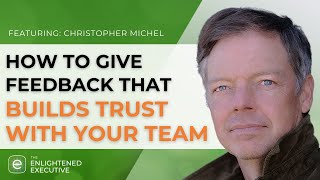
Christopher Michel founded Military.com and Affinity Labs, got fired as CEO after the dot-com crash, then returned to rebuild the company. He talks about overcoming insecurity, hiring for fit, giving constant feedback across all levels, and his current work as Artist in Residence at the National Academies using photography to spotlight scientists.
Chapters
Hi, I'm Susan Drum and welcome to the Enlightened Executive, where your personal evolution sparks your leadership evolution. Each episode we feature groundbreaking techniques and strategies to help you get the edge in personal and leadership effectiveness. I'm excited to introduce my enlightened executive guest, Christopher Michael. Previously, Chris founded and sold two technology companies, Military.com and Affinity Labs. He's also the founder of Nautilus Ventures, a seed venture fund. And now Chris is the inaugural artist in residence at the National Academies of Science, Engineering and Medicine. His appointment is focused on leveraging visual storytelling to elevate the work of scientists, engineers and medical professionals in society. Chris has been a member of the President's Circle and is currently serving as an advisor to the Climate Communications Initiative. He's an accomplished photographer who's documented humans working in extreme locations like north and South Poles, Mount Everest and at the edge of space aboard a U2 spy plane. He's also had the opportunity to photograph many global leaders, including the 14th Dalai Lama. So welcome Chris.
I'm really glad to be here. What a bio makes me sound really old.
You started at age four, right?
Thank you. That's what they always say to the old people.
And I love your photography work. It's absolutely extraordinary. So we're going to get into that. We're going to talk about your journey, which is incredible. Maybe we could start by me asking you what helped you the most in your journey to become a more conscious leader.
Well, it probably like a lot of people's growth that happened through something problematic. So in 1999 I started a company called Military.com, it was basically Facebook for the military. If I hadn't just focused on military people, I guess I'd be Mark Zuckerberg. So that was a mistake. But we raised a lot of venture capital and In March of 2000 the bubble burst and we slowly ran out of money. I was 30 years old and the board decided that they needed a more accomplished CEO. So they brought in a gray haired CEO and basically fired me. And I remember vividly sitting in my back then, people had offices in my very decorated office and this guy from Mayfield came in and he said it might be best for you not to come around here. And so that was it. So not only was this a job, but this was my whole identity and my life. I had no money and basically I went swimming and I went swimming every day for about four hours for six months and thought a lot about what went right and what went wrong at the company. And I didn't just get Fired because we ran out of money. I think part of it was I was really an inexperienced leader. And we can talk about the details of that experience, but at the heart of it was a realization that I had failed to build the kind of trust and excellence in an organization that is required. And that was a sea change for me to have that realization. You know, I'd been in the military and I was successful in the military and I went to Harvard Business School. So I sort of thought of myself as somebody who didn't need that kind of, I don't know, leadership lesson. Yeah, big leadership lesson. And the truth is I did. My insecurity got in the way of me being the kind of leader that the company needed.
So yes, and I've seen that a lot with companies as they grow, you know, great to be the founder, but then if you're not paying attention to where you need to grow as a leader, as you scale, that comes back to haunt you. So and so what did you do with that? You actually let me back up. What do you wish you would have done in terms of your leadership? How would you, knowing what you know now, how would you have led differently?
Well, it's interesting because I'm very lucky in the sense that after about four or five months, the gray haired CEO was having a lot of problems at the company and we were going to shut the company down. And so the board asked me to come back to basically shoot Old Yeller, if you will. So I came back and myself and my co founder Ann Duane, who's this incredible human, we didn't shut the company down, we turned the company around. So I got a second shot on goal and we did it right the second time. And then I did a third company or a second company and I built that company the way I should have built military to begin with. So we were able to fix military through many years of difficulty. And the main, I think the main difference is to set aside your insecurity and try to help others. So basically building a culture of trust and excellence. And you know, when you're really insecure, you need to be right, you know, you need to be the person has the last word. And when you're more secure and you have a good team, you can work on helping them be the best leaders they can be. And so once people on your team believe that that's true, and there's a great book called the Thin Book of Trust, which I highly recommend that talks about this. But once you built a team like that, anything's possible when you give people feedback and they don't trust you, they take it personally. When I give you feedback, Susan, and I say, here's what I observe, and you know that I'm in your corner and I want to help you be great. You know, you take that feedback more effectively. Right. Because, you know, I'm here for you. And it was that transition. So. And, you know, it sounds simple, but it is simple like that, you know, if you can build a great team, and that has a lot of elements to it, which is one of them is to make sure that you're only bringing people onto the team that are the right people. You know, you're not afraid to get rid of people that are a problem. You're very direct with people. But once you've built that team that trust you and you trust them, anything is possible. Anything's possible. And I've seen it over and over and over again, and it's really not that hard. But I think our genetics or culture get in the way of doing it. You know, being a little bit older is often times a little more helpful, too, because you've observed a lot of things. So. Yeah.
And you've seen how your insecurities then can get in the way or where you're putting your attention. So if your attention is on, like you said, really growing your team, and they can feel that by, you know, you've invested in them, you've been direct, you're trustworthy, all of those pieces, but they know you really, that you have their back, that's going to make all the difference.
Well, it's interesting. Haven't you observed, like, all the manifestations of insecurity with successful people, like the sports car, you know, dressing flashy, trying to be right, needing media attention, all of these things, you know, when you're younger, maybe it just isn't as obvious, but when you're older, it's so obvious that they're trying to overcome something. And I've been there. I've done all of those things. But as I've gotten older, it's become very clear to me what's going on, and I try to avoid it. And, you know, what you really realize is when you help other people, not only do you feel great, but the organization is more successful. And in the final analysis, I believe building a company isn't about a financial outcome. Building a company is about going on a journey with people that you respect and admire, where you build a lot of great life experiences. And you look back at it and you think, what an Amazing group of friends and colleagues I have and I've built in my life. That's the asset that mattered. And I'm really lucky because many of my team members have become CEOs, and I'm in touch with many, many of them. And that's the asset, you know. But, you know, internalizing that when you're 25 or 30, sometimes hard to do. But I think people today, younger people today are wiser than I was.
So, yeah, I think I've heard this phrase, you know, what your experience is when you're growing something is what the same experience will be once you get to your supposed end goal of IPO or whatever that piece is. Were you enjoying yourself along the way? Because you're more likely to have that outcome at the end. And what was your experience in the deeper level of experience of building something with a group of people versus Absolutely.
Well, you know, everyone talks about it's not the destination, it's the journey. We've heard that a million times. It's the road to Ithaca, which I, you know, we've heard that. But, you know, I was lucky to be a Henry Grant Fellow at the Aspen Institute. And basically, you know, every year they pick, like, 20 people. And all of these people have gotten to the top of their mountain or their first mountain, and almost all of them found it incredibly destabilizing because, you know, once you have that objective, like, I'm climbing Everest or I want to go ipo, you stay very focused on it, and often to the exclusion of other things. And when you realize it, that's when it becomes incredibly clear that that accomplishment really doesn't mean very much and actually doesn't solve whatever problem you were hoping it would solve. And it's. It can be a very big challenge for people. So you can wait until you get to the top of the mountain, but maybe it's better to just realize that it won't deliver the goods. The only goods to be delivered are in our hearts and our minds, you know, so.
Yeah. And how did you come to the realization that you needed to shift your leadership? Obviously, you got hit with this. You thought a lot about it. Was there anything else that helped you in your journey to then come back, let's say even in Infinity Labs, and do it differently?
Well, you know, this has been. I mean, that was now. That's almost 20 years ago. So I have, like a lifetime journey of becoming Buddhist and seeing the world differently. And a lot of that came through travel and photography. But early on, it really was self reflection. So, you know, I must be the only person that's been an artist in residence and an entrepreneur in residence at Harvard Business School and the artist residence at the National Academies, and that's pretty diverse. And I asked the business school, why did you want me to come back? And they said, because you had time to reflect. And I do think it's that reflection where you aren't so busy that you can think about what worked and what didn't work. But then I think once you start doing it, once you start helping people as your objective, it feels great. You know, the Dalai Lama says, you know, you shouldn't be doing things because you want karmic points and it will somehow help you with coming back in a better form. No, you should do it because it will make you feel better. Well, both are good, right? Both are good. It's good intrinsically to help other people. But you get the benefit, right? You get the benefit when you help other people, especially when you realize that's really the objective. And, you know, I have lots to say about how to hire more effectively that way. You know, for example, in the old world of hiring, it's kind of a game where you offer trick questions to the candidate and they try to answer them, like, what's your greatest flaw? I work all the time. I have no personal life. You know, it's like the flaw that's.
Actually like, yeah, I love hearing that.
But I'm so good that my fellow colleagues, you know, are envious of me.
Yes, yes.
Right. The. Yeah, there's a name for that. I don't know what it is, but. But there's another. There's another way to interview. I'm just using this as an example. And that is I say, hey, Susan, this has been my experience with team members, right? This is the kind of culture we have at the company. It really is people that are really passionate about what we're doing, you know, and the worst thing that can happen in this interview isn't that you don't get the job. It's that you get the job. And it's not the wrong. It's not the right job for you. It's not going to work out. Right? It's not going to work out. So let me help you. Let's work together to figure out if you're going to be great at this job. And that change, you know, that. That actually is. Is, in a way, my relationship with everyone on the team. Let's figure it out for you. Because if I figure it out for you, we figure it out together, it will be way better. So the best thing that can happen. Interview. Well, the best thing is the perfect fit. The second thing is people say, hey, this isn't for me. And, you know, this is going to sound a little controversial, but at least in my startups, being passionate was a requirement. You know, if, and I would always say a new hire orientation, which I think is the most important thing at a company, I'd say one day every single person in here will lose passion for the company. You're going to lose passion because a, something's going wrong and maybe we can fix it. So you should tell me because I'm going to try to fix it with you because I probably won't like it either. But two, at some point you're going to just realize that it's time for you to do something else and I'm going to help you. It's no big deal. Right. And that's true with the CEO, and it's true with the person that works at the front desk. It's true with everybody. And it's just an honest dialogue of us as humans, not just workers, you know, we're not.
The transparency is amazing in that. Right. And it's like, it's okay. And that way, I would imagine you're not blindsided then when someone wants to leave because you've already been in conversation about what they, you know, what's working, what's not. And I imagine at the same time, you probably don't lose that many people because it's refreshingly transparent and connected.
Yeah. And as the company gets bigger, and I've seen this, you know, the thing that the, the problem in society today or in business that we don't talk about is the kind of situation for people who work for bad middle managers. Think about, you're at a big company and let's say you need your job and you have a bad boss. You know, boards don't see those people. CEOs don't maybe know them. And this is a real problem, you know, at the executive level, all those people can get other jobs, you know, and. But there's a lot of people who are really led very, very poorly. And, you know, this is one of the things that I really talked about. And, you know, I had a method for my, with my team, with my dark reports that worked and I'll share it. Basically, the board, every board presentation was the same. It was sort of like, here's what I said I was going to do. Here's what we did. Here's why there's a difference. Here's what's working, here's what's not working. Here's what I need your help with. It's pretty straightforward. That's every board meeting I've ever been to this way. I did this with all my direct reports and I required them or asked them to do that with all of their direct reports. And it's important to have this checklist because especially like in technology or some other areas, not everyone has the same communication skills. So they may think something's going on that may not be. So if they have a little checklist, they can ask people like, what's not going well? What can I help you with? And I would ask my direct reports, hey, what do people say? And I would do skip level meetings with people. But basically it was, it was out of love for the team. I love the team. You know, I really loved the team. And I think this is available to all of us if we want it.
Yeah. And I think there's an opportunity in that conversation. I've been putting together for some clients an engagement plan. And part of those questions are, how's it going between you and I? You know, what would make me a more effective leader?
Yeah.
Is there anything I could be doing differently in how I give you feedback or how I delegate? These are types of questions that leaders don't often ask. And if you don't ask, you don't know. And it provides an easier window to say, well, you're a horrible boss. Right. It's like, what specifically? Let's, let's talk about how I'm delegating. How's that working? Or let's talk about how I give you feedback. And I think it's an easier place for. Imagine like having to give upward feedback is not easy.
You're 100% right. And you know, I love that you're doing that. And you know, one of the things that a lot of companies rely on now, the more enlightened companies have 360 reviews. I'm going to say another controversial thing. I'm not a huge fan of reviews. You know, I think it should be every week you're giving people feedback and they're giving you feedback. And I think that this question of creating space to say, hey, what's working and what isn't working? Right. And because, you know, the 360 feedback thing is it kind of, I don't know, it's, it's, it's intent. It's intent is good. But I think in practice, people don't know how it's going to be used. Is it risky? It's written down, is there any upside and giving any negative feedback. But if you create a space where you're like we're just trying to optimize to make it better, what's going, what's not working here for you? You know, if you say it in a way that's not like threatening to people and they positive like we're both on the same side. I want you to be happy. Right. I want you to this to be your best job. What's not working? You know, where, where's the downside? I guess the downside is they're giving you a lot of feedback about stuff they don't like you're doing. But you know, I mean and you always get outliers and some people, yes, that sort of thing. But that's, you know, don't optimize the system to protect against the outliers. And I think there's too much of that in business. All these HR manuals, it's really about how do we protect ourselves against a very small percentage of people. Treat it like adults and you don't.
Have to respond right away. Just collect the data is what I say. Think about it, look at it in aggregate across all your direct reports and your employees and then decide what you're going to do. And if you need to address and I think people really respect like huh. I'm going to really think about what you said and, and our follow up conversation. I might have some ideas or thoughts for you.
Right.
And that is totally fine.
I totally agree. I'll give you an example of a manifestation of a culture like this. So we at Affinity we had a great team and I remember we hired a kind of big time head of marketing and one day the one of our early, early employees, very junior marketing woman said I'd love to speak with you. And I talked to team members all the time so it's not a big deal. And she said hey, I don't think our head of marketing's um, the right person for the job. So this is like five levels above her.
Wow.
You know, why did she come talk to me? She was like 23. She came to talk to me because she felt like it was her company and everyone had an obligation to perform. Everyone. And this is a very interesting cultural idea which I believe in. Everyone has to kind of earn their job. They don't have to earn their job every day because everyone has a bad day. And if you're really Good. You don't have to even earn your job every month. It may be that I understand that you're going through something difficult or whatever it might be. I trust you to do the right thing. But turned out she was right. She was right. And I had a conversation with this person and he even agreed that he wasn't the right person for the job. And I just thought it was a cool culture where people hold everyone accountable to doing good work.
And had you seen that before or was it almost confirmation, maybe you were on the fence about this person and the fact that. Or where you're just not aware of it.
It's a good question. Like 16 years ago. So all I really remember with those parts. But I think she was the first person that really, it really hit home that she was right. And I also trust people, you know, I trust people. Tell me. It's an interesting thing because if you have like employee, if you treat people like employees, where you're like, here are the hours and here's what you have to do. And like don't be goofing off at work. You got a certain kind of behavior. If you have other people that feel like owners of the company, they're expecting it from everybody. They want to see, you know, they're working hard. They want everyone else to be working hard too. And we also, you know, I used to put up a two by two matrix of the mistakes I made at military. And the two by two is, you know, anyone who's a former consultant has a matrix. Right. So my two by two is capability and fit. So if you can imagine, the top right quadrant is the perfect employee. It's like they're brilliant and they're great with people and they're amazing to your a person. The bottom left is evil and not good at their job. Okay. These two quadrants should be straightforward. Right, Right. Get rid of the people on the bottom left quadrant. The two quadrants that cause people a lot of problems are the really nice person that's not great at their job. And this is the really tough one, especially in Silicon Valley. But maybe anywhere the biggest, the brilliant contributor that's toxic in the company.
Yes. And have had to coach in both those arenas.
Yeah, yeah. Right. Well, you know, it's interesting because what I've observed. Well, so if any of those three quadrants aren't managed properly, the top right quadrant leaves. They eventually don't want to work with those people. So those two quadrants cause people a variety of problems. And I would talk about it, you know, because when you're in a new higher orientation, everyone knows people in all of those quadrants, everyone knows and they don't want them. And by the way, even when you talk to employees and you say you're our top salesperson, but nobody likes working with you, you know, this is a problem and you're not going to get to stay. And it's not only going to be a problem that this company, it's going to be a problem at all your companies. Let's solve this problem together. And if they don't want to do.
It, well, then you have your answer.
Yeah, you have your answer. And I do think mostly people want to be better, but there is this kind of ego performance person that has been allowed to perform and also not be a good human being to others.
Yes.
I'm not a.
Is so much more direct. Like here it is.
Yeah.
And because I've had. But, but he's, you know, I'll hear their boss say, the leader CEO say, but he's so good in XYZ and we can't replace him. And no one's as good at this. There's all these excuses why. And they're not seeing that they get that payoff. Right. Of the individual contributor. But they're turning a blind eye to the cost of your culture and the rest of the organization and other. Exactly what you said. Other top players that are going to leave. And so it's prefacing the payoff over the price. But really I say it's not being totally present or conscious of the full price you're paying by keeping that type of leader there.
What do they say? Graveyards are filled with lots of people we thought we couldn't live without. So I do you know what the, you know, I'm the gosh, I'm the now longest serving outside director at Dale Carnegie. So I've been there for over a decade. And Dale Carnegie, this is our business, right. We spend a lot of time talking about EQ and leading and making people feel good. But I'm curious about, you know, by the way, that quadrant for me at least in tech has been salespeople and engineers. Those are the two areas where there's like, you know, they can be incredibly skilled and then there may be some personal problems, personnel problems in there. And I do think if you can build this kind of rapport with people where they know you have their back, they may try to be better rather than hit them with a bat, you just observe you, you help them observe their own behavior and how it Makes other feel. Yes. Most people don't want to. Don't say, well, I just want to be an asshole. Forget about it, you know.
Well, they think that that's how they have to succeed. They don't call it that. Right. But it's like, well, push comes to shove, this is what I have to do.
Yeah, yeah. And, you know, we've had some cultural icons. You know, people sometimes put Steve Jobs in this category. And I'm. I've talked to many people that worked with him, and there's not a universal view. Some people really felt bad about him, and some people really liked working with him. But if you were not a secure, incredibly competent person, you often didn't feel very good, you know, and this is important because we often say, well, then it's really the employee's responsibility. Well, you know, especially with our more enlightened views on diversity and inclusion. And when I say diversity inclusion, I don't mean color or gender only. I mean personality types. I mean introvert. I mean people that are different. That's an exclusionary view, which is, you have to be, you know, a varsity baseball player or I'm going to shoot you, you know. Well, there's a lot of great people who aren't varsity baseball players and can contribute a lot. Yes.
And in fact, you don't want the group think. You know, I talk a lot about cognitive diversity, which is having people with different perspectives because you ultimately end up making better decisions. But what can happen is when you have that, the team can have more conflict. So how do you more productively work through differences in perspectives and the conflict in a way that ultimately makes a better product, better decision, and making sure that you're not turning a blind eye to something because everybody thinks the same way.
Yeah. Well, you know, this boils down to, I think, something relatively straightforward, and that's having a kind of open heart and empathy for other people. You know, I've been on a lot of boards, and I used to tell my younger CEOs, you know, when you're in the elevator with somebody on your team, you better have your game on. And that game better be they leave the elevator feeling good, because if they don't, you've screwed up. Yeah. I was an admiral's aide, and it was interesting because I think about. We had. I think we had 200,000 people working for the Admiral. So I flew around in the jet. Everywhere we went, there was lots of stuff going on, and the Admiral is making lots of important decisions. In the final analysis, my reflection on that experience is. The most important thing that Admiral did was to write a letter of thanks, give a medal, or just acknowledge someone. The most important thing. More important than the mission. More important than the mission. Because this affected people's lives, real lives, and they remember it. You know, you don't know. I mean, Susan, when you say something to people, they probably remember it. And what is that worth? A lot, right?
Yes. Yes. I think some leaders find that both empowering but exhausting. They don't realize how much they're always on a stage, but that is. But you are. You're being watched very closely, what you say and what you don't say in small environments, like an elevator ride. And so I think if you're truly in your heart, an empathetic person who loves the team, that comes naturally. If you're having to sort of fake it, that gets exhausting after a while. And eventually you'll have to grow in those areas or it will show up.
Yeah, I mean, it's a really interesting question, like, why are you faking it? And there are some. There's a very small number. It's like, why are you skipping the vaccine? There's only, like, one reason. You're, like, allergic to the vaccine materials. You know, that's the only possible answer. The only possible answer is if you have some. Yeah, I don't want to say mental illness, but you're way on the spectrum. You're just not aware. Biological. I don't know. I've met a few people like that. But it's your job to be good. Yeah. And I understand that being a CEO is a very difficult job. I've had that job. I've worked with a lot of people have that job. But there are way more difficult jobs, like working for someone in middle management, where you need that paycheck every single month. And this job pays for your family. That's a more difficult job. So stop complaining, suck it up, and be the leader that the team needs you to be.
Love it.
Love it.
Well, what's next for you in your enlightened journey?
Well, the main focus of my life right now is to tinker a little bit with society. So over the last couple years, I think we've all observed, I guess what I would say is people that are less than heroic as role models, or at least our television personal personalities, Kanye, Trump, whoever you might think of.
I.
Don'T know if they're the best role models. And, you know, fortunately, I've had a chance to work with a lot of scientists, and there's a lot of great people that are working in service to others. In a way, that's my. When I think top of society, it isn't being a billionaire that's on top of society for me, it isn't being a famous television star, even if you're great, it's are you working in service to others? Those are the people at the top of my list. And in sciences, engineering and medicine, we have many people think about the creation of the vaccine. I mean, really a miracle. A miracle. Not just a scientific miracle, not just a miracle in medicine, also an engineering miracle to distribute all of that stuff. So there's a lot of those people out there, but they're not seeking a lot of attention. They're not working with caa, they're not on TV all the time. And for the last six months, my primary focus has been to find these people and help tell their stories. So I'll give you an example. Early on, I wasn't traveling, so I was photographing a lot of COVID scientists. And fortunately in the Bay Area, we have lots of great ones. Monica Gandhi, Bob Wachter, Diane Havler. And these are UCSF doctors. And I remember photographing Diane Havler. And Diane is well known in Covid, but it turns out she was really an AIDS doctor. So she came out, I believe, in the 80s to work at the General as a UCSF professor. And in the 80s, when you got AIDS, you died? Yeah, you know, that's the world she lived in. It was basically helping people wrap up their lives and live as comfortably as they could until the disease took you. And she helped with her team develop that series of cocktails that saved millions of people's lives. How many people know her name?
So, Right.
No one. How important is she? Really important. Right.
And so what do you do? What's your mission when you find someone like that?
Well, I go and spend the day at UCSF, actually, at San Francisco General, Ward 86. This is the city hospital. So she's a famous professor at ucsf, University of California. She's working in an old city facility where you go if you don't have insurance or you get hit by Someone. And Ward 86 was ground zero for the AIDS crisis. So I do a zoom call and I say, hey, I'm calling from the National Academies, and we think what you're doing has historic importance. And she agrees. And we go spend time together and then we walk around and she shows me things and I try to help tell her story through photographs. And my friend O Malik is helping write a story. So you know, and the one cool thing about these photographs, unlike a lot of other photographers work, I'm giving these photos to the scientists, to the institutions, to the Nobel committee. I photograph lots of. I photograph Jennifer Doudna, Wikipedia. If you look, those are my photos of her. So I'm flooding the machine with content and photographs and stories of people that we should know about that are great role models in society. So honestly, yes, I'm giving back but it's really the most fun because I get to hang out with cool people and hear their story and learn a little bit about all the wonderful things happening in the world. I'm an optimist. I see wonderful things when I look at the world. Yes, we have a lot of challenges, but we've never lived in a time with more promise and hope. I'm just lucky to be there. I'm heading in November to photograph Frances Arnold who's a Nobel laureate, who's Biden's co chair of the Presidential Council on Science and Technology. Then I'm going over to JPL which is at Caltech to photograph Jennifer Trosper who is the Mars Perseverance Rover boss. This is cool.
Yes. Well you just described also why I even started. I loved your description because it's why I started Enlightened executive. I wanted to bring to light amazing executives who are doing cool things in the world and to help people understand their journey, that it wasn't necessarily like you were just born this way. You've been through trials, you've learned and I think being that level of enlightened leader, what did you have to learn about yourself and what are you willing to talk about in a vulnerable, much more vulnerable way is something every leader could use. More role models and more examples of.
So you're the perfect person to be doing this. I love this. I can't wait to see how it all evolves.
Yes. Yes. I really appreciate you coming on. If people want to learn more about your incredible work and the stories you're trying to tell, where can they find out more?
Well, I'm on social media so they can go to Twitter. C H R I S M I C H E L and basically everything's linkable from there. Or they can look at my photos@christophermichaelmichel.com.
And you are an incredible photographer so you definitely want to check out some of the work and some of the incredible. I love your picture from space. That's one of the most mind blowing images I've seen.
Jeff Bezos so well.
Thank you so much for being here, Chris. I really appreciate the time honor.
I love being here.
And if you like this episode, you're not going to want to miss my interview with Brittany Hodak, who's teaching leaders how to improve engagement, boost retention, and create a company that's more attractive to new hires through her superfan method. Let's lead the way. Hope you enjoyed today's episode, and I'd like to point you to the next important step. Hit the subscribe button and the bell to get notified when we release new content. I'll see you on the next episode of the Enlightened Executive. Sam.
More from Susan


Why the Biggest Doors Open When You're Not in the Room | Michael Roderick & Susan Drumm





The Simple Audit That Adds a Human Touch to Every Customer Interaction #shorts


