Delivering Truth with Compassion with Matt Hudson
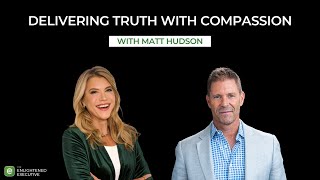
A YouTube interview (The Enlightened Executive) with Susan Drumm and guest Matt Hudson. Hudson recounts his shift from ego-driven, results-focused leadership toward values-driven leadership centered on "truth with love." He emphasizes speaking truth compassionately, immediate addressing of issues, honoring personal values in hiring/firing/expectations, using business as rapid feedback for growth, and surrounding oneself with coaches and spiritual practices. Practical advice: list avoided truths and start honoring them; primary contact/resource: coloradohomerealty.com.
Questions this video answers
coloradohomerealty.com
A free 5-minute quiz at susandrum.com
Chapters
Foreign.
Hi, I'm Susan Drum and welcome to the Enlightened Executive, where your personal evolution sparks your leadership evolution. Each episode we feature groundbreaking techniques and strategies to help you get the edge in personal and leadership effectiveness. This episode is brought to you by Meritage Leadership. At Meritage, we strengthen leaders and empower teams to achieve high performance. Go to meritageleadership.com to learn more. Are you curious about your own path to enlightened leadership? Take our free 5 minute quiz@susandrum.com to discover your superpower and the roadblocks that could get in your way of effective leadership. With me today, I am thrilled to introduce Matt Hudson. Matt is an entrepreneur at heart, having founded six diverse businesses spanning the building and development, technology, mortgage, real estate. And what I love about him is beyond just profit. Matt sees business as a powerful vehicle for expressing purpose and making it a meaningful impact on people's lives. After years of traditional business approaches, he discovered a passion for surrounding himself with individuals dedicated to truth, love, leadership and creating a ripple effect of positive change. Known for his keen analytical and strategic thinking, Matt excels in inspiring others to dream big, uncover truths in challenging situations, and reevaluate the mindsets, stories and beliefs that hold them back. So welcome Matt.
Thanks, Susan. Happy to be here. It's almost like I wrote that bio.
I know, amazing. But it's so perfect. And this is why I wanted to talk with you because this is all about the leader's journey to becoming more enlightened and I think you demonstrate that very well. So take us through your journey. What were you as a leader or who were you as a leader earlier in your career and, and walk us through to where you are now.
You know, I mean, I, I think like most people, I started young and with an expectation of achieving results that were driven mostly by ego. I didn't see the. I mean, I always had this, as this innate part of me of a desire to do good and to be surrounded by people that I loved and to enjoy the work that I was doing and to have an impact on people's lives. And yet there was so much of my behavior, so much of my myopic focus that was so driven by, on the thing that I think is so pervasive in our society and that is to be validated by the results that were produced and that I, I would say that the juxtaposition of that has become the awakening or the discovery of my own personal passion and what I see in, in a lot of people, if not maybe everybody, which is a desire to be in service, to know that when we wake up every day, that we're having a meaningful impact on the world. To realize that the moment that the journey ends, whether that's in business or in life, that we're not just measuring ourselves by the commas in our bank account. And, and so it, it really became a deep dive personal journey. Once I achieved a certain level of success and I started kind of looking around like I think a lot of us do, and asking the question, is this it? Is this all there really is?
Yeah.
And is it another business? Is it another goal? Is it another achievement? Is it whatever, Whatever? And the answer was, no, actually it isn't. And I needed to go inward and, and really seek the answer to some hard questions that demanded the discovery of ownership of some beliefs, some stories and some patterns of behavior that I just been living unconsciously with, because that's what I was born with, what my family taught me, what society had molded me into, et cetera, et cetera. And I had just been unconscious of the thing that I had been, that I had become, that wasn't necessarily intentional. And I think that's the story of most people's journeys.
Yeah, I, I would agree. I, I mean, I've worked with a lot of founders who then take their companies public and, and they've achieved their dreams business wise, but they're still feeling unfulfilled and wondering, okay, I just do this again and start another company and what am I really doing it for? And that's the moment that sometimes it's a crisis for people because if they've hitched their sense of worth to that external event occurring, and the external event, they're blessed that it does occur. But then they realize it's actually not fulfillment of what they truly will sustain them over the long haul. That's where they get deeply connected to purpose and meaning.
Yeah, I completely agree. And unfortunately, my observation of the human journey is that it demands a moment of deep pain for each one of us for transformation to occur. And that pain is simply the recognition that our beliefs by which we have been living, whatever our journey has been up to that point, it's time for them to go. It's time for our beliefs to transform, because they were, I would say, for most of us at least, I think there's probably a very lucky few who, they just come out and they're totally on purpose their entire journey here, and the rest of us, we got to go through some transformation. I, um, it's, you know, the, the caterpillar Becoming the butterfly many times over, I think.
Yes, yes. And in each stage, there's something more. So let's talk about in addition to the mindset shift around focusing on a meaningful mission in the world versus just profit and bank account, what were some other mindset shifts that you went through in terms of being a leader and how you lead others in your team?
You know, I'd say most significant was truth with love. I think the way that I observe human beings is that we are all motivated by some negative things. The avoidance of or the seeking of validation and the avoidance of judgment would be one really big one. And, you know, whether it's nature versus nurture, it's deep in our DNA, I also think it's perpetuated by our society and all the experiences that we have. But what I realized, while I have trusting the truth as our number one value for our real estate organization, over the years, I have been able to unpack the layers of ways in which I wasn't honoring the truth. And for me, so much of that, and as I observe most other people, it's some element of avoidance because we as human beings don't want to disrupt relationships. There's consistency theory and there's, you know, our seeking the validation, et cetera, et cetera. And so for me, the learning to just speak my truth a hundred percent of the time, and I can speak it with love and compassion, but it's my truth was something that I discovered about nine years ago. And it became kind of the. The beginning of this thesis for me that leaders must honor their values. And I think that, you know, we have a precedent that's actually established in the United States as a legal precedent that our job as leaders, especially in publicly held companies, is to create a shareholder return that is priority number one. And the problem is that as I see it, that has actually become the purpose of business is to create profit.
Right.
And that what's so inconsistent with that is the discovery of and the living of an individual's values. And when I was able to look at the first, I don't know, 15 years or so in business, look back on it, I was able to see all the ways in which I had actually been compromising my own values. And as I discovered that and made a commitment to not going to happen anymore, and certainly values will continue to evolve and reprioritize, at least is my experience that as I reprioritize and as I honor those and I communicate them effectively, that I have zero hesitation and then speaking my truth, consistent with those Values. I also have zero hesitation in my hiring practices, in firing practices, in articulation of goals and vision, because they're mine. And what I think that so many leaders feel like their job as a servant leader, which I absolutely believe in, is to serve everybody else's values. And I think that is a broken part of how business works. Leader has to take a stand, and they have to say, this is what I believe in. This is what I stand for. Here's how we're going to operate. And if you align with that man, we're going to have a lot of fun. And if you don't, you should not be here. And that. That's okay, too. So I would say truth with love and compassion and the discovery of values and then honoring them every single day. And I challenge myself on this every single day. And how I show up.
Yeah. So I love this concept of truth with love. Tell me a little bit more about how that shows up, because I know leaders, I've heard them say, well, look, I know I need to create psychological safety, but I also need to hold people accountable to results. And sometimes in their mind, those seem like polarizing ends of a spectrum when they don't have to be. And a lot of it has to do with, you know, people being either in pretense and afraid to speak what their truth is. But they. I think it's more the skill set or lack of ability to really do it from a place of love. So can you share a little bit more about how you go about that? And even if you have an example of where you've had to do that.
Yeah, I mean, I think it's. First, it. What's coming up for me is that it transcends the old paradigms. That's what the commitment has to be. We've got to realize that our command and control systems actually have not worked very well, or they work to a certain point. You know, the. The name of your podcast is the Enlightened Leader. Like, we're talking about an evolution of our consciousness in the way that we actually lead in the environments that we create and the cultures that we're part of. And. And so that requires a willingness, I would say, to look at everything that we've been taught and to realize that maybe the old models have some real significant value, but maybe the way that they're deployed need to change a little bit. And one of the things that I learned was that truth was always given and received with judgment and resentment. It's part of the environment that I grew up in it's part of sports teams and teachers and, and ourselves. Oh my gosh, look at what's happening in our society right now. That truth is always blaming someone else and that there's such a. And I would say that this is the, the selfish and the personal freedom for any leader. And that is that if you envision communicating something that feels hard to someone else, but you allow yourself to feel love first, then it doesn't become hard anymore. And so you get to have the experience that you want to have, which is being a compassionate human being and getting the results at the same time, while creating an environment in which someone else can hold themselves accountable. I don't believe that I can hold anybody accountable. I can only choose to execute on the consequences that are associated with whether or not the individual holds themselves accountable. And my job is then to share with compassion whether or not I believe the person is operating in a manner consistent with the promises that they've made. And when I do it with love and compassion, it's. It becomes this really powerful growth conversation and builds relationships. And sometimes even in the building of the relationships, it's a discovery of, boy, we shouldn't be working together anymore. And that, that's just okay, like, you're off to a new journey. I need somebody else who's going to fit this role a little bit differently. Most of the time I would say that it's a personal discovery for both people and it actually builds something really beautiful in the relationship.
And so could you share, if you have one, an example of how you approached a conversation like that? How do you, how do you create the foundation for approaching it with love? And how does that look different than maybe the old models of the way somebody would approach it?
You know, I would say I would start with what's my lead up to the conversation? The lead up used to be avoidance, frustration, resentment. It would be waiting for the right, right time or justifying and rationalizing, not engaging, etc. Etc.
Or is this really a big deal? Like, do I have to, do I have to do this? Like, maybe I just let this time.
Exactly. Yeah, maybe this will work itself out. And yeah, etc. And that became my brand of leadership. And I mean, the truth is that how we are showing up is our brand of leadership. And the shift for me is that the moment that something needs to be discussed, I bring it up and I, hey, need to have a conversation about this. And, and I think that what happens is over time, if the experience that everybody has had with you has been, shoot, Anytime Matt needs to have a conversation, I'm going to get yelled at. It's going to take a little bit of time to shift the culture around growth and, and truthful conversations. And maybe that occurred with me because I am a bit of a direct person and maybe I didn't always operate with compass and it was more of passive aggressive in some cases and then incredibly direct. The. But for me, the strategy now is anytime something needs to be discussed, I bring it up immediately and I don't worry about whether or not I'm communicating it in its perfect form. It might be at 2 o' clock in the morning that I'm sending somebody a text message saying, hey, give me a call in the morning. I want to talk to you about this. Here's something that came up today and I was just thinking about it or remembered we needed to have a conversation. Some people might think that's so unfair. You can't send somebody a text message at 2 o' clock in the morning. Hello. That's my truth. That's how I'm going to operate. And as long as I'm doing it with love and compassion and I'm looking forward to the conversation with the person, that's an opportunity for a growth conversation. Fantastic. Maybe it's an email, maybe it's something in passing, maybe it's I just pick up the phone and say, hey, this thing just came up and I need to talk it through with you. And and so for me it's about immediately addressing as opposed to letting things linger. And my gosh, I mean, if we all know 10,000, we all know 9,999 of them who have avoided the truth because there's something that feels scary about it. And when we can learn to step into always communicating the truth and always addressing the truth, then then we have freedom. And we may not always get the result that we want, but we at least have freedom where I just know that the other way robs people of freedom, creates a whole lot of tension and stress and resentment and, and contributes to a bad culture.
Yeah. And I think the important thing to remember is owning it as your truth. Right. Because we each as human beings, there are something like 60 billion inputs that we could take in and we're only taking in 20. So our version of truth is 20 of what's all occurring. Right. And I think there's a way to share that is sort of what I've seen helpful for leaders is to say just what you're noticing. I notice this, or I noticed this Occur. Did you notice that? Or how did it occur for you? And I think together we get to an aligned version of the truth as well. But you have to be able to start somewhere and own it as your truth. This is what I've seen. What have you seen? And I'm curious to know your perspective as well. And at the end of the day, if they differ wholly, then as the leader, I have to make the call on what. What makes the most sense here to move forward. Right?
Yep. Yeah, absolutely. Yeah. And I think if we take it out of the context of business, I mean, our. Our definition of trusting the truth is that we courageously express ours while. While allowing space for others to have theirs as well. Because the truth is absolutely driven by my values, my perspective, my expectations, as is someone else's truth. And again, we're seeing this across our society in so many different respects, and not that we want to go there in conversation. And so I think the humility of knowing, hey, I've got mine, let's explore what yours is. But we need to do so very regularly and not avoid it. And then when I show up in the conversation again, I don't hesitate at all. It's just, hey, here's what I'm experiencing. Here's what I'd like to see more of. Tell me what your thoughts are. Let's talk it through. And, you know, maybe I don't. I could still learn more from you and your strategies, of course, thus Maritage coaching. But I feel like there doesn't have to be a perfect method by which you are showing up as a leader with other people. As long as you're showing up with kindness and truth, it's when we maybe aren't honoring those as key behaviors, key characteristics of our behavior, that then we need better strategies. And the reality is, for me, it's really simple. Speak the truth, share with people what you see happening and what you'd like to see more of, and then allow room for a conversation.
And that always goes over better. Again, going back to purpose and meeting, if you're being driven by making the meaningful difference in the world versus something related to ego identity or self image. And that's where we get caught. So we're not actually, we're, you know, if we speak the truth from that angle, it's going to show up very differently than if we speak the truth from wanting to further the mission, which is something, again, outside of ourselves, not necessarily for. For ourselves.
100% agree. Yeah, absolutely.
And so what helped you the most in your Journey to becoming a more conscious leader. What did you find that really unlocked things for you?
Boy, you know, I mean, I would say it's a. It's a combination of things. Certainly it was being. Learning to be humble and introspective with my mistakes was having great coaches. You were one of my first coaches, what, 17 years ago.
Oh, my God. You're kidding.
I know. We. We were young. It was ridiculous.
Wow.
I know. It was. So constantly surrounding myself with great coaches who could be an objective perspective pouring into my evolution and growth, you know, the pain of the journey. There were really, really hard moments with human beings that were patterns that I was fortunate to be able to be the witness of that allowed for me to let go of the story and let go of the beliefs and to step into new habits and new behaviors that created more freedom, more joy, more impact. I mean, you know, I've also had my shamanic pursuits, which we can talk more about if you're. If you're interested in that, were, I would say a combination of spiritual awakening, conscious relationship with ego, and a more. More discipline led to more discipline, to a practice of devotion, of something that is beyond me, and I'm not necessarily talking about consciousness or God or spirit, but to something that wasn't just driven by my ego and the. So I would say the combination of those things have led to a place in my life where I feel genuine freedom and joy the vast majority of the time, and the small periods of time where I don't. Boy, it feels really, really gross. So things are really good most of the time, and there are those occasional times still where we all fall off and we got to get back up. And so for me, the journey was discovering these tools that I have and refining my skills and utilizing the tools to be able to get back up when I do fall down. Because we're human, and we do. Whether it's with your spouse or with your kids or with your business or what have. We're just human beings on the journey, and I don't see any separation between our personal lives and our business lives. It's all a story that we have built that is either propelling us toward becoming that which we're intentional about becoming, or propelling us toward becoming the thing that we're unintentional about becoming.
Yes, yes. So this journey involves looking deep into yourself. Right. Which is why the tagline here is, your personal evolution sparks your leadership evolution. So first have to take a deep look in the mirror. And that's not always pleasant. Sometimes it's really shocking when you have those moments of looking in those blind spots and saying, wow. It requires a level of courage that I think a lot of leaders need to step into and start to explore what's holding them back. And once you move through that pain though, on the other side of it is what you experienced and what you said is so much more joy. And it doesn't mean that you're always in that space, but that becomes your new set point. And when you get off course, it's so clear you, you, you recognize it and course correct in a much better way. But if you're always in this state of pain, then it's. You have no, you don't know where the horizon is almost right. You're sort of being, being thr external environments. Whatever's happening out there, right. Whether it be unrest, whether it be economic challenges, all of those things that happen on the external world will really put you through the washing machine, so to speak, if you haven't already done the inner work. And one of the things that I just think is so important about this time that we're in is now more than ever, given the level of change and disruption going on, we better be doing that work or you're just gonna get thrashed about like a, like a tidal wave.
Yeah. You know, and I would. As you were sharing what you just did, what comes up for me is, yes, that is absolutely true. I believe for leaders and I would say one of the greatest gifts that we have to give is recognizing that everybody else is going through that too. And that part of how we can lead, inspire, educate, support, nurture, whatever our personal makeup is, is recognizing that all of our team members, all the people that we're in business with, all the people that we're in life with, are wrestling with the same things. We all wake up in a markedly similar way. And the vast majority of humanity is not waking up in joy. The vast majority of humanity is actually waking up in fear or anxiety or doubt or shame or guilt and all of these low level frequency kind of emotions and experiences and they don't know what to do with it and they may not even know that they're in it. And so as leaders, part of our opportunity is to help just stay in conversation and to hold space for people and to help them learn and grow while they're having the pain of that. We don't need to fix everything, but we can be there with them as they're having the pain of their own experiences and the joy of their own experiences. And helping them choose and helping them become a little more conscious. And as we do that, my gosh, we get to see really beautiful things occur in other people's lives.
Yes, yes. I certainly know. I love this phrase, leaders bring the weather. In other words, how you're showing up, the emotional vibration frequency that you show up is going to impact your team. And if you're down in those lower vibrations as well, you got a real mess on your hands. Right, so. So the more that you can bring the weather that you're calling on them, drawing them out on, the more you're going to see some of the transformation. Tell us a little bit about what is it like? What does your team say, what it's like to be working with you?
Probably at times I have somebody who's smirking over here in the corner with me. I would say at times exhilarating and other times confusing. There are times that people feel the passion and enthusiasm that just radiates. And there are other times where it's. There is a tension and a pressure of performance. And, you know, but I think for the most part, and this might be me projecting, I hope it's most people's experiences. My passion in life is not about necessarily the results that we produce that you would measure on a balance sheet. Well, that's important and it's part of the purpose for being in business. And it needs to be a great outcome. I believe it's a byproduct, and the byproduct itself is the desire to pour into and to help people wake up to the magic that is the human journey and to help them recognize the sovereignty of. Of self and to maybe just a little more be intentional about the story that they're writing for themselves and maybe a little more intentional about the story that it's time to let go of. And so, you know, backing into an answer for you, it's introspective working with me, maybe a little dramatic at times. Working with me, I would like to think the vast majority of the time deeply thought provoking and philosophical, because that's who I am. And, you know, if we're just here to shoot another video or make another dollar, I. I have reached a point in my life where that's just not meaningful to me. It's what's the ripple effect of good that we can have? And it starts with each one of us.
Yes, absolutely. So what's one piece of advice that you would give to leaders on this journey that would help them along? Maybe they're struggling or maybe They've already done some work. But what, What's. What's an action item that they could take tomorrow, this week that would help them along?
Yeah. What immediately comes to mind to me is the first, my belief is that the beauty of business is that it is the most rapid form of feedback that we get in life. Meaning if I am not doing something very well, I'm going to know about it sooner at work than I am in my personal life, typically. And I am a big believer in, as we have talked about, learning to live in truth. And I believe that if leaders will reflect on, maybe just list, make a list of all of the truths that they've avoided over the last week, over the last month, over the last year, what they weren't honest with themselves about, what they weren't honest with their colleagues, co workers, bosses, employees about, what values they know that they're not honoring in themselves, which is a form of not living in truth. That by stepping into first, a little bit of that cathartic experience and then a choice or recognize that they have a choice to begin to honor truth more and to work on it. And I would say, one, to surround themselves with people who are absolutely dedicated to it, and then two, to start seeing how it has a ripple effect on every other aspect of their life, whether it's their relationships with their kids or their significant others, their relationship with themselves, their goals, their hopes, their dreams, their personal freedoms. That I just find that without truth, nothing else matters at all, where everything else is just a house of cards built on a lie. And so I would say that walking through that cathartic process, whether it's what you didn't express honestly today, last week, last month, the entire year, would be an incredible experience of maybe some awakening for some leaders who have a whole new level that they can achieve in the impact they have on the people they're surrounded by, the impact of their business and ultimately the profitability of their business, but most importantly, the freedom they feel in their life to live the way that they want to live, that.
Would be a powerful exercise for so many people. Thank you for sharing that. I think that that is a great thing for people to start to look into as we head into 2025. It's a good, really good exercise. Where can people learn more about you and any of your work and your businesses?
I mean, probably best place is, you know, coloradohomerealty.com that's. That's my primary business. Everything else kind of floats around that. Feel free to reach out to me on LinkedIn if you'd like to. I am terrible with social media, so I'll get back to you within at least six months, I promise. And, or just call me. I like to just have conversations with other people who are interested in growing and learning and exploring what it means to be more free as a human. I think that's our journey and we should do more of that with each other.
That is so amazing. Well, it's so wonderful to come full circle. 17 years of the journey and seeing where you have gone and what you have become. I'm so, so thrilled, so excited. And what's more, to come in the future. Right, so this is really why I wanted you to come on the show and share your philosophy so other leaders can see it's possible and you can have great success as well. And success is defined more broadly than just profit.
Yeah, exactly. Well, and, you know, one little plug for you. The impact that you had on me As a coach 17 years ago was profound. And I know that you have evolved tremendously over that 17 years. So, so grateful for the work that you're doing. I mean, to have a podcast that is the Enlightened Executive is. It's an honor to be on and it's an honor to be a witness of the impact that you're having on other people's lives and the businesses that they touch.
Oh, thank you so much. And I'm so grateful for you being on here. And if you like this episode, you're not going to want to miss my interview with Rachel Druckenmiller, who's an award winning keynote speaker and leadership trainer, helping people unmute themselves at work and in the world. Let's all lead the way. Hope you enjoyed today's episode and I'd like to point you to the next important step. Hit the subscribe button and the bell to get notified when we release new content. I'll see you on the next episode of the Enlightened Executive.
More from Susan


Why the Biggest Doors Open When You're Not in the Room | Michael Roderick & Susan Drumm





The Simple Audit That Adds a Human Touch to Every Customer Interaction #shorts


