Finding Peace in the Midst of Chaos With Jesse Israel
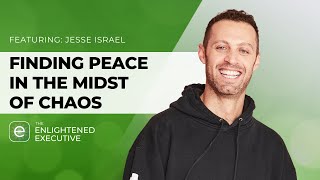
A recorded interview on the Enlightened Executive (host Susan Drumm) with Jesse Israel, founder of the Big Quiet mass meditation movement. Jesse describes how the Big Quiet began (small backstage festival meditations that scaled to main-stage mass meditations), key milestones (first official Big Quiet at SummerStage in Central Park; growth into large venues including Madison Square Garden and a 2019 touring model), and a high-profile collaboration touring with Oprah beginning at the start of 2020. The conversation explains Jesse’s meditation approach: simple group mindfulness for mass events and a one-on-one Vedic/mantra-based technique (linked to the One Giant Mind method) for leaders, and practical tips for busy leaders (put phone on airplane mode first 30 minutes, don’t charge phones in bedrooms, start with 5–10 minute sessions). The interview emphasizes quiet as a leadership tool that improves focus, stress regulation, creativity and efficiency.
Questions this video answers
"Almost nine years ago." (spoken in the interview)
SummerStage in Central Park (first official Big Quiet mass meditation on the main stage).
He described touring the Big Quiet in 2019.
At the start of 2020 (Jesse was invited to join Oprah's arena tour and spent about 10 weeks on the tour).
Chapters
Foreign. Hi, I'm Susan Drum and welcome to the Enlightened Executive, where your personal evolution sparks your leadership evolution. Each episode we feature groundbreaking techniques and strategies to help you get the edge in personal and leadership effectiveness. This episode is brought to you by Meritage Leadership. Are you curious about your development path to enlightened leadership? Take our free 5 minute quiz@susandrum.com to discover your superpower and the roadblocks that can get in your way of effective leadership. Today we're talking about a concept called the Big Quiet. And I'm excited to introduce my guest, Jesse Israel. Jesse is a meditation leader, keynote speaker and coach known for founding the mass meditation movement called the Big Quiet. Named the Meditation Expert by the New York Times, Jesse has led some of the largest meditations on earth, having toured arenas with Oprah and co hosted international broadcast with Deepak Chopra. Jesse is an Audible Originals bestselling creator and a Forbes next 1,000 recipient. And he's collaborated on meditation projects with Grammy winning rappers Coach, the world's most influential entrepreneurs. And prior to his work at the Big Quiet, Jesse ran a record label where he signed multi platinum bands like mgmt. So welcome Jesse. It's great to have you with me.
Thank you so much, Susan. It's great to be here.
So we met through a speaker's community and just formed this connection. And I was very moved by some of the meditations that you've led in that group as well. So why don't you share with us a little bit, what does the Big Quiet mean and what is your philosophy and approach to meditation?
Meditation, yeah. So the concept behind the Big Quiet, and it started almost nine years ago, was what if there was a way to make meditation a bit more social?
Right.
What if there was a way to go from having our own individual, you know, personal quiet practices in our homes that we do, you know, on the meditation cushion or on the couch or in our beds. What if there was a way to create that quiet with lots of people and to experience the power of collective quiet at a time in our lives when there's just so much noise? So I started organizing these group meditations with friends of mine from the music industry. When I was running a record label, a particularly loud industry, and we started doing them kind of backstage at music festivals. A small group of us would come and get quiet and close our eyes when there was music blasting on nine stages and drunk people everywhere and sun beating down. And there was something really powerful about just creating these moments of quiet in the face of so much chaos. And it was at one of these. One of these smaller group meditations where I had a thought was, what if the whole festival was actually sharing in quiet? You know, what if the experience on the main stage wasn't a band but was a moment of big quiet? And about maybe a year later or so, that was happening. You know, we went from doing these little group meditations just having them grow, to starting to do them in various parts of New York, to, you know, having our first official Big Quiet mass meditation experience on the main stage at Summer State Central Park Festival. So, you know, really, ultimately, it was. It was just about, how do we share quiet at scale?
Amazing. So what came as an idea grew into a mighty oak tree right off of that. And so tell me, how did you end up sharing a stage just with Oprah? How did that come to be within.
The first year of. Of the Big Quiet, going from these little group meditations to, you know, a couple thousand people? I had fully moved away from the record label that I was running, and I really gave myself to the Big Quiet. I. I didn't know that much about the wellness space. You know, I really was. Was a music industry and entertainment guy who had a passion for meditation because it helped me so much with my panic attacks and just with the overwhelm I was feeling as a business leader. So within the first year of the Big Quiet, I really went all in and I did my trainings, and I really kind of, kind of built up the skill set to lead meditations and teach meditations and really gave myself to building a big Quiet. And it grew really fast. You know, kind of before we knew it, we were doing Madison Square Garden. You know, we were doing mass meditations, the top of the World Trade center, and we started touring the Big Quiet in the same way that we would tour bands when I had my record label. So just like a band, we'd go to a new city, partner with an amazing kind of iconic venue, have thousands of people show up from that city to share in quiet. We'd have musicians perform when people open their eyes, and then we'd go fly to a next city the next day and do it all over again. So in 2019, we were touring the Big Quiet and having that experience and a bunch of different cities. And when we were in Chicago, Oprah's team came. Remember, we were doing it at the Museum of Natural History in Chicago, and we were doing the Big Quiet in front of the largest discovered dinosaur. So, like this enormous set of dinosaur bones. And it was a really cool Experience. And Oprah's team really enjoyed it. And afterwards, we were chatting. They thought it would be a really cool thing for this upcoming arena tour that she was doing at the start of 2020. And initially, it was just meant to be one segment that I got to do at, you know, kind of like the. The launch to her tour, which started in Fort Lauderdale. And it was. It was crazy because we. We've been doing, you know, a couple thousand person events which were amazing, but this was 15,000 people sold out arena, Oprah Winfrey, a lot of media, a lot of eyeballs. But at that first kind of kickoff launch event, we got to have the experience. And I did a short keynote and sort of talked about the power of quiet guided this mass meditation in the arena. And then Oprah came on stage and asked me a handful of questions in front of the audience. I didn't know what the questions were. It was just kind of just rolling with it type of situation. But it went really well, and there was a connection between us. The audience really liked it. So the next day, Oprah's producer called and said, hey, is there any way that, you know, you could come on a whole tour and have the big quiet be a part of her touring experience? So, of course I said yes. And we spent the next 10 weeks, you know, doing that in different cities.
Throughout the U.S. amazing. What an amazing story. So why is getting quiet so important that you devoted your life to creating tours focused on this?
Yeah. You know, initially, when I was experiencing the overwhelm that I was going through in the music industry, I was finding it just so hard to not only show up and kind of keep my head above water, I was just finding it hard to enjoy my life. You know, there was so much noise, the noise of the world and the constant connectivity and just, you know, just that general sense of overwhelm that I know so many of us experience today. And then there was the noise in my head. You know, the overthinking and the self doubt and the not enoughness that I found was coming up so much for me at that stage of my life. And then there was the noise in my body. You know, it was the exhaustion, it was the burnout. It was sort of the stuckness I was feeling. Is this the right path for me? You know, are there more effective ways I can be expressing myself and, you know, connecting with my purpose and really giving myself to my leadership and my work? So, you know, there was a lot of noise. And meditation was the first practice that I connected with that I found really helped quiet the noise. And in quieting the noise, I felt that I was able to actually have my head above the water and feel like I could be on top of all of the demand that was coming at me. I found that it really helped me kind of get out of my head and kind of move back into my power. And I found that it gave me more clarity. One of the most powerful components of meditation initially is the stress reduction that occurs the way that it rebalances a dysregulated nervous system. So I just found that to be so helpful. But as I went on to kind of evolve my career, I went on to learn that meditation wasn't the only form of creating quiet. I found that building community and being in community with other humans was a really valuable way to quiet that noise in my head. You know, I found that by really giving myself to my unique gifts and this kind of, like, hidden passion that I had to not actually be behind the stage running a record label, but to be on stage gathering people, speaking, leading, that. That was another way to quiet the noise, to come into my power, into my work. So I've really, you know, become interested in what are the ways that we can create quiet in a world that's filled with noise. And meditation is just one of many.
Yes. Because at the end of the day, quiet is also focus. And there's just so much information overload right now that it can cause us to be incredibly distracted and we actually don't find joy there. That is not where it lives. One of the things I've noticed, and I was just leading a team on this last week, is to notice that their unbridled ambition, that was more about the containing anxiety, not an ambition towards a meaningful mission, but where. Which they had some of that as well, but where they had this unbridled ambition that was more about containing anxiety. You know, fear of going bankrupt, fear of using taking action as a way to avoid something I don't want.
Right.
And I talked to them about the efficiency that could be gained if they just created reflective time. And that was so hard for many to really get. And it's sort of fascinating because I think, I mean, particularly in this country, we believe you just go, go, go, go, go, go, go. And just like a car, a car, like, everything needs restorative time. Everything does. Yeah. And so taking that step back and allowing yourself to reflect or get quiet actually improves efficiency. And that's where I think there's a disconnect that, you know, some leaders would say, I Don't have time to meditate. And knowing as a regular meditator now for almost 10 years, I don't have time not to meditate.
Yeah, 100%.
Right. Because I cannot be as efficient if I don't build that practice into my daily experience. So I think you're describing is just such a good example of you are in a state of overwhelm. Pushing harder is not going to get you anything more. Push, push, push is not going to get you anything more. And I think most of us have pushed push, push to the limit at this point.
Right, right, right. Yeah. I think that so many people I've seen can relate to what you're talking about. You know, Ryan Estes, a mutual friend of ours, says the way that we're working isn't working and, you know, this approach to just, you know, go harder, bigger, louder. It's an old paradigm that I think so many of us are ready to change. And I think that quiet and really thinking about how we can create stimuli, create space from the stimuli and really understand how we can get into, you know, spaces of deep work and spaces of deep focus just. And just space from the world in general is, is such a, such an entry point into our power and into our ability to, you know, really give our best and really bring to life the best of who we are and find that efficiency, like you said. And I think that we're reaching a point where people are finally starting to go, all right, I get it. This isn't just a spiritual concept or some type of a practice that's tied to, you know, various forms of religion which people oftentimes will write meditation off as. And people are actually starting to go, actually starting to realize maybe there is a way to do it differently and that there is more to gain from doing less.
Yeah, absolutely. Sure. You know, that quiet time allows the insights and the creativity to really live. You can't really be innovative and creative without that time. It's not like I'm going to jam my creativity into the two minutes I have between this meeting and that meeting, the next meeting. And there's this even belief that like, like, I'm a victim of the inputs coming in, but I do believe that you have to take responsibility and create the time like, it is your life, it is your time. You have to take responsibility and not be like, well, I can't do that because I have so many like that. To me, it just going again into if you don't, you do have more control over your life than you might think. Right. And so creating that space will actually allow you to serve all the other people that you're hoping to serve in a better way.
It's so true. And the way that I look at it is we need to take responsibility for this if we want to really have that edge in our work lives and just in our lives in general. Most people aren't taking responsibility for it. Right. Most people are just allowing the demand to just totally put them underwater. People that are willing to take responsibility do gain an advantage in regards to being able to increase their capacity and resources to take on what the world brings our way. You know, our tribal ancestors, the amount of information that they processed in their entire lifetimes is equivalent to the amount of information we process in one day in 2024. Just a wild stat. And our bodies have not had enough time to, you know, biologically adapt and evolve to. To meet all of that information, to meet all of that demand. So it's so important that we take responsibility to create the space to build the practices and so that we can have the capacity to meet what the world brings us. And in doing so, you know, not only are we able to do more, be more productive, have more focus. Right. You know, all these great things, be more efficient, but I really find that in doing this, we get to enjoy our lives more. And that's really what it's about.
Yeah, absolutely. Let's tell me a little bit about your approach to meditation or how you lead meditations that may or may not be unique to you.
Yeah. When it comes to the big quiet. Right. If I'm leading a mass meditation with, you know, a very large group of people, I'm going to keep it simple. You know, we have musicians that will come in and play certain instruments to really help people drop into those more relaxed, deeper states and essentially guide a version of a mindfulness practice. Getting people to notice their body, getting people to notice their breath, I might give a couple reflective prompts for people to consider, and we keep it really light. And there's something about a large group of people meditating together, even if it's done through zoom or done virtually, which has been a lot of our work, there's something felt, and it helps people drop into that deeper state. Now, if I'm working one on one with a leader, you know, with a founder or CEO or a public figure, I will train that leader more specifically in a technique that they can do on their own anytime, anywhere. Right. Without relying on me to guide them. And I train them in a practice that has its Roots in the Vedic lineage, which comes from India. And I teach a technique called the One Giant Mind technique and essentially create a self sufficient way for that leader to practice meditation on their own. And in doing so, when they practice on their own, essentially what's happening is with their eyes closed, sitting in a comfortable state, they're gently thinking a mantra, which is a Sanskrit word that I'm sharing with them. And when they think it, it allows the mind and the body to drop into a more settled and relaxed state. And in that state, the leader is experiencing rest that's about four to five times more restful than sleep. So they're really getting supercharged with rest. And through that experience, the body's nervous system, which tends to be in a fight or flight state, pretty regularly starts to regulate more into a balanced state. And when that leader is practicing meditation on a daily basis, what they start to notice is that instead of feeling stress all the time or finding that most things create stress for them, they start to notice that the things that once stress them out, they actually feel quite common, centered around. And they reserve their energy for more of the actual life threatening things that are worthy of really intense stress. So stress really gets saved for the really critical stuff. And a lot less of the stuff that once stressed us out is no longer have that impact. So I go a lot deeper when I'm, when I'm training someone one on one in meditation versus, you know, a group wide practice.
Yeah, absolutely. I was also trained in Vedic. That's where I learned to meditate through a mantra based.
Cool.
So, yeah, we have that same.
Oh, I love that. Who did you learn from?
So Charlie Knowles was my great teacher. Yes.
Cool.
I know Charlie well, but advanced work with, gosh, I'm forgetting her name out of New York. But also Emily Fletcher. Yes, that's right. Yeah, yeah.
Great. I love Emily. Emily played a really big role in the big quiet coming to life. You know, she, she was a mentor and an encourager of mine. She was a teacher of mine at the time. So yeah, I have her to thank in many ways for what's grown.
Oh, that's amazing. Yeah, yeah, we have that connection. That's great. I know. Isn't it funny how everything's just starts to get connected? Yeah, yeah. She's amazing. Charlie's amazing. And of course his father, Tom Knowles is one of the greats in the Vedic meditation space. So I found, you know, I think sometimes it's important to talk about misconceptions around meditation because I think what stops a lot of executives from continuing with the practice is believing that, well, I can't meditate because I can't stop my thoughts.
Yeah.
And. And I always remember the story that Charlie shared about that, because even if you have thoughts, you are still in a meditative state. And that was proven to him when he was on stage with some. With 300 brain surgeons in the audience, and they had his head all checked with electrodes. And he starts, they're like, okay, meditate. And he's thinking, oh, my God, like you imagine on stage, he's like, I'm not going to be able to meditate, like all these eyeballs on me. So. But he, you know, he tries, close his eyes, Mantra, mantra, mantra. And then he has these thoughts. Oh, my God, it's totally not going to work. This is embarrassing. Okay, we go back to my mantra. Okay? Mantra, mantra. And then another thought comes. And the thing was, when he stopped, he kept thinking. That didn't work because he had all these thoughts. But they could clearly see that in the brain waves that, that checked into a different state of being. He went into the transcendent state. So all of that to say, just because you have thoughts does not mean you haven't entered a transcendental space in which your body is healing. So just, just when you catch yourself, go back to the mantra, right? And that, that simple. It's that simple. But we're, we're judging as we're doing the meditation, and I think that that can really get in the way.
It's such an important reminder. I love that you named that. I always remind people that I teach meditation to that before the practice. Right. Before we go into the practice, we let go of any expectations or preferences we might have for the meditation. It's really easy to want the meditation to be deep or super relaxing or, you know, to kind of feel Zen doubt. And that will happen in some of our practices, and it's great when it does. But a lot of times in our practice, the mind's going to be racing, right? It's going to be cruising. And that's not a bad thing. It's actually a really important part of the process. It's a big part of how we unstress, how we release stress and purify our system. So what I remind people of is if it's a deep meditation, if it's peaceful and calm, great. If it's thought filled and chaotic, and we feel like we're constantly gently coming back to the mantra, this is also great. We're getting benefit from both One might be more gratifying than the other, but both are very good. And that's an important thing to keep.
In mind, I think. So what are some techniques, suggestions, things that you can share with our listeners for them to either begin a meditation practice or deepen their practice?
The first thing that I recommend to people, you know, I like to look at what is making it so tough for people to sit down and meditate. What is making it so tough, you know, for us to focus in general right now. And our phones are a big part of that. So, you know, the starting point I like to suggest to people is before you go to bed at night, put your phone in airplane mode. And when you wake up in the morning, if you cannot actually take it off of airplane mode until the first 30 minutes or so of your day, and if people use their phones for their alarms, whatever, that's totally fine, use it as the alarm. But the key is to not take it off airplane mode, to not get all the notifications that come into bed with you every morning. When someone is able to create some space from the stimuli like this and actually not check their phone for those first 30 minutes of the day, it's a lot easier to sit down and meditate for a few minutes. So, you know, part one is see if you can take a break from your phone in the morning. Part two is start with a five minute practice for people that are getting into meditation. I think meditation apps are great ways to begin a practice. It's a great way to kind of go on the journey with some training wheels. And there are a lot of apps out there that will, that can take someone through a five minute practice they can get benefit from. If people want to explore something a little bit deeper, a 10 minute practice, I really recommend an app called One Giant Mind. It's the same style that I teach meditation from. And this app is great because you don't rely on it to meditate, right? You don't have to play it to meditate. It actually teaches you how to have a self sufficient practice through going through its 15 day program. And it's very doable and it's very powerful. And then for people that already have a regular practice, just remember what we talked about, just releasing any expectations that we have and reminding ourselves to be effortless in our practice and to remember that whatever experience we're having is actually good. If we just allow the body to kind of take each moment as it comes.
Right. Is it more important, do you believe, to get the best? Some people really focus on breath, some people really focus on noticing sound and sensations. Other people focus on mantra. Where do you come out in that?
It depends on the technique that's being taught and practiced. So at a big quiet event when we're doing more of a mindfulness based practice, a lot of the attention is going to be placed on noticing sensations in the body. You know, noticing your breath, noticing the scan at the bottom of your feet.
Right.
This kind of a practice, it's really more about awareness. If I'm teaching a leader and training them in meditation with the mantra, it's going to be different. The focus is going to be not about your breath, you know, not about specific awareness of the body. It's going to be more about the mantra and to gently and delicately think the mantra to move into these deeper states. So so much of the answer to that question is based on the style of meditation. You know, I think of meditation like sports, lots of different sports to play and try. Oftentimes people will have a favorite sport. Same with meditation. Lots of different styles of meditation that are out there. And I encourage people to try different meditations, learn different techniques and, you know, see which one lands most for them.
Yeah, that's great. I mean, there are lots of different ways to go about it. So I, you know, I think also getting caught up on the one right way. I've done all sorts of different types of meditations and yeah, I have my favorites that seem to work for me, but something that works for me may not work for you. So. That's right. You're rich people. I also have heard some people think that fully guided meditations isn't really meditation because you're not actually creating the quiet.
Yeah, yeah, I've heard people say that. You know, for me to have someone guide us into a practice and to help us with that process of making some space from the world and going inside if we, if we need the stepping stone or if we need that extra support to go there. To me, that's so worthwhile for so many people. Without that guidance, it's going to be really hard to practice. And a lot of times if people don't have at least some initial guidance or training and they just try to be in total quiet, what happens is they go, this is too tough. And then they tap out and say, this isn't for me. And that becomes a missed opportunity. If we can find entry points to bring someone in and then maybe work them to a place where they get trained and they don't need apps, that's great. You Know, it's ultimately how do we build someone into the practice? You know, how do we work someone towards that place? So I think guided practices are really beneficial, especially for starting points.
Yeah, excellent. What is one challenge or suggestion that you would offer to leaders to start tomorrow to help them create more quiet in their life?
Yeah. Yeah. So I think we spoke a little bit about changing our relationship with our phones or finding some moments to create new boundaries with our devices. Really important, especially because we live in a world today where we're almost never alone. We're almost never experiencing total quiet because our devices are constantly connected. We're always reachable. So something that I think is really important to start tomorrow is how do we start to make some changes with our devices. I already mentioned the practice of no 30 minutes, no phone for the first 30 minutes of the day. Another one that's a really meaningful starting point that I find creates a lot of value for building quiet for leaders is to not charge our phones in our bedrooms. You know, if we're able to make the simple shift of keeping the phone charged in the bathroom or anywhere that's outside of the bedroom, we start to create this sort of quiet, connected hub where the bedroom is really just about bedroom stuff, and it creates such an immediate shift. It also might require buying, you know, a little alarm clock on Amazon or, you know, something that replaces the phone as the alarm. But it's so worth it because it creates a container. It creates, you know, a portal of tranquility and for connection for people that, you know, have a partner that they share their bedroom with, that's so necessary. And it's so the type of thing that people can start tomorrow.
Absolutely. I love that. Well, where can people learn more about you and your work?
My website, JesseIsrael.com and my Instagram @JesseIsrael.
Well, fantastic. Thank you so much for coming on the show, sharing your thoughts around meditation and your very highly conscious work in the world, and I'm so grateful to have that time with you.
Thank you, Susan. It is so nice to chat with you. I appreciate being here.
If you like this episode, you're not going to want to miss my interview with Lucinda Vet, a renowned equine coach about equine assisted coaching and a method that digs deep into understanding, leadership, energy and emotional intelligence through our connection with. Let's all lead the way. Hope you enjoyed today's episode and I'd like to point you to the next important step. Hit the subscribe button and the bell to get notified when we release new content. I'll see you on the next episode of the Enlightened Executive.
More from Susan


Why the Biggest Doors Open When You're Not in the Room | Michael Roderick & Susan Drumm





The Simple Audit That Adds a Human Touch to Every Customer Interaction #shorts


